June 9 – 14
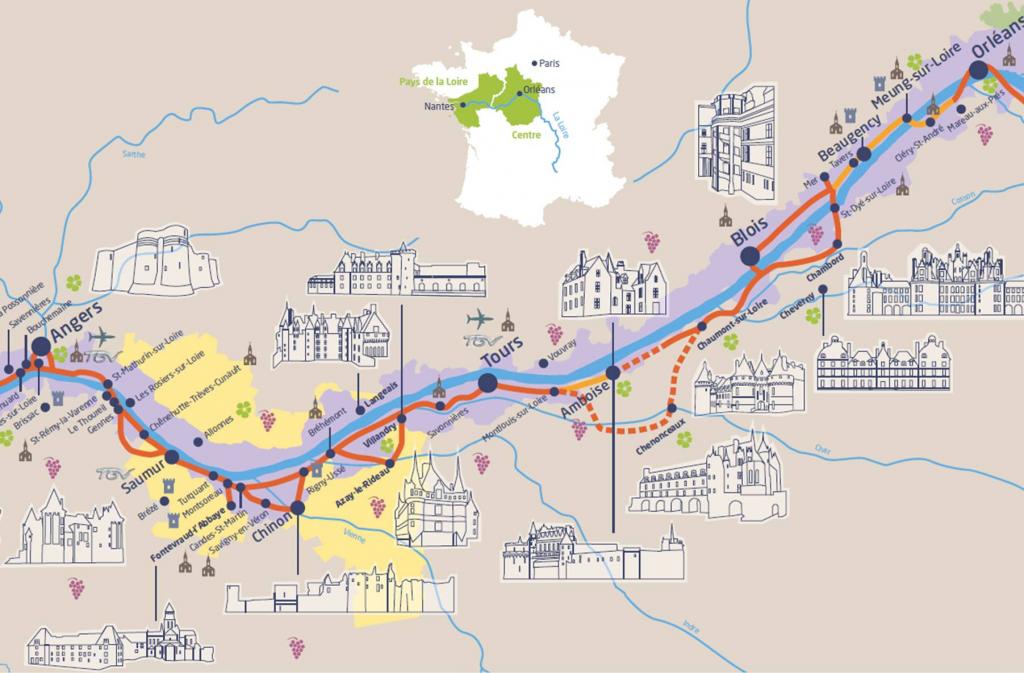
Because of its history, the Loire Valley is home to more than a thousand castles and palaces of all shapes and sizes. When a “valley address” became a must-have among 16th-century hunting-crazy royalty, rich Renaissance palaces replaced outdated medieval castles. Hundreds of these castles and palaces are open to visitors, and its castles that you’re here to see (you’ll find better villages and cities elsewhere). Old-time aristocratic château-owners, struggling with the cost of upkeep, enjoy financial assistance from the government if they open their mansions to the public.
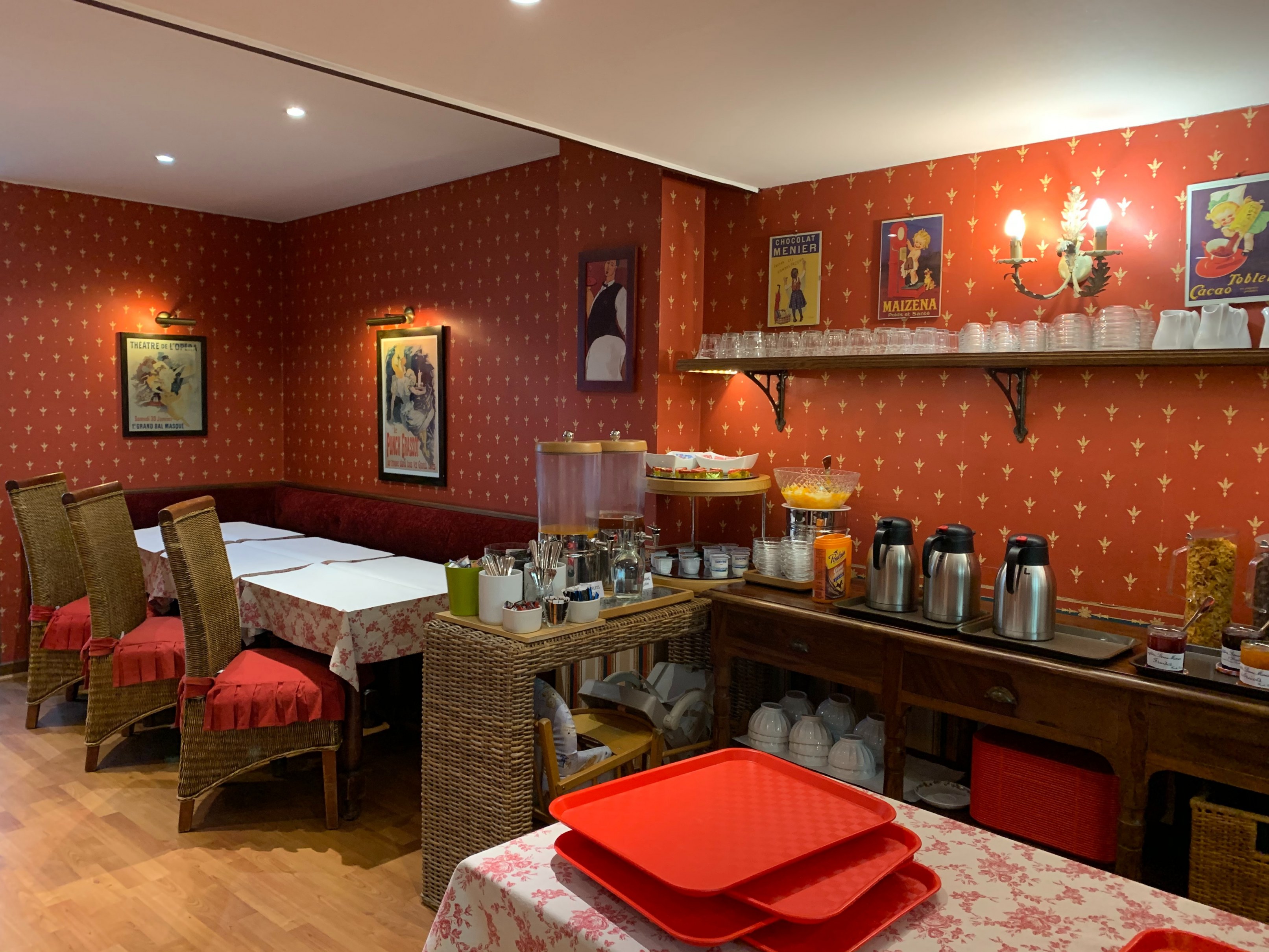
For our two mornings at the hotel, we decided to avail ourselves of the breakfast offered at 10-Euros apiece. Many years ago, travel to Europe generally meant a free breakfast, but lately most places now charge for it. Keeping in mind that we are used to the free ones offered at almost every hotel in the U.S. we now kind of balk at paying and yet, given that our room here was just 90-Euros a night, adding in 20 meant a total room charge of 110, still a relative bargain given what we’ve been paying during our forays in the states. And here, the breakfast was really worth the money.

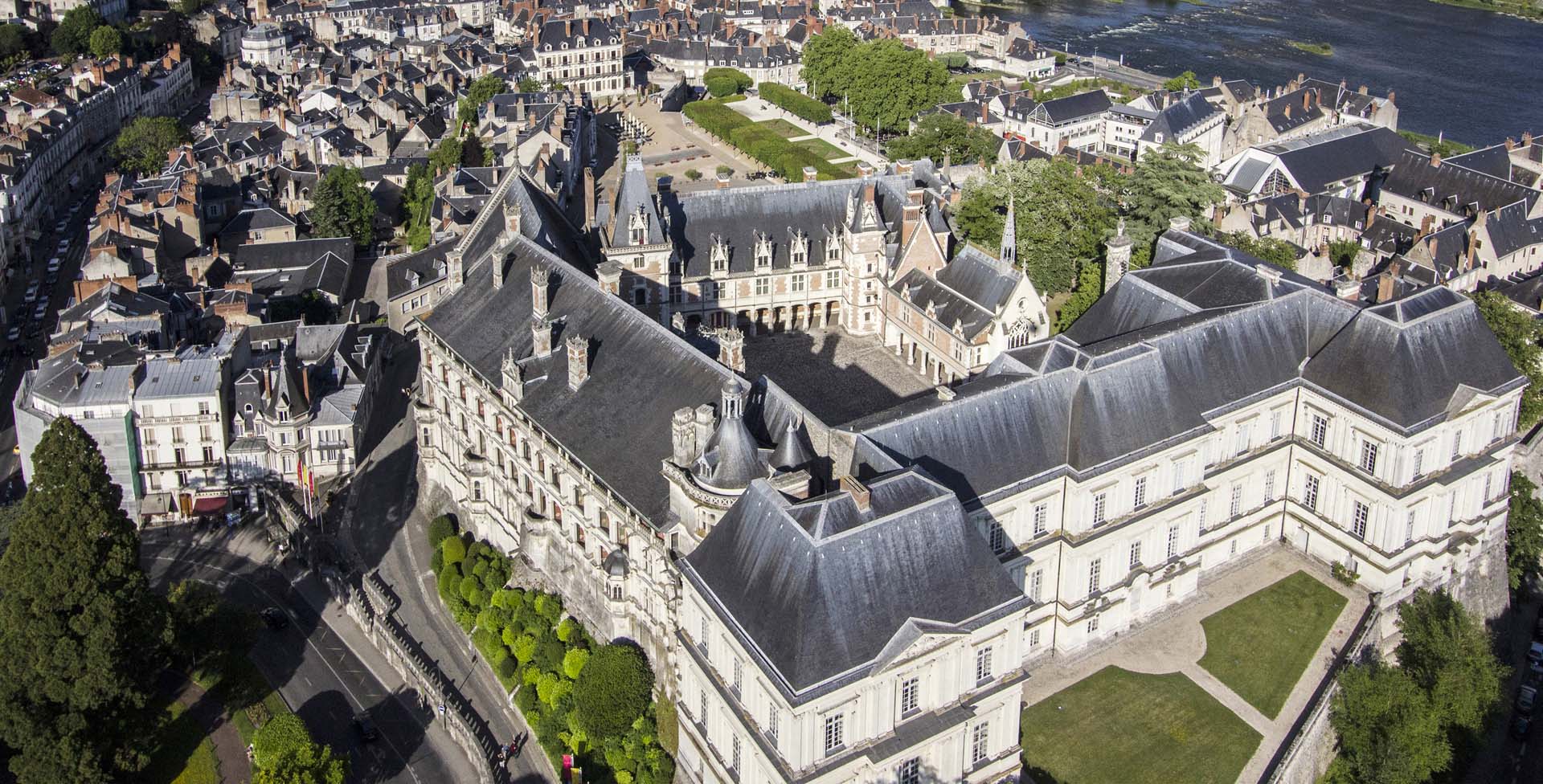
Our tanks full, we set out from the hotel through city streets with the Royal Château of Blois looming above us, up a steep hill to the broad plaza leading to its entrance. We’d arrived a few minutes before opening time and sat outside on a bench, enjoying the warm morning that would increase in temperature as the day progressed. A castle has inhabited this site since the 900s. Even though parts of the building date from the Middle Ages, one notes the complete absence of defensive towers, drawbridges, and other fortifications. Gardens once extended behind the château and up the hill to a forest (where the train station is today).
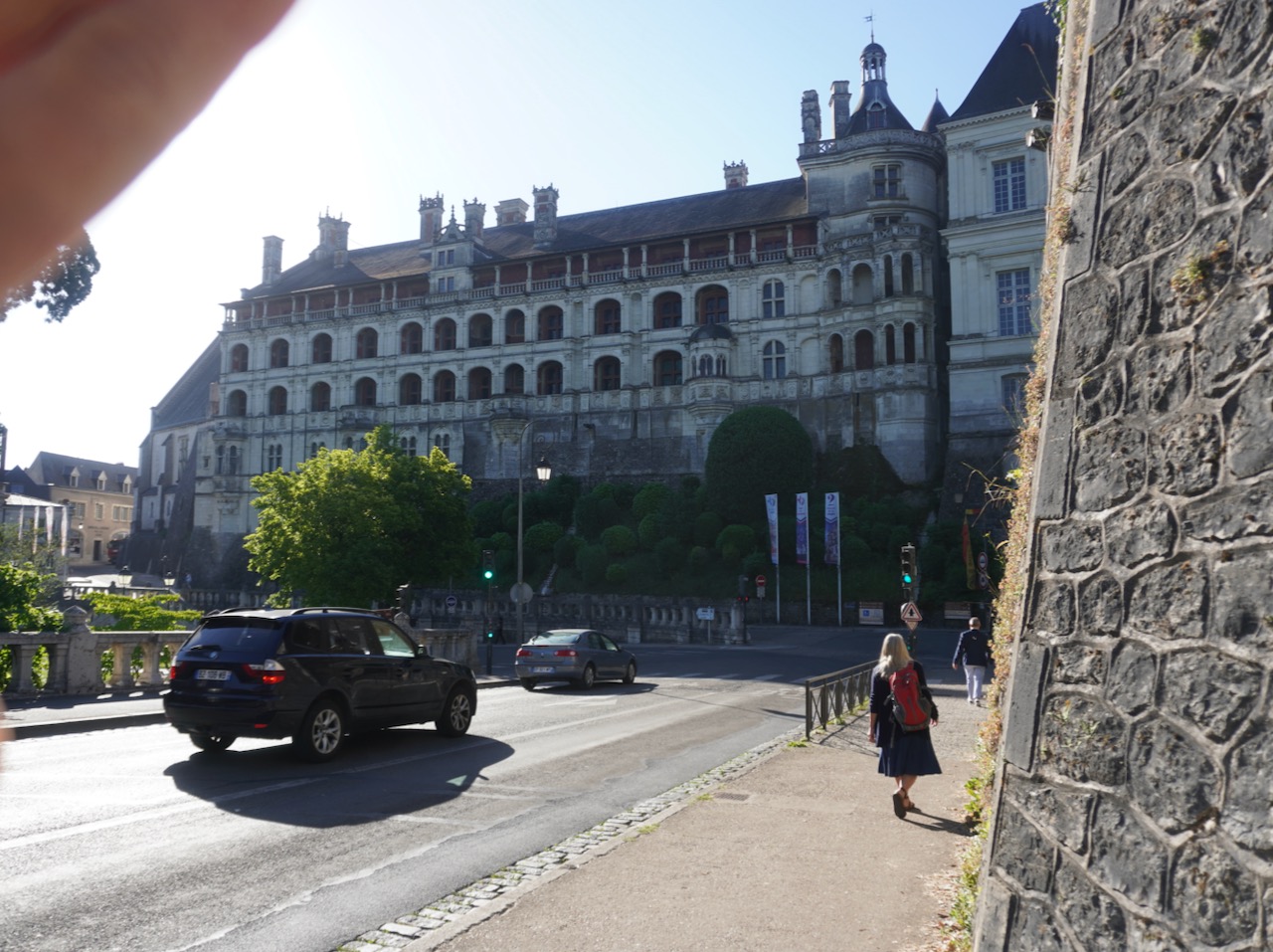
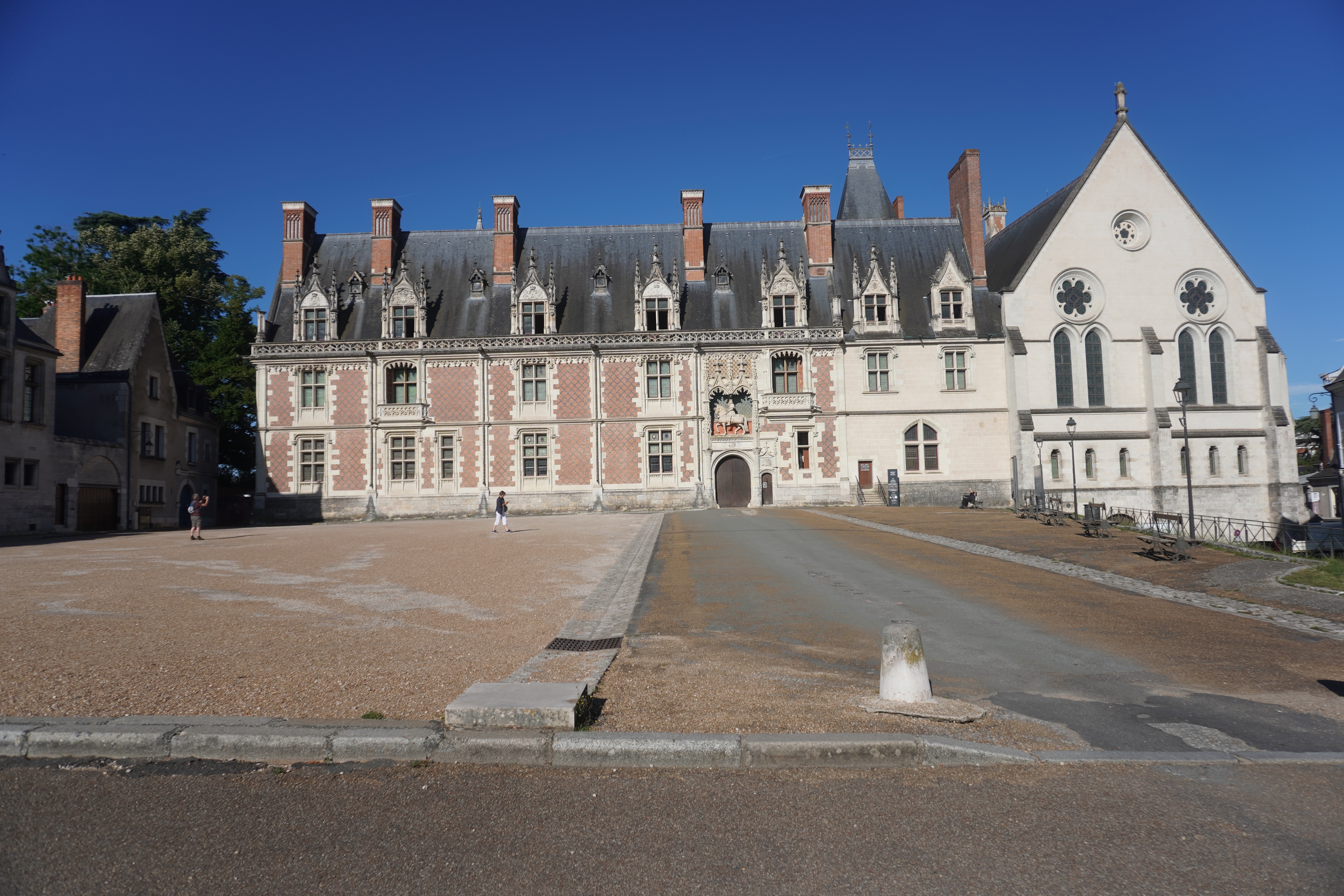
The château effectively controlled the County of Blois up to 1397, then the Duchy of Orléans, and the Kingdom of France between 1498 and 1544. It comprises several buildings, whose construction began in the 13th century and ended in the 17th century. Four different architectural styles are represented within the rectangular edifice, including: some remaining’s of the 13th-century Medieval fortress, the Louis XII Gothic-style wing, the Francis I Renaissance-style wing, and the Gaston of Orléans Classical-style wing. In total, there are 564 rooms, including 100 bedrooms with a fireplace in each, and 75 staircases (although only 23 were used frequently).
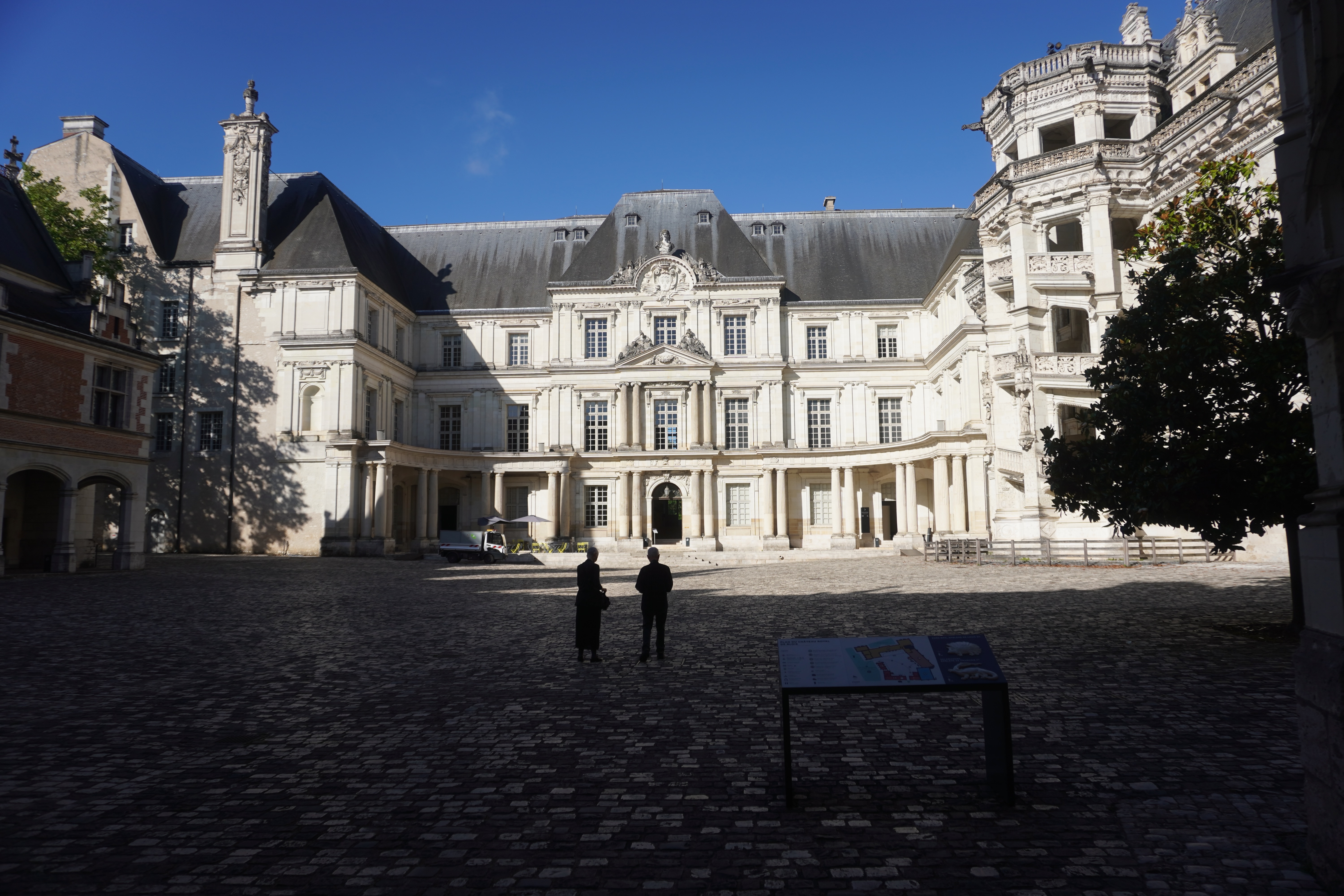
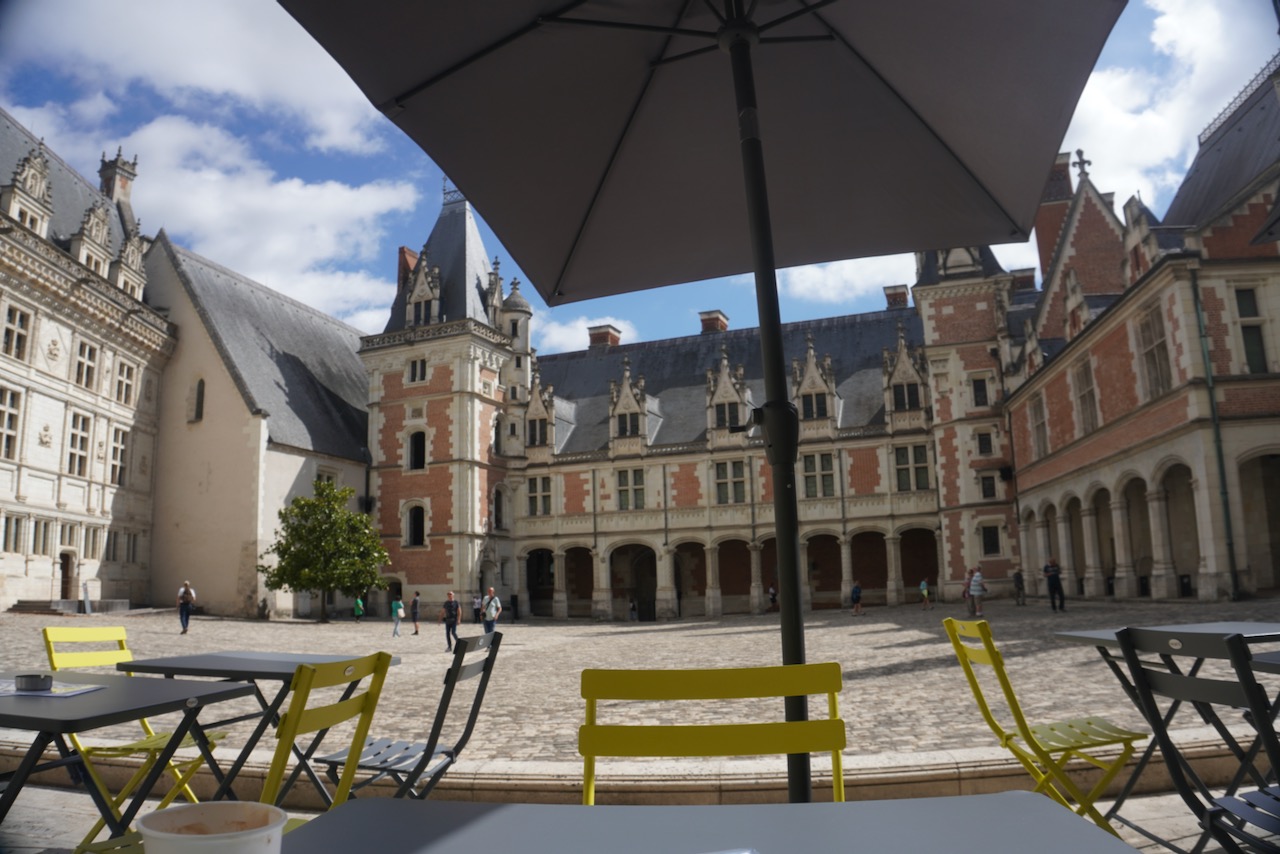
As you face the interior plaza with your back to the entry to get oriented, the medieval parts of the château are the brick-patterned sections (to your left and behind you), both built by Louis XII.

While work was under way on Chambord, François I added the elaborate Renaissance wing (to your right; early 16th century), centered on a protruding spiral. Gaston Orléans inherited the place in the 1600s and wanted to do away with the messy mismatched styles by demolishing a church that stood across from you (the chapel to your left is all that remains) and replaced it with the clean-lined, Neoclassical structure one sees today. This wing makes up the rear wall of the court, directly opposite the Louis XII wing.

By the time of the French Revolution the immense castle had been neglected for more than a hundred and thirty years. Its contents, statues, royal emblems, and coats of arms of the palace were removed and in a state of near-total disrepair, it was scheduled to be demolished but was given a reprieve as a military barracks. In 1840, the initiative of Prosper Mérimée placed the château on the list of historical monuments, which allowed state funds to be used in its preservation.
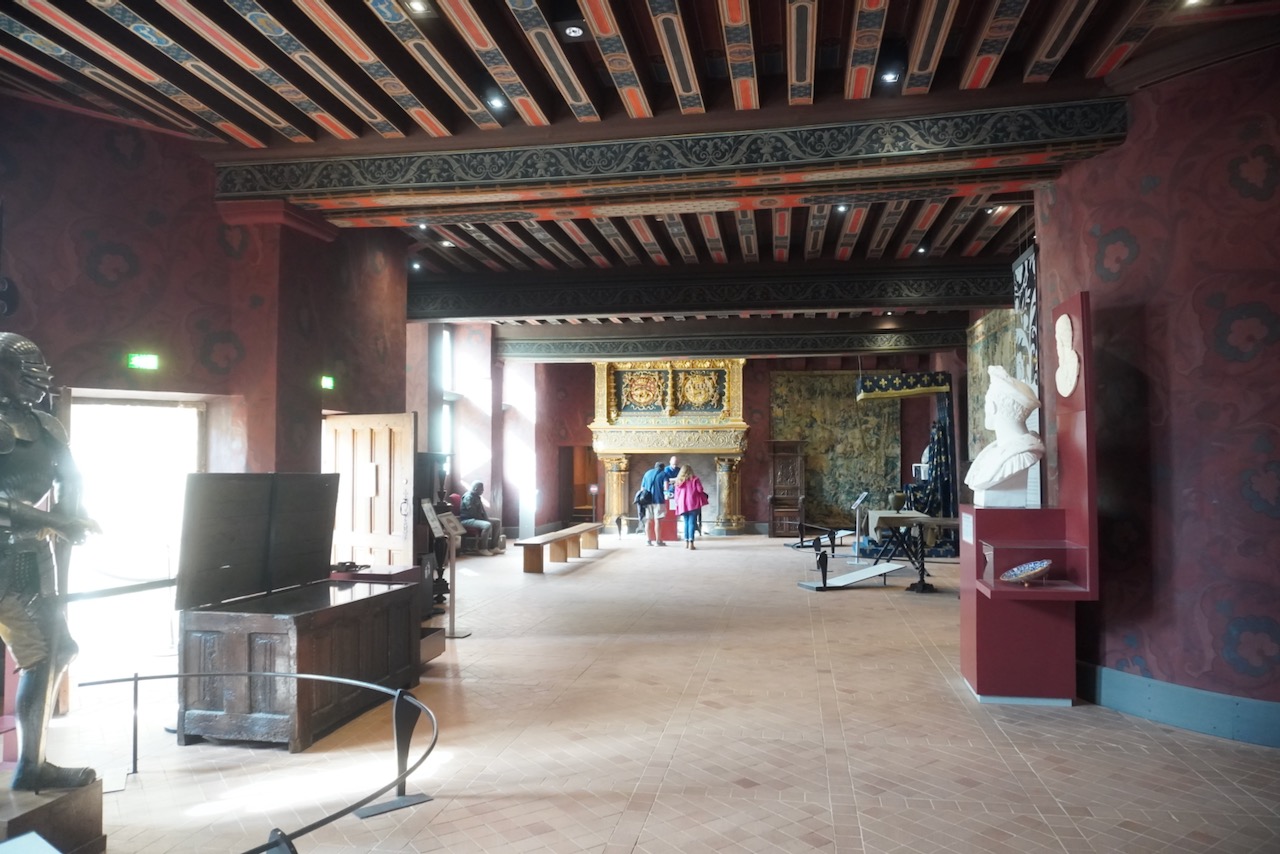
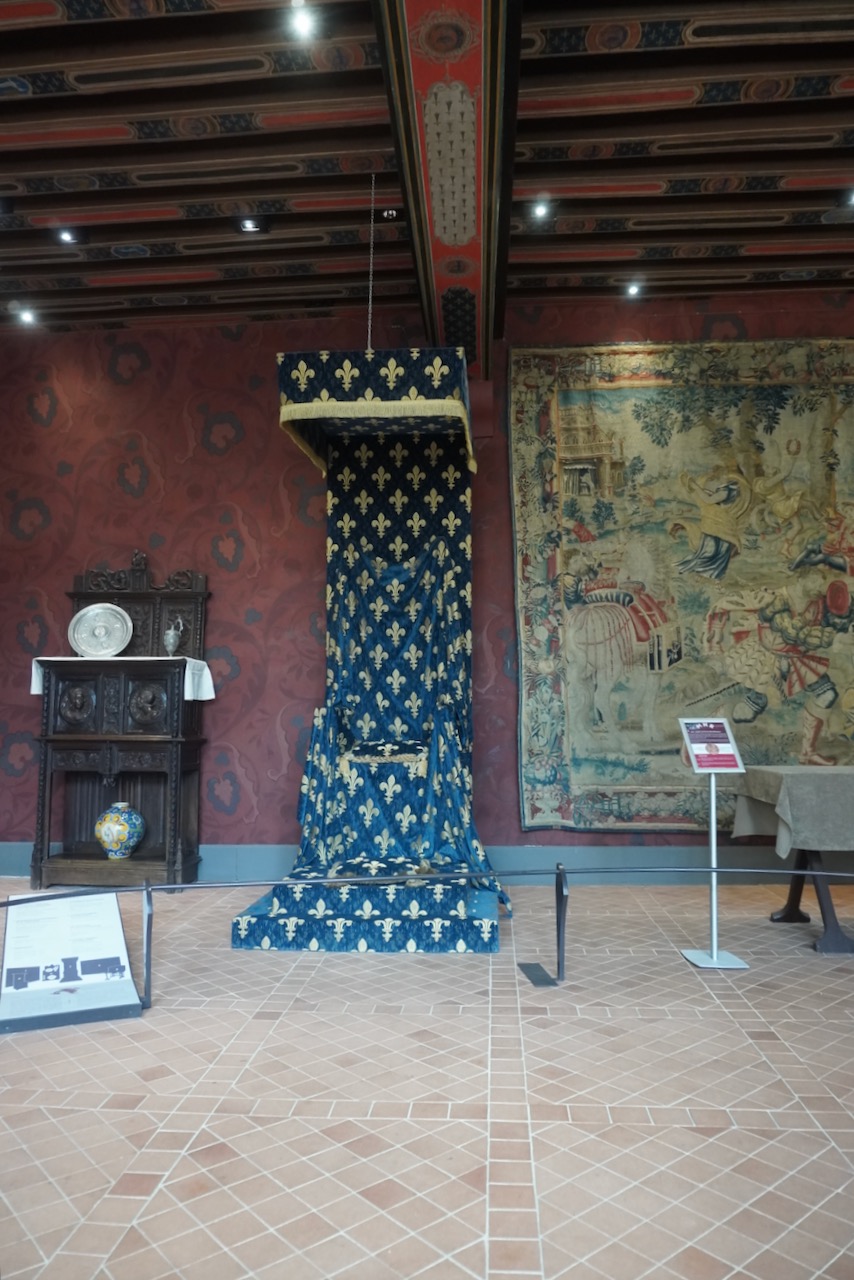
We spent the entire morning there, starting with the Francois I wing, originally the royal apartments, where the bulk of the castle’s collections are housed. Highlights here were the King’s Room (with a throne and two fireplaces with original Renaissance décor) and the adjoining Valois Room (busts of the kings who lived here). From here one passes through a two-meter-thick wall, enclosing the old mediaeval wall that surrounded the castle, into a series of rooms that contained the private quarters of its occupants.
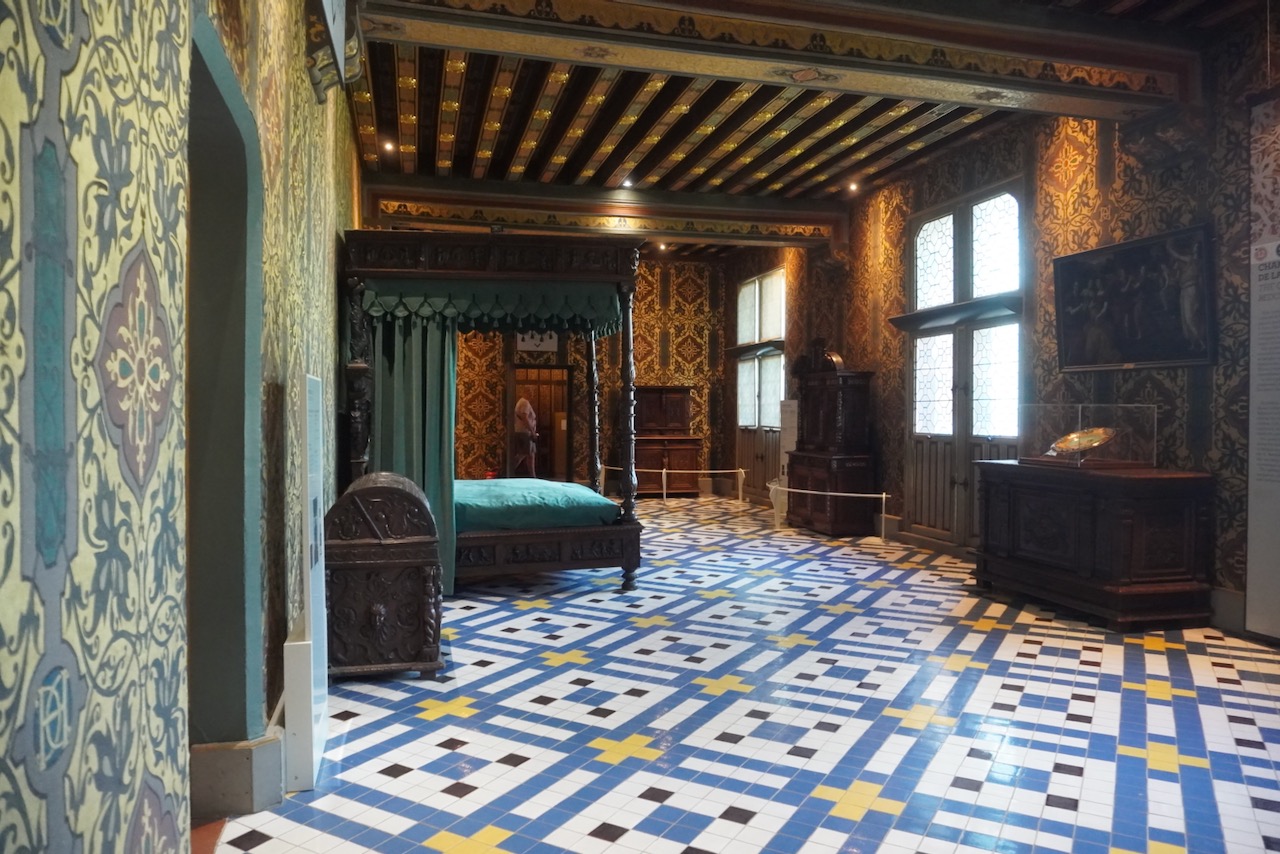
First up is the Queen’s Gallery, from here one can admire the gardens, which features a glazed terracotta tiled floor from the 19th century, based on a 15th century model. It leads into the Queen’s Chamber, dedicated to Queen Catherine de Medici, wife of King Henri II who died at the Chateau in 1589.

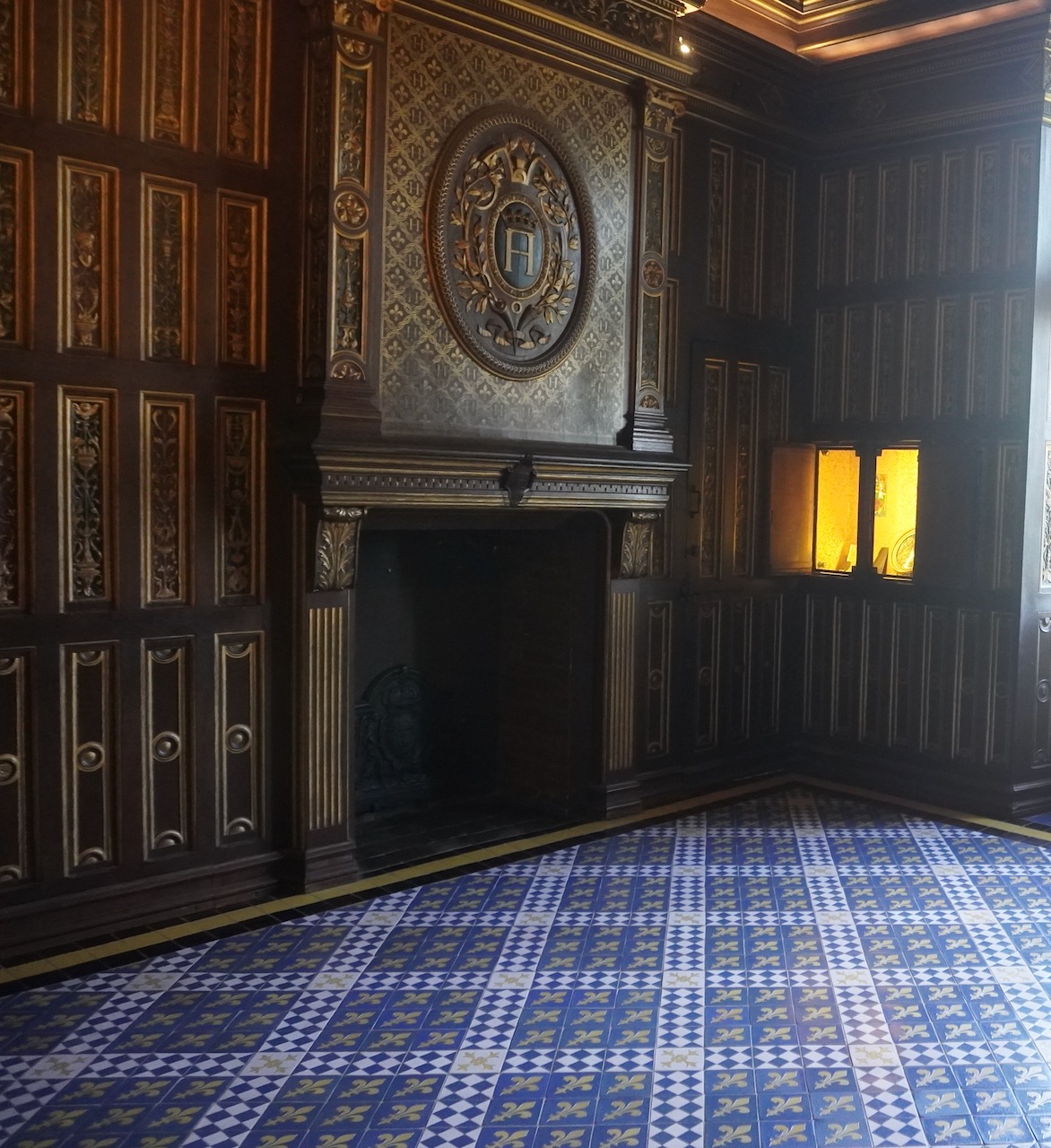
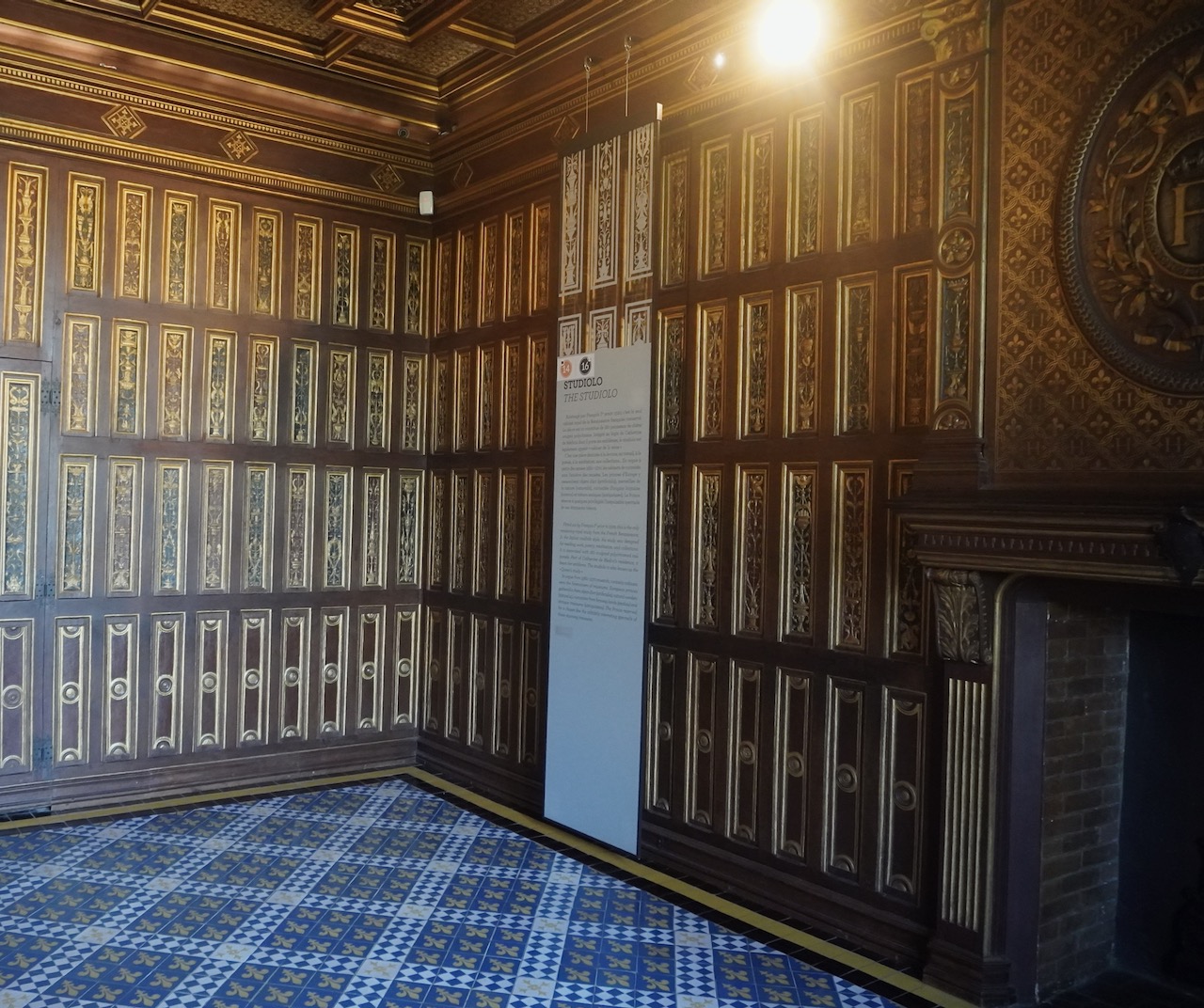
From here one passes through the Oratory, a perfect example of religious practice in daily life into the Studiolo, the only remaining royal Renaissance study in France, with its original woodwork on the walls. It contains 180 vertical sculpted panels with Italianate floral motifs dating from the reign of Francois I and four closets with folding doors, each with a secret mechanism for opening and closing them.

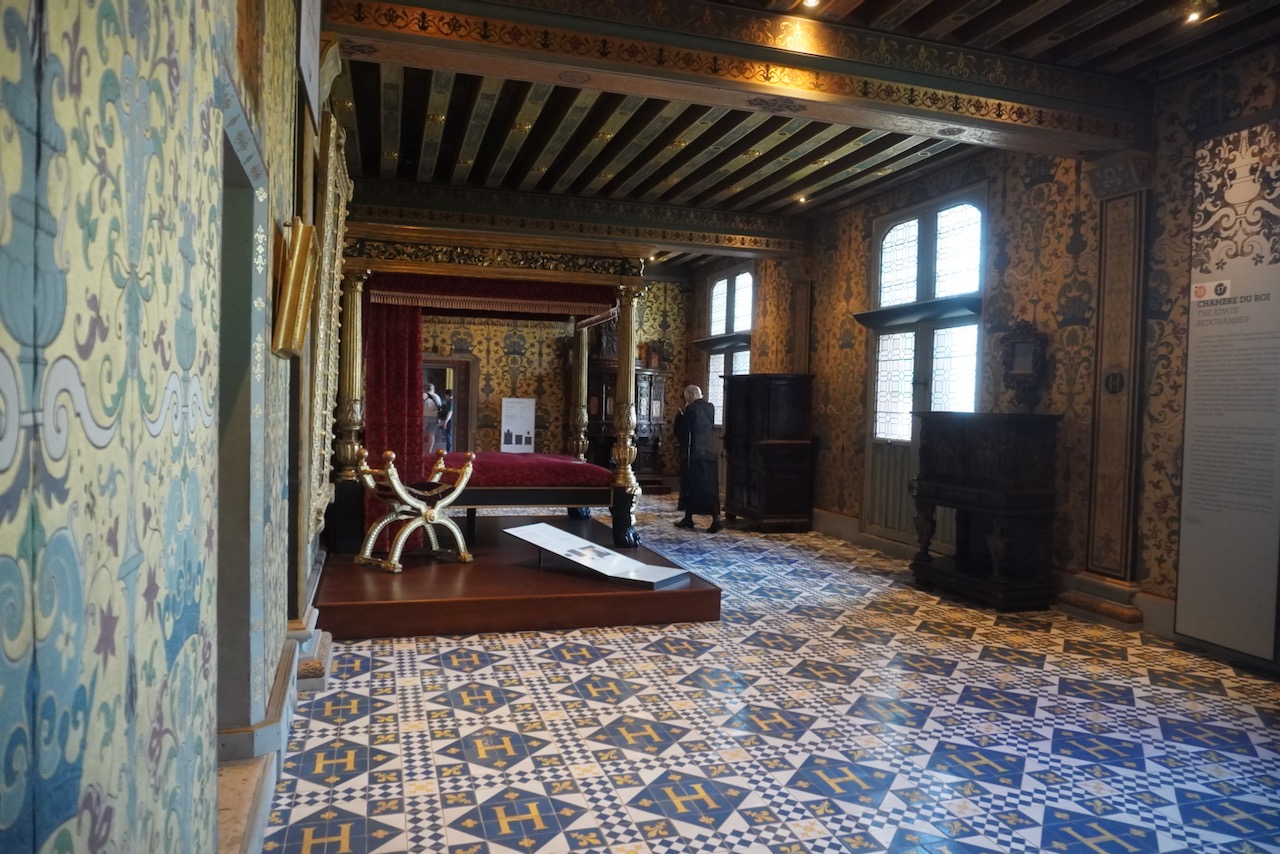
We moved on to the King’s Chamber which evokes the luxury deployed at the court of France by Henri III, who out of concern for his image wanted to compete with the Italian courts. His reign was stained by the Wars of Religion (a period of civil war between French Catholics and Protestants, which lasted from 1562 to 1598) and according to legend, it is here where the Duke of Guise, head of the Catholic League, was executed by order of the king in 1588.
We finished in the Francois I Wing by exiting into the Gothic Wing and the large Estates General Room, built in 1214. It has retained its original configuration of two aisles covered with wood paneling and separated by a row of six columns. Used by the counts of Blois as a courtroom, it hosted the Estates General (in France of the pre-Revolution monarchy, the representative assembly of the three “estates,” or orders of the realm: the clergy (First Estate) and nobility (Second Estate)—which were privileged minorities—and the Third Estate, which represented most of the people), convened by Henri III in 1576 and 1588.

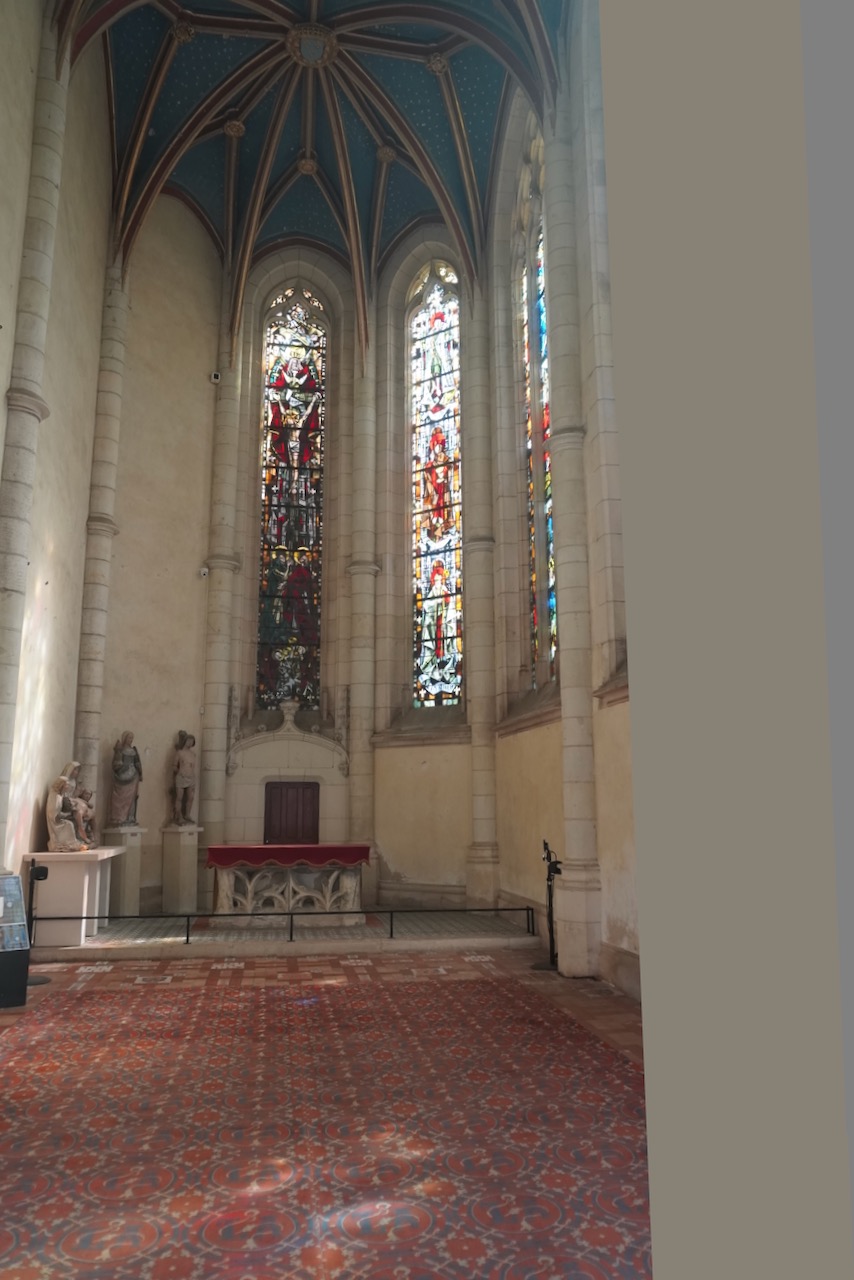
And soon thereafter, following a quick look at the chapel, I staggered to the café in the rear wing of the courtyard to grab a coffee and sit outside while I waited for Joanna to finish up. Not long after, she joined me and while catching our breath, we plotted out our course of action for the afternoon. The other big attraction near town is one of the most famous chateaus, Chambord.
As luck would have it, a municipal bus makes the 20-minute run out there twice a day and we had just enough time to walk to the bus stop, grab a sandwich at a nearby shop, and wait for its arrival. It was going to a big day for chateaus.
Links
Royal Château of Blois: https://www.bloischambord.co.uk/explore/the-chateaux/the-royal-chateau-de-blois
Discover more from 3jmann
Subscribe to get the latest posts sent to your email.


 3jmann