June 20 – 22
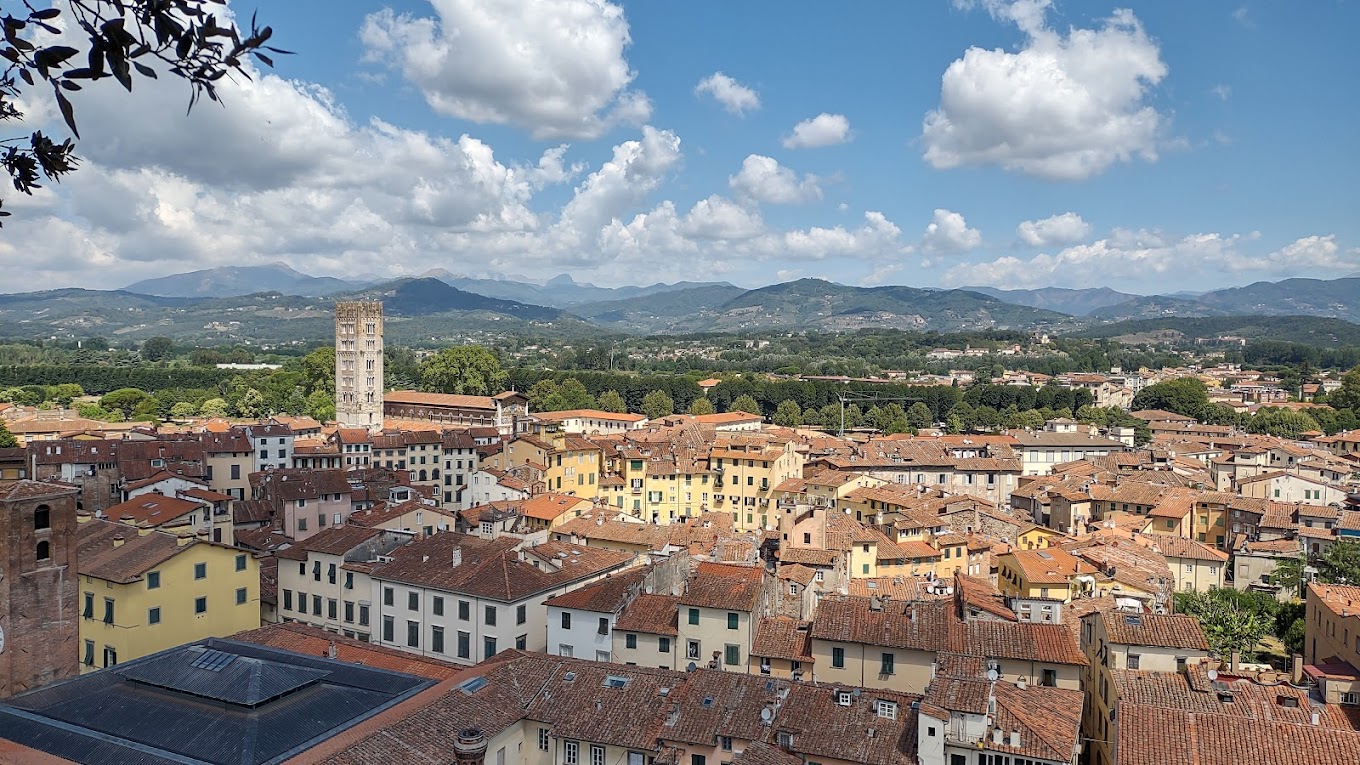
After breakfast the next day we set out to discover all we could about this charming walled Tuscan city of 89,000, with a provincial population of 384,000. Lucca is known as one of the Italian’s “Città d’arte” (Arts town), thanks to its intact Renaissance-era city walls and its very well-preserved historic center, where, among other buildings and monuments, are located the Piazza dell’Anfiteatro, which has its origins in the second half of the 1st century A.D. and the Guinigi Tower, a 150 ft tower that dates from the 1300s.
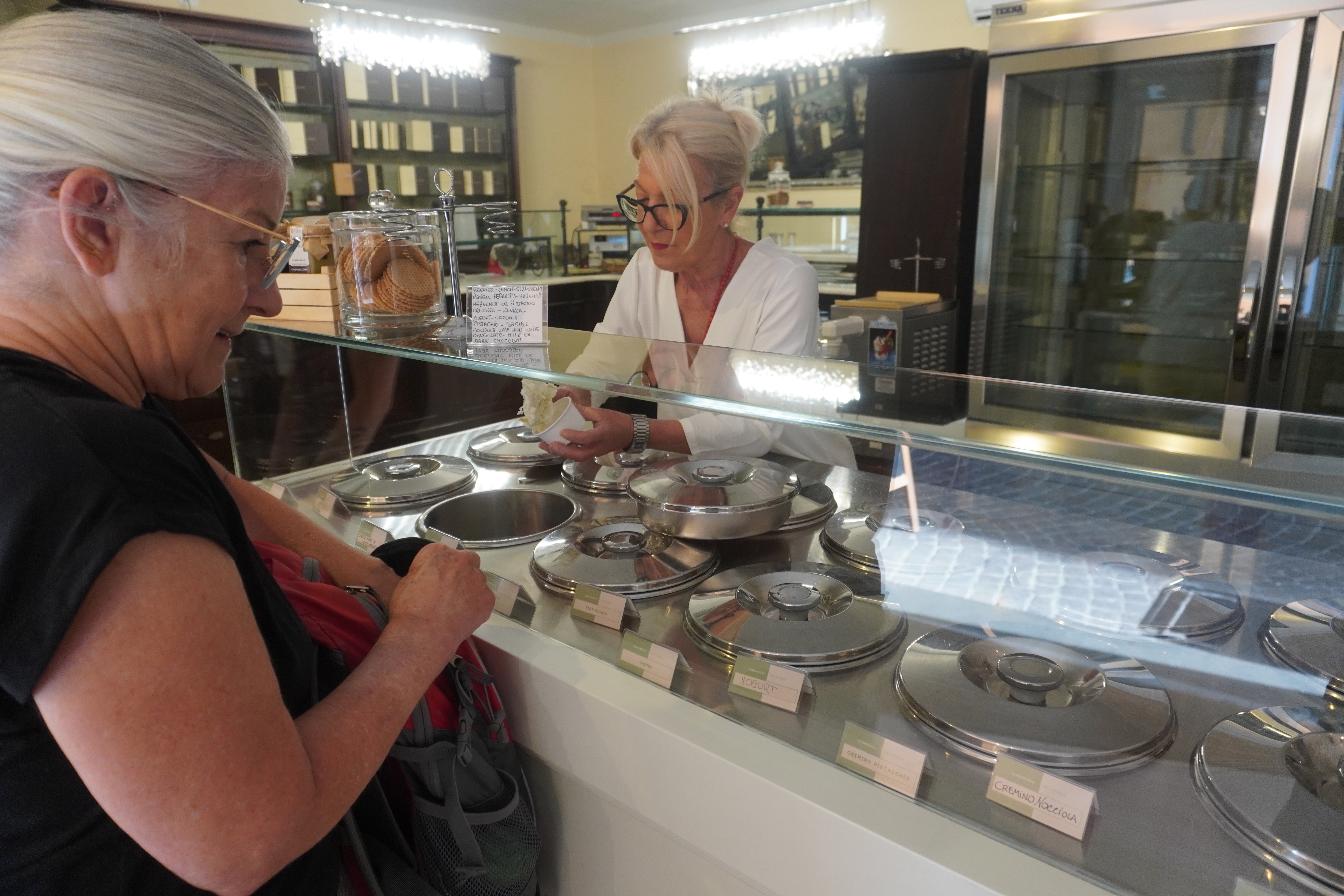
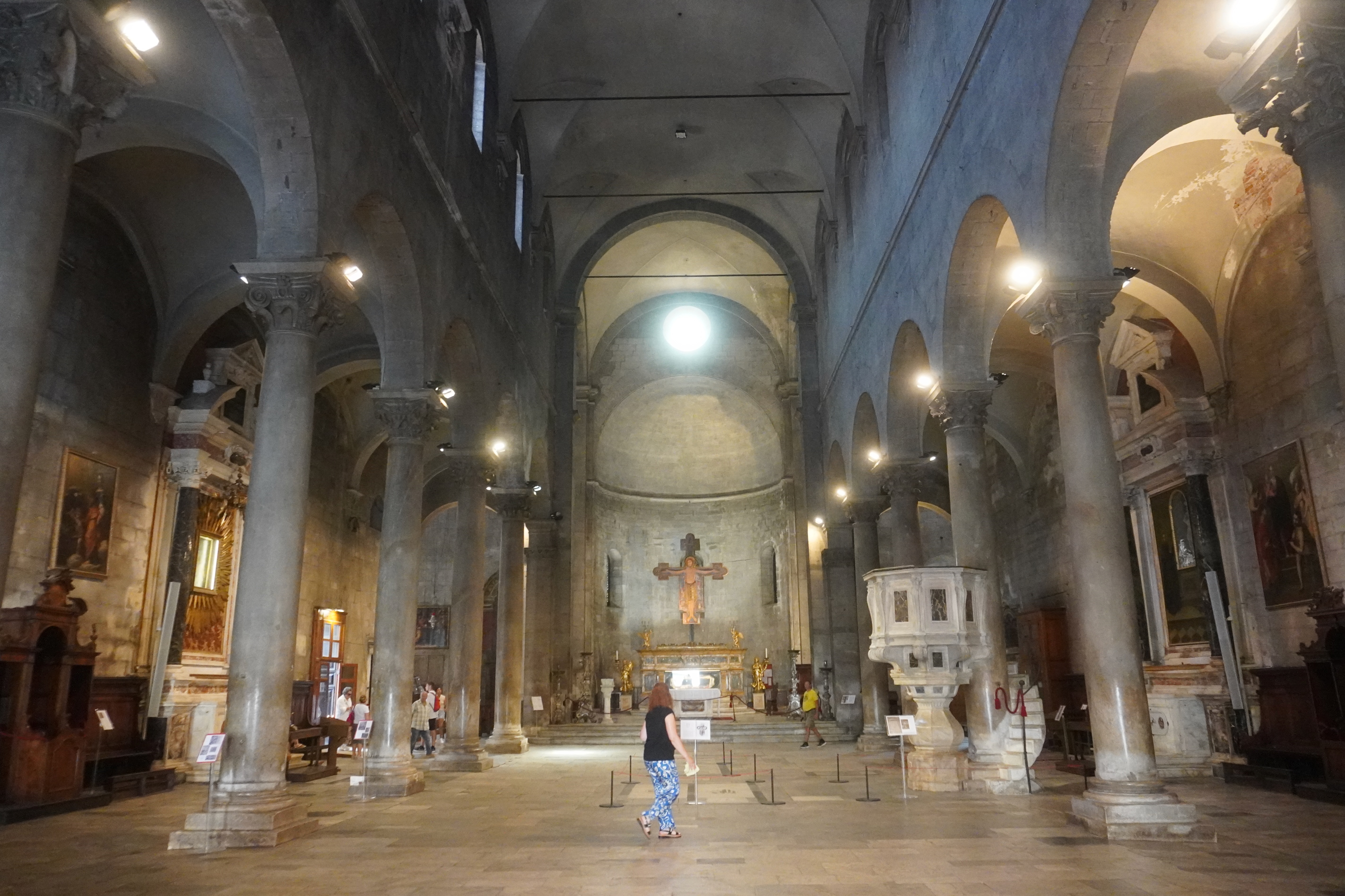
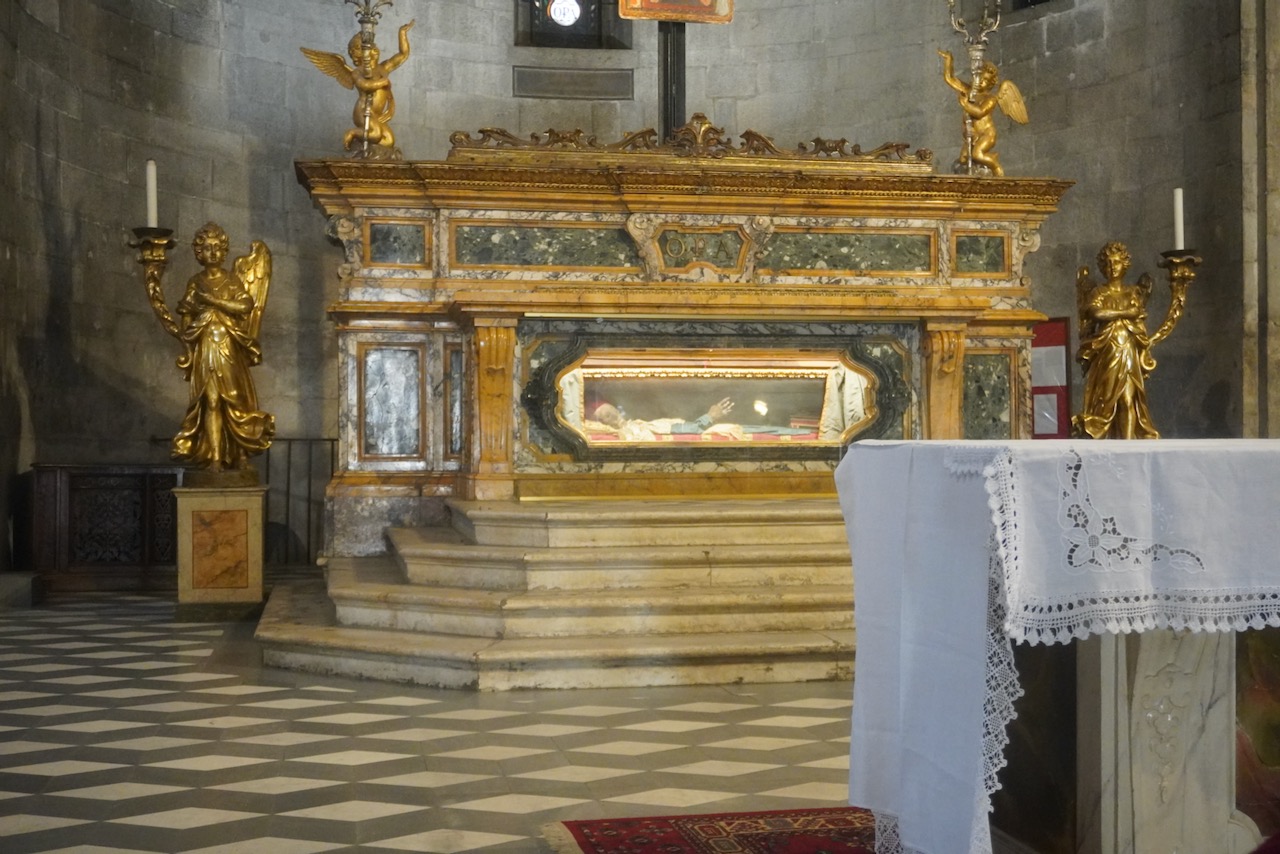
We set out down our familiar route, stopping in at the electronics store to pick up the adaptors we hoped would resolve our plug issues and since we had to wait for the store to open, it seemed right to hit the Gelato store across the street for an early morning pick me up. We continued to Piazza San Michele and stopped in at Chiesa di San Michele (San Michele in Foro), one of Lucca’s major cathedrals where we admired its altar and San Davino Armeno, who in the 11th century gave all his worldly goods to the poor in order to make a pilgrimage to Jerusalem.
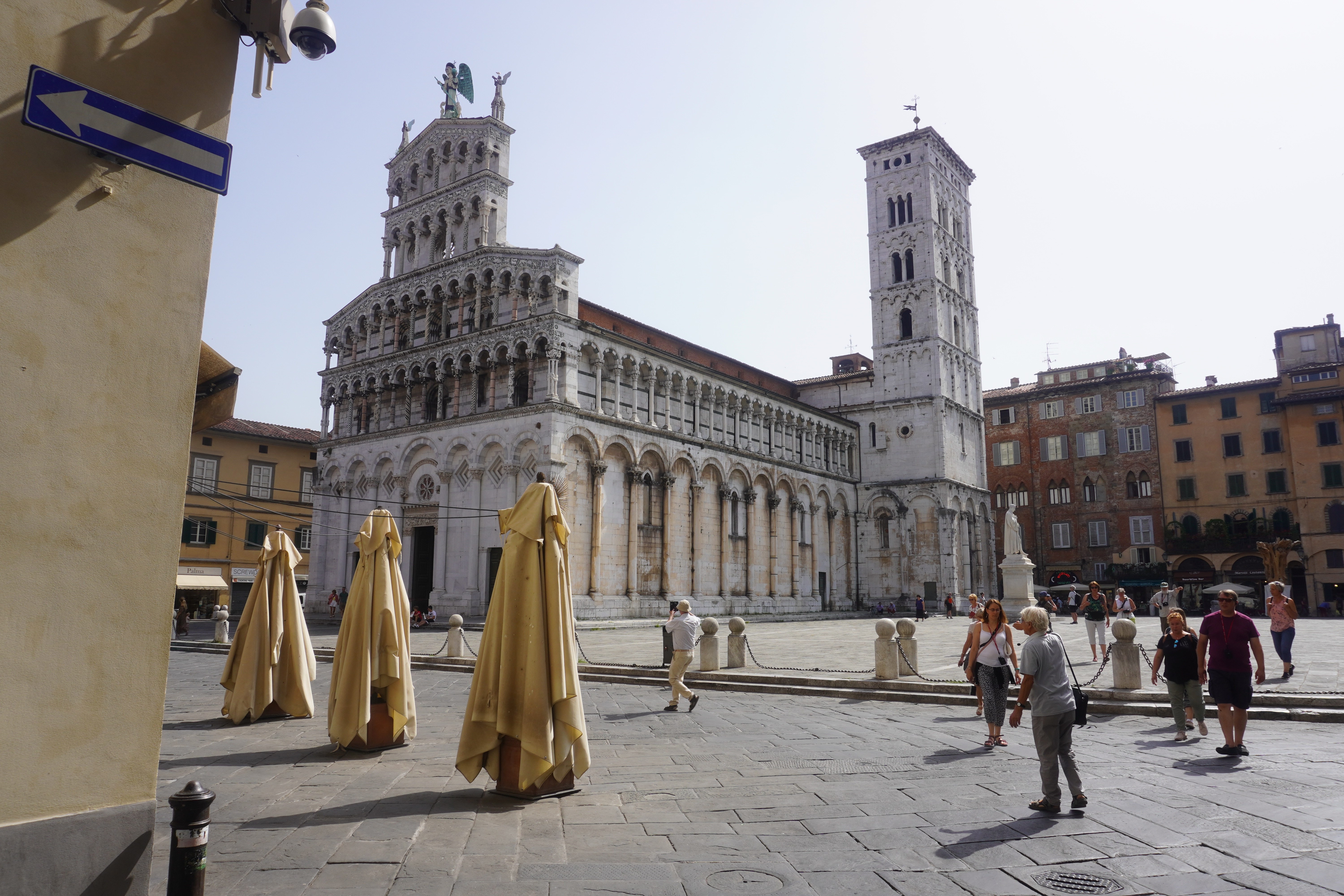
Miracles attributed to him led to his being moved from the church cemetery to inside the church and every June 3rd his remains are taken from underneath the main altar and exhibited to the faithful who make a special trip to the church to honor him. As we so often do, Joanna lit a candle for those we love, including Marty who needs all the candle lighting he can get, and soon thereafter we exited and continued our tour of the central part of town.

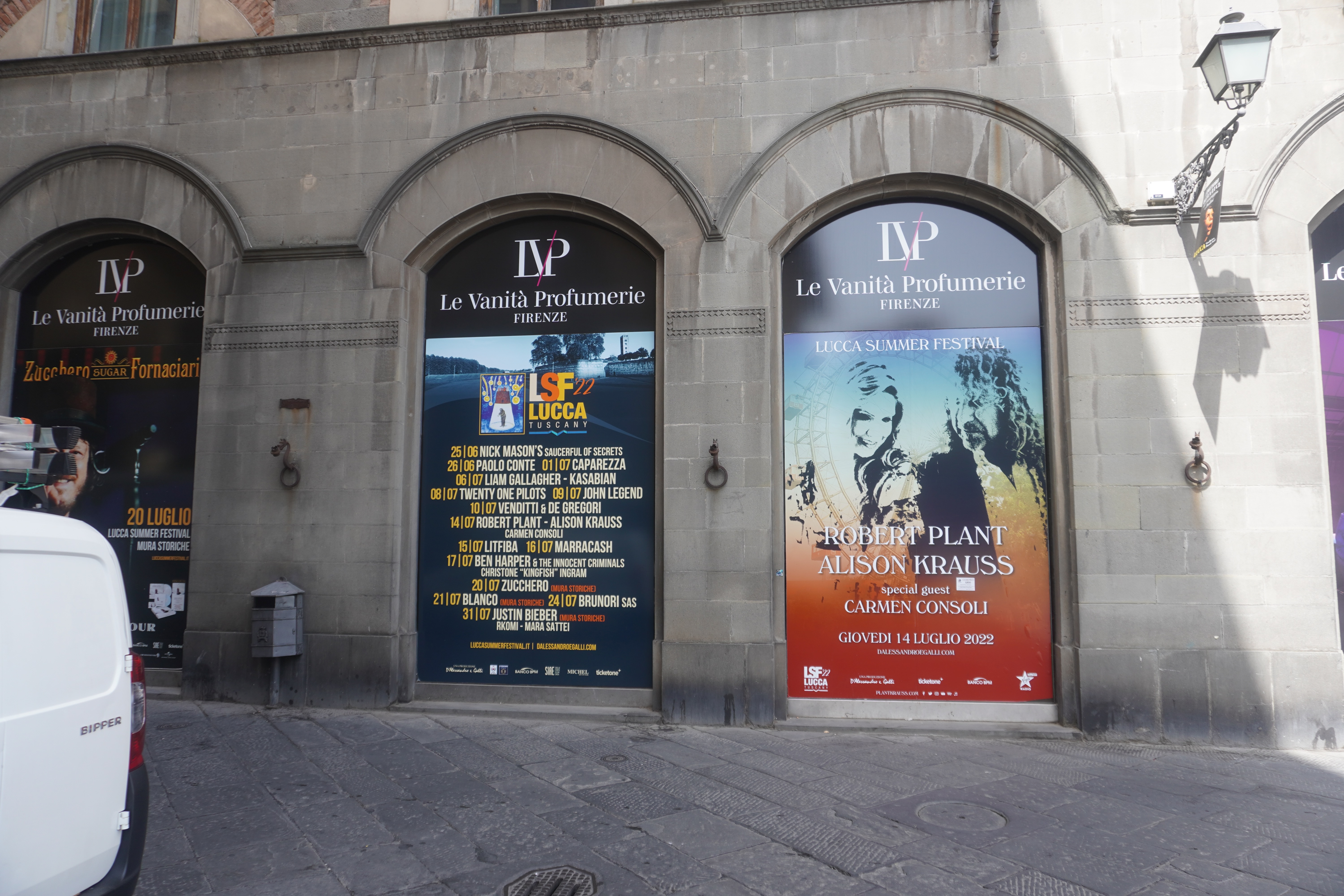
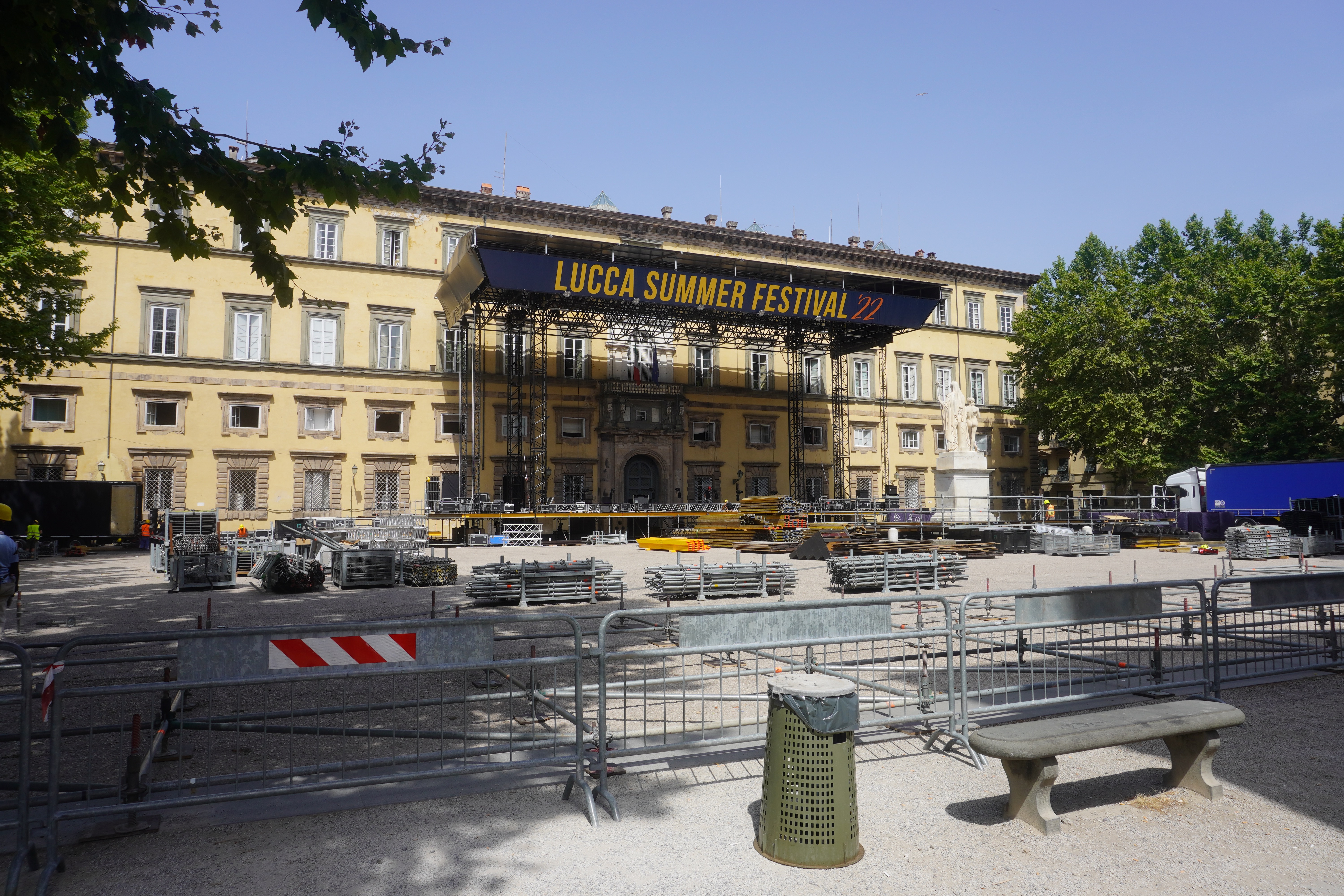
On the way to the cathedral, we’d passed a building with several posters promoting the Lucca Summer Festival, an annual series of concerts held in nearby Piazza Napoleone. We were sorry to see that we would be missing the July performance of Robert Plant and Alison Krauss and the lineup for the year looked to be very impressive. I’ve mentioned in prior posts how many European cities hold festivals and concerts in central plazas and ancient amphitheaters, contrasting the new with the old.
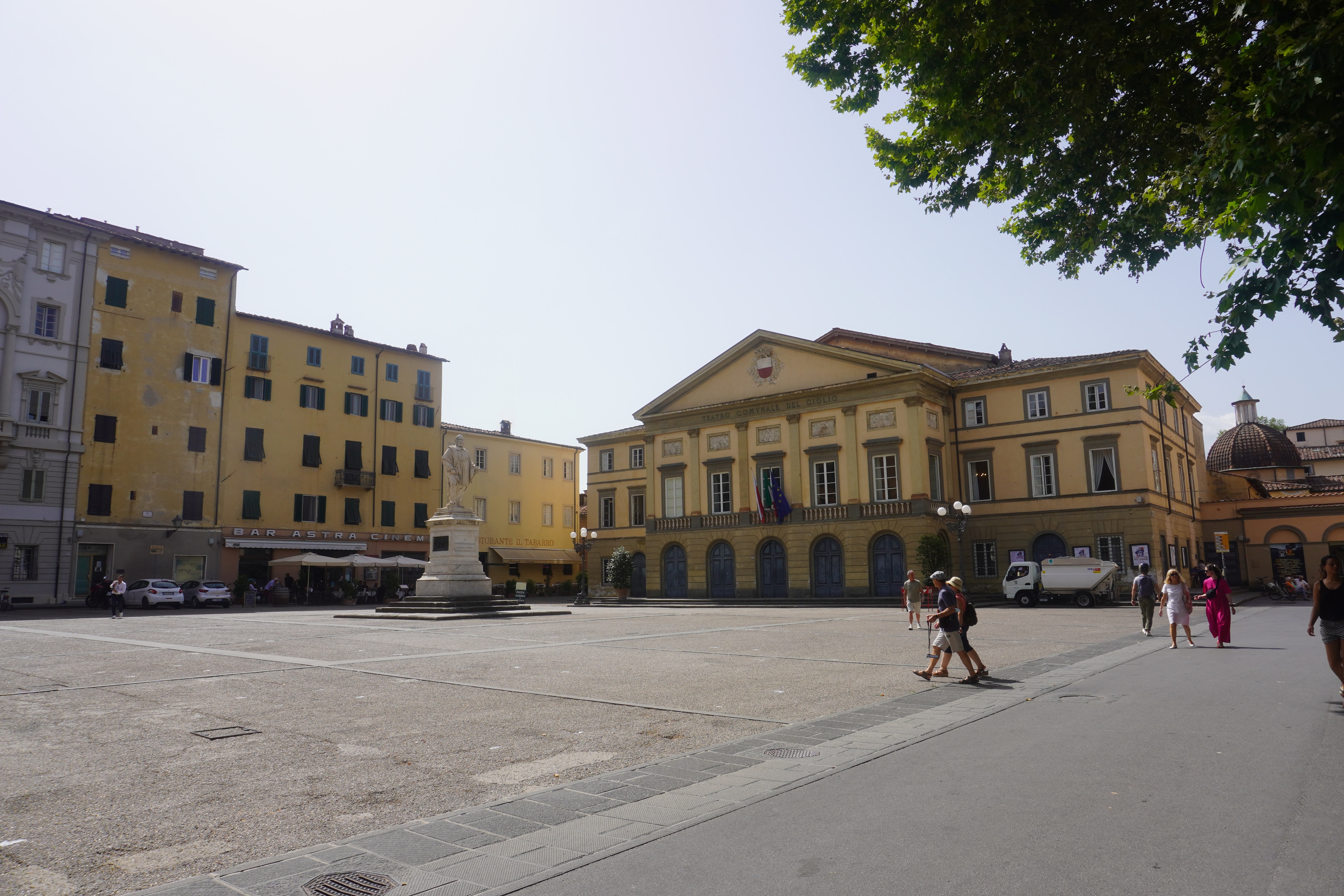
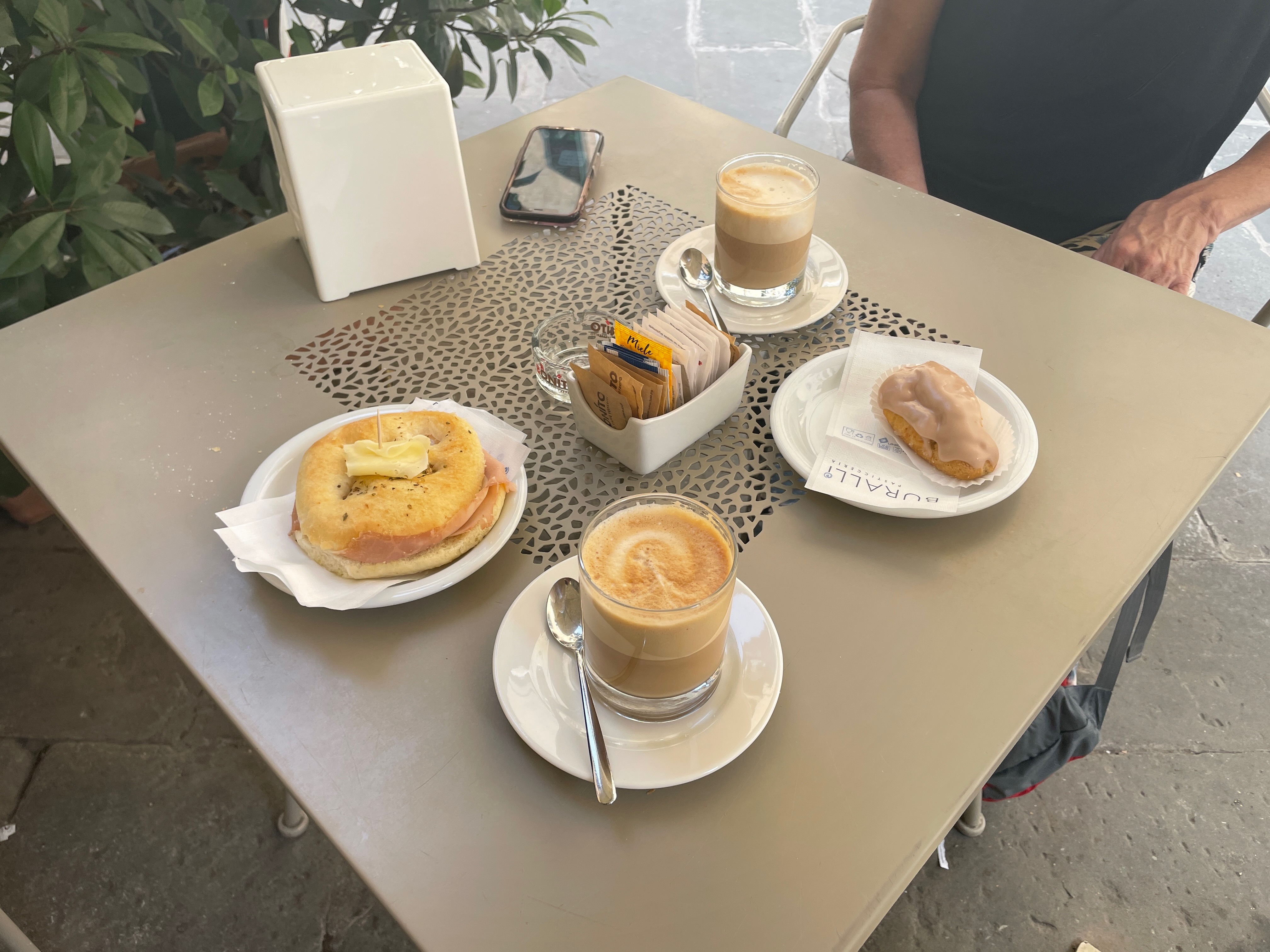
We continued walking south on Via Santa Chiara heading towards the city walls with the intent to hit a rental shop near the train station where we could rent a four-wheel pedal cart to traverse the city walls. Us being us, of course we had to stop along the way for one of our traditional mid-morning snacks, this time at Buralli Pasticceria, where two caffe lattes, a ham sandwich, and a delightful crème filled pastry provided fuel for the afternoon ahead, all for the reasonable sum of 9-Euros ($9.39).
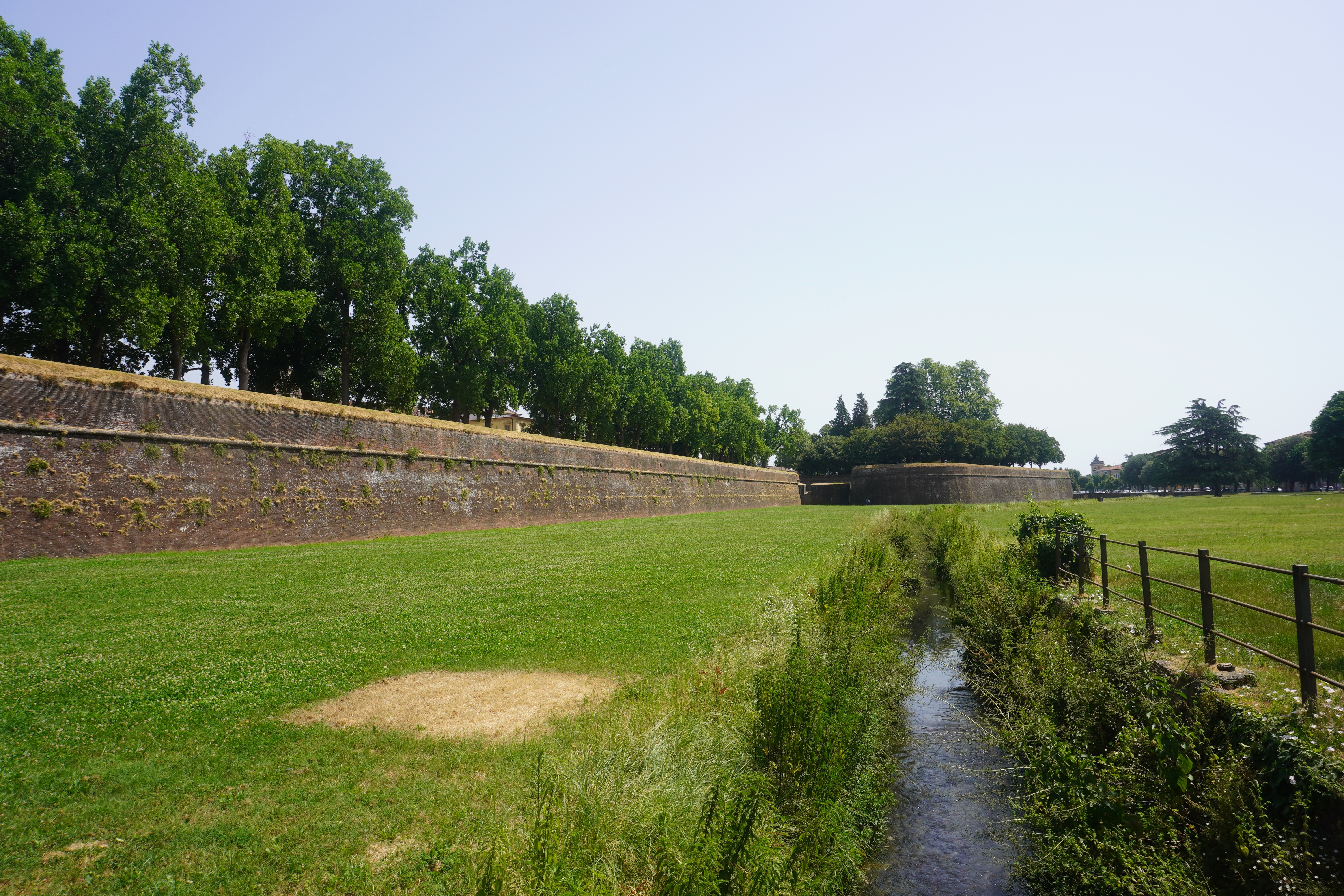
Suitably fortified, we continued on, past a bike store with a couple of beautiful Italian bikes (a celeste green Bianchi and a lovely Pinarello) and a little further on encountered the outer wall and crossed through a tunnel large enough to accommodate both cars and pedestrians to emerge on the outside, able to get a glimpse of the wall stretching far into the distance.


From there it was a couple of blocks to the plaza in front of the train station and the shop where for 25-Euros ($26.37) we would rent the four-wheel pedal cart that would transport us on top or the walls and around the city for the next four hours. Strapped in, we pedaled back to the tunnel through the wall and faced our first and only real challenge of the day, that is pedaling that damn cart up the steep ramp to the top of the wall.


The cart doesn’t have any gears and the seating position for someone of my height meant almost banging your knees on the dash but faced with the knowledge that failure to climb the ramp could potentially damage our reputations as world class cyclists, we sucked it up and with as much effort as we could muster, just barely crested the summit. From there it was smooth sailing as we pedaled along, stopping now and then to take a picture of others on the wall or the surrounding sights.
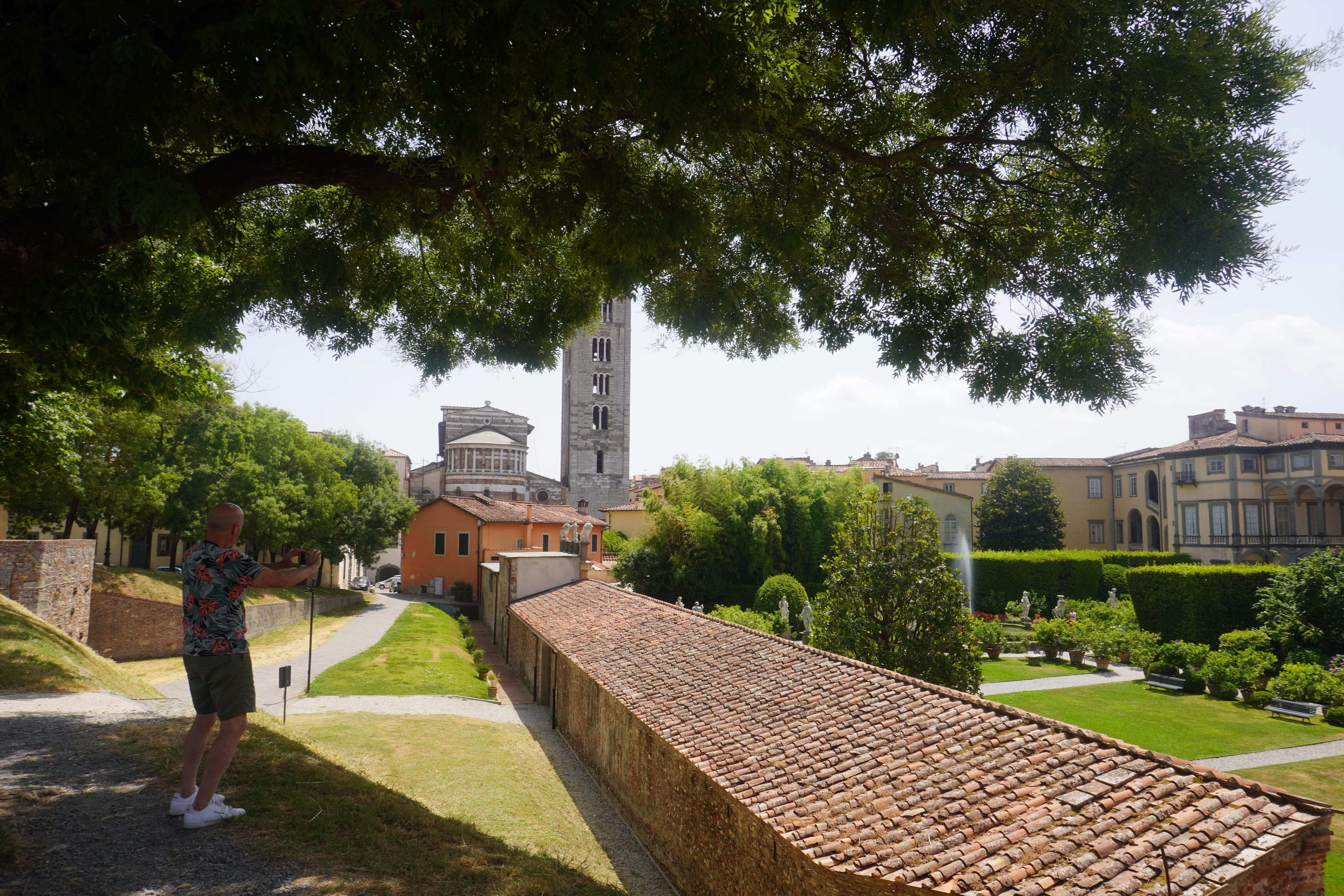
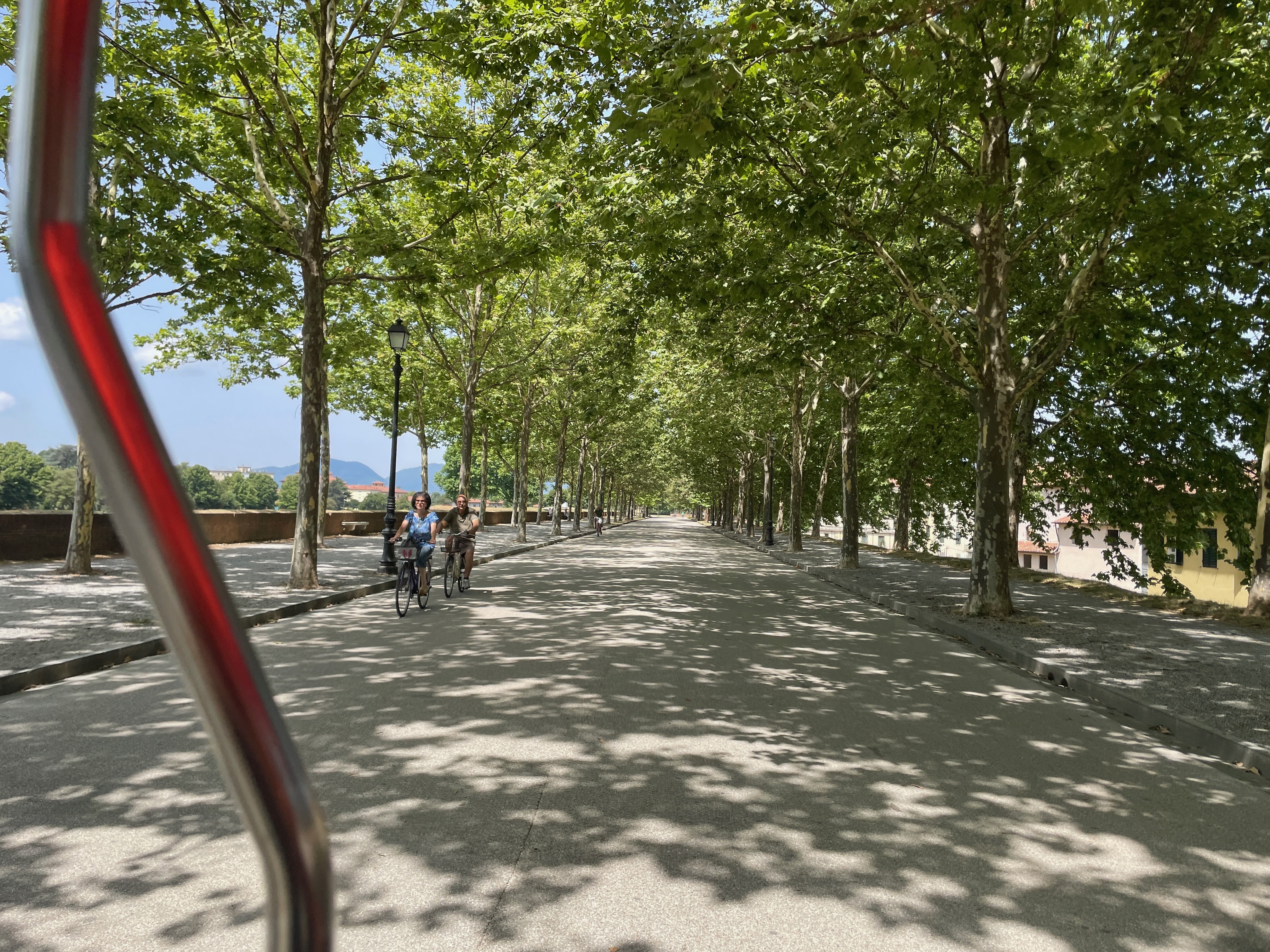
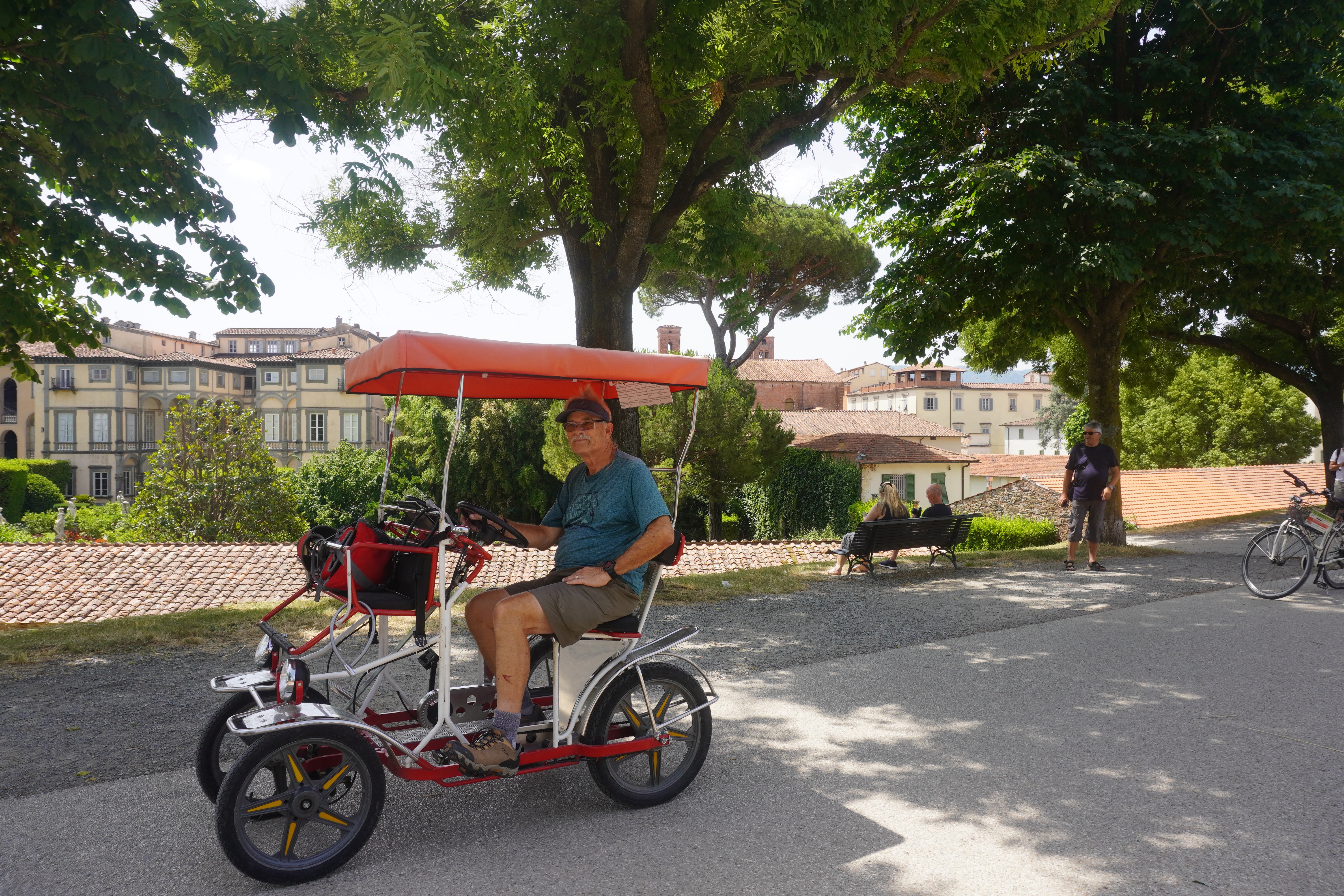
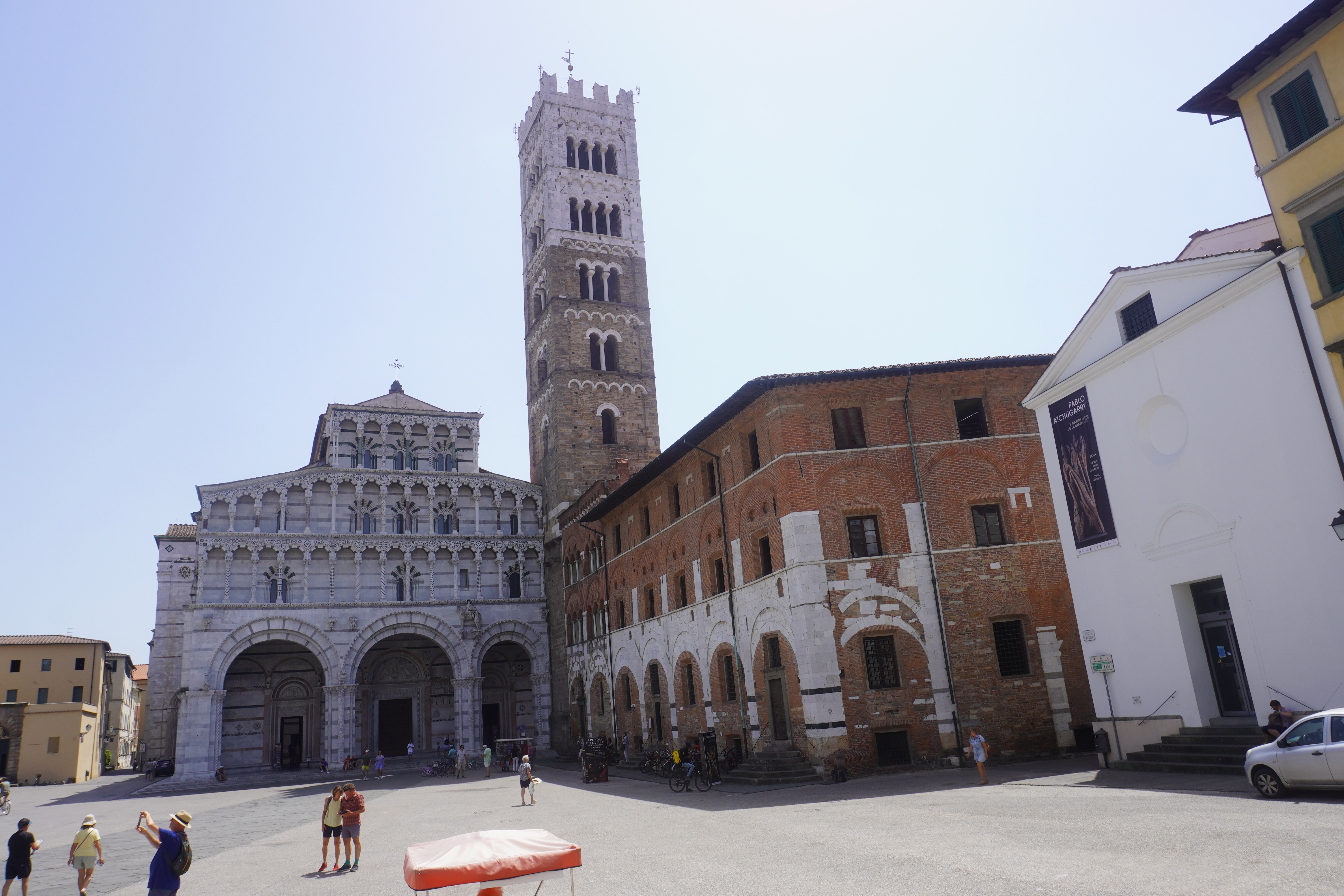
When we got about three-quarters of the way around, we decided to descend into the city and after navigating some, found ourselves at Lucca Cathedral, otherwise known as St. Martin’s Cathedral, the seat of the Archbishop of Lucca where construction was begun in 1063 by Bishop Anselm (later Pope Alexander II). Of the original structure, only the great apse with its tall columnar arcades and the fine campanile remains. The nave and transepts of the cathedral were rebuilt in the Gothic style in the 14th century, while the west front was begun in 1204 and consists of a vast portico of three magnificent arches, and above them three ranges of open galleries adorned with sculptures.
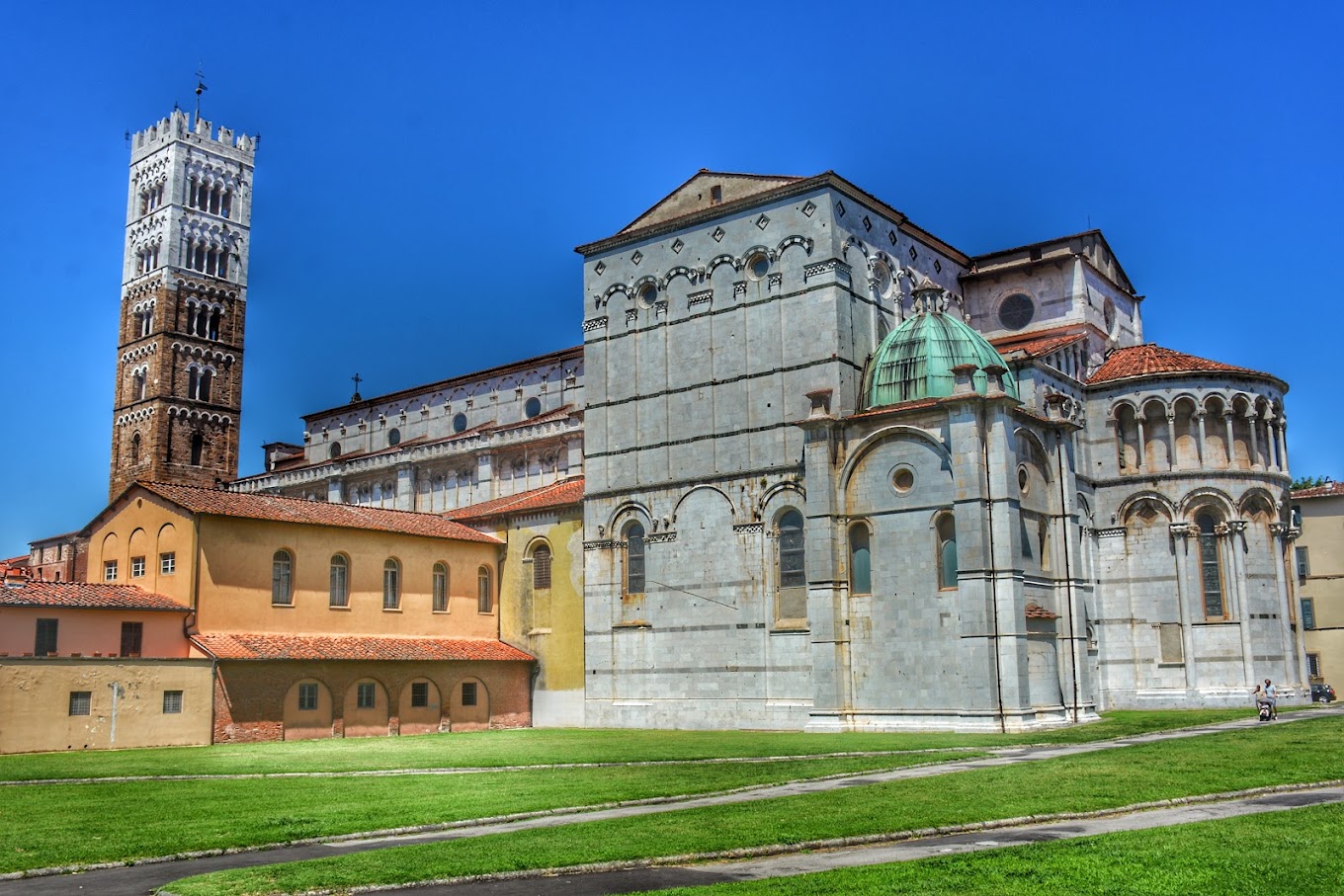
There is a legend to explain why all the columns of the façade are different. According to the tale, when they were going to decorate it, the inhabitants of Lucca announced a contest for the best column. Every artist made a column, but then the inhabitants of Lucca decided to take them all, without paying the artists and used all the columns.
We continued pedaling, navigating down narrow lanes drawing dirty looks from pedestrians wondering what the heck we were doing there, but soldiering on we eventually found ourselves back up in the northern part of town looking for, and finding, Piazza dell’Anfiteatro, a public square where the ring of buildings surrounding the square follows the elliptical shape of the former second century Roman amphitheater of Lucca.
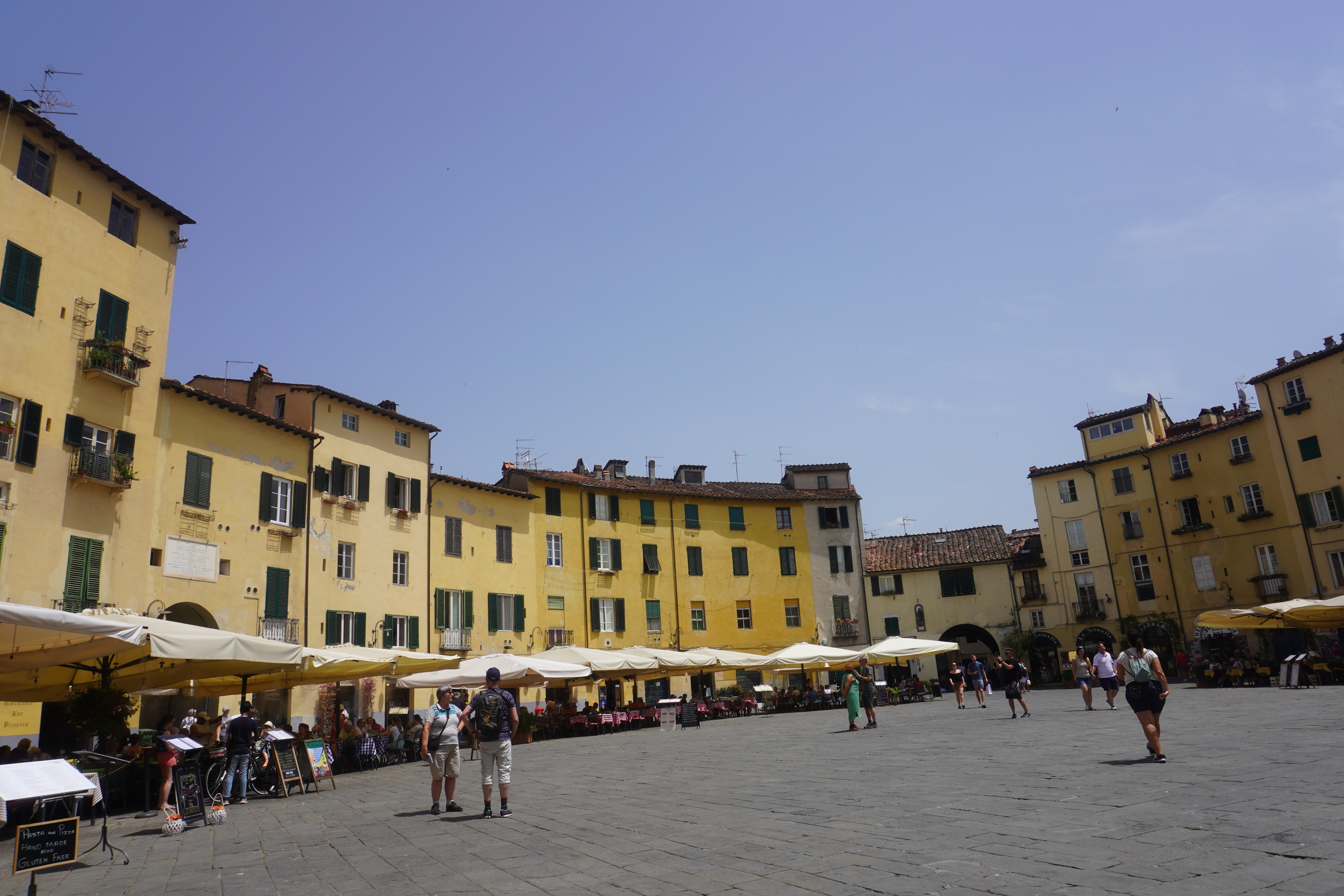
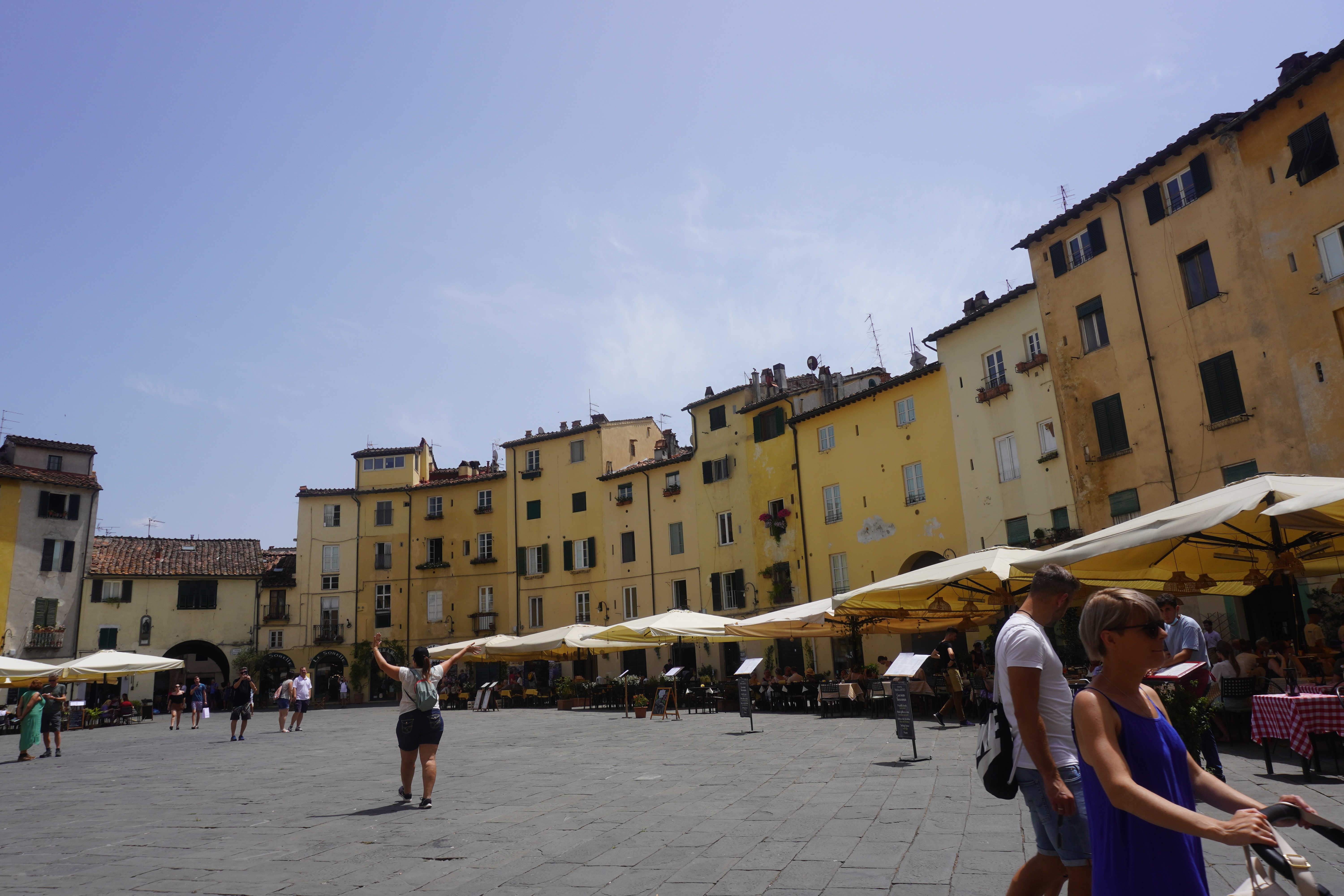
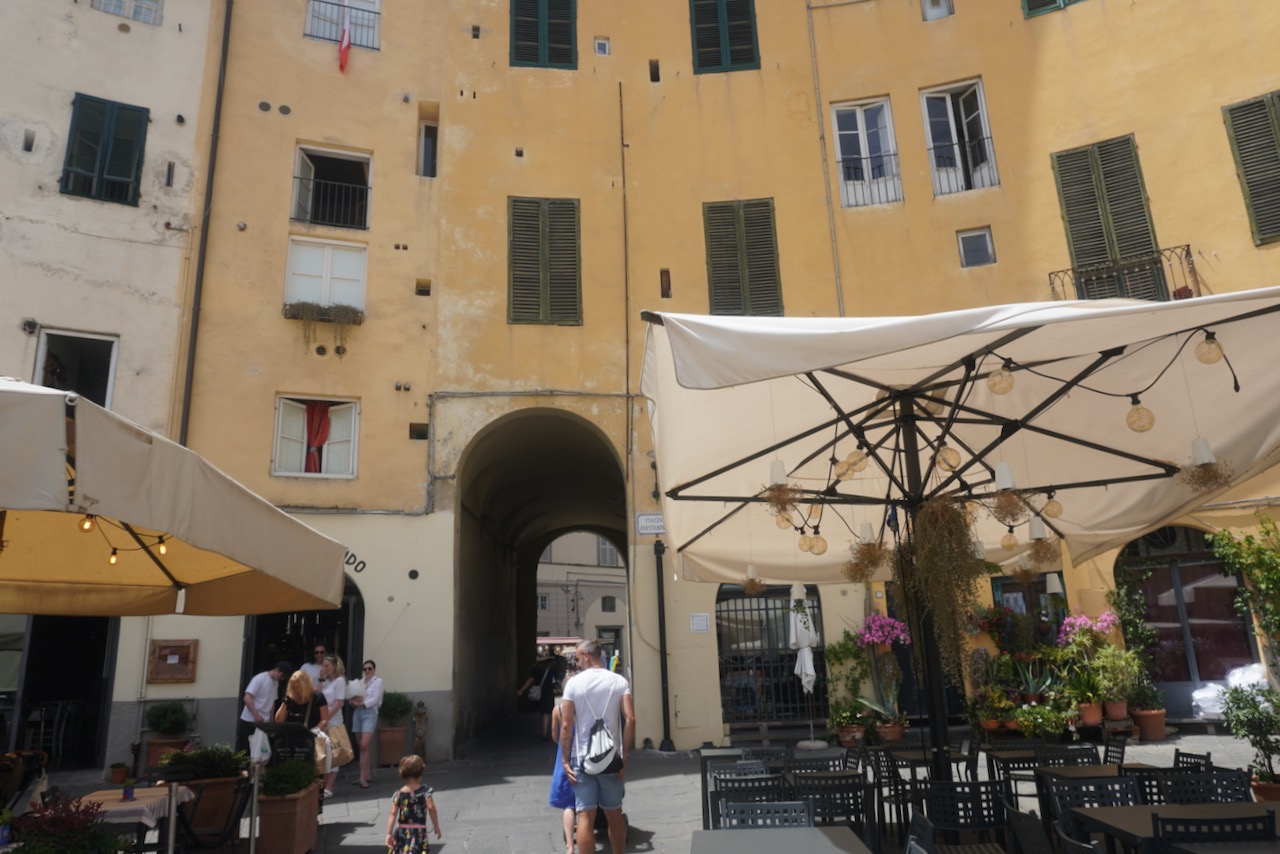
The square can be reached through four gateways located at the four vertices of the ellipse. A cross is carved into the central tile of the square with the arms pointing to the four gateways of the square. The base of the former amphitheater (dating back to the 1st or 2nd century BC) is now some 3 meters below the center. At its peak about 18 rows of amphitheater seats held some 10,000 spectators. It is now an urban piazza, surrounded by private residences built using the remaining structures of the Amphitheatre, and occupied by several outdoor cafes, created in 1830 by the architect Lorenzo Nottolini who razed some of the buildings inside the oval.
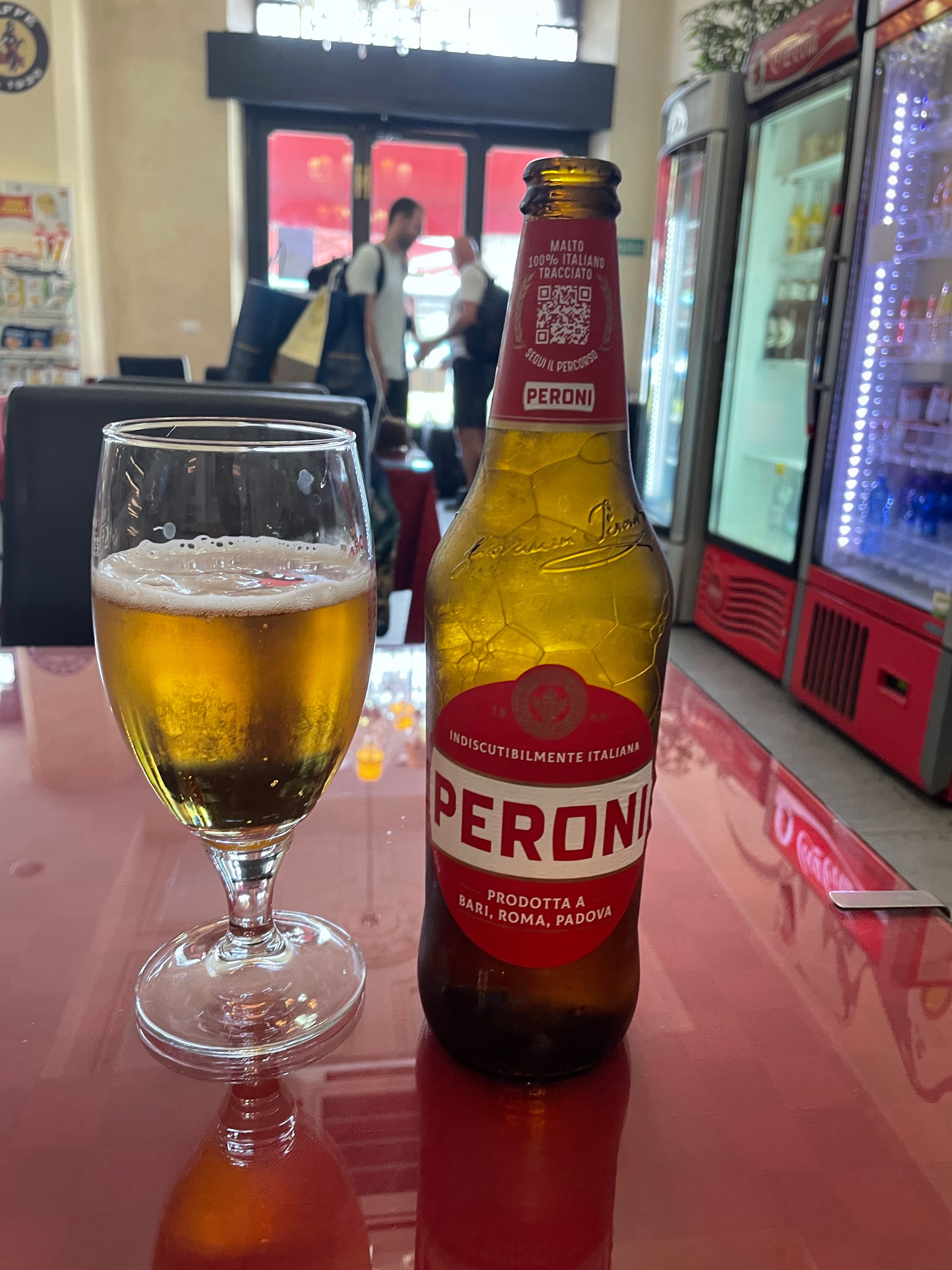
By now, we’d covered quite a bit of territory, so we decided to return the cart to the shop, a journey through the winding streets that continued to provide us with a good look at life in Lucca. We dropped off the cart and my ability to walk being somewhat limited, Joanna went in search of the cities ancient viaduct while I took up residence in a café near the train station to enjoy a big beer and a bag of chips.
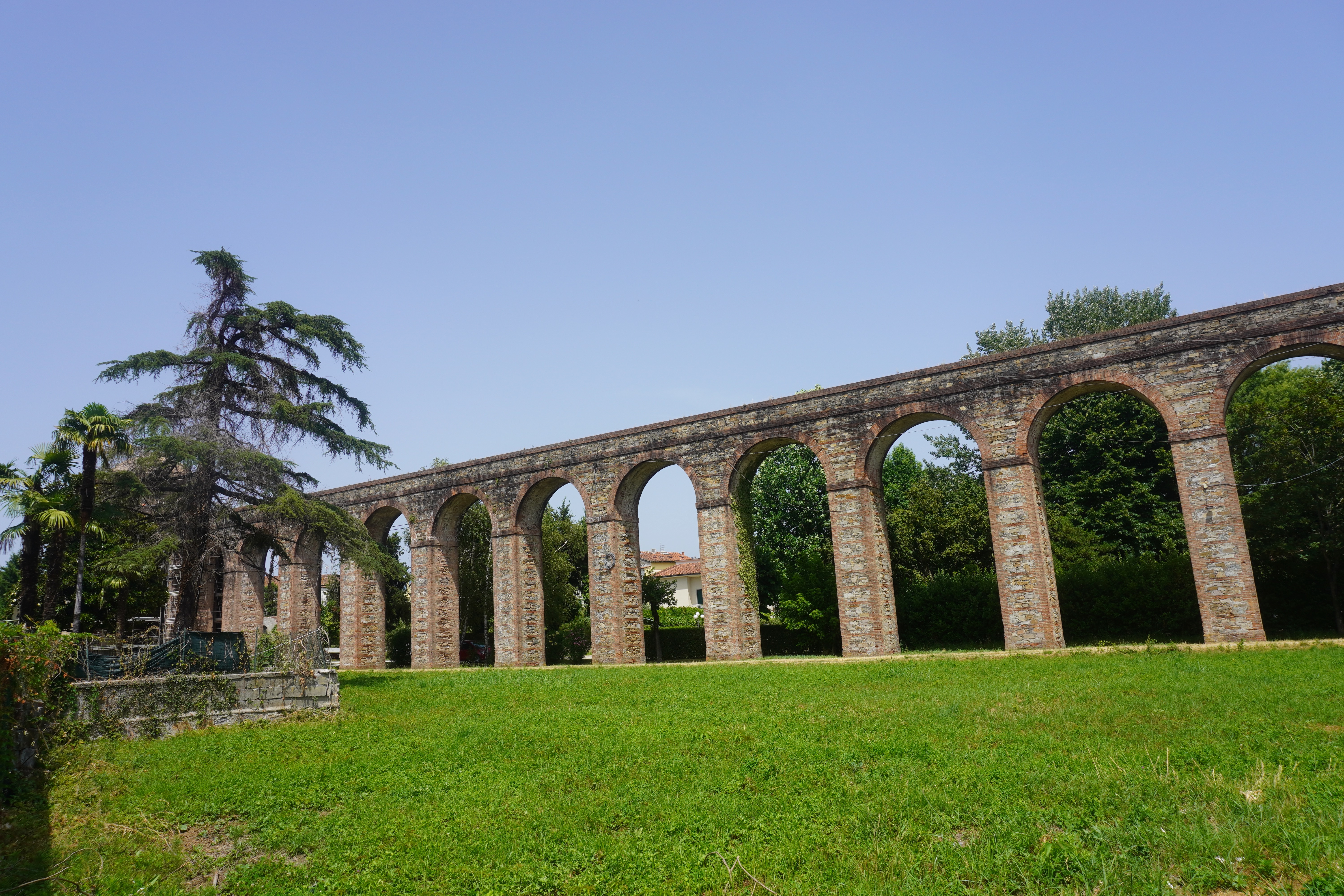
The Neoclassical Aqueduct of Nottolini brought water to Lucca from the mountains south of the city through a stone channel supported by more than 400 arches, stretching nearly two miles. While the arches of the aqueduct are often confused as being those of an ancient Roman aqueduct, construction of the aqueduct was begun in 1823 by the architect Lorenzo Nottolini, under the rule of Maria Luisa of Spain, Duchess of Lucca, and continued until 1851.
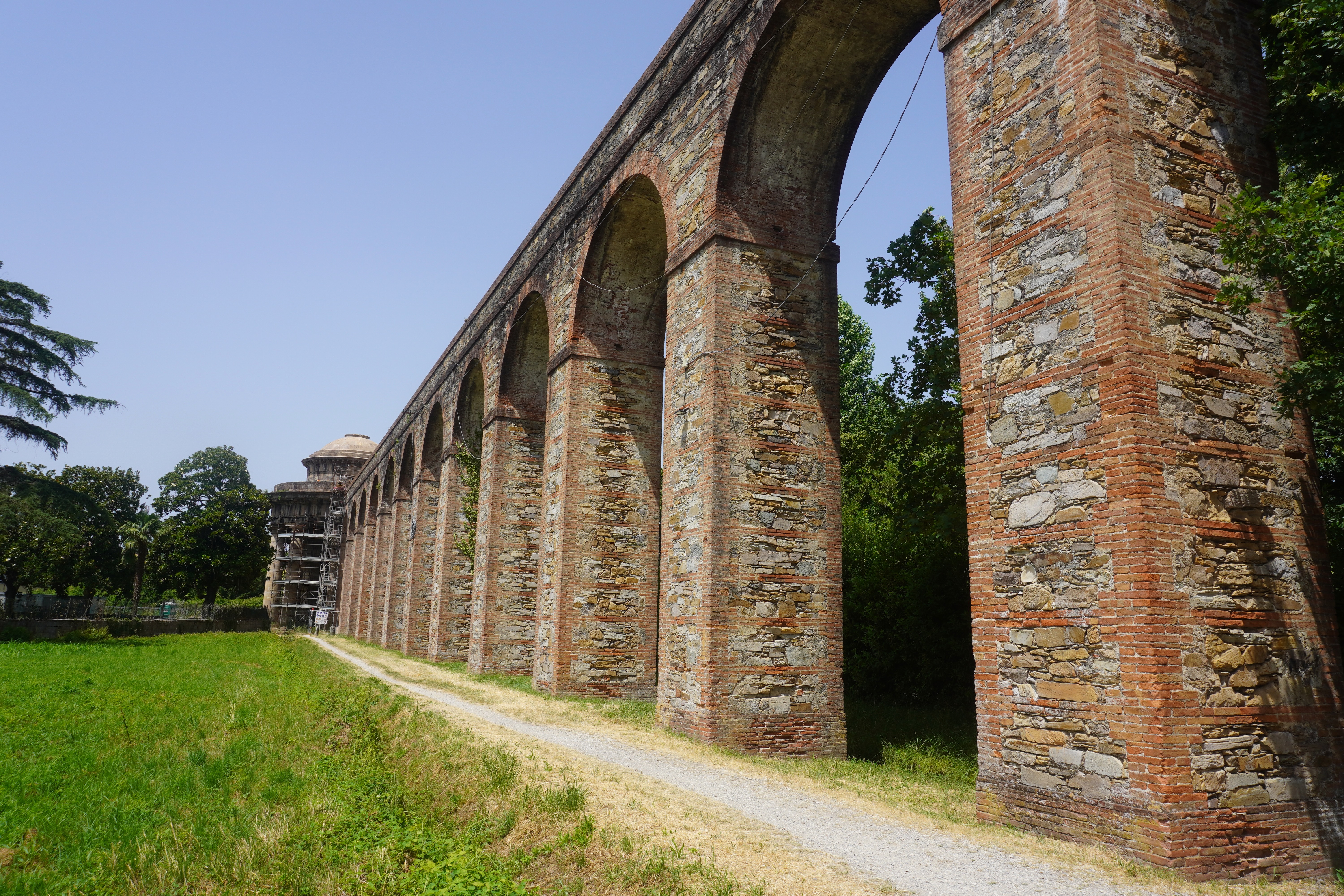
In the slopes of Monte di Vorno, several springs were conveyed through rocky channels to a domed circular stone temple-cistern. From there the water was then conveyed northward through covered stone conduits to the temple-tank of San Concordio, just outside the fortified walls of Lucca. The arches were mainly built with brick. From the San Concordio tank, potable water was led by metal pipes into fountains in the city, starting with the circular fountain in Piazza Antelminelli next to Lucca Cathedral.
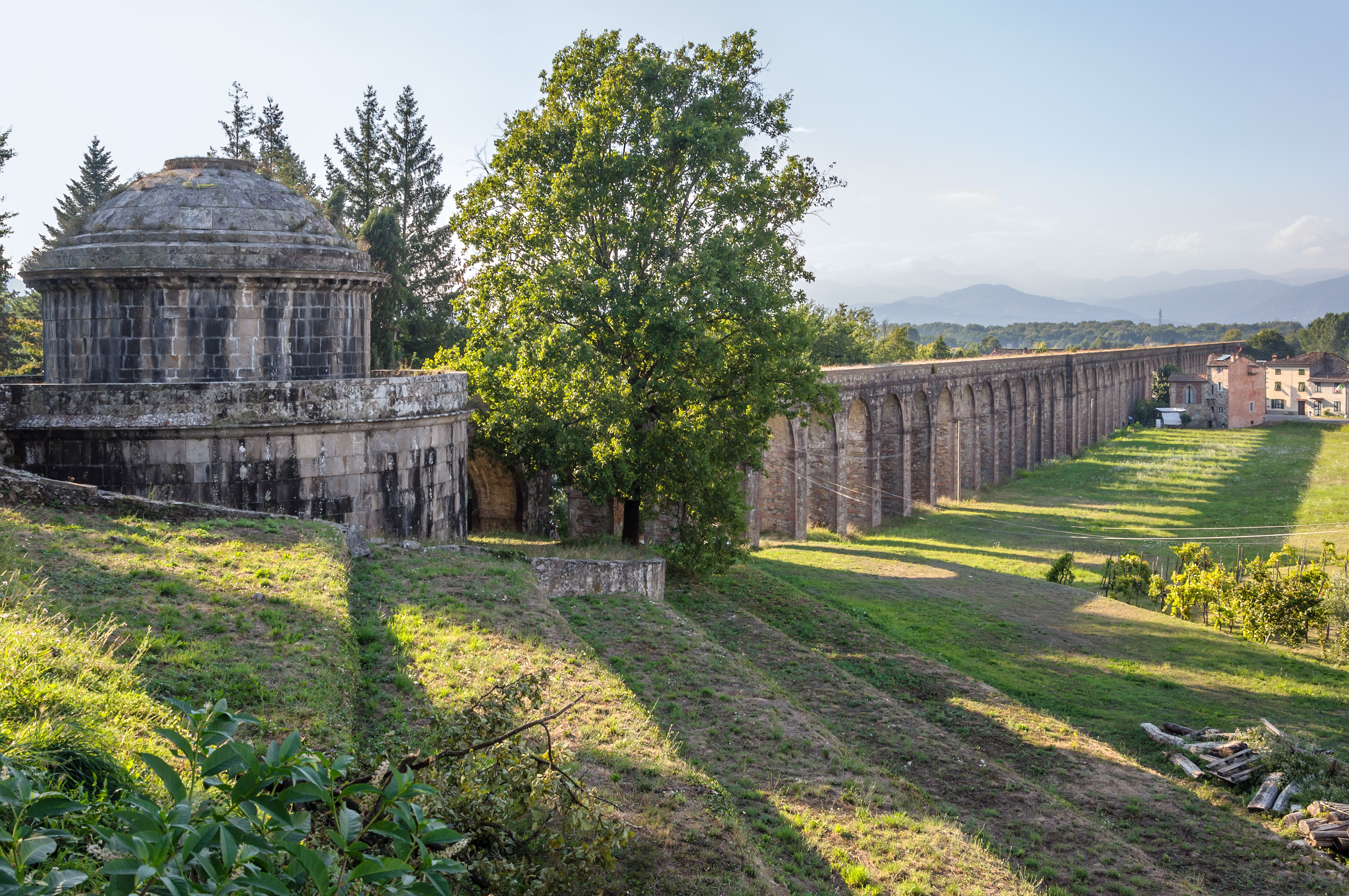
When inaugurated, the flow of water was governed completely by gravity. The final iron conduits allowed for expansion and contraction of the metal. The aqueduct today is still structurally intact but is no longer used to carry water as it was interrupted by the construction of an autostrada by Benito Mussolini’s government in 1928–1932.
After her tour, Joanna joined me at the café, and we returned to the apartment to relax before our eagerly anticipated dinner. We’ll cover that and our final day in and around Lucca in the next post.
Links
Lucca Summer Fest: https://www.italyscapes.com/events/tuscany/lucca/annual-festivals/lucca-summer-festival-2023/
Chiesa di San Michele:
Buralli Pasteicceria: http://www.pasticceriaburalli.com/en/home-2/
St. Martin’s Cathedral: https://www.museocattedralelucca.it/
Piazza dell’Anfiteatro: https://www.atlasobscura.com/places/piazza-dell-anfiteatro
Aqueduct of Nottolini: https://www.bella-toscana.com/acquedotto-del-nottolini-lucca/
Discover more from 3jmann
Subscribe to get the latest posts sent to your email.


 3jmann