June 20 – 22
As we resume our time in Pisa, we left the Baptistry and walked across the property to the two long buildings known as the Camposanto Monumentale or Monumental Cemetery. This walled cemetery is said to have been built around a shipload of sacred soil from Calvary, brought back to Pisa from the Third Crusade by Ubaldo de’ Lanfranchi, the archbishop of Pisa in the 12th century. This is where the name Campo Santo (Holy Field) originates.

The building itself dates from a century later and was erected over the earlier burial ground. The construction of this huge, oblong Gothic cloister began in 1278 by the architect Giovanni di Simone but was not completed until 1464. The outer wall is composed of 43 blind arches, there are two doorways and most of the tombs are under the arcades, although a few are on the central lawn. The inner court is surrounded by elaborate round arches with slender mullions and lobed tracery.
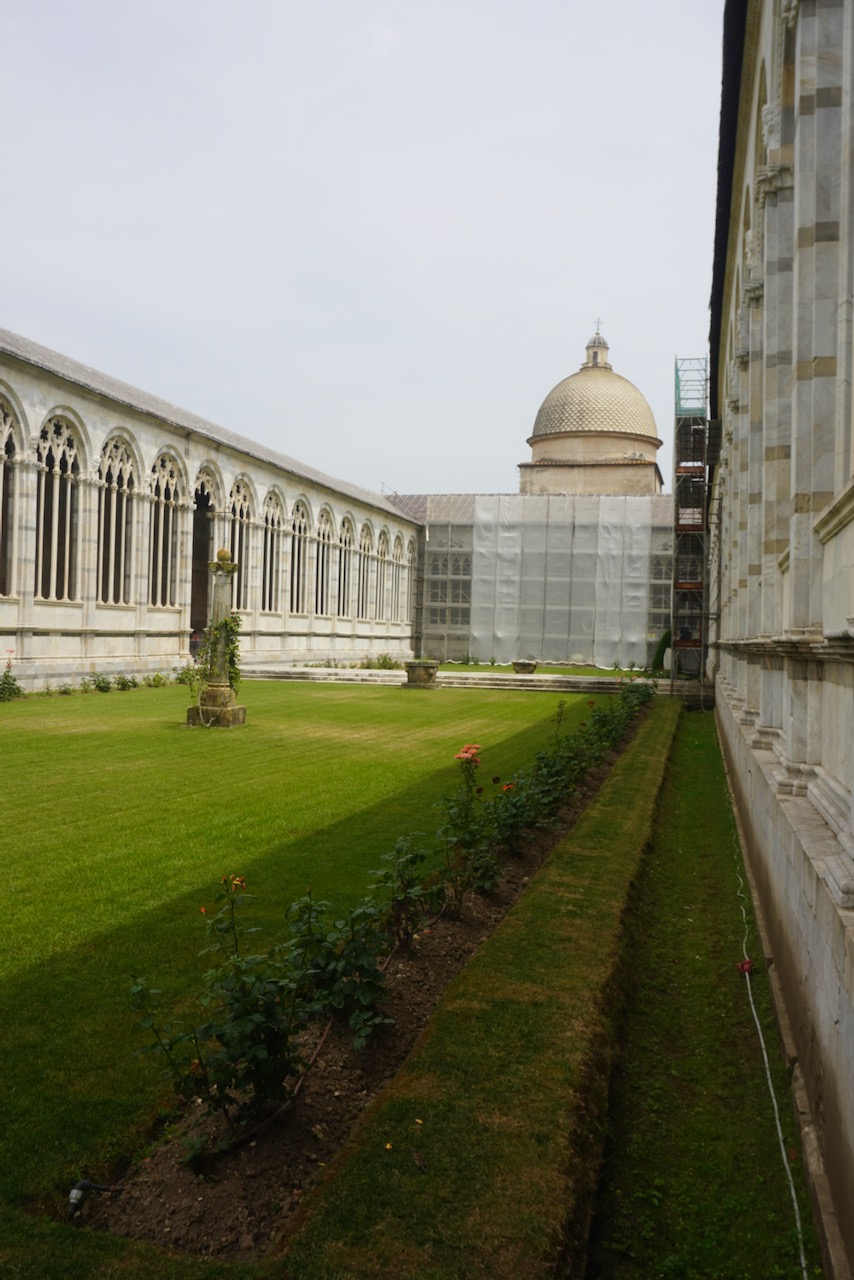
The Campo Santo once contained a large collection of Roman sculptures and sarcophagi, but now there are only 84 remaining. The walls were once covered in frescoes, the first were applied in 1360, the last about three centuries later. The most remarkable fresco is The Triumph of Death, a realistic work by Buonamico Buffalmacco. On 27 July 1944, incendiary bombs dropped by Allied aircraft set the roof of the building on fire and covered them in molten lead, all but destroying them. Since 1945, restoration works have been going on and now the Campo Santo has been brought back to its original state.

By now we were just about done with our visit to Pisa except for the Tower, which we had decided not to climb given time constraints, the additional cost and how many other towers we’ve climbed throughout our tourist history. Known in Italy as the campanile (bell tower), it is the last of the three major buildings on the piazza to be built, construction having began in 1173 and taking place in three stages over the course of 177 years, with the bell-chamber added in 1372.
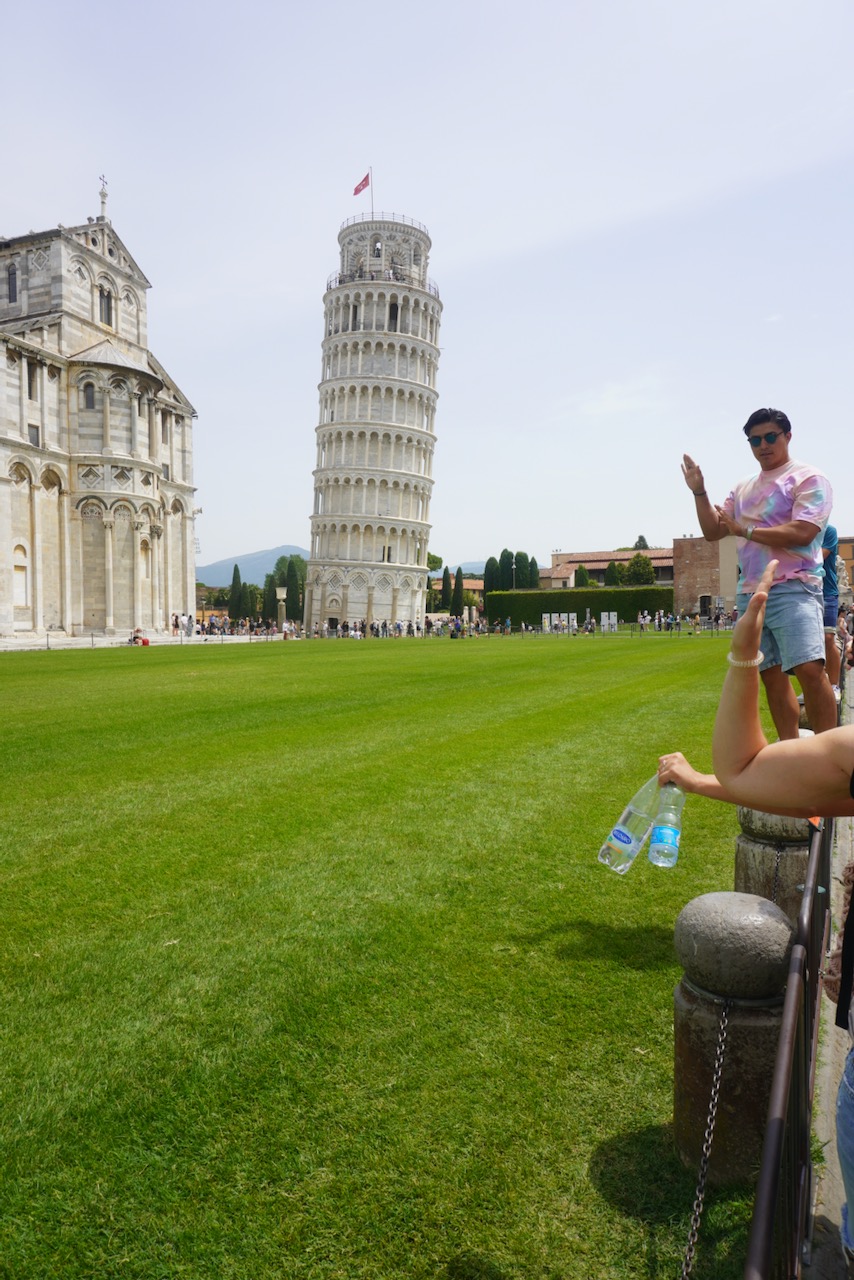
Five years after construction began, when the building had reached the third-floor level, the weak subsoil and poor foundation led to the building sinking on its south side. It was left for a century, which allowed the subsoil to stabilize itself and prevented further collapse. In 1272 during ongoing construction, to adjust the lean of the building the upper floors were built with one side taller than the other. The seventh and final floor was added in 1319.
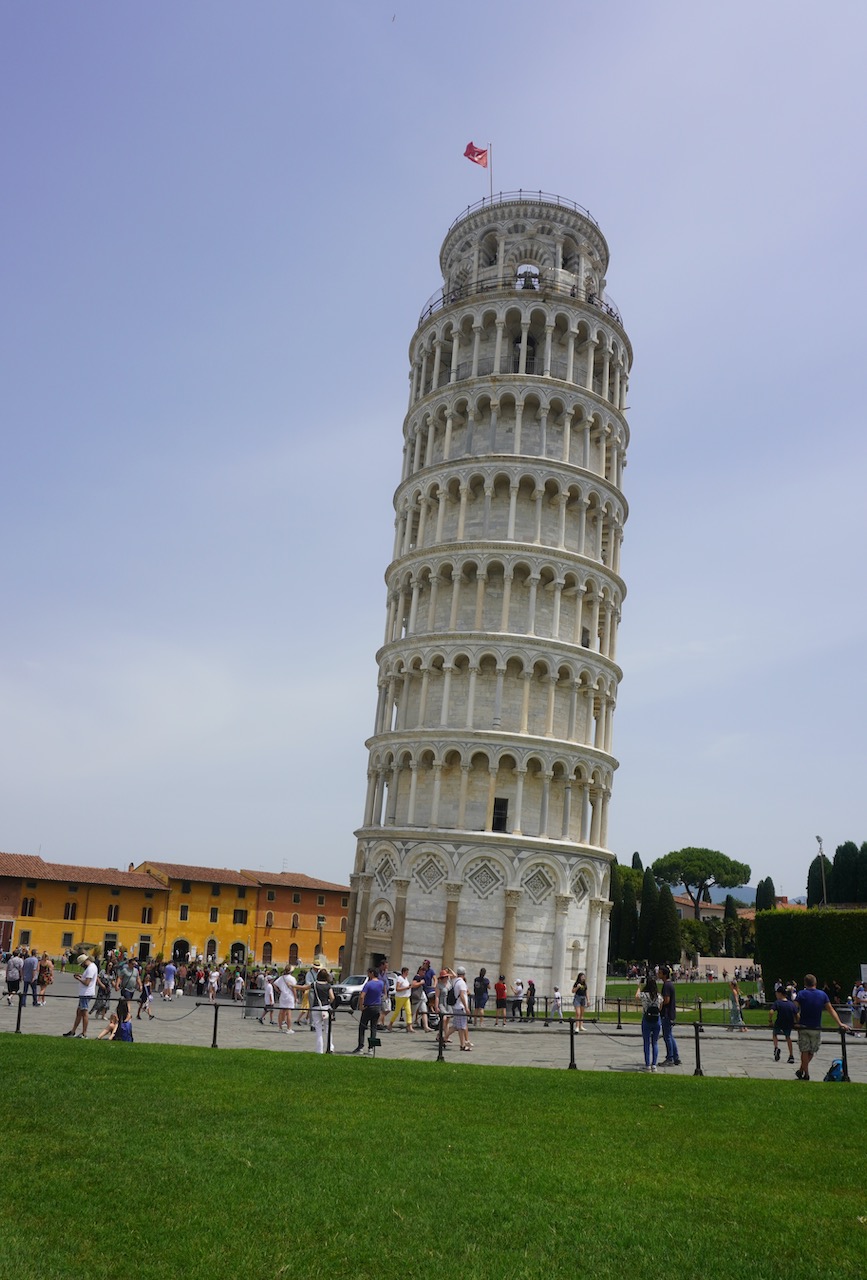
By the time the building was completed, the lean was approximately 1 degree, or 2.5 feet from vertical. At its greatest, measured prior to 1990, the lean measured approximately 5.5 degrees. As of 2010, the lean was reduced to approximately 4 degrees. The height of the tower is 183 feet 3 inches from the ground on the low side and 185 ft 11 inches on the high side. The width of the walls at the base is 8 ft and Its weight is estimated at 16,000 tons. The tower has 296 or 294 steps; the seventh floor has two fewer steps on the north-facing staircase.
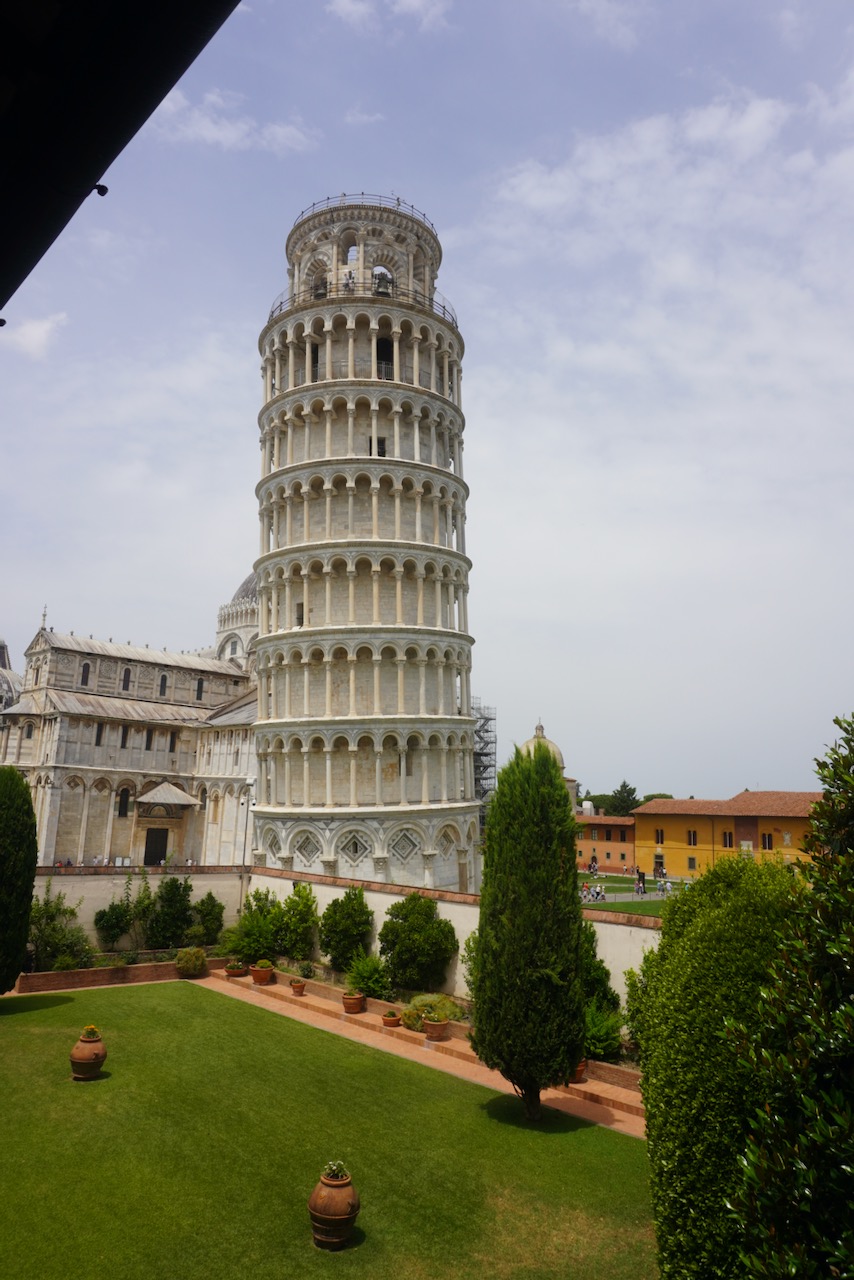
At least four strong earthquakes have hit the region since 1280, but the apparently vulnerable tower survived. The reason was not understood until a research group of 16 engineers investigated and concluded that the tower was able to withstand the tremors because of dynamic soil-structure interaction: the height and stiffness of the tower, together with the softness of the foundation soil, influences the vibrational characteristics of the structure in such a way that the tower does not resonate with earthquake ground motion. Thus, the same soft soil that caused the leaning and brought the tower to the verge of collapse has helped it survive.
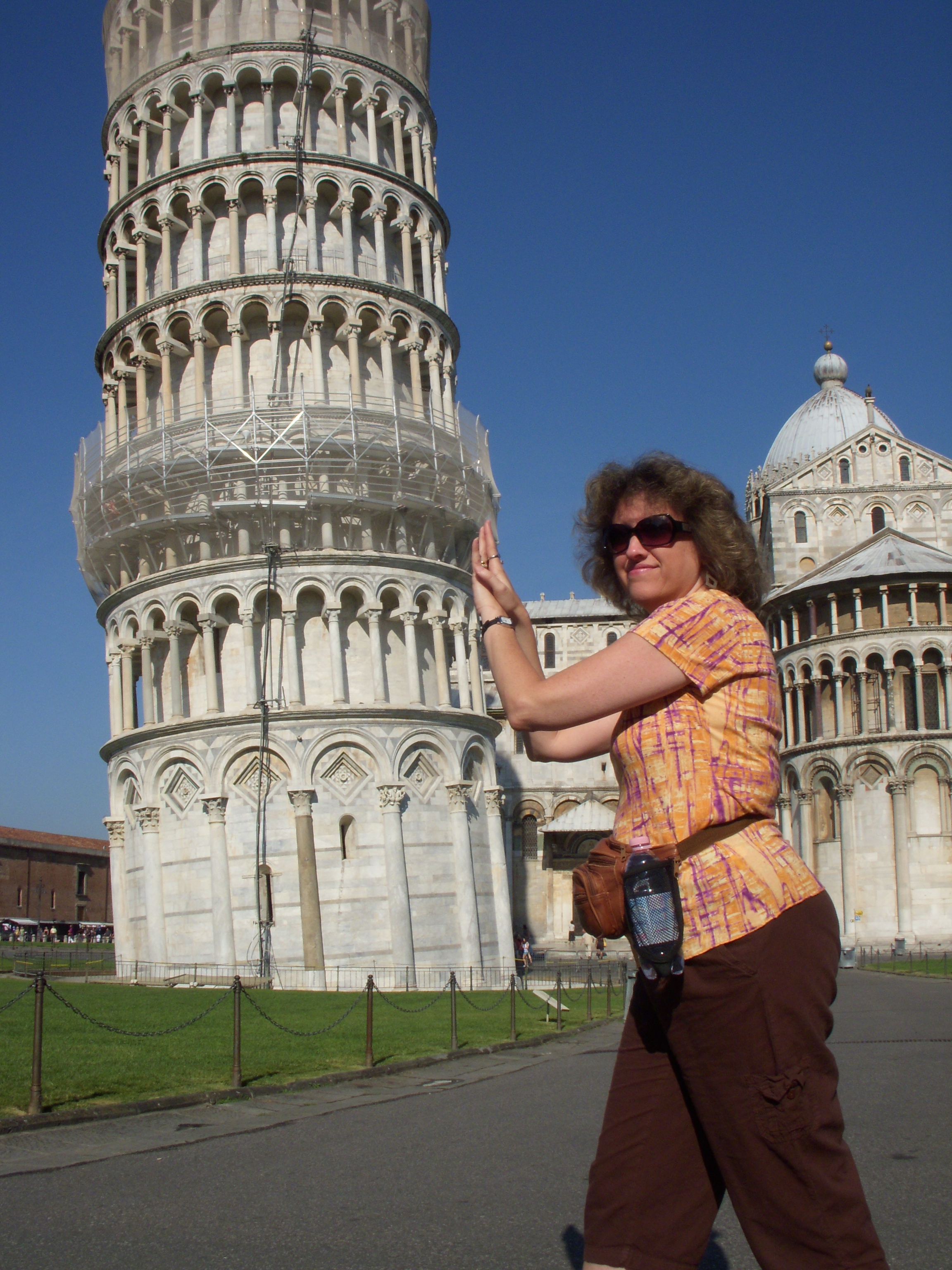
The tower was closed to the public in January 1990 when work on its stabilization began. The selected method for preventing the collapse of the tower was to slightly reduce its tilt to a safer angle by removing 1,342 cubic feet of soil from underneath the raised end. The tower’s tilt was reduced by 17-1⁄2 inches, returning it to its 1838 position. In 1993, nearly 1,000 tons of lead counterweights were added, another tool to aid in straightening. After a decade of corrective reconstruction and stabilization efforts, the tower was reopened to the public in December 2001, and was declared stable for at least another 300 years.

We left the tower standing and exiting the plaza, retraced our steps back to the station where we caught the train back to Lucca. It had been a good day and after relaxing at the apartment, we set out for our last dinner in town, returning to Pizzeria Itaco as it was close by, reasonably priced and we so enjoyed our first meal there.
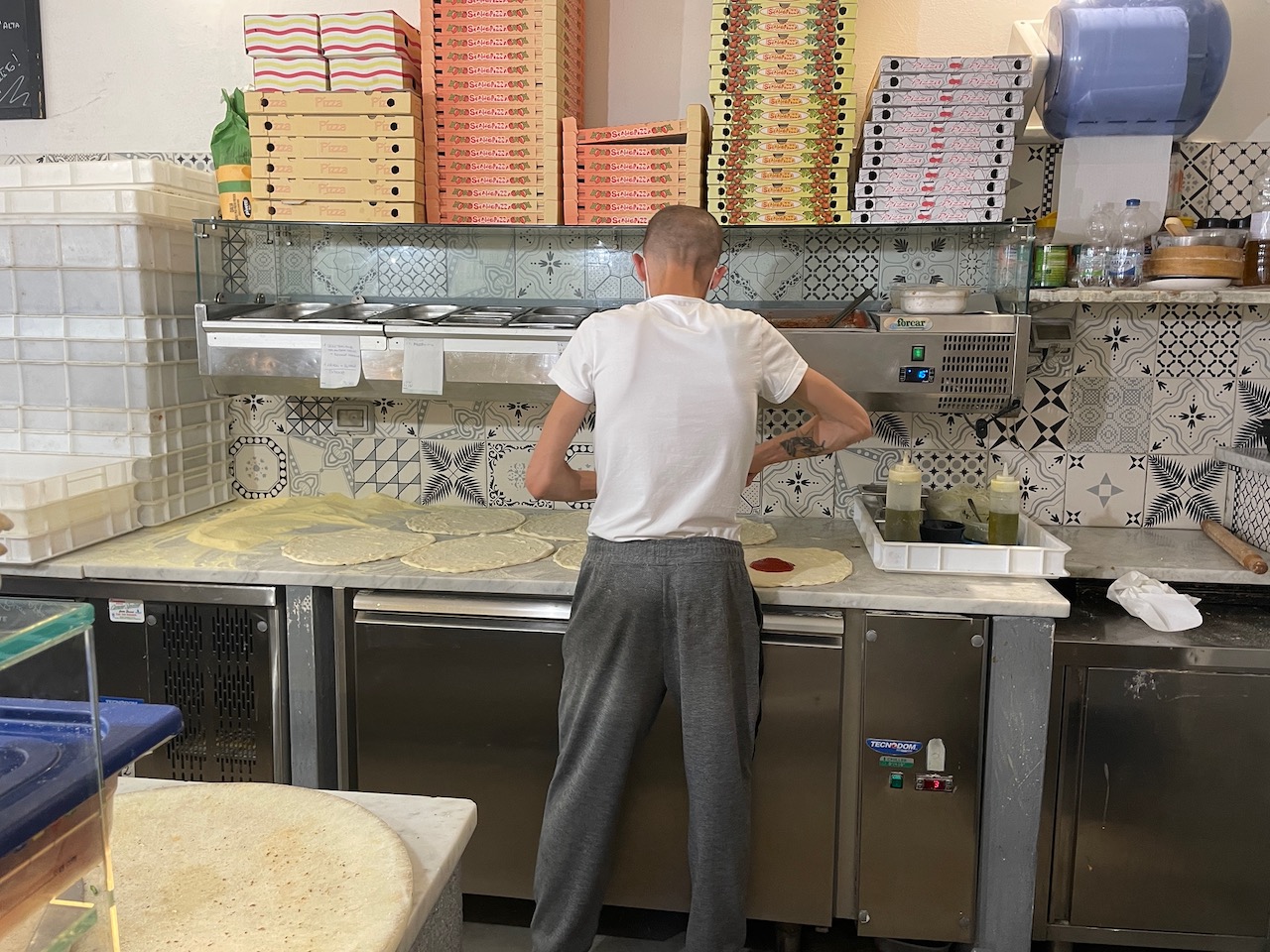
We had no doubt as to what we would be ordering as we’d been in Italy for a few days and had yet to enjoy a pizza, so we ordered a Glicine which came with ham, mushrooms, olives and artichokes, along with a half-liter of house red wine and a small bottle of water.
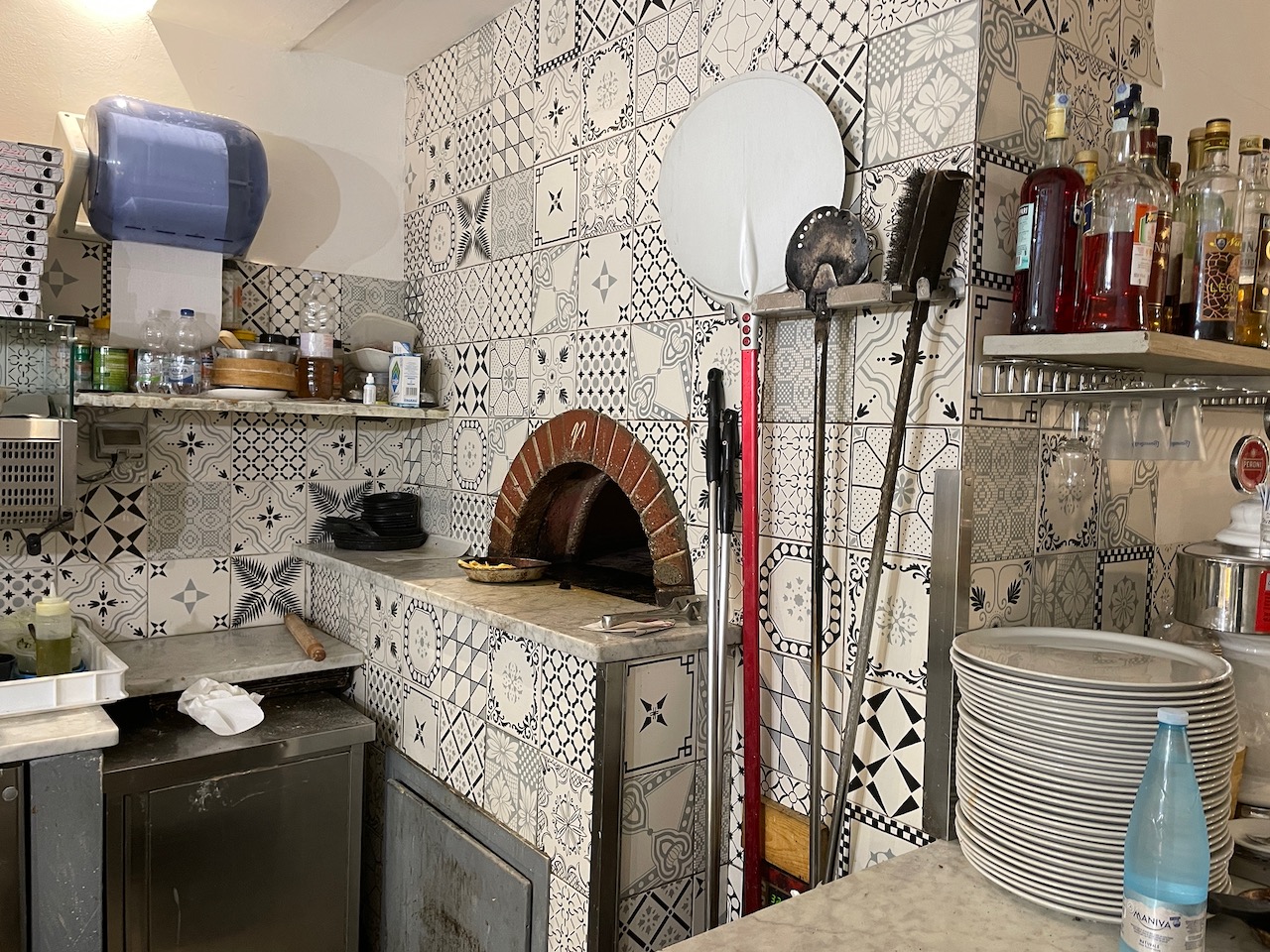
It arrived and we dived in, delighted with our selection and we found it easy, even though we don’t usually consume an entire pizza between the two of us, to demolish it including all the crust. The good house red aided in consumption, just the right balance against the tomato sauce, a fine way to complete our stay in Lucca. And with a tab totaling just 20-Euros ($21.17), roughly the cost of just a pizza alone at home, how could one go wrong?

After dinner, with a long day of travel on the train on the horizon and being a bit tired out from our full day of activity in Pisa, we collapsed at the apartment and prepared for an early departure the next morning. Lucca had been a joy for us, clouded a bit by the knowledge that we had planned to spend our time here with Tony and Cathy. I’m sure though, that he was smiling down on us from the big bike shop in the sky as we pedaled that four-wheel cart around the walls. His spirit gave us wings that day.
Links
The Leaning Tower of Pisa: https://www.towerofpisa.org/
Pizzeria Itaco: https://www.yelp.com/biz/pizzeria-itaco-lucca
Discover more from 3jmann
Subscribe to get the latest posts sent to your email.


 3jmann