June 25 – 27
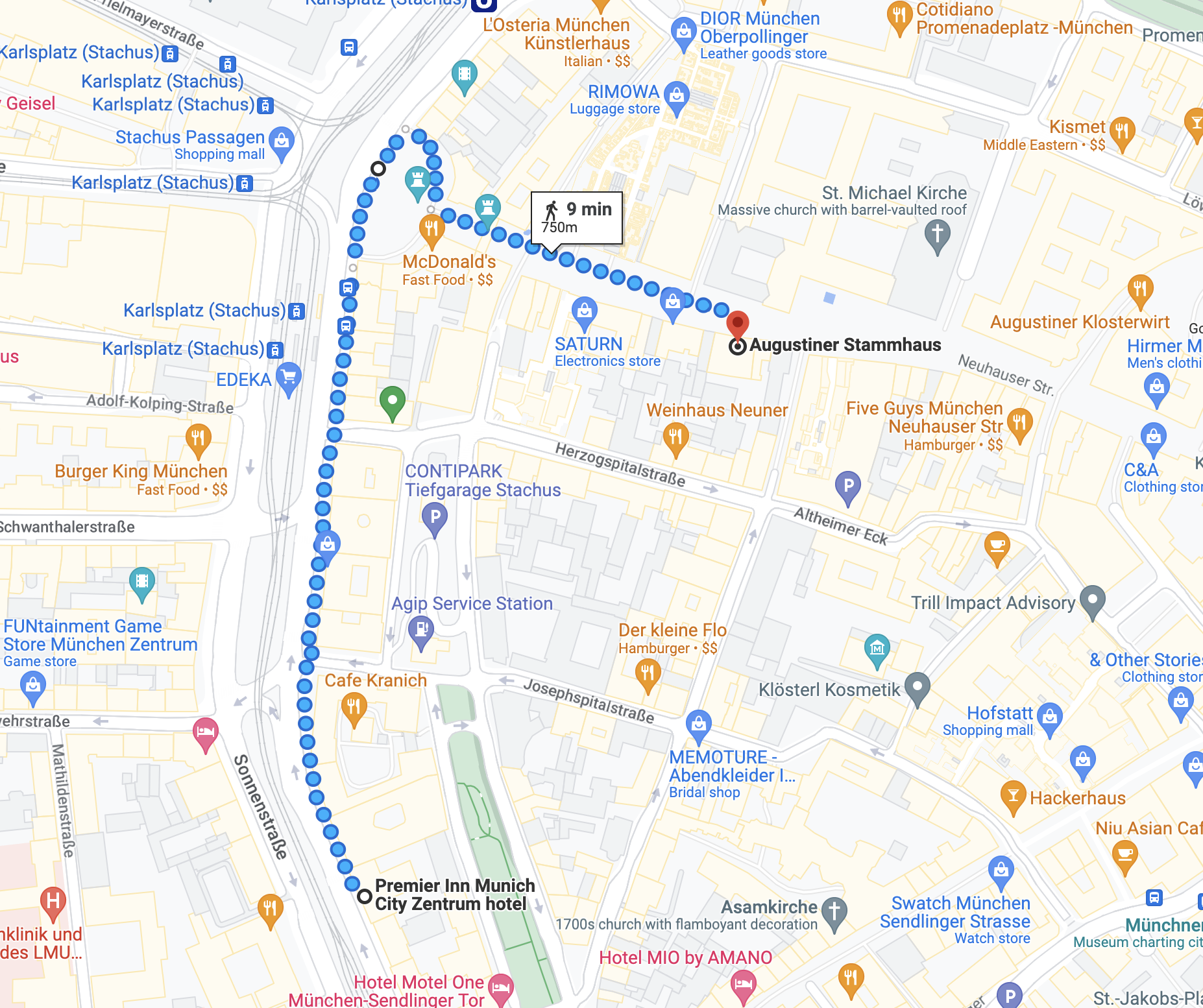
After finishing up our welcome drinks at the Premier, we made our way up the street to Karlsplatz, which is the gateway on Neuhauser Strasse to Munich’s pedestrian only historic center and its highpoint, the Marienplatz. Our destination was a familiar one, unique in that of all of the towns we visit when here (except of course for Montpellier, out new European home away from home) this is the one place we always return to and that is the Augustiner Stammhaus.
We were first introduced to Augustiner beer in 1984 when we stayed with Agnes and her husband; as native and longtime residents of the city, they proclaimed it to be the best beer and I find it hard to argue with them on this. Established in 1328, Augustiner is Munich’s oldest independent brewery, beginning its life within an Augustianian Monastery. That complex was the largest sacred building in Munich until the completion of the Frauenkirche cathedral in 1494. The Augustinian monks supplied beer to the Bavarian Royal Wittelsbach family until 1589, at which time the Hofbräu brewery was founded.
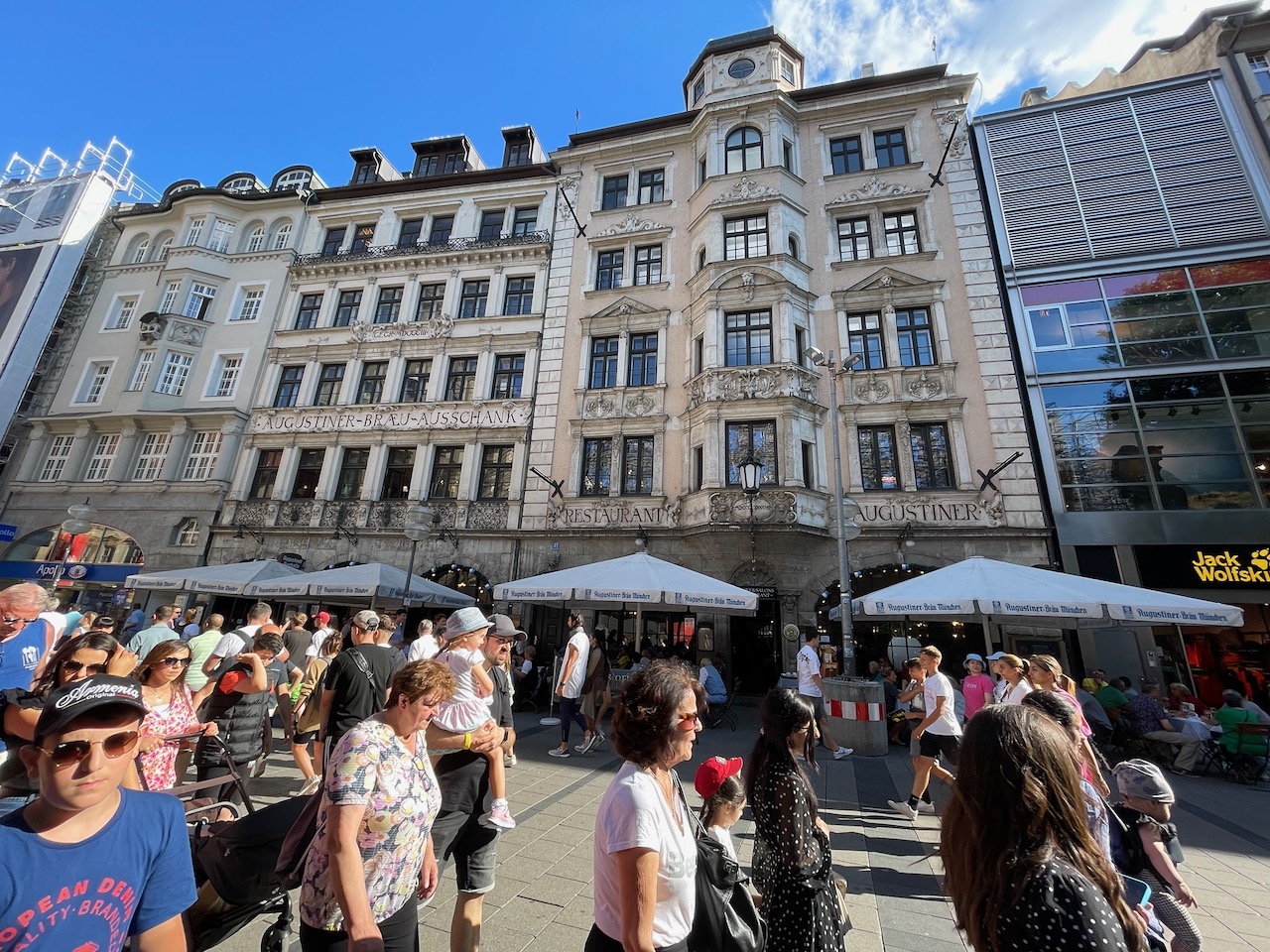
In 1803, as part of a secularization movement, the monastery was dissolved, and the brewery was run by the state before passing into private ownership. Then in 1817, as the original building had fallen in great disrepair, the brewery was moved to Neuhauser Strasse. Around that time, Anton and Therese Wagner, a brewing family from the vicinity of neighboring Freising acquired the enterprise and the brewery has continued to be privately owned since.
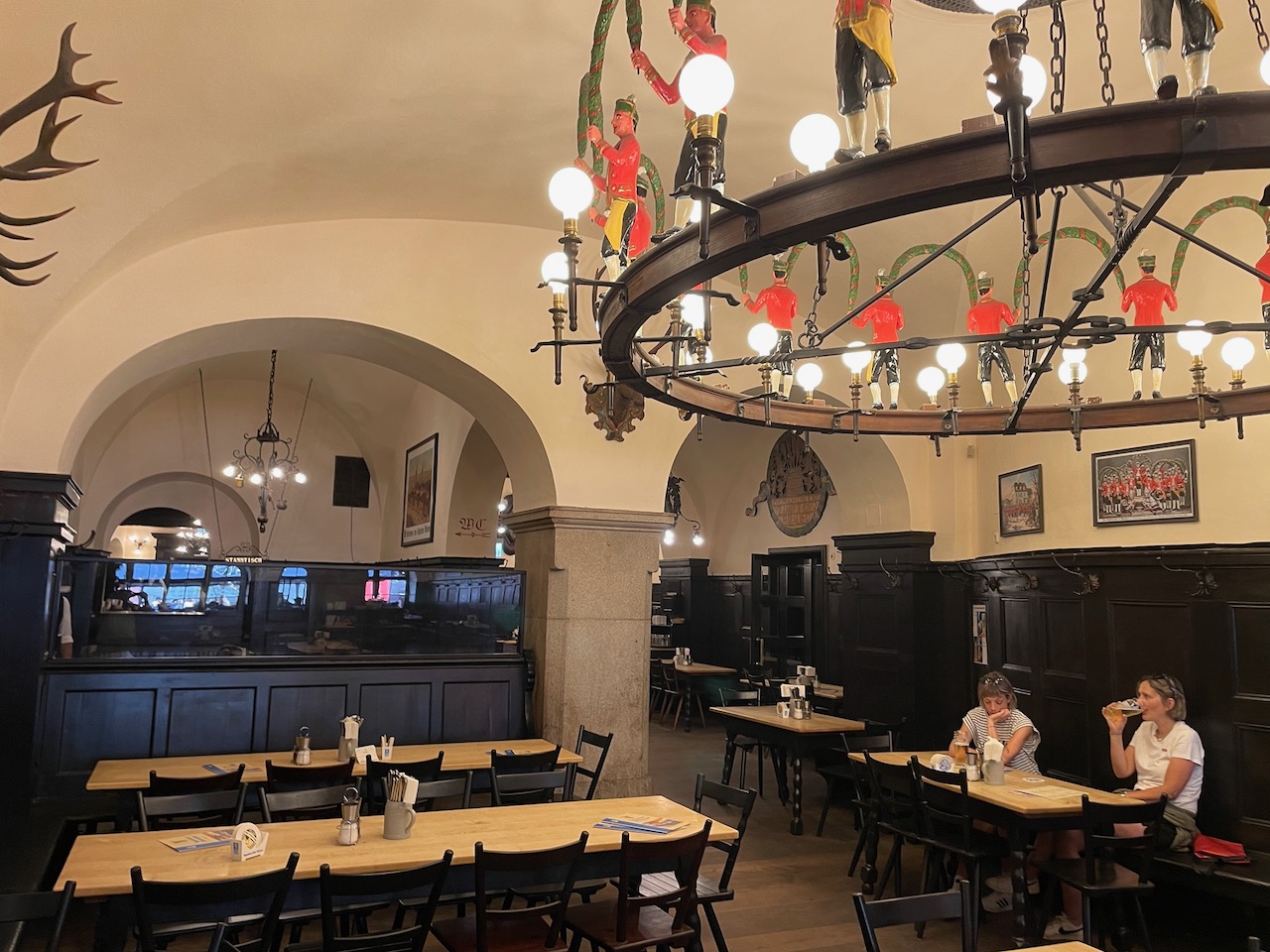
We’ve had many meals here and usually they were not your mainstream schnitzel, wurst, or roast pork option, rather a local creation featuring typical ingredients done in an imaginative way. Along with a round of beers, I ordered the Schweinerückensteak vom Grill auf Rahmpfifferlingen mit Eierspätzle (Grilled pork loin steaks with creamed chanterelles and Swabian noodles) and Joanna selected the Schäuferl vom bayerischen Rehbock in Wacholdersauce, Rahmpfifferlingen, Semmelknödel und Preiselbeeren (Venison Shoulder in juniper sauce, creamed chanterelles, bread dumpling and cranberries.


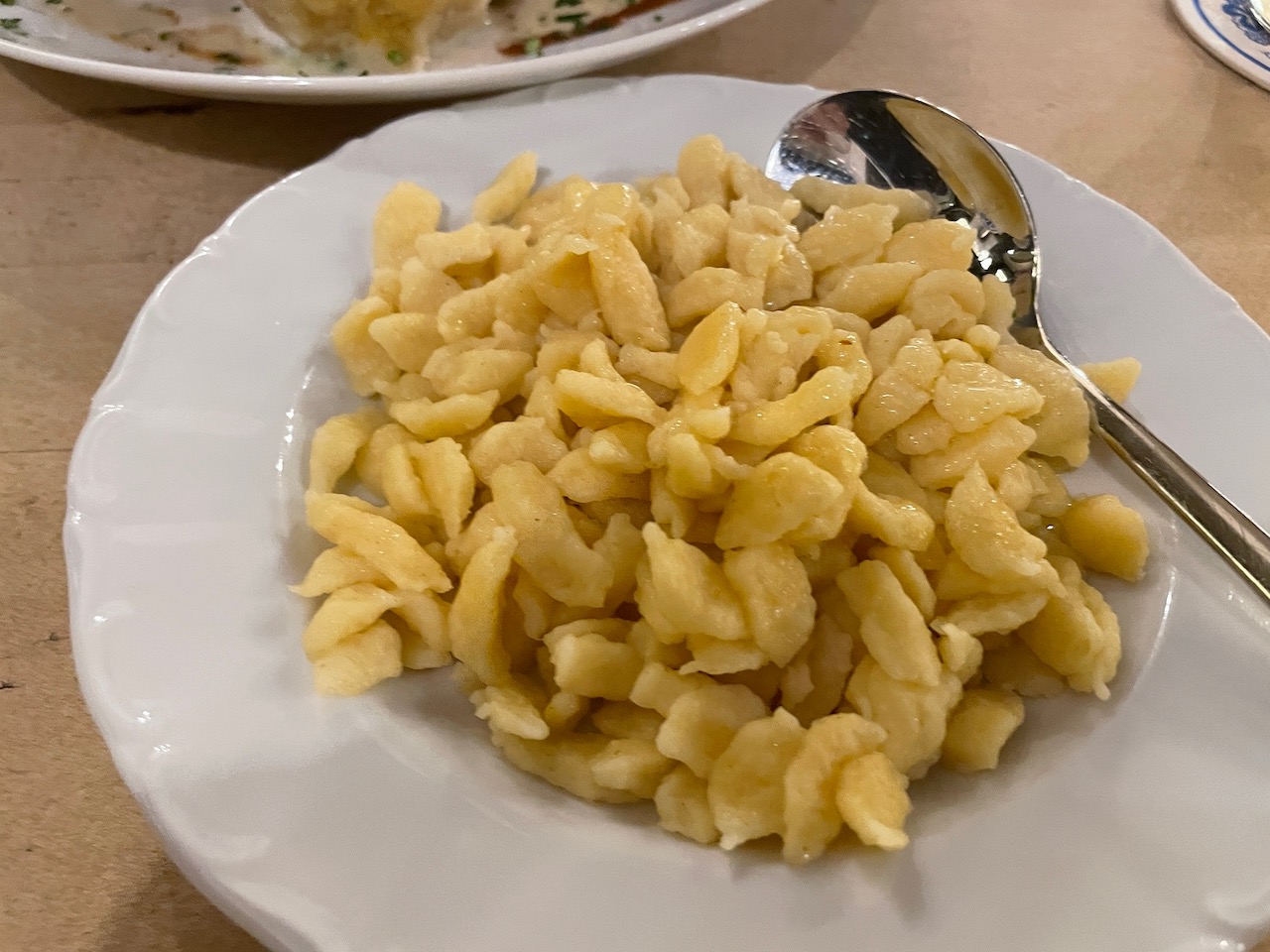
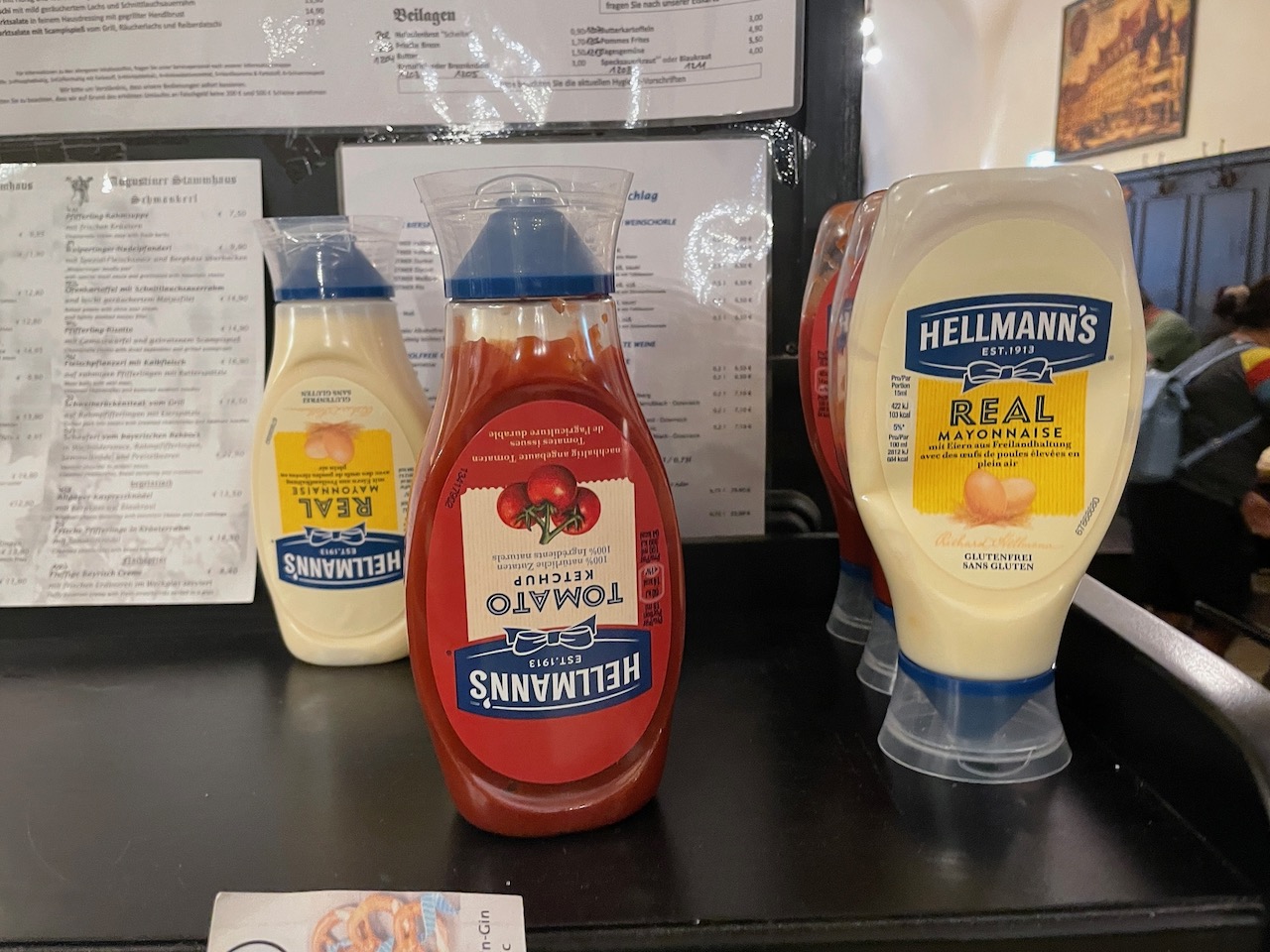
Both dishes were delightful, not at all like the heavy food one usually associates with German cooking, the Chantarelles sauce a creamy wonder. Add in a big plate of Swabian noodles, also known as Spaetzle, and we both polished off our meals easily. In keeping with the affordability theme we’ve highlighted, with both beers running just around $4, our tab for the meal came in at 54.75-Euros ($57.89) after leaving a 5-Euro tip. On the way out we noticed how American products continue to invade Europe, when we passed a condiment station full of Hellman’s products, including mayonnaise and Ketchup.
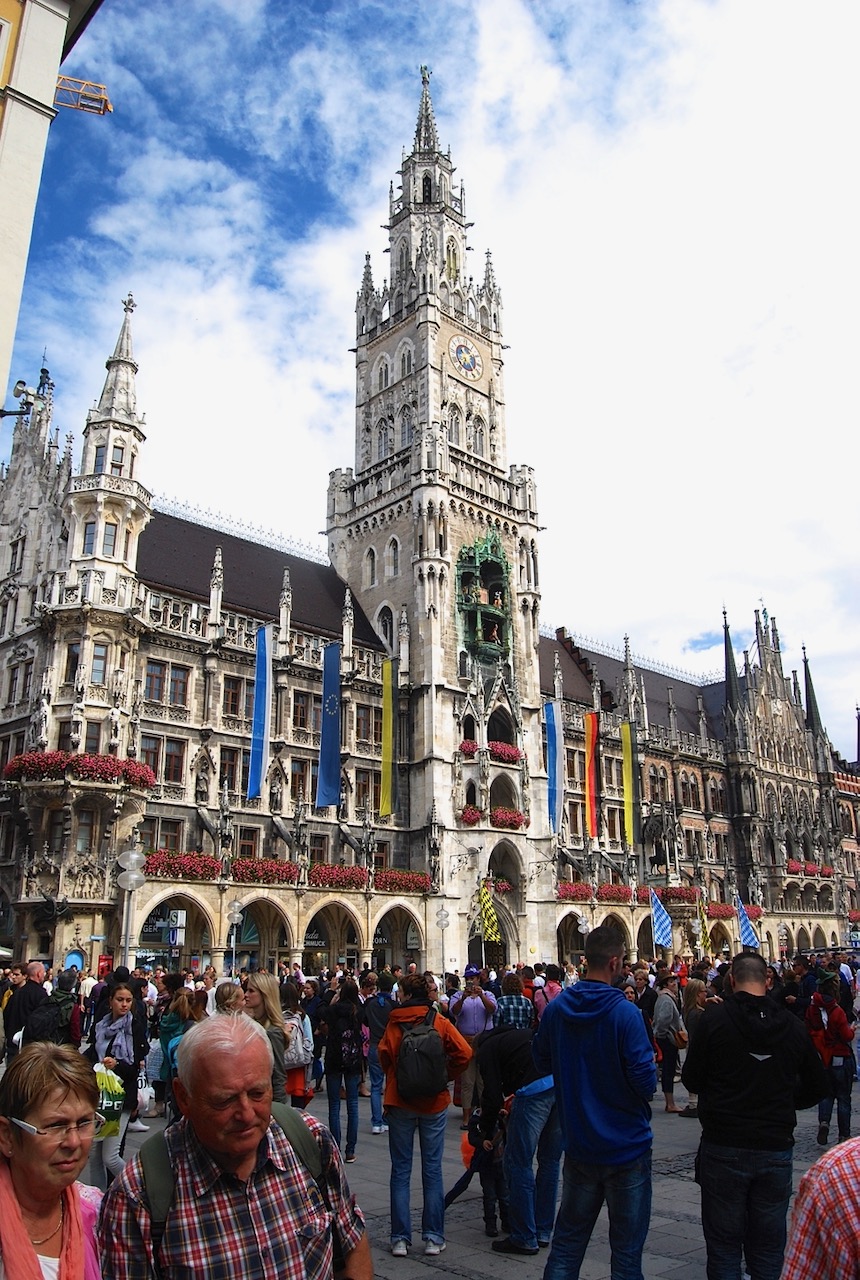
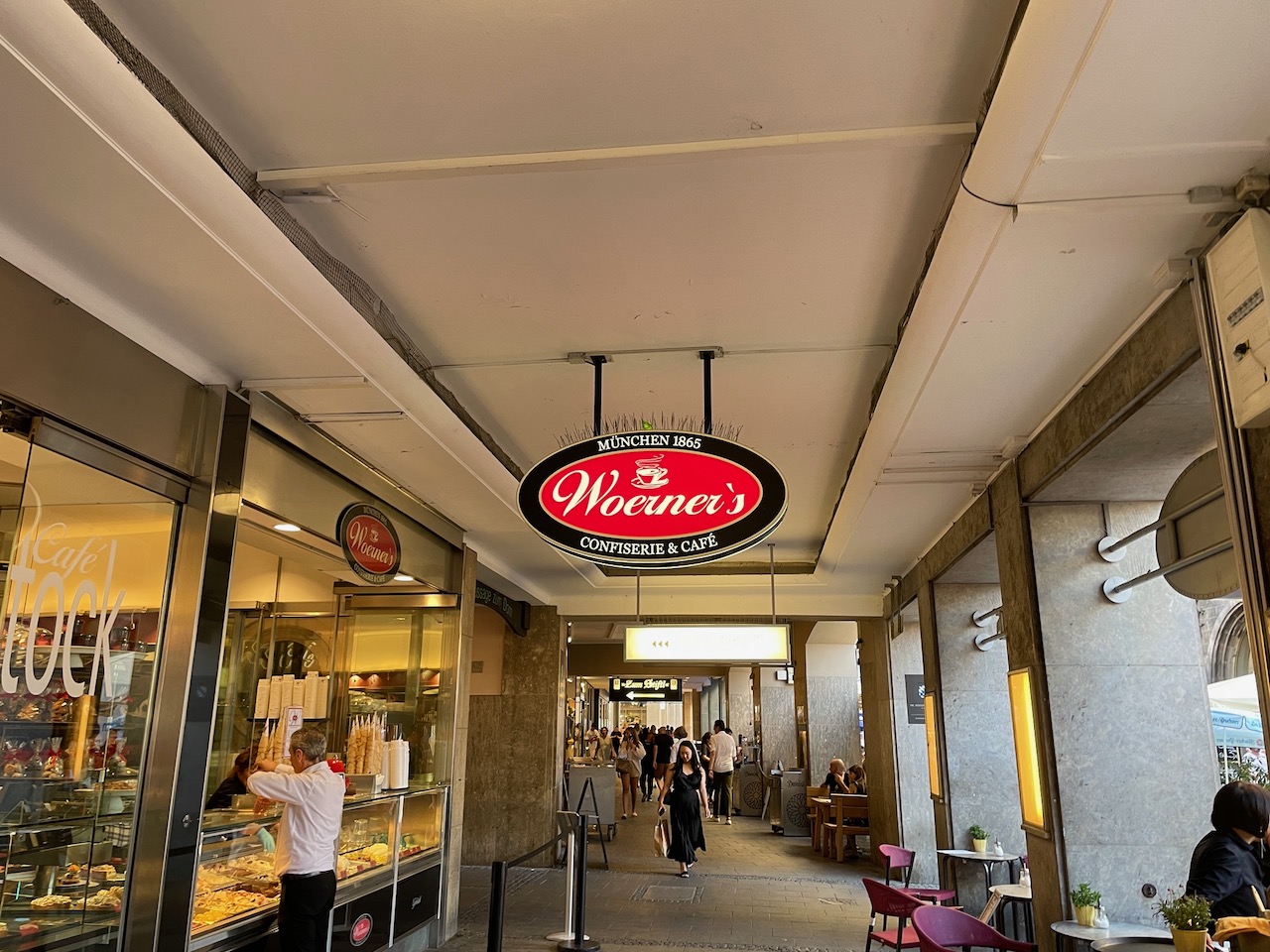
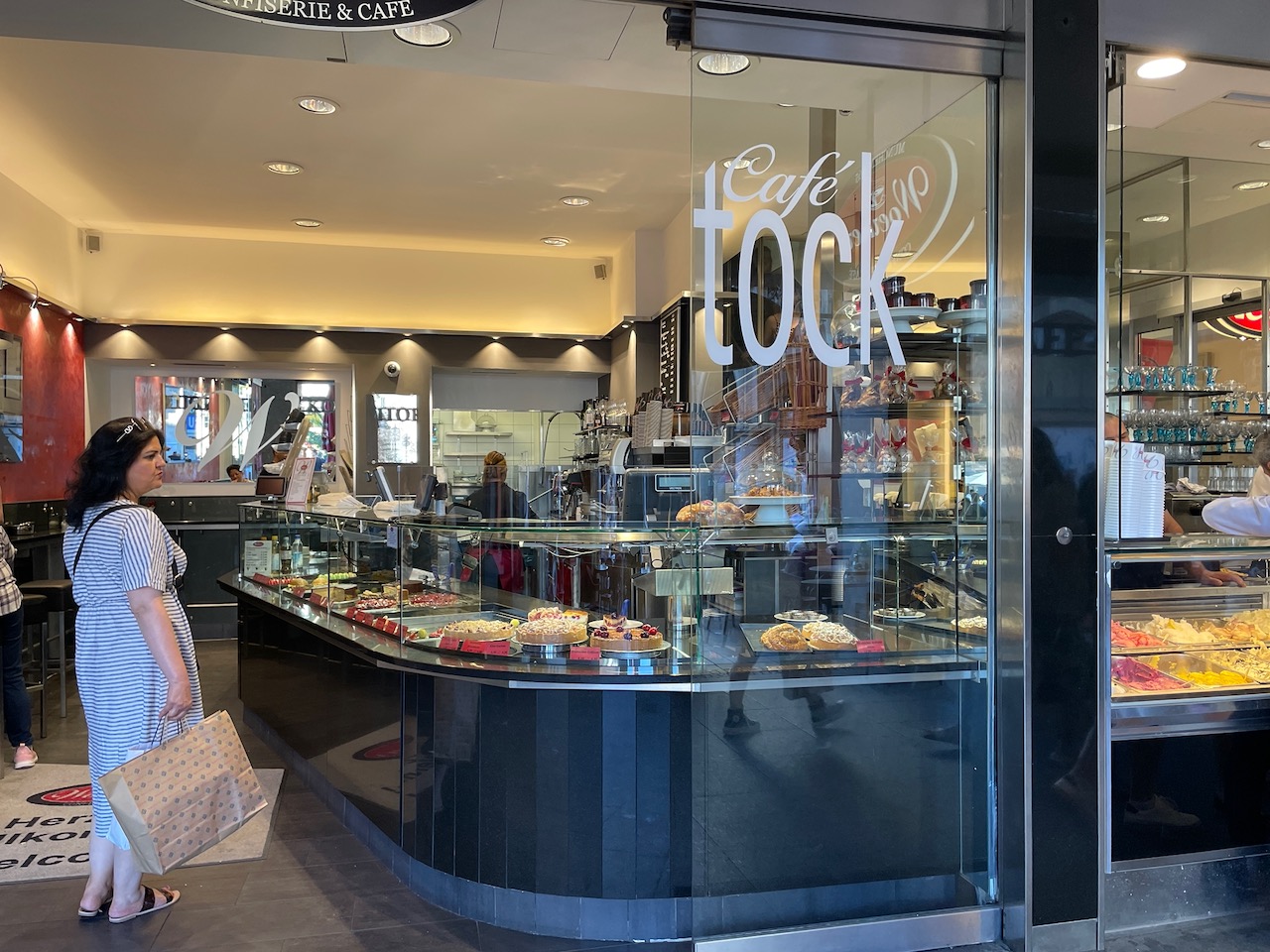
Leaving the Stammhaus, we turned right and walked down the street all the way to the Marienplatz, reveling in the memories each passing block brought us. We’ve been down this street many times, having shopped at some of the bigger shops (Apple, C&A, Galleria, and Sporthaus Schuster to name a few), and perhaps most importantly, enjoyed any number of treats from Woerner’s Confiserie & Café. Having opted to not take the breakfast at Premier, we hit the large basement supermarket of Galleria to stock up for the mornings to come.
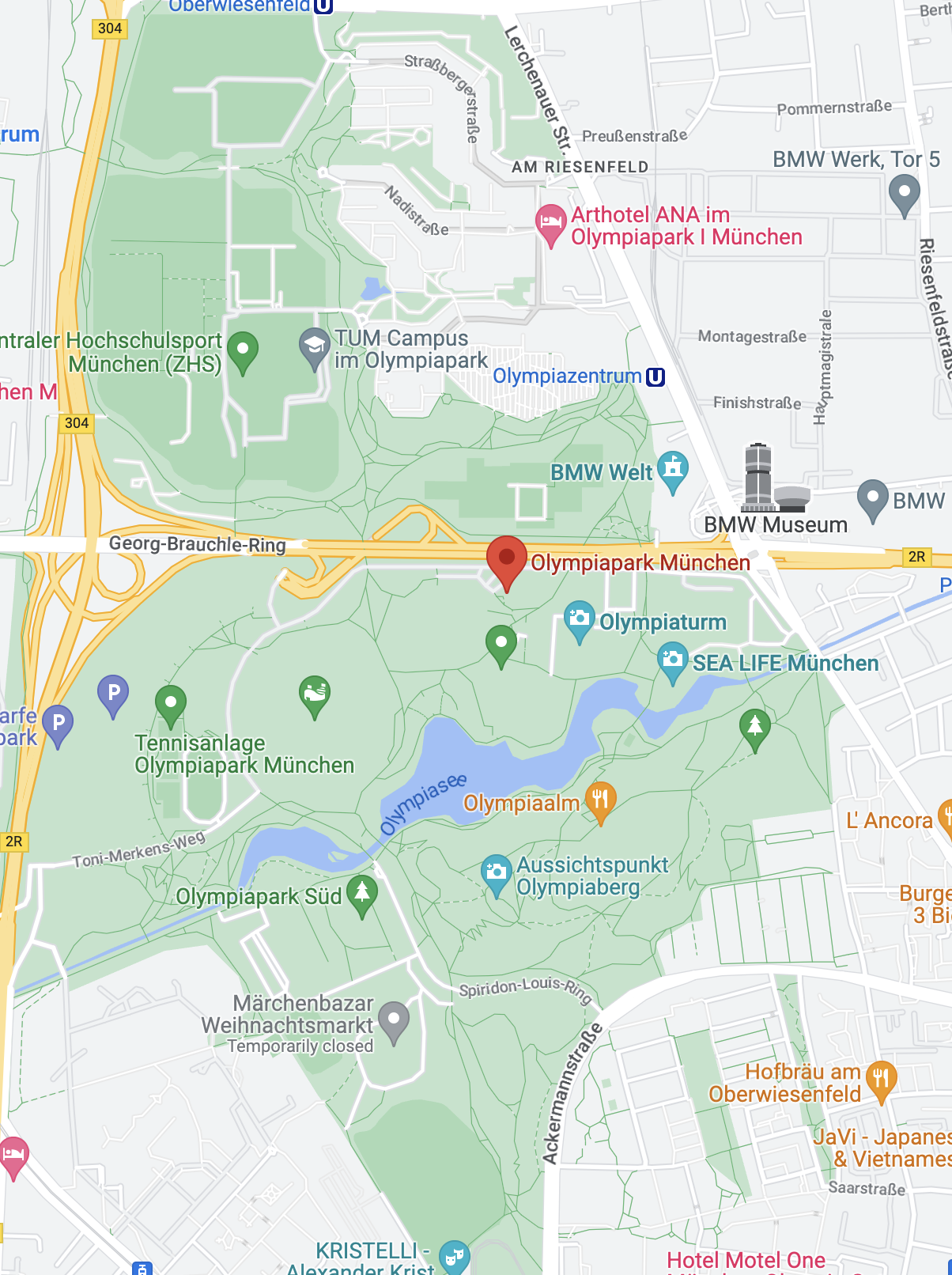
The next morning we set out to spend most of the day at the BMW Museum. It is located adjacent to the Olympiazentrum, site of the 1972 Munich summer Olympic games, where the world witnessed the tragic terrorist attack carried out by eight members of the Palestinian militant organization Black September, who infiltrated the Olympic Village, killed two members of the Israeli Olympic team, and took nine others hostage. West German police ambushed the terrorists, and killed five of the eight Black September members, but the rescue attempt failed, and all the hostages were killed.
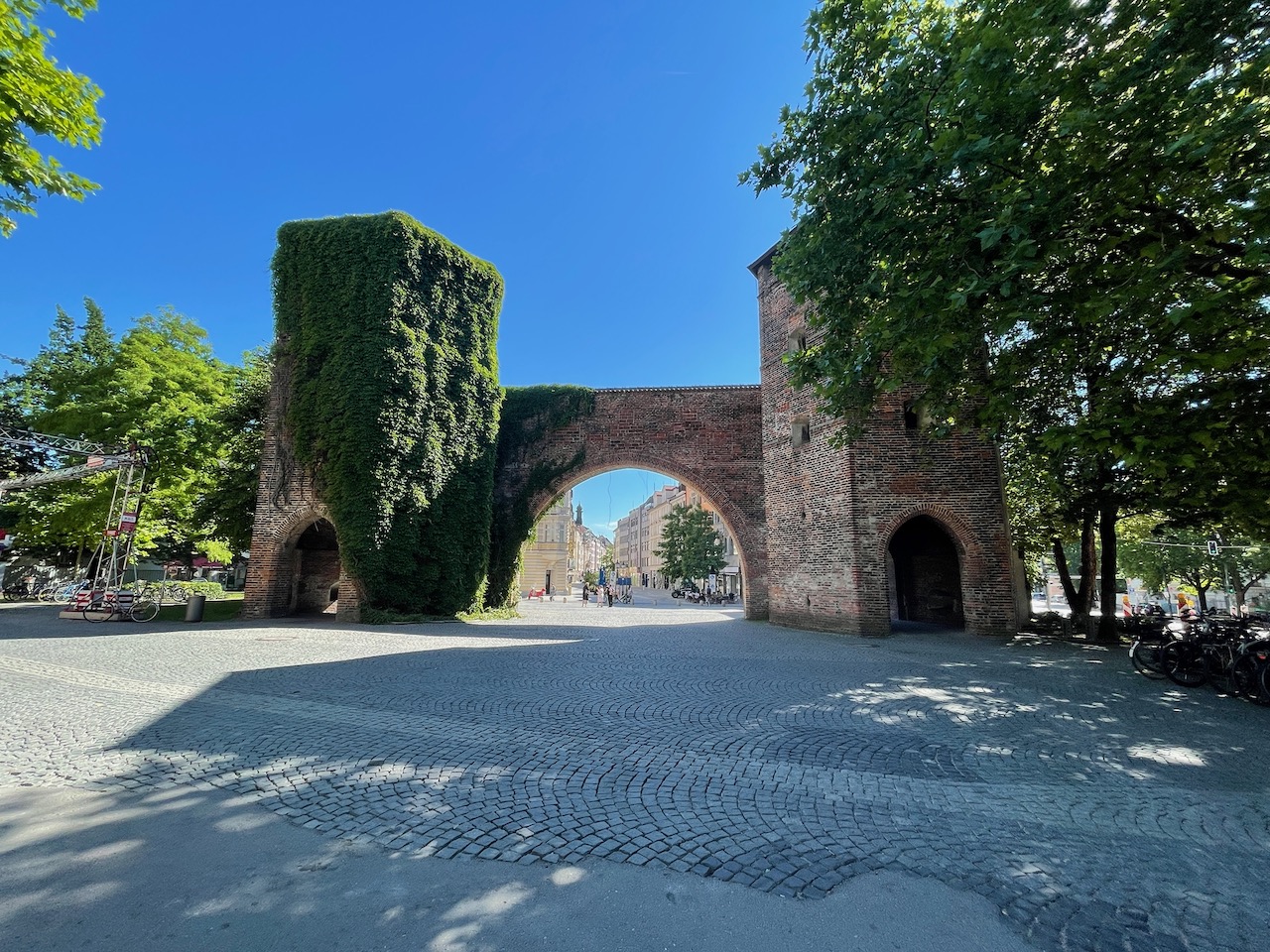
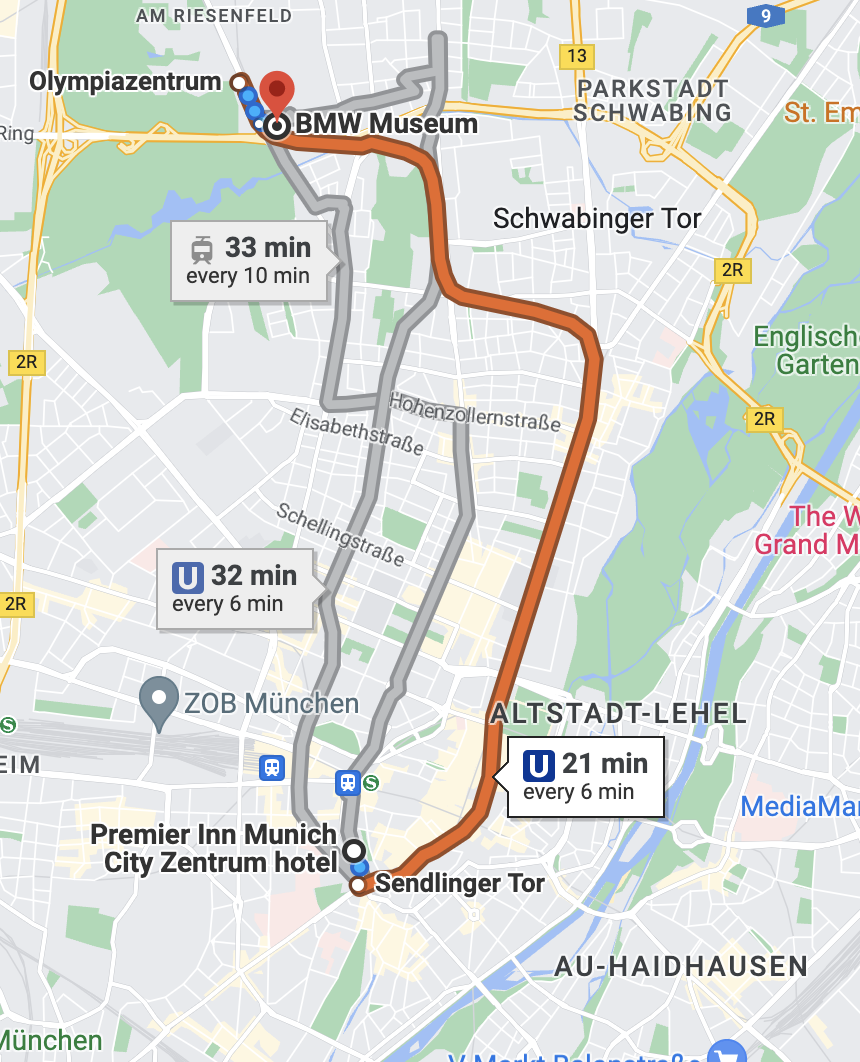
Getting to the museum would normally be easy as all we had to do was walk a block or so to the underground station at Sendlinger Tor and catch the U3 which would take us to the park. As part of the great urban expansion by Ludwig the Bavarian (from 1285 to 1337), a second city wall with four town gates was built, of which Sendlinger Tor was one. Located at the southern extremity of the historic old town area of Munich, it is one of Munich’s three remaining gothic town gates (the other two being the Isartor and the Karlstor).
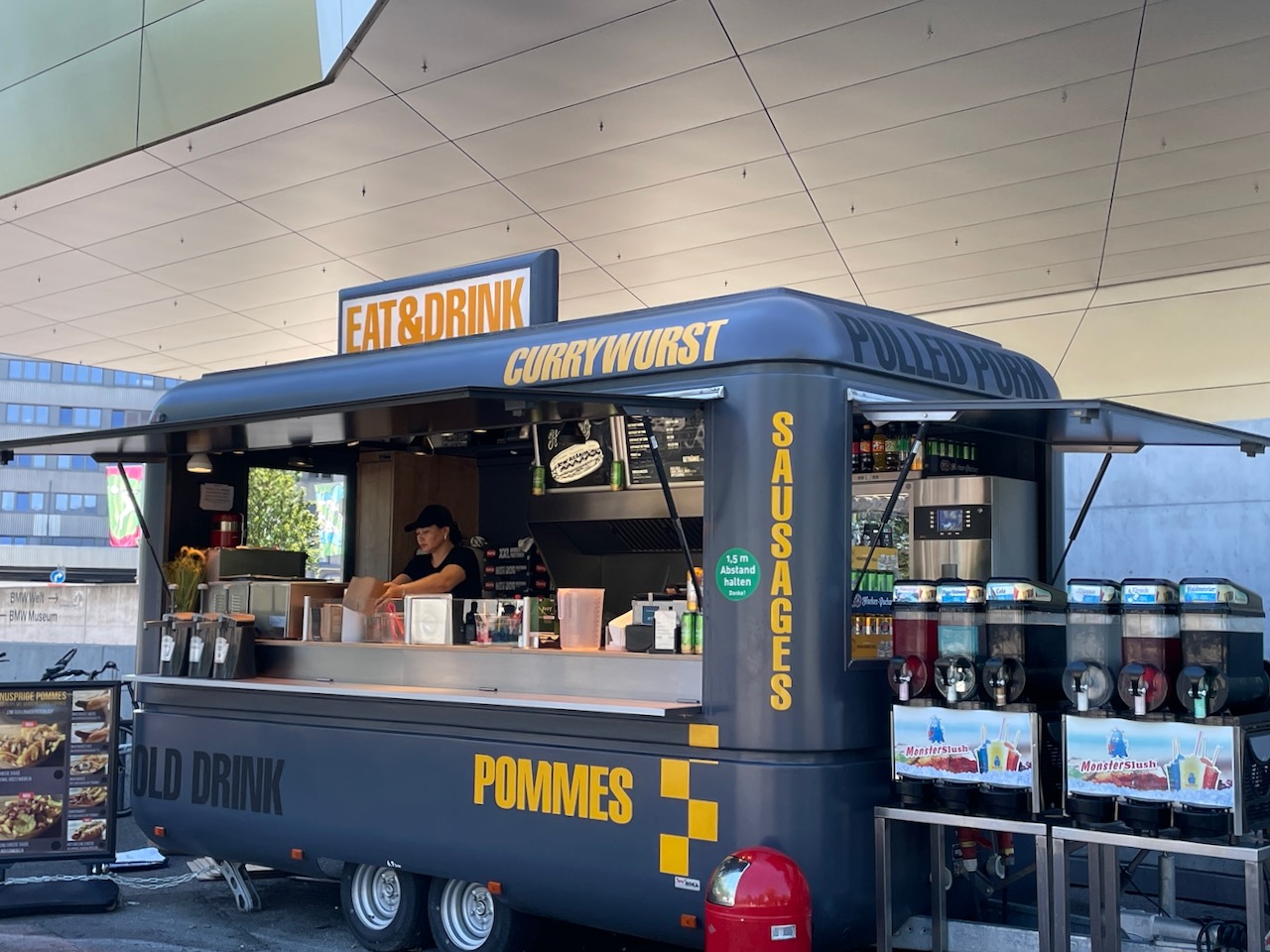
As is often the case when using public transport, the easy route was disrupted by construction and although it didn’t hinder us much on the journey outbound, it would cause us confusion and inconvenience on the return voyage. We arrived at Olympiazentrum and noticed a Wurst Wagon located near the station.
Interpreting this development as a bit of divine intervention, we walked over and ordered our first, and only, currywurst of the trip. Along with a diet coke the tab came to 6-Euros and it was a very, very good wurst.

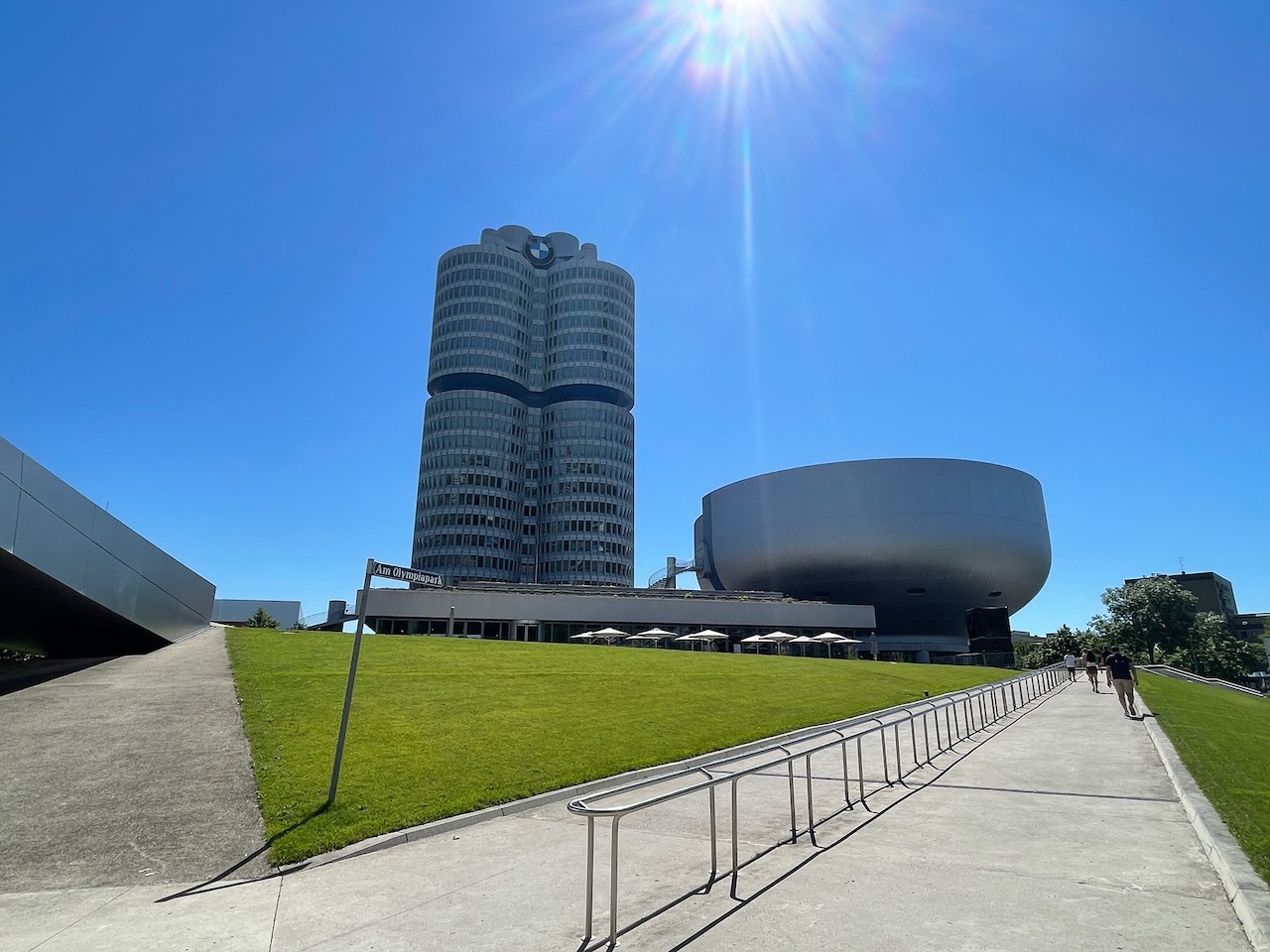
From there walked around the edge of the BMW plant and made our way to the entrance to the museum, which we last visited in 1984. Established in 1973, shortly after the Summer Olympics opened, it was renovated from 2004 to 2008, in connection with the construction of the BMW Welt, directly opposite. The museum reopened on 21 June 2008 and currently, it’s an exhibition space of nearly 54,000 square feet for the presentation of about 120 exhibits.
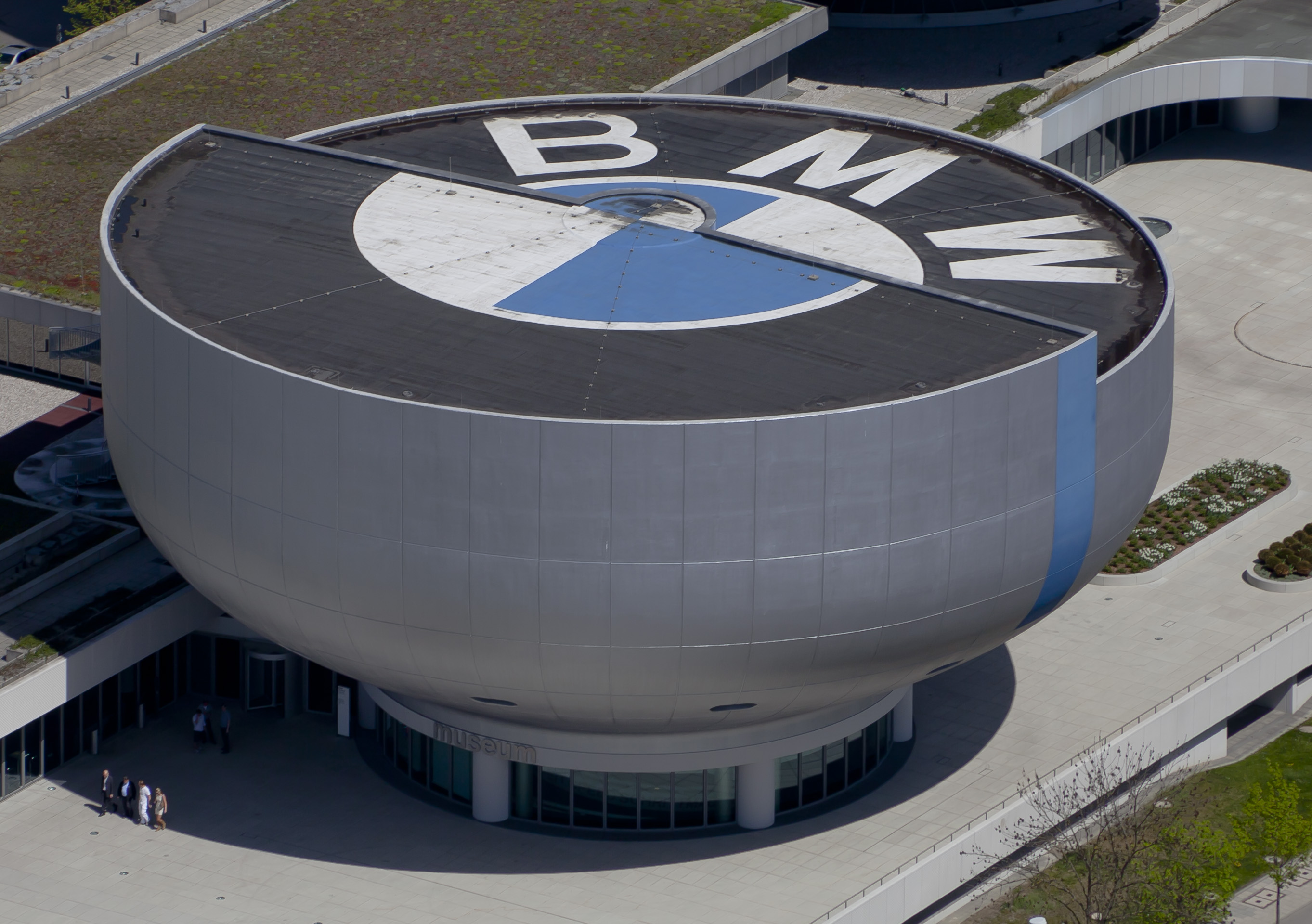
Known as the salad bowl or white cauldron, the silver futuristic building was designed by the architect of the BMW Headquarters, the Viennese professor Karl Schwanzer. The roughly circular base is only 215 feet in diameter, the flat roof about 430 feet. The museum shows BMW’s technical development throughout the company’s history and contains engines and turbines, aircraft, motorcycles, and vehicles in a plethora of possible variations. In addition to actual models there are futuristic looking, even conceptual studies from the past 20 years.
We will close this post as we are just about to enter the museum. We’ll describe our visit in depth in the next post, so for those of you who aren’t BMW fans, you might choose to skip that one. Then again, it’s a cool place to visit and you might consider going after you read the post.
Links
Augustiner Stammhaus: https://www.augustiner-restaurant.com/en/
Augustiner Brau: https://www.augustiner-braeu.de/en/unser-bier.html
BMW Museum: https://www.bmw-welt.com/en/index.html
Sendlinger Tor: https://www.munich.travel/en/pois/urban-districts/sendlinger-tor
Discover more from 3jmann
Subscribe to get the latest posts sent to your email.


 3jmann
Another great post. It is very interesting seeing your travels!