July 16-18
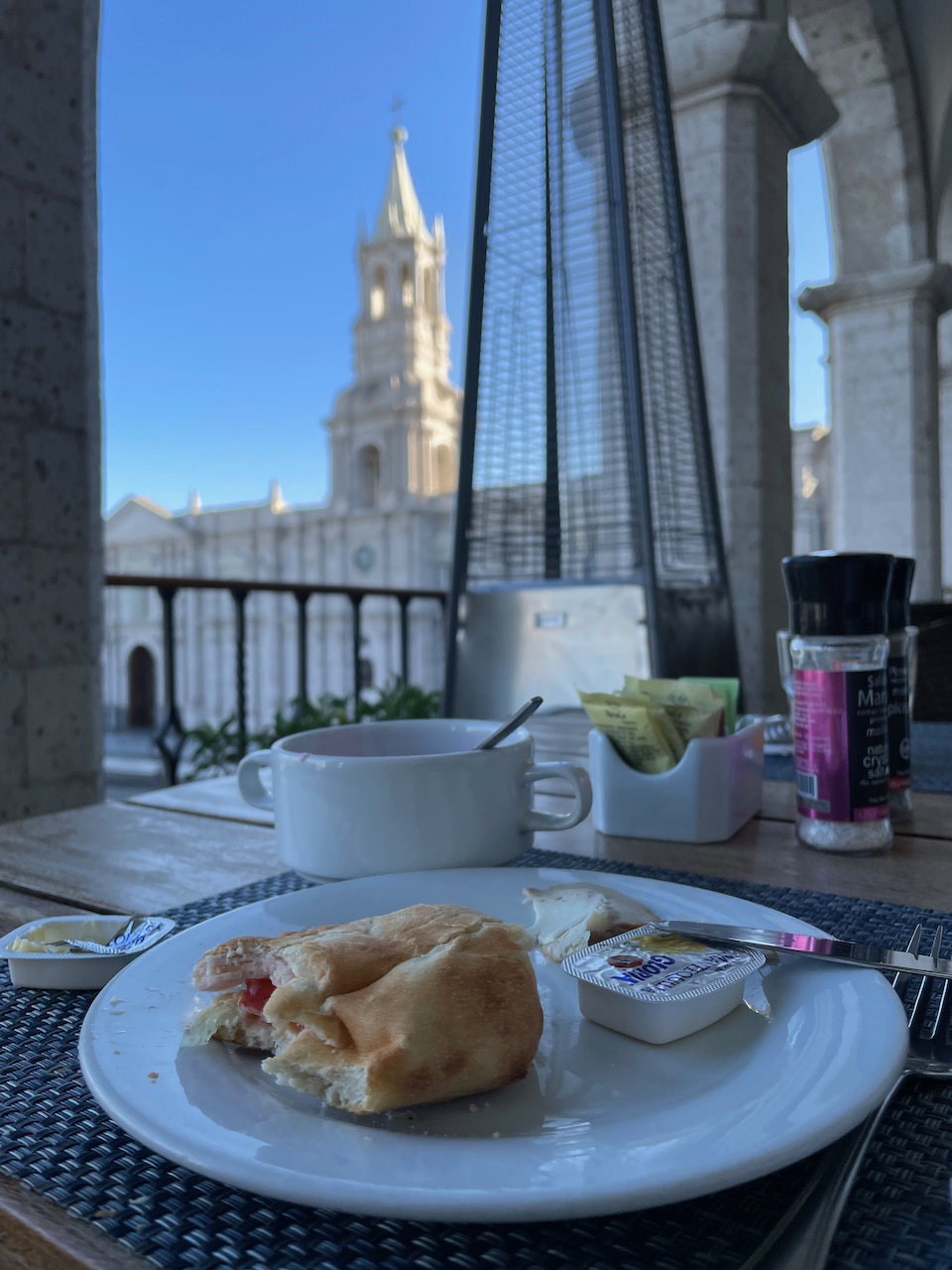
With a busy day ahead of us, we were up early and hit the breakfast buffet to make sure we had sufficent energy to last through the morning. Another good selection of proteins, carbohydrates, and sweet things greeted us, and the bonus was sitting outside on the patio, the sun warming us nicely as we took in the Basilica directly in front of us.
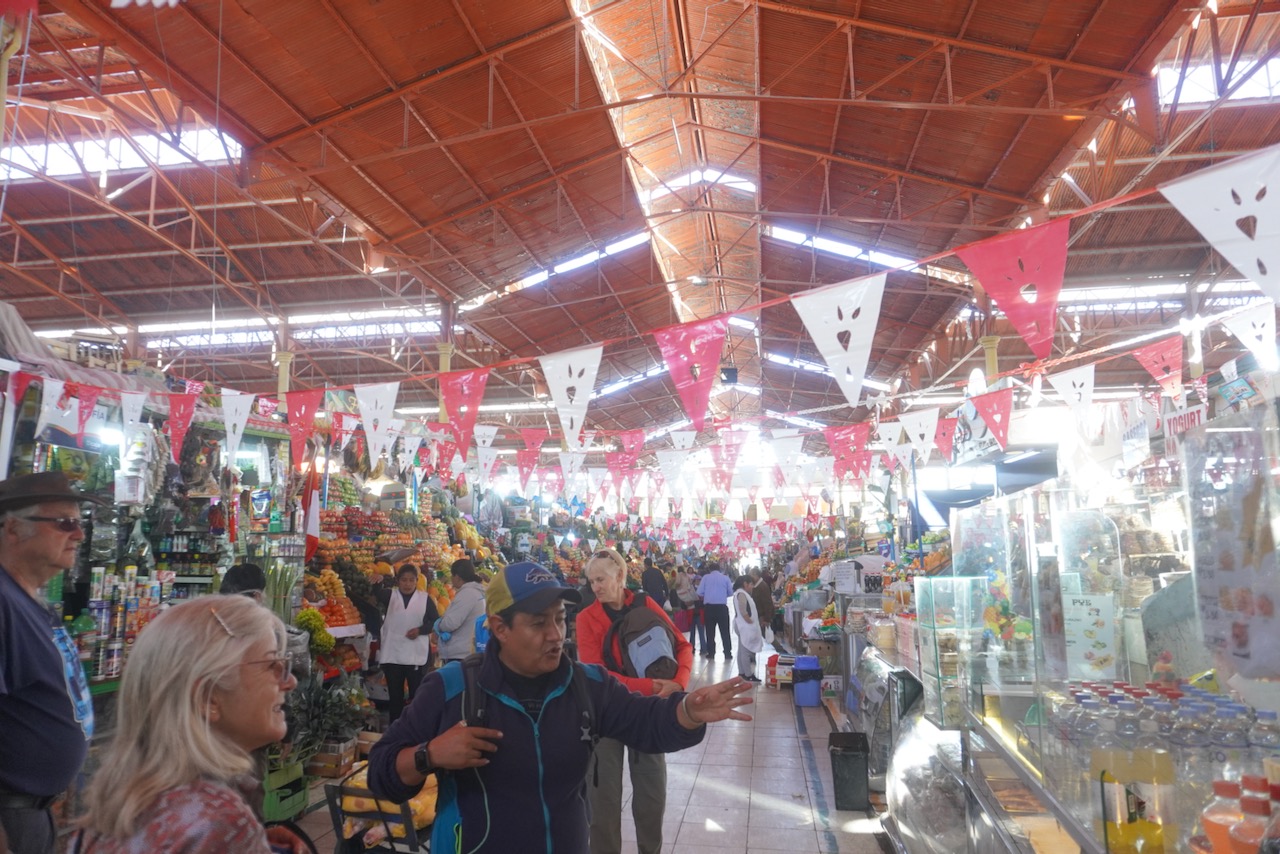
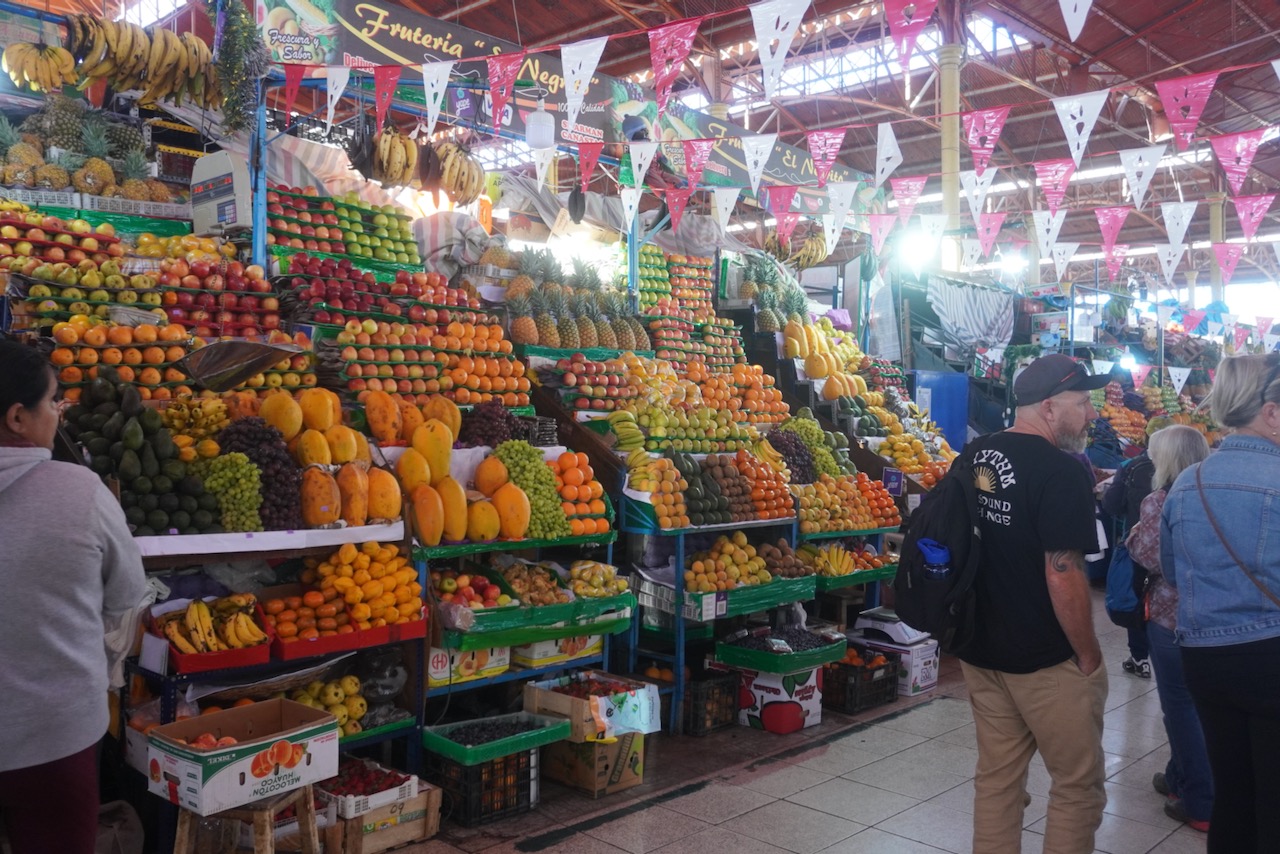
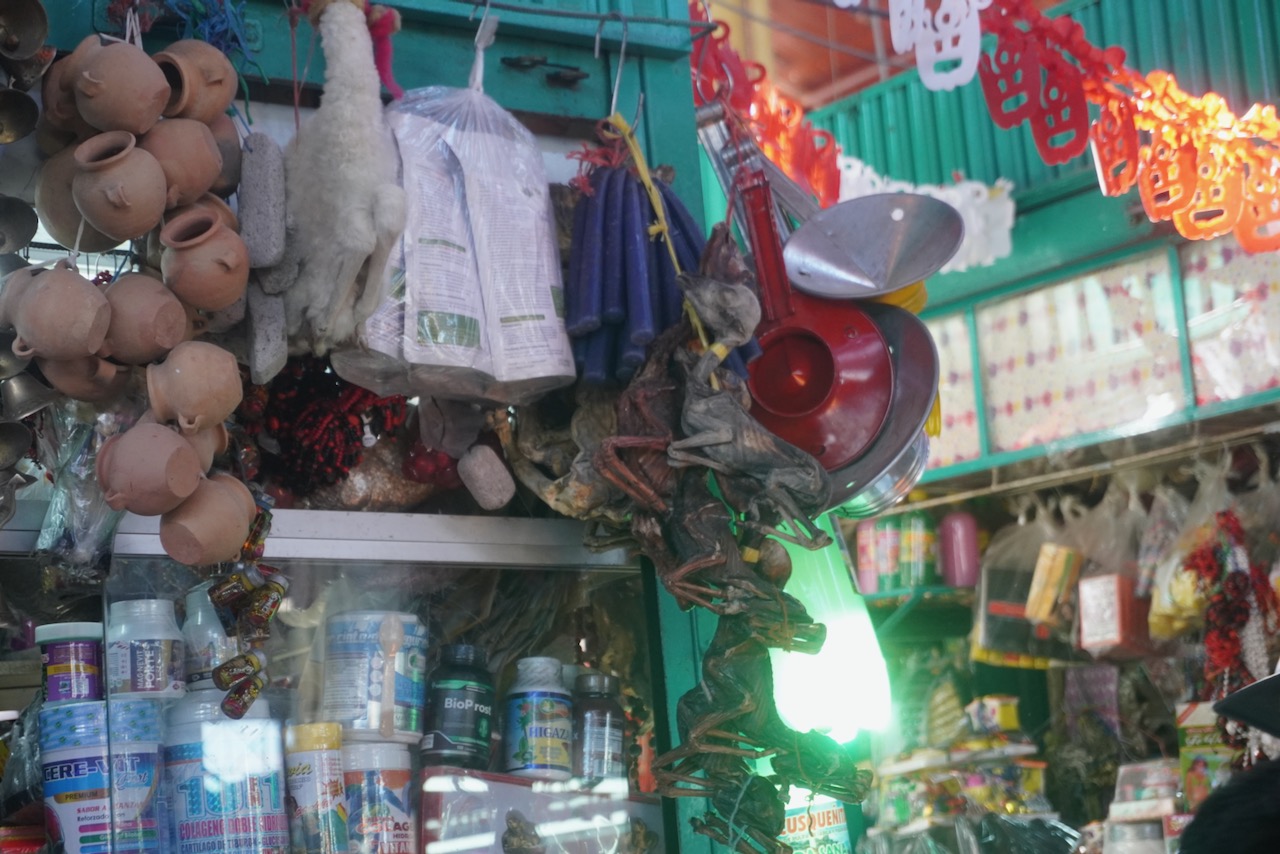
We soon enough gathered in the lobby for an overview of the day’s activities and then took a quick walk to Arequipa’s indoor main marketplace, like those you will find in any good-sized city. As is often the case, the array and quantity of goods is dizzying, and in this case gives one a close look at the products that people in Peru use on a daily basis, as opposed to those we would find in a supermarket. Most often apparent are cuts of meat we wouldn’t consider eating at home and most intriguing was a small kiosk that sold herbal remedies and ingredients one could take home, including Llama fetuses that are one of the most important elements for an offering, called a mesa, practiced to return all the favors that Mother Earth gives us.
From there we walked back towards the hotel to the Cloisters of the Company where we met our local guide for the next couple of days, Juana. She walked us around the Plaza de Armas, pointing out various native and non-native plants and then led us to the first stop of the day, the Santa Catalina Monastery. A large monastery of the Dominican Second Order, and part of the UNESCO World Heritage Site “Historical Centre of the City of Arequipa”. Founded on September 10, 1579, it was built from a rock based material known as tuff., whose two types, the white tuff, which comes from the Chachani volcano, and the pink one from the Misti, the latter emblem of the city.
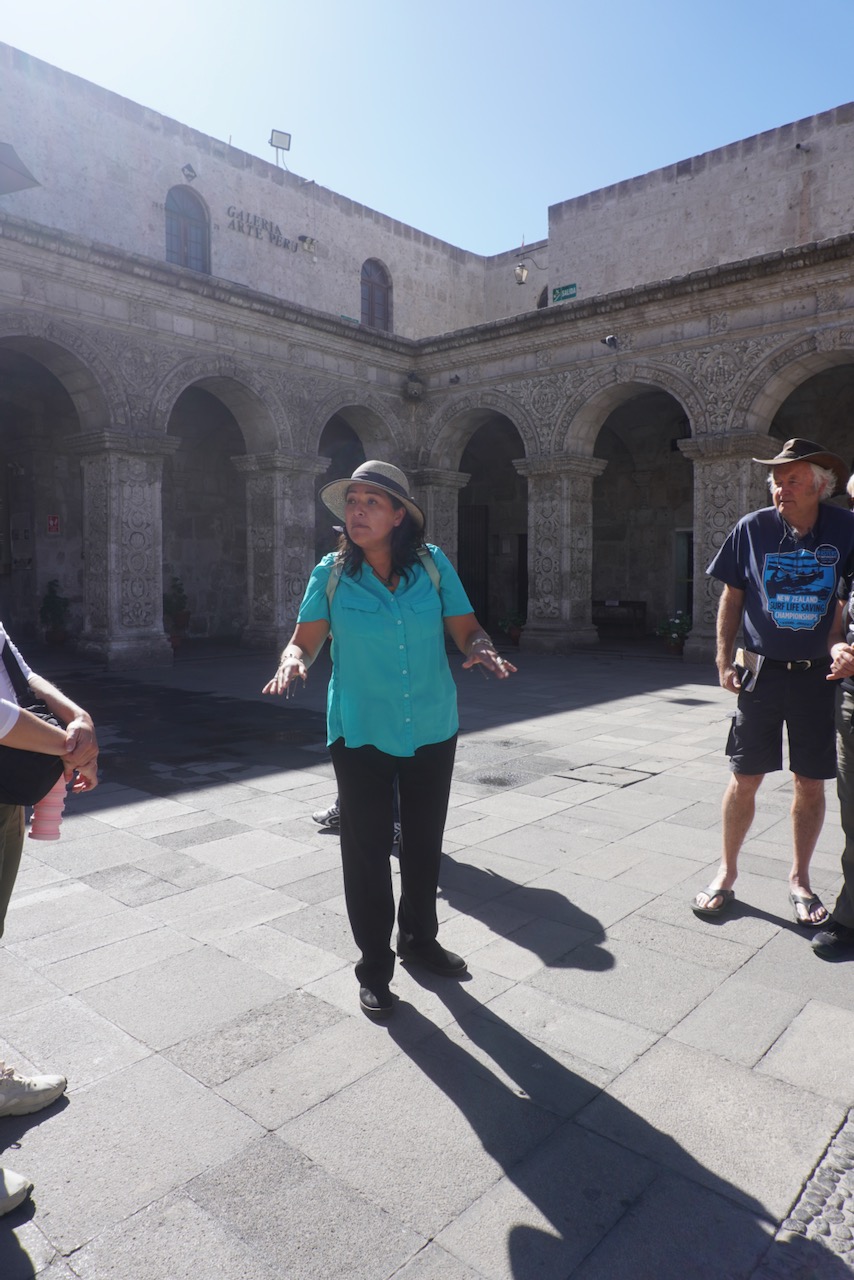
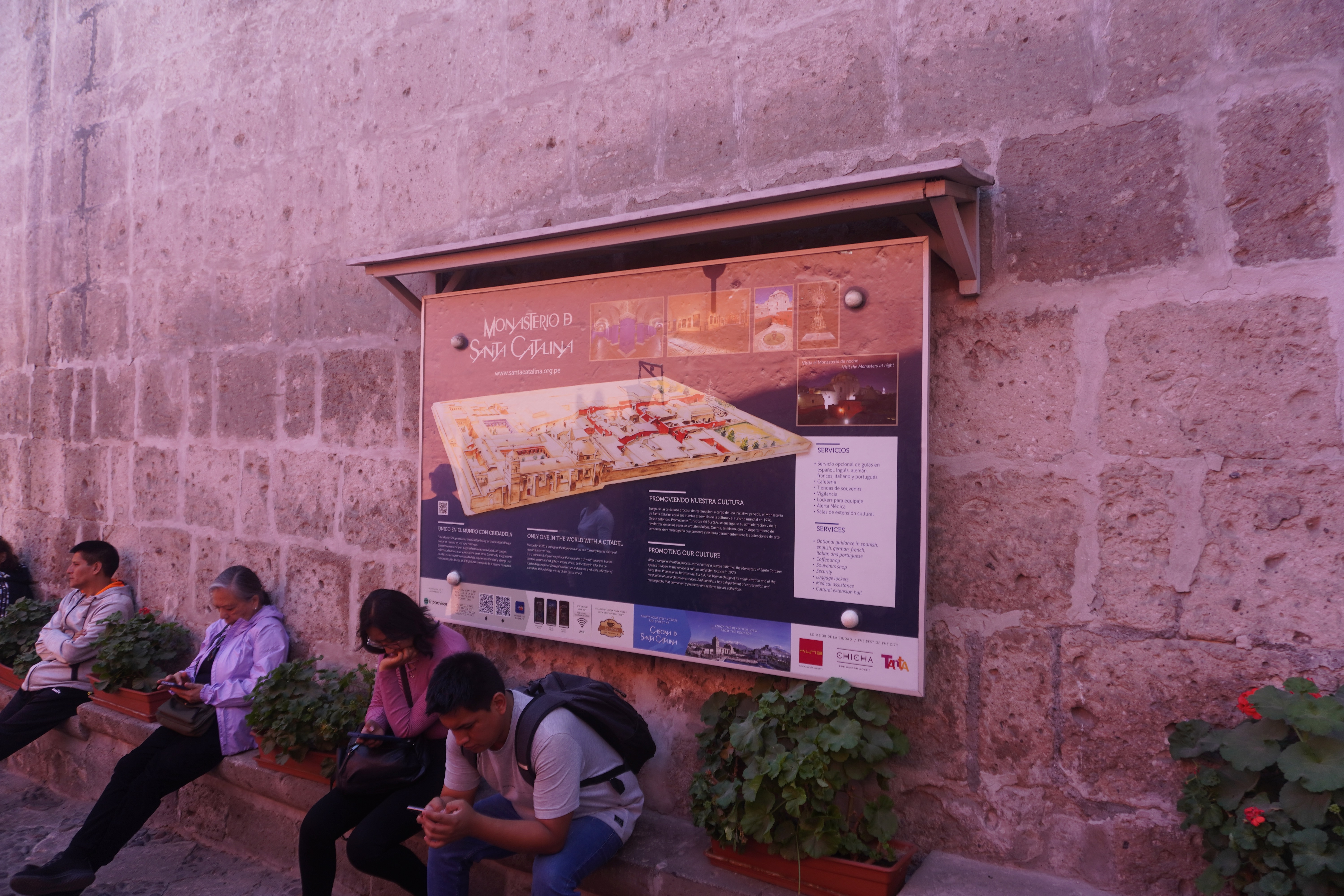
The complex occupies an area of 215,000 square feet and is a small city, characterized by its multitude of broken, and narrow streets. It is completely separated from the city, despite being in the heart of it, as it is surrounded by a solid wall four feet high. Founded in 1579, Its first facilities were destroyed in 1600 and 1604 by earthquakes, but after these the community of Santa Catalina experienced a rebirth; its current building corresponds to the last third of the 17th century.
The women who entered the monastery as nuns were white criollas (a woman or girl born in Spanish America but of European, usually Spanish, ancestry) and mestizas (a woman of mixed race, especially one having indigenous and Spanish descent) belonging to wealthy families. Less well-off women, the so-called “poor nuns” who, without having money to pay a dowry, entered to exercise their virtues. It is known that, in the middle of the 18th century, the citadel had more than 300 women in habit and servant maids.
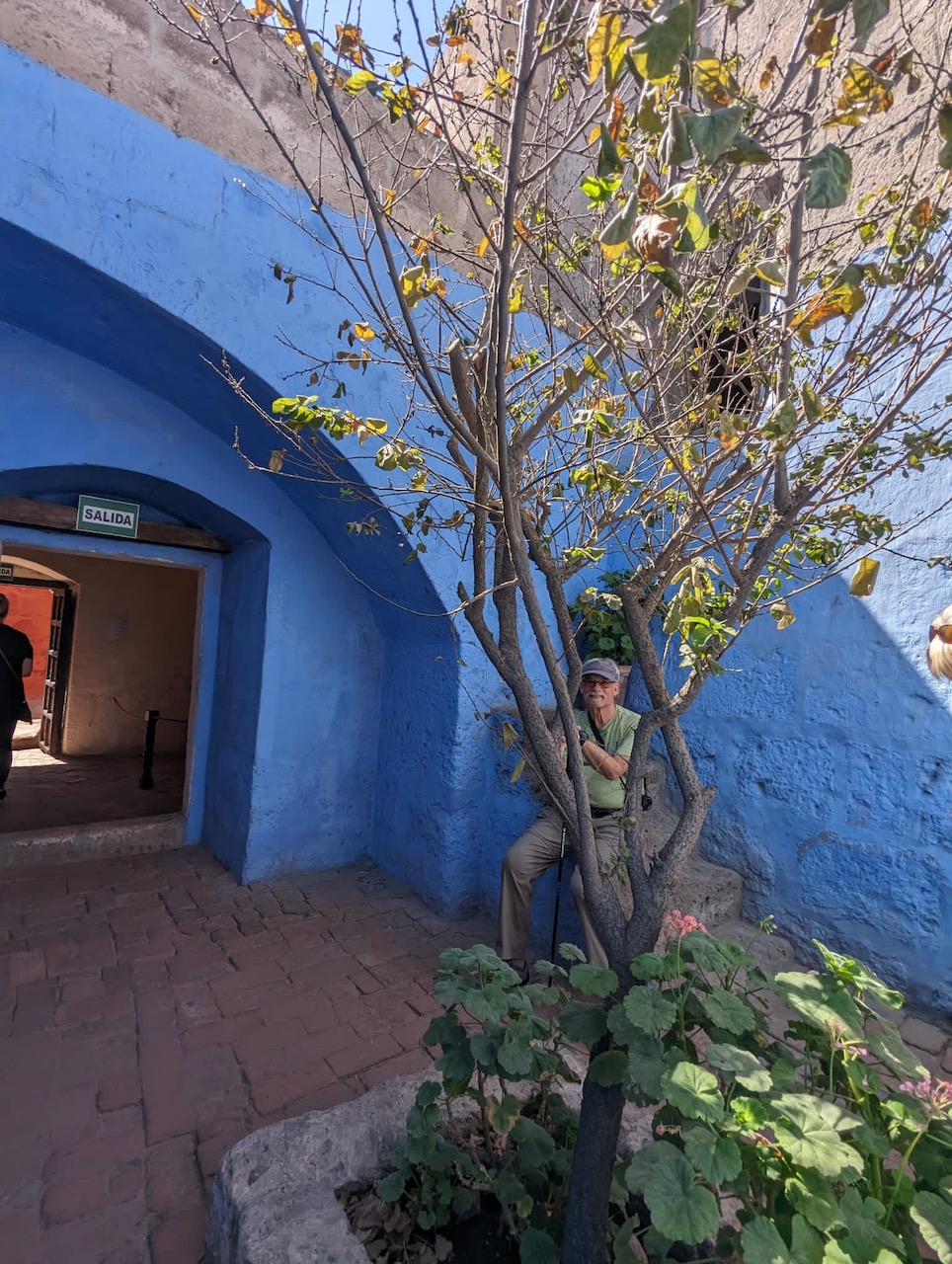
The Santa Catalina Monastery was wrapped in a veil of mystery and silence until 1970, when a large part of the convent opened its doors to the public and the nuns allowed a private company to manage it, while they still live in the northern area of the complex. The small streets and cloisters are full of colorful flowers and the walls are painted in fresh dyes. Narrow alleys lead to the various parts of the convent passing through picturesque sites and living and sleeping places with the original furniture.
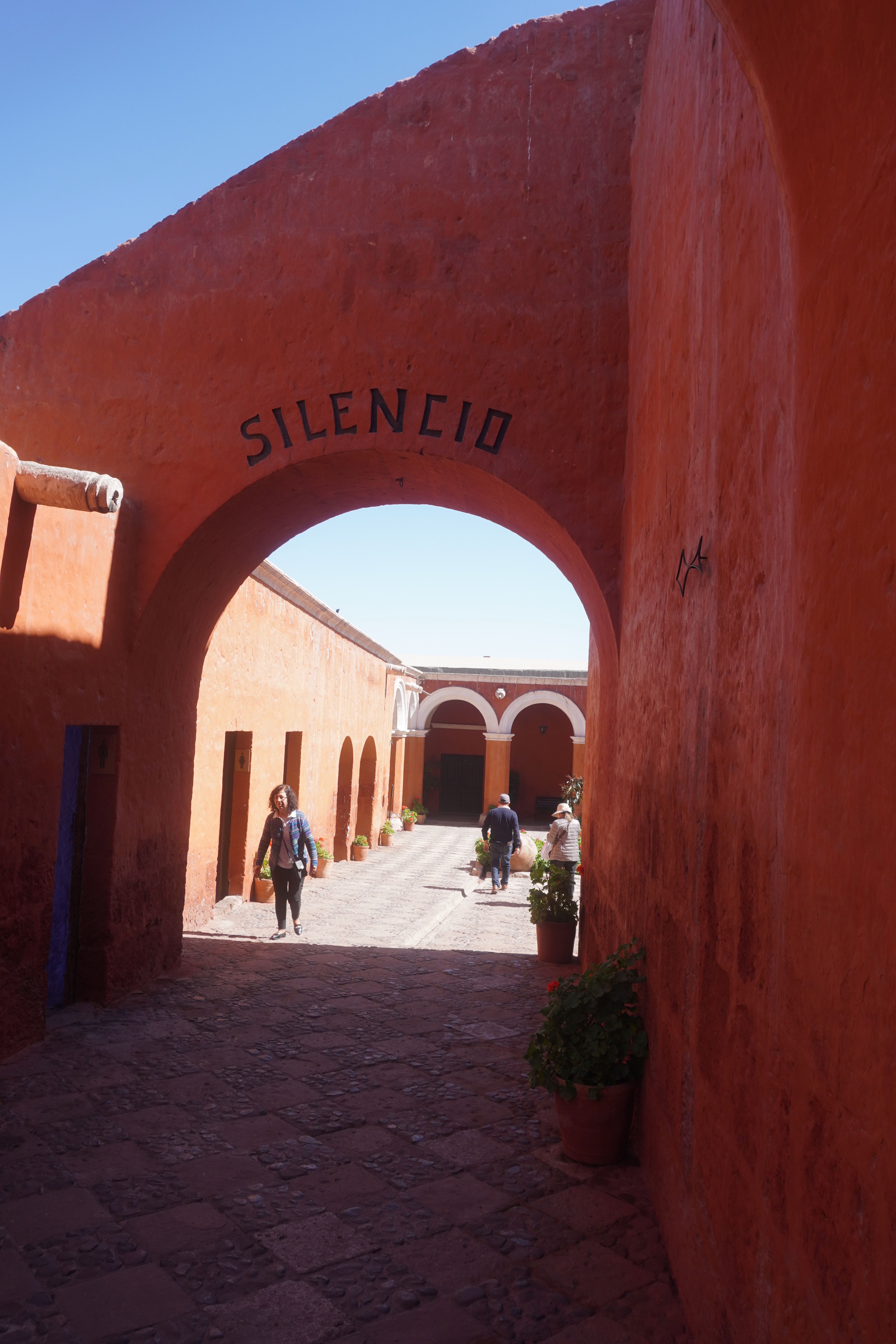
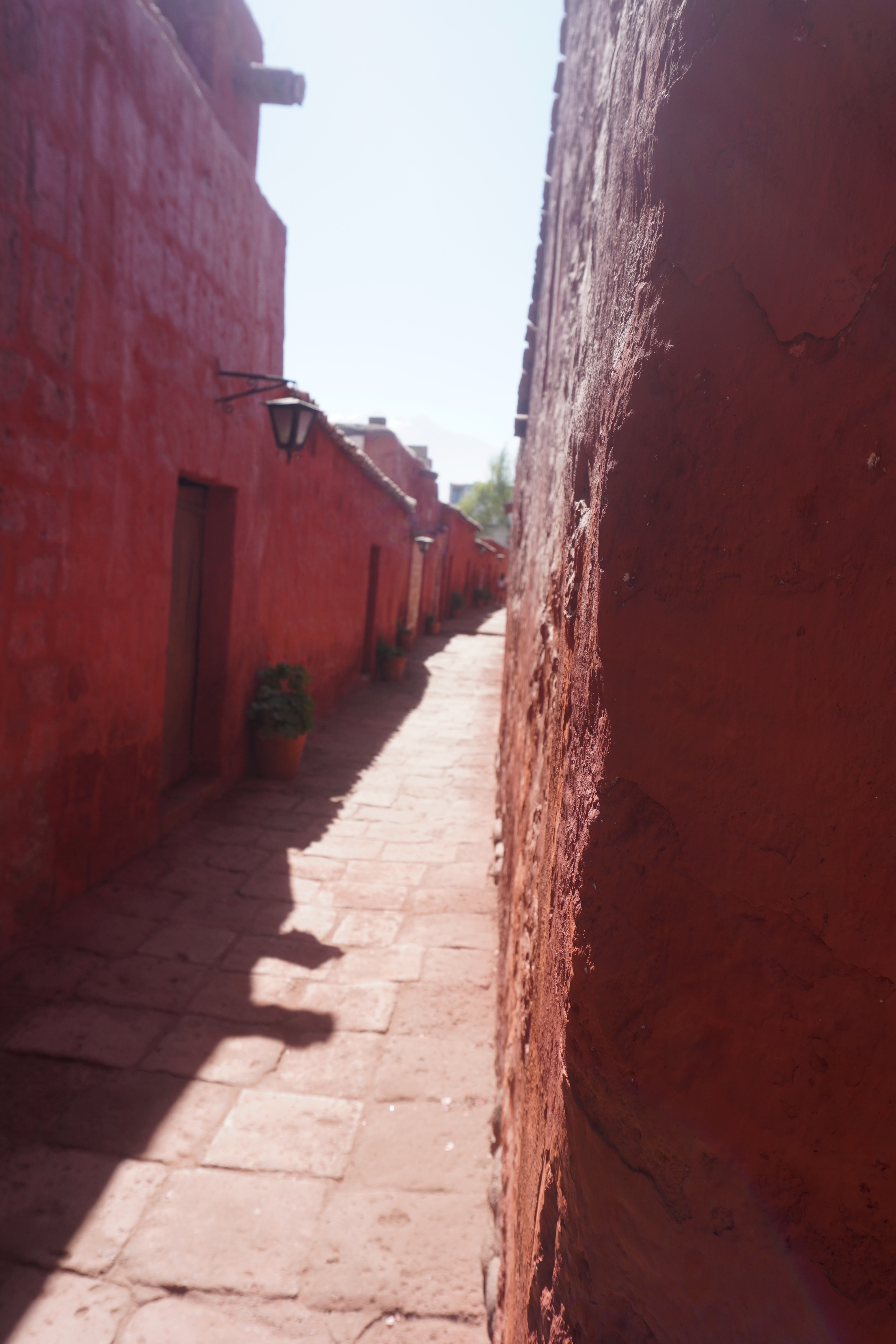
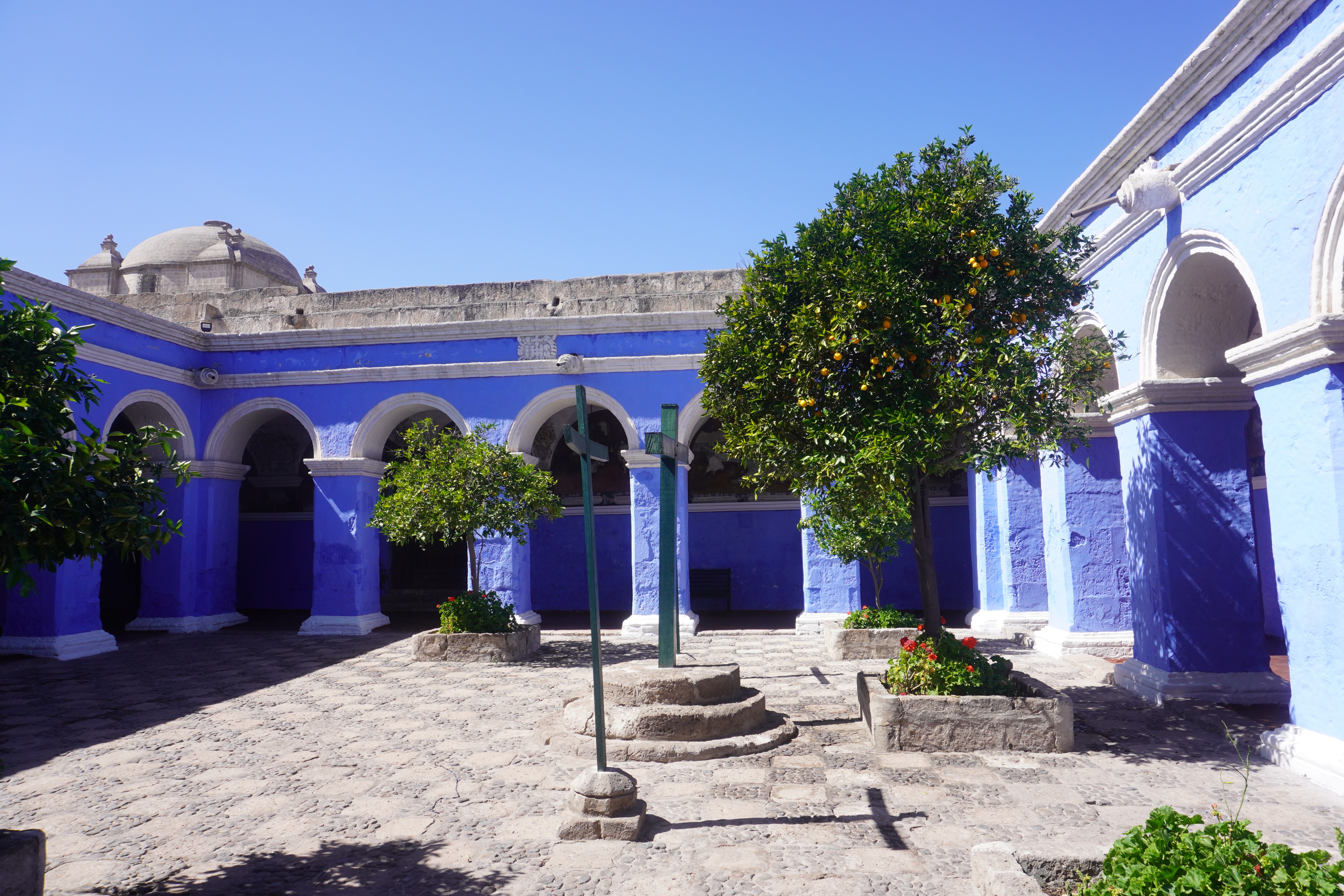
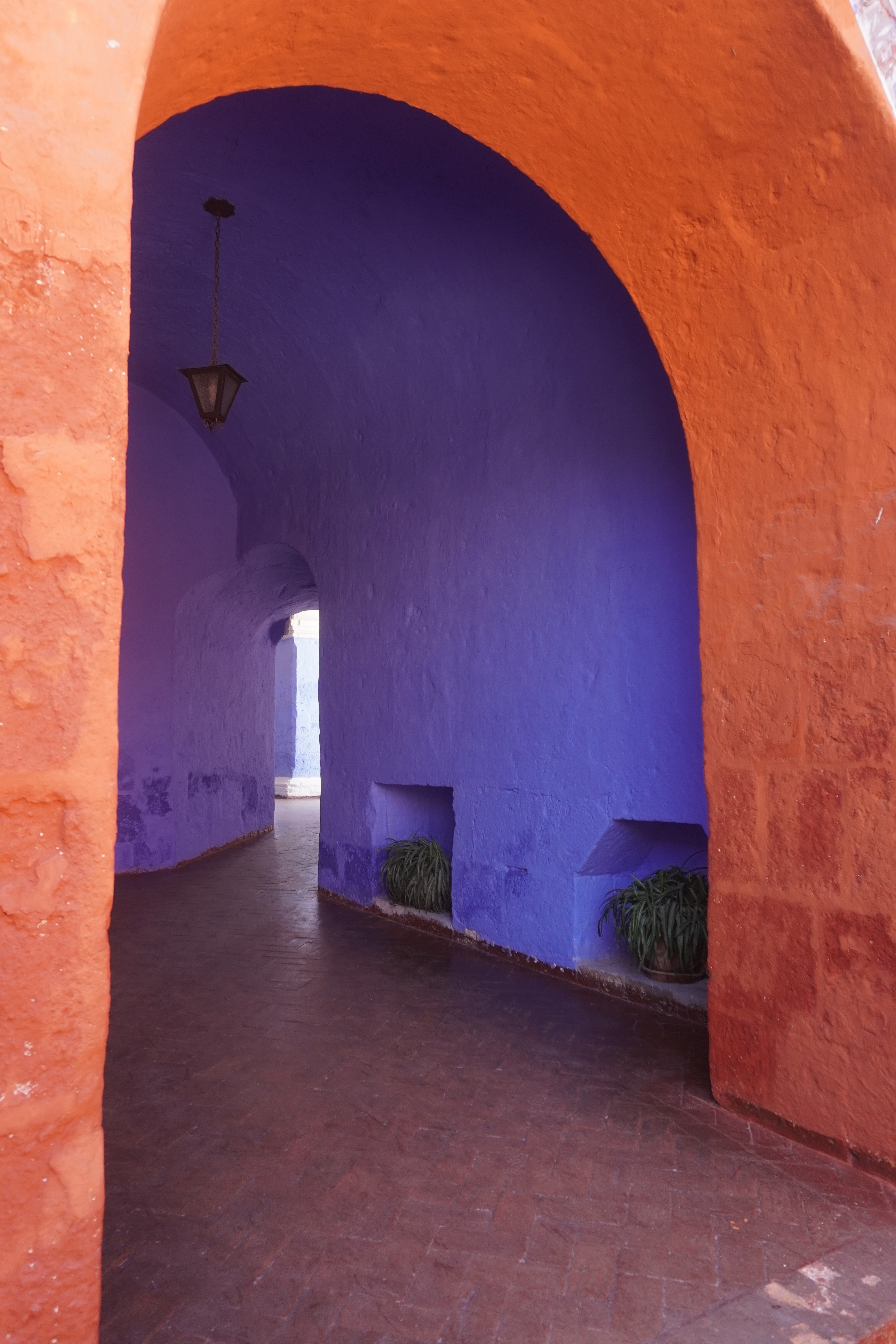
Due to the constant earthquakes that affected the monastery, the families of the nuns chose to build unique and private cells for each one of them. For almost two centuries, the cloisters and cells of the monastery have undergone various modifications, additions and new constructions that have made Santa Catalina’s layout a sometimes confusing and ordered puzzle to solve.
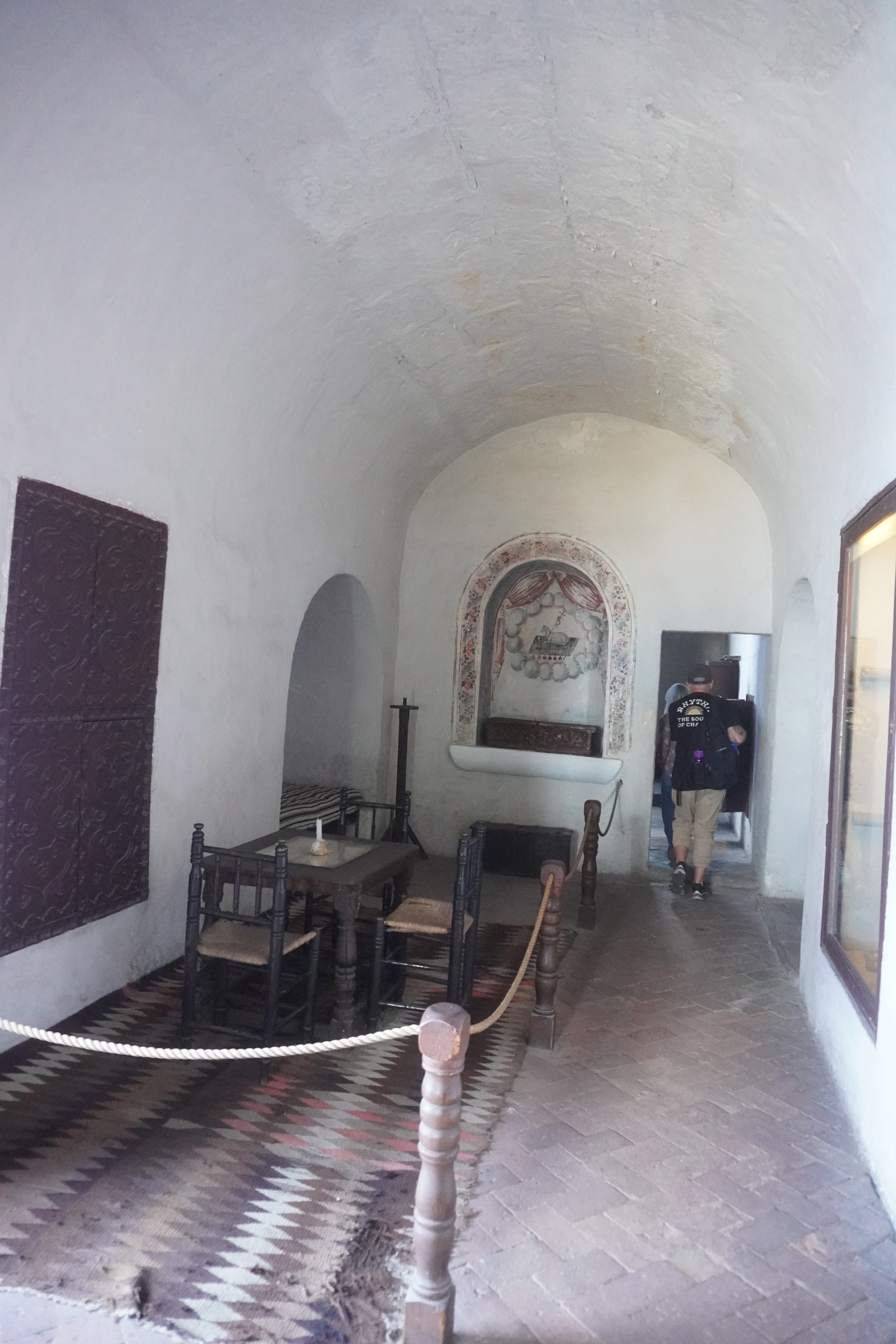
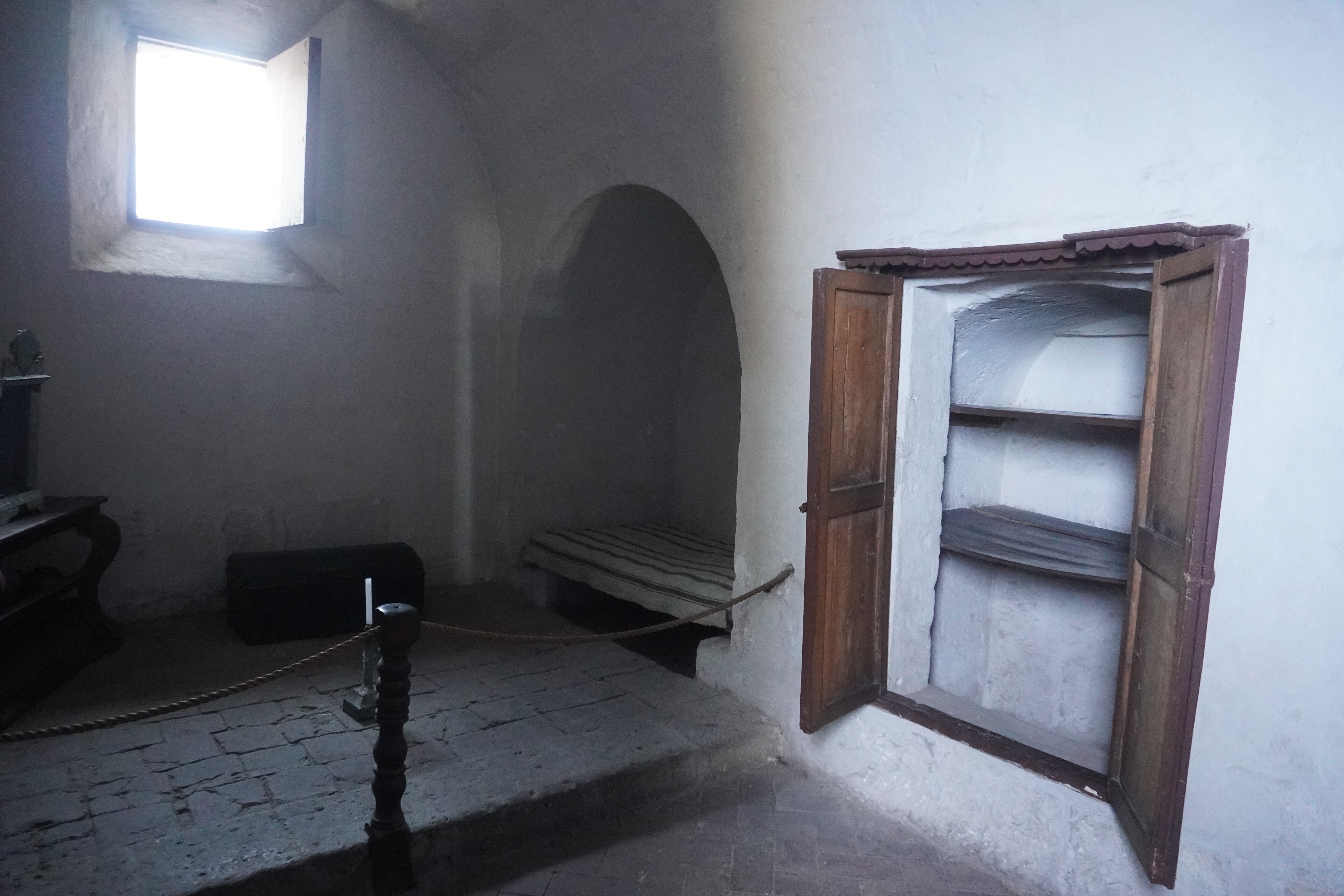
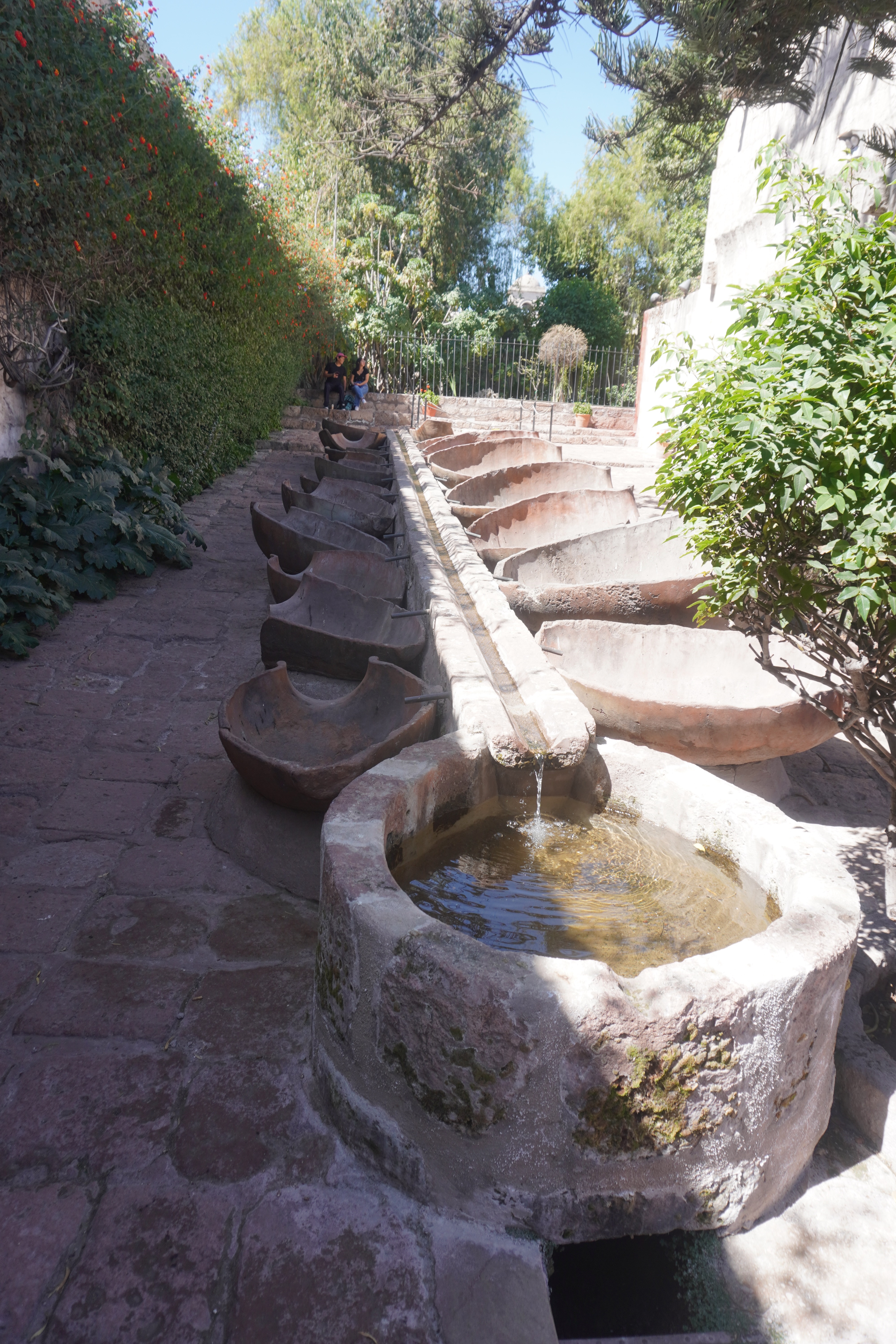
One of our last stops was the outdoor laundry, which was built in 1770 when Arequipa was supplied with water through ditches. In it are twenty half urns, which are large clay containers, that in the past were used to store grains, corn, or wine, and then served as trays. The water runs through a central channel, which was diverted to each jar by placing a stone and at the bottom of the tray as a plug, which after washing was removed and the water ran towards the underground channel that carried the waste to the river.
We left the monastery and walked back to Plaza de Armas to enter the Basilica Cathedral of Arequipa, the most important Catholic church of the city and also of the larger Roman Catholic Archdiocese of Arequipa since it is the base of the archbishop and the metropolitan council. The cathedral is also considered one of Peru’s most unusual and famous colonial cathedrals since the Spanish conquest.
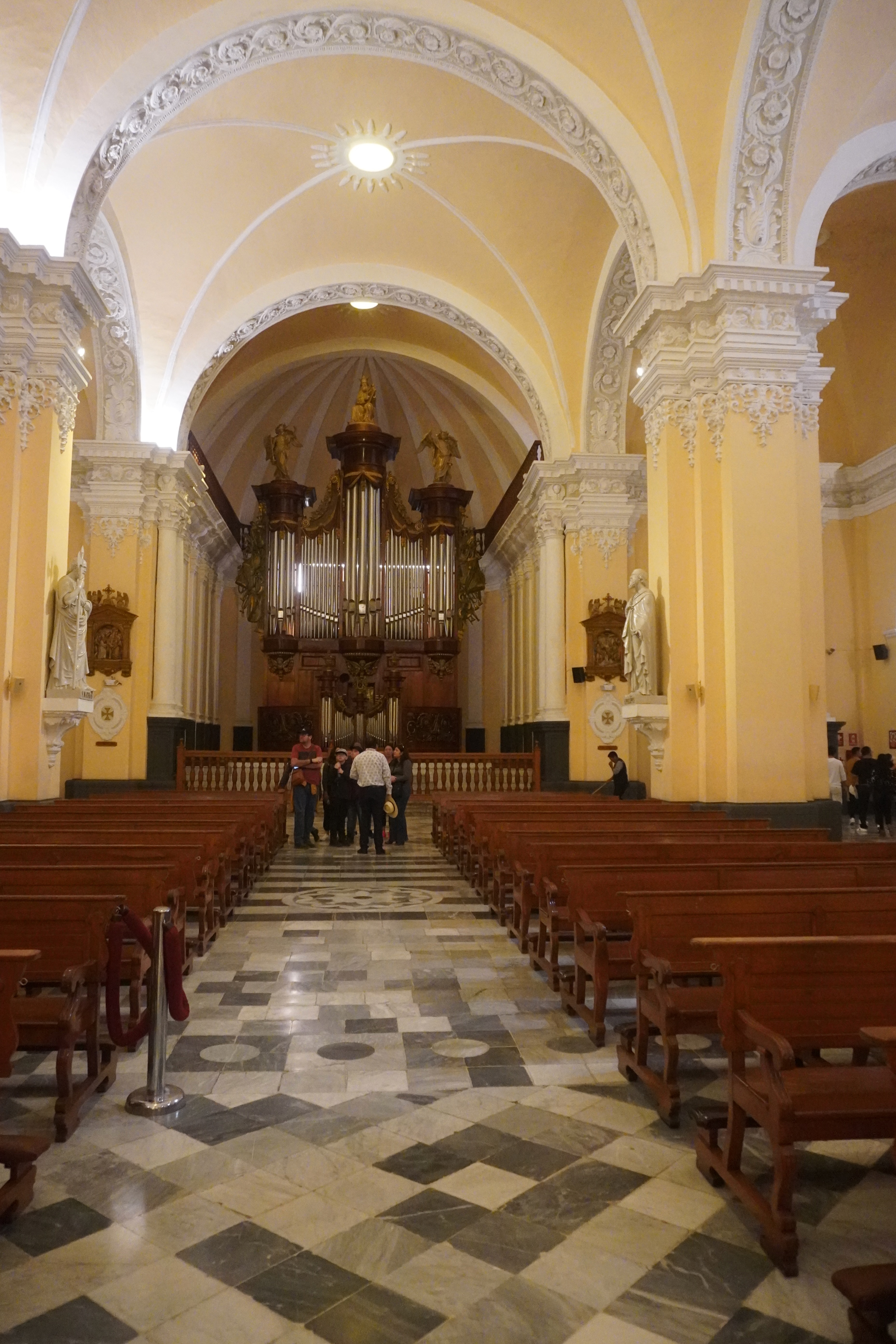
Construction began in 1544 and has continued almost unabated since then because of the many earthquakes that have plagued this area, the most recent being the 2001 southern Peru earthquake that measured 8.1 on the Richter scale on June 23. The left tower was destroyed, and the right tower suffered major damage. One year later, Mayor Manuel Guillén finished the restoration of the towers.
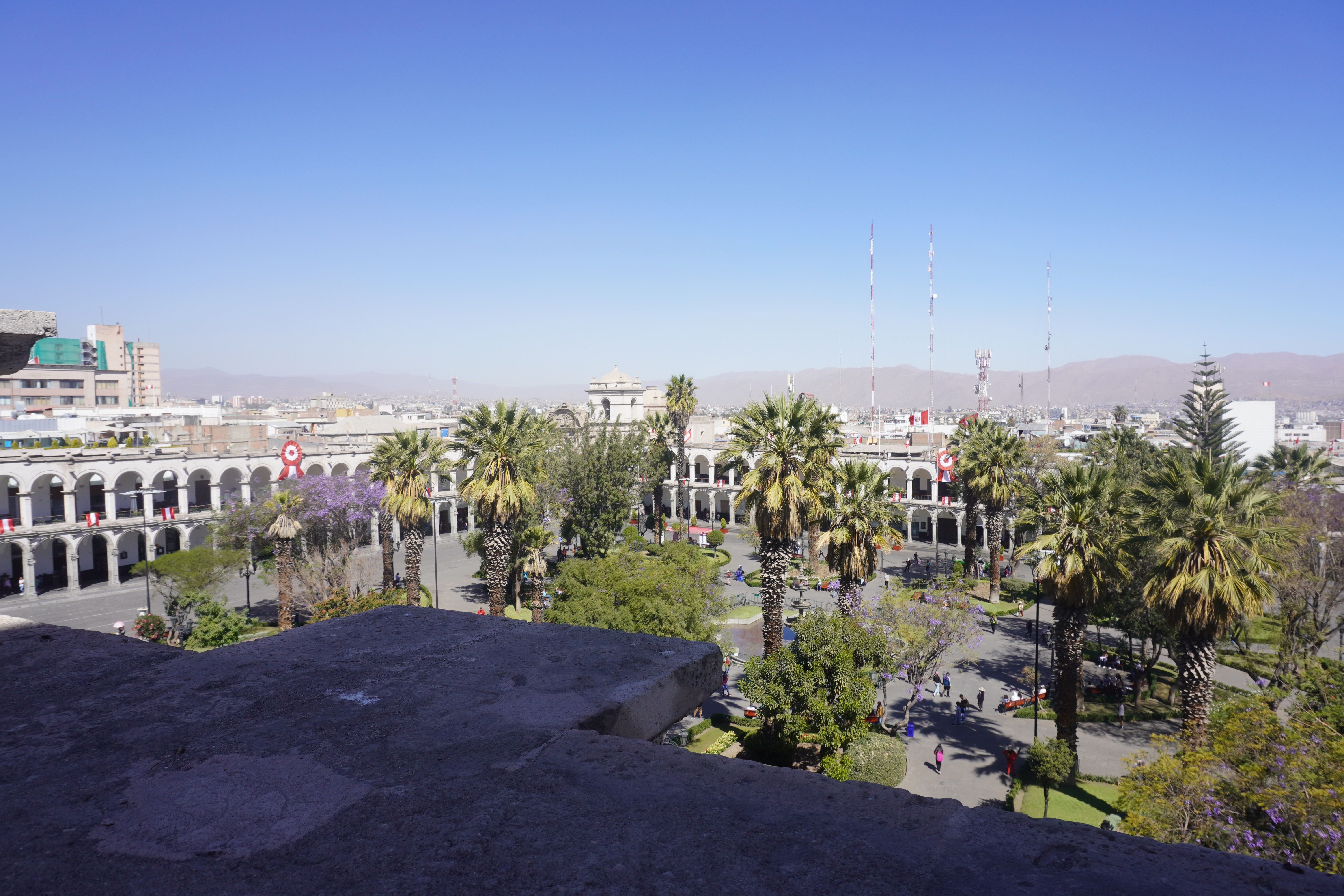

We finished inside and climbing a set of narrow stairs, emerged on the rooftop for stunning views of the city and a series of volcanic cones that dominate the city skyline, those being Misti and the extinct volcanic groups Pichu Pichu and Chachani. A heavy layer of haze, perhaps pollution marred the view, but it was still pretty breathtaking.
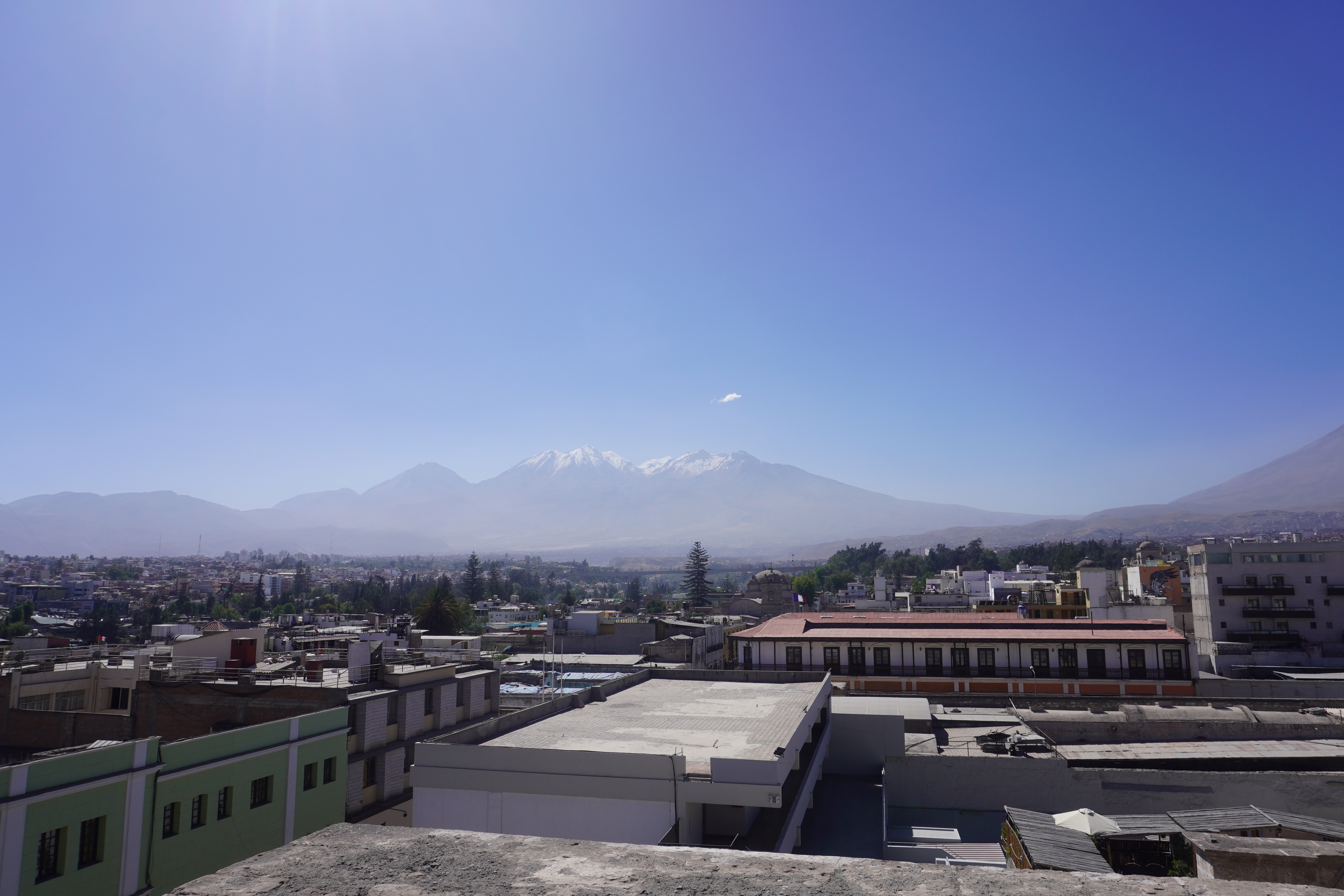
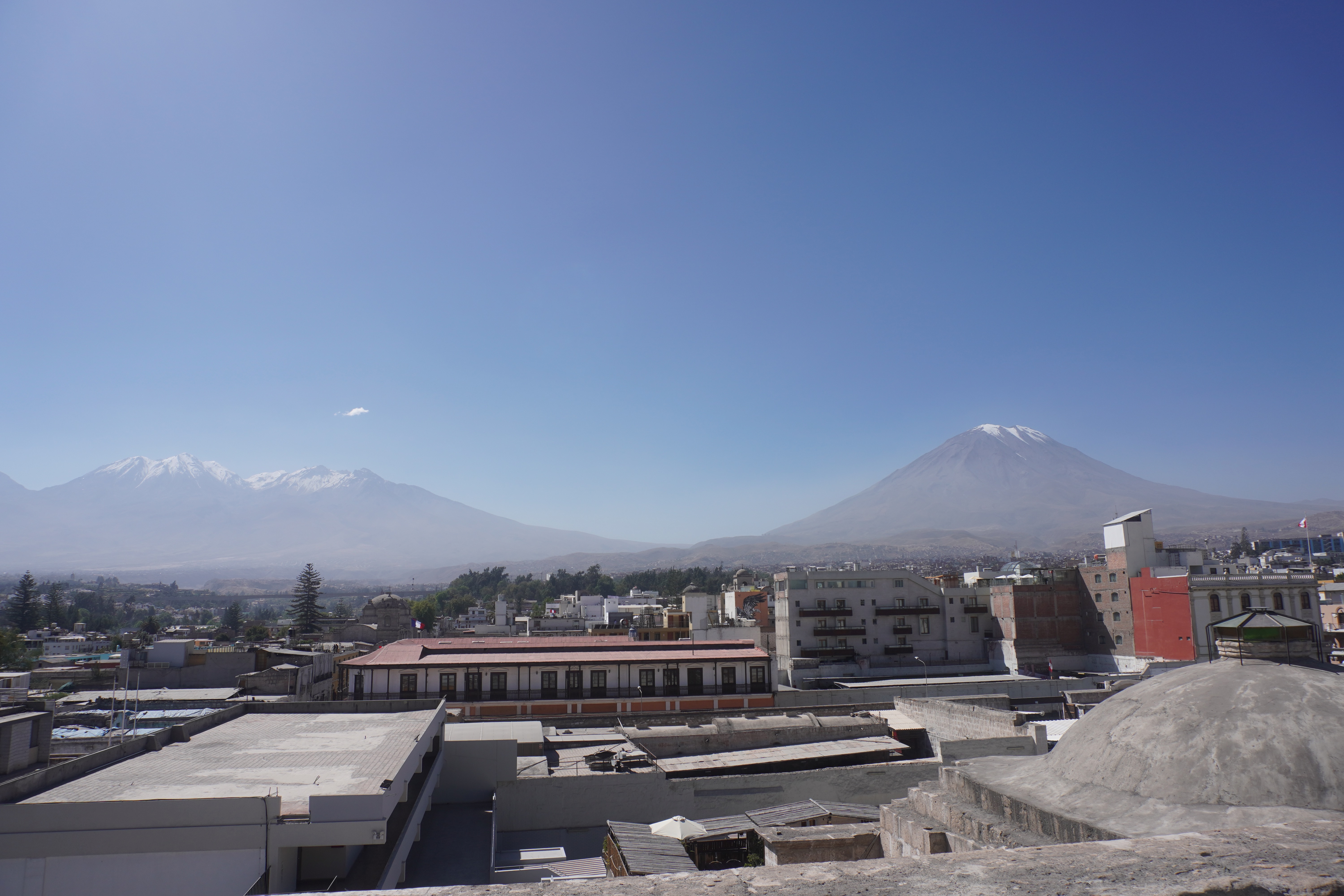
This completed our first full day of sightseeing with many steps being taken and it was time to eat. Luis has advised us a couple of times that starting the next day we would leaving Arequipa’s relatively benign altitude of 7,600 feet and would be spending days in the higher elevations of the Andes. It would be best to not eat a heavy meal late in the day, for ease of digestion and thus, this lunch would be for most of us, the meal of the day.
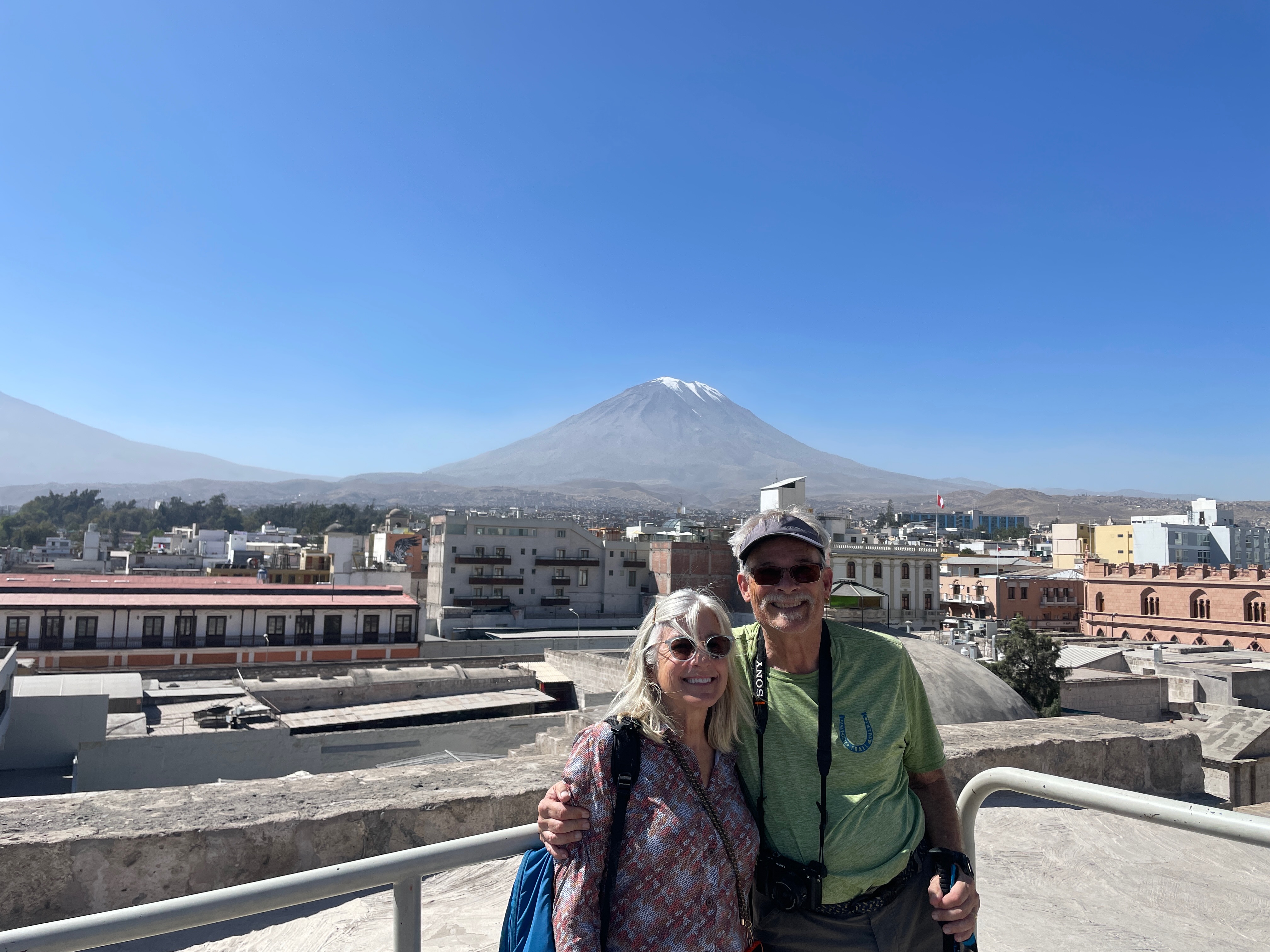
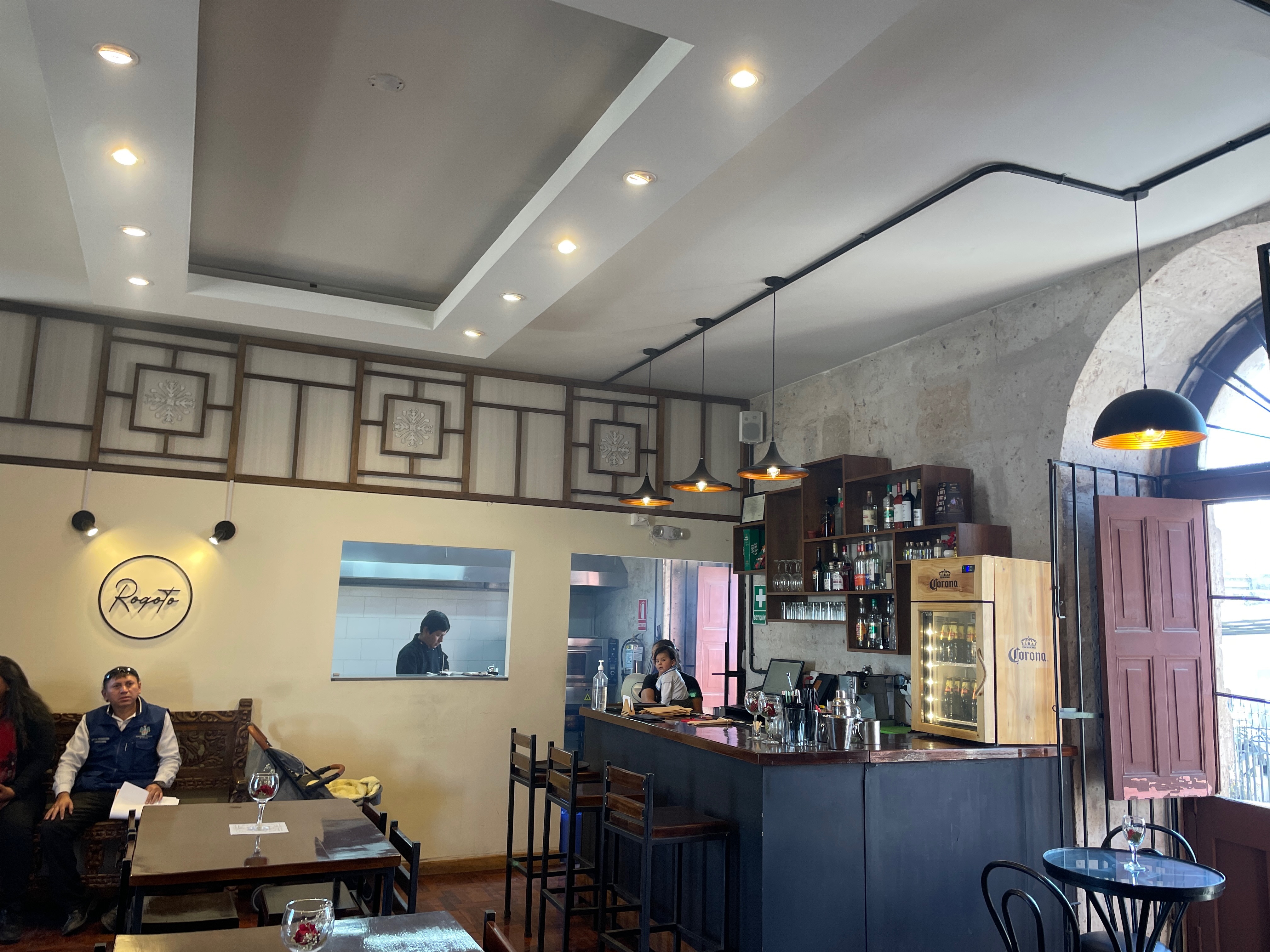
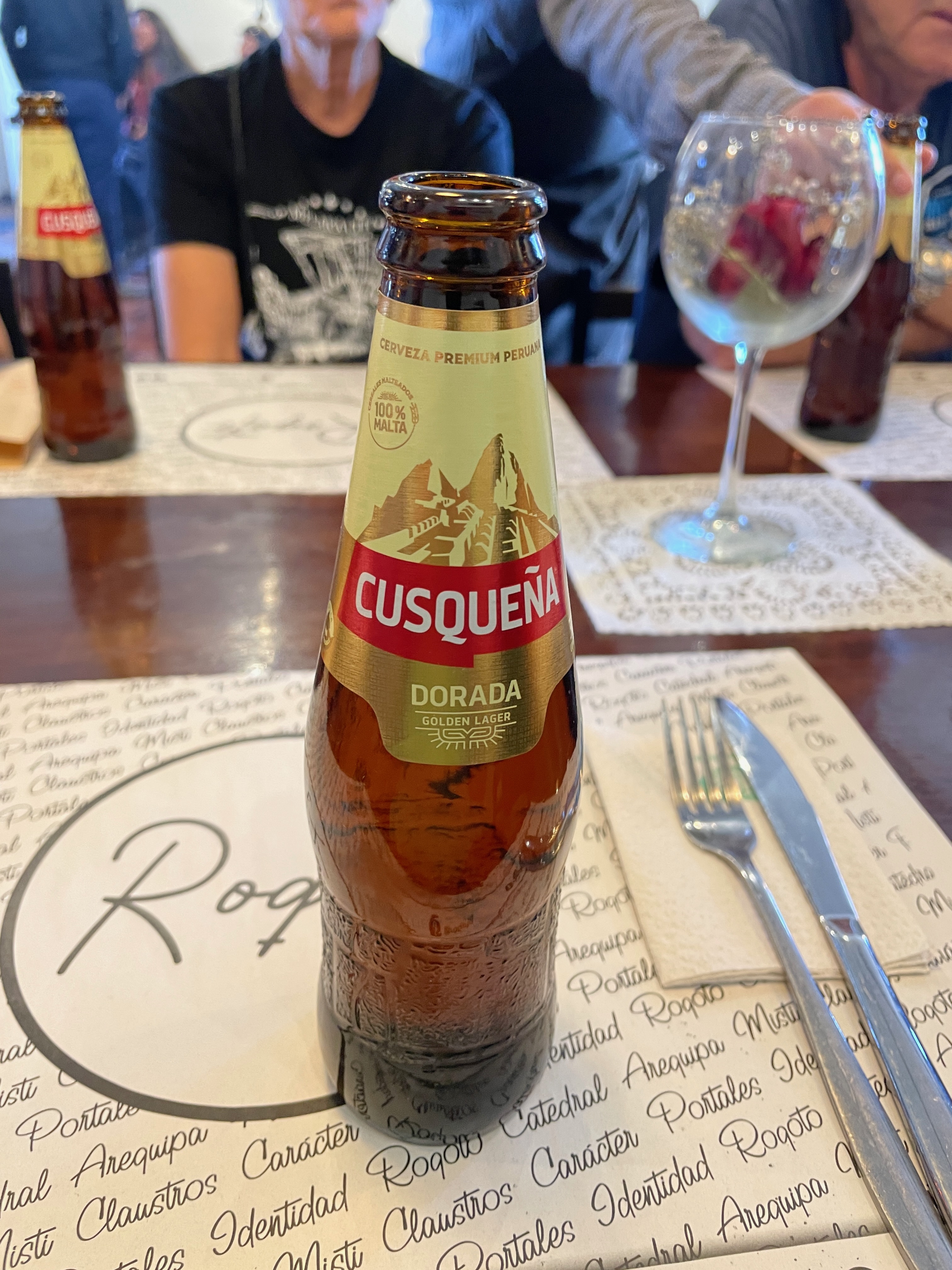
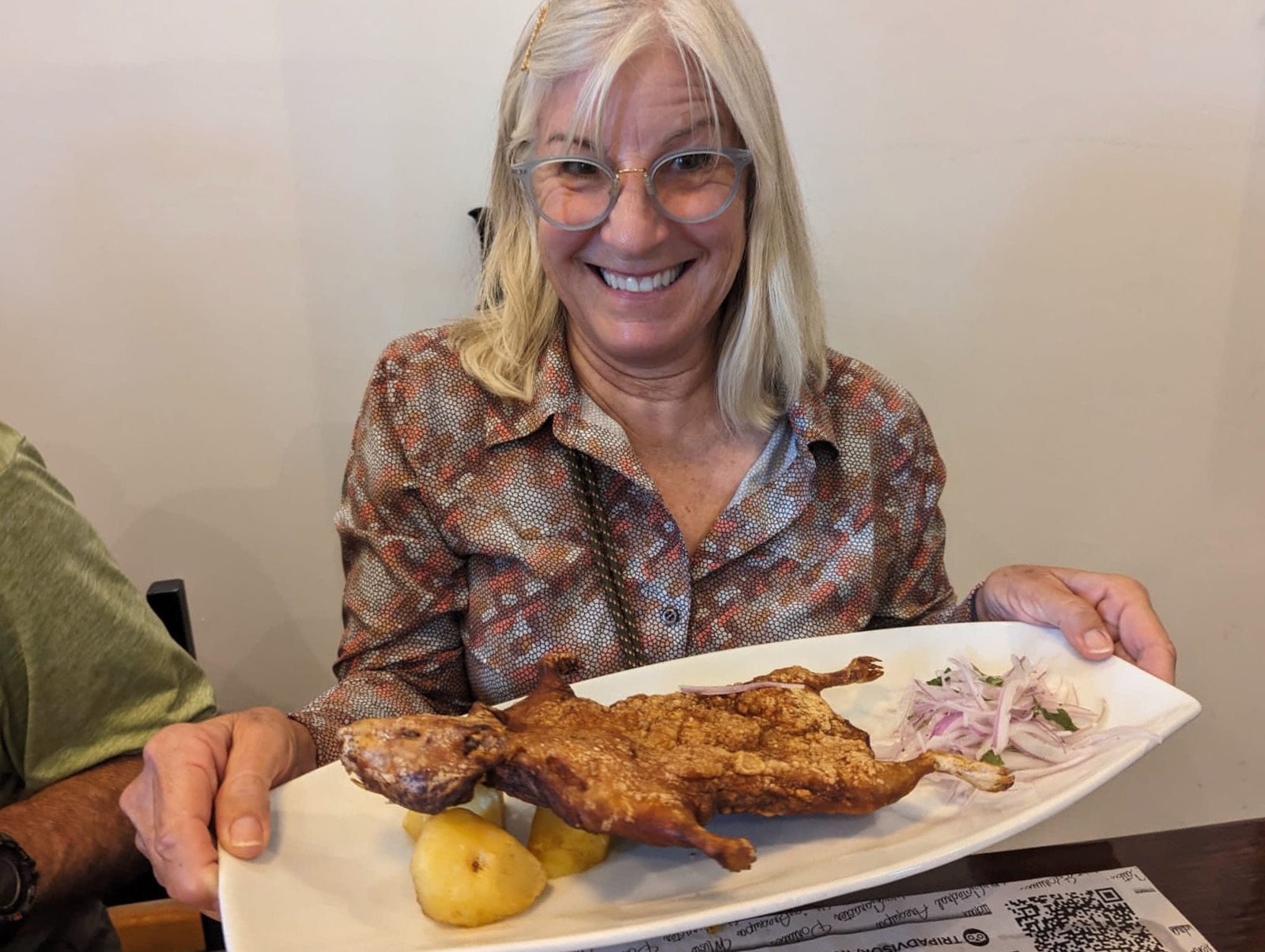
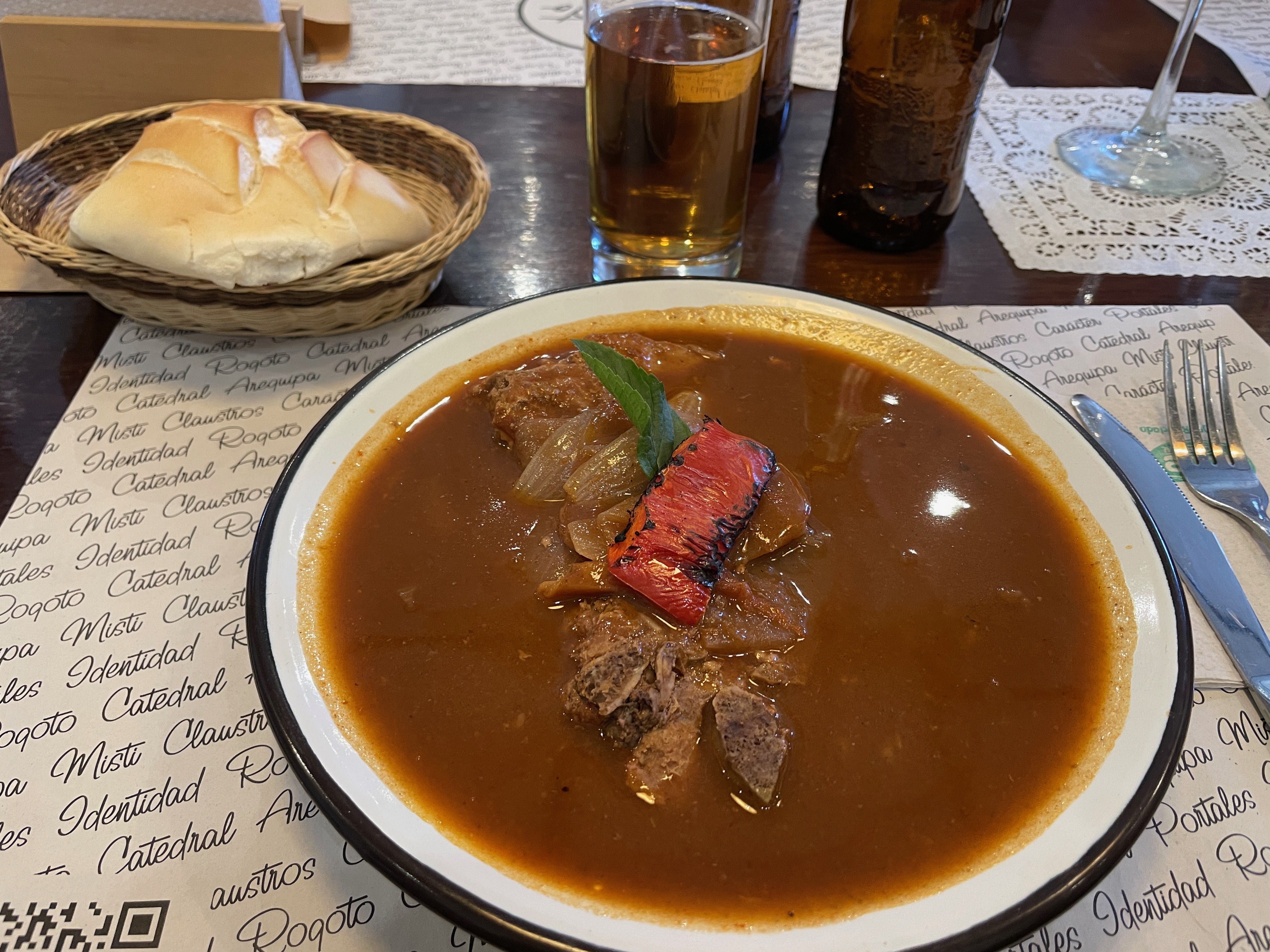
Our dining experience would take place at Rogoto, a small but popular place nearby that features food typical of the area. Along with a Cusquena beer for each of us, Joanna tried the Cuy Chactado (Fried Guinea Pig), served complete with native Peruvian potatoes, sarza (onions and tomatoes) and sauces and I more judiciously landed on the Adobo a Lo Antano (Dressing Soup) a Sunday dish comprised of marinated pork with guiñapo concho and spices, served with triangle bread and “piteao” tea.
It was a very good experience, including the Guinea Pig which proved to be a challenge to eat as the meat is sparse on the bone and likely is best consumed in pieces, so that one can pick up the portion and eat it like a chicken wing. My pork stew was rich and hearty and when the meat was gone, I continued using the supplied bread to sop up the delicious sauce.
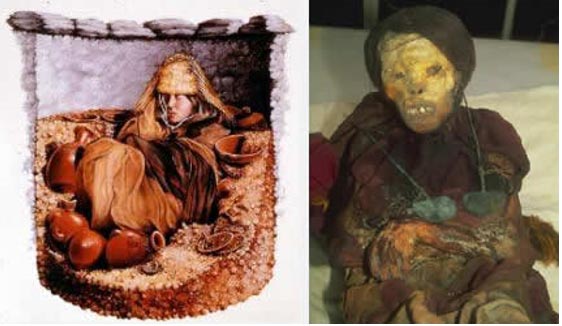
Finished with the meal, there was one last activity to take in, this one not part of the tour, but costing only a few dollars, the Juanita museum (20 soles or $7) also known as the Lady of Ampato, which features the well-preserved frozen body of a girl from the Inca Empire who was killed as a human sacrifice to the Inca gods sometime between 1440 and 1480, when she was approximately 12–15 years old.
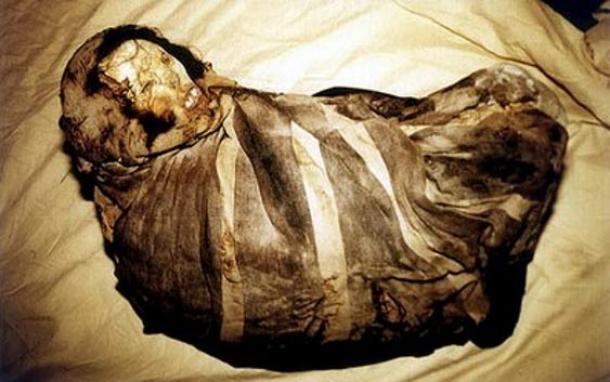
In September 1995, during an ascent of Mt. Ampato (20,700 ft), Johan Reinhard and Miguel Zárate found a bundle in the crater that had fallen from an Inca site on the summit due to recent ice melt and erosion from a volcano eruption. To their astonishment, the bundle turned out to contain the frozen body of a young girl. Juanita was found almost entirely frozen, which preserved her internal organs, hair, blood, skin, and contents of her stomach.
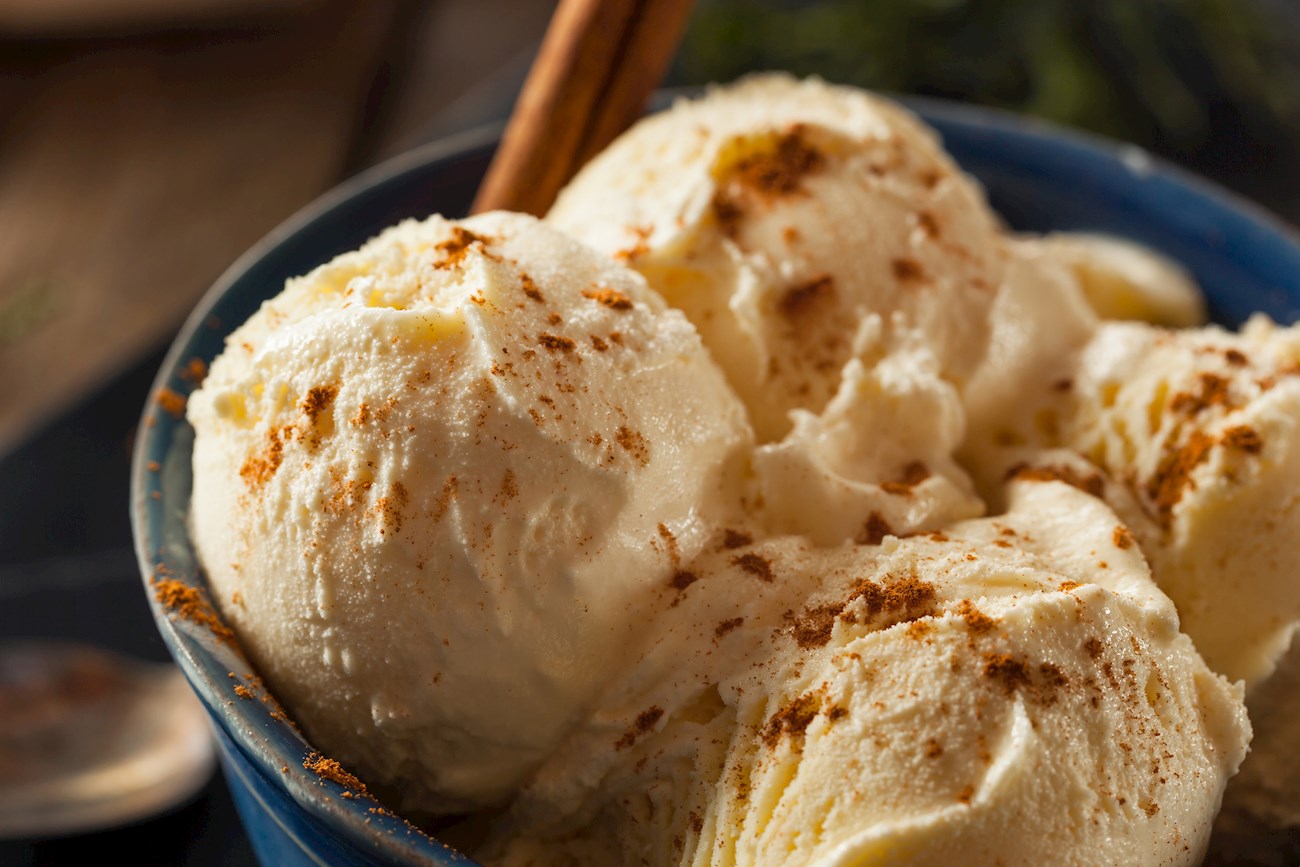
I was pretty worn out from the morning’s activities so spent the time in our room at the hotel while Joanna went to the museum and enjoyed her visit, as well as a Queso Helado, a Peruvian dessert that’s very similar to ice cream, and originates in Arequipa. It’s usually made with a combination of whole milk, evaporated milk, cinnamon, cloves, desiccated coconut, sugar, and egg yolks and Joanna reports that the texture was a little bit grainy, and the flavor was good but a little bit bland. Not a bad way to finish a long full day. Our next one would be long as well with about five hours of driving in the van, so a good night’s sleep would be next up on today’s itinerary.
Links
Santa Catalina Monastery: https://santacatalina.org.pe/en
Basilica Cathedral of Arequipa: https://www.museocatedralarequipa.org.pe/
Juanita Mummy: https://www.ancient-origins.net/history/mummy-juanita-sacrifice-inca-ice-maiden-009800
Discover more from 3jmann
Subscribe to get the latest posts sent to your email.


 3jmann