July 19
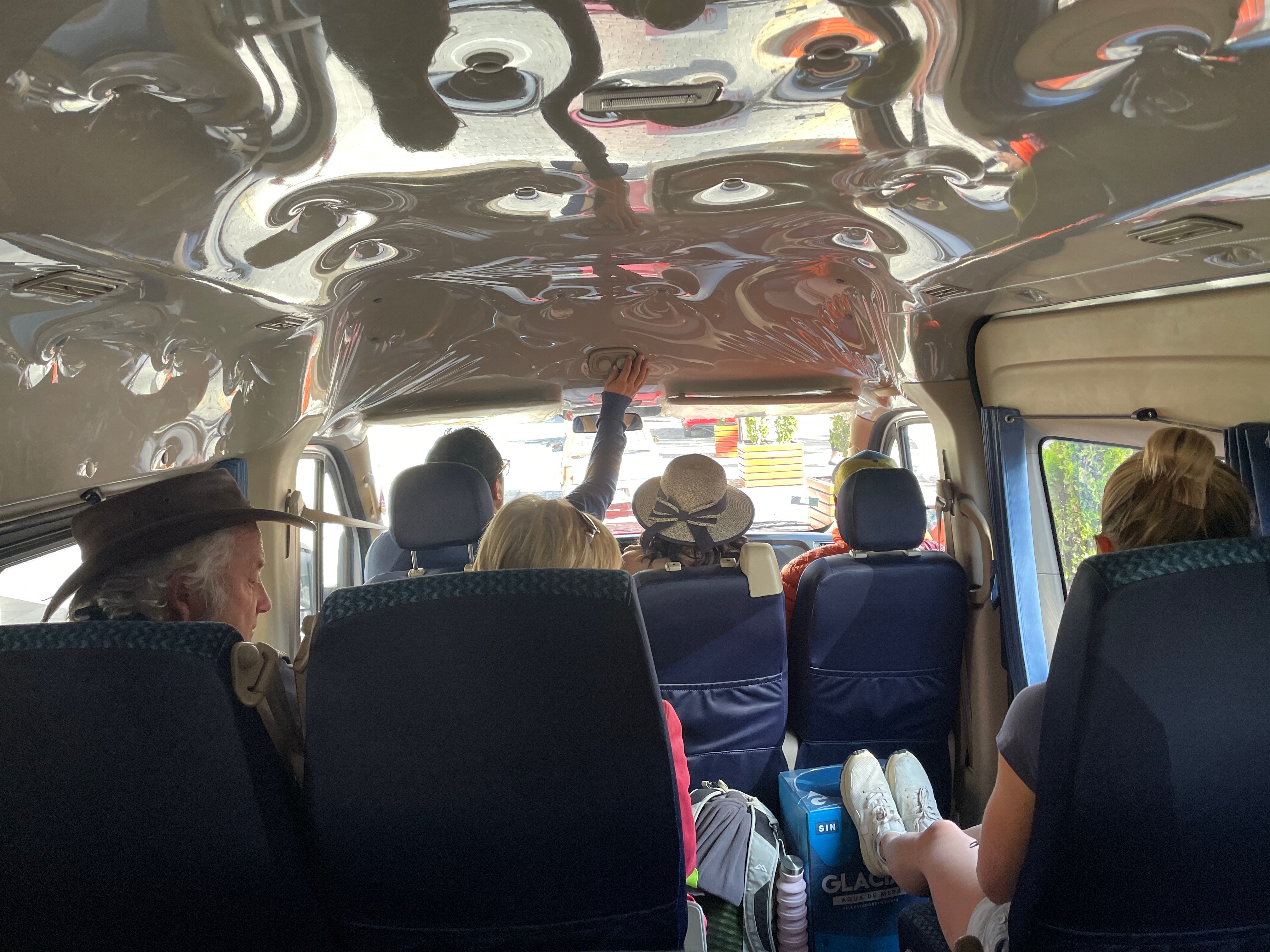
After another hearty breakfast at the Andina, we soon found ourselves in our van heading out of town, towards the Altiplano high plains and the Colca Valley and Canyon. It would be the first of many days of enforced idleness, Joanna and I perched in the far back reading or perhaps watching a video on our tablets. Throughout our journey in Peru, we would be driving on the national highways, all of them two lane roads battered by the elements, a bumpy, swaying ride at its best.
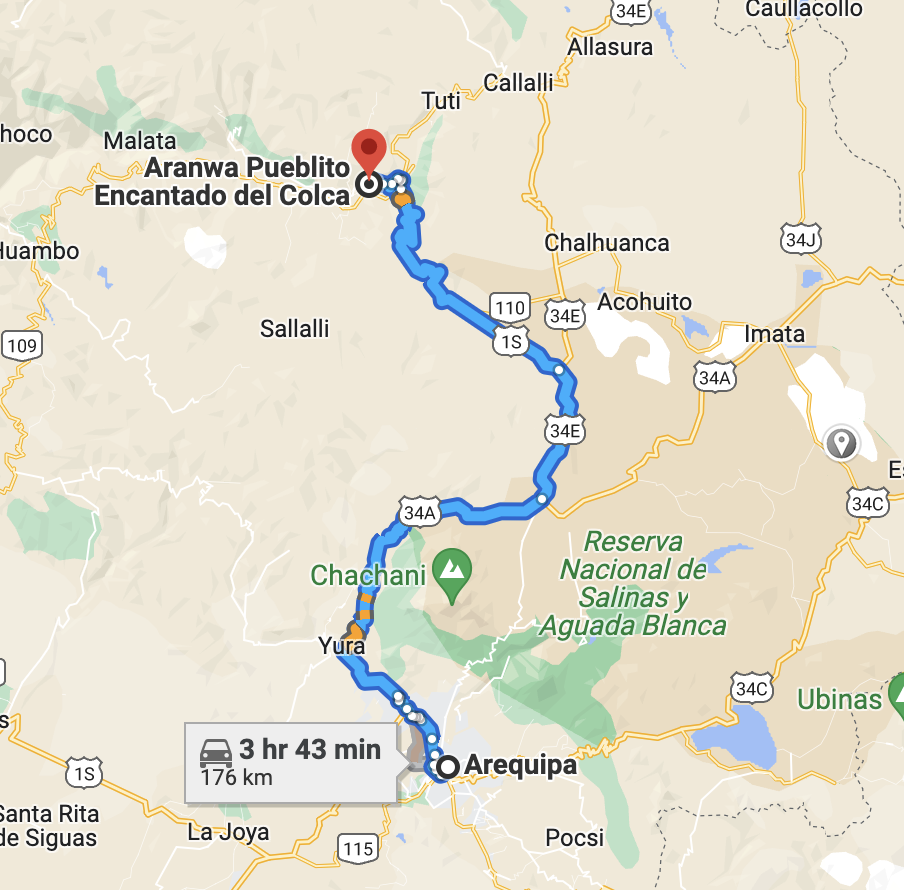
We’d be climbing in altitude all day and after some time arrived in the Reserva Nacional Pampa Cañahuas, an area covering 314,447 hectares (1,214 square miles) at an average altitude of 4,000 meters (13,000 feet).
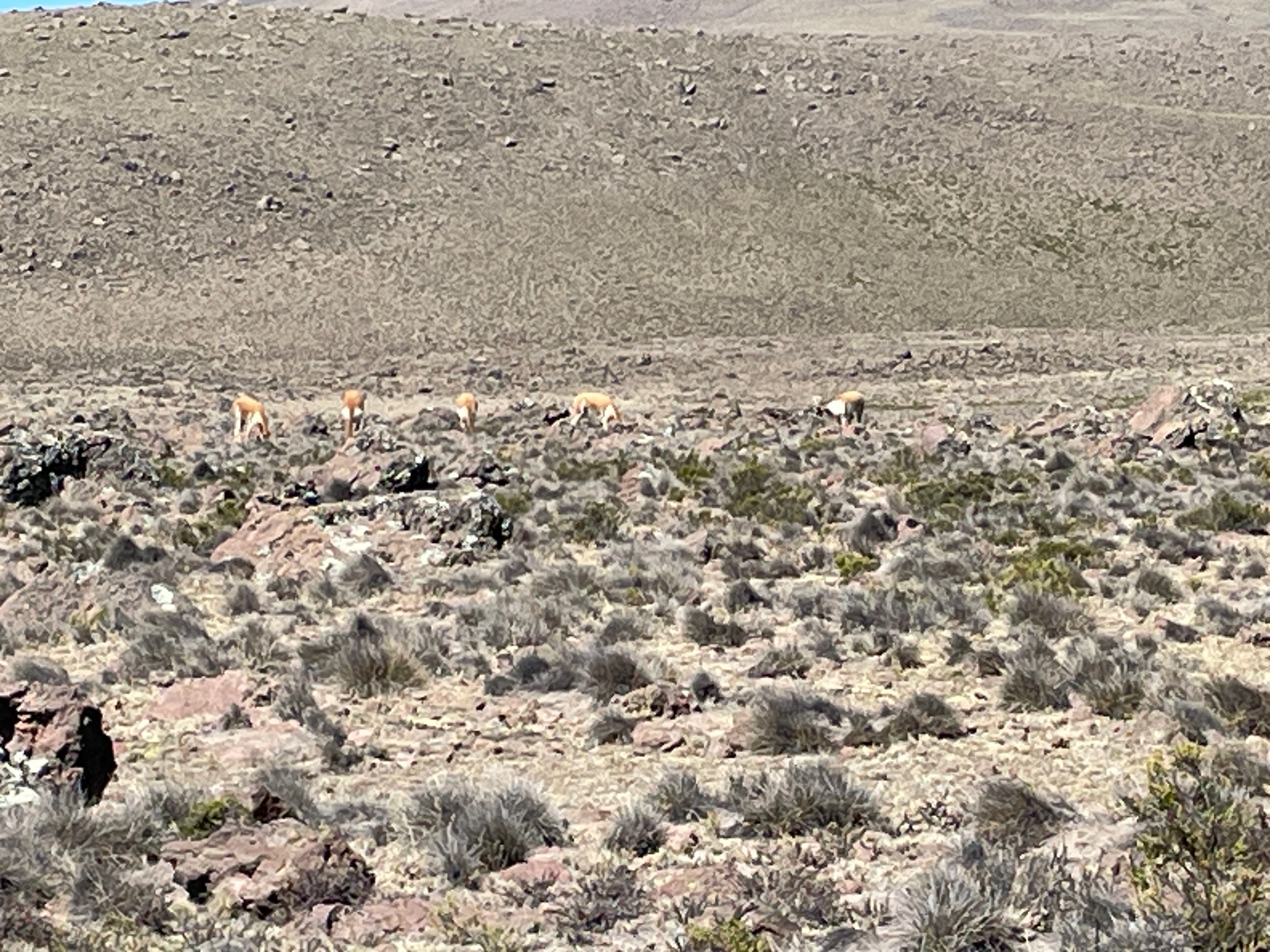
It is barren land, framed by volcanic mountain ranges and populated by vicunas, llamas, and alpacas, as well as stone cairns built by local Indigenous communities. These grazing animals are Camelids, members of the biological family Camelidae and the seven extant members of this group are: dromedary camels, Bactrian camels, wild Bactrian camels, llamas, alpacas, vicuñas, and guanacos.

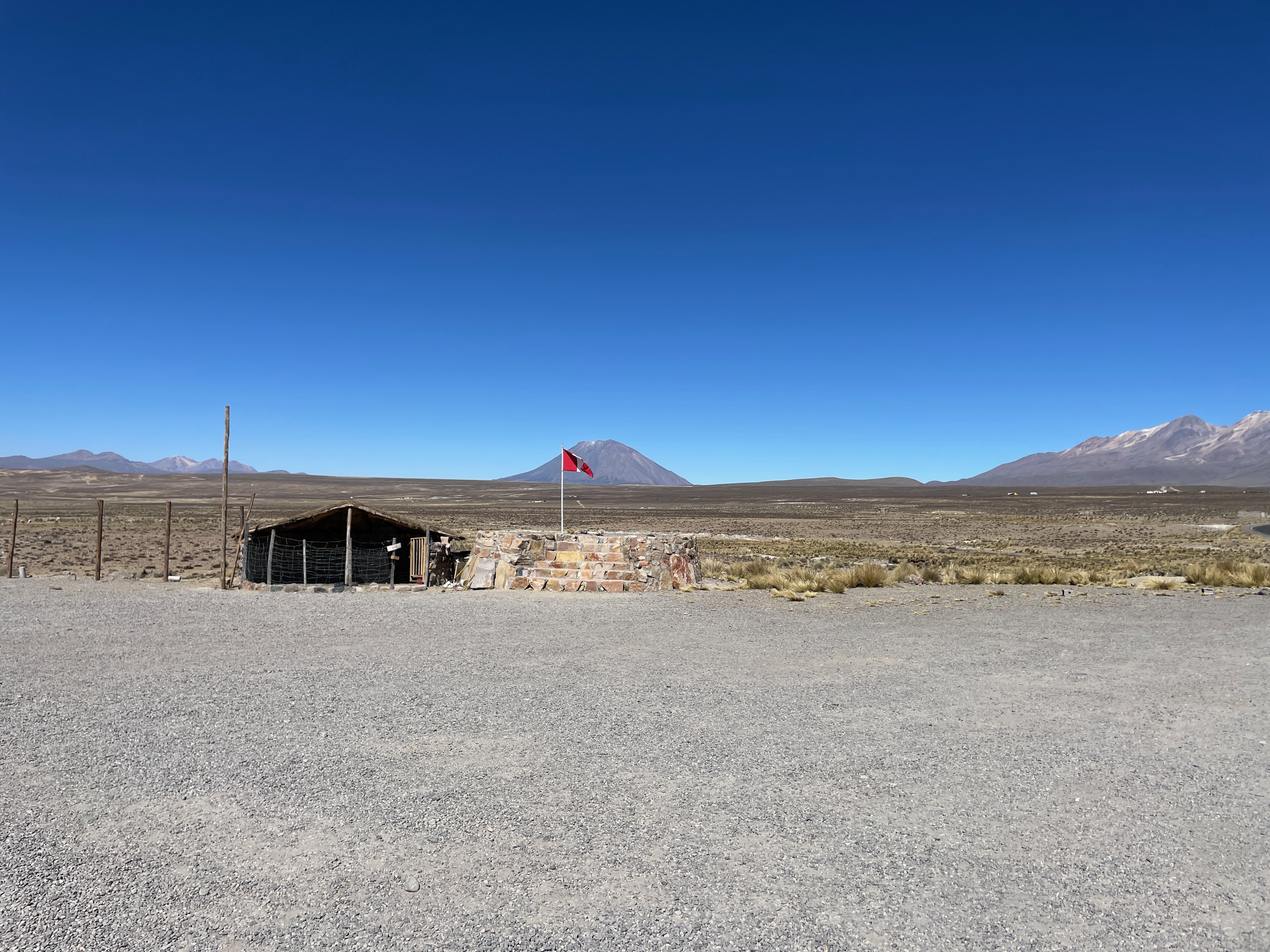
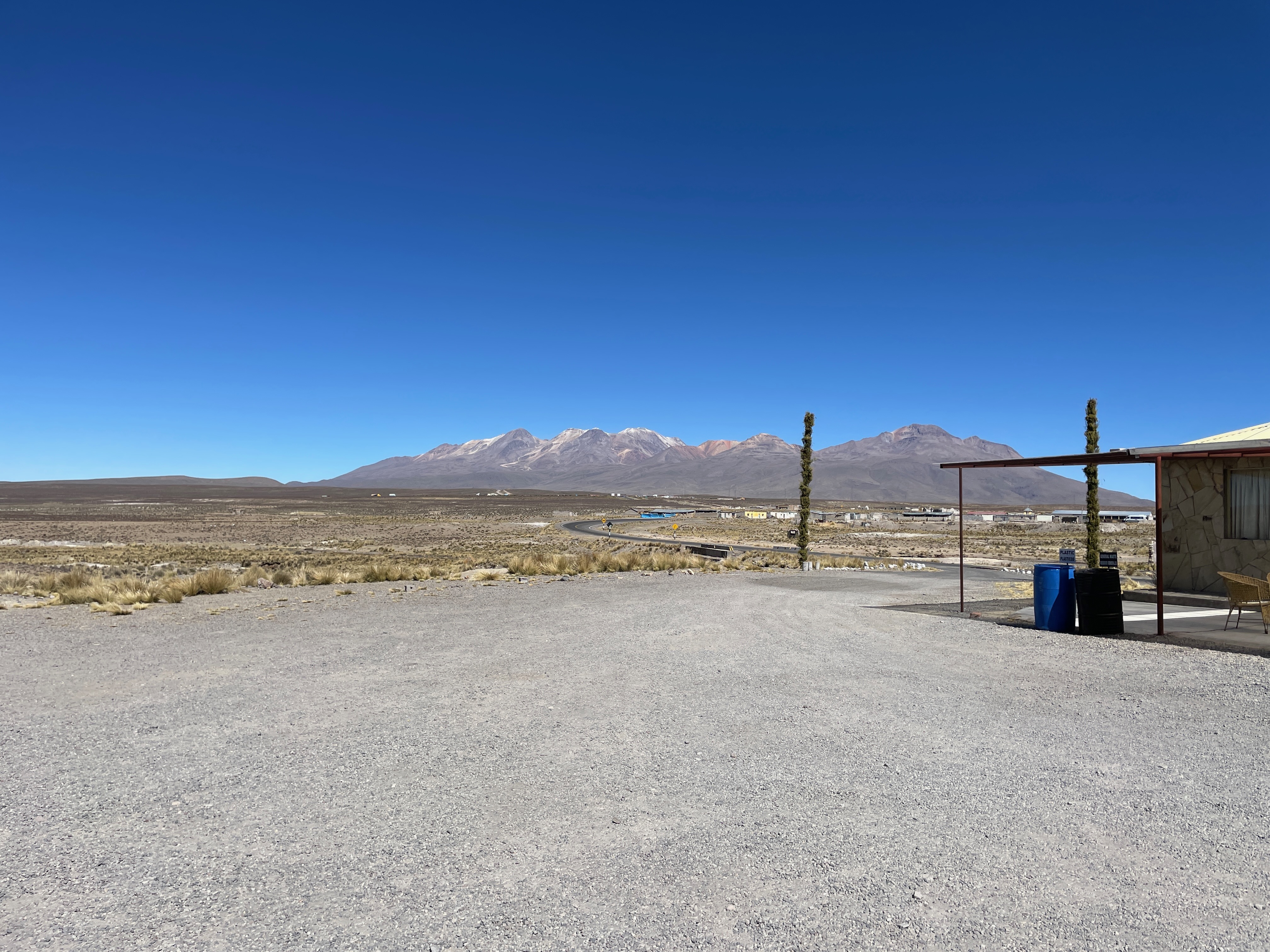
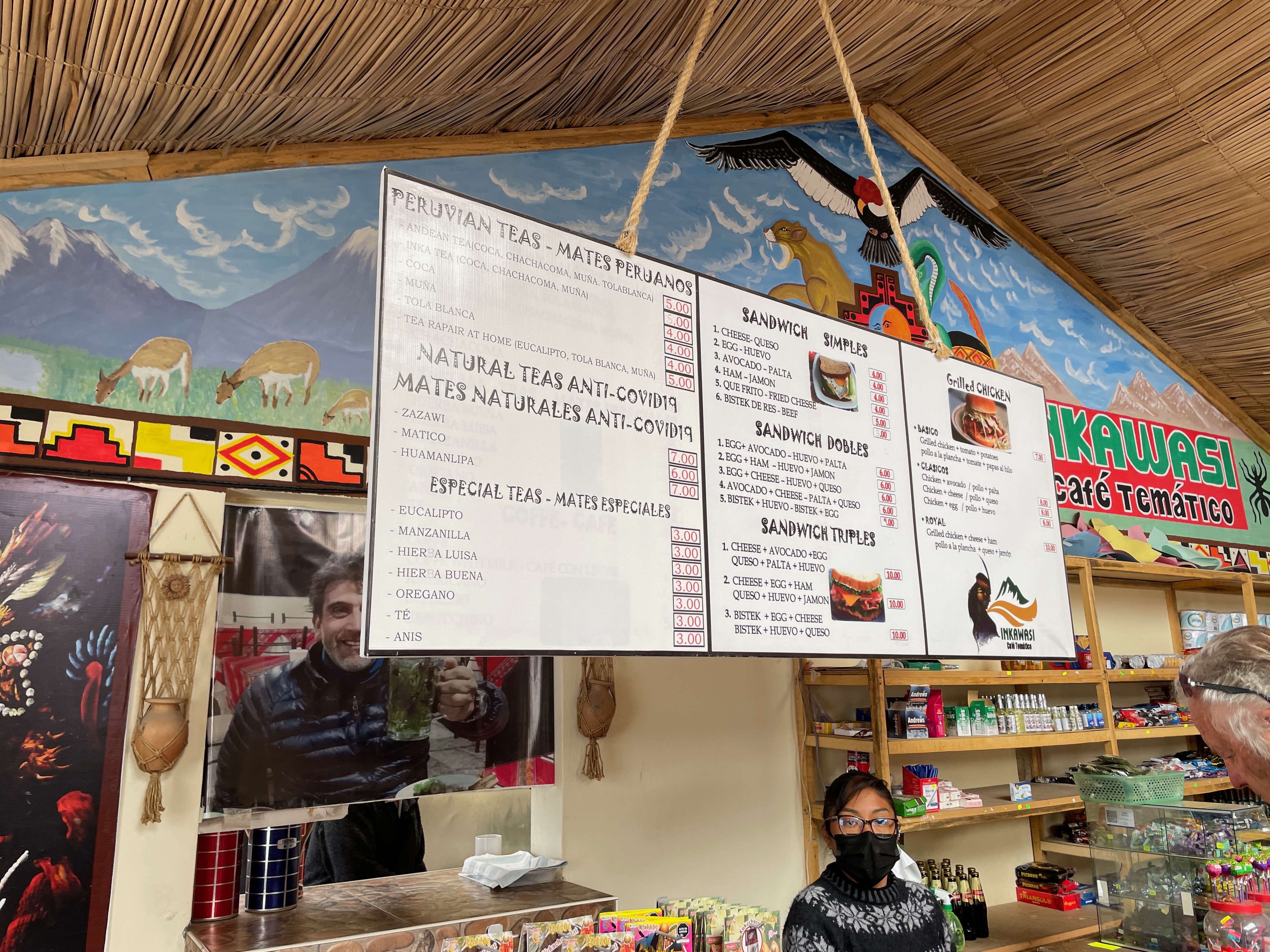
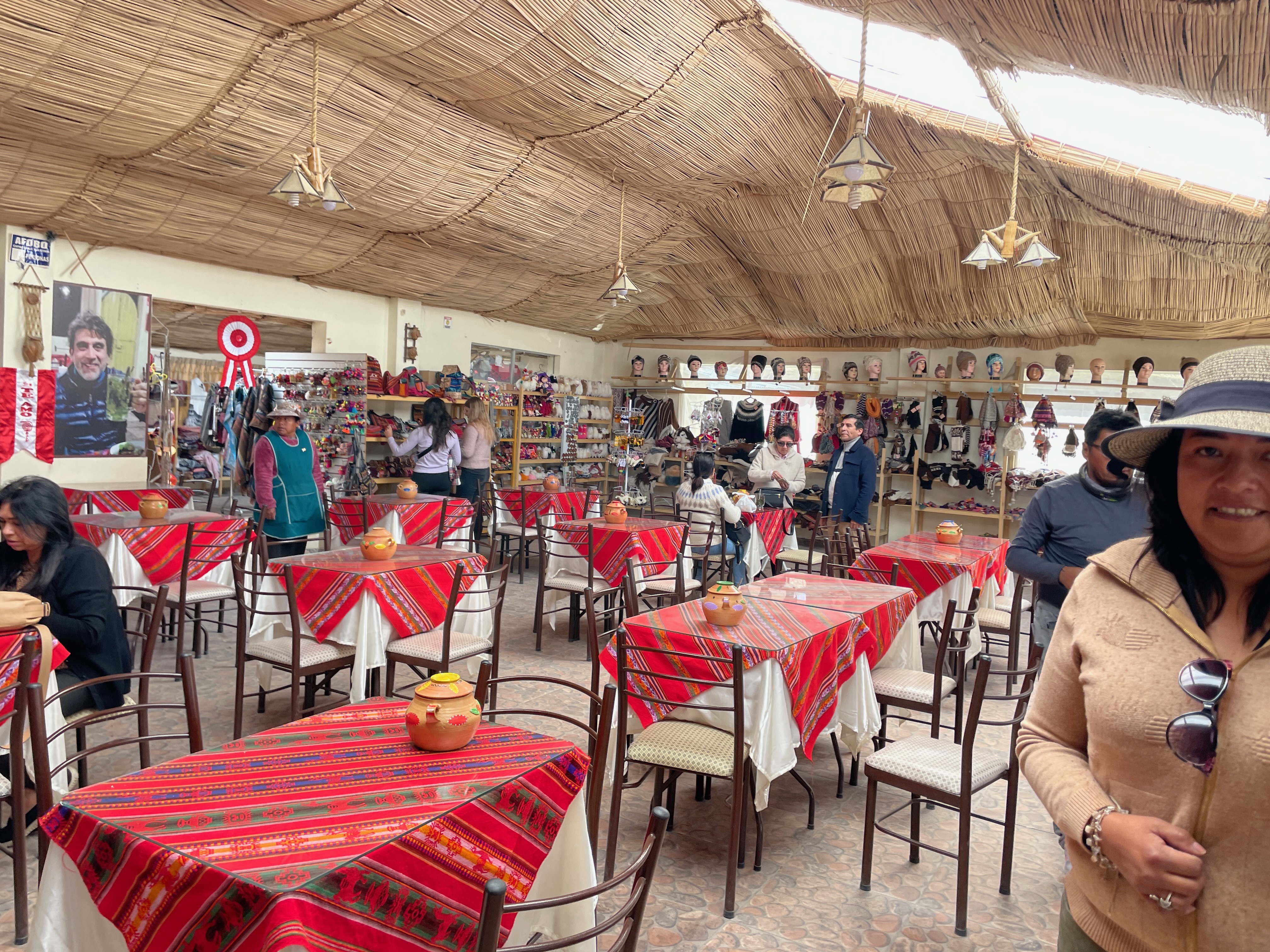
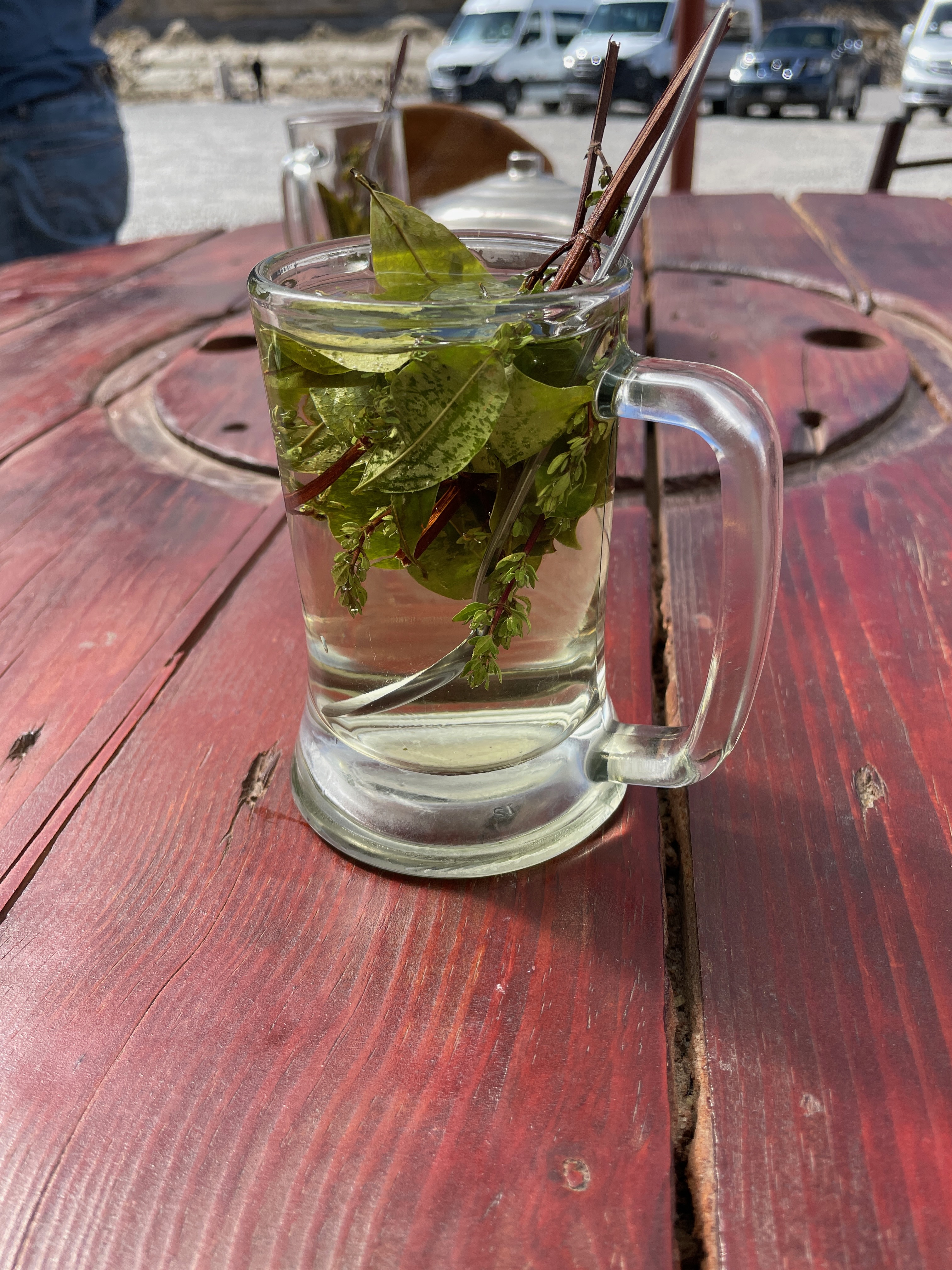
We passed out of the reserve and made a stop near Cañahuas for refreshments at Café Tematico, a combination eatery, market, and gift shop. Here we would sample and enjoy our first encounter with Inka Tea, made using the raw or dried leaves of the coca plant, along with mint and a sprig of Thyme. It was curiously refreshing and whether it helped to offset the effects of high altitude, we will leave to the scientists to figure out.

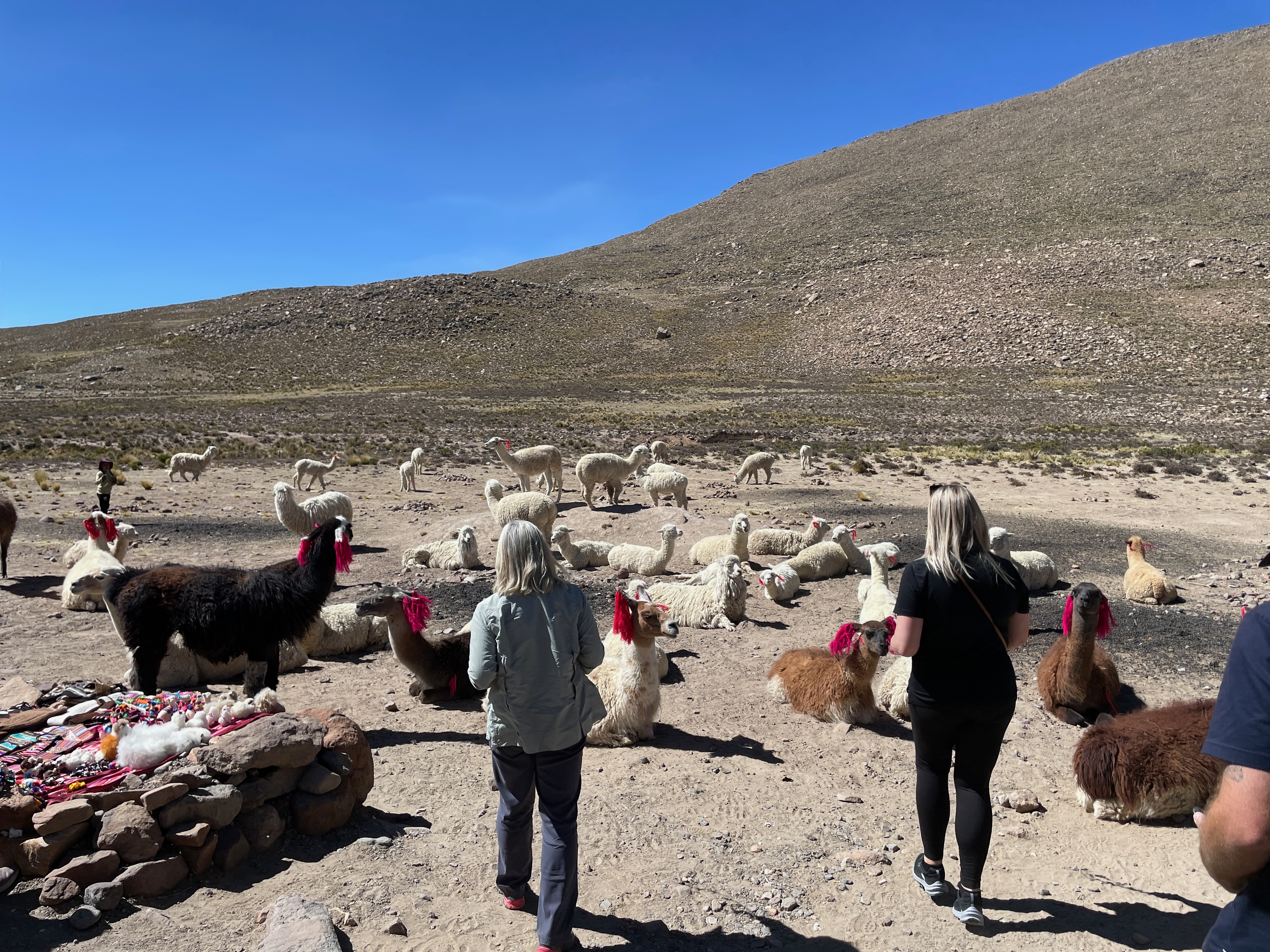
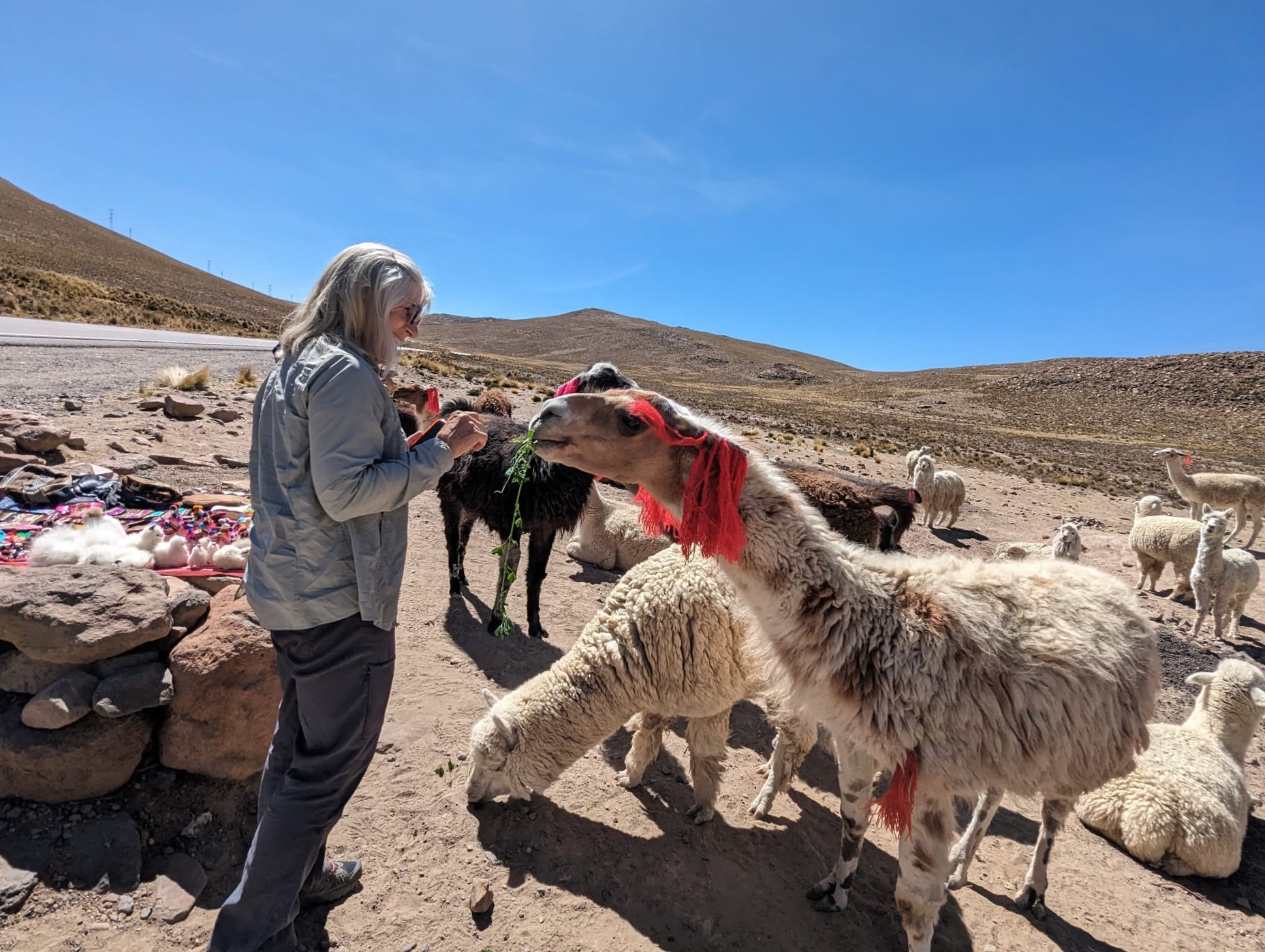
As we motored on we stopped by the side of the road to interact with a couple of different herds of llamas and Alpacas, owned by two different families and used as an attraction to tempt us to buy a souvenir, or some grasses to feed the animals with. Many of them had red scarves attached to their ears, placed there by the owner to differentiate them from the ones owned by someone else. Here we got our first up close look at the difference between Llamas and Alpacas. The defining characteristics of each member of this family are:
- Vicunas – are considered more delicate and gracile than their counterparts and are prized for their extremely fine wool, which is very expensive because the animal can only be shorn every three years and must be caught from the wild. When knitted together, the product of the vicuña’s wool is very soft and warm. The Inca valued vicuñas highly for their wool, and it was against the law for anyone but royalty to wear vicuña garments; today, the vicuña is the national animal of Peru and appears on the Peruvian coat of arms.
- Alpacas – similar to, and often confused with, the llama. Alpacas are considerably smaller than llamas, and unlike llamas, they were not bred to be working animals, but were bred specifically for their fiber which is used for making knitted and woven items, like sheep’s wool.
- Llamas – are widely used as a meat and pack animal by Andean cultures since the pre-Columbian era. Their fiber is coarse and generally not used to make clothing.
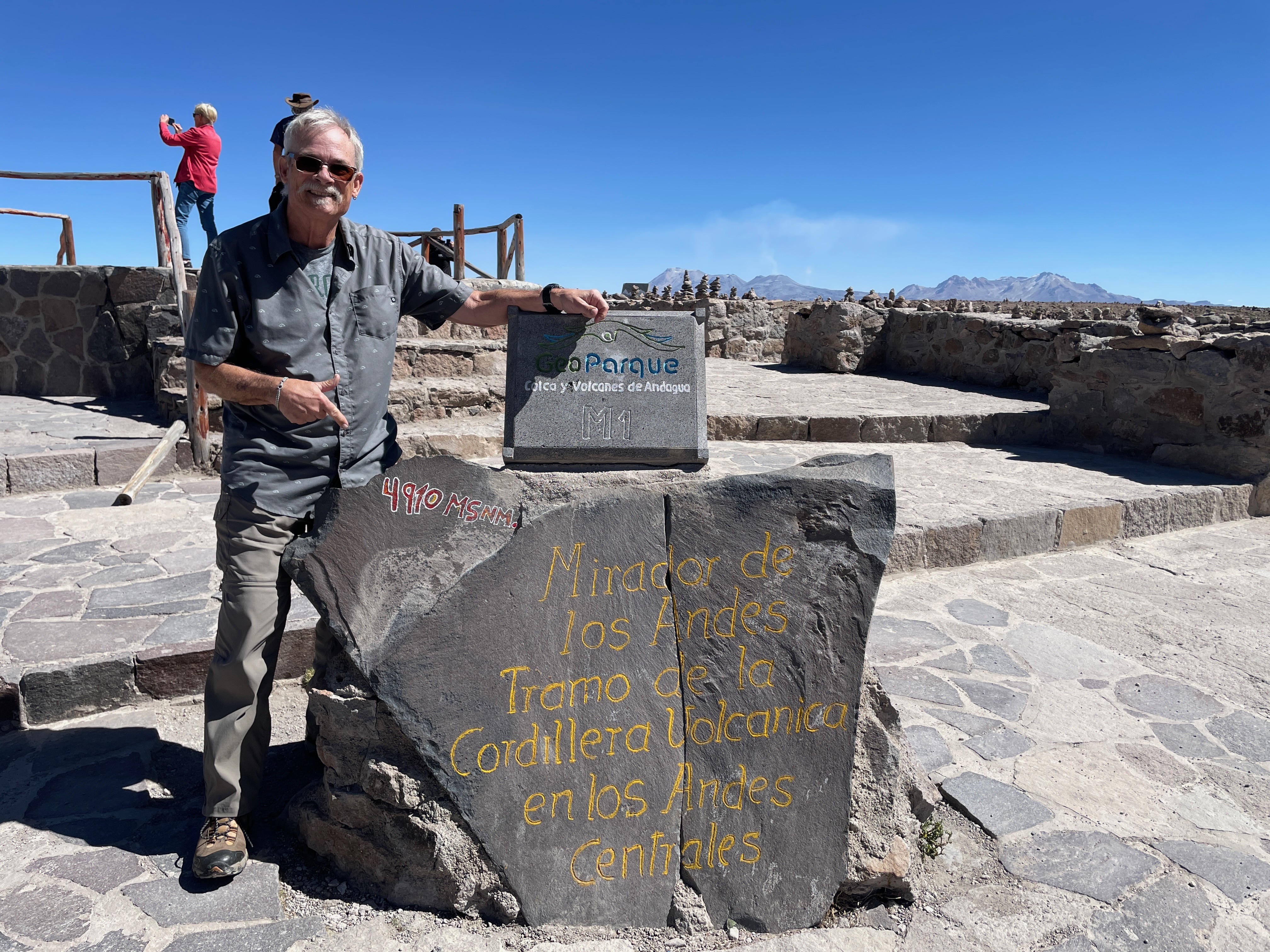
After our session with the animals, we motored on climbing over Patapampa where we reached the highest point of the day at 4,910 meters (16,100 feet) of the day to enjoy views of the landscape below. From there we drove to the town of Chivay for lunch.
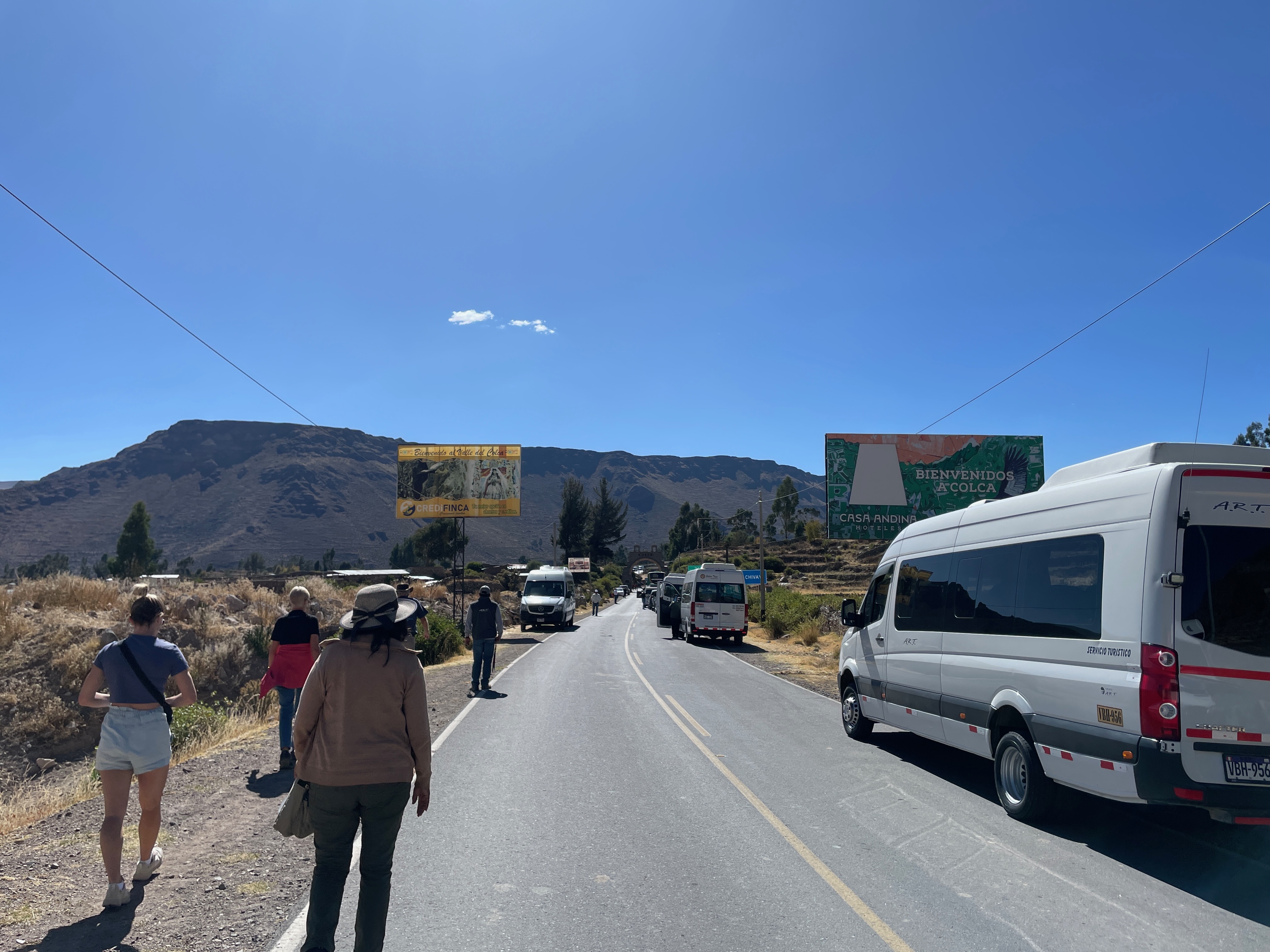
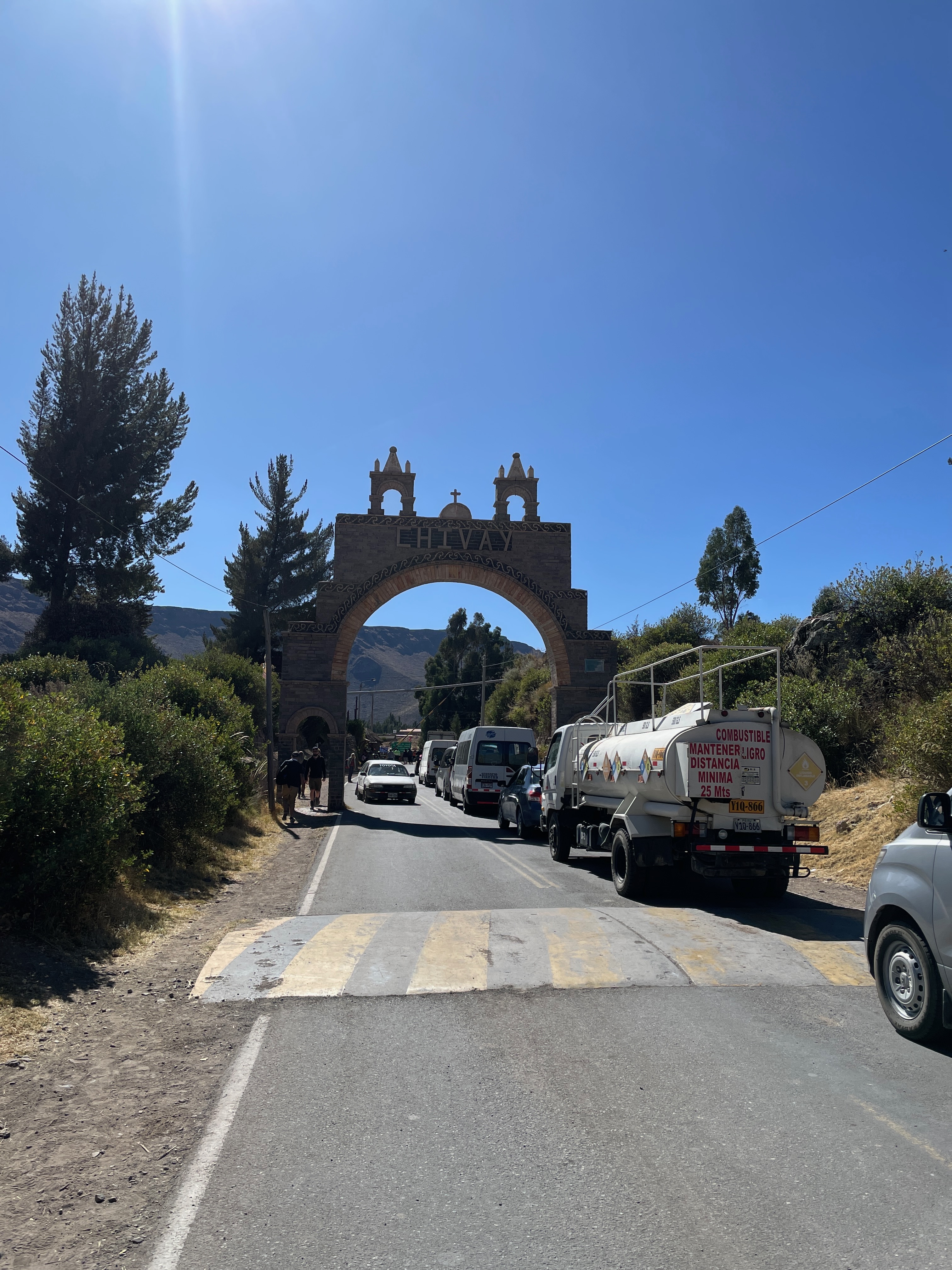
Here we encountered our one and only interaction with the protests that were ongoing on in Peru, stemming from the political crisis revolving around the presidency. A square located just inside the entrance to town was blocked by the protestors and so we had to park the bus by the side of the road and walk about a quarter mile to the restaurant where we would enjoy lunch.
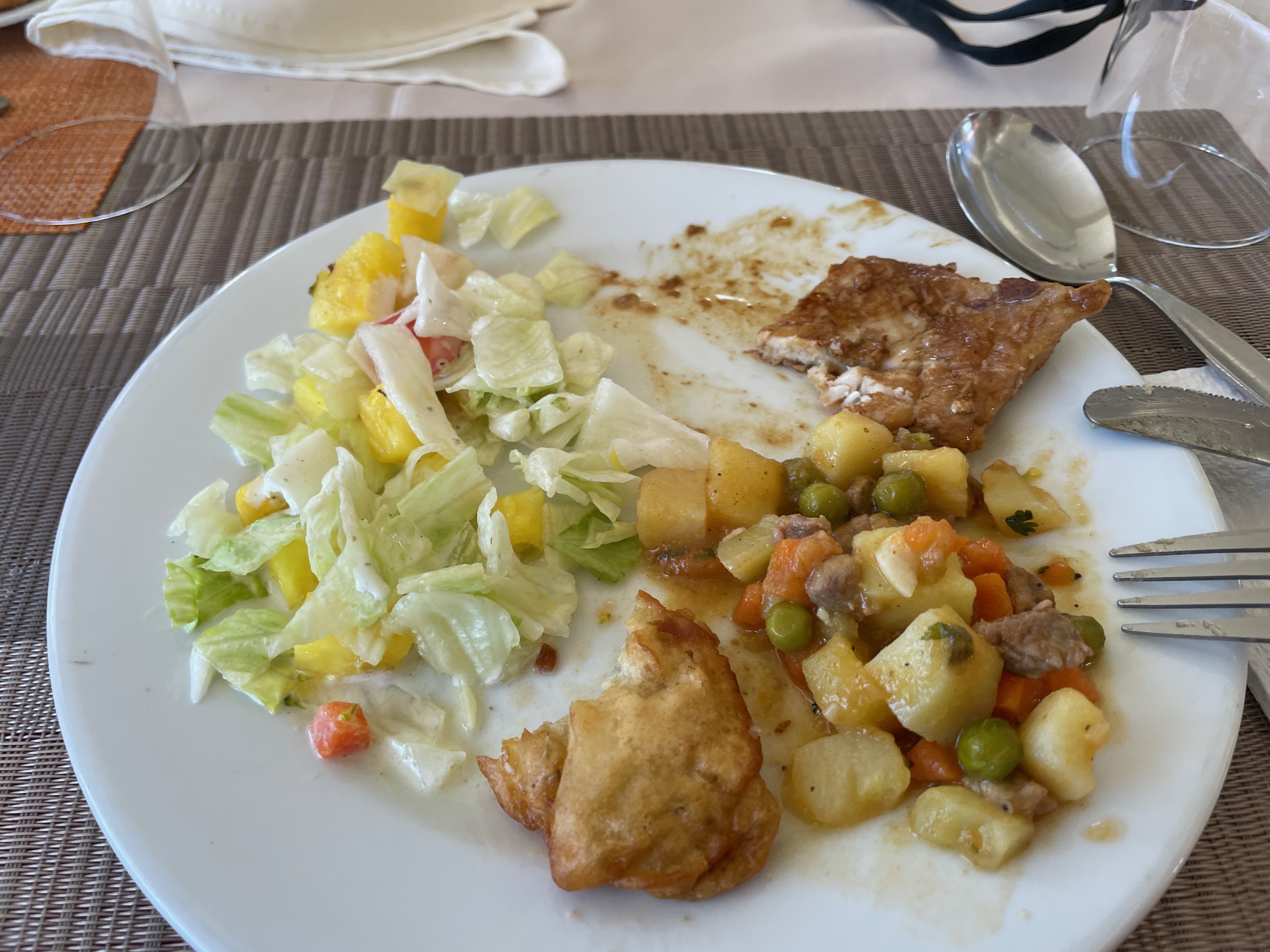
Our meal was served buffet style and featured a broad variety of items, some of it local in nature including some alpaca cubes in a sauce and regional root vegetables. I was feeling the effects of altitude (11,800 feet) so opted to have a couple of servings of a very good green salad with a light dressing, which accompanied by some fresh bread was exactly what I needed.
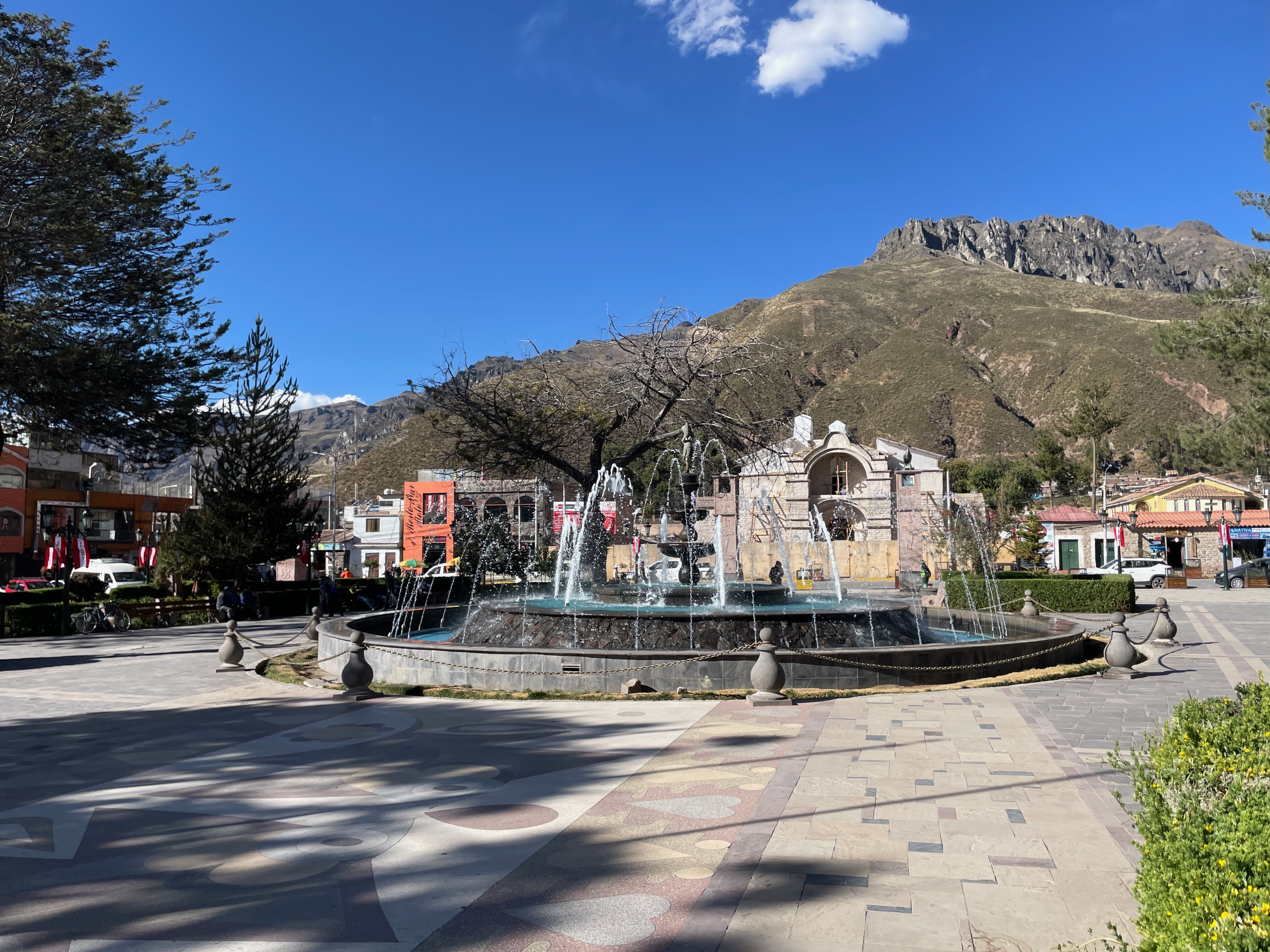
We finished up the meal and walked to the main square of Chivay, where we encountered an older woman, dressed in traditional garb, with her pet Alpaca who posed for us and other tourists, receiving a donation from each. With a population of 5,000, the town lies upstream of the renowned Colca Canyon and, has a active market and is a popular staging point for tourists visiting Condor Cross or Cruz Del Condor, where condors can be seen catching thermal uplifts.



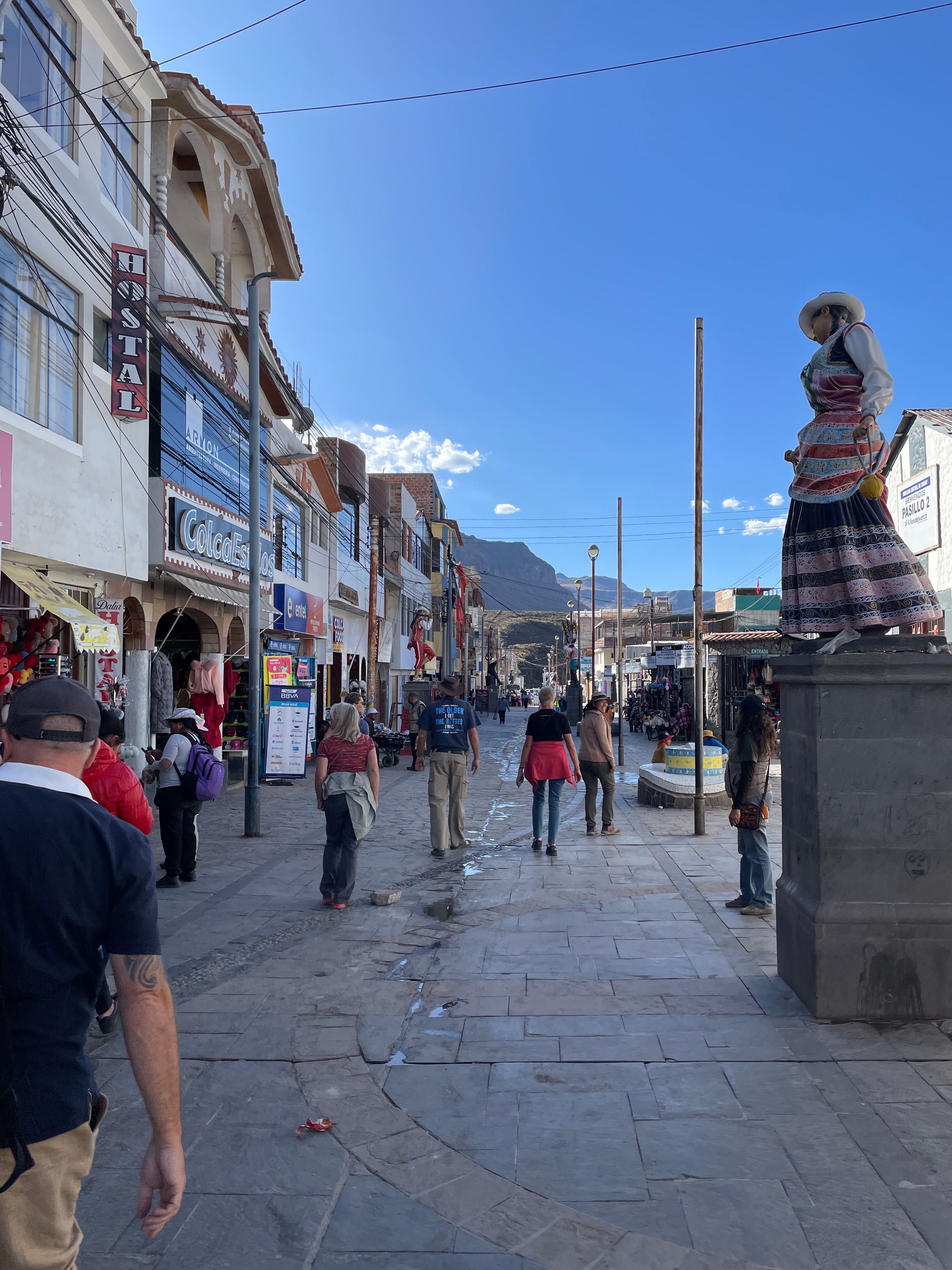
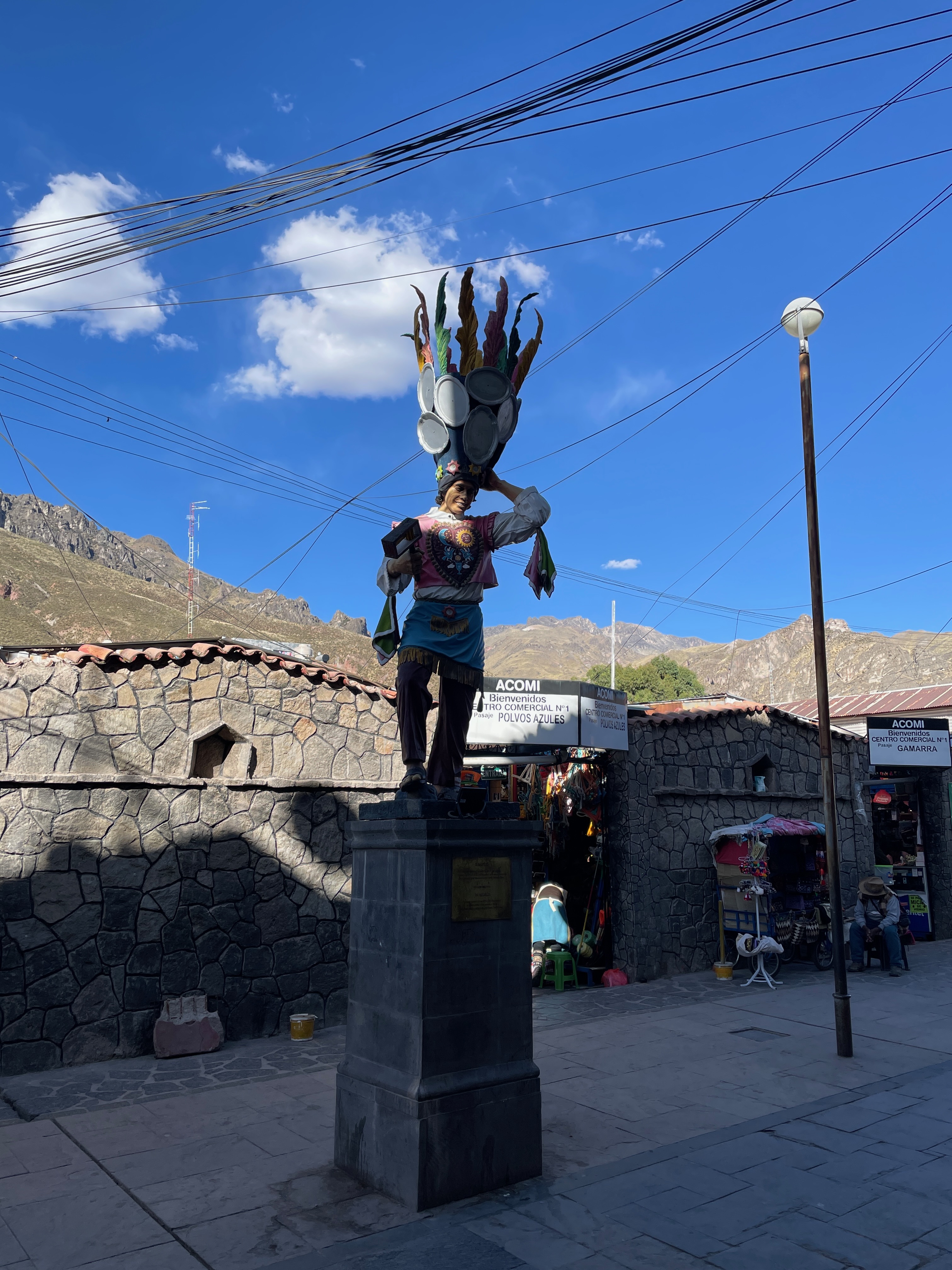
We left the main square and began walking down a street with weird and shockingly realistic statues of characters from everyday Peruvian life, as well as imaginary and somewhat terrifying human-animal hybrids that looked like they might come to life at any moment. Luis didn’t comment on them, and I’ve tried to locate some explanation online about them, to no avail. We’ll just have to let them be what they are.

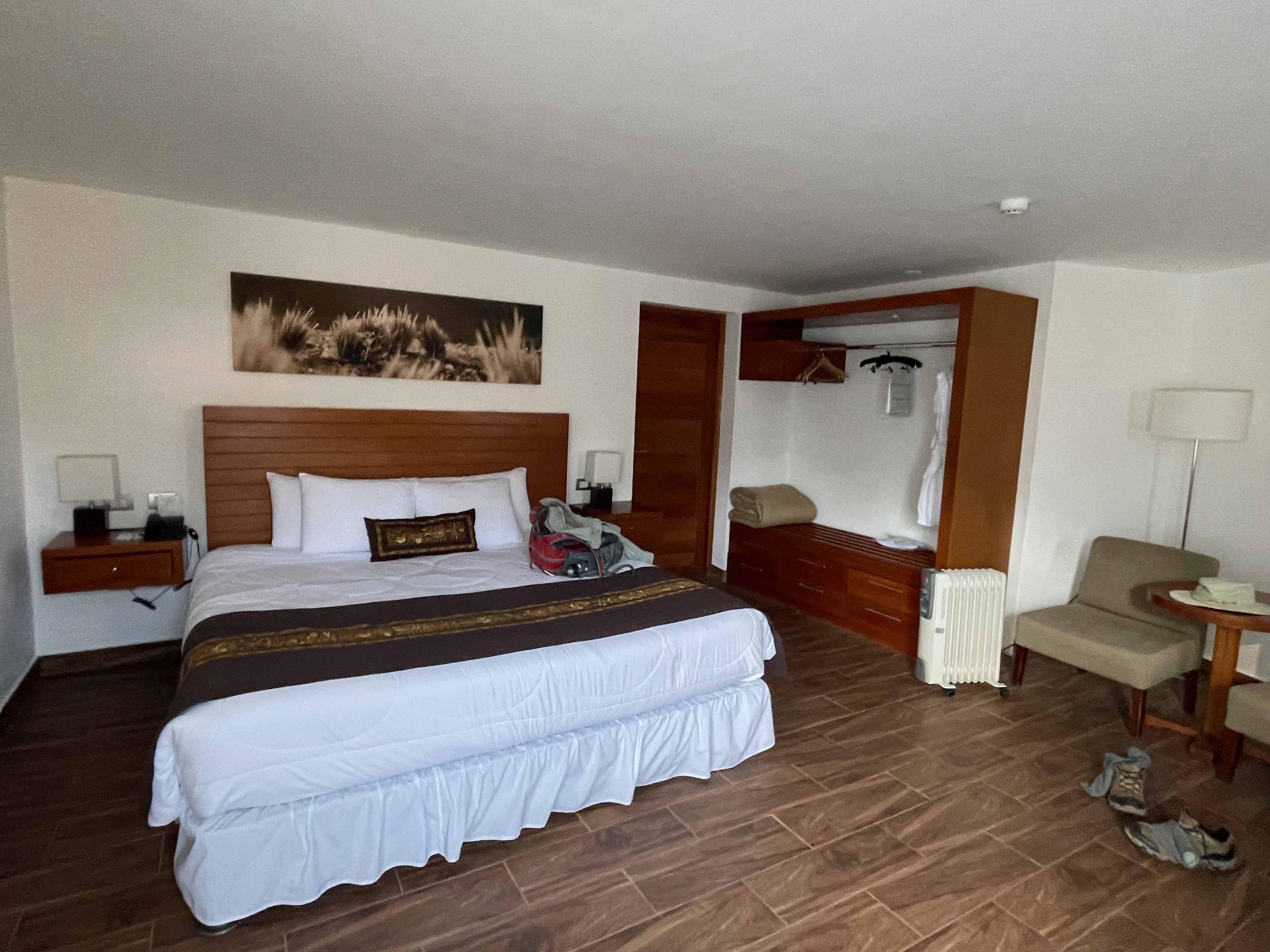
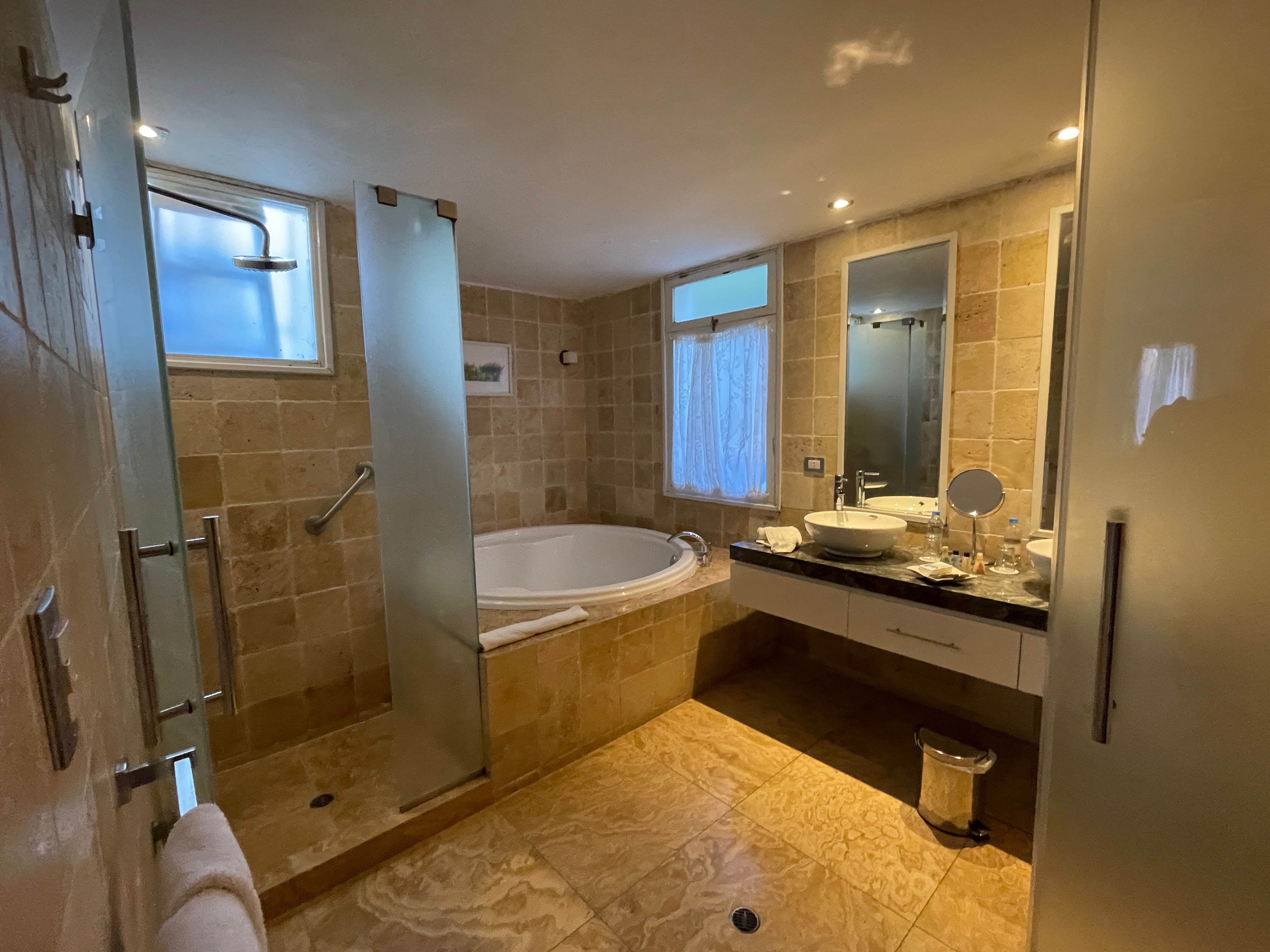
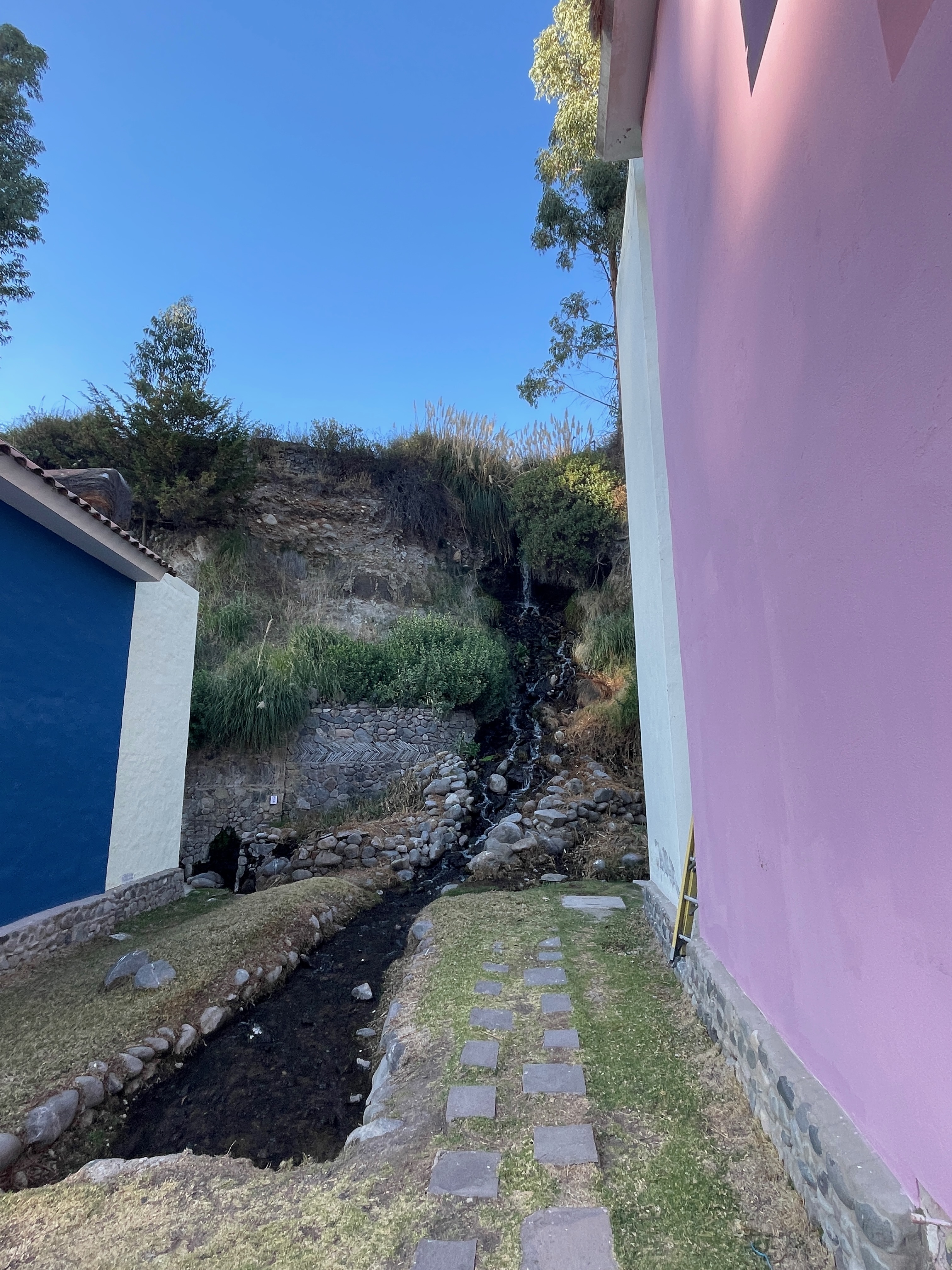
As the day was drawing to a close, we continued on a steep downhill to the Aranwa Pueblito Encantado del Colca Hotel, our lodging for the night. Located along the rugged Colca River, now quite dry due to a dam upstream, it’s a spectacular setting with tiered grounds coursing with small waterfalls that stream past the rooms, some of which are in separate bungalows and the others in blocks of four. Our room was large and well-appointed with a bathroom as large as our bedroom at home. We spent a quiet evening in the room, again not opting to eat dinner due to the altitude, but we would eat our fill the next day as we head to Puno and Lake Titicaca.

Links
Chivay: https://www.arequipa.com/everything-about-chivay-arequipa-peru/
Aranwa Pueblito Encantado del Colca Hotel: https://aranwahotels.com/hoteles/aranwa-pueblito-encantado-del-colca/
Discover more from 3jmann
Subscribe to get the latest posts sent to your email.


 3jmann