
July 20-21
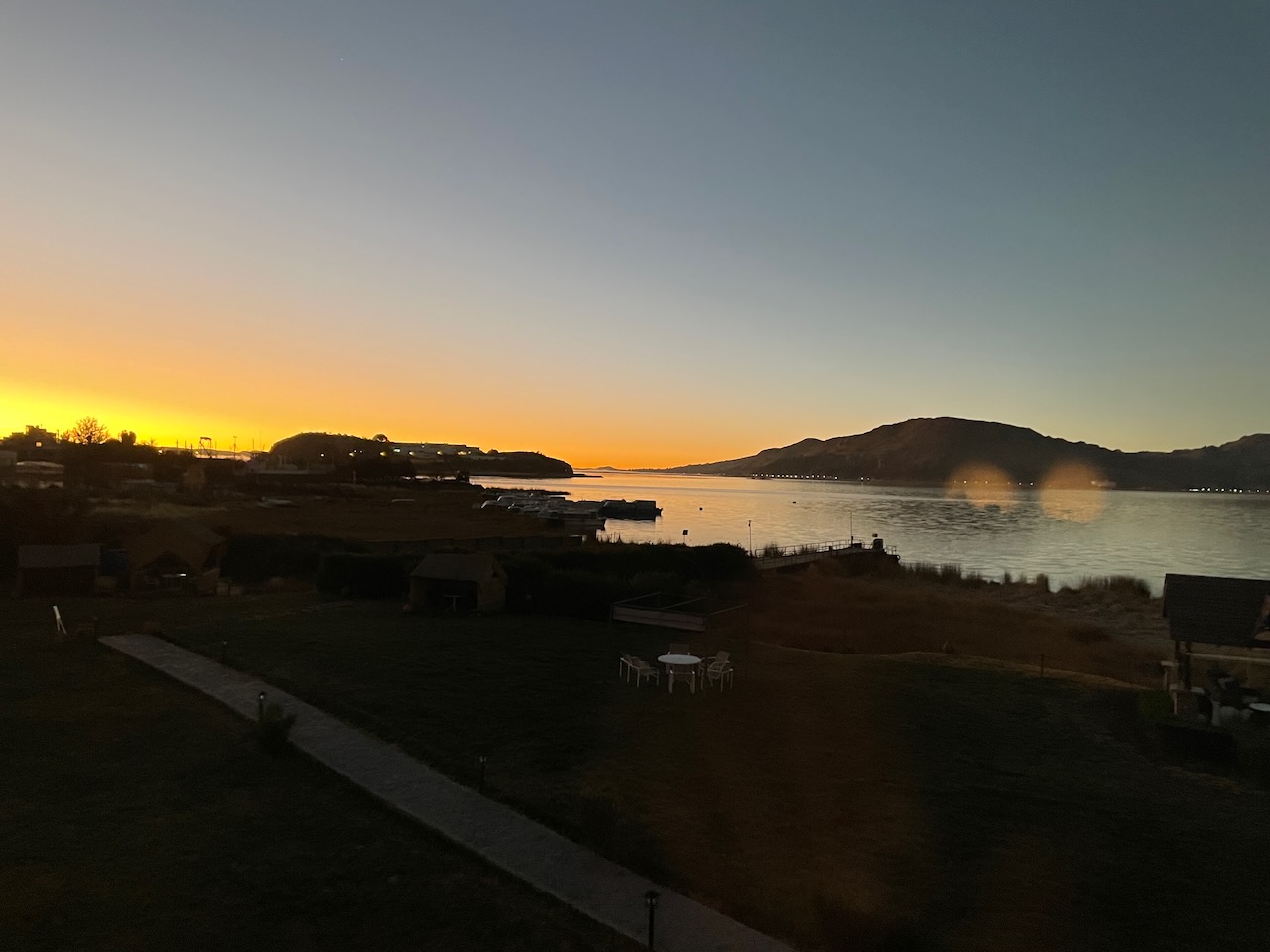
Today would be full of exploring some of the different aspects of local cultures, but first we hit the restaurant for breakfast, another fully satisfying experience, offering many of the same items we would get each day with variation from place to place. I, as is my custom, arose early and was able to capture the sun coming up over the lake. It was a great way to start the day.
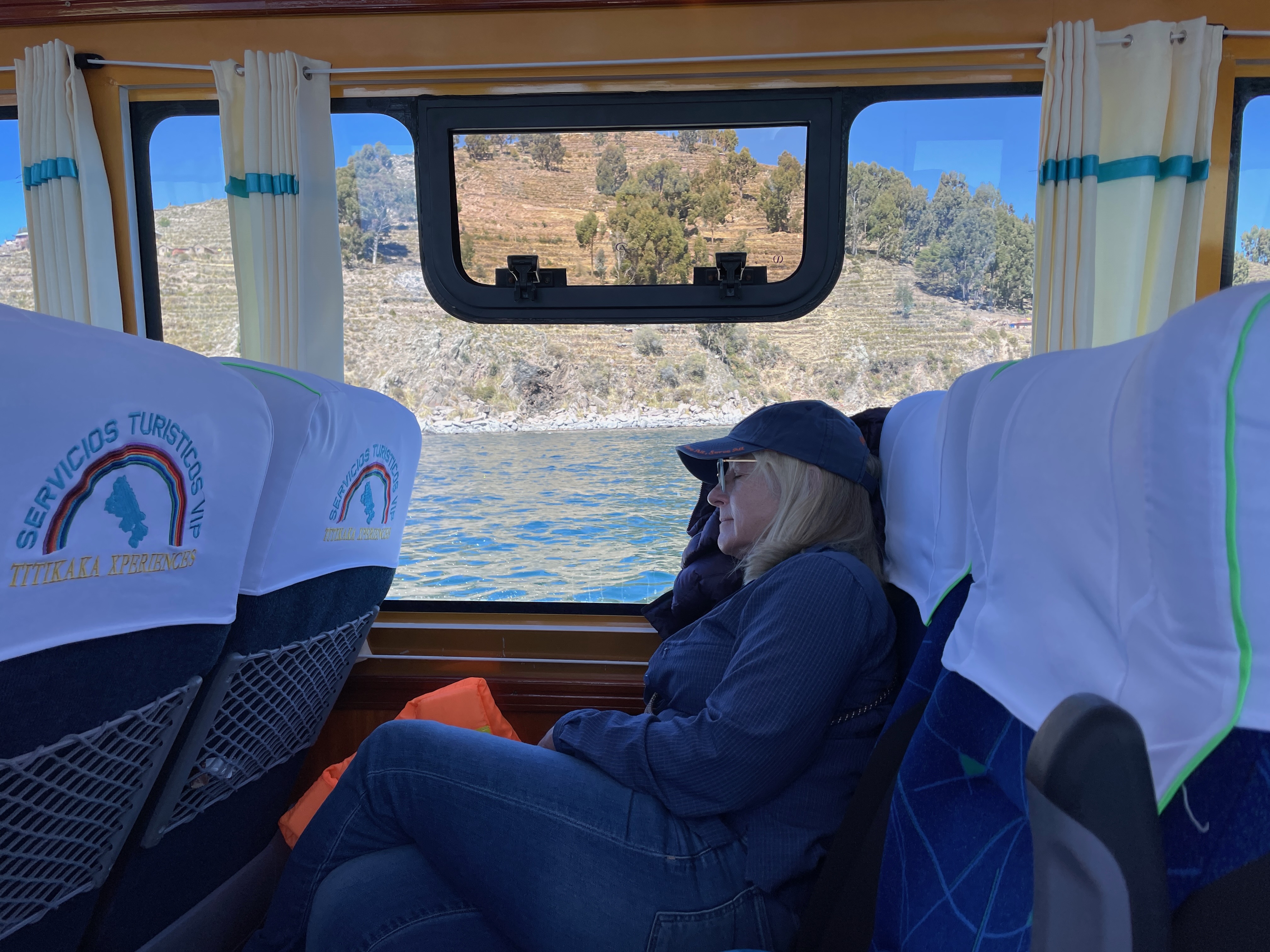
Puno is full of Aymara and Quechuan Indian culture, is known as the folklore capital of Peru and is also renowned for its traditional dances, which we could get to see much later in the day. We finished our breakfast and returned briefly to our rooms to gather what we would need for a day out on the lake, meeting up in the lobby and heading out to the boat that would sail us around that day.

Lake Titicaca, by both volume of water and by surface area is the largest lake in South America at 3,232 square miles. It is often called the highest navigable lake in the world with a surface elevation of 12,507 feet. The “highest lake” claim is generally considered to refer to commercial craft as numerous smaller lakes around the world are at higher elevations. The overall average depth of the lake is 351 feet.
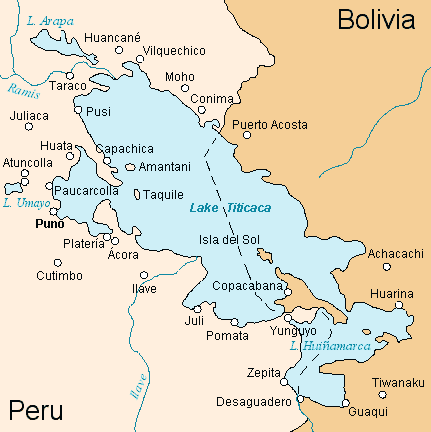
Five major river systems feed into Lake Titicaca; In order of their relative flow volumes these are Ramis, Coata, Ilave, Huancané, and Suchez. More than 20 other smaller streams empty into Titicaca, and it has 41 islands, some of which are densely populated. Since 2000, Lake Titicaca has experienced constantly receding water levels and between April and November 2009 alone, the water level dropped by 32 inches, reaching the lowest level since 1949. This drop is caused by shortened rainy seasons and the melting of glaciers feeding the tributaries of the lake.
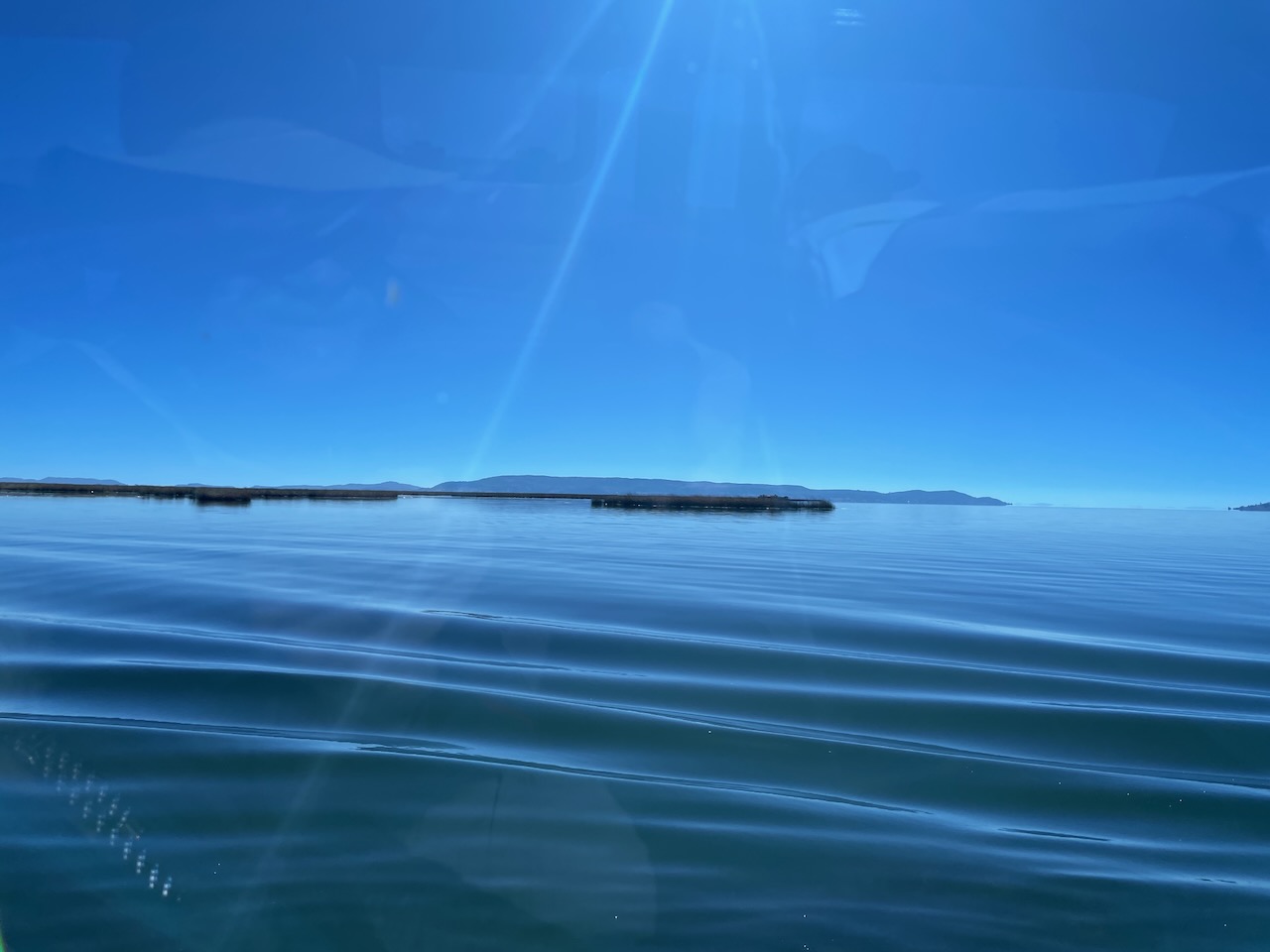
After about 30 minutes of peaceful cruising on the lake’s calm waters, our first destination would be one of the Uros Floating Islands, home to an indigenous people of Bolivia. They live on a still growing group of about 120 self-fashioned floating islands and form three main groups: the Uru-Chipaya, Uru-Murato, and Uru-Iruito. The Uru-Iruito still inhabit the Bolivian side of Lake Titicaca and the Desaguadero River. The indigenous Urus have darker skin than their neighbors Aymaras and Quechuas.
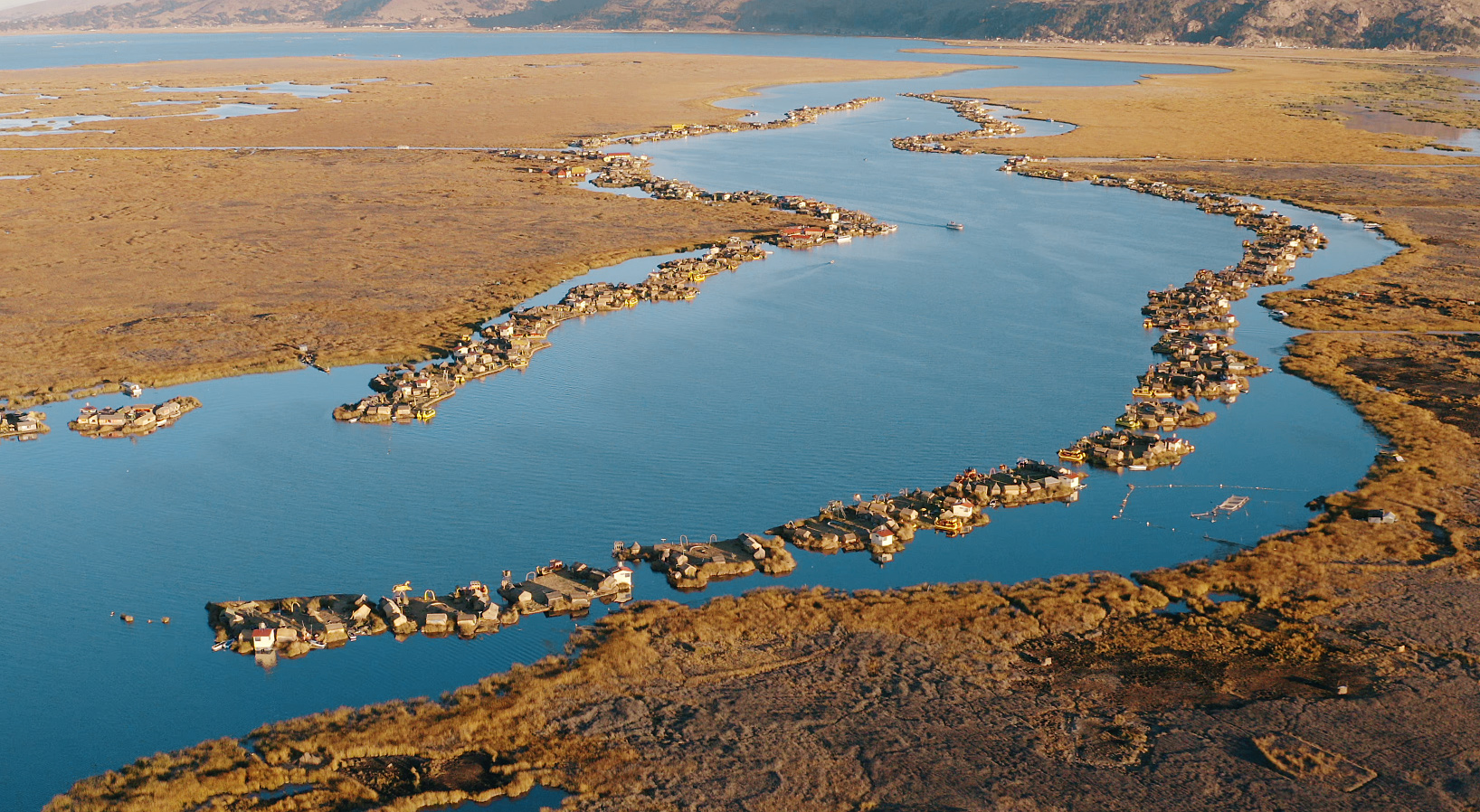
According to legend, the Uru descend from a people that spoke the Puquina language and they considered themselves the owners of the lake and water. Although the Uru language is nearly extinct, the Uru continue to maintain their identity and some old customs. The purpose of the island settlements was originally defensive; they could be moved if a threat arose. The largest island retains a watchtower, as do most smaller islands.
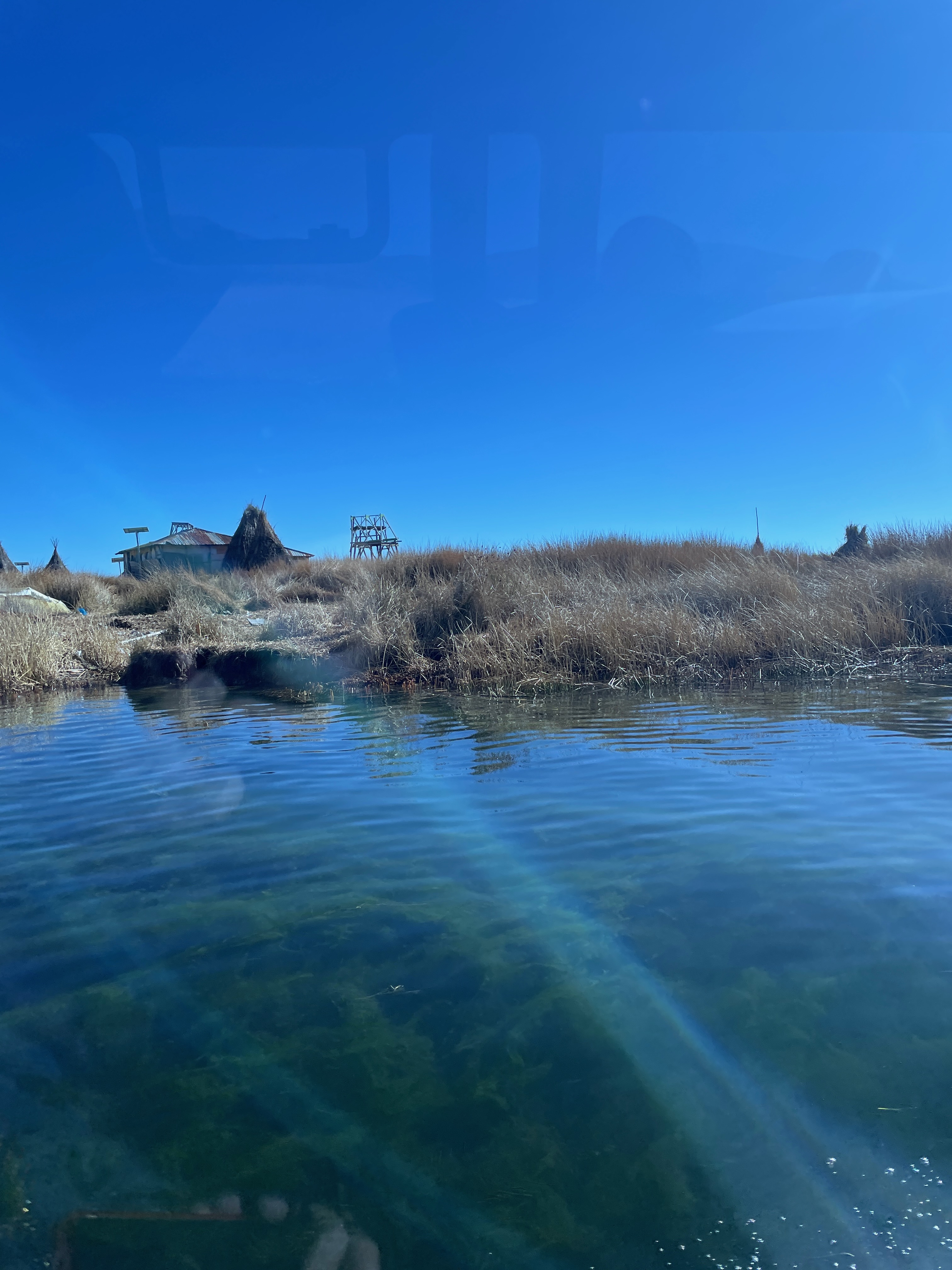
The Uru do not reject modern technology: most boats have motors, nearly all islands have shared solar panels to run appliances such as televisions, and the main island is home to an Uru-run FM radio station, which plays music for several hours a day. Kindergarten and elementary schooling are done on several islands, including a traditional school and a school run by a Christian church. Older children and university students attend school on the mainland, often in nearby Puno.
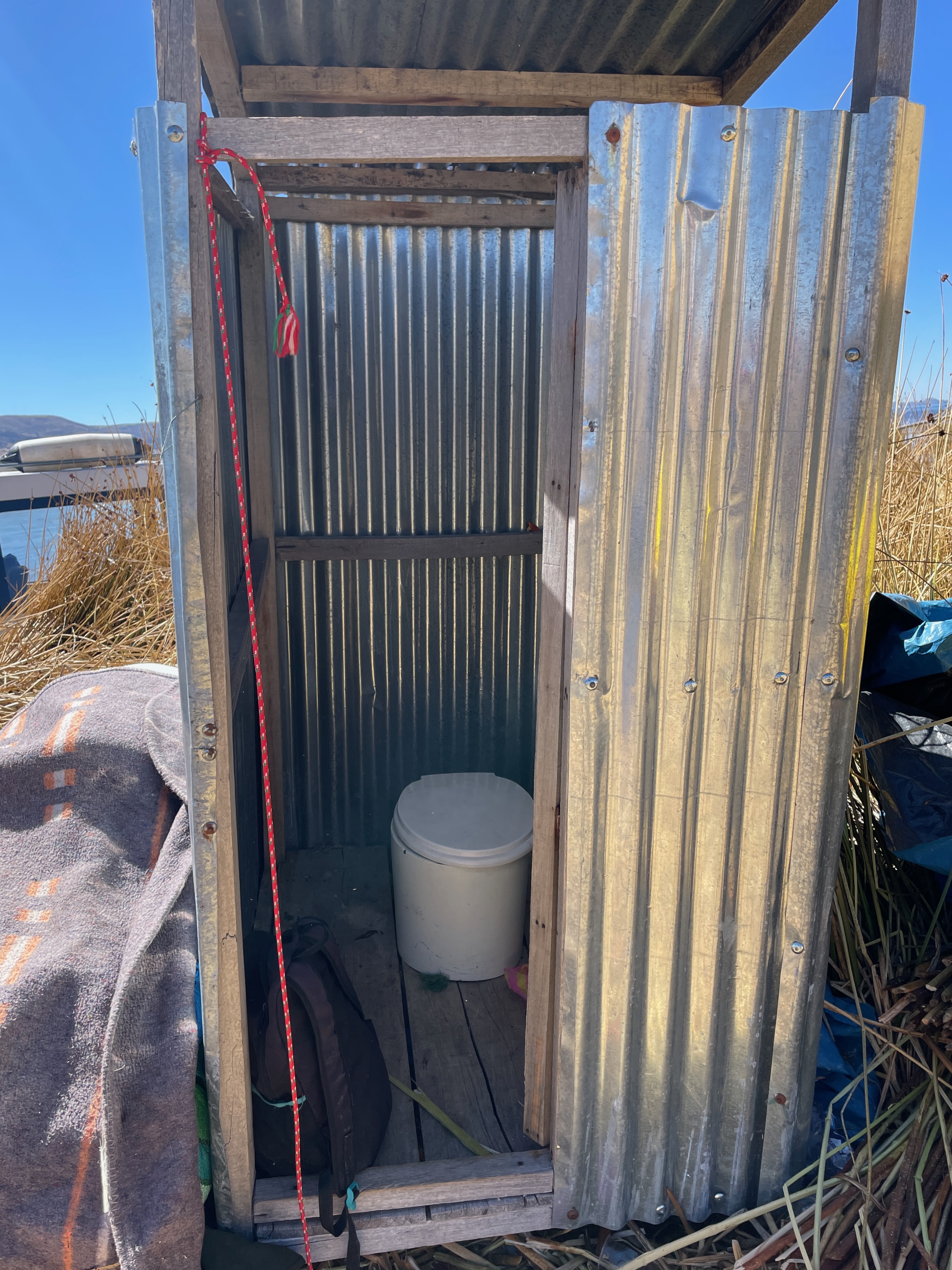
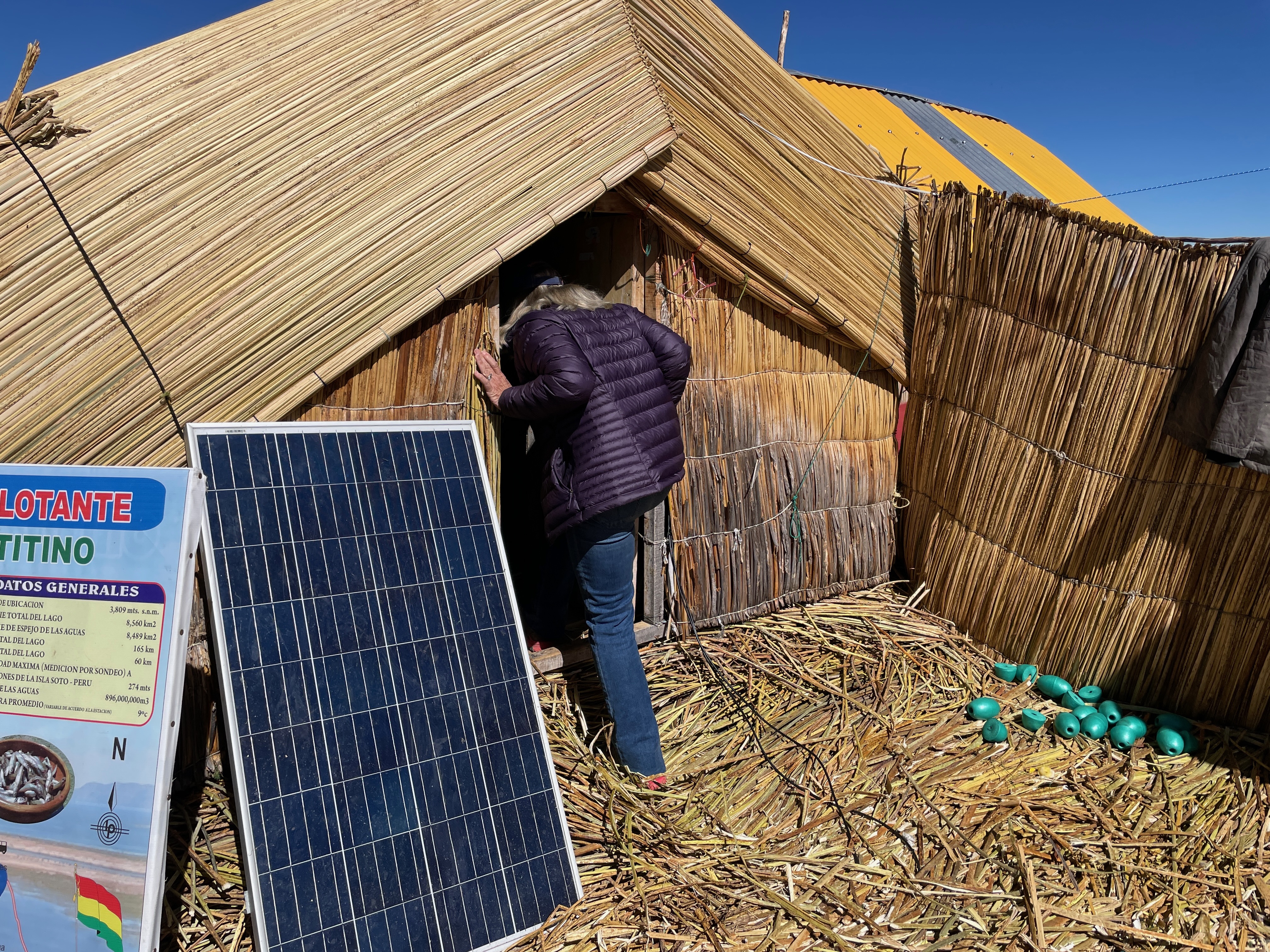
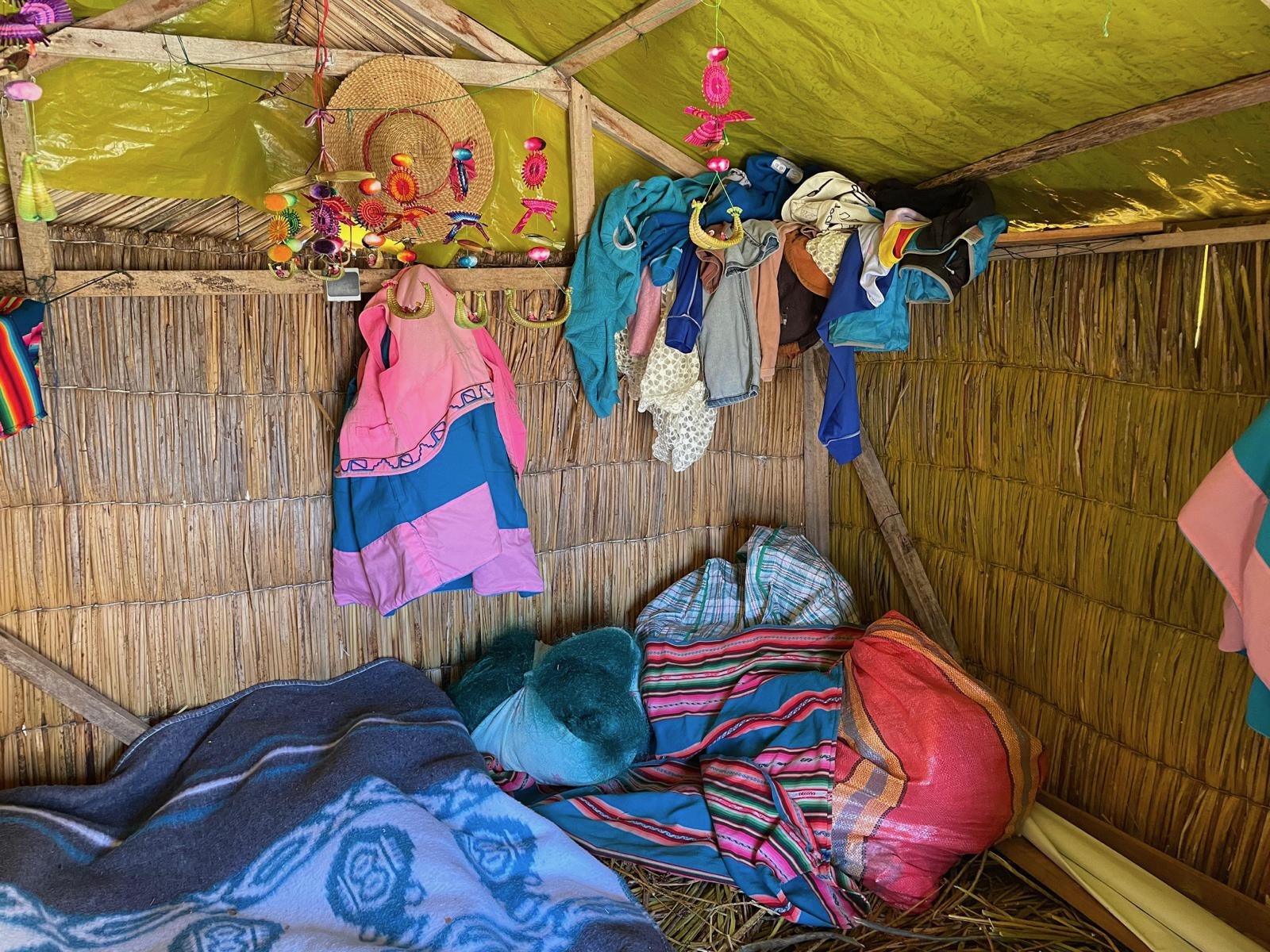
As of 2011, about 1,200 Uru lived on the artificial islands, clustering in the western corner of the lake. They have become one of Peru’s tourist attractions, allowing the Uru to supplement their hunting and fishing by conveying visitors to the islands by motorboat and selling handicrafts.
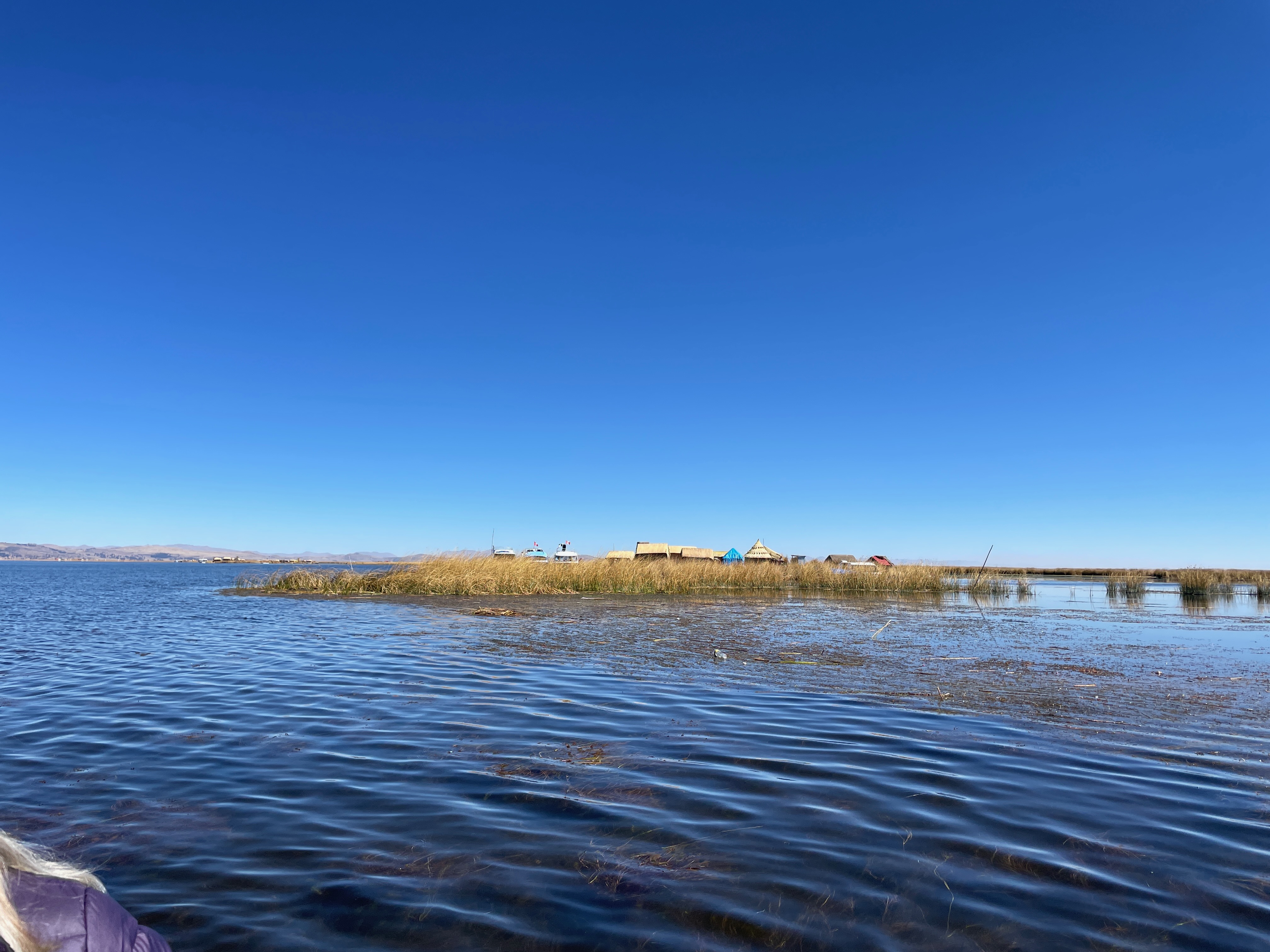
The Uru use bundles of dried Totora reeds to make reed boats (balsas), and to make the islands themselves. The larger islands house about ten families, while smaller ones, only about thirty meters wide, house only two or three families. Each island lasts about 25 years; when water seeps through the reeds they build a new island and let the old one sink to the bottom of the lake.
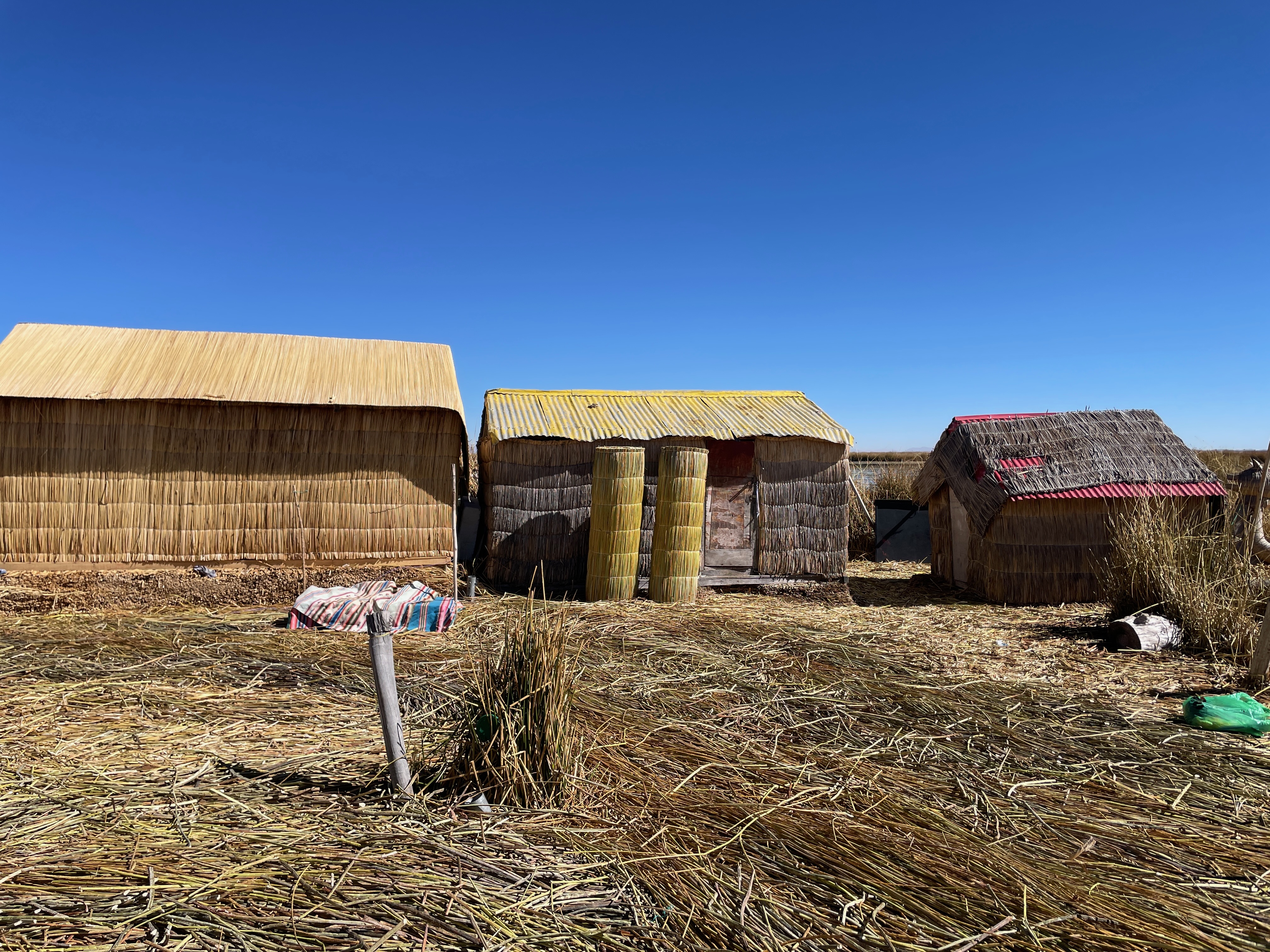
The islets are made of multiple natural layers harvested in Lake Titicaca: The base is made of large pallets of floating Totora roots, which are tied together with ropes and covered in multiple layers of totora reeds. These dense roots that the plants develop and interweave form a natural layer called Khili (about one to two meters thick), which are the main flotation and stability devices of the islands; each floating block of Khili measures approximately 13 ft × 33 ft. Said blocks are now sourced using 4.9 ft long metal saws custom made for this purpose and they are anchored with ropes attached to large Eucalyptus poles driven into the bottom of the lake.
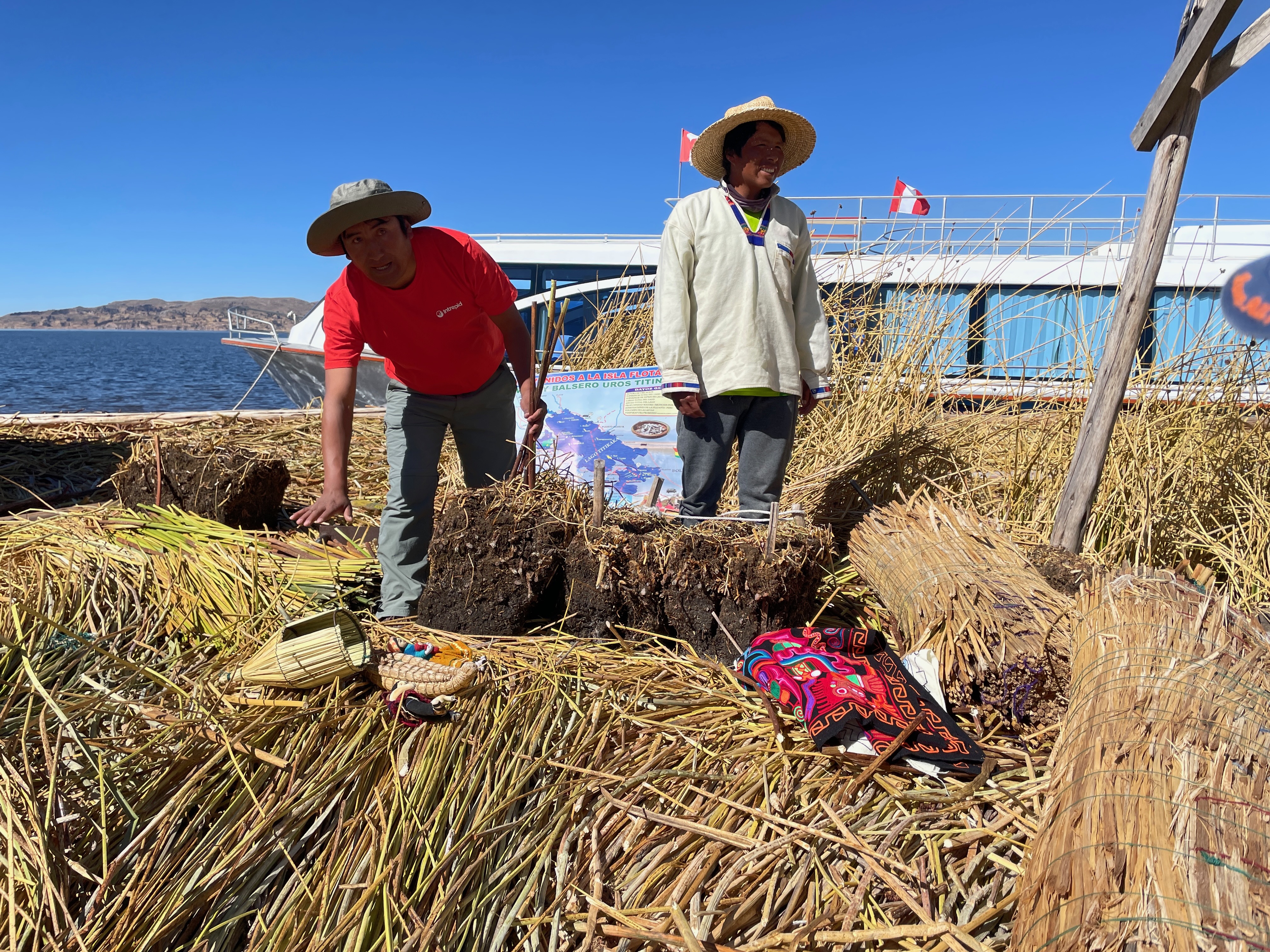
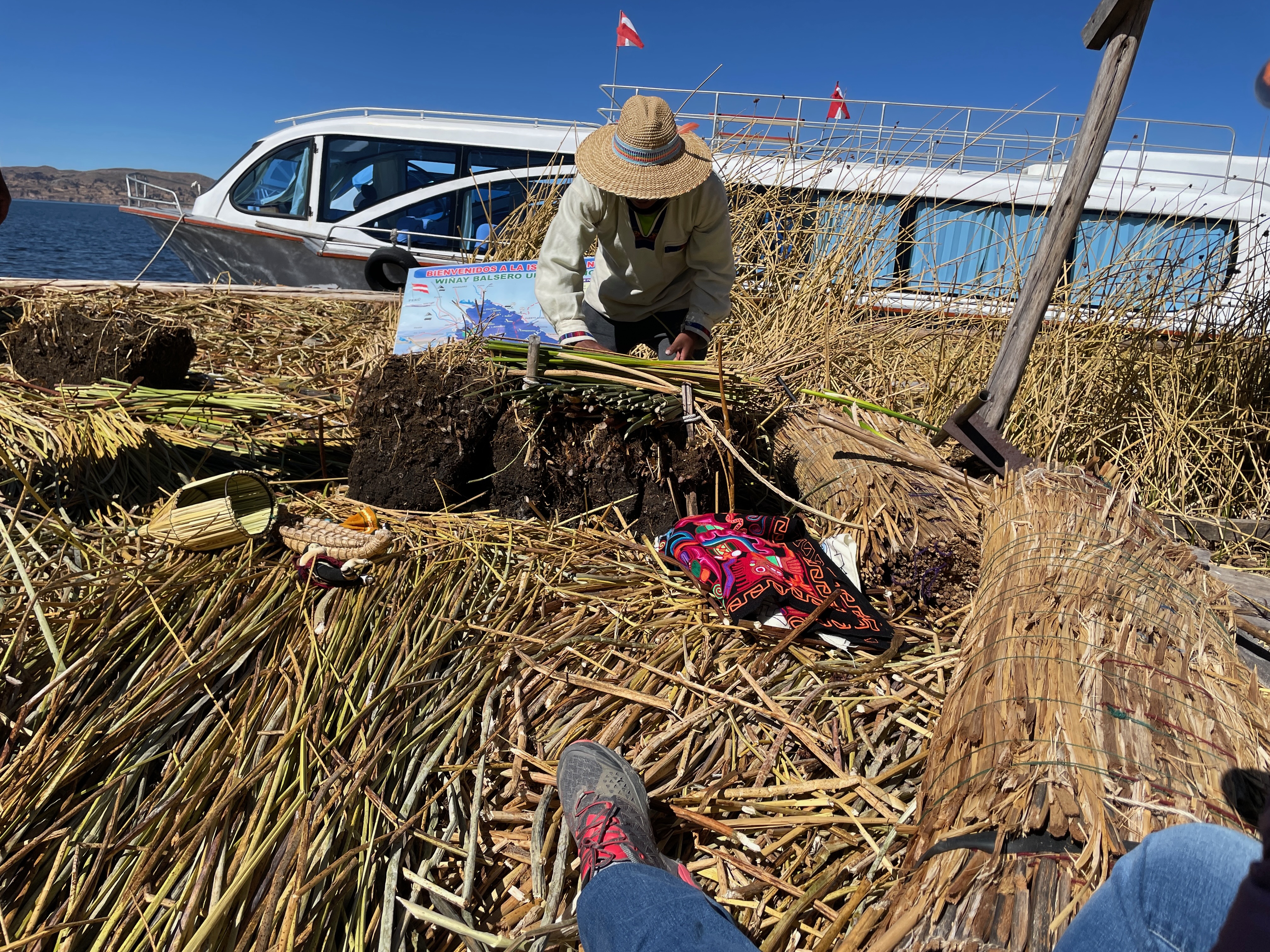
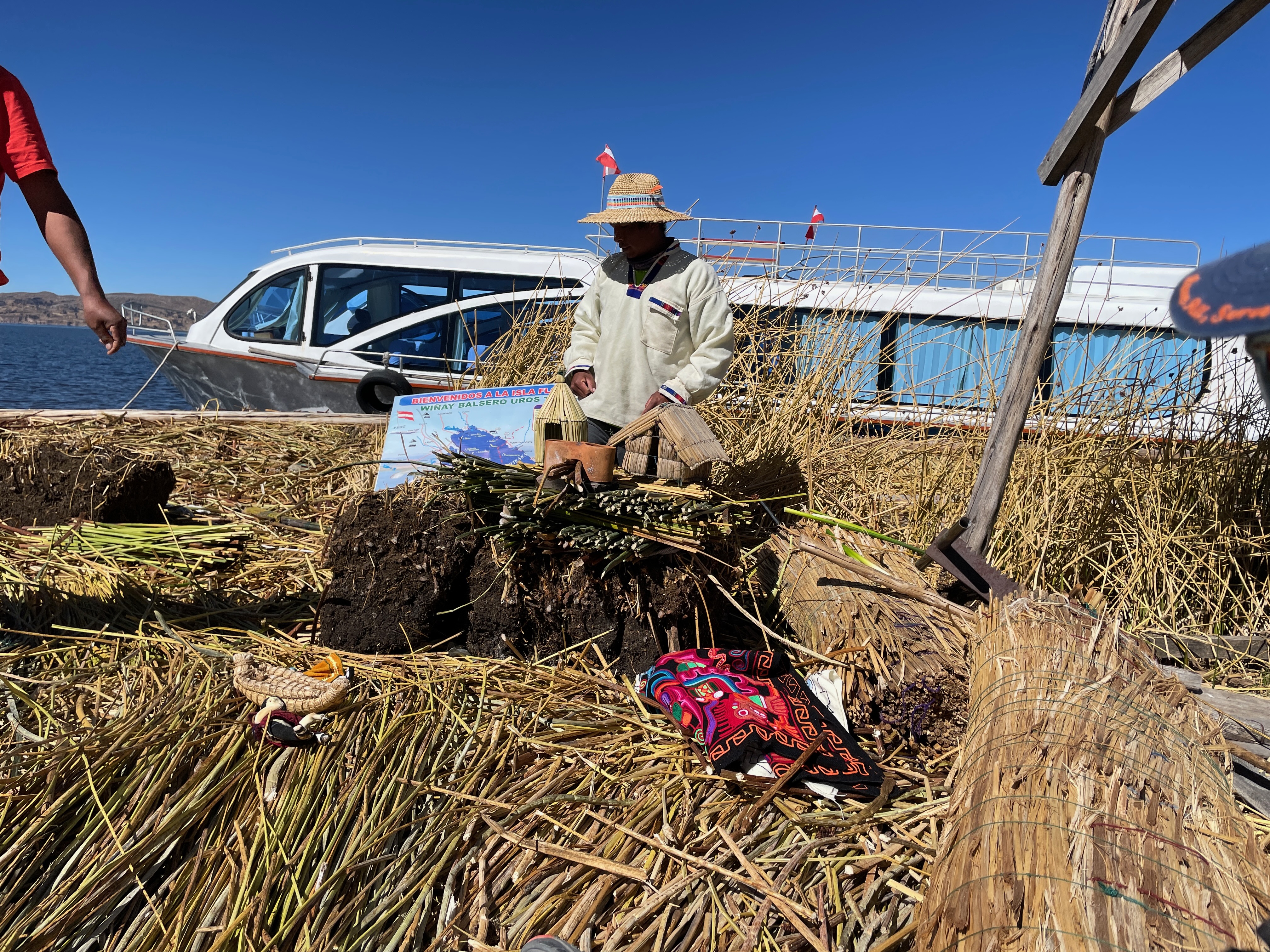
Once the Khili pallets are tied together and anchored, multiple layers of cut reeds are added. The bottom layer of covering reeds rot away quickly, so new reeds are added to the top constantly, about every two weeks to three months depending on weather. This is especially important in the rainy season when the reeds rot much faster.

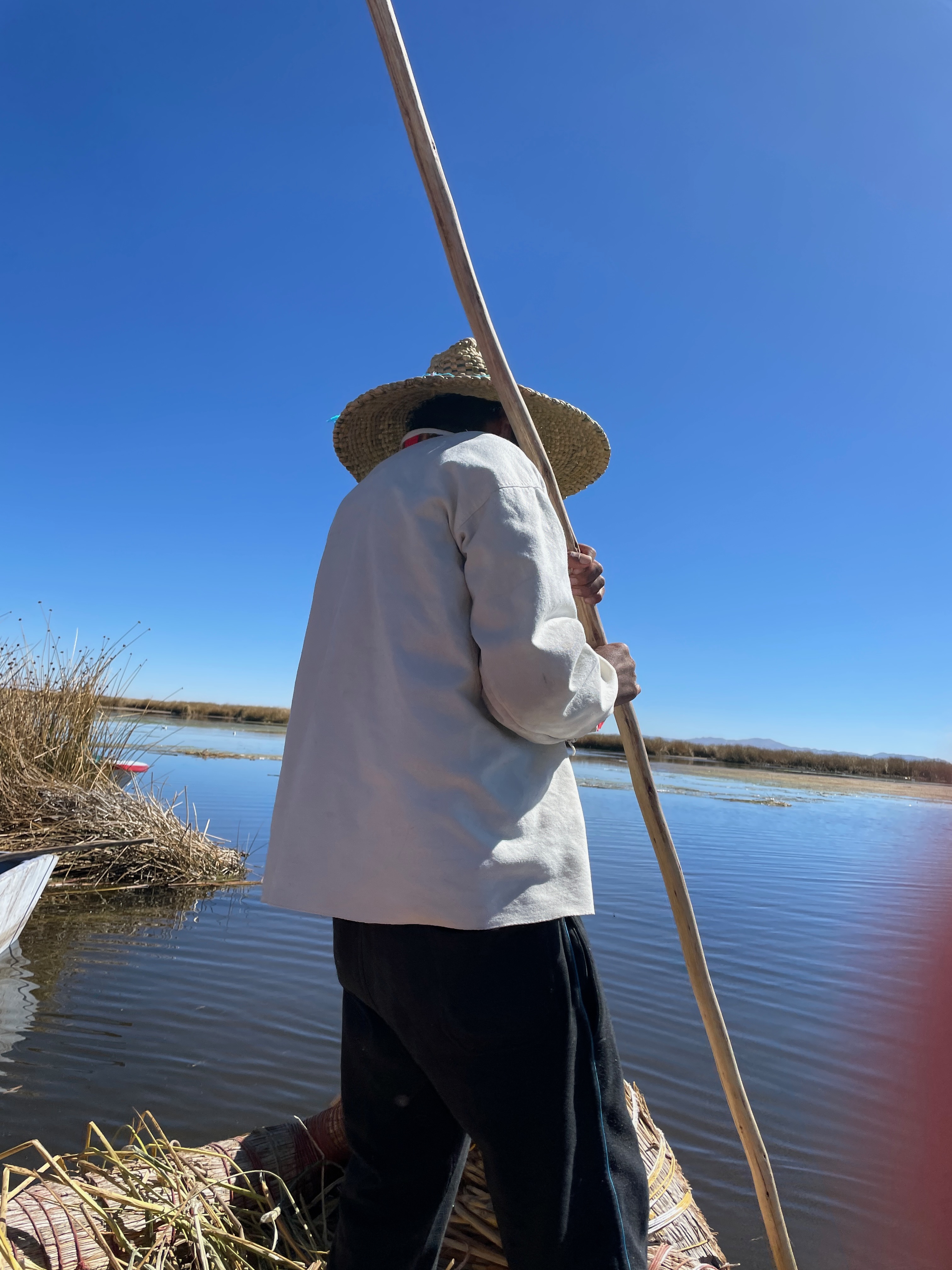
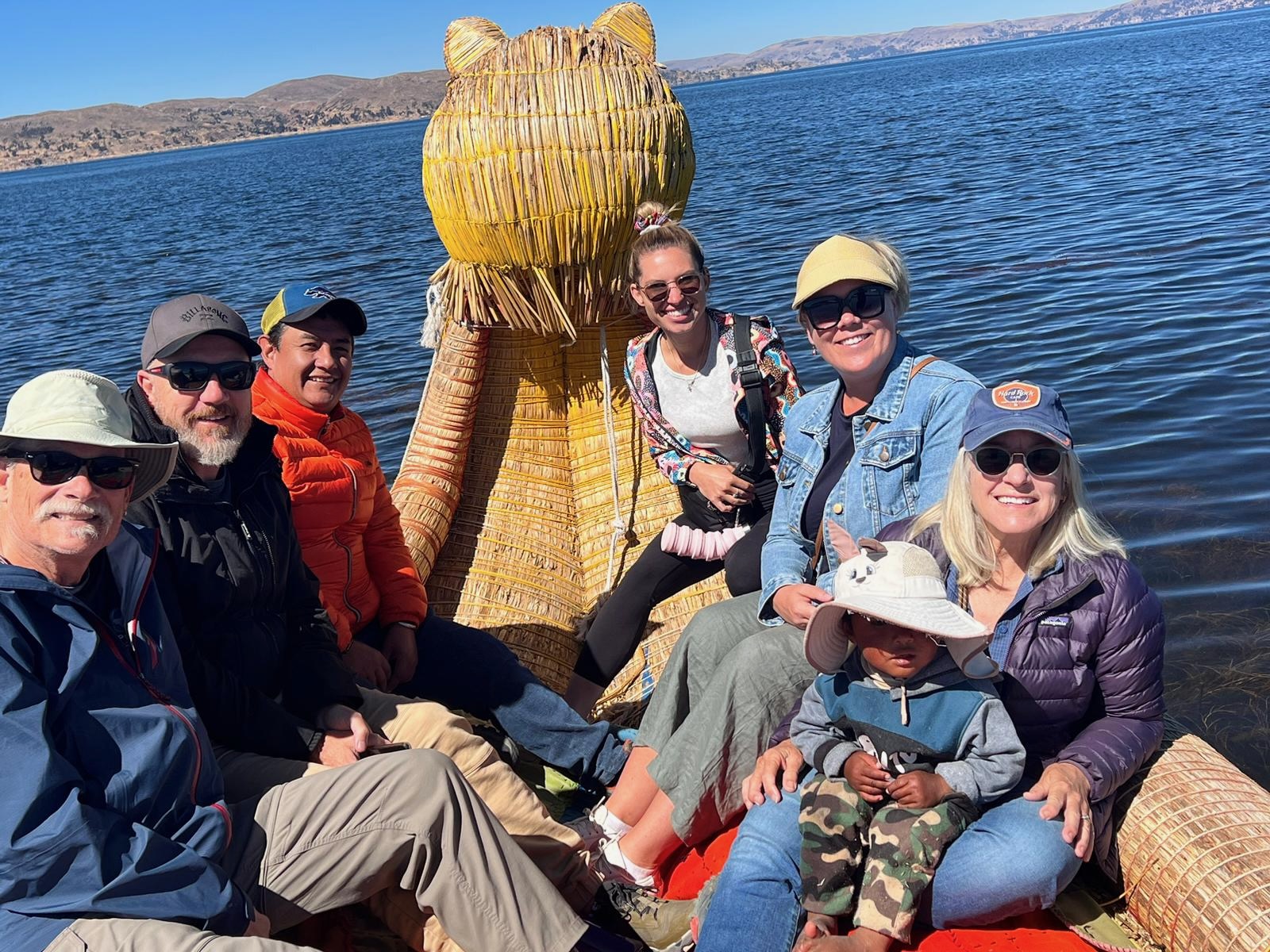
We landed on one of the smaller islands and were given a tutorial on the construction techniques described above and given a glimpse inside one of the huts used for sleeping and escaping the elements. Then some of us went out for a ride in a traditional reed boat, poling out some distance from the small island and we enjoyed the company of our hosts toddler son, a precocious child not hesitant to climb all over each of the adults in the boat while displaying a natural balance that kept him from falling into the water.
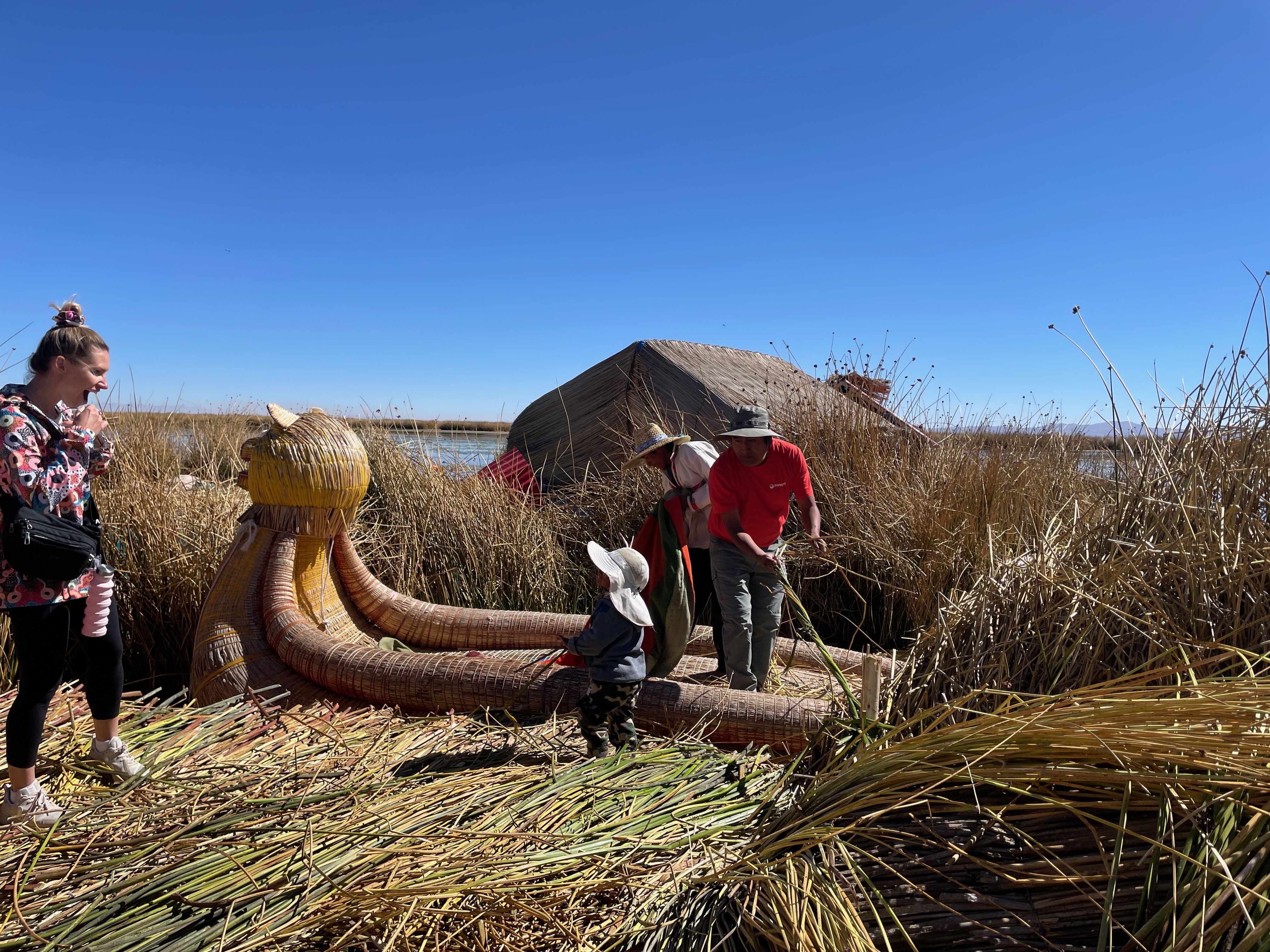
We finished up our time on the floating island by buying a handmade pillowcase cover and returning to our boat to continue our journey on to the next destination, the Island of Taquile, a hilly island located 28 miles east of Puno, where we would enjoy a lengthy stay and lunch. More on that in the next post.
Links
Uros Floating Islands: https://www.peruforless.com/blog/floating-uros-islands/
Discover more from 3jmann
Subscribe to get the latest posts sent to your email.


 3jmann