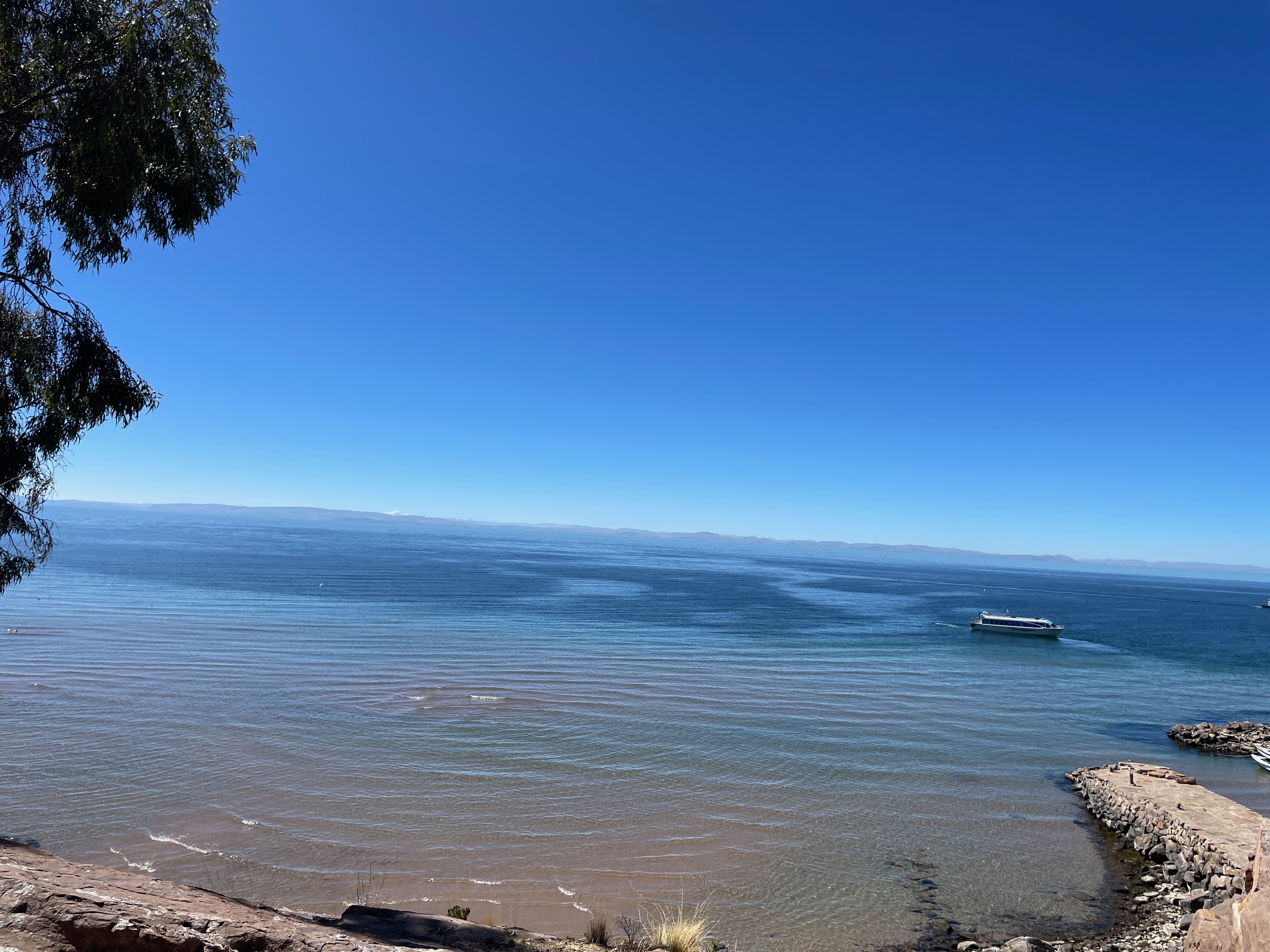
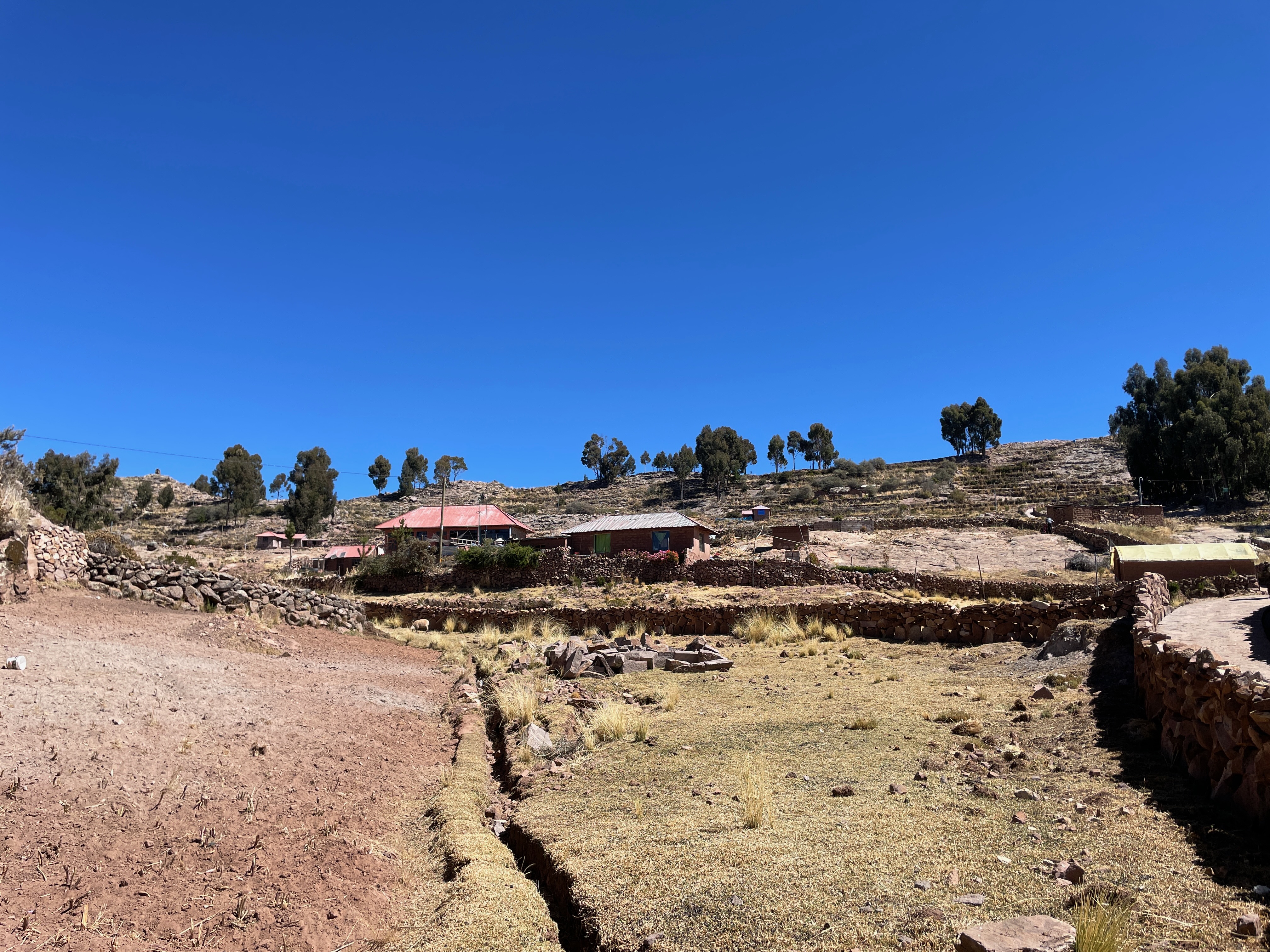
We left the floating islands of Uros and made our way in short order to Taquile Island, docking on the western shore and then hiking up a steep hillside to a dirt plaza where we were rewarded with a presentation by some of the locals. It turns out that our guide is from the island, and he was able to share his own experience, as well as some of the traditional habits of his fellow islanders.
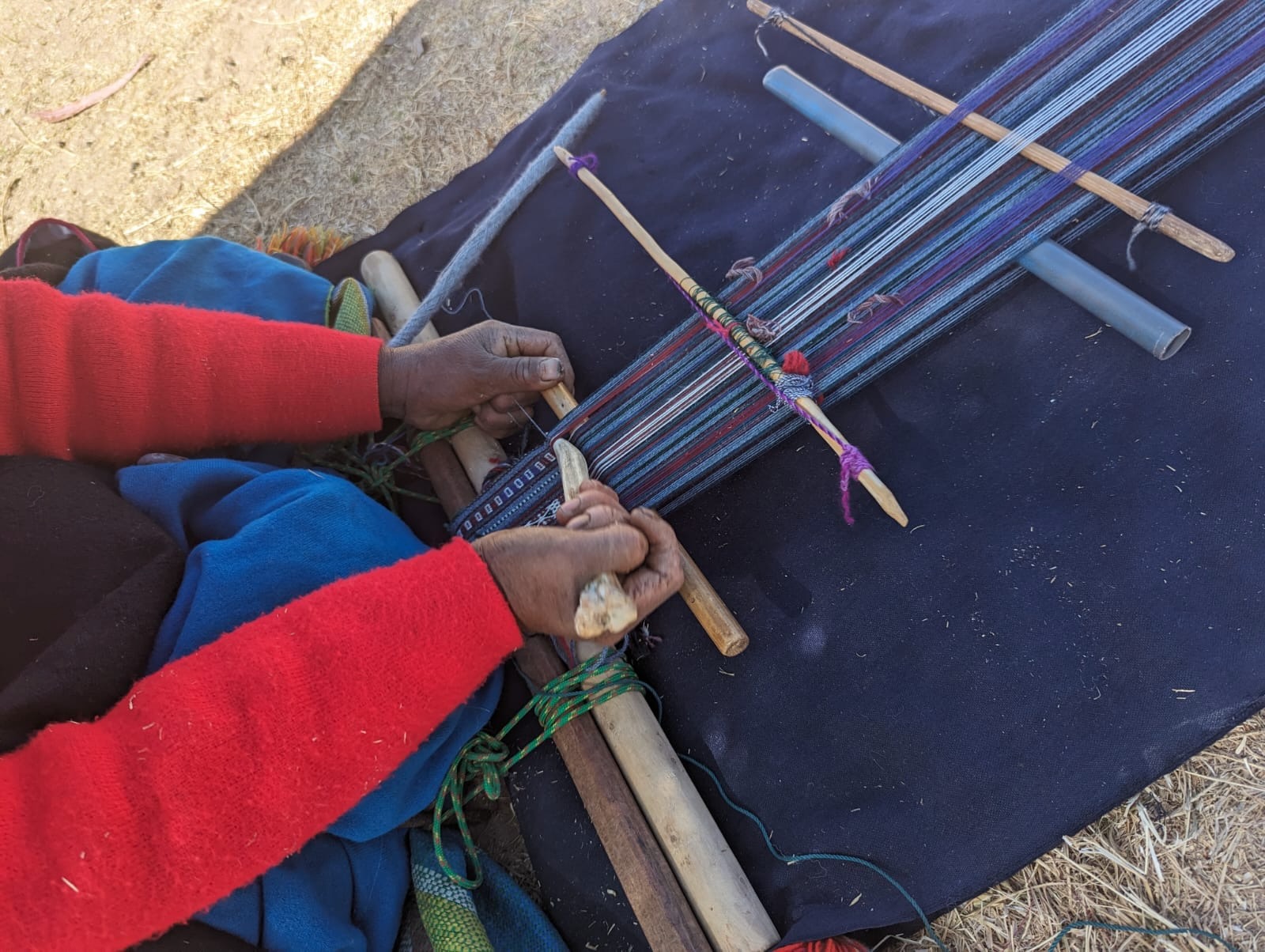
About 2,200 people, known as Taquileños who speak Puno Quechua, live on the island, which is 3.4 by 1.0 miles in size with an area of 2.21 square miles and the highest point of the island is 13,287 feet above sea level. Taquileños are known for their fine handwoven textiles and clothing, which are regarded as among the highest-quality handicrafts in Peru. Knitting is exclusively performed by males, beginning in early boyhood. Women spin wool and use vegetables and minerals to dye the wool to be used by the community. Women are also the weavers of the Chumpis, the wide belts with woven designs worn by everyone in the community.
As we sat on some benches on the edge of the plaza, we witnessed a series of traditional dances, most performed by men and women who formed a rotating circle accompanied by a drummer and one or more playing those Andean flutes we are all familiar with. Soon, onlookers were encouraged to join the dancing and thus the bravest, or most foolish (your call), of our group participated as well.
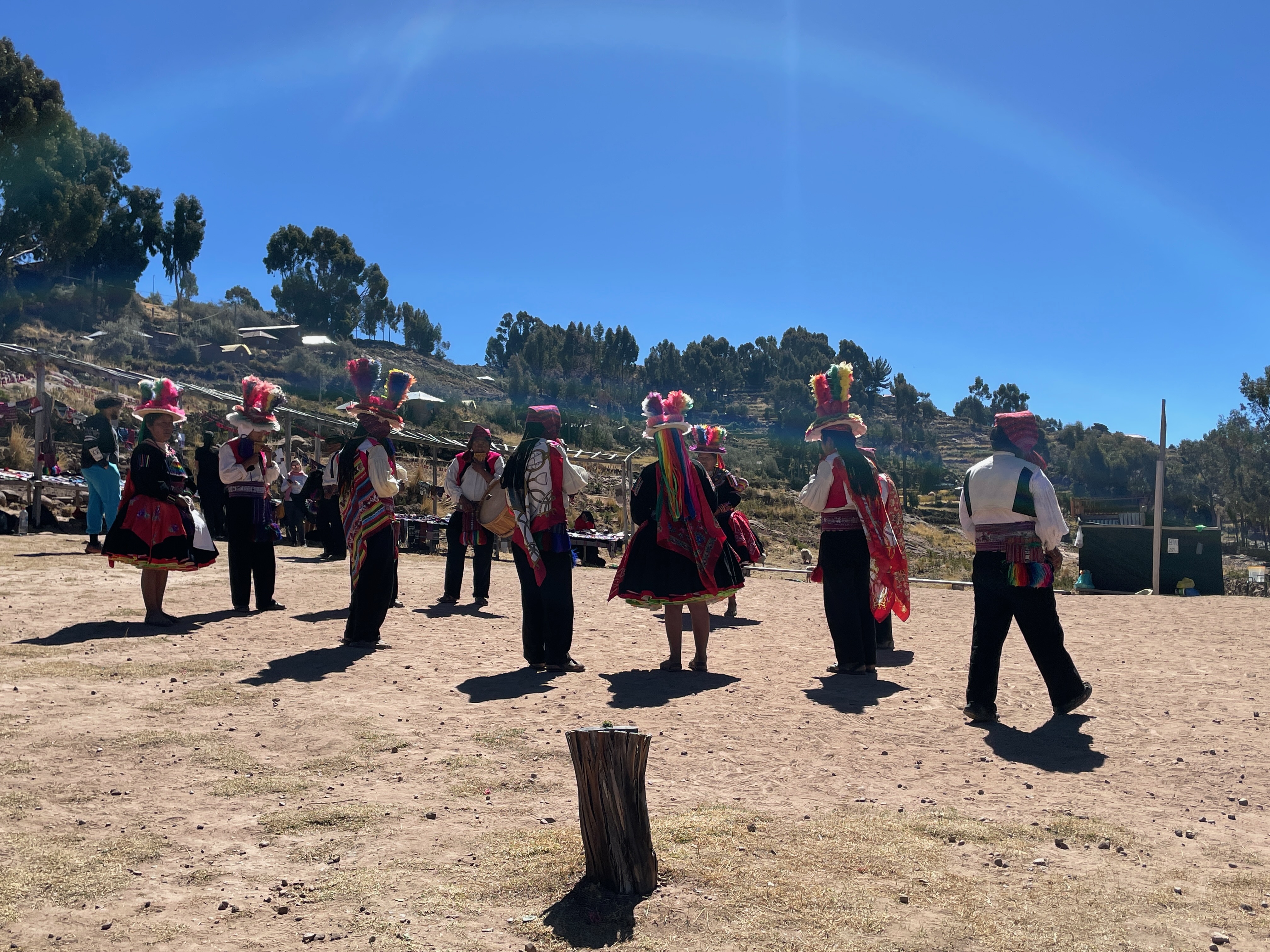
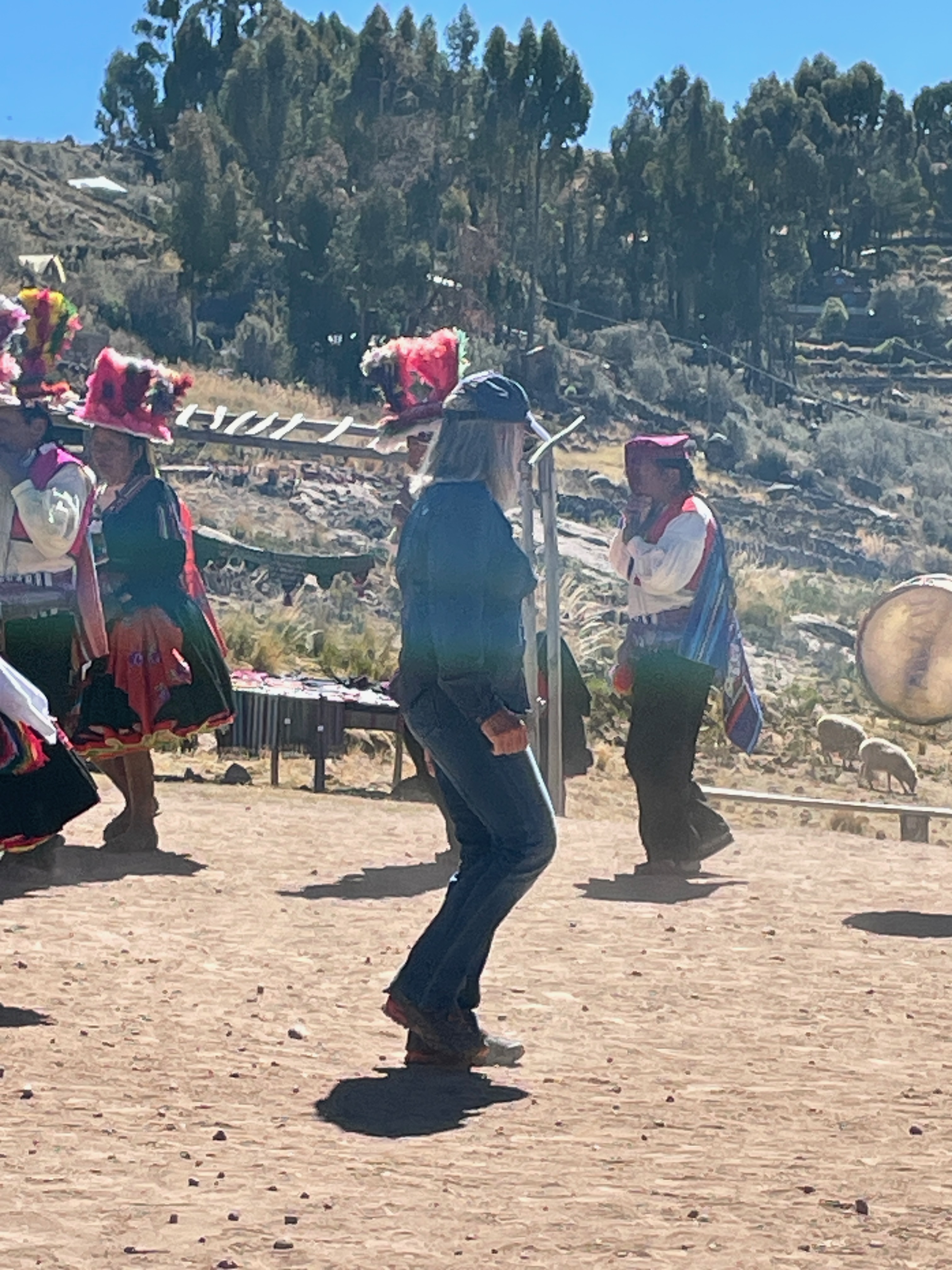
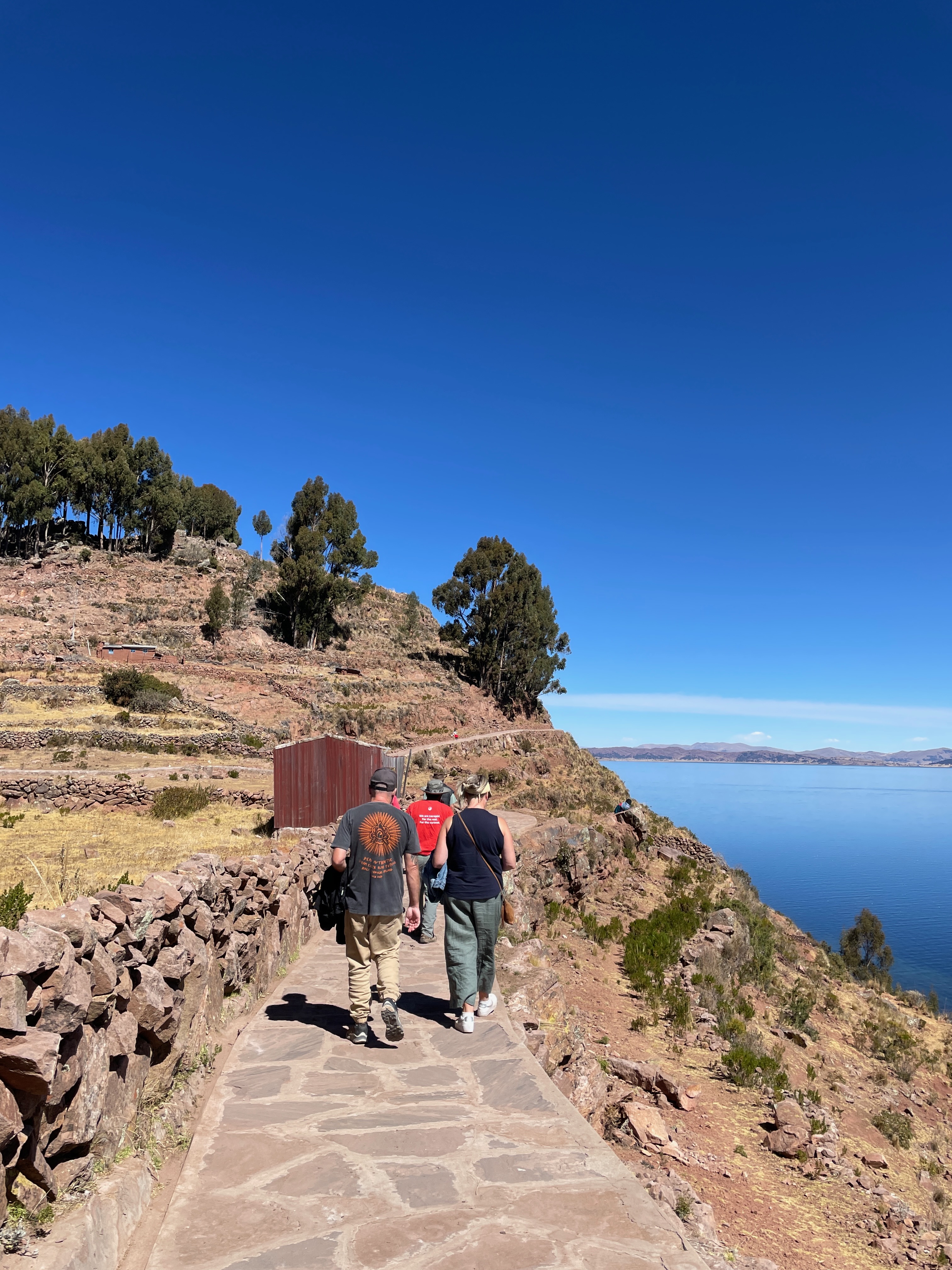
After watching for about twenty minutes, we were given, as we had and would continue to be offered, the opportunity to purchase some of the handicrafts produced by folks on the island. This would finish up this part of our time here and we then walked a good distance to the other side of the island for our scheduled lunch for the day.
I’m not sure if I’ve mentioned this in earlier posts and will do so again when I summarize at the end, but unlike the other tour we took with Intrepid in Egypt, this one did not include all meals, just all breakfasts and a couple of lunches and dinners. But given all the activities included in the cost of the tour, and the relative beneficial pricing of food in Peru, we were OK with the tradeoff.
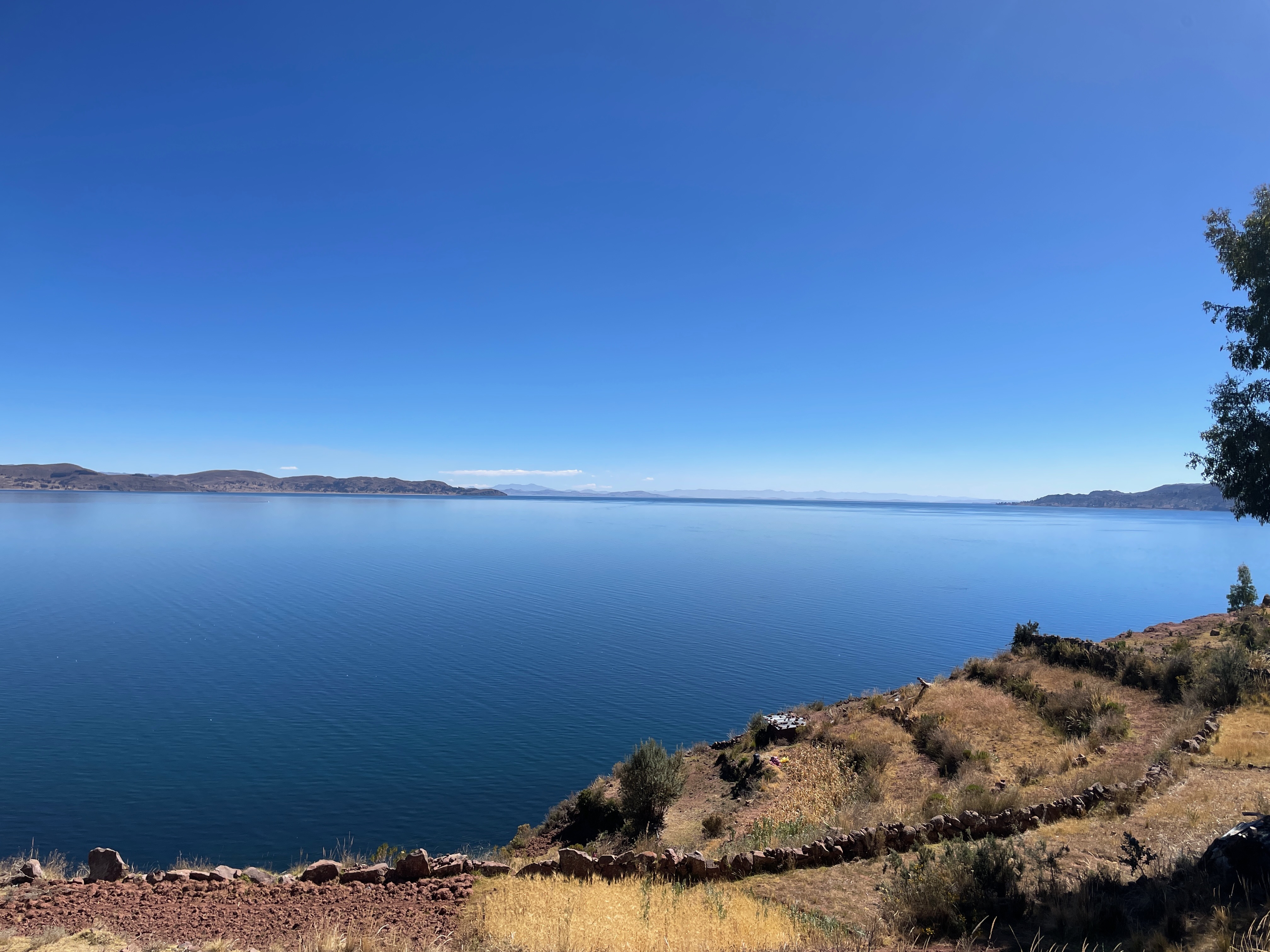
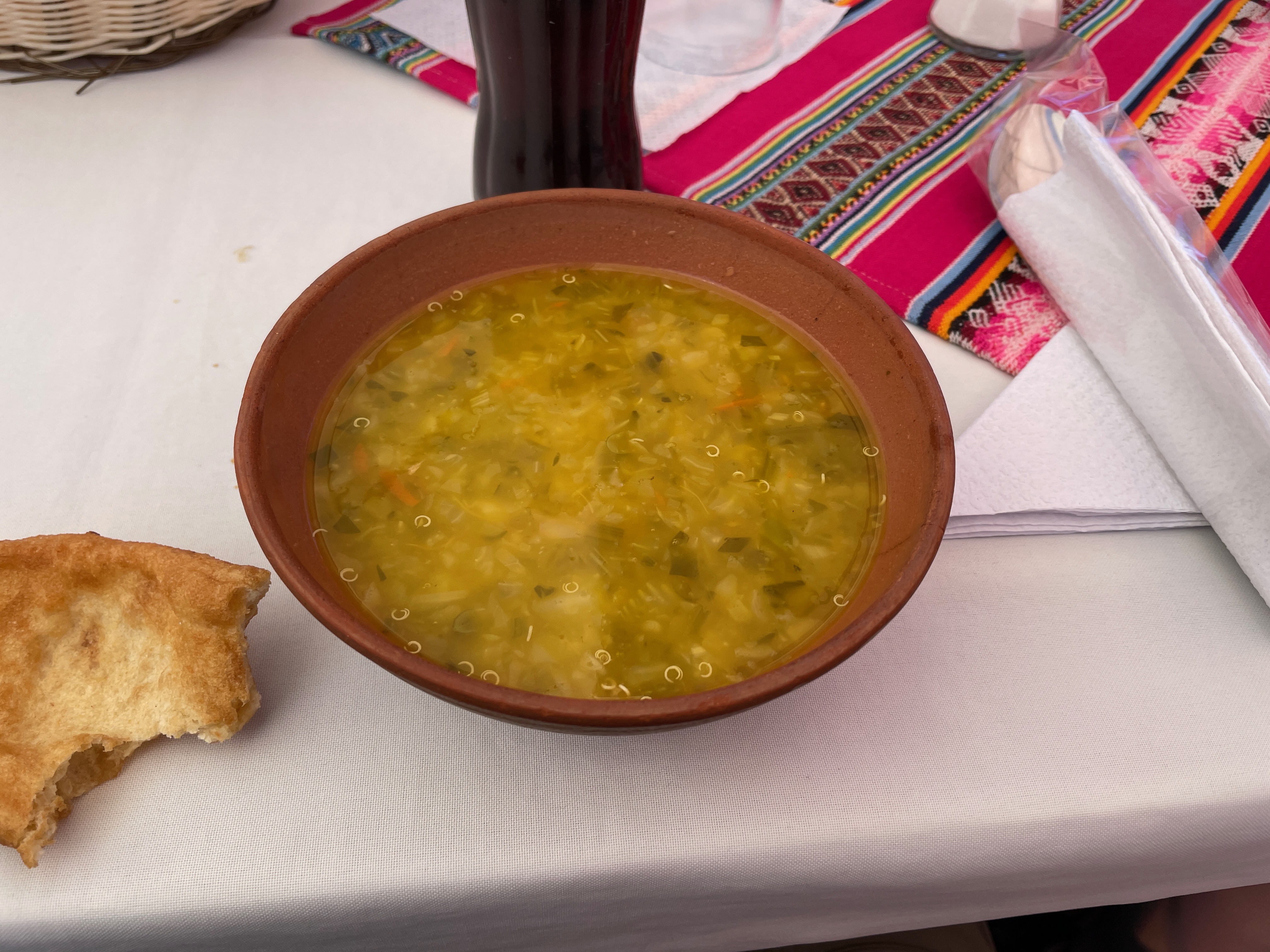
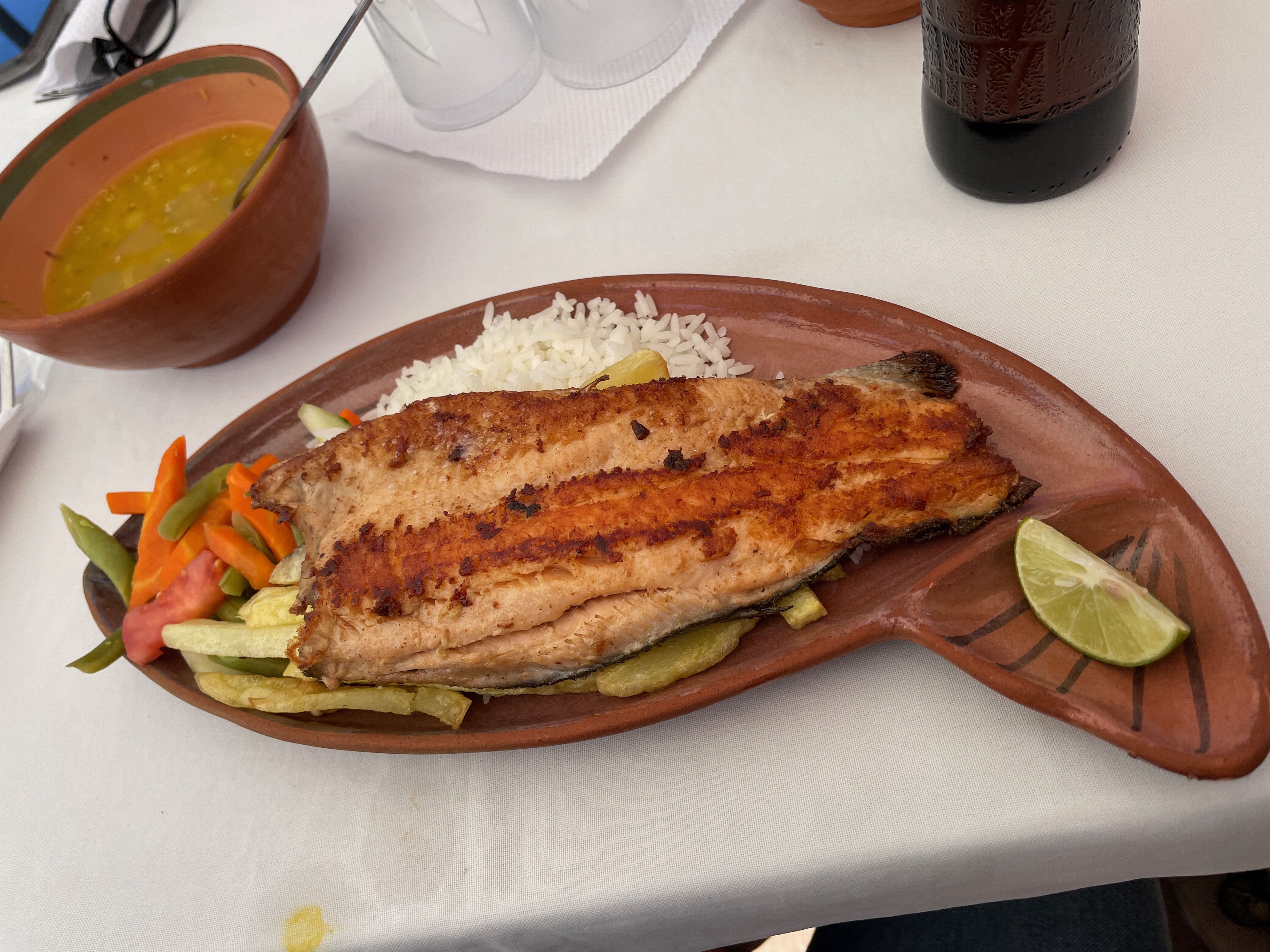
We landed at a house above a bay and were seated outside under a patio covering for our two-course meal, starting with a vegetable soup that was simple but tasty and a choice of entrees, a nice piece of fish for Joanna and an omelet for me. There was nothing exotic about the presentation, but the freshness of the ingredients and obvious care taken in its preparation allowed it to do what it was meant to do, that is fill us up in a contented fashion and send us on our way.

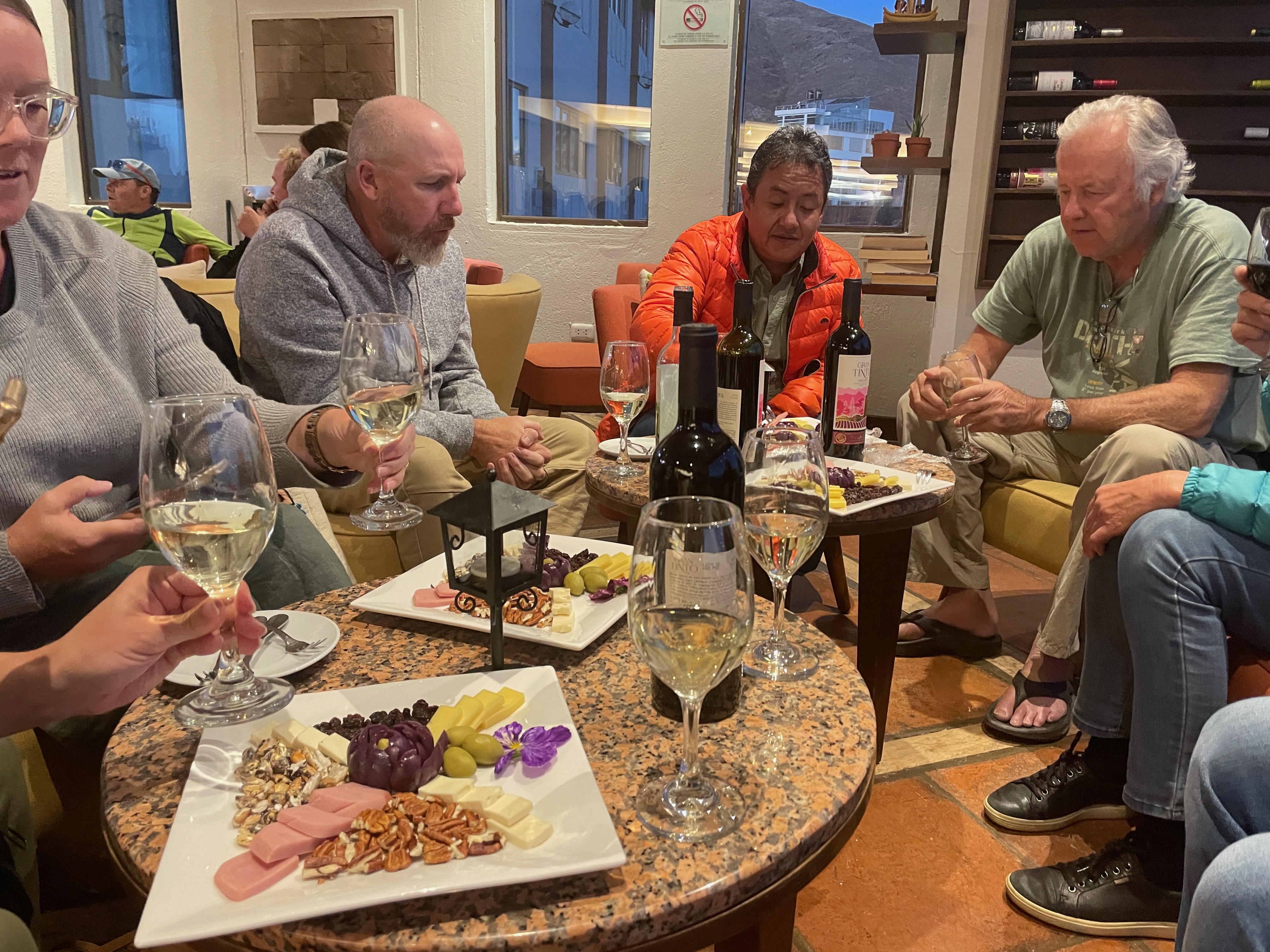
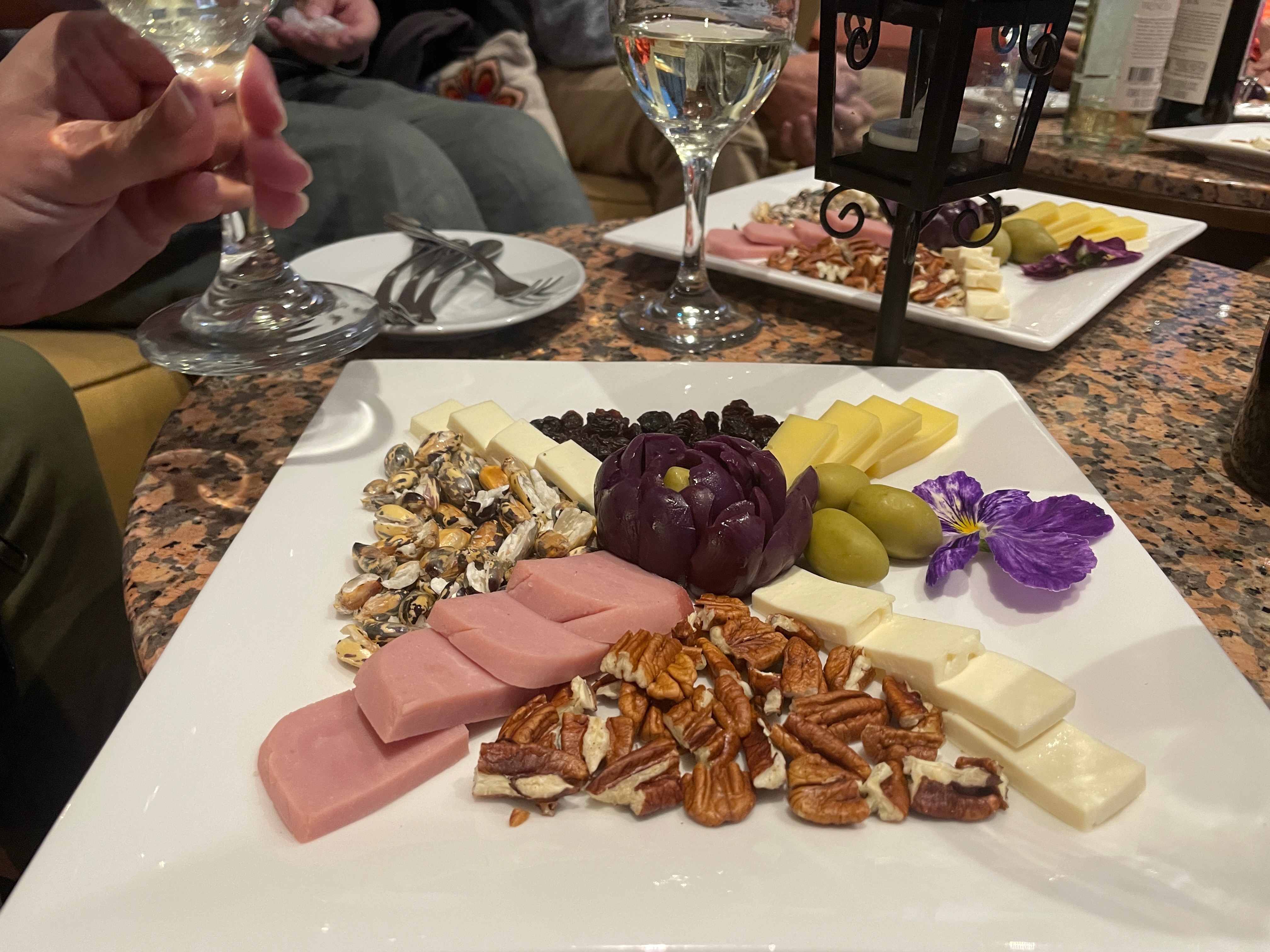
The boat ride back to Puno went smoothly, a relaxing break in a busy day and once landing, next up on the agenda was a scheduled wine and snack affair courtesy of the tour in the restaurant an hour or so later, giving us a little time in the room to take care of those little errands and tasks that need tending to when you’ve busy elsewhere all day. Soon enough, the bewitching hour arrived, and we were delighted with the set-up, four bottles of wine to split between the seven of us and a couple of small charcuterie platters.

It was yet another opportunity to get to know our fellow travelers and as is often the case, as the level of wine in the bottles drifted lower, the value of the information exchanged increased and would be built upon as we continued to share time together.
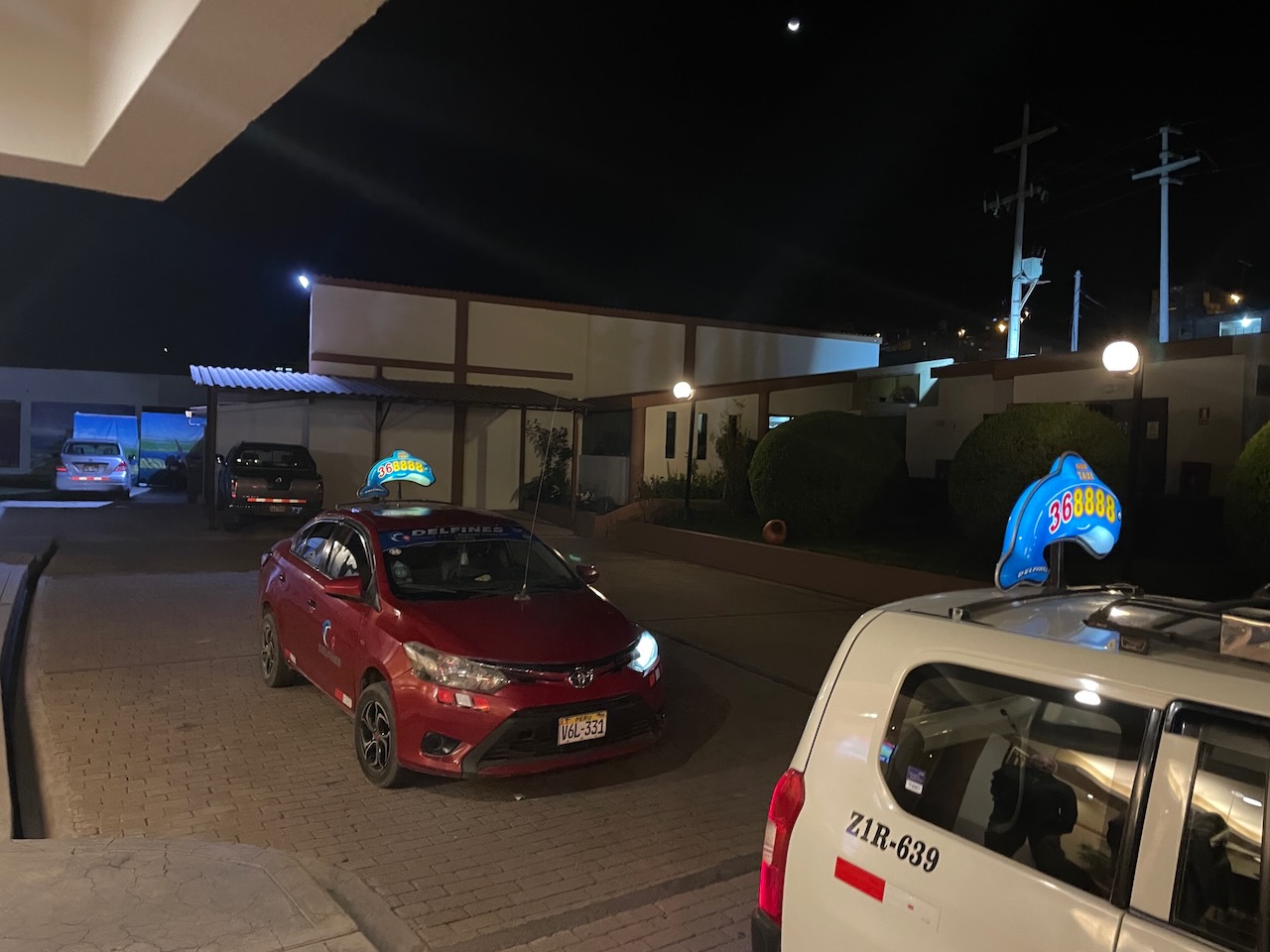
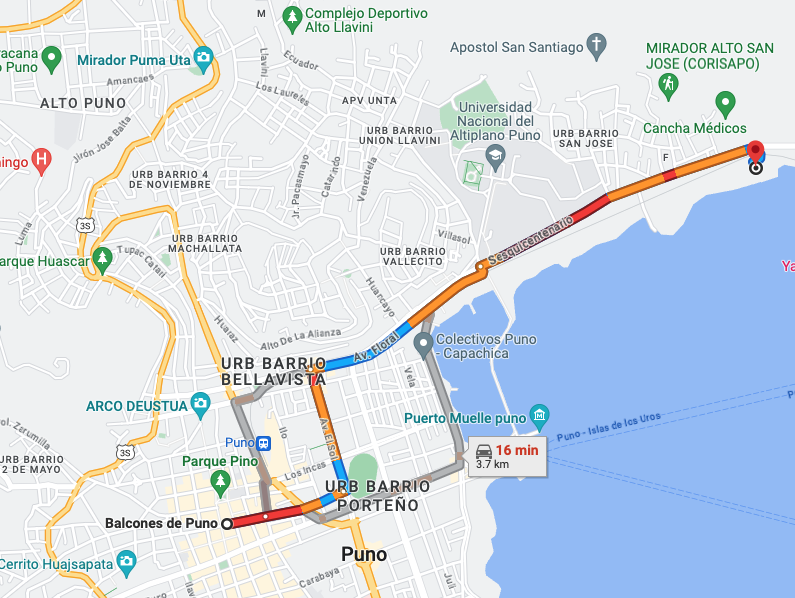
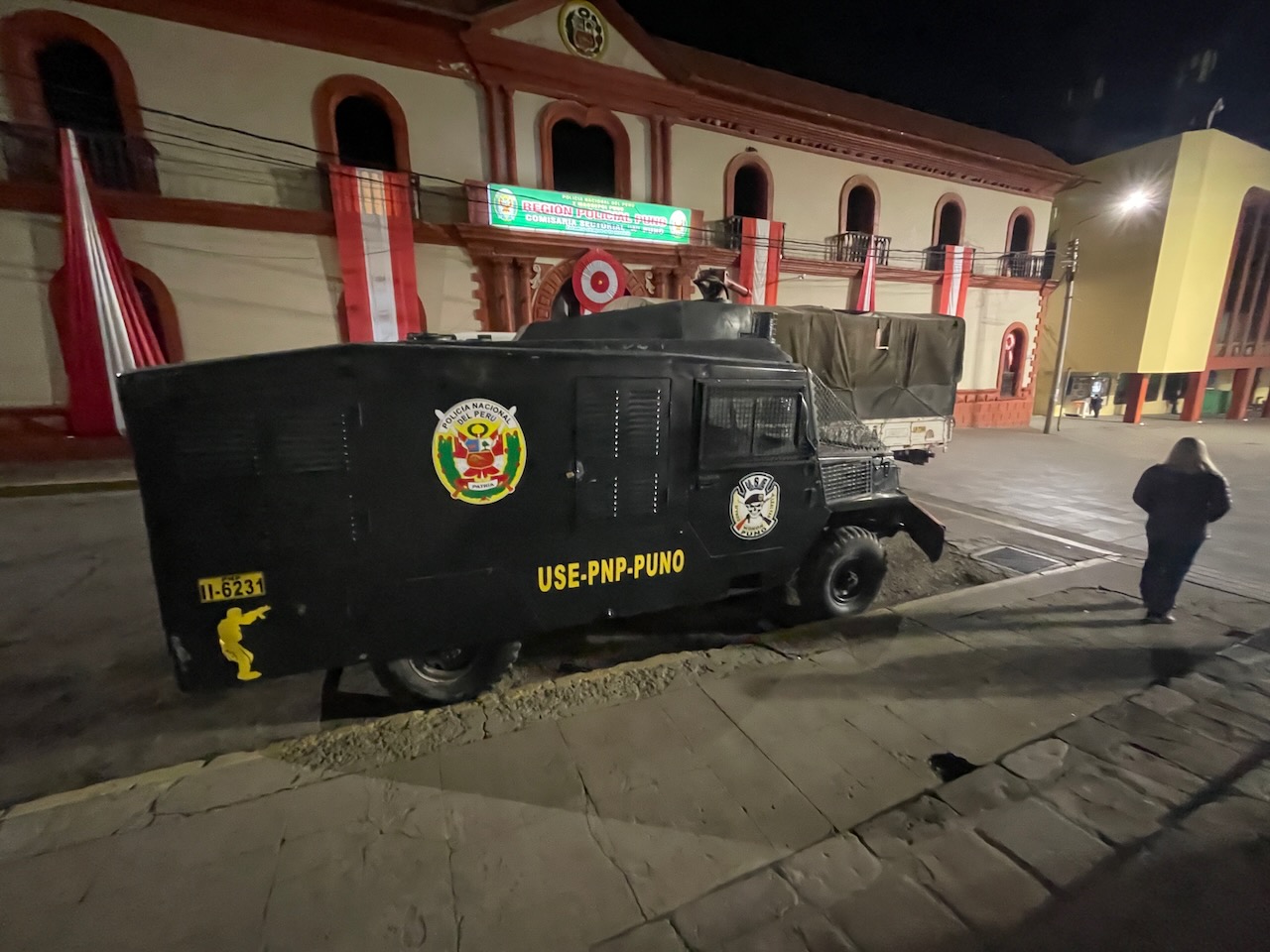
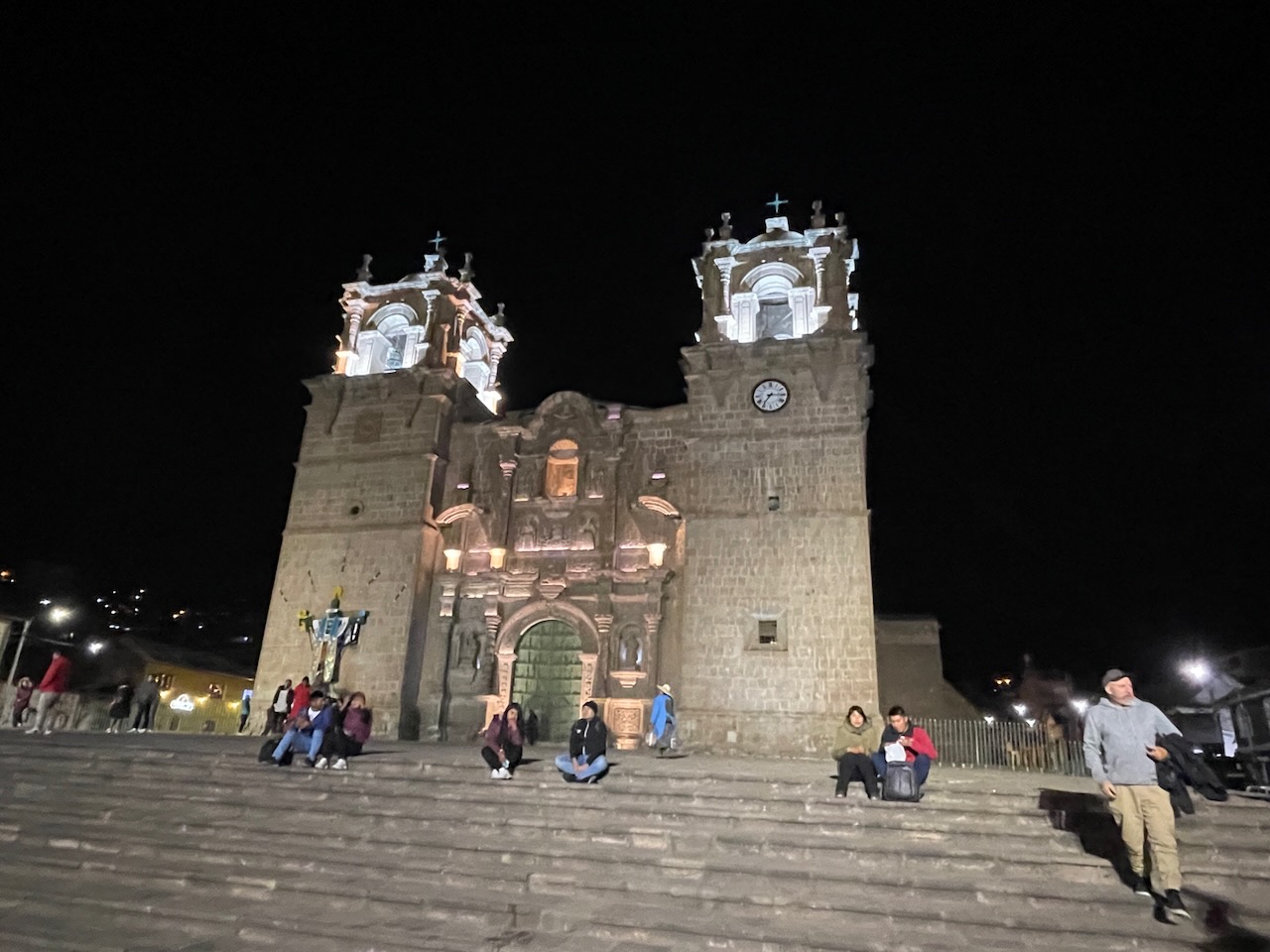
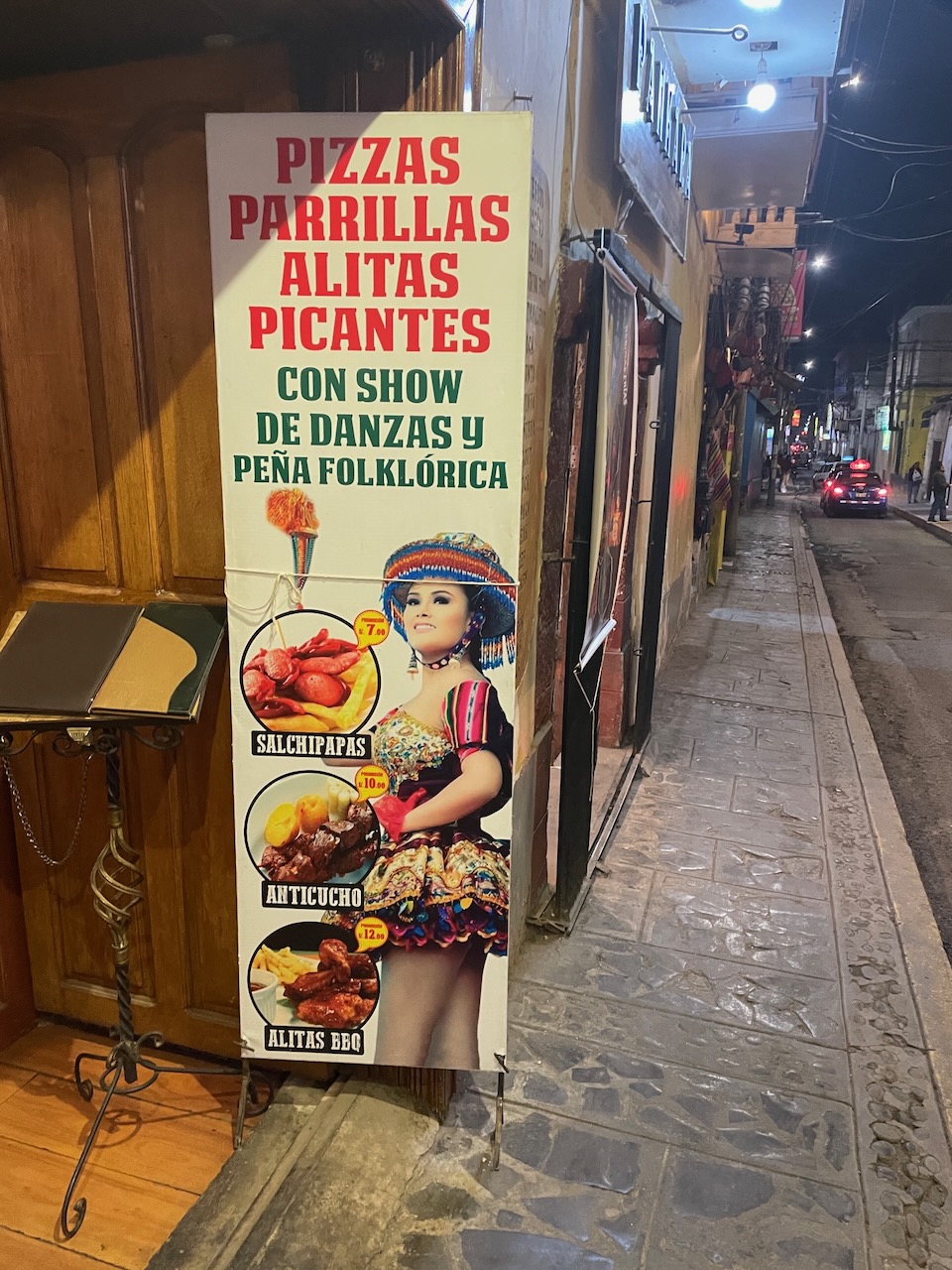
We finished our wine and snack session and then proceeded to jump into a couple of taxi’s, both taken care of by Luis, for the three mile drive to Balcones de Puno, our dinner and entertainment option for the evening. It took longer than normal to get there as it was early evening and traffic was heavy in town, but it did give us the chance to see many of the buildings lit up from outside and observe one or more armored vehicles belonging to the national police.
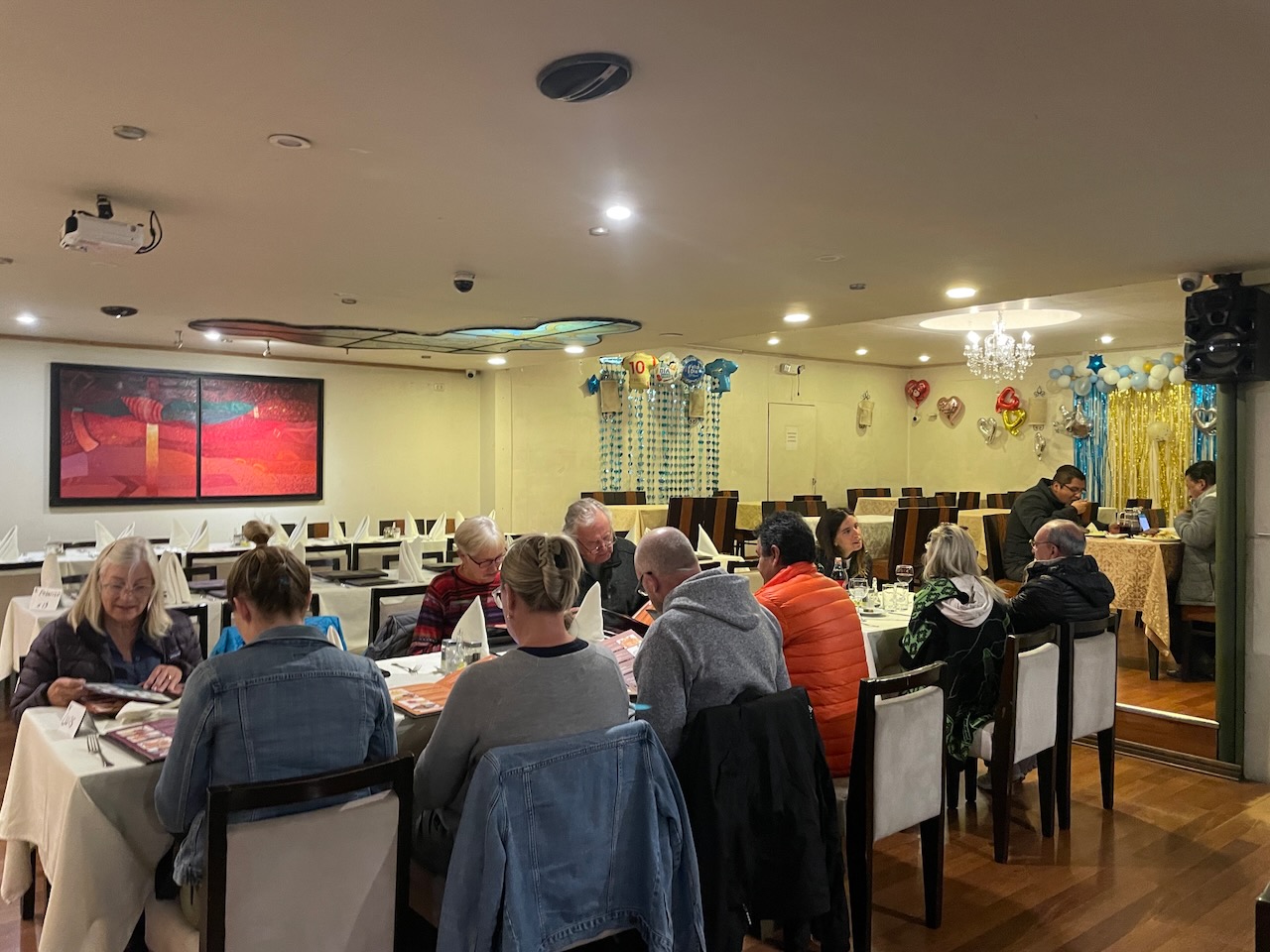
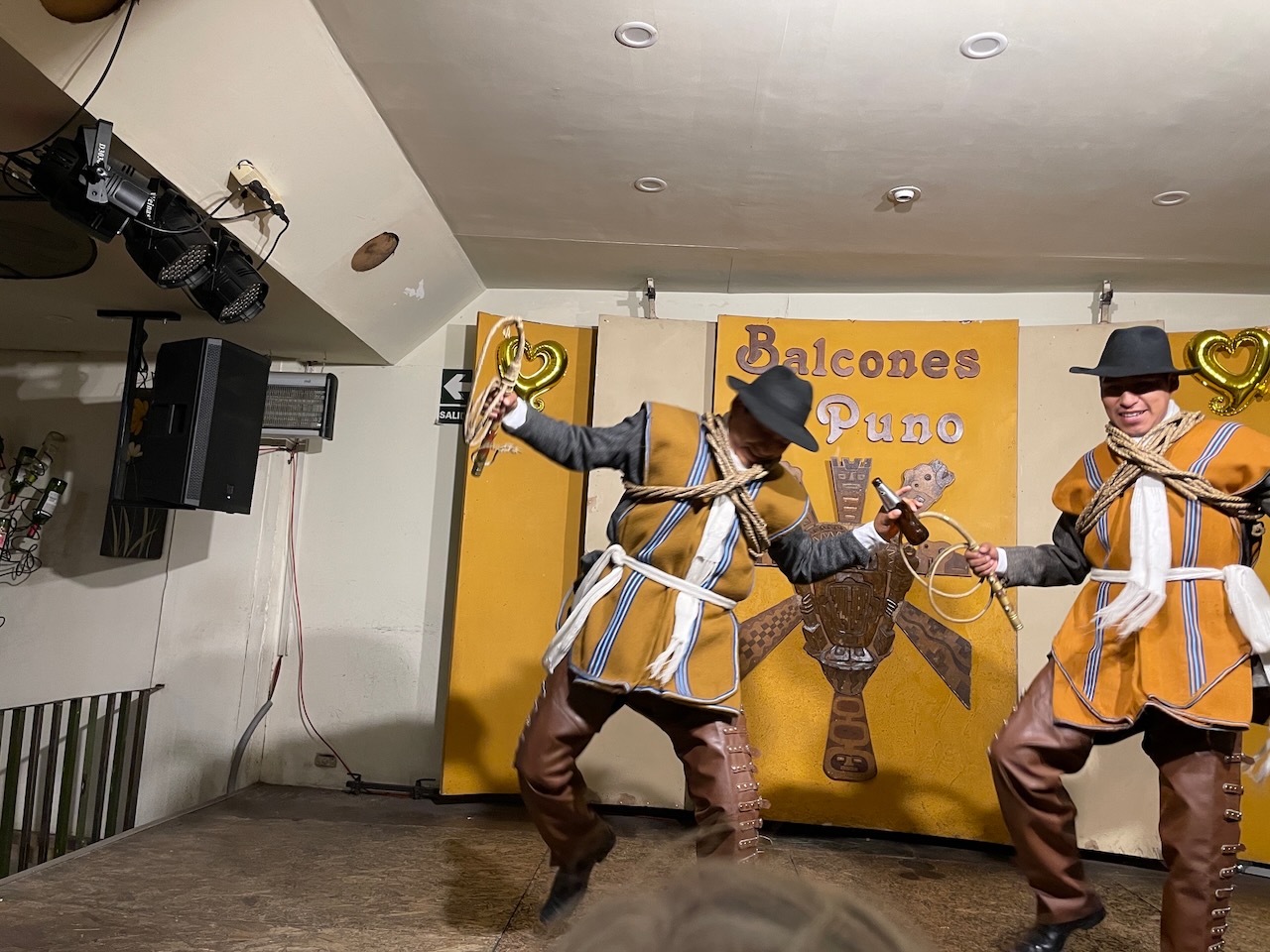
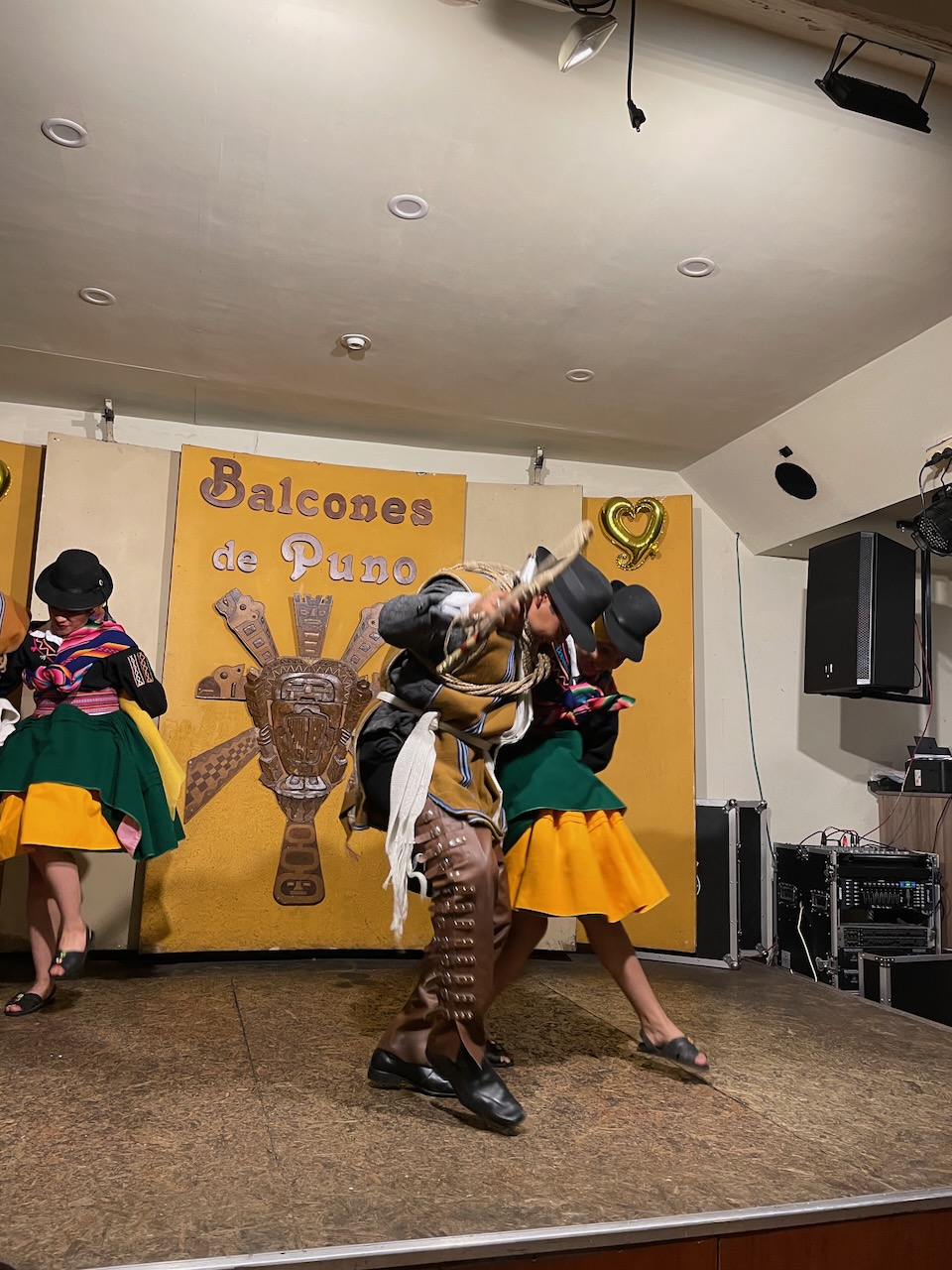
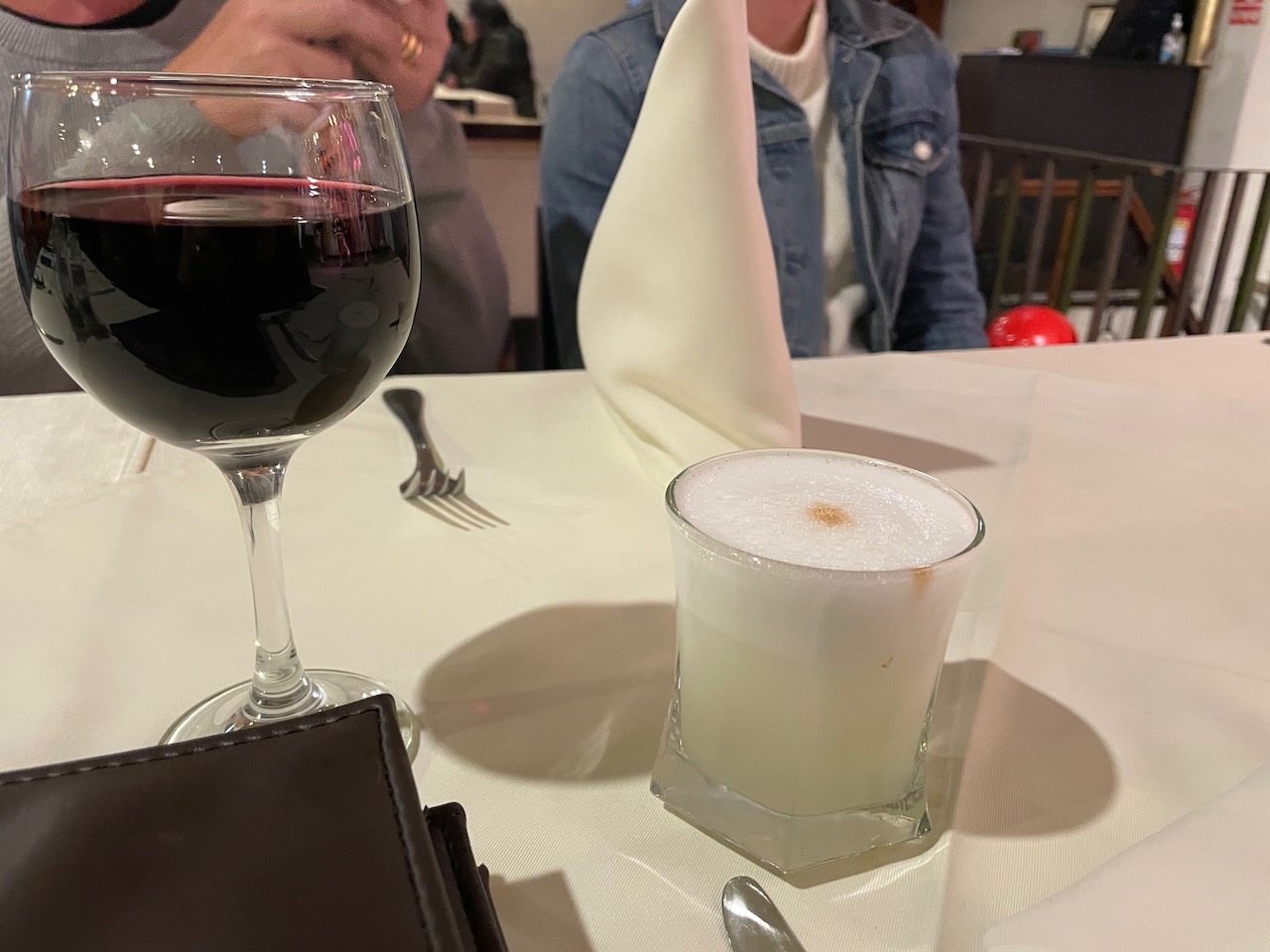
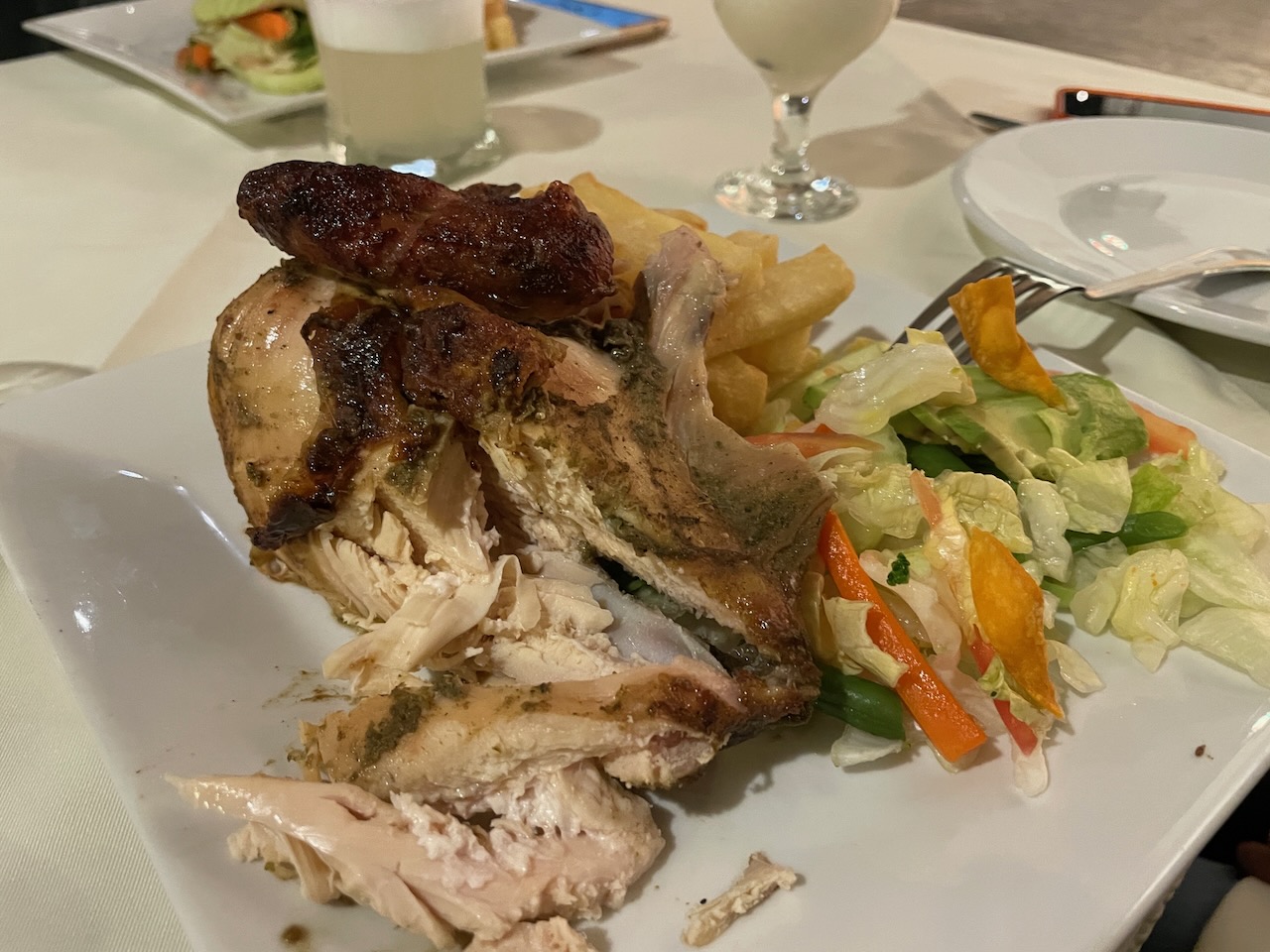
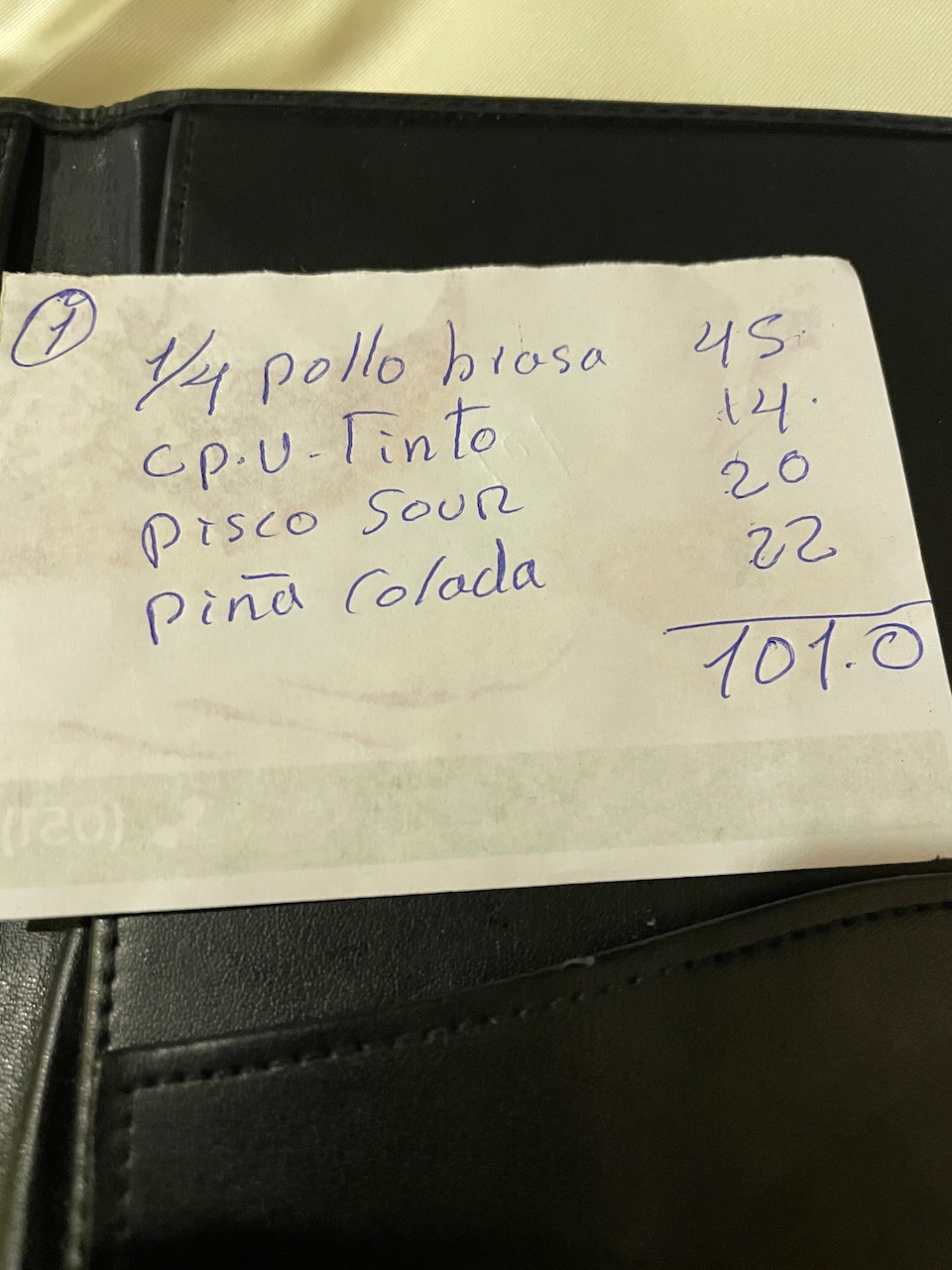
We arrived at the restaurant and were soon seated upstairs directly in front of the stage where we would observe about ninety minutes of dancing. As had been the case so far, we all ordered a round of Pisco Sour’s along with our entrée choices, splitting Joanna and I a half roast chicken (known as Brasa here, a national dish) that was very filling. Soon the dancing started, and we would enjoy four or five different styles each with a representative costume.
The troupe of dancers, equally comprised of women and men, some of whom were students at the local university, became familiar to us as they alternated with each other during the different dance routines. One male did stand out as he was older than the others, and was likely the manager of the group, participating in almost all of the dances. Although there was a bit or repetition throughout each set, the dance moves and colorful costumes kept us engaged for the balance of the presentation.
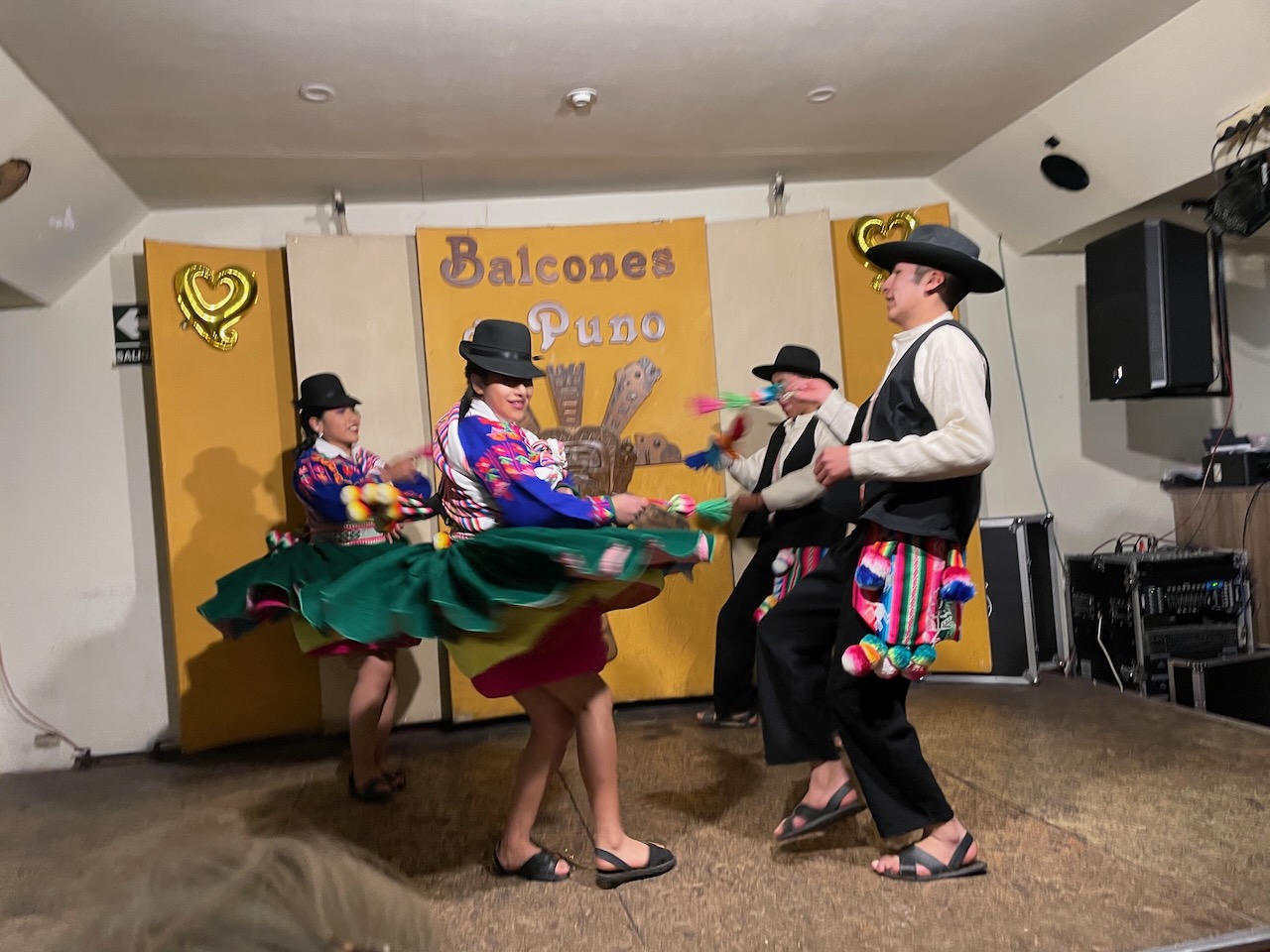
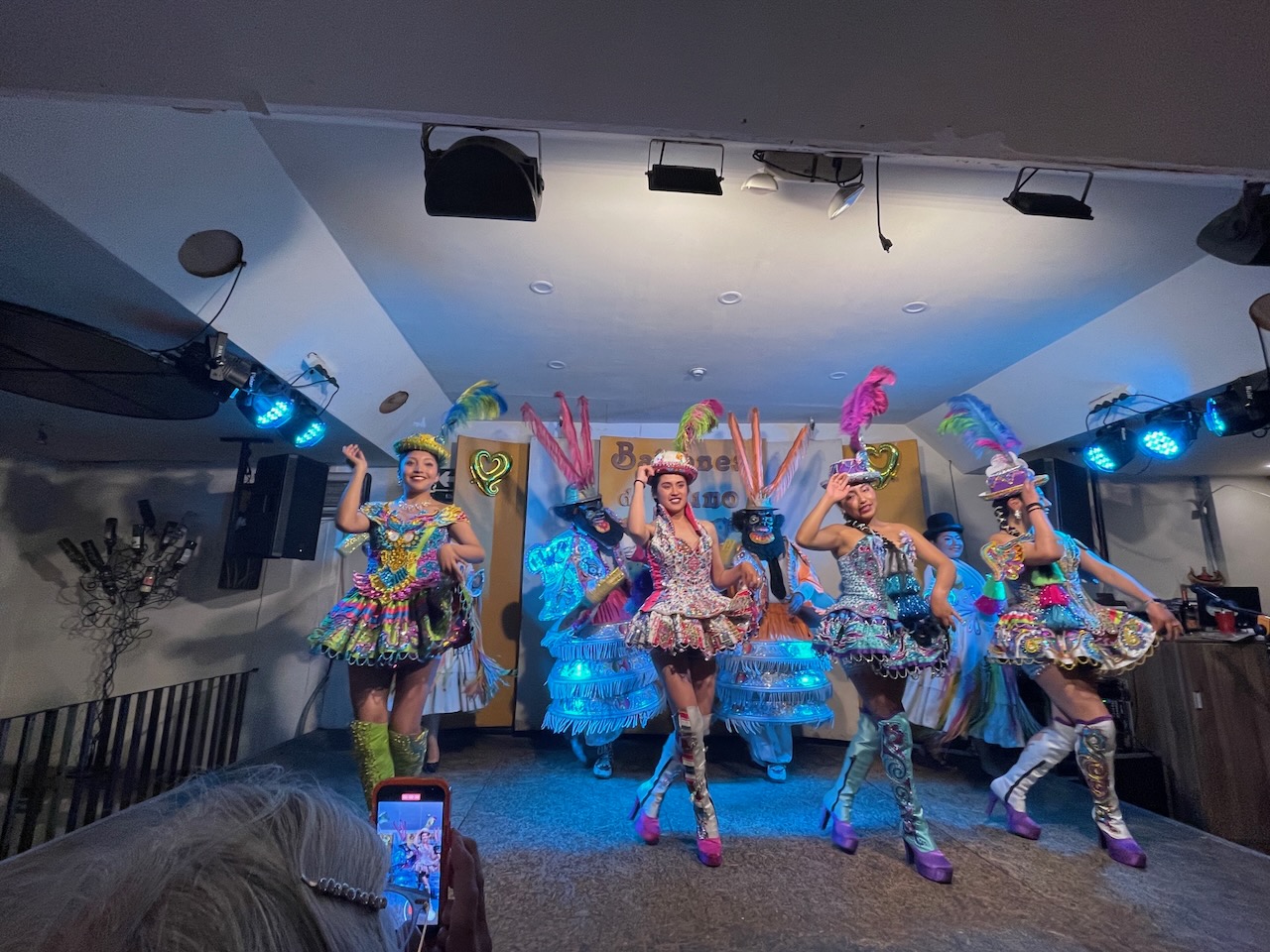
At the end of the first act of dances (I figured there would be additional ones as the evening went on) we settled our tab, a very reasonable 111 Soles ($32) for our entrée, two Pisco Sours, one glass of house red wine and one Pina Colada. With no cover charge for the entertainment, and with prices like this, what’s not to like about traveling in Peru?
Links
Balcones de Puno: https://www.facebook.com/BalconesPuno/?locale=es_LA
Discover more from 3jmann
Subscribe to get the latest posts sent to your email.


 3jmann