July 22-23
The next day would be another long one, at 8 to 9 hours, with stops along the way as we motored to Cusco where we would spend two nights. Our bodies began to notice the slight drop in elevation along the way (we would lose over 1,000 feet, ending up at 11,152) and breathed a little easier, enjoying the flat landscape bordered by a ring of tall mountains.
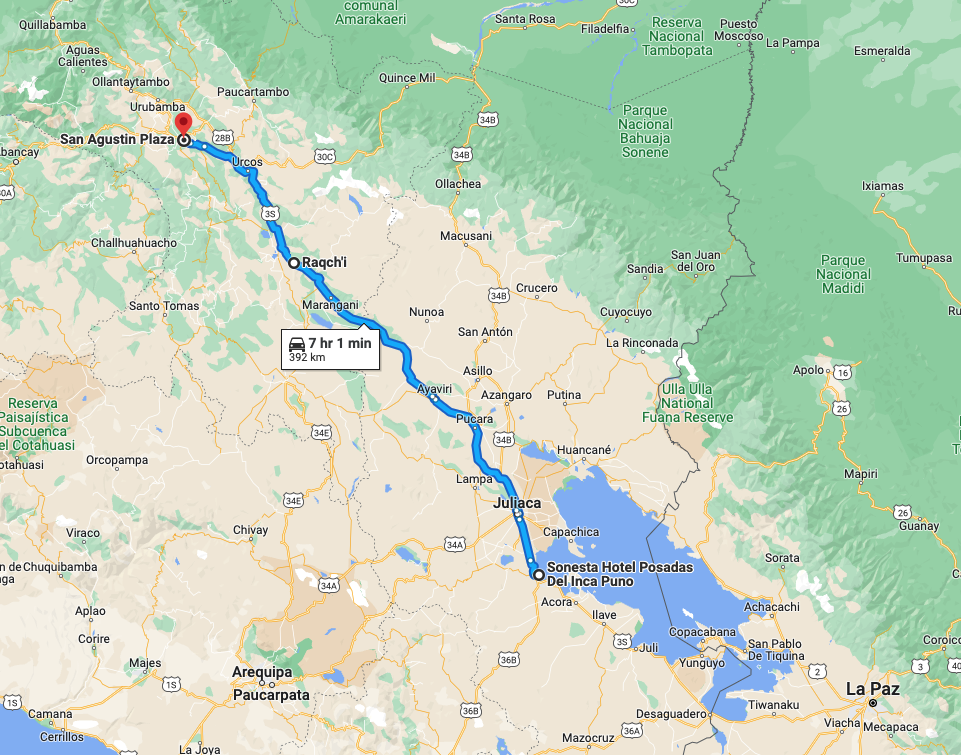
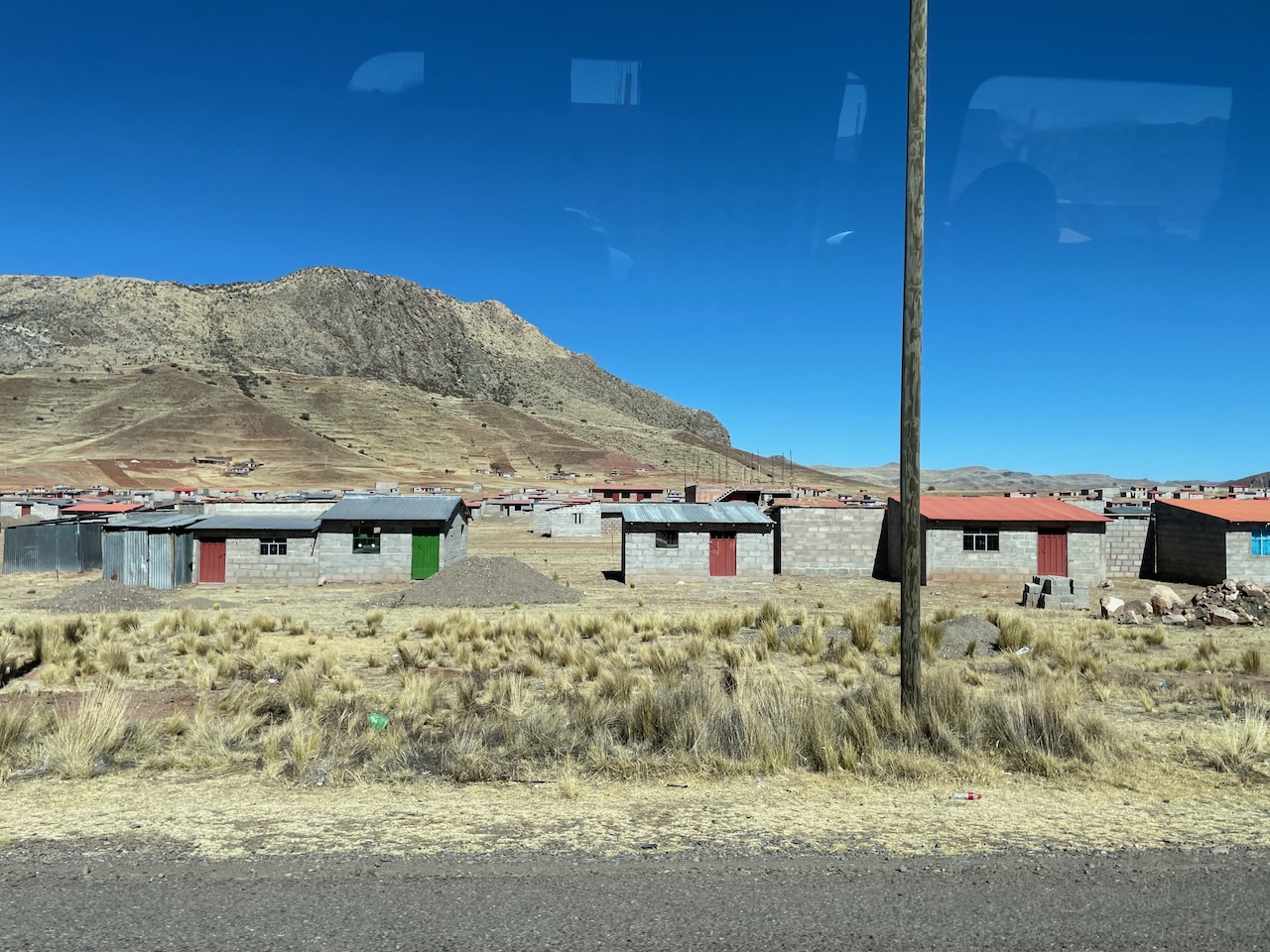
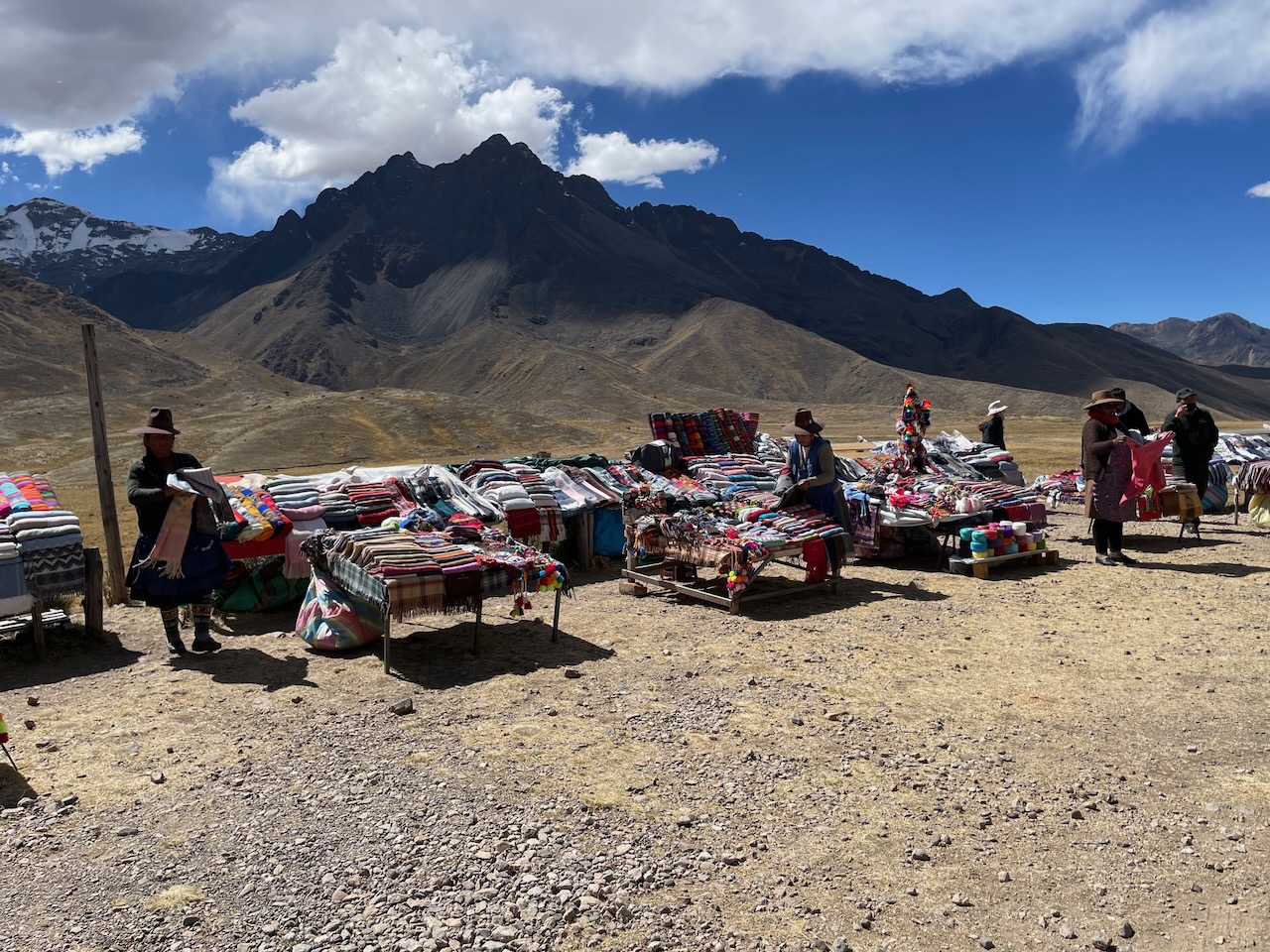
After a few hours on the road, we reached the Raqch’i Archeological Site, an Inca archaeological site near the populated place Raqch’i. It is 11,500 feet above sea level and is also known as the Temple of Wiracocha. Located in a valley well-known for sacred sites, it was a primary control point on a road system that originated in Cusco and expanded as the Inka empire grew. Most of Inka structures here are enclosed by a 2.5-mile-long perimeter wall and the complex consists of several different areas each designated with a specific function.

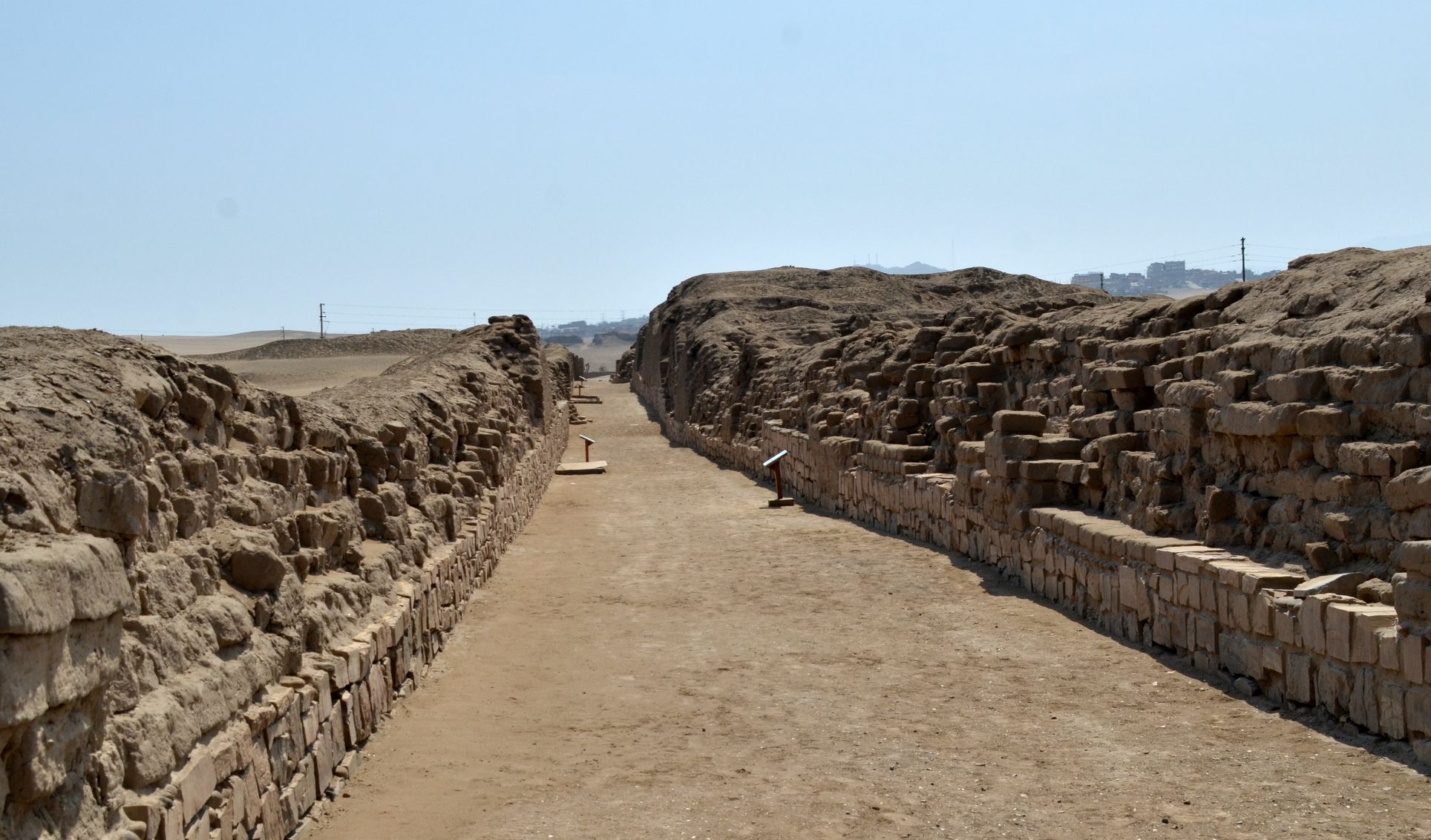
The most prominent structure is the Temple of Wiracocha, an enormous rectangular two-story roofed structure that measures 302 feet by 84 feet. This structure consists of a central adobe wall some 59 to 265 feet in height with an Andesite (volcanic rock of intermediate composition) base, with windows and doors that allow for passage. It is flanked on each side by a row of eleven columns. The foundations measure 13 feet for both the wall and the columns and are classic high Inca stonework with the remaining height built of adobe.
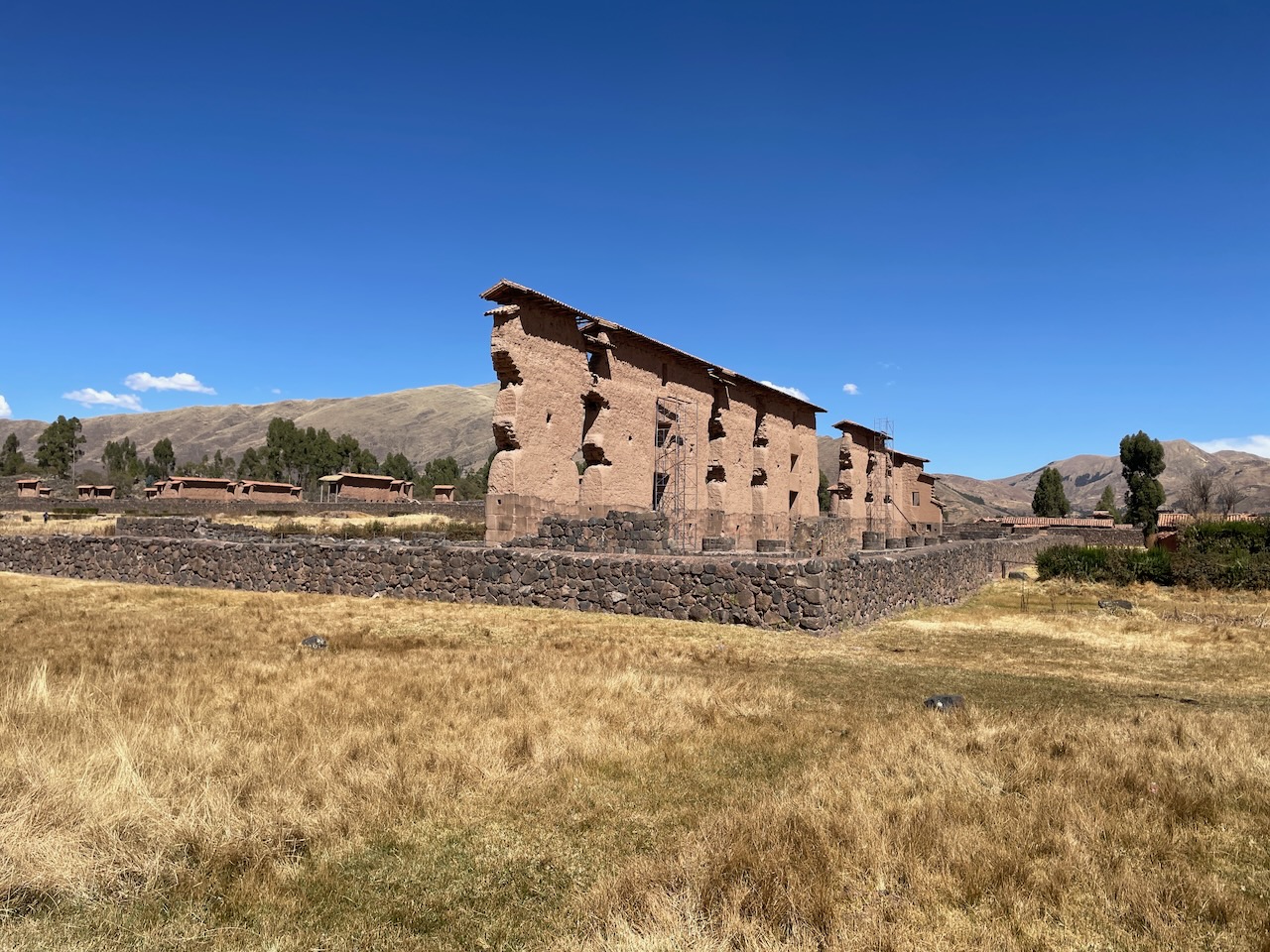
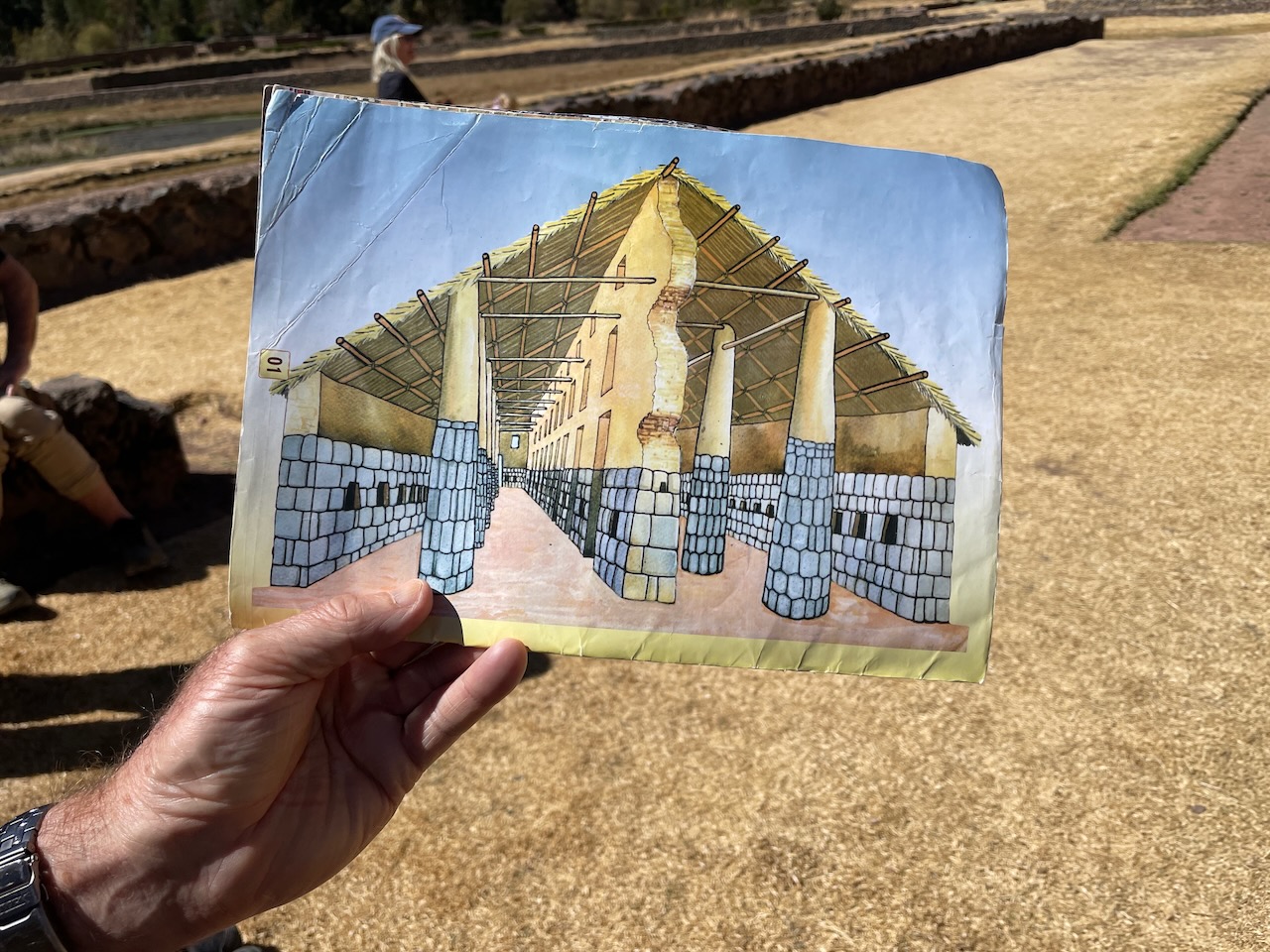
Prior to its destruction by the Spaniards, the temple had what is believed to be the largest single gable roof in the Incan Empire, having its peak at the central wall, then stretching over the columns and some 82 feet beyond on each side. The huge proportions of the Raqch’i temple, and its prominence on the site explain why the whole complex is also sometimes referred to as the Temple of Wiracocha.

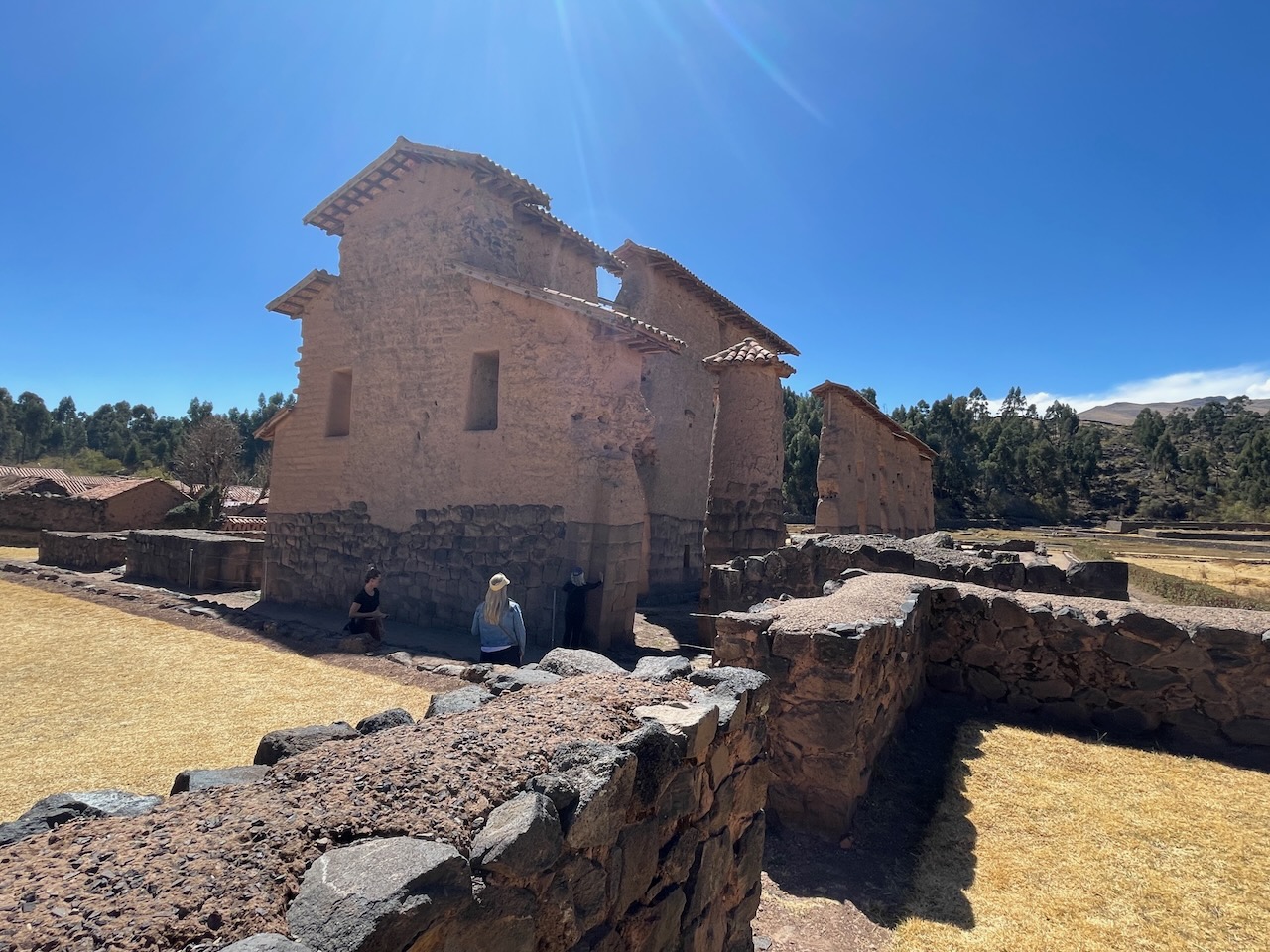
Adjoining the temple to the north are twelve living quarters which would have housed both priests and local administrators. The living area is divided into separate squared lots the largest of which is roughly 13×20 feet. All have niches in their walls which might have been used for storage, though some of the niches have cover posts, suggesting they may have held sacred objects.

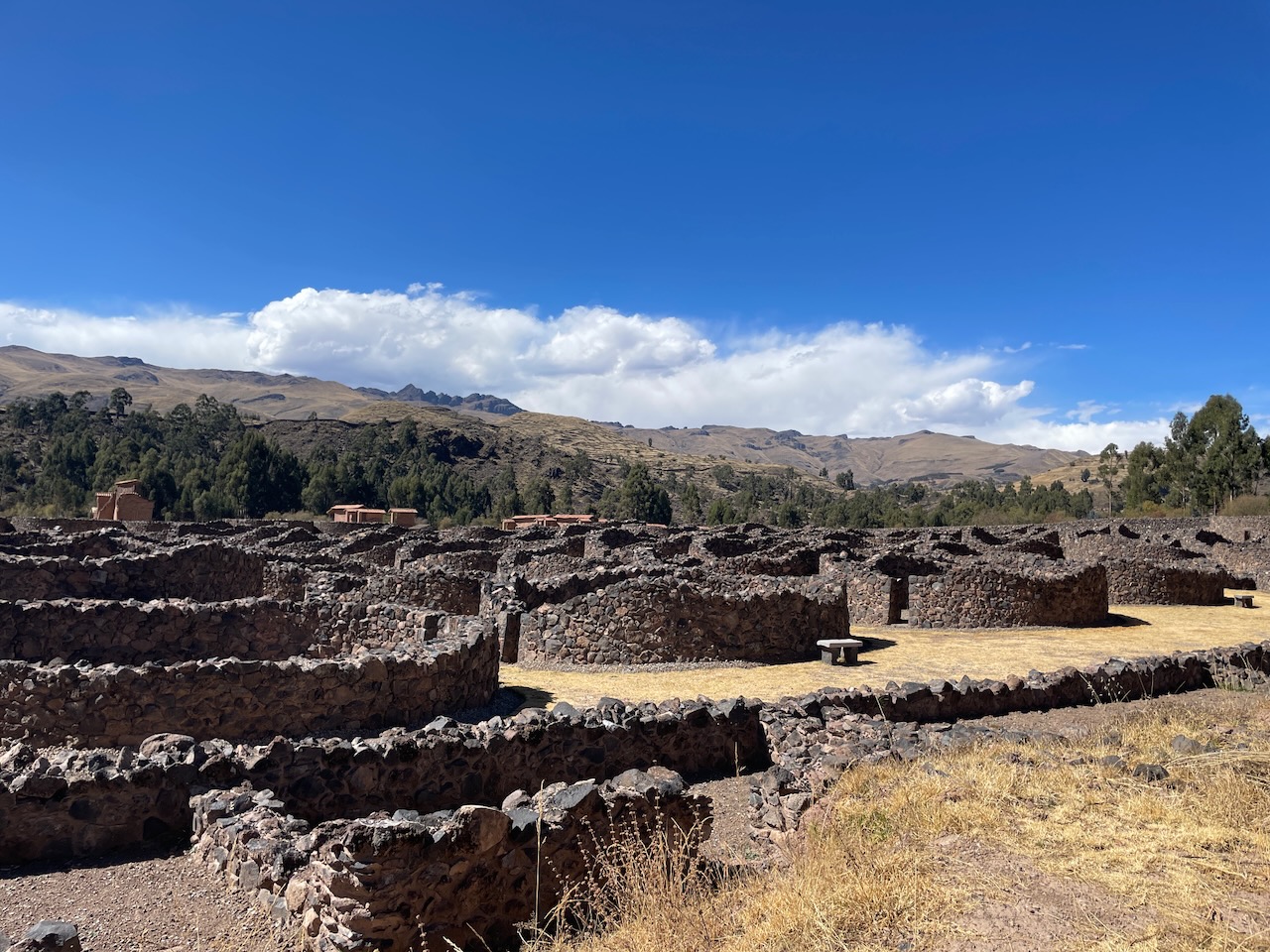
To the eastern side of the temple are 152 round qullqas in parallel lines, each measuring some 33 feet in diameter. These storehouses were used to hold grains, such as corn and quinoa, that would have been used for ceremonial purposes as well as pottery, woven cloth and military equipment. The storehouses are also unique as unlike other structures throughout the empire they are not square cornered. The reason for this is unknown.
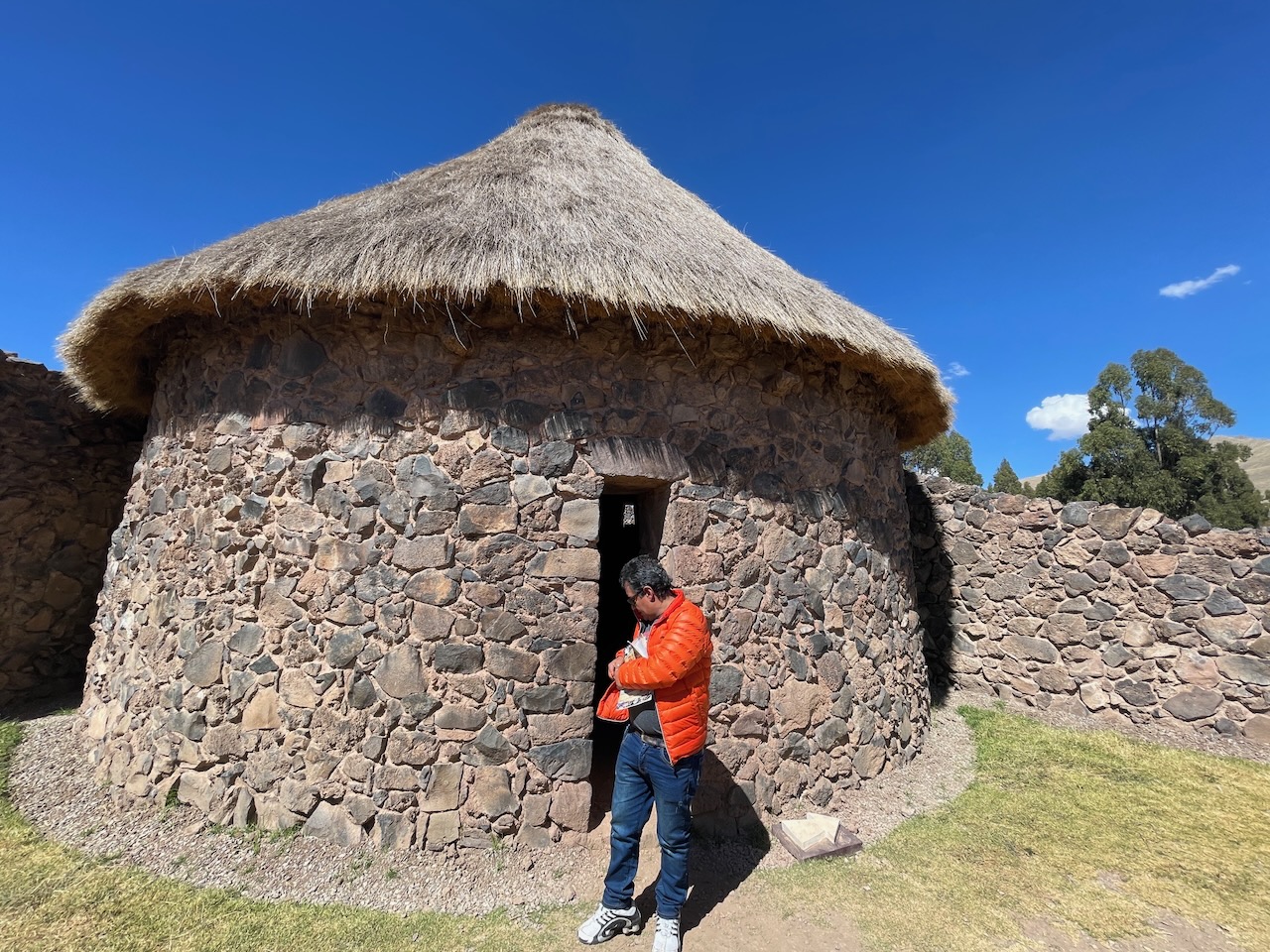
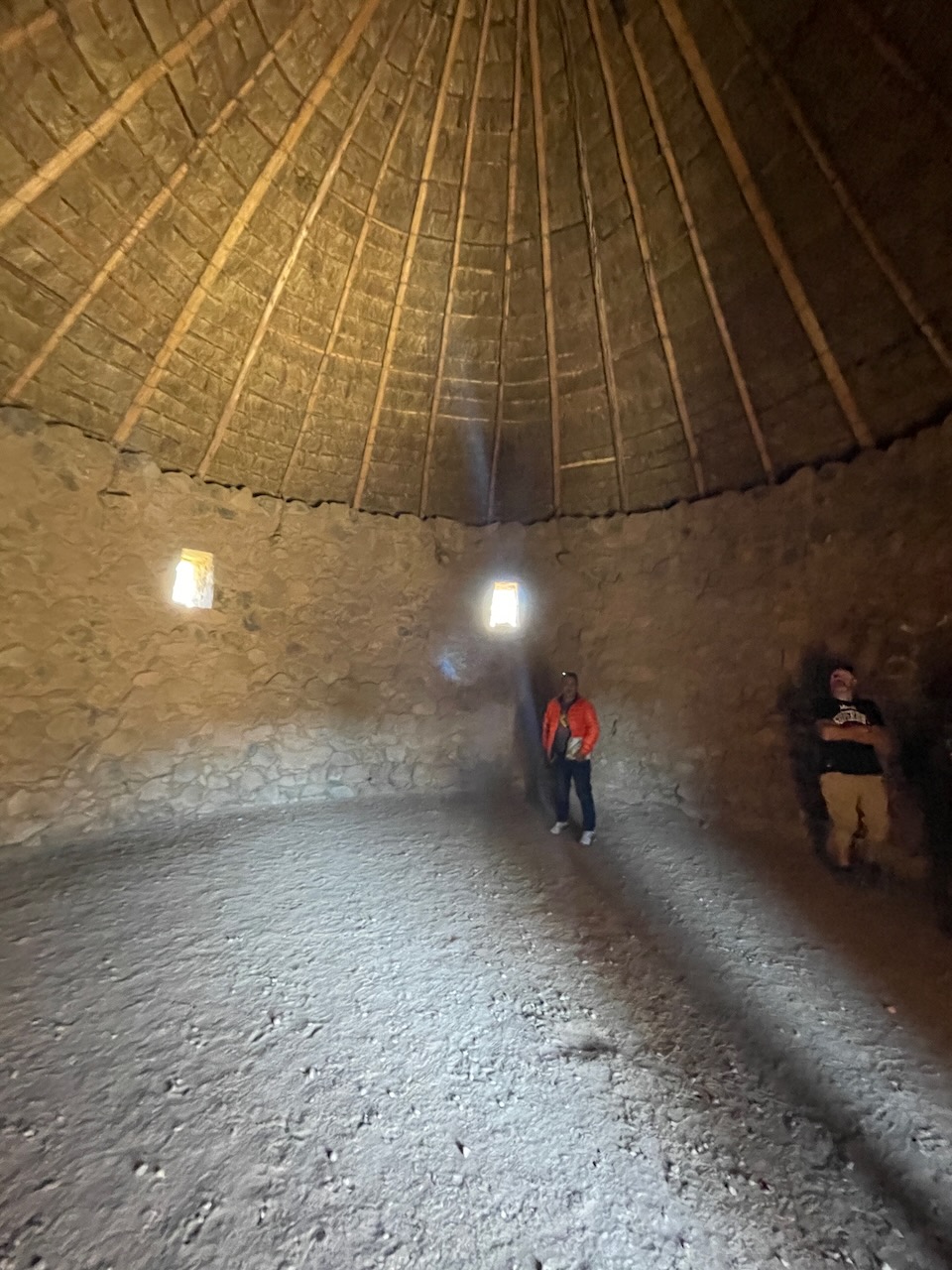
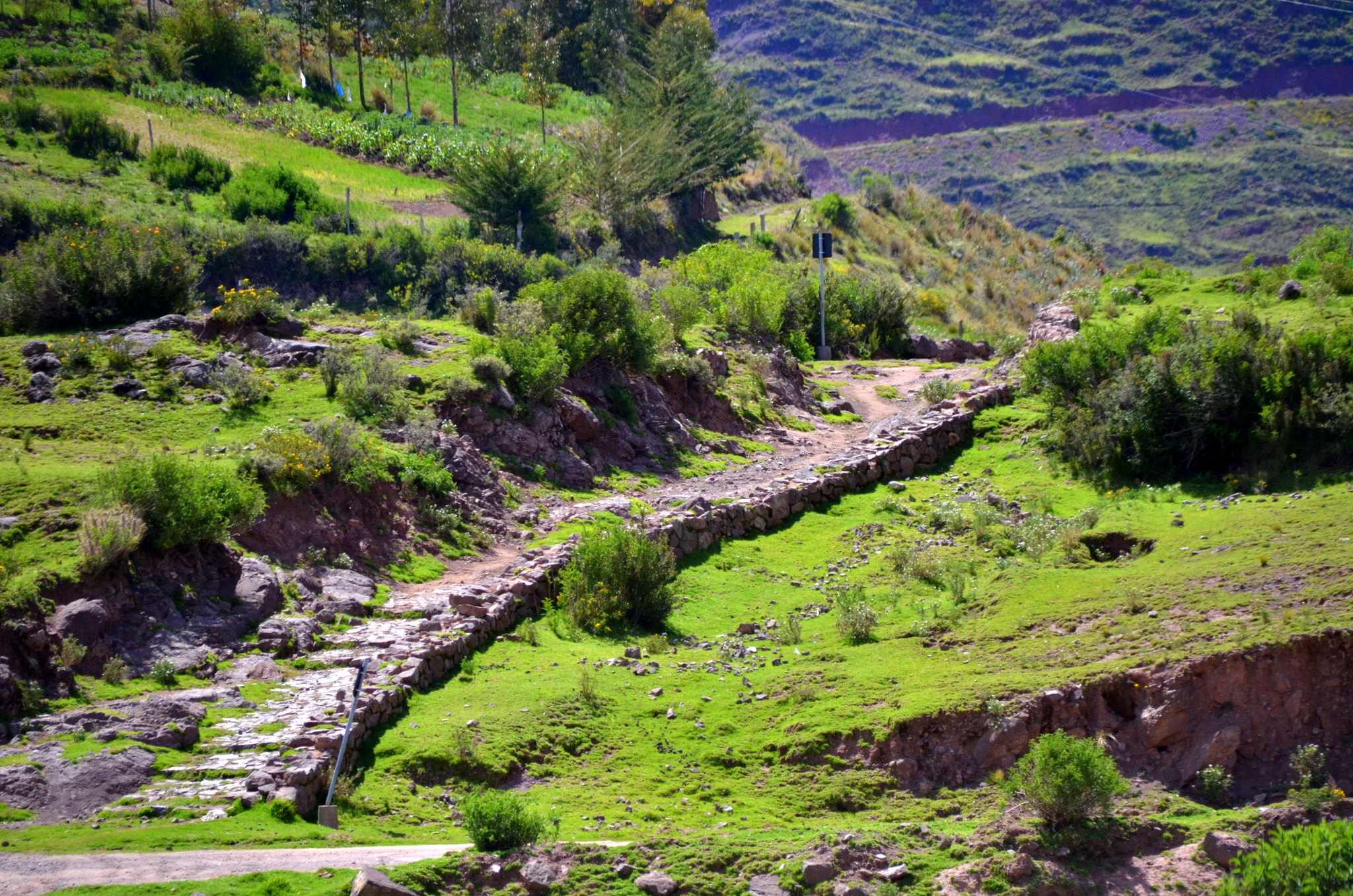
Luis had us look up to ridge of the nearby mountain to see a remaining section of the Inka Road there, a section of a vast network of roads. The road system (also known as Qhapaq Ñan meaning “royal road” in Quechua) was the most extensive and advanced transportation system in pre-Columbian South America. It was about 25,000 miles long and was composed of formal roads carefully planned, engineered, built, marked and maintained; paved where necessary, with stairways to gain elevation, bridges and accessory constructions such as retaining walls, and water drainage systems.
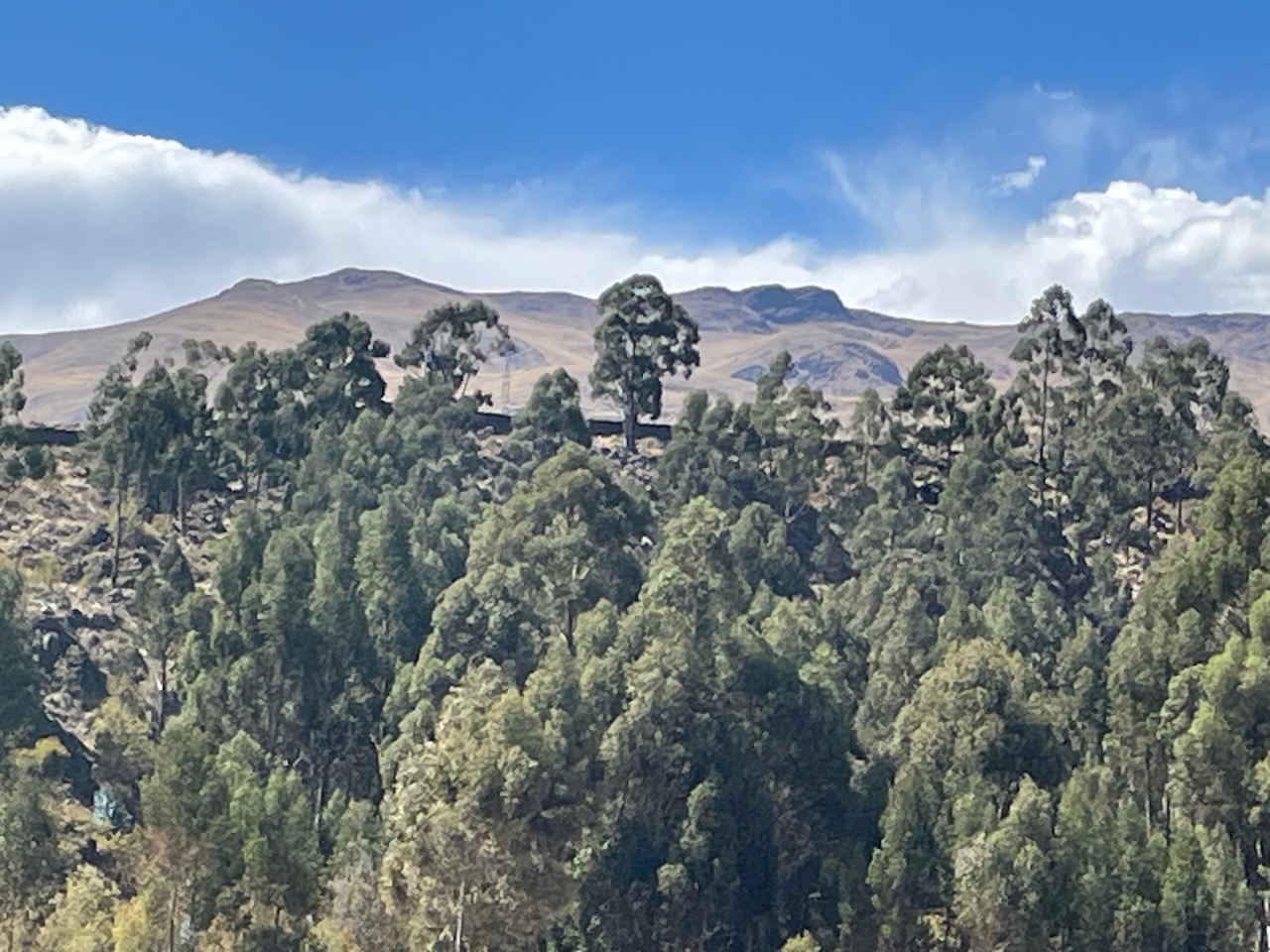
It was based on two north–south roads: one along the coast and the second and most important inland and up the mountains, both with numerous branches. It can be directly compared with the road network built during the Roman Empire, although the Inca Road system was built one thousand years later. The road system allowed for the transfer of information, goods, soldiers and persons, without the use of wheels, within the Inca Empire throughout a territory covering almost 770,000 square miles and inhabited by about 12 million people.
Luis spent some time discussing the importance of the road system as the temple site sits along the route Inka kings would take when traveling from Cusco to make a religious stop at the temple on their way to the Ausangate glacier. Situated at the mountain of the same name (the fifth highest mountain in Peru) according to the Andean worldview, Ausangate and the nearby lakes provide the masculine energy that fertilizes the Pachamama, or Mother Earth.
Every year, toward the north side of this mountain, the biggest and most important celebration of the Andean world takes place – the pilgrimage to the Sanctuary of the Lord of Qoyllur Rit’i. A festival in his name is celebrated at the end of May – beginning of June and continues for several days. Qoyllur Rit’i in Quechua means “Snow Star” and the attracts more than 10 thousand pilgrims every year from surrounding villages and from all other parts of the country, even from the neighboring countries.

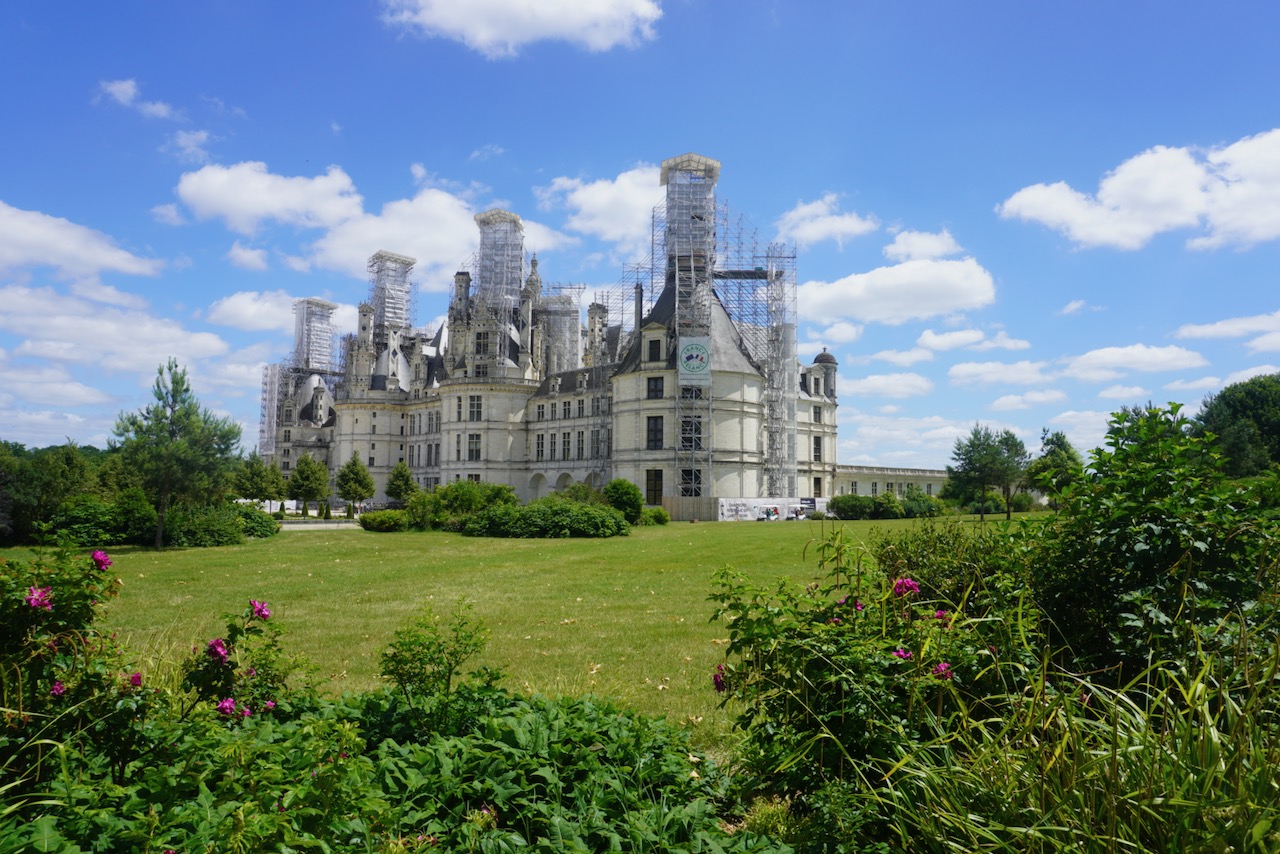
What I found interesting is that much like the chateau’s of the Loire that we visited in 2022, which were only used a couple of times a year, and in which the entire court of the owner would be transported there to furnish and operate the site, such was the case with Raqch’I, a stop by the royal Incan court on its way to the glacier, when all of the nobles, their families and servants, support staff, and soldiers made the trek as well and populated the place for a period of time before moving on.
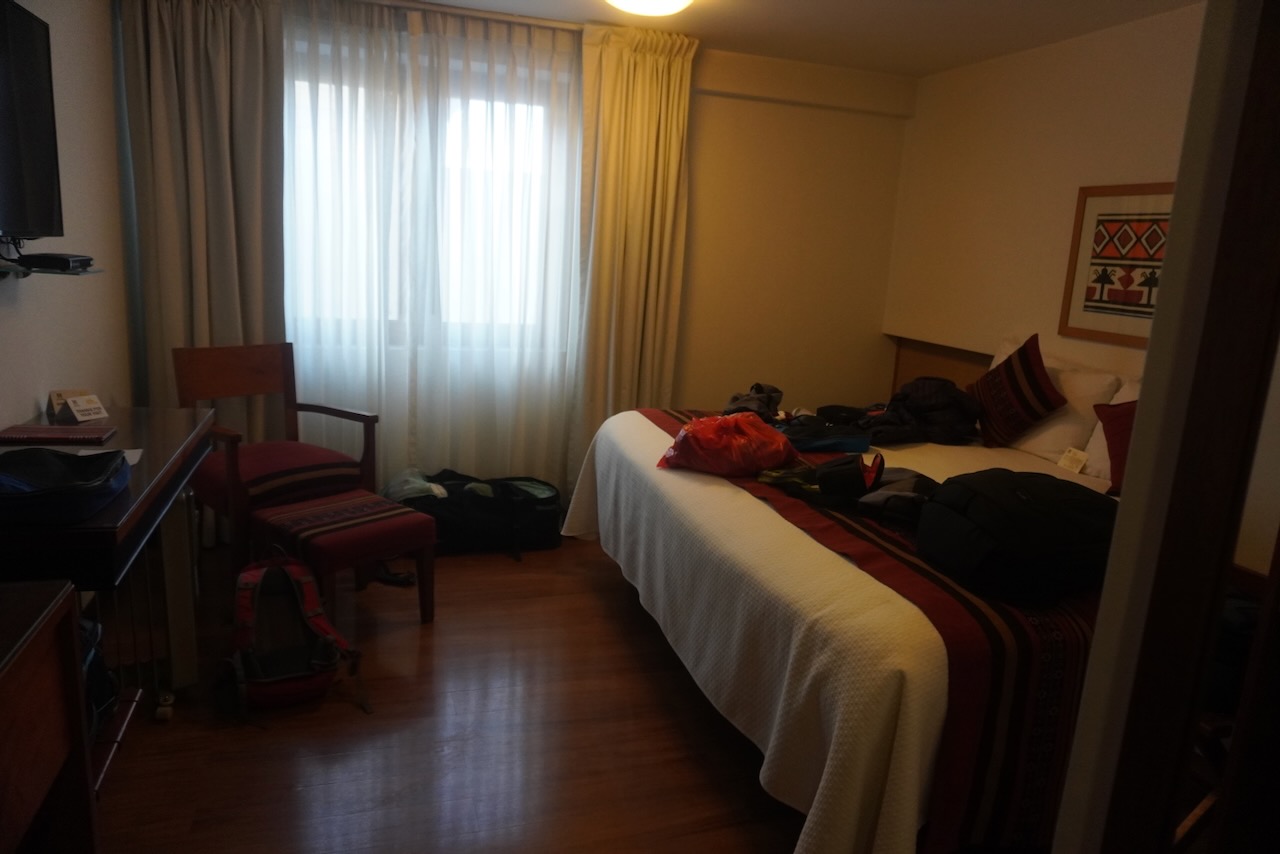
We wound our way back to the van and continued on to Cusco and the San Augustin Plaza Hotel, our lodging for the next two nights. Cusco, at an elevation of 11,200 feet, is South America’s oldest continuously inhabited city and was the home of the Inca for two centuries before the Spanish built their first capital there. It is the seventh most populous in Peru with a population of 428,450 in 2017.
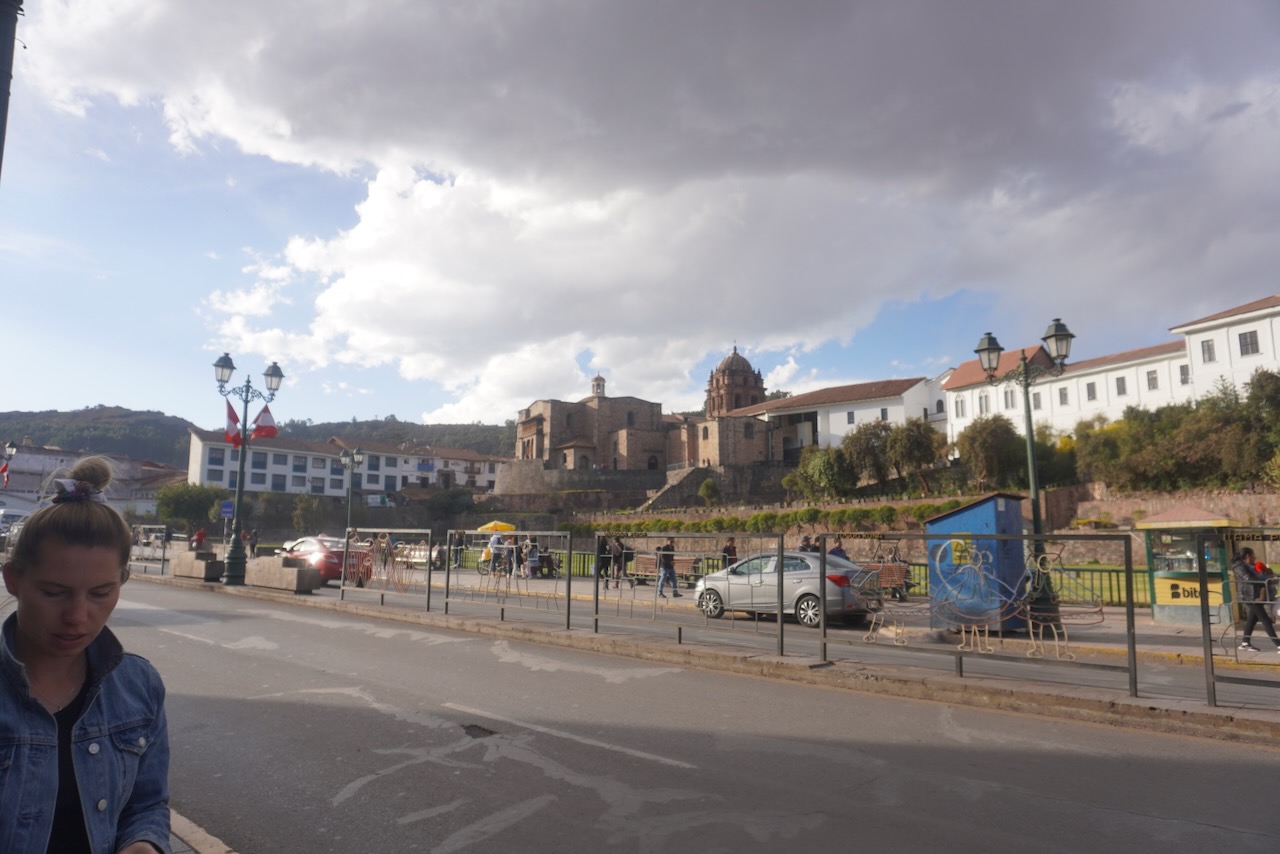
The city was the capital of the Inca Empire from the 13th century until the 16th-century Spanish conquest. In 1983, Cusco was declared a World Heritage Site by UNESCO with the title “City of Cuzco” and it has become a major tourist destination, hosting nearly 2 million visitors a year. We hit our rooms and then reassembled in the lobby for a short walking tour in the area around the hotel. We’ll cover that and more in posts to come.
Links
Raqch’i Archeological Site: https://www.tierrasvivas.com/en/travel-blog/raqchi-archaeological-site
San Augustin Plaza Hotel: https://www.sanagustinplazacusco.com/es/?partner=7939utm_source=google&utm_medium=organic&utm_campaign=MyBusiness&utm
Discover more from 3jmann
Subscribe to get the latest posts sent to your email.


 3jmann