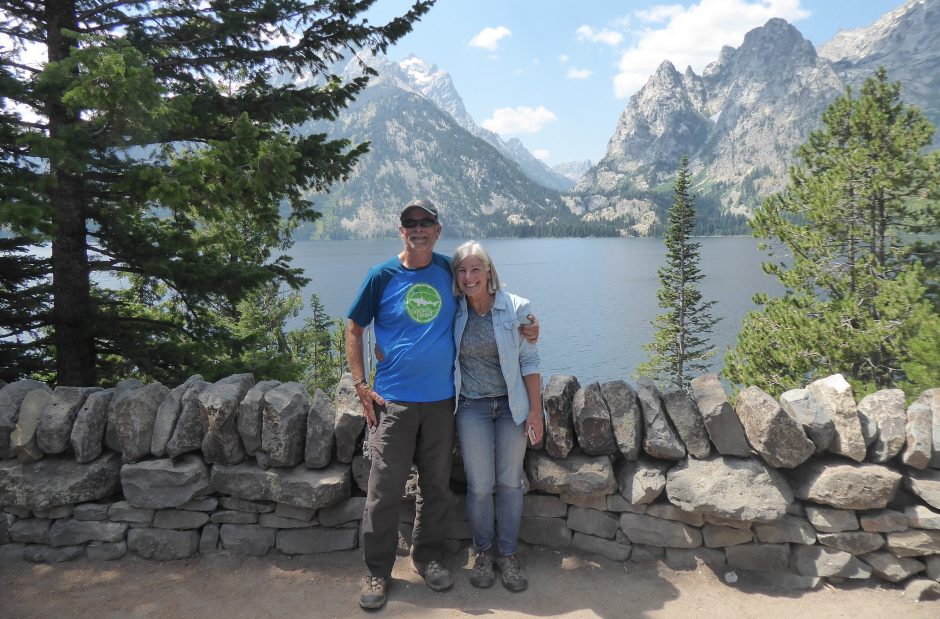
July 24
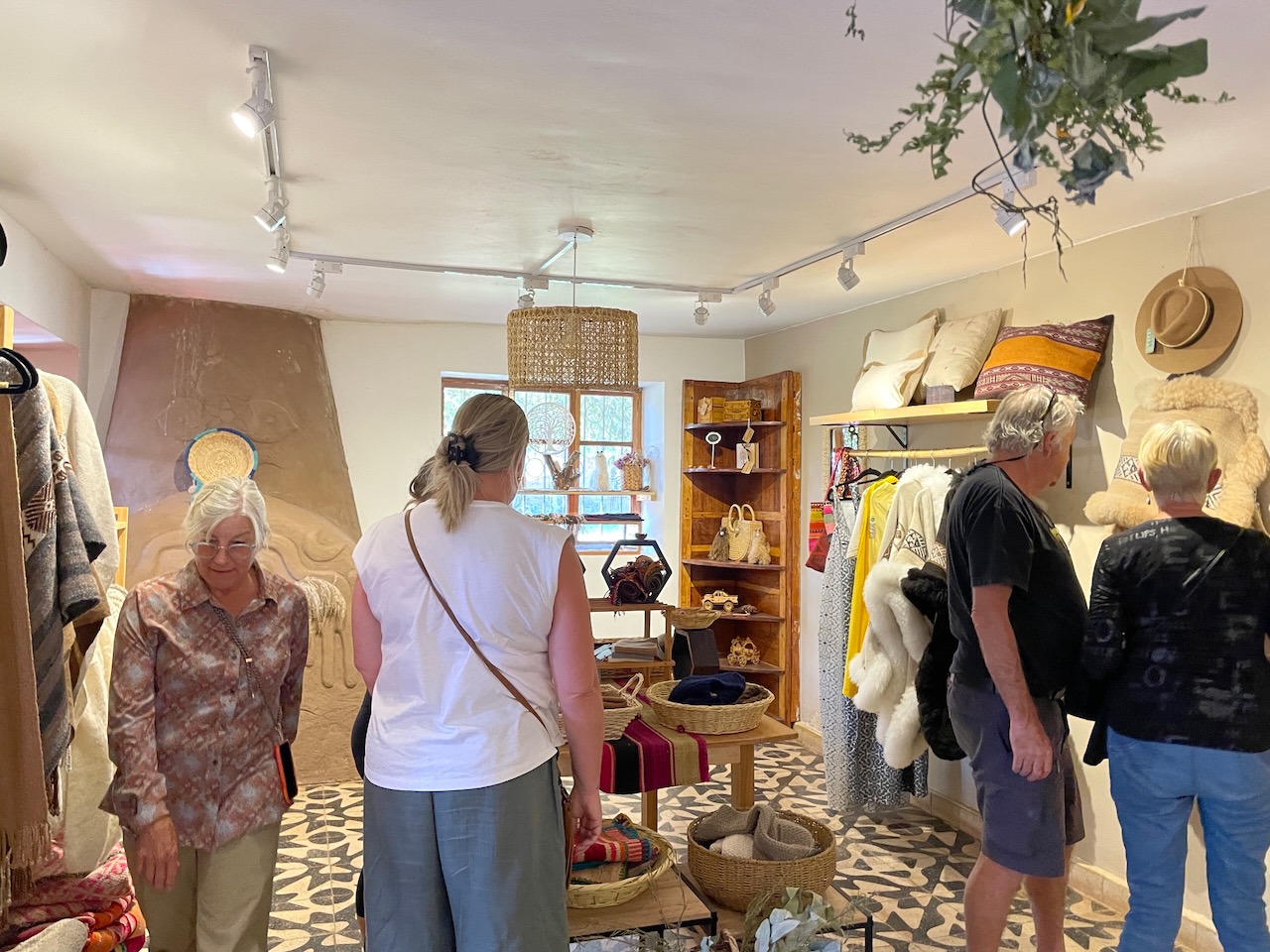
Arriving in Urubamba, we parked on one of the main streets, walked into a walled lot and found ourselves ready to enjoy a break at AMA Sacred Valley, a local organization that provides training and job opportunities to the vulnerable populations of the Sacred Valley. Its boutique sells traditional (alpaca) handicrafts made by fifty Andean female weavers from the communities of Rumira, Patacancha, Pacchanta, Umuto and Pinchimuro.
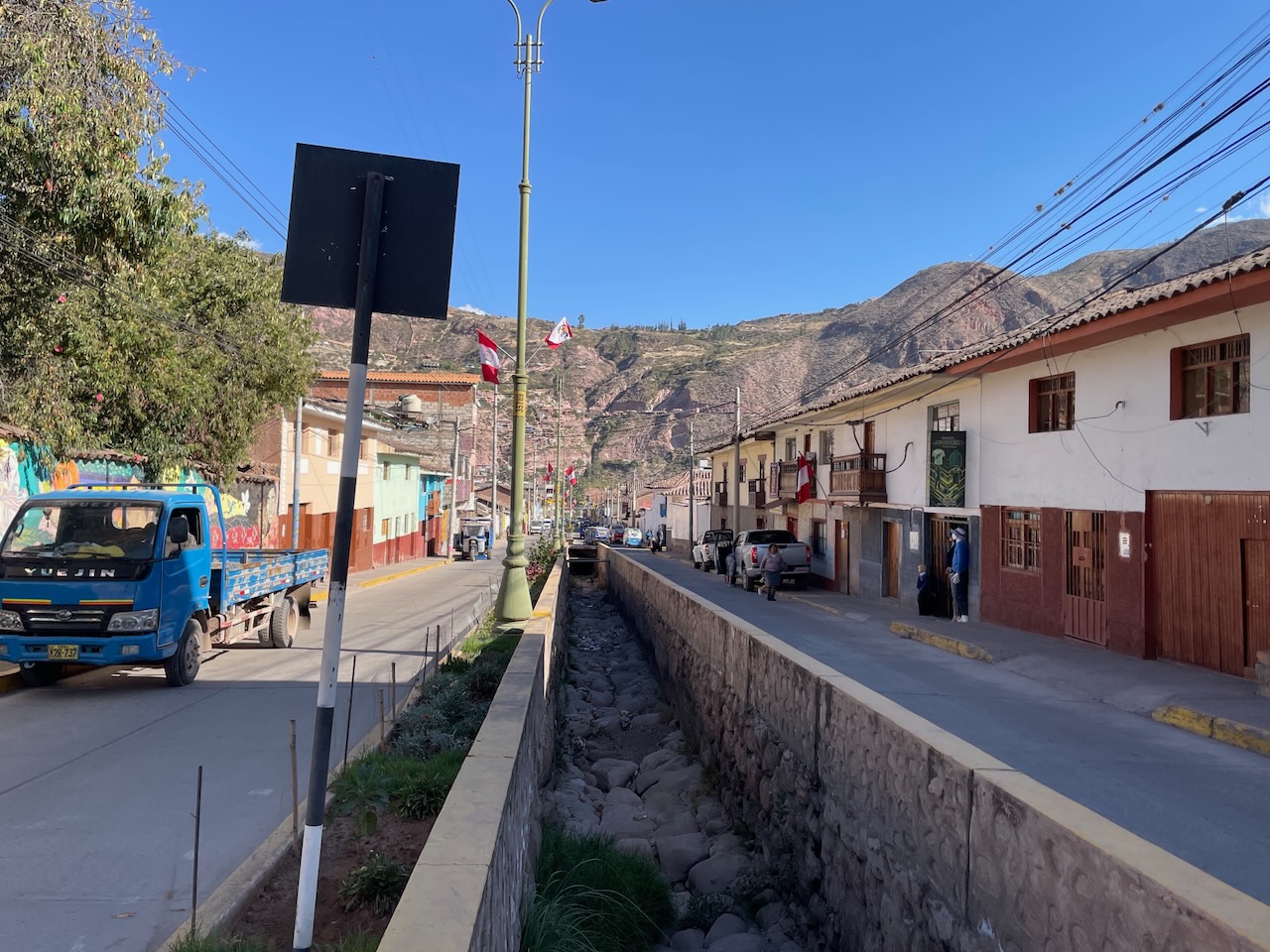
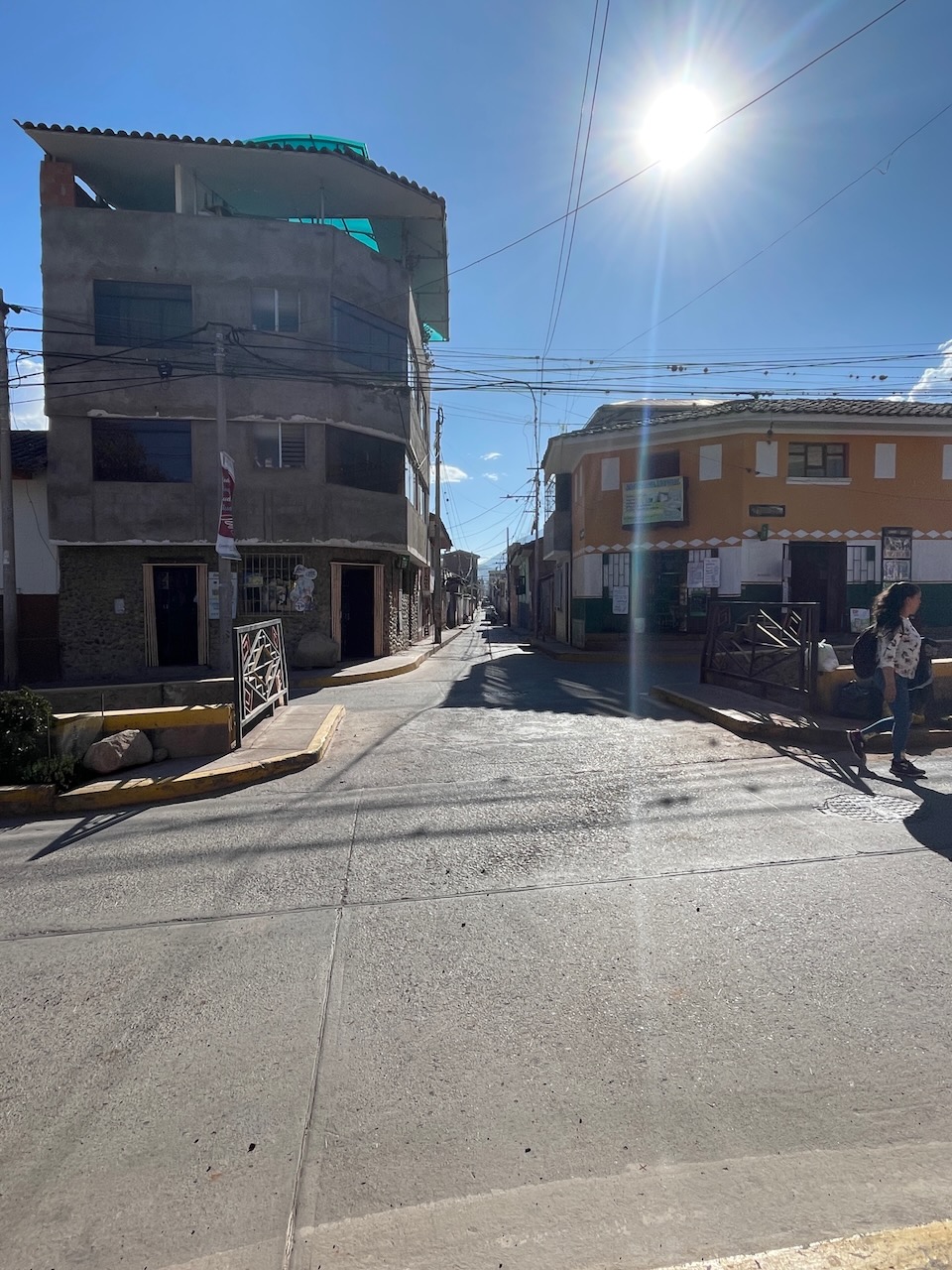
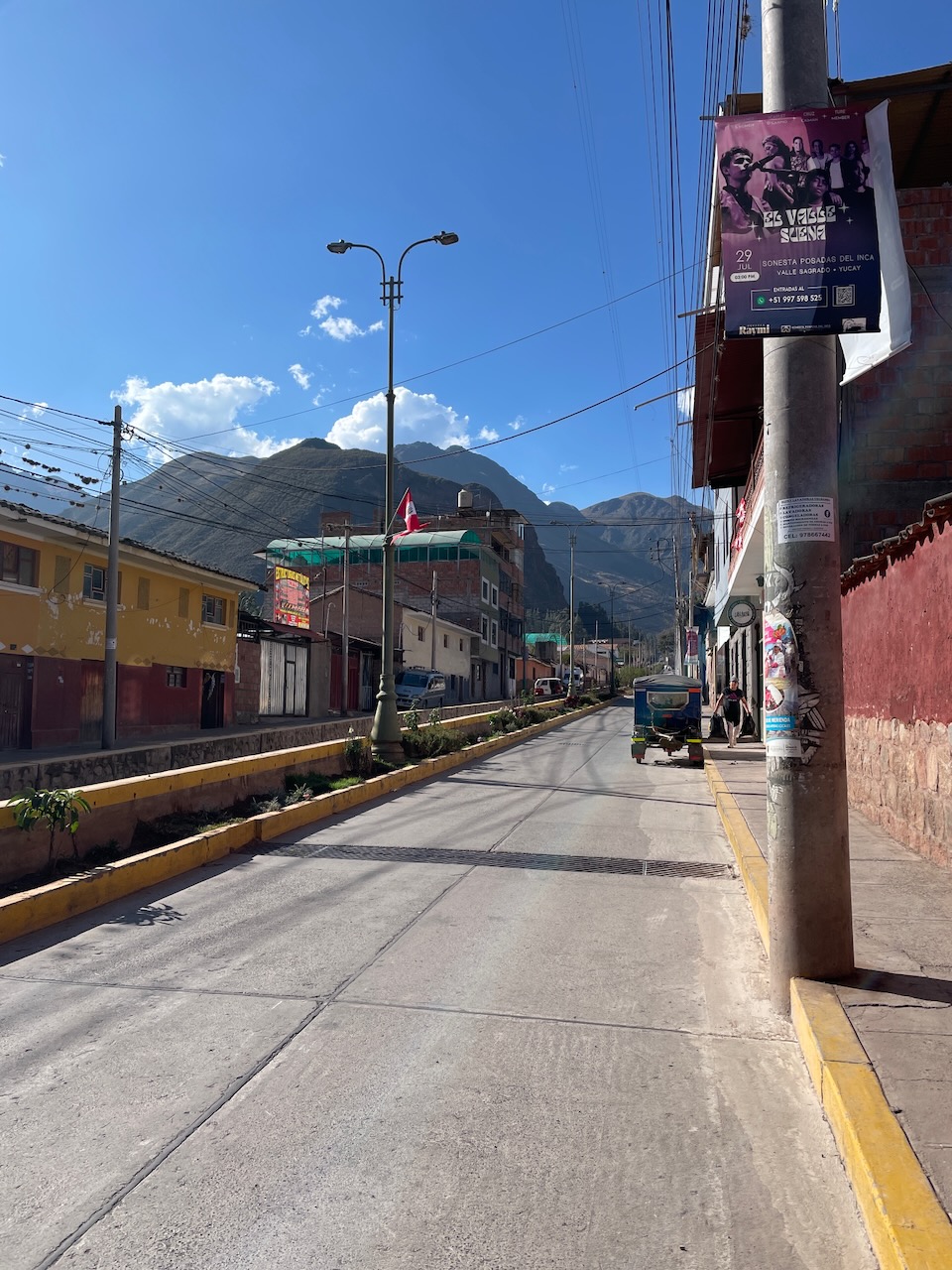
In their restaurant, single mothers from the Sacred Valley of the Incas work in the kitchen and cook to prepare locally sourced, homemade, and delicious food for our customers. All food is bought from the market in the center of Urubamba, where local farmers and producers sell their goods. And, working with high-altitude Andean communities, AMA travels to these communities with guests so they can experience the entire project firsthand and participate in an unforgettable full day experience.
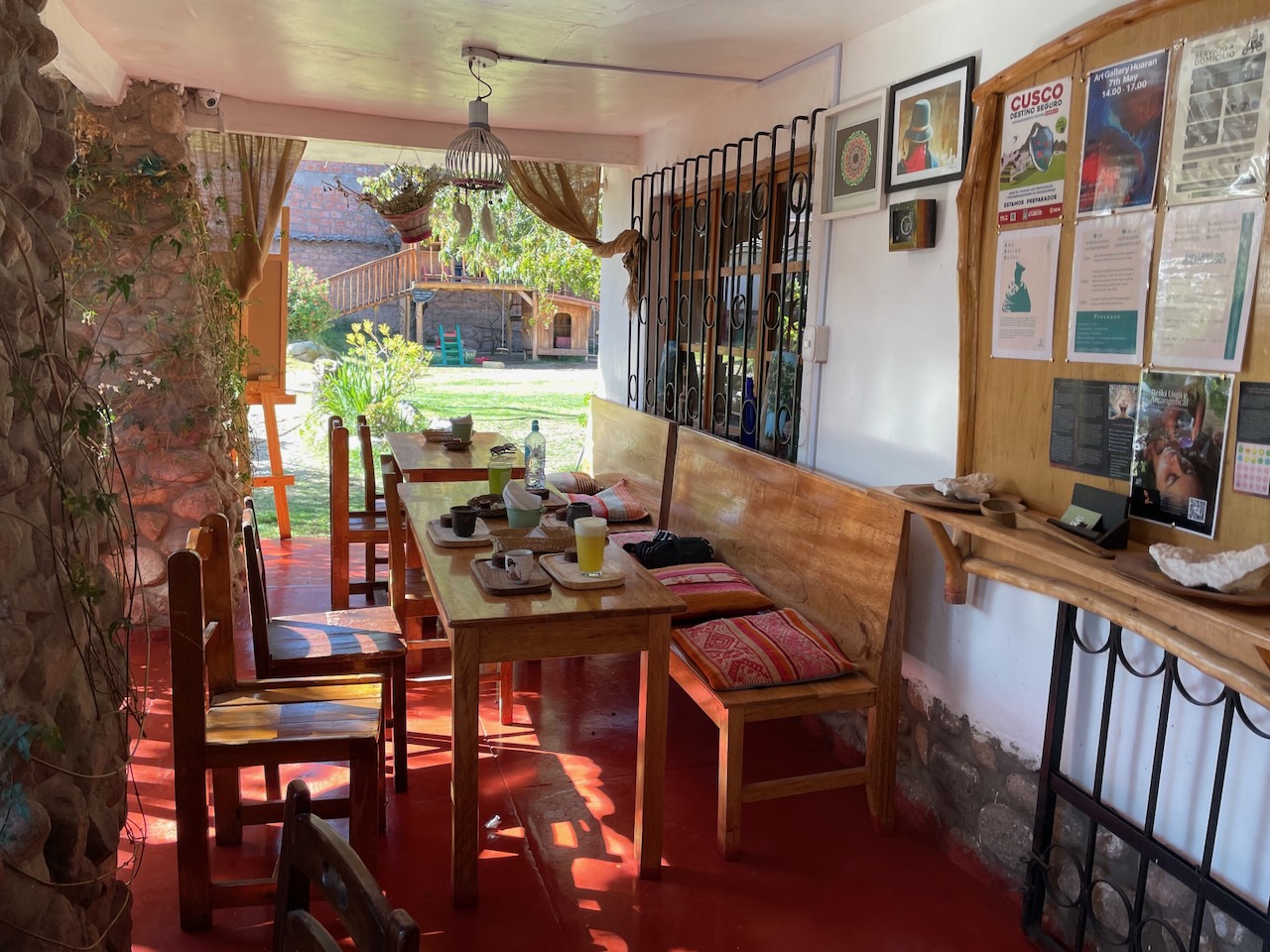
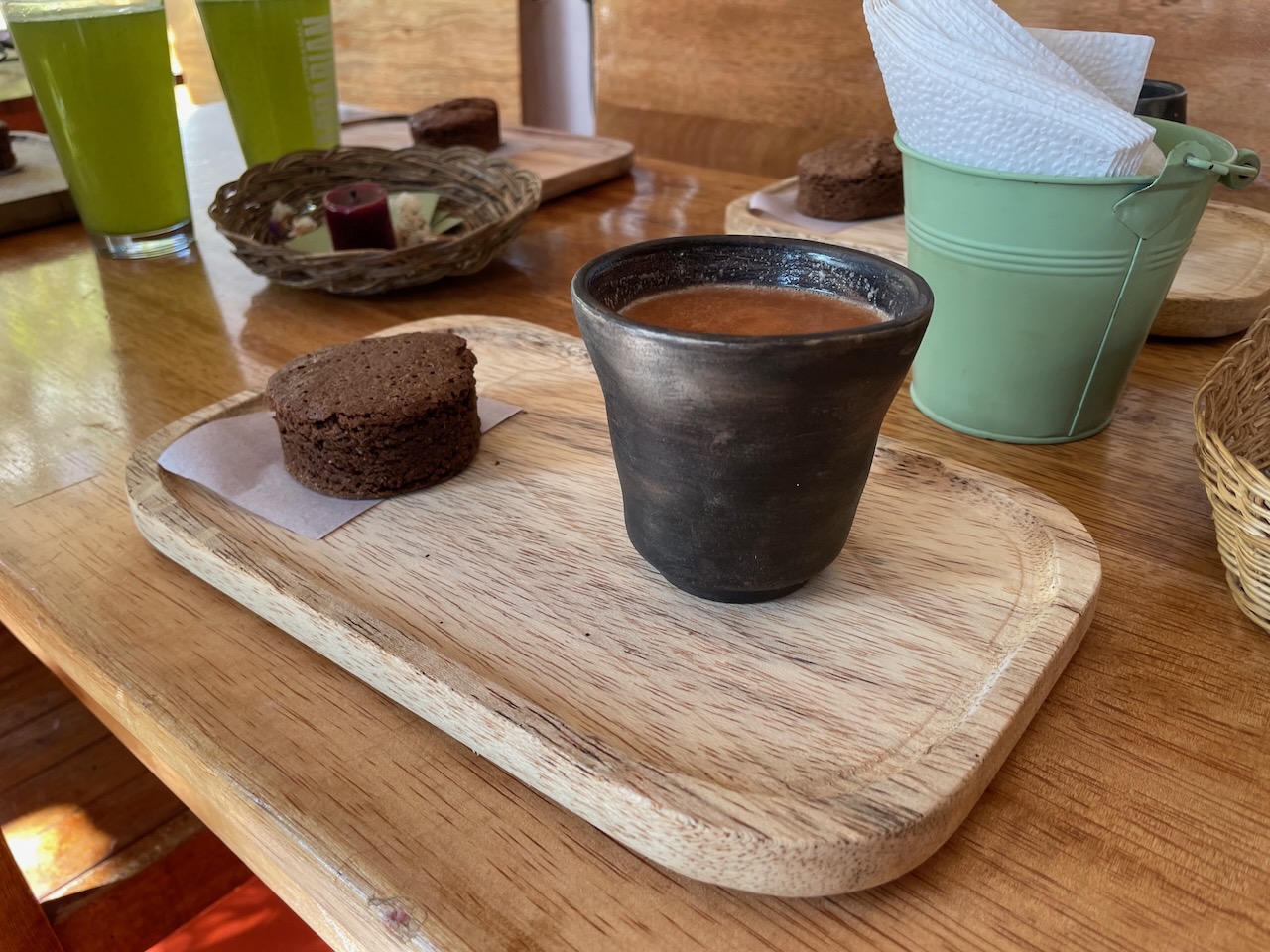
A coffee for me and hot chocolate for Joanna We enjoyed along with a delicious chocolate brownie apiece while the owner of the AMA told us about the organization, its mission and how it goes about accomplishing it. It was yet another example of how Intrepid introduces us to those parts of the country you are visiting where people are trying to make a difference in their communities.

Back in the van we continued to our final tour spot for the day, Ollantaytambo, an Inca archaeological site. It is located at an altitude of 9,160 ft above sea level and during the Inca Empire, it was the royal estate of Emperor Pachacuti, who conquered the region, and built the town and a ceremonial center. At the time of the Spanish conquest of Peru, it served as a stronghold for Manco Inca Yupanqui, leader of the Inca resistance. It is now an important tourist attraction on account of its Inca ruins and its location en route to one of the most common starting points for the four-day, three-night hike known as the Inca Trail to Machu Picchu.
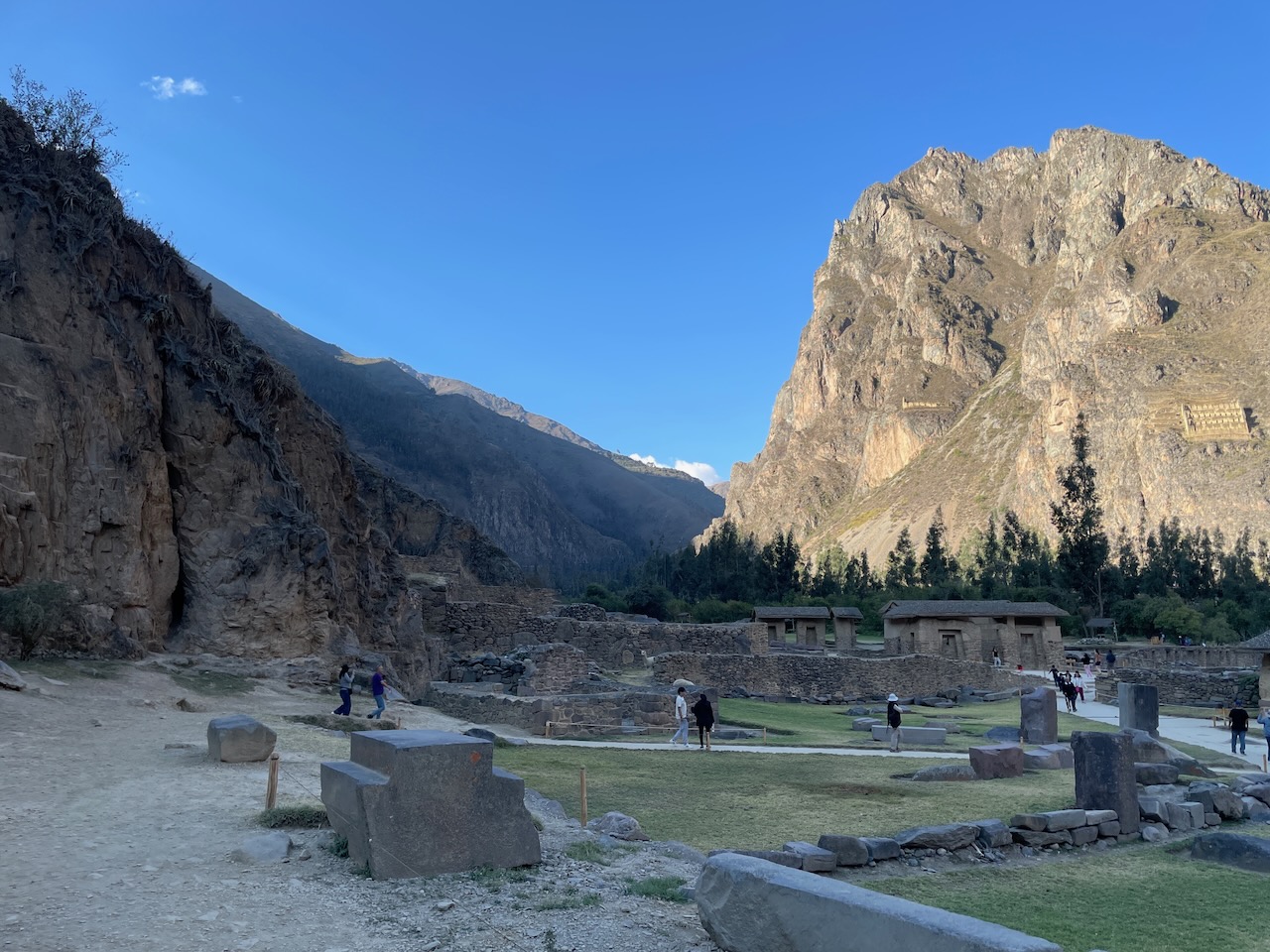
The main attraction at the site is Araqhama, a steep hill on which the Incas built a ceremonial center. The part of the hill facing the town is occupied by the terraces of Pumatallis, framed on both flanks by rock outcrops. Due to the impressive character of these terraces, the Temple Hill is commonly known as the Fortress, but this is a misnomer, as the primary functions of this site were religious. The main access to the ceremonial center is a series of stairways that climb to the top of the terrace complex. Given time constraints and the steepness of the hill, none of our group felt inclined to ascend to the top.
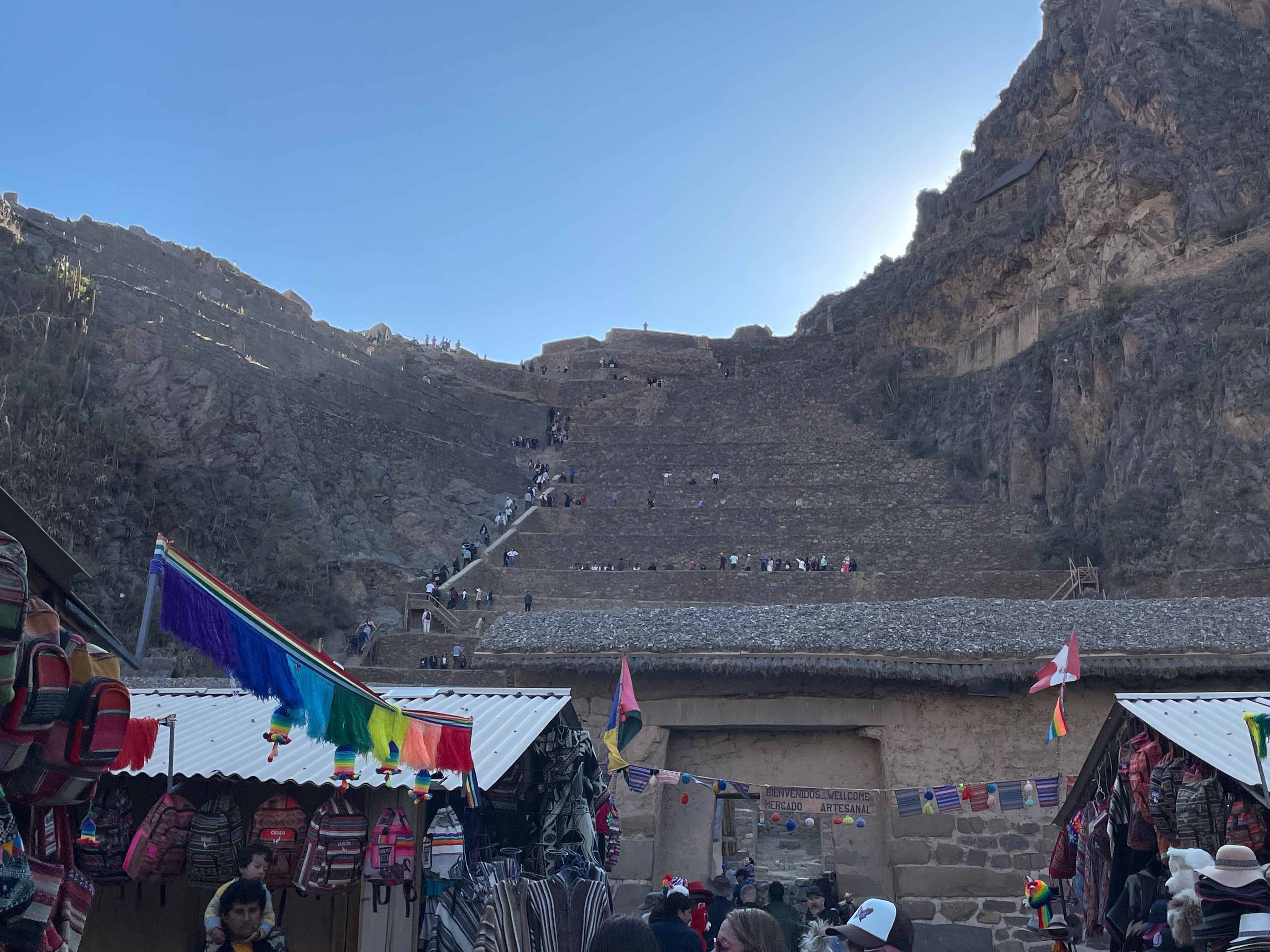
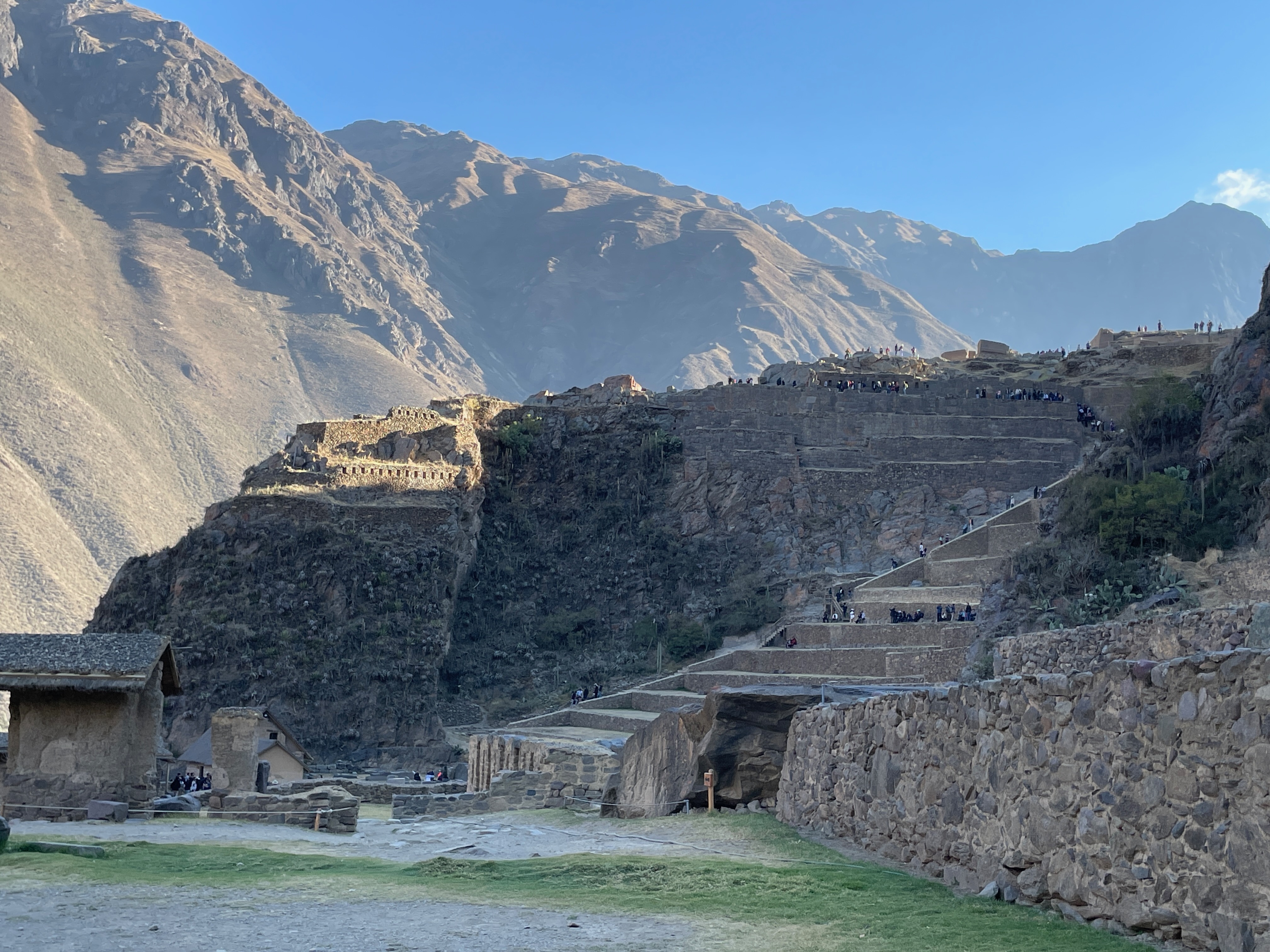
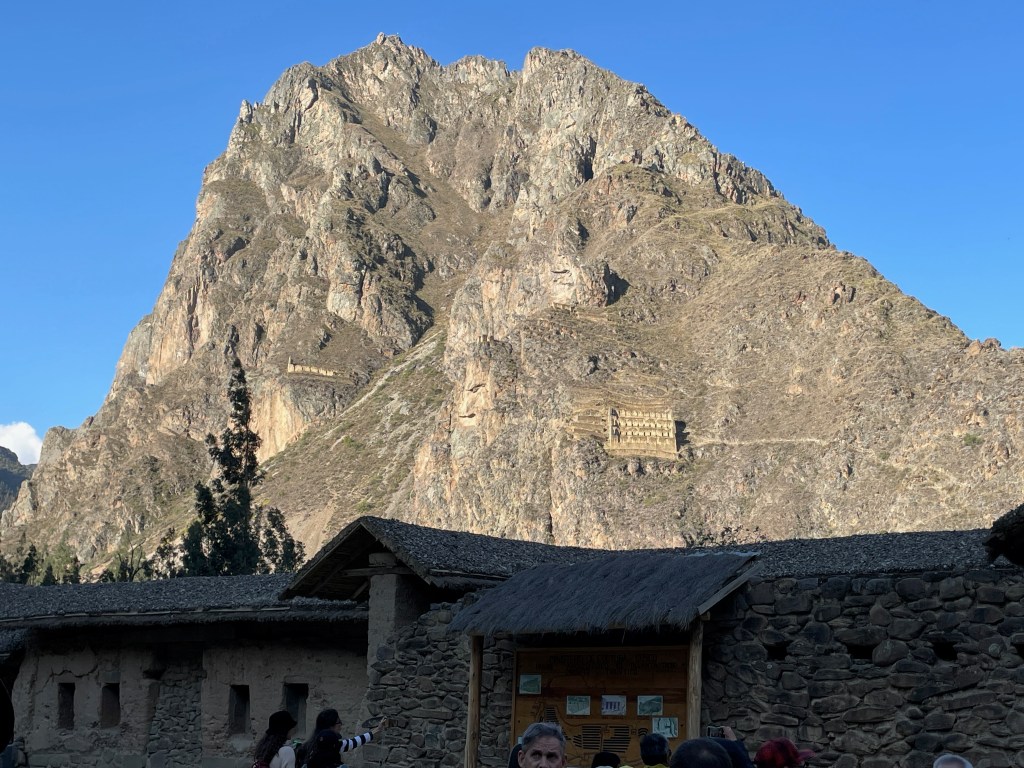
The Incas built several storehouses out of fieldstones on the hills surrounding Ollantaytambo. Their location at high altitudes, where more wind and lower temperatures occur, defended their contents against decay. To enhance this effect, they feature ventilation systems and are thought to have been used to store the production of the agricultural terraces built around the site. Grain would be poured in the windows on the uphill side of each building, then emptied out through the downhill side window.
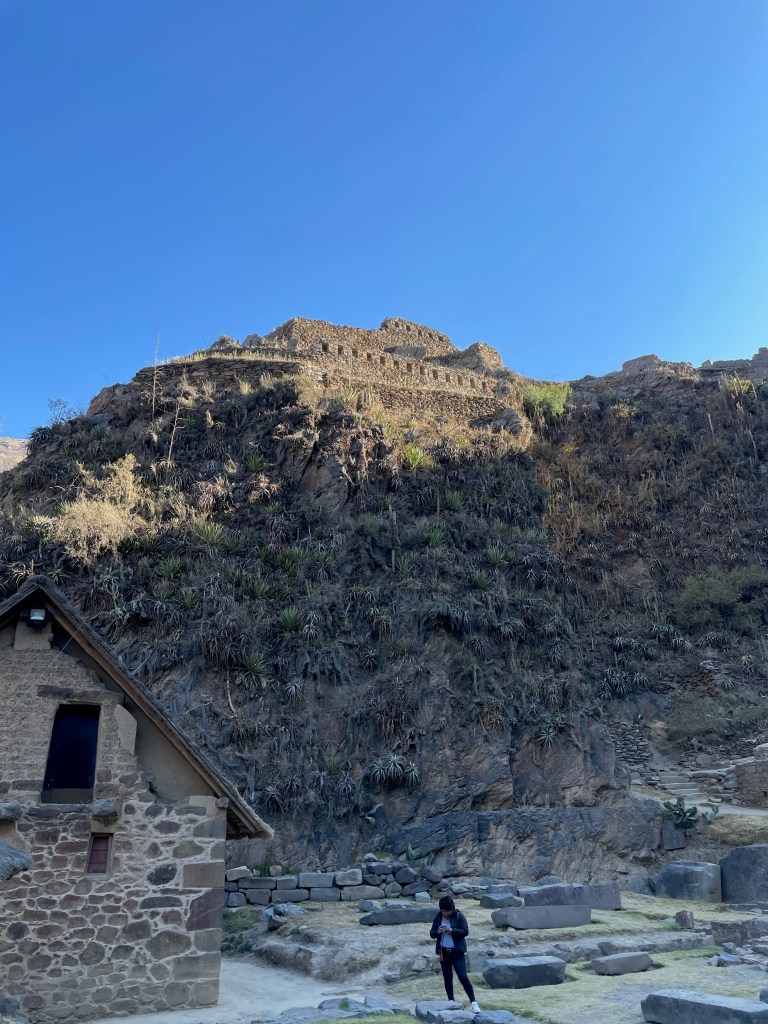
During the Spanish conquest of Peru, Ollantaytambo served as a temporary capital for Manco Inca, leader of the native resistance against the conquistadors. In 1536, on the plain of Mascabamba, near Ollantaytambo, Manco Inca defeated a Spanish expedition, blocking their advance from a set of high terraces and flooding the plain. Despite his victory, however, Manco Inca did not consider his position tenable, so the following year, he withdrew to the heavily forested site of Vilcabamba, where he established the Neo-Inca State.
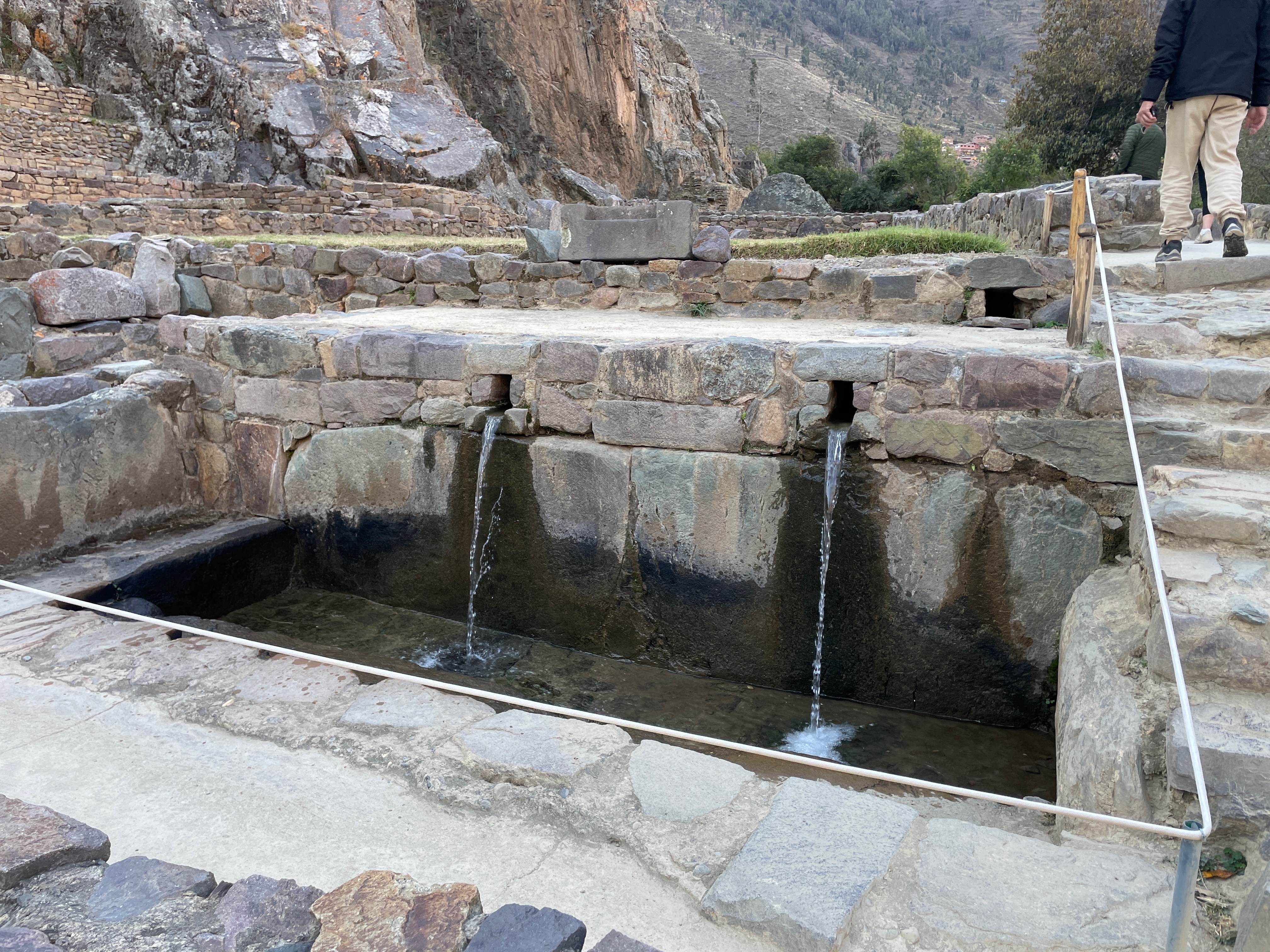
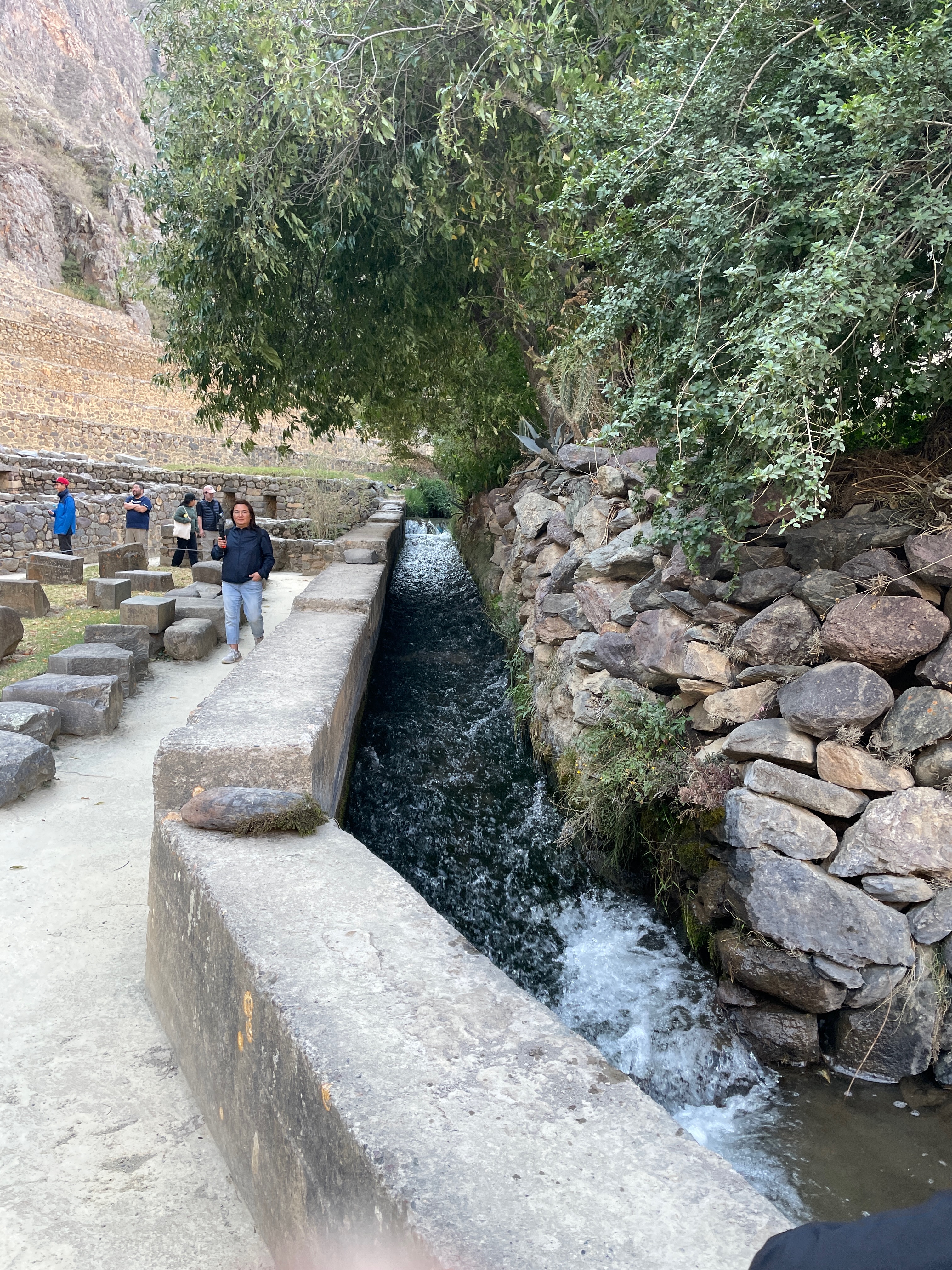
One walks away from the places full of awe, thinking about the accomplishment it portrays, much like visiting the monuments of Egypt, although these are constructed long after those. Still, the fact of their being is not too be diminished, much like the great cathedrals of Europe, testimonials to the egos of the powerful and to the gods they worshipped, often including themselves.
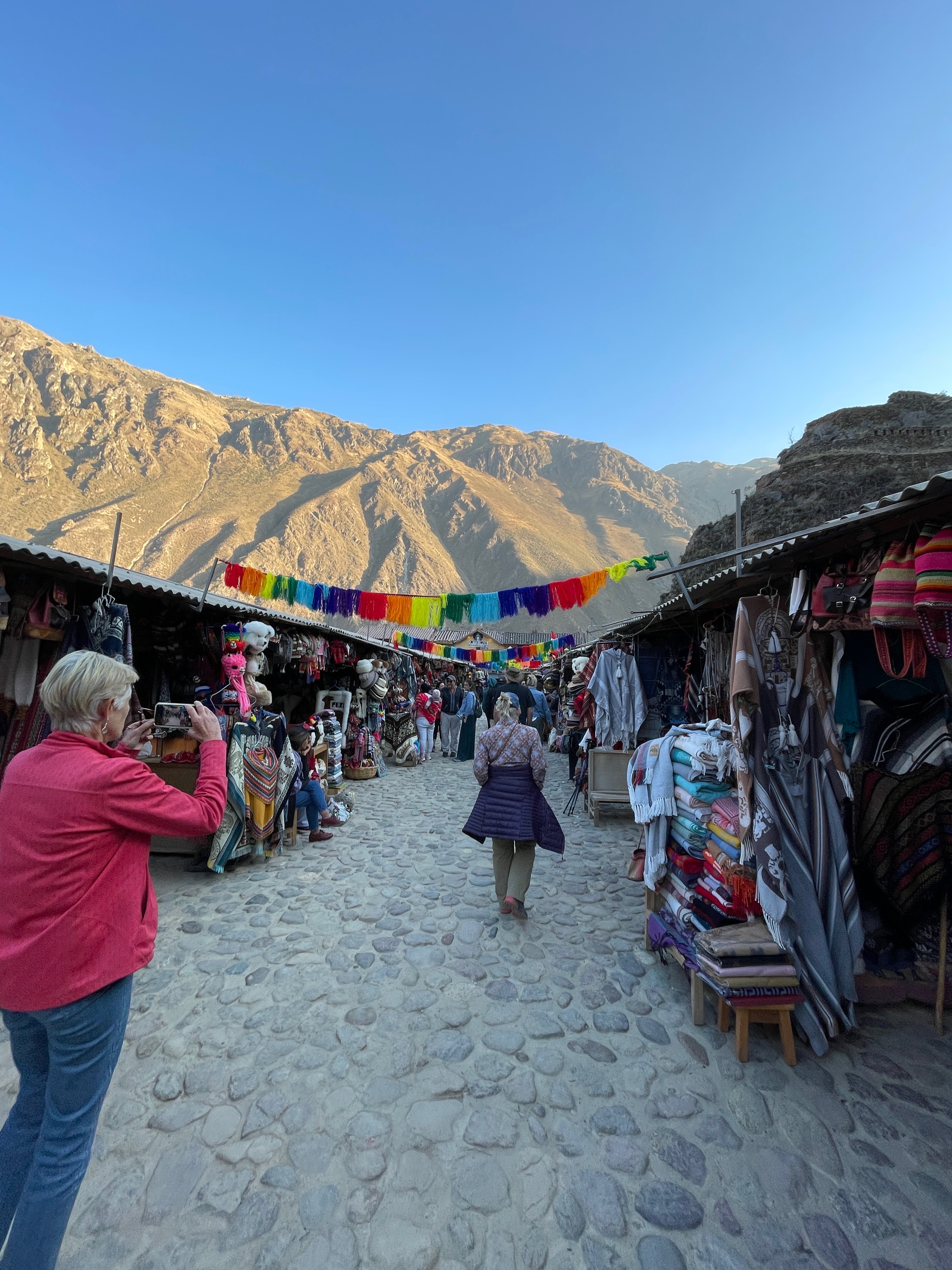
We finished up at the site and boarded the van after walking through the ever-typical crowded marketplace of tourist booths, eventually landing at our, Hotel Pakaritampu, our lodging for the night. This was another fantastic property, located within walking distance of the train station that would take us the next day on our journey to Machu Picchu.
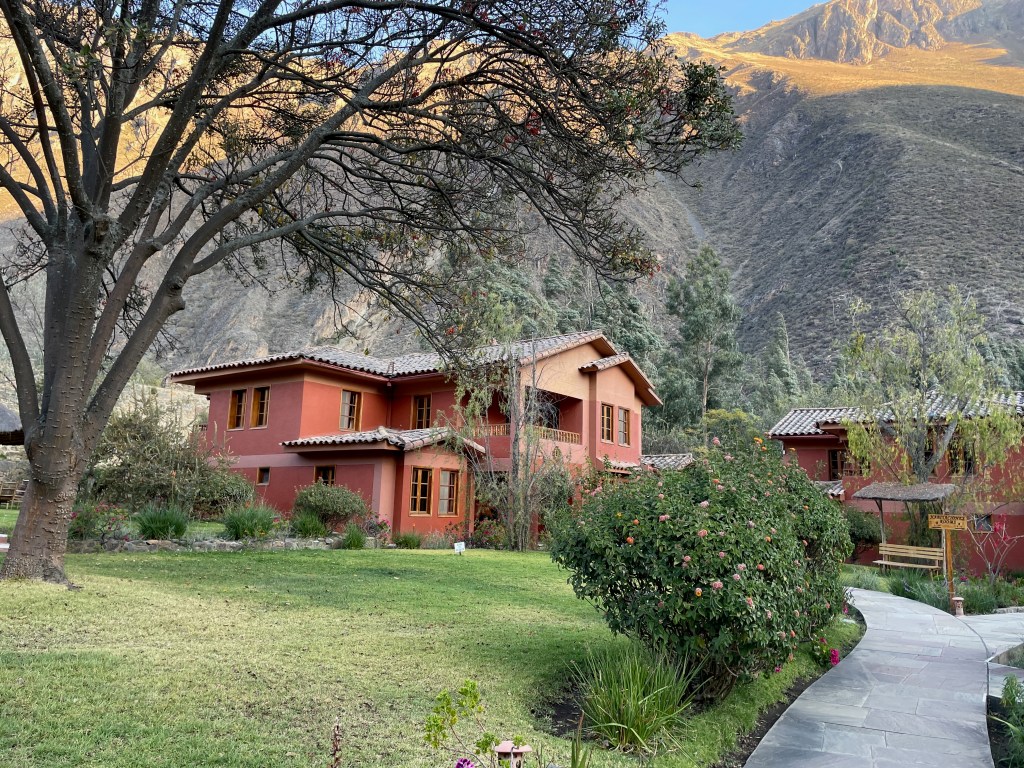
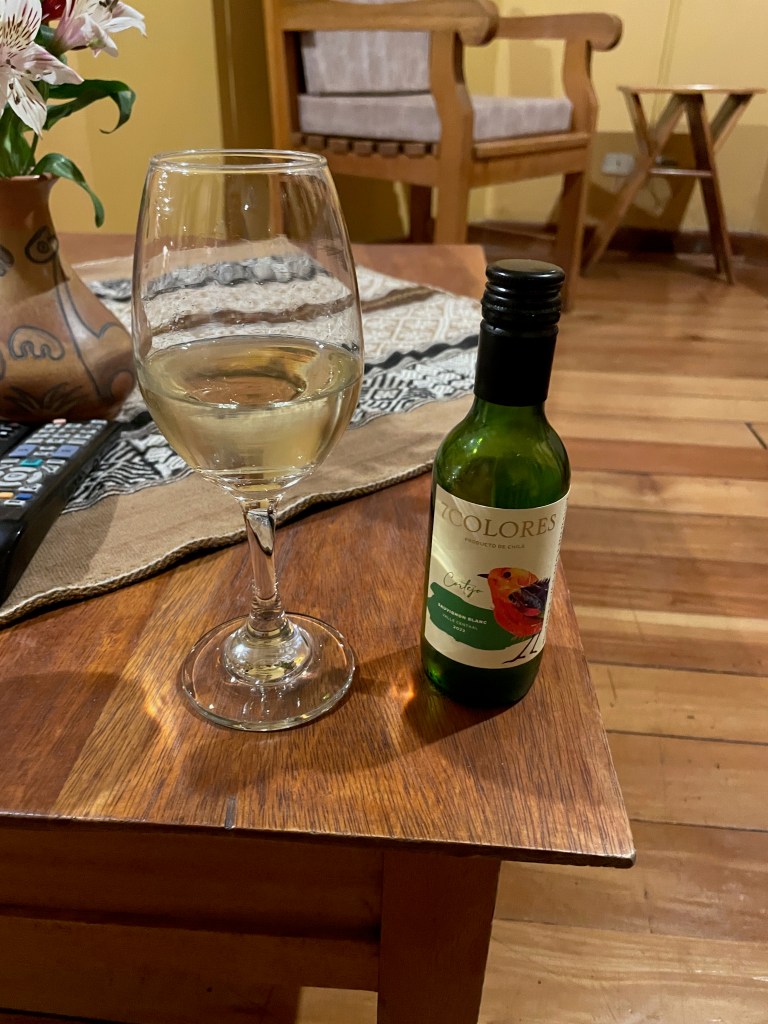
Comprised of a series of two-story bungalows spread out through lush grounds, we located our large room upstairs and with some time to kill until dinner, procured a small bottle of wine to tide us over until it was time to eat. Dinner would follow, and although I can’t recall what it was we ate that night, I do remember it as being as good as any we had enjoyed. Bedtime came early that as tomorrow would be a big day, with Machu Picchu the goal. We shall see you then.
Links
AMA Sacred Valley: https://amasacredvalley.com/
Ollantaytambo: https://www.theonlyperuguide.com/peru-guide/the-sacred-valley/highlights/ollantaytambo-ruins/
Hotel Pakaritampu: https://pakaritampu.com/
Discover more from 3jmann
Subscribe to get the latest posts sent to your email.


 3jmann