July 25-26
The four of us (Luis, Beppie and Ian) soon arrived at the entrance to the grounds, cleared security and began to wind up our way upward through the terraced landscape until we reached a high ground overlooking the entire complex. It was steep going and at this altitude not as easy as one might anticipate, even though we had been conditioned to it over the course of the last week or so.

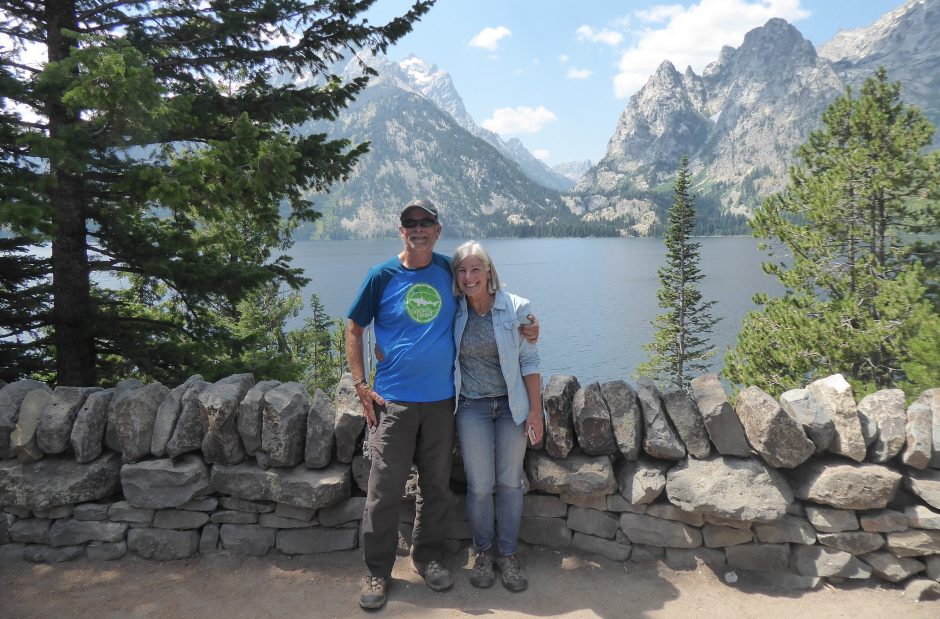
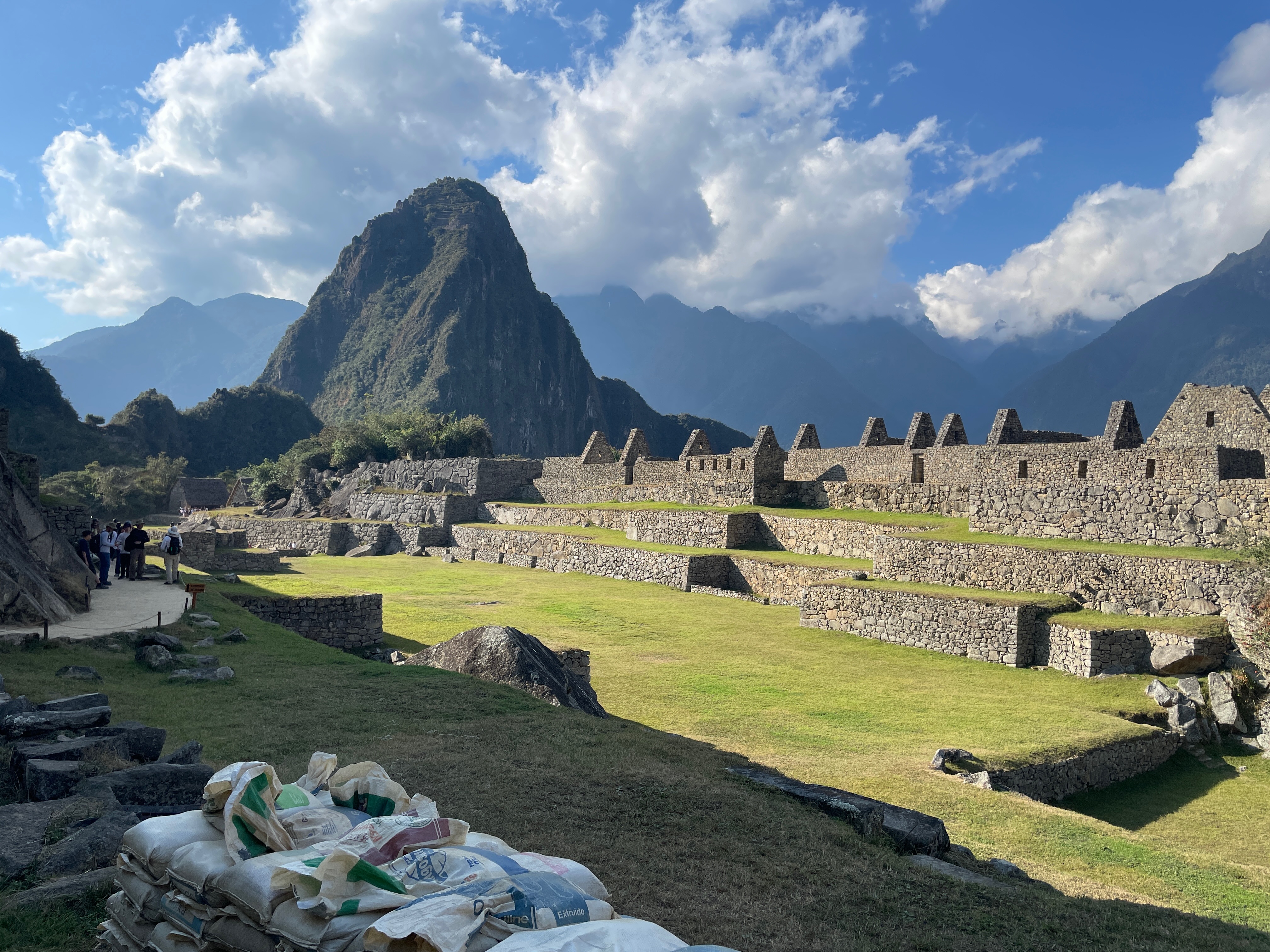
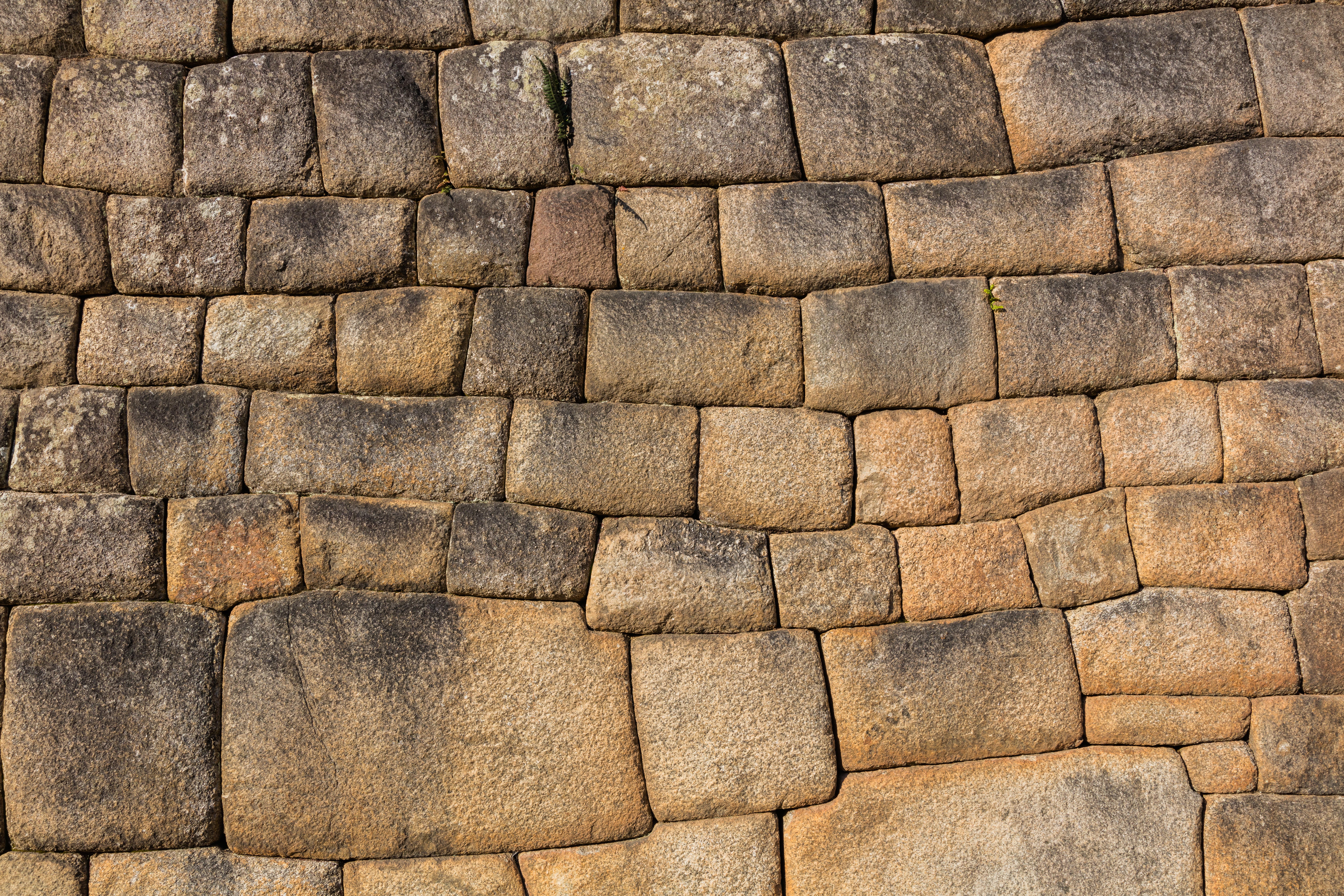
After reaching the summit of our climb, we began to descend to a large plateau, stopping to take a picture of each of us posed with Machu Picchu in the background. Then we sat down while Luis discussed his knowledge of the site, its construction and its possible use. The central buildings here use the classical Inca architectural style of polished dry-stone walls of regular shape. The Incas were masters of this technique, called ashlar, in which blocks of stone are cut to fit together tightly without mortar.
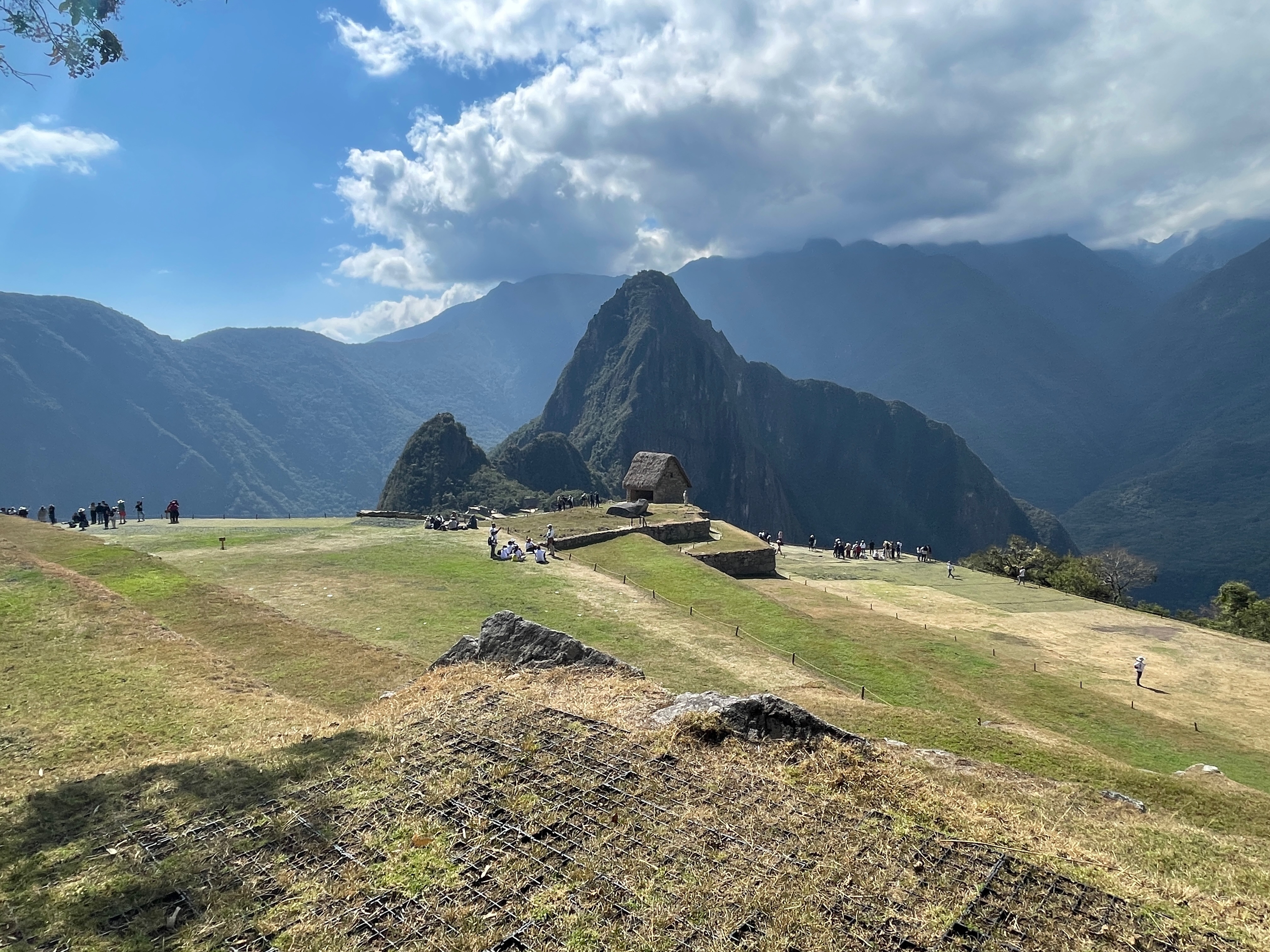
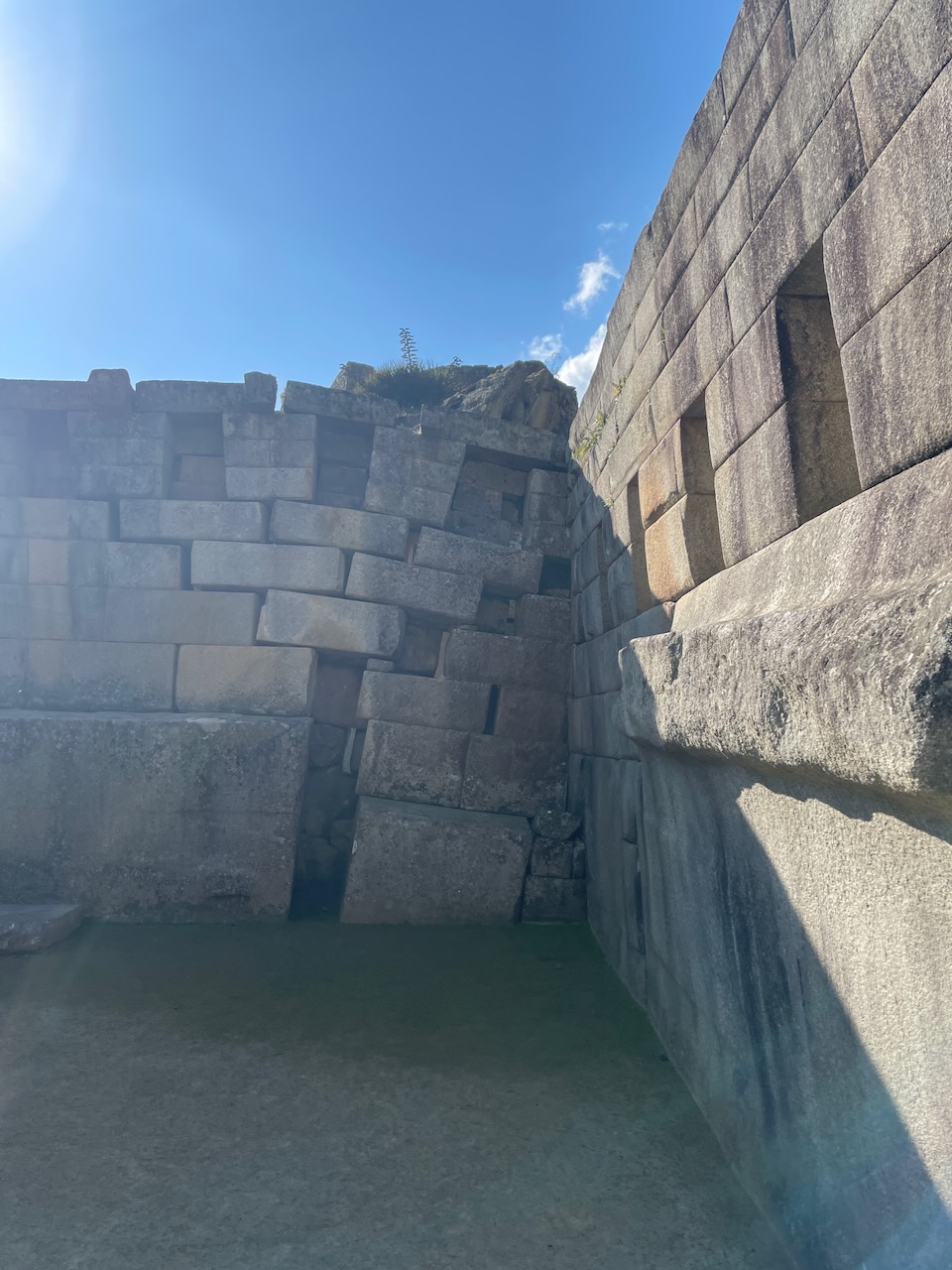
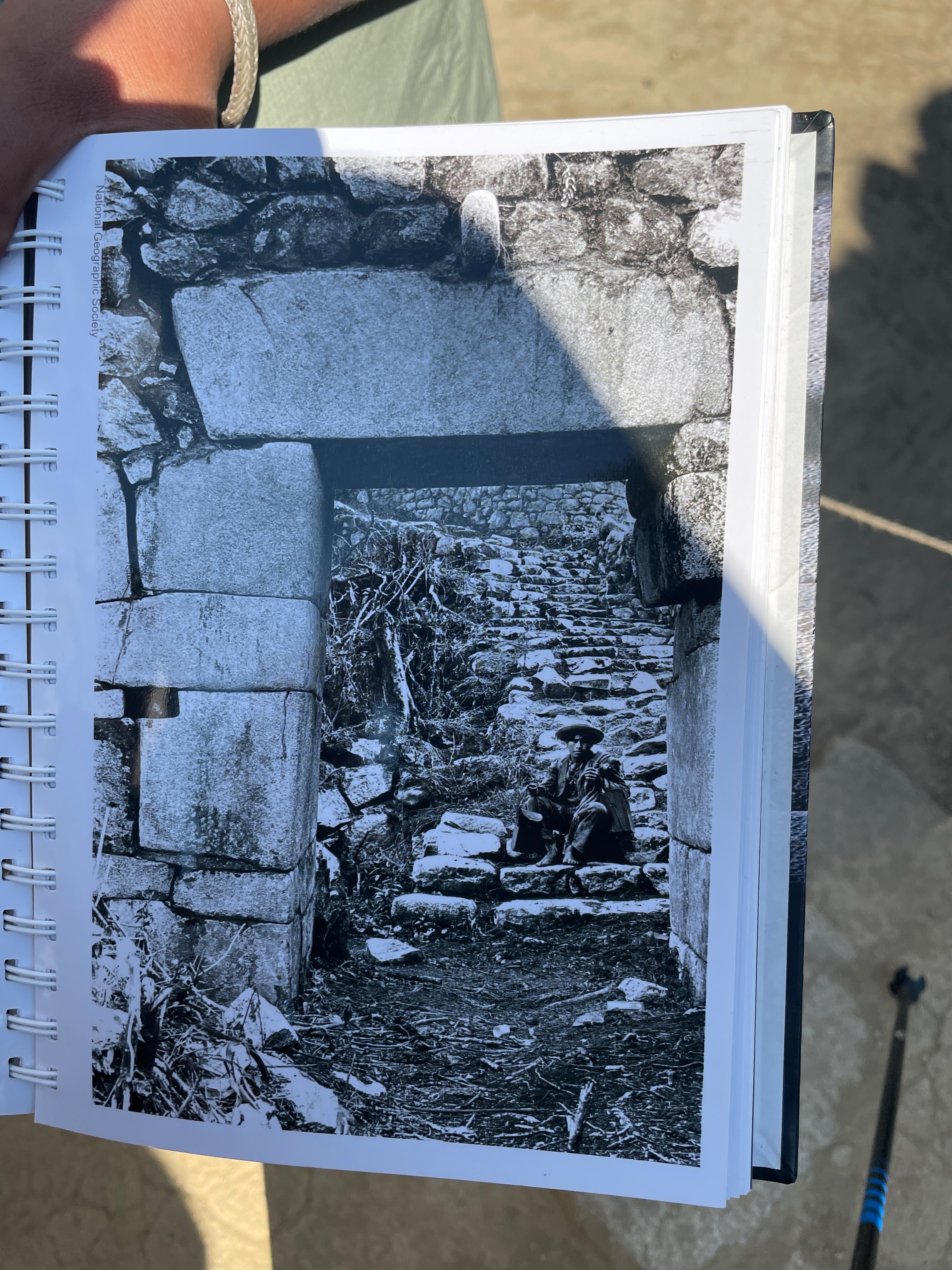
The site itself may have been intentionally built on fault lines to afford better drainage and a ready supply of fractured stone. The section of the mountain where Machu Picchu was built provided various challenges that the Incas solved with local materials. One issue was the seismic activity due to two fault lines. It made mortar and similar building methods nearly useless. Instead, the Inca mined stones from the quarry at the site, lined them up and shaped them to fit together perfectly, stabilizing the structures. Inca walls have many stabilizing features: doors and windows are trapezoidal, narrowing from bottom to top; corners usually are rounded; inside corners often incline slightly into the rooms, and outside corners were often tied together by “L”-shaped blocks; walls are offset slightly from row to row rather than rising straight from bottom to top.
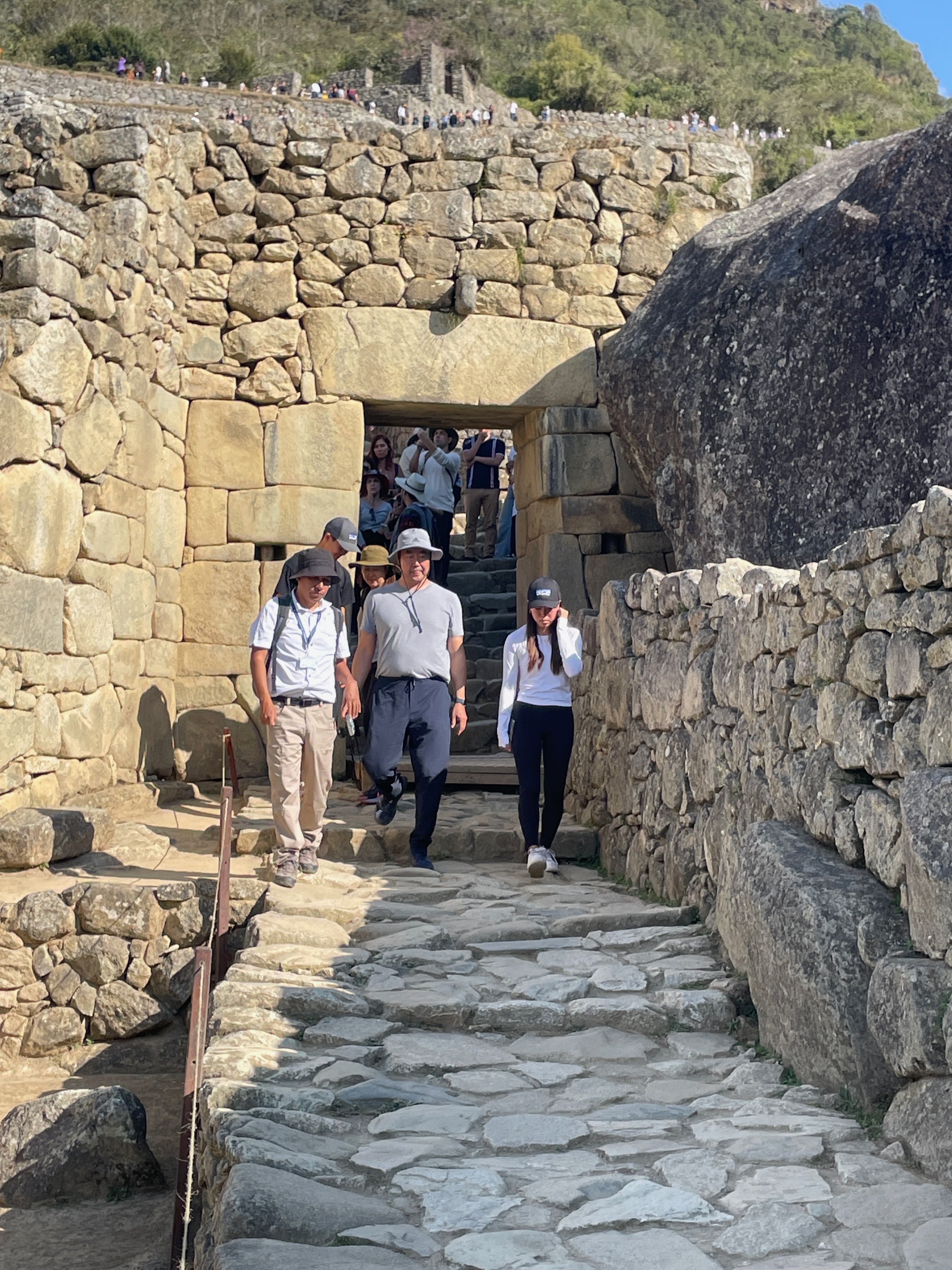
The site is roughly divided into an urban sector and an agricultural sector, and into an upper town and a lower town. The temples are in the upper town, the warehouses in the lower. Approximately 200 buildings are arranged on wide parallel terraces around an east–west central square. The various compounds, called kanchas, are long and narrow to exploit the terrain.
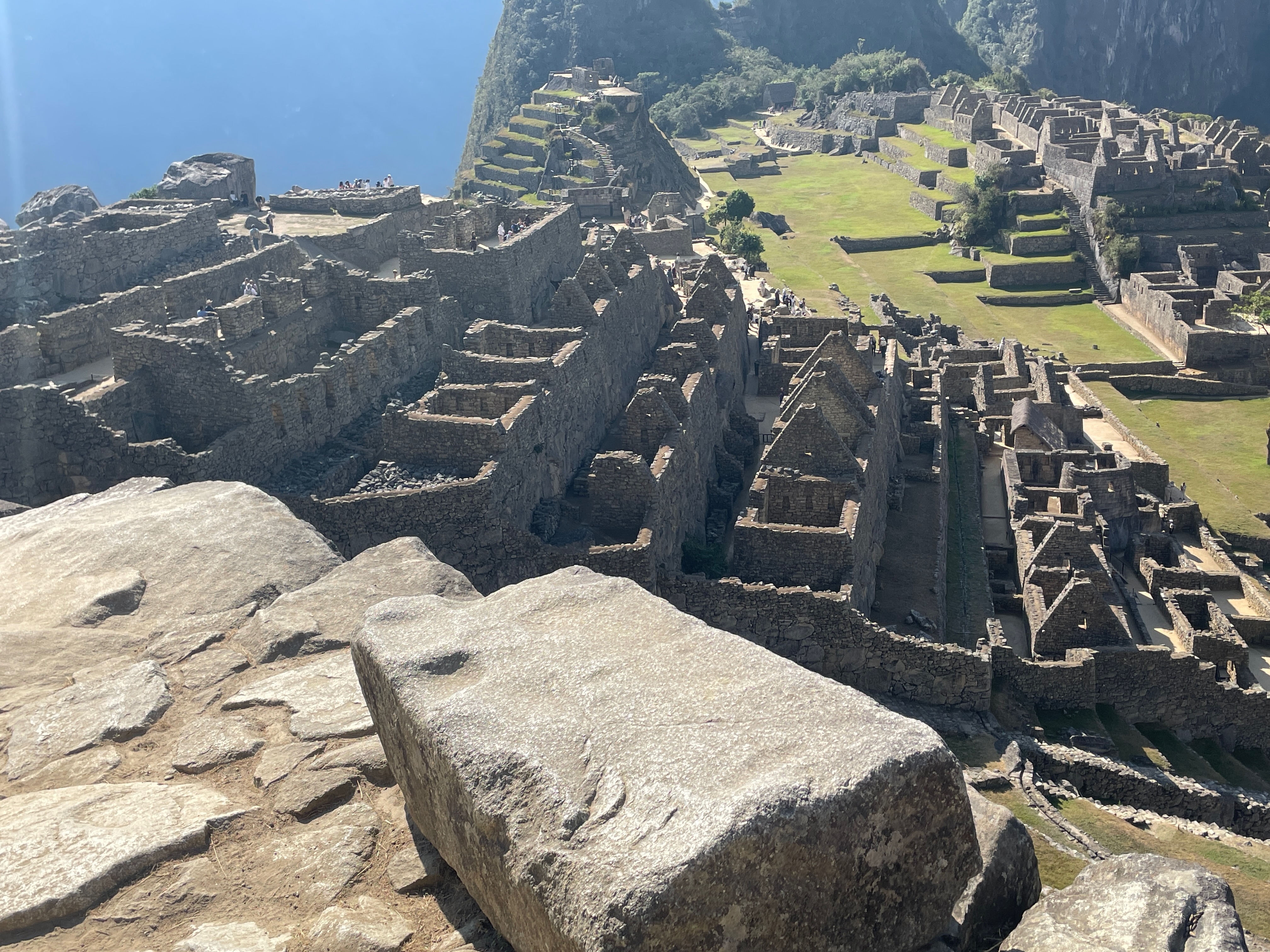
Sophisticated channeling systems provided irrigation for the fields. Stone stairways set in the walls allowed access to the different levels across the site. The eastern section of the city was probably residential. The western, separated by the square, was for religious and ceremonial purposes. Located in the first zone are the primary archaeological treasures: the Intihuatana, the Temple of the Sun and the Temple of the Three Windows. The Popular District, or Residential District, is the place where the lower-class people lived. It includes storage buildings and simple houses.

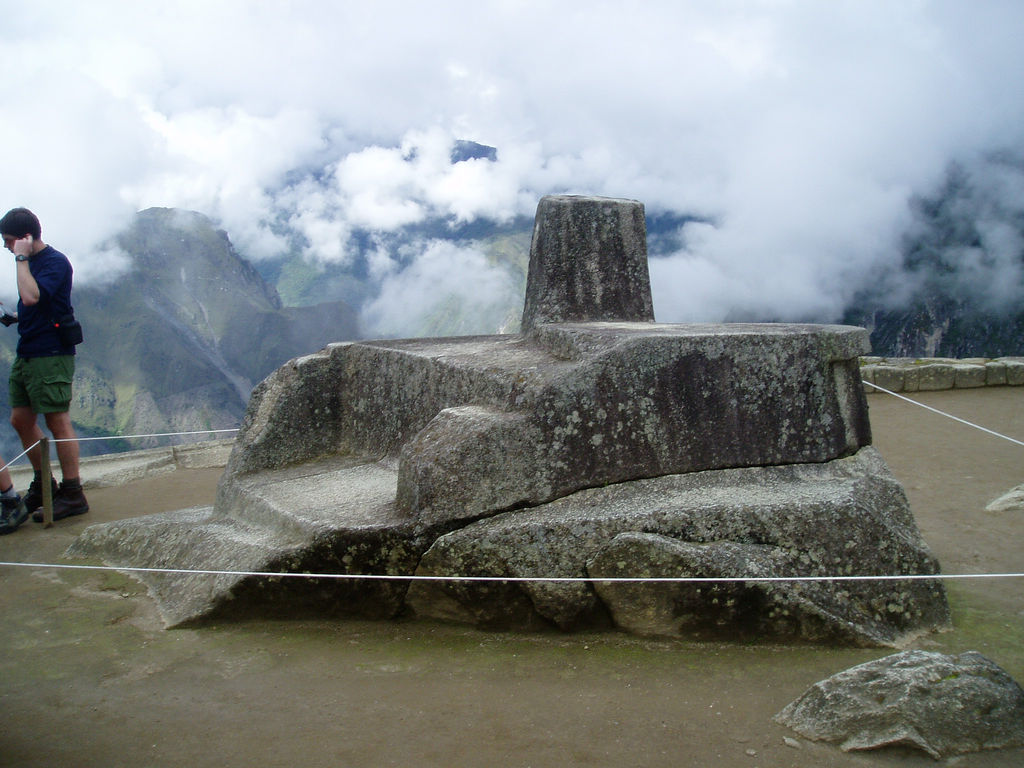
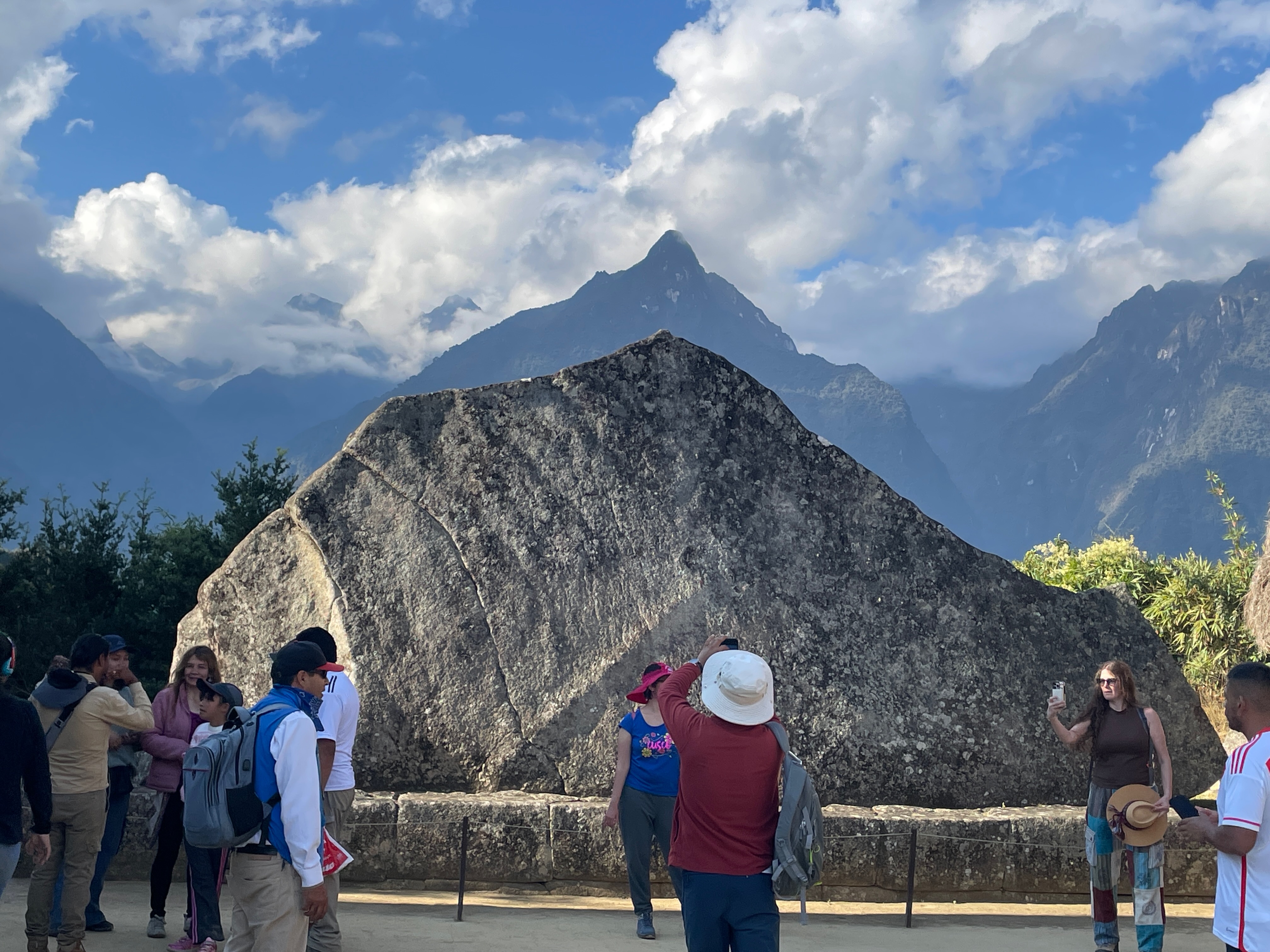
As we worked our way down to the main section of the site, we stopped at the Intihuatana stone, which is one of many ritual stones in South America. These stones are arranged to point directly at the Sun during the winter solstice. The Inca believed the stone held the Sun in its place along its annual path in the sky. At midday on 11 November and 30 January, the Sun is situated almost exactly above the pillar, casting no shadow. On 21 June, the stone casts the longest shadow on its southern side, and on 21 December a much shorter shadow on its northern side.
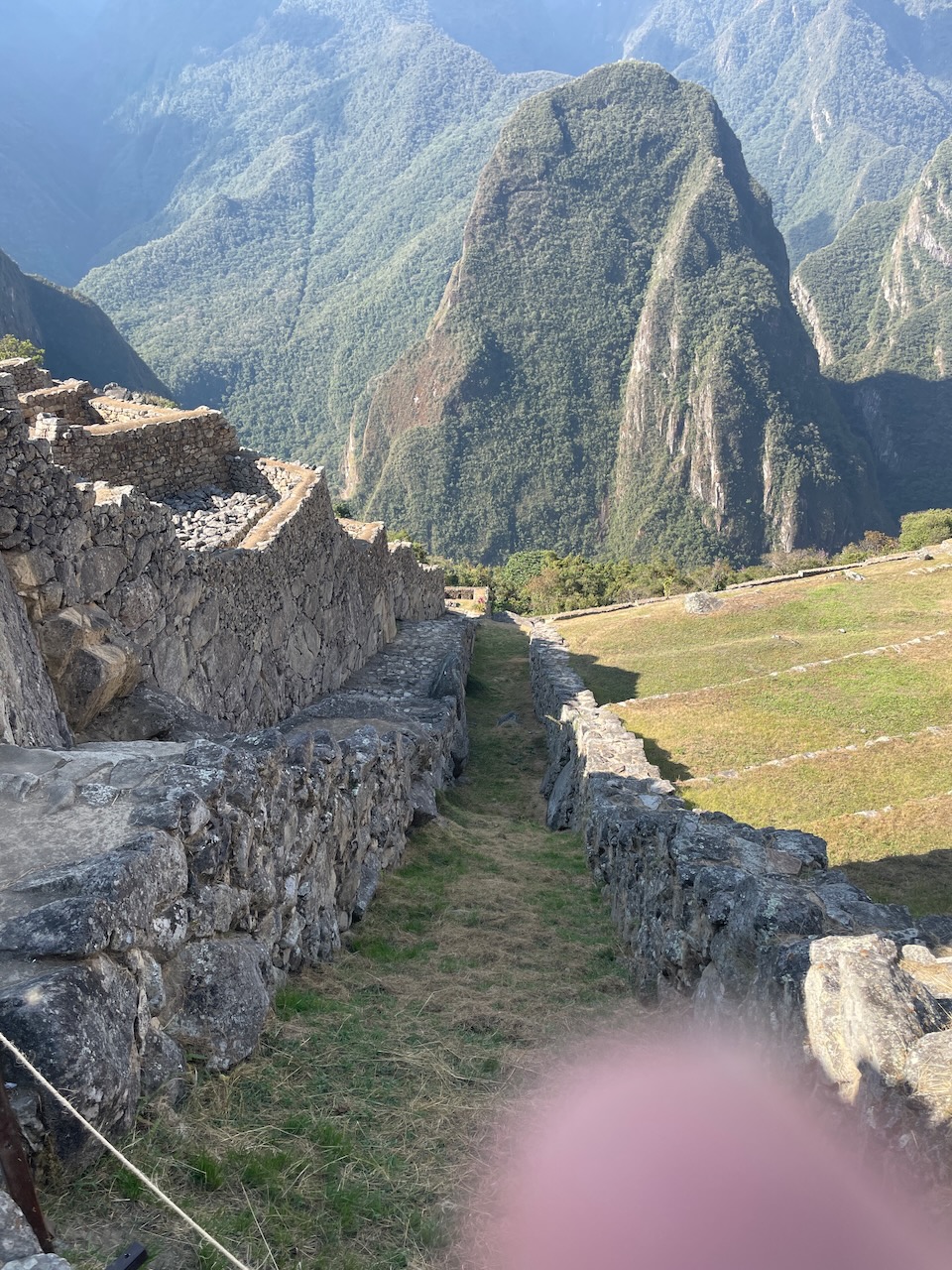
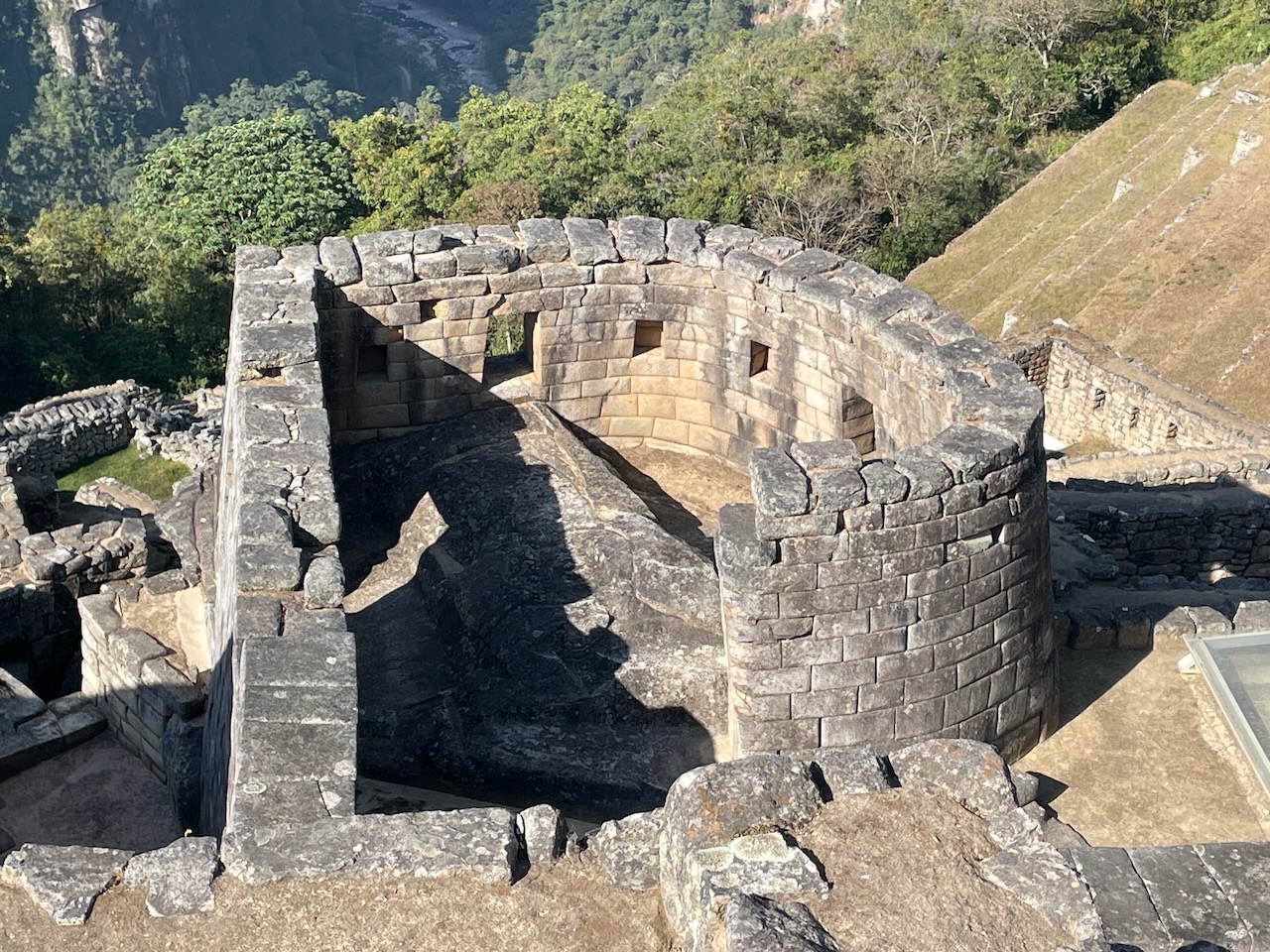
Next up was the Temple of the Sun or Torreón, a semicircular temple like the Temple of the Sun found in Cusco and in Pisac, in having a “parabolic enclosure wall”. The stonework is of ashlar quality. Within the temple is a rock platform, smooth on top except for a small platform on its southwest quadrant and a “Serpent’s Door” faces 340°, or just west of north, opening onto a series of 16 pools, and affording a view of Huayna Picchu. The northwest edge of the rock platform points out the Solstice Window to within 2′ of the 15th century June solstice rising Sun.
A final big-ticket stop was the Temple of the Three Windows, near the main square. This temple has three windows that are perfectly embedded into the structure, they are also perfectly symmetrical to the surroundings. Some Machu Picchu researchers believe there were at one point, 5 windows but the structure for the other 2 probably collapsed at some point.
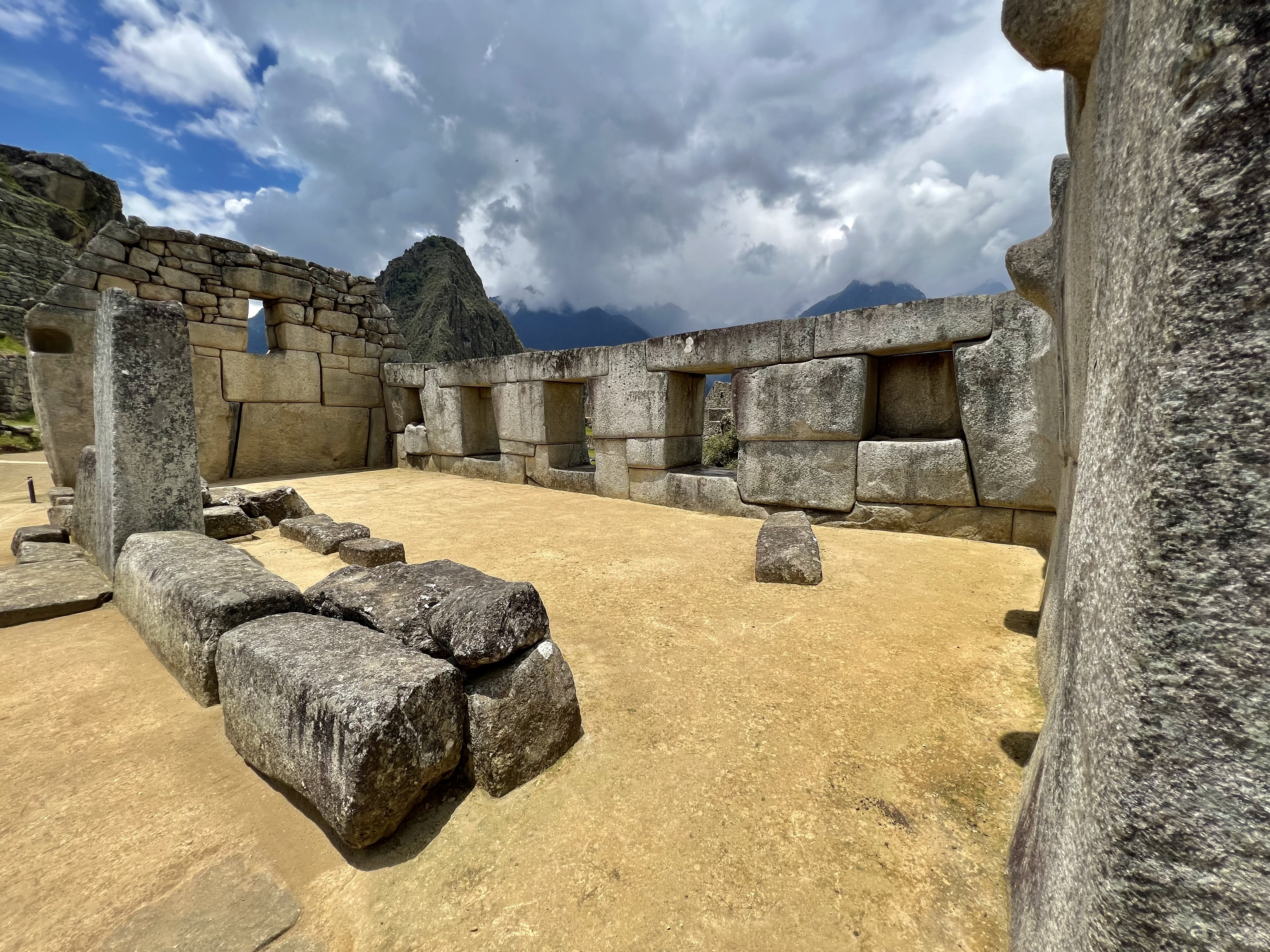
This entire structure also had a roof over it when the Inca originally built it; this too probably collapsed throughout the years. There are several stories about the origin of the three windows temple. Some scholars state that it has to do with the different world in existence the Inca believed in, where each window is said to represent a different plane of existence or a different part of the Inca world.
By this time, we’d been on site for over three hours and with all of the ascending, descending, and standing in one place for long periods of time I was glad I’d taken a couple of the low dose pain pills I’ve been prescribed. We exited the grounds and after a short wait in line, boarded a bus for the trip down to Aguas Calientes.
After our return to the hotel, Joanna had finished her trek on the Inka Trail and gotten a brief glimpse at Machu Picchu. She would return the next morning for a full tour (I had the option to return but having fully covered it that day, decided to take advantage of a free morning and get a massage at the in-house spa). After Joanna showered, we headed to the bar to take advantage of our two for one drink offer, enjoying yet another delightful Pisco Sour as we waited to go to dinner, sharing the moment with Beppie and Ian, our tour friends from New Zealand. I’m going to stop here for the day and leave dinner, Joanna’s hike on the Inka trail, and our departure from Aguas Calientes for the next post. Until then, stay hydrated.
Links
Discover more from 3jmann
Subscribe to get the latest posts sent to your email.


 3jmann