July 25-26
In our last post we left Joanna at KM 104 to begin her hike up the Inka Trail to Machu Picchu. Not fond of writing, she reluctantly, but effectively, related her experience for us as follows:
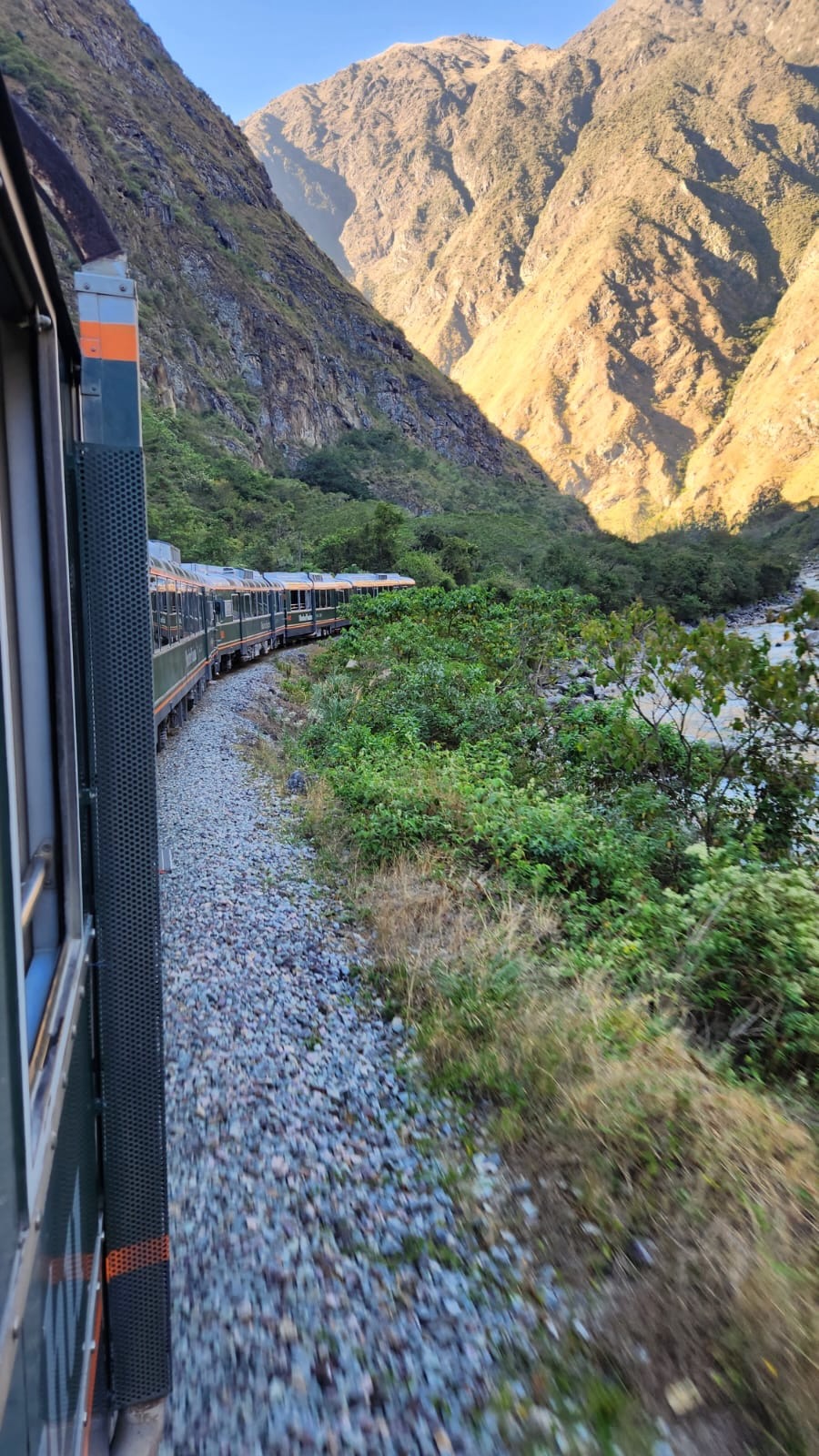
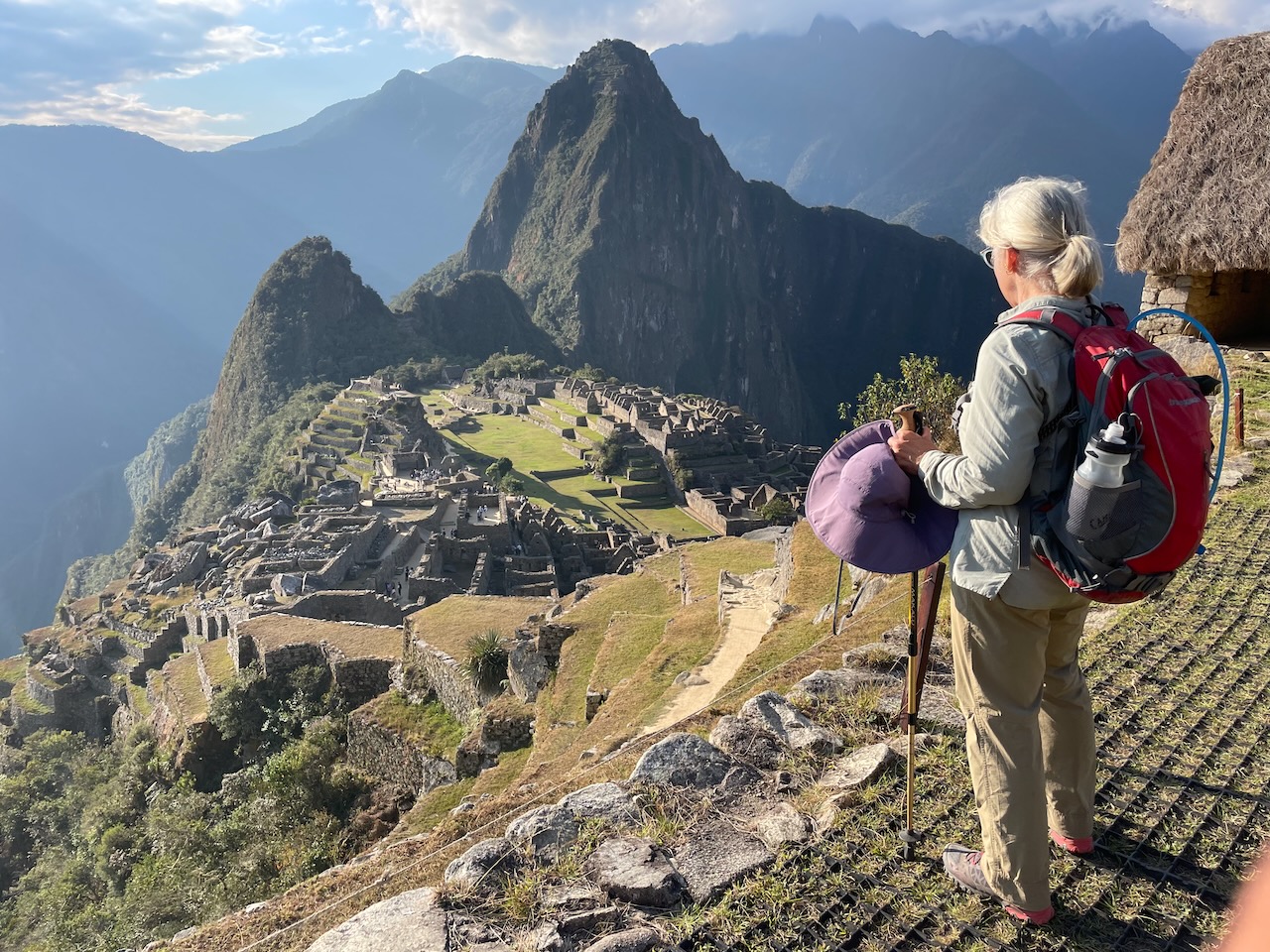
“When the train stopped at KM 104 (Chackabamba) I was a bit anxious as I wasn’t sure if I was up to the challenge. No matter how many miles you have walked in the past, (Half Dome Twice, the Camino De Santiago in Spain, etc.) there is always some level of apprehension. I had been walking at home in preparation, so the distance was not a concern, but the elevation and number of steps were an uncertain worry. The group I would hike with counted ten in number with three of them (Paul, Natalie, and Stacey) from our tour group and included two guides, one of whom I would become friendly with as he was the sweep (the last person in the group to watch out for stragglers) and I was usually back there.

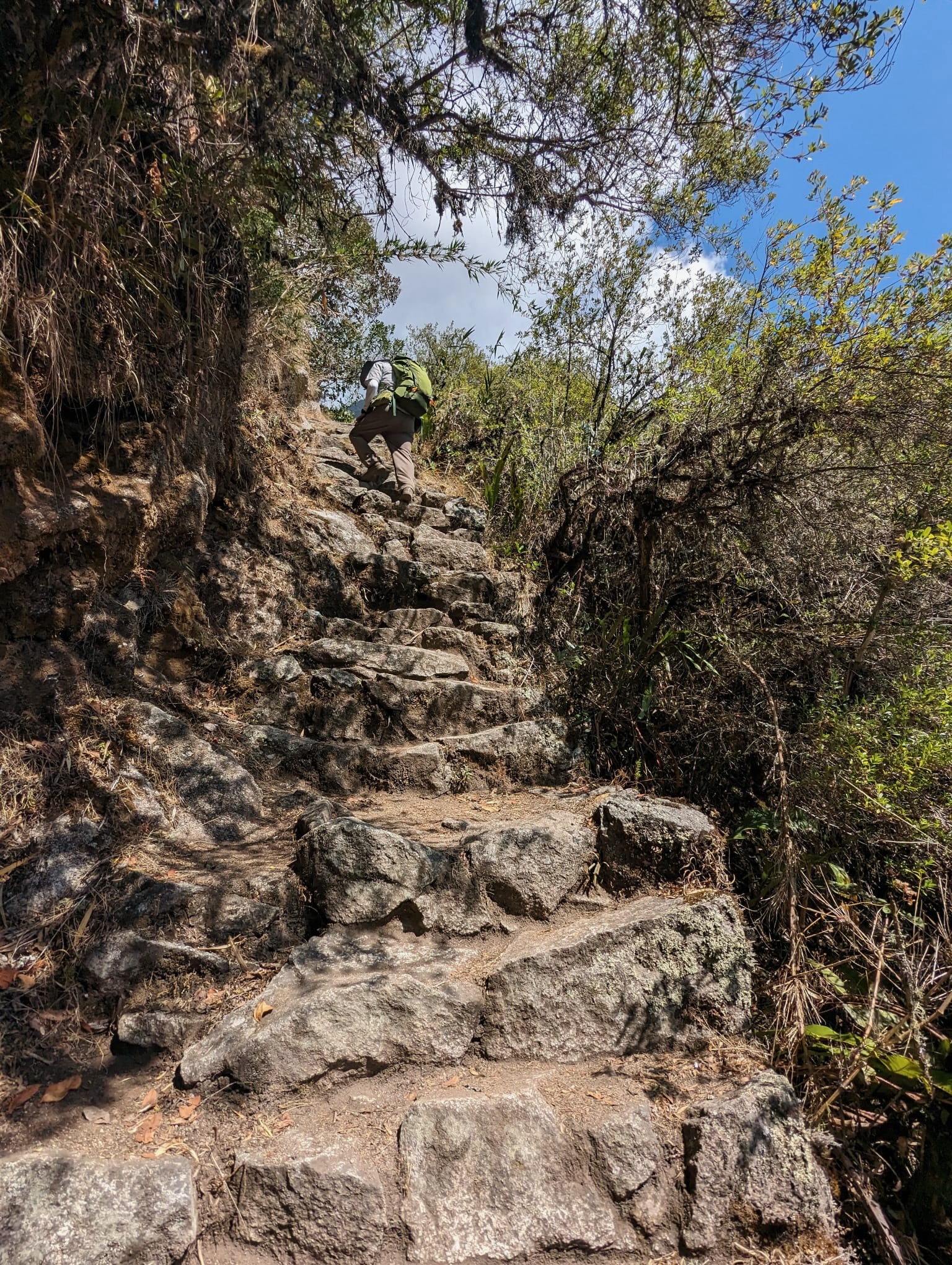
That was not a bad thing as I had the time to myself on the trail every now and then, enabling me to experience my surroundings without any distractions. The first part of this hike was along a well-groomed one-person wide trail that while dry, was pleasant to walk along but would have been more difficult had it been wet. We would be climbing almost all of the way to the Sun Gate, but the terrain was rolling, so that we would ascend some and then descend a bit before climbing again.
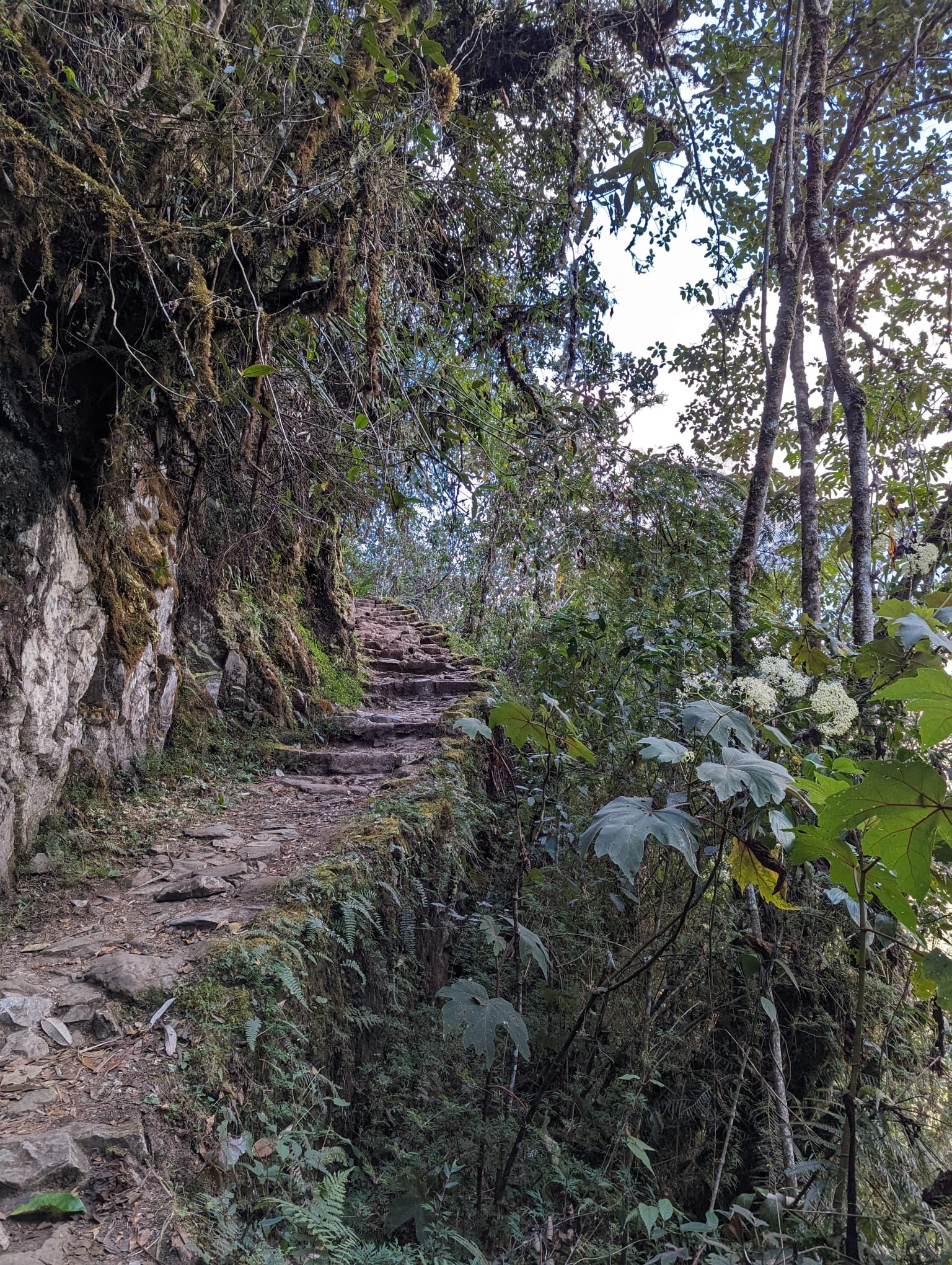

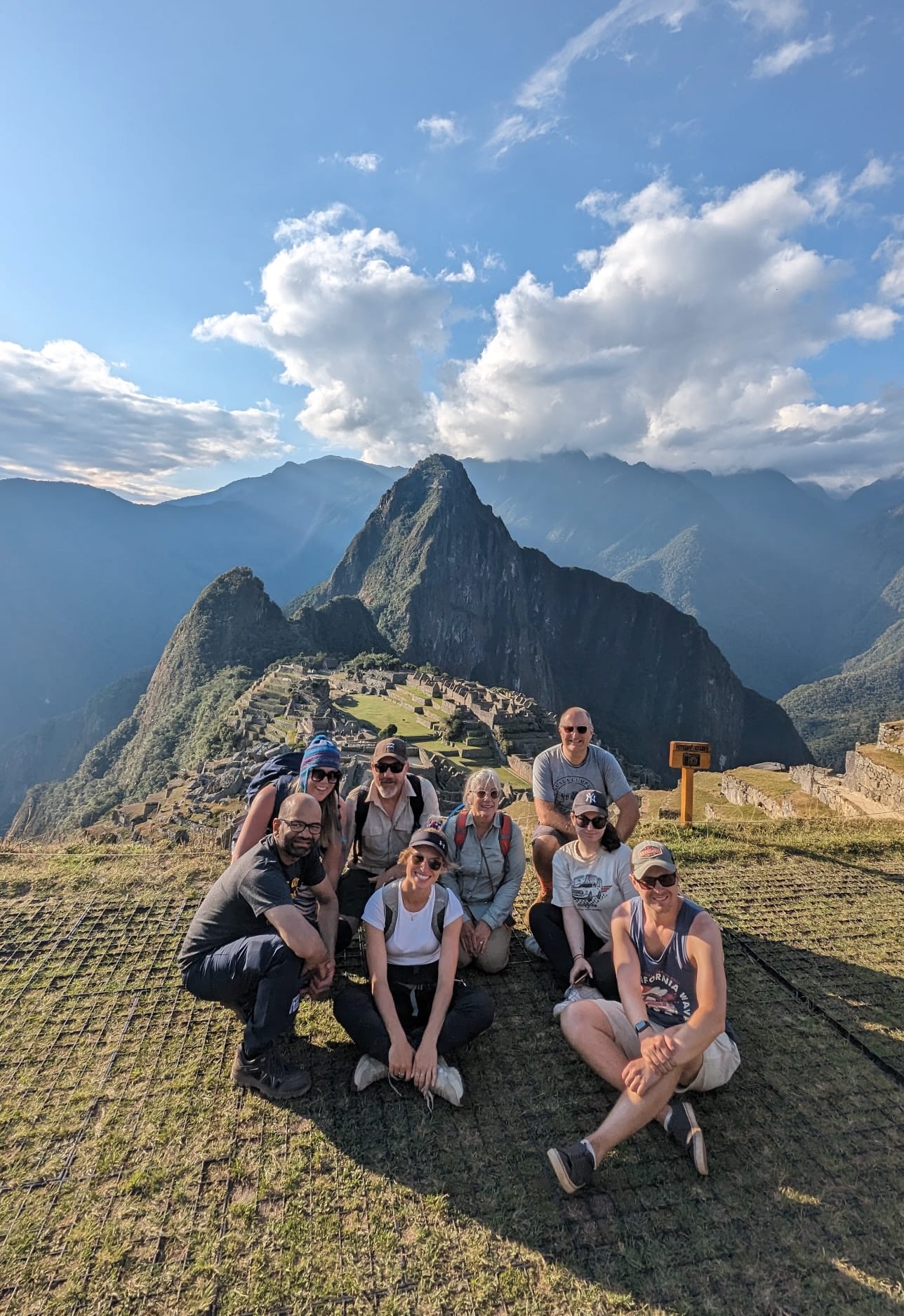
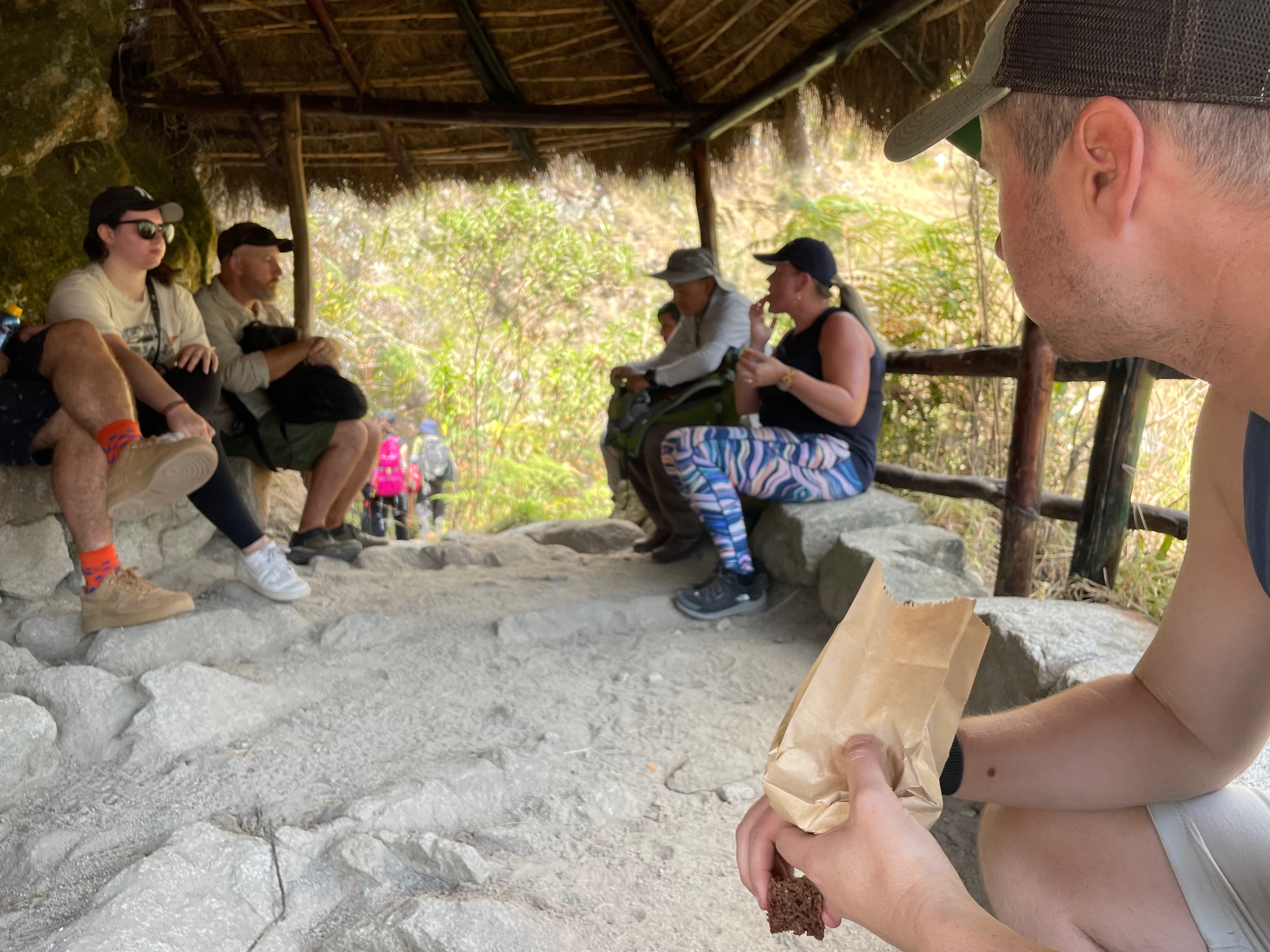
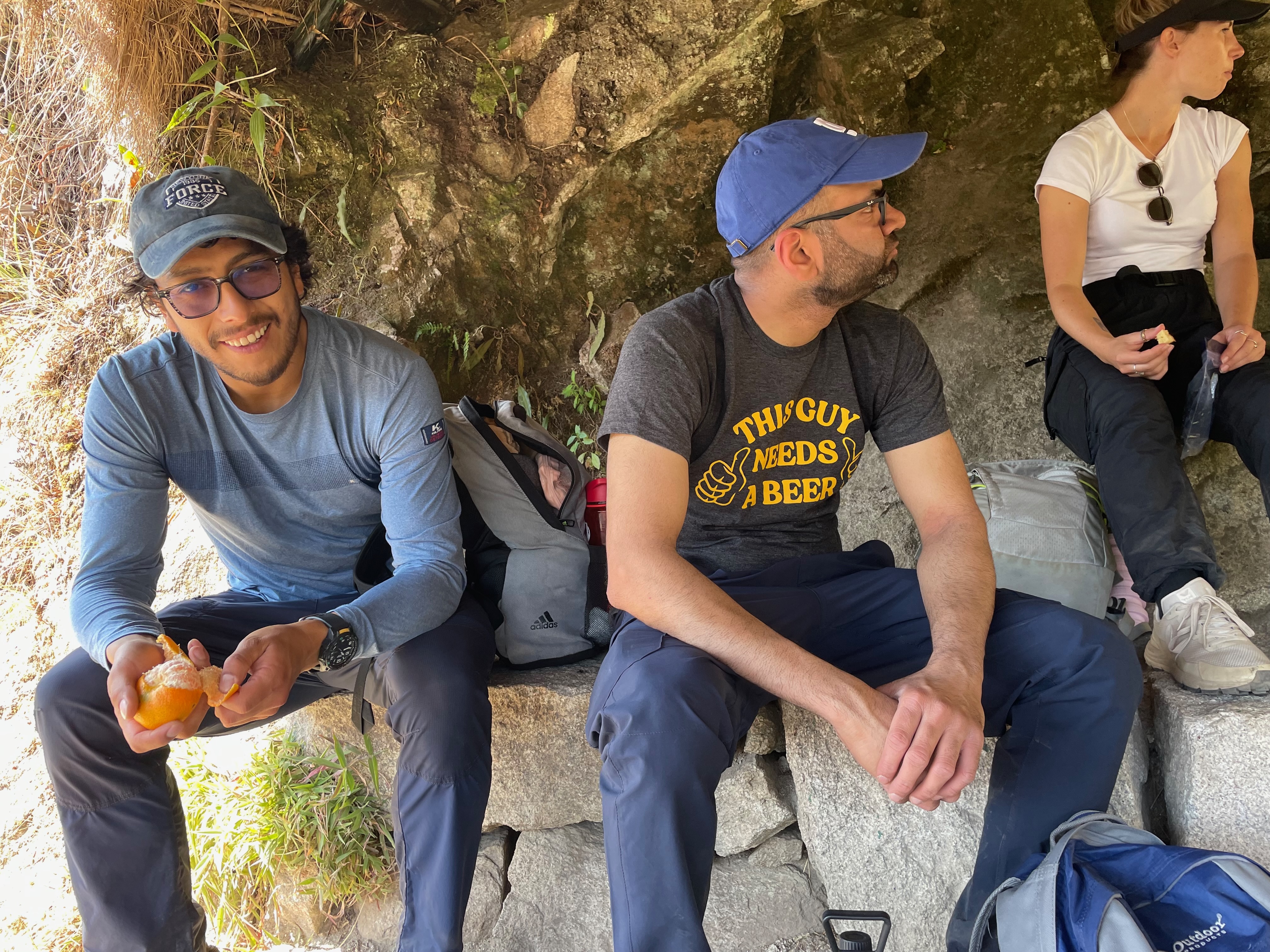
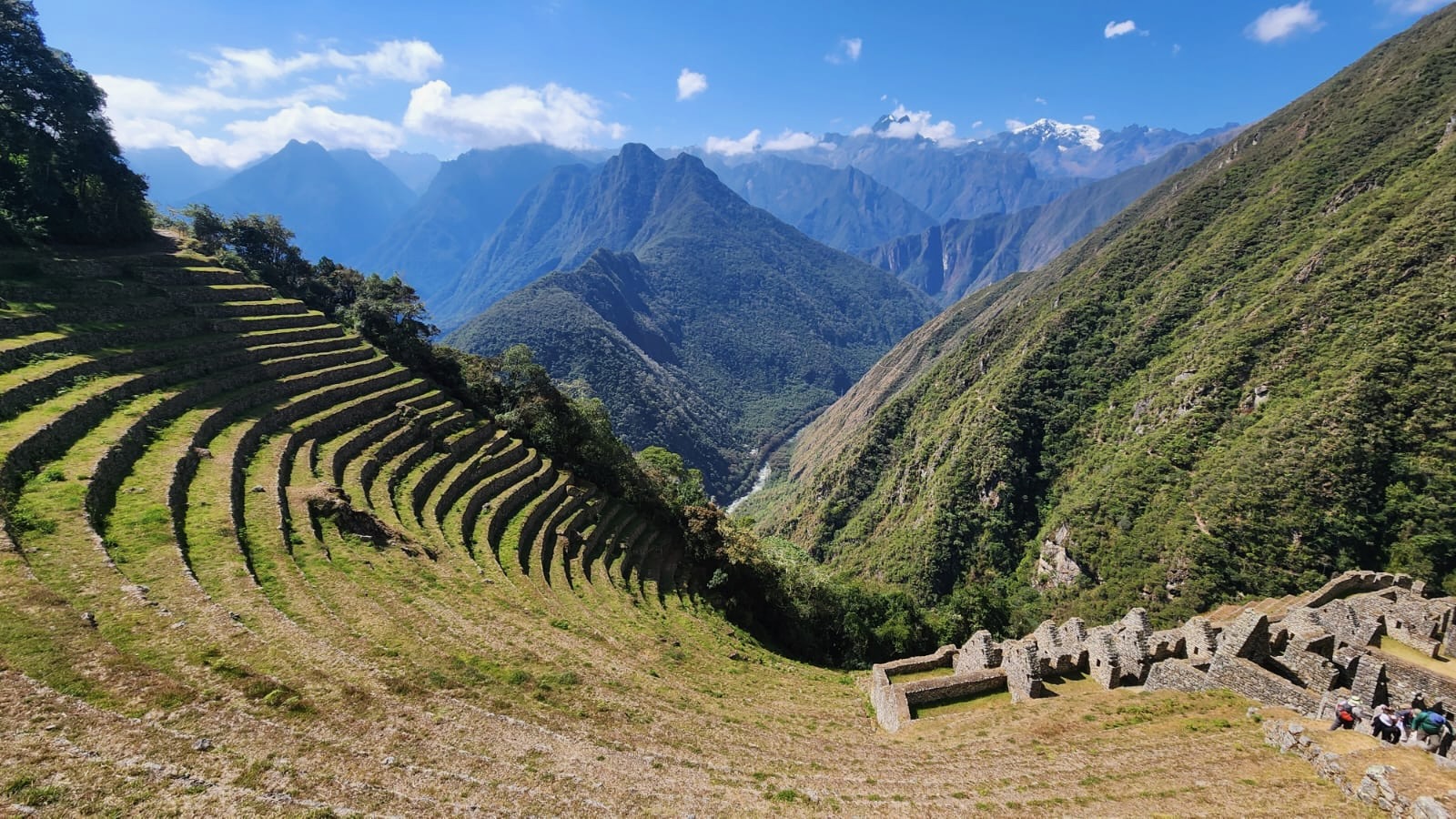
The trail was memorable and a little over four miles in, we passed through the ruins at Winaywayna (Forever Young) which was quiet and close to mystical. A mile or so later, we stopped at a shelter to eat the more than adequate lunch that had been prepared for us at Ollantaytambo (chicken breast, local bread, cookies, cake, and fruit), much more than I could eat at one sitting, going through only about half of it. A couple of miles later our group entered thru the Sun Gate (Inti Punku) and posed for photos. All in all, I covered 7.7 miles and 3,250 feet of elevation gain through 23,681 steps.”
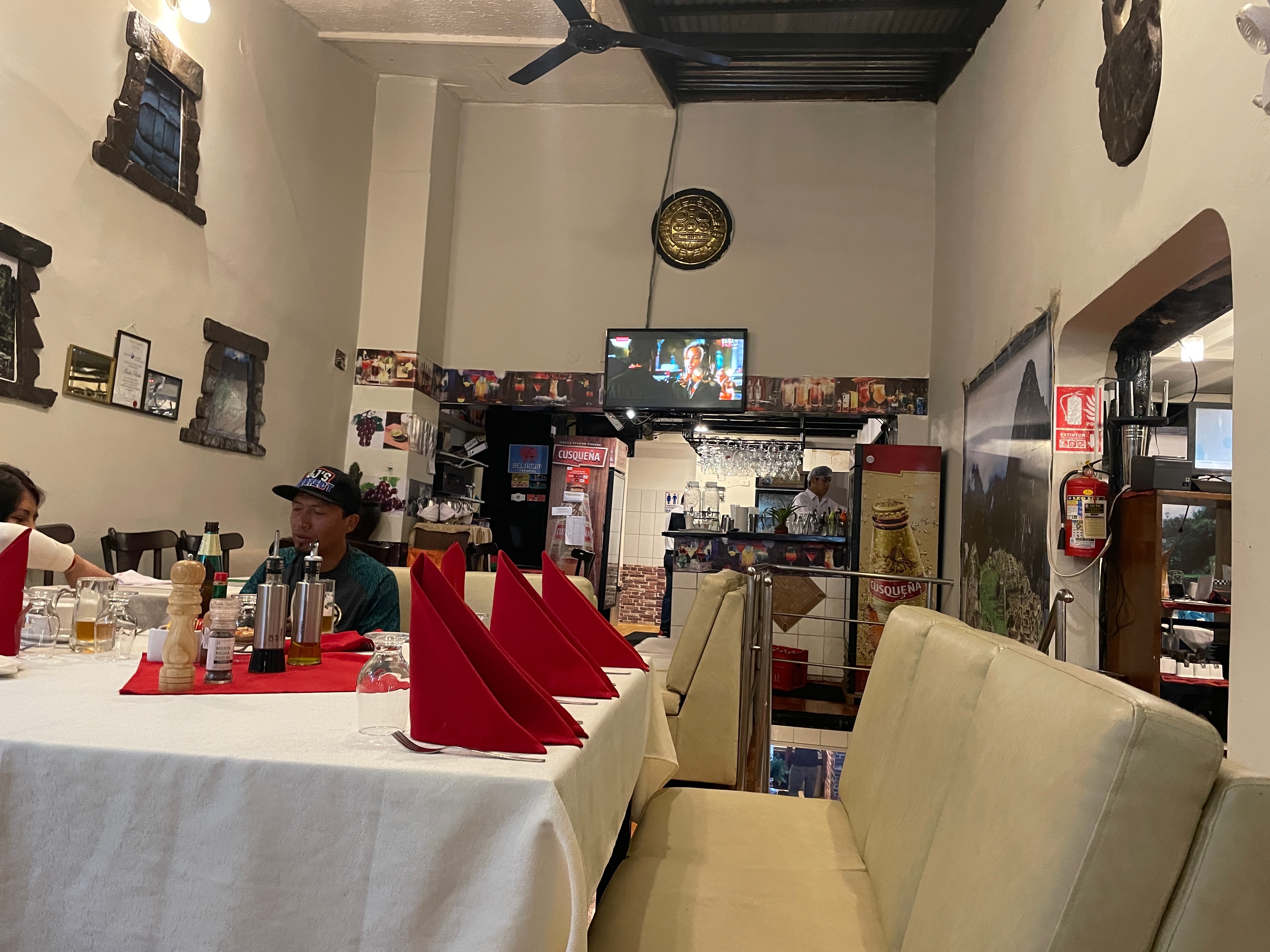
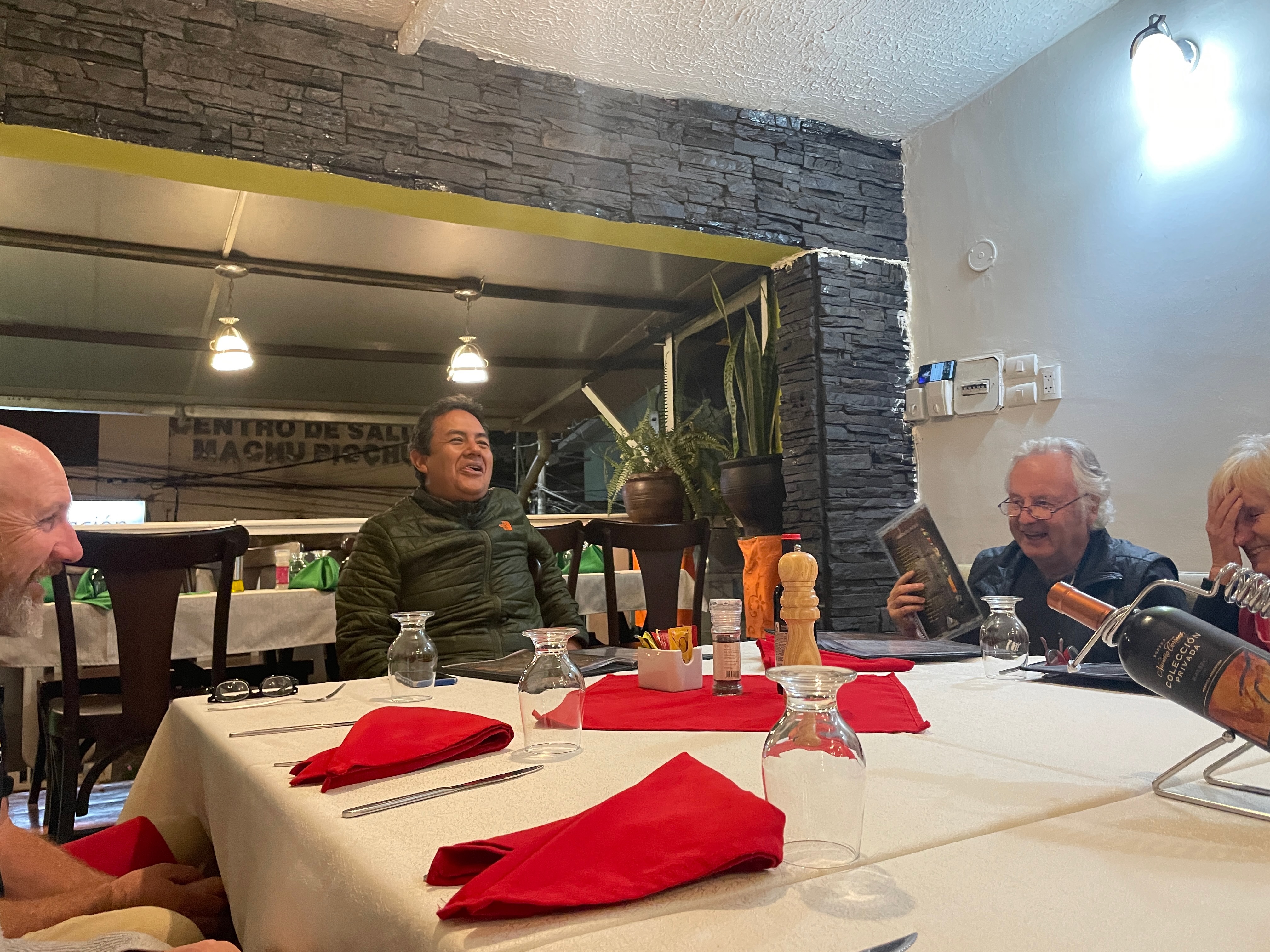
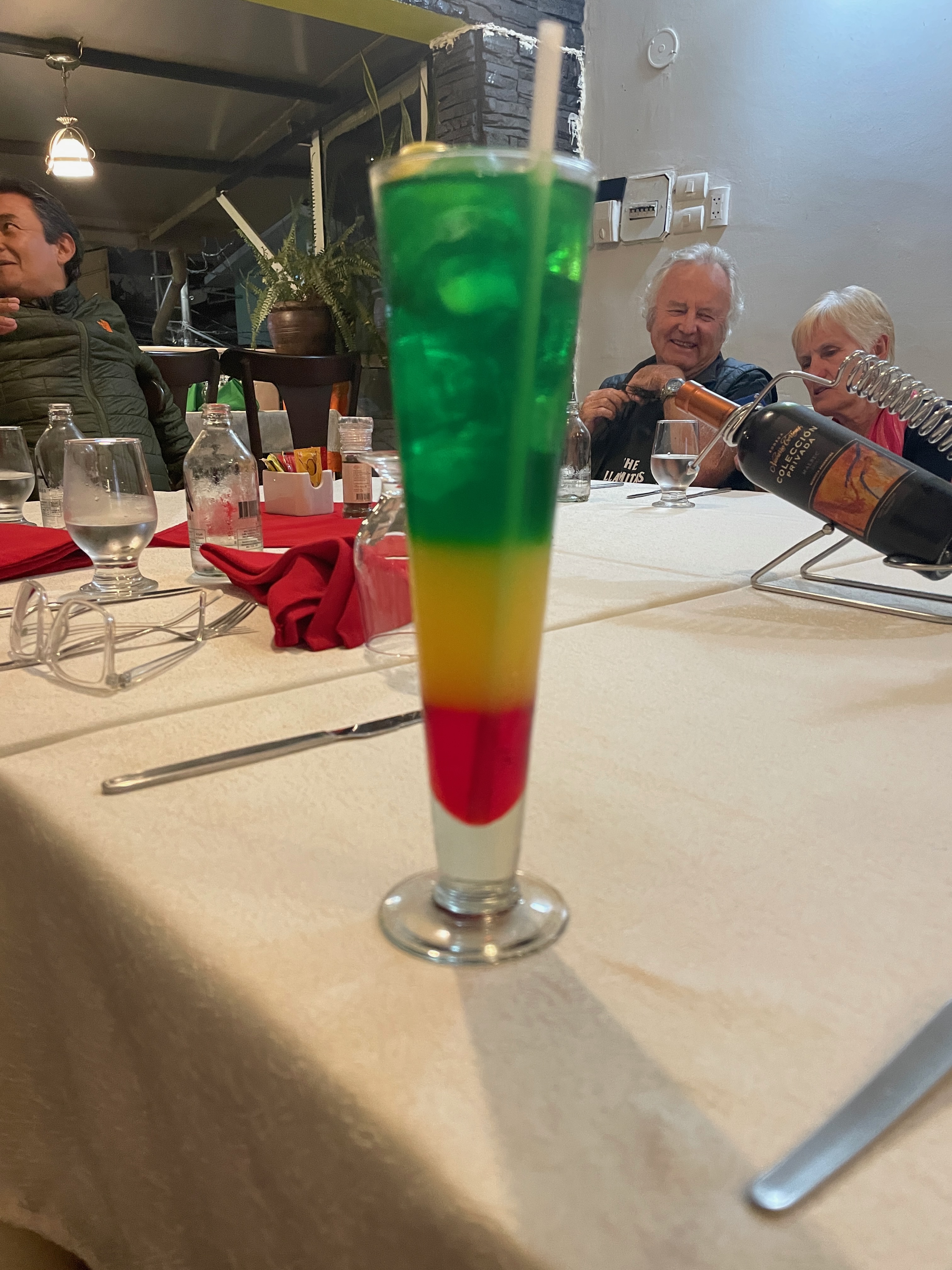
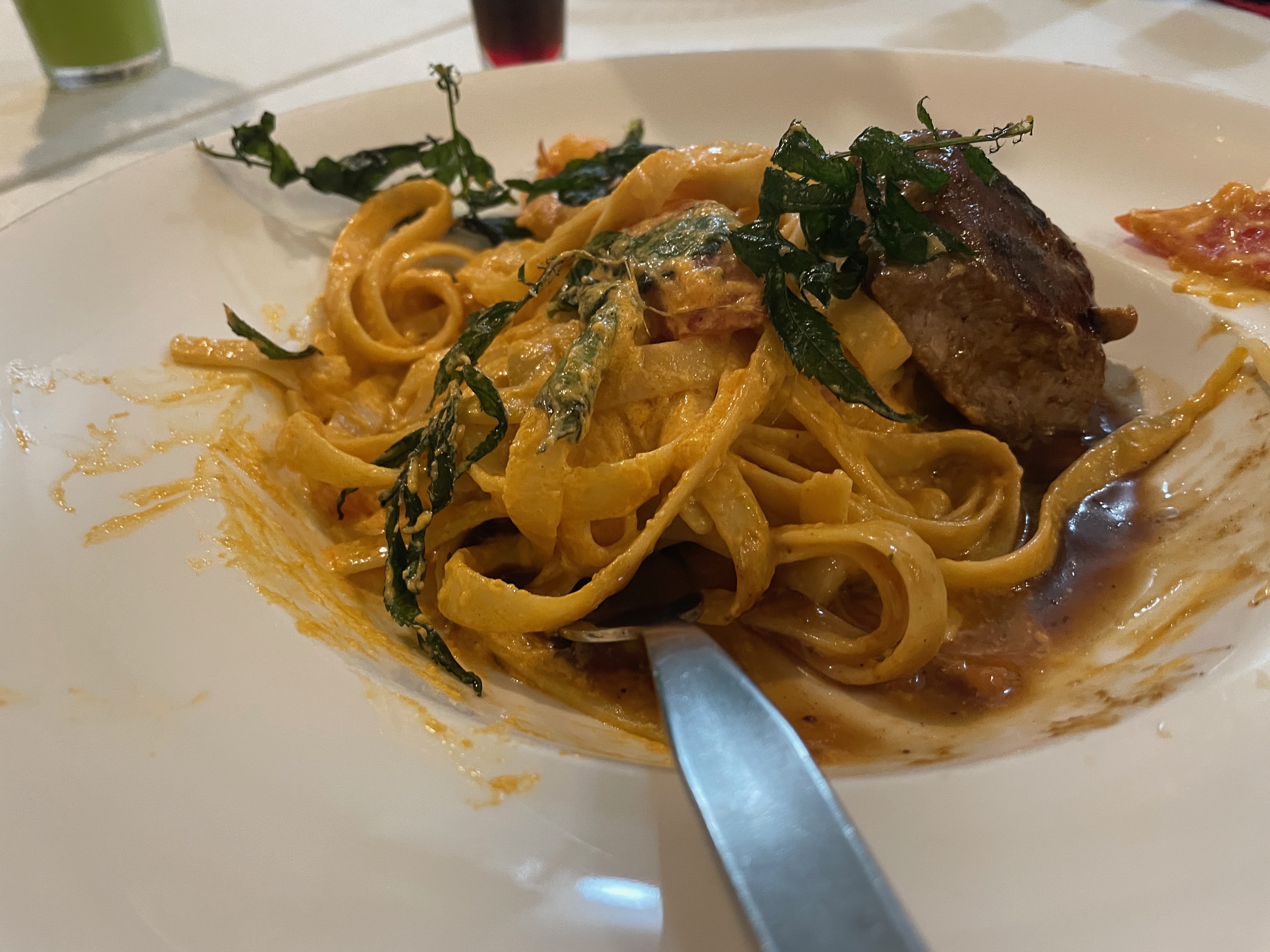
Joanna and I finished our drinks in the bar and met the group in the lobby for our short walk to dinner at Restaurante Turistico Apu Salkantay, where we were seated upstairs at a large table. I started off with a Pisco Sour while Joanna ordered a fancier multi-colored drink that proved to be pleasing to the palate. By this point in the trip, I was losing my ability to document all of our meals, and that day, being tired from the long afternoon at Machu Picchu would be the case, recording only what Joanna ordered, a creamy pasta dish with Alpaca as the protein.
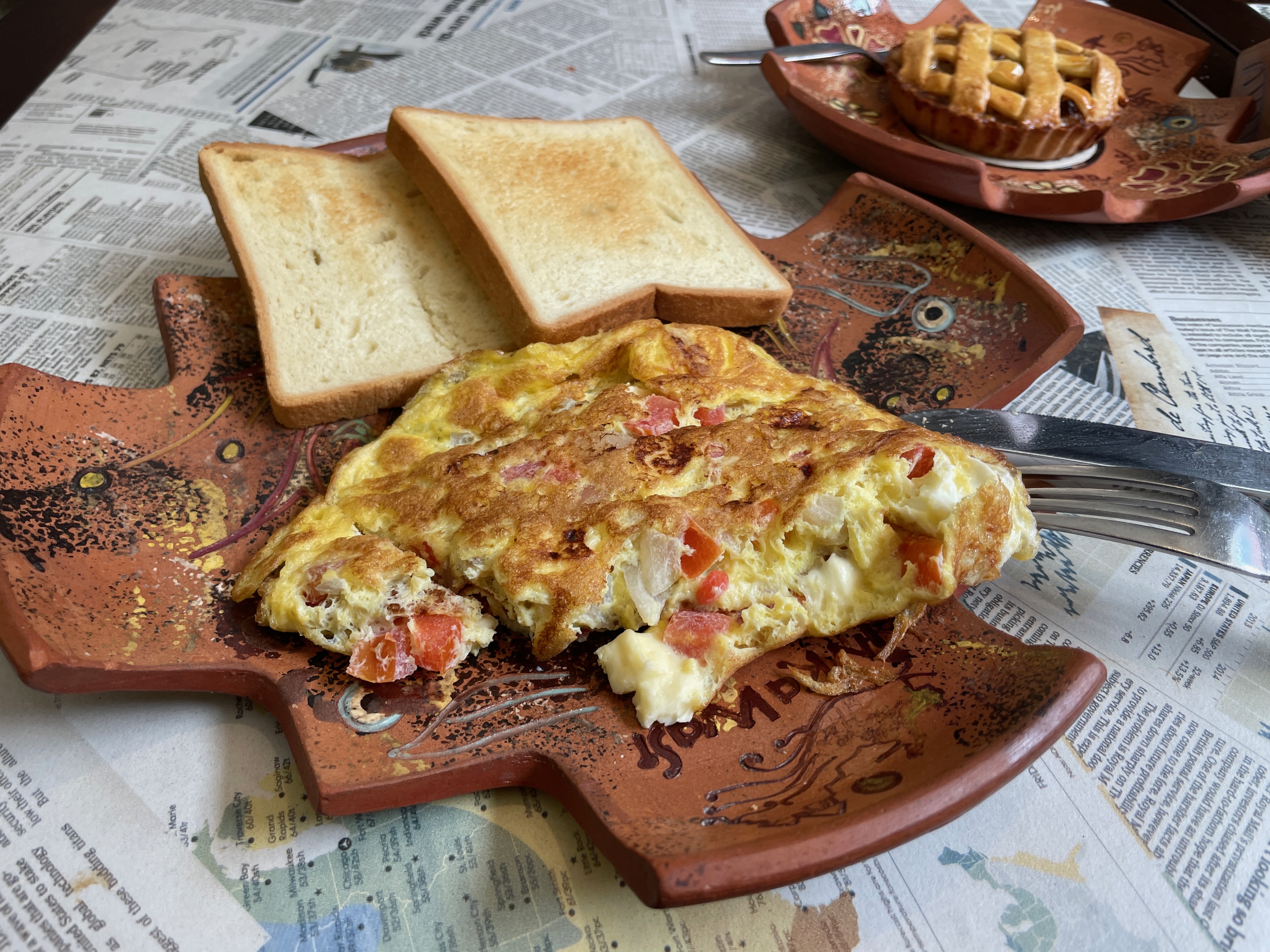
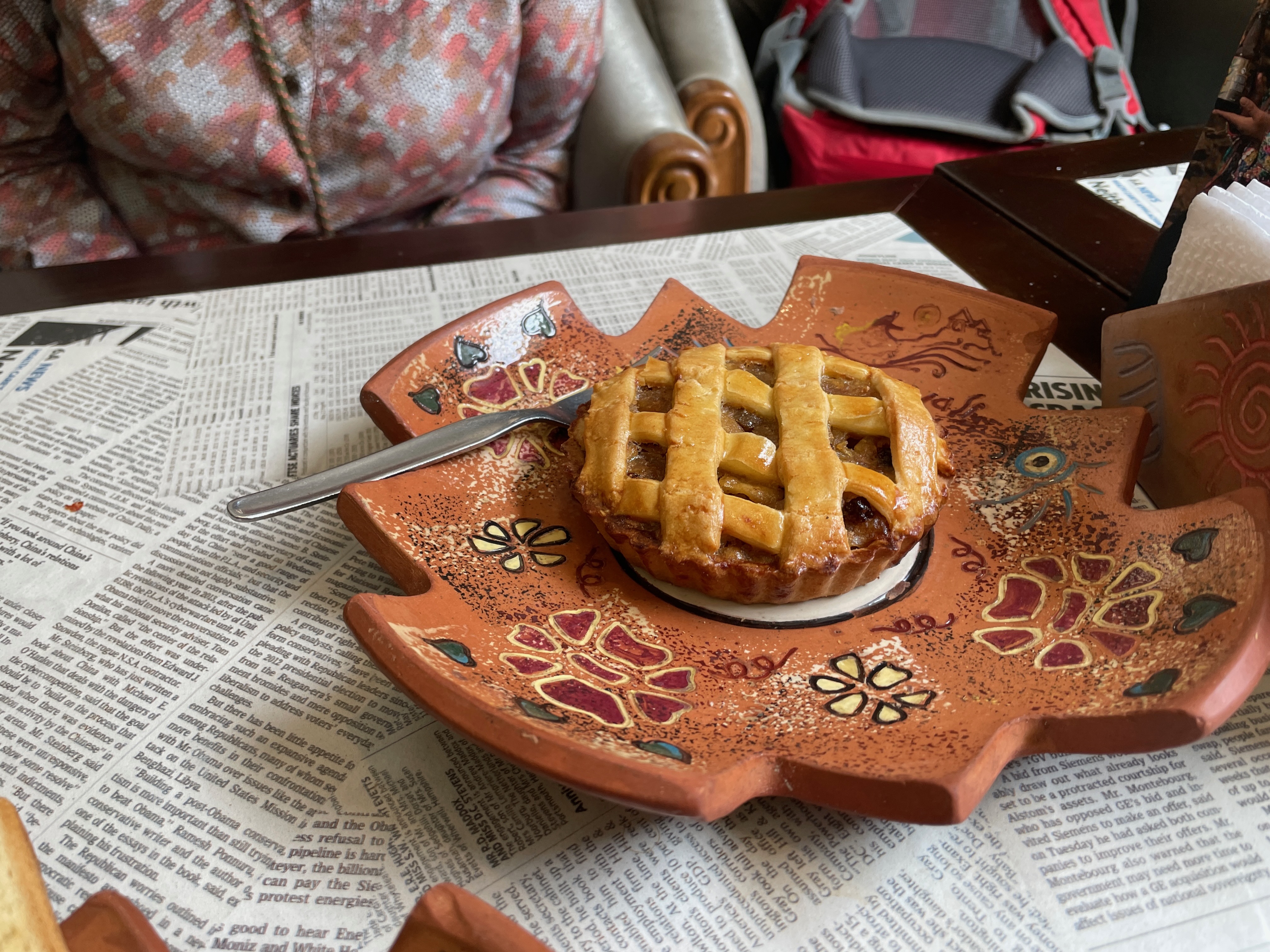
The next morning, as described in the earlier post, I dawdled in the room and then enjoyed a massage while Joanna took off for her tour of Machu Picchu. Later, after she returned and knowing we would soon be taking a standard train back to Ollantaytambo and then a bus to Cusco for the night, we walked across the street to Cafeteria Ollantay for another tasty lunch. I had an omelet and we split a cherry tart, which would hold us over until breakfast the next day as we would arrive in Cusco too late for dinner.
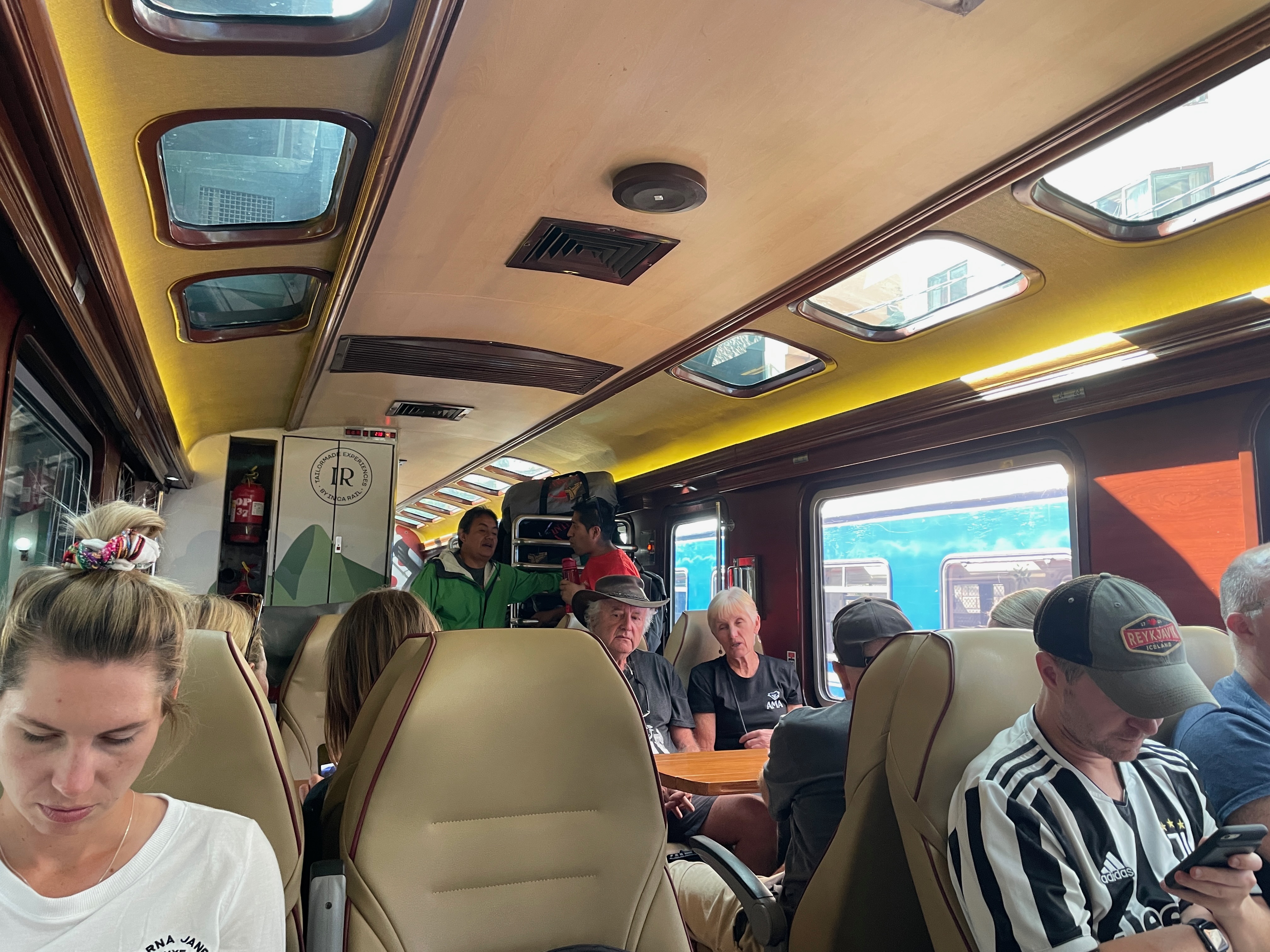
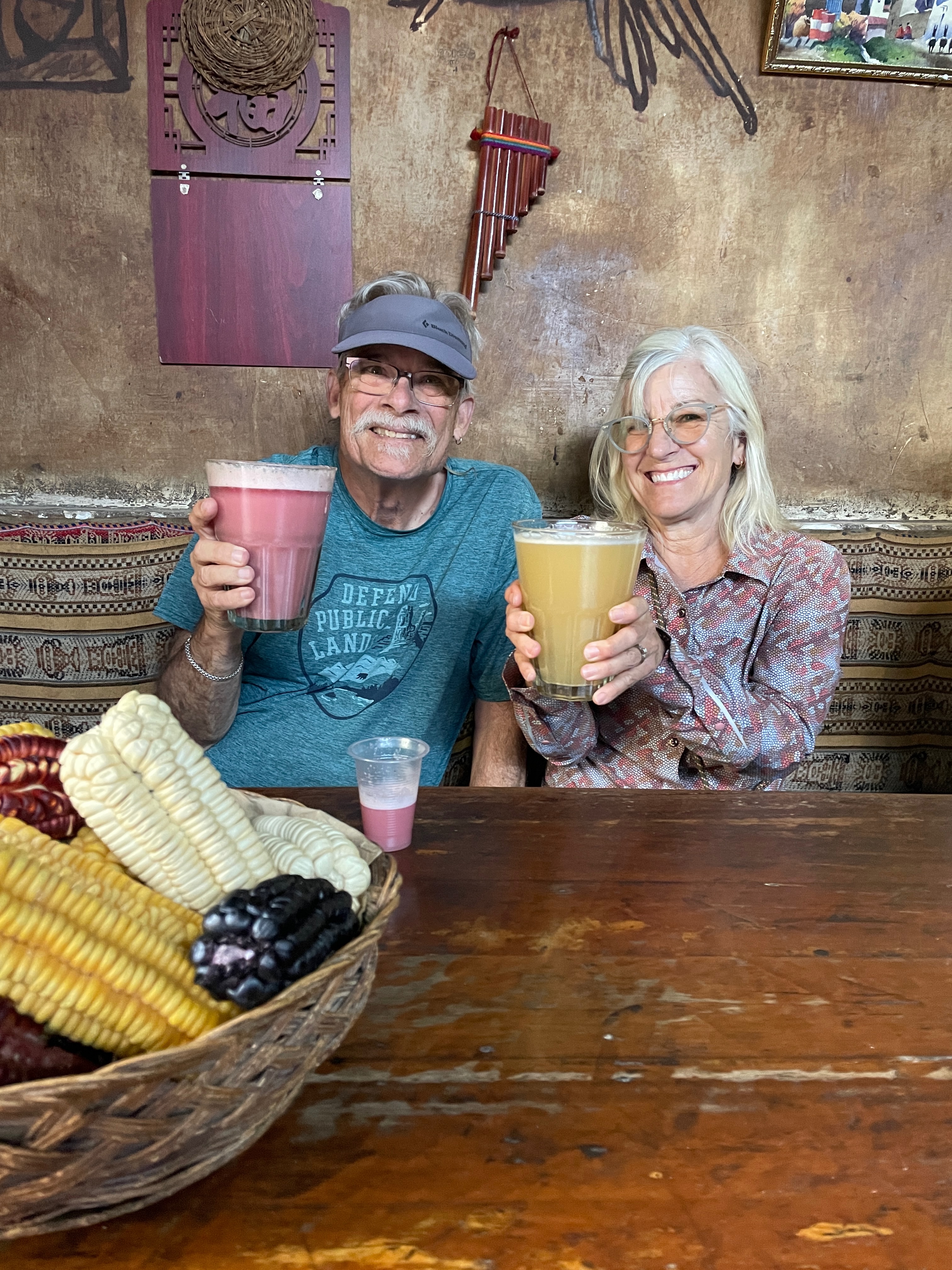
During the van ride we stopped, not long after Ollantaytambo, for one of the highlights of the trip (next to Machu PIcchu of course), which was at a roadside bar where we would all enjoy a round of large glasses of Chicha, a traditional ethnic corn-based fermented beverage with a profound cultural relevance in the Andean region, especially in Peru where it has been part of religious ceremonies since pre-Inca civilizations.
Before heading in though we paused outside to view Skylodge, a totally unique lodging experience across the street, that is not for the faint of heart. To sleep here, one must first either climb 1,312 feet to the top of Via Ferrata, or hike an intrepid trail through ziplines. The Skylodge is composed of three exclusive capsule Suites with a total capacity of 8 people. We turned around and entered the walled enclosure that housed the bar and soon round ourselves seated near the large tub of corn beer.
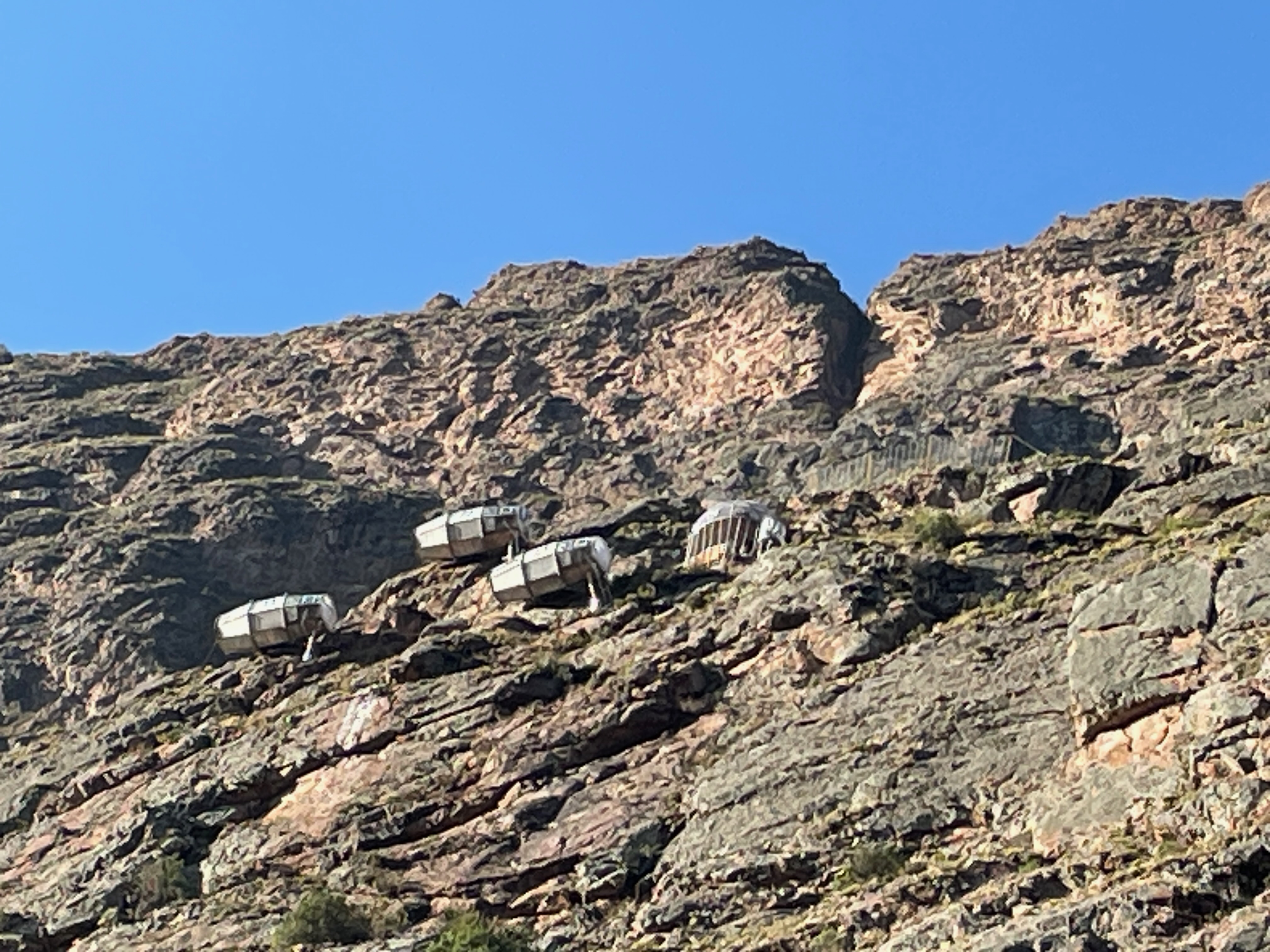
While seated we got a primer on the cultural significance of the beverage and its place in Andean history. Women are most associated with chicha controlling its production and distribution. For many women in Andean society, making and selling chicha is a key part of their identity because it provides a substantial amount of political power and leverage. Normally sold in large caporal (1/2 liter) glasses to be drunk on location, or by liter, if taken home, chicha is generally sold straight from the earthenware chomba where it was brewed.
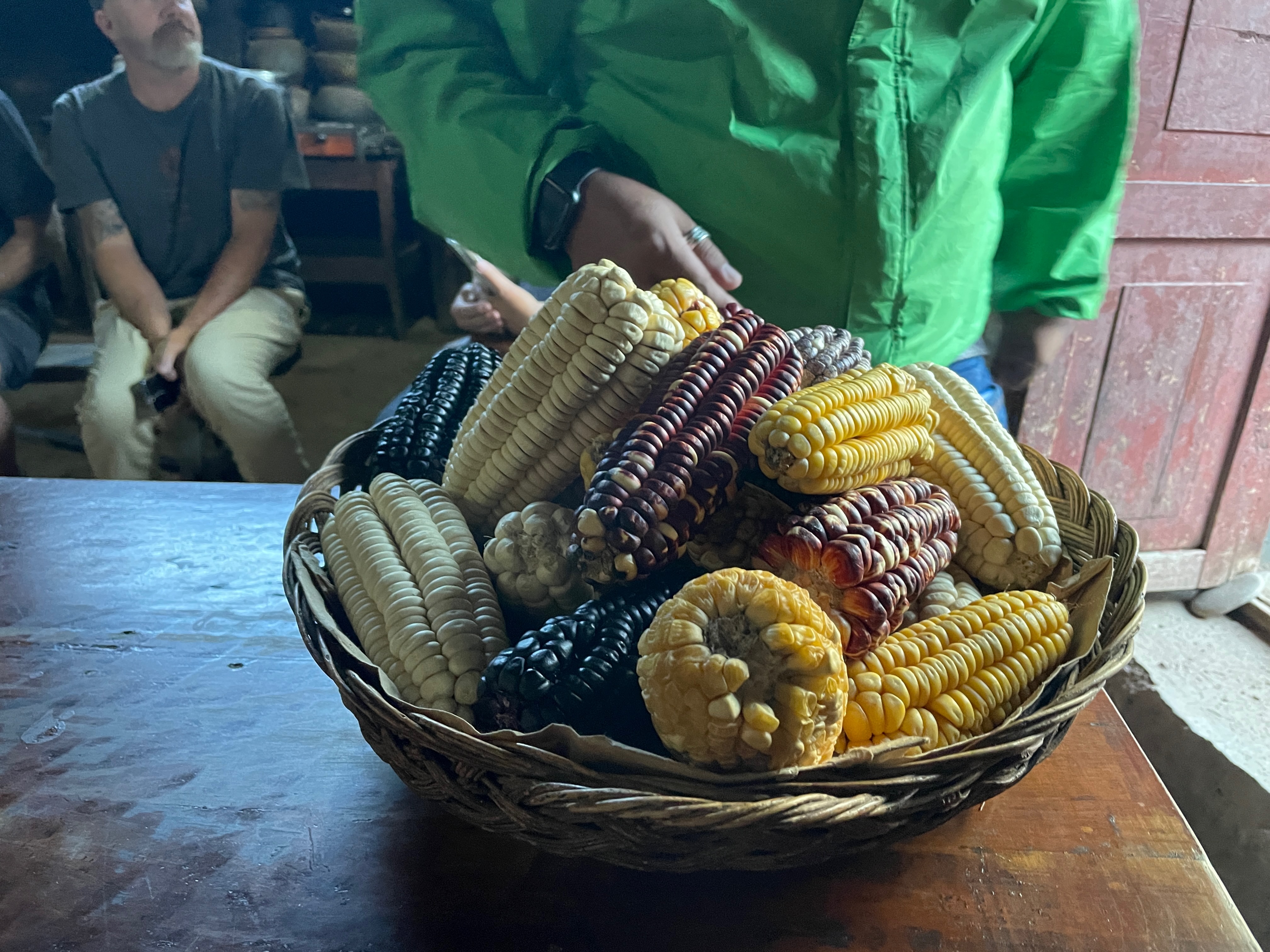
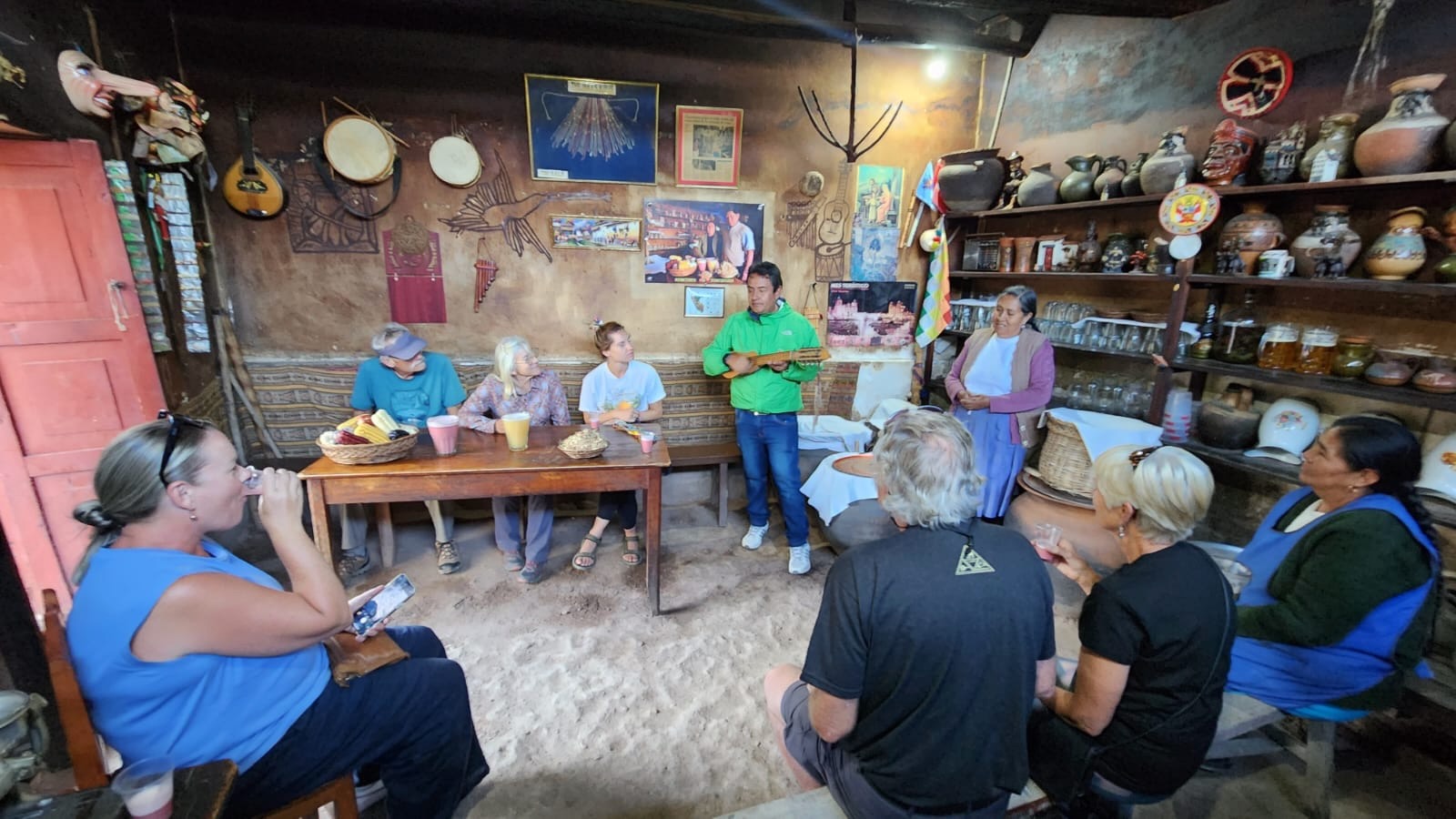
The process for making chicha is essentially the same as the process to produce malted barley beer. It is traditionally made with Jora corn, a type of malted corn from the Andes. The specific type or combination of corn shows where it was made. Some add quinoa or other adjuncts to give it consistency; then it is boiled and during the this process, it is stirred and aerated to prevent overboiling.
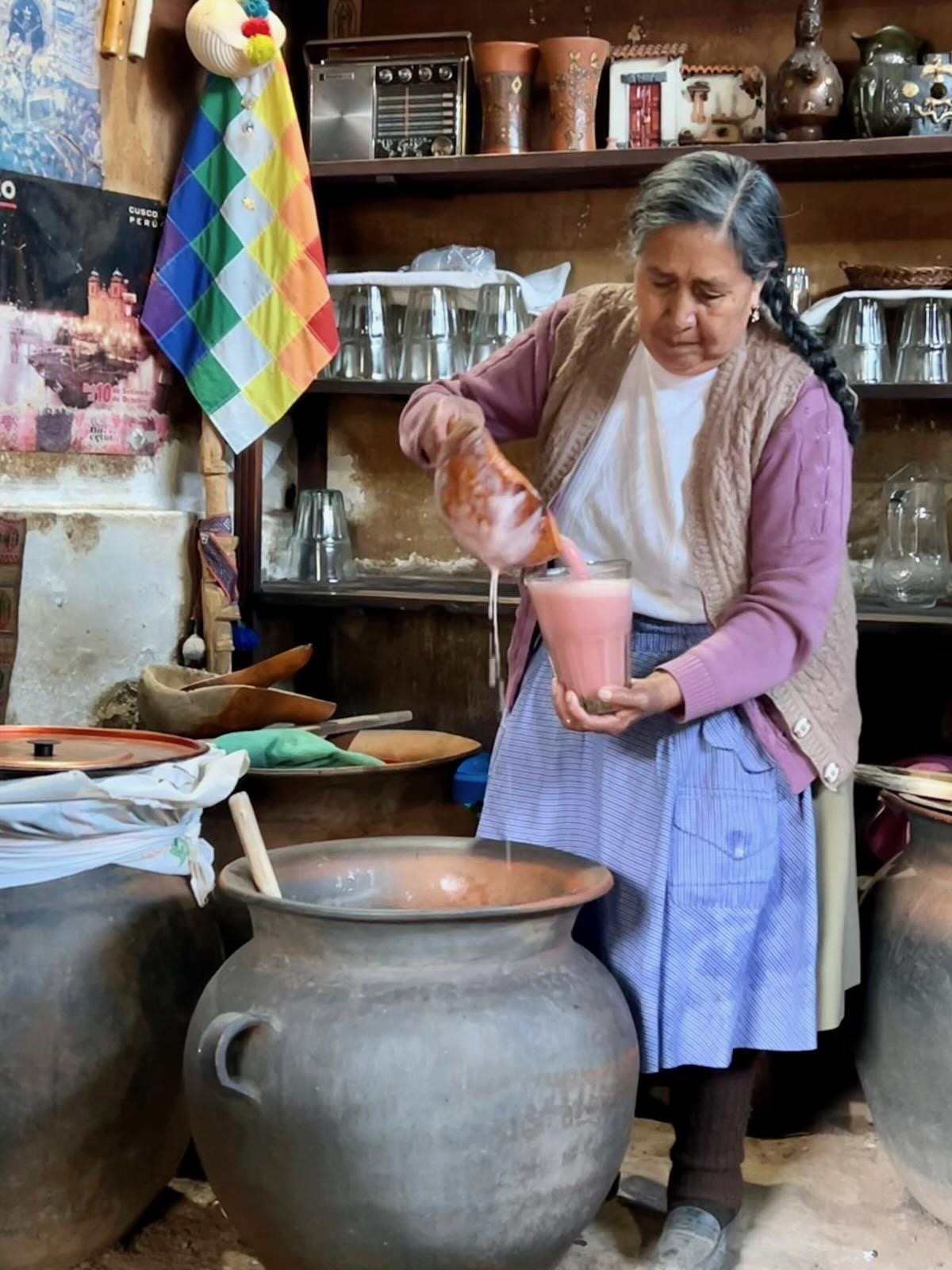
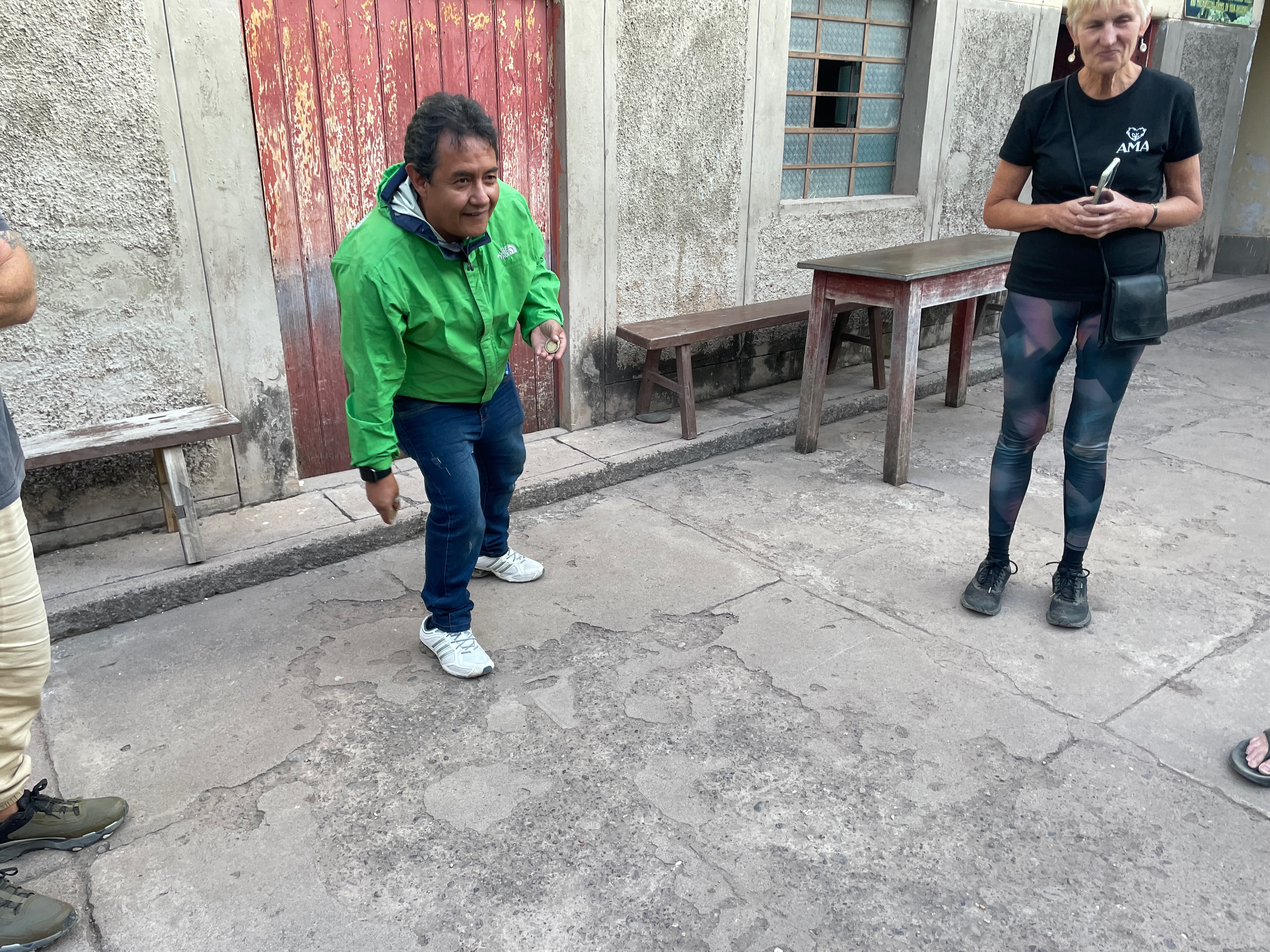
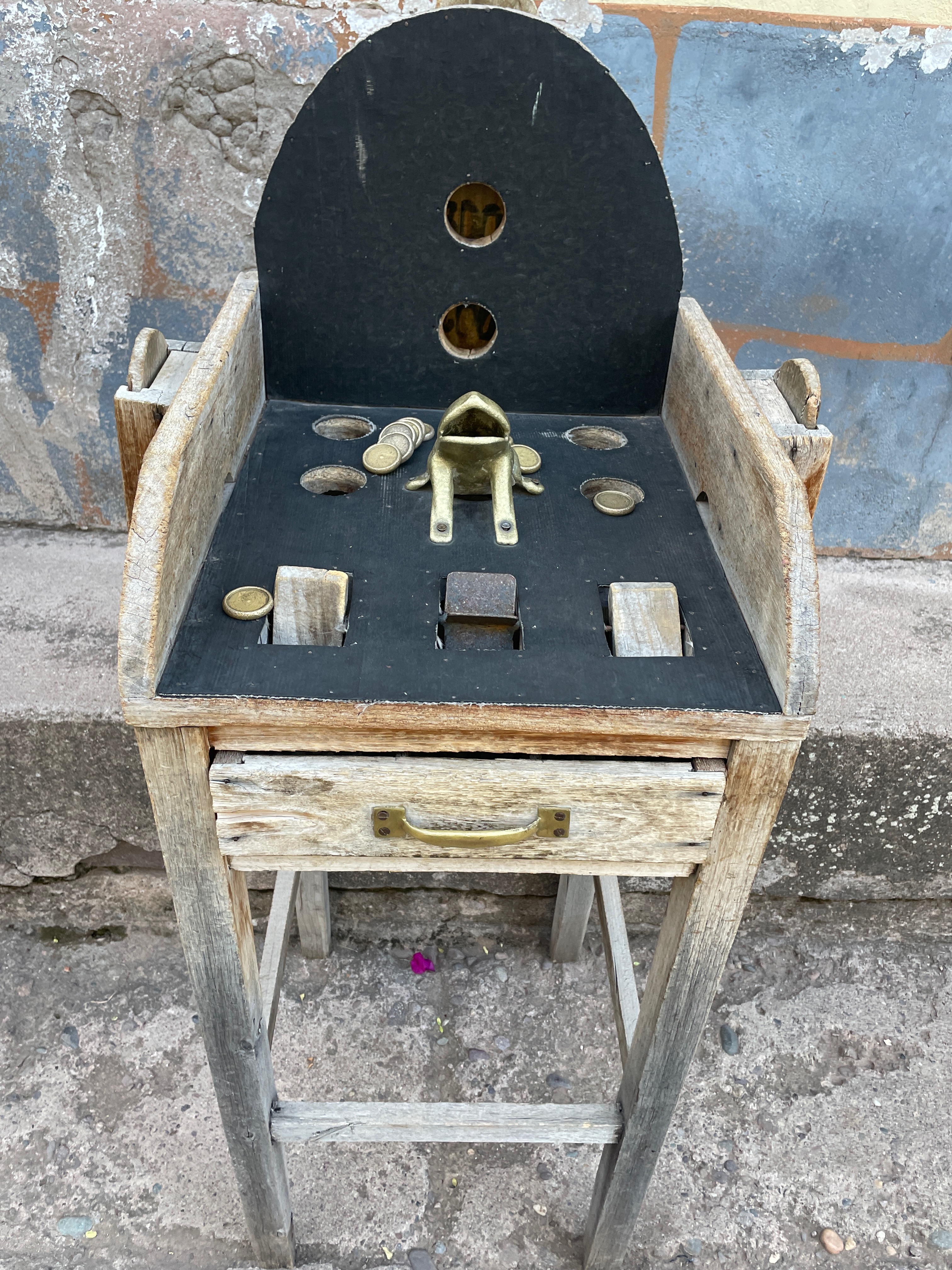
We found the taste pleasant and not overly strong, with a touch of sweetness to the pink brew while the natural-colored sample proved to have a hint of tartness to it. Finished with our Chicha, we went outside to the courtyard where Luis introduced us to a local game of skill and chance, where one took metal circles roughly the size of a dollar coin and tossed them into holes in a gameboard on a stand, the winner the one who gets the most points.
I did horribly at it, perhaps the effects of the Chicha (too much or not enough?) and I seem to recall that Stacey came out the winner. We returned to the van and motored on to Cusco where our progress towards the San Agustin Plaza Hotel was hampered by street closures due to large groups of either protestors, or celebrants, a status we were unable to ascertain. Once there we all make a beeline to our rooms and our waiting beds as a very early departure the next morning for Puerto Maldonado awaited us. Next up, the Amazon.
Links
Restaurante Turistico Apu Salkantay: https://www.tripadvisor.com/Restaurant_Review-g304036-d3573053-Reviews-Restaurante_Apu_Salkantay-Aguas_Calientes_Machu_Picchu_Sacred_Valley_Cusco_Region.html
Cafeteria Ollantay: https://www.tripadvisor.co/Restaurant_Review-g294318-d16831905-Reviews-Ollantay_Cafe-Machu_Picchu_Sacred_Valley_Cusco_Region.html
Skylodge: https://naturavive.com/web/skylodge-adventure-suites/
Discover more from 3jmann
Subscribe to get the latest posts sent to your email.


 3jmann