January 5 – 7, 2024
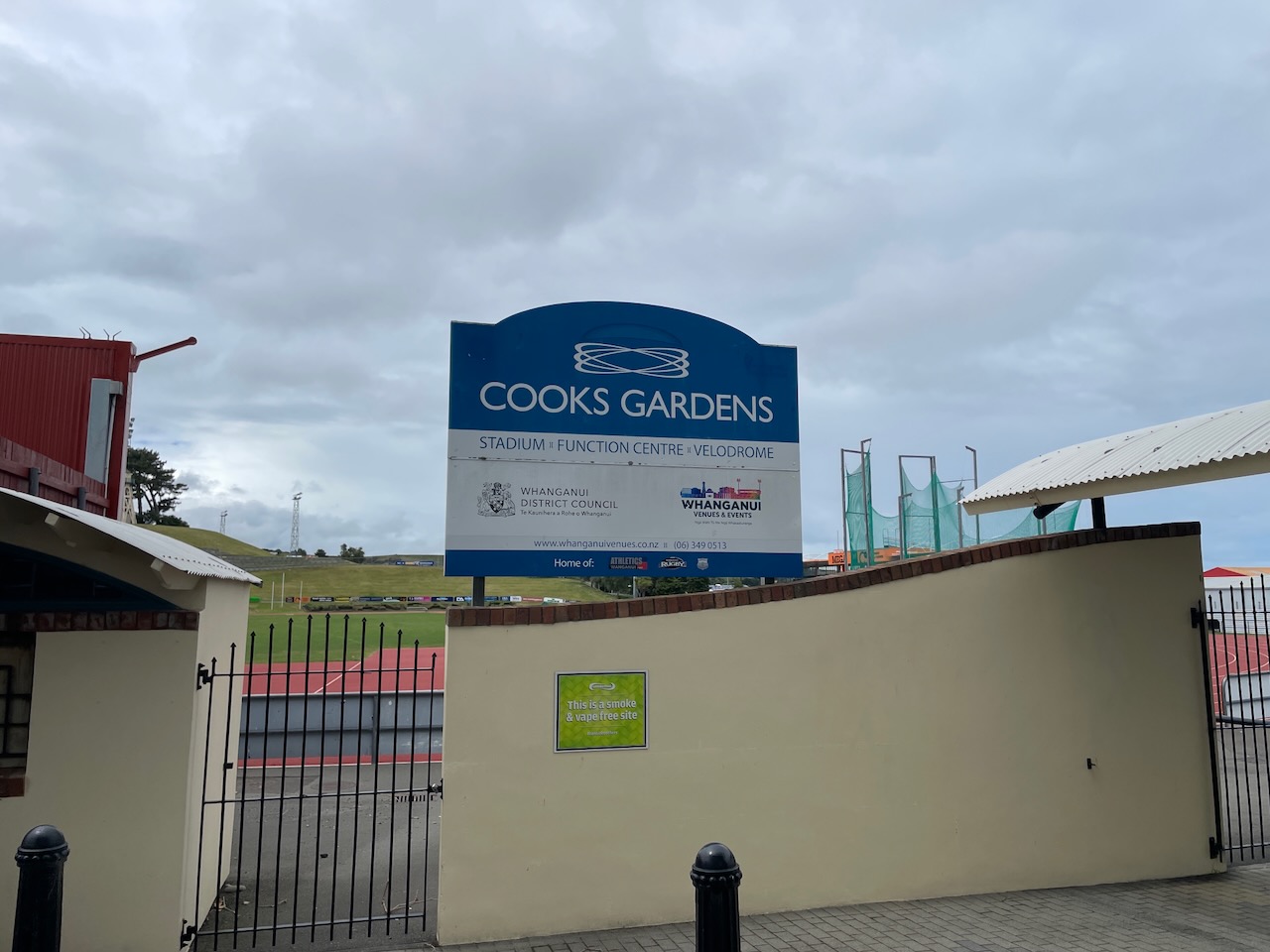
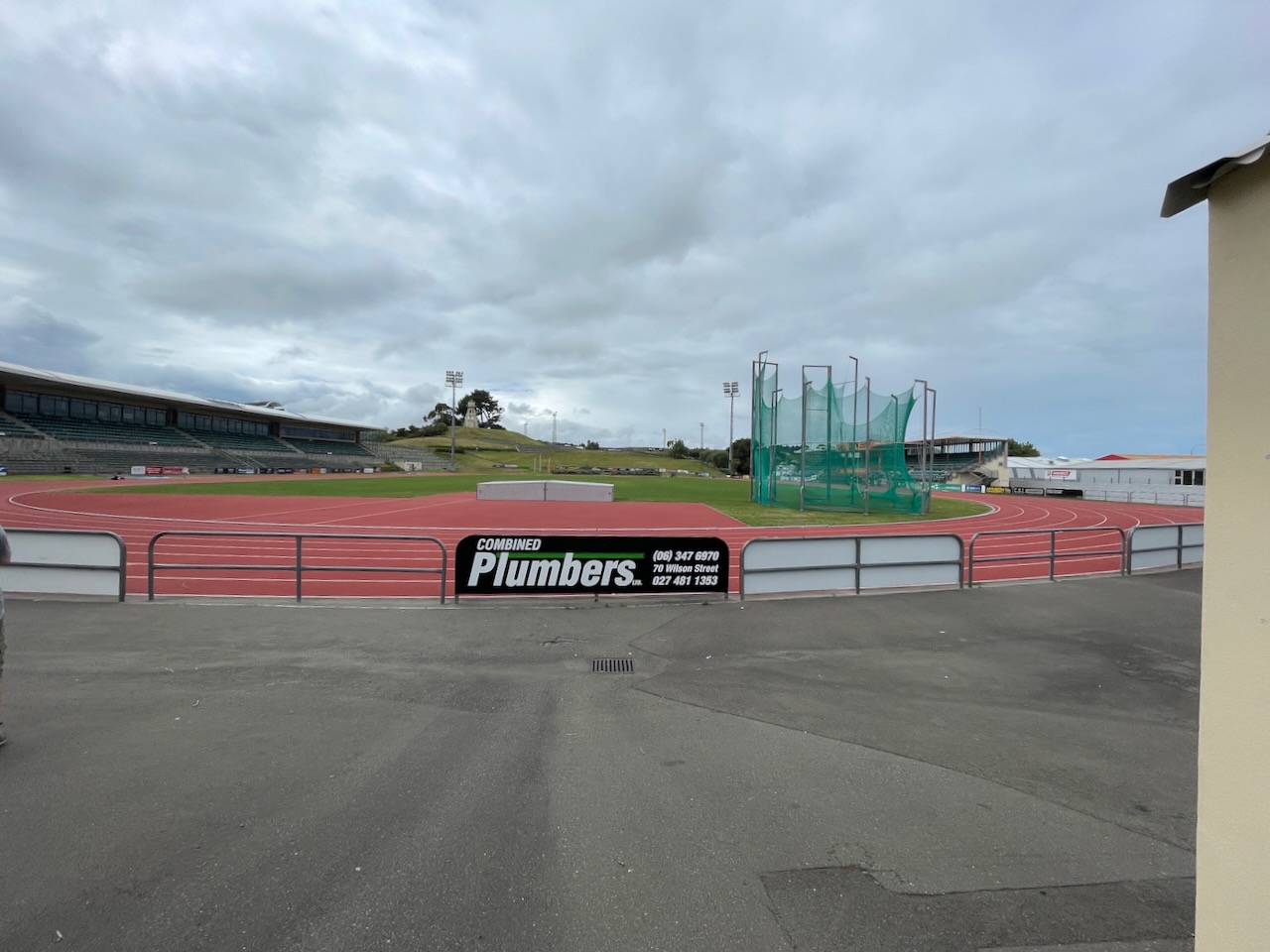
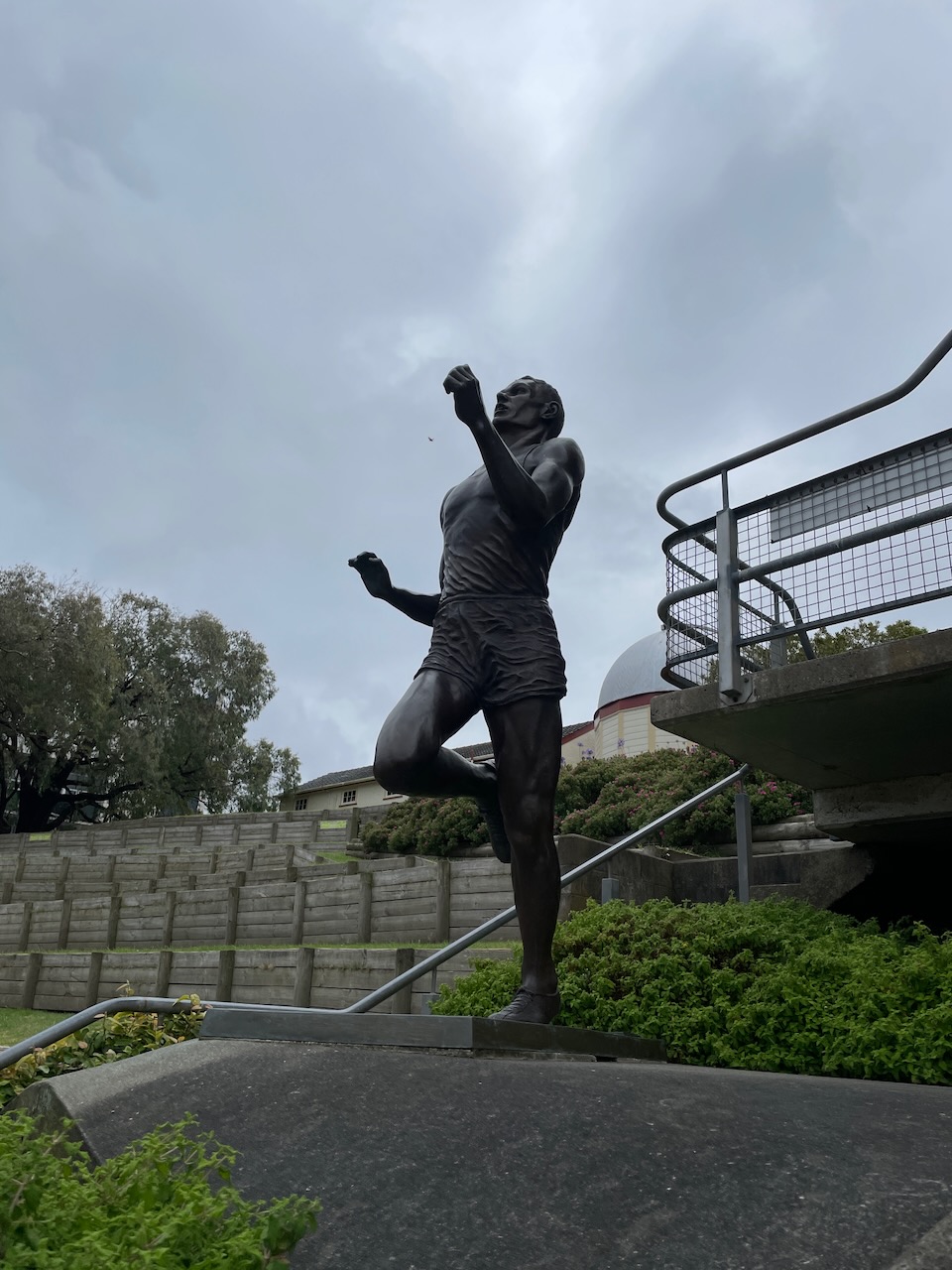
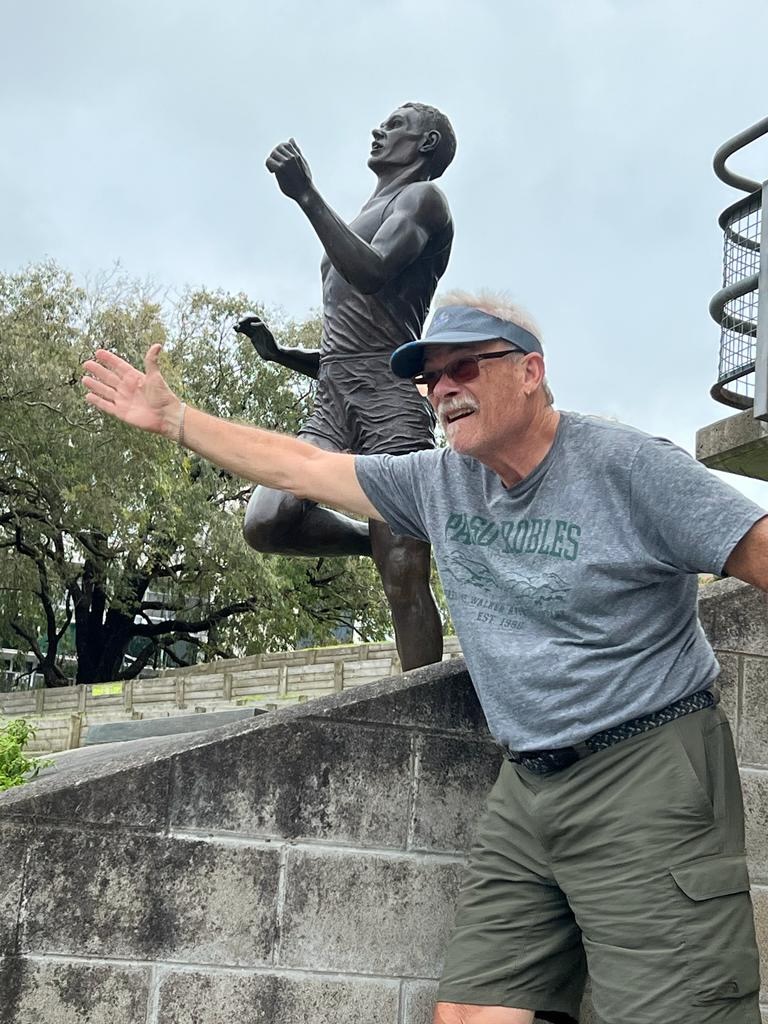
On the way back to the house in two cars, ours made a brief stop at Cooks Gardens, a multi-purpose stadium that is currently used mostly for rugby union matches, athletics and cycling. The main stadium, known as Westpac Stadium, can hold 20,700 people with 3,500 covered seats and while there, we admired a bronze statue of Peter Snell, who broke the world record for the mile (3 minutes 54.4 seconds) in 1962 at this very same venue.
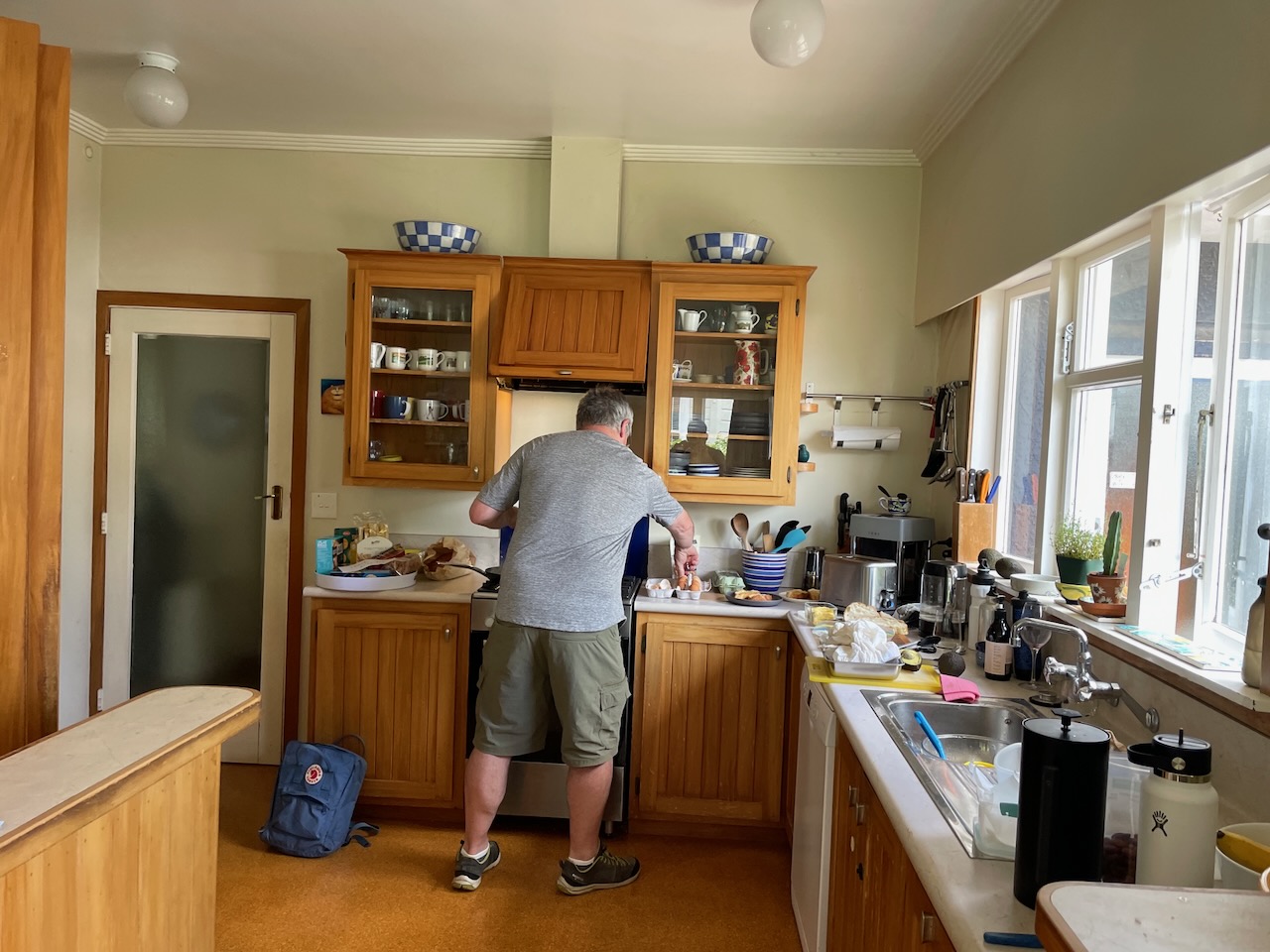
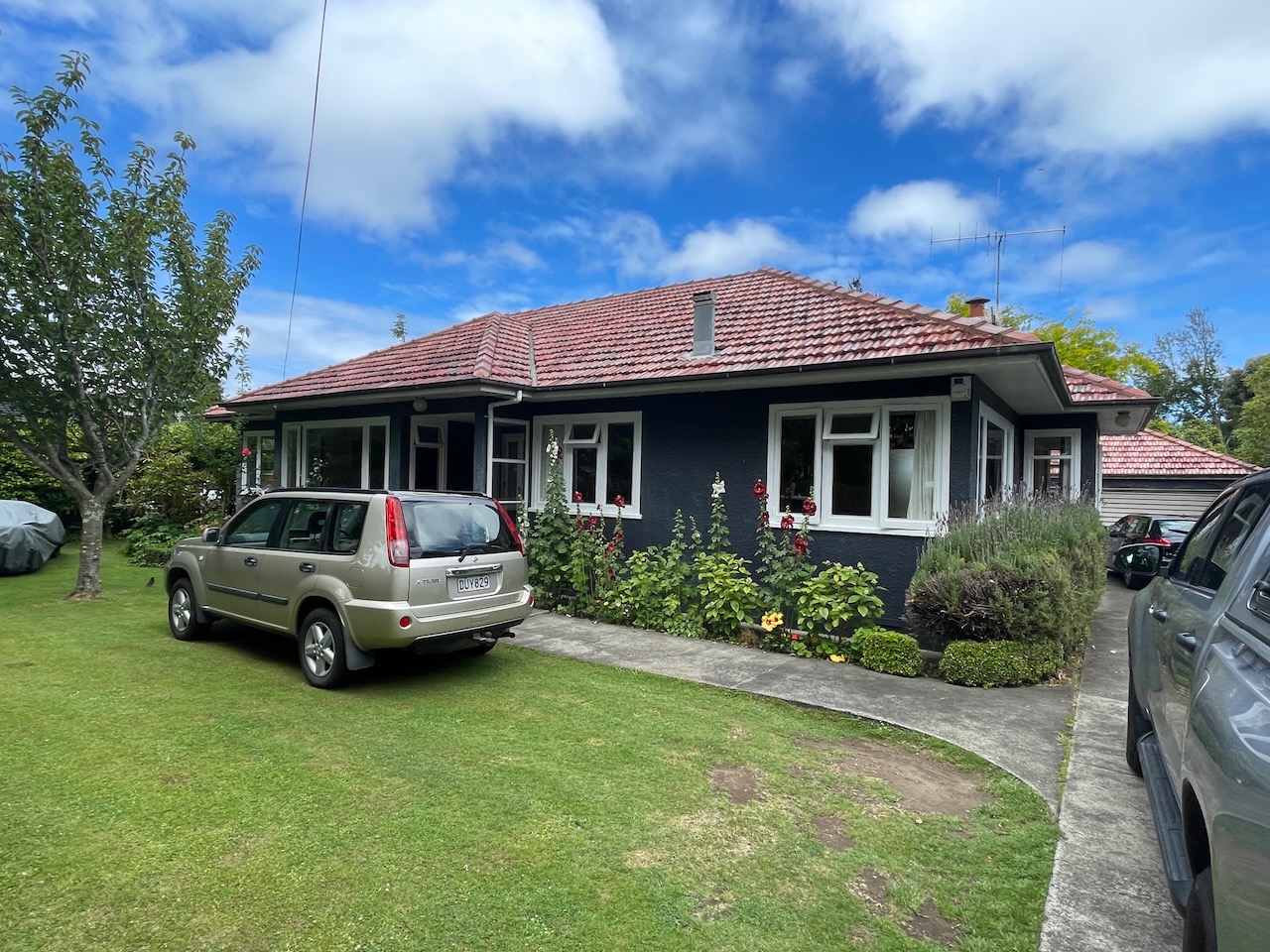
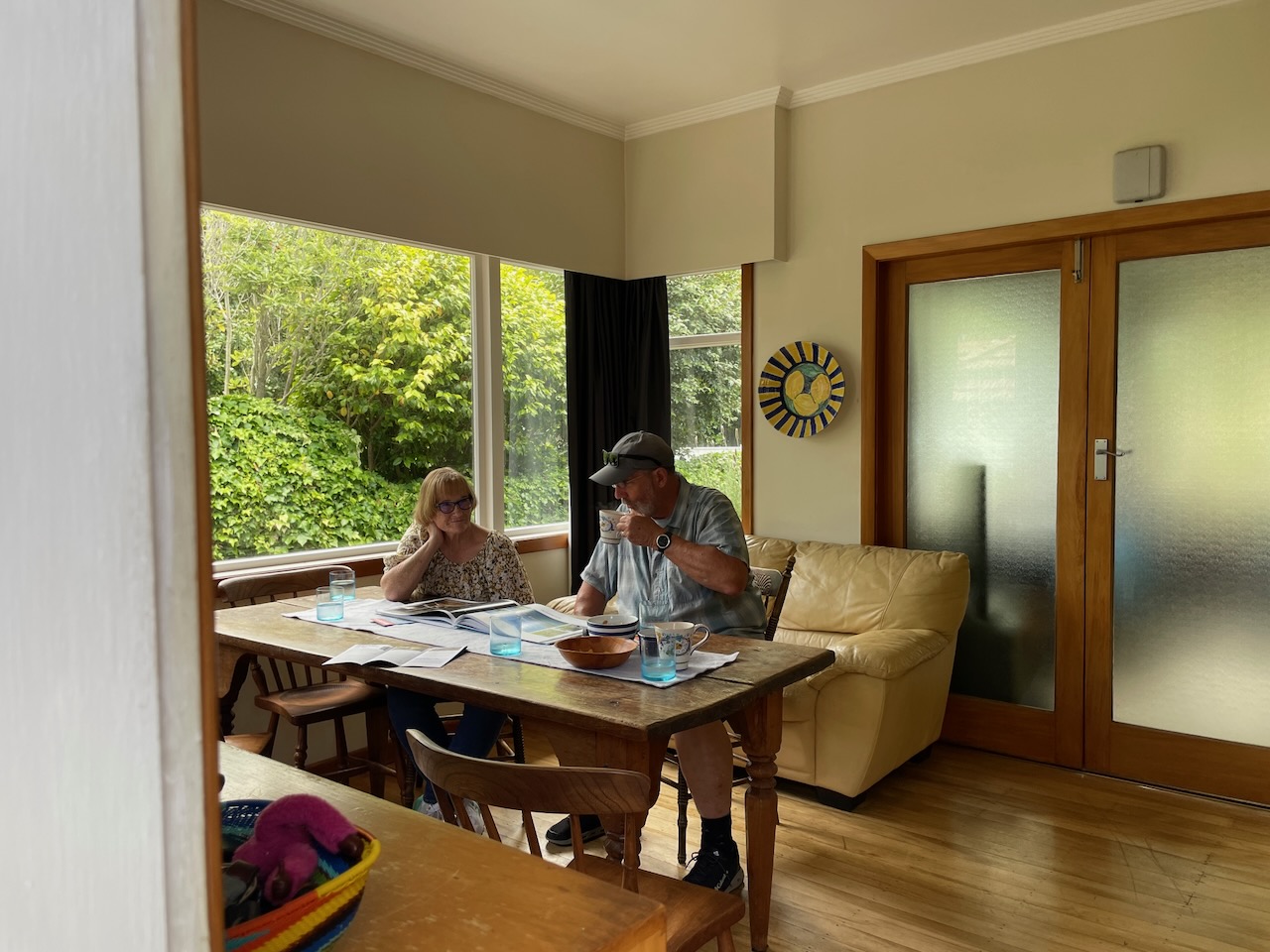
After our return to the house, we enjoyed a late bacon and egg breakfast prepared by John, which would hold us over nicely until our planned BBQ later that evening. I’ve known John since the early 1990’s when he lived for a few years in Los Angeles. If I recall correctly, he worked for a New Zealand Trade Agency, and we met up when he and our mutual friend Walter came across each other on a bike ride.
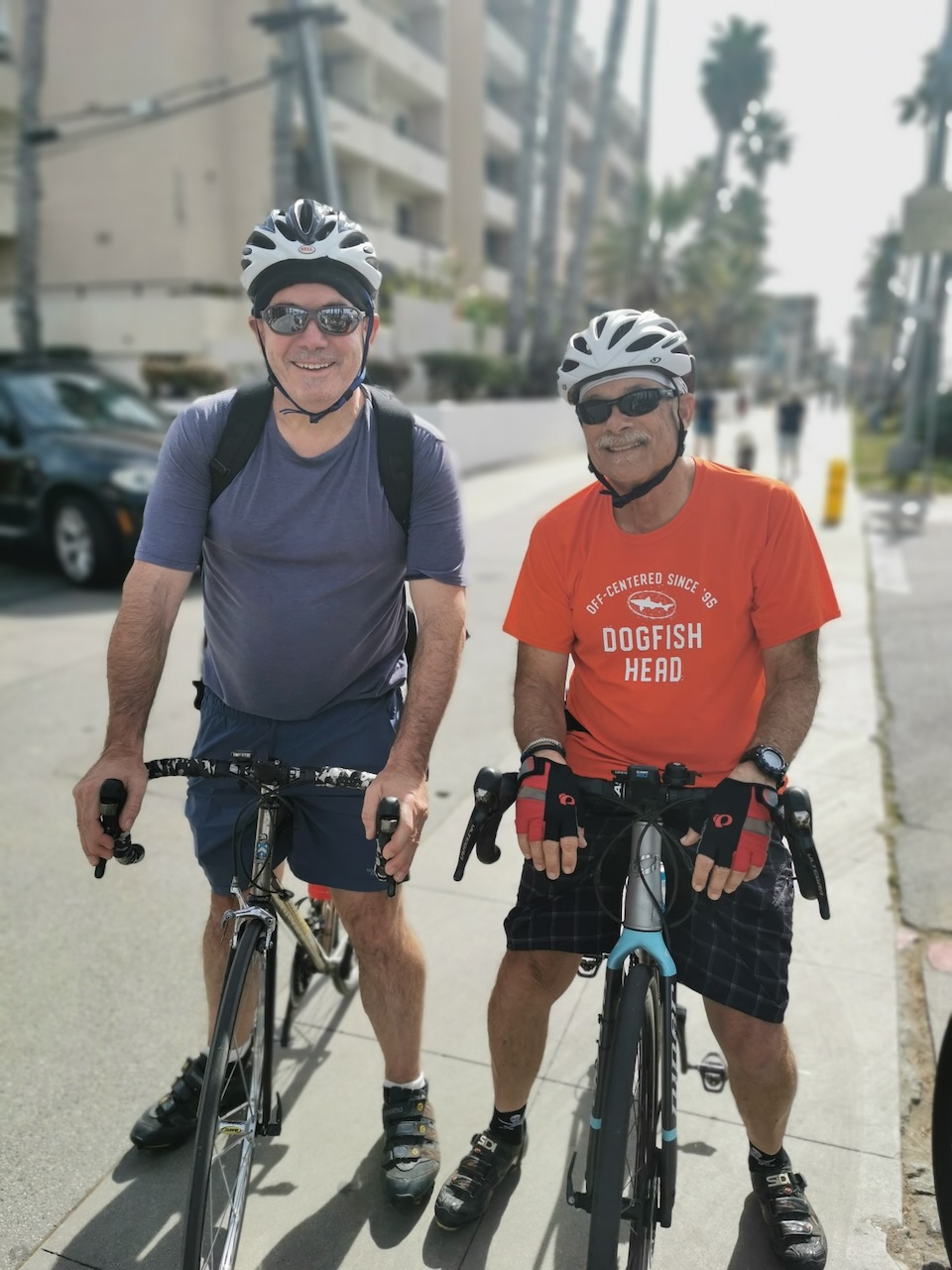
He would introduce us to the joys of Steinlager beer, heavily dosed eggnog at the holidays, and pain in our legs as we tried to keep up with him on the bike. I’ve got a picture that I can’t locate, of he, another friend Raymond, and myself just after we finished the Solvang Century, a very hard ride as it comes early in the season when you’ve had little chance to ride into the condition needed to make it enjoyable. It’s one of those defining moments, sharing this sense of accomplishment with a good friend.
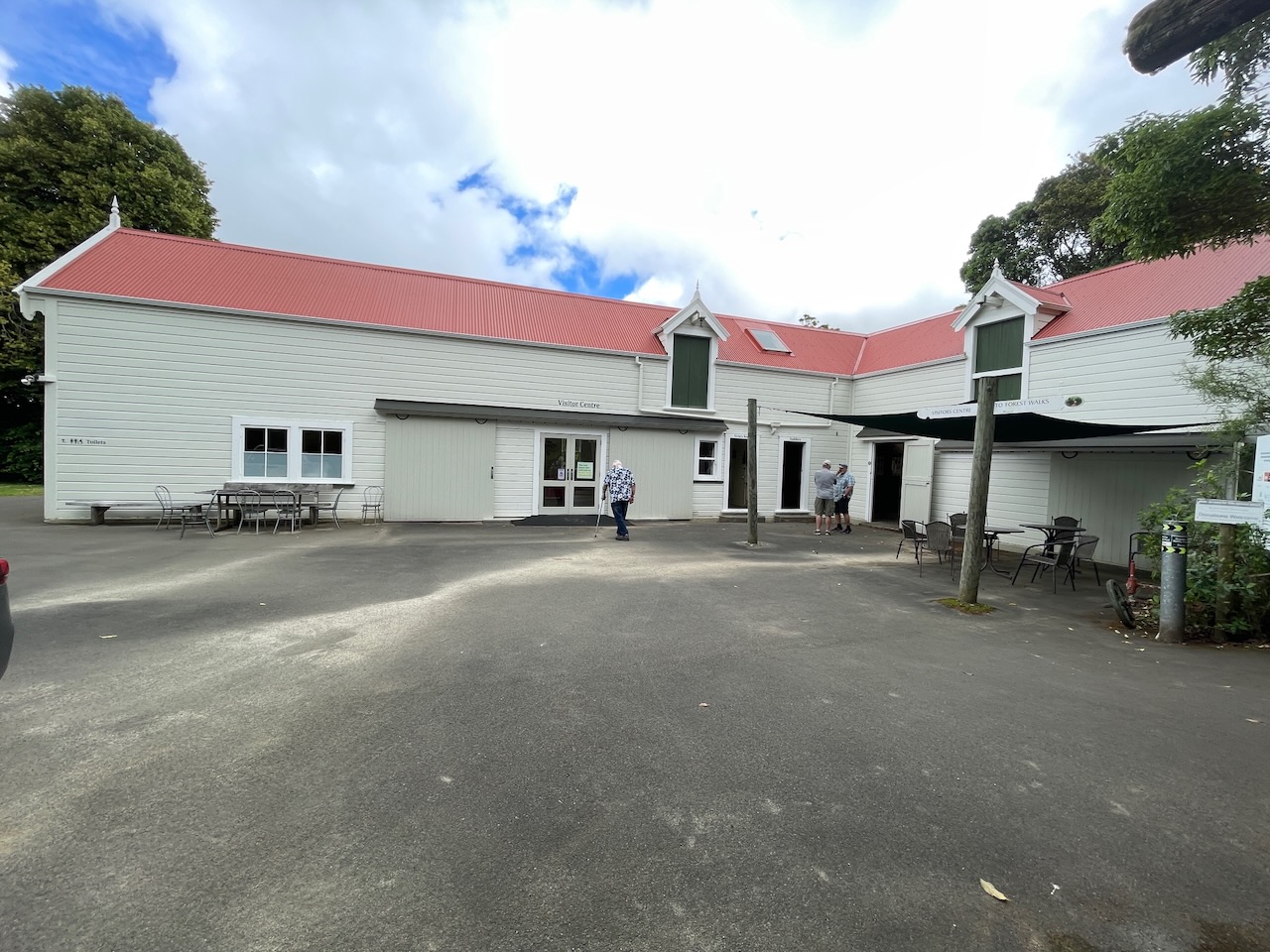
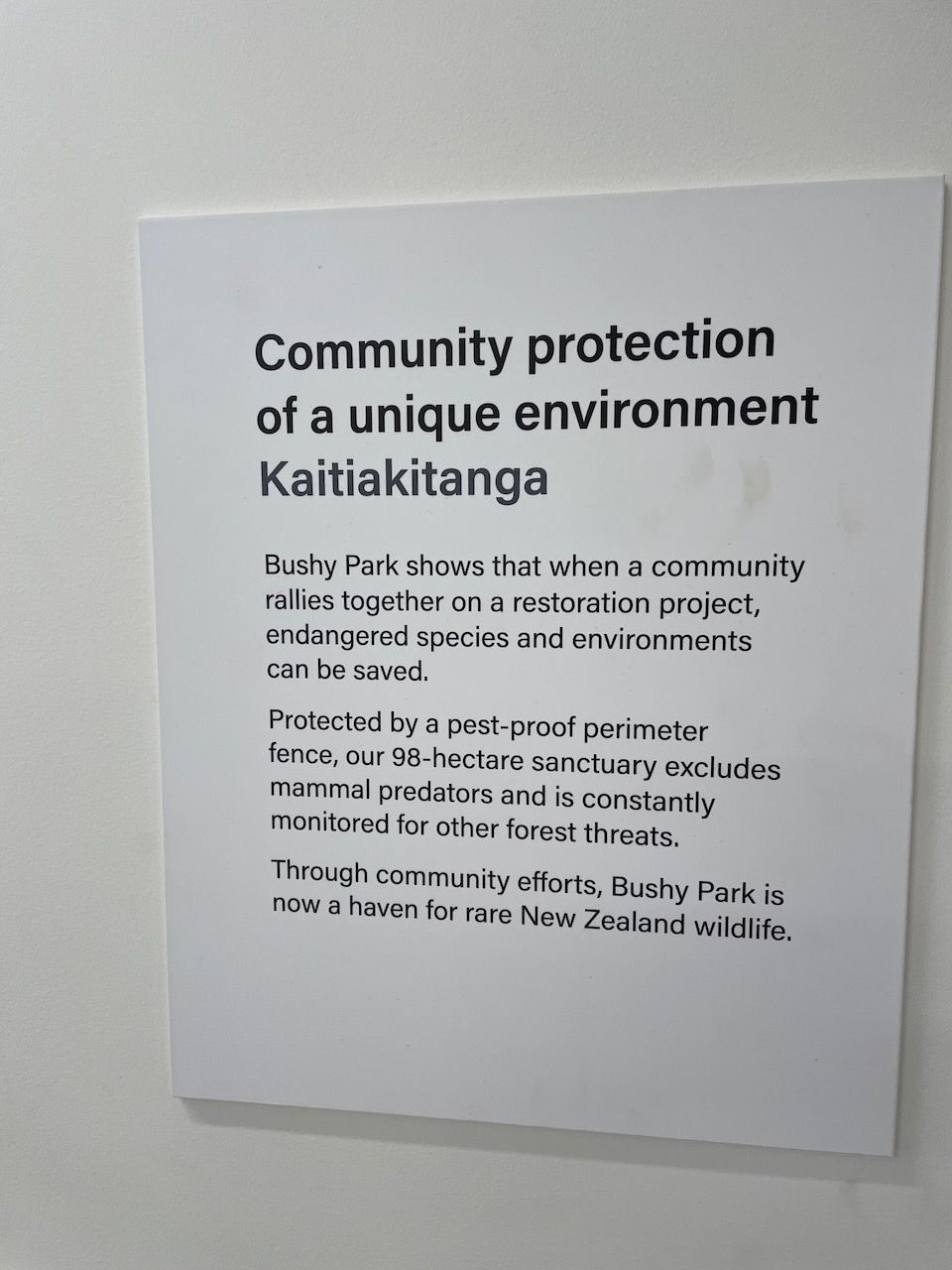
From there we drove to Bushy Park Sanctuary, a predator-free native bird sanctuary and 250 acre “lowland remnant of rata-podocarp taka-puketea [sic] rainforest” that is considered to be amongst the 25 best restoration ecology projects in Australia and New Zealand. During 2004 to 2005, a 3.0-mile pest-exclusion fence was built around the park and two aerial drops of rodent bait occurred in 2005 to free the park of non-native pests to encourage the return and growth of native plant and animal species.
This would be our first, but not the last, contact with an initiative in New Zealand to eliminate rats, stoats, and possums from the country by 2050, as they are an ecological scourge ravaging its native wildlife. Known as the Predator Free 2050 Plan, which began around 2018, the government invested NZ$28 million into a joint venture company, Predator Free 2050 Ltd, with a plan for an additional $1 added for each $2 invested by the public and third parties such as philanthropic foundations or local councils. It was later reported that they had also pledged an additional NZ$7 million per year after the initial NZ$28 million was provided over the first four years.
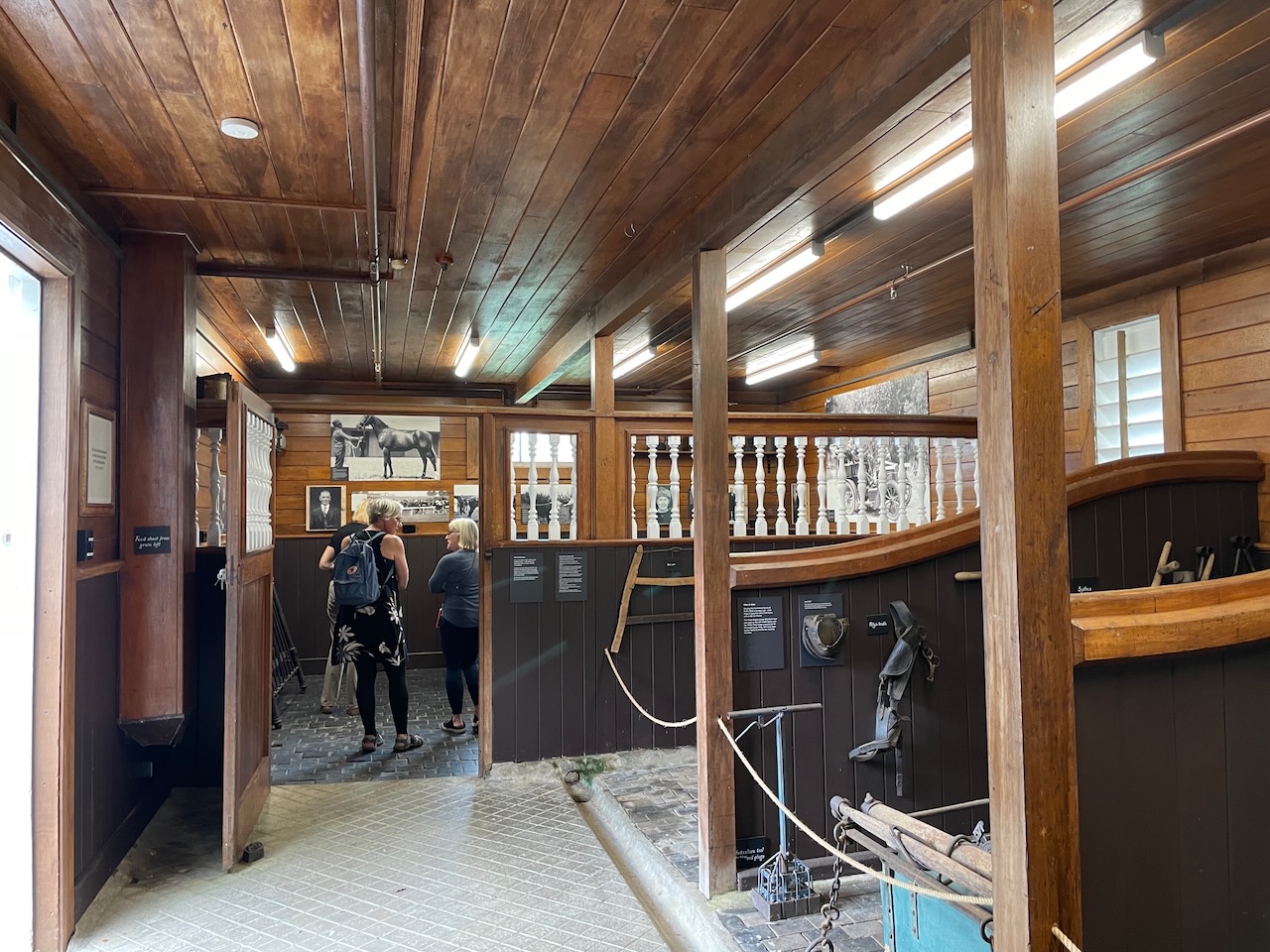
The history of the property goes back to the early 1900’s when G. Frank Moore, a cattle and racehorse breeder desired to build a homestead on a hill overlooking the countryside below. Designed by Charles Tilleard Natusch and built by Russell and Bignell in 1906 at a cost of £4,566 it includes a 109 feet long, 6 feet wide hall that runs the length of the residence, as well as wood paneling, carved mantels, and art deco lights. Moore gave the homestead and surrounding acreage to the Royal Forest and Bird Protection Society of New Zealand n 1962.
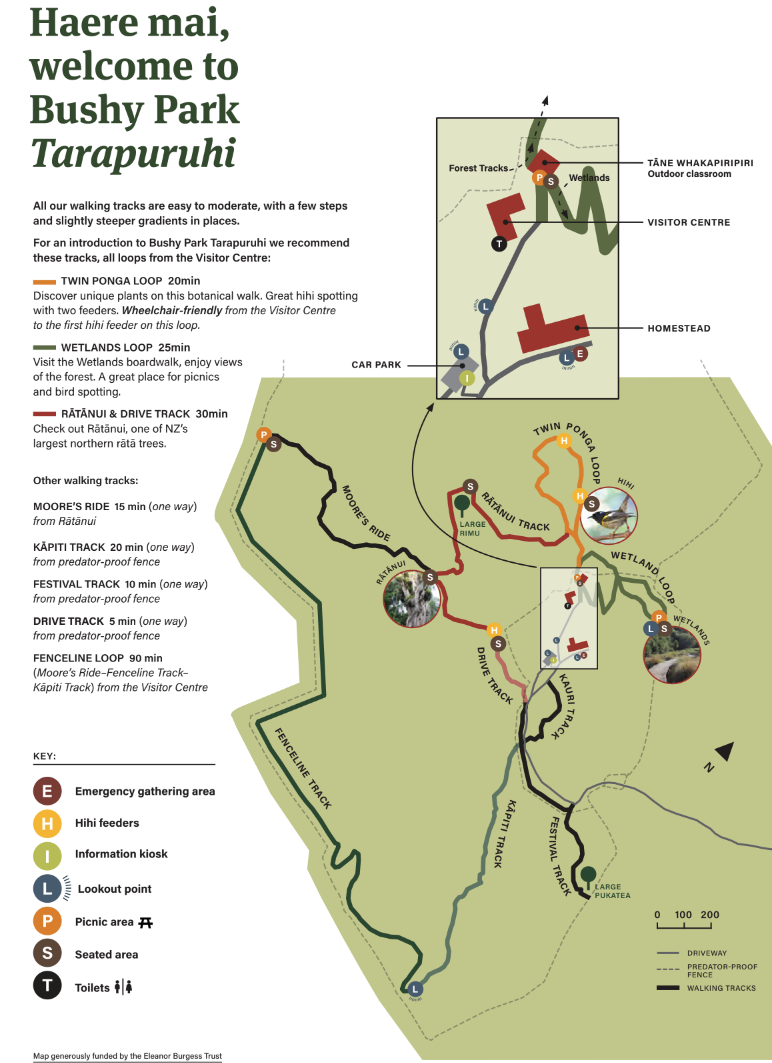
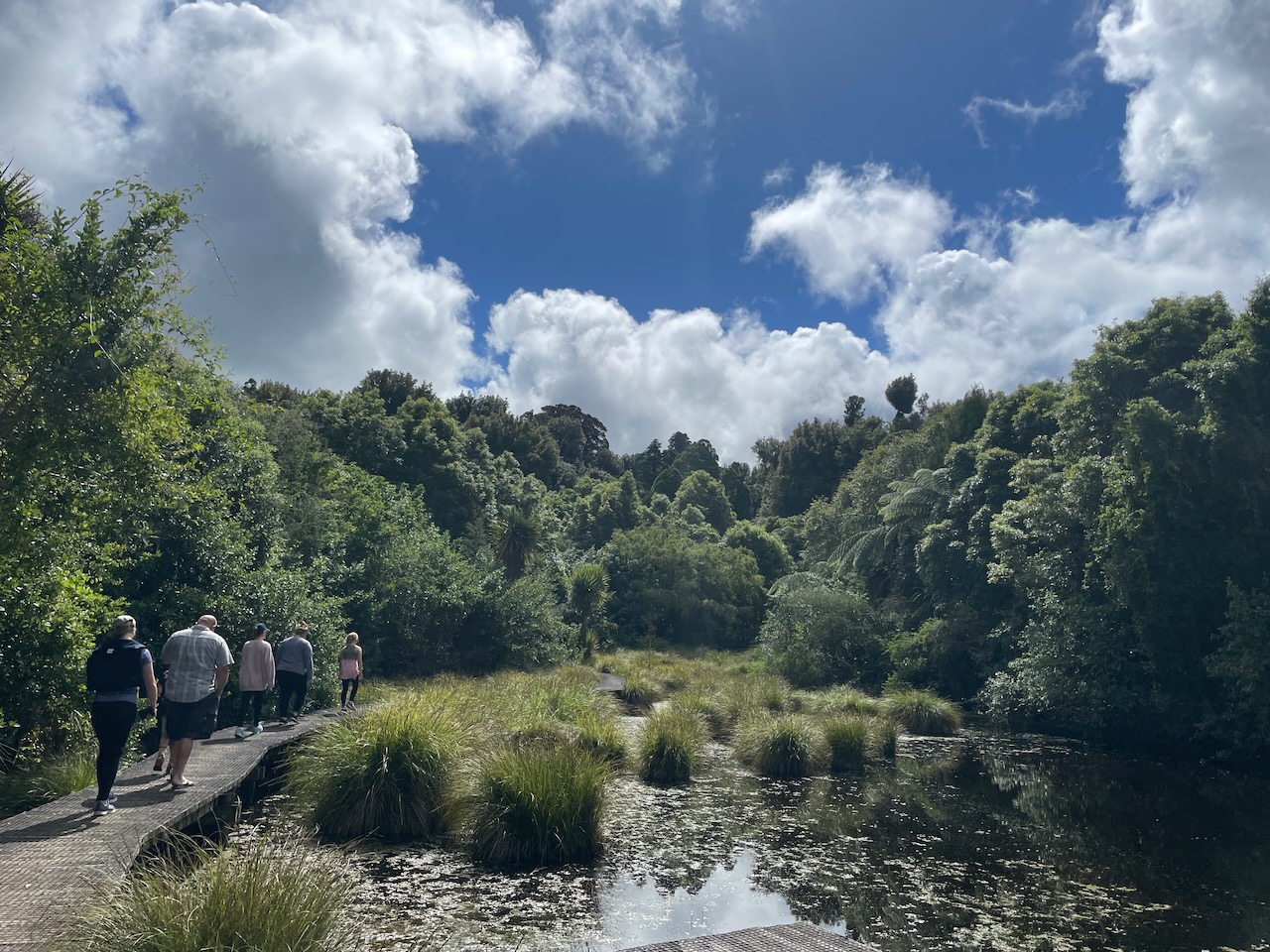
After arriving we parked in a lower lot and walked up to the Visitors Center which spoke of the history of the place and its conservation efforts, and when finished there, made our way to the trailhead that leads to a series of trails throughout the property. As walking any distance was not in my capacity, I found a comfortable place at a picnic table while the others walked for about an hour, as I sat and greeted folks venturing into the forest. Soon enough the others returned, and we took a short jaunt down the wetlands loop to the marshy area of that name.
Finished we walked up to the homestead to meet Dale Pullen who operates it as a fully licensed five-bedroom bed and breakfast homestay and function venue. Before seeing him, we first were introduced to his day manager who gave us a quick look at the kitchen, bar, and large room used for functions and then who should appear but Dale himself, a nattily dressed man in a red floral-patterned blazer with a white shirt and red tie that matched the jacket commendably.
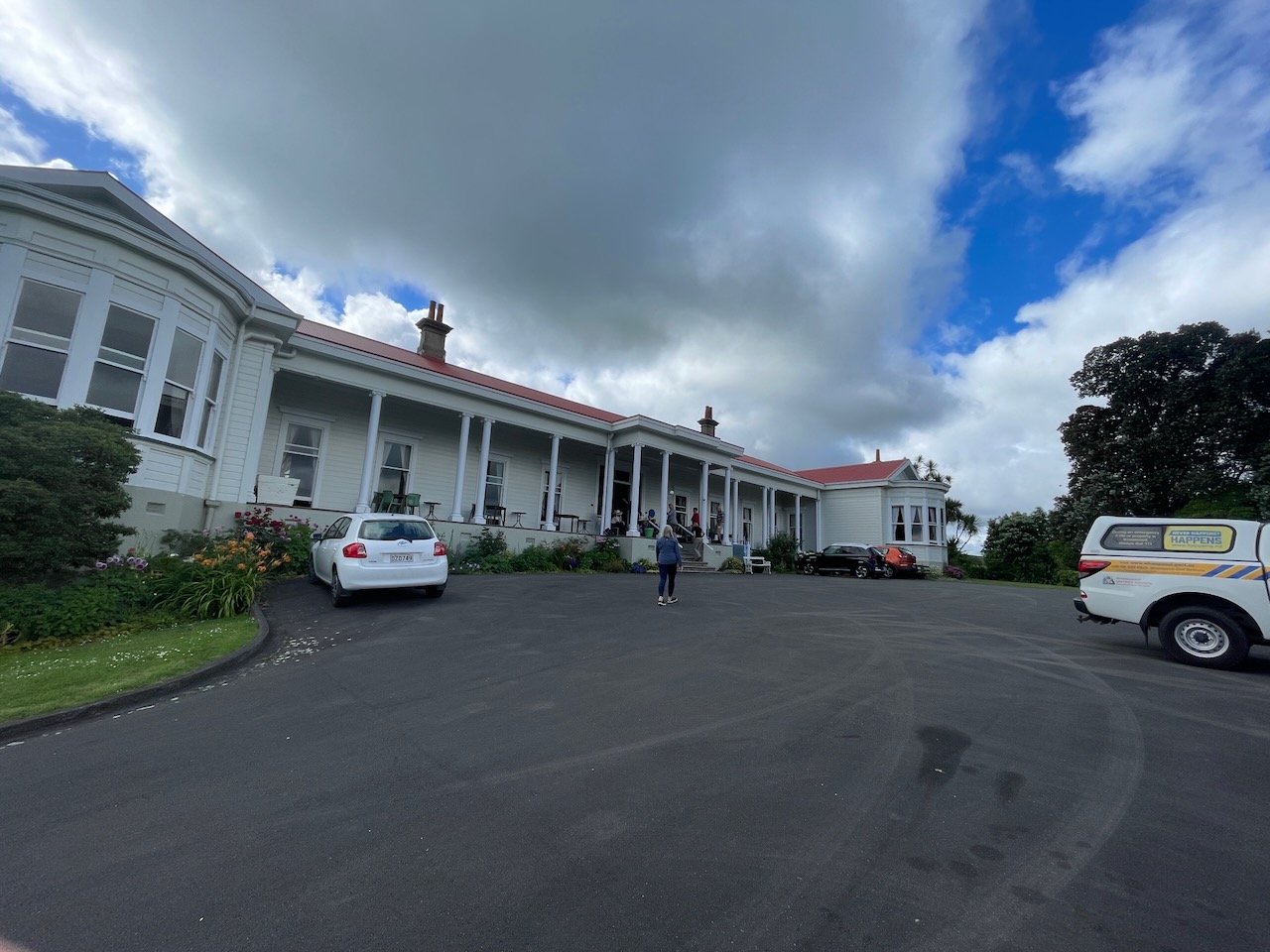
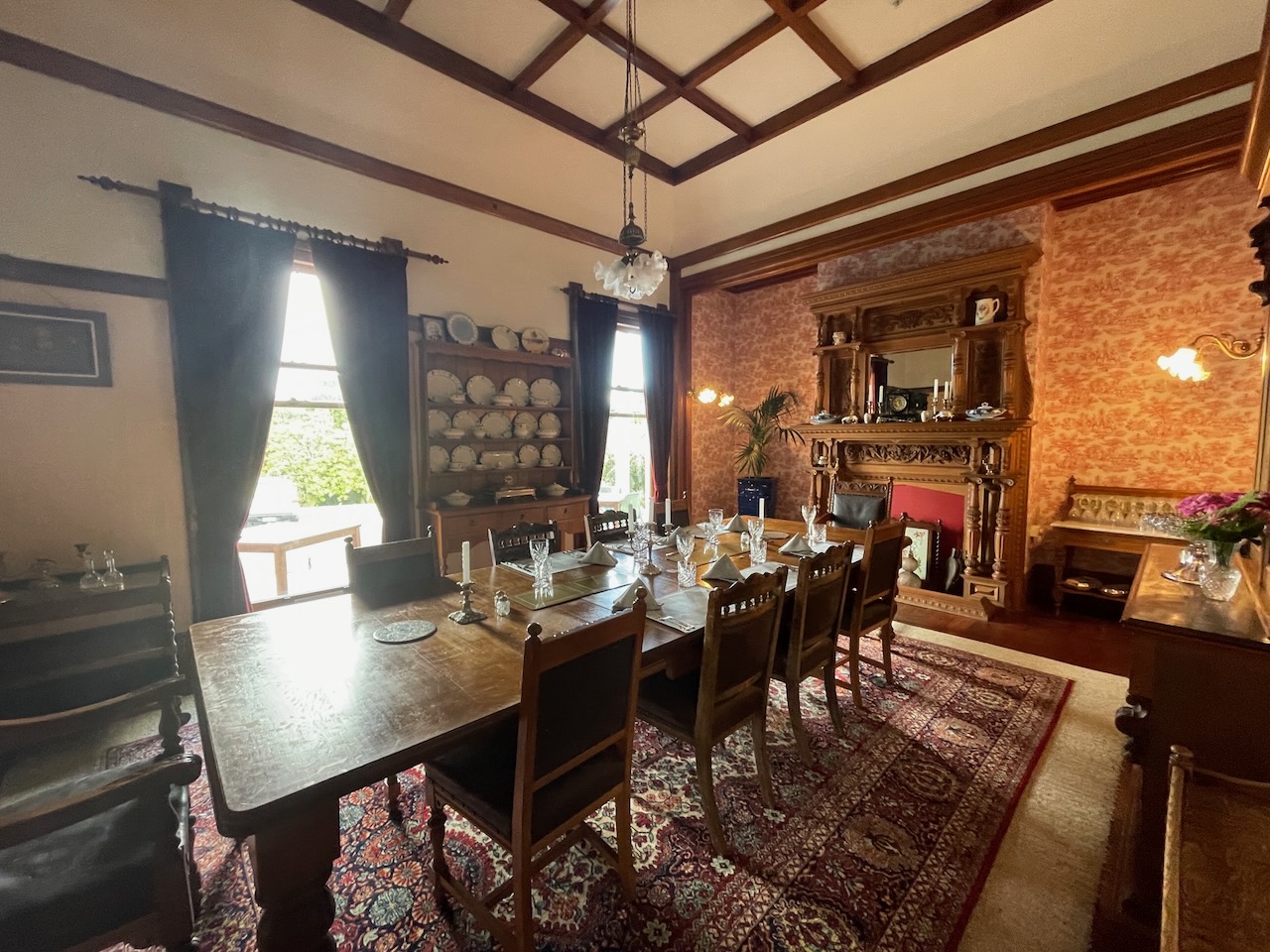
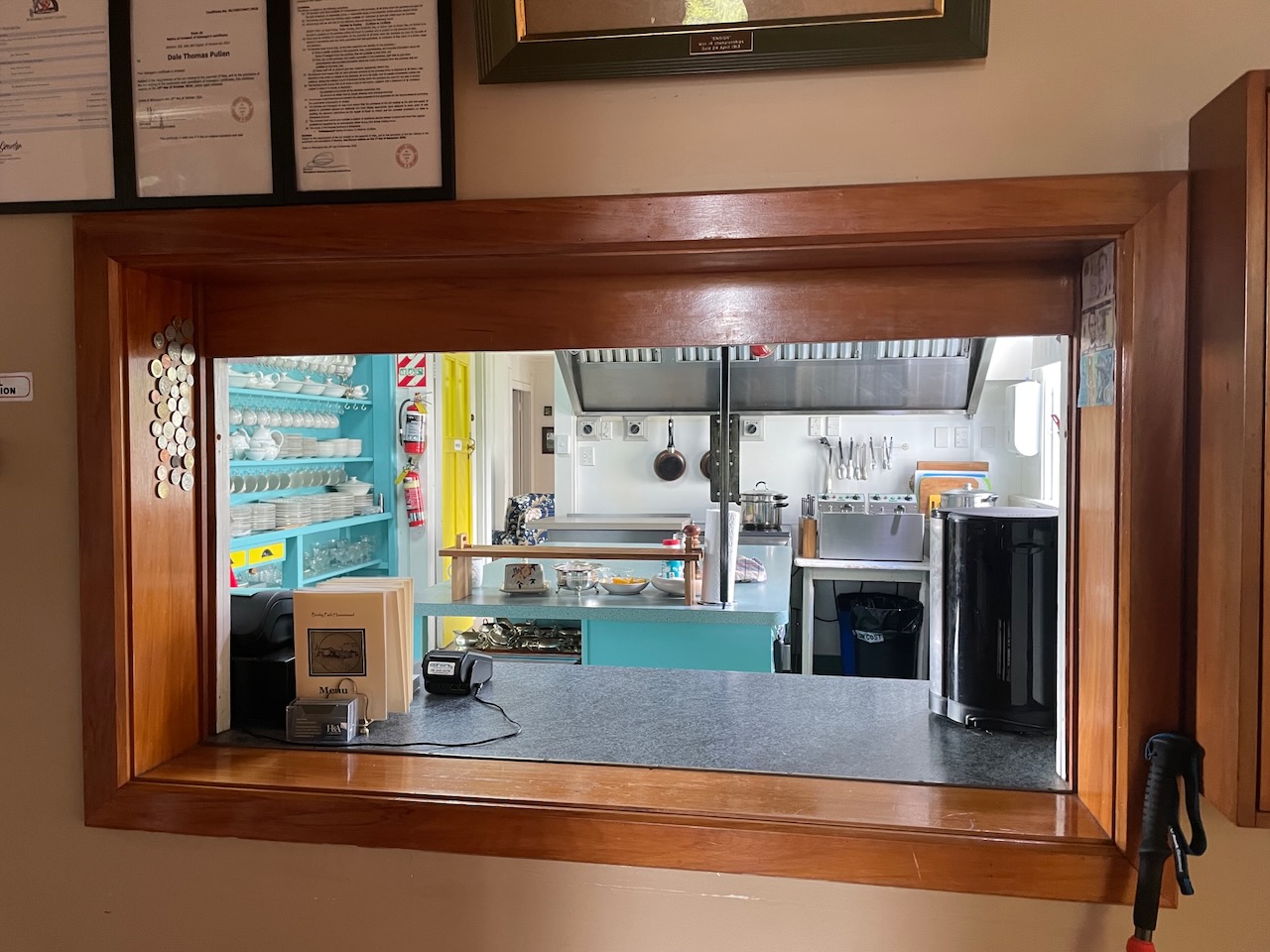
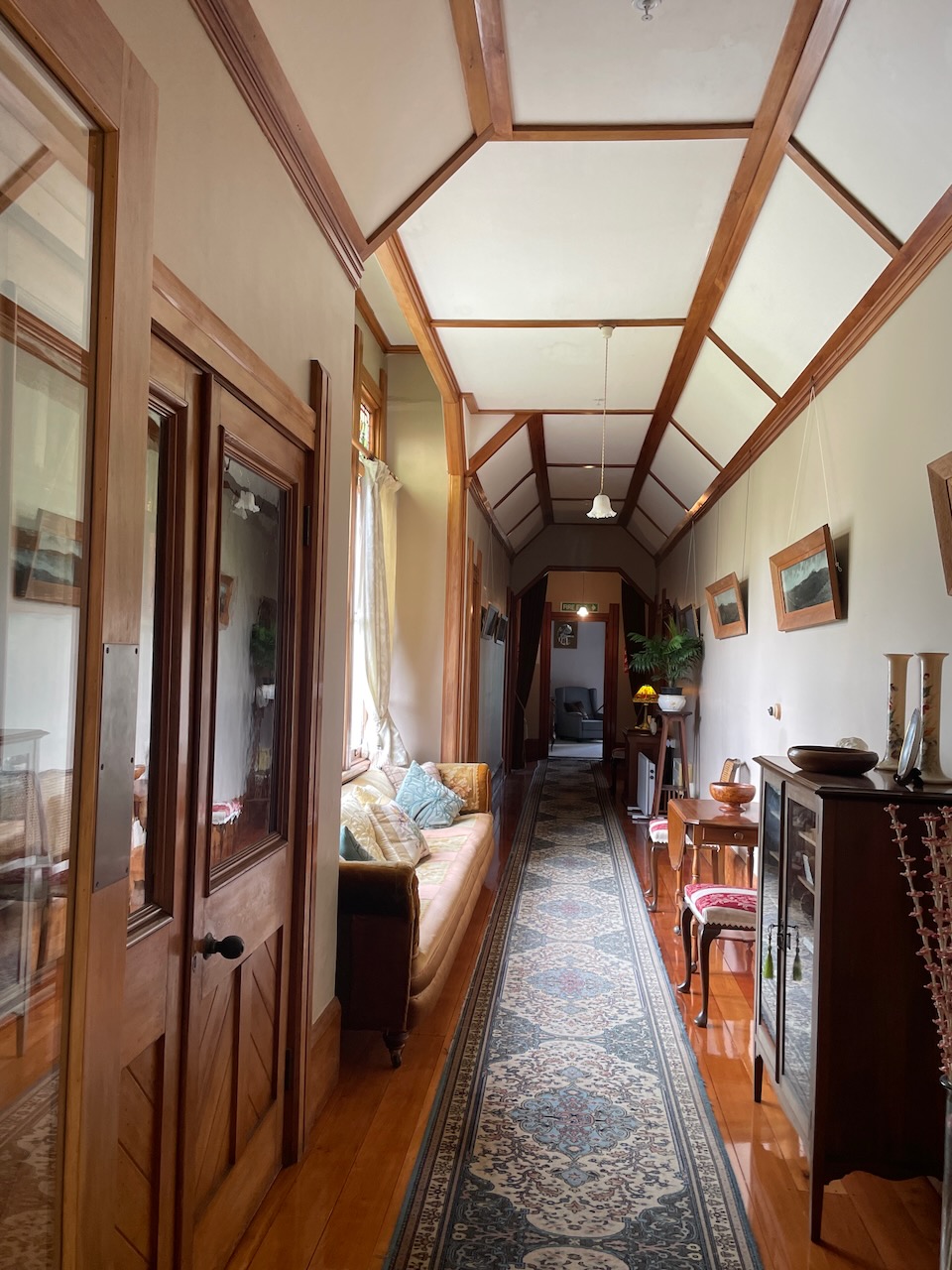
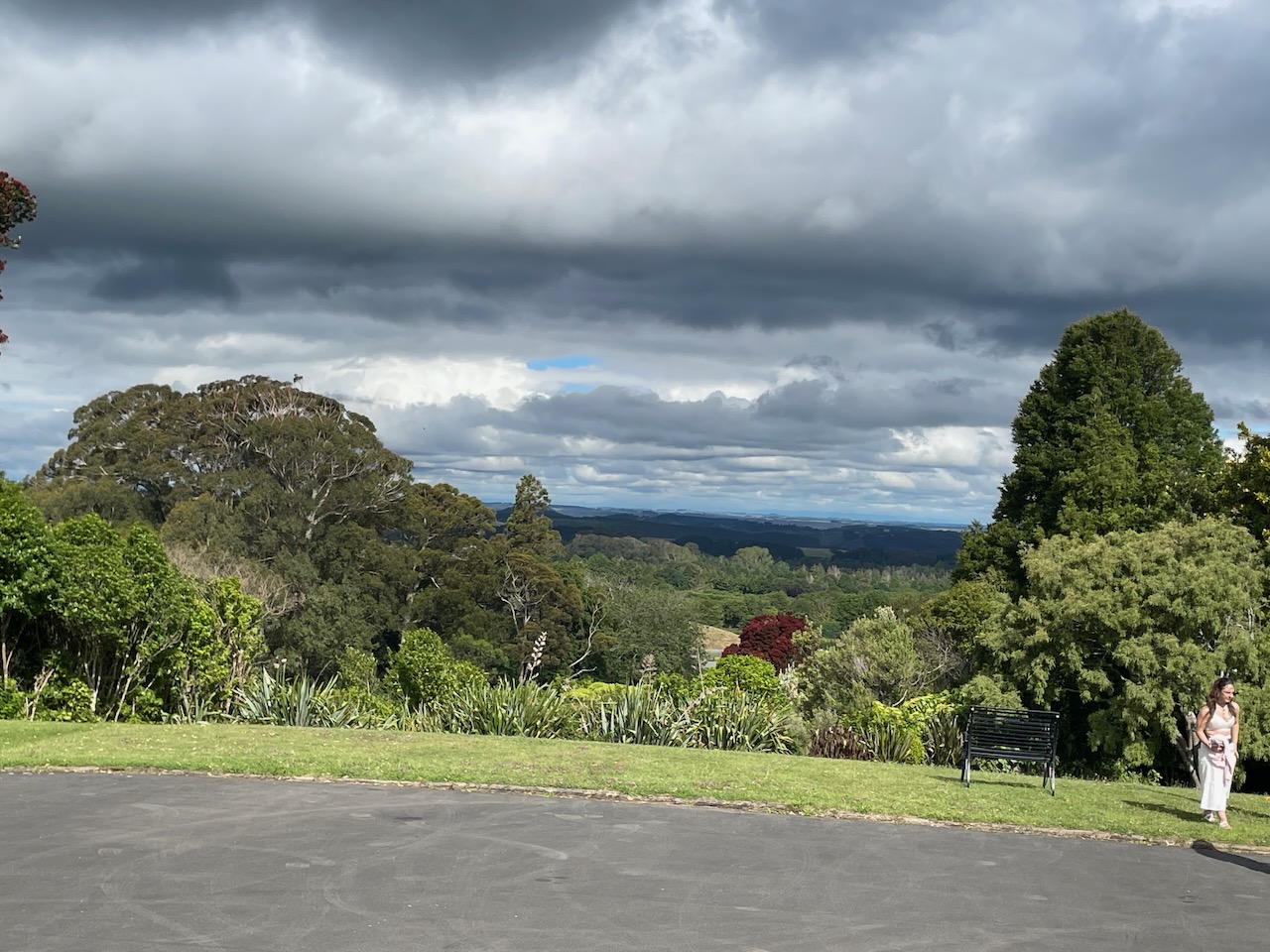
He proceeded to show us the rest of the building, that is the rest of the long hallway and the bedrooms before conferring with John who suggested that we should all have a drink out on the front porch and enjoy the afternoon there. And soon thereafter that is where we found ourselves, enjoying the view while Dale talked about his background and the logistics of running the homestead before treating us to his surprise of the day, his prized antique Citroen motorcar.
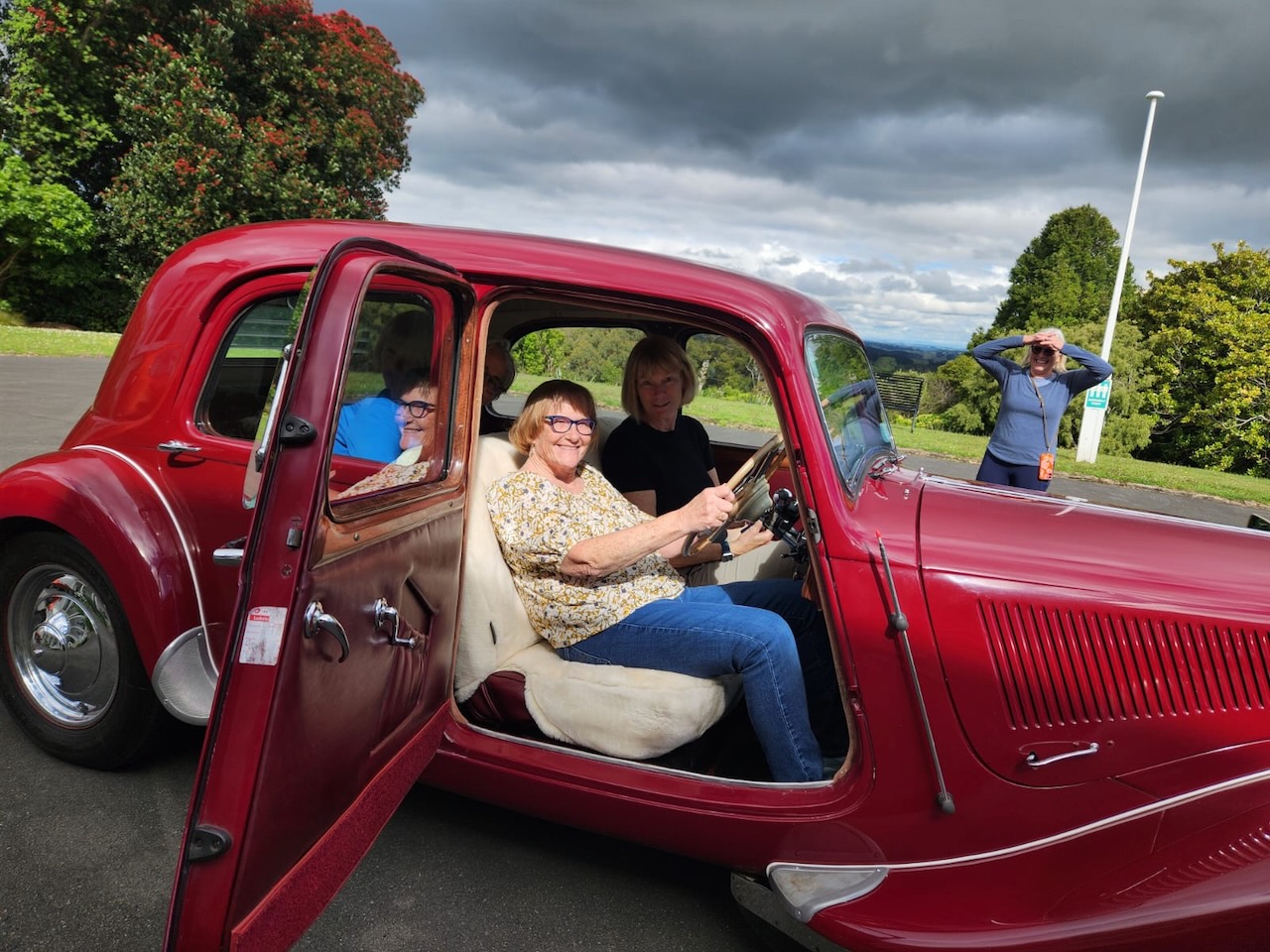
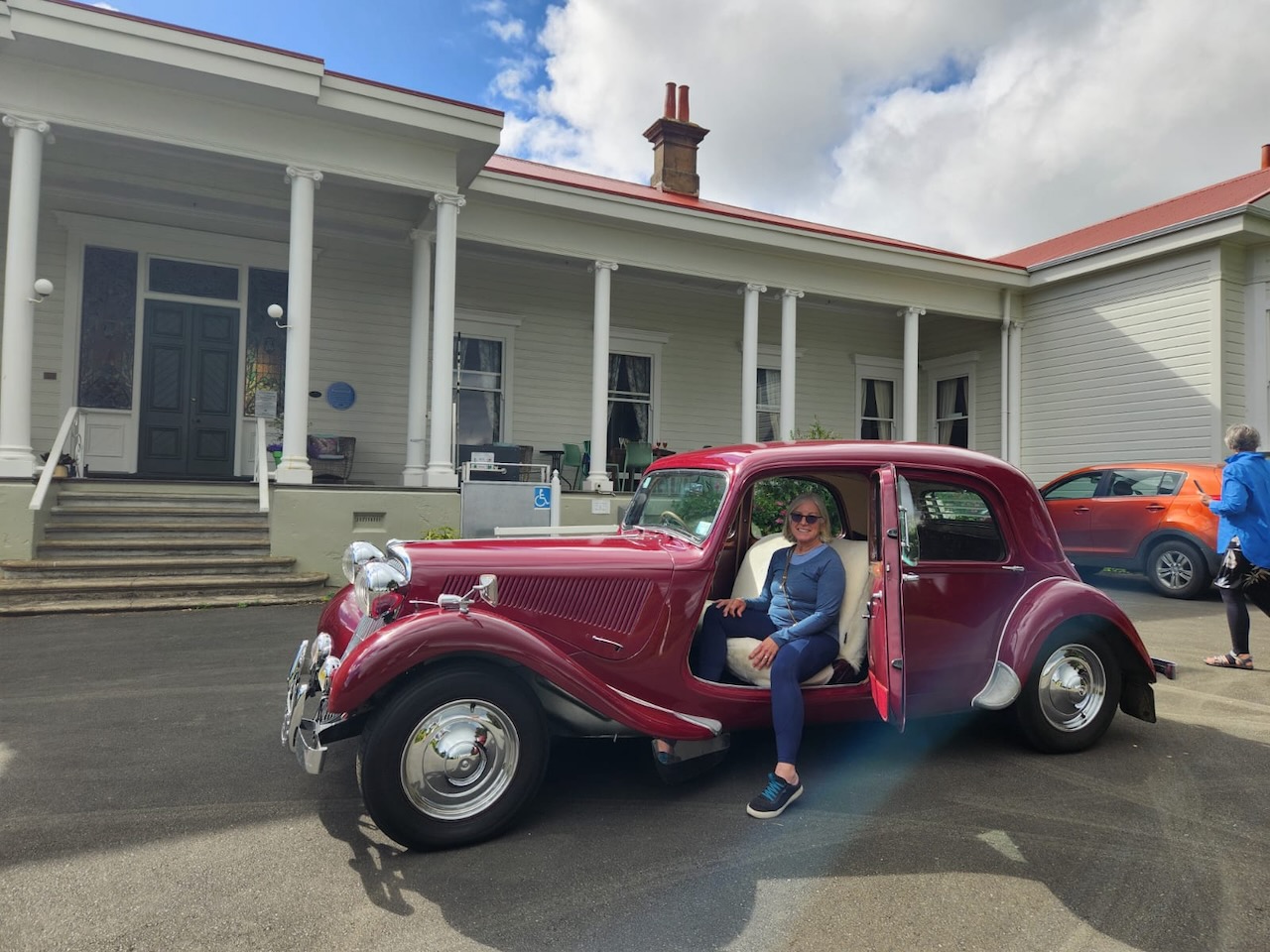

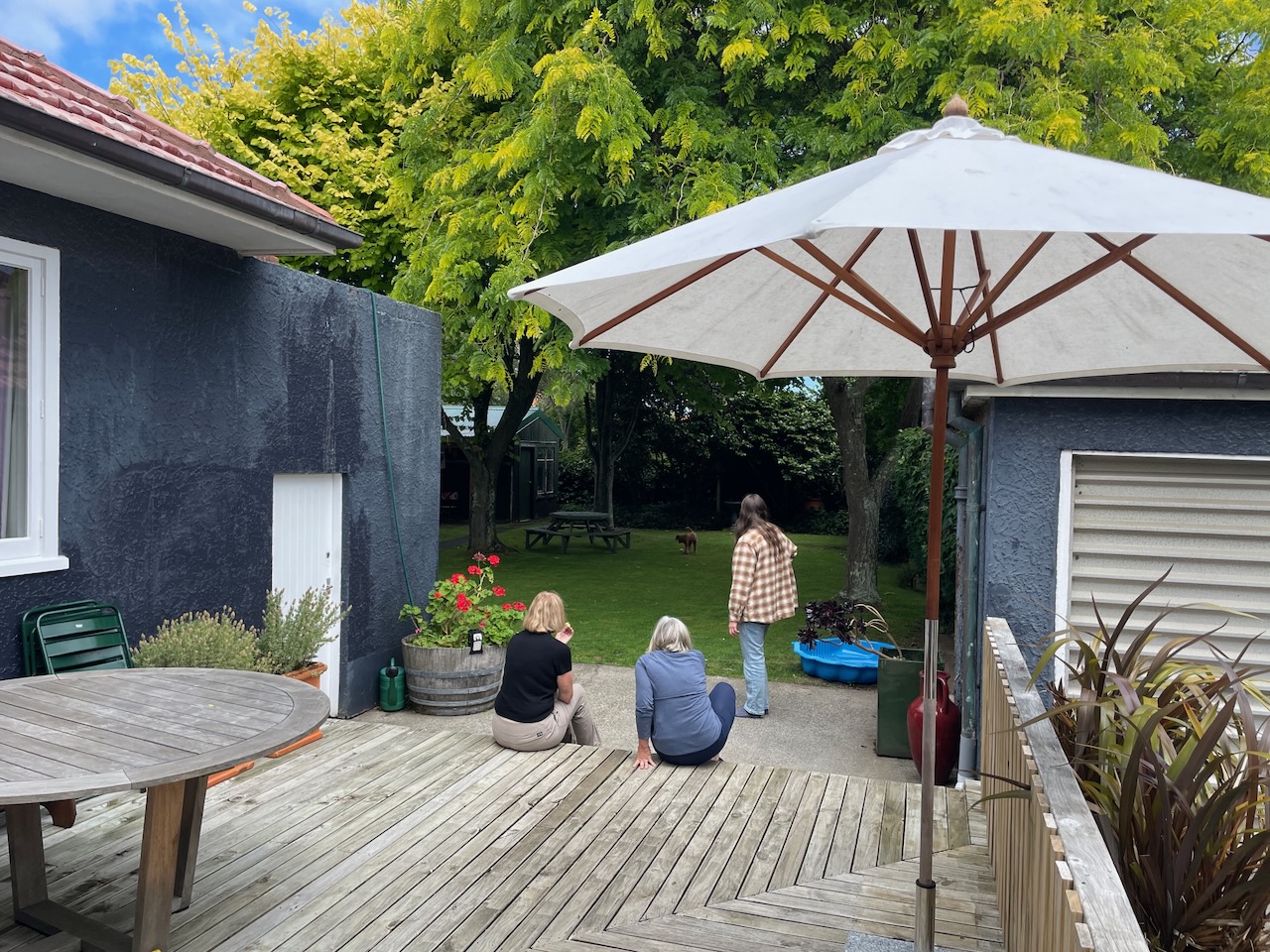
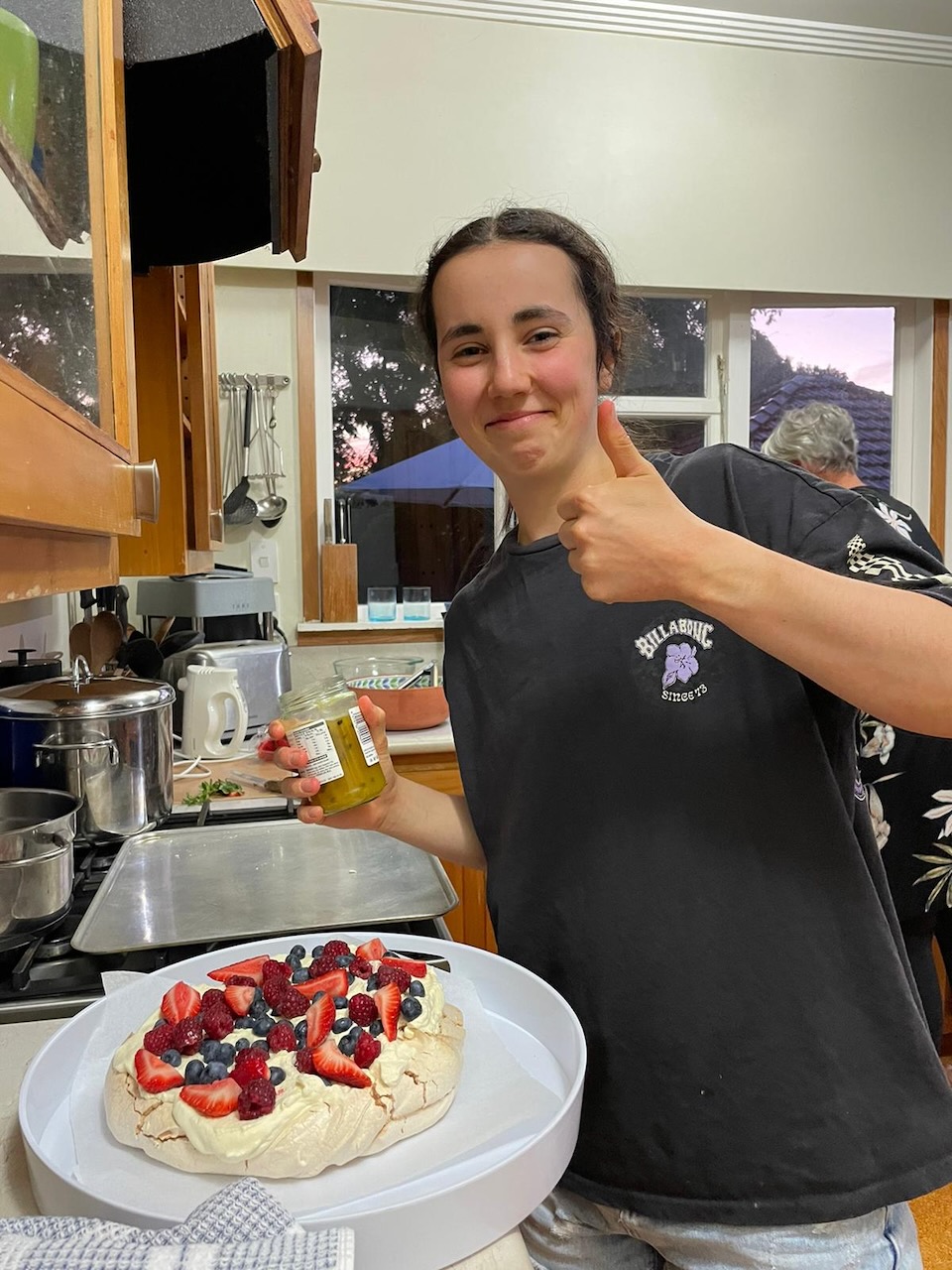
While we admired the simple beauty of the car Joana, Bev and Kim climbed in and appeared ready to take off for points unknown before reason prevailed and order was restored. We finished up our drinks and returned to Quigley manor for the promised BBQ dinner, conversing well into the evening as we prepared for a full day of activity the next day.
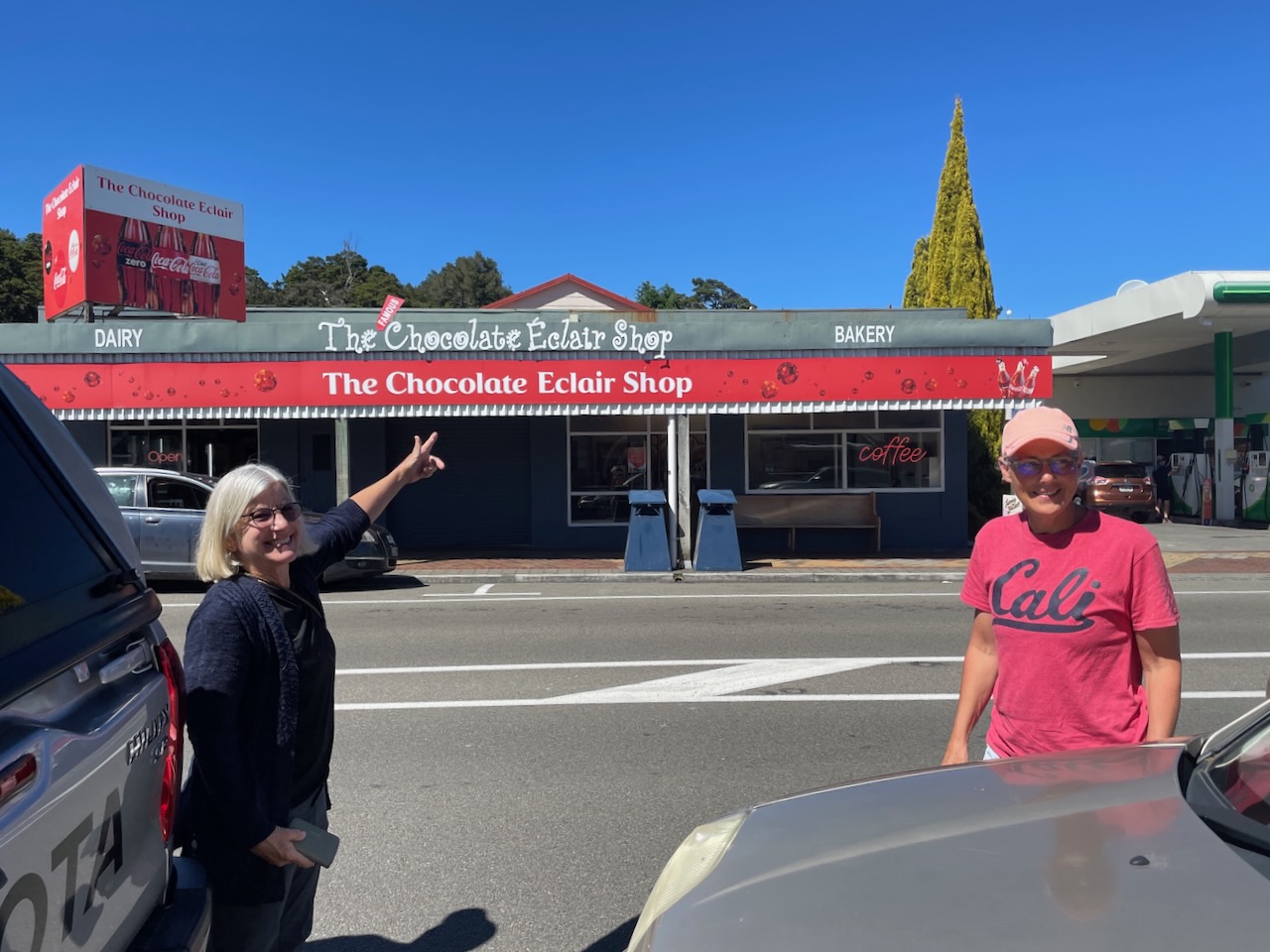
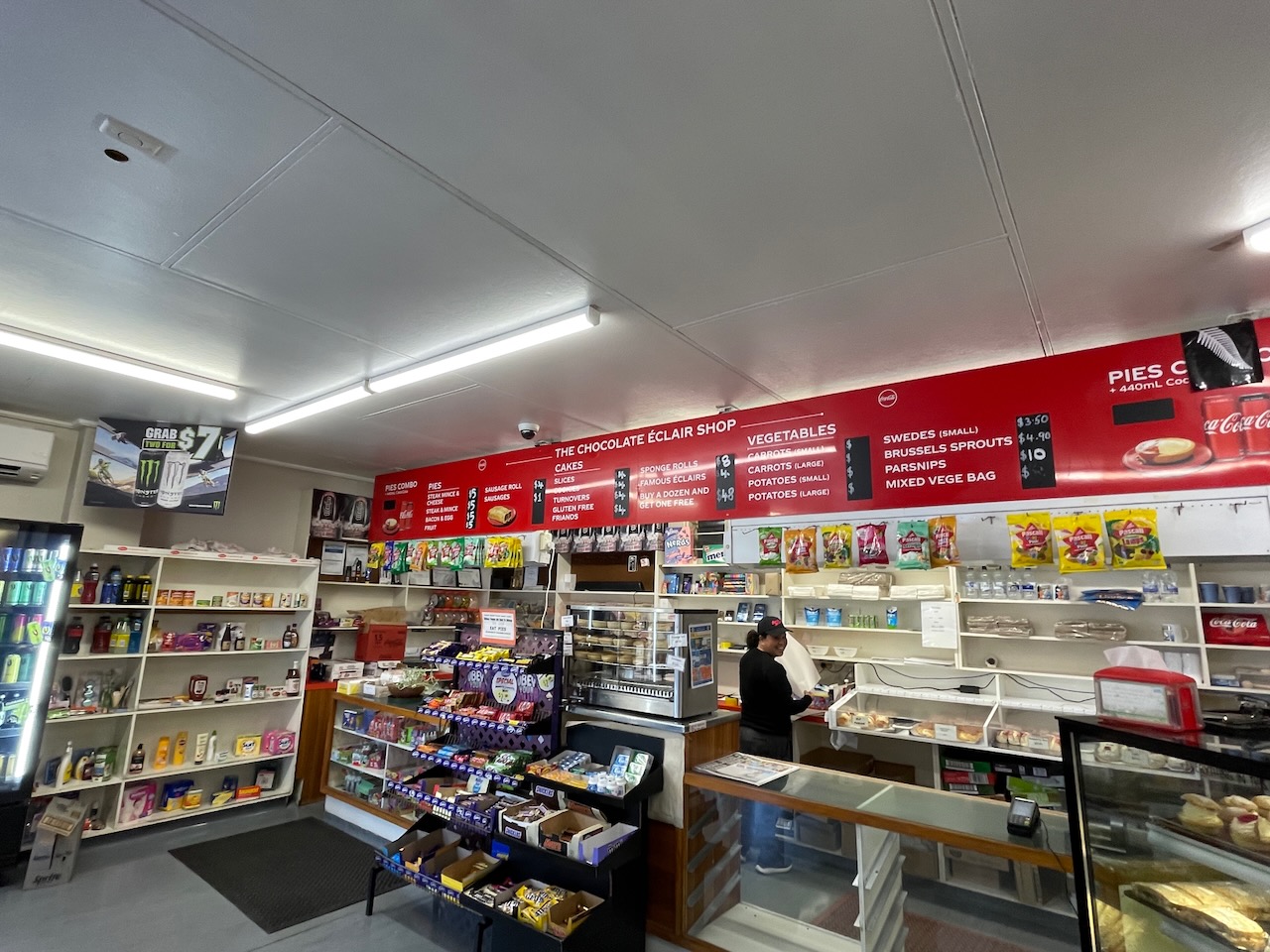
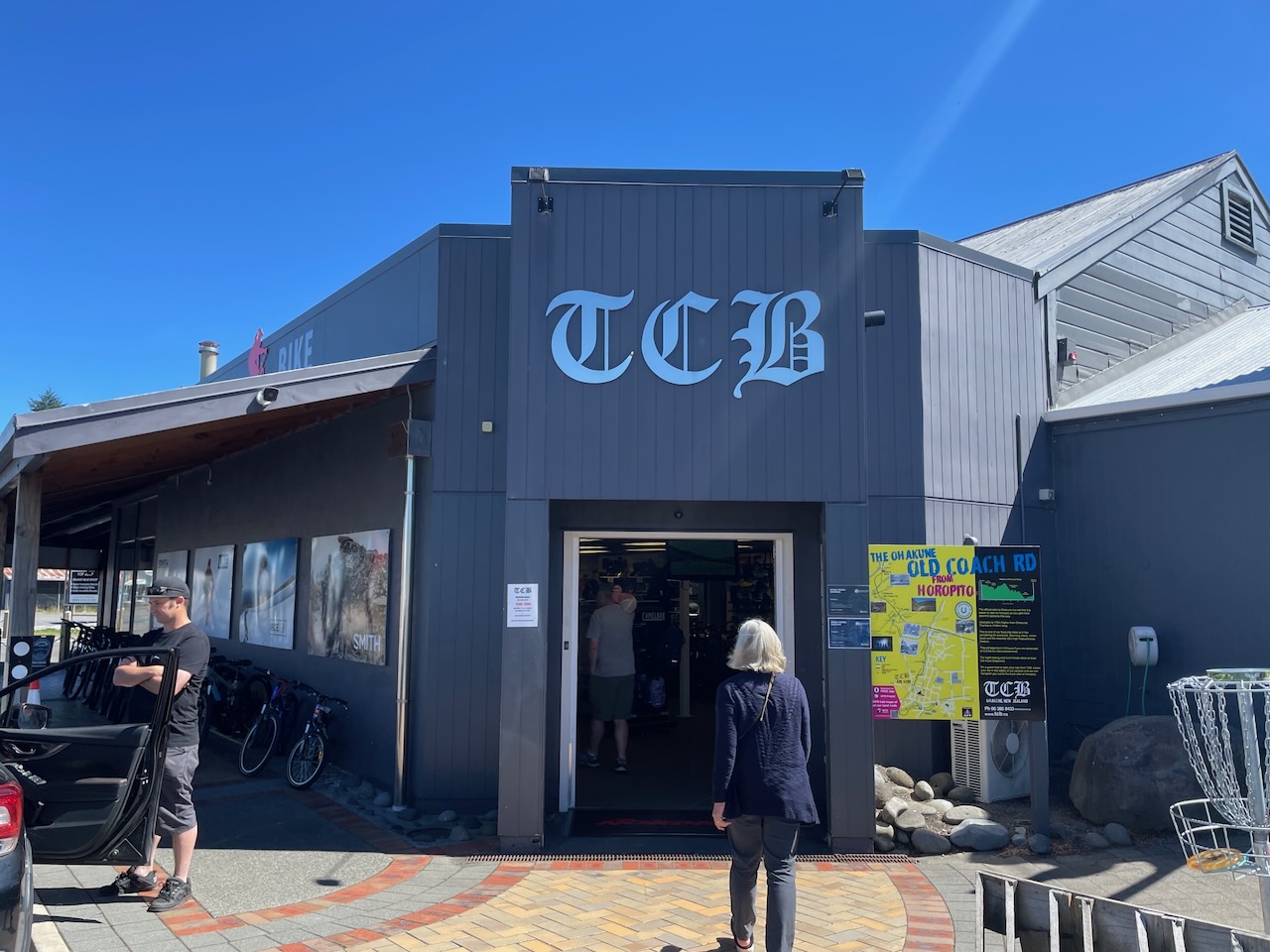
And so we found ourselves back in two cars heading north about ninety minutes to the town of Ohakune where our first stop was at The Chocolate Éclair Shop where John bought enough of these gigantic pastries to feed us and half the town. Quickly consumed with a cup of coffee we were ready for the next part of the adventure, securing rental bikes at TCB Ski, Board, and Bike and a shuttle ride to the trailhead for our ride down the Old Coach Road.
The Road was originally part of an extensive network of trails associated with bird snaring trees used by local natives between the plains and the mountain. Sections of these trails were included in the original route surveyed by John Rochfort in 1884 and by 1889 the track was suitable for horses and marked as a bridle track and in 1885 it was upgraded to a dray road suitable for pulling a dray (simple cart or wagon). Due to slow progress in joining two local railheads, the road was upgraded in 1906 – and it is this purpose-built cobble road that provided the origins of its current name.

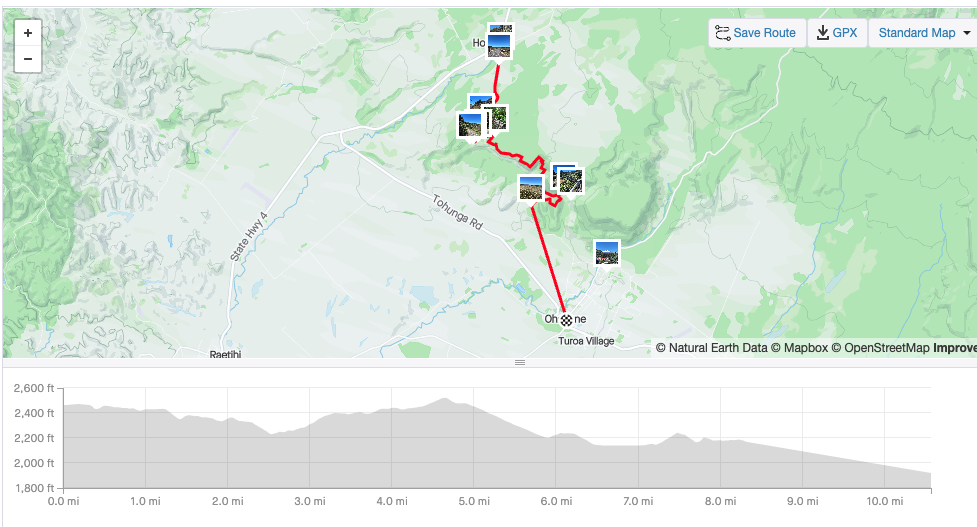
The Ohakune Old Coach Road provided an all-weather road link for horse-drawn coaches carrying passengers and goods between the two railheads of the North Island main trunk line. With progress on completing the North Island main trunk rail slow due to the rugged landscape, the road provided a way to allow through traffic, until the railheads were finally linked in 1908.
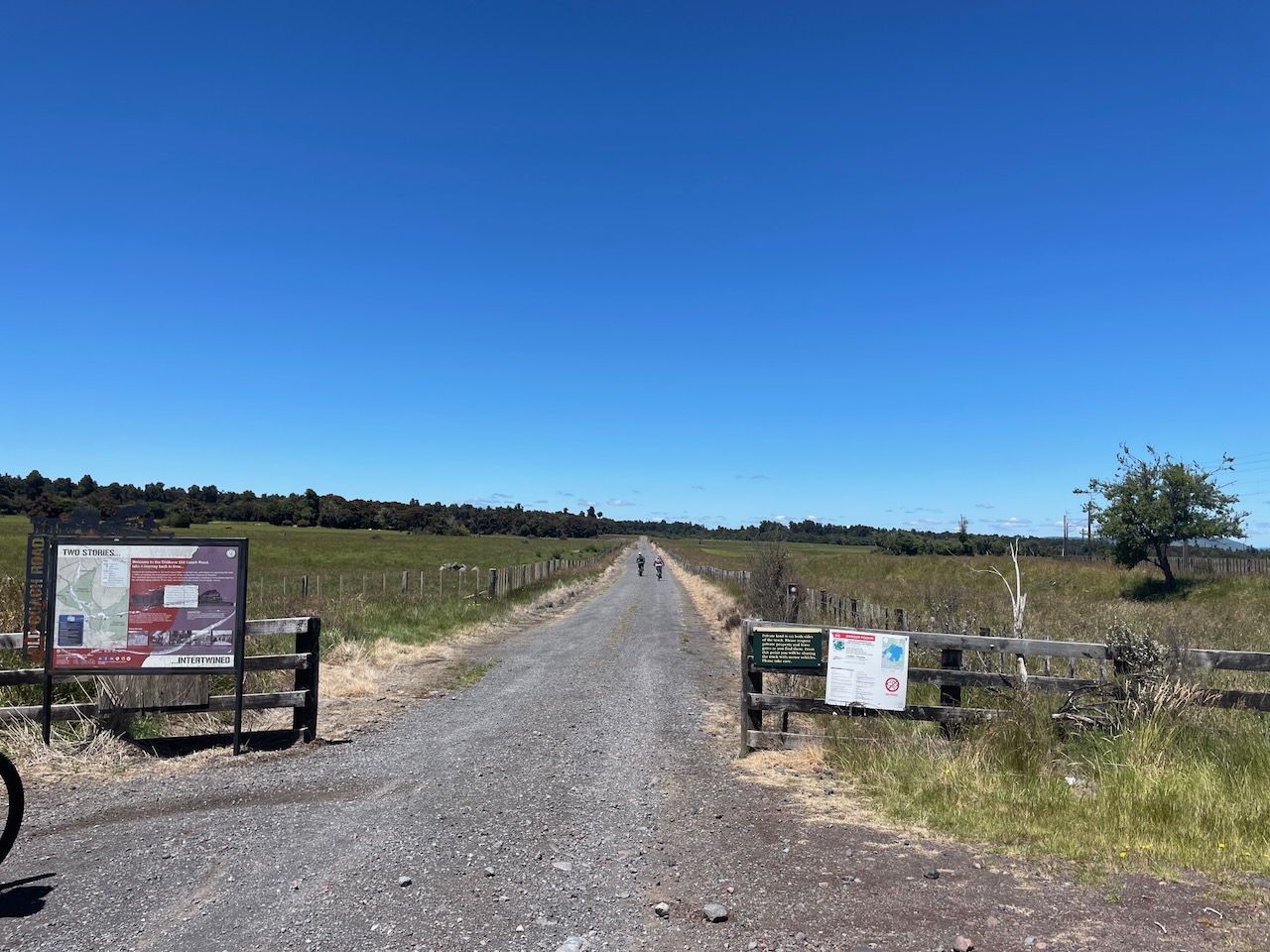
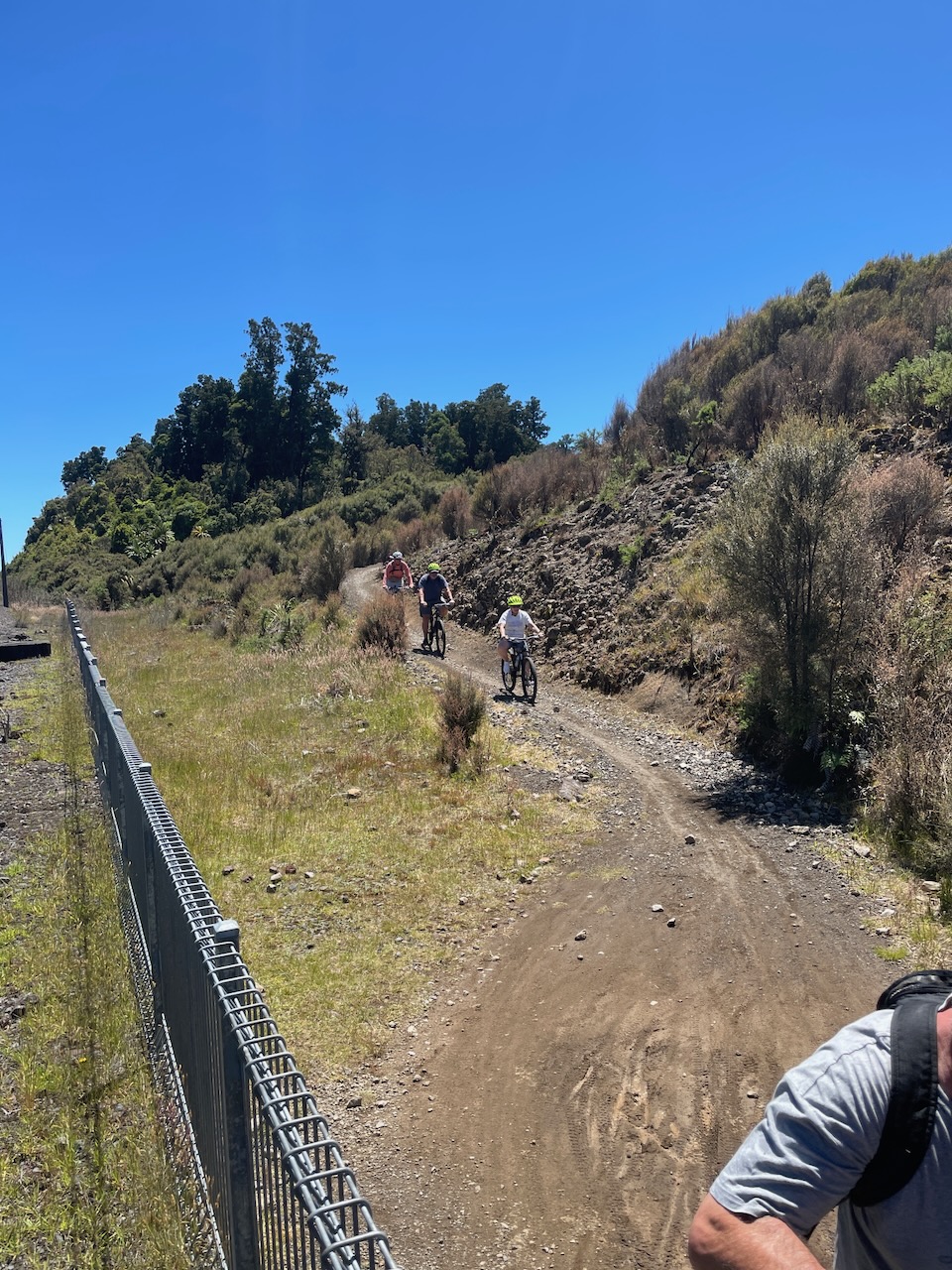
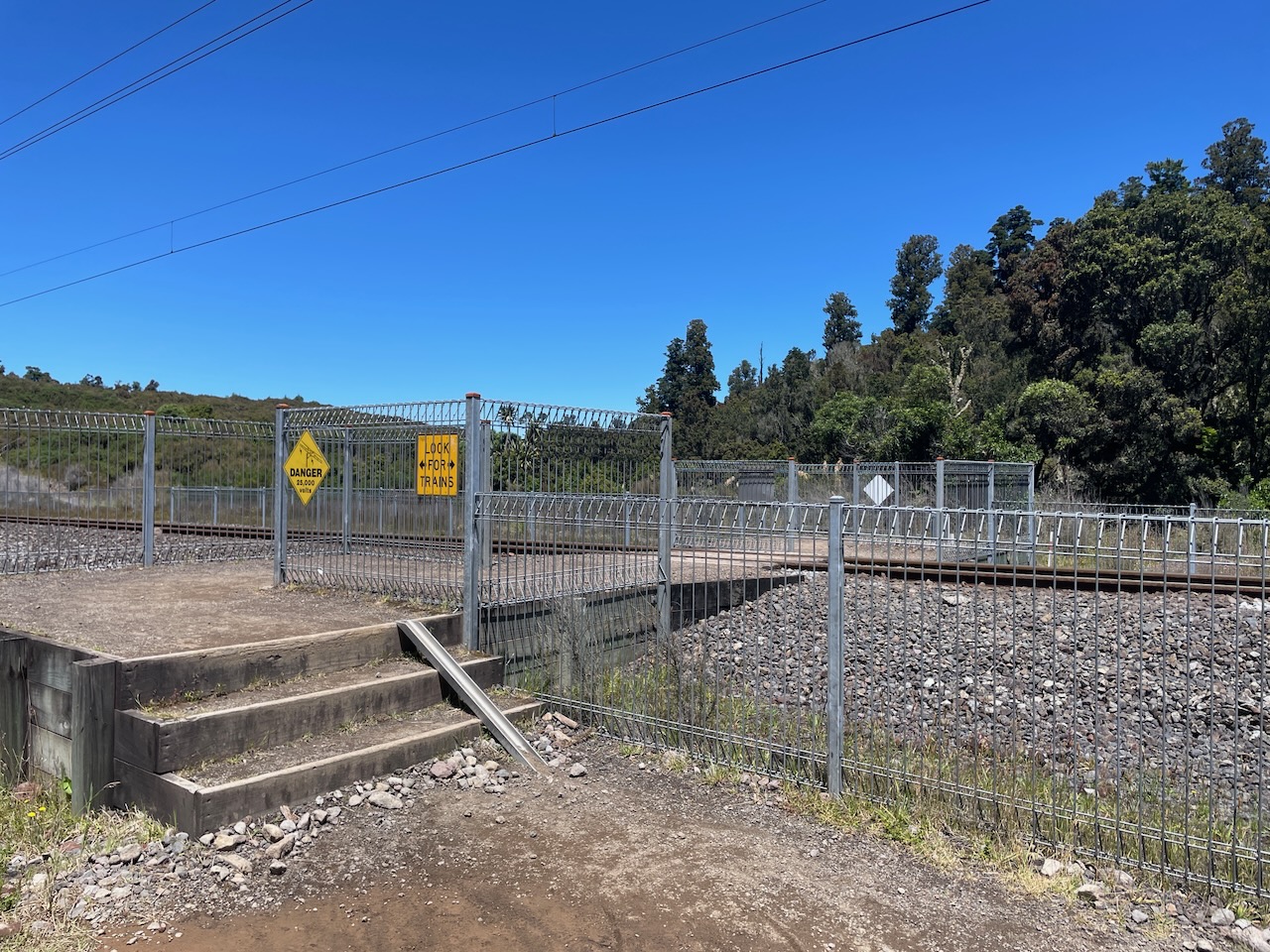
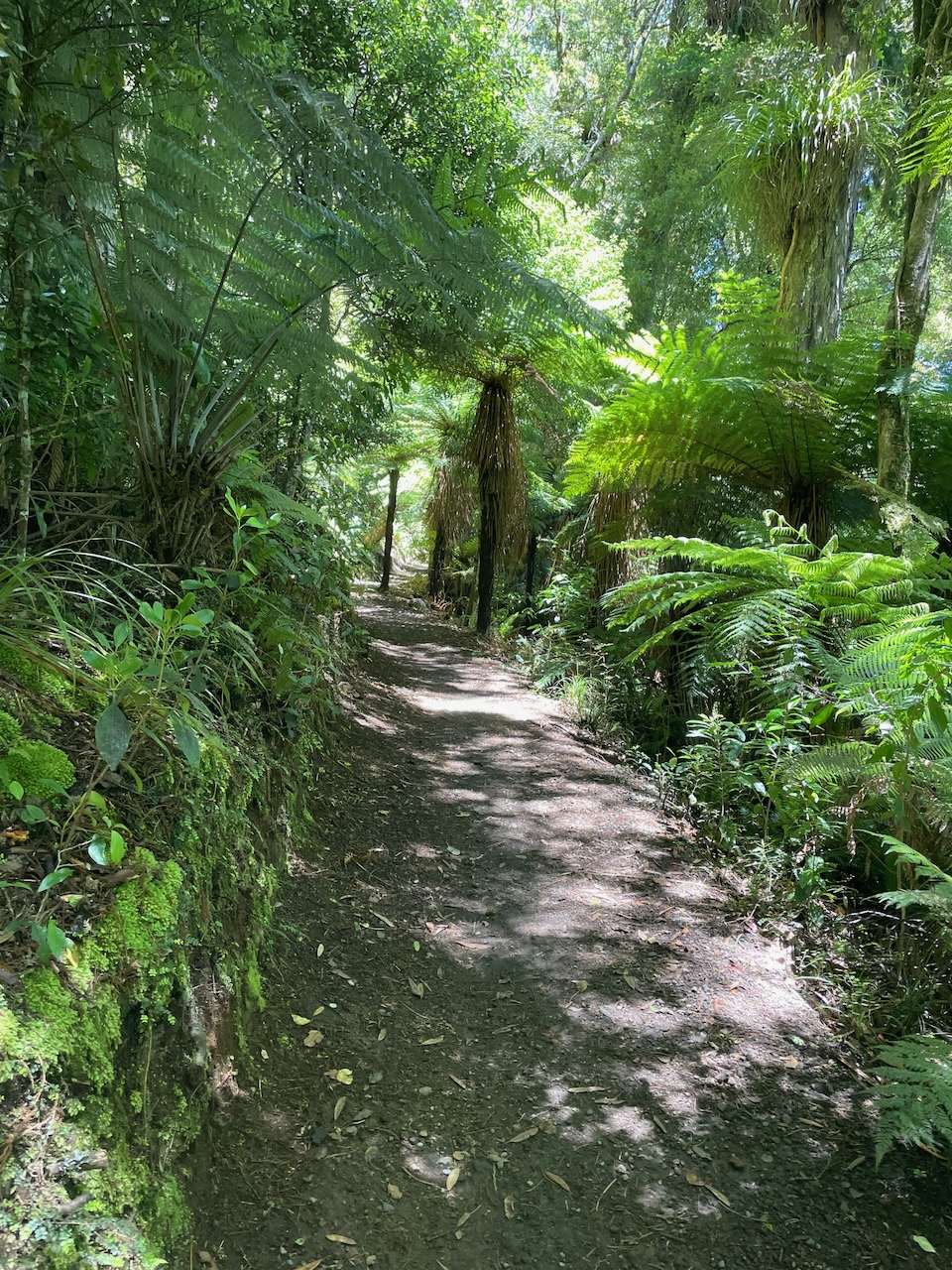
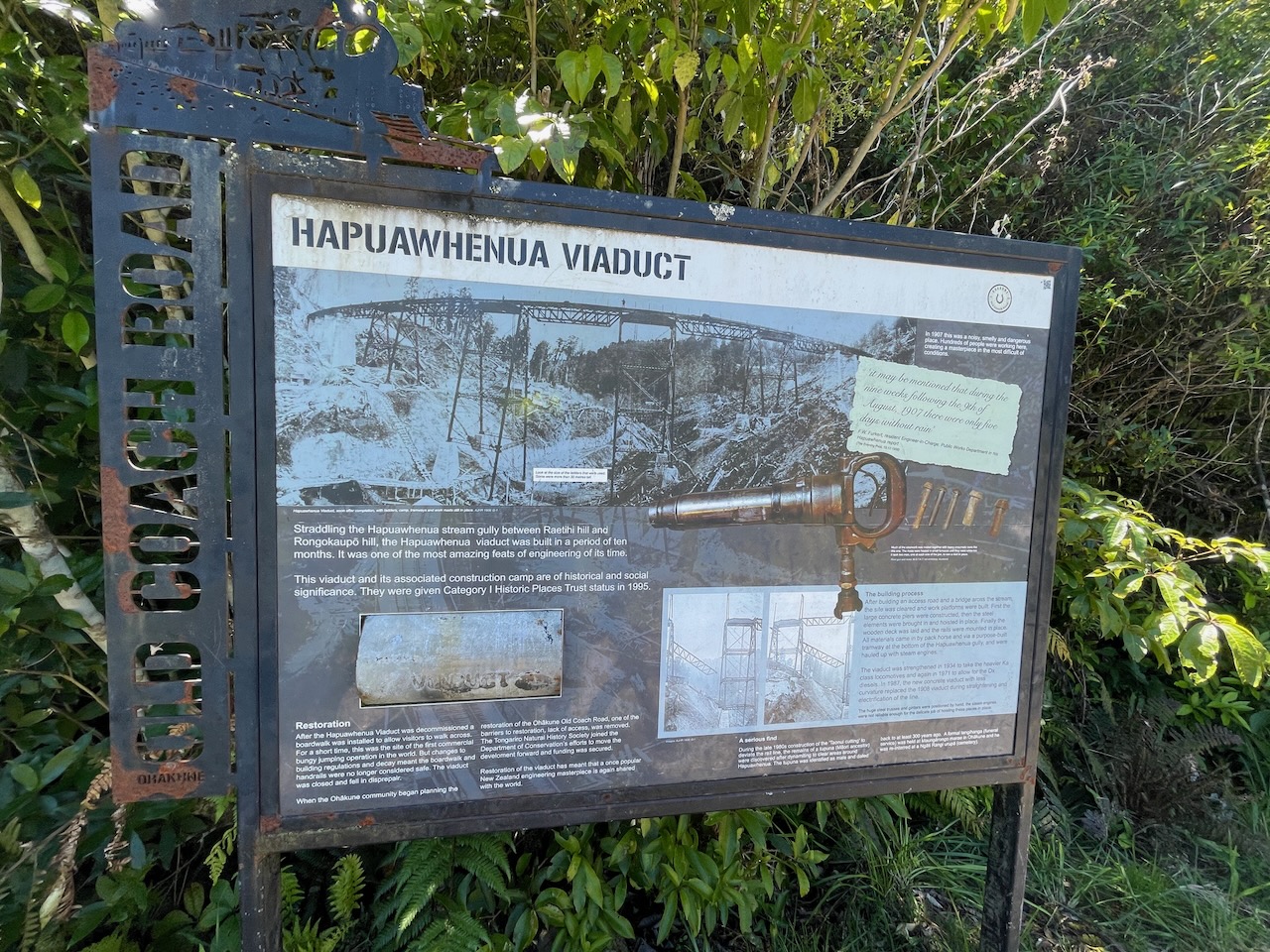
We rode along on some flat sections for a period until we reached a long stretch of narrow, hilly cobbled sections that closely resembled single track, bumpy, steeply graded sections that were hard to pedal up and down and often required dismounting and walking some distance to clear the section. We finally reached the Hapuawhenua Viaduct, an engineering marvel in 1908 and the poster child of New Zealand Rail at that time. It is 150 feet high, nearly 1,000 feet long, curved throughout its length and consists of 13 concrete piers and four 4-legged steel towers resting on concrete foundation blocks.
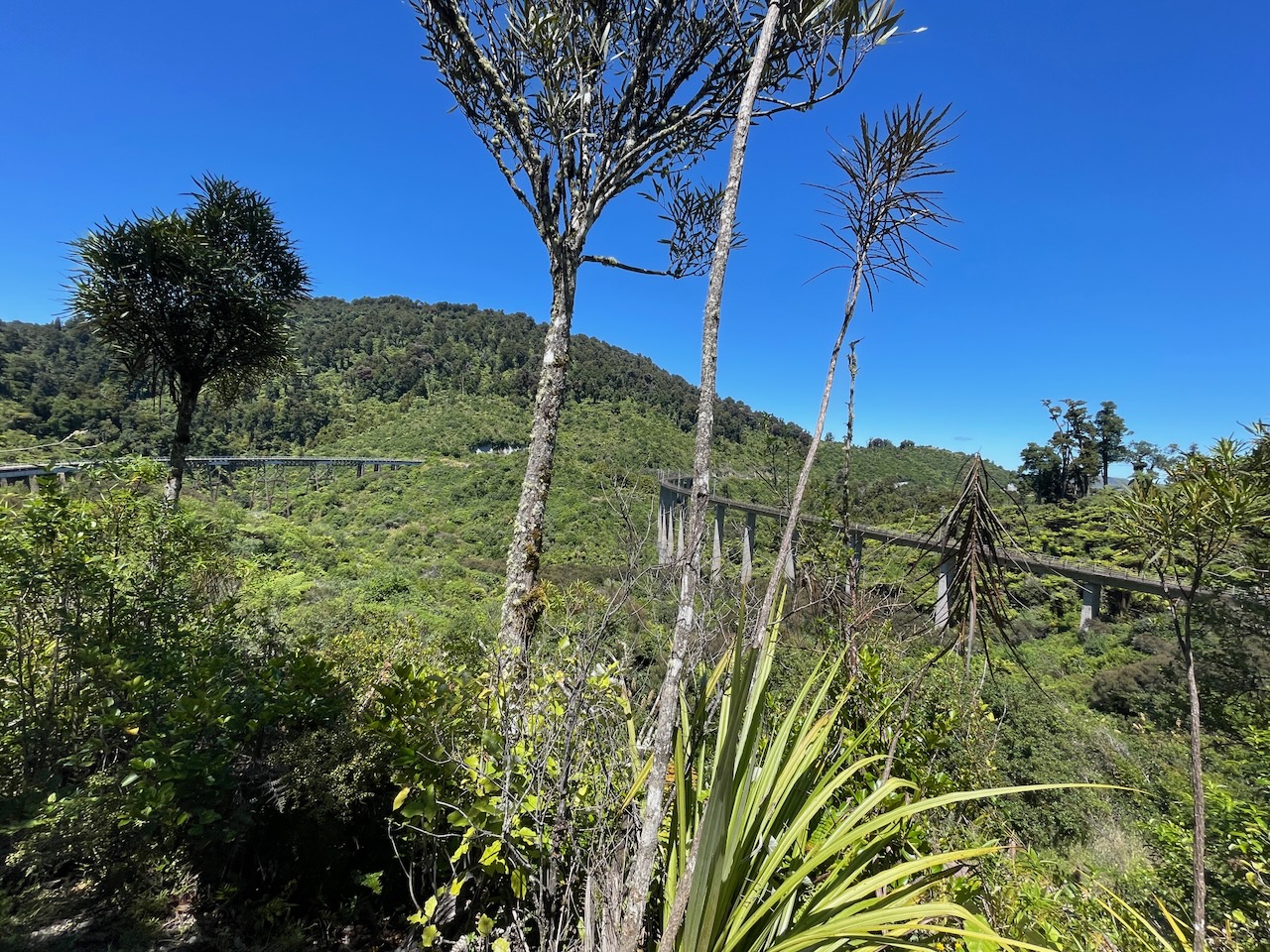
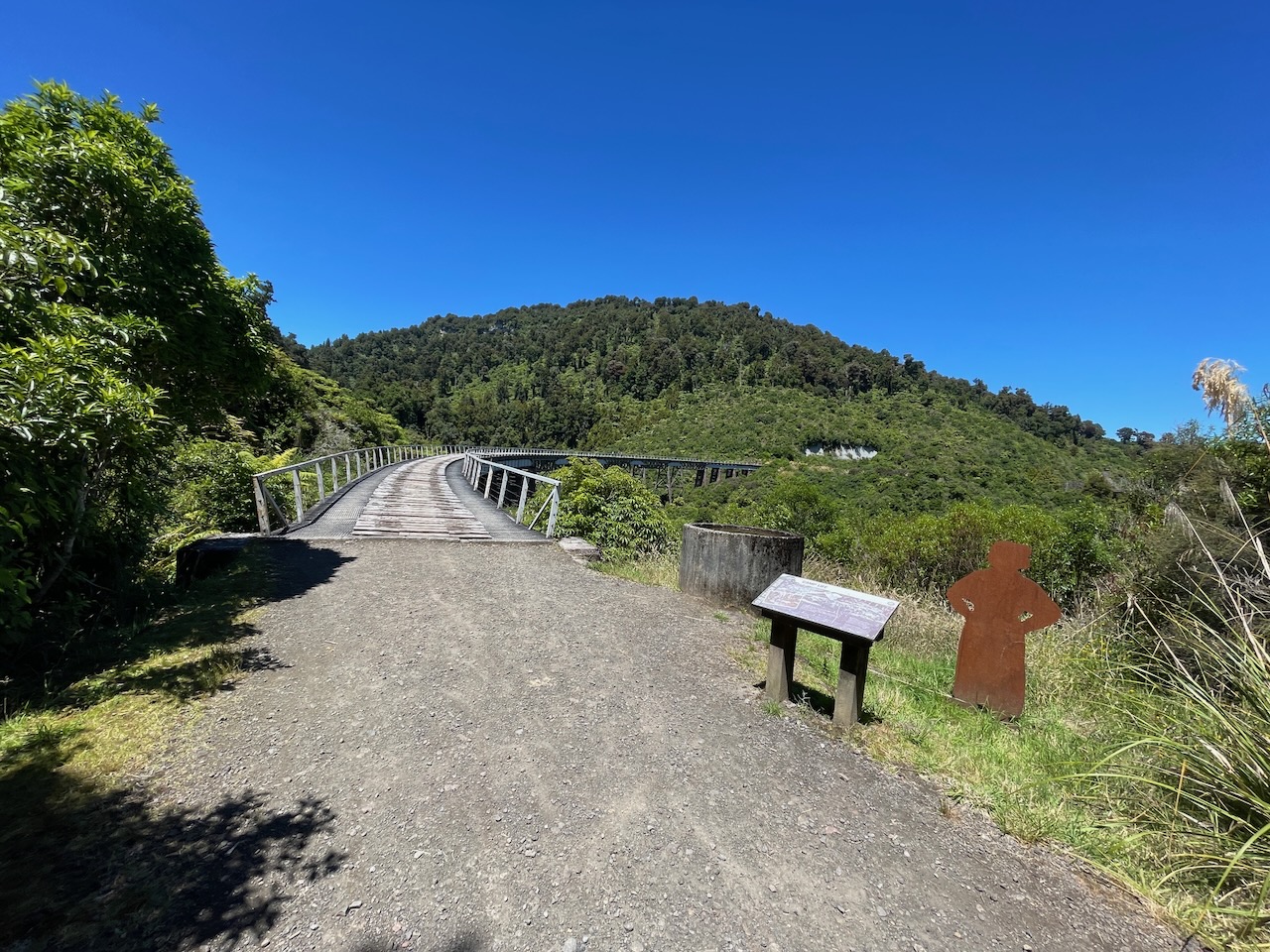
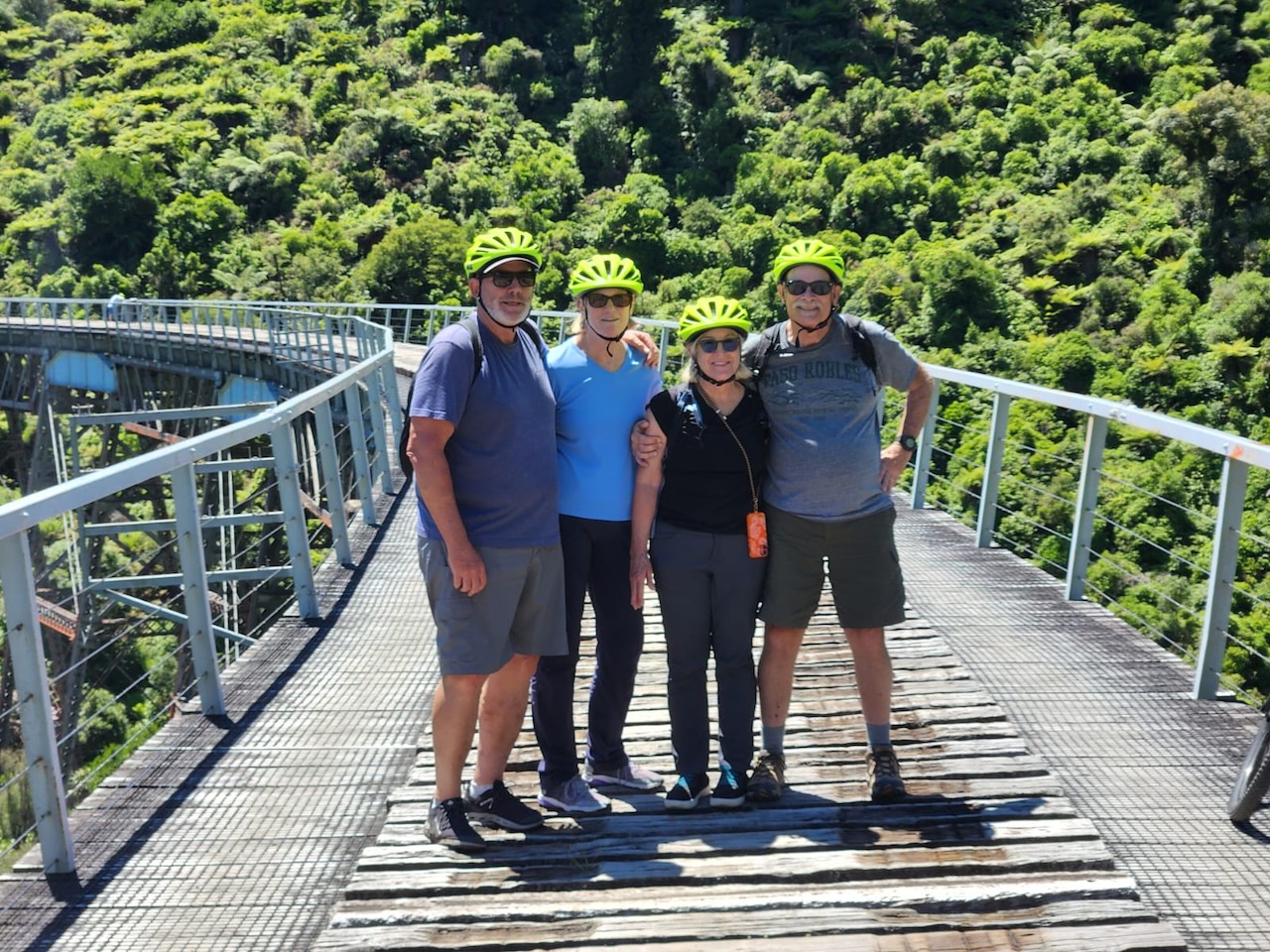
Although the ride had been described as an easy downhill ramble, it was anything but as the cobbled surface sucked the life out of you, battering at every turn. Towards the end, with a descent that should have been a joyful speedy experience, I stopped to catch the view only to discover that someone had locked out my front shock, rendering its ability to absorb bumps non-existent.
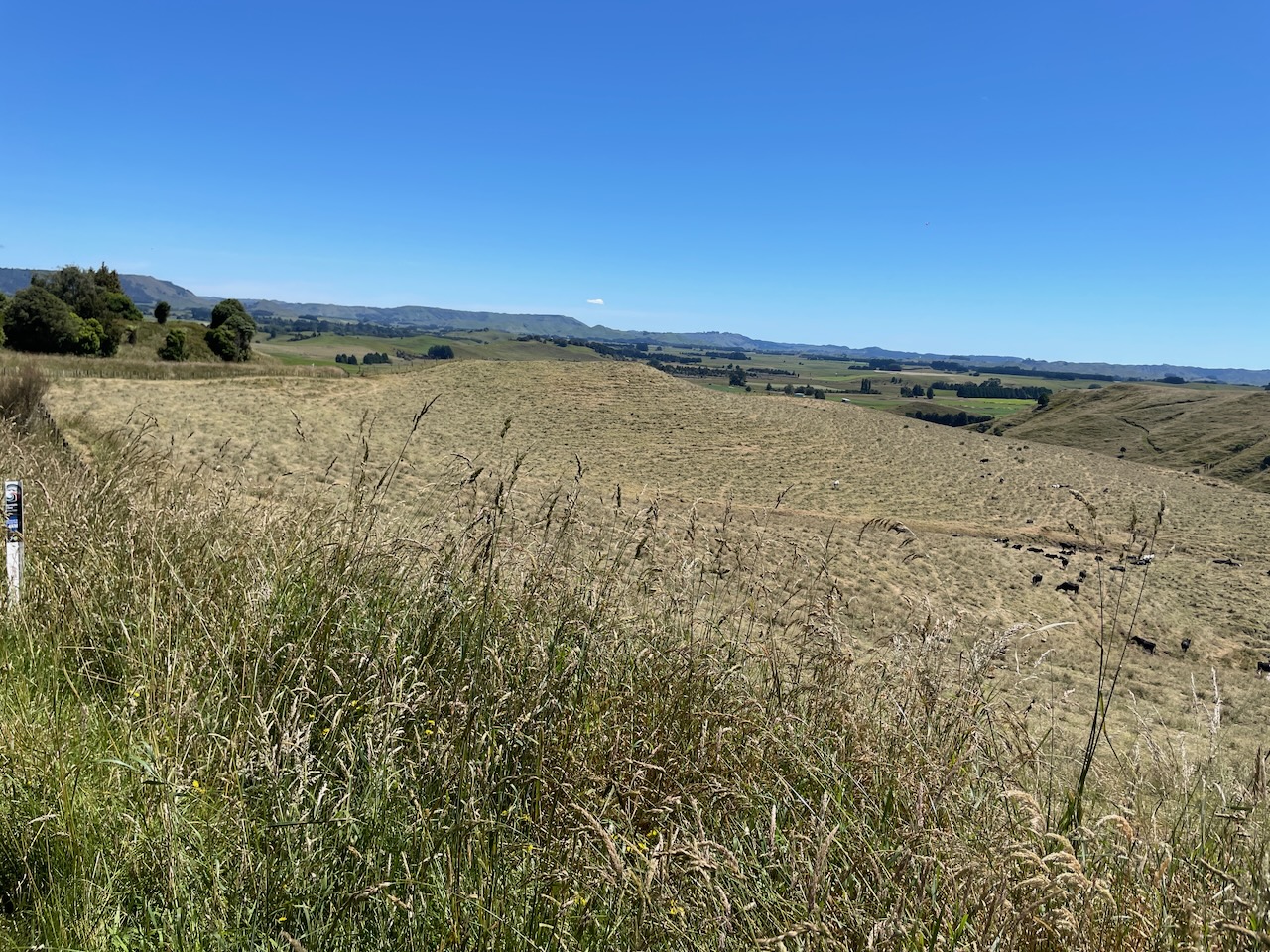
We all finally finished and dropped off the rental bikes at the shop, and then in sore need of refreshment drove up to Kings Ohakune, with lodging, a bar, and a restaurant to serve those folks who enjoy four seasons of outdoor activity, ranging from the cycling we had just done to skiing on nearby Mt Ruapehu, the largest active volcano in New Zealand and the highest point in the North Island.
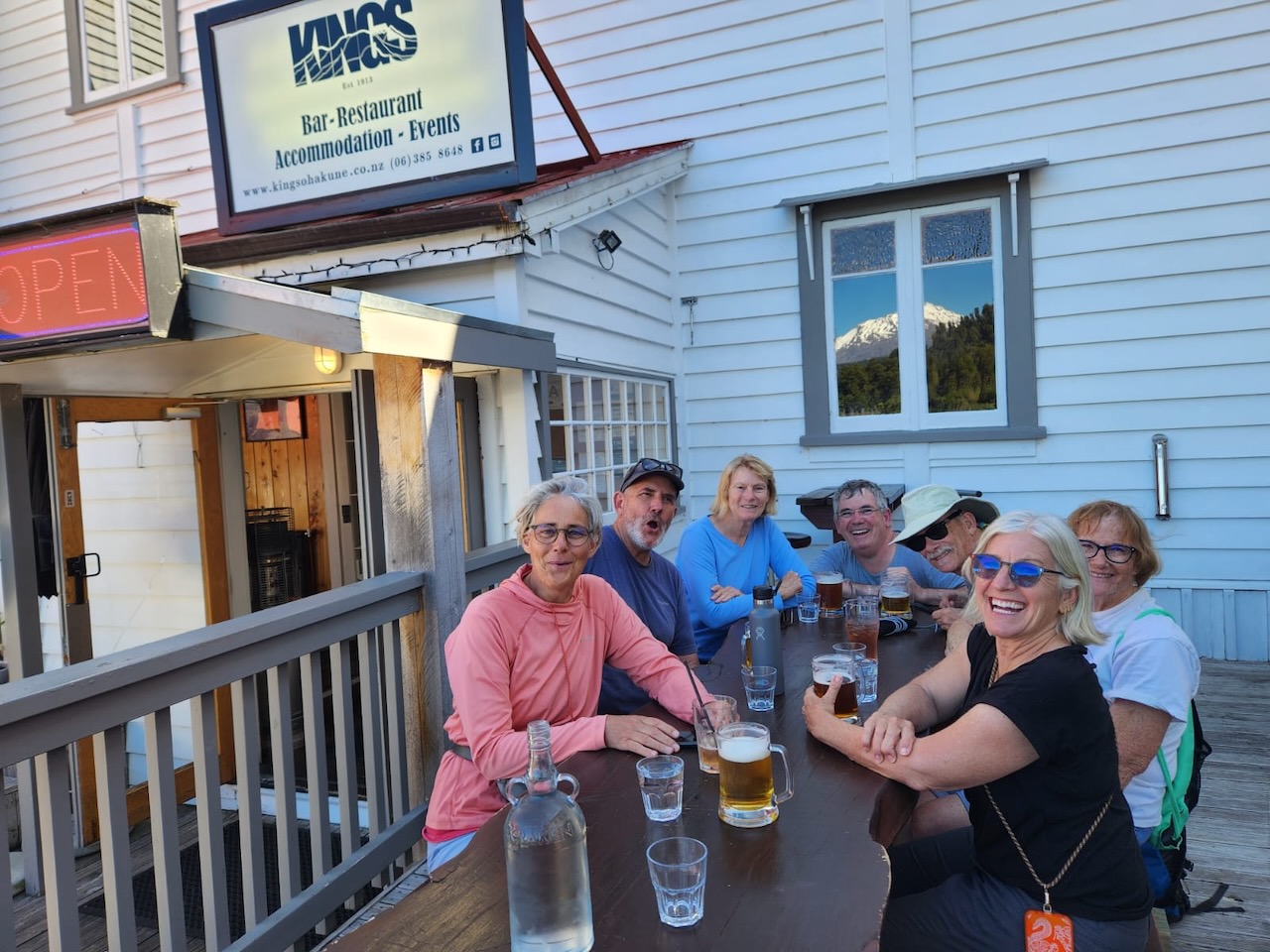
After a hard day’s effort there is nothing better than that first cold beer, just barely surpassing the second one. We finished up our drinks and drove back to town, there to enjoy another late meal and conversation until it was time to retire to the Airbnb and prepare for our bus ride to Wellington the next day. We would bid a fond farewell to the Quigley’s, our only regret being that we live so far away from each other, making these joyful visits a rare occasion. Then again, for those of us in California, the flight to New Zealand takes the same amount of time as one to Europe. Let’s all plan to return soon.

Links
Peter Snell: https://en.wikipedia.org/wiki/Peter_Snell
Steinlager Beer: https://www.steinlager.com/
Bushy Park Sanctuary: https://bushypark.nz/
Predator Free 2050 Plan: https://www.doc.govt.nz/nature/pests-and-threats/predator-free-2050/
Chocolate Éclair Shop: https://www.facebook.com/johnnynationschocolateeclairshop/
TCB Ski, Board, and Bike: https://tcb.nz/
Old Coach Road: https://www.newzealand.com/int/feature/ohakune-old-coach-road/
Kings Ohakune: https://www.kingsohakune.co.nz/about/ohakune
Discover more from 3jmann
Subscribe to get the latest posts sent to your email.


 3jmann