April 1-3
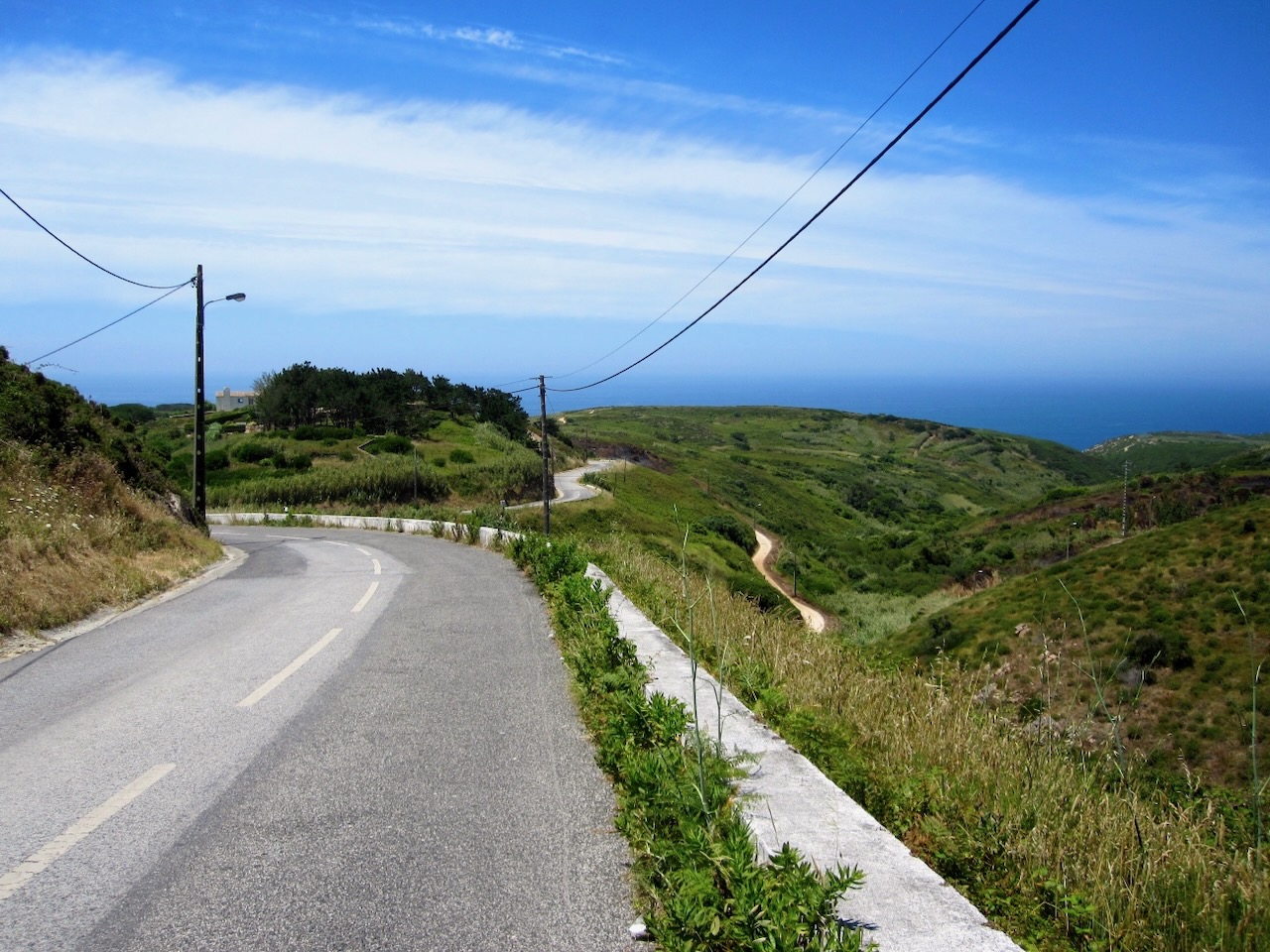
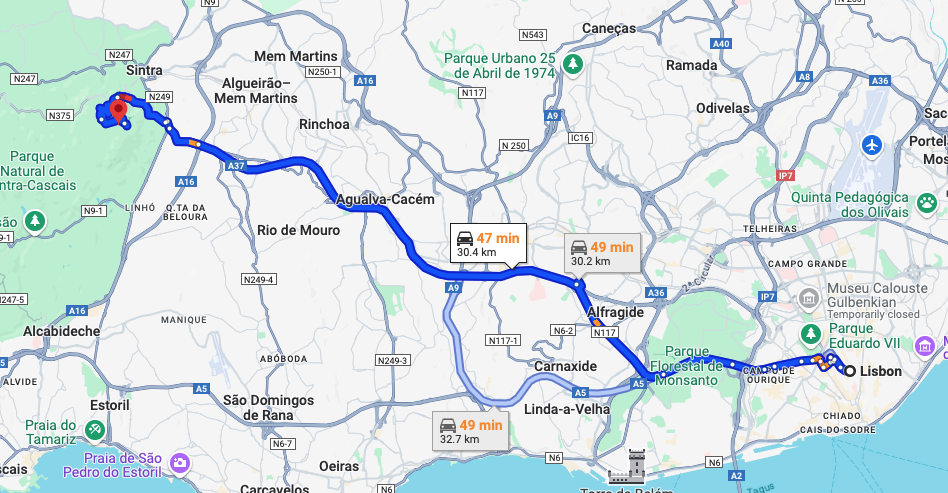
We were up and out early for our planned day trip to Sintra through Viator on their Sintra Highlights and Pena Palace Full-Day Tour. Joanna and I visited this area in 2014 but did not take a tour. Instead, we drove our car out to the coast and parked near the lighthouse there and then road our bikes up to Sintra before returning to the car and driving back to Lisbon.
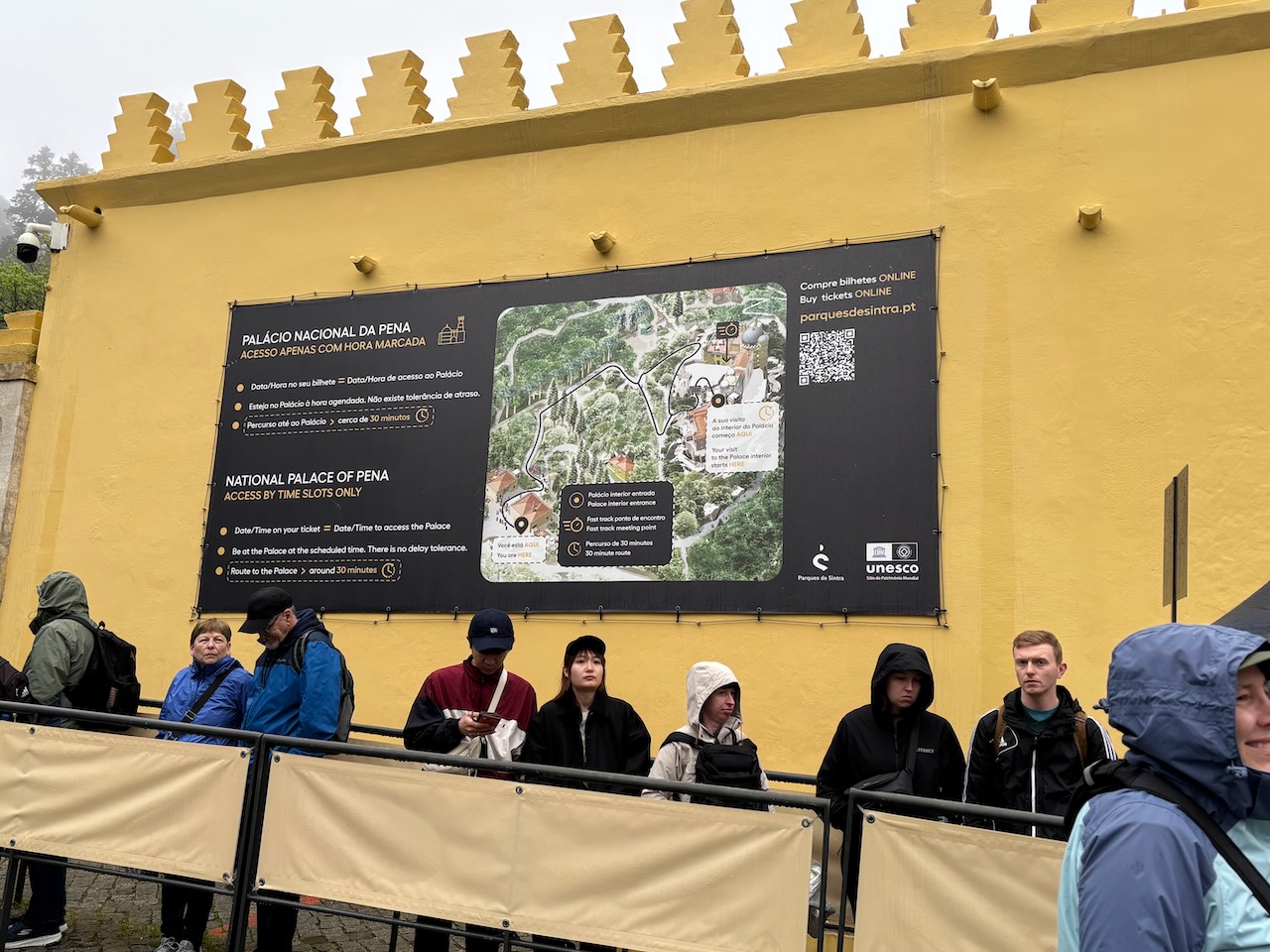
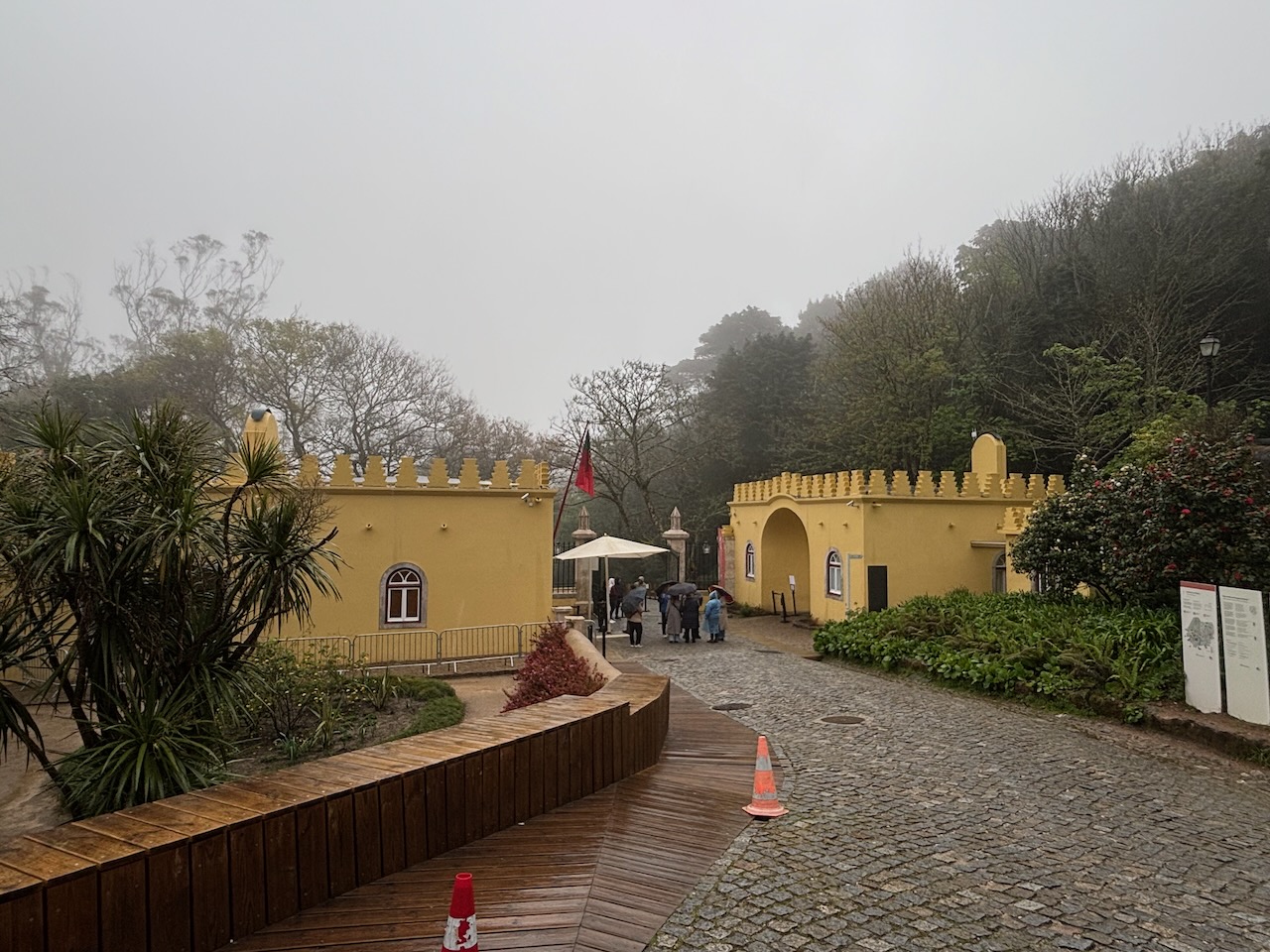
After a little less than an hour’s drive we arrived at Pena Palace, a Romanticist castle, in drizzling rain, handing out the extra umbrella’s our driver had thoughtfully brought along, which would make the rest of the day manageable. We scanned our tickets at the booth and entered a courtyard where we soon caught a shuttle that would take us up the hill to where our tour would start.
The castle stands on the top of a hill in the Sintra Mountains above the town of Sintra, and on a clear day it can be easily seen from Lisbon and much of its metropolitan area. It is a national monument and constitutes one of the major expressions of 19th-century Romanticism in the world. The palace is a UNESCO World Heritage Site, is one of the Seven Wonders of Portugal and is used for state occasions by the President of the Portuguese Republic and other government officials.
The castle’s history started in the Middle Ages when a chapel dedicated to Our Lady of Pena was built on the top of the hill above Sintra. In the early 1500’s Manuel I ordered the construction of a monastery on this site which was donated to the Order of Saint Jerome. In 1755, the Lisbon earthquake reduced it to ruins except for its chapel (and its works of marble and alabaster attributed to Nicolau Chanterene) which escaped without significant damage.
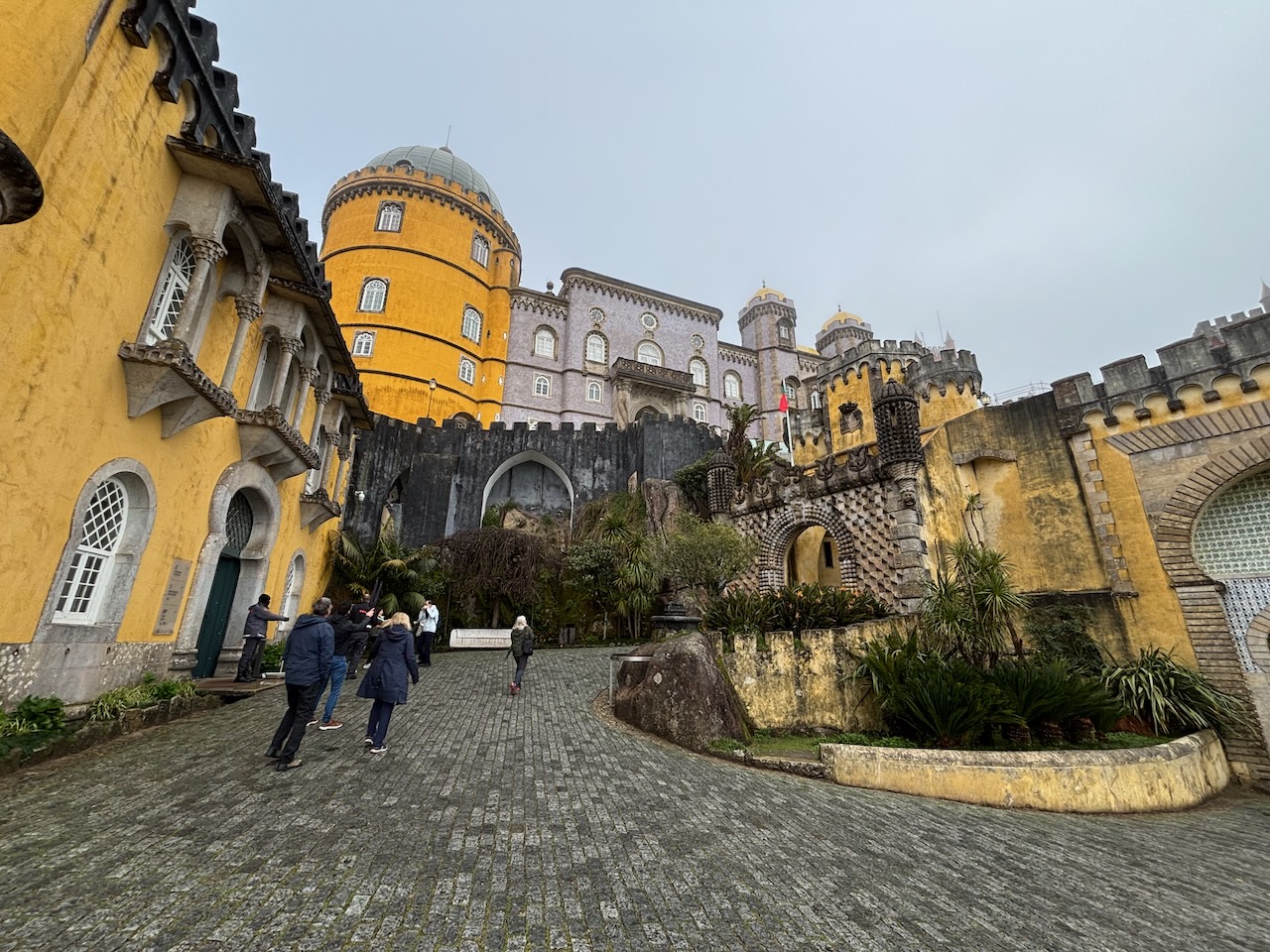
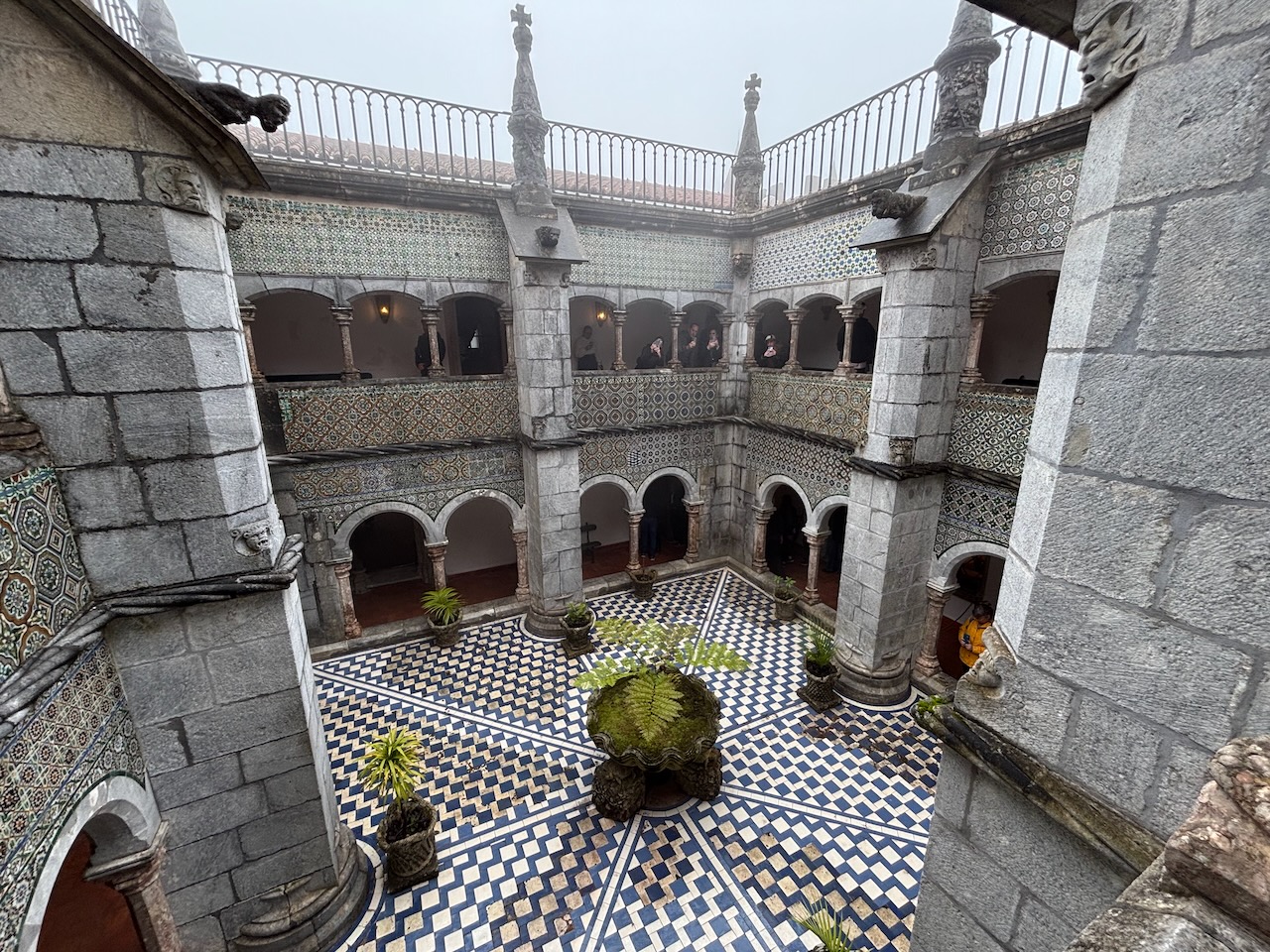
For many decades the ruins remained untouched, but in 1838, King consort Ferdinand II acquired the old monastery, all of the surrounding lands, the nearby Castle of the Moors and a few other estates in the area and as King then set out to transform the remains of the monastery into a palace that would serve as a summer residence for the Portuguese royal family.
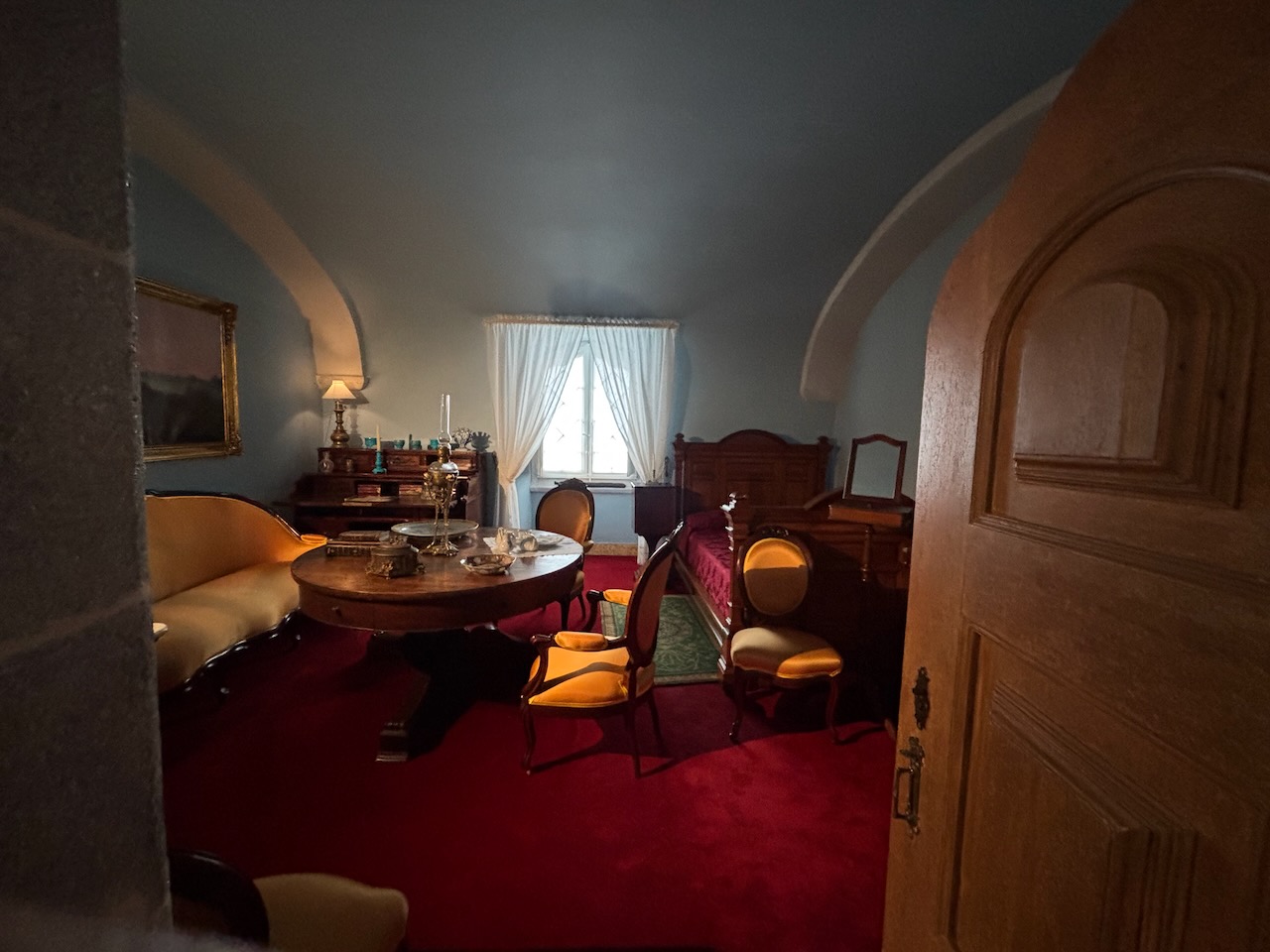
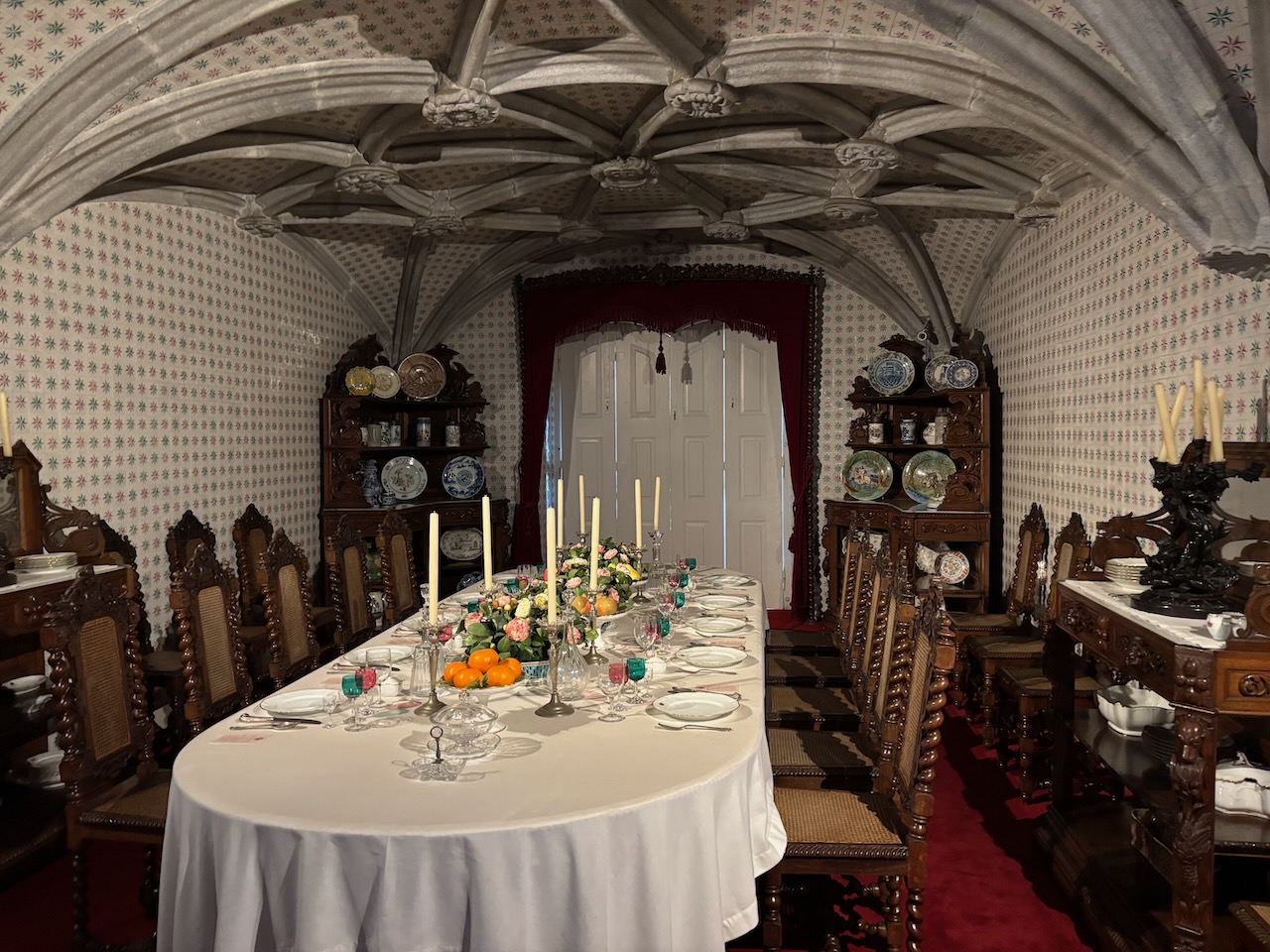
In 1889 the castle was purchased by the Portuguese State, and after the Republican Revolution of 1910 it was classified as a national monument and transformed into a museum. The last queen of Portugal, Queen Amélia, spent her last night at the palace before leaving the country in exile.
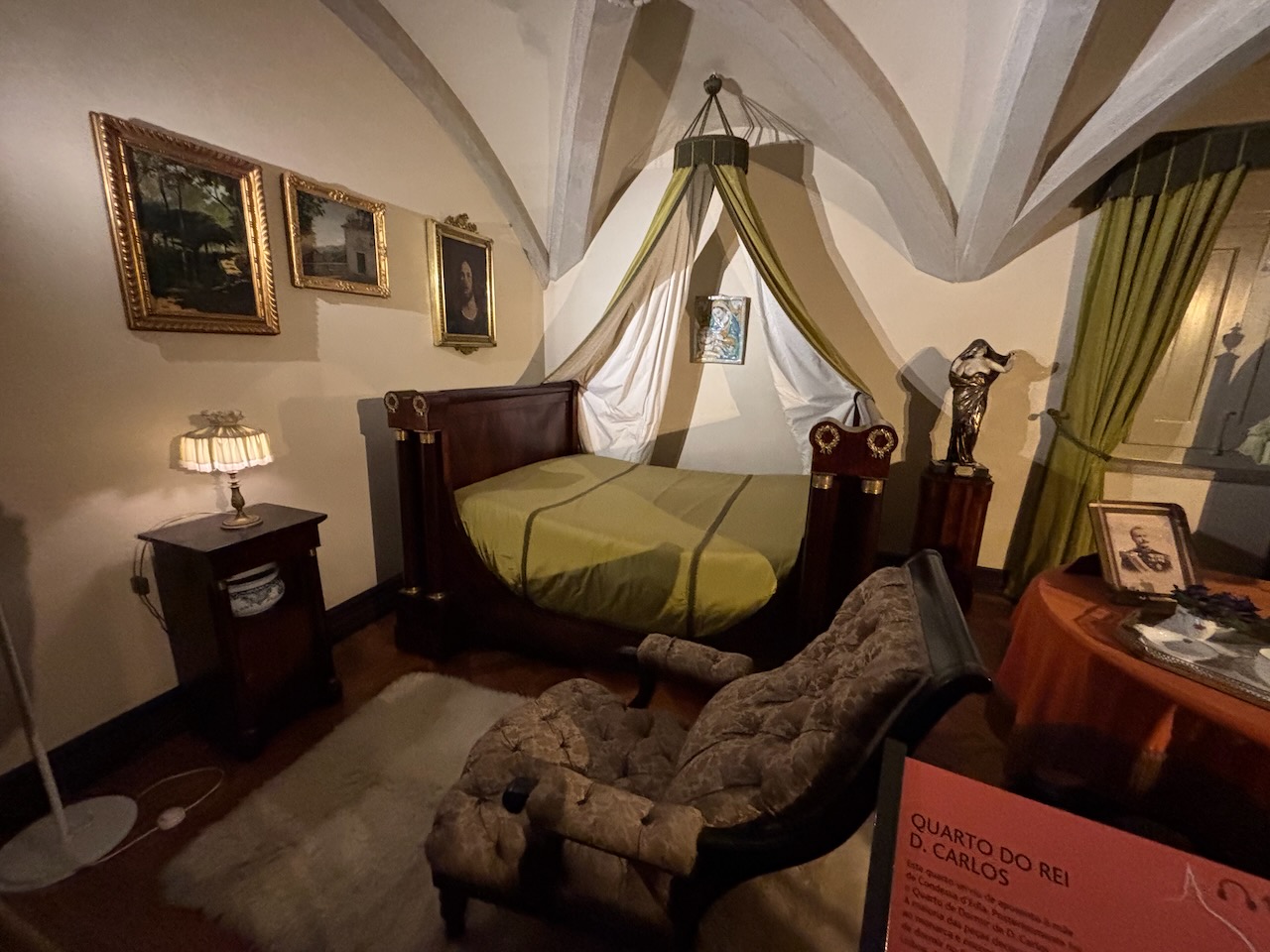
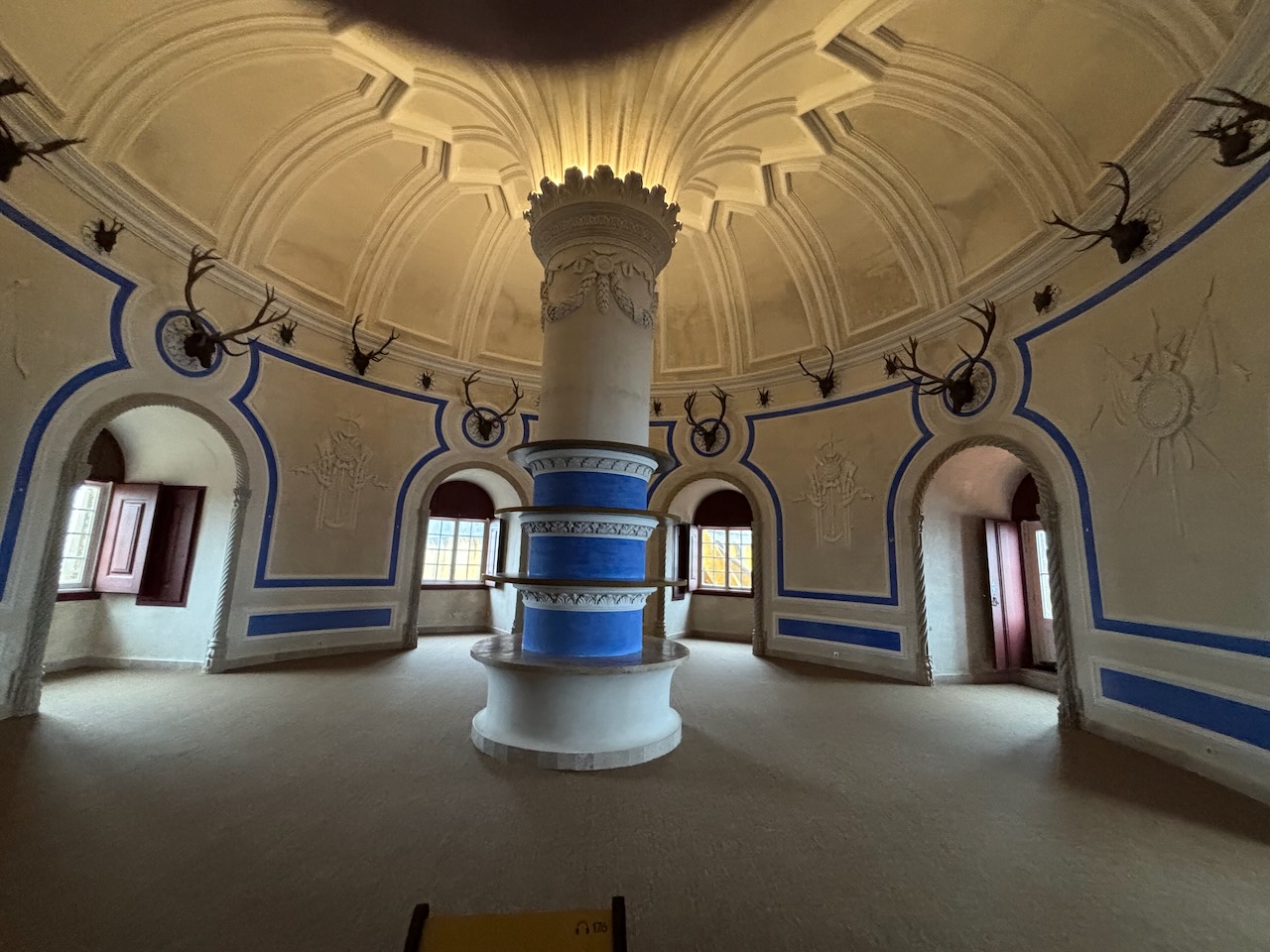

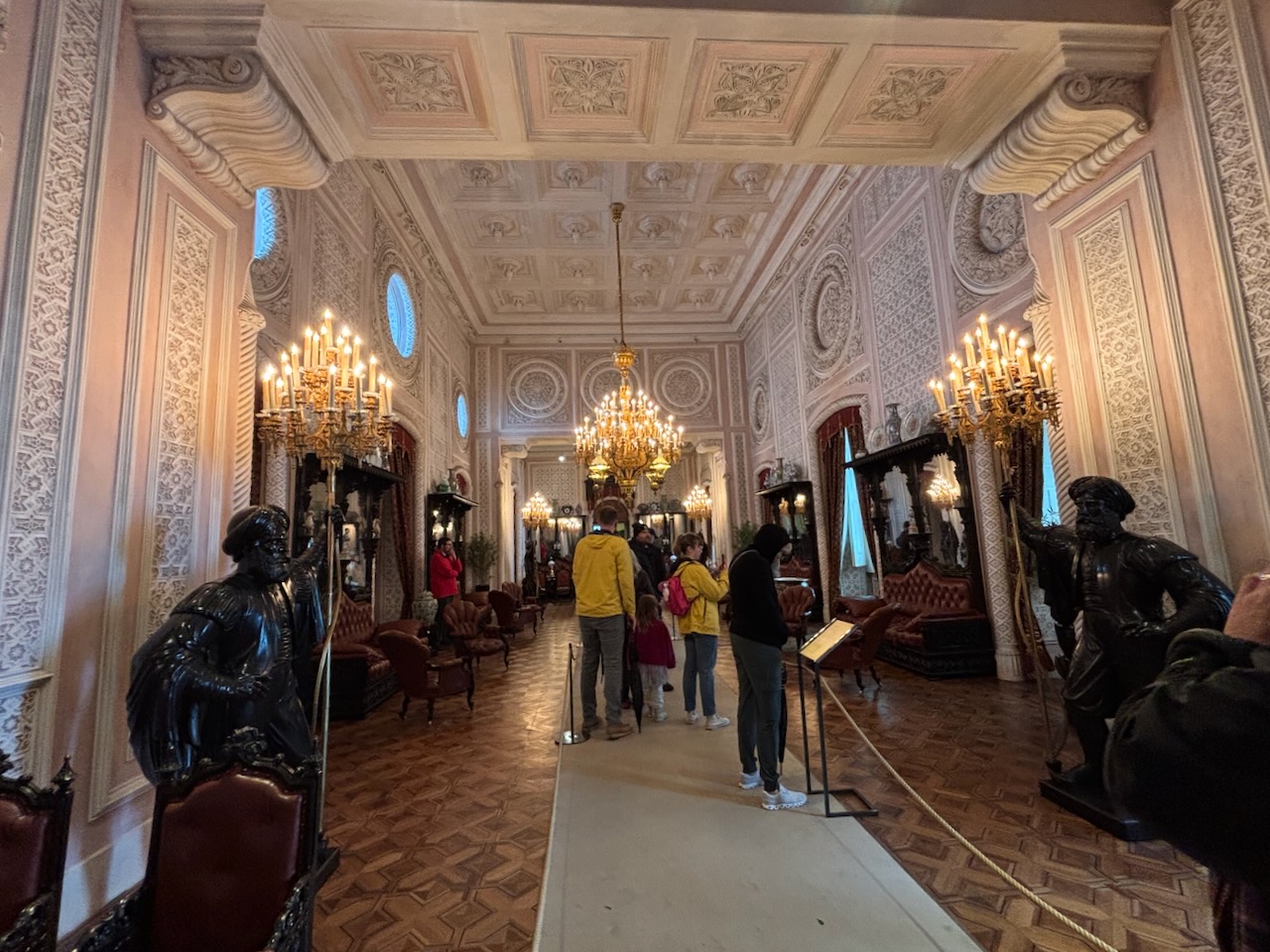
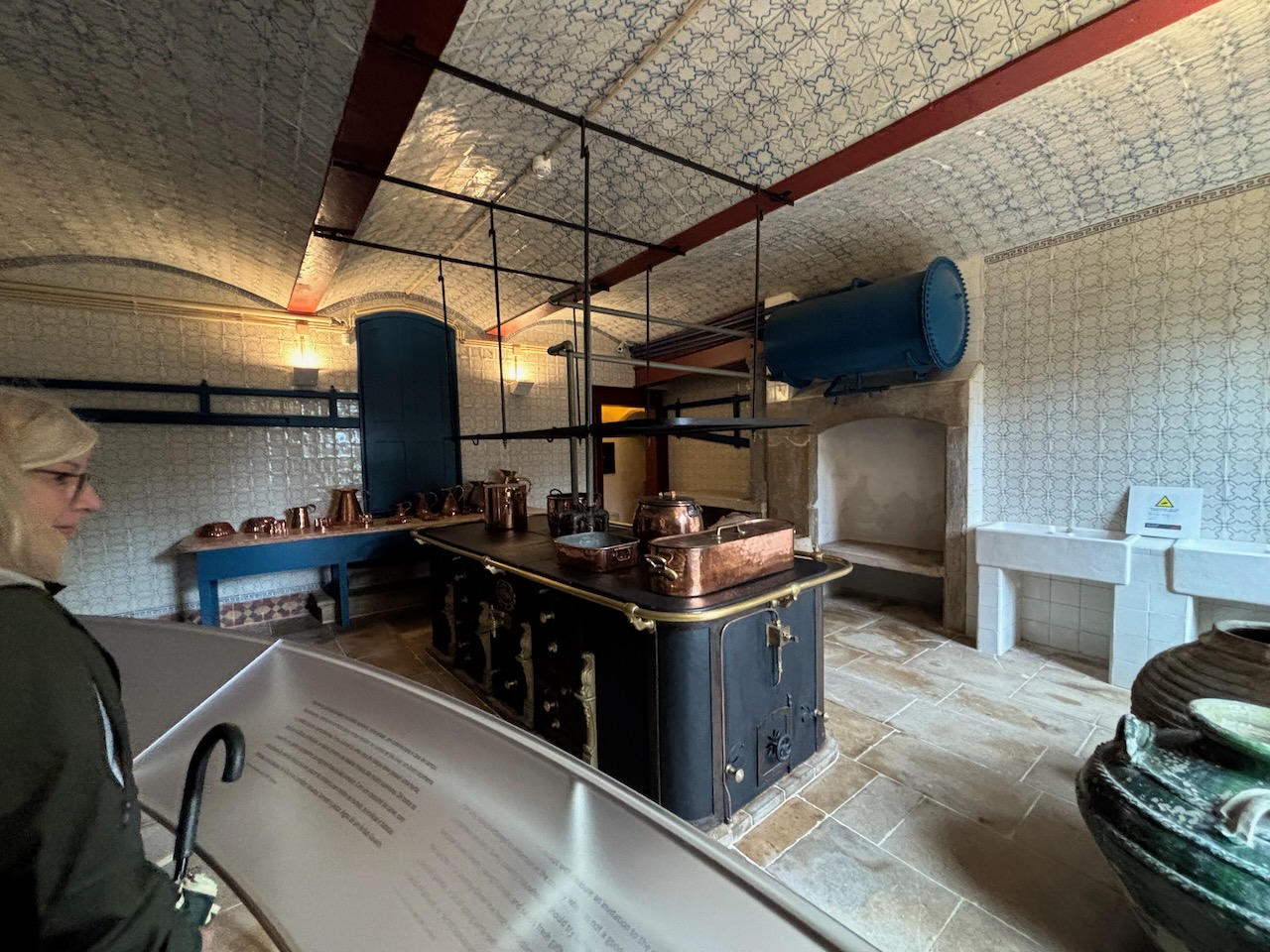
We were on a self-guided tour, and we all moved along at our own pace, some of us finishing before the others and thus grabbing a coffee at the small café after the 90 minutes or so we’d spent in the building. Once we all gathered, we shuttled back down to the entrance and met our driver who then took a winding road through the park to get us to our next destination, Monserrate Palace, the summer home of Francis Cook, a wealthy English merchant.
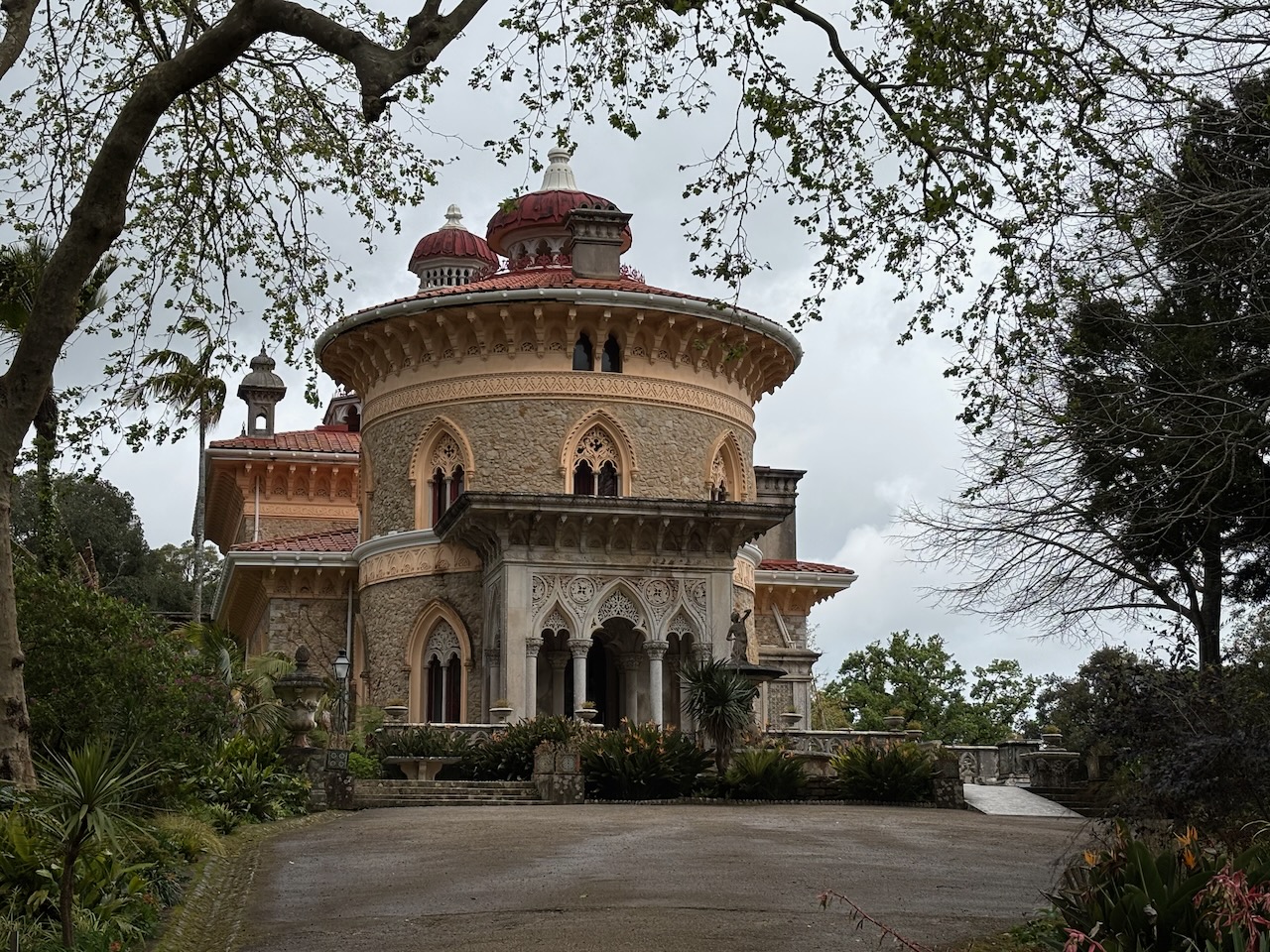
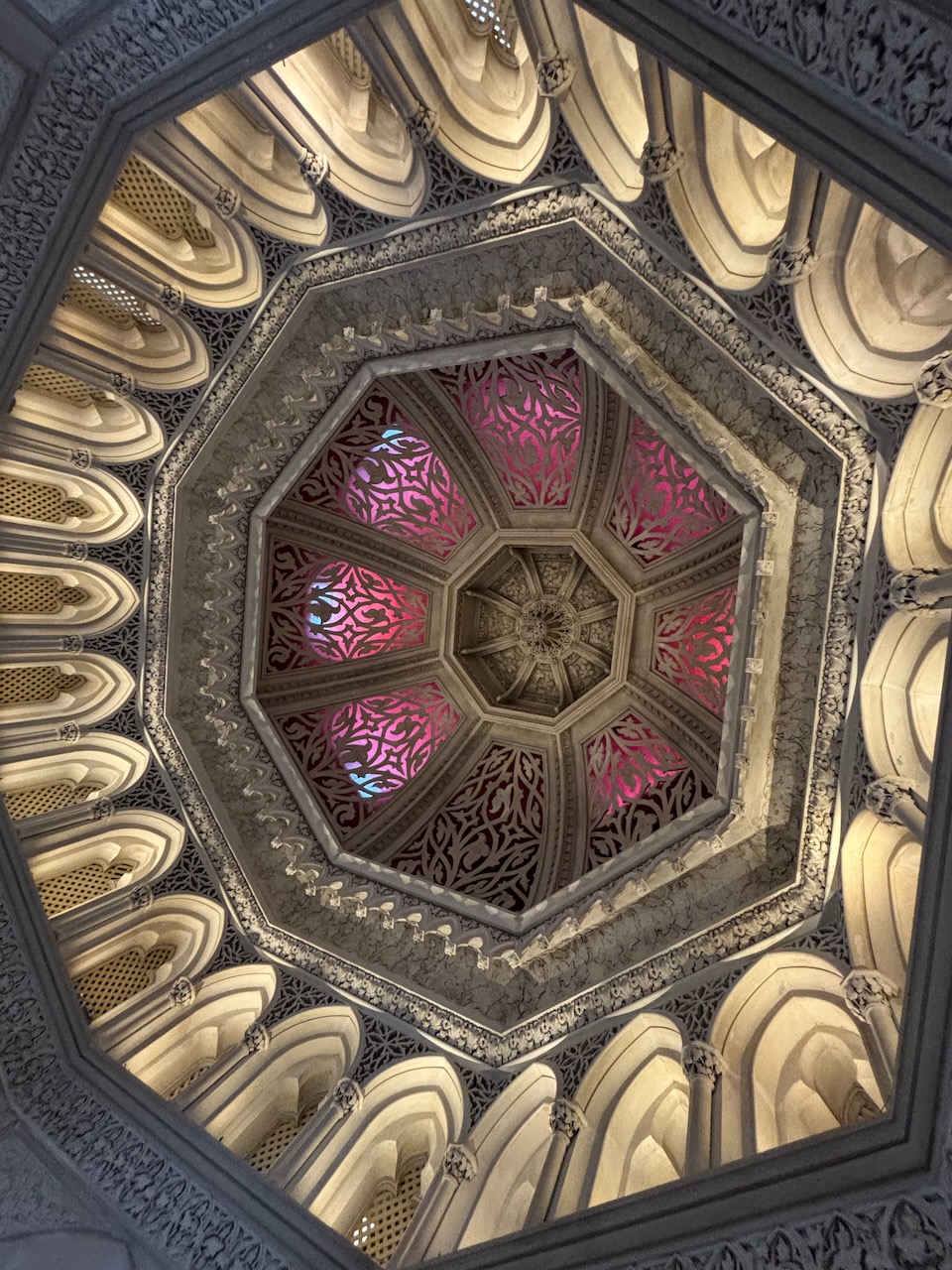
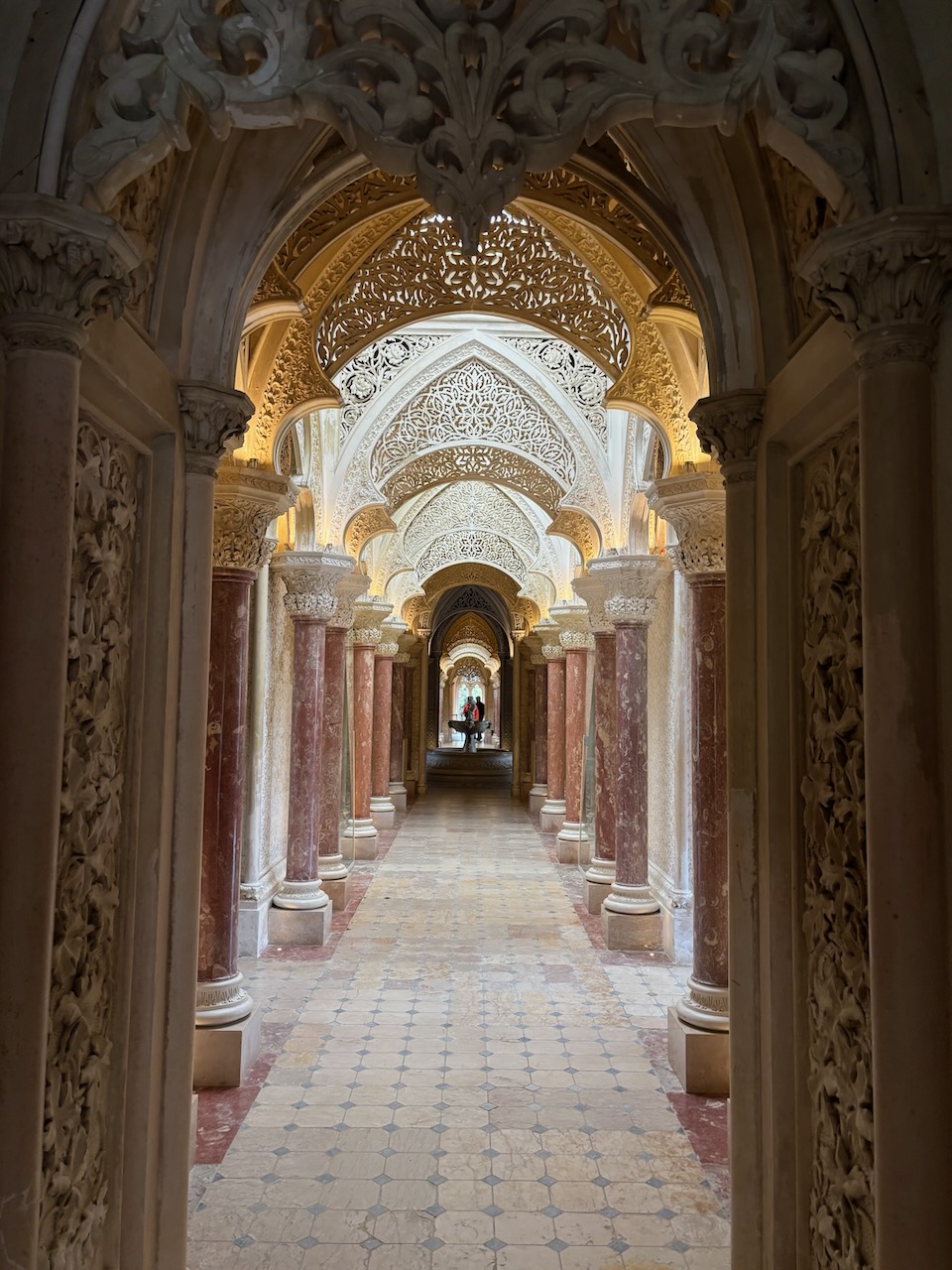
Cook, who was graced with the title of Viscount of Monserrate by Luís I, purchased the property in 1863 and started to work with the architect James Knowles on the remains of the house built by a fellow Brit, Gerard de Visme after the 1755 Lisbon quake. The design was influenced by Romanticism and Mudéjar Moorish Revival architecture with neo-Gothic elements. The Islamic architectural influence is in reference to when the region was a part of the wider Muslim Gharb Al-Andalus until the 13th century.
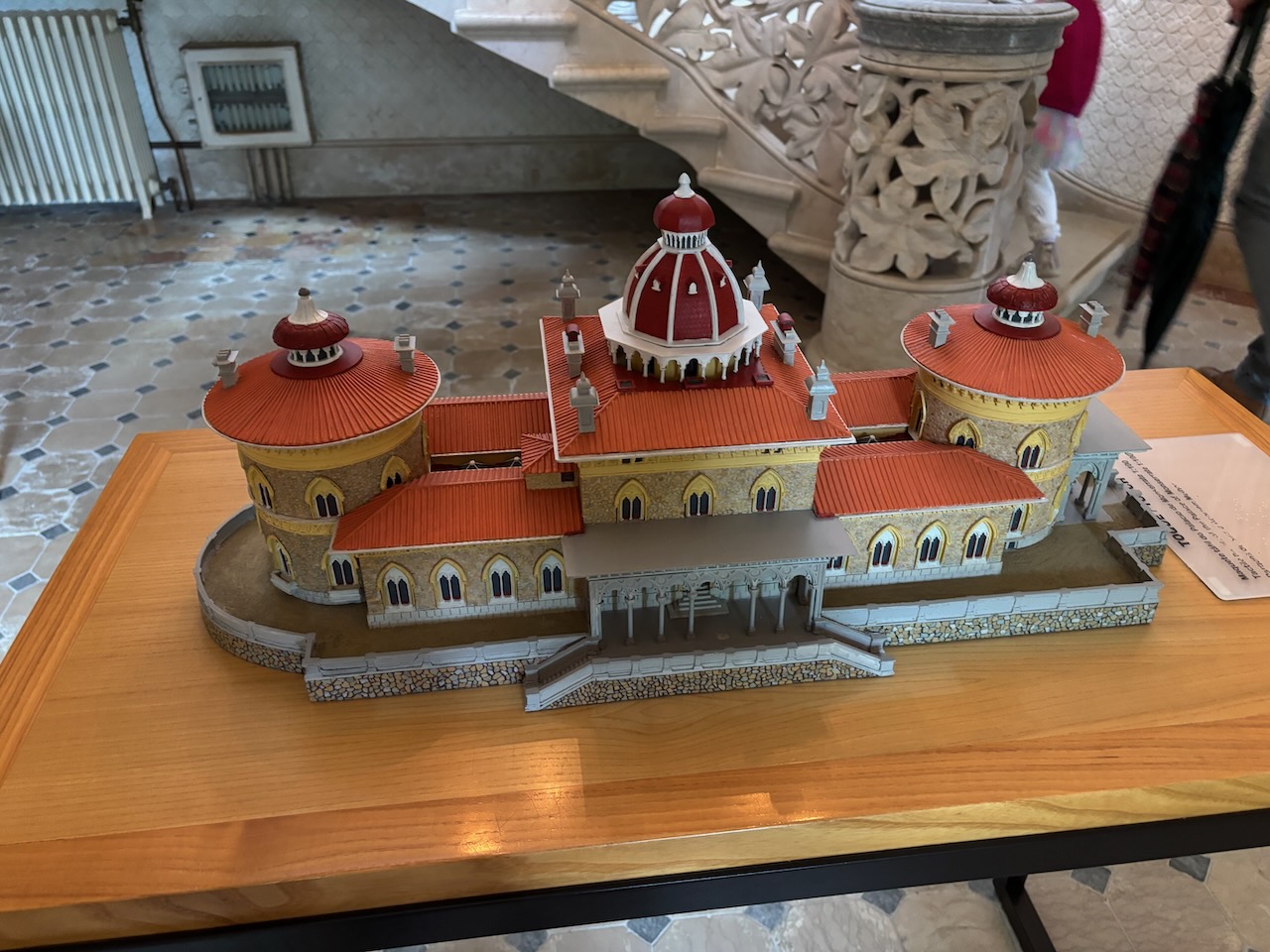
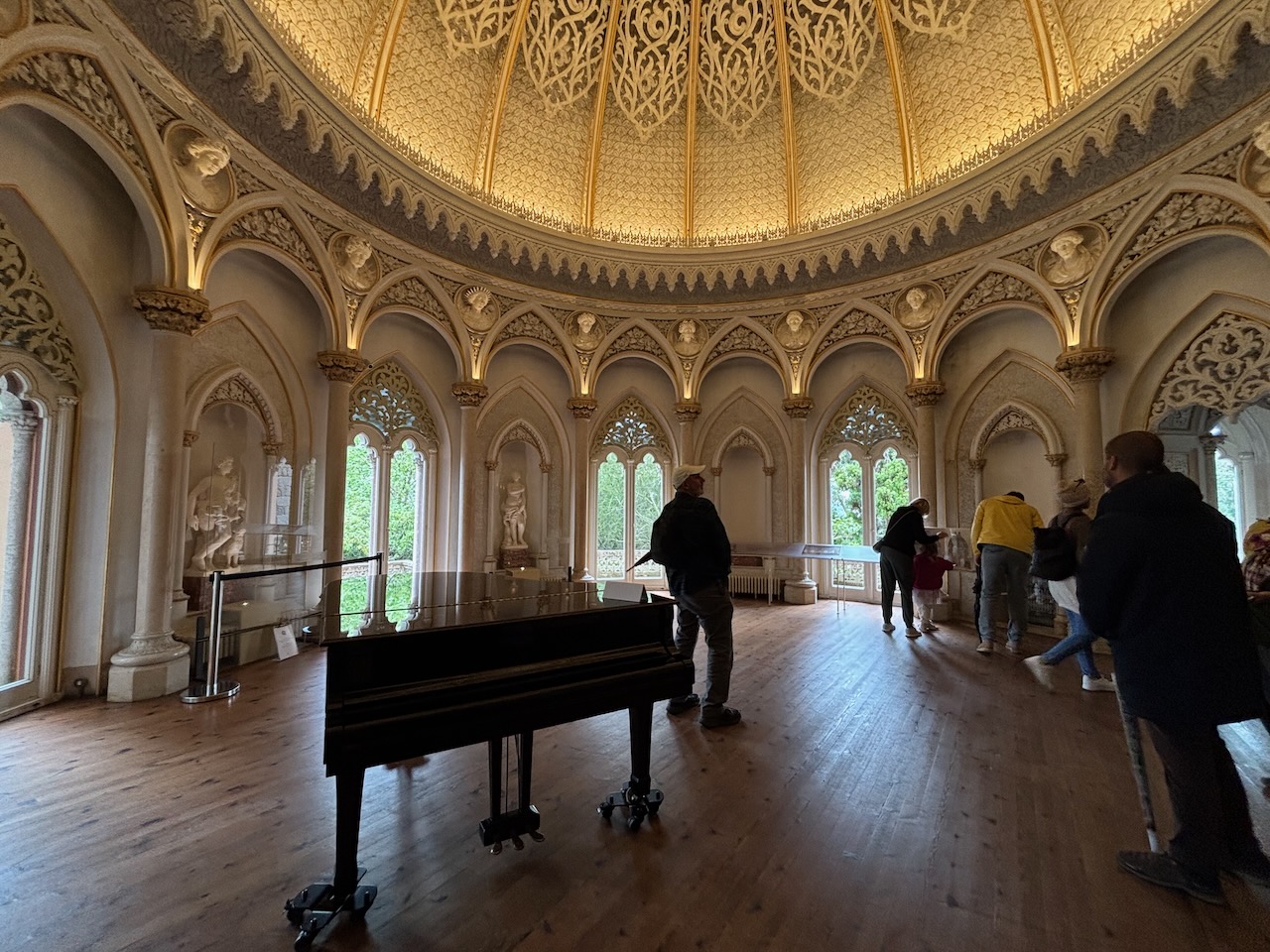
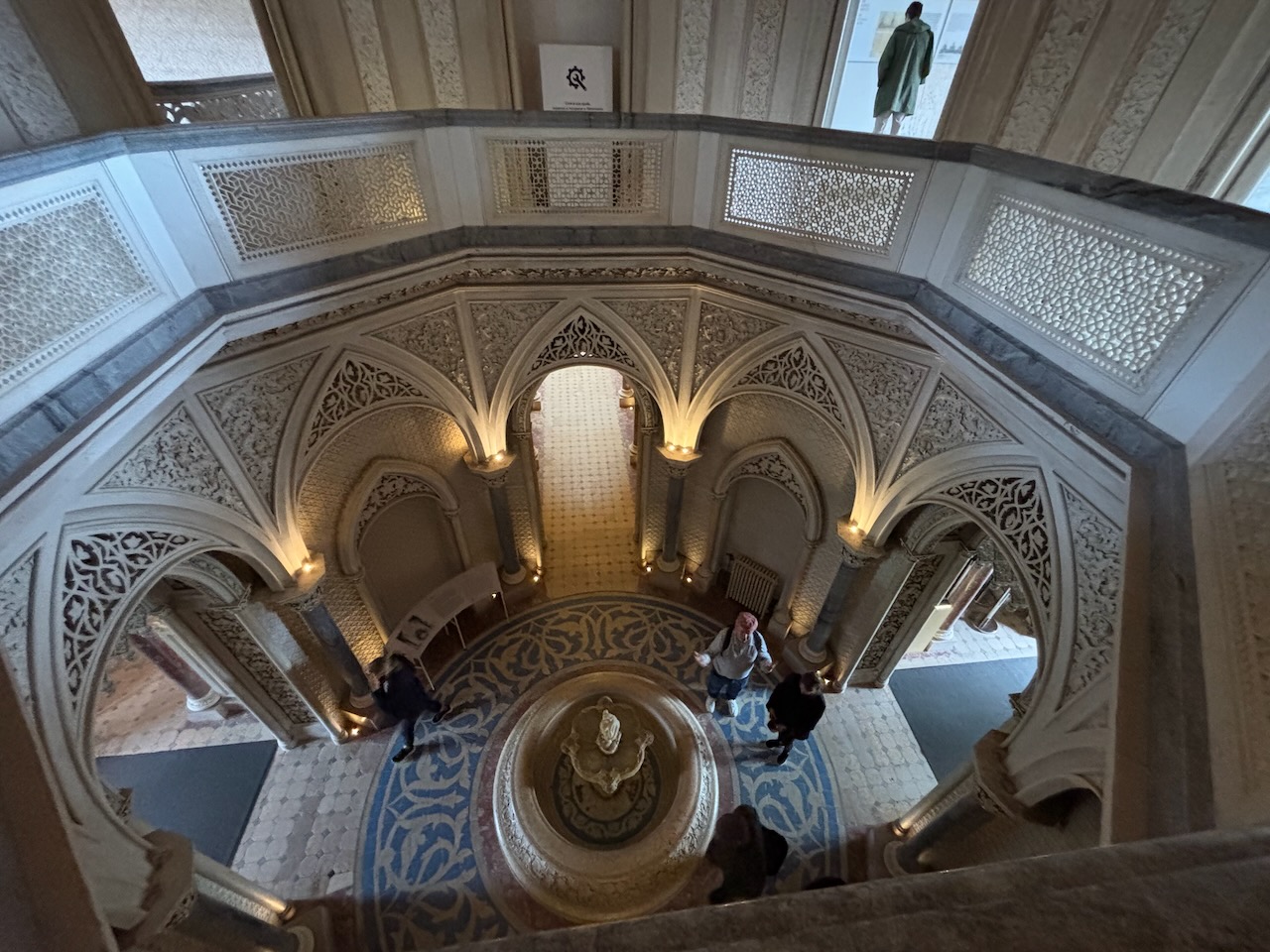
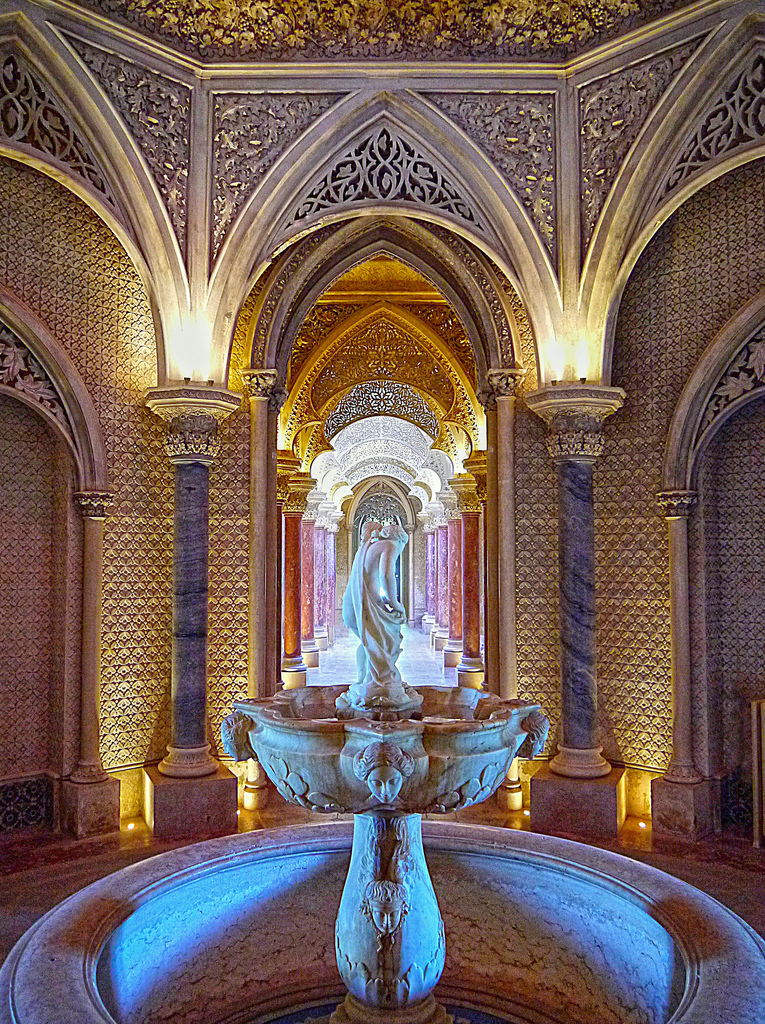
The property and hunting grounds were acquired by the Portuguese state in 1949 and in 1995 Sintra Mountains, including the Park of Monserrate, was defined as a World Heritage Cultural Landscape by UNESCO. The management of the Park of Monserrate was taken over by the Sintra Park in 2000 and its recovery and restoration program enabled the Palace to re-open to the public. It was a fascinating place to visit, as it included, like the Pena Palace a mixture of many elements, the Moorish Revival being prominent, a style we would witness many times in the coming. Weeks.

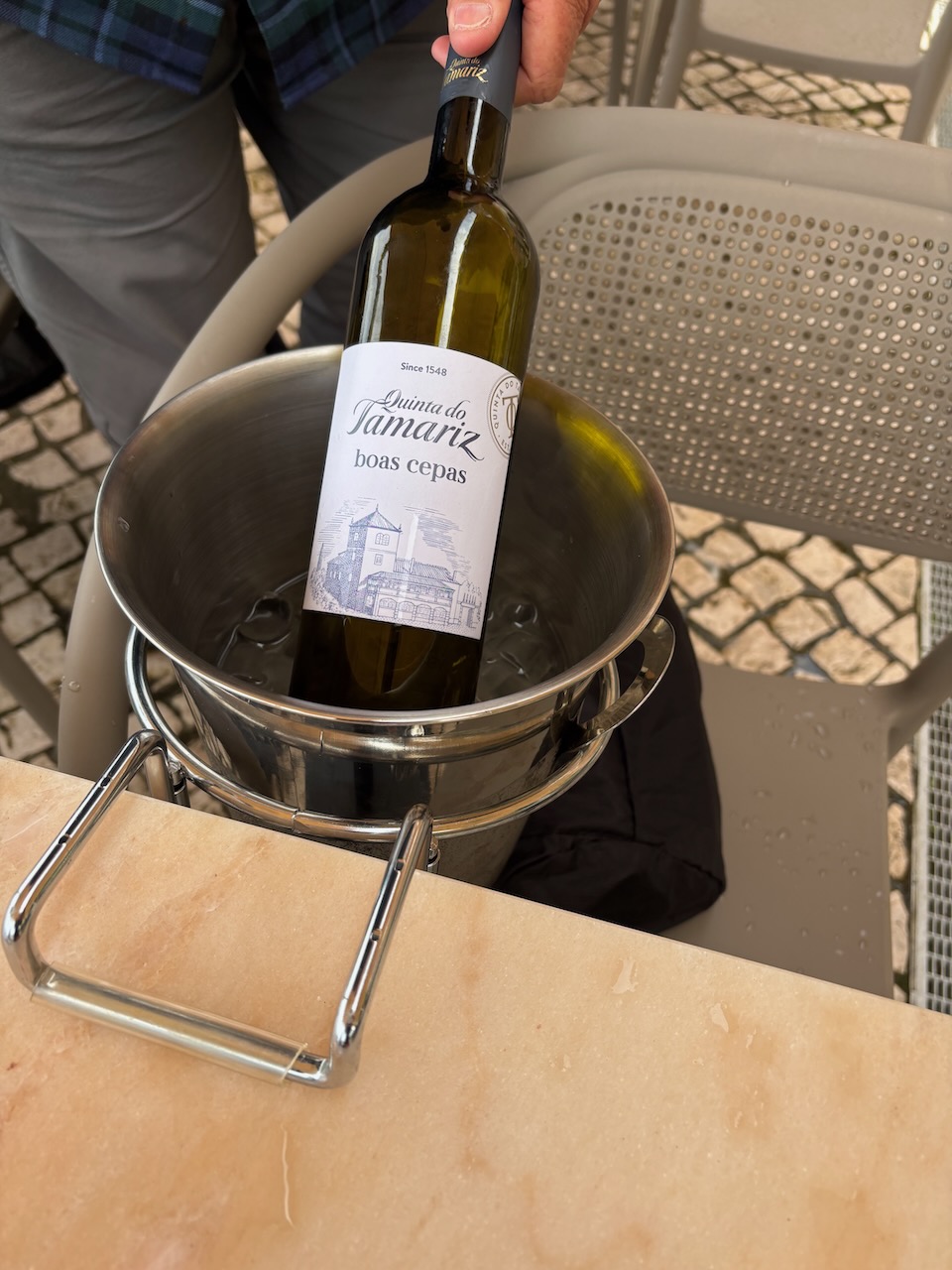
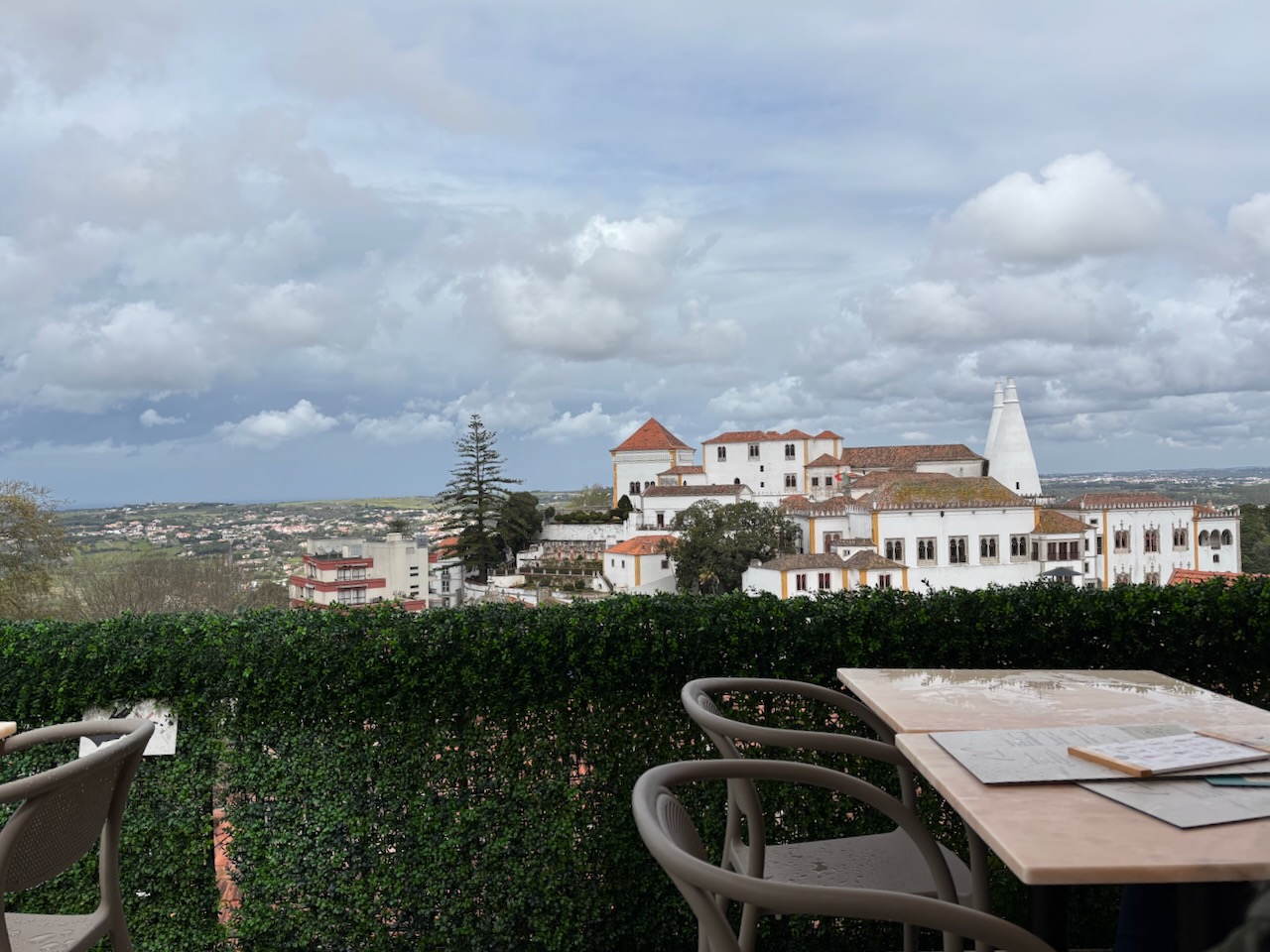
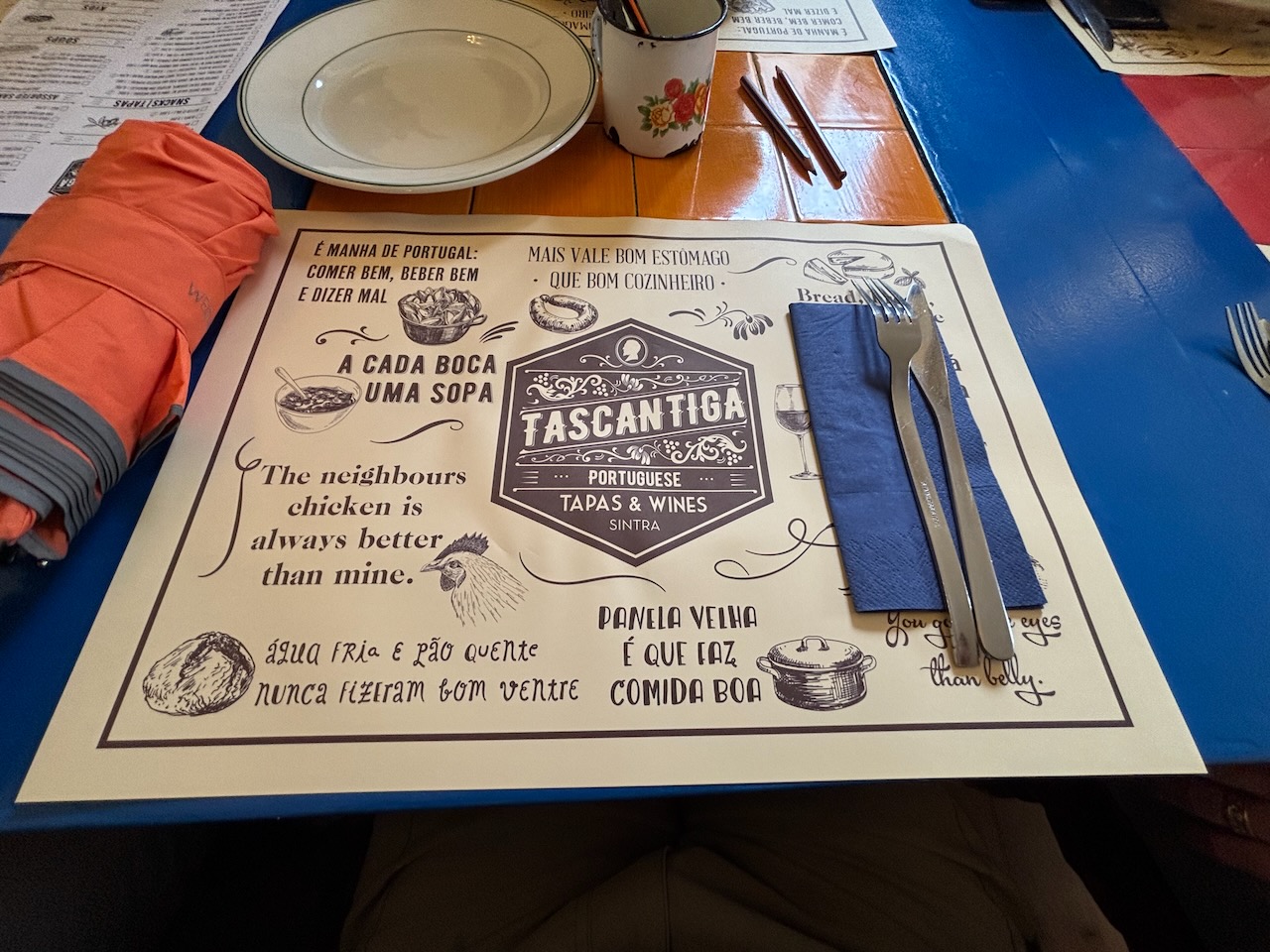
We all finished around the same time and as it was now past noon, eating became a priority and our helpful driver drove us to Sintra town, let us out at a convenient location and gave us the name of the restaurant, Tascantiga, to have our lunch. We climbed a steep hill to get to it and as there was going to be a wait for a table, Joanna, Marty and I stopped in at a place next door to sat on the patio with a view to enjoy a pre-lunch bottle of wine.
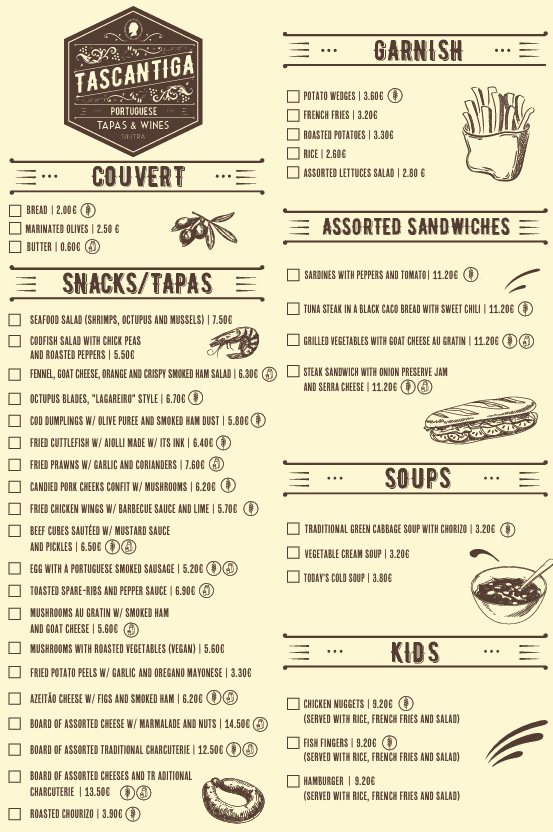
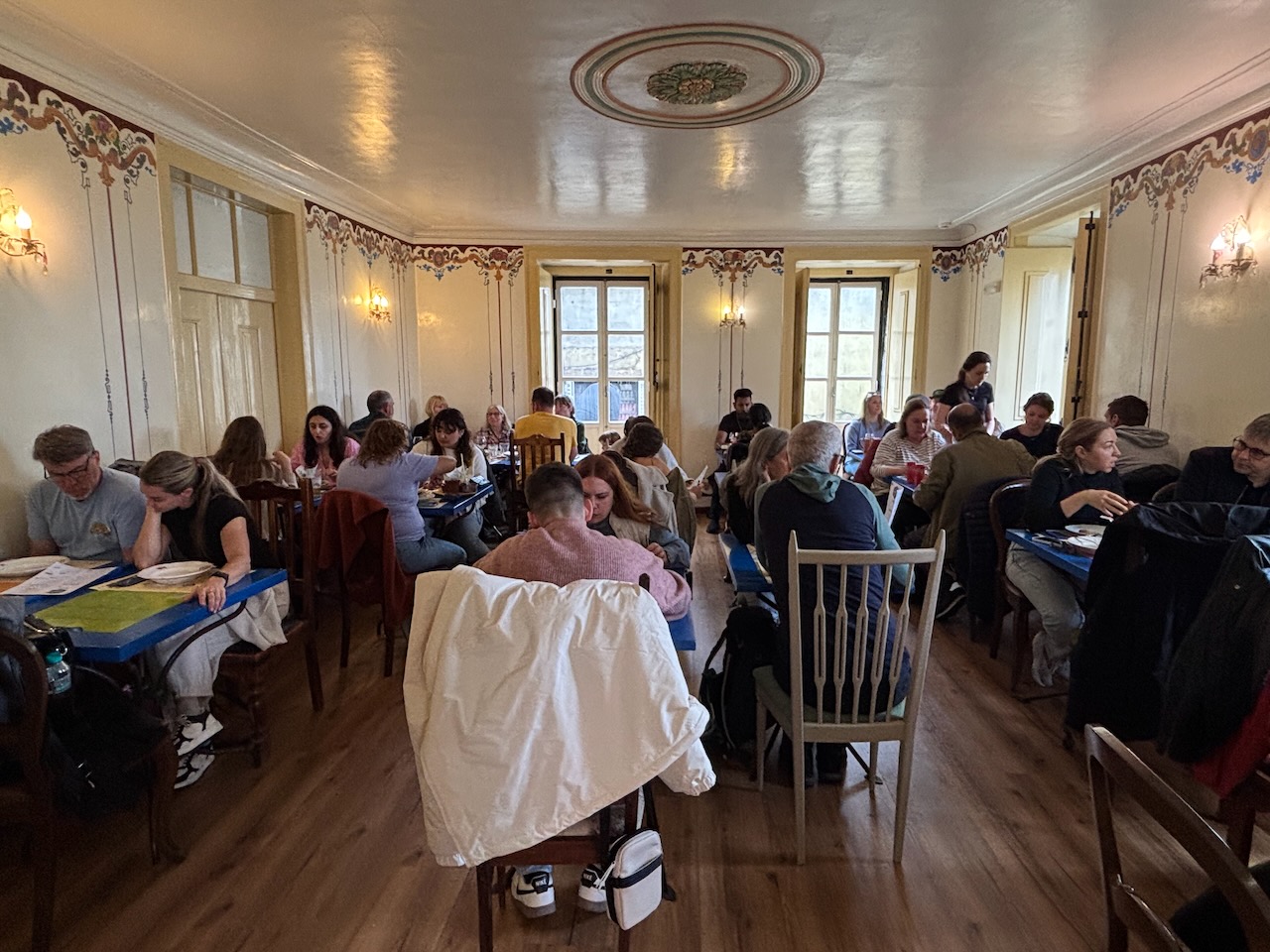
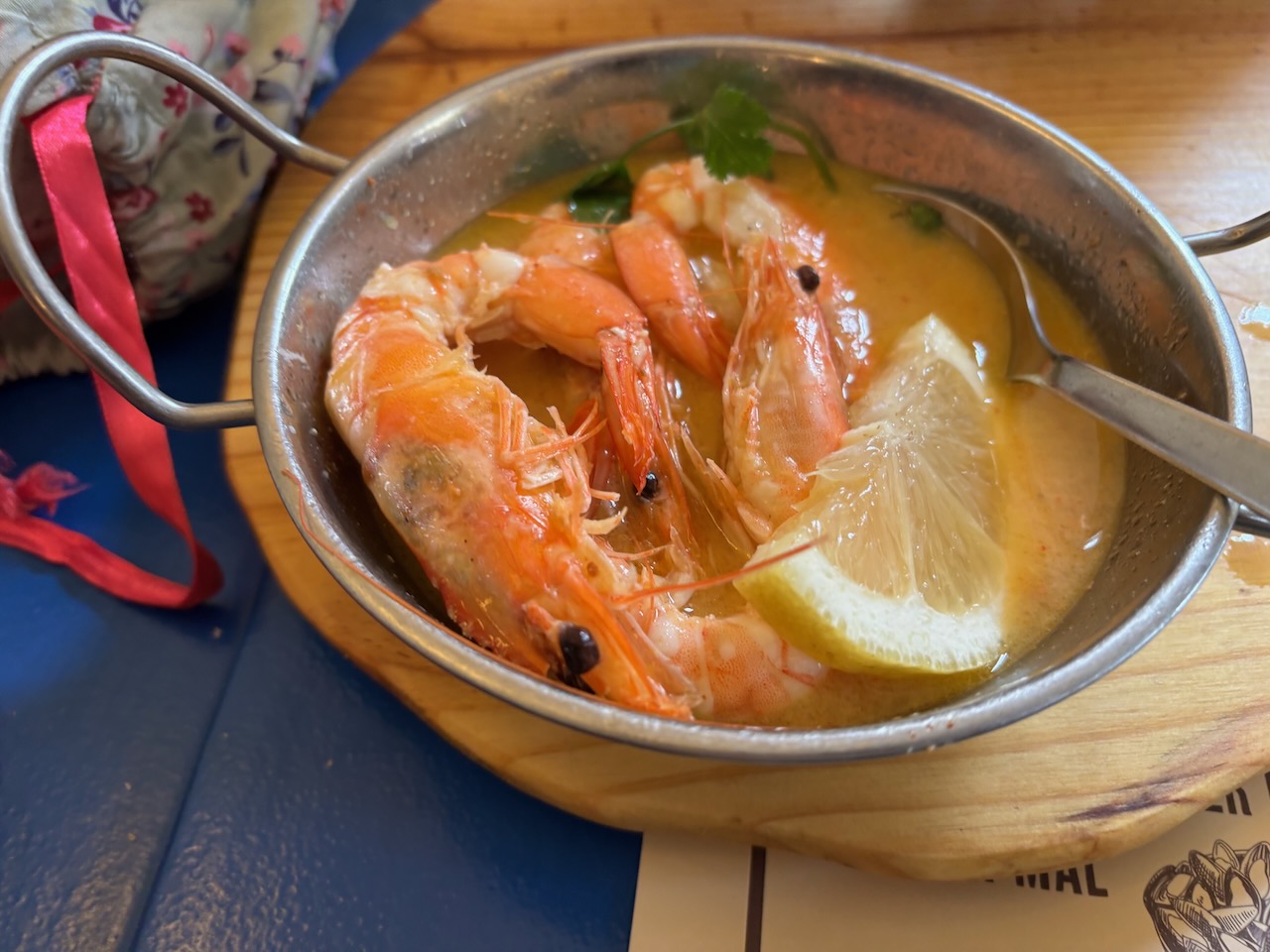
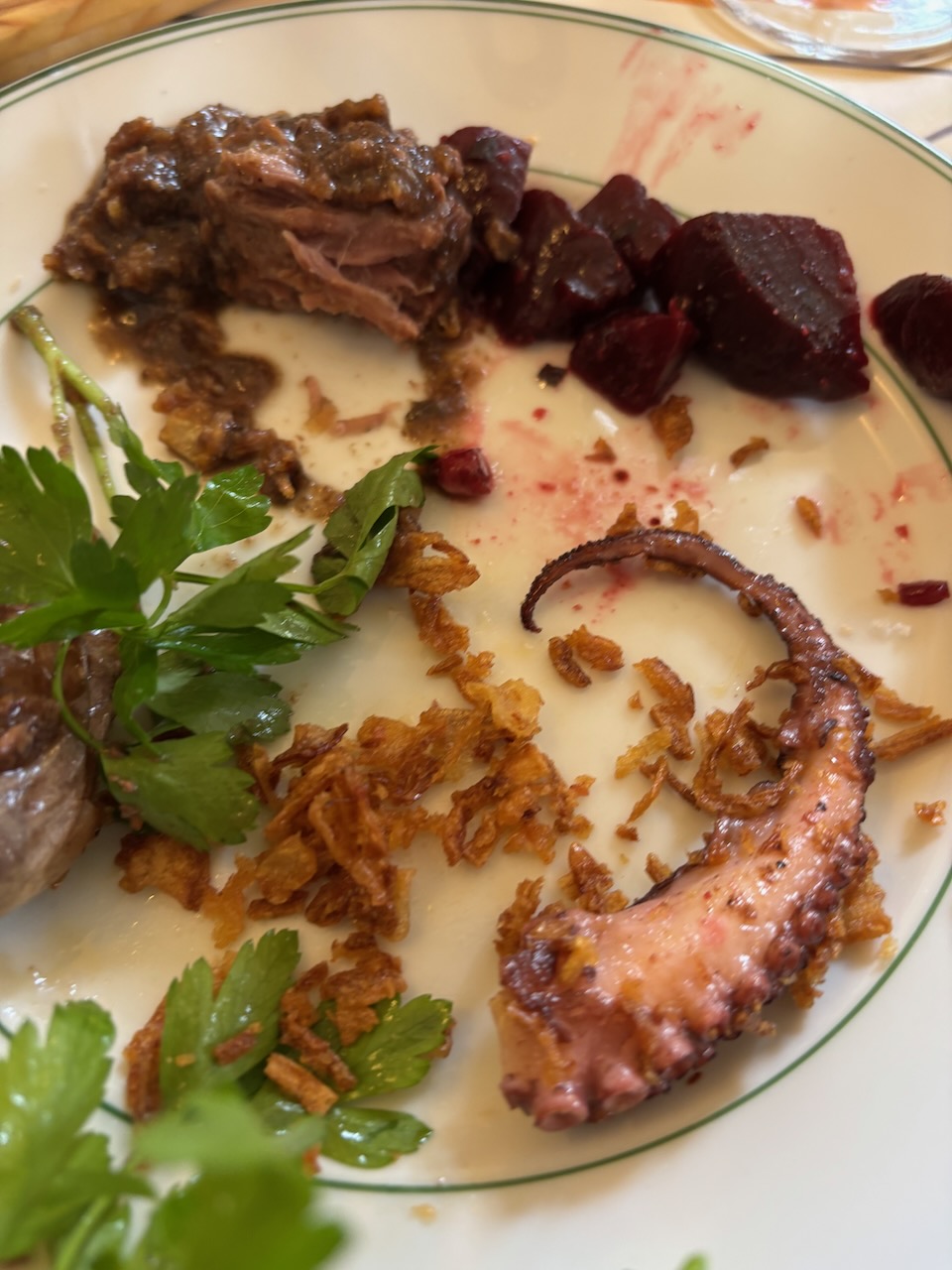
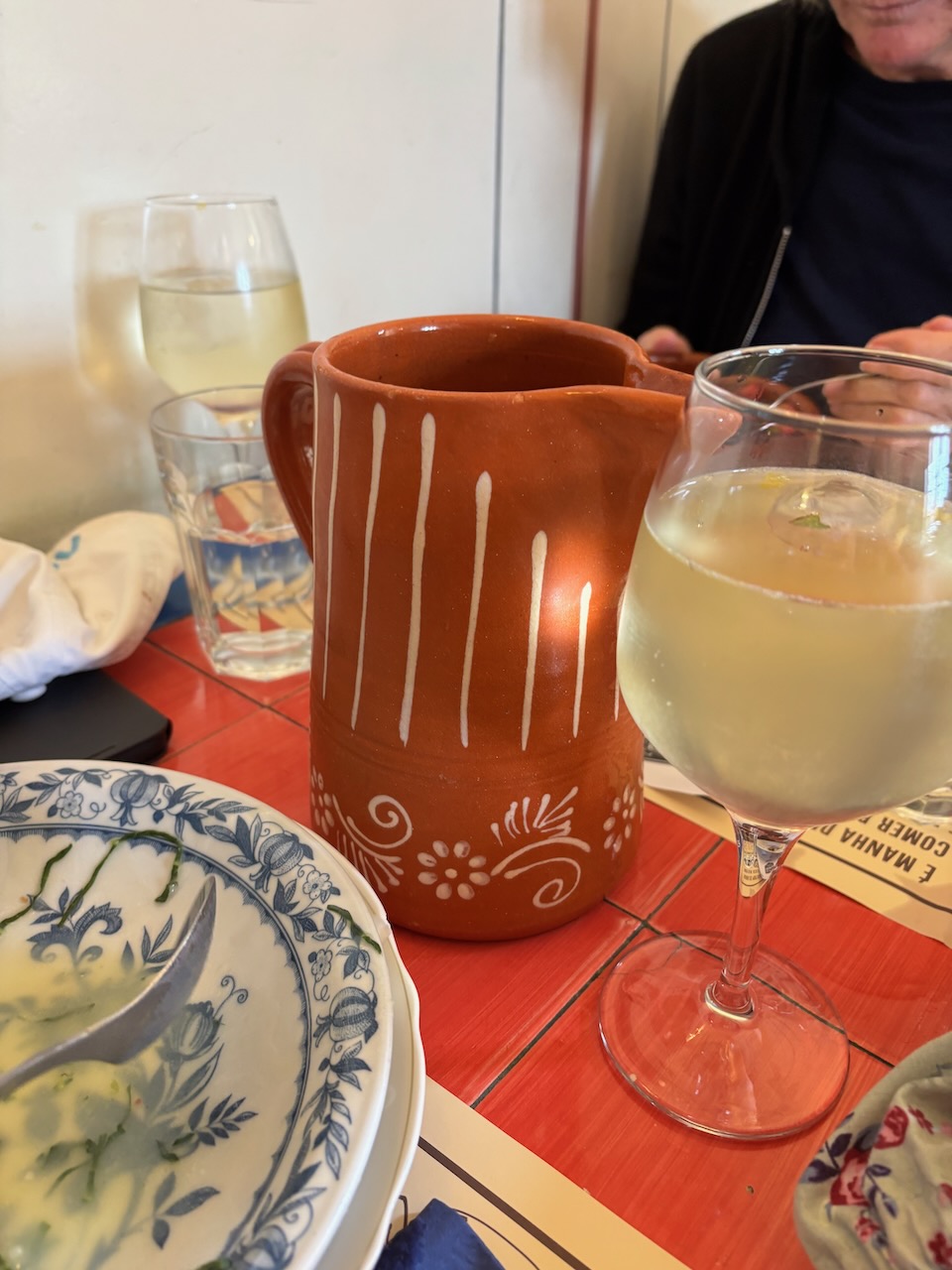
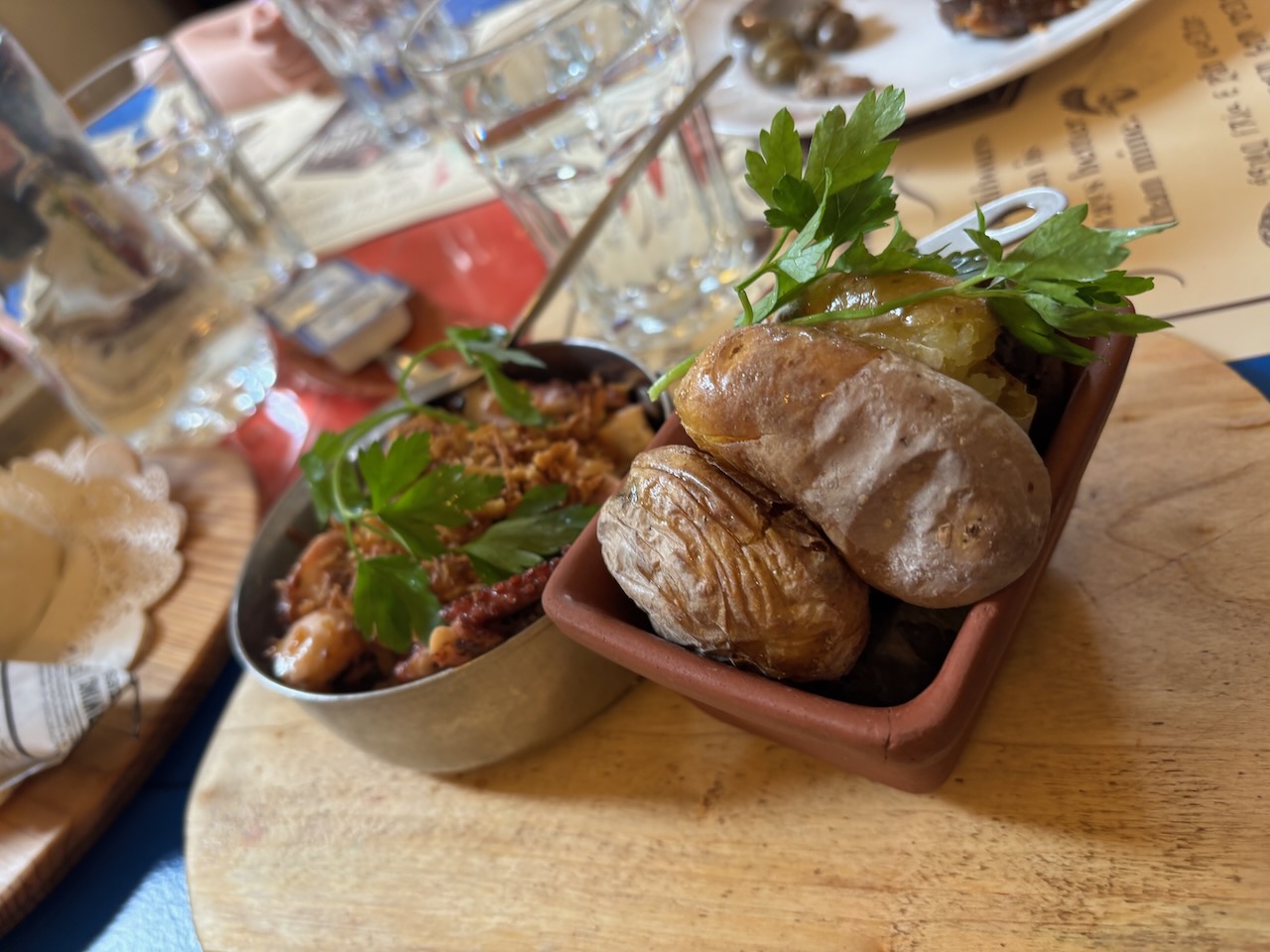
Our timing was just right because as we were finishing up, we got a text from the others letting us know the table was ready and to hustle on over. The menu is comprised of tapas, sandwiches, and soups and we would sample quite a few, more than ten, all very good. From what I can recall we’d enjoy shrimp in broth, Octopus blades “lagareiro” style, Candied pork cheeks confit w/ mushrooms accompanied by two large roasted potatoes, a host of other items and of course, two jars of Sangria. And as we’d experienced so far in Portugal, the tab came to a reasonable 125 Euros.
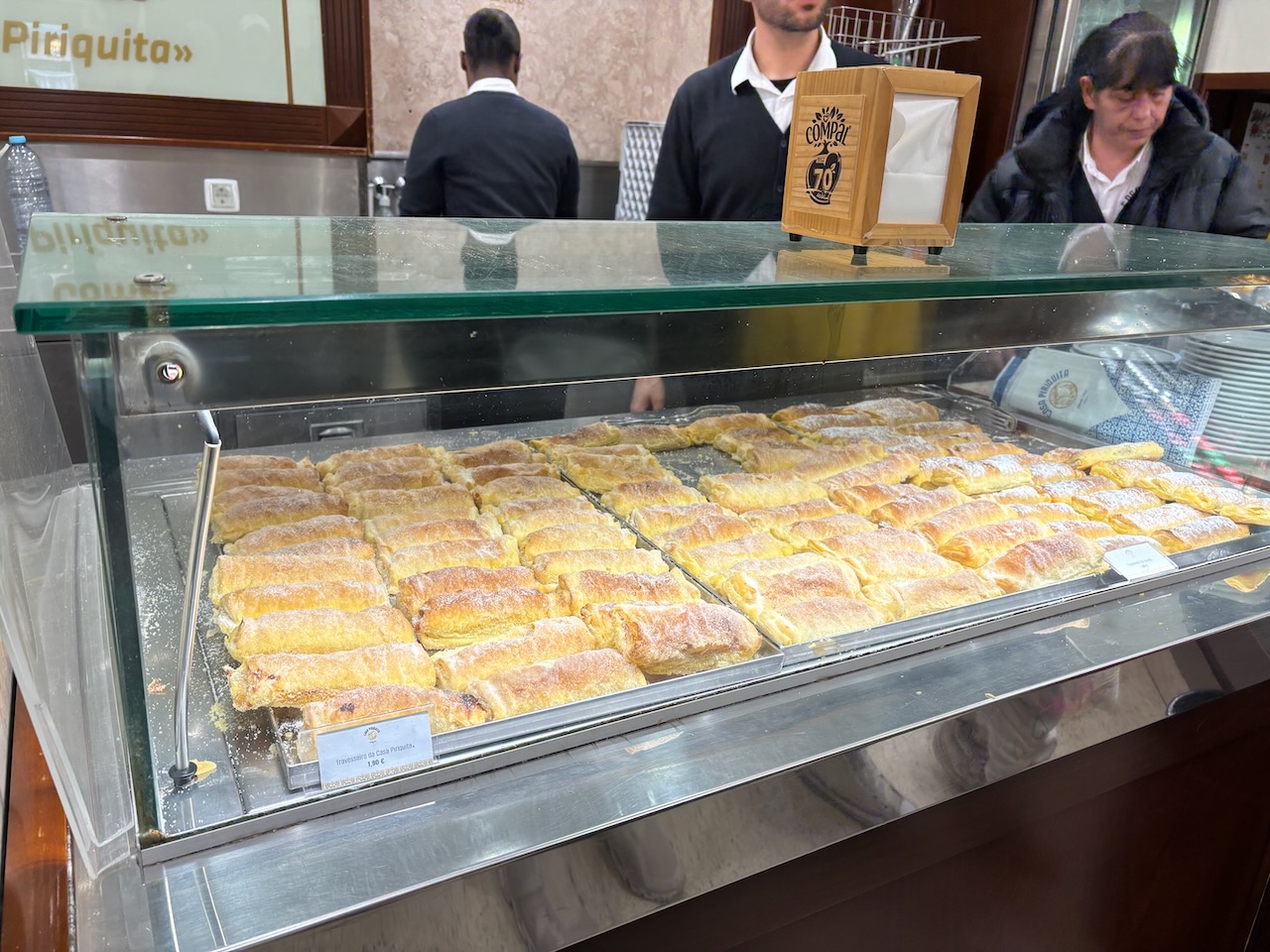
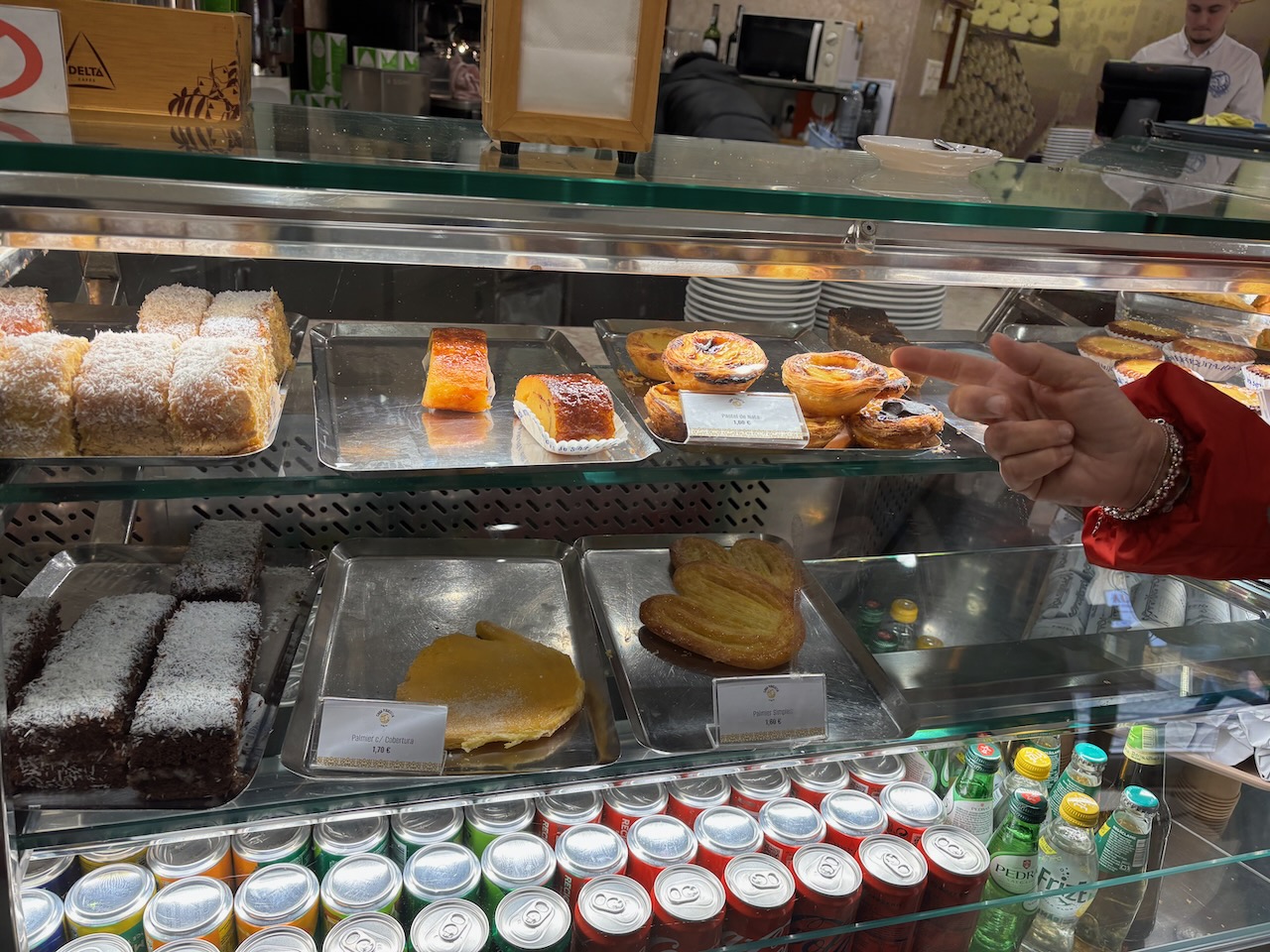
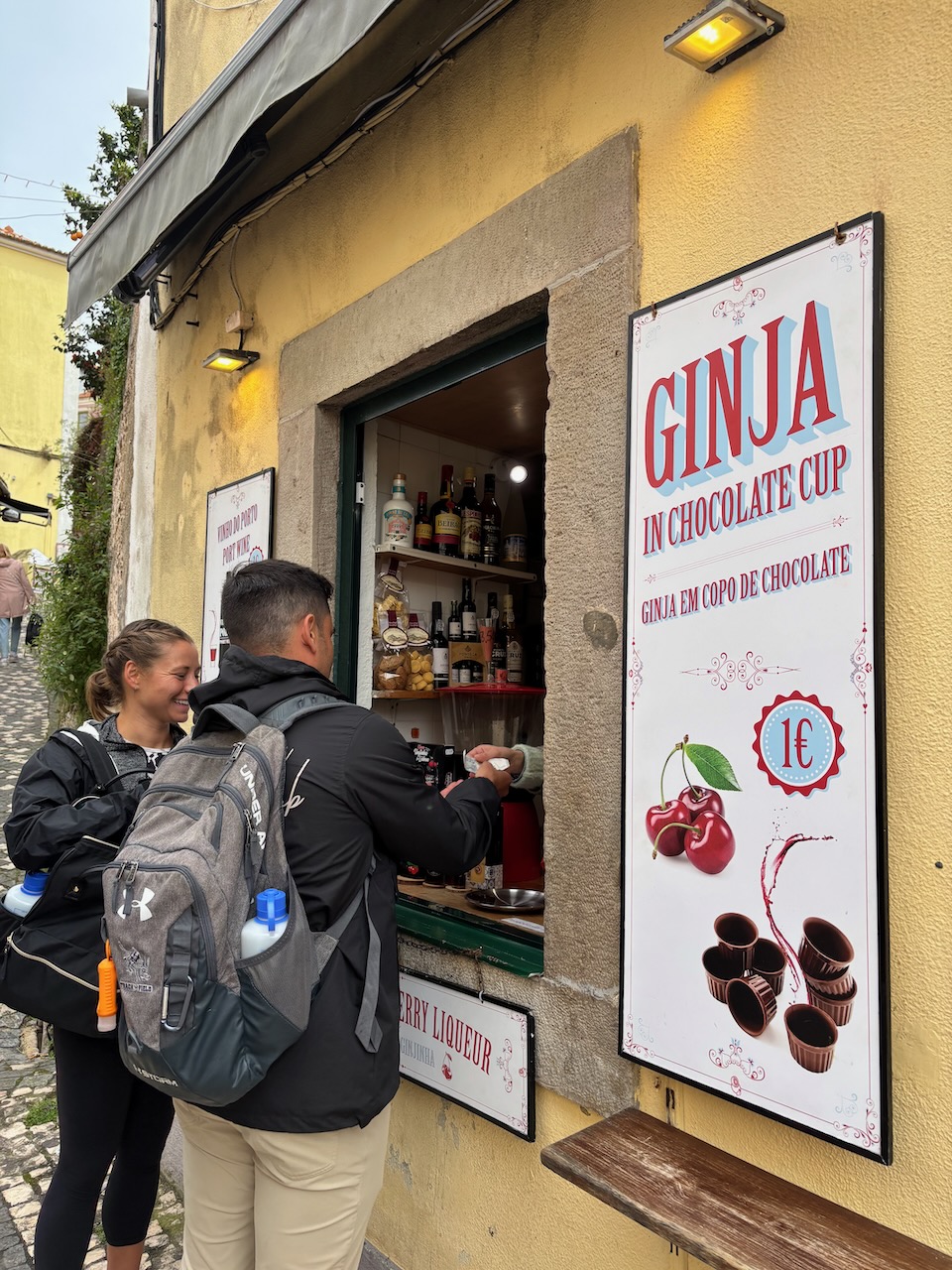
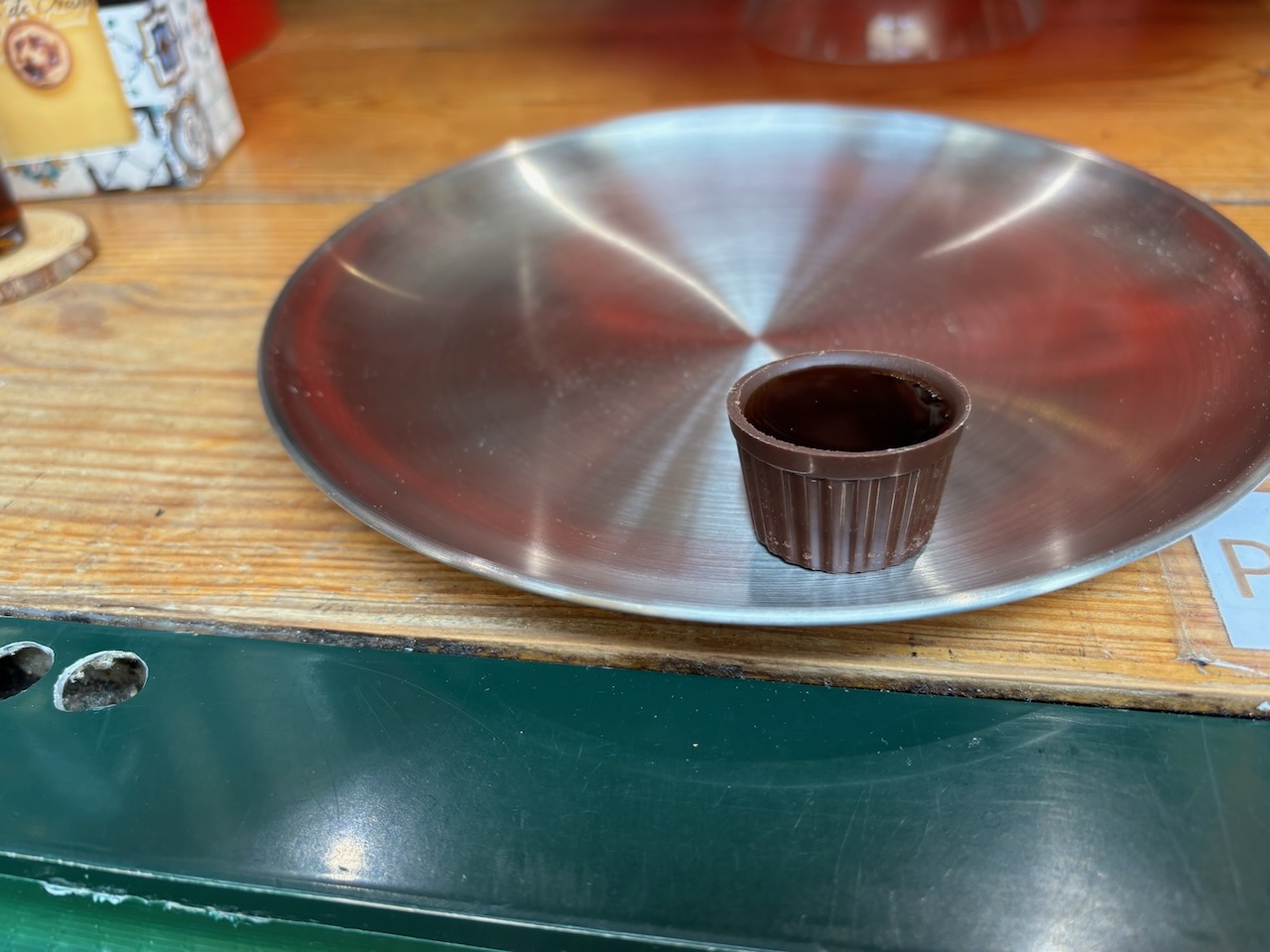
Finished with lunch, we began to work our way back downhill to the meeting spot for pickup but having some time to kill we joined the throngs of other tourist’s window shopping and sampling food from storefronts. A couple of folks stopped in at Casa Priquita to get a few of their famous Pillows, a delicate puff pastry with a filling of egg and almond cream for breakfast the next morning. While pastries were being purchased, others, including myself, hit up the Ginja in a Chocolate Cup Kiosk across the lane for their One Euro version of exactly that, a shot of that soul sucking cherry goodness wrapped in chocolate. I may have had two.
We all made it to the van without incident and later found ourselves back at the apartment, enjoying our last night in Lisbon sipping on Ginja and recounting the day’s events. We’d be off to the wedding site the next day and were looking forward to that part of our journey. We’ll cover that and our last days in Portugal in the next post.
Links
Sintra Highlights and Pena Palace Full-Day Tour: https://www.viator.com/tours/Lisbon/Low-Cost-Sintra-Highlights-Full-Day-Tour/d538-7691P8
Pena Palace: https://www.parquesdesintra.pt/pt/parques-monumentos/parque-e-palacio-nacional-da-pena/
Monserrate Palace: https://visitsintra.travel/en/visit/monuments/monserrate-palace
Tascantiga: https://tascantiga.wixsite.com/tascantiga
Casa Priquita: https://piriquita.pt/
Discover more from 3jmann
Subscribe to get the latest posts sent to your email.


 3jmann