April 4-6
We would leave Lisbon the next morning and journey not quite three hours for a two-night stay at Alter Real, part of the Hotel Vila Gale Collection. This part of the trip was behind the whole reason to begin with, that is for Jessica, Gemma and Kris to attend the wedding of their friend Meg at a smaller hotel not too far from ours.

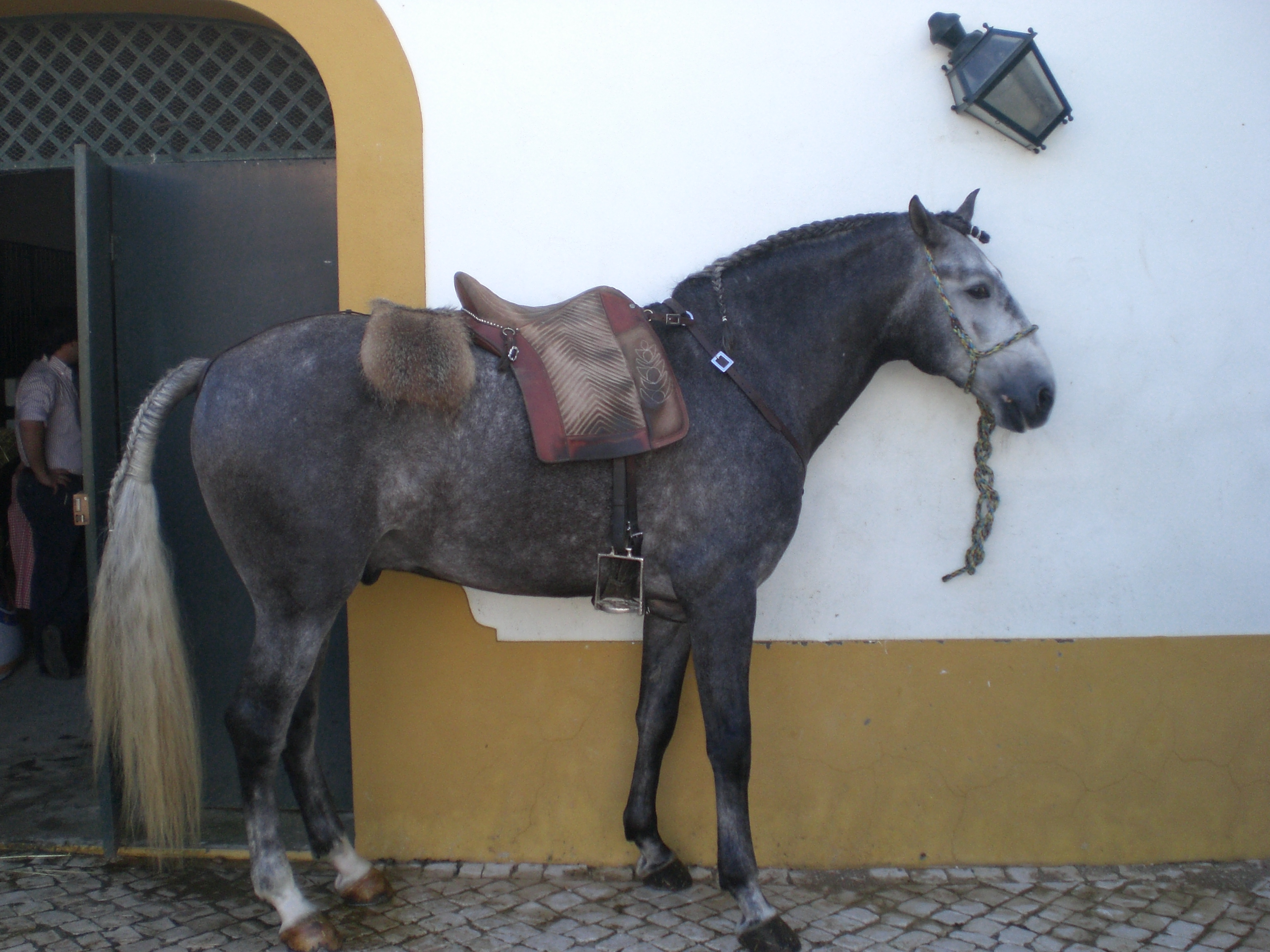
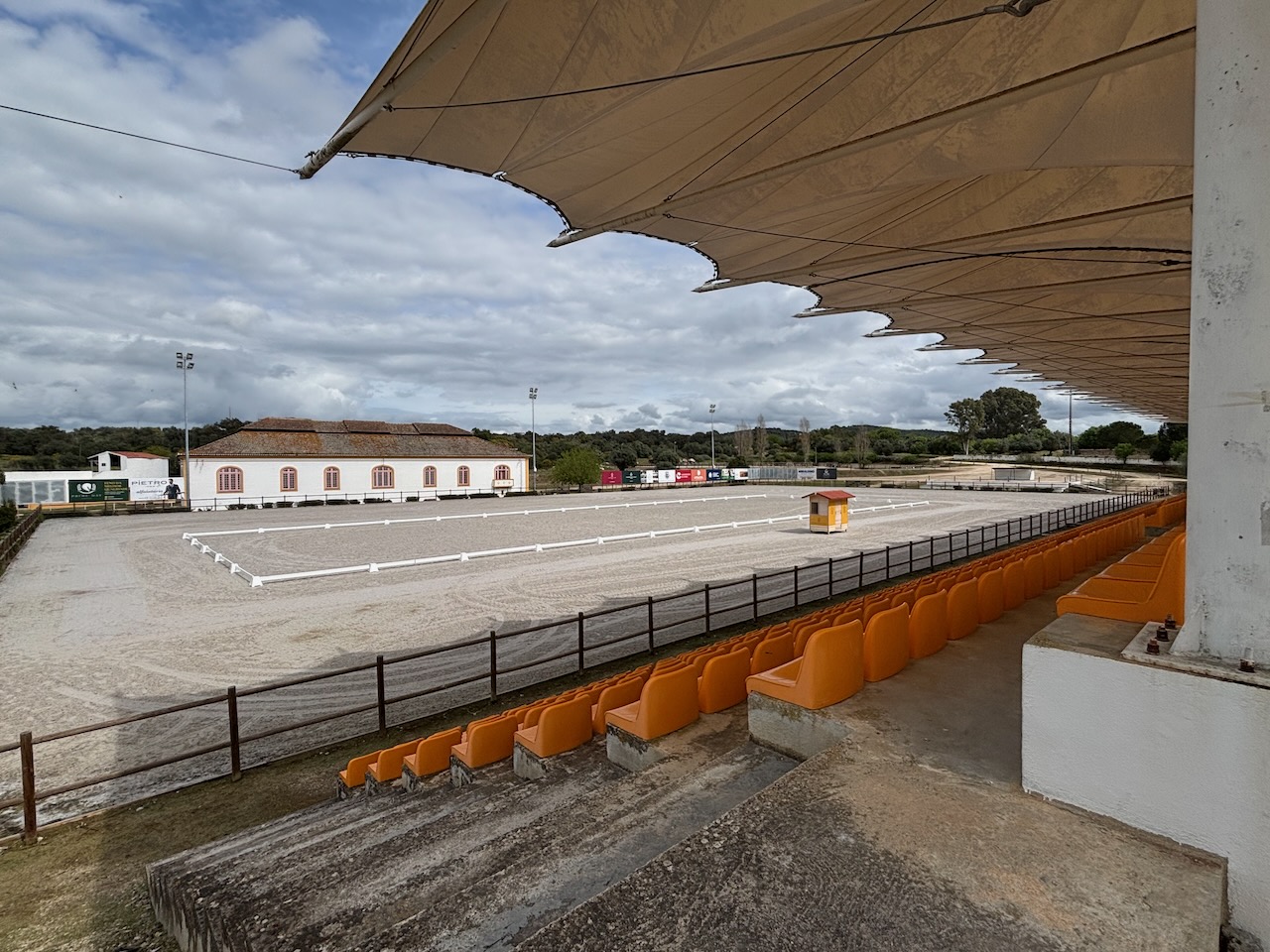
The Alter Real is a strain of the Lusitano breed of horses which is bred only here at the Alter Real State Stud farm. It was founded in 1748 by the Portuguese royal family to provide horses for the national riding academy and imperial use. The Portuguese School of Equestrian Art (Escola Portuguesa de Arte Equestre) uses these horses exclusively in their performances. The strain was developed from 300 Iberian mares imported from Spain in 1747.
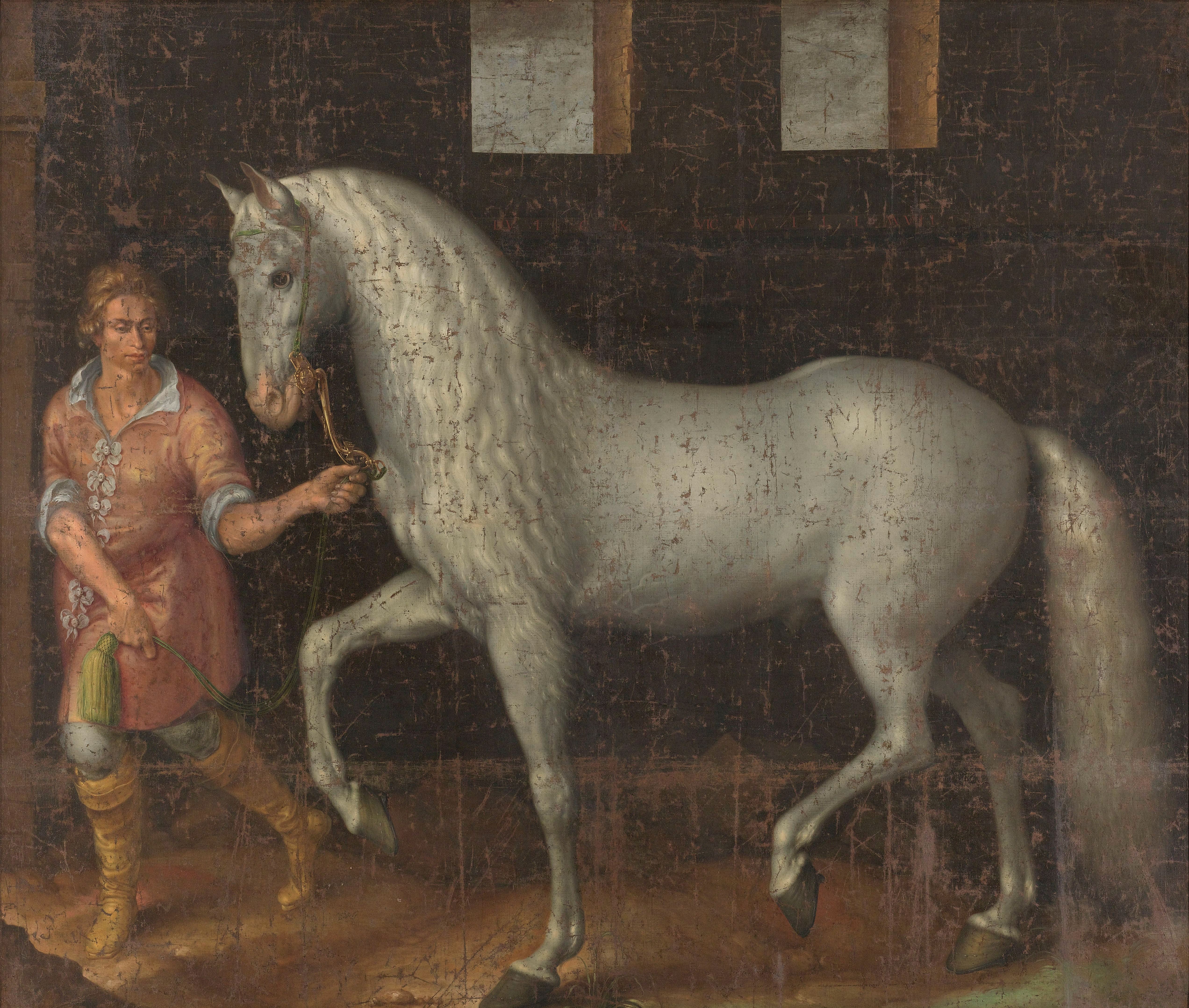
When Napoleon invaded Spain in the early 19th century, the Alter Real strain deteriorated due to the introduction of Arabian, Thoroughbred, Spanish-Norman and Hanoverian blood. However, in the 19th and 20th centuries the strain was re-established with the further introduction of Spanish blood. In the early 20th century, with the 1910 revolution that ended the monarchy, the Alter Real strain faced extinction, as records were burned, stallions were gelded and the stud discontinued.

Ruy d’Andrade, a specialist in Iberian horse breeds, saved two stallions and several mares, and was able to re-establish the strain, turning his herd over to the Portuguese Ministry of Agriculture in 1942, when the stud was reopened. The Portuguese state has maintained ownership of the stud and continues to produce horses for use in high school dressage. Thus, the farm is considered the oldest in the world to operate uninterruptedly in the same location.

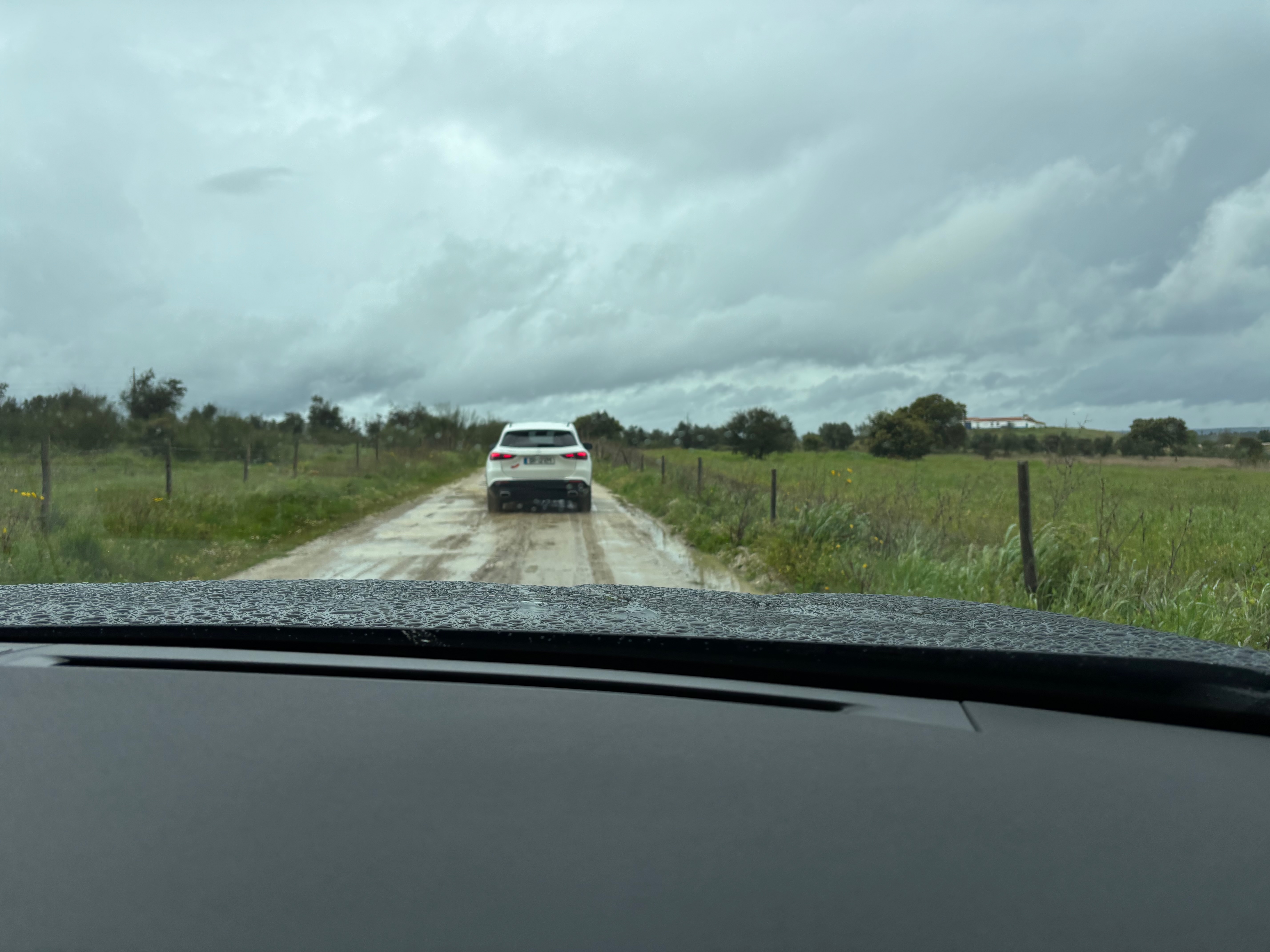
The last couple of miles of our drive to the farm were an adventure as the intended route was closed and the GPS sent us down a series of dirt roads that challenged the limits of our rental cars, producing some moments of anxiety when we needed to cross a stream. But the saints of travel that watch over the innocent guided us safely to our destination and we were soon checked in and gathered in the restaurant bar for a drink and snack to tide us over until dinner.
This would be the first of many positive meals we would enjoy during our short stay, all at such reasonable prices that one wouldn’t know they were staying at a resort. Later, the kids having headed off to pre-wedding festivities, Kim, Joanna, Marty and I convened for dinner, Joanna and I not eating a lot due to our late lunch.
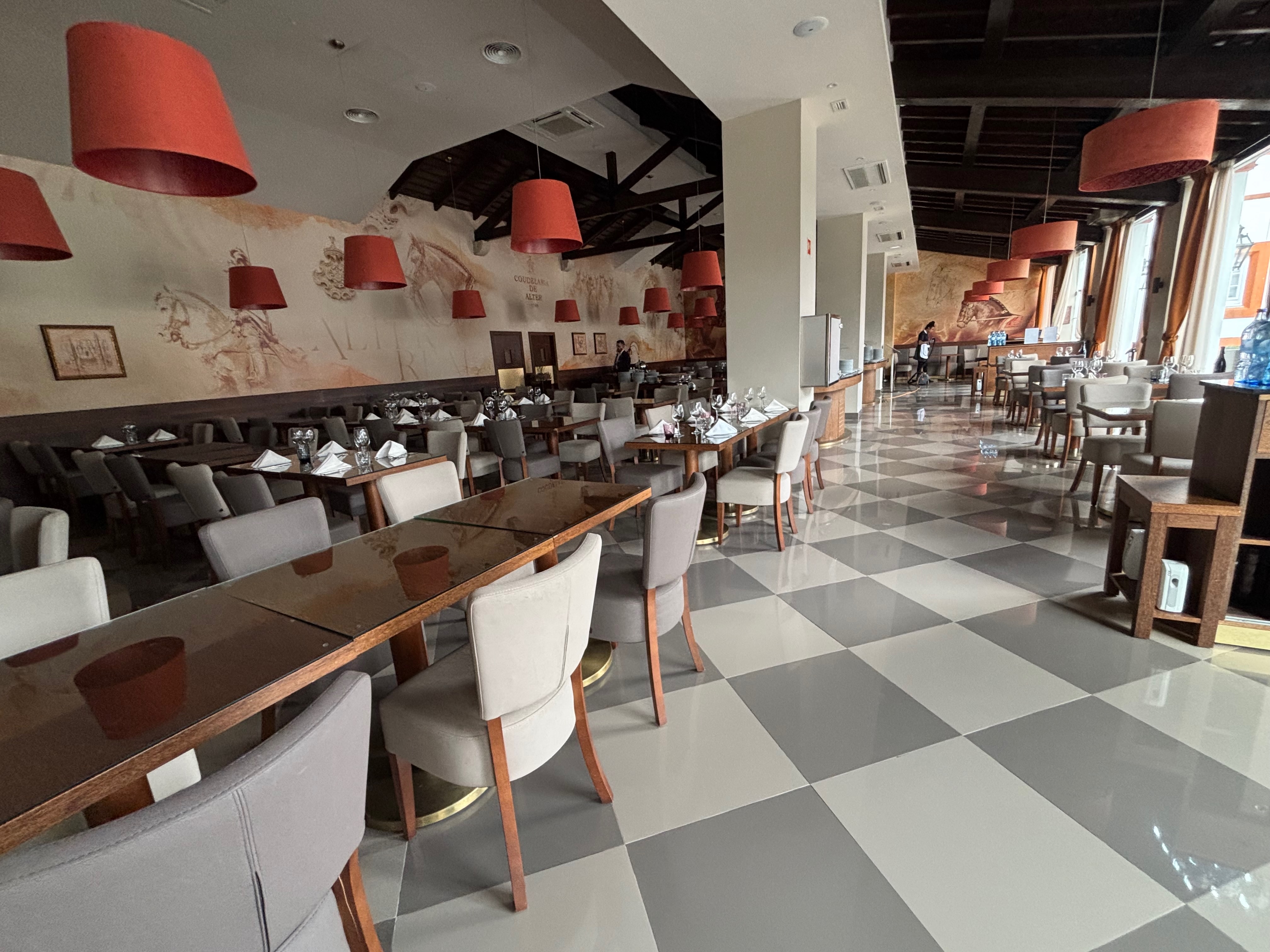

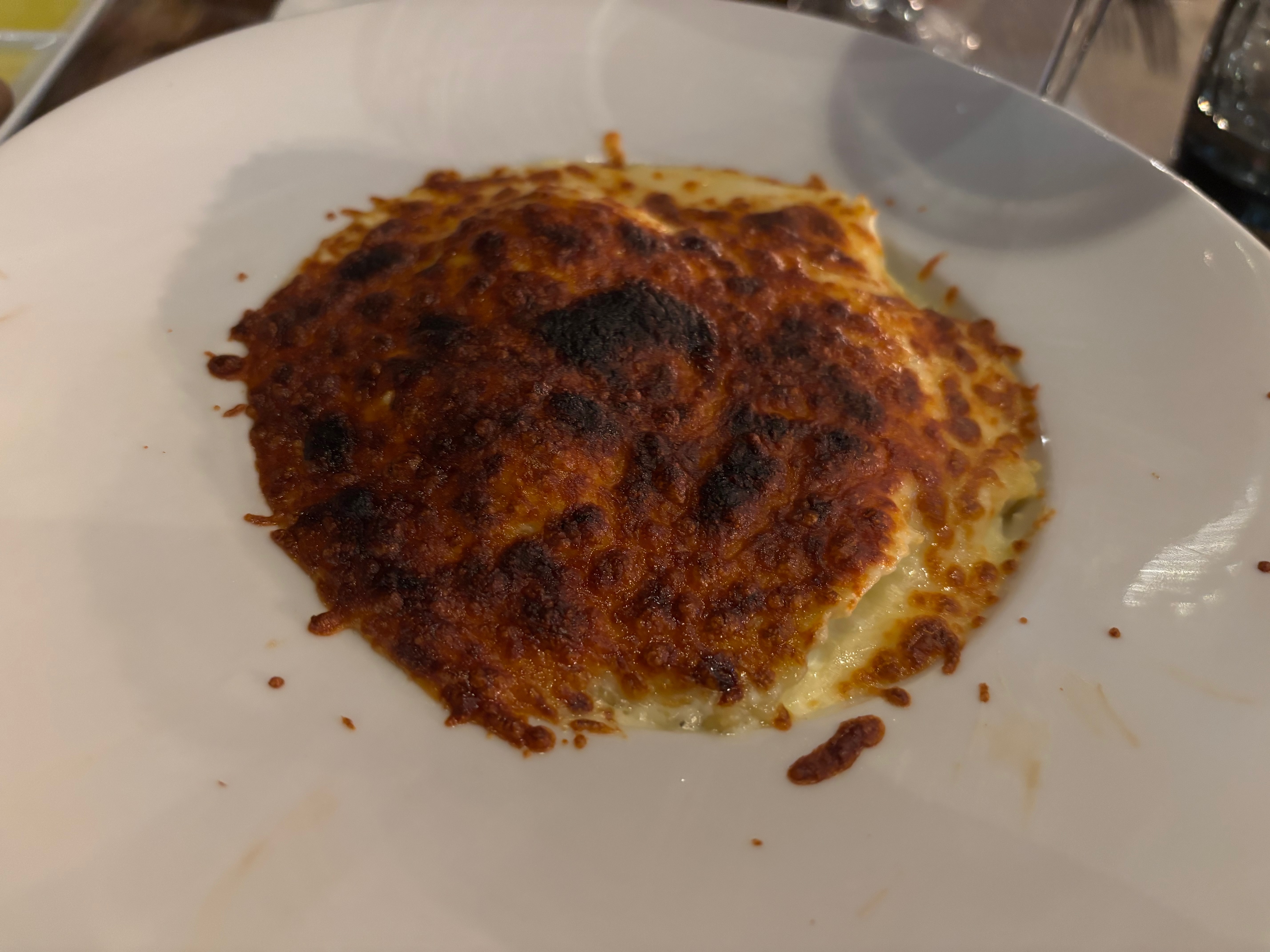
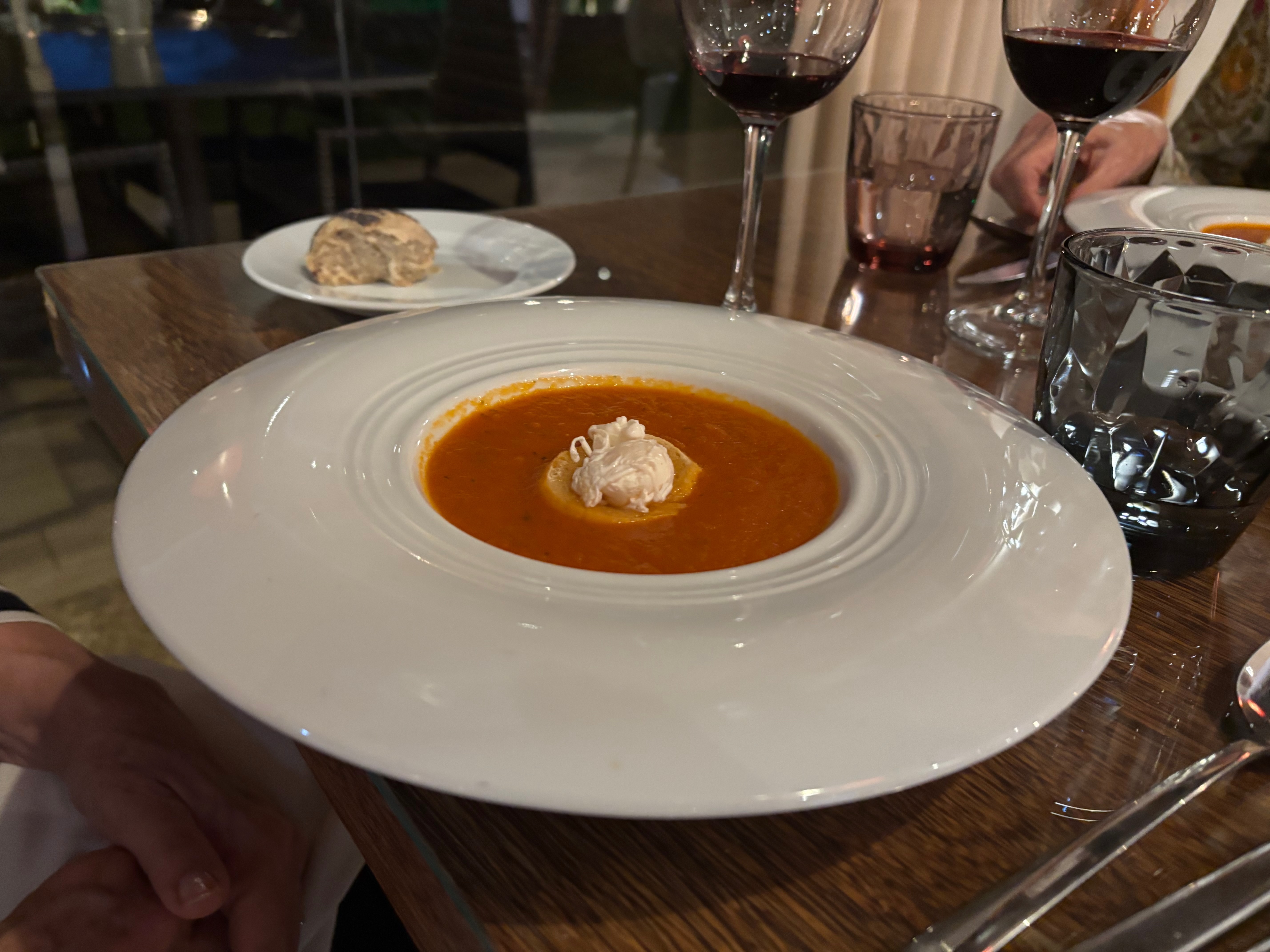
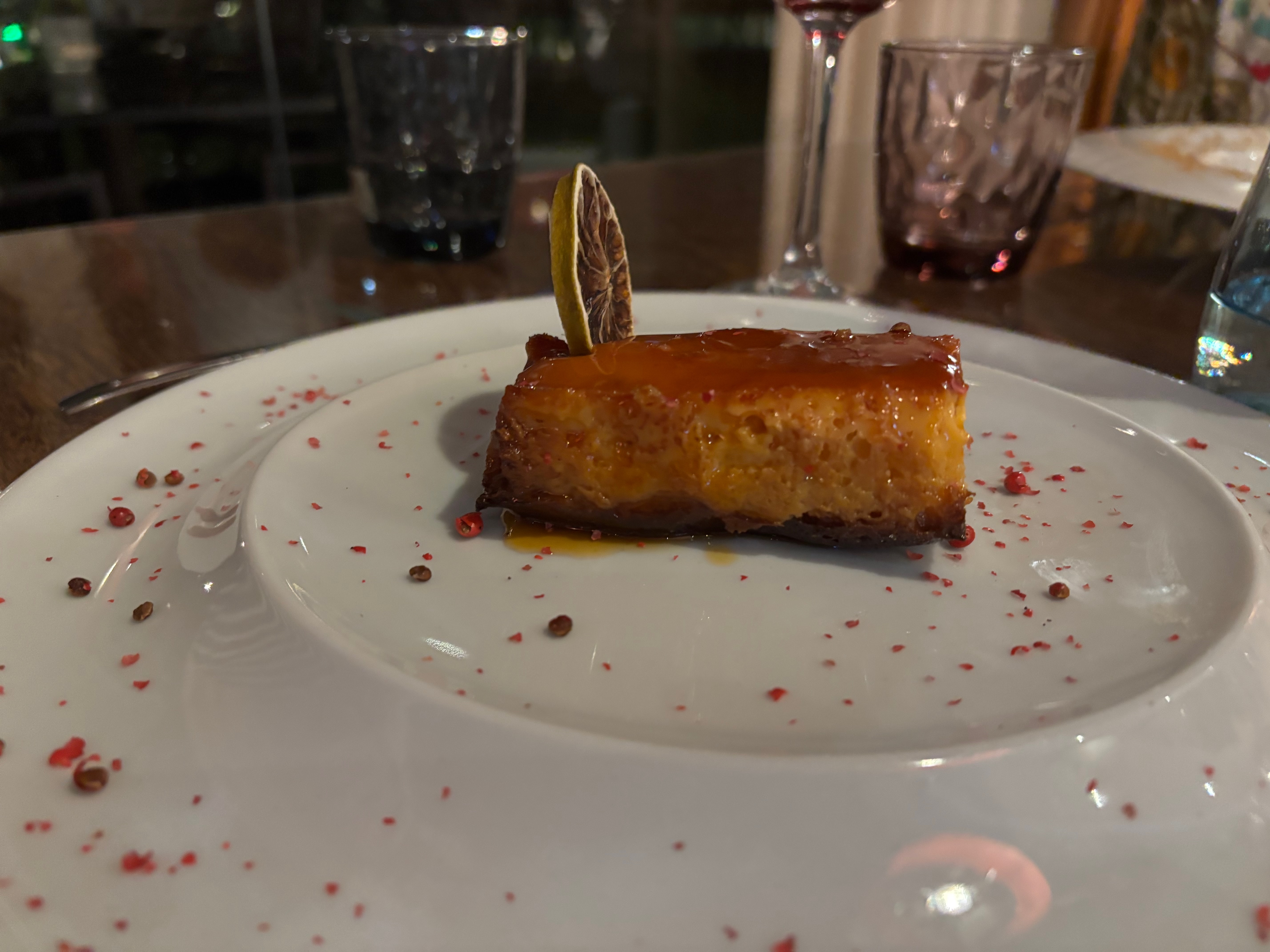
Marty ordered what he thought was a 19-Euro bottle of wine that turned out to be 39-Euros, but it just reminded us of how much we have to pay for wine in the states, as we would rarely pay more than 20-Euros through our stay in Europe. Joanna and I split a nicely seasoned tomato soup, and a large serving of a baked Ricotta Ravioli covered in melted cheese. For dessert we shared an interesting concoction, the White Port pudding with pink pepper and caramel, essentially a heavy cream Brulee baked into a wedge. Our tab, including the charge for bread and water came to just 33-Euros.
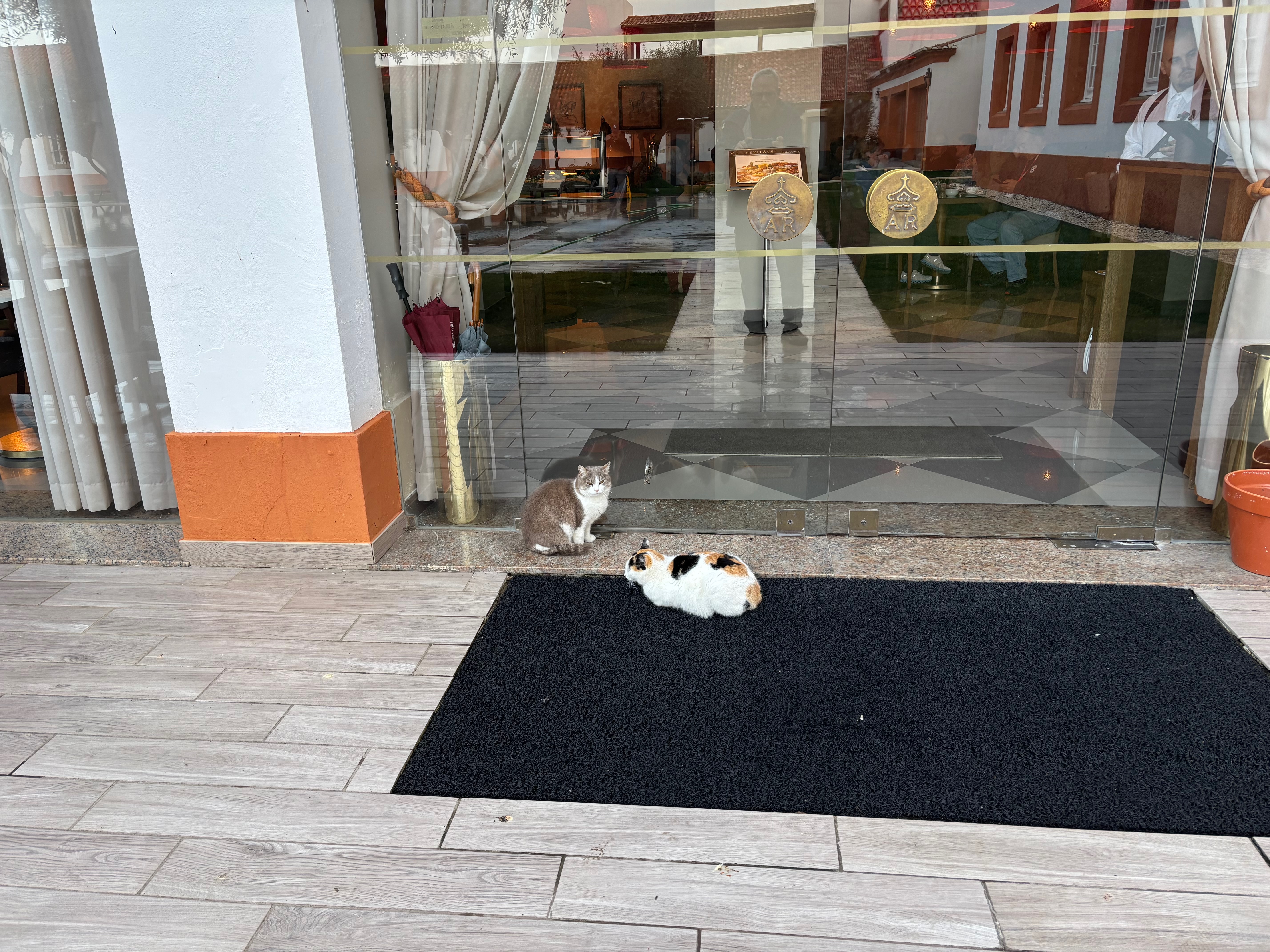
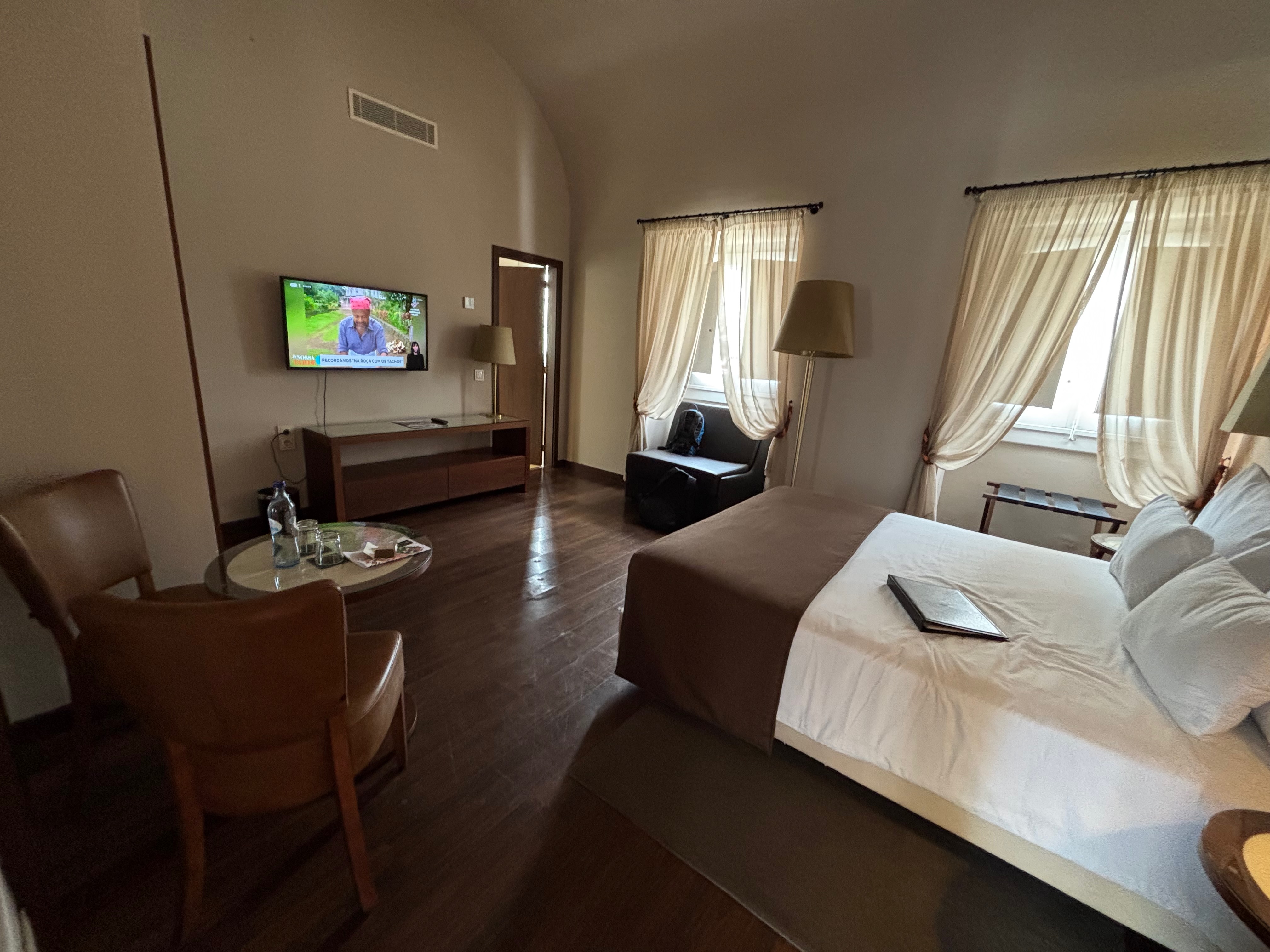
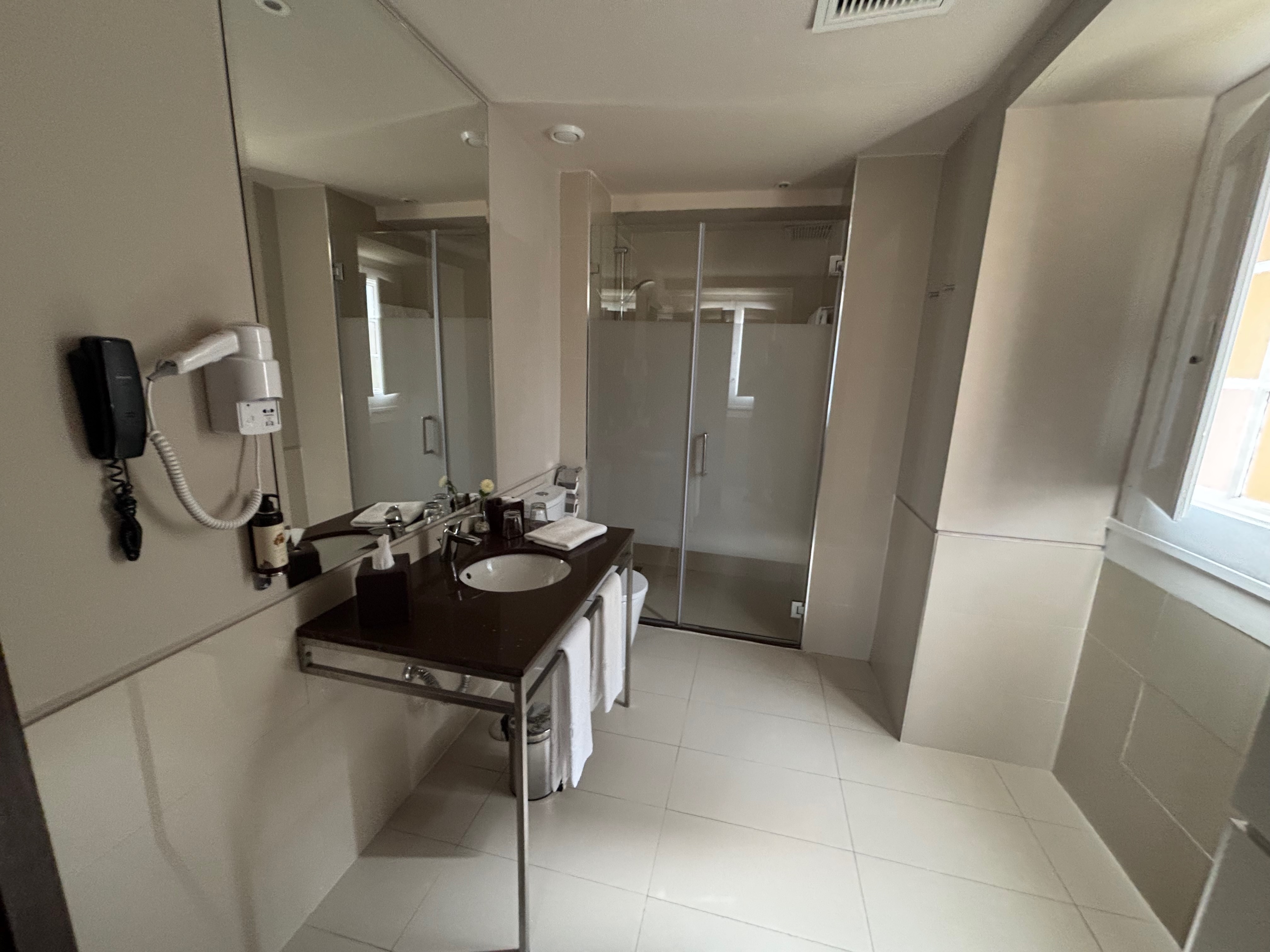
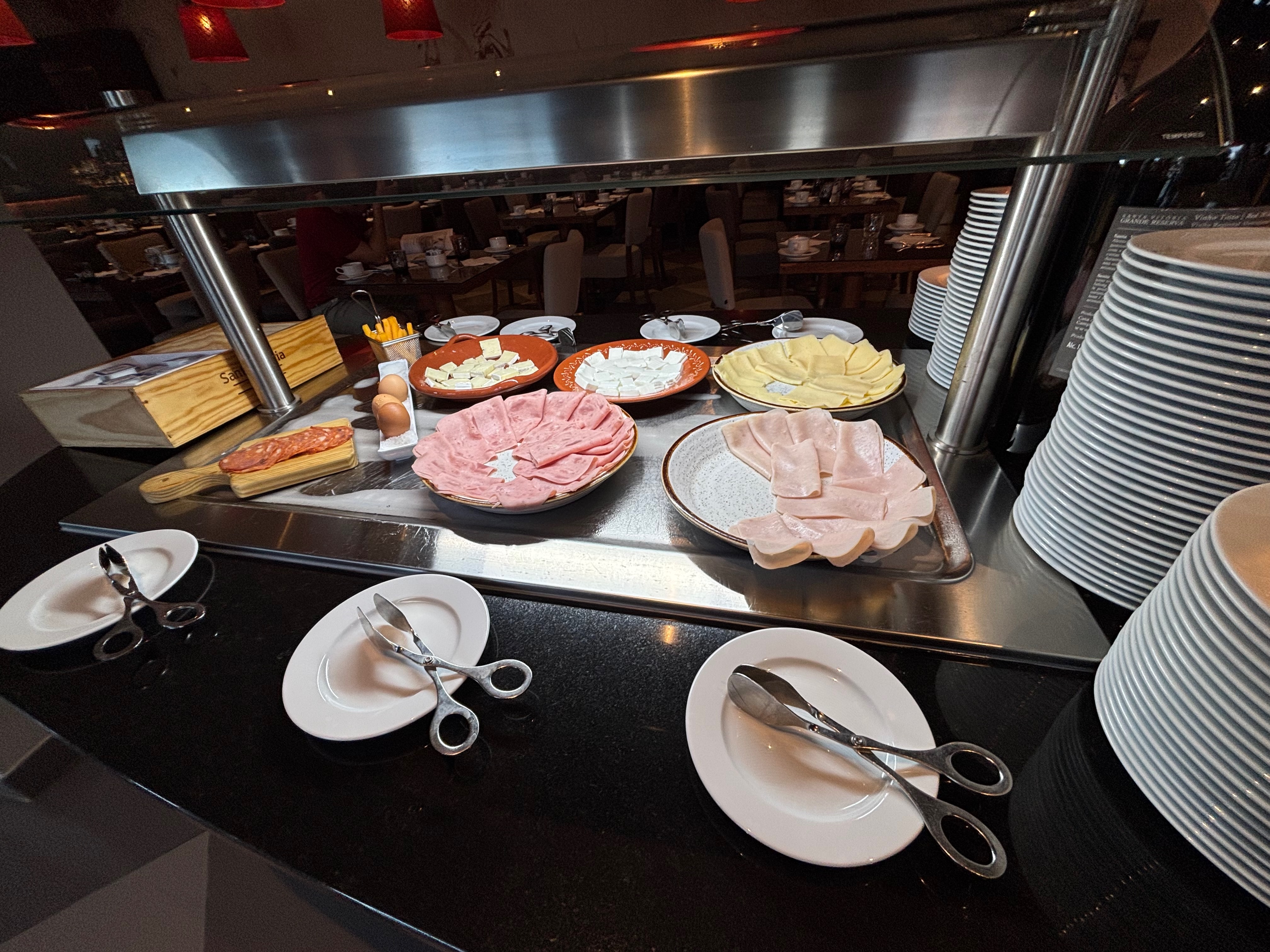
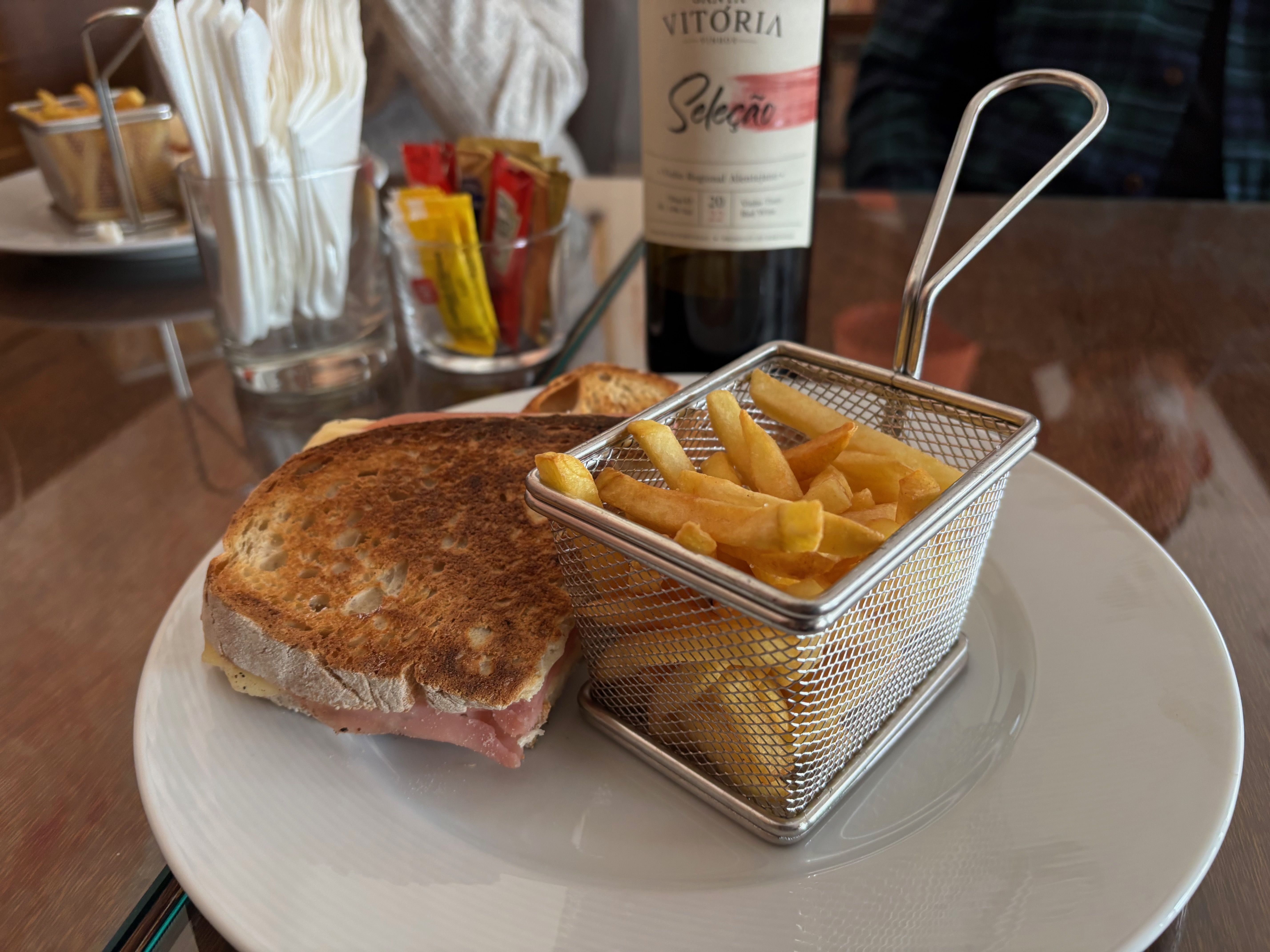
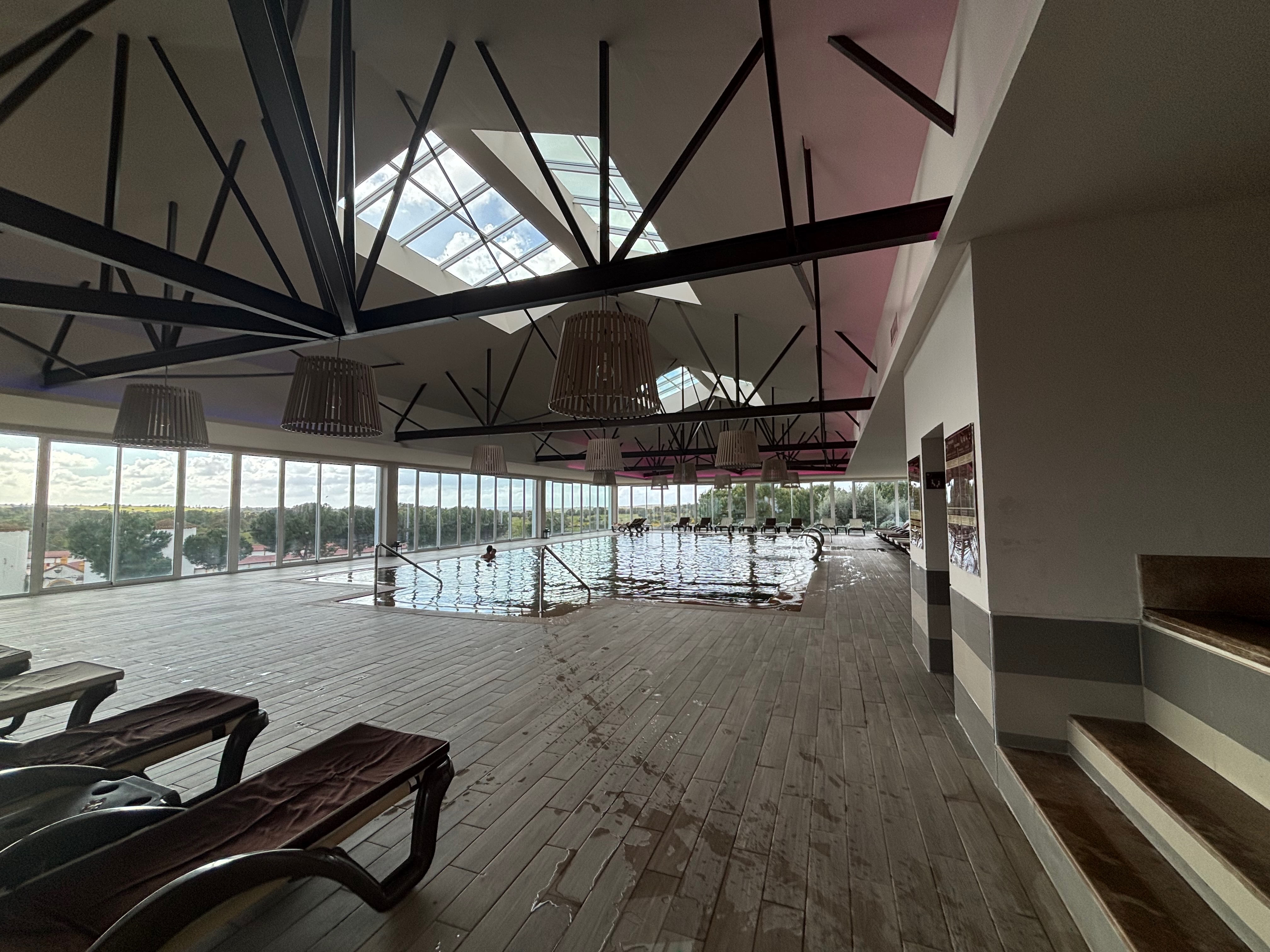
The next day would include a morning of relaxation and then later a tour of the stud farm and falconry center. But first there would be breakfast, included along with our room rental and it was one of the larger buffets we have encountered in our travels. Later, I took advantage of the reasonable rates at the spa and treated myself to an hour-long massage for 80-Euros and then spent some time at the indoor pool with Gemma and got some further relaxing done in the whirlpool, letting the pulsating jets of water further soothe this old guy’s muscles. By lunchtime we reconvened in the restaurant for another tasty lunch, a grilled Ham and Cheese sandwich with good French fries for Joanna and I as we prepared for our tour that afternoon.

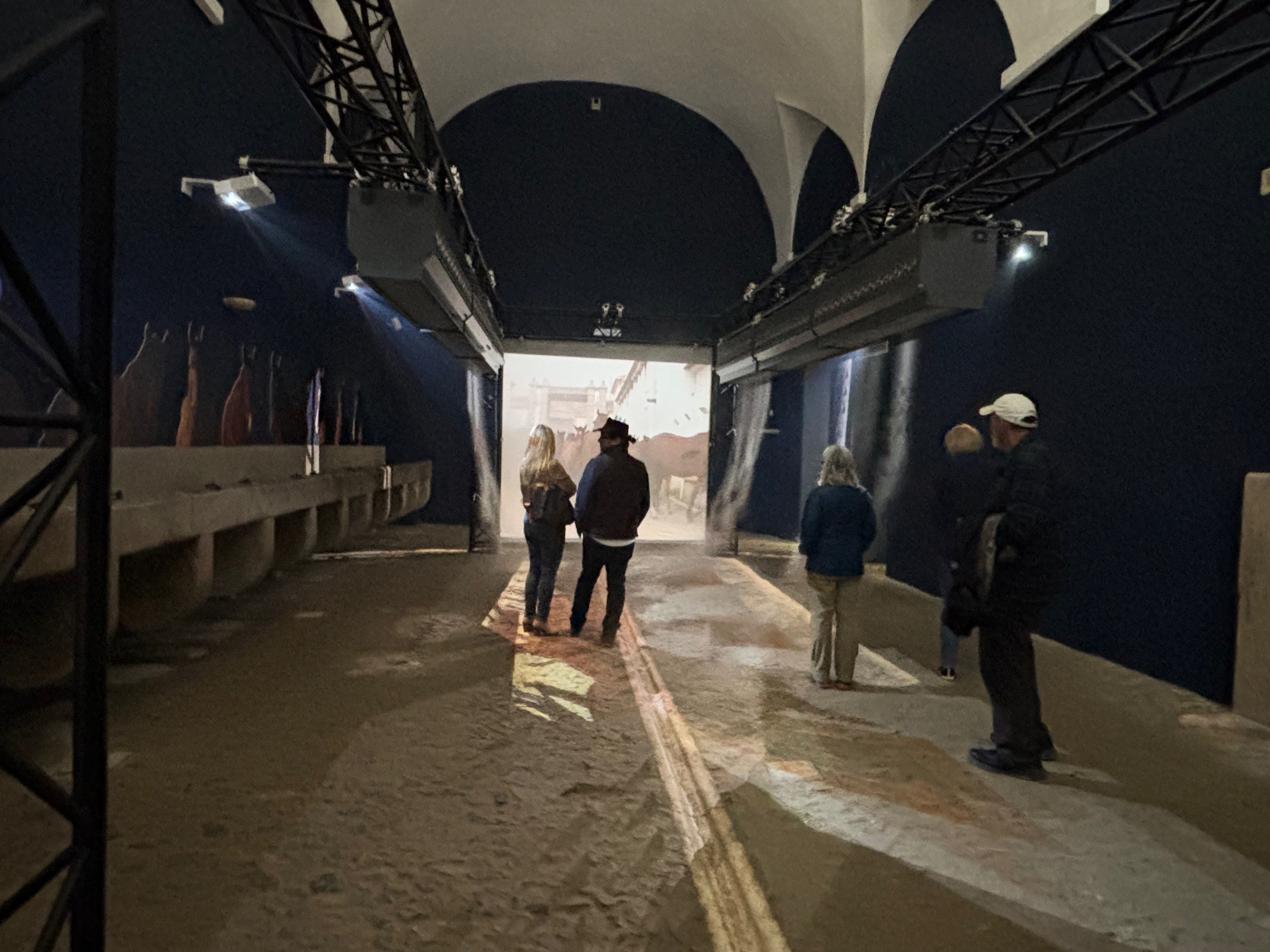
With the kids off to the wedding, it was just the four of us (Kim, Marty, Joanna and me) and another couple who joined us at the start, where we were ushered upstairs to a small museum that spoke of the history of the horses and the facility. Finished there we went downstairs to the first floor which contained the original stables that were used before newer larger ones were constructed.

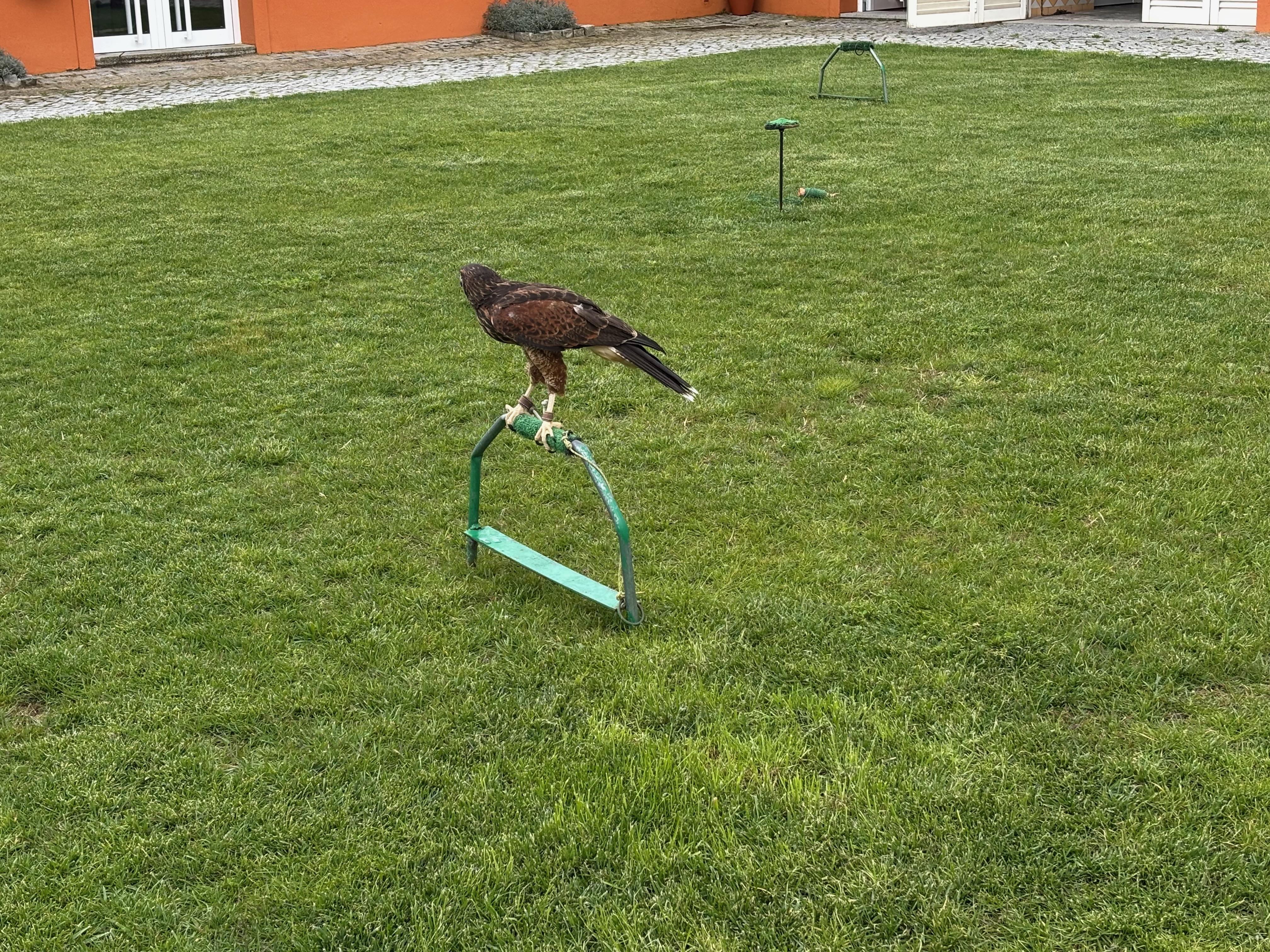
From there we walked towards the stables to spend some time at the Falconry Museum, which is the home of an active breeding and training facility for birds of prey, which in addition to Falcons, included a Harris Hawk, a Kestrel, and a hybrid cross between a Falcon and a Gyre. One of the Falconers led us on a short tour of the facility, introducing us to each of the birds and describing the training program, which requires a high level of involvement on the part of the staff.
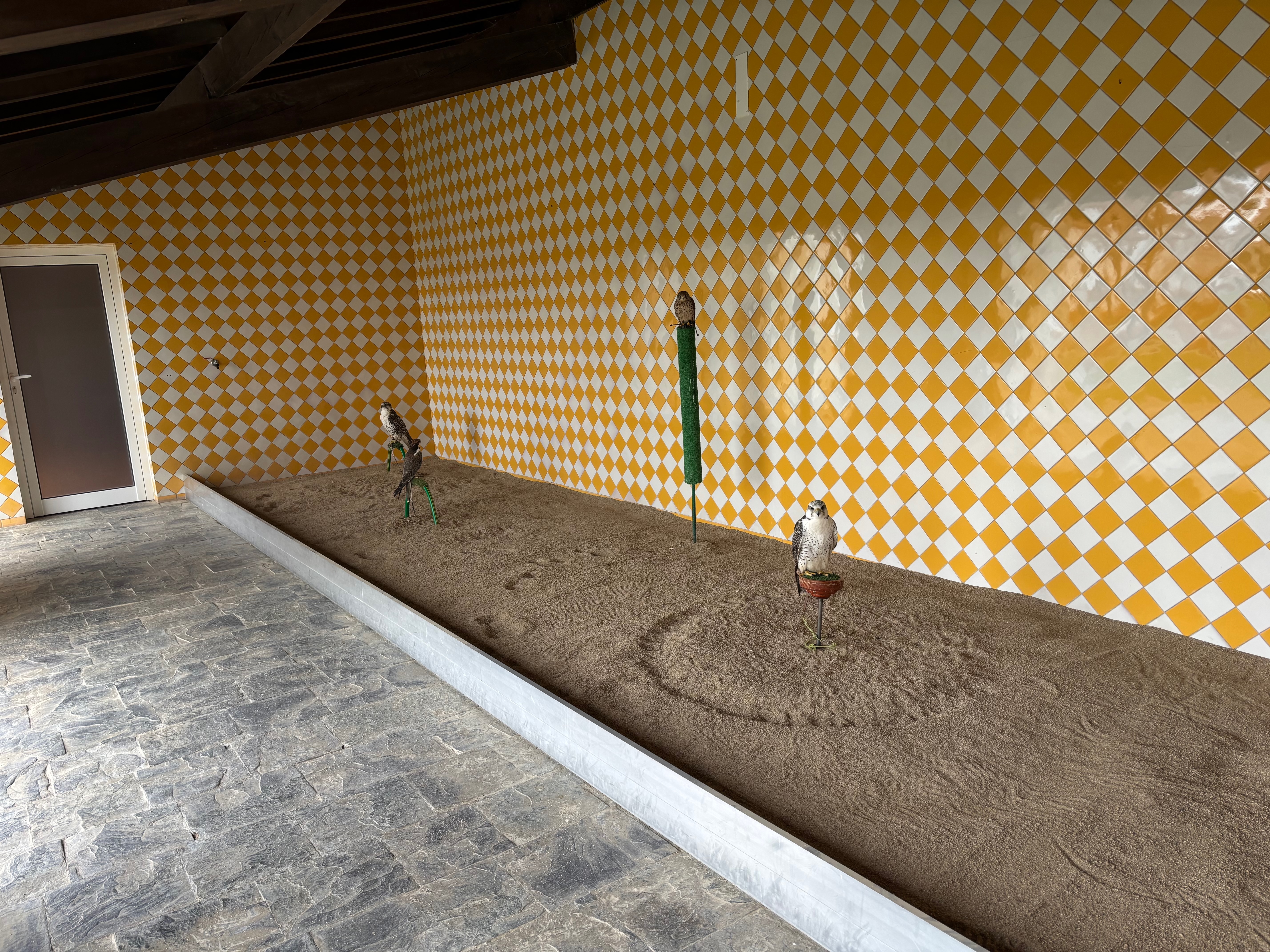
To reinforce the training, each bird must have some amount of interaction each day, a time-consuming amount of work to be performed. When not in training, each bird must be tethered to a stand because as birds of prey, if one were to get loose, it would attack any of the others who could not fly away. We left the Falconry and made our way to the stables. We’ll cover that part of the tour, the rest of our time at Alter Real and the journey to Comporta in the next post.
Links
Alter Real: https://www.vilagale.com/pt/hoteis/alentejo/collection-alter-real
Discover more from 3jmann
Subscribe to get the latest posts sent to your email.


 3jmann