April 9 – 10
Leaving Moulay Idriss, it was a short drive to Volubilis, a partly excavated Berber-Roman city that may have been the capital of the Kingdom of Mauretania. Built in a fertile agricultural area, it developed from the 3rd century BC onward as a Berber, then proto-Carthaginian settlement before being the capital of the kingdom of Mauretania.
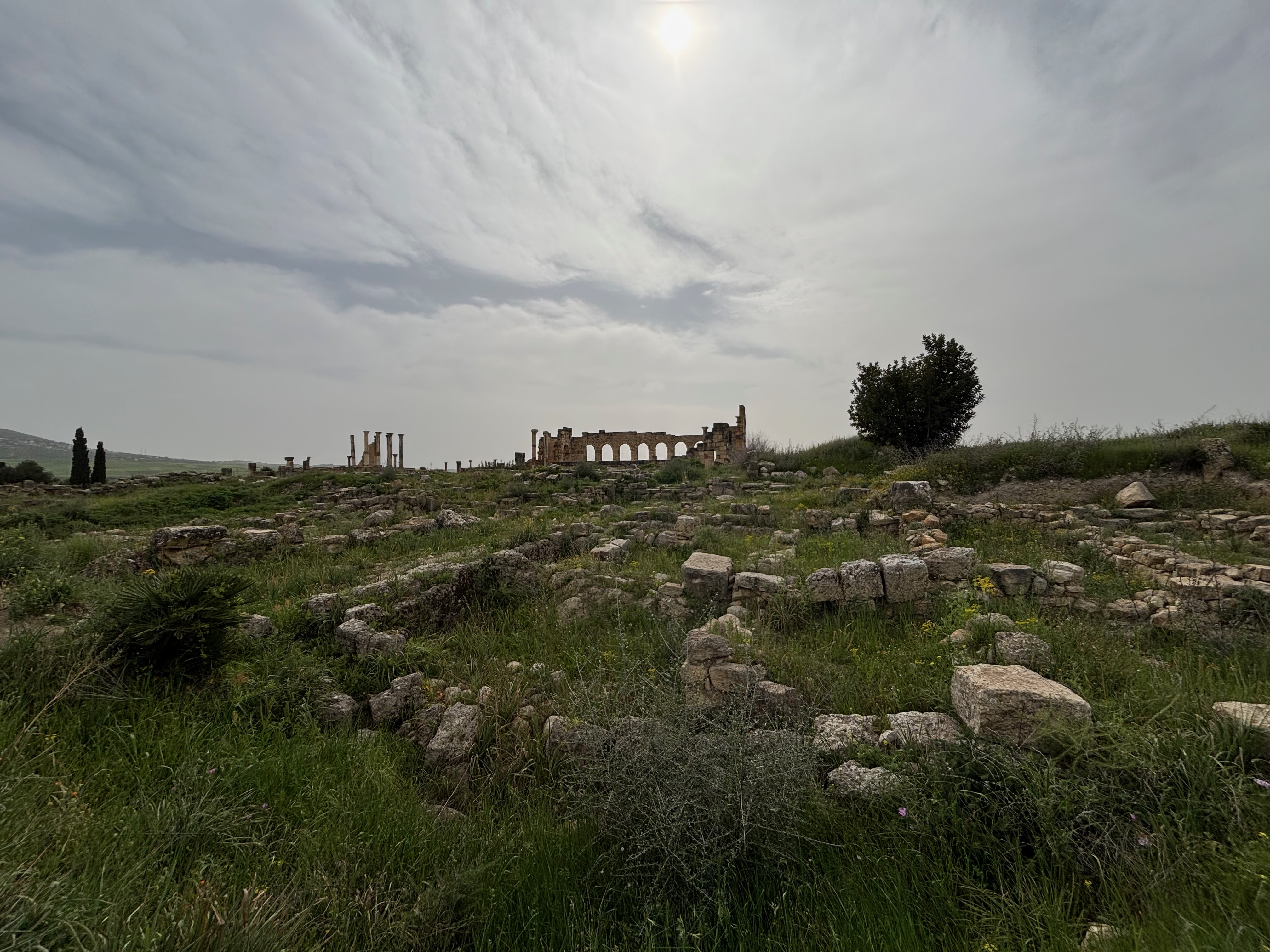
It grew rapidly under Roman rule from the 1st century AD onward and expanded to cover about 100 acres with a 1.6-mile circuit of walls. The city gained a number of major public buildings in the 2nd century, including a basilica, temple and triumphal arch. Its prosperity, which was derived principally from olive growing, prompted the construction of many fine townhouses with large mosaic floors.
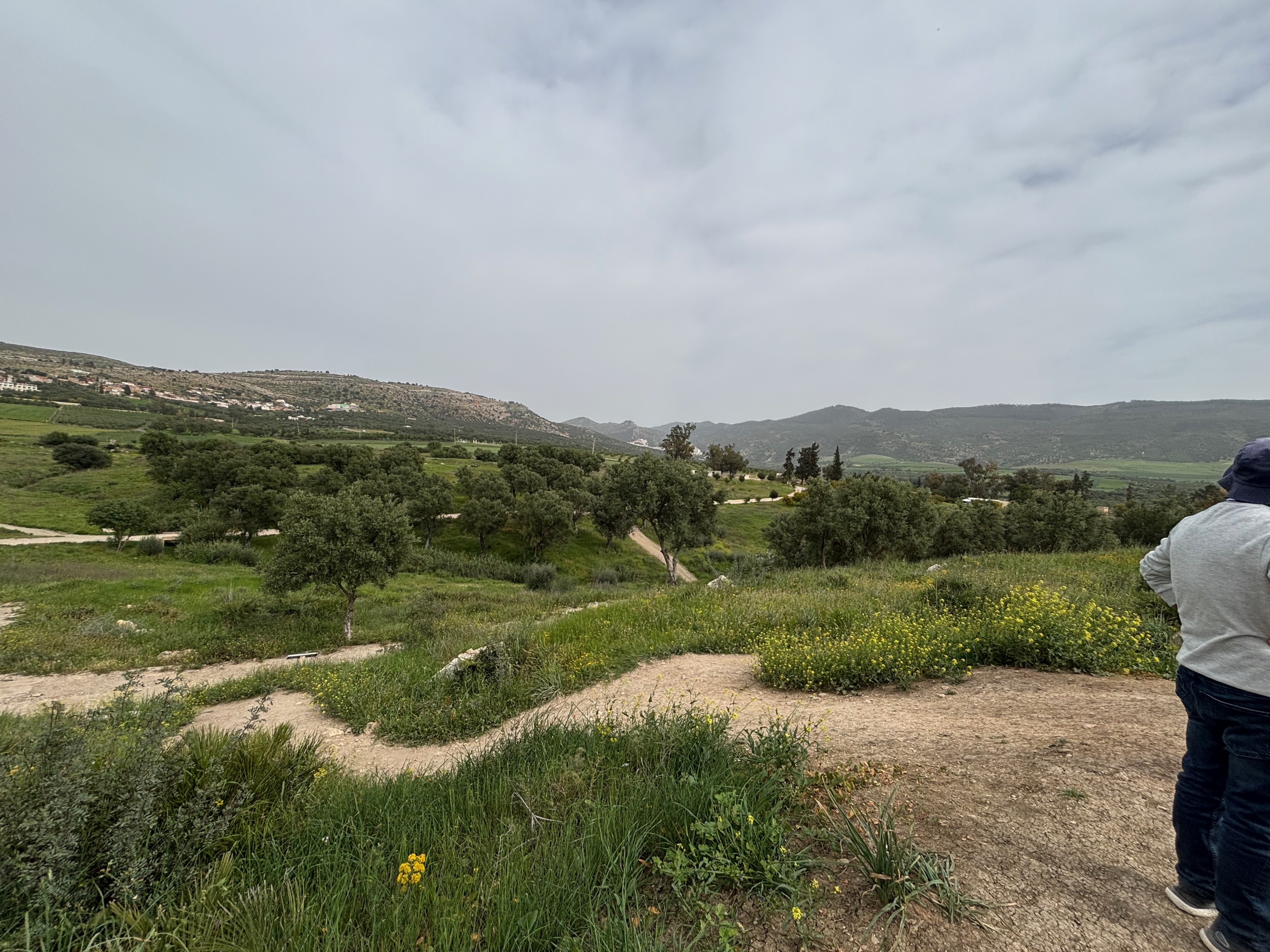
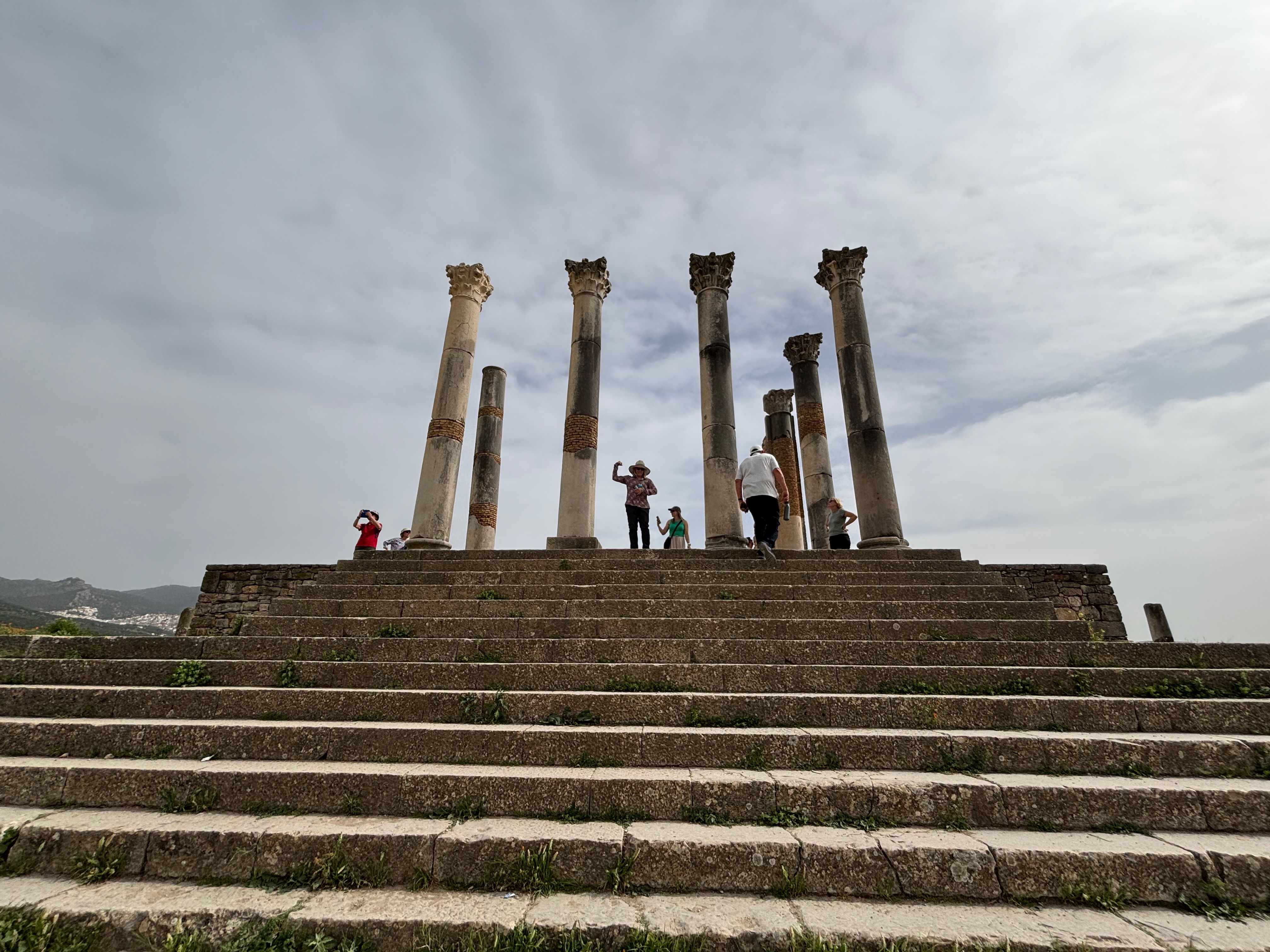
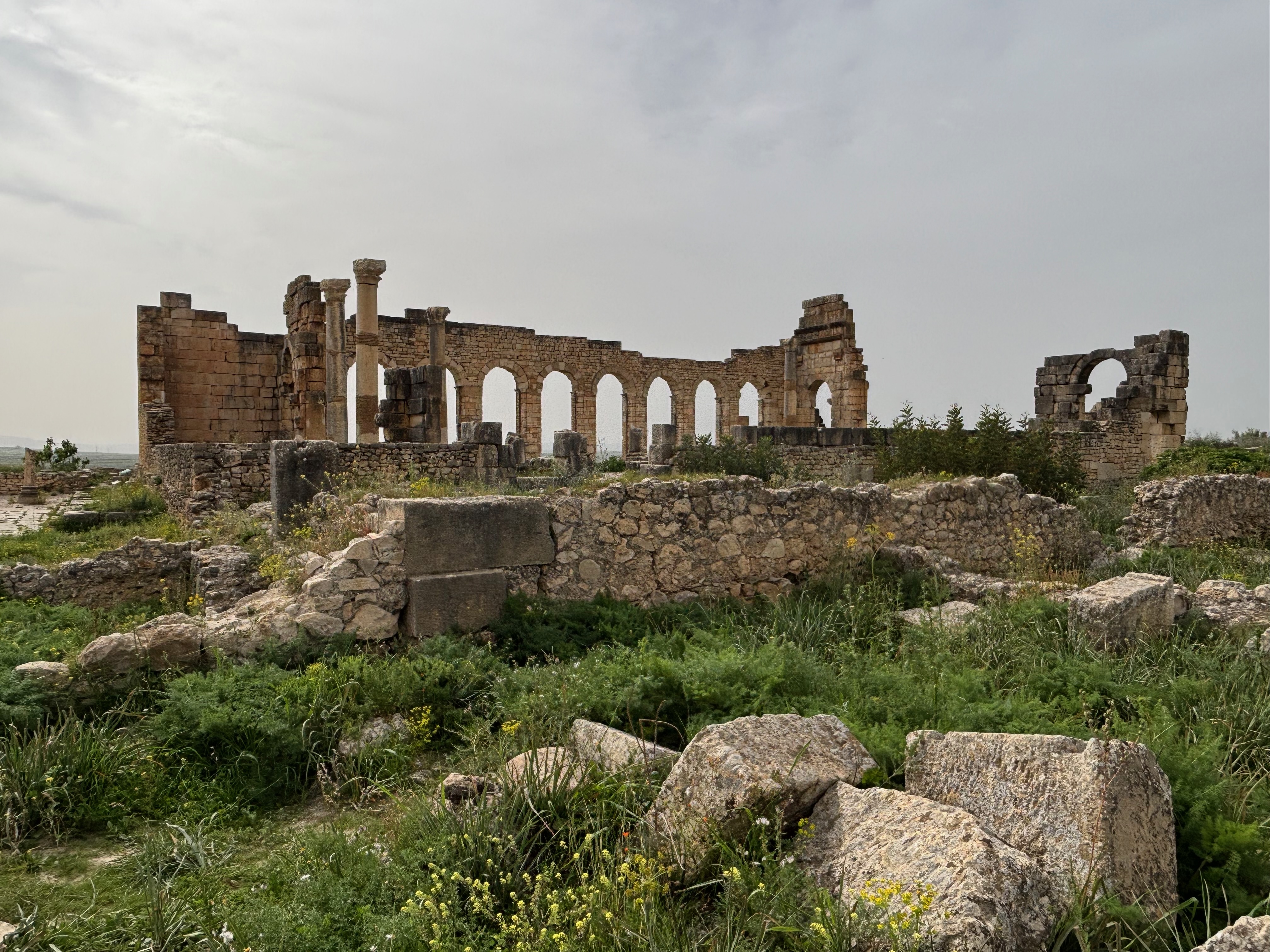
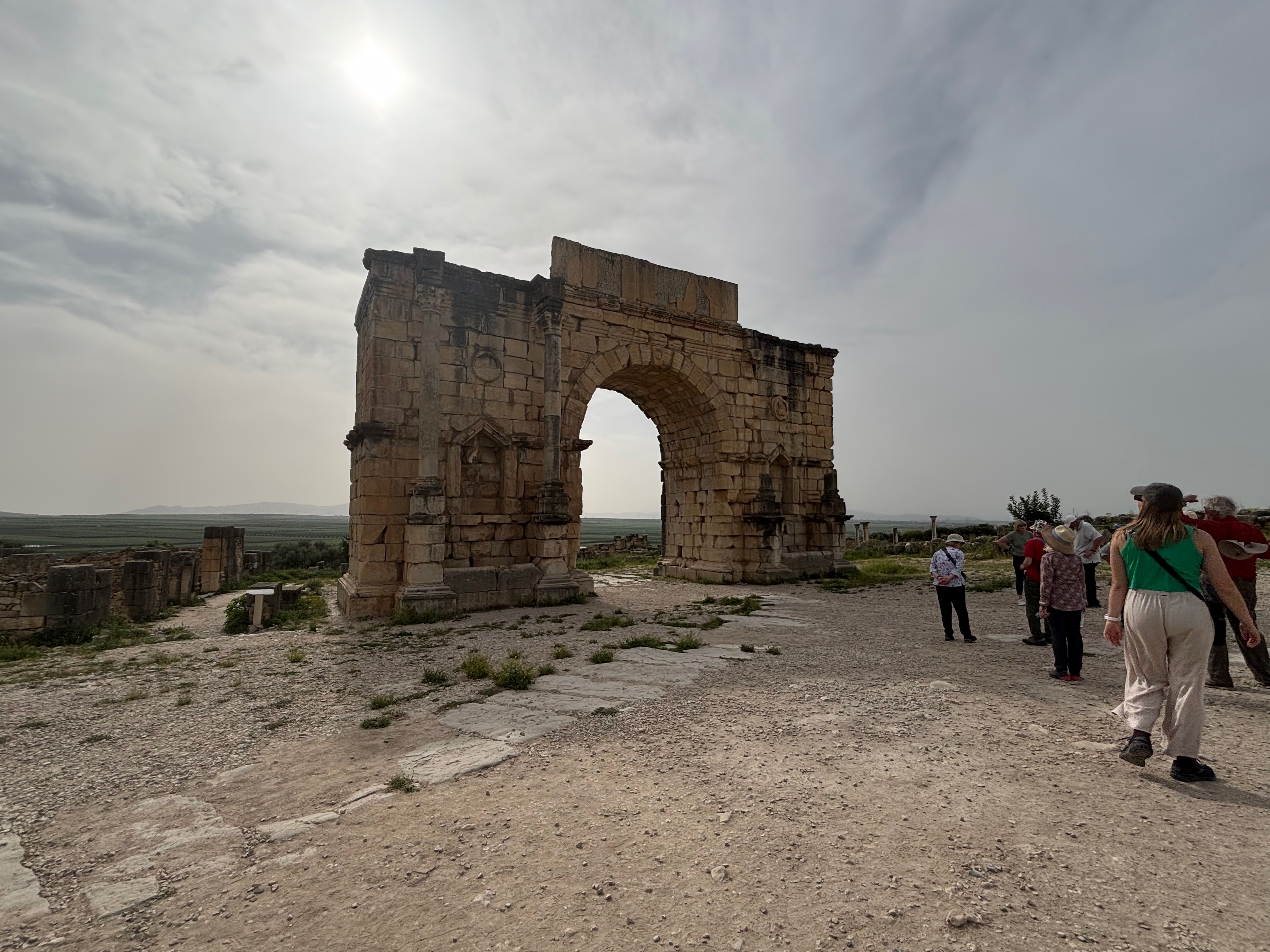
The city fell to local tribes around 285 and was never retaken by Rome because of its remoteness and indefensibility on the south-western border of the Roman Empire. It continued to be inhabited for at least another 700 years, first as a Latinized Christian community, then as an early Islamic settlement. By the 11th century Volubilis had been abandoned after the seat of power was relocated to Fes.
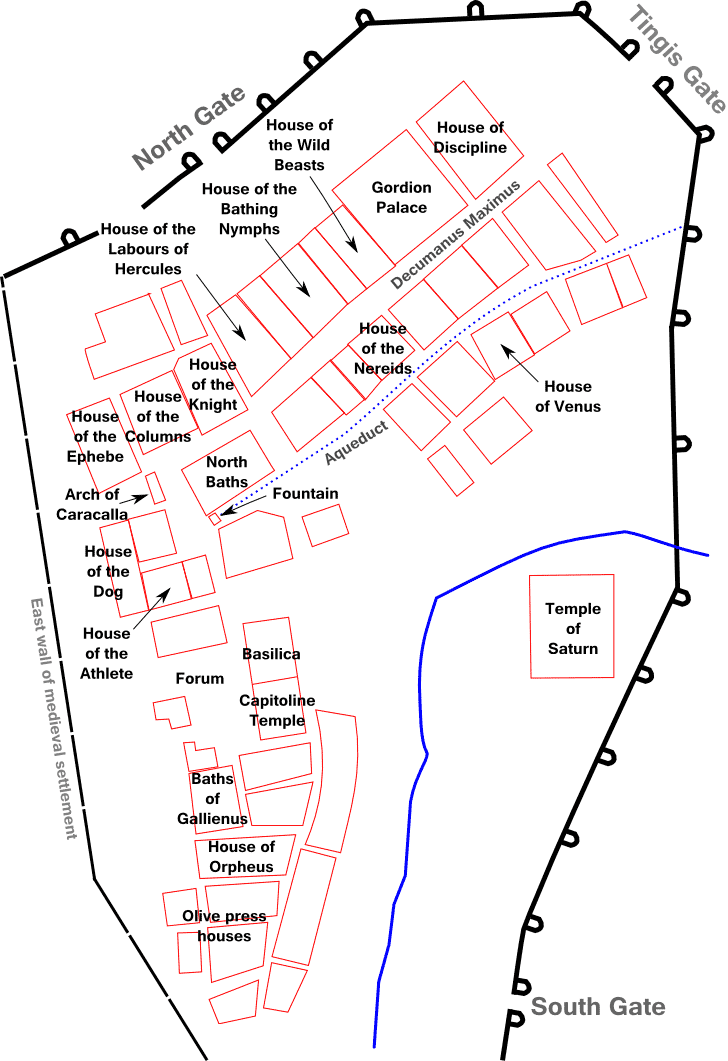
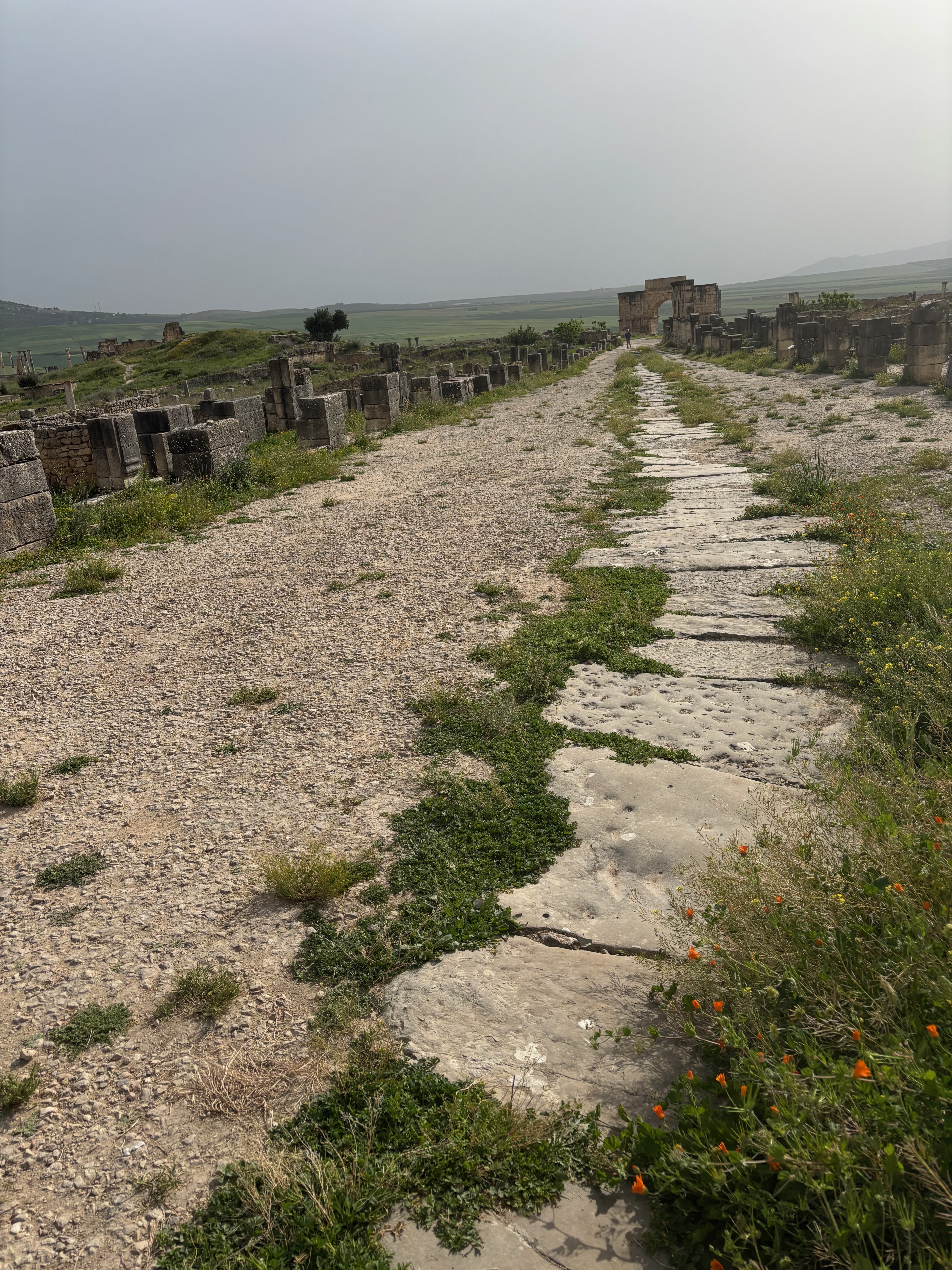
The ruins remained substantially intact until they were devastated by an earthquake in the mid-18th century and subsequently looted by Moroccan rulers seeking stone for building Meknes. It was not until the latter part of the 19th century that the site was definitively identified as that of the ancient city of Volubilis. During and after the period of French rule over Morocco, about half of the site was excavated, revealing many fine mosaics, and some of the more prominent public buildings and high-status houses were restored or reconstructed. Today it is a UNESCO World Heritage Site, listed for being “an exceptionally well-preserved example of a large Roman colonial town on the fringes of the Empire”.
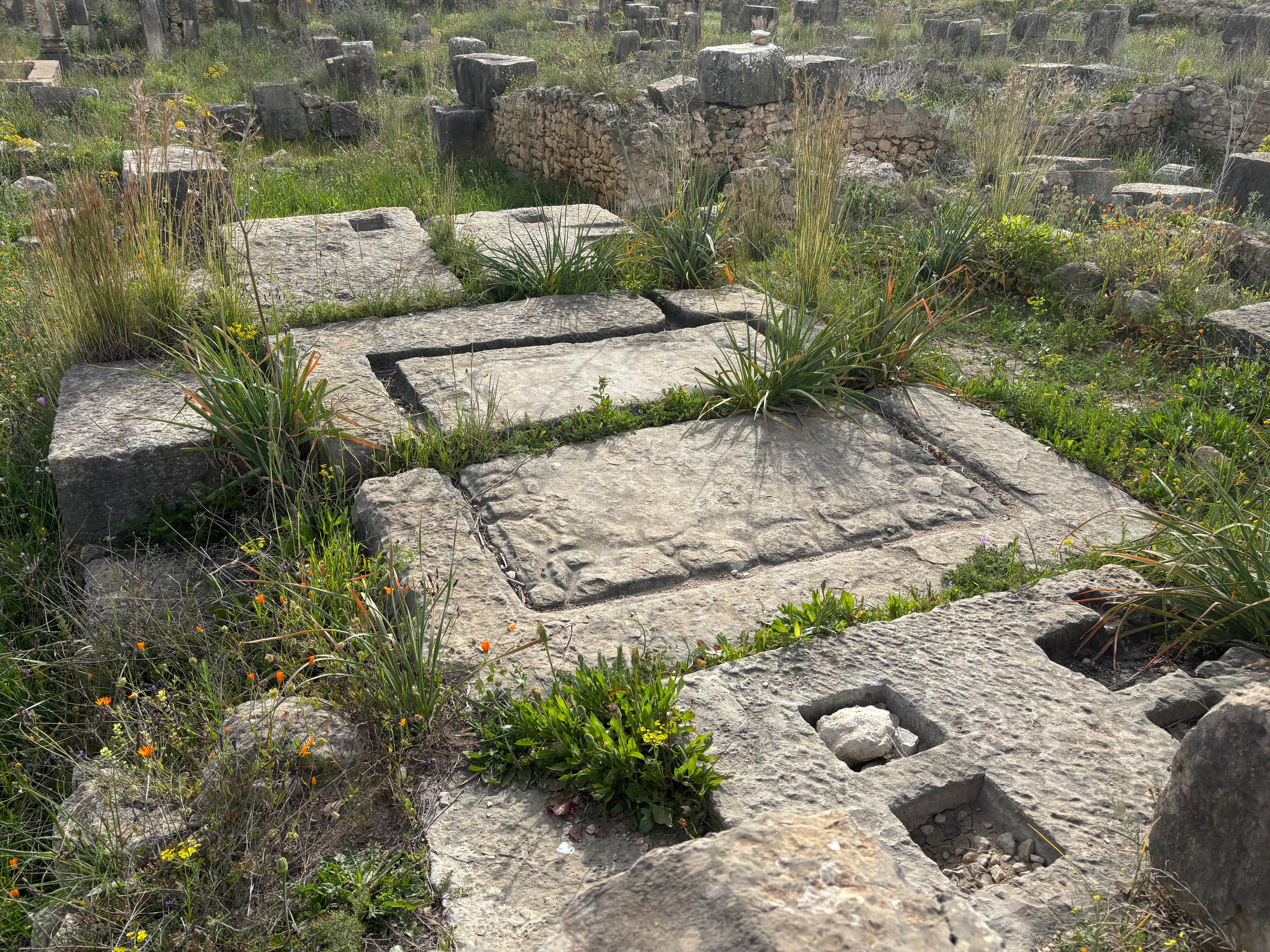
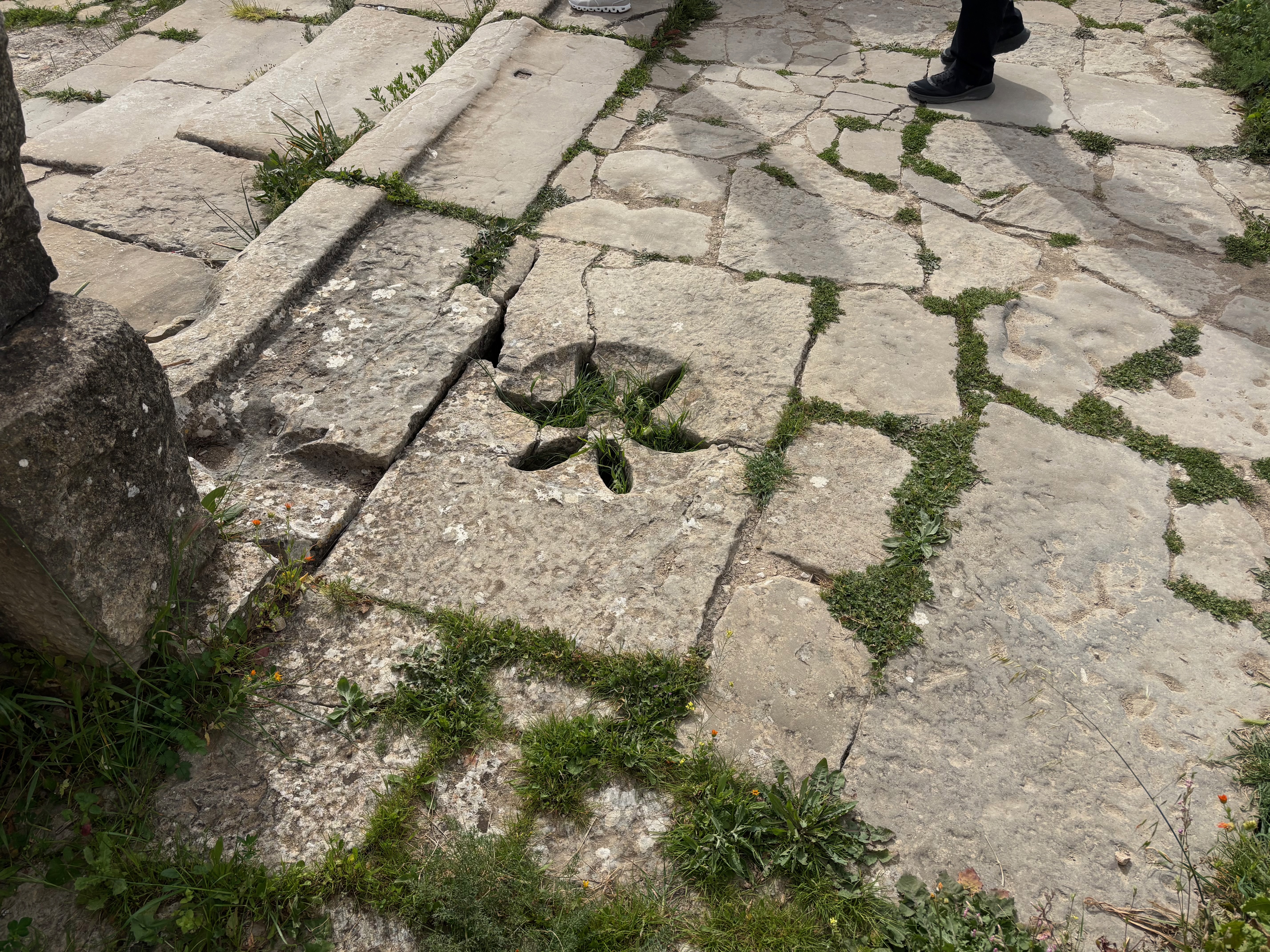
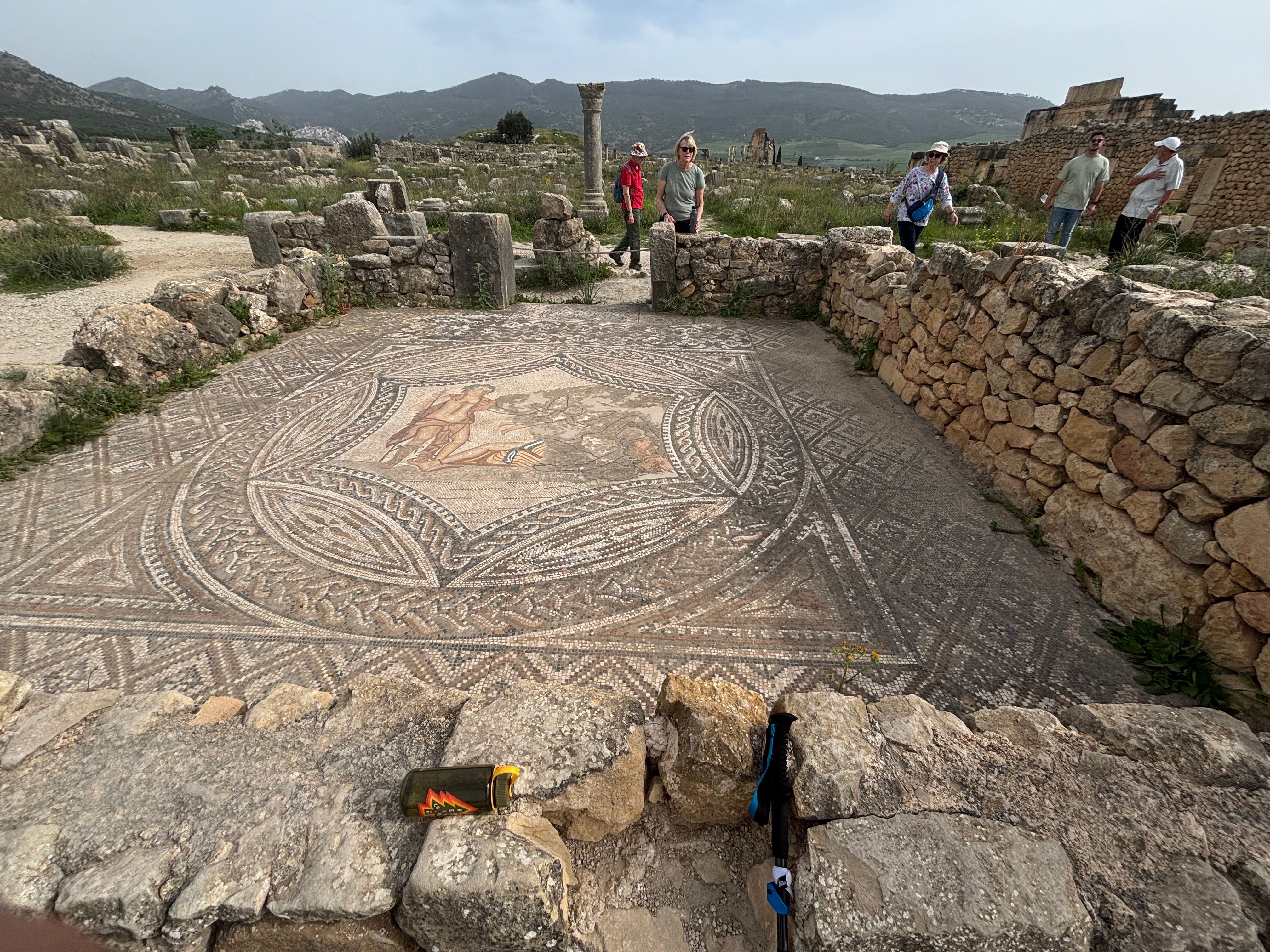
We would do a complete tour of the site with a lot of walking and standing still while aspects were being described. We’ve visited many Roman sites during our travels, and I’ll admit this one was pretty impressive, giving one a good idea about how the city functioned during its heyday and also observing the many intricate mosaic floors that had survived the centuries.

As it was early in our trip, I still wasn’t fully up to speed in terms of walking longer distances so was quite tired when we finally made it to Fes. We stopped at a Carrefour to pick up food supplies for snacking and also, hit their liquor department for some wine and cheap bourbon. Soon enough we found ourselves at our home for the next two nights, the Riad Bahja Fez, located in the heart of the medina down a maze like series of narrow lanes that would guarantee one getting lost should they venture out unaccompanied.
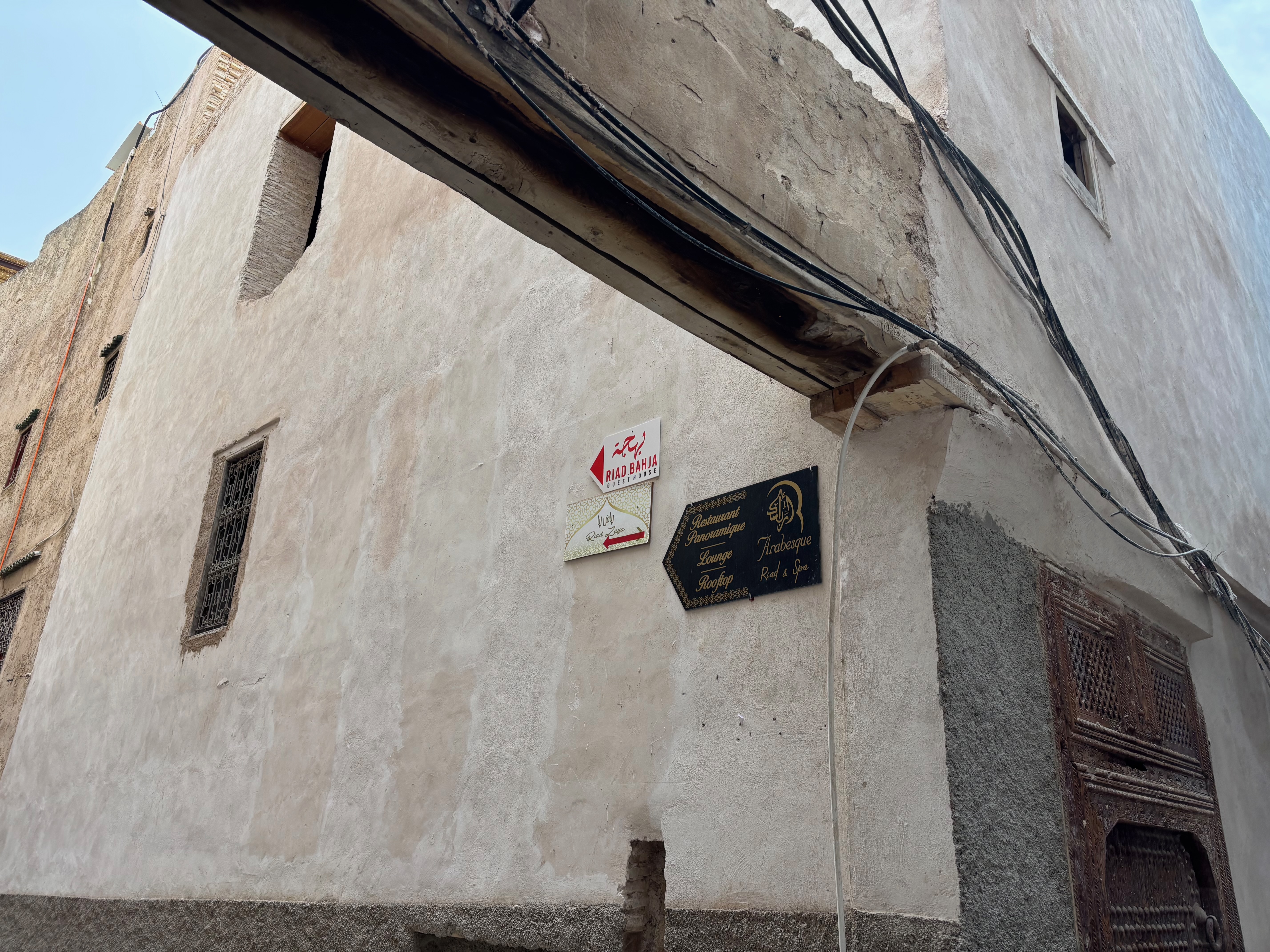
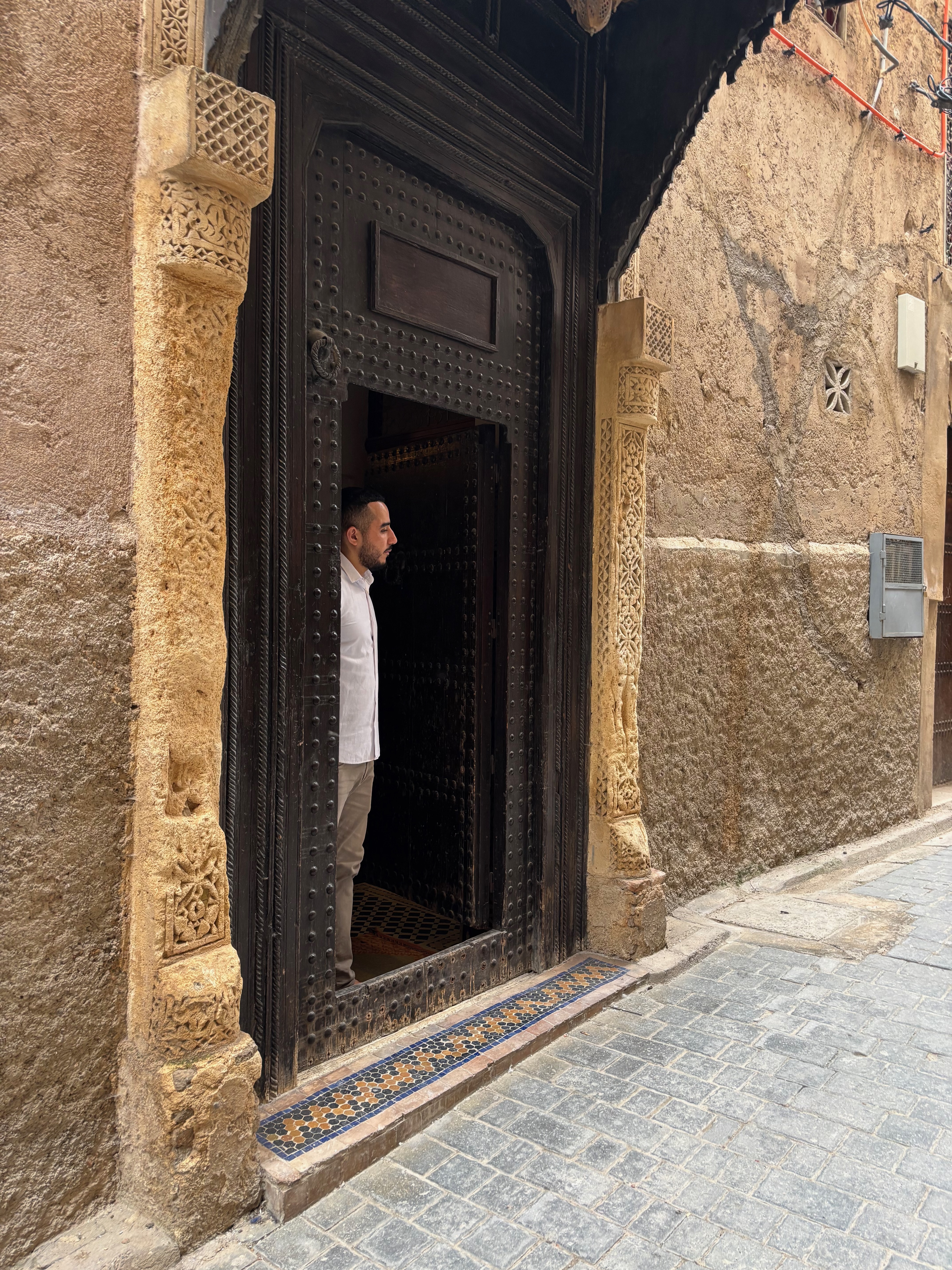
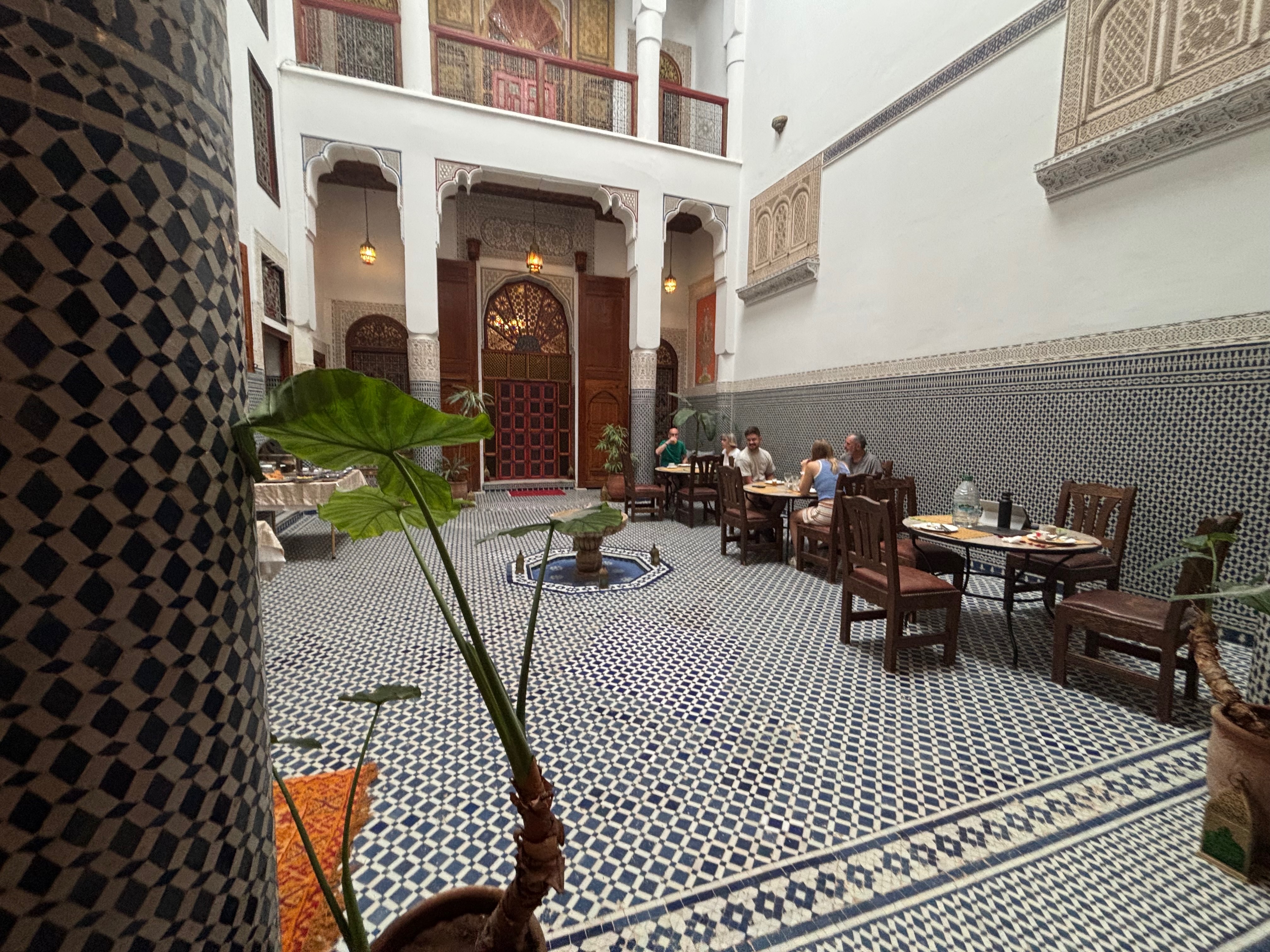
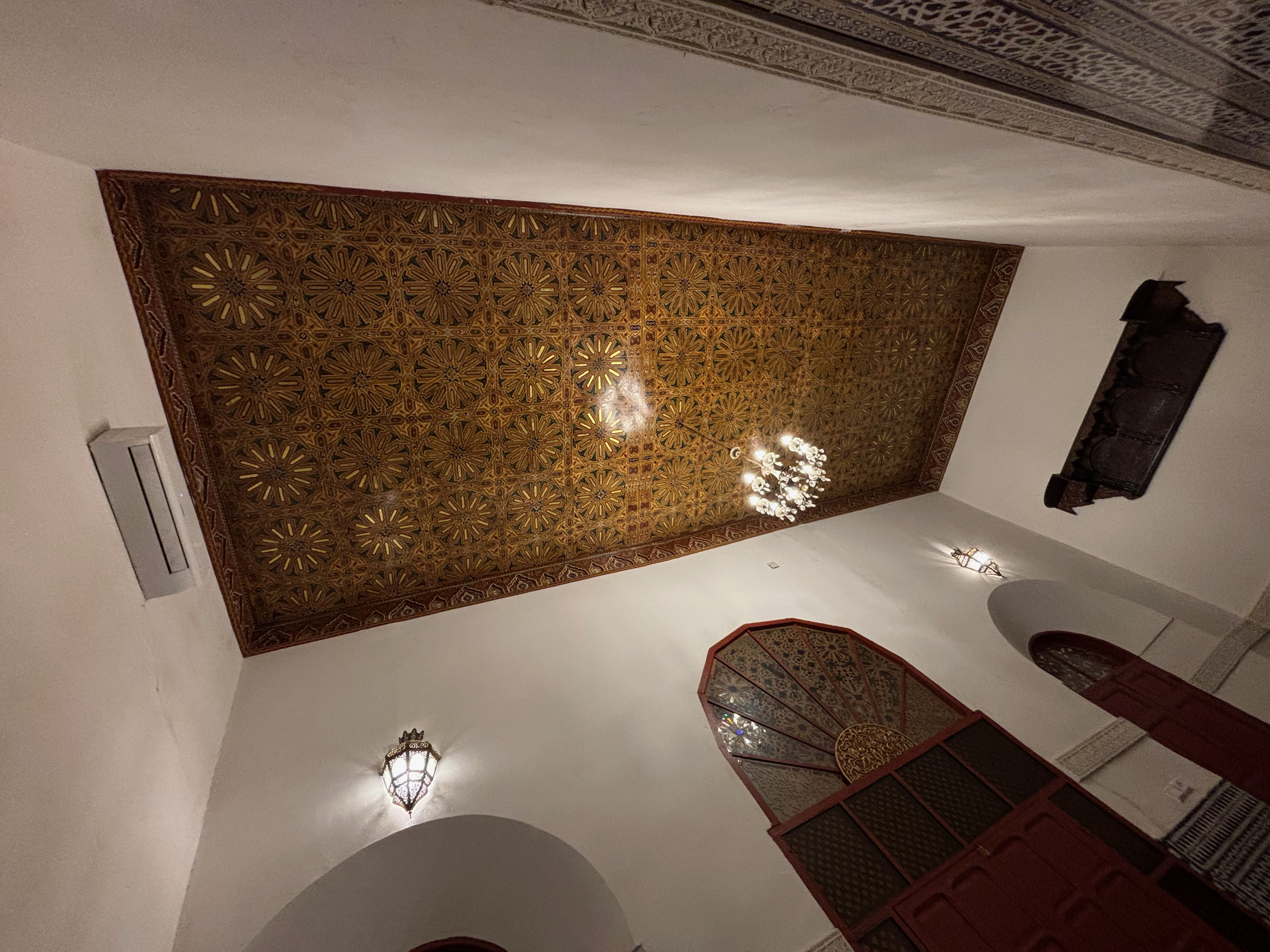
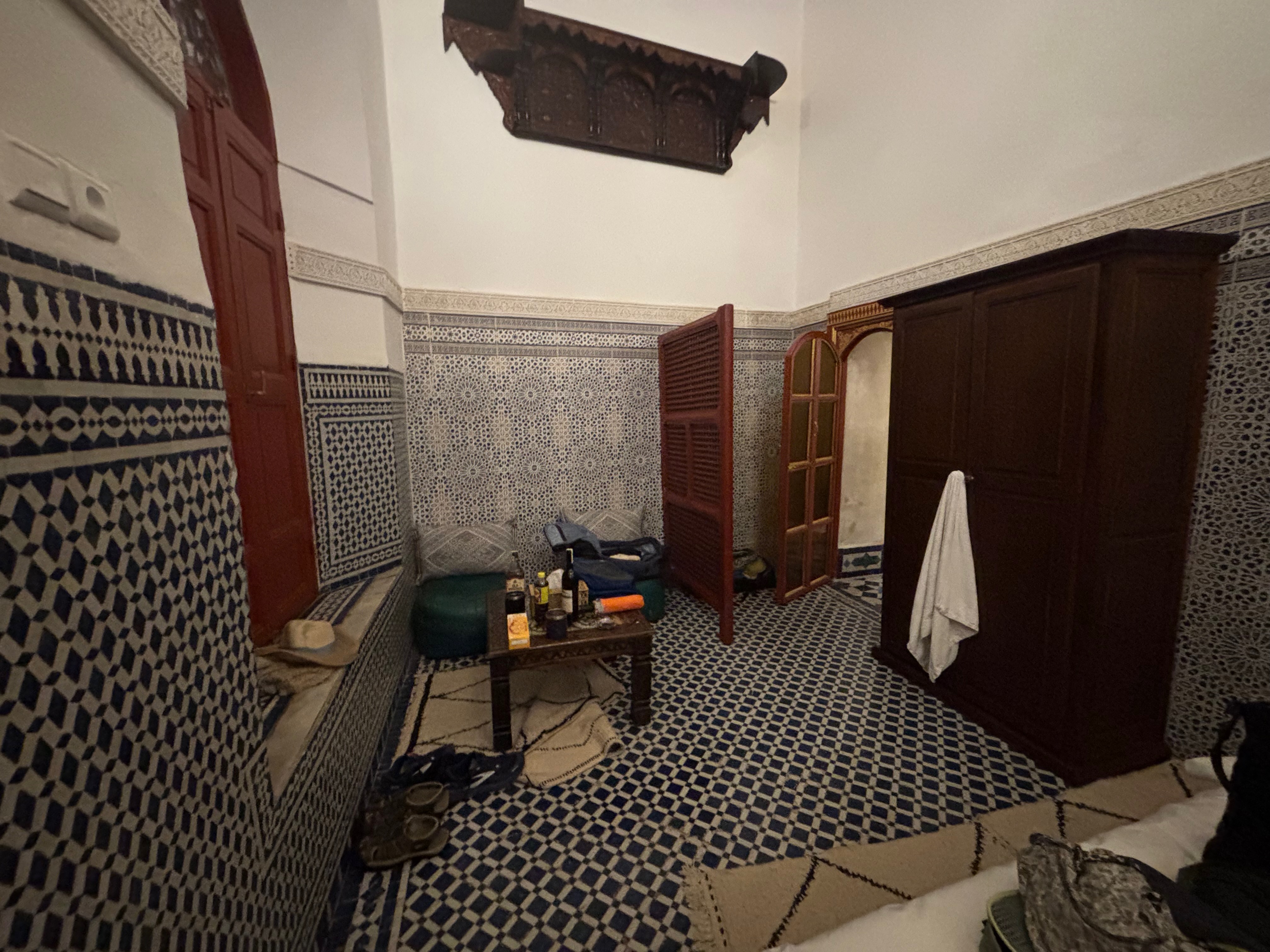
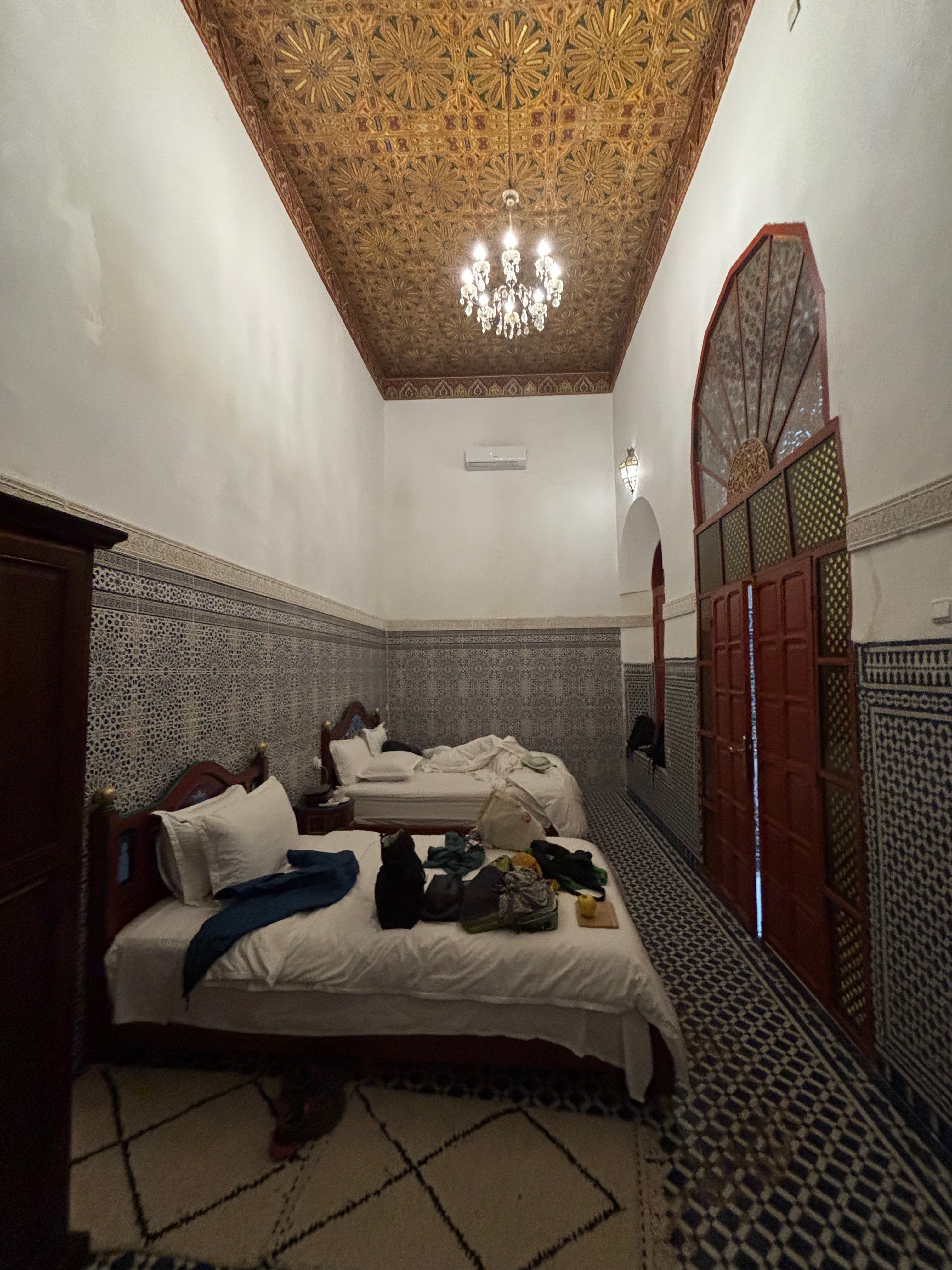
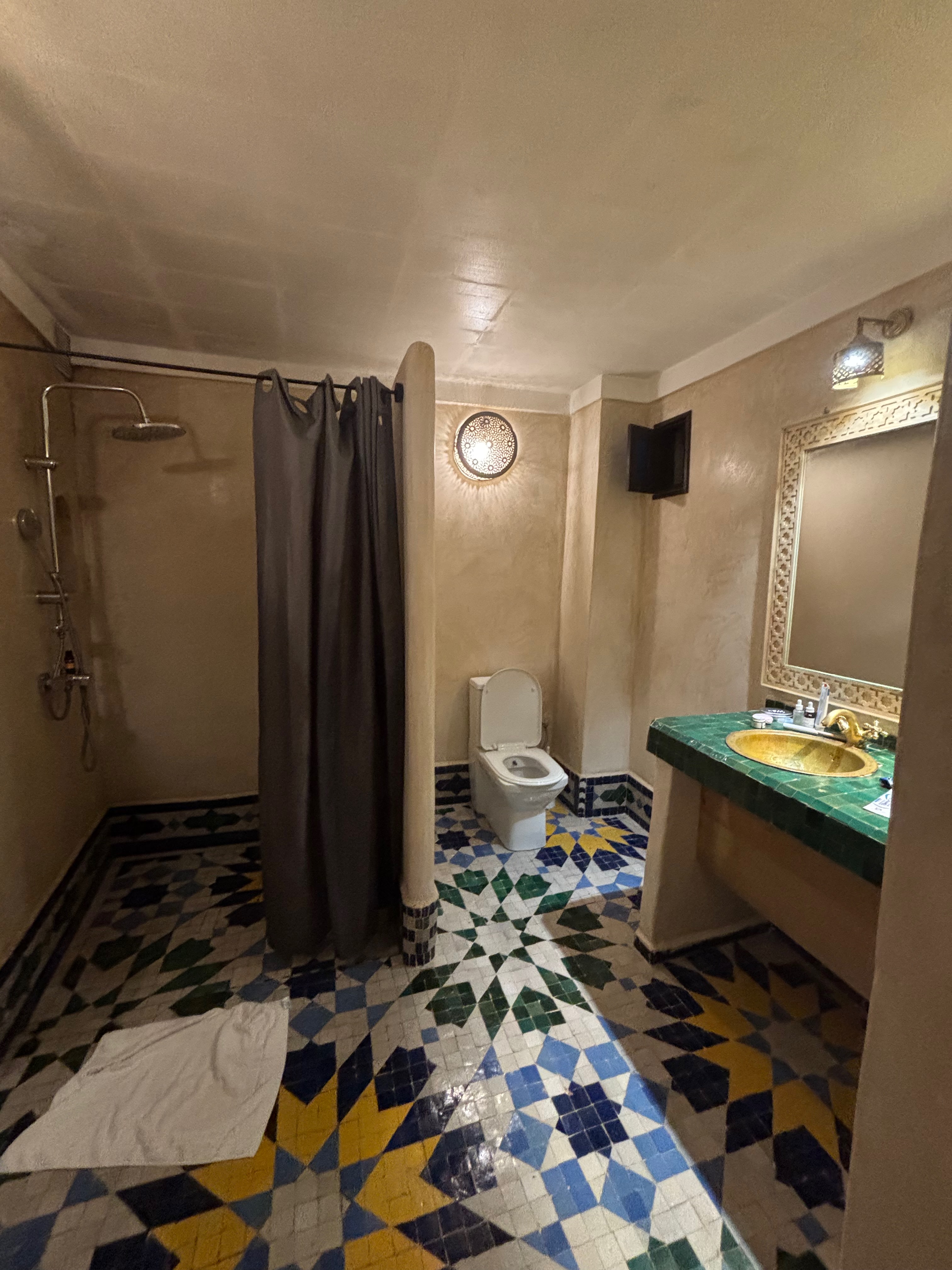
A riad in Morocco is a traditional, multi-story house or palace built around an interior courtyard or garden. They are typically located within the medinas (old city centers) and are known for their inward-facing design, offering privacy and a peaceful atmosphere, and often featuring intricate Moroccan craftsmanship and design. This would indeed be the case for us, and Hicham had thoughtfully placed us in a room on the ground floor so that we wouldn’t have to climb multiple steps of stairs as we moved about. Our room was spacious and nicely appointed, and we enjoyed snacking on the provisions we’d picked earlier for our dinner.

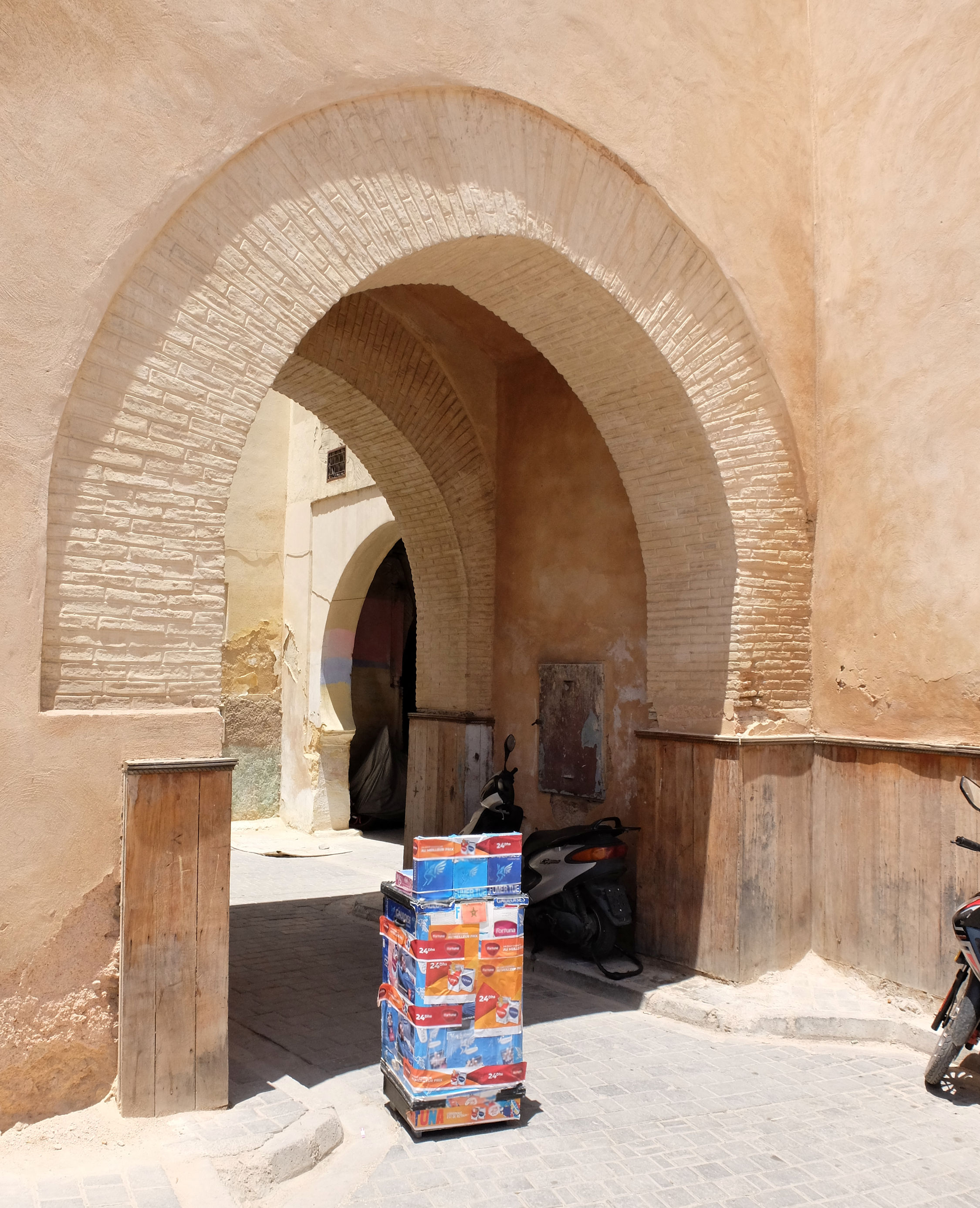
The next day, our full one in Fes, would be a total experience, as we started out tour at the Bab Bou Jeloud, an ornate city gate in the old part of town. Also known as the main gates of the Royal Palace or Dar al-Makhzen, the current one was built by the French colonial administration in 1913 to serve as the grand entrance to the old city. The old gate was a simple, modest one that may have dated essentially from the 12th century. It gave access directly to the start of Tala’a Kebira, the main souq street that crosses the medina and leads to the Qarawiyyin mosque and university at the heart of the city. After the advent of gunpowder and heavy artillery, the fortifications of old cities like Fez were no longer particularly useful as serious military defenses (though they were still effective at keeping out rural tribes who were poorly armed), and city gates took on a mostly decorative role.
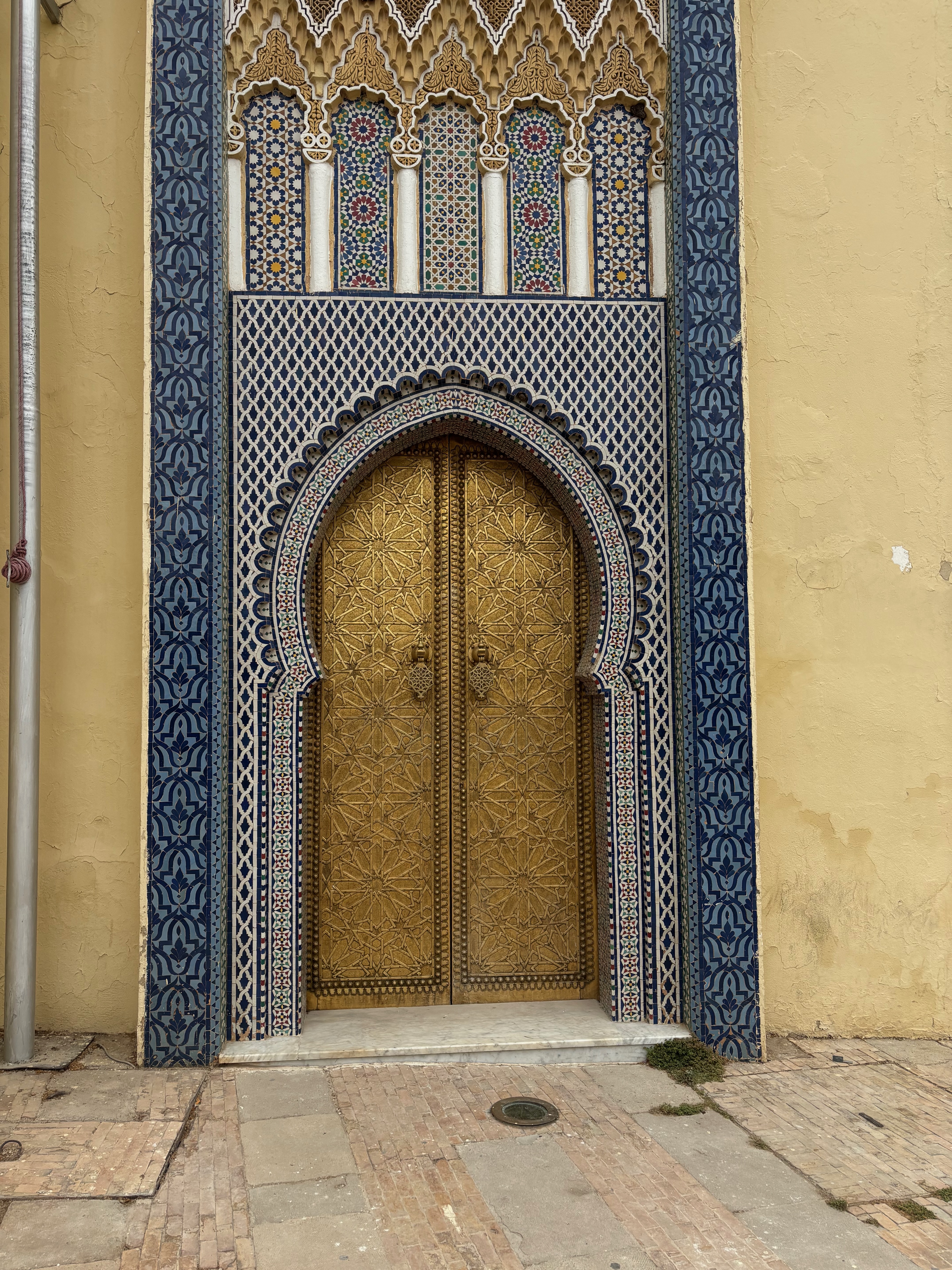
The king’s Royal Palace of Fez, created in 1276, is just one of many royal residences that are spread throughout the country and include:
- The Royal Palace of Meknes created in 1672,
- the Royal Palace of Rabat, created in 1785 and the principal seat of the monarchy since 1912,
- the Jebel Kebir Palace in the western outskirts of Tangier,
- the Royal Palace of Casablanca, erected in the mid-1920s,
- the Dar Es Salam Palace, Rabat, created by Sultan Mohammed V,
- the Royal Palace of Ifrane, created by Sultan Mohammed V in the 1930s,
- the Royal Palace of Tétouan, created in 1956,
- the Summer Palace of Skhirat, created by King Hassan II, the scene of the 1971 Moroccan coup d’état attempt,
- the Royal Palace of Agadir, created by Hassan II in the 1990s which includes an ocean-facing golf cours, and
- the Marshan Palace, Tangier, former seat of the International Legislative Assembly of the Tangier International Zone, repurposed in the 2010.
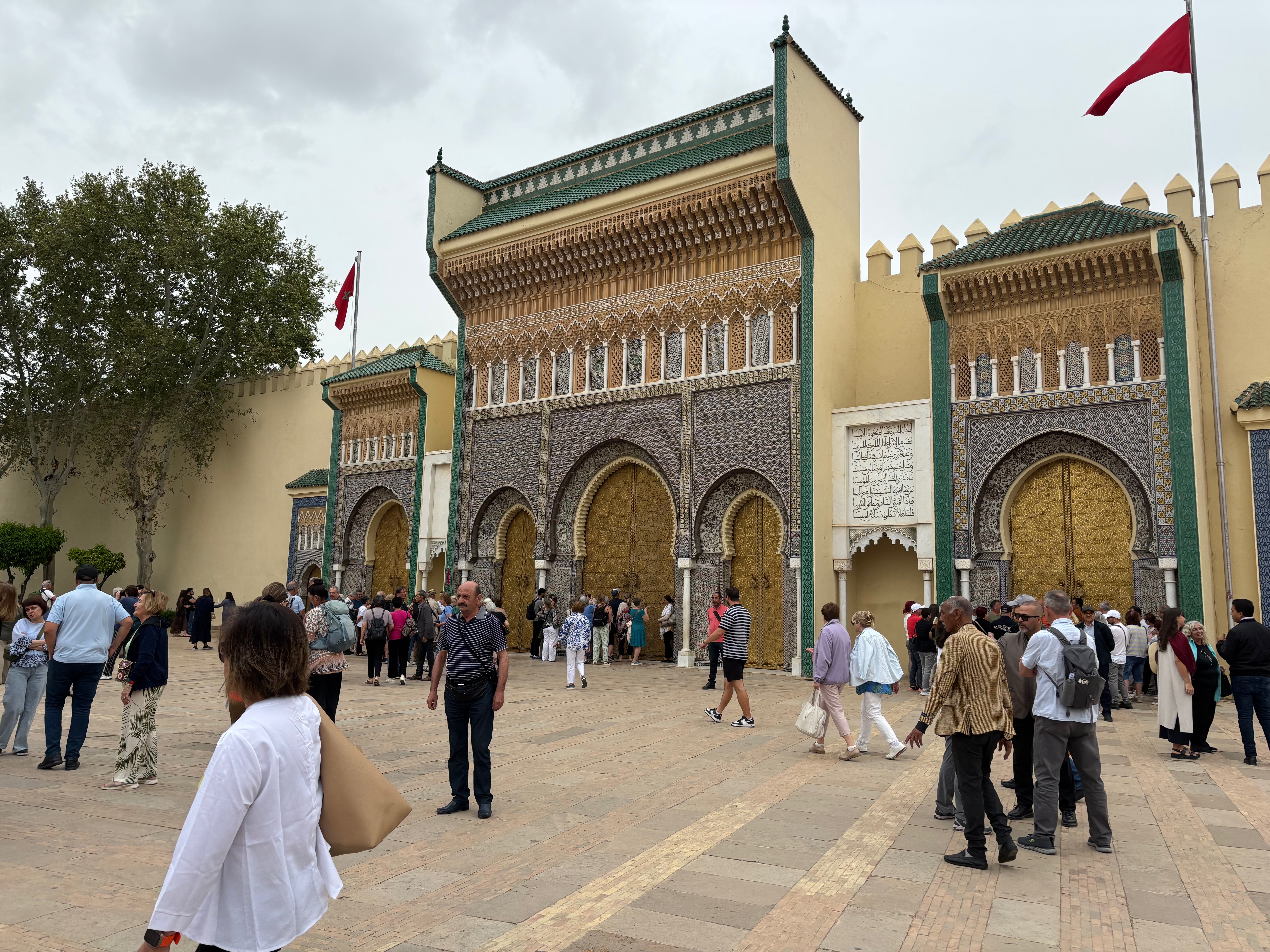
After contemplating the incredible sums of money it took to create and build the magnificent castles, palaces, Château’s, cathedrals and other monuments to the vanity of the rich and powerful around the world, this further example of excess in a relatively poor country is somewhat off-putting. But as the king here is securely in place with no signs of dissent from the populace, it is just the way it is.
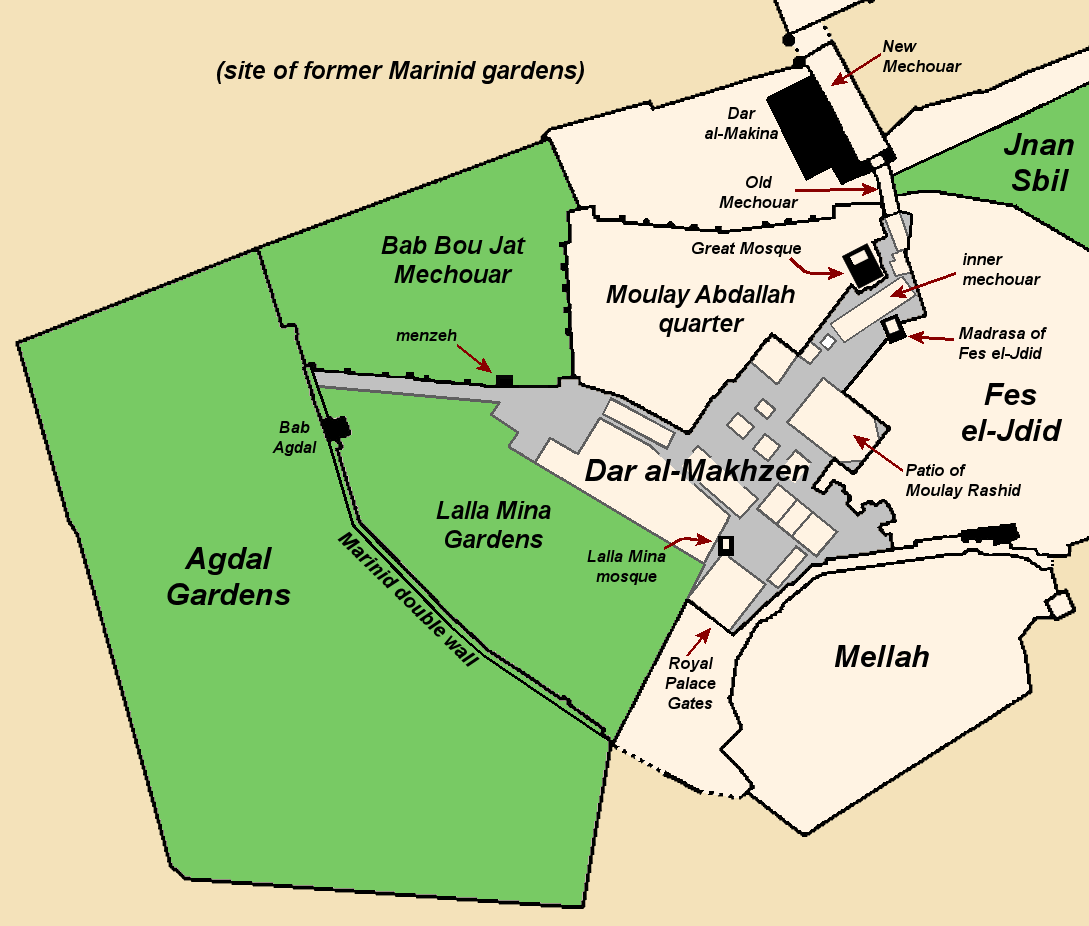
Enough moralizing. We then walked into what was the historic Jewish quarter (Mellah) believed to date from the mid-15th century, roughly parallelling the expulsion of Jews from Spain starting in 1492. While the district is no longer home to any significant Jewish population, it still contains a number of monuments and landmarks from the Jewish community’s historical heritage in the city. This would be a common theme as we continued our travels, the migration of Jews to North Africa during the Inquisition and the gradual emptying out after the creation of the state of Israel.
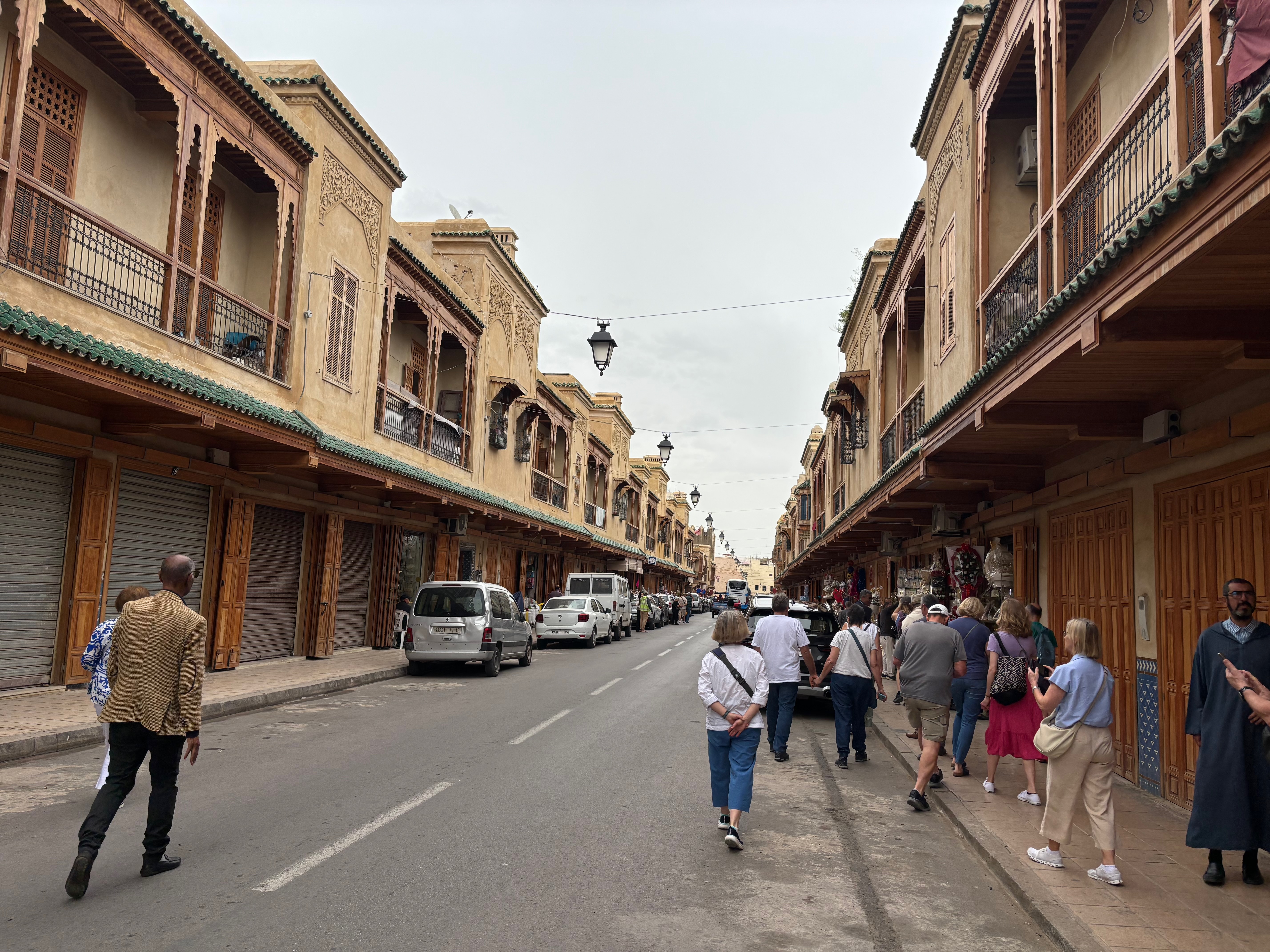
Our next stop would be a pottery and tile making establishment. We’ll pick it up there in the next post.
Links
Volubilis: https://whc.unesco.org/en/list/836/
Riad Bahja Fez: https://riadbahjafez.com/
Discover more from 3jmann
Subscribe to get the latest posts sent to your email.


 3jmann
As always, thanks for your detailed info of all your trips. I so enjoy reading them and seeing the pictures. Hope you are both doing well. As you can imagine, I really miss Wayne and our travels and adventures too.