April 11 – 13
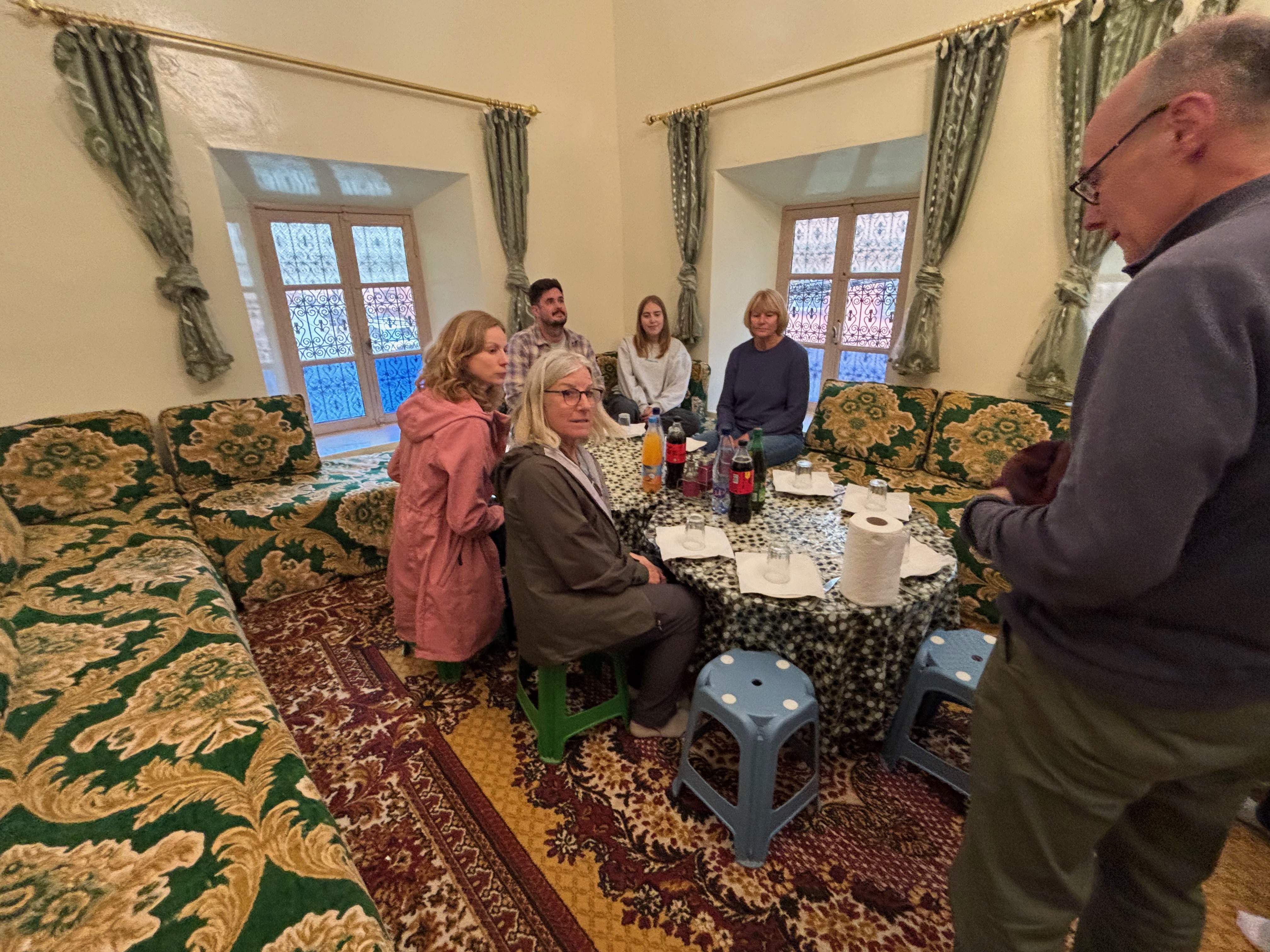
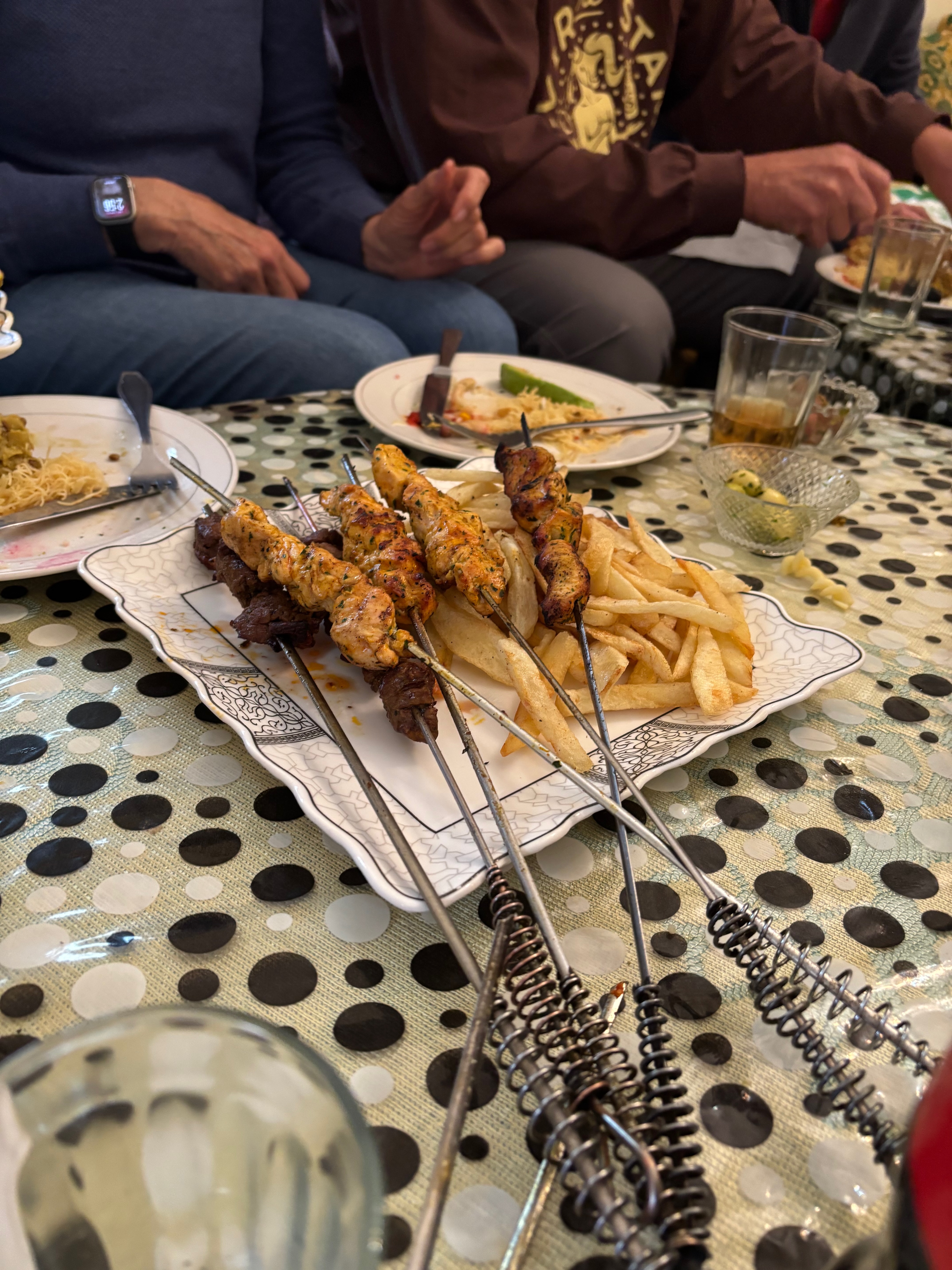
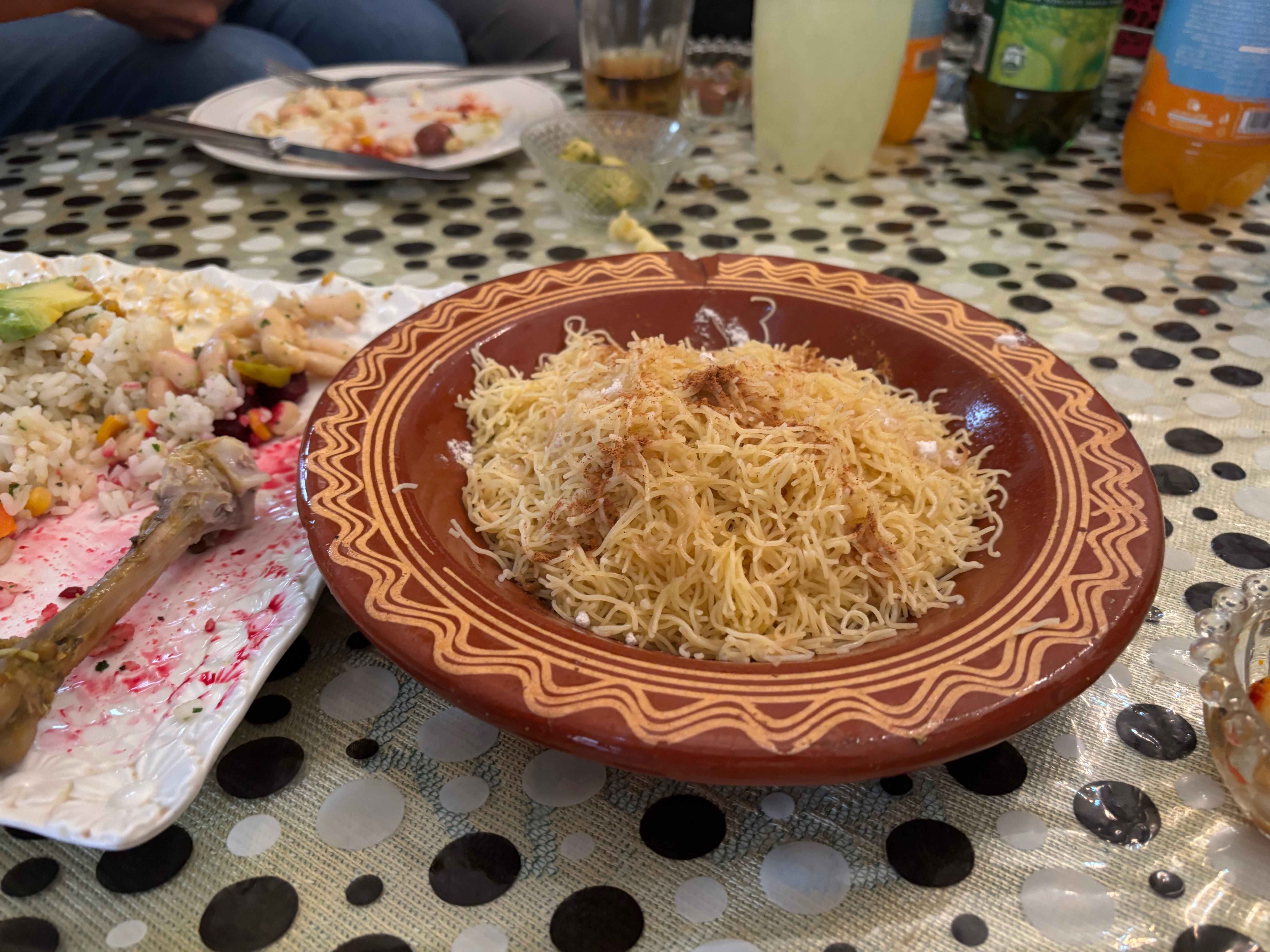
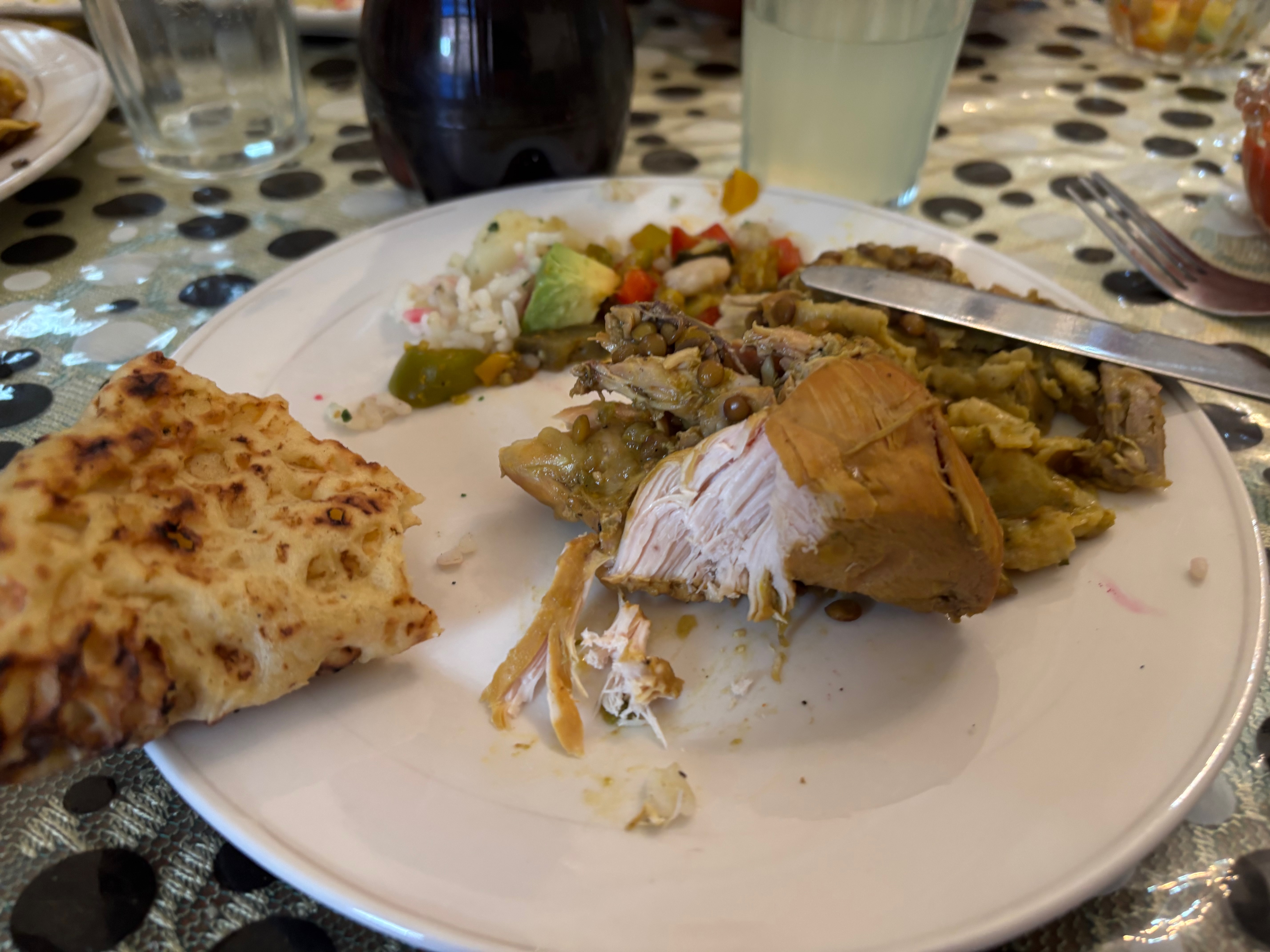
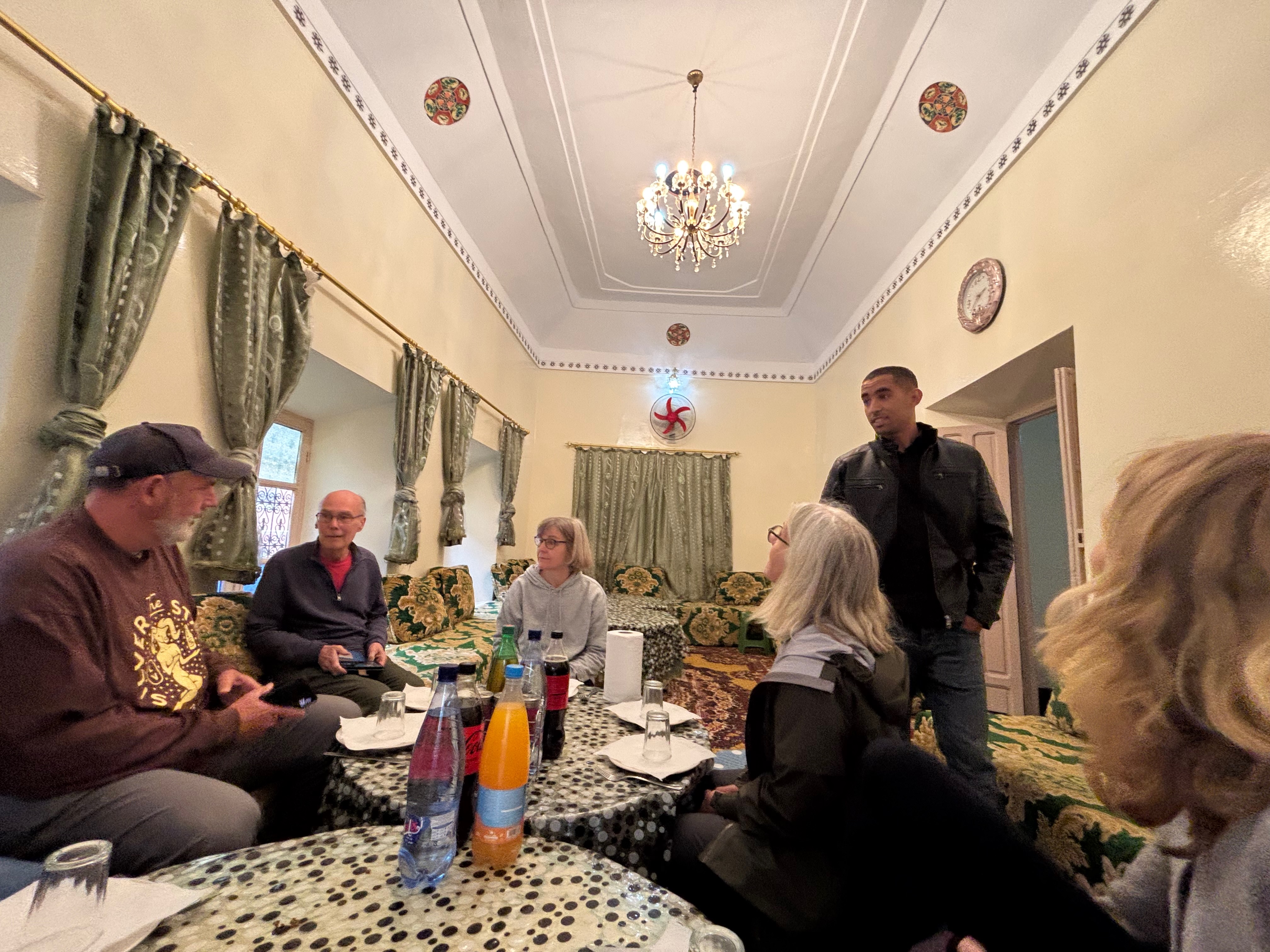
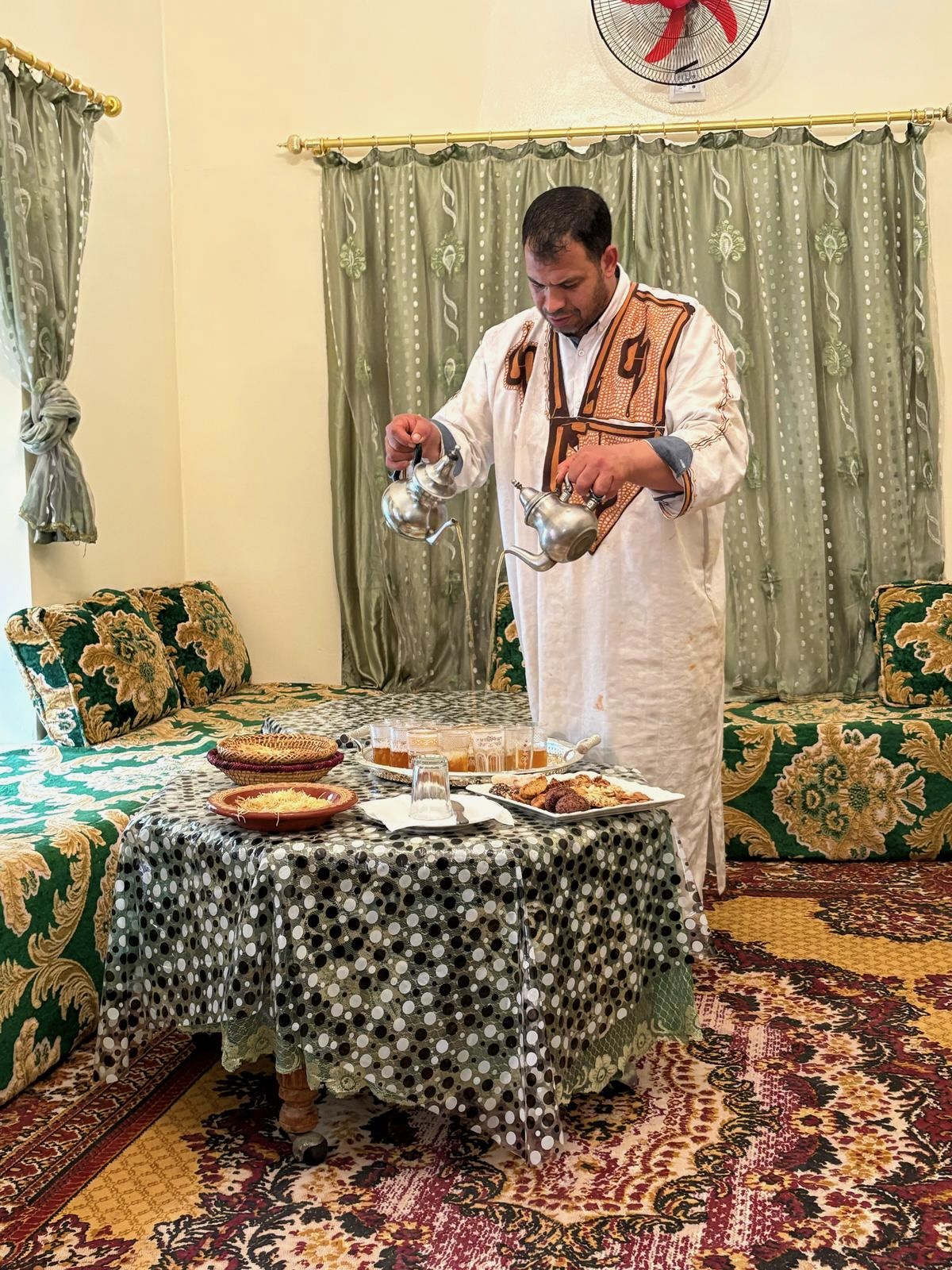
Our in-home lunch would again be a treat, with plenty of delicious food, this time including pita bread, cold vegetables, roasted chicken, warm noodles and kebabs, both chicken and beef. Washed down with tea, and a variety of sodas, it was more than enough to keep me full until the next day. One ritual you encounter at these meals is the pouring of tea, where the server holds the teapot low above the glass and then raises the pot with the stream of liquid pouring out in an arc, without a splash or any lost liquid.

Sufficiently nourished we began our short walk up to and through the famed Todra Gorge, a series of limestone river canyons, or wadi, here in the eastern part of the High Atlas Mountains. Both the Todgha (or Todra) River and the neighboring Dadès River are responsible for carving out these deep cliff-sided canyons, on their final 25 miles through the mountains. The height of the canyon walls can vary, but in some places can be up to 1,312 feet high.
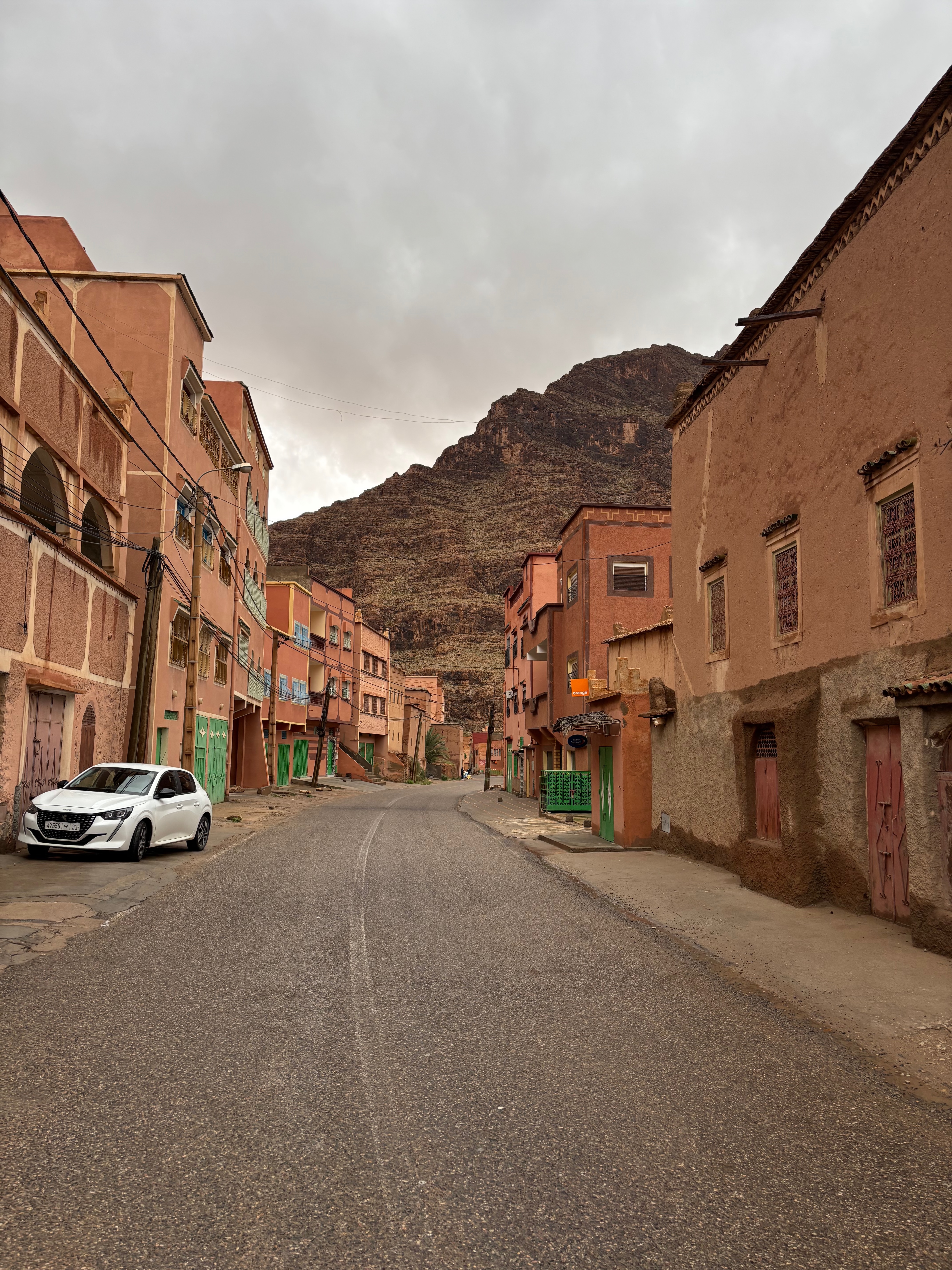

During the dry season, the canyon floor is mostly dry; at most there will be a small stream of water and is easily traversed by travelers. During the rainy season, however, the Todra can expand massively, covering the canyon floor in a strong torrent. Our visit was somewhere in between, with a manageable flow of water running through the canyon. It is an impressive sight, but when one has spent time at deep canyons in the States (Grand Canyon, Black Canyon of the Gunnison, or the Royal Gorge), it could be a bit anticlimactic. It was nice to be out of the van though as we admired the steep cliffs surrounding us.
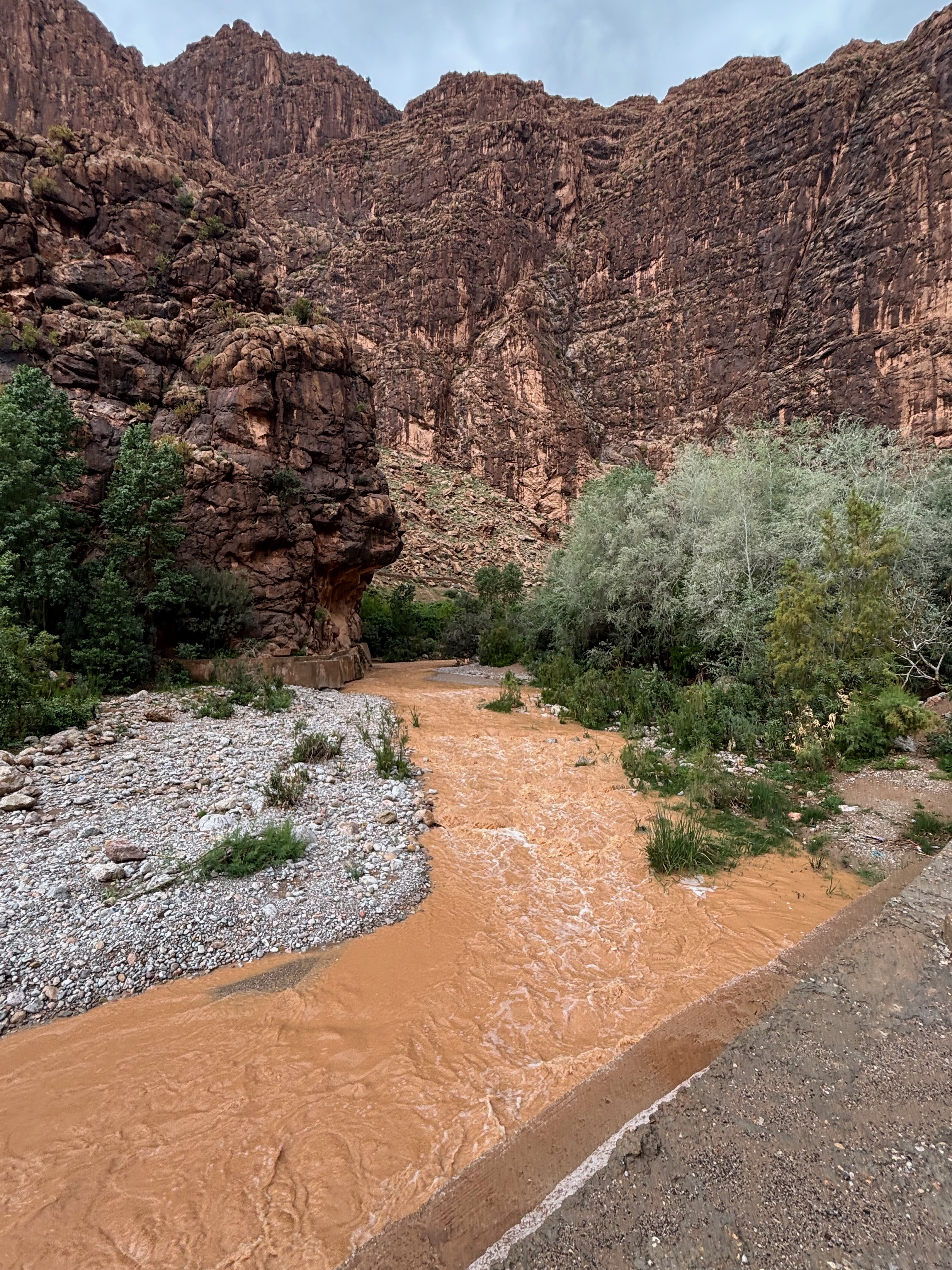

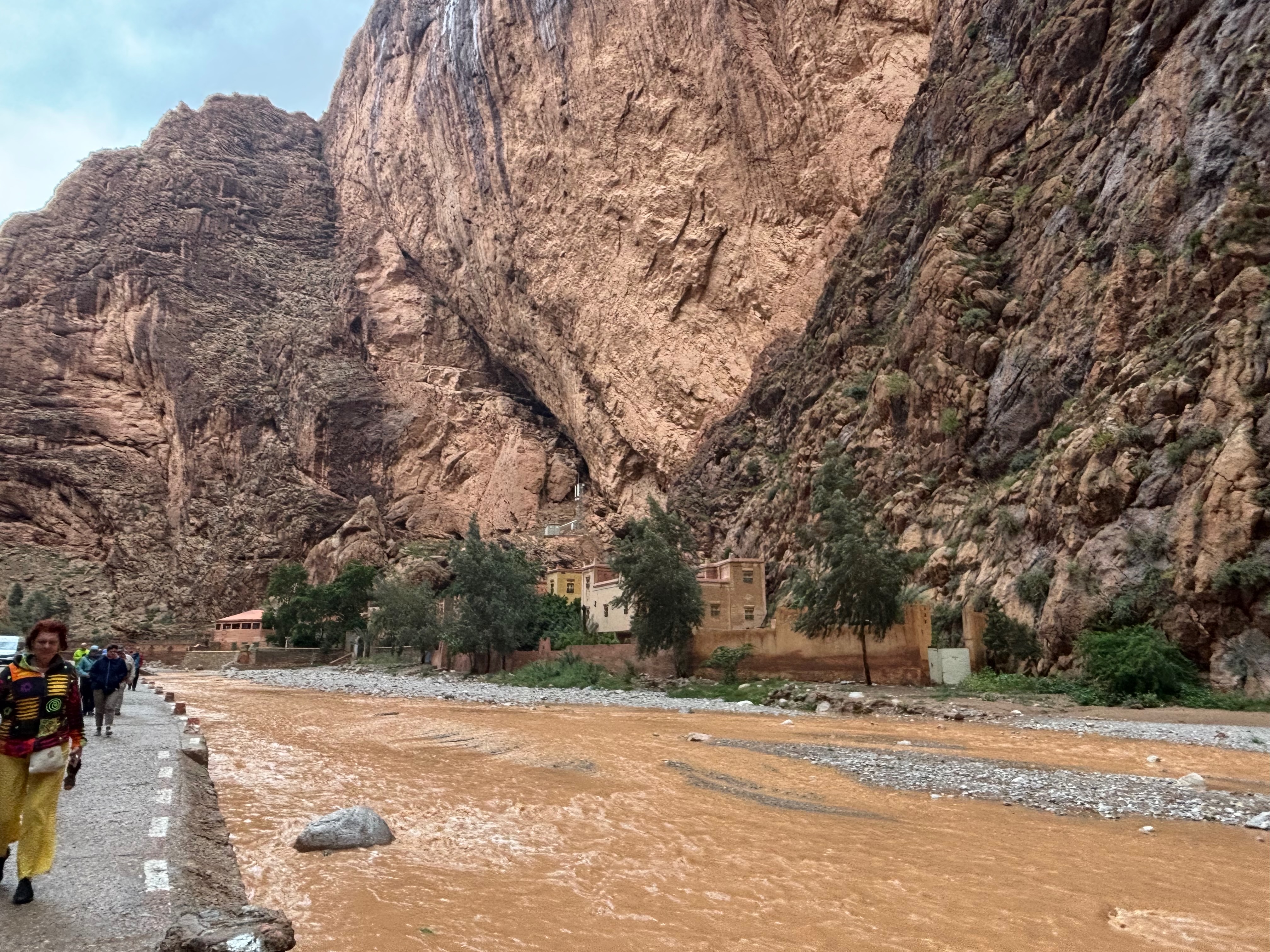
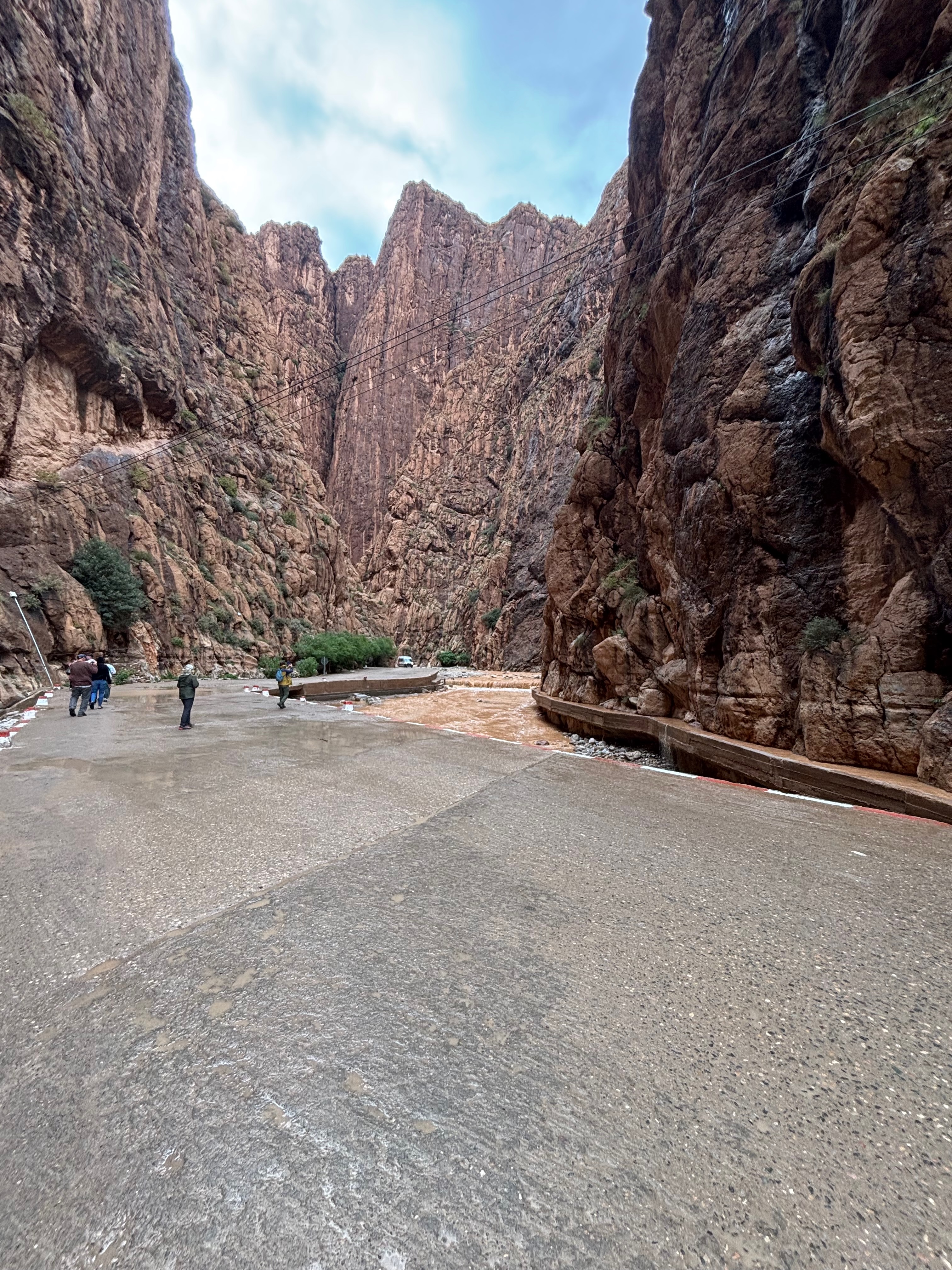
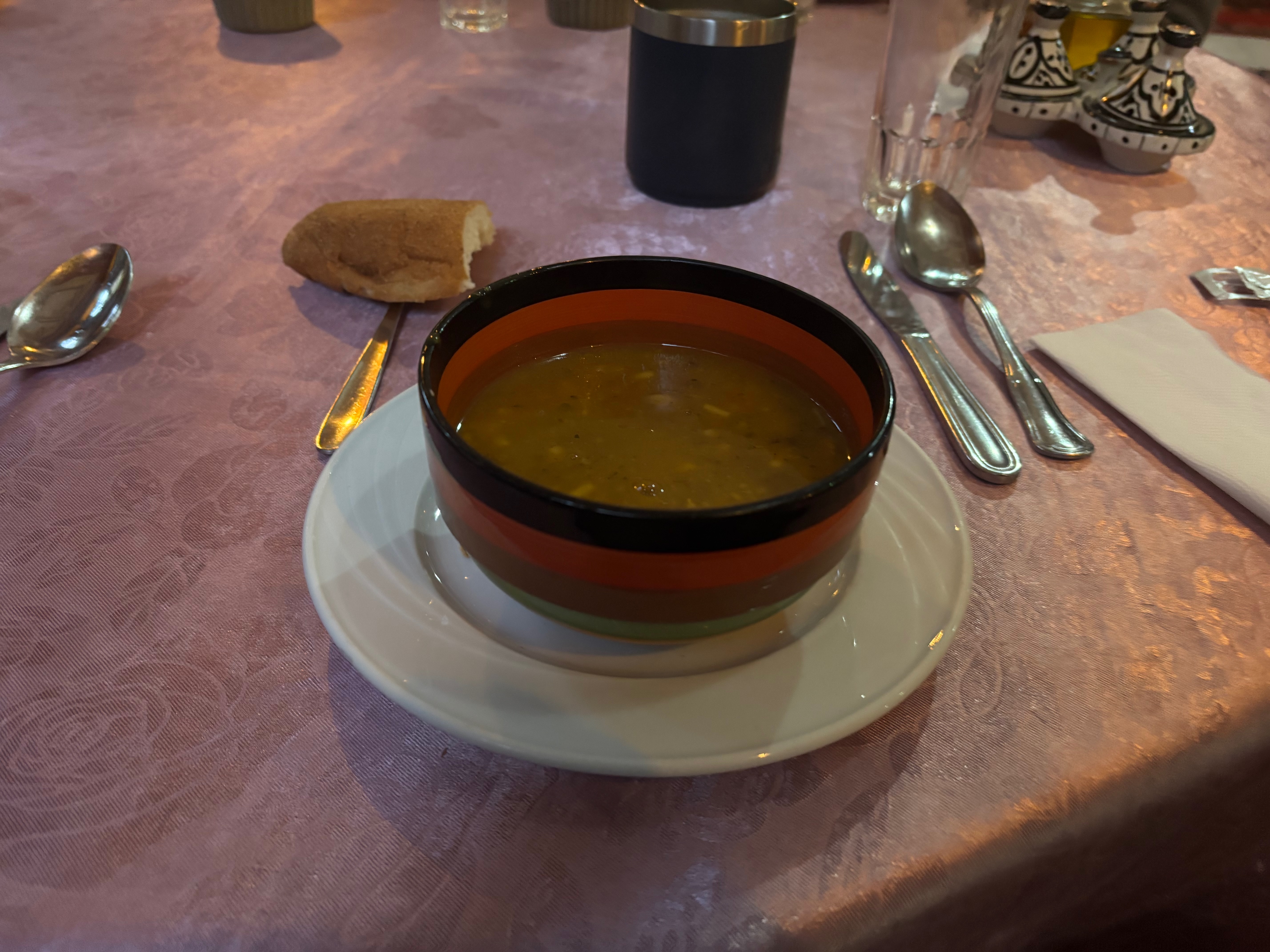
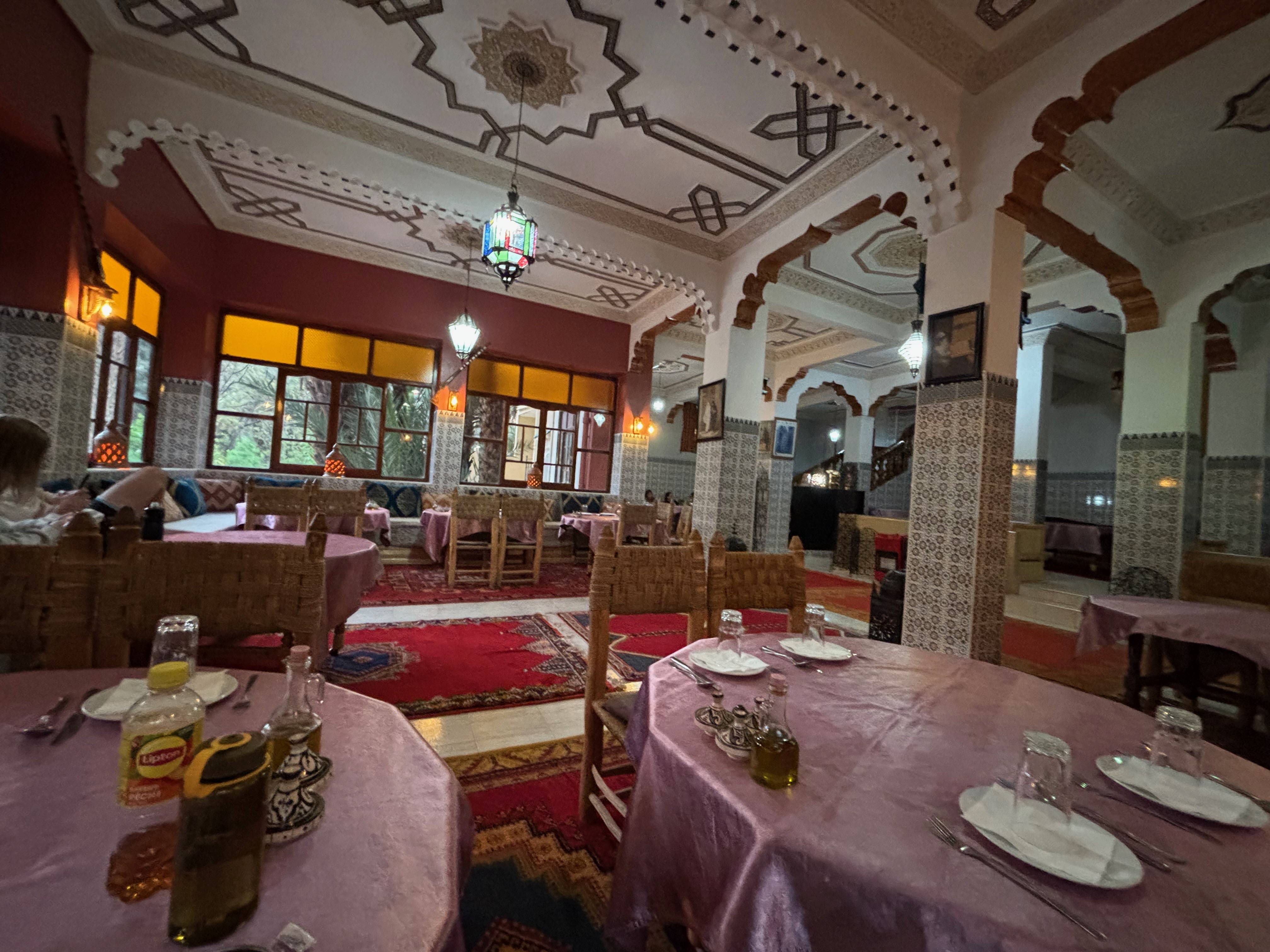
We returned to the hotel for some down time before dinner and although we weren’t that hungry after our filling lunch, Joanna and I gathered with the others in the large restaurant where I had another tasty bowl of Moroccan soup as we all shared the stories that travelers tell as they get to know each other. We would enjoy another buffet breakfast the next morning and then took off in the van for another relatively short day of driving on the way to Alt Benhaddou.
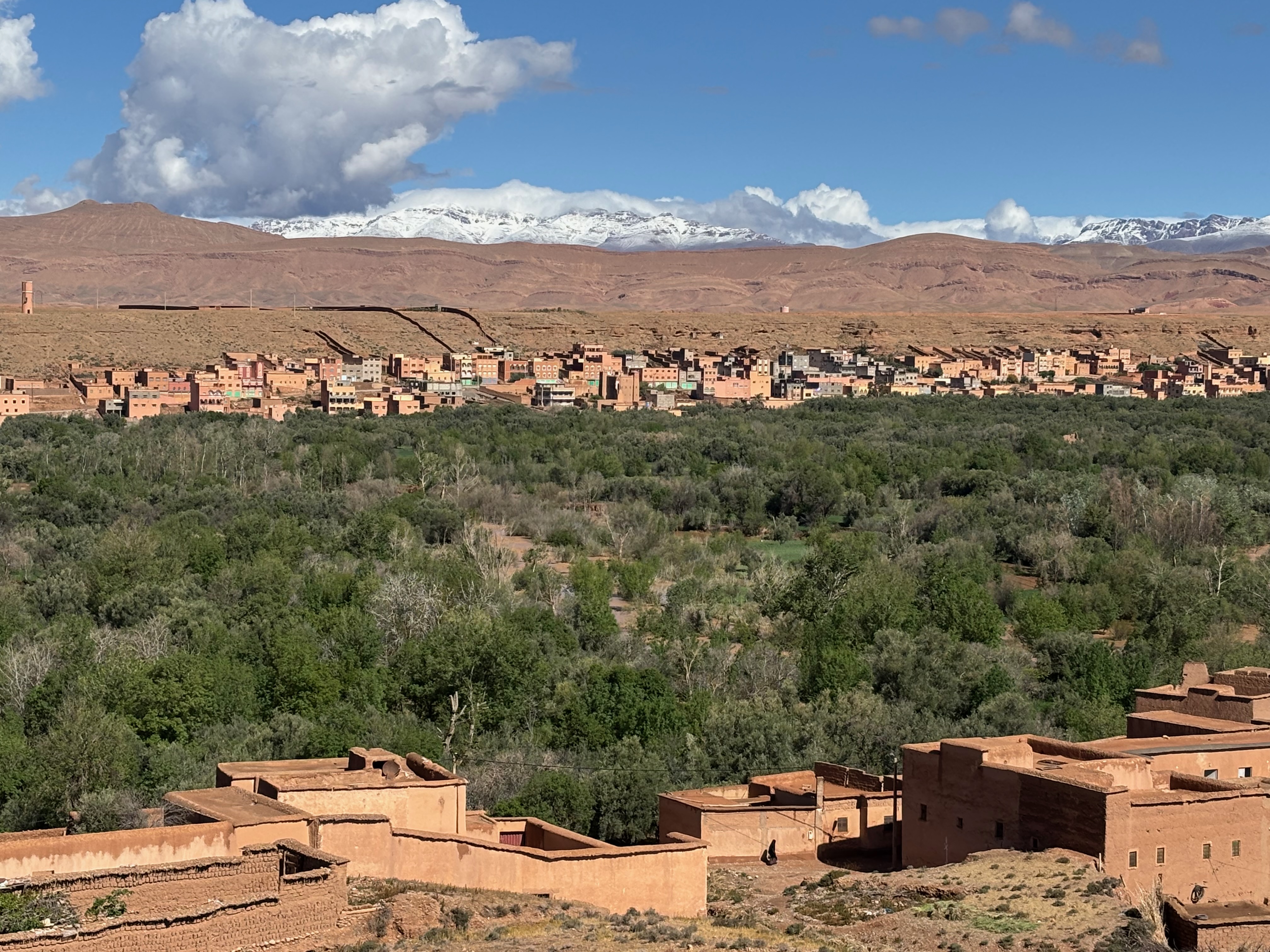
Partway there, we pulled over at an overlook to see the valley and town of Souk Lakhmis Dades, a commune in the Tinghir Province where we got a look at the snowcapped Atlas Mountains in the background. Later, we stopped for lunch in Ouarzazate, nicknamed the door of the desert, which is the capital of Ouarzazate Province in the region of Drâa-Tafila at La Terrasse. The town is a primary tourist destination in Morocco during the holidays, as well as a starting point for excursions into and across the Draa Valley and the desert.
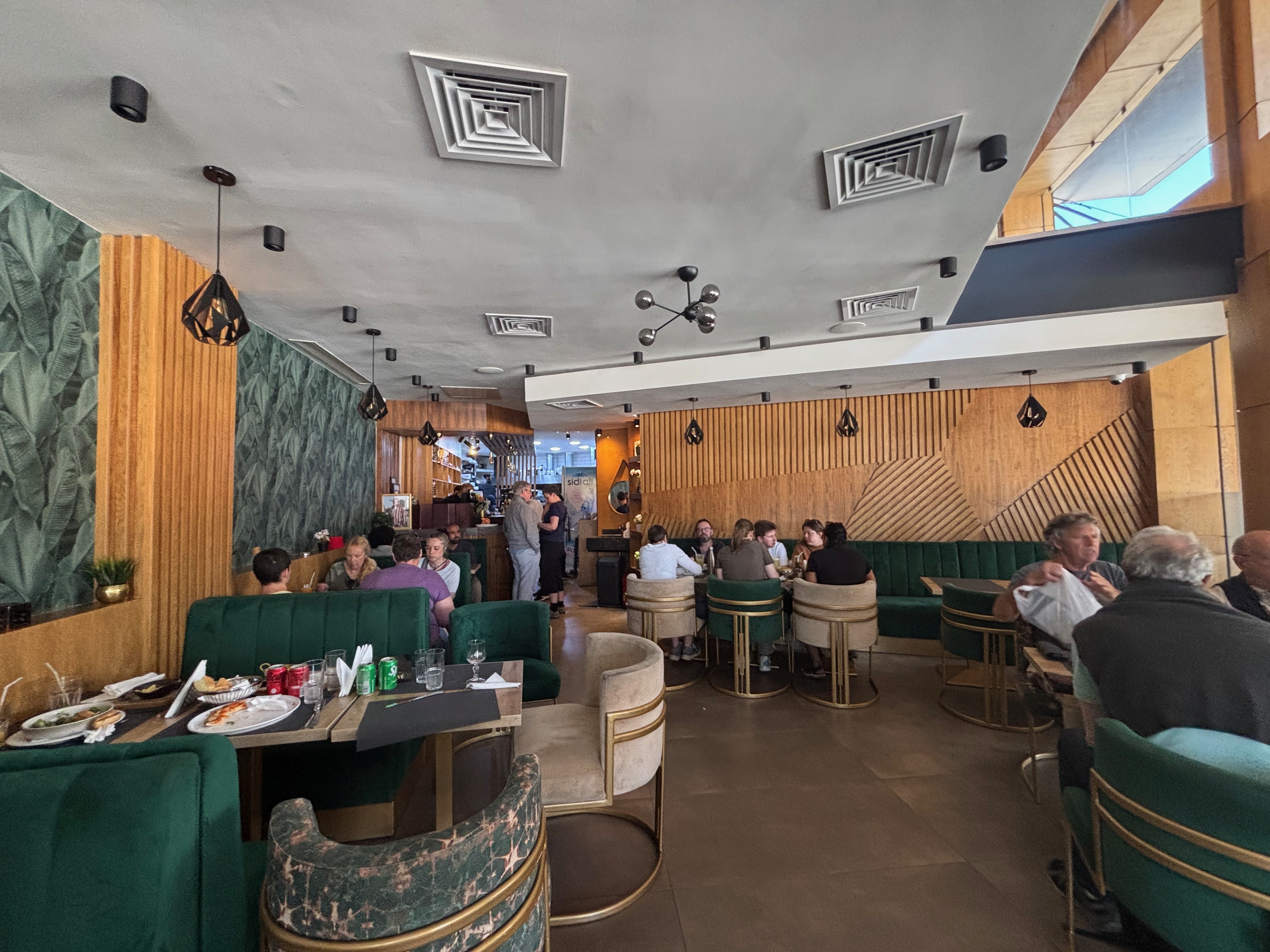
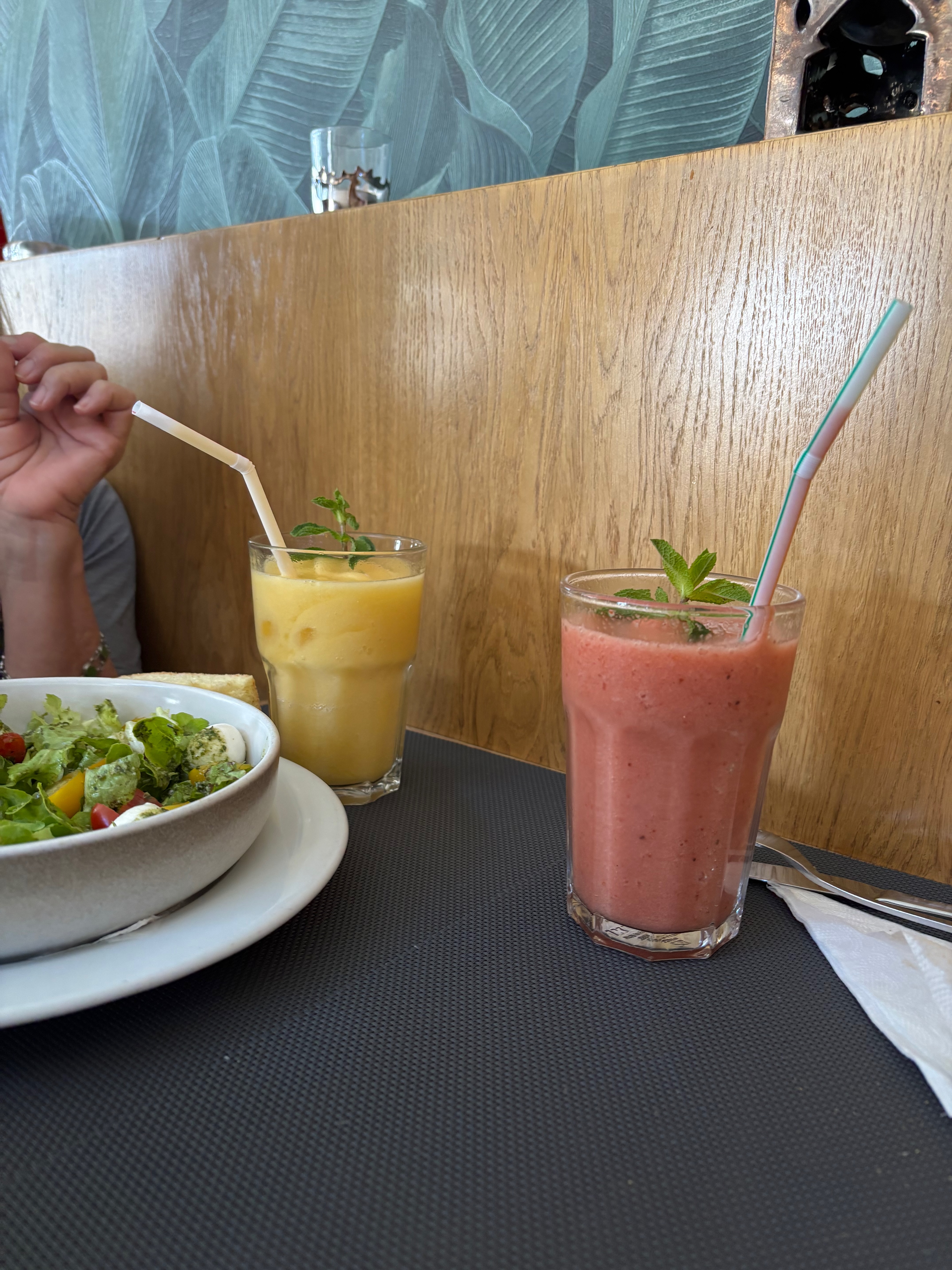
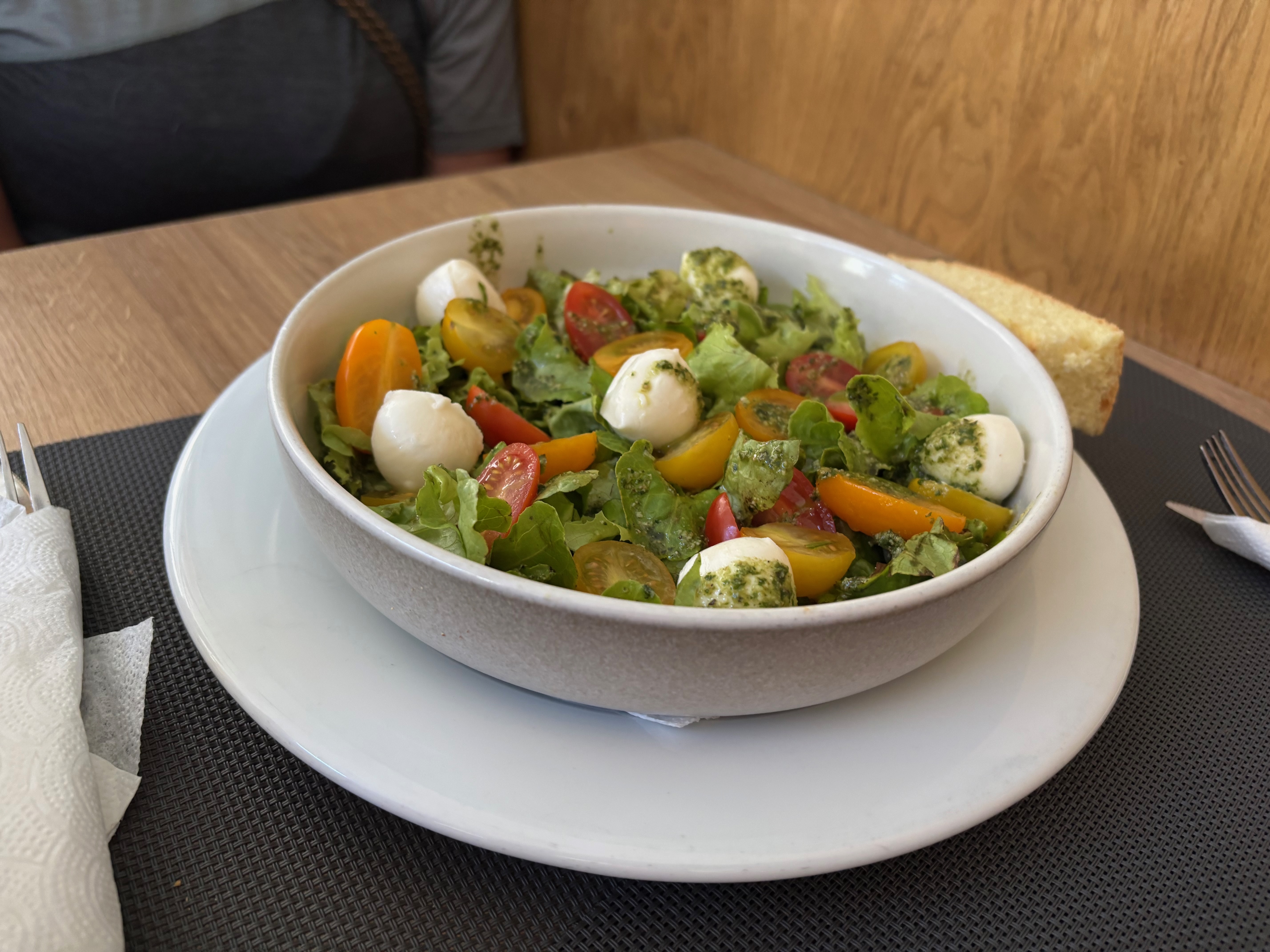
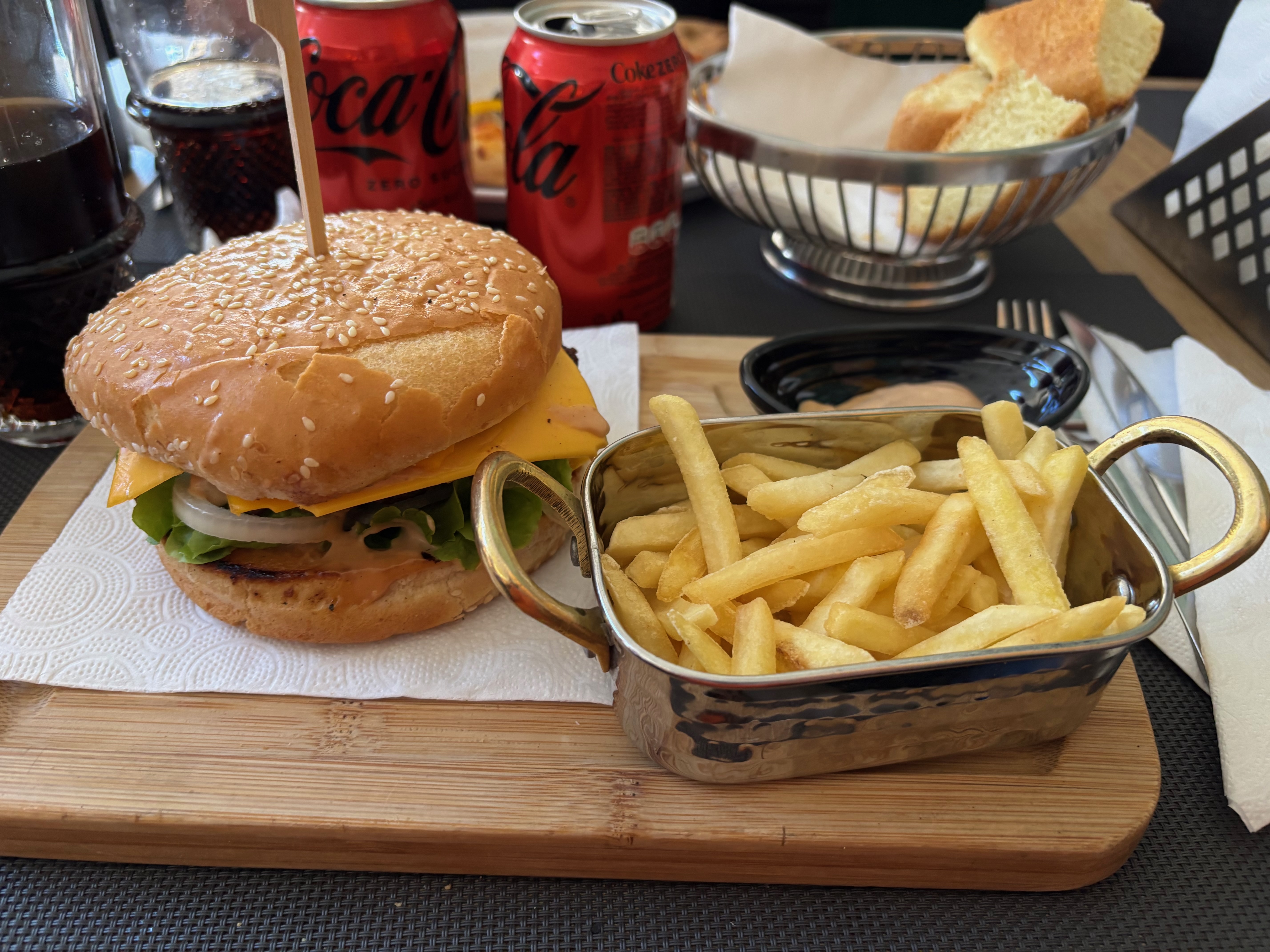
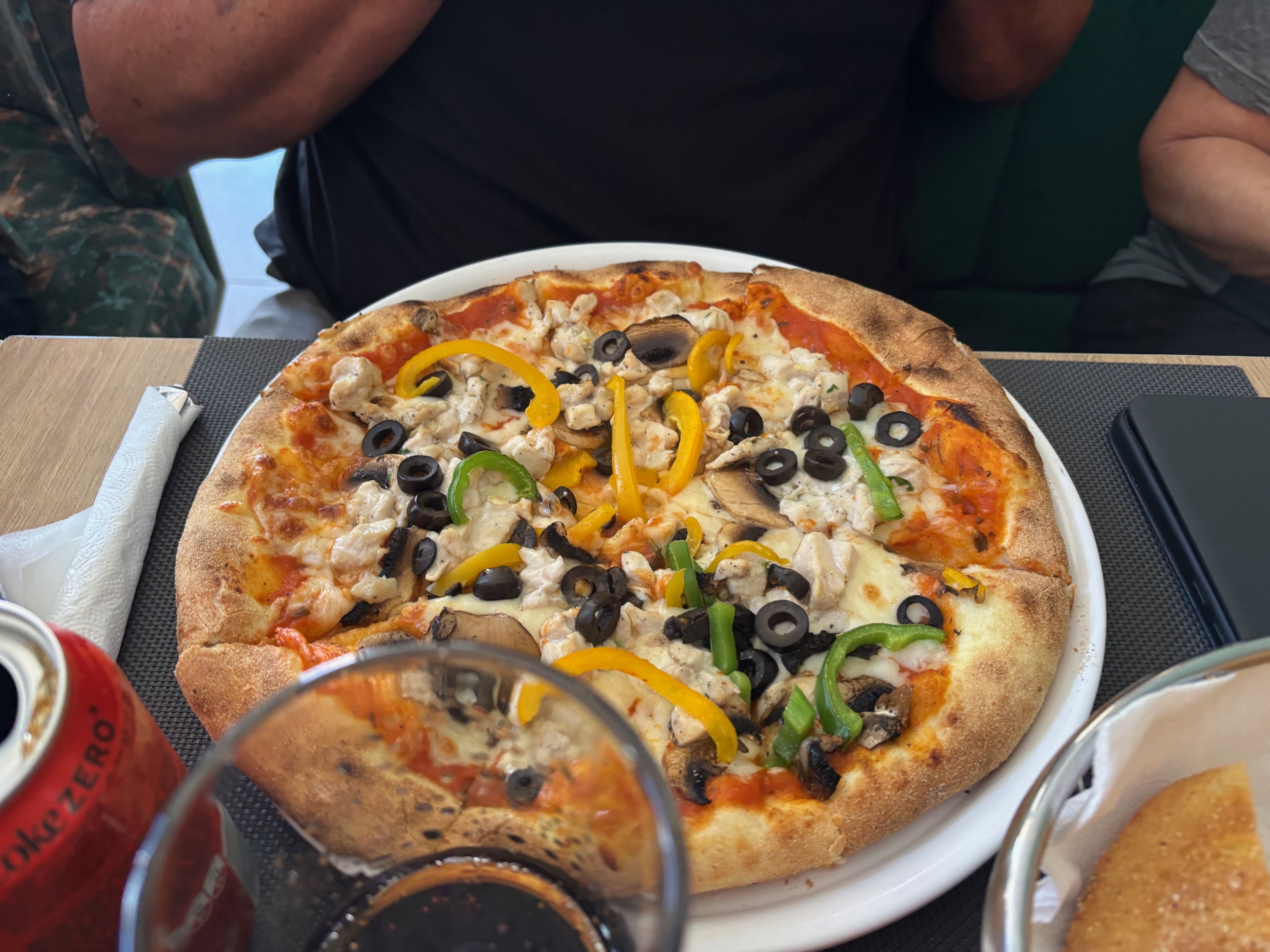
Given the number of tourists that flock to this area, it came as no surprise that the restaurant featured a menu we would find familiar in the states and given our steady diet of Moroccan cuisine to that point, we were all glad to order what they offered. Our table enjoyed a combo pizza, a chicken pizza, a caprese salad, two burgers (one for me) with fries, two smoothies, and some sodas. Our tab came to 568 Dirhams ($57), an amazingly inexpensive meal for that many people. And boy, was that burger good. The only drawback is that they wouldn’t split the check and didn’t take a credit card, so I was elected to total up who owed what and to stand in a long line to pay.
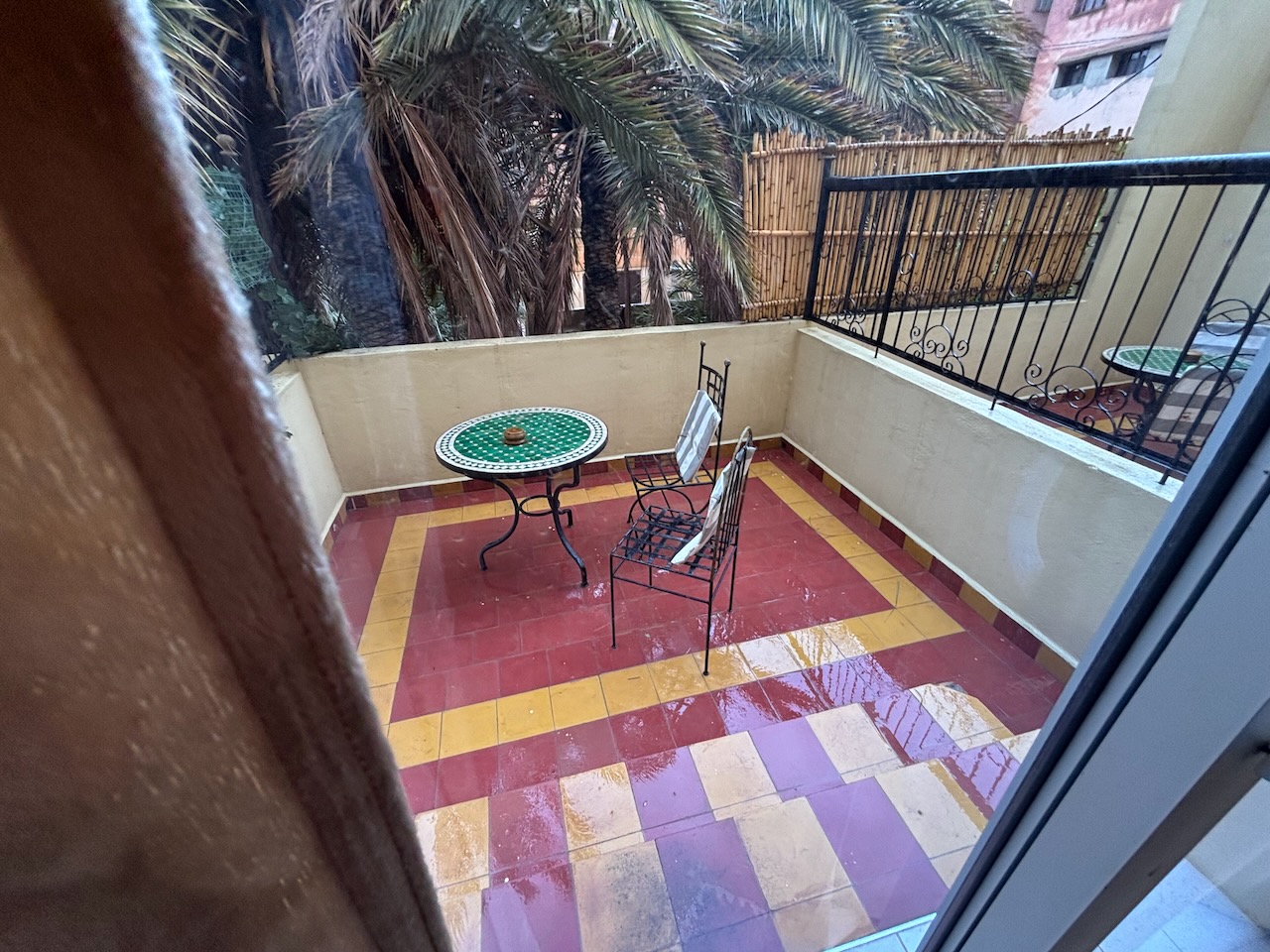
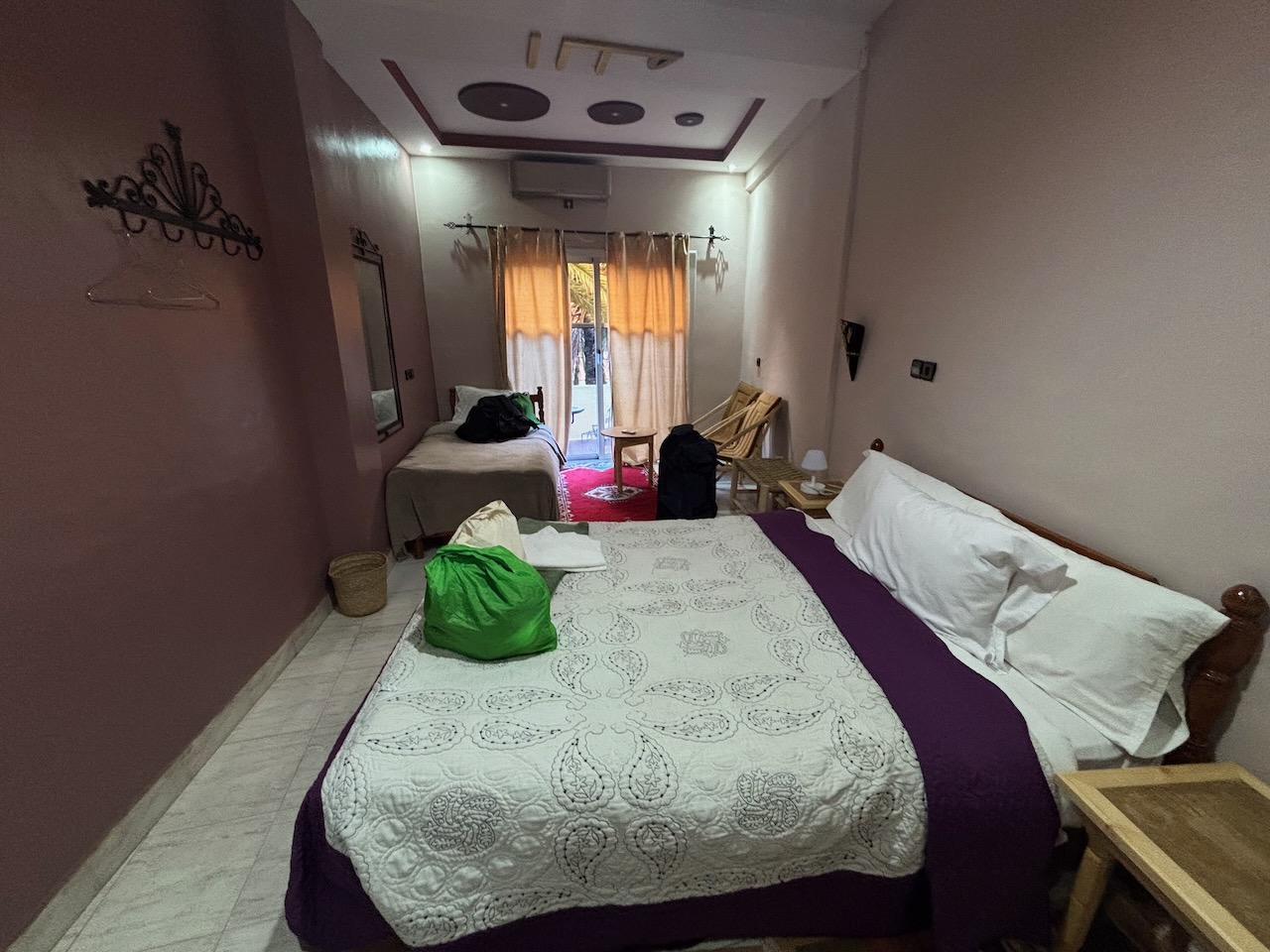
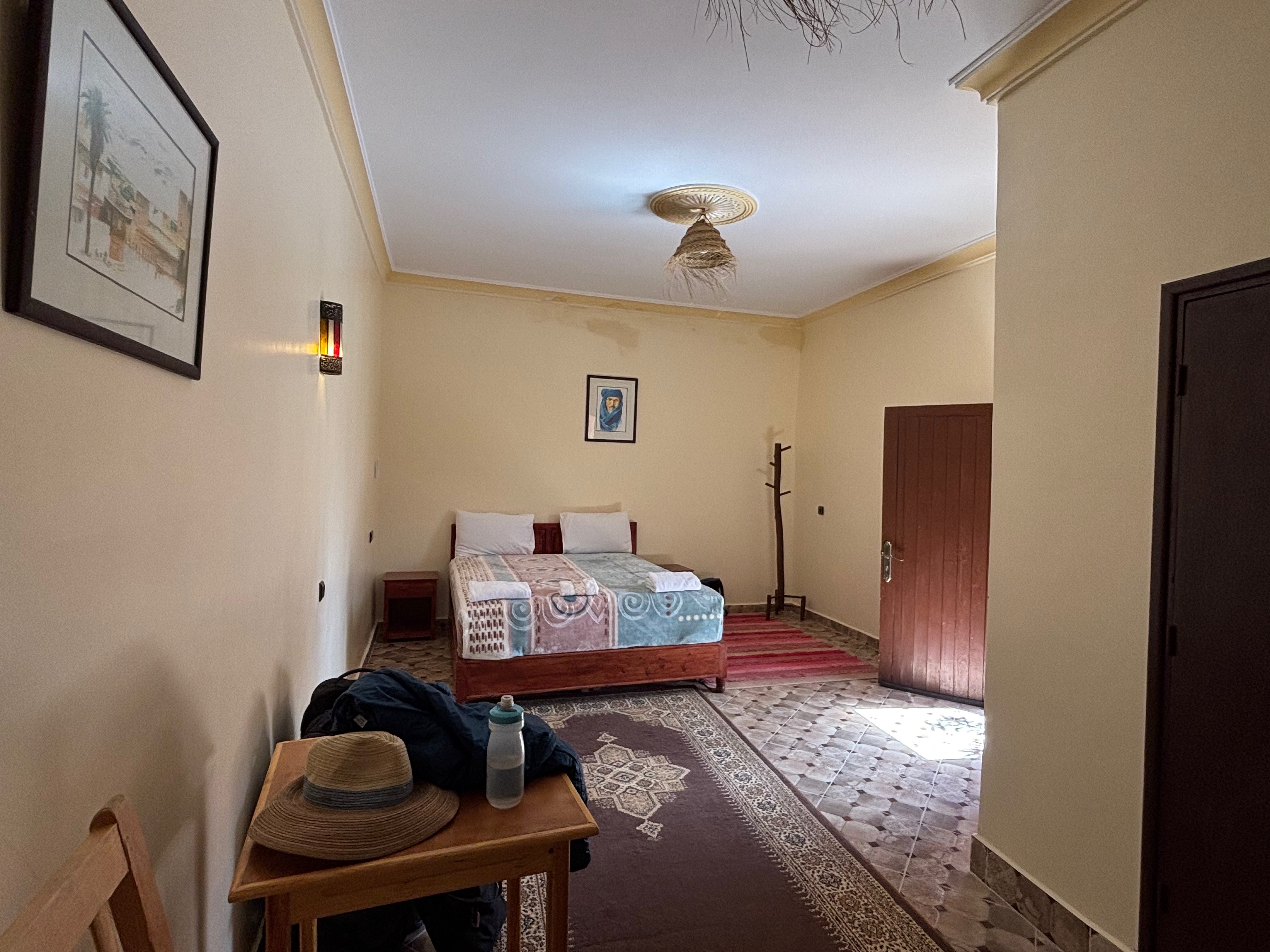
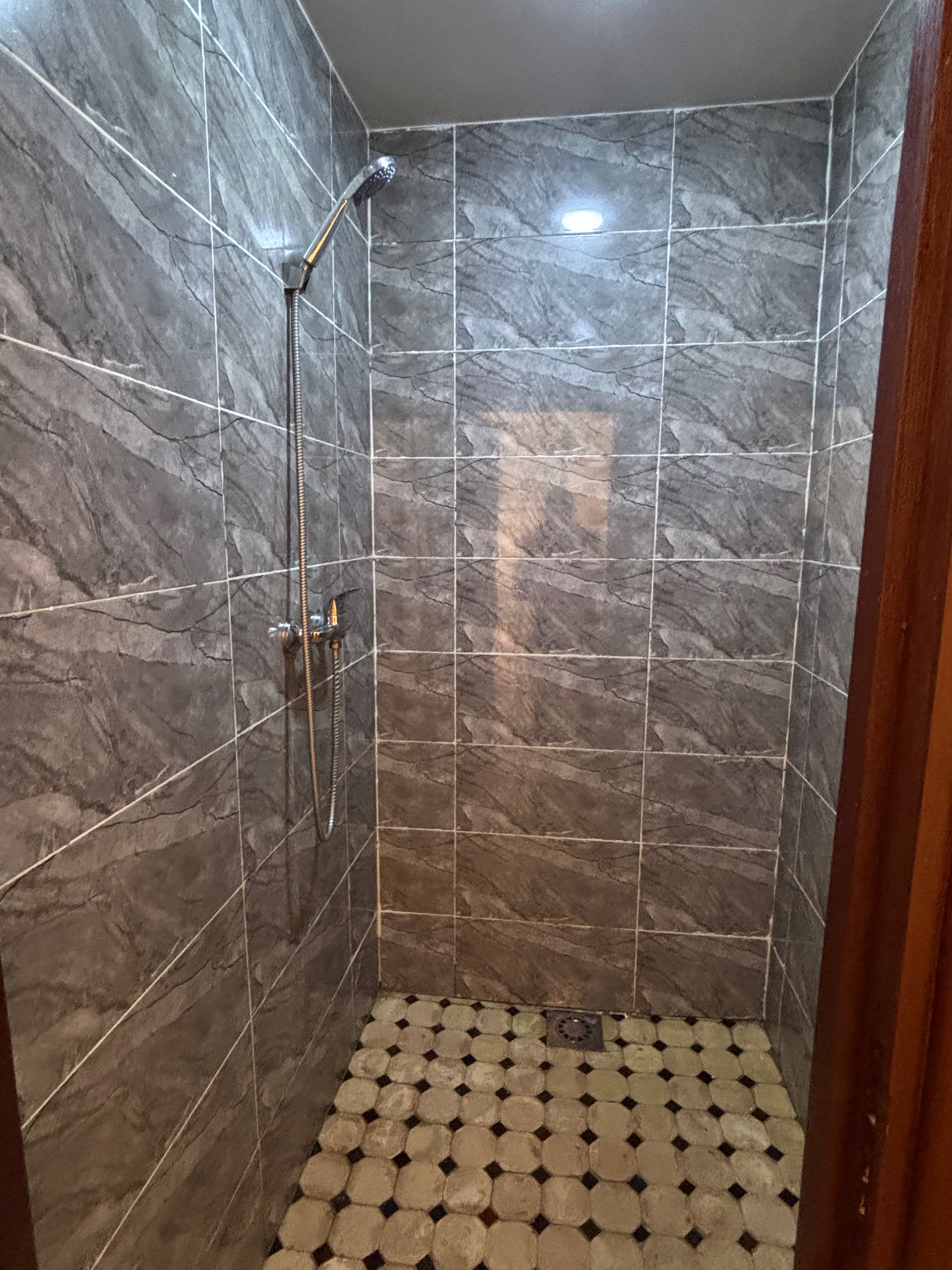
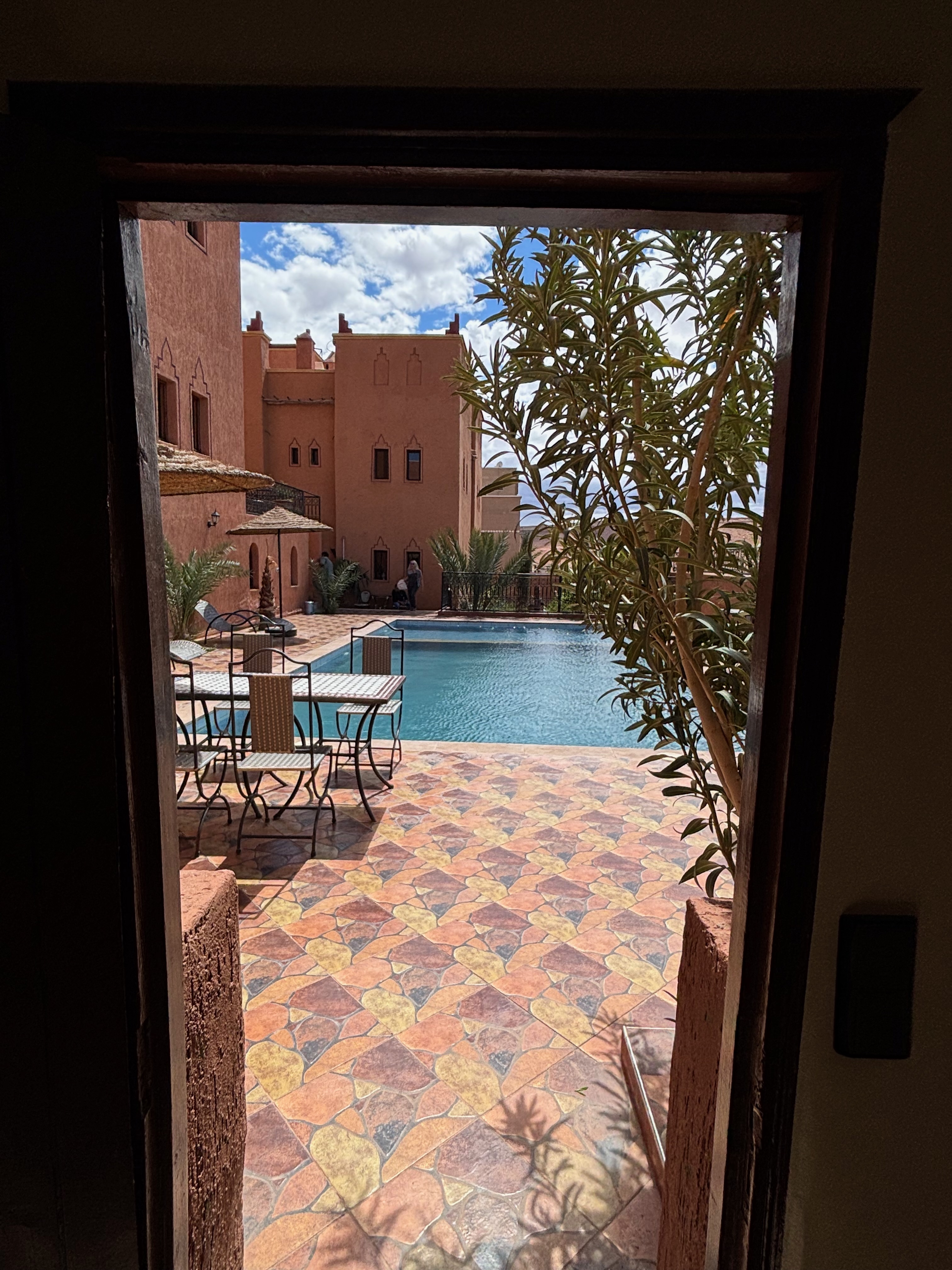
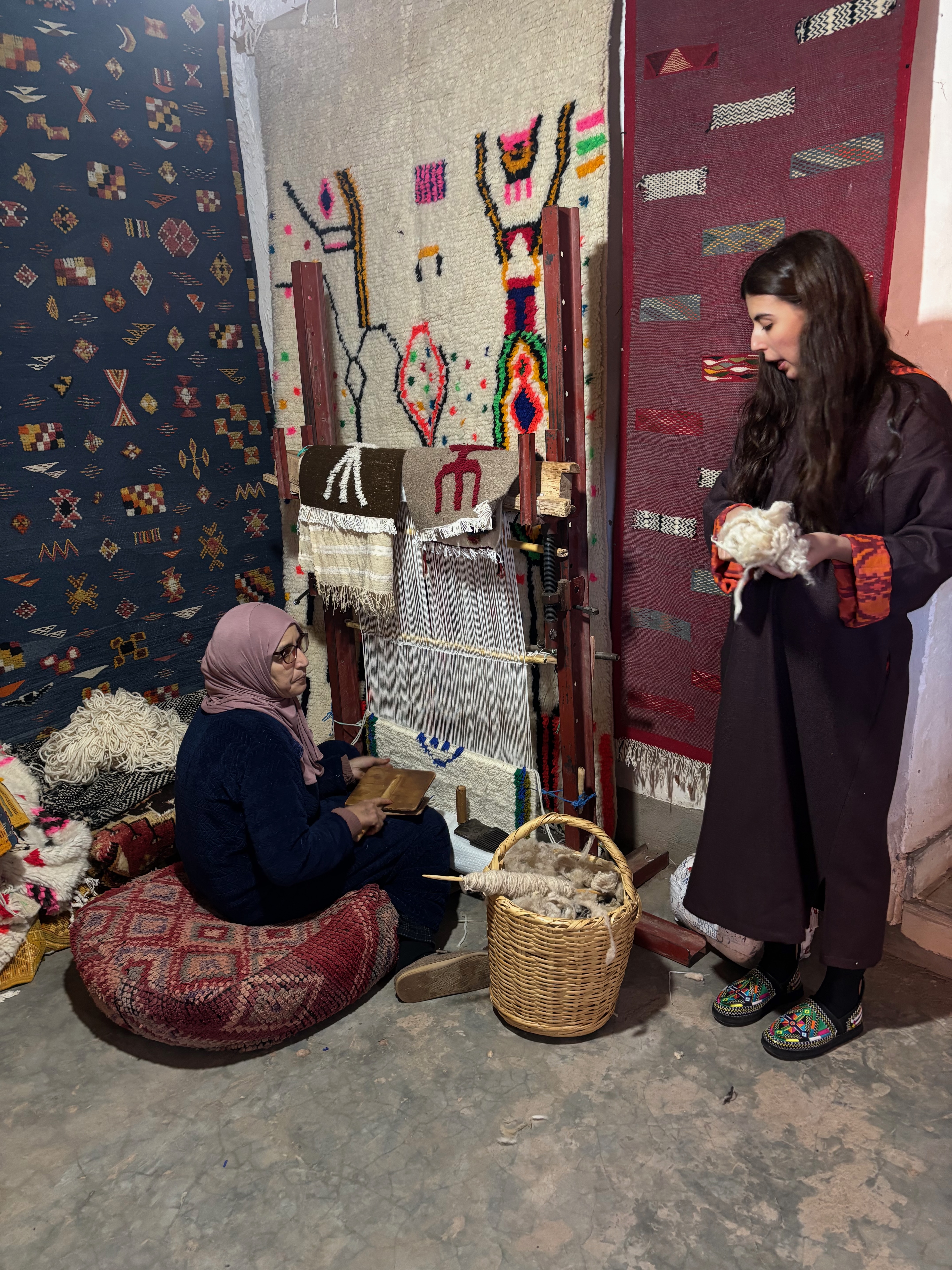
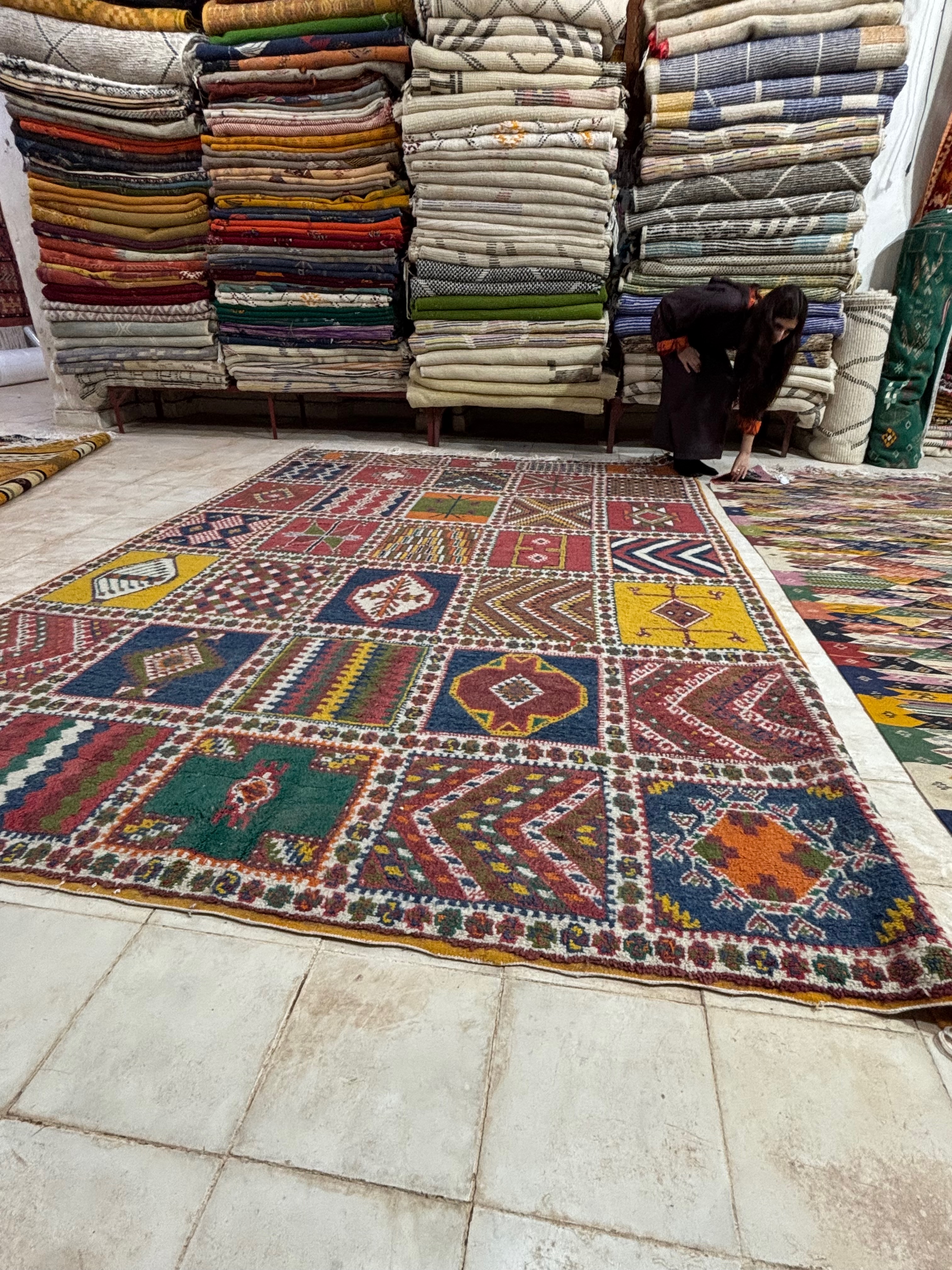
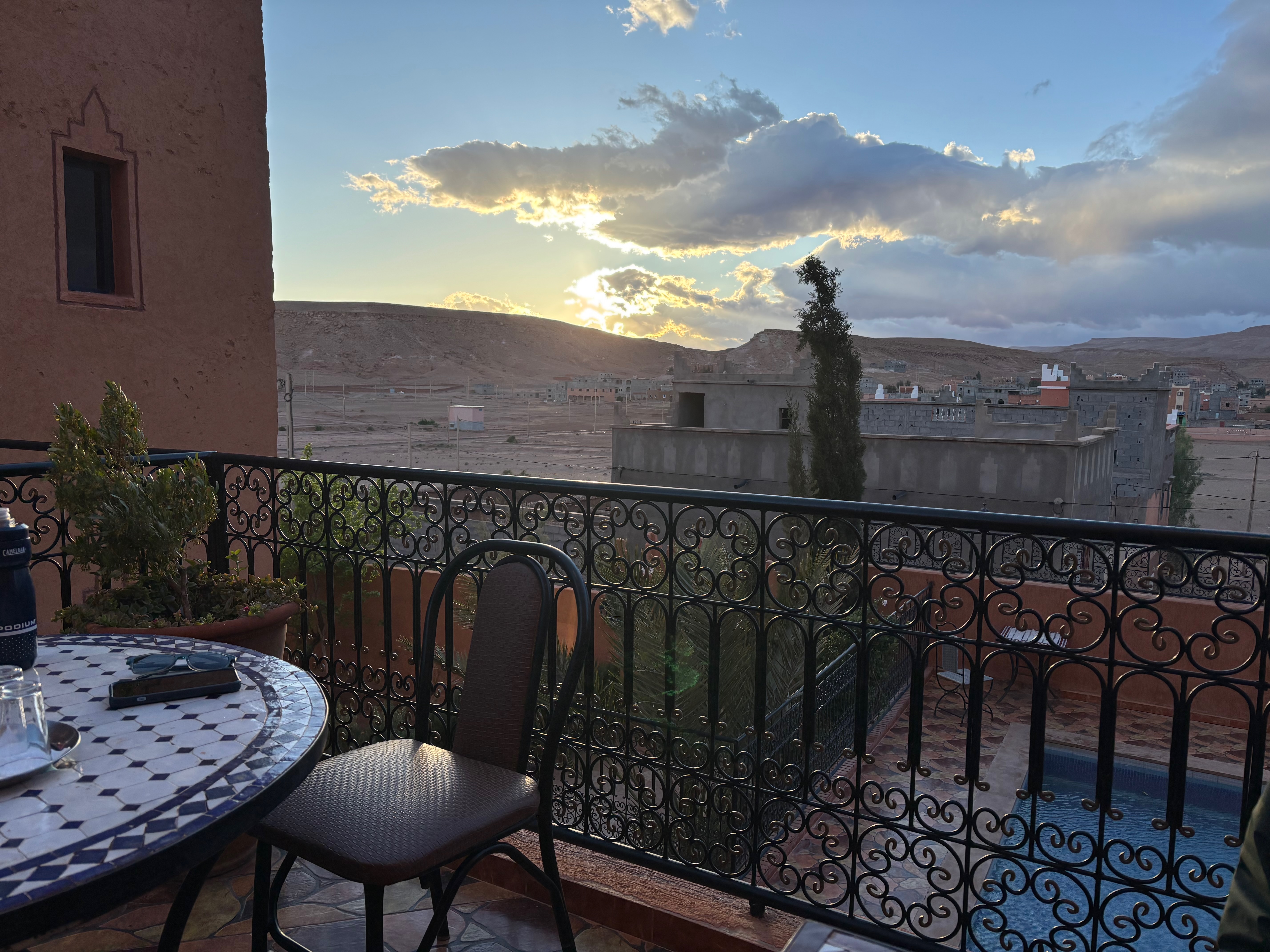
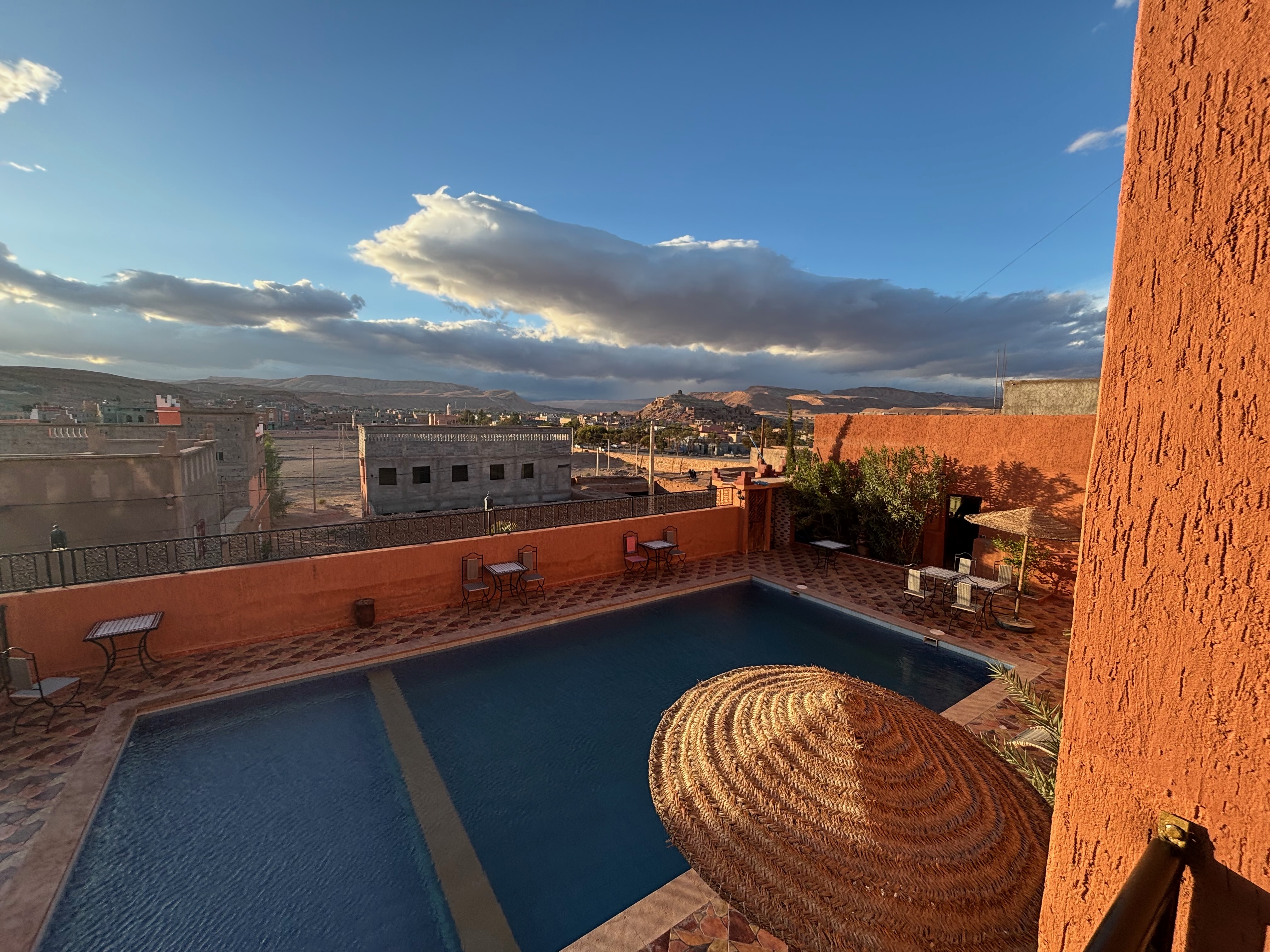
Finished with lunch we motored a short distance to Riad Ouinz, our lodging that night just across the Ounila River from the fortified village of Alt Benhaddou. We checked into our very nice room (ours was next to an outdoor pool (much too cold to be swimming in though) where we dropped our luggage and then back in the van for a short drive to a grouping of houses where we entered a Carpet Weaving Cooperative. Here we watched some weaving in process, were informed about the nature of this woman owned business, examined room after room full of inventory of all sizes and finally bought our own small rug to be mailed home.


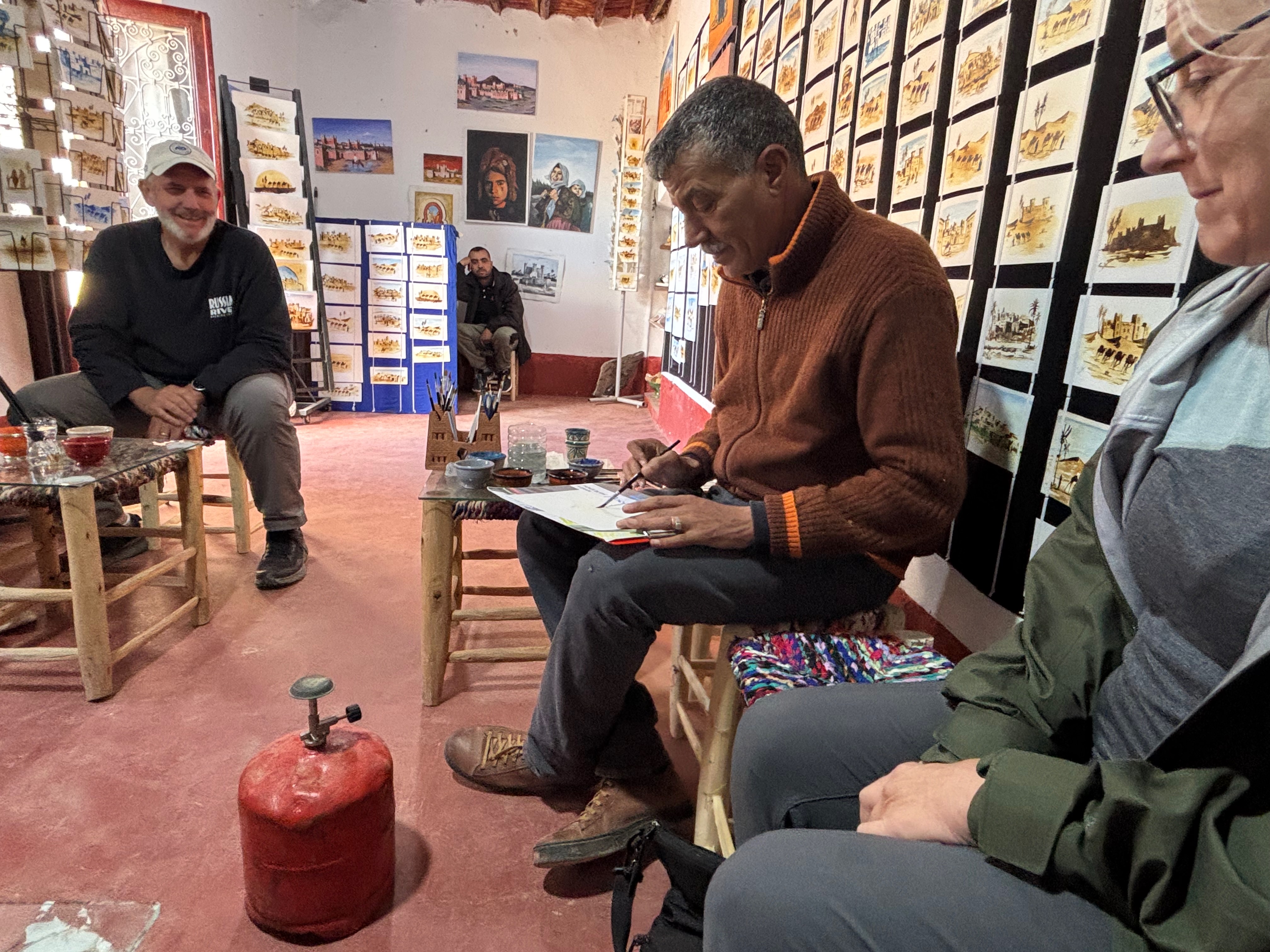
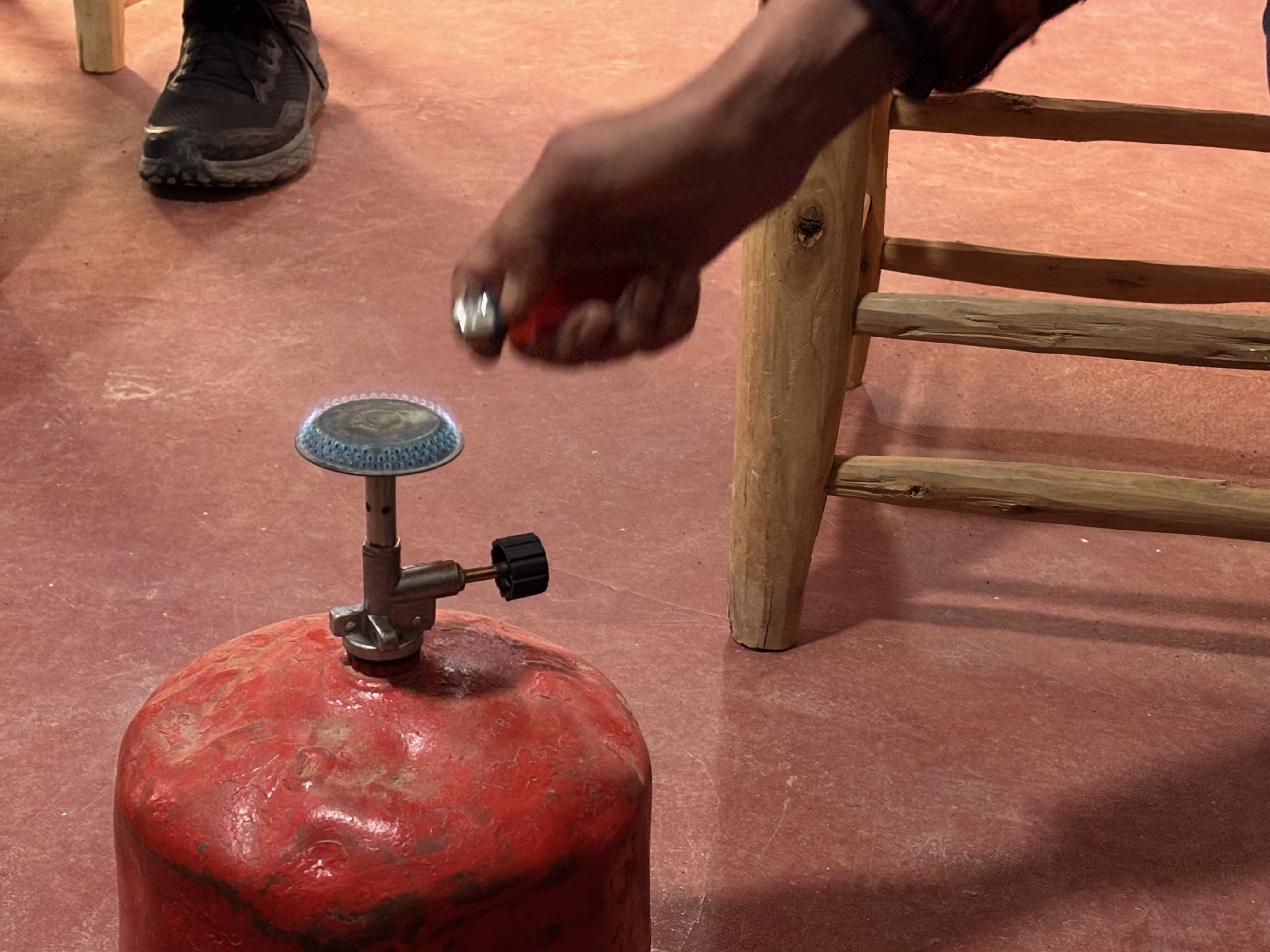
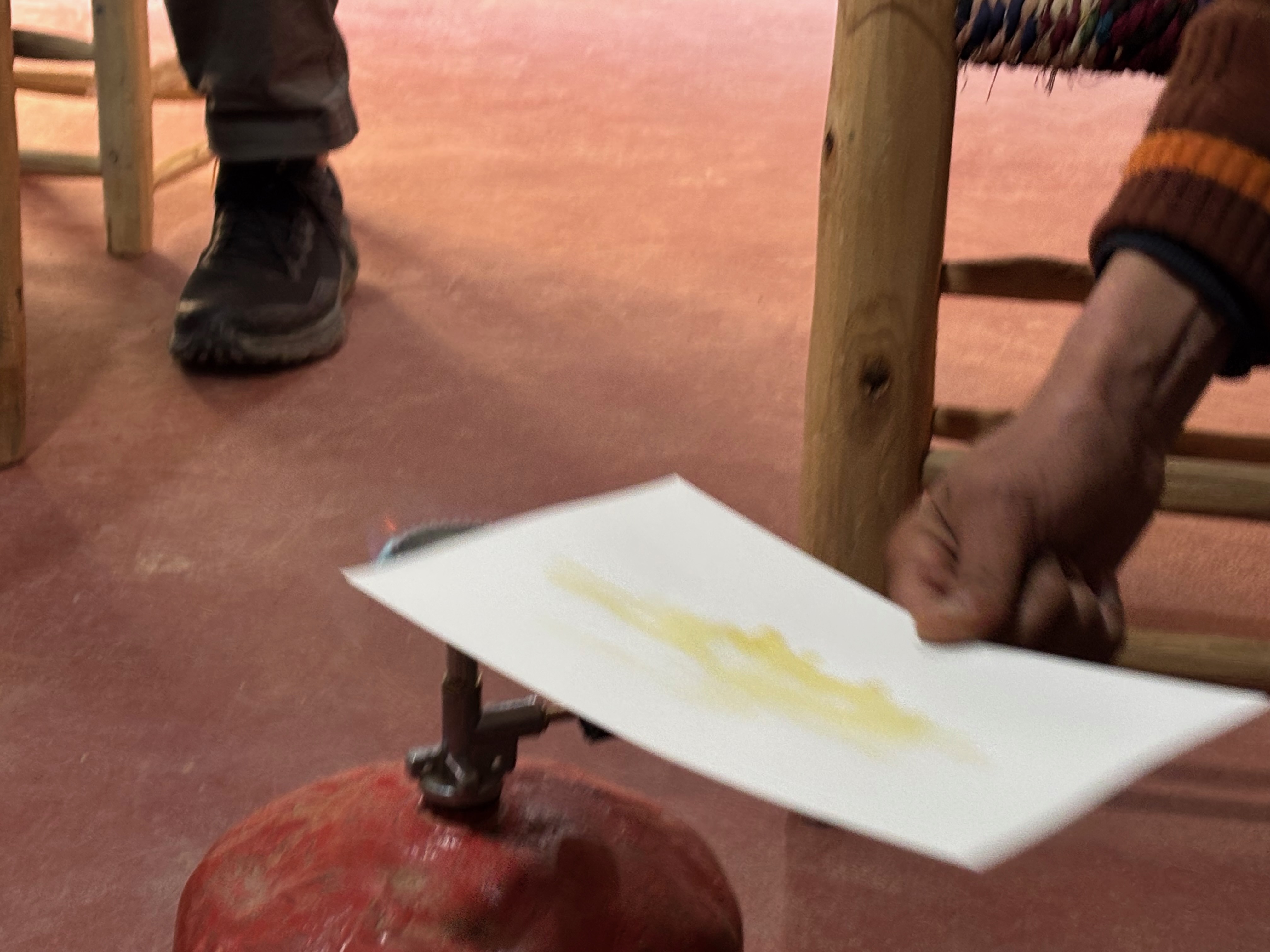
From there we stopped at an artist’s shop who demonstrated the practice of painting with a mixture that is not recognizable at first but becomes apparent when the paper is passed over an open flame, bringing the drawing to life. My effort was subpar, but it was amazing how good the rest of our group was, producing some lovely renderings.
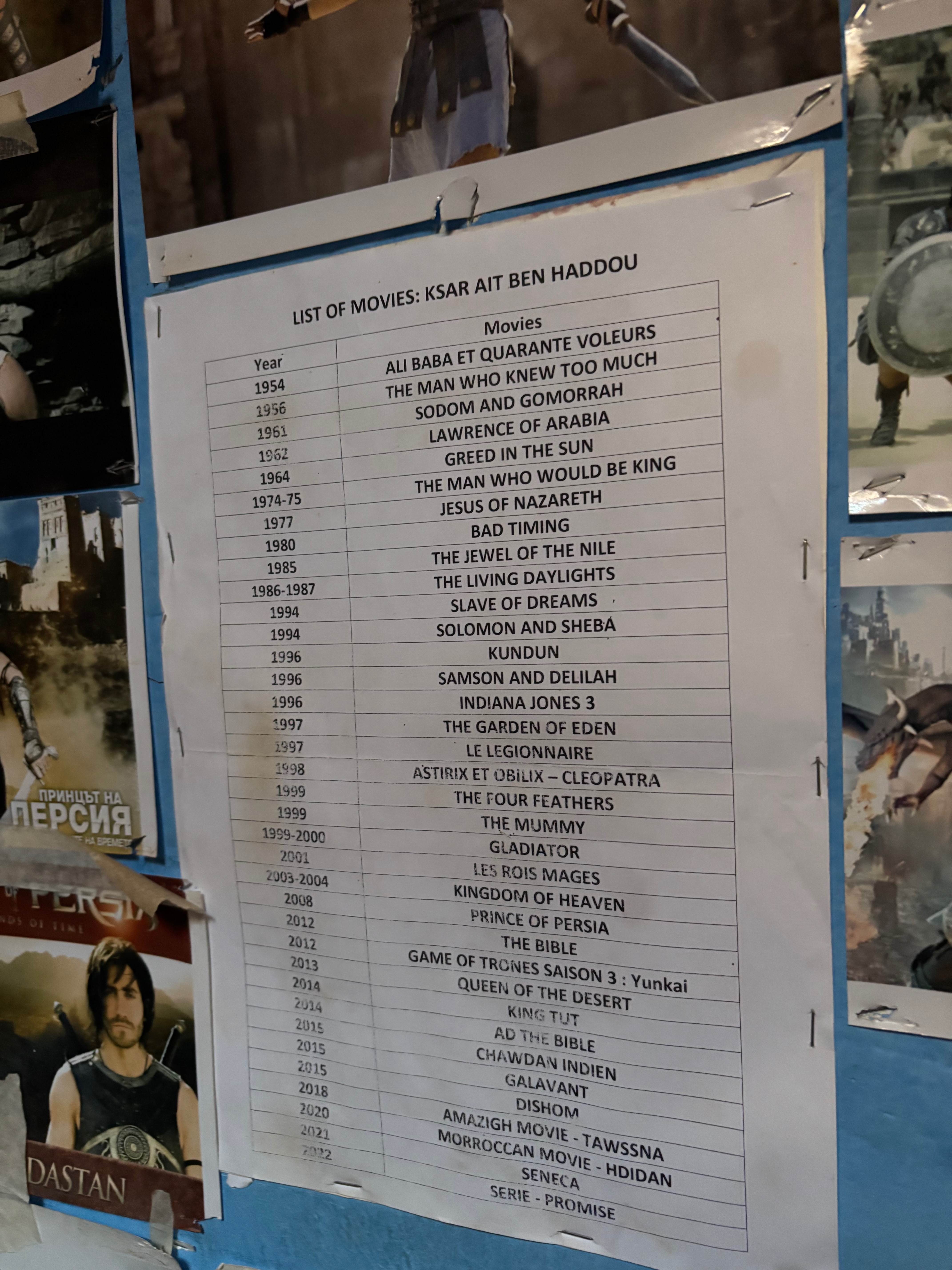
We finished at the shop and crossing the river entered Aït Benhaddou an historic ighrem or ksar (fortified village), which is a UNESCO World Heritage Site at the center of this noted film-making area, with Morocco’s biggest studios inviting many international companies to work here. Films such as Lawrence of Arabia (1962), The Man Who Would Be King (1975), The Living Daylights (1987), The Last Temptation of Christ (198 8), The Mummy (1999), Gladiator (2000), Kingdom of Heaven (2005), Kundun (1997), Legionnaire (1998), The Hills Have Eyes (2006), Salmon Fishing in the Yemen (2011) and The Wages of Fear (2024) were shot here, as was part of the TV series Game of Thrones.

The city has been fortified since the 11th century during the Almoravid period, but none of the current buildings are believed to date from before the 17th century. They were likely built though with the same construction methods and designs as had been used for centuries before. The site’s strategic importance was due to its location in the Ounila Valley along one of the main trans-Saharan trade routes.
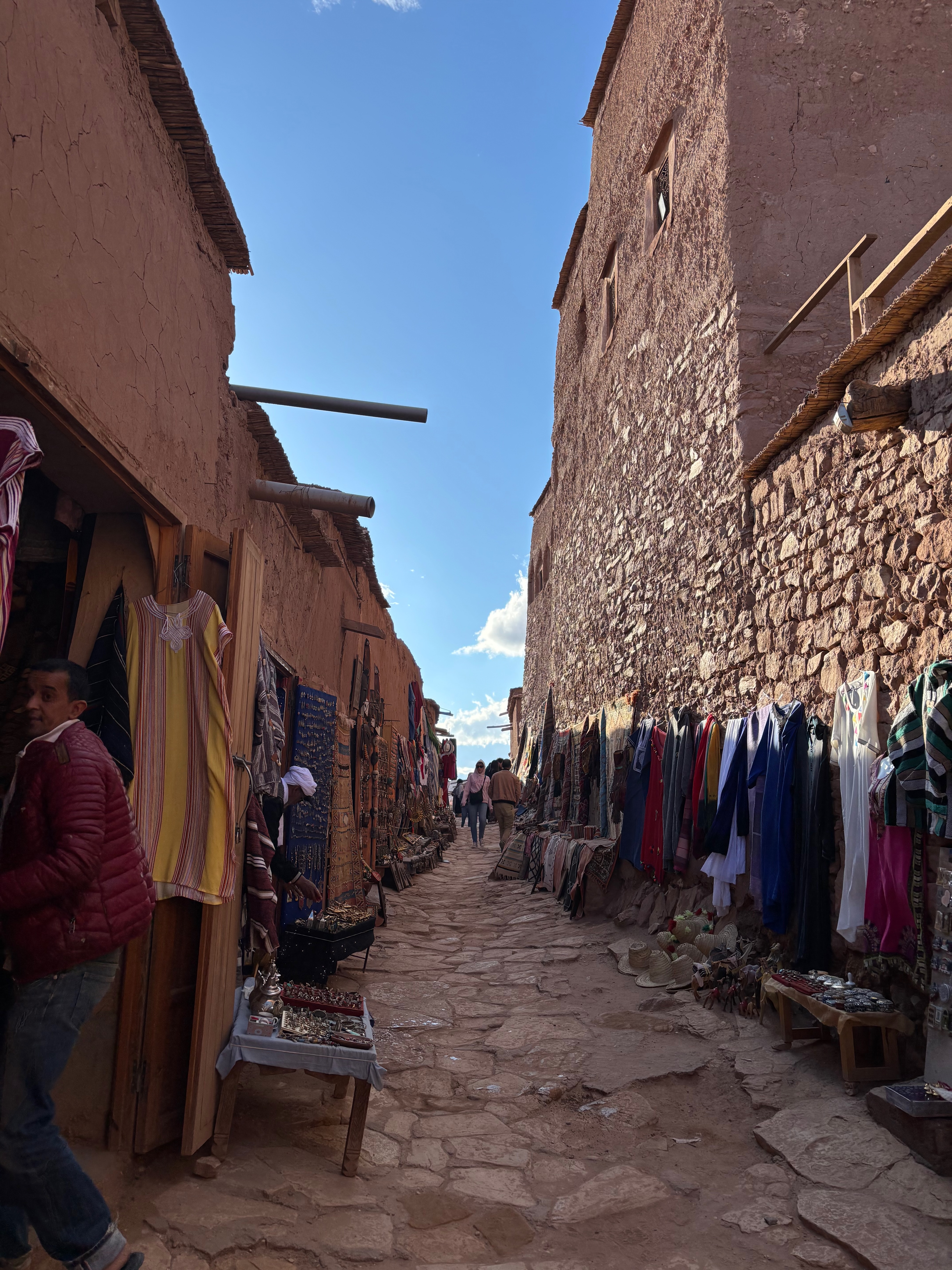
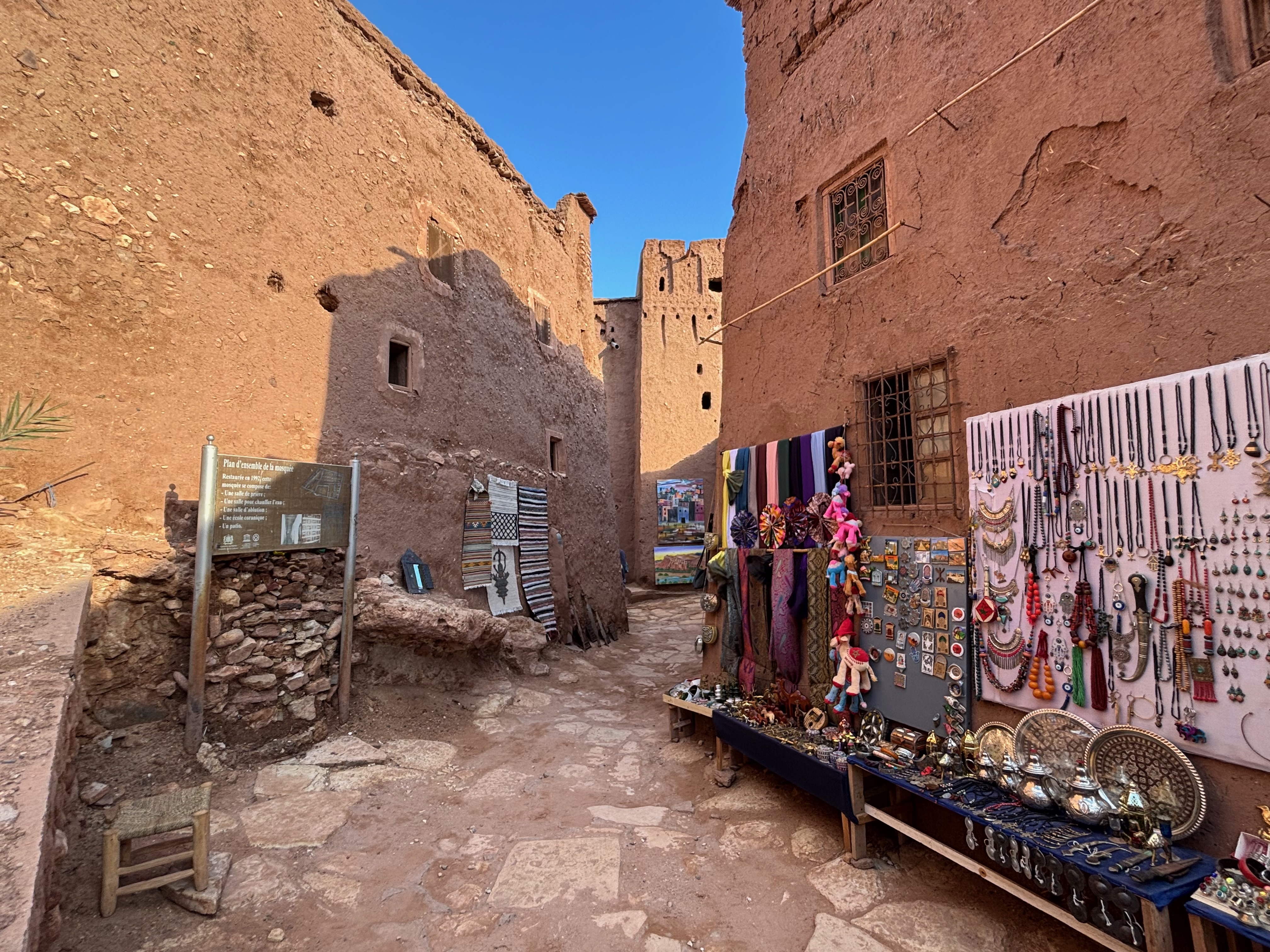
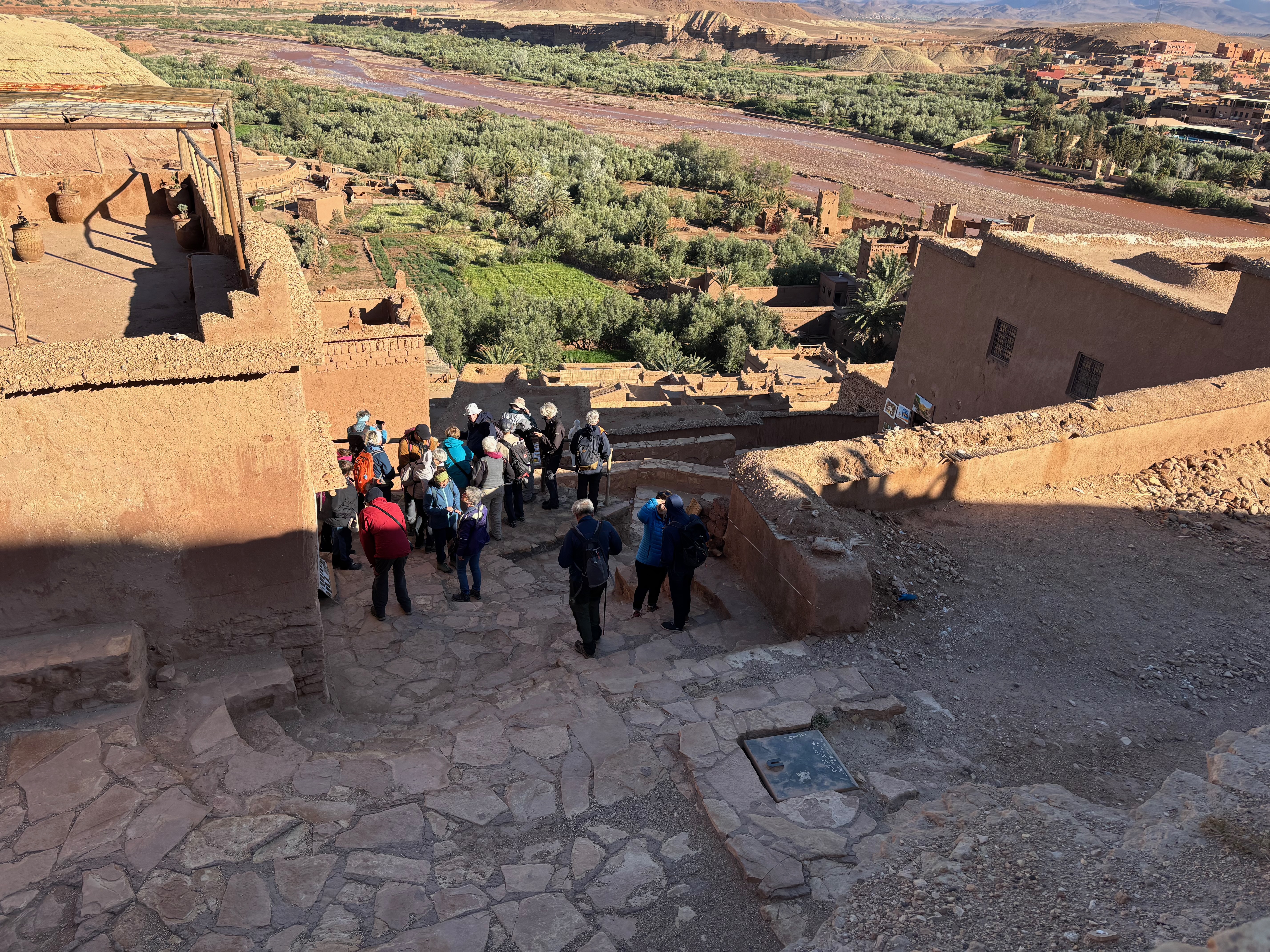
Today, the ksar itself is only sparsely inhabited by several families, the depopulation over time a result of the valley’s loss of strategic importance in the 20th century. Most local inhabitants now live in modern dwellings in the village on the other side of the river and make a living off agriculture and especially off the tourist trade. In 2011 a new pedestrian bridge was completed linking the old ksar with the modern village, with the aim of making the ksar more accessible and to potentially encourage inhabitants to move back into its historic houses.
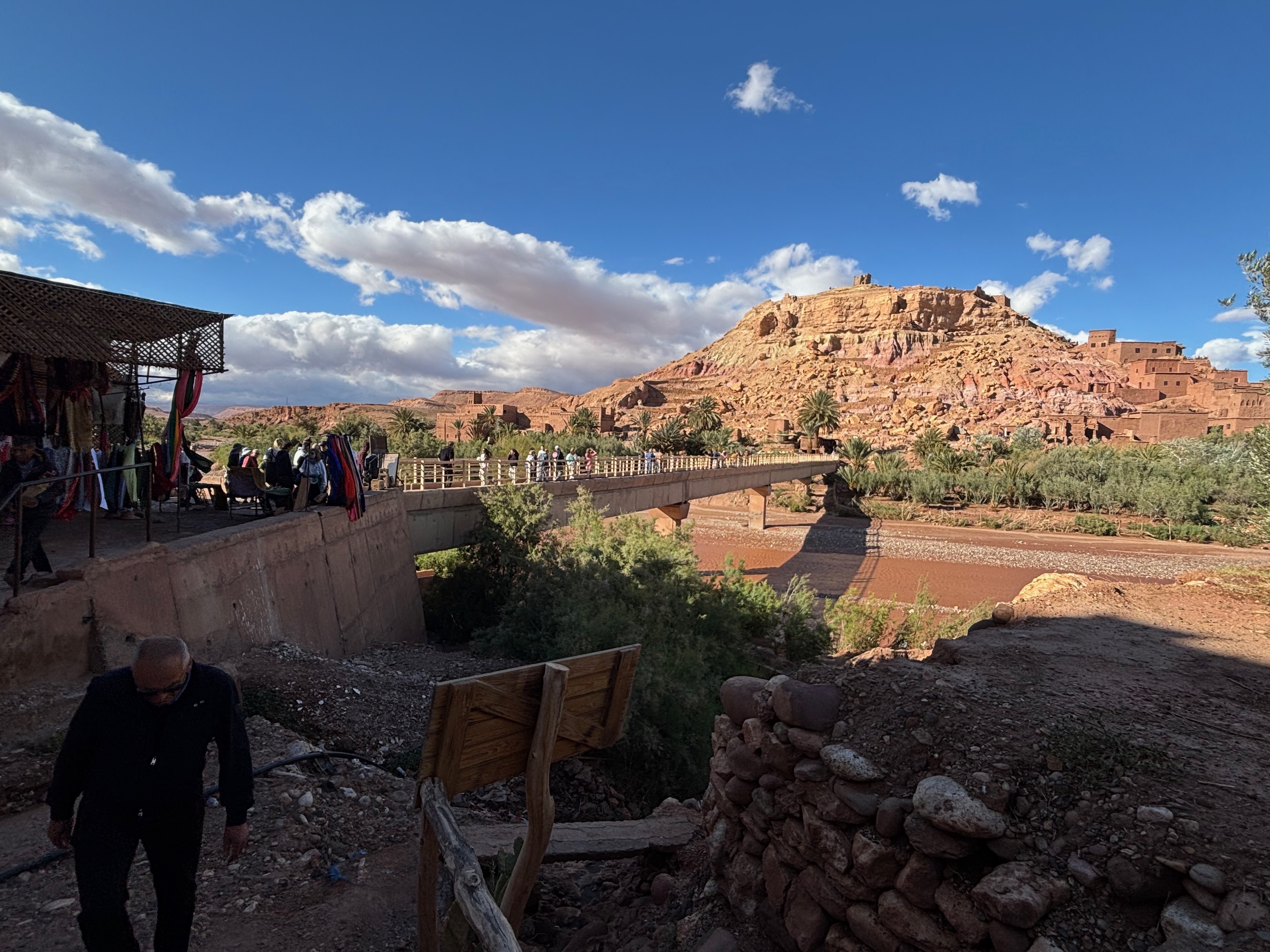
We climbed steadily through the narrow lanes, crowded with shops until we reached a viewing spot that led to steep stairs to a summit at the top of the town. I chose to stay there while others in the group made the climb, returning to exclaim how incredibly windy it was up there. On the way back down we stopped at the Tawesna Teahouse, a community-run establishment that provides local women an income to support themselves and their children. Using ingredients sourced from local cooperatives, the women prepare mint tea and pastries, each of which we enjoyed during our stop.

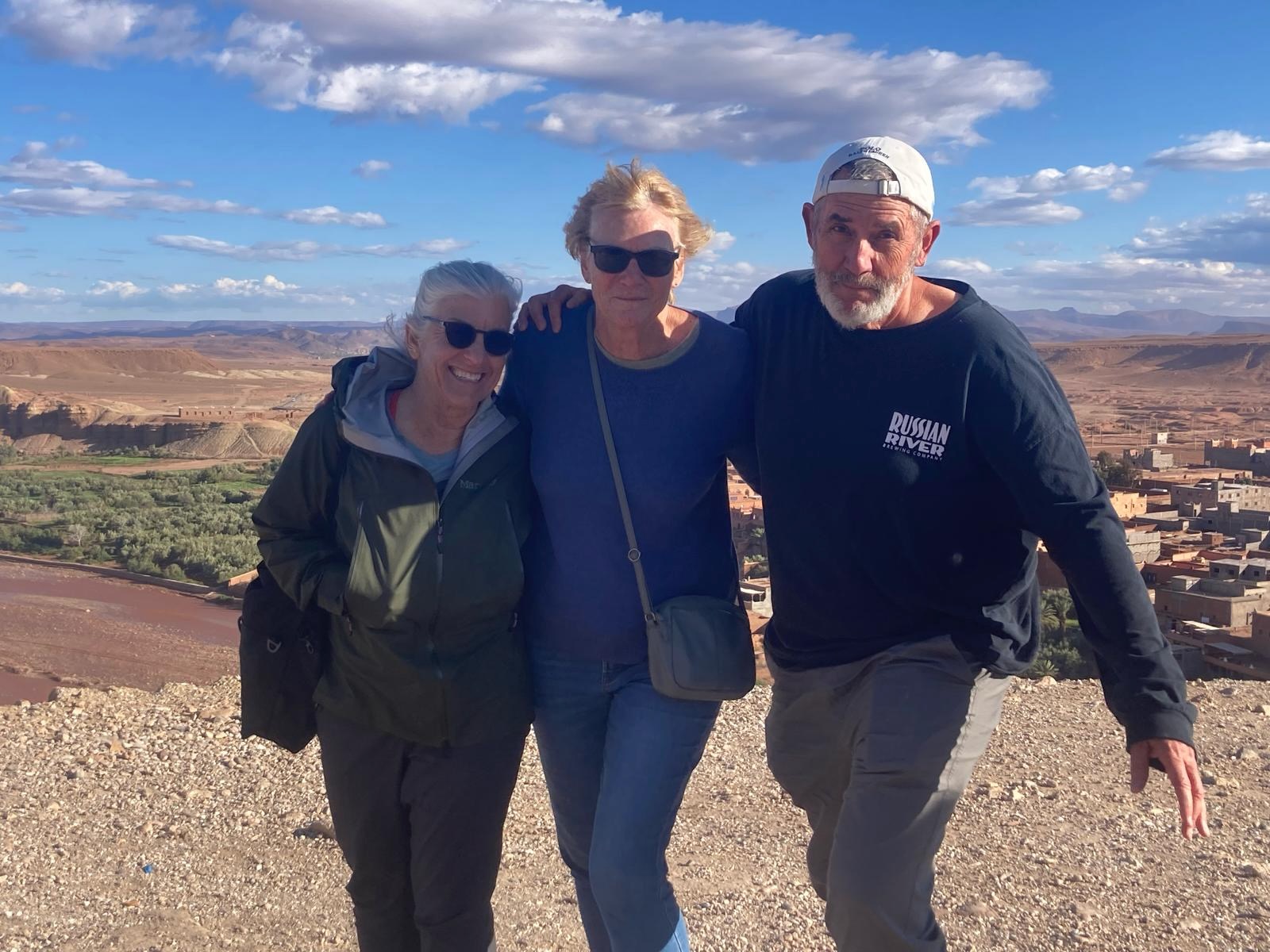

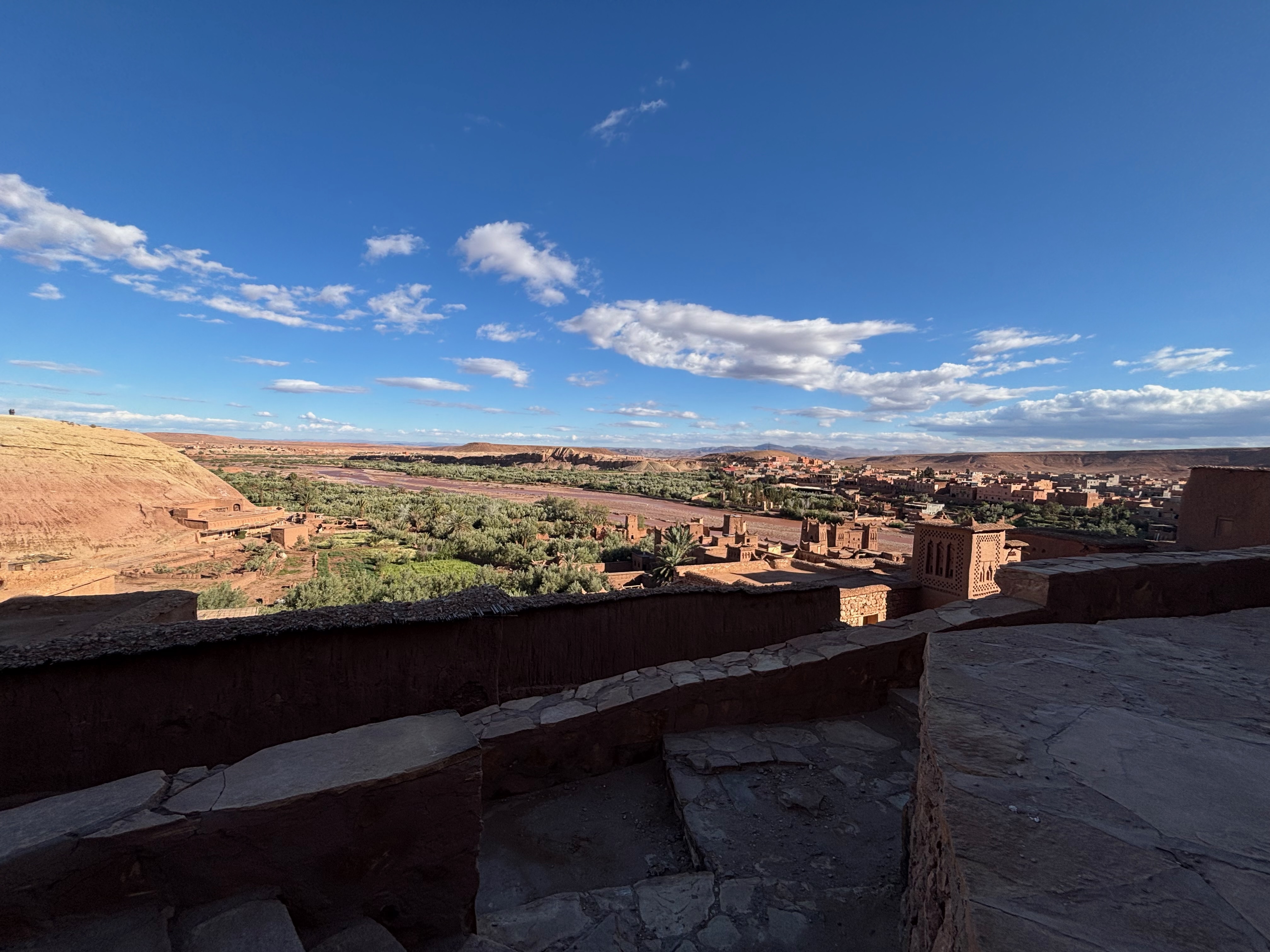
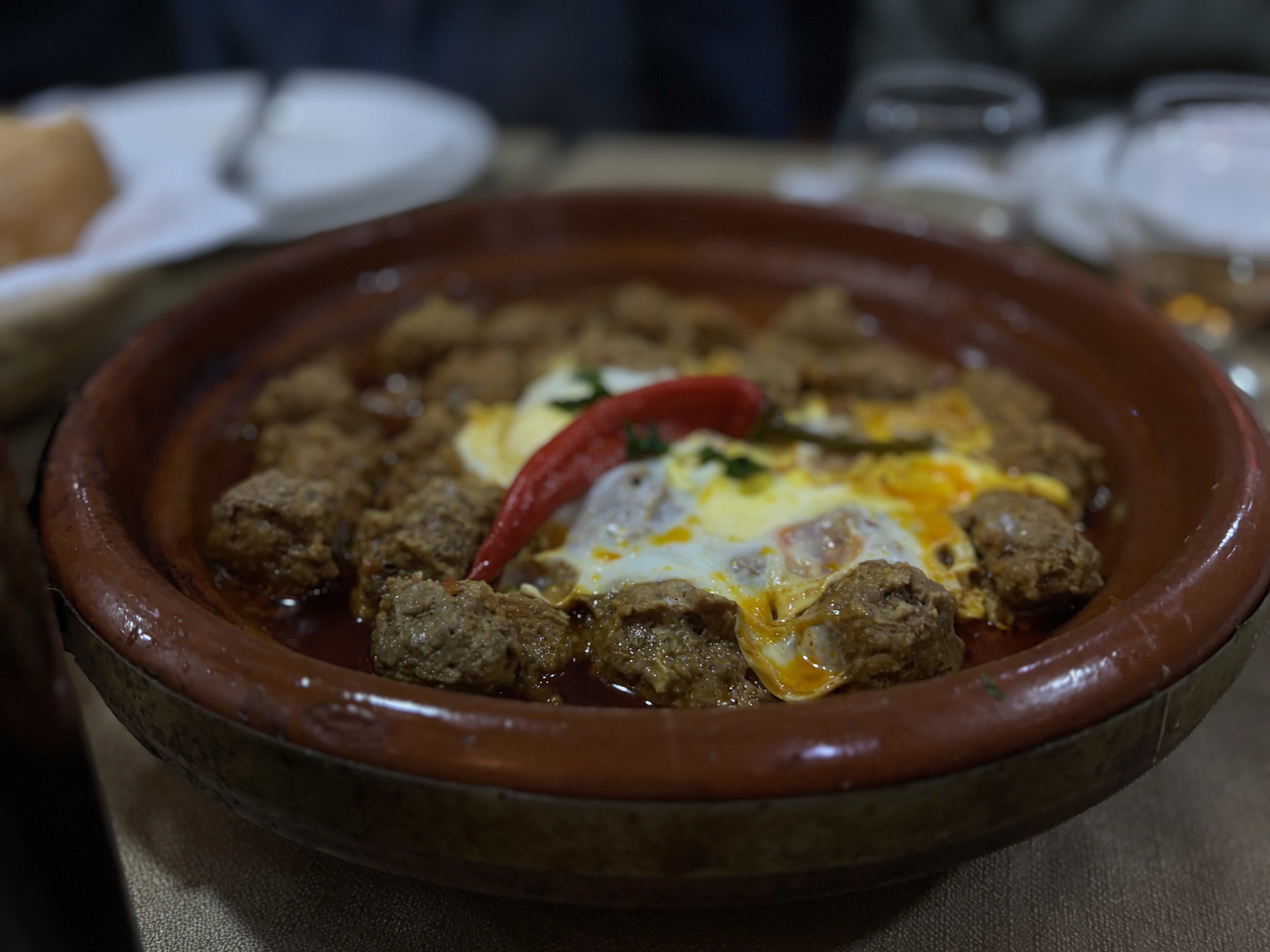
Back at the Riad we gathered on a patio as the sun set and then hit the restaurant for a dinner of chicken, meatballs, sauteed vegetables and other good things to consume before retiring for the evening and preparing for our last full day of the trip, the drive into and a walking tour of Marrakech.

Links
Todra Gorge: https://epic.travel/todra-gorge/
Alt Benhaddou: https://whc.unesco.org/en/list/444/
Riad Ouinz: https://www.riadouinz.com/
Tawesna Teahouse: https://www.facebook.com/tawesna/
Discover more from 3jmann
Subscribe to get the latest posts sent to your email.


 3jmann