April 19 – 20
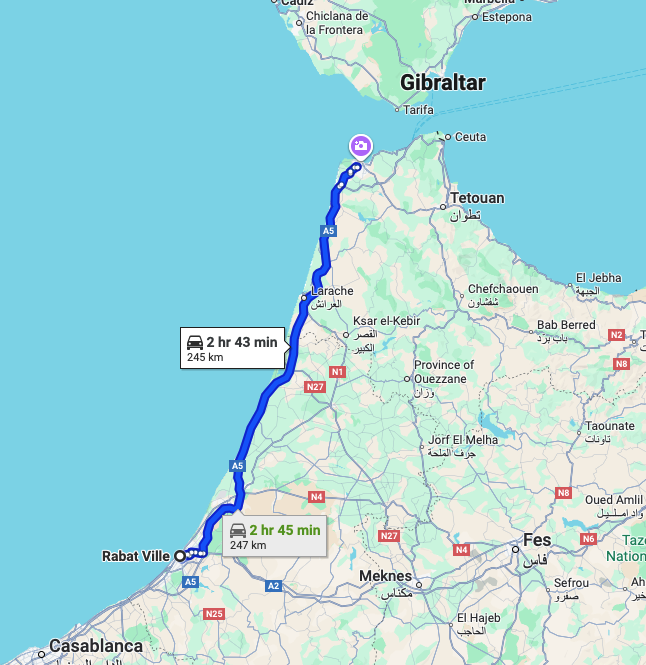
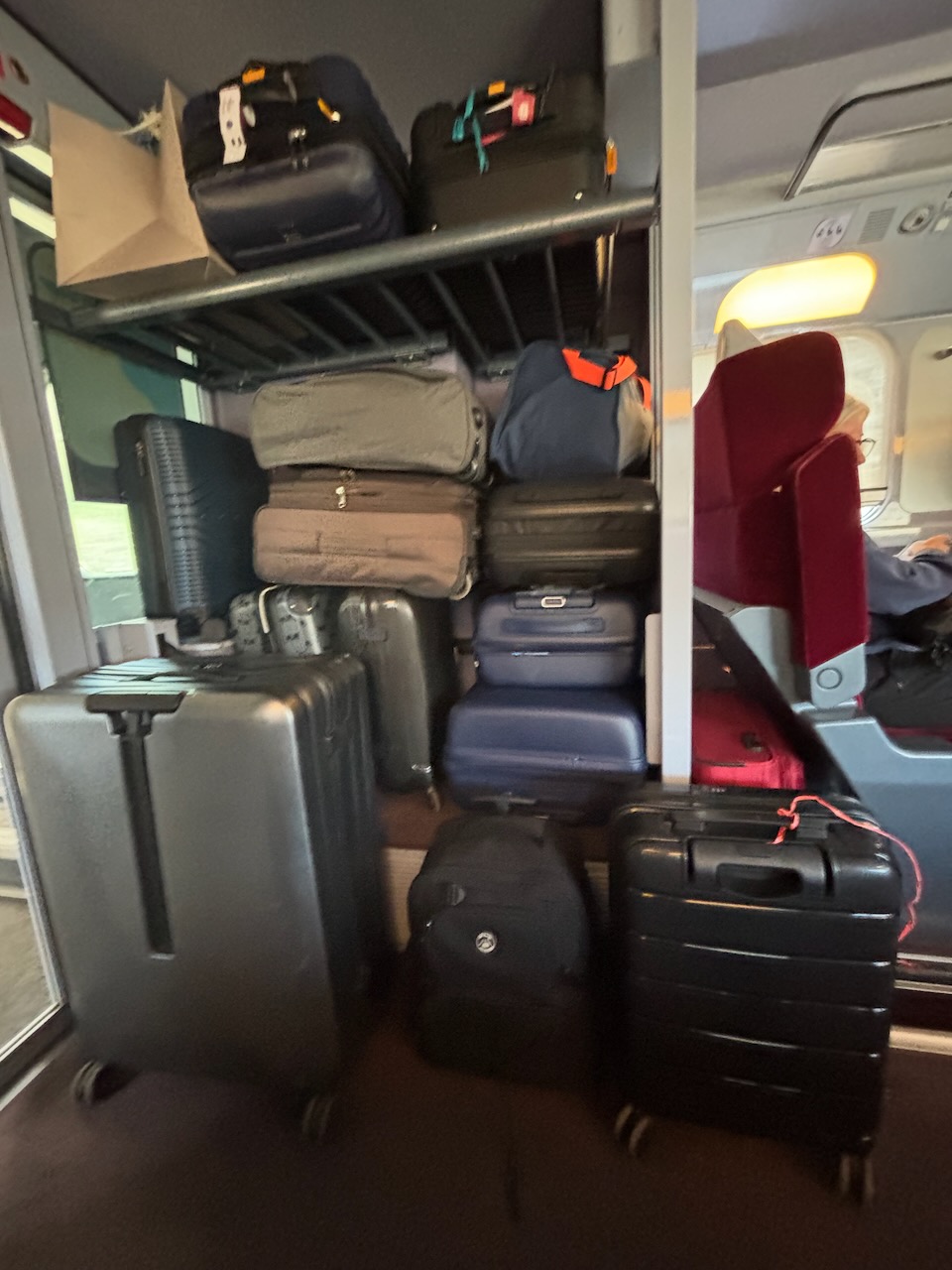
Our train trip to Tangier would be a different experience from the one that took us to Rabat. We were booked on the high-speed train for a journey of about three hours. It would run 550 Dirhams ($61) for the two of us in a coach that rivaled its European counterparts for comfort and ride quality. Our walk from Riad Asswar, a now familiar route, meant no angst about missing the train like we’d experienced in Marrakech. Our assigned seats included a table and provided us with a comfortable station for our journey. The train was crowded, as evidenced by the luggage piled up in the storage area of our coach.
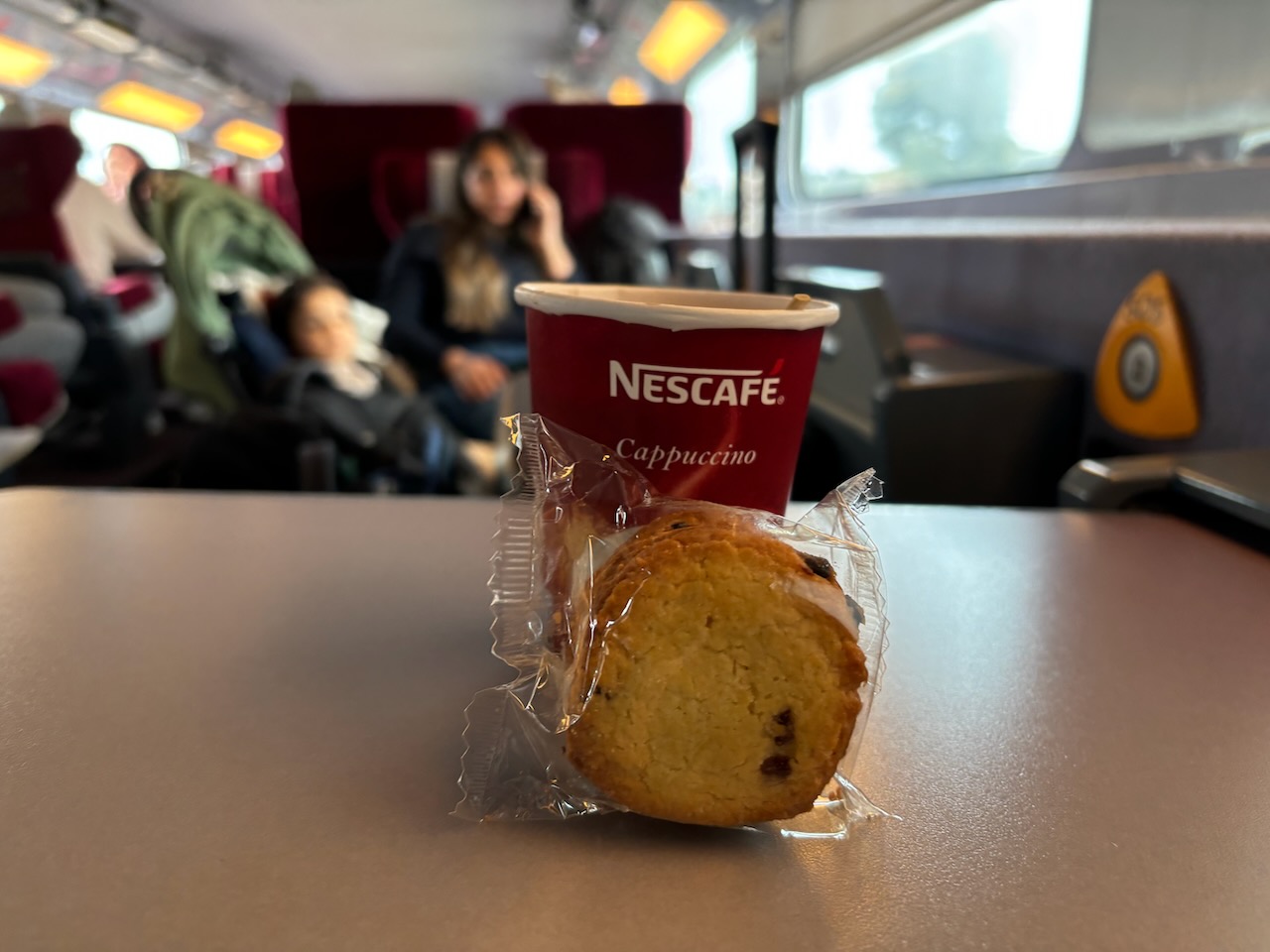
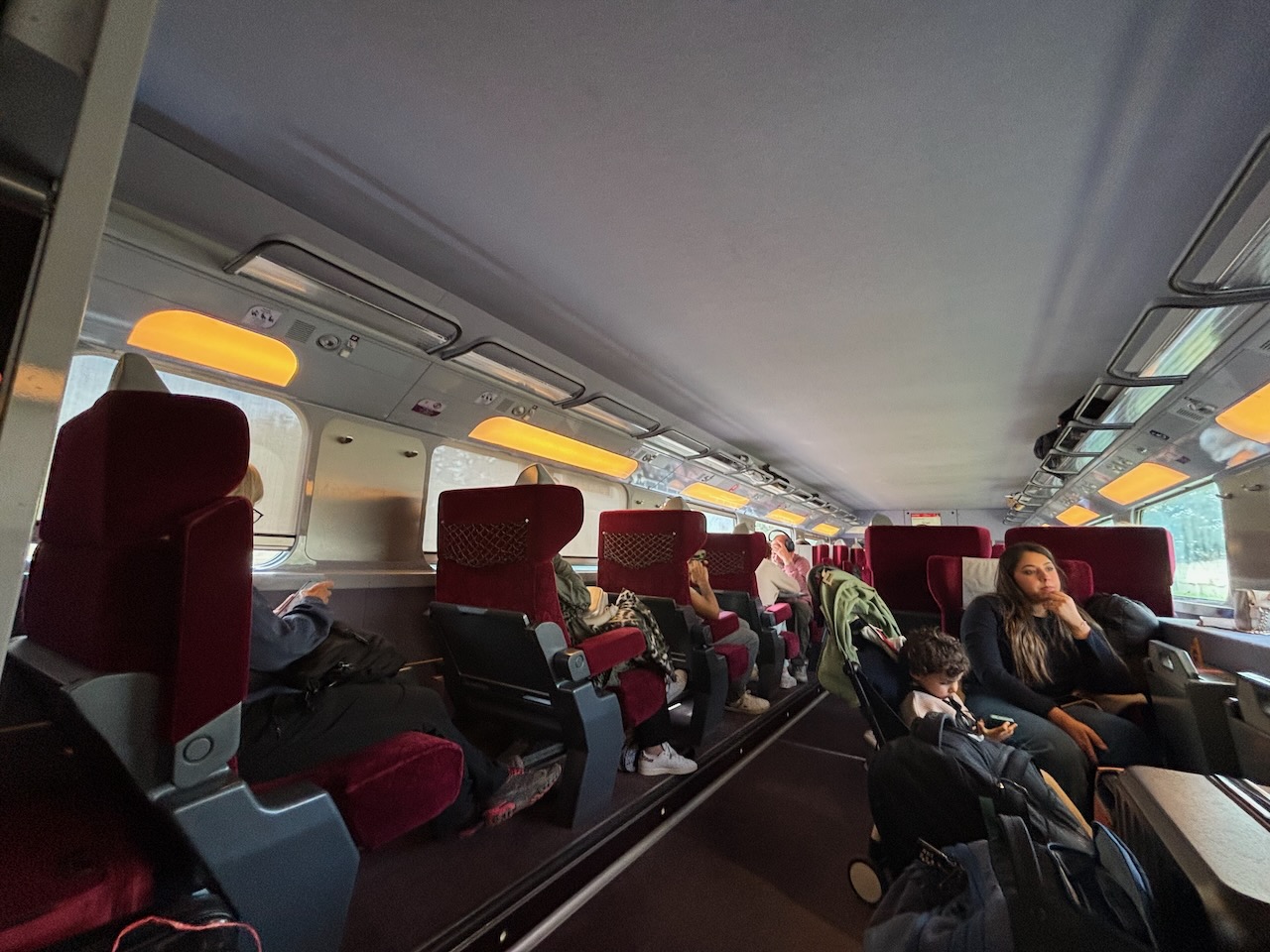
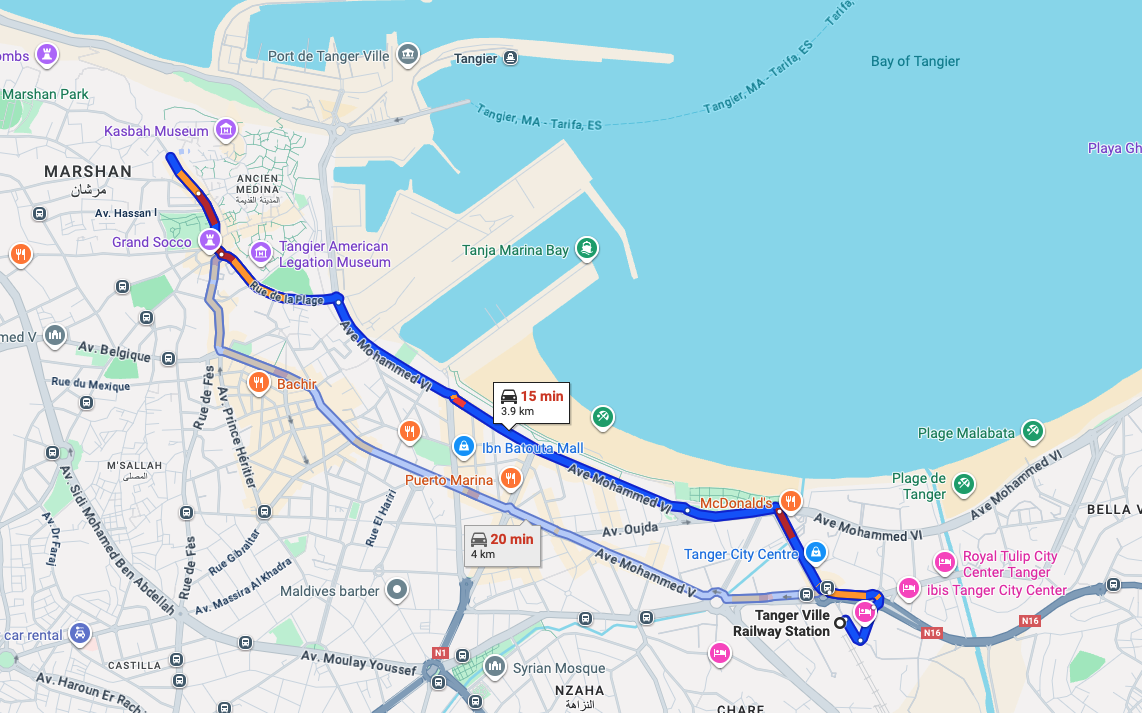
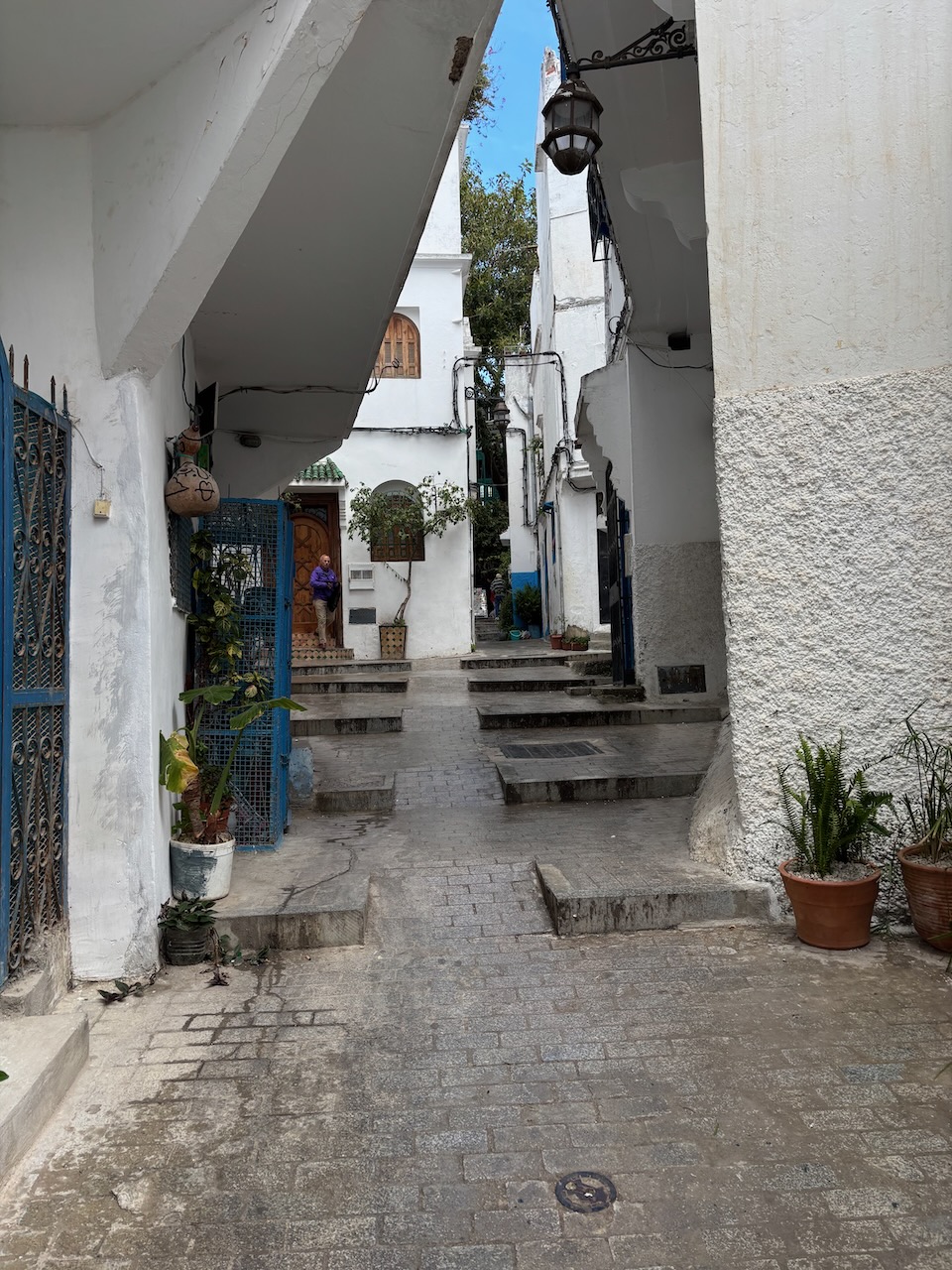
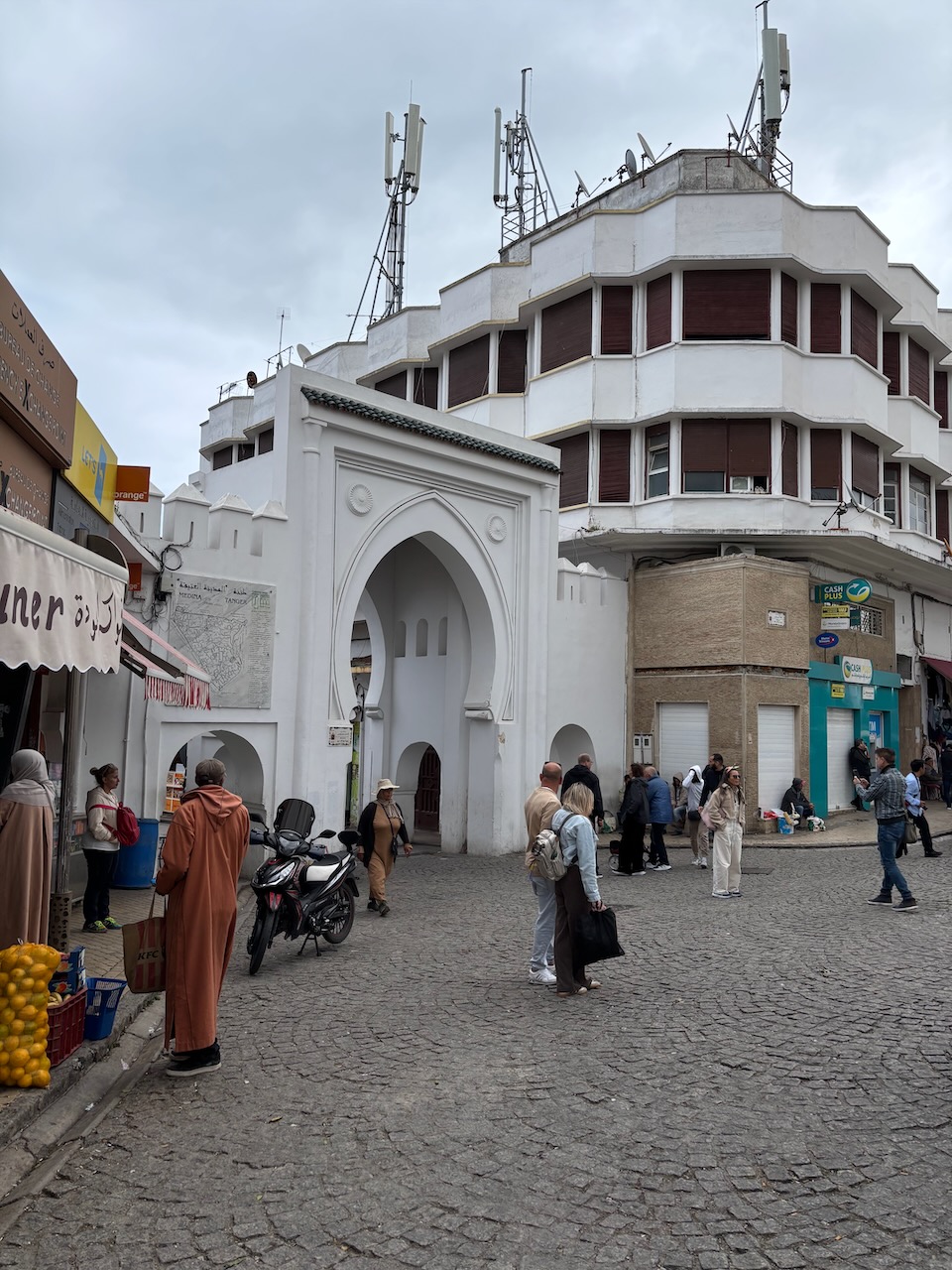
Midway through the trip I walked up to the commissary car to get a couple of coffee nous nous and some cookies, which held us over until we reached Tangier. Upon arrival we took a taxi for 100 Dirham ($11.32) up a steep hill to the entrance to the Upper Medina, where we got dropped and proceeded to try to find our way to our lodging. Fortunately, a helpful stranger guided us the final distance and we arrived safely at Dar Nour.
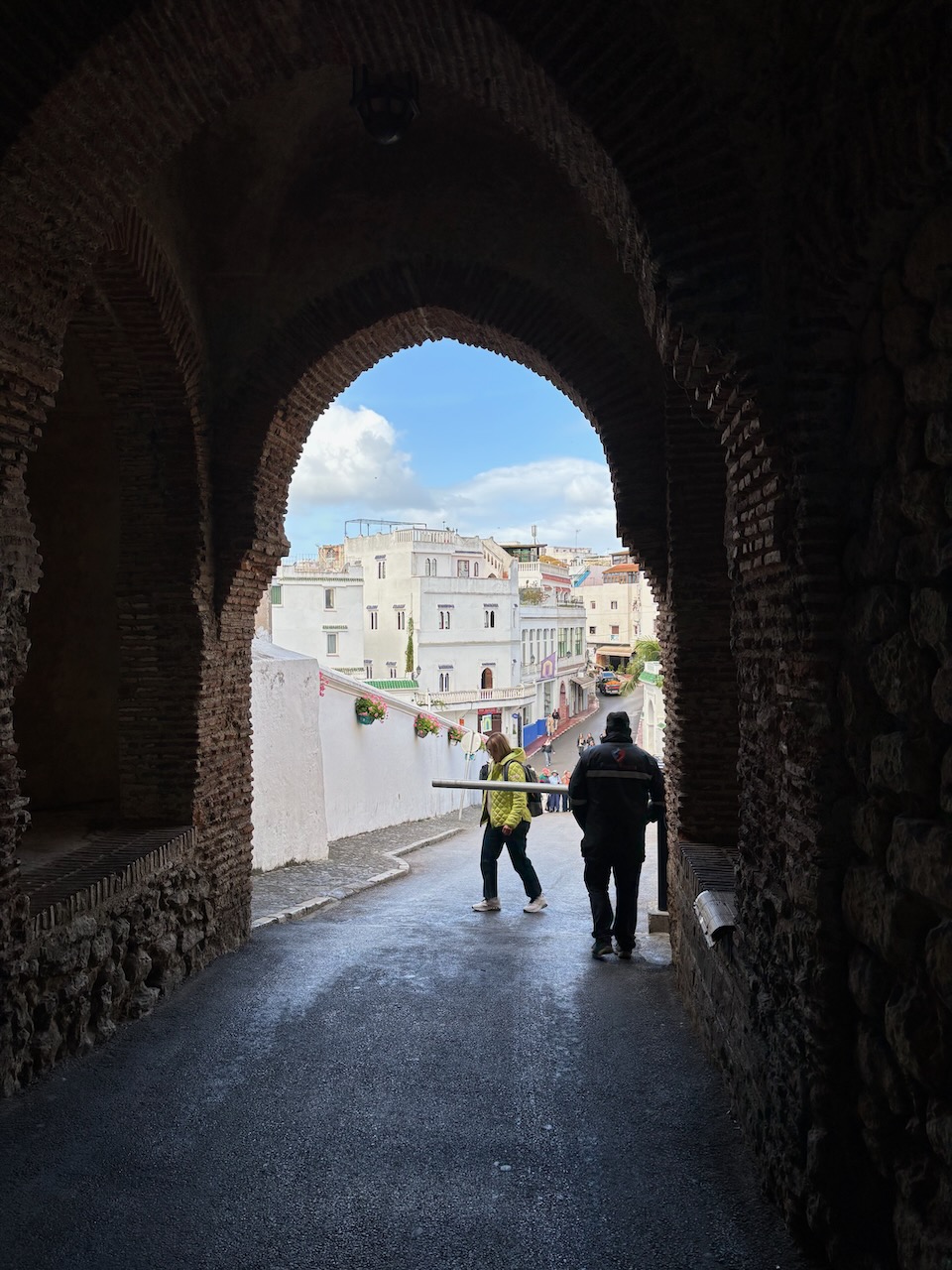
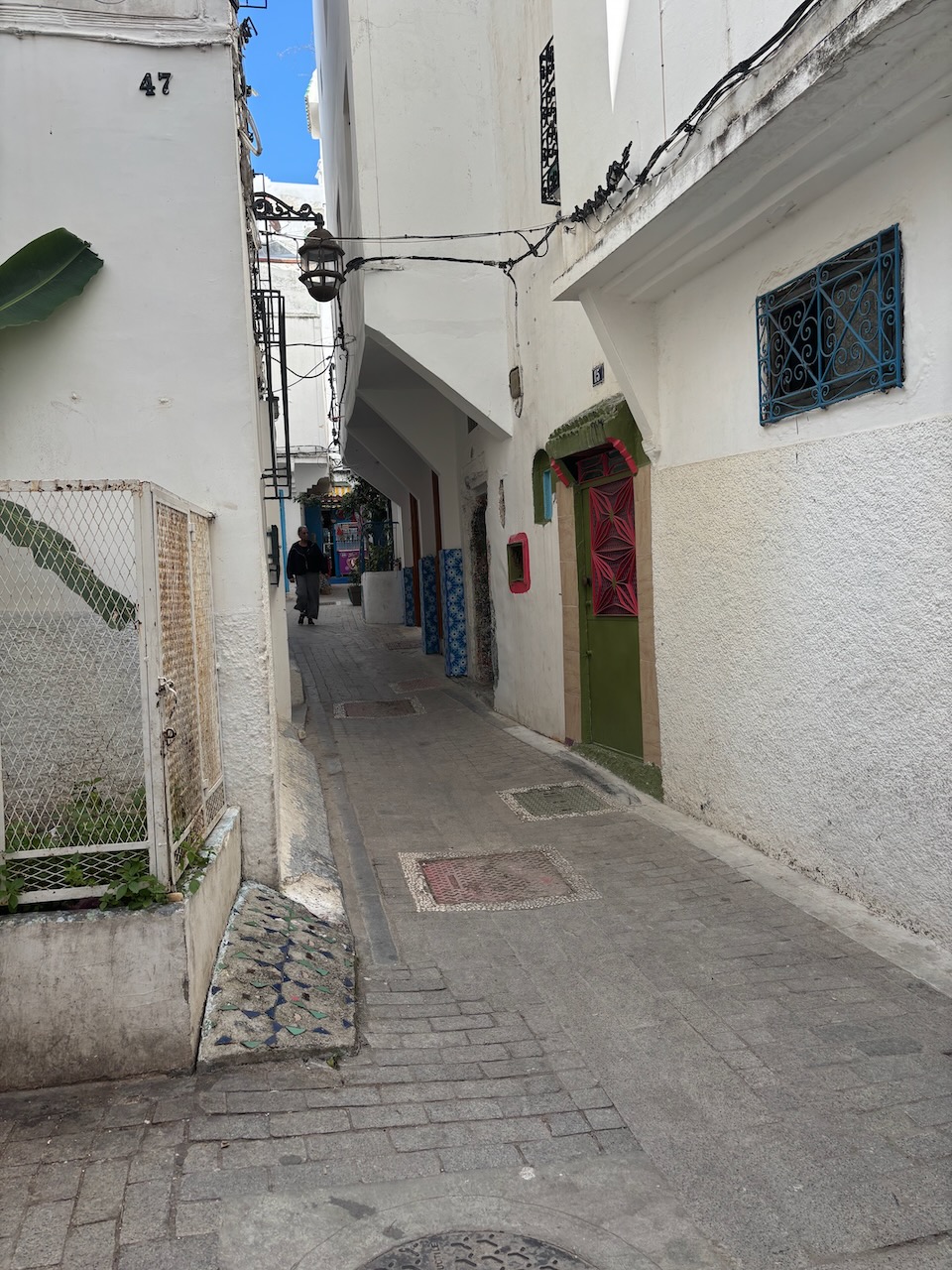
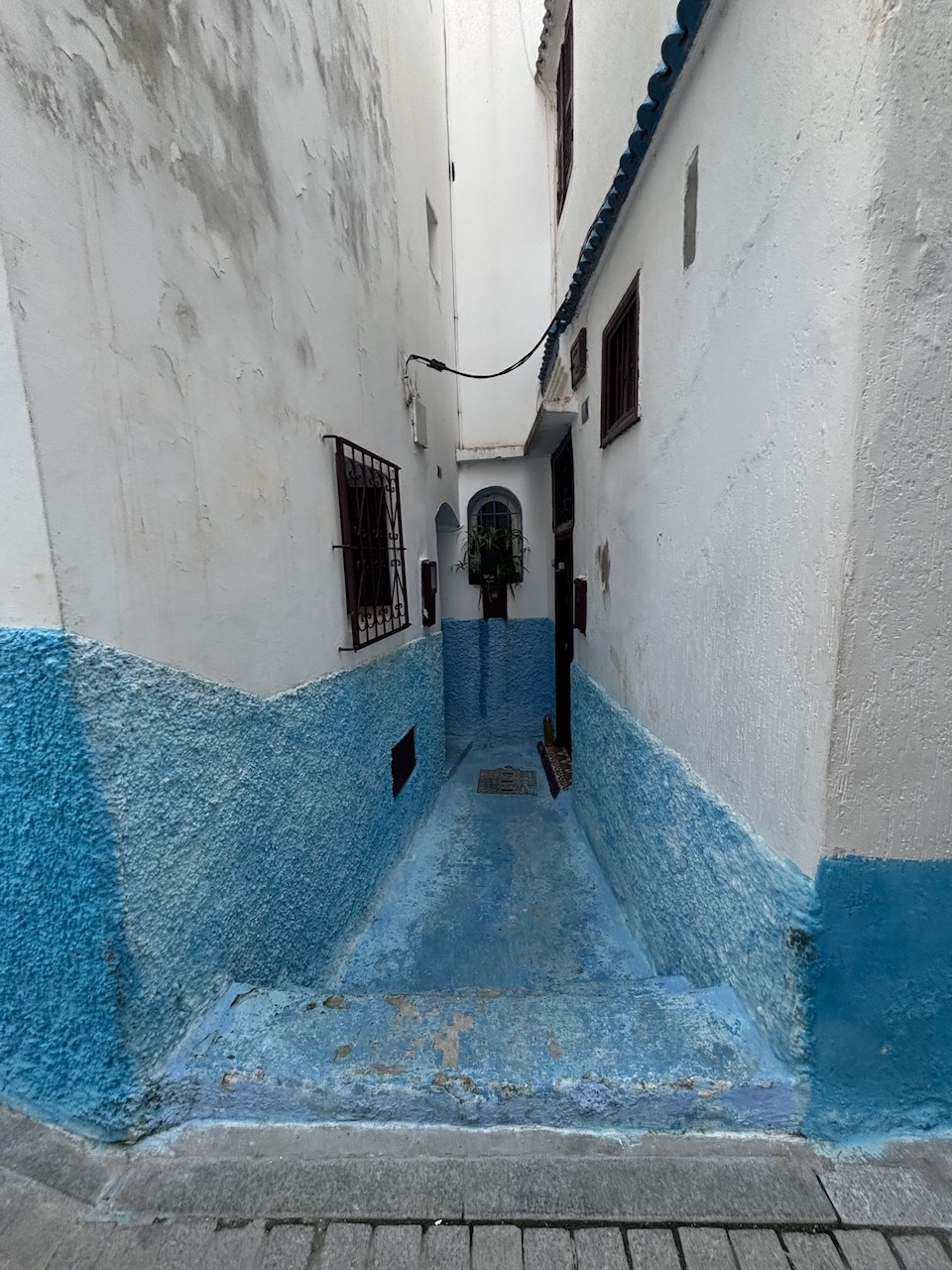
We had booked two nights here where Dar in Arabic means “house”, while riad means “garden”. Together, these words describe the traditional homes that have been around in Morocco for close to 1,000 years, and that today, are in high demand among travelers. In this case, our Dar more closely resembled a muti-story house, unlike the Riads we’d experienced, while multi storied, all featured a central courtyard. Here the attraction was a spacious roof top with many terraces perfect for sitting, gazing, and of course, drinking.


We found it through Rick Steves (he includes Tangier in his guidebook for Spain) and he describes it as such:
“Run with funky French style by Philippe, Jean-Olivier, and Catherine, has an “Escher-esque” floor plan that sprawls through five interconnected houses (it’s “labyrinthine like the medina,” says Philippe). The 10 homey rooms feel very traditional, with lots of books and lounging areas spread throughout, and a fantastic view terrace and cocktail bar on the roof”.
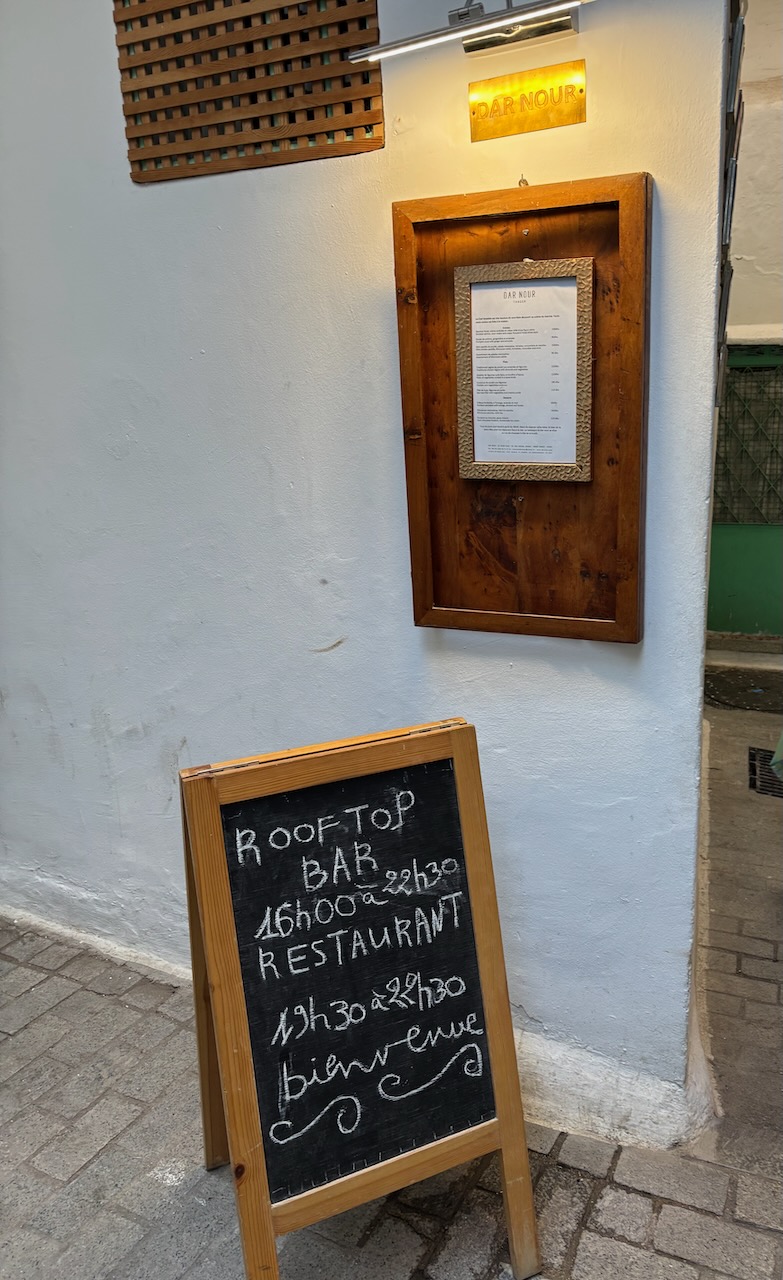
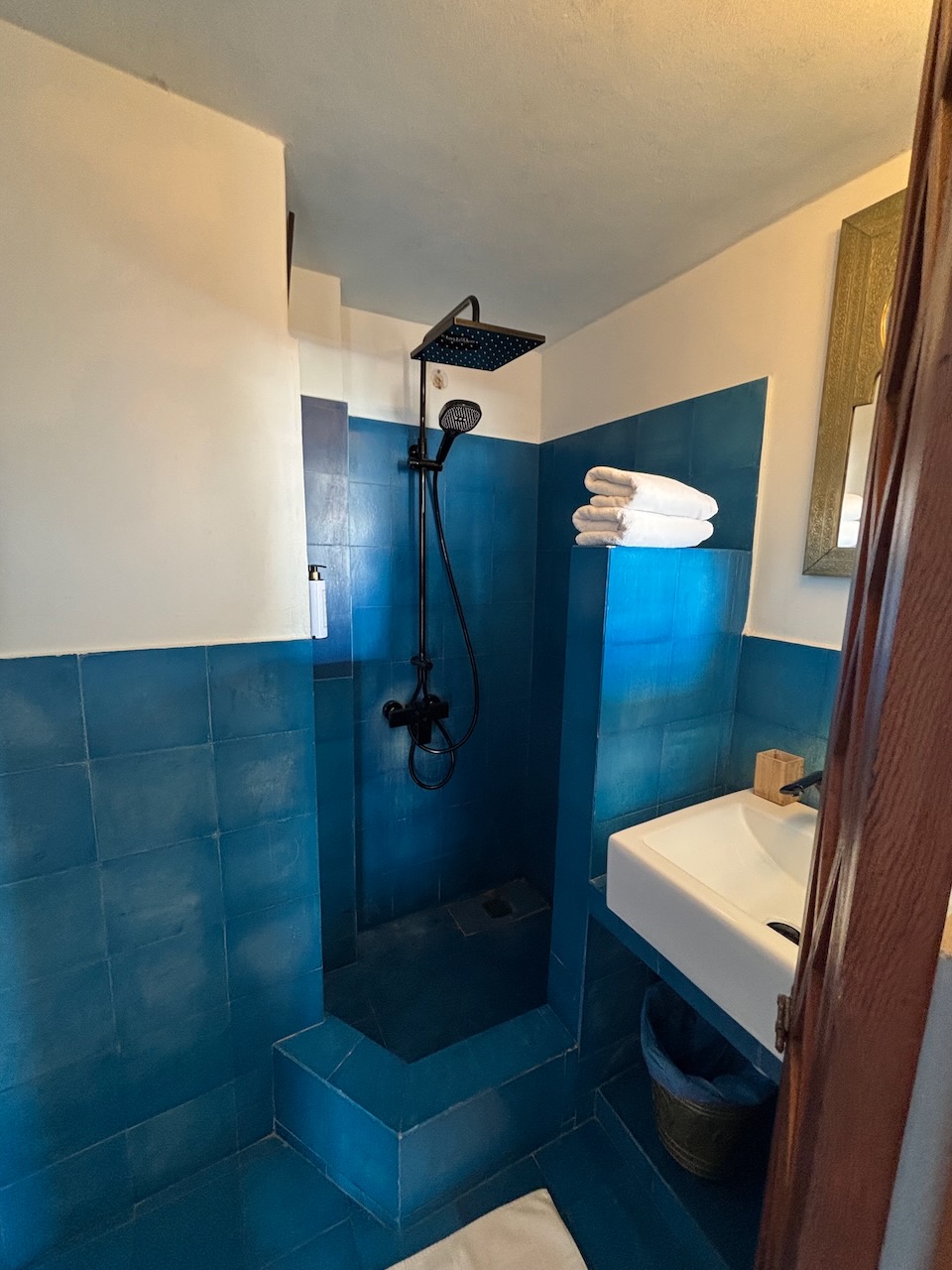
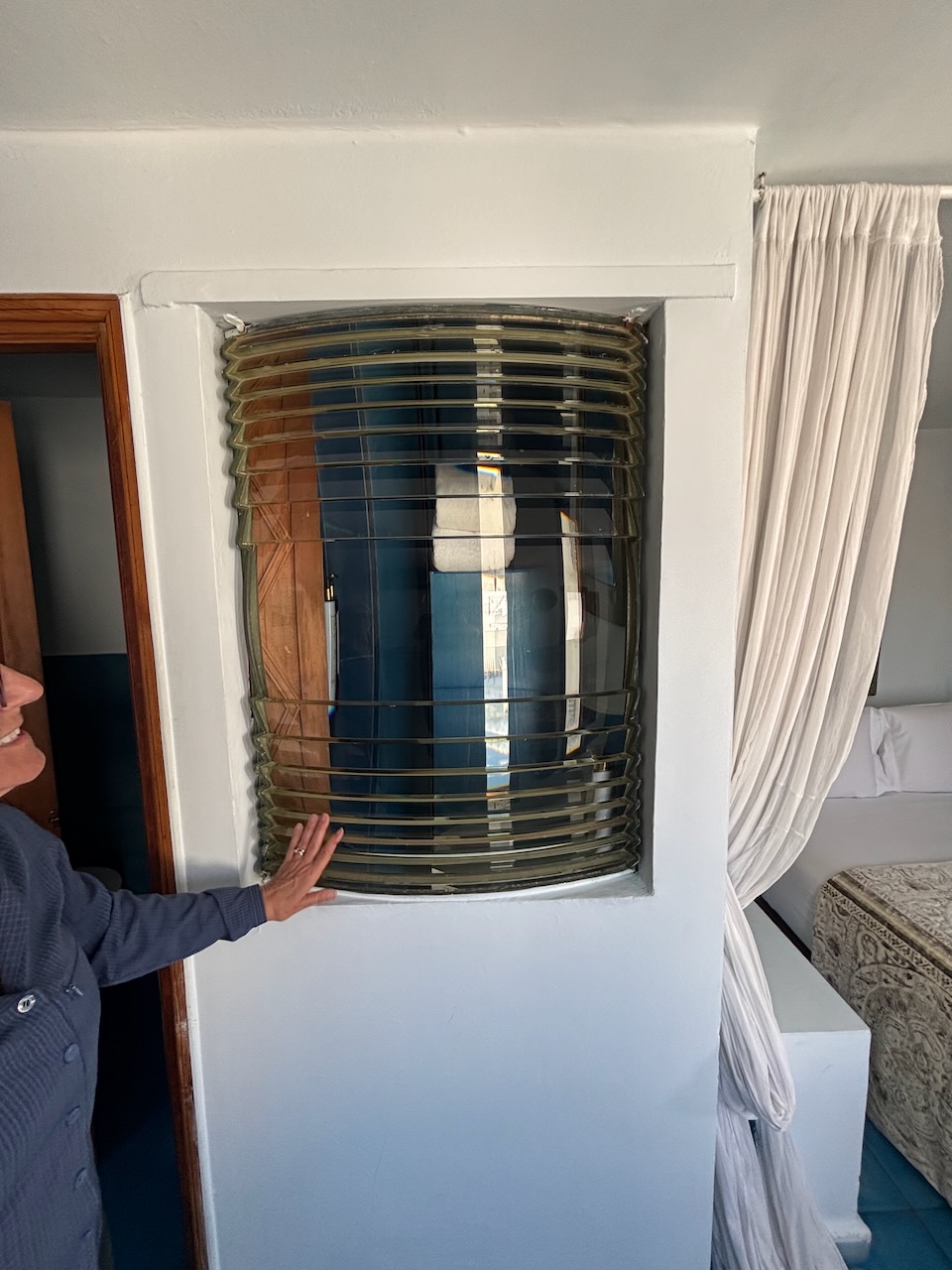
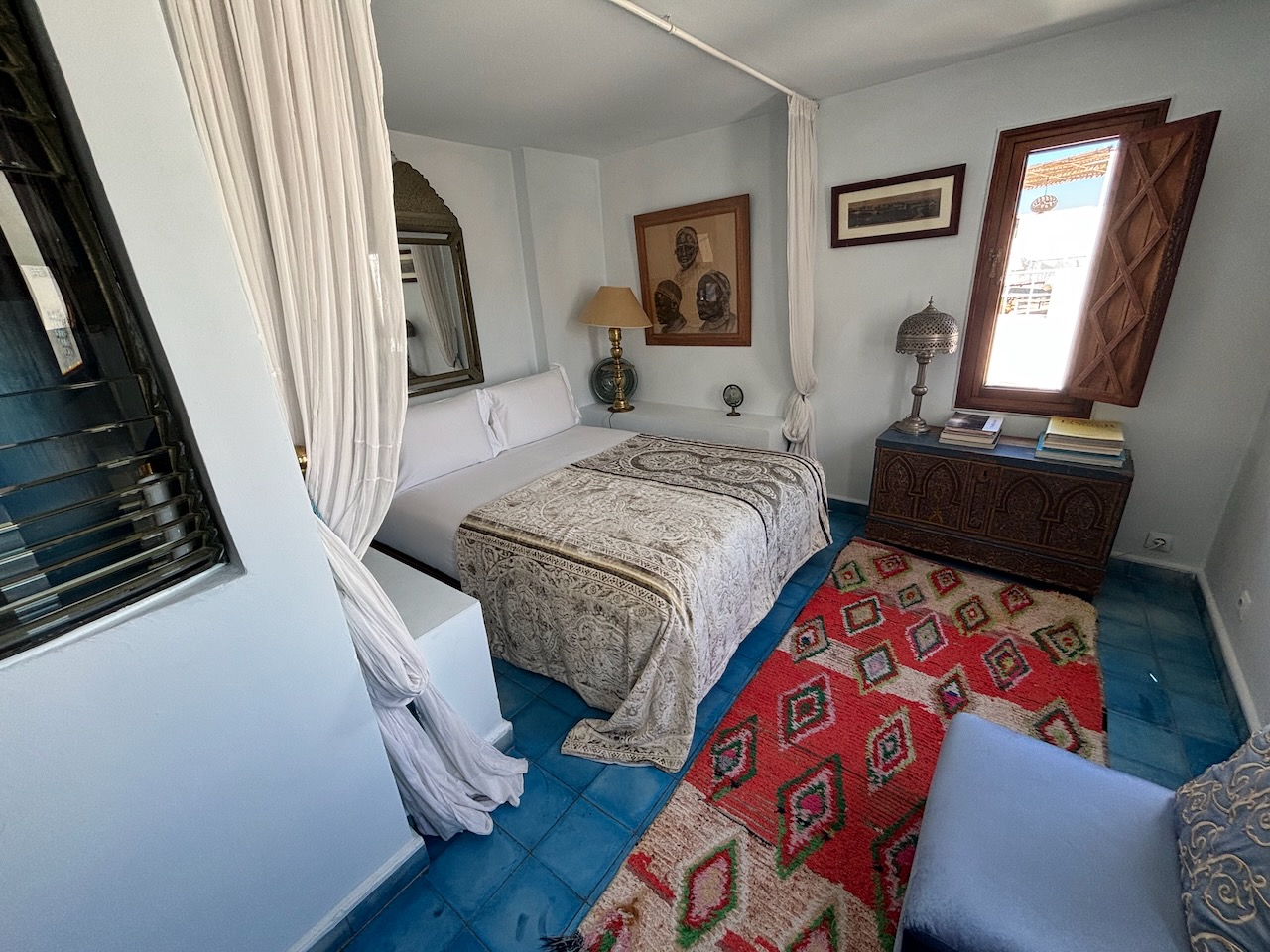
Our spacious room was on the topmost floor of the main house, just two steps away from the terrace and the well-stocked bar there, which we would take advantage of during our stay. This would be a fairly expensive stay for us in Morocco, coming to 3,511 Dirhams ($351) for the two nights but at the end of the day, well worth the outlay. Fortunately for us, one of the staff members carried our bags up the steep set of stairs to our room, where we unpacked and then immediately made our way to the bar.
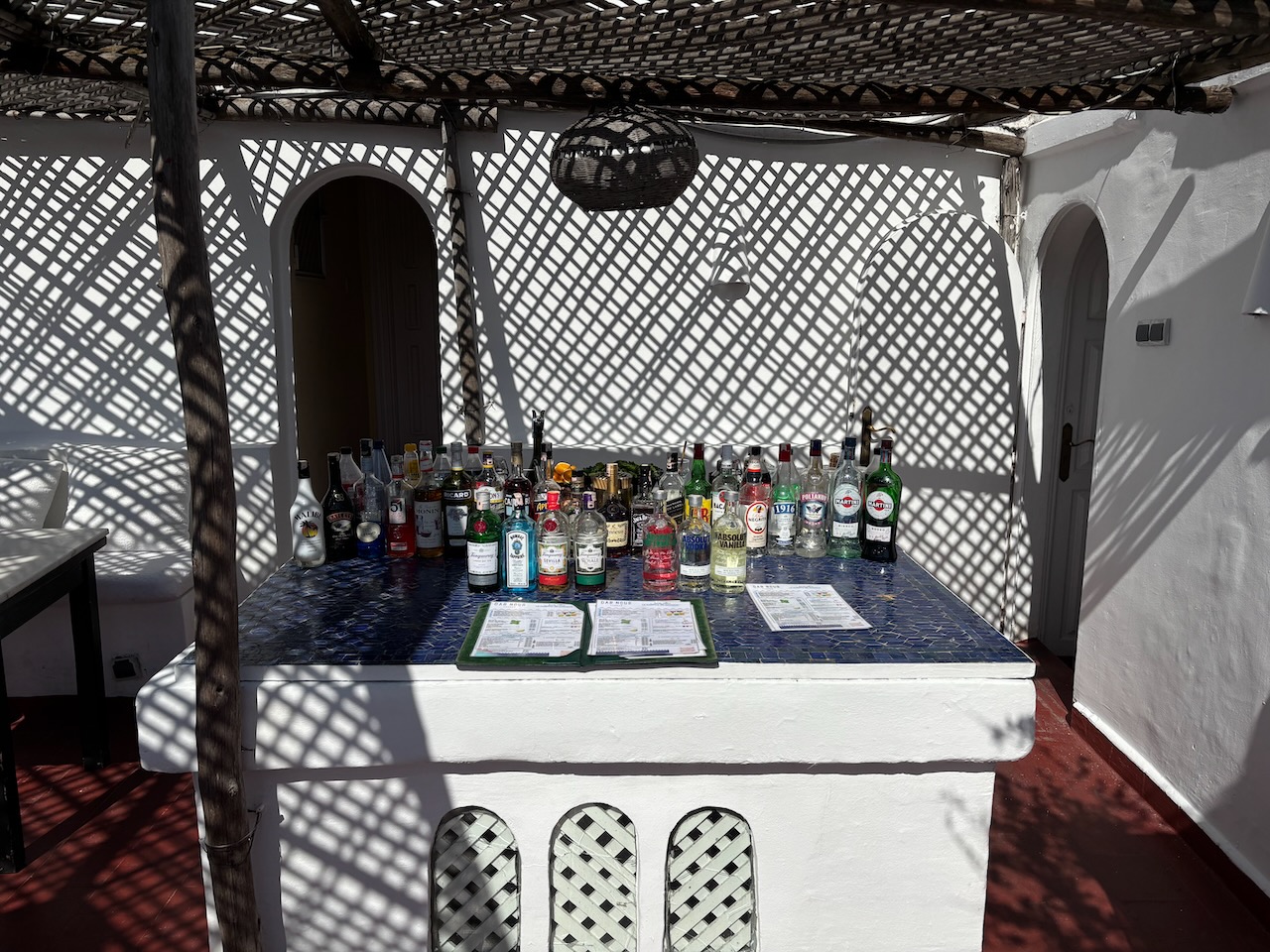
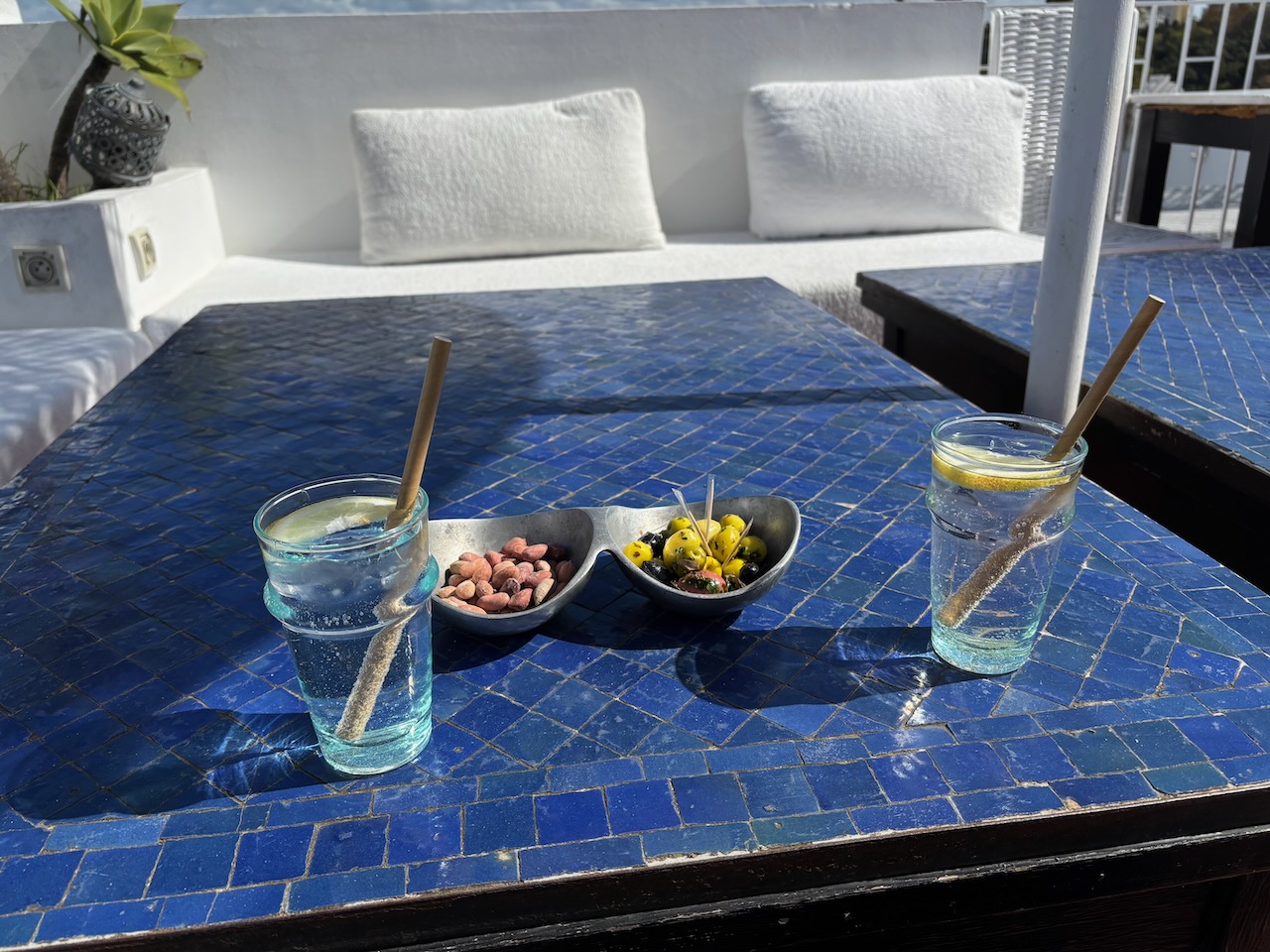
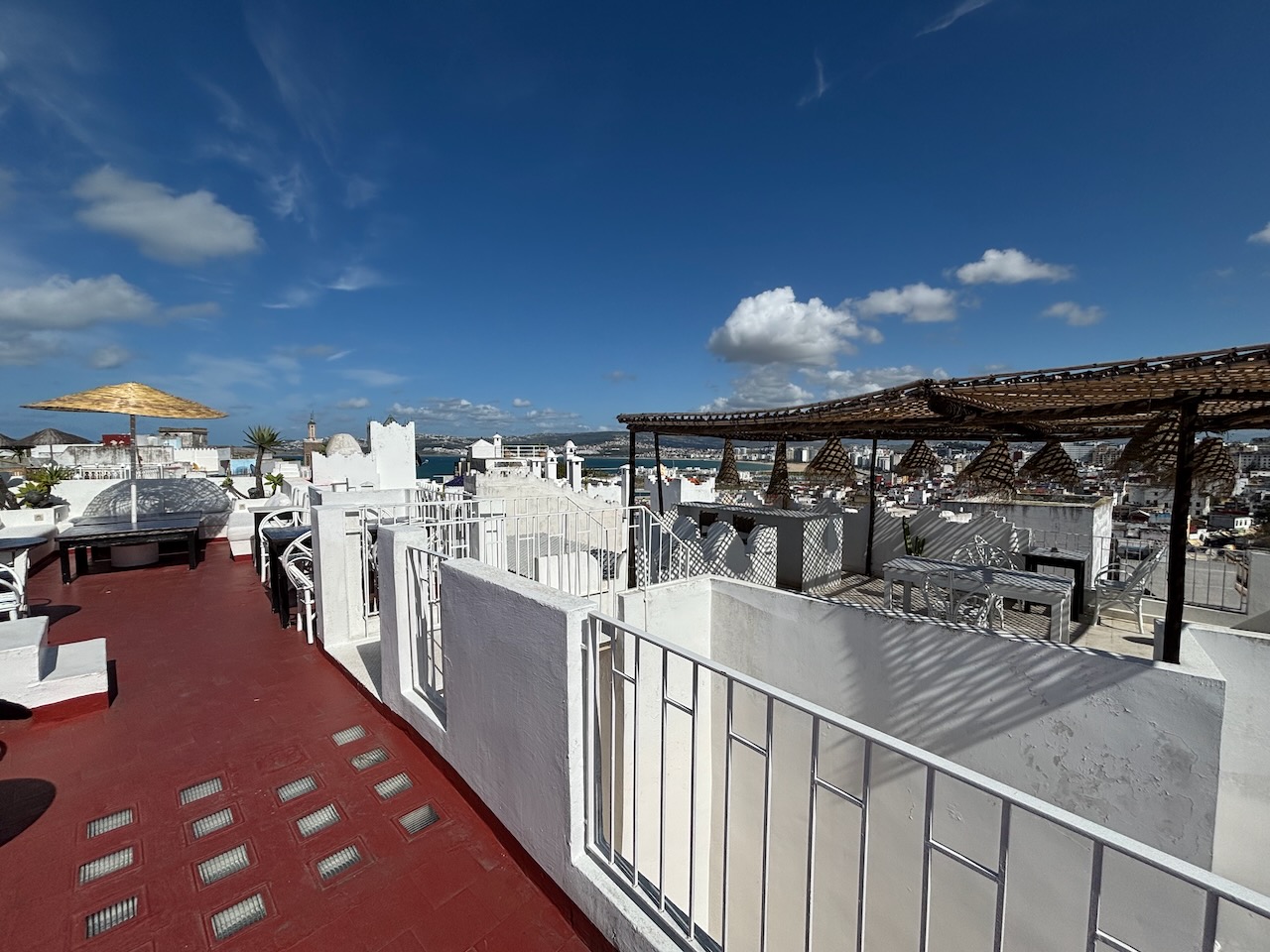
We ordered a gin and tonic apiece and along with a serving of nuts and olives we found a bench seat with a view of the city and began to fully appreciate how nice the Dar was, and how much we would miss our time in Morocco once we departed the day after next. Later, we found our way back out to near the gate in the wall and stopped in for dinner at La Muralla, as it looked nice and appeared to serve alcohol.
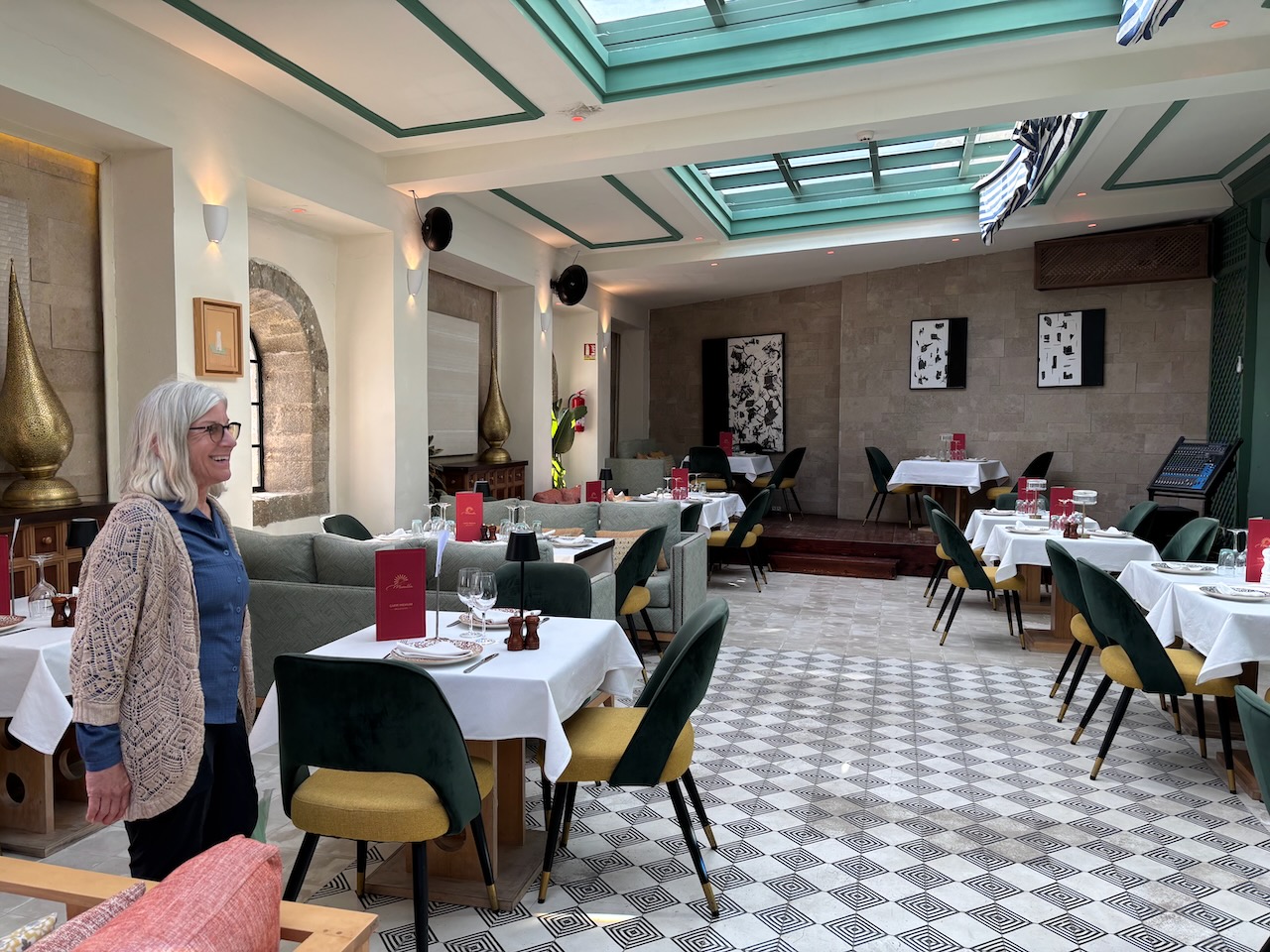
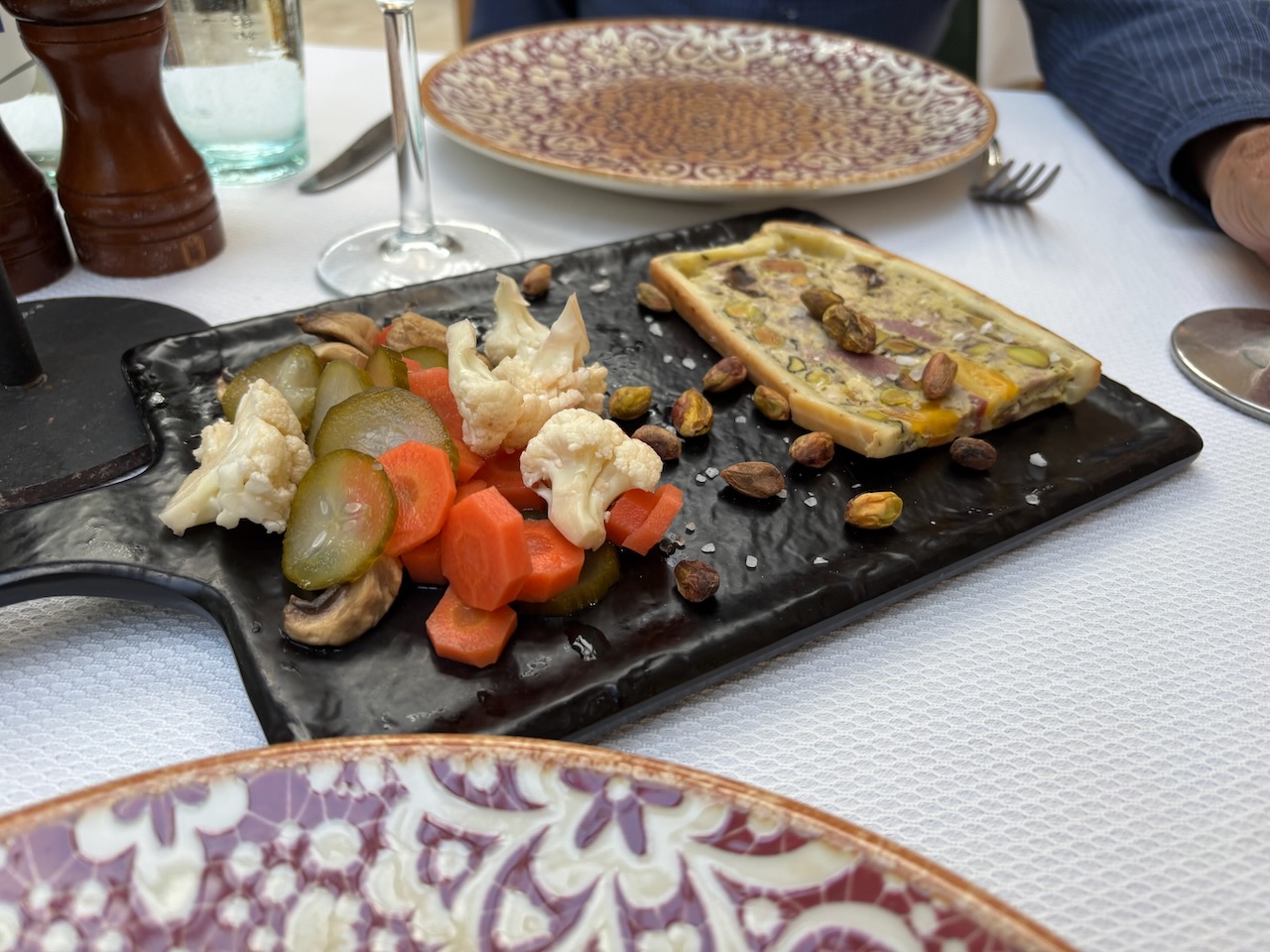
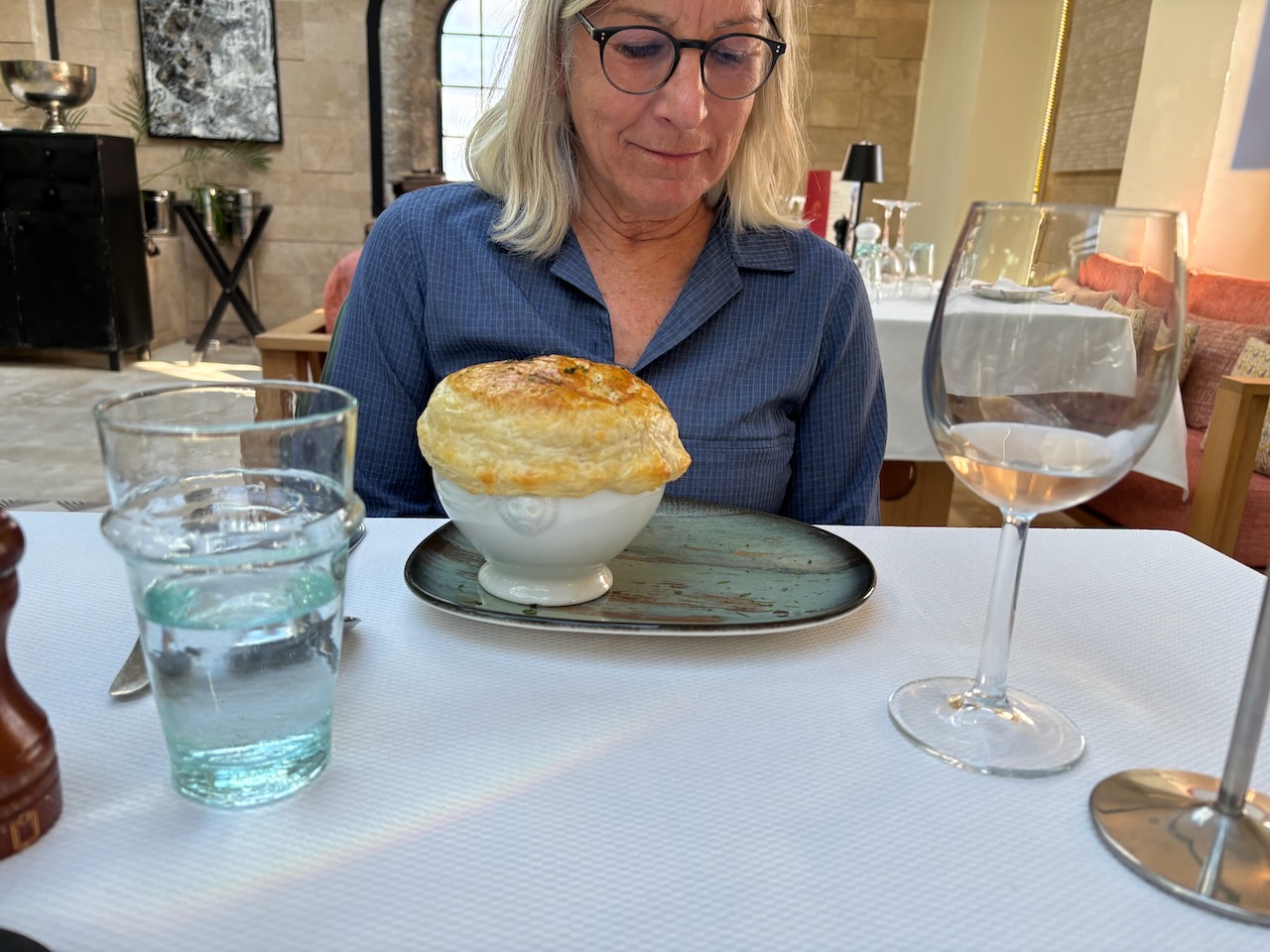
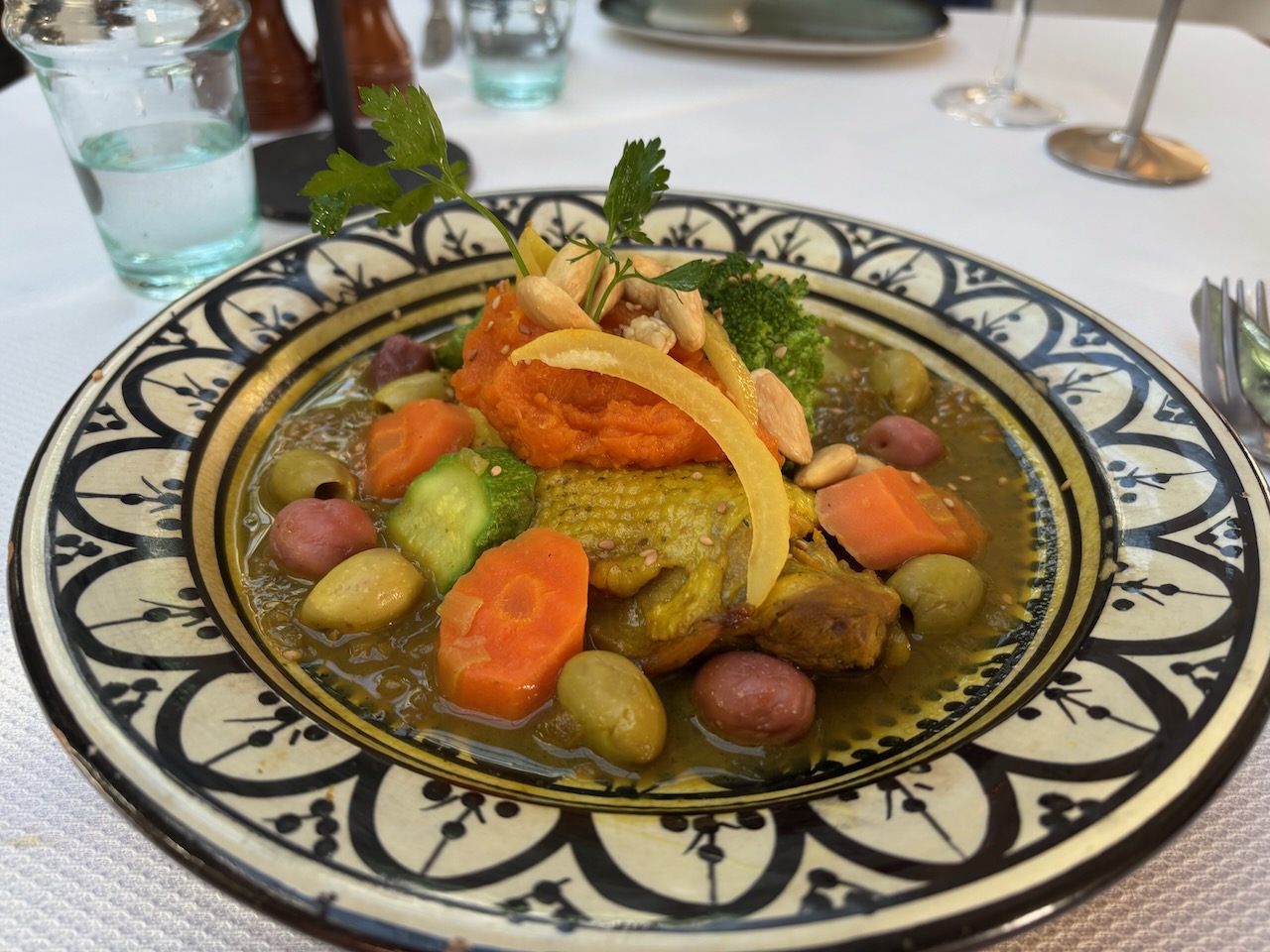
As it was early, we were able to get a table and felt slightly under dressed, but it didn’t seem to matter to our server. We started with a glass of white wine apiece to go along with the Pate en Croute (a French charcuterie of ground meat pâté encased in a flaky pastry crust and baked until golden) that had duck confit, foie gras, and pistachio and was served with marinated vegetables. It was delicious. For our mains, Joanna got the Soupe de Poisson Tangier, a fish soup with scallops served in a puff pastry. I opted for the Tagine Traditional de Poulet Fermier (Traditional free-range chicken tagine with almonds, vegetables, lemon confit and olives) leaving both of us quite satisfied with our choices. Along with a second glass of wine for me, our tab came to 625 Dirhams ($68), another meal that would have cost us in excess of $100 at home.
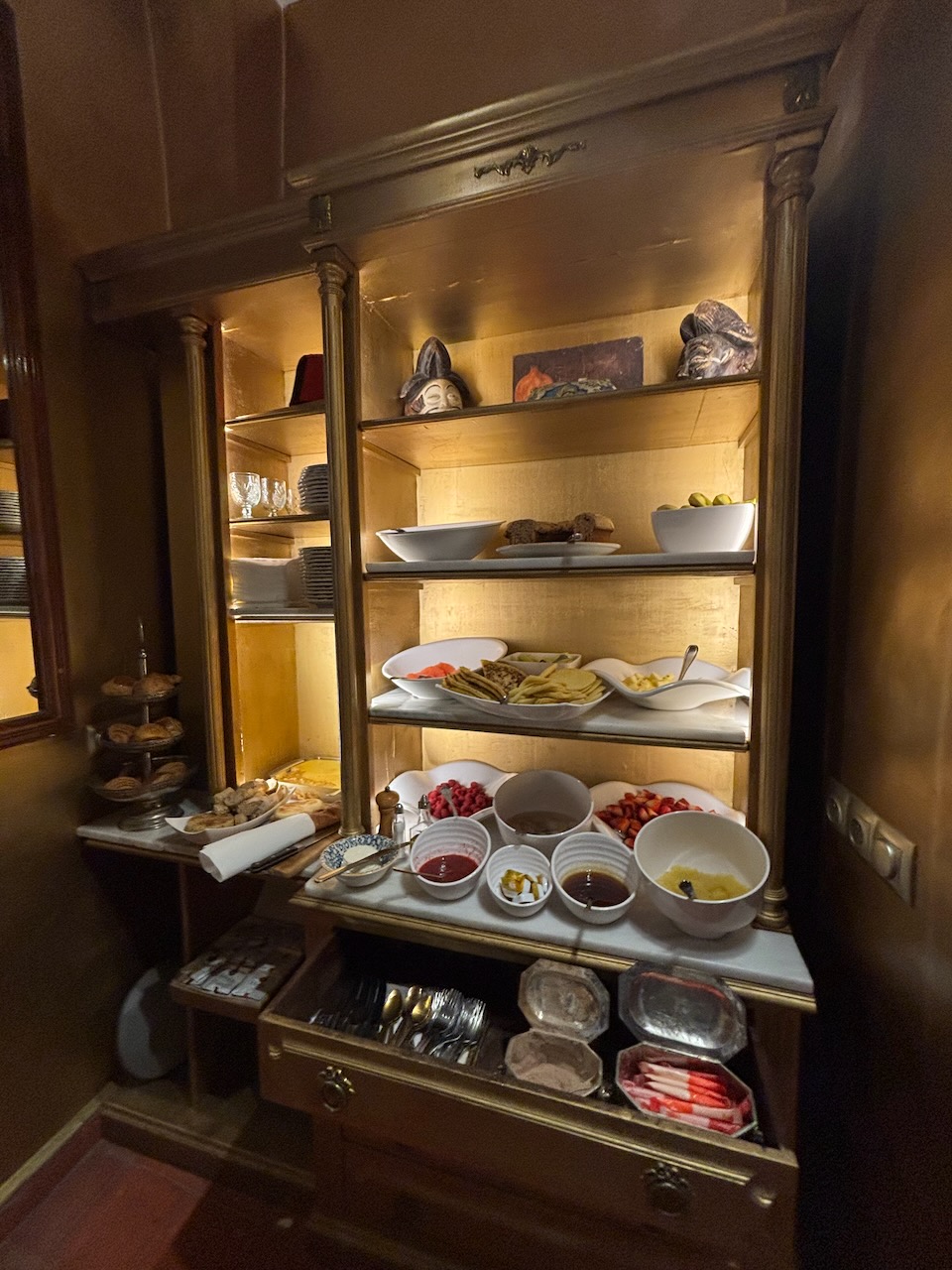
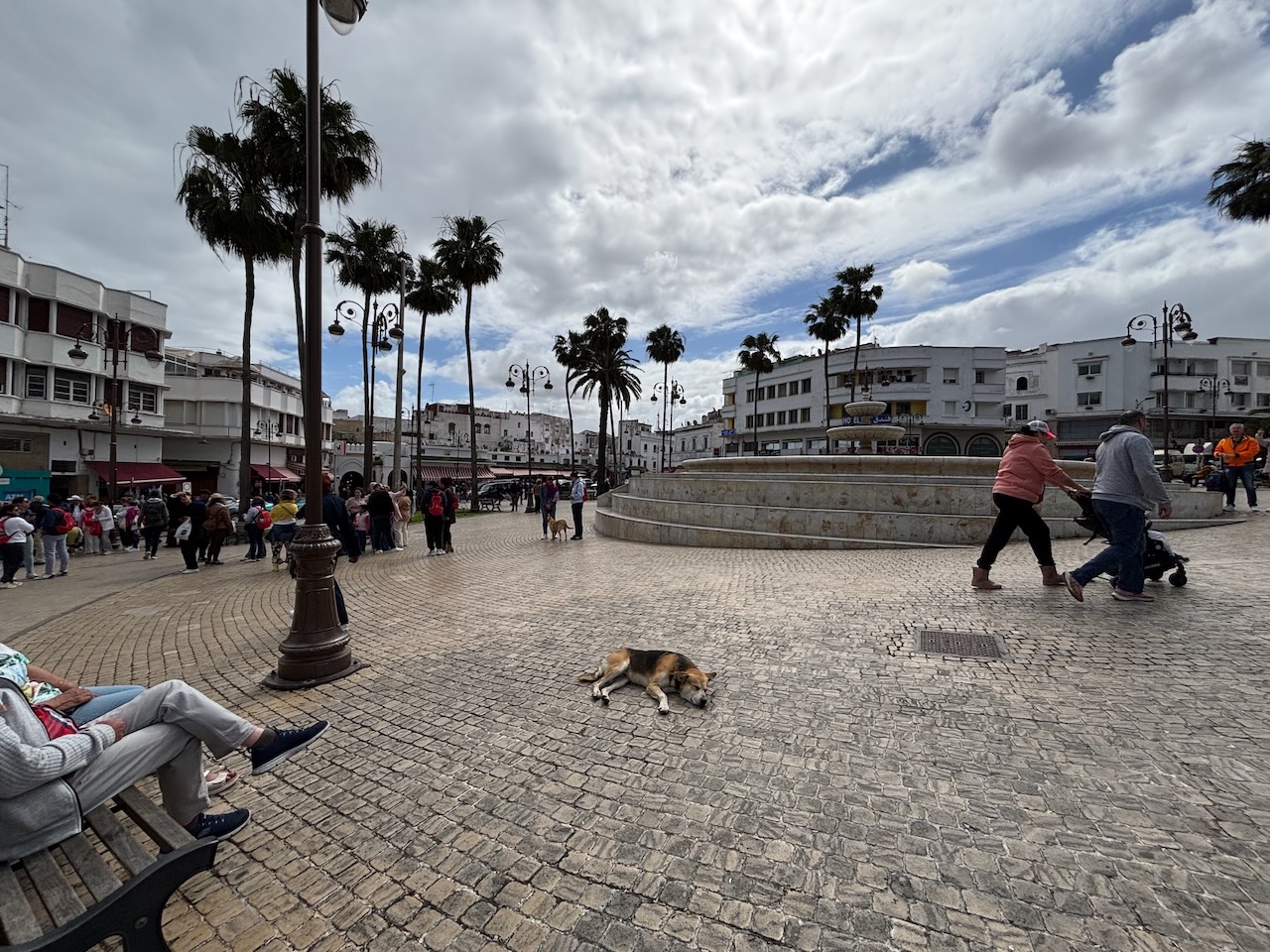
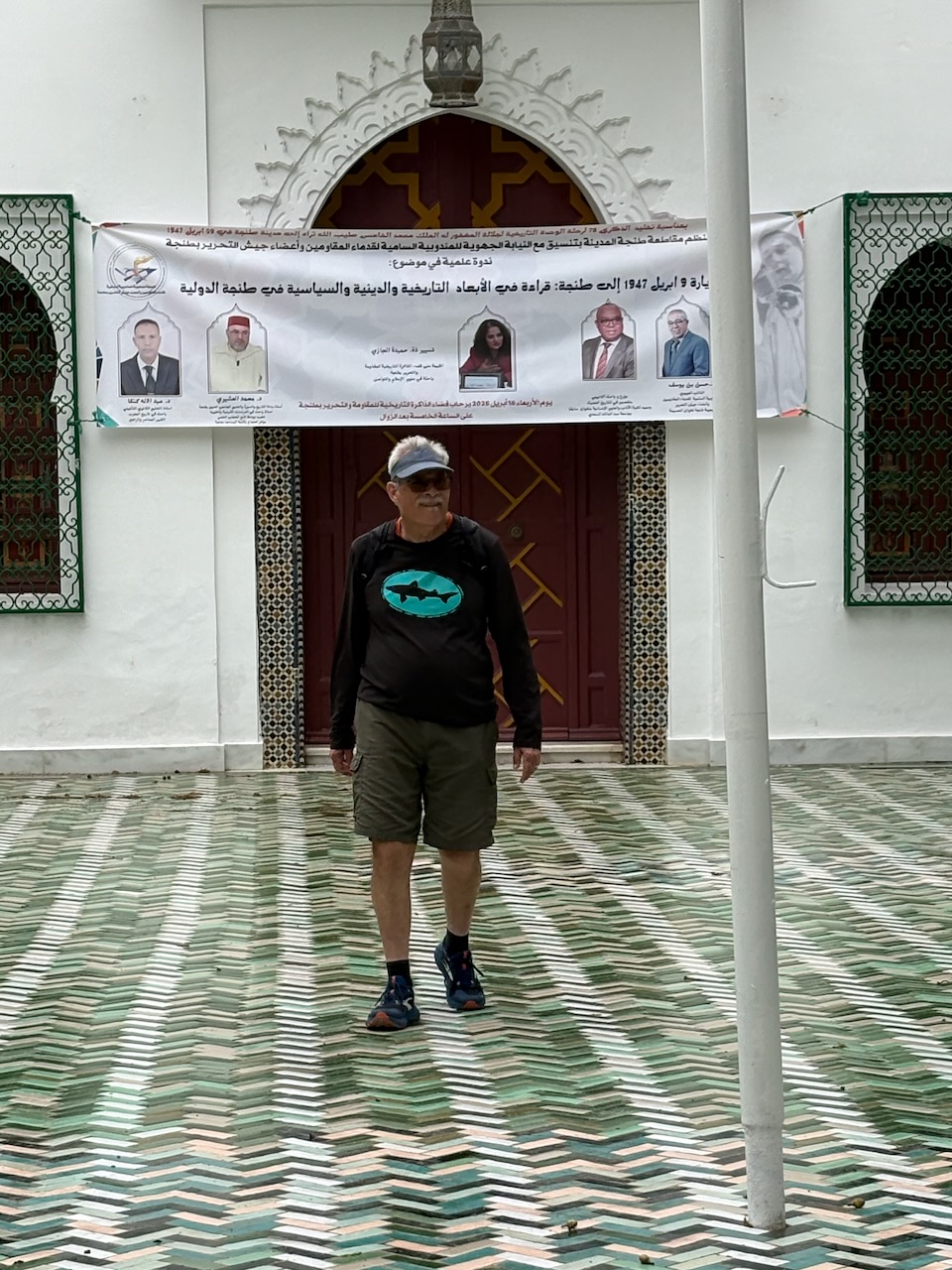
The next day after a nice buffet breakfast at the Dar, we set out for one of our favorite activities, a Rick Steves walking tour. We left the medina and made our way downhill to our starting point, the Grand Socco, a bustling square that is a transportation hub, market, popular meeting point, and the fulcrum between the new town and the old town (medina). After arriving, we started by facing the mosque, with its long arcade of keyhole arches and colorfully tiled minaret. Morocco is a decidedly Muslim nation, though its take on Islam is moderate, likely owing to the country’s crossroads history.
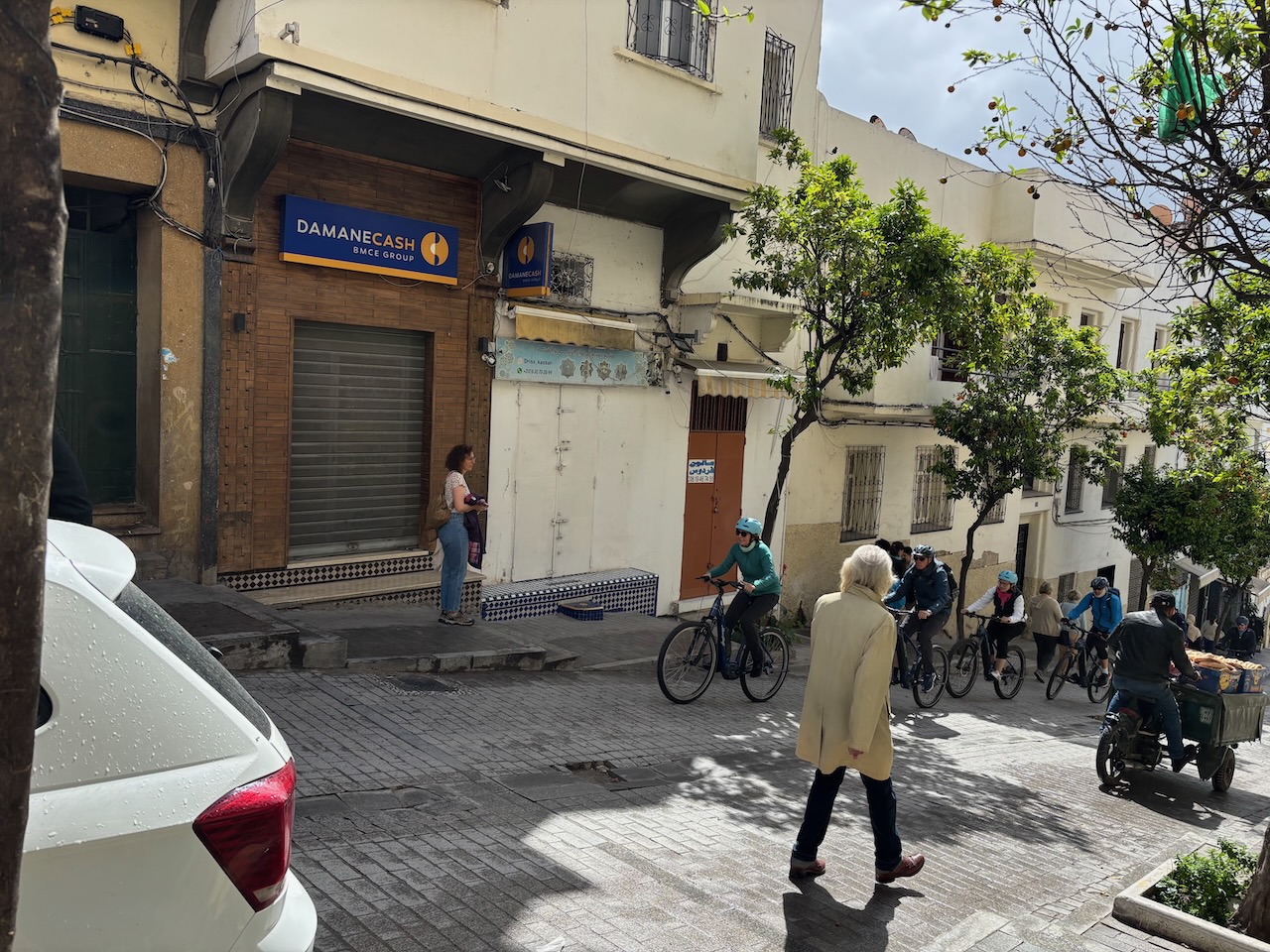

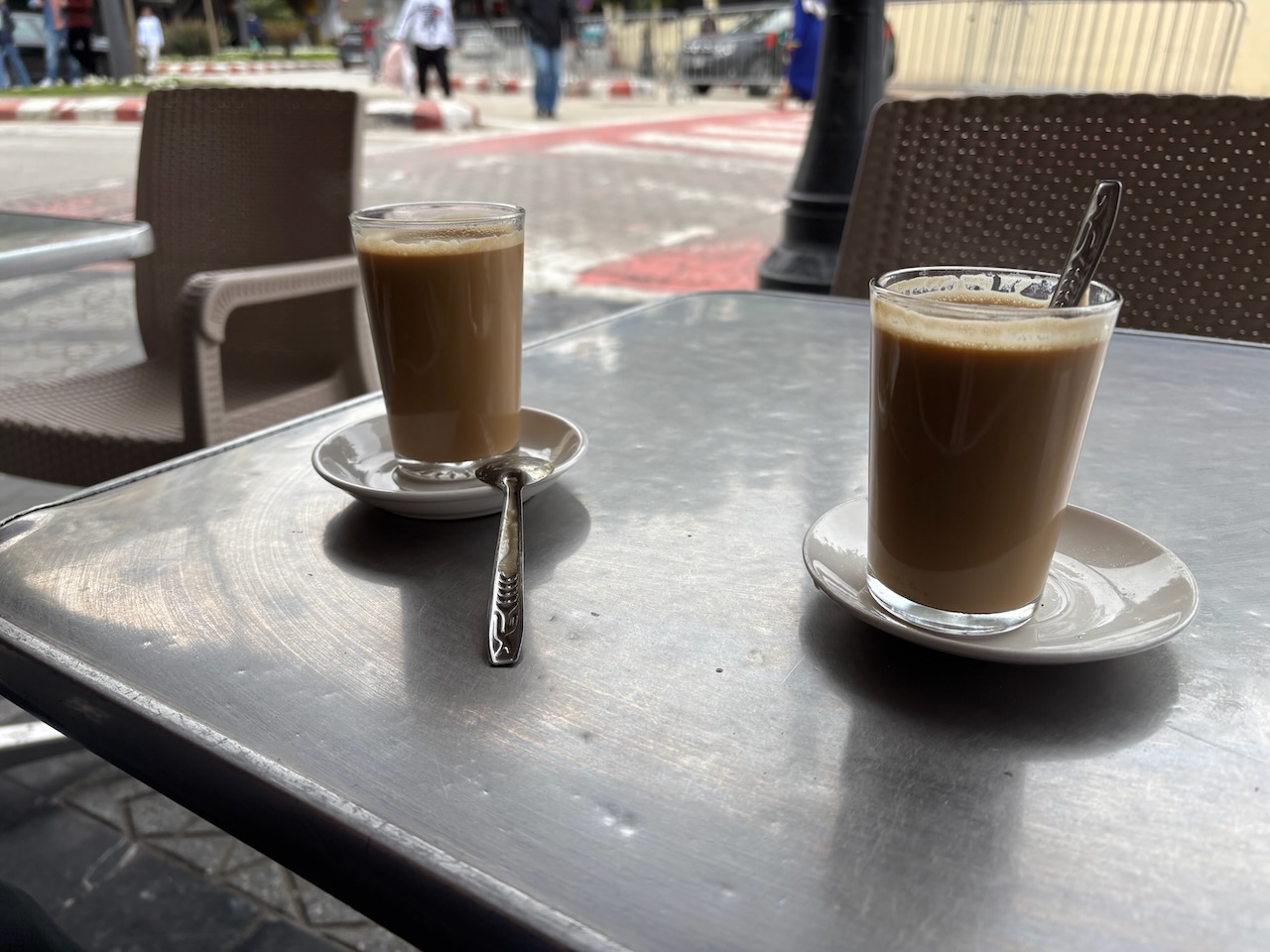
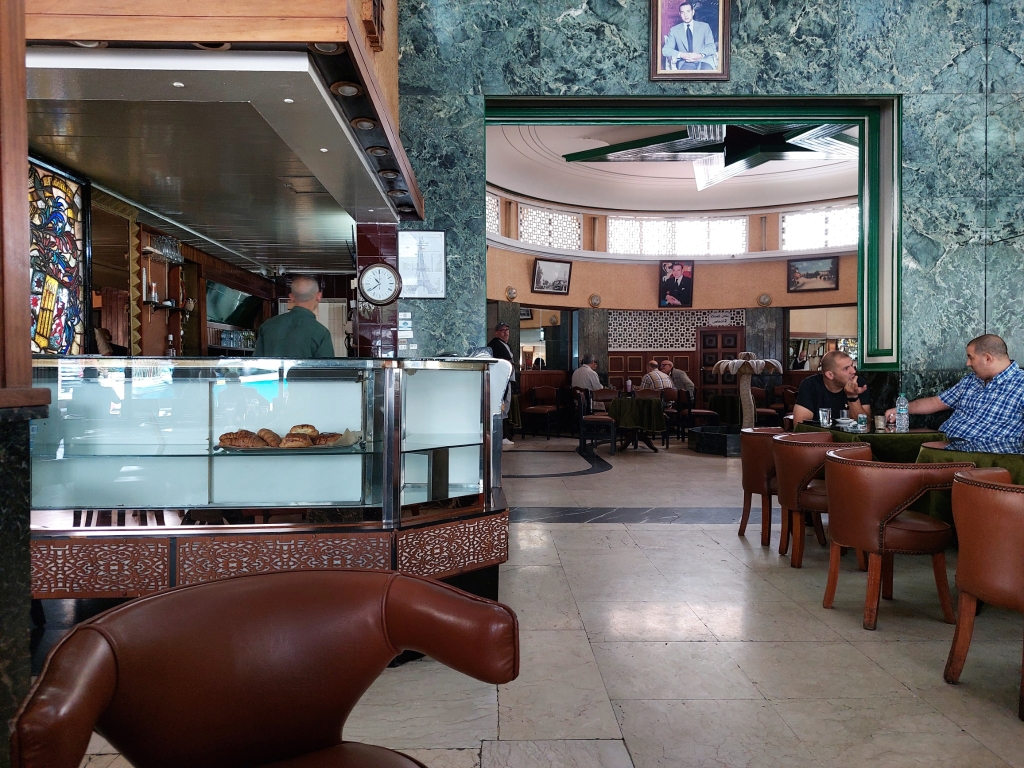
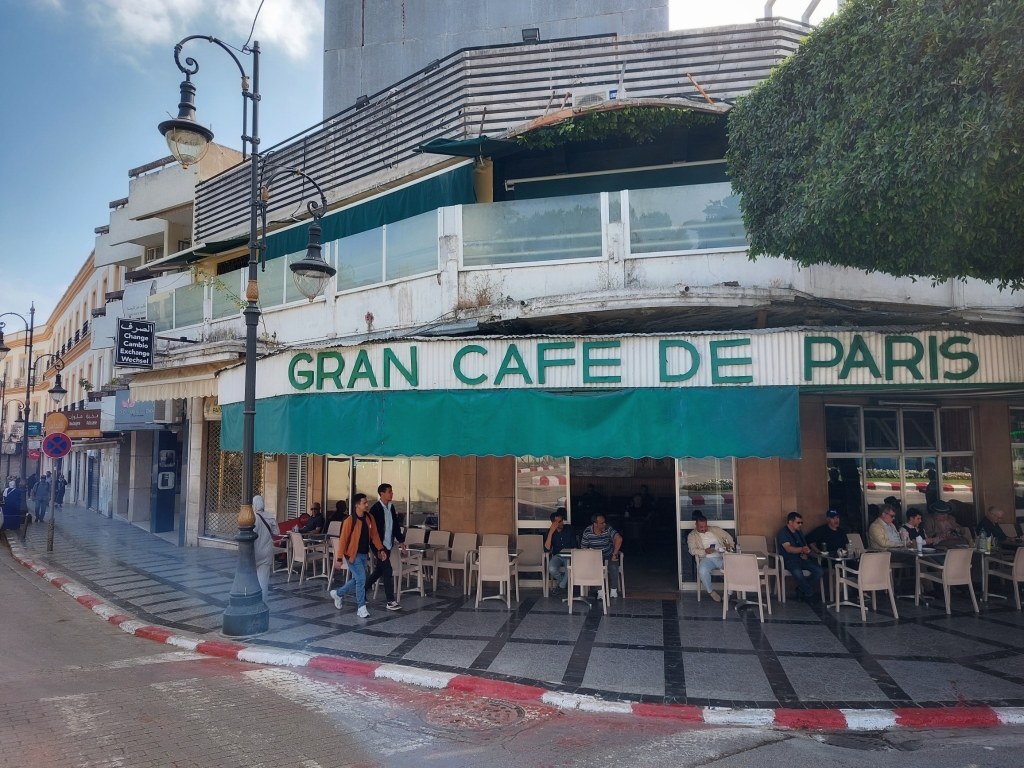
Turning to the right we caught sight of the crenellated gateway marked Tribunal de Commerce—the entrance to the Mendoubia Gardens, a pleasant park with a gigantic tree and a free museum-like monument to Morocco’s independence. We walked around the square and then headed up Rue de la Liberte, a busy street full of shops to the intersection with Boulevard Pasteur known as Place de France, where we stopped for a coffee at Gran Café de Paris.

Established in 1927, it has a long history as a bohemian hub, frequented by literary figures like Jack Kerouac, William Burroughs, and Paul Bowles. The interior features classic details, original lighting, and an atmosphere that seems frozen in the 1950s. As we were seated across the street from the French Consulate Moroccans call this the “tennis” street because while sitting at an al fresco café like this one, your head will be constantly swiveling back and forth to watch the passing parade. We will pause now during our walking tour and pick it up in our next post. See you then.

Links
Dar Nour: https://darnour.com/
La Muralla: https://lamurallatangier.com/en/
Grand Socco: https://en.wikipedia.org/wiki/Grand_Socco
Gran Café de Paris: https://www.tripadvisor.com/Restaurant_Review-g293737-d2508152-Reviews-Cafe_de_Paris-Tangier_Tanger_Tetouan_Al_Hoceima.html
Discover more from 3jmann
Subscribe to get the latest posts sent to your email.


 3jmann