April 19 – 20
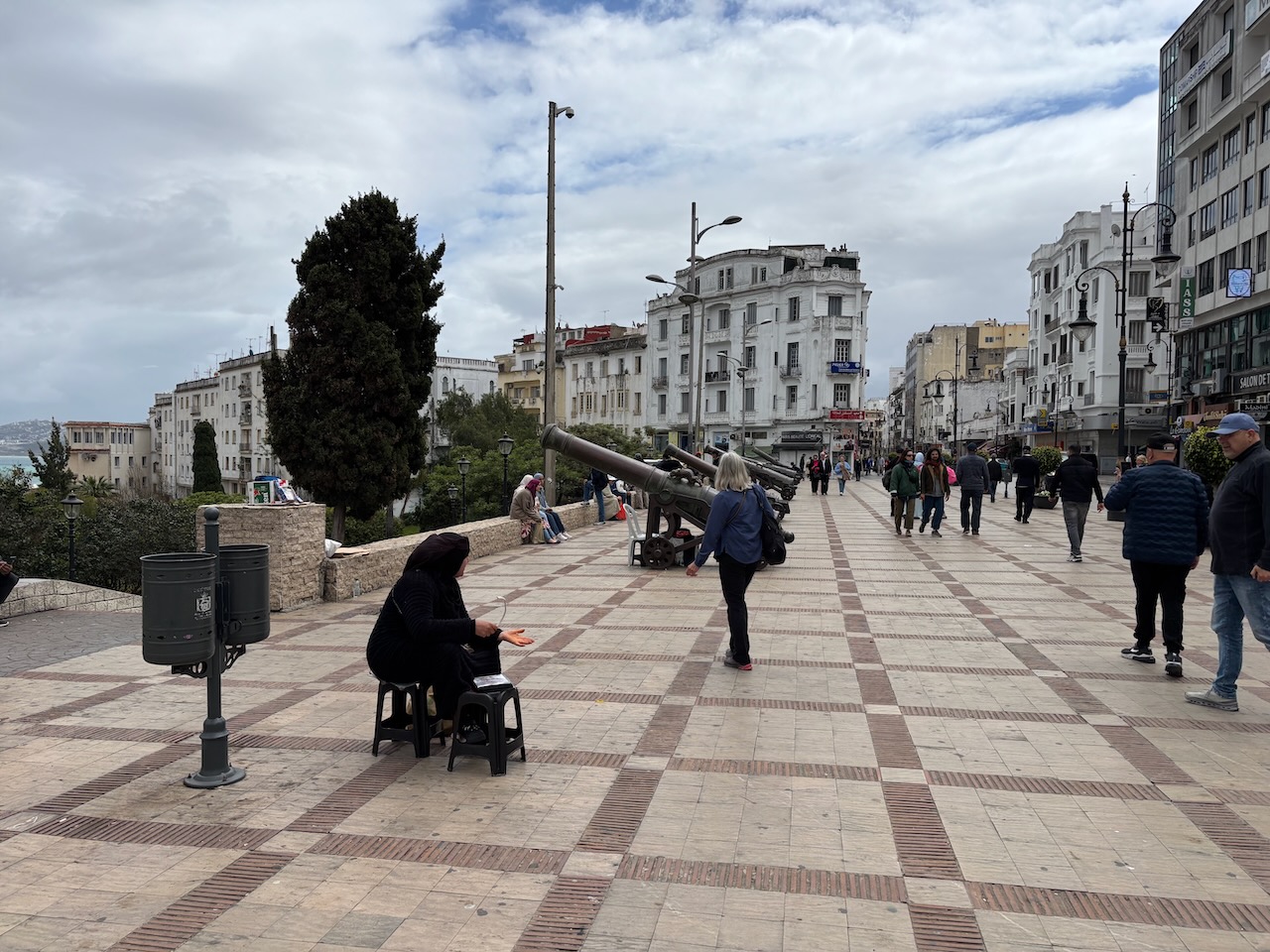
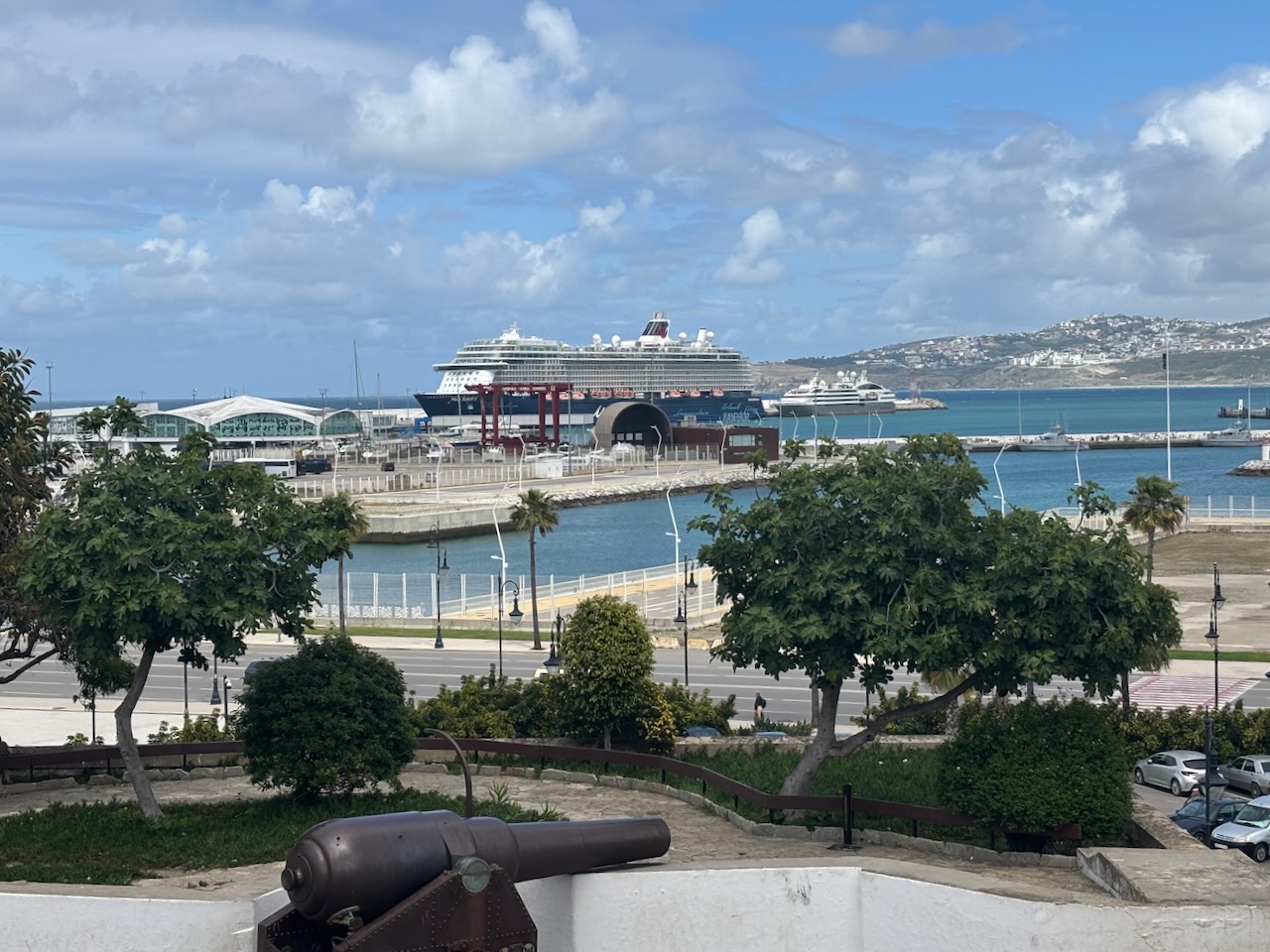
Finished with our drinks at Gran Café de Paris, we walked around the corner onto Boulevard Pasteur to the impressive Place de Faro terrace, with its cannons and views back to Spain. It’s nicknamed “Terrace of the Lazy Ones”: instead of making the trek down to the harbor, family members came here in the old days to see if they could spot ships returning with loved ones who’d been to Mecca.
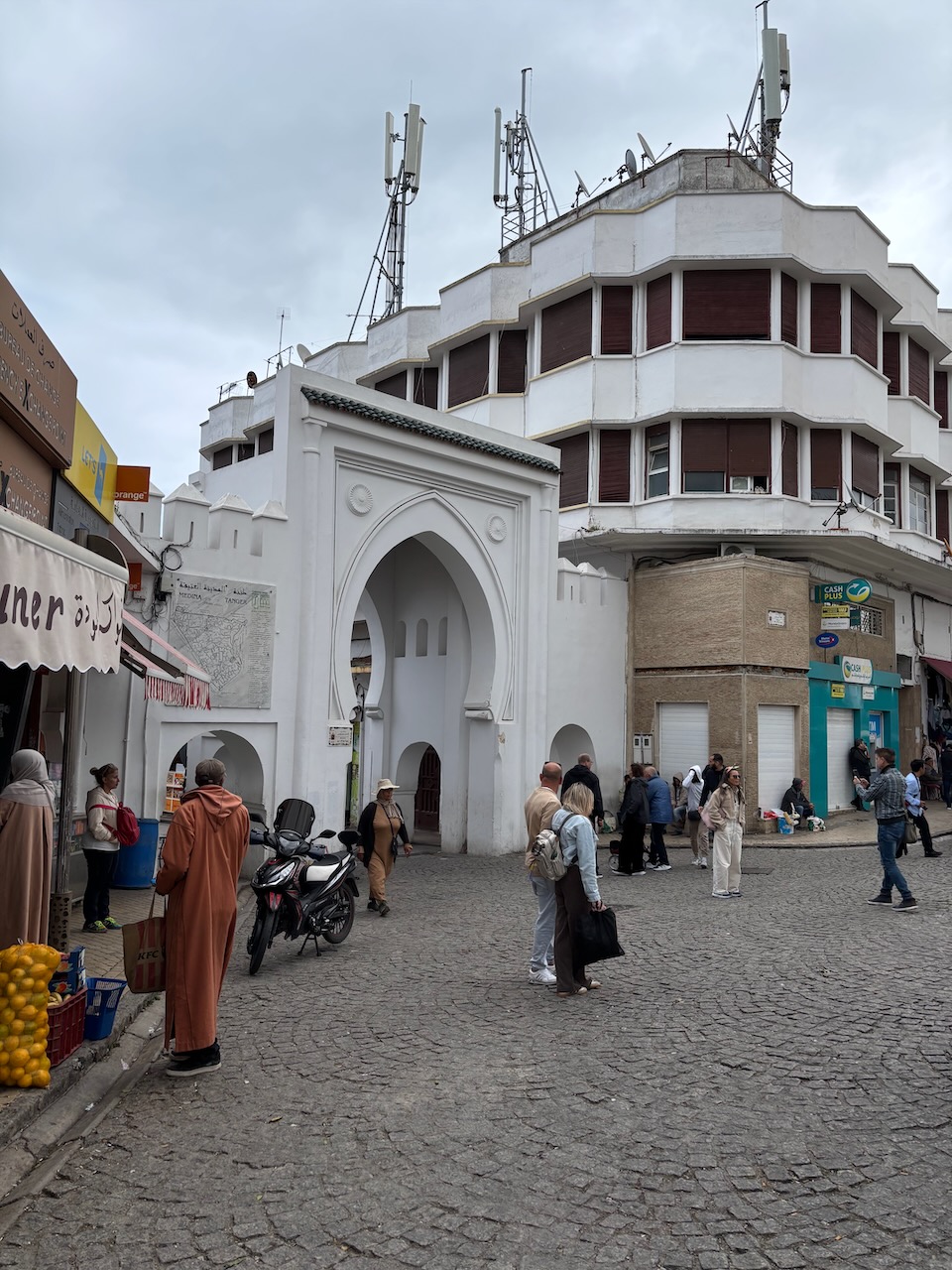
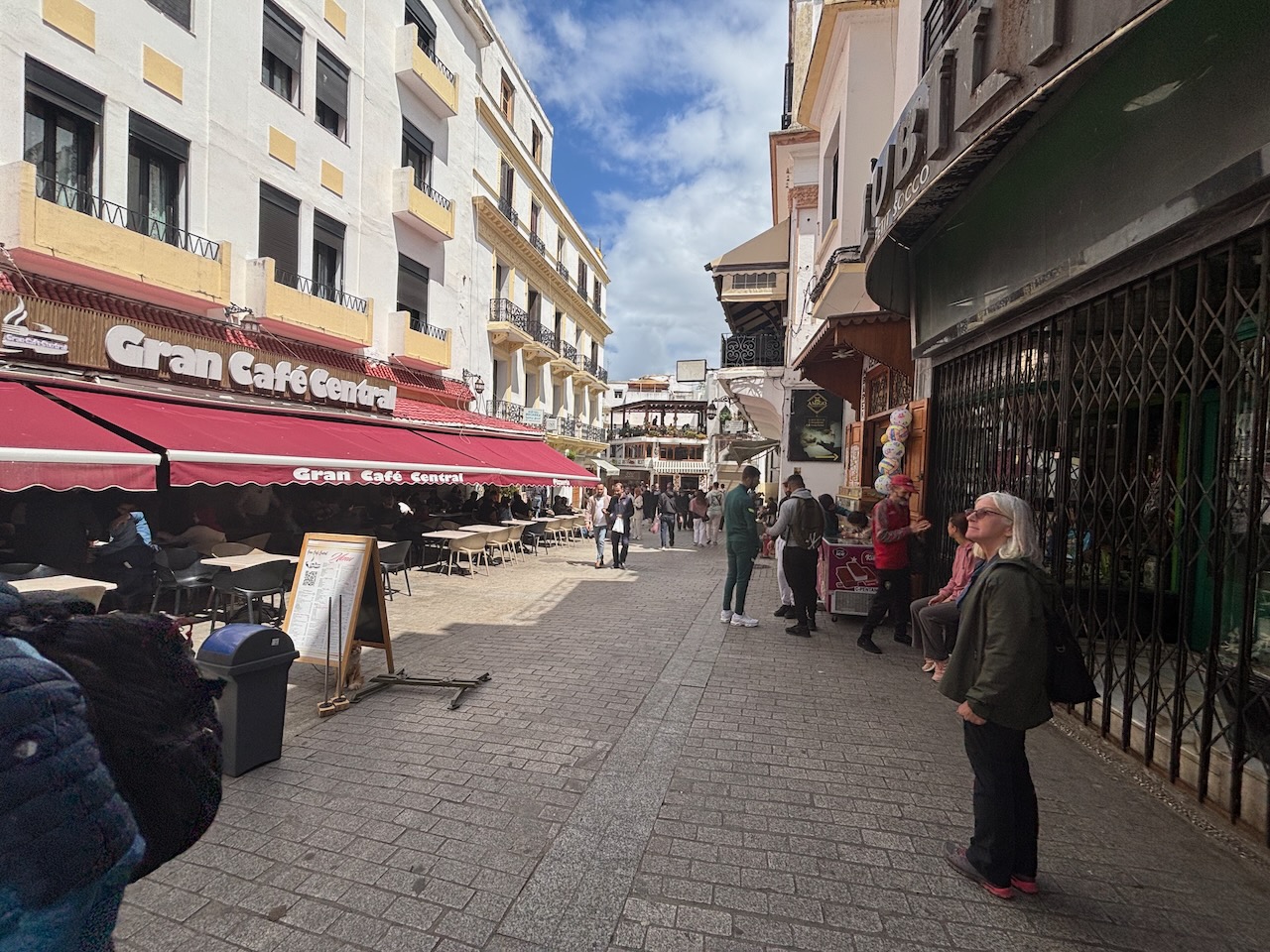
We retraced our steps down the hill back to the Grand Socco and entered the lower Medina at the Keyhole Arch just of the plaza, plunging into the heart of the cities vibrant quarter. By now, we felt like old hands at this and wandered a bit in the familiar surroundings, the crowded and narrow lanes bursting with vendors of all stripes, but having been there and done that, we opted to exit onto Rue Sighine and walk down a wider pedestrian street with a more cosmopolitan air to it.
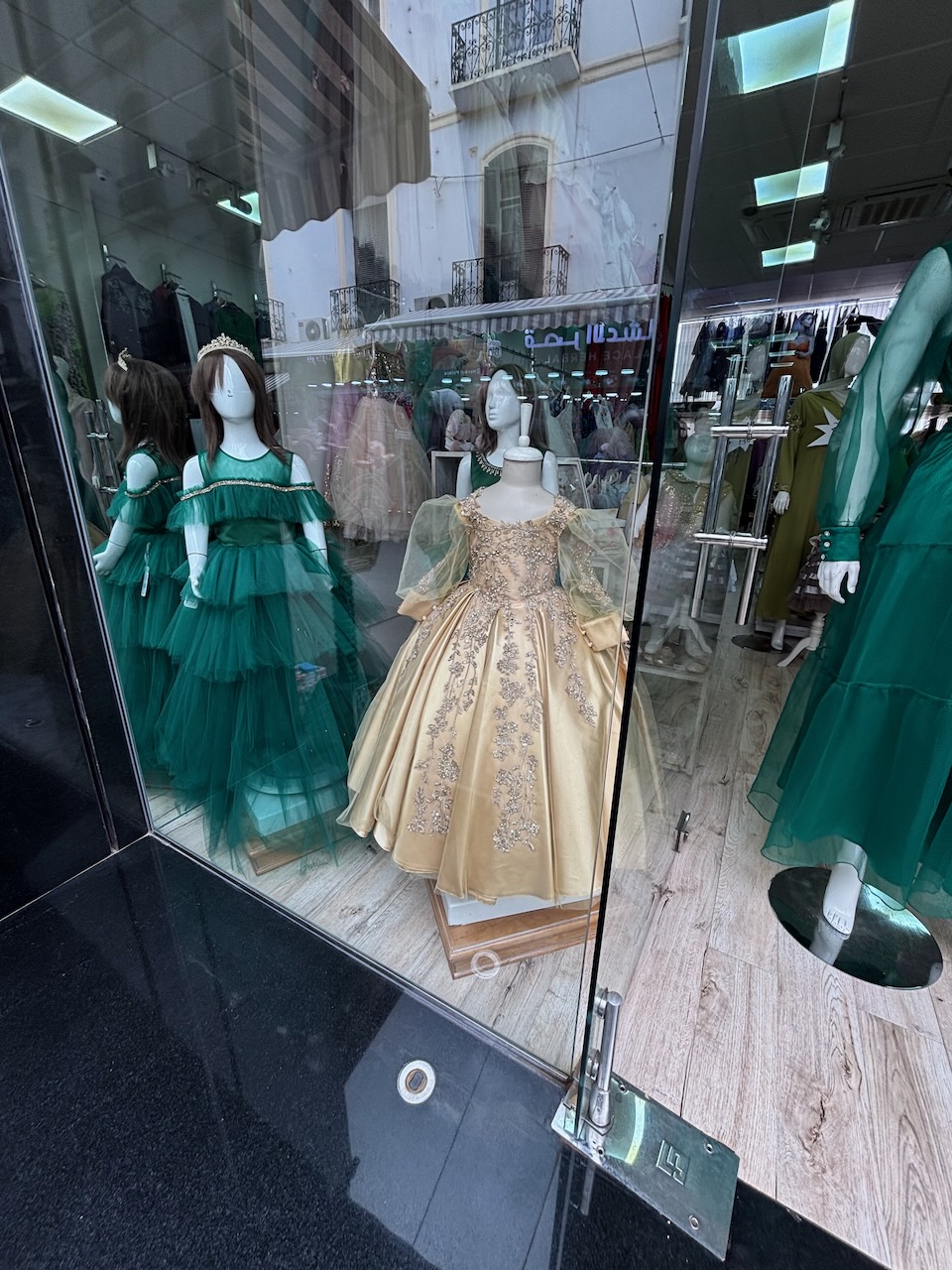
We passed by an interesting shop full of fancy dresses for younger girls and the found ourselves stopping in at the Musée Dar Niaba, an art gallery that was once the house of the naib (an official representative of the sultan to all foreign governments from 1851-1920). Initial displays cover Moroccan diplomatic history, then shift into two floors of art showing the city and its people through the eyes of foreign artists (including some fantastic tile work made in Spain). Tangier’s alluring light and exotic scenes have long drawn international painters—from Delacroix and those he inspired to Matisse.

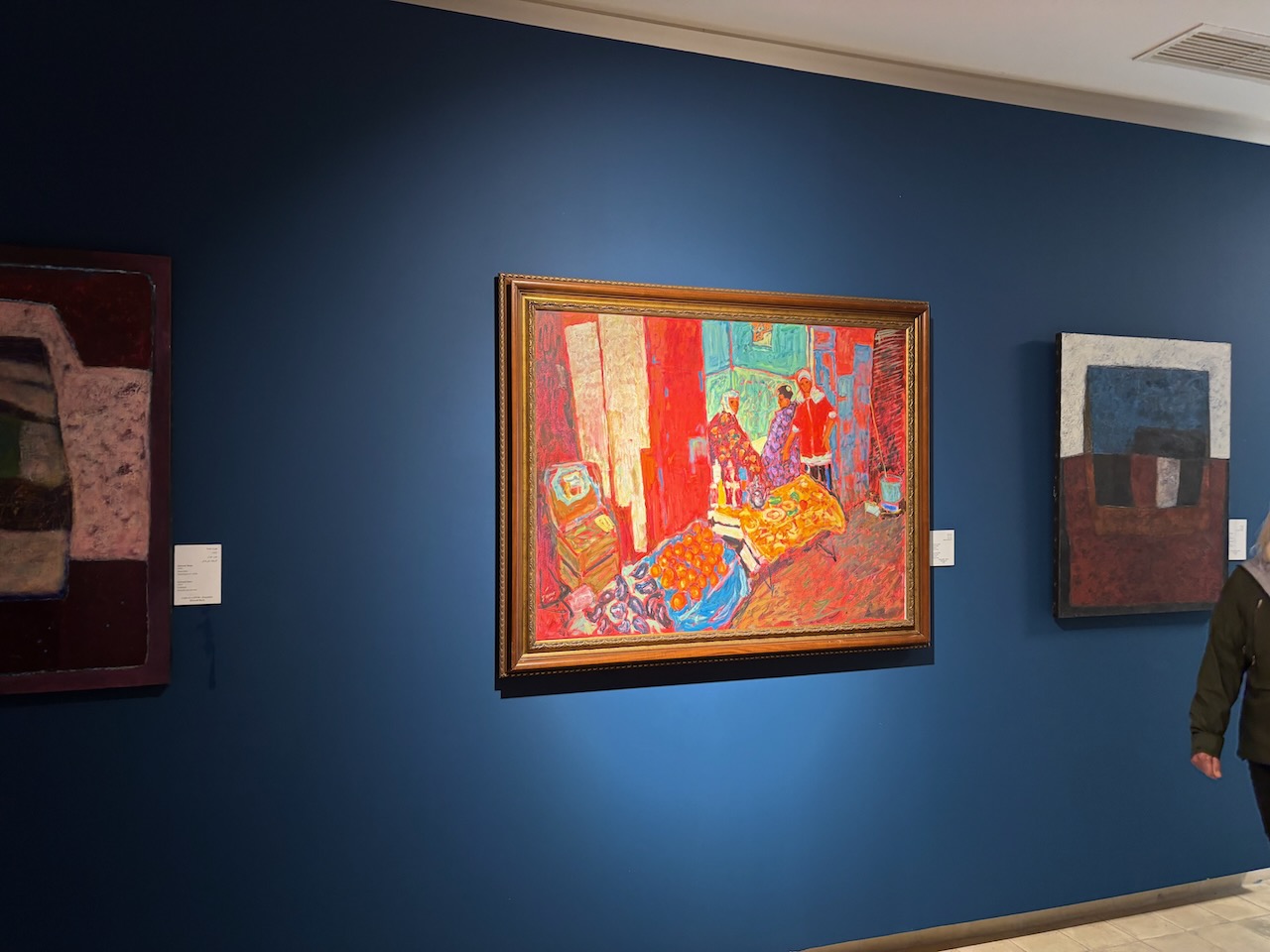
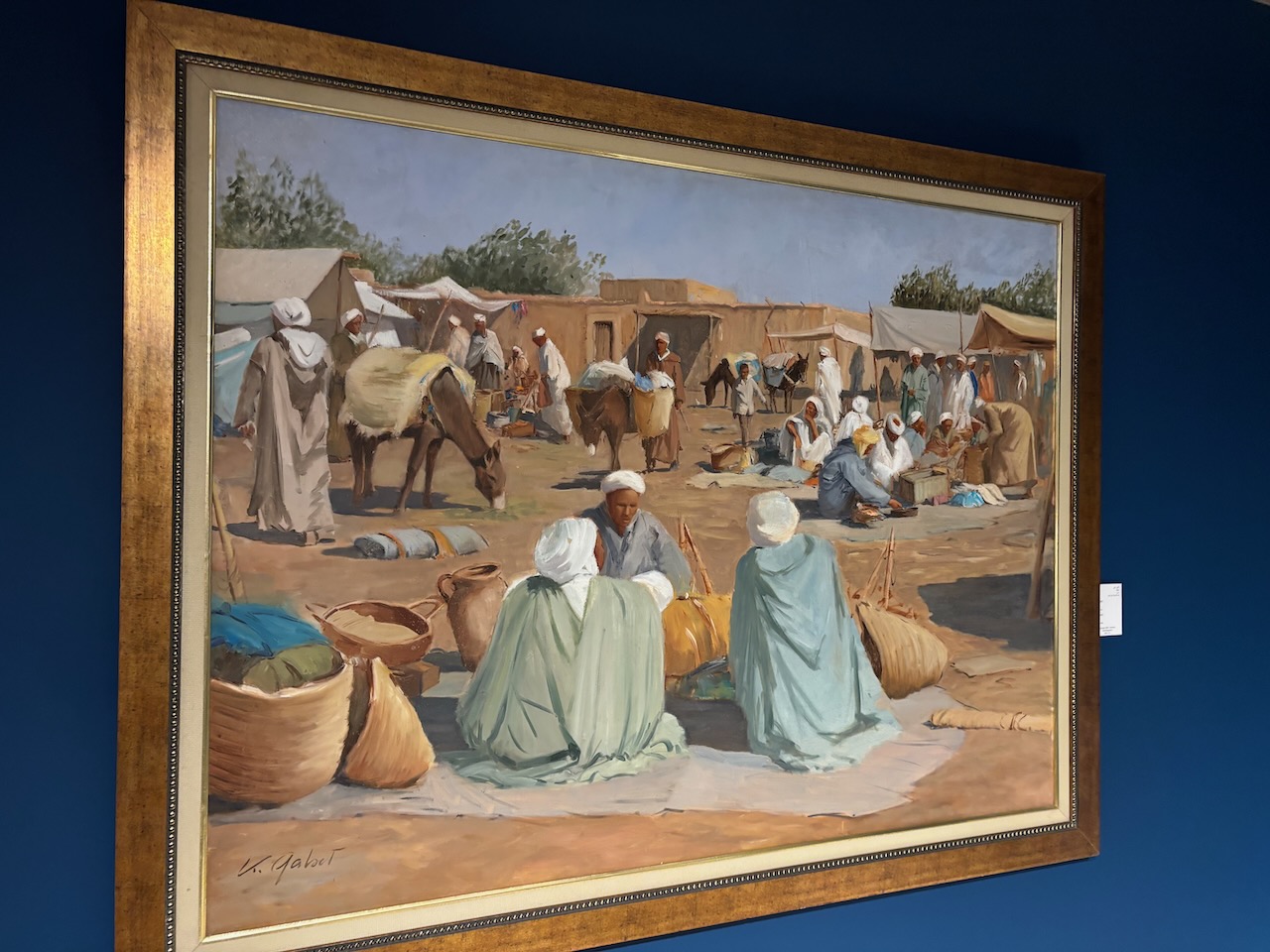
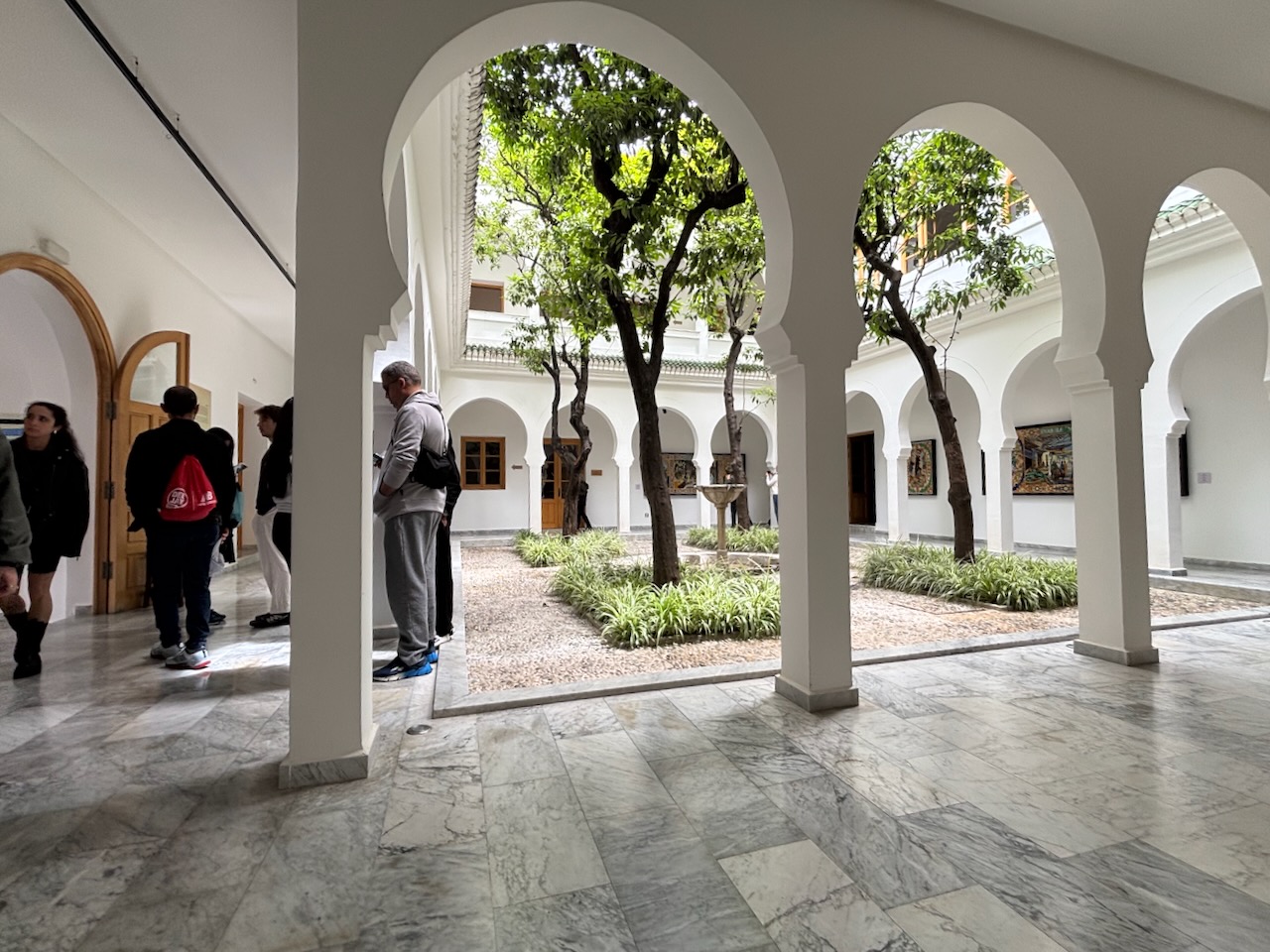
Exiting the museum, we were a bit peckish and so entered a small café where we split a chicken sandwich with fries and a drink for 40 Dirhams ($4.53) before continuing to the Petit Socco, the center of the lower medina. Lined with tea shops and cafés, it has a romantic quality that has long made it a people magnet. In the 1920s, it was the meeting point for Tangier’s wealthy and influential elite; by the 1950s and ’60s, it drew Jack Kerouac and his counterculture buddies.

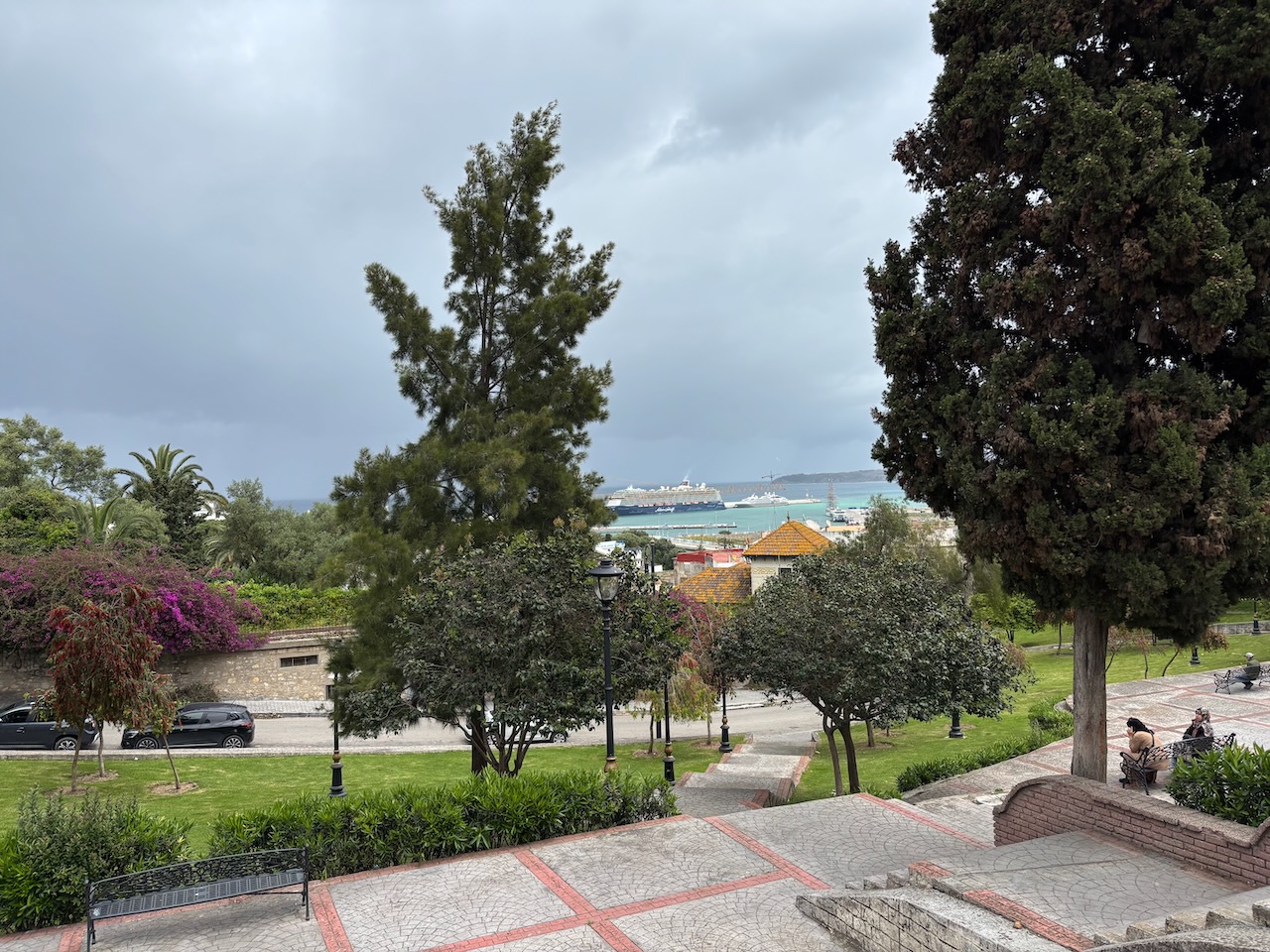
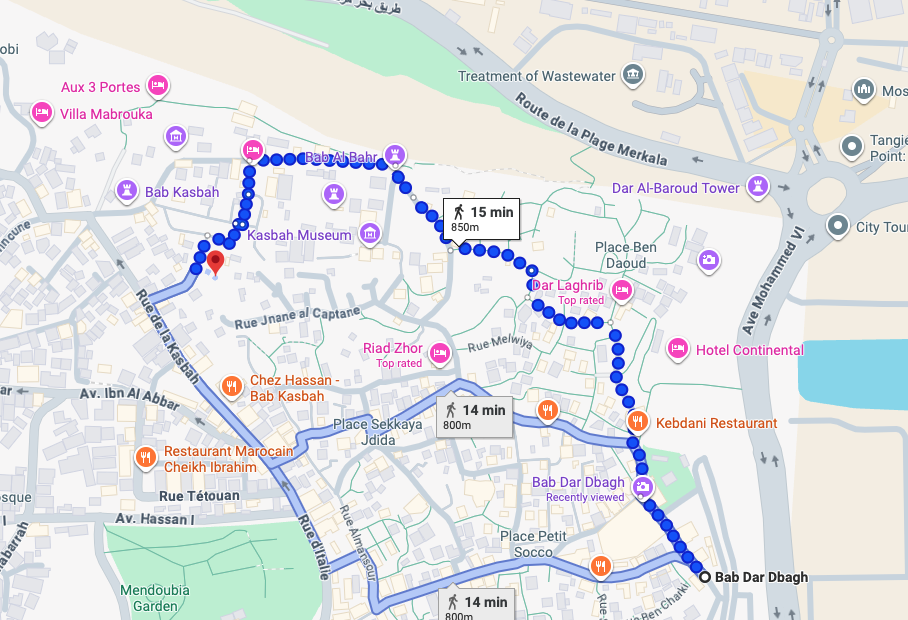
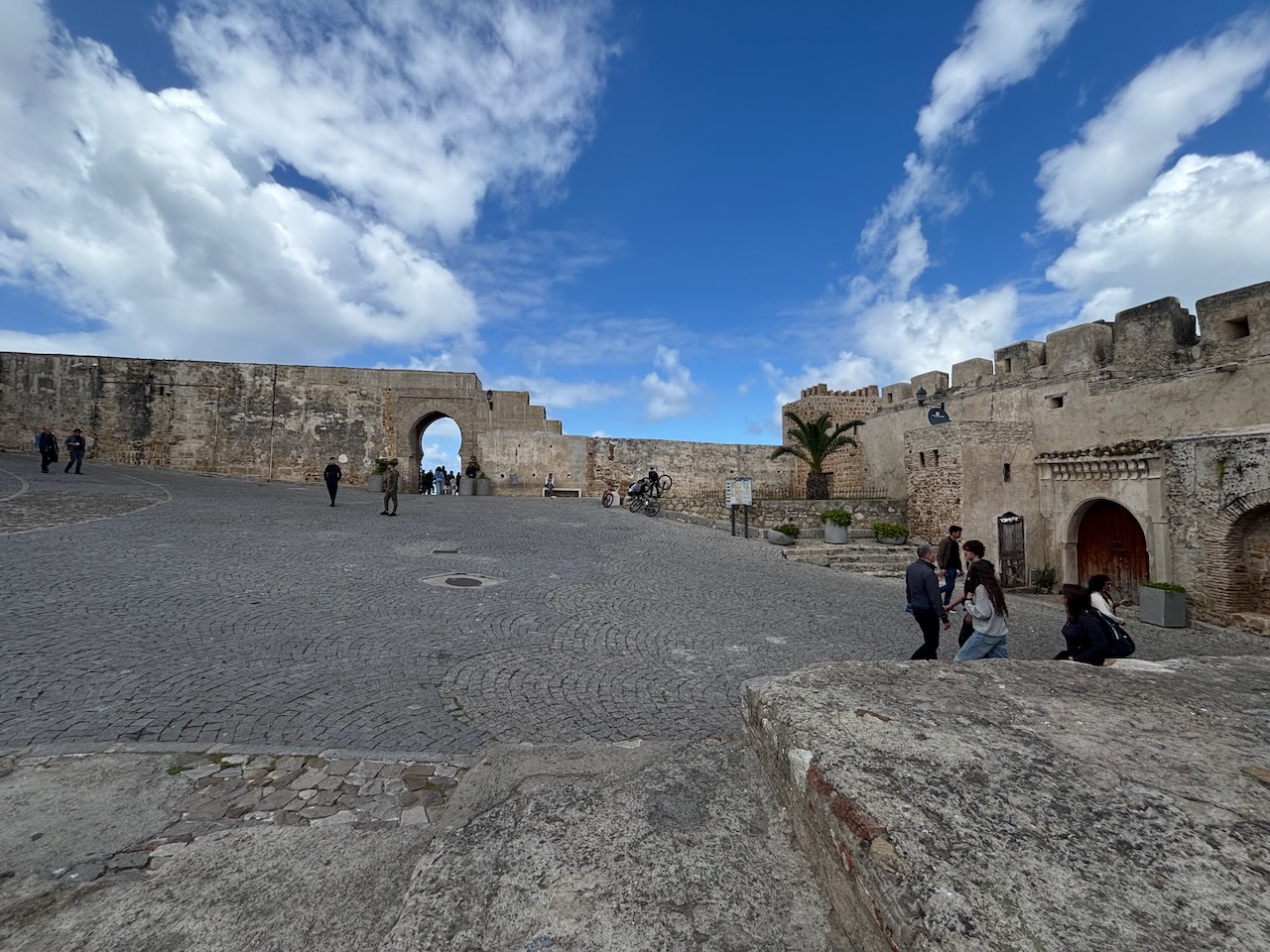
The Petit Socco is the home of Café Central—with the large awnings and look of a European café—is accessible, and therefore the most commercialized and touristy (coffees, fruit drinks, and meals; long hours daily). From the Petit Socco, the downhill lane leads past the Great Mosque (built on the site of a Roman temple) to a fine harbor viewpoint, the Terrace dar Dbagh and below it, Terrasse Borj Al-Hajoui. Here we could see the 16th-century Portuguese fortifications, a huge WWI-era cannon, the cruise port and ferry terminal, Spain across the water, and lots of cargo ships headed for the massive Tangier Med port about 25 miles east.
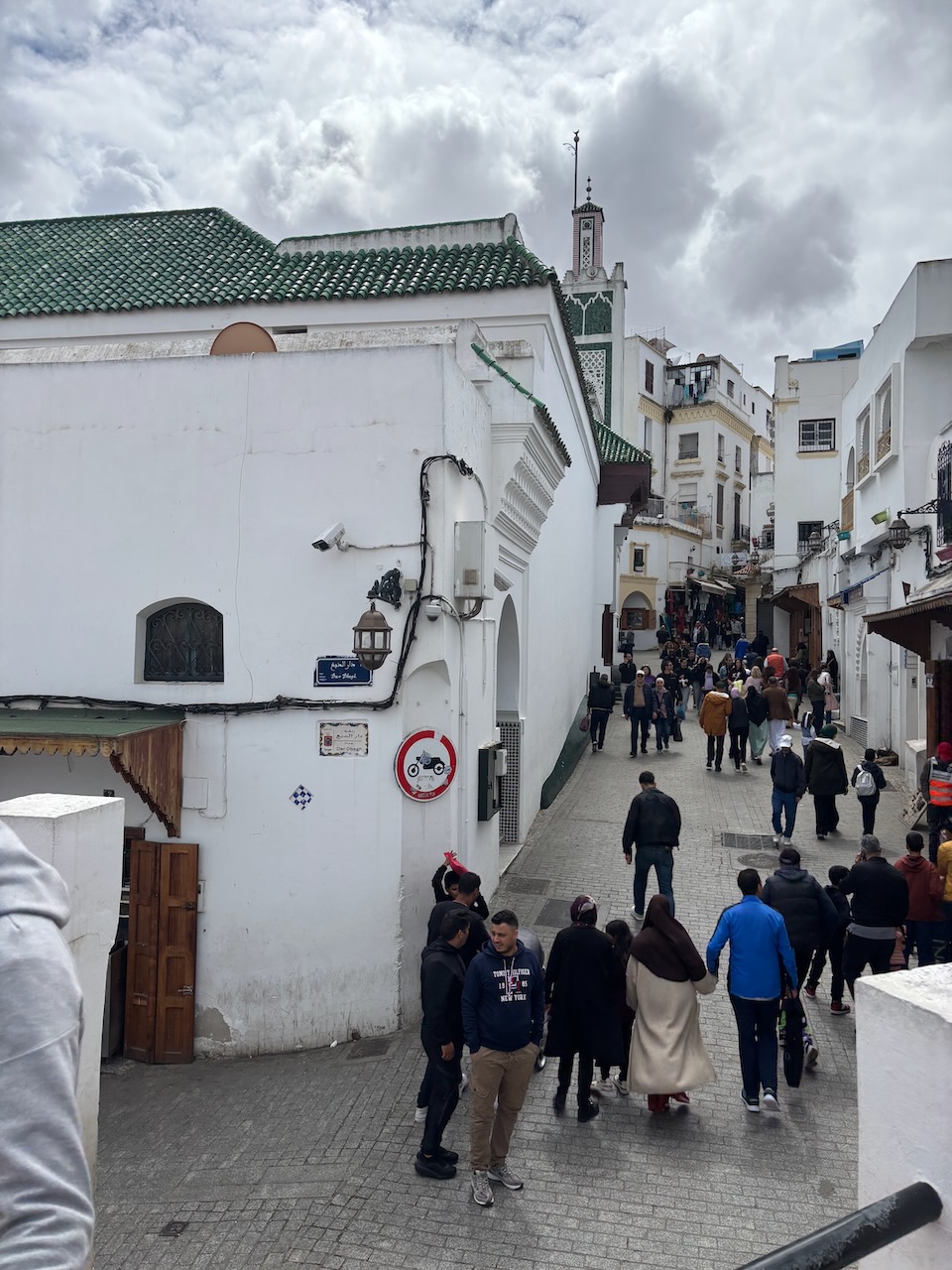
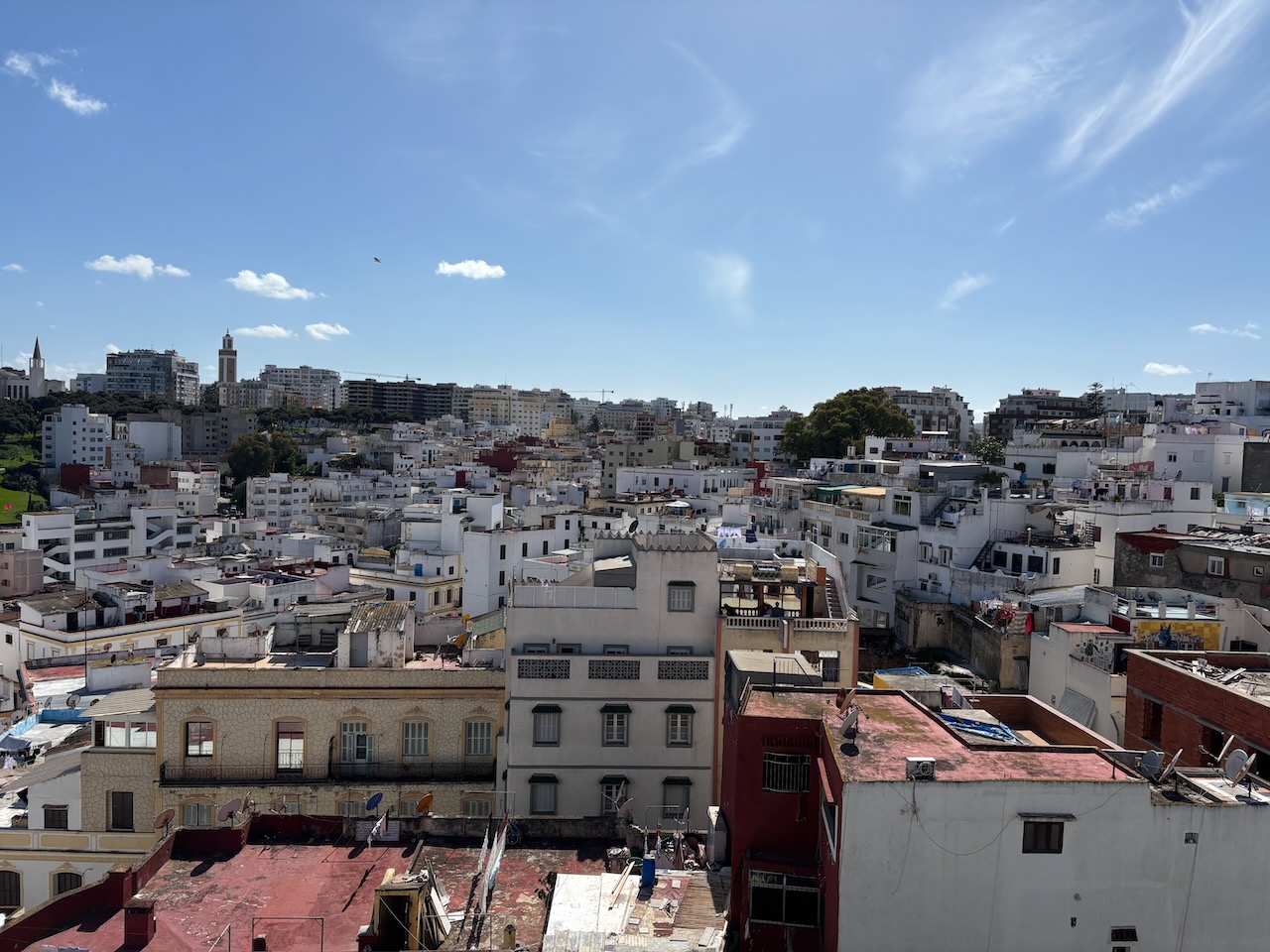
As we’d been out most of the day, it was time to head back to Dar Nour for happy hour. To do so we wound our way uphill through the winding twisty lanes of the upper medina until we reached an overlook on the Rue Riad Soltane where it was a short distance to our lodging. Our timing was good as the bar was open, and we had one last round of drinks before having in the Dar’s restaurant on the first floor.
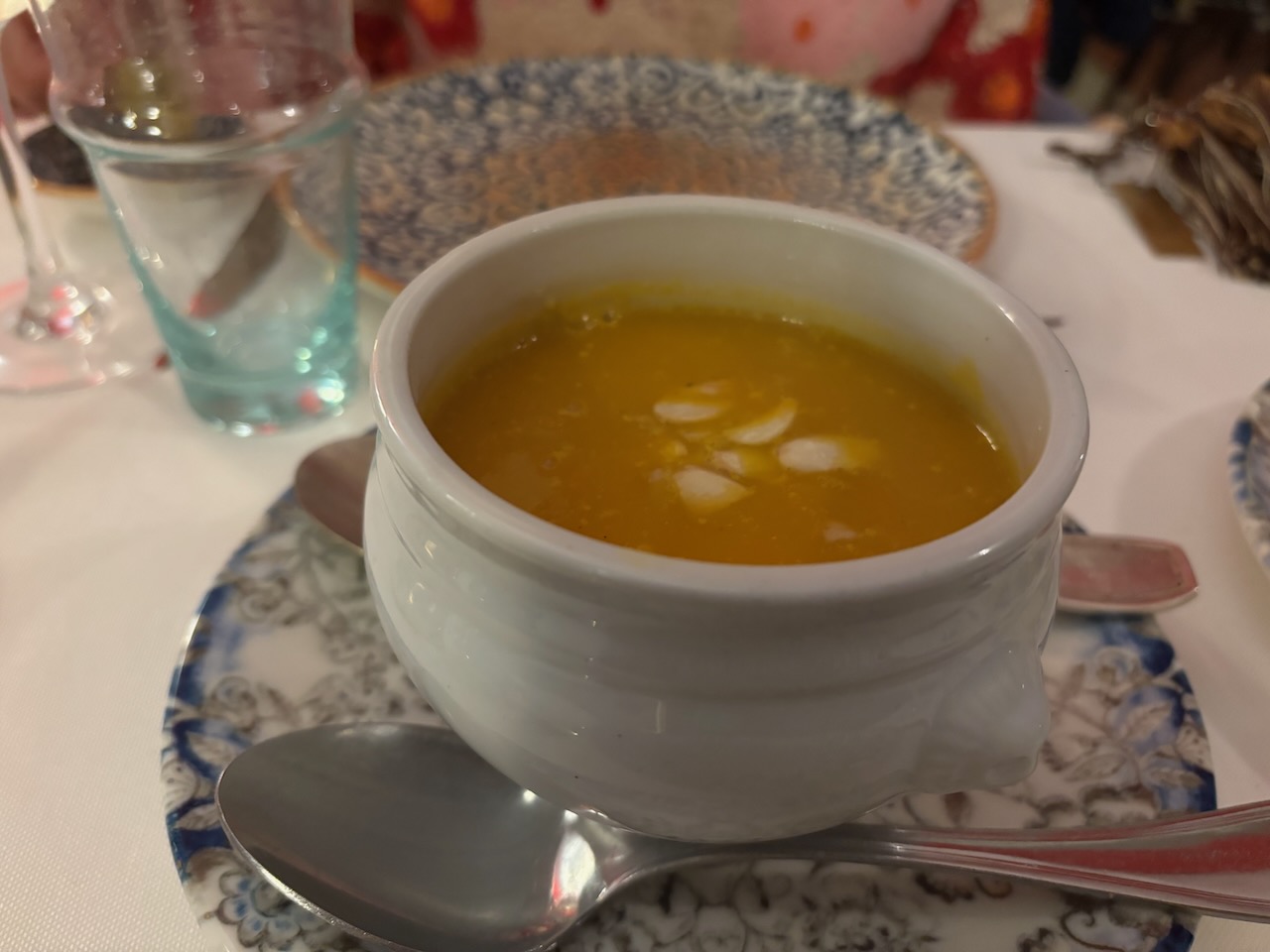
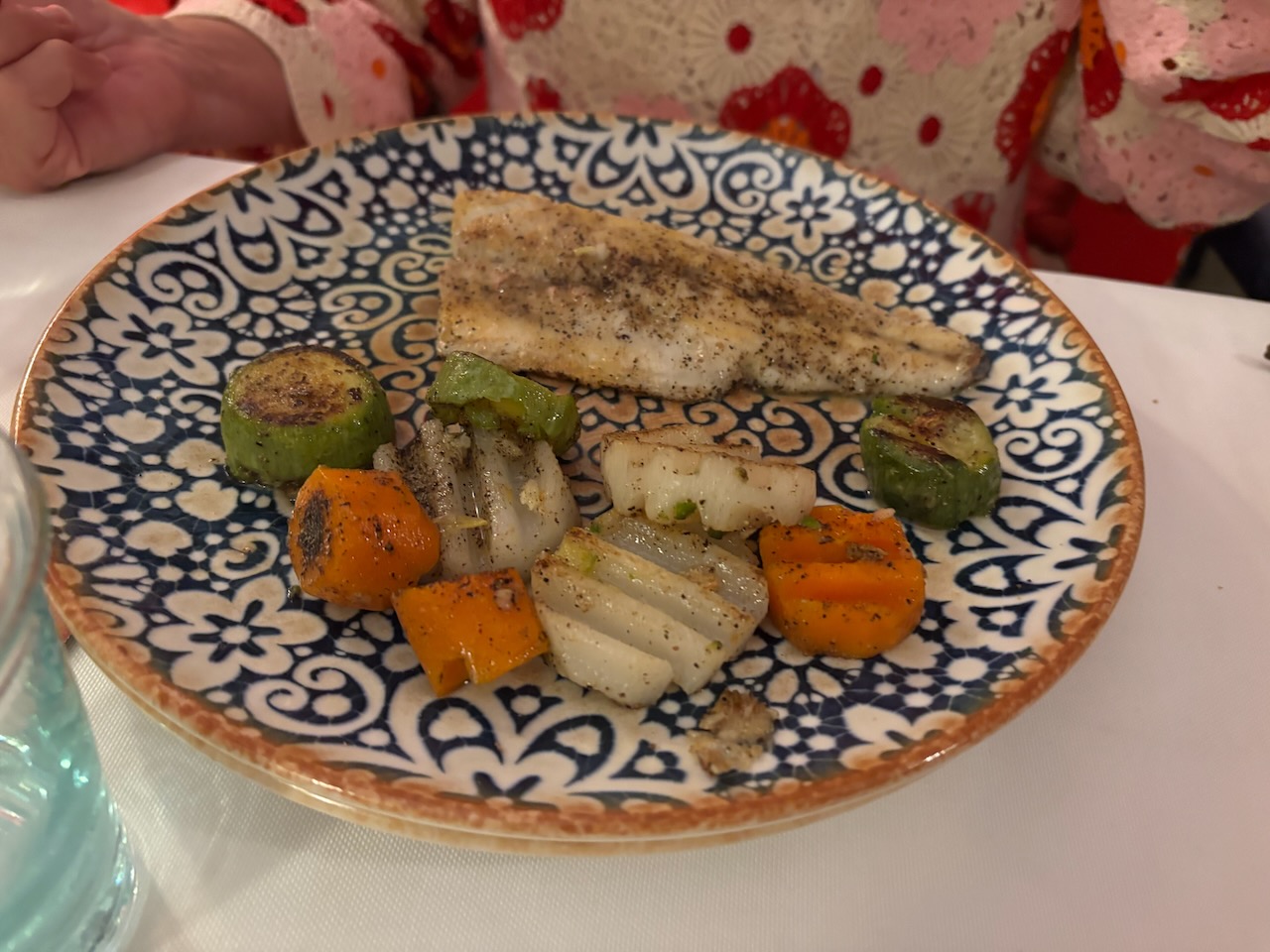
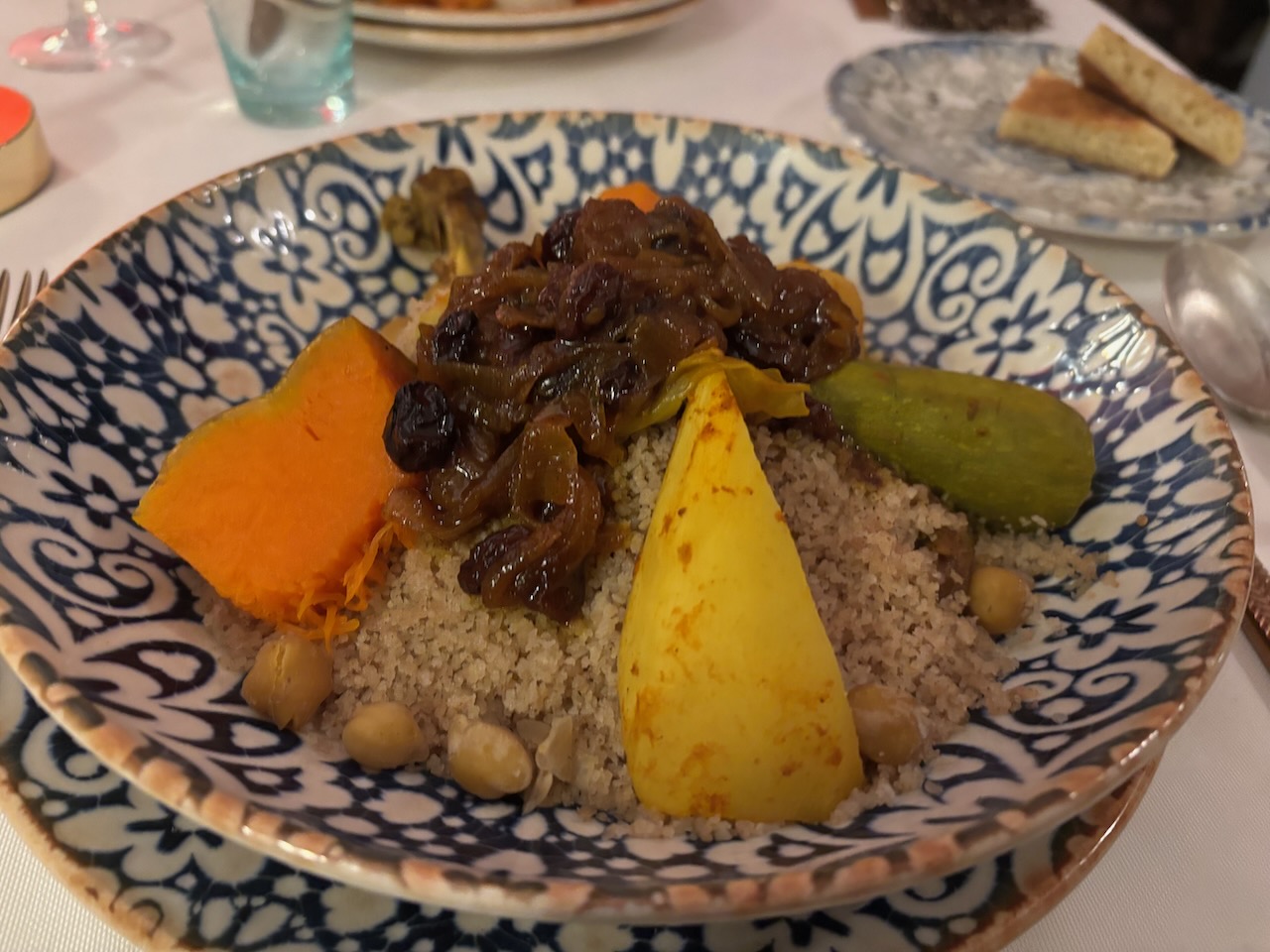
We started with a glass of white wine apiece which we enjoyed with two entrees (appetizers), a mini–Chicken Pastilla and a delicious Pumpkin Soup with Ginger and Almonds. I would finish with a glass of house red wine with my Chicken and Vegetables with Couscous while Joanna enjoyed her Sea Bass filet. It was a typical Moroccan meal, not heavily spiced and all of it cooked to perfection. Our tab for the meal came to 510 Dirhams ($56), each glass of wine costing just 60 Dirhams ($6.60). It was a fine way to finish up our time in this lovely country.

Our short time in Morocco had been full of new sights, sounds, and adventures. Starting with an another excellent tour with Intrepid, we used it as a springboard to discover more of the country on our own, reminding us that regardless of our hesitation to explore new destinations as we age, we still have the wherewithal to do so. And the tours provide that feeling of familiarity that then encourages stepping out of one’s comfort zone.
The total cost of our thirteen days in Morocco, including that for the tour, was $5,272 or $406 per day for the two of us. More than we would normally spend, but usually the tours we’ve taken in the past were one offs, that is we just enjoyed the tour (the Nile and Peru) and didn’t spend additional time before and after. To get an idea what independent travel might run we can take a look at the six extra nights we spend in country after the tour.
And as we knew it would turn out, like many other countries like this, it is consistently affordable to stay in nice lodging, eat good tasting food, and spend time and money doing cultural things. Our total cost for the six nights came to $992 or $165 a night
| Category | Lodging | Food | Culture | Misc | Trans | Total |
| Dirhams | 4,946 | 1,973 | 280 | 290 | 1,530 | 9,020 |
| Dollars | $544 | $217 | $31 | $32 | $168 | $992 |
| % of Total | 55% | 22% | 3% | 3% | 17% | 100% |

Links
Musée Dar Niaba: https://en.wikipedia.org/wiki/Dar_Niaba
Discover more from 3jmann
Subscribe to get the latest posts sent to your email.


 3jmann