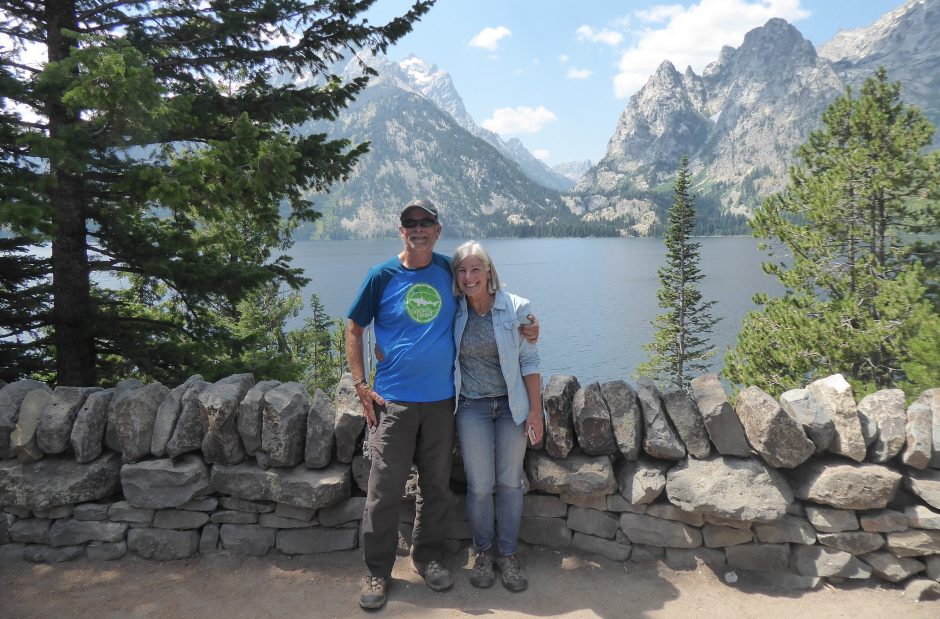
April 25 – 26
We would have a four hour or so drive from Jessie and Dave’s place to Cordoba, our next stop on the journey where we would be staying for just two nights before pushing on to meet sister Bev in Valencia. And so, we departed late morning after a satisfying homemade breakfast courtesy of Dave, making sure to try and keep under the speed limit on that notorious stretch of road. As we only got the one speeding ticket, I assume we got through it cleanly.
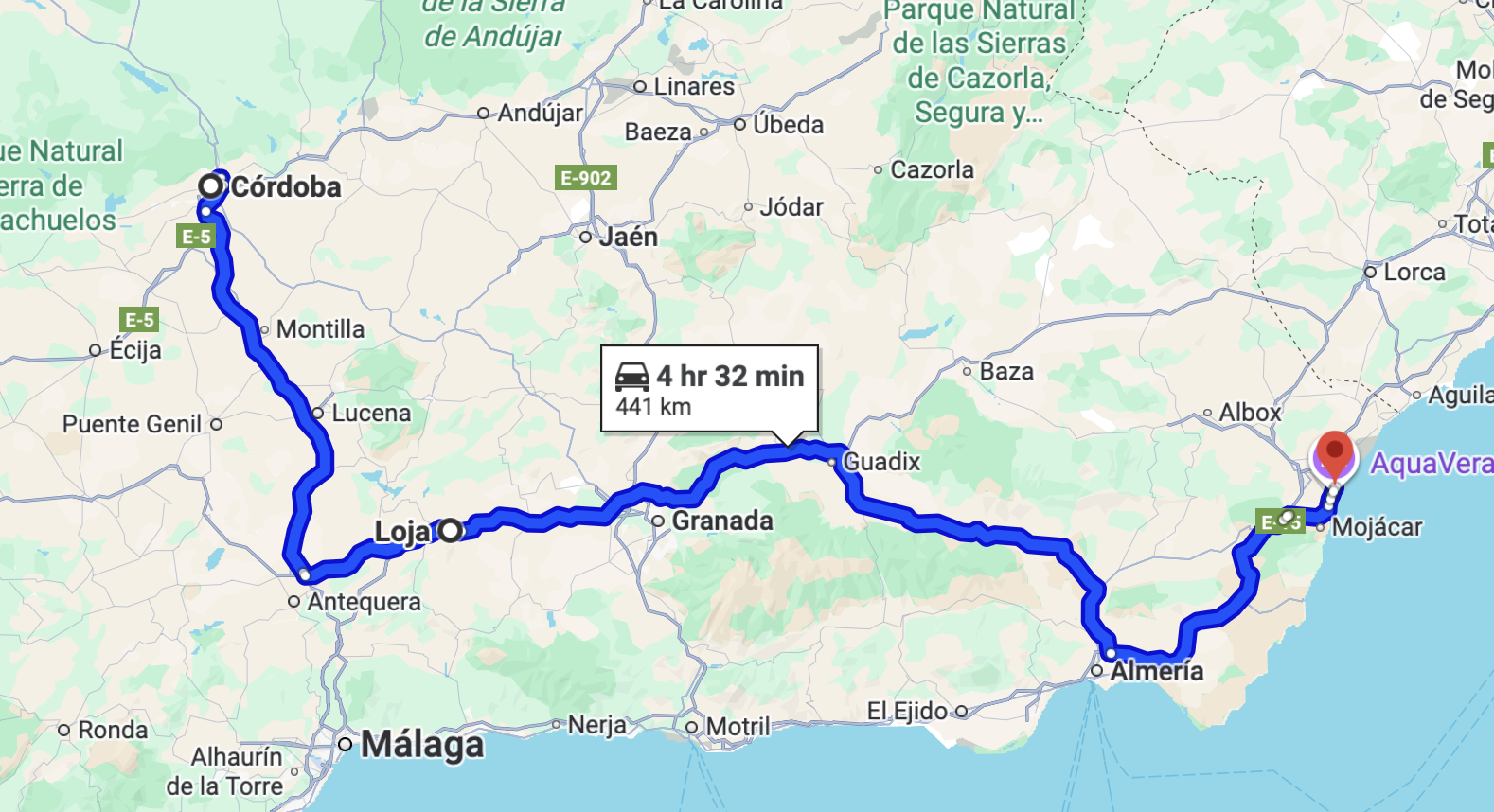
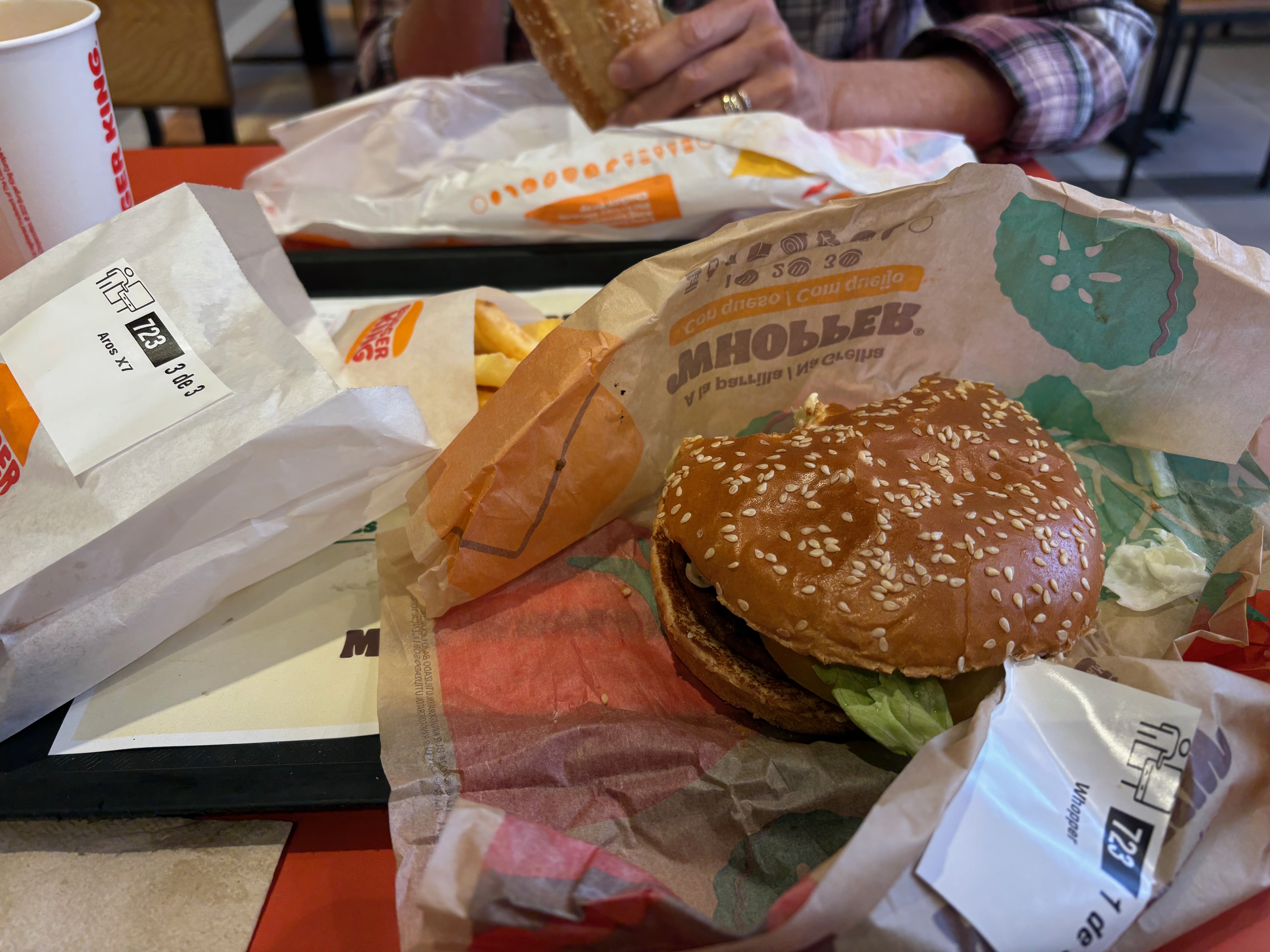
About halfway through the drive as we neared the town of Loja, we pulled off the highway to get gas and noting a Burger King as part of the complex, decided to stop in for a late lunch. It was a modern establishment, and we waited a long time to get to an empty ordering kiosk as it was very crowded that day. We were able to program the unit to display in English but found it confusing in that it seemed we could only order a combo meal, generally more food that we would typically get in one seating. We did manage to plow through most of it, that is a Whopper, Fries and Diet Coke apiece for 13 Euros ($15), comparable to what we would pay in the States and just as good.


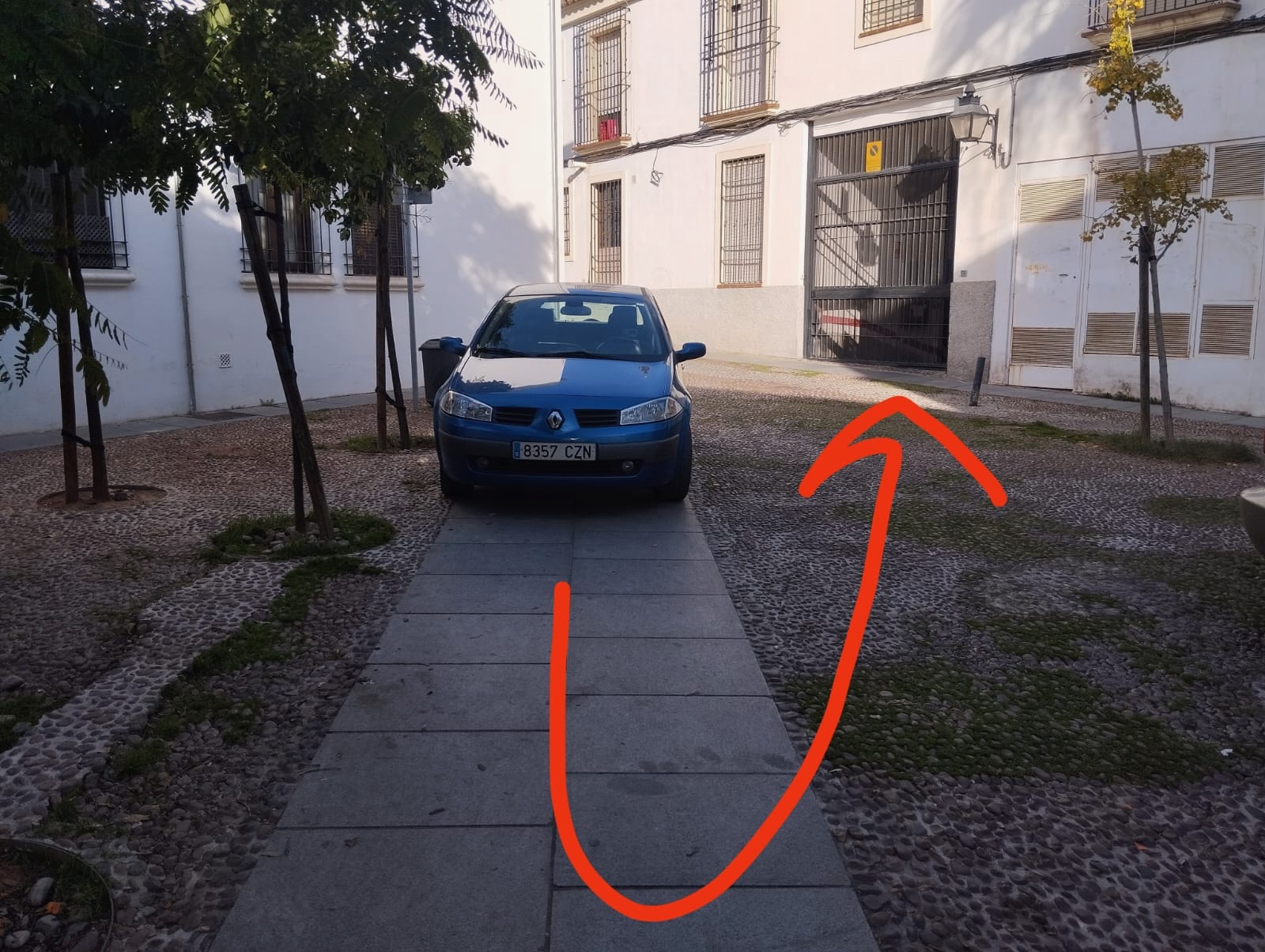
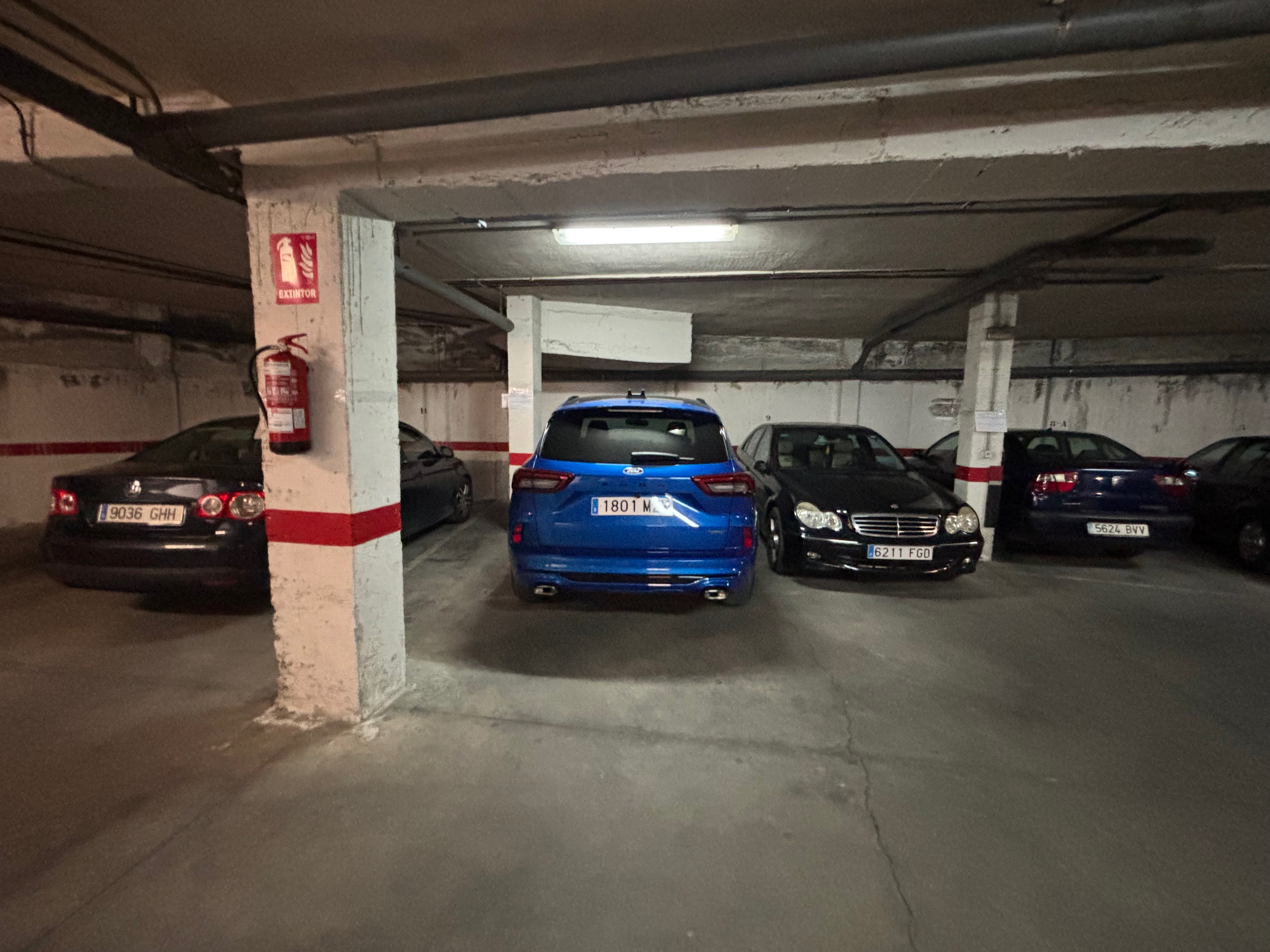
A couple of hours later we arrived in Cordoba and encountered what would be a common problem for us throughout the remainder of our time with the rental car, that is incredibly difficult driving situations in each town involving narrow streets and even tighter that we needed to pull in the side mirrors and have a passerby guide us through to a smallish plaza where I parked the car. Joanna then had to go to the unit and retrieve the remote control that would activate the gate. The garage itself, while crowded required care in navigating, but was not impossible to manage. That would not be the case in Valencia.
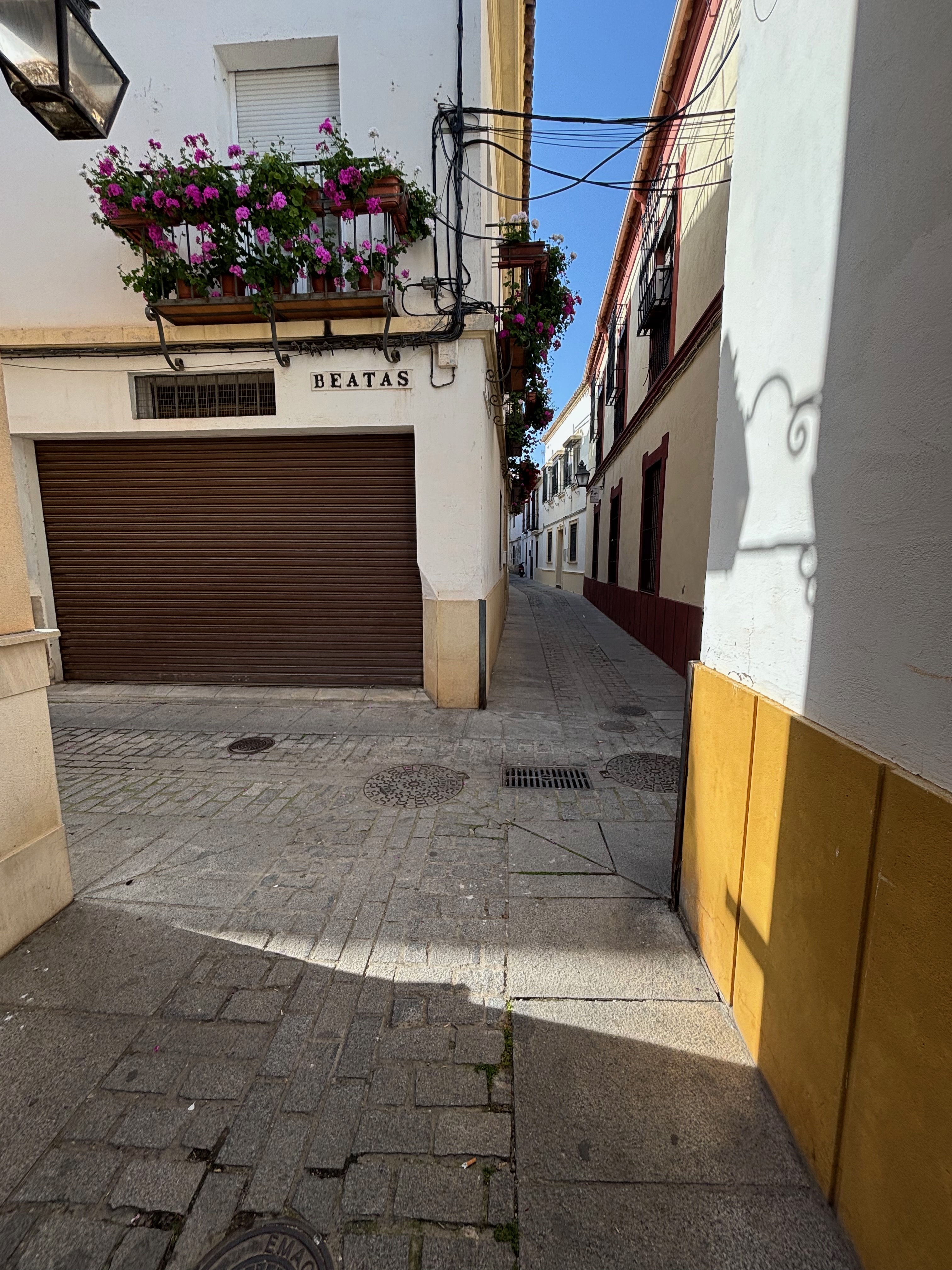

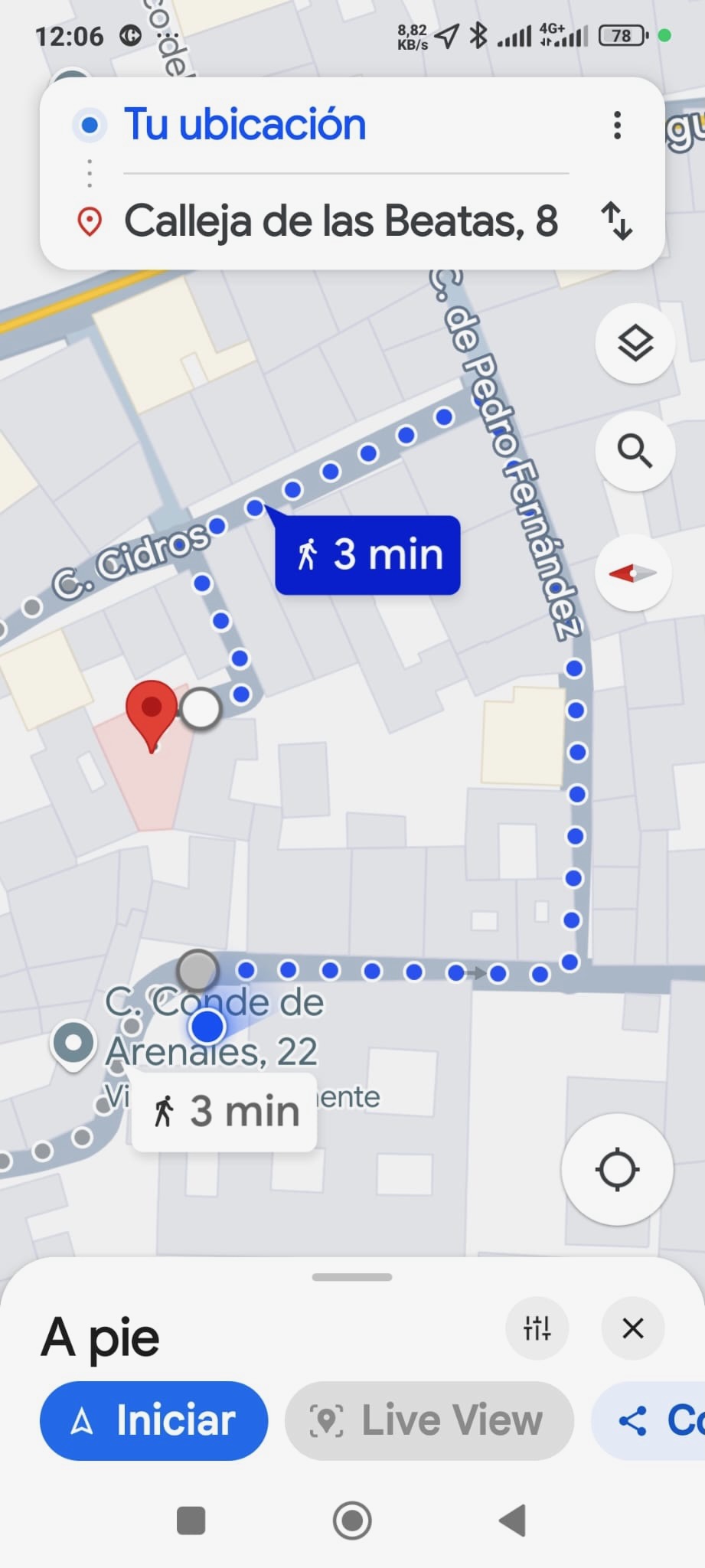
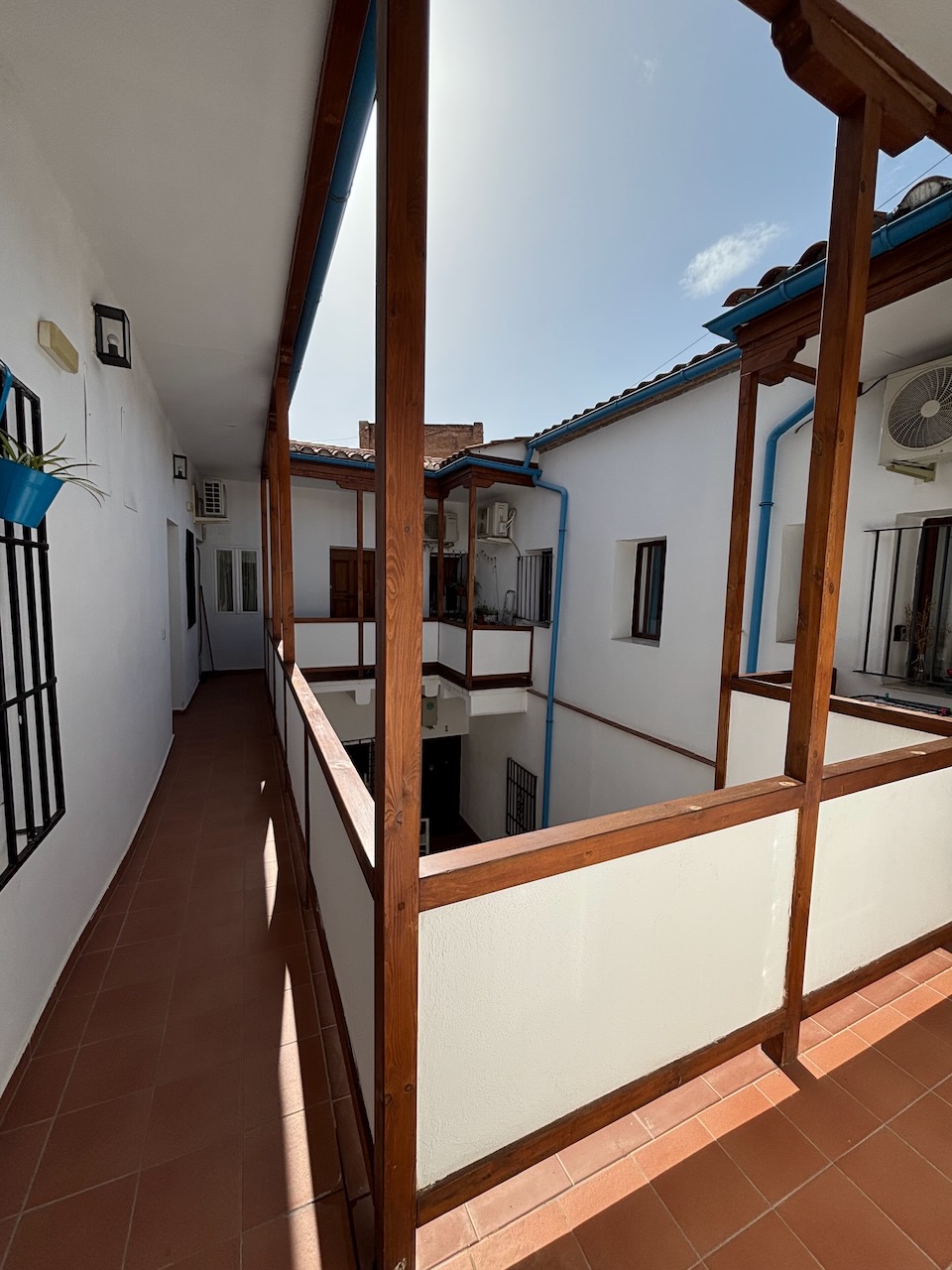
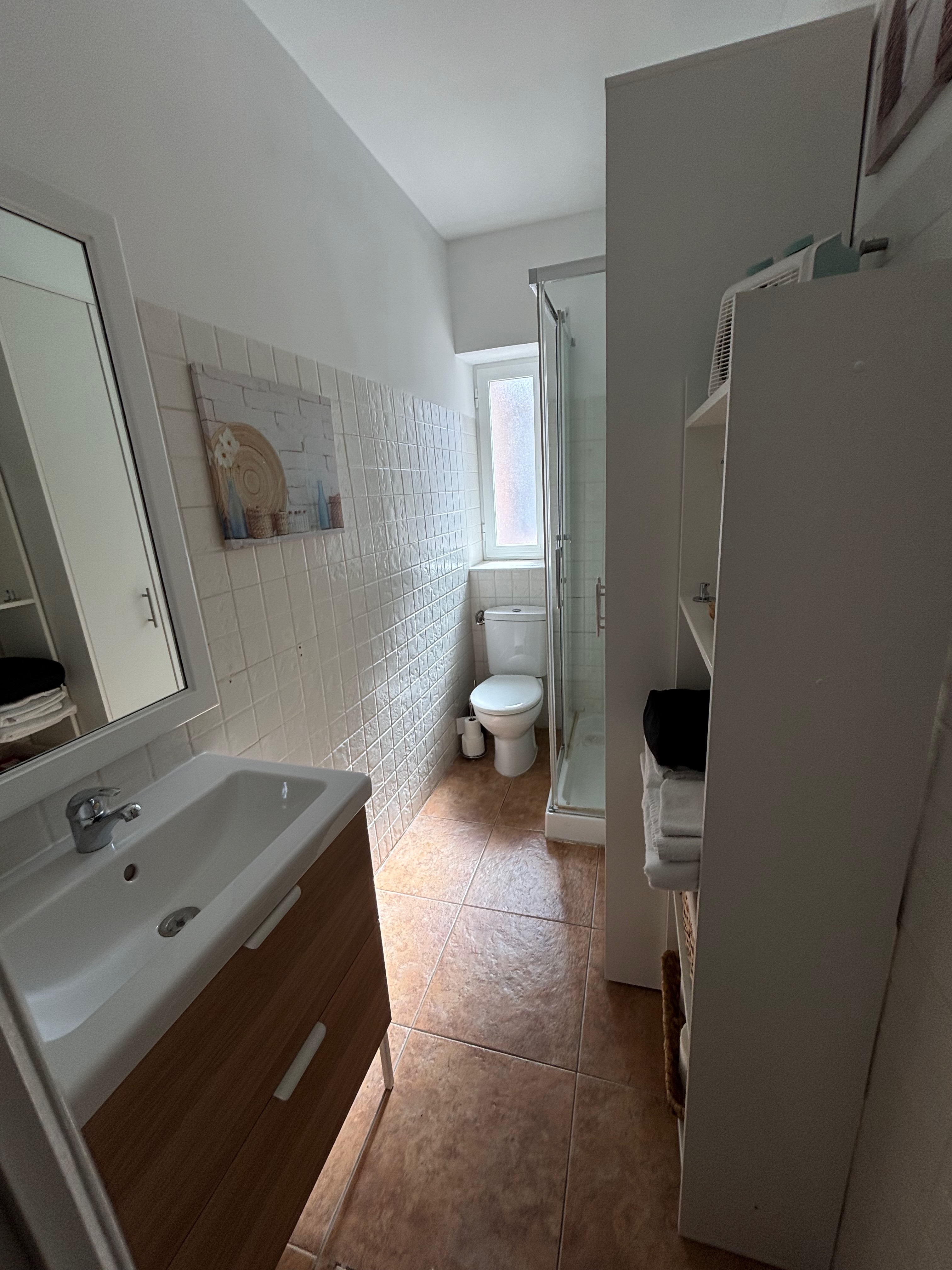
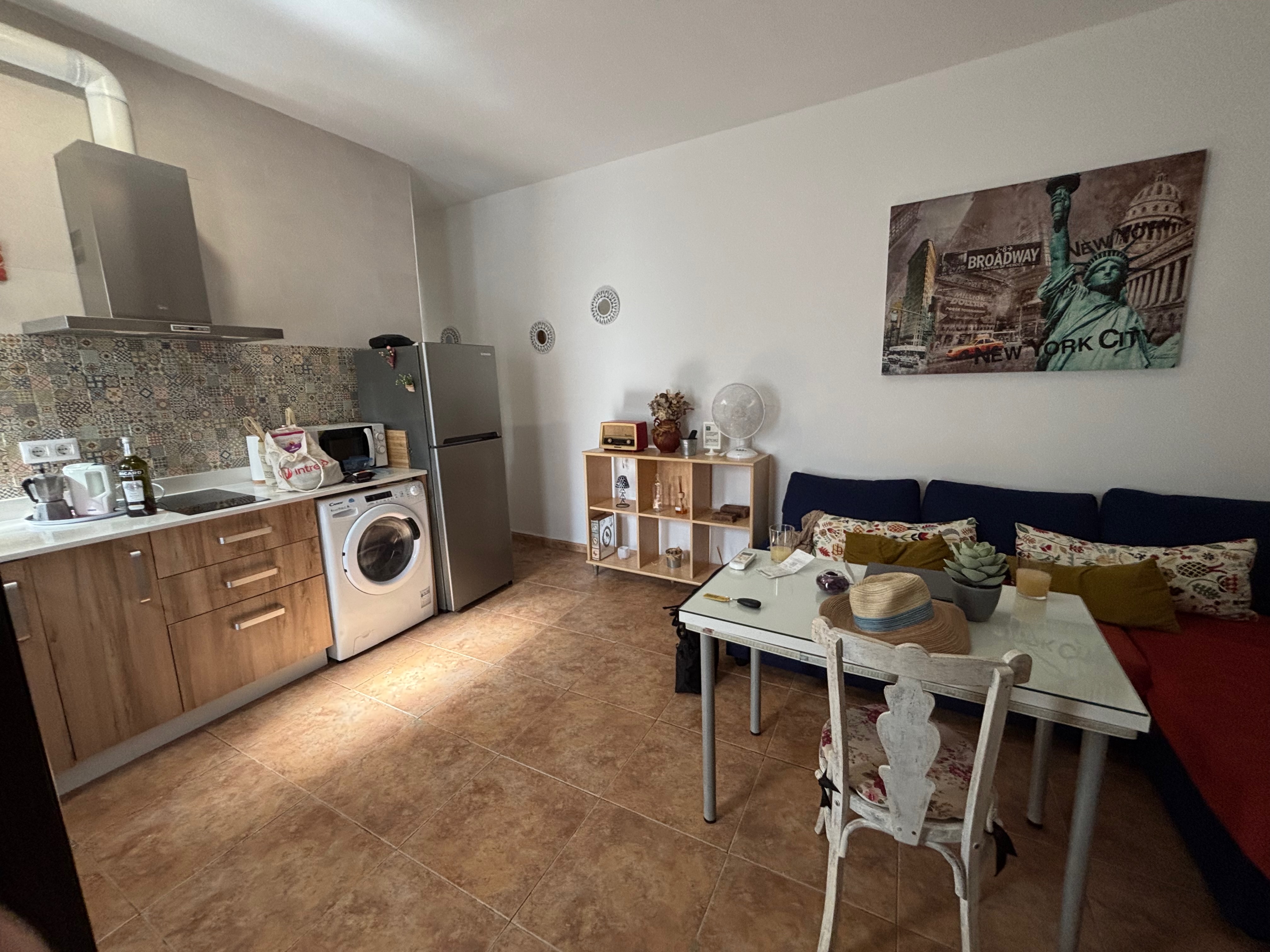
We settled in our two-bedroom unit, “Apt. Patio Beatas Free Parking Historic Center” for a total 236 Euros ($266) for our two night stay. We then went out to acquire supplies at a Carrefour for the next couple of days, returning to the apartment for the evening, still full from our Burger King lunch, providing us with the opportunity to stream a view of our favorite shows.
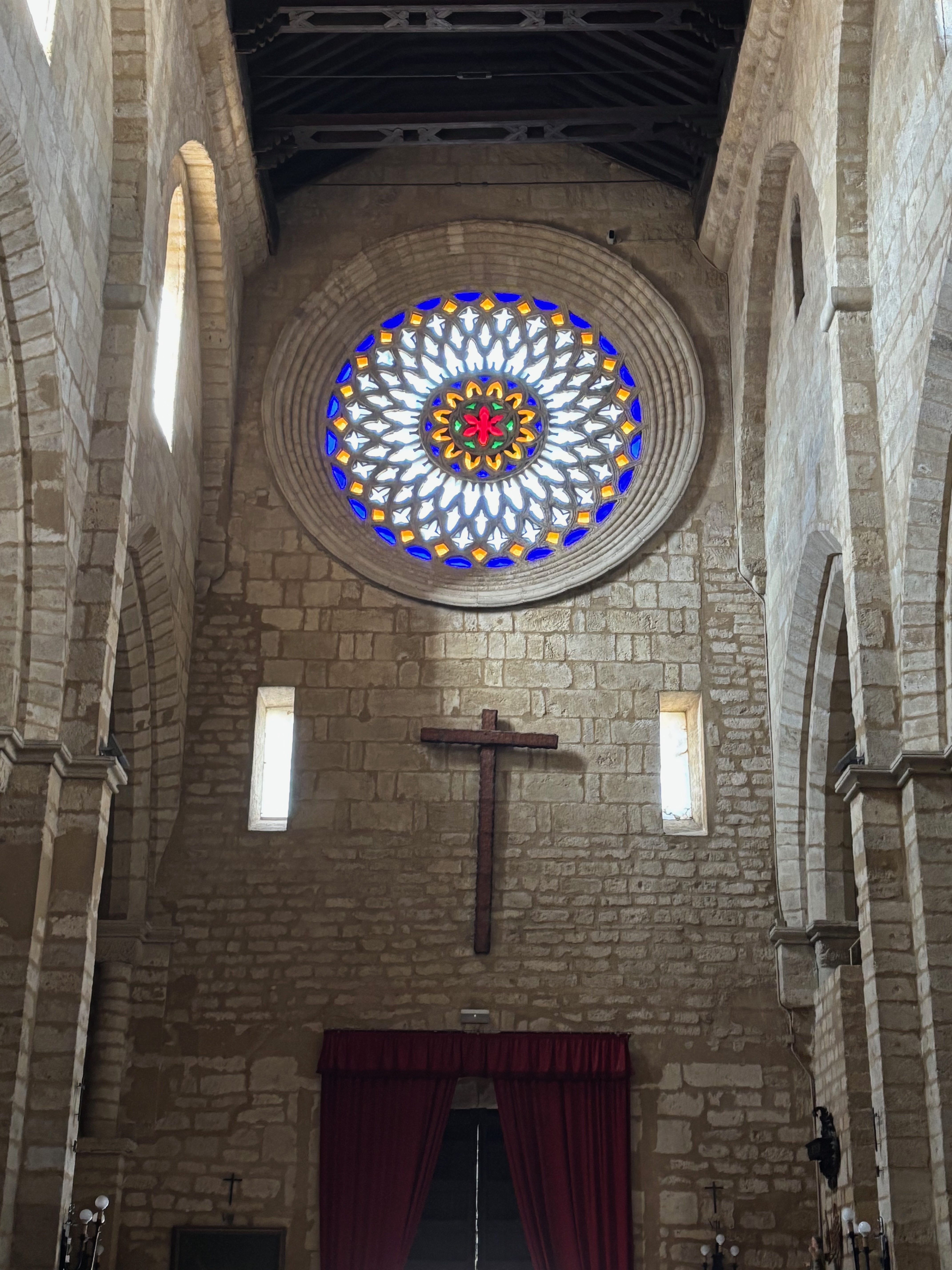
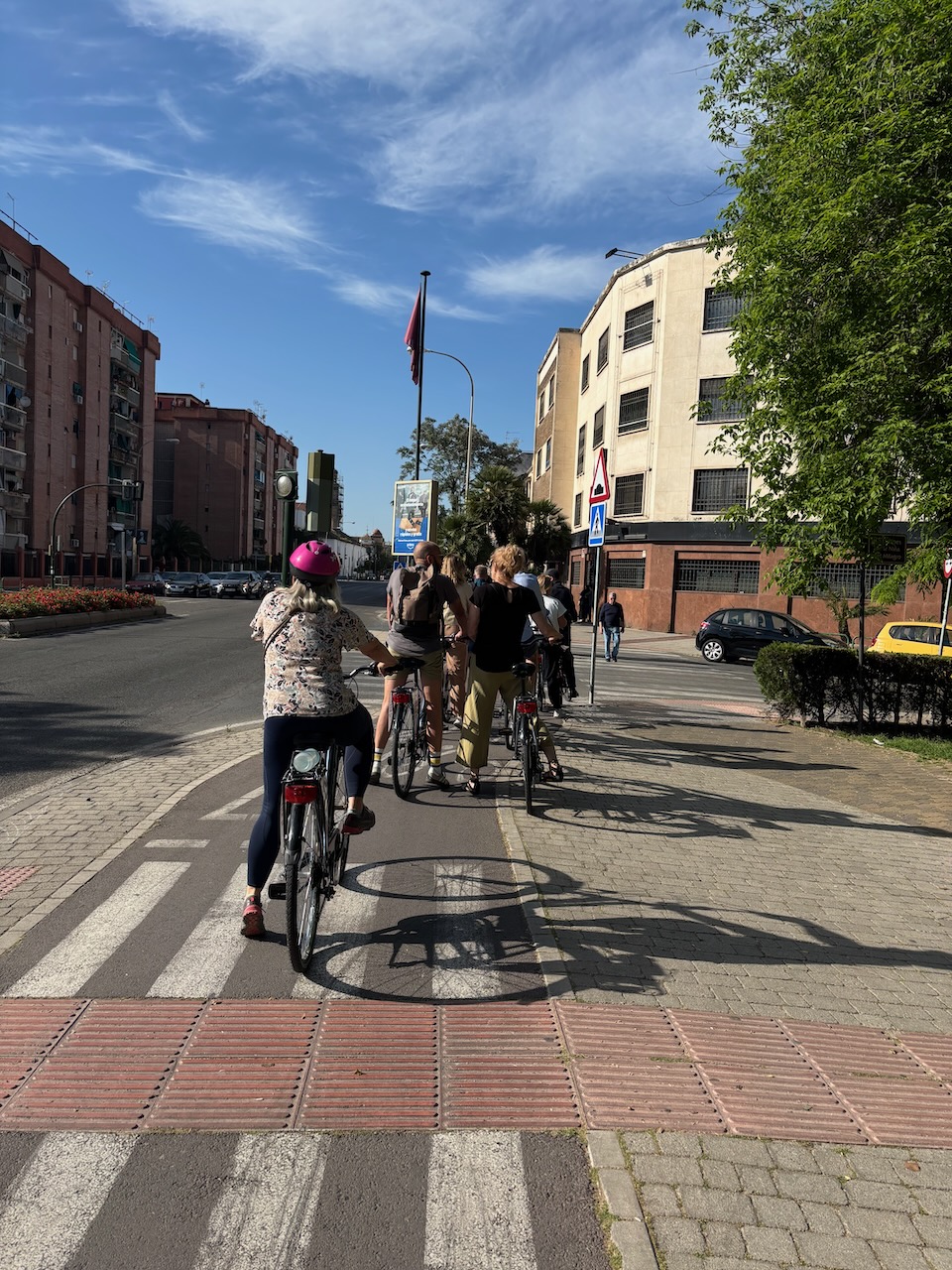
The next morning, we walked a few blocks to Ontdek Cordoba, a recommendation from the St. Steves guide, for a bike tour of town, led by the owner who is originally from the Netherlands. Thus, many of our fellow riders were from there as well. We mounted up and rode a bit deeper into the historic center of town for our first stop at Iglesia San Lorenzo. It was one of the twelve religious buildings commissioned by king Ferdinand III of Castile in the city after its conquest in the early 13th century.
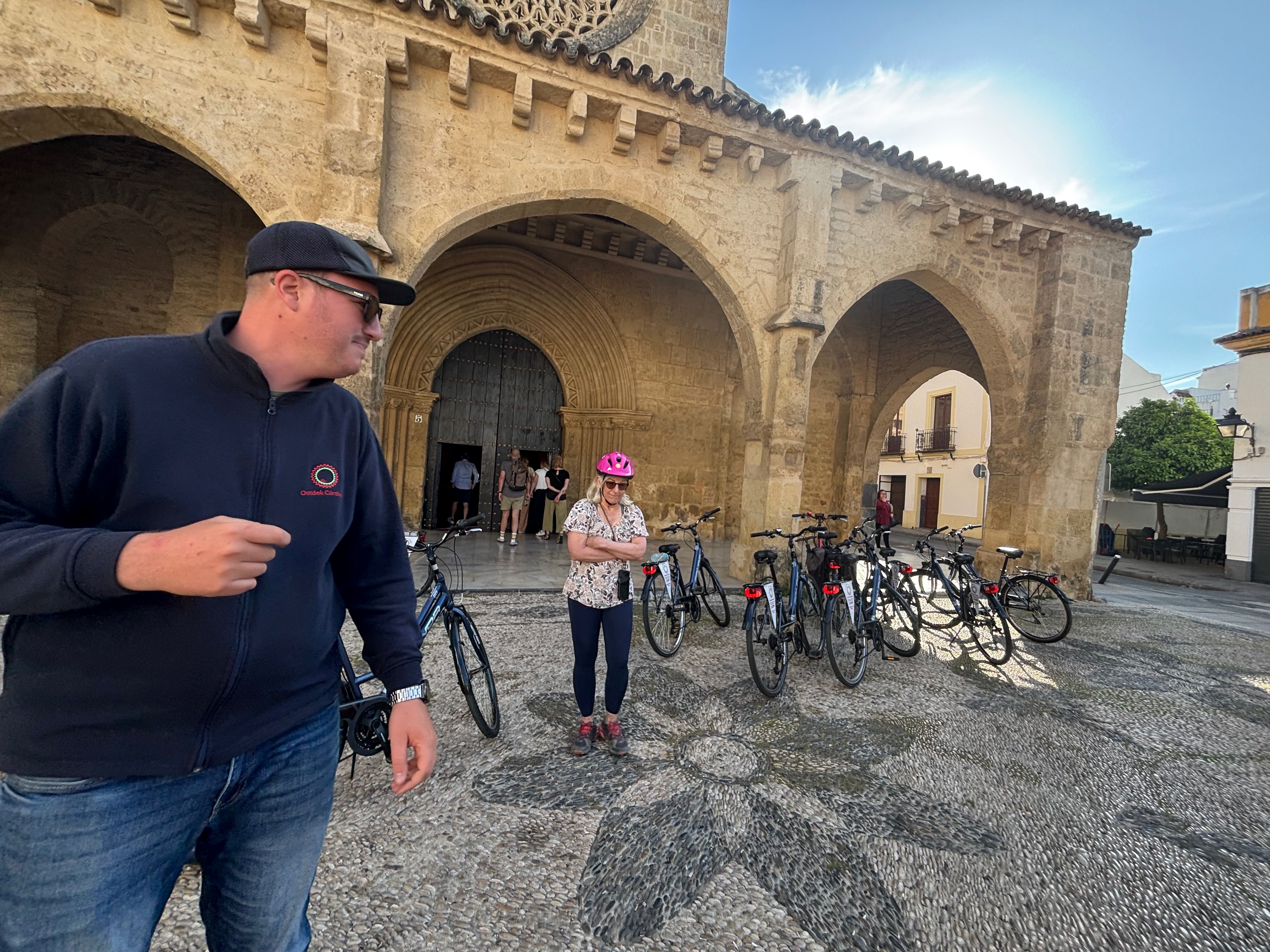

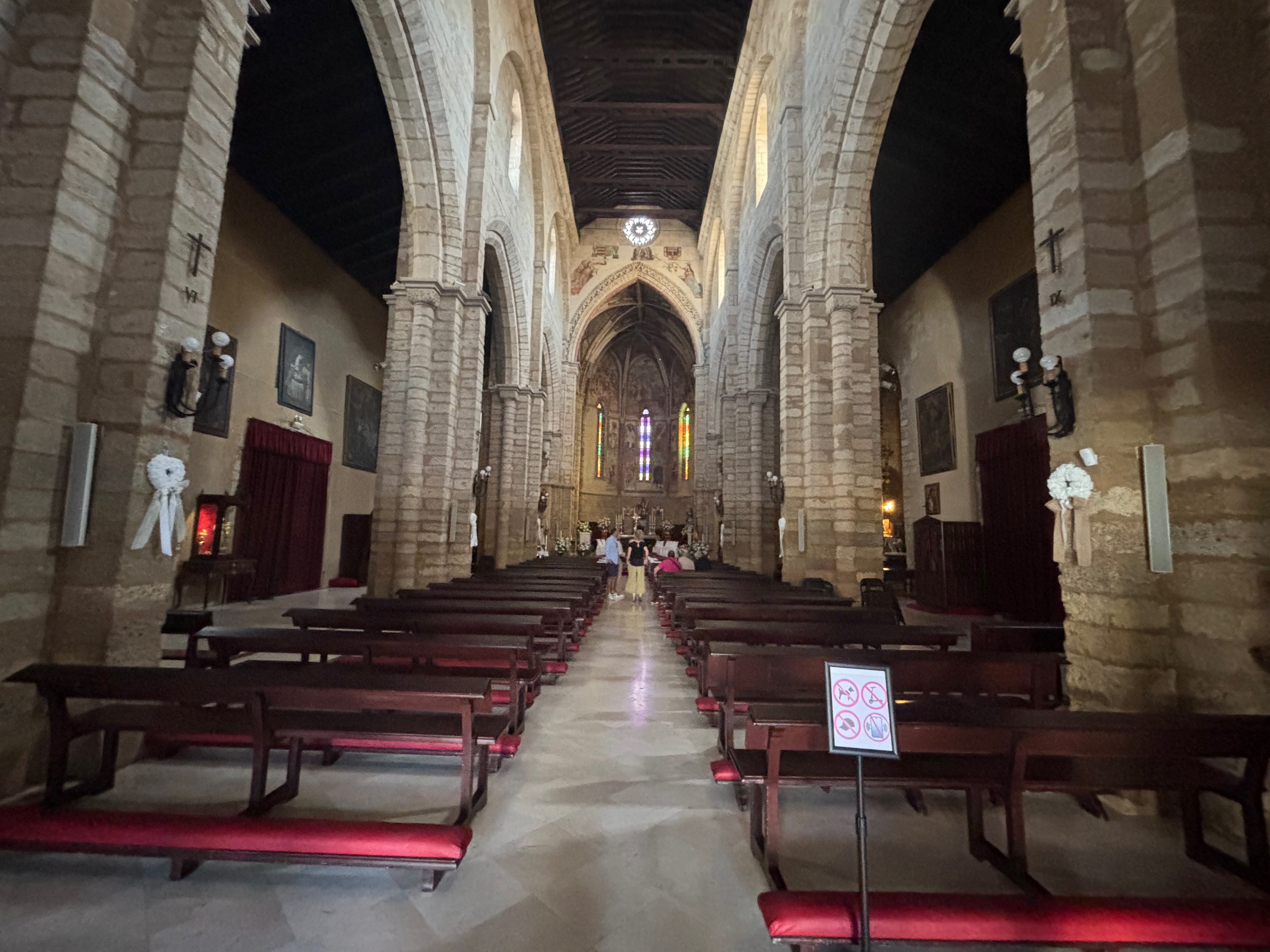
The church occupies the site of a pre-existing Islamic mosque, which in turn had been built above a Visigothic church. It was built between around 1244 and 1300, in a transitional style between Romanesque and Gothic architecture. It has the typical structure of Andalusian churches of the period, featuring a rectangular plan with a nave and two aisles, without transept and an apse.
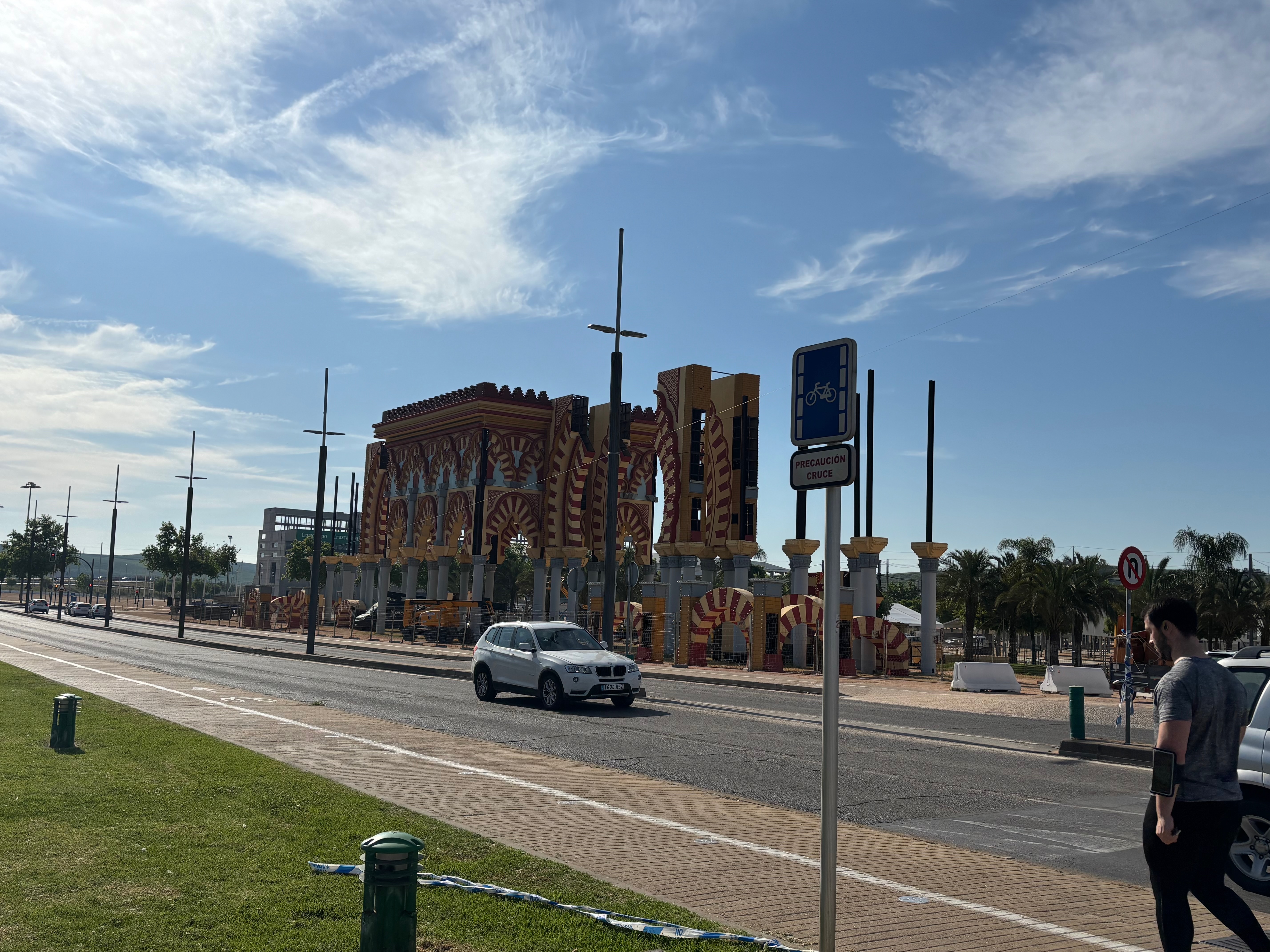
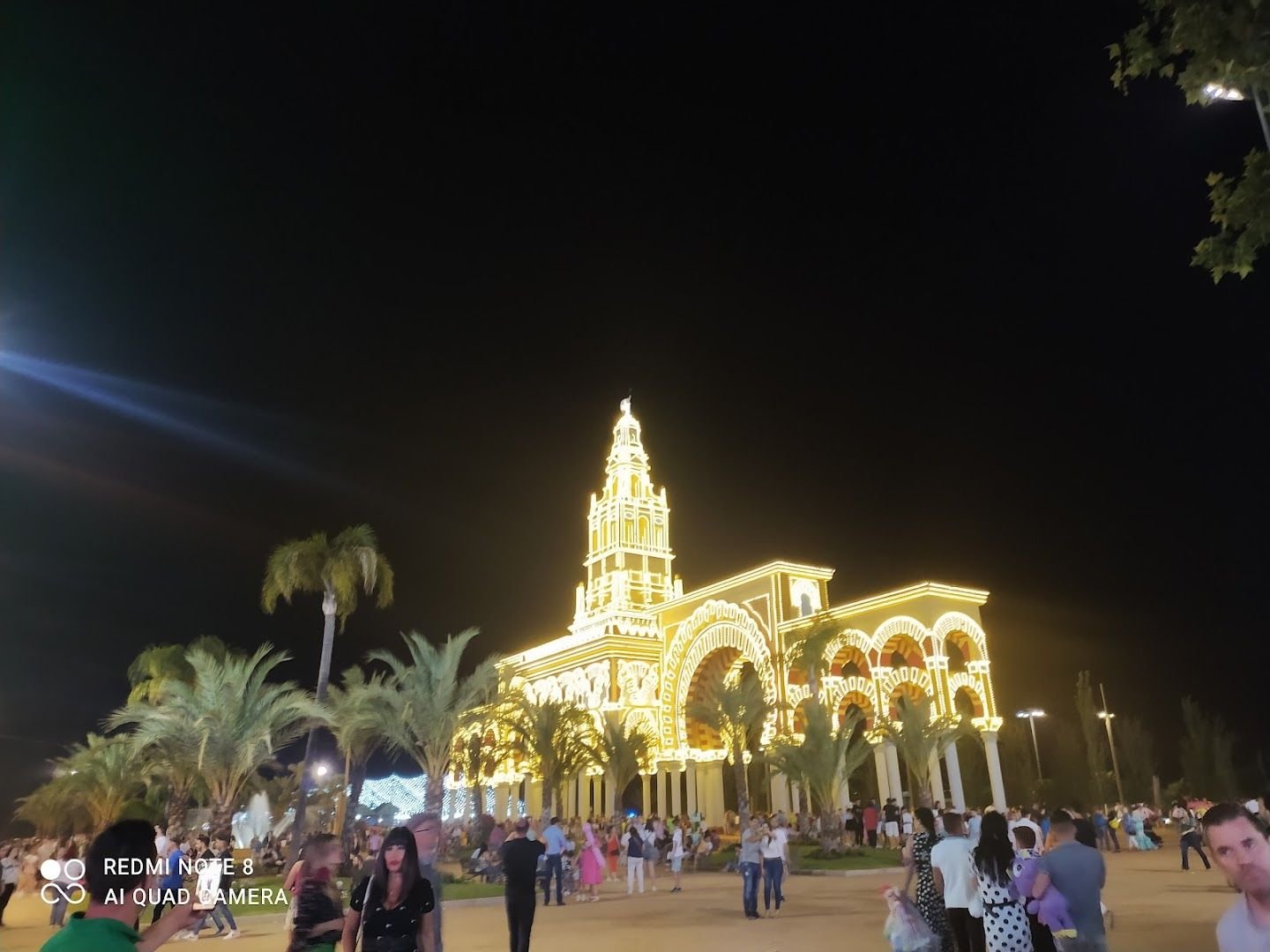
Cycling on, just before crossing the Guadalquivir River, we passed El Arenal, the site of the annual Fair of Cordoba, usually held at the end of May, to mark the feast of Our Lady of la Salud (Health). The special fairground in El Arenal is very easy to get to and horse-riders and men or women in gypsy dress can be seen in the casetas (individual enclosures belonging to each association) which are laid out in orderly rows in the different streets of the fairground.
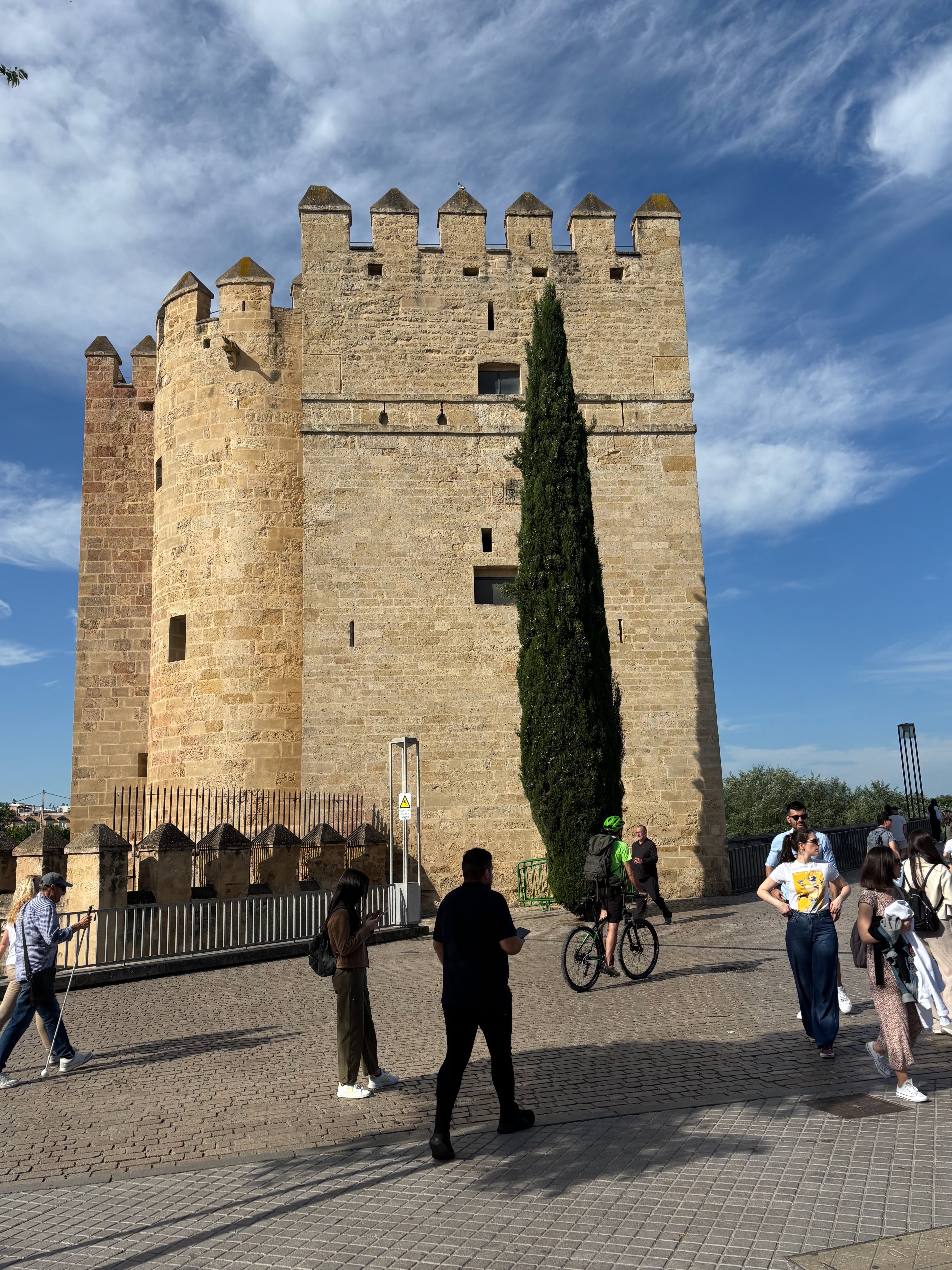
Just before crossing the river, we stopped to admire the Calahorra tower, a fortified gate of Islamic origin and then passed over on Puente Romano, the Roman bridge of Córdoba. It was originally built in the early 1st century and has been reconstructed at various times. It is known locally as the “Old Bridge” because for two thousand years it was the city’s only bridge across the river, until the construction of the San Rafael Bridge in the mid-twentieth century.
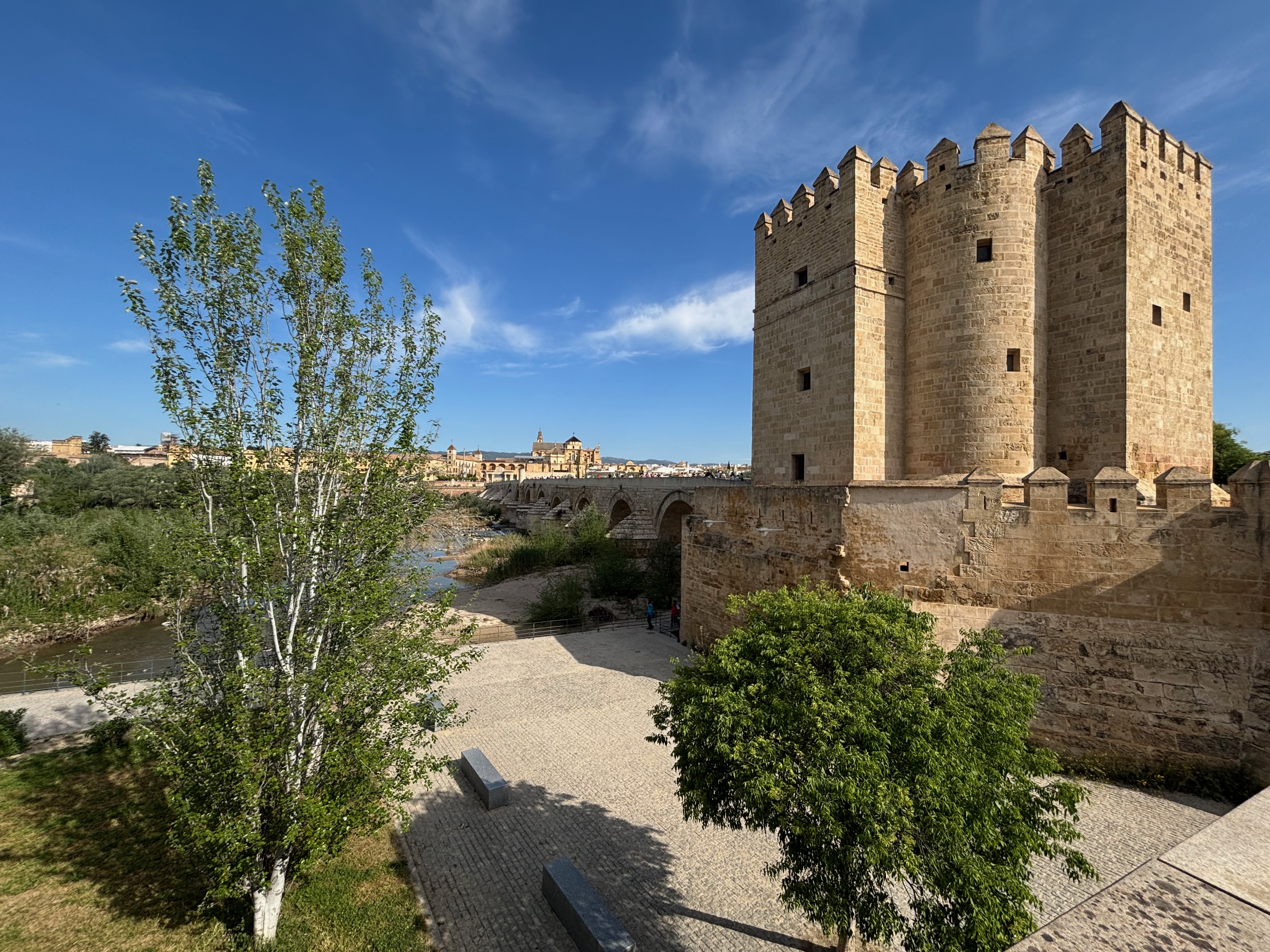
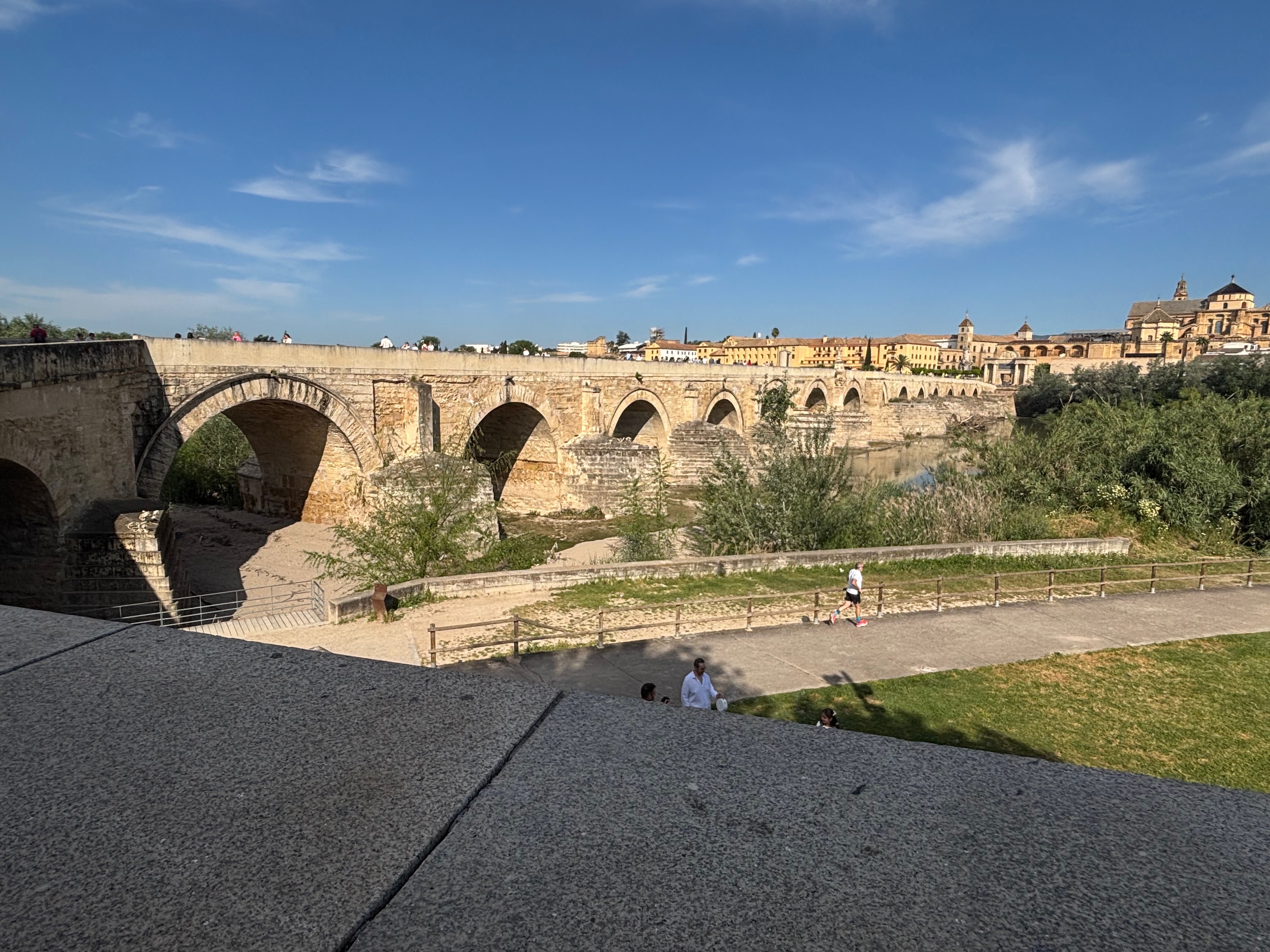
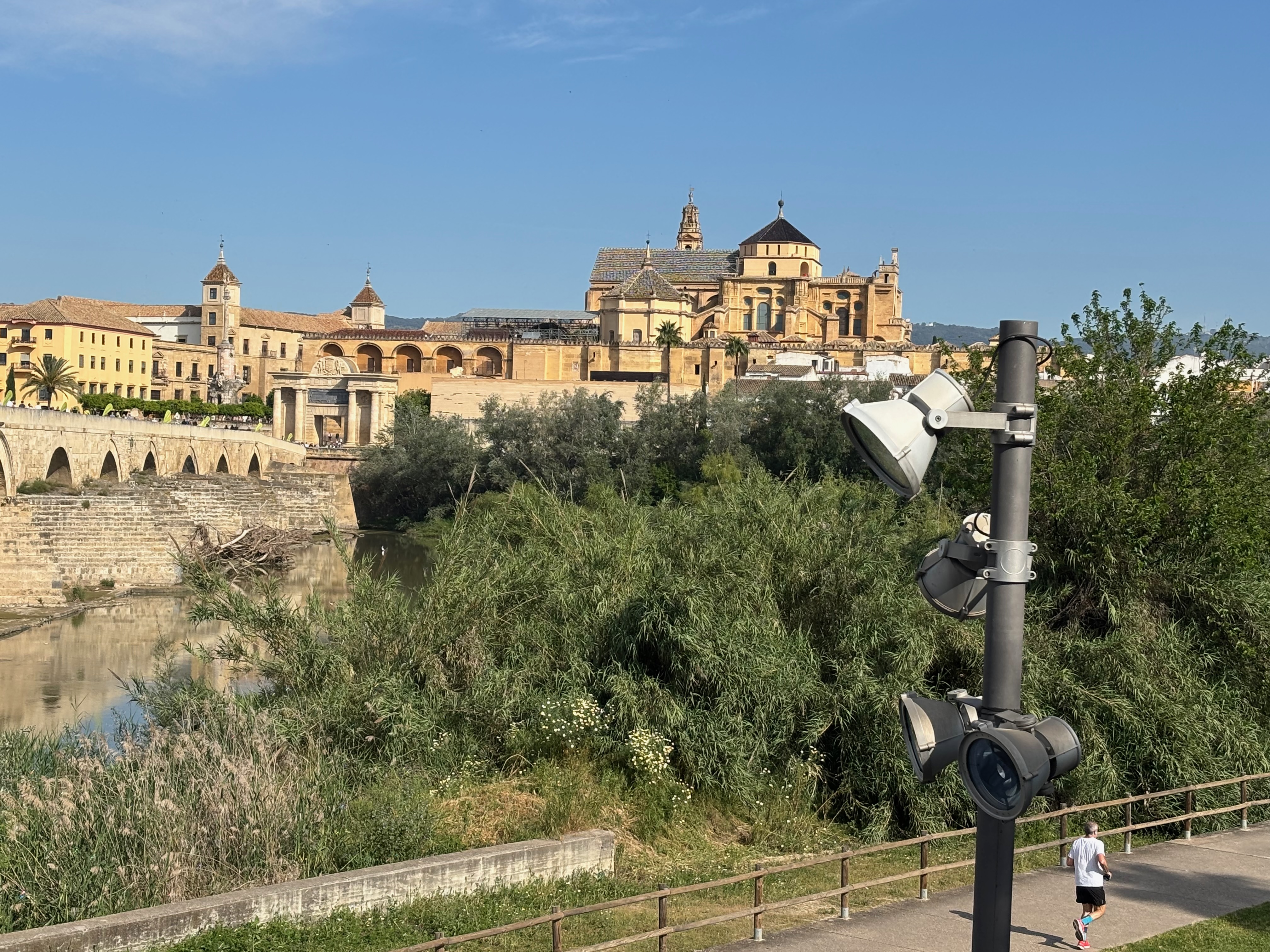
Once across the river we stopped for a view of the Mosque–Cathedral of Córdoba, the cathedral of the Roman Catholic Diocese of. Due to its status as a former mosque, it is also known as the Mezquita and in a historical sense as the Great Mosque of Córdoba. We would return here after the bike ride for a guided tour of our own making.
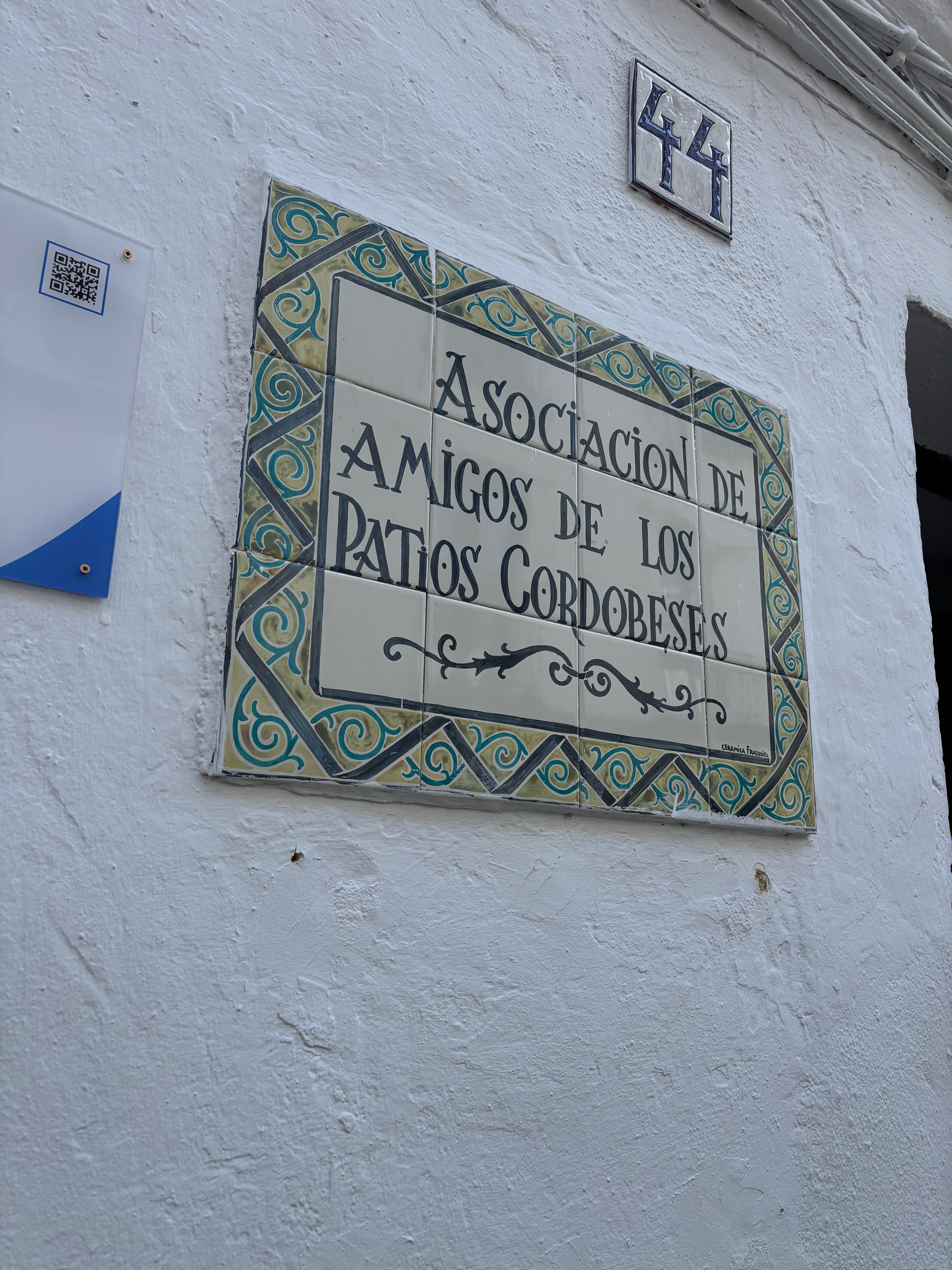
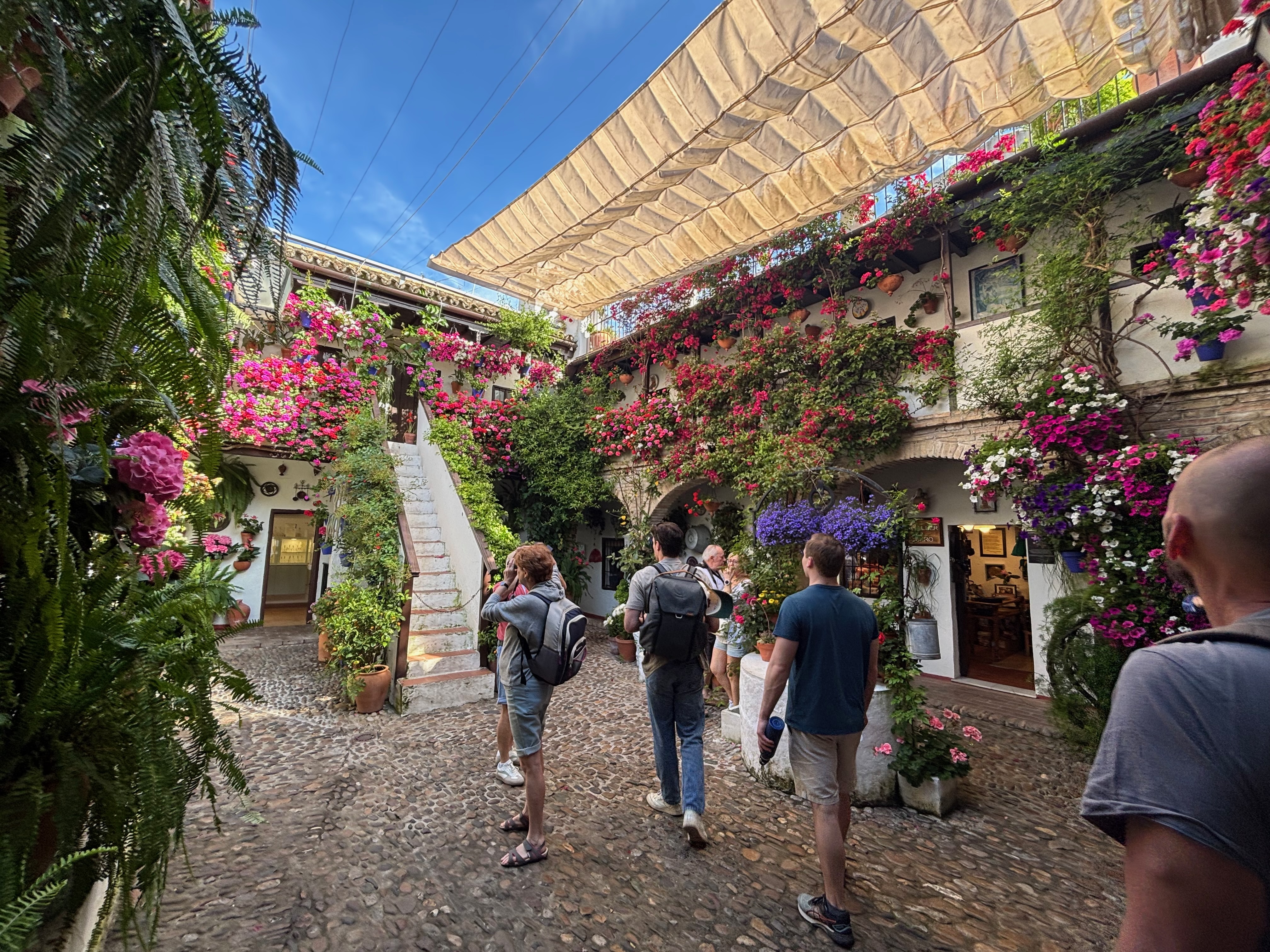
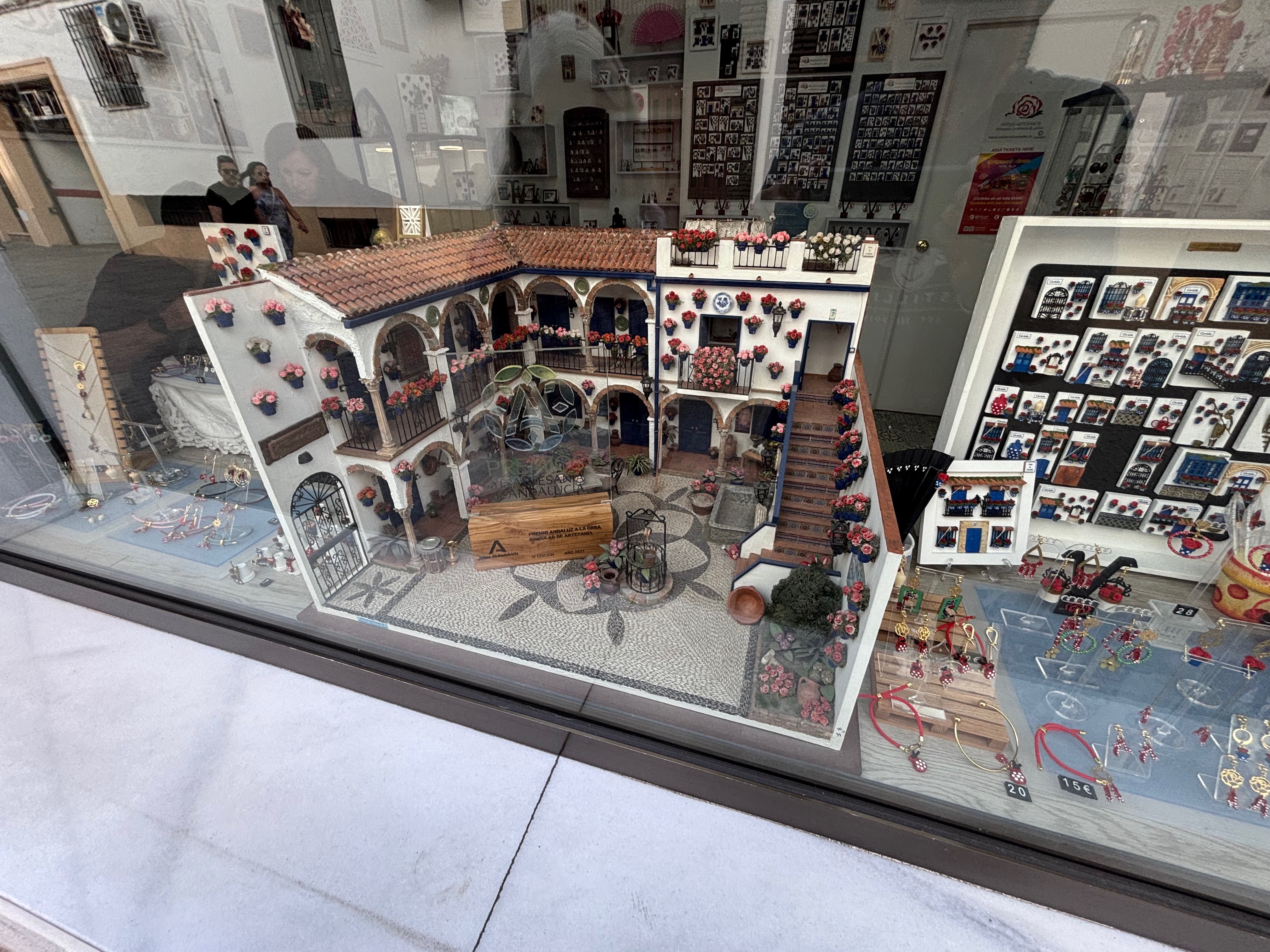
Our next stop was at a member patio of the Asociacion de Amigos de los Patios Cordobeses, one of many that compete each year to be recognized as the nicest, generally containing bougainvillea and other plants. This one can be visited free year-round and we were lucky to visit in mid-spring, when the blooms were vibrant and abundant.
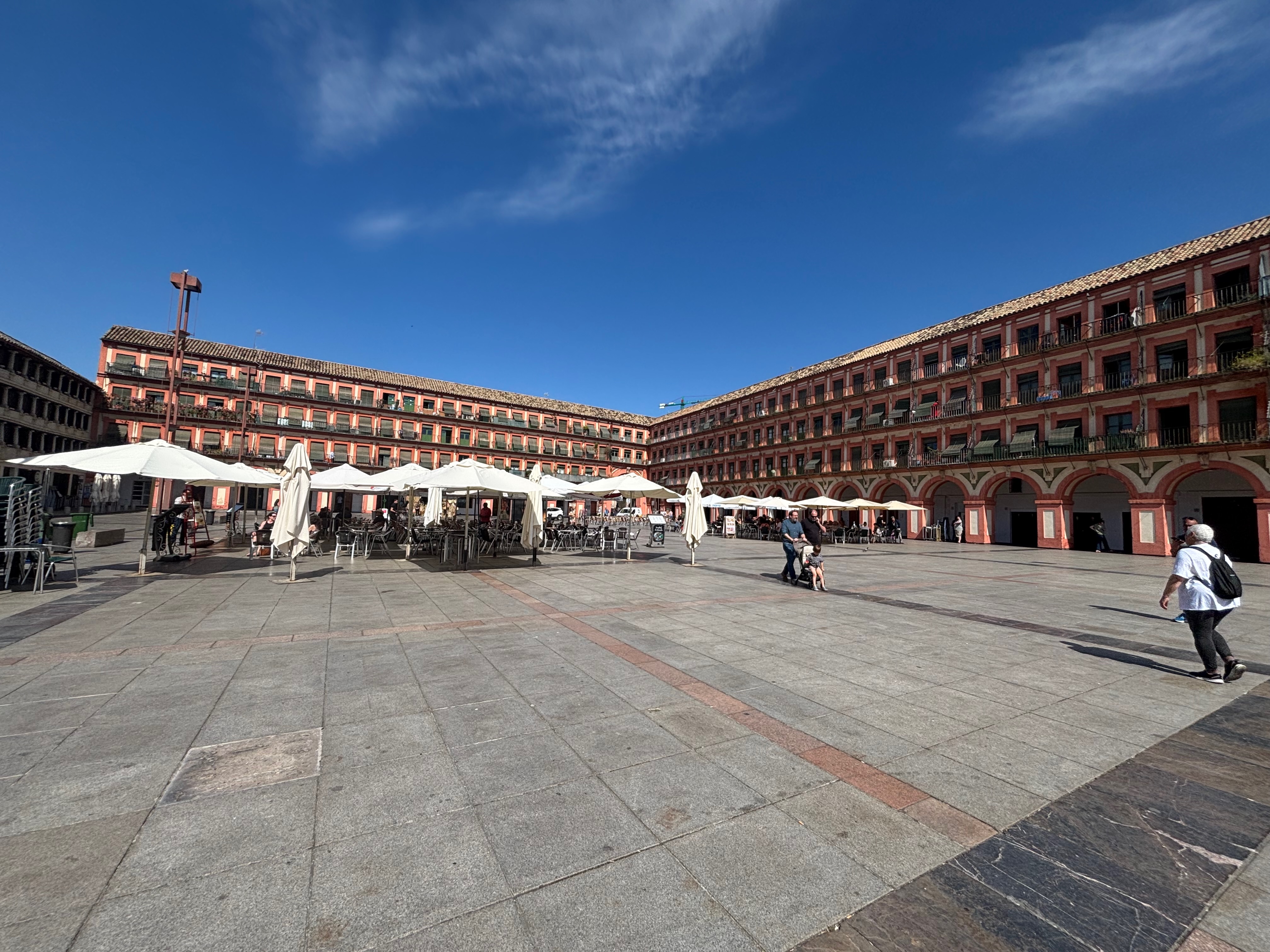
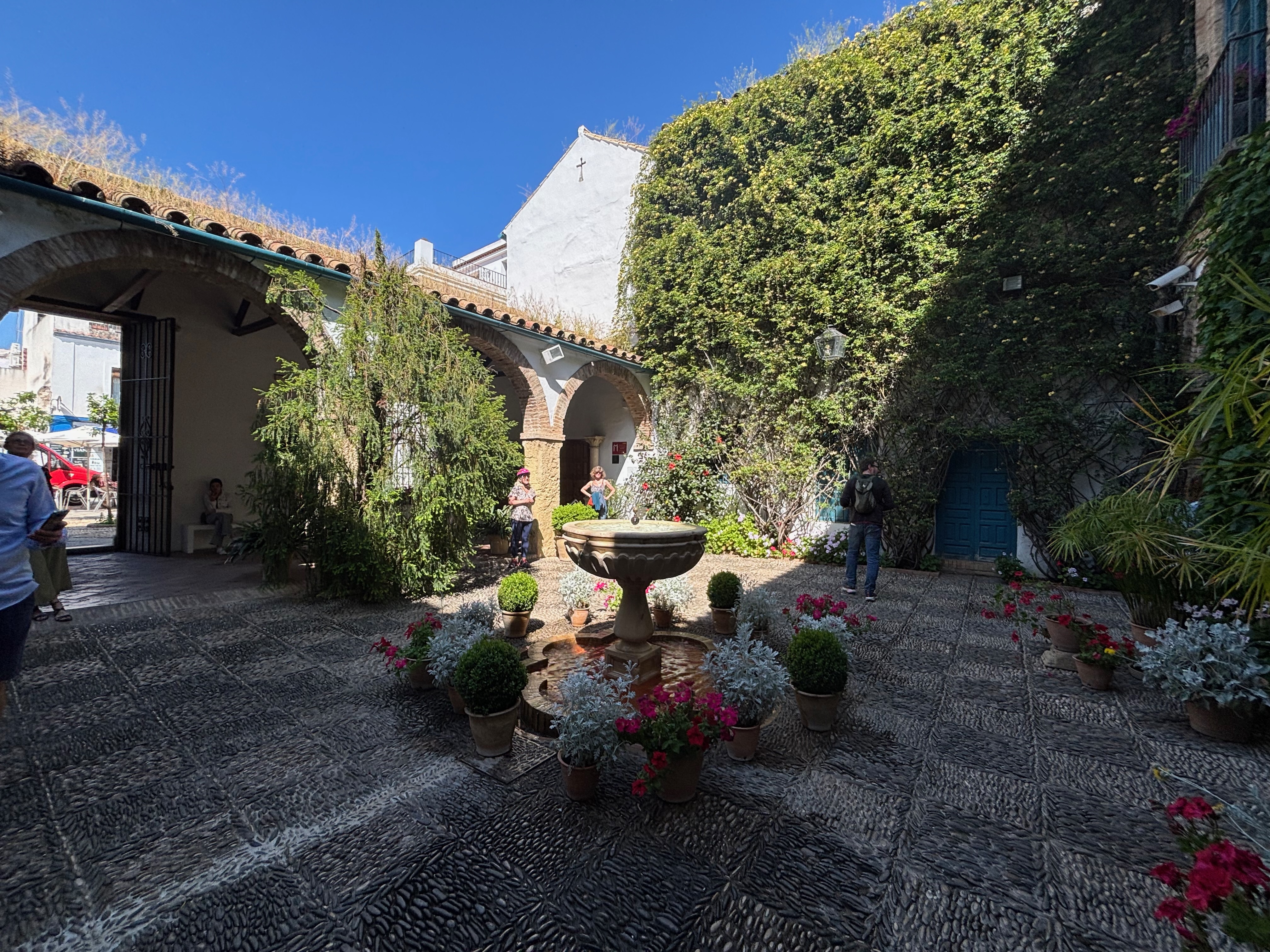
Leaving the patio, we rode through Corredera Square, the main historic plaza of the city, a fixture in all that we would visit during the rest of the trip before making a brief stop at Palacio de Viana, an impressive palace that is surrounded by twelve splendid patios and a marvelous garden, with a stunning variety of flowering plants that decorate and scent every inch of the property. The original flavor of this 14th century palace was kept intact by the last Marquis of Viana, Sophia of Lancaster.
We then rode a short distance back to the bike shop and having turned in our bikes and helmets, started walking back towards our apartment with a thought to grabbing a bite to eat before pushing on into a busy afternoon. We’ll cover that and the rest of our stay in Cordoba in the next post.
Links
Cordoba Airbnb: https://www.airbnb.com/rooms/1217183836965022716?source_impression_id=p3_1760370667_P3zsB9FWyMx8rCIW
Iglesia San Lorenzo: https://www.facebook.com/RealparroquiaSanLorenzoMartirCordoba
Ontdek Cordoba https://www.ontdekcordoba.com/
Asociacion de Amigos de los Patios Cordobeses: https://www.amigosdelospatioscordobeses.es/
Discover more from 3jmann
Subscribe to get the latest posts sent to your email.


 3jmann