April 25 – 26
As mentioned in the last post, after dropping off our bikes at the end of the tour, we walked a few blocks back towards our apartment and found just the right place for lunch, which was Taberna De Viana. After a short wait, we were able to find seating at a table underneath an umbrella on a patio abutting the Palacio Viana across the lane from the restaurant and settled in to examine the menu.
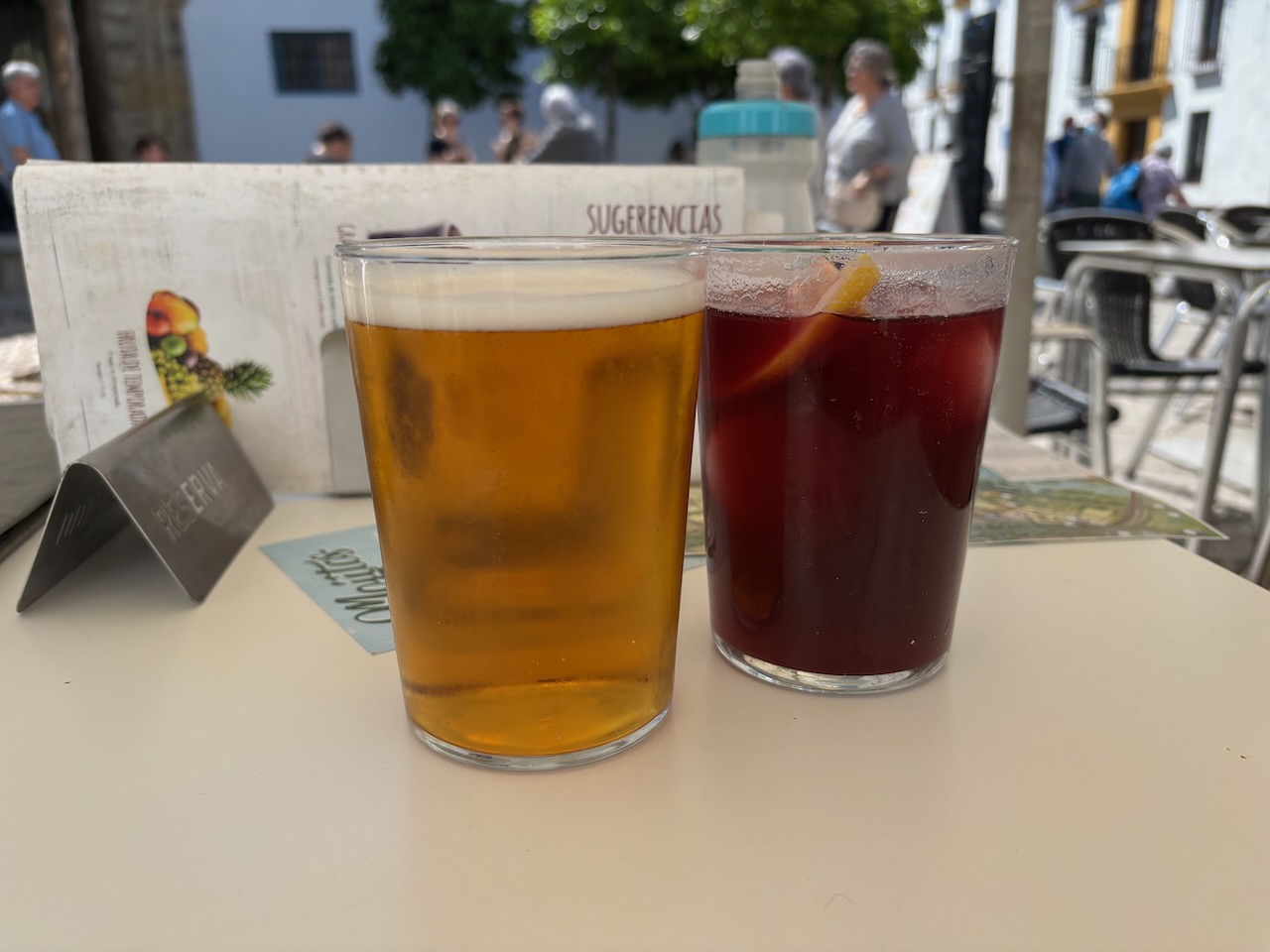
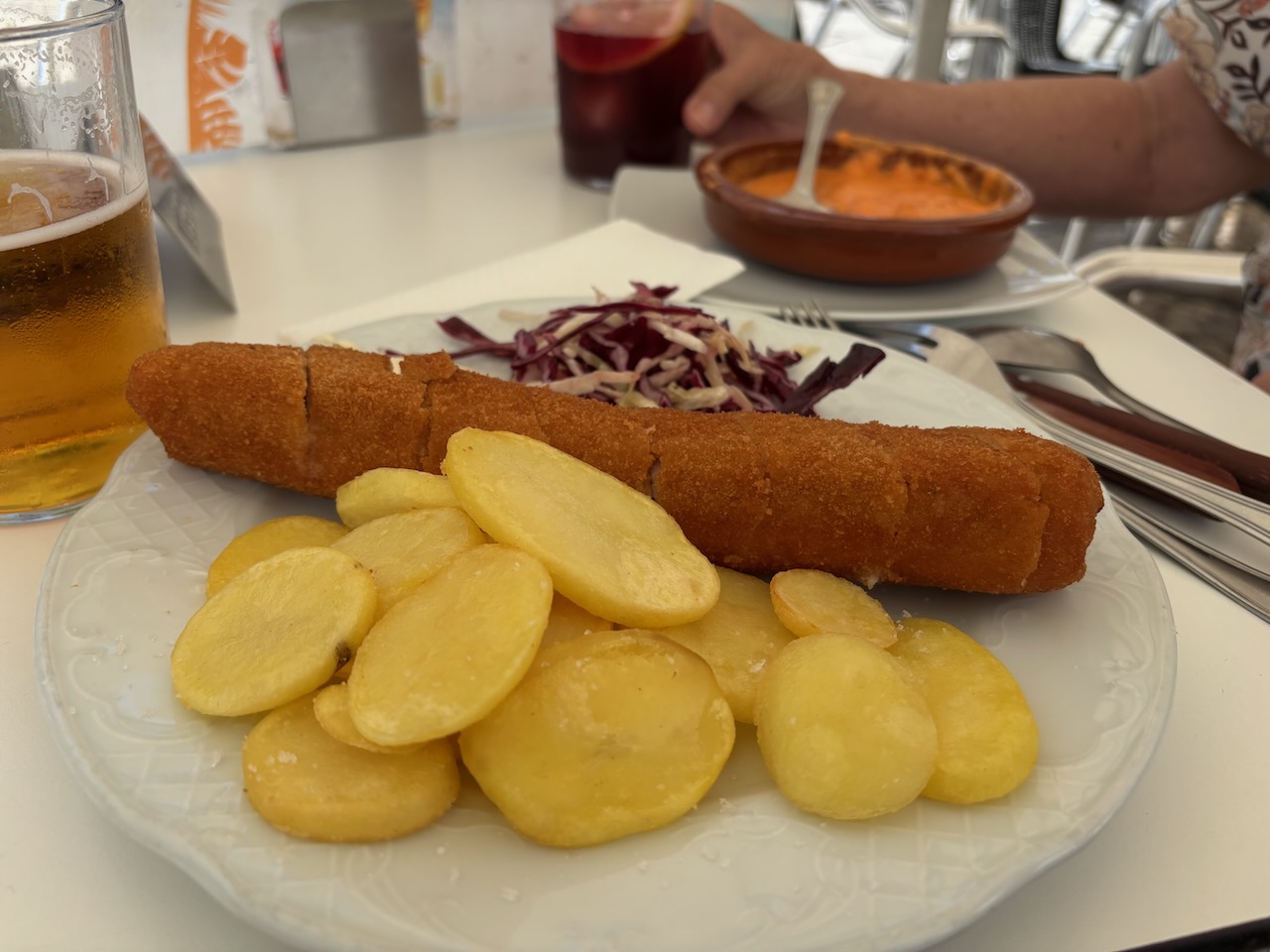
We ordered drinks, a beer for me and a Tinto Limon for Joanna to accompany our order, which we split, that being the Salmorejo Cordobes a traditional creamy soup originating from Andalusia, made of tomato, bread, extra virgin olive oil and garlic. Ours was served cold and was garnished with diced ibérico ham and diced hard-boiled eggs. It was delicious, as was the Flamenquin de Cerdo, a Breaded Cured Ham Filled Pork Roulade. Both would easily power us through the rest of the afternoon and ran us 24.70 Euros ($27.00), well worth the price charged.

Our next stop would be a tour of the Mosque-Cathedral of Cordoba, which we purchased for 60 Euros ($69) when we arrived and given that hefty tab, we opted not to pay extra for the audio tour as we figured we could just follow the one provided for in the Steves guidebook. This would turn out to be a mistake as the spaces and items of interest inside were hard to match up with the descriptions in the Steves tour, leaving us to basically wander around during our visit.
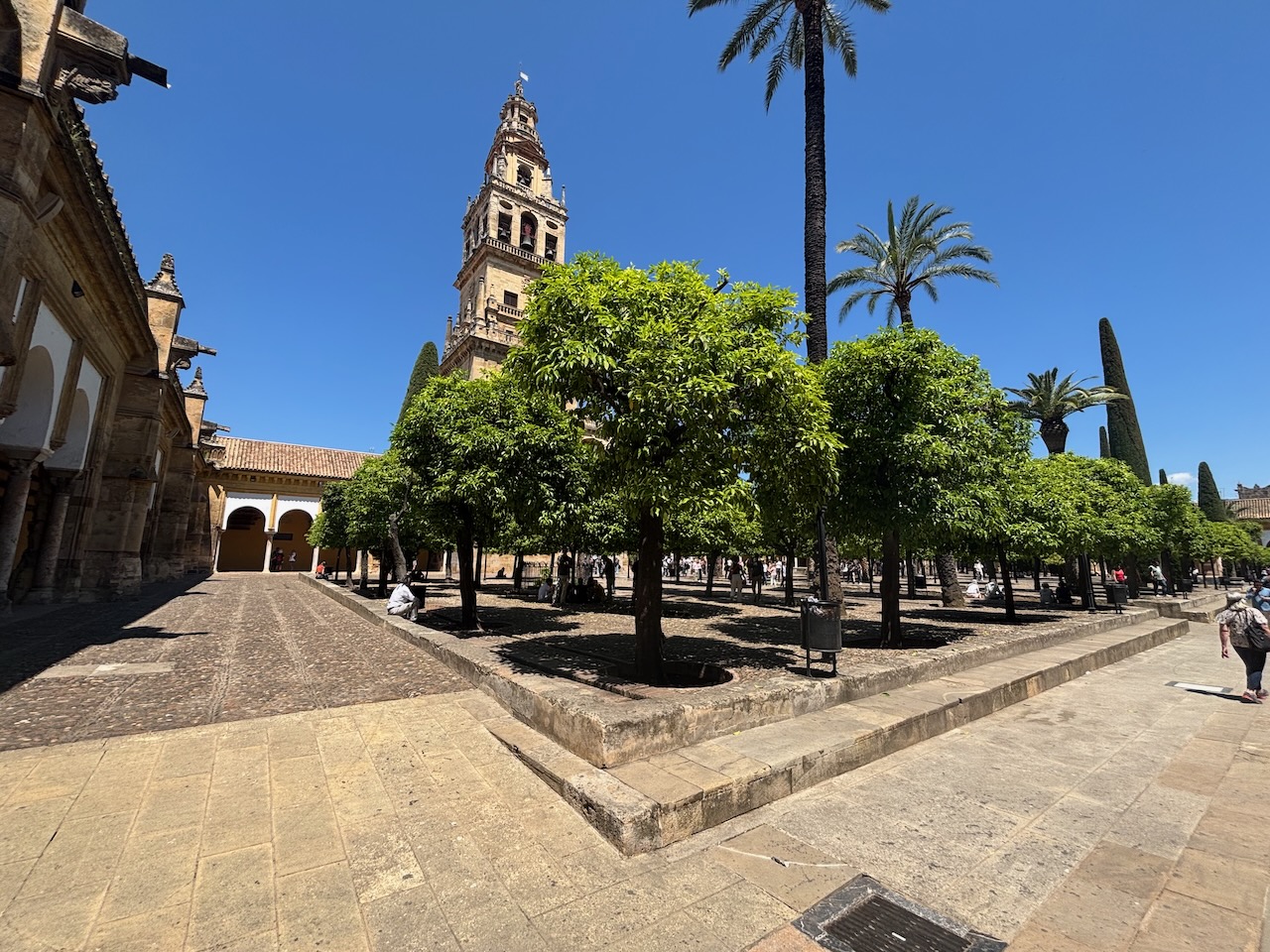
According to traditional accounts a Visigothic church, the Catholic Christian Basilica of Vincent of Saragossa, originally stood on the site of the current Mosque-Cathedral, although this has been a matter of scholarly debate. The Great Mosque was constructed in 785 on the orders of Abd al-Rahman I, founder of the Islamic Umayyad Emirate of Córdoba. It was expanded multiple times afterwards under Abd al-Rahman’s successors up to the late 10th century. Among the most notable additions, Abd al-Rahman III added a minaret (finished in 958) and his son al-Hakam II added a richly decorated new mihrab and maqsurah section (finished in 971)
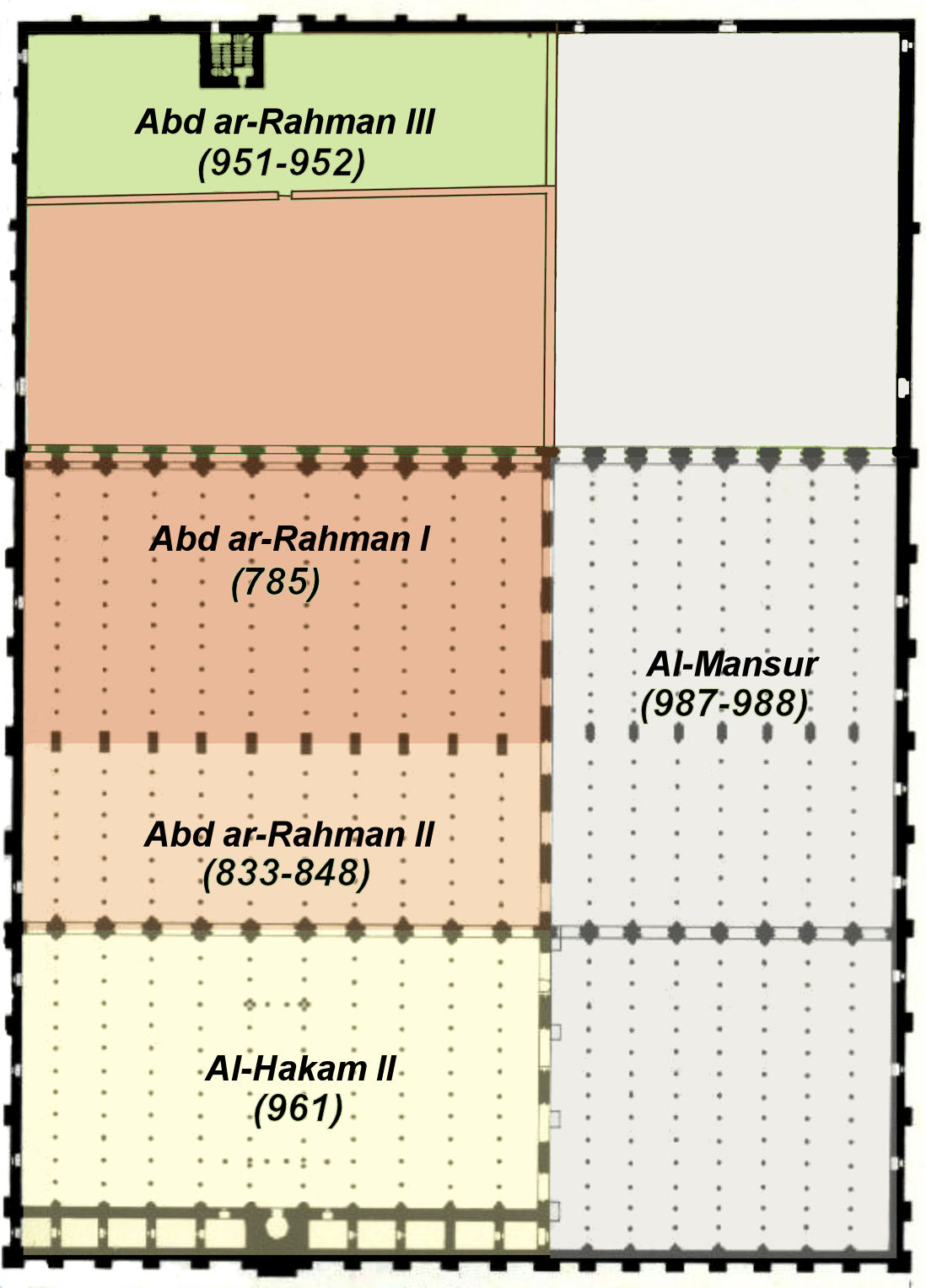
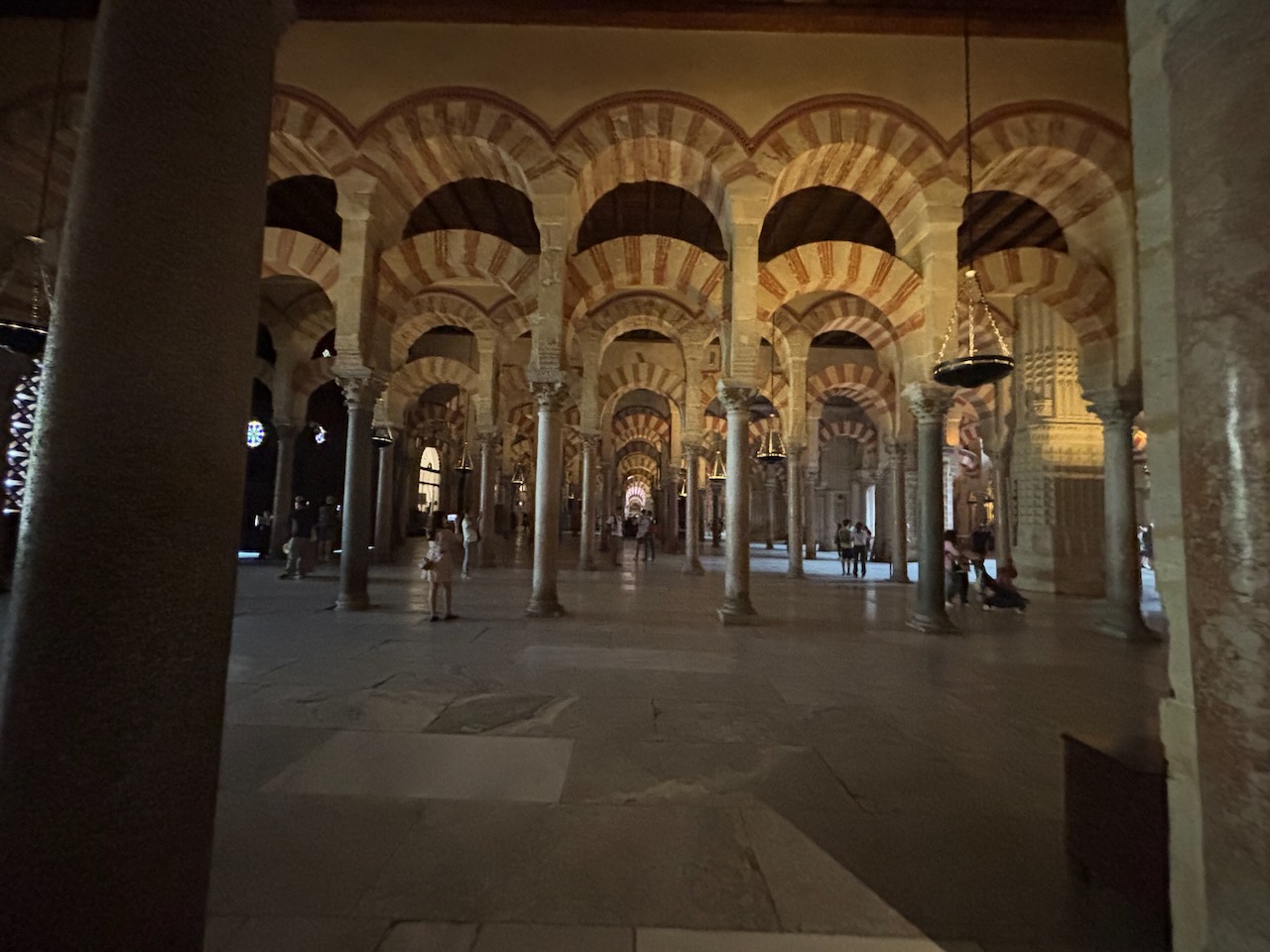
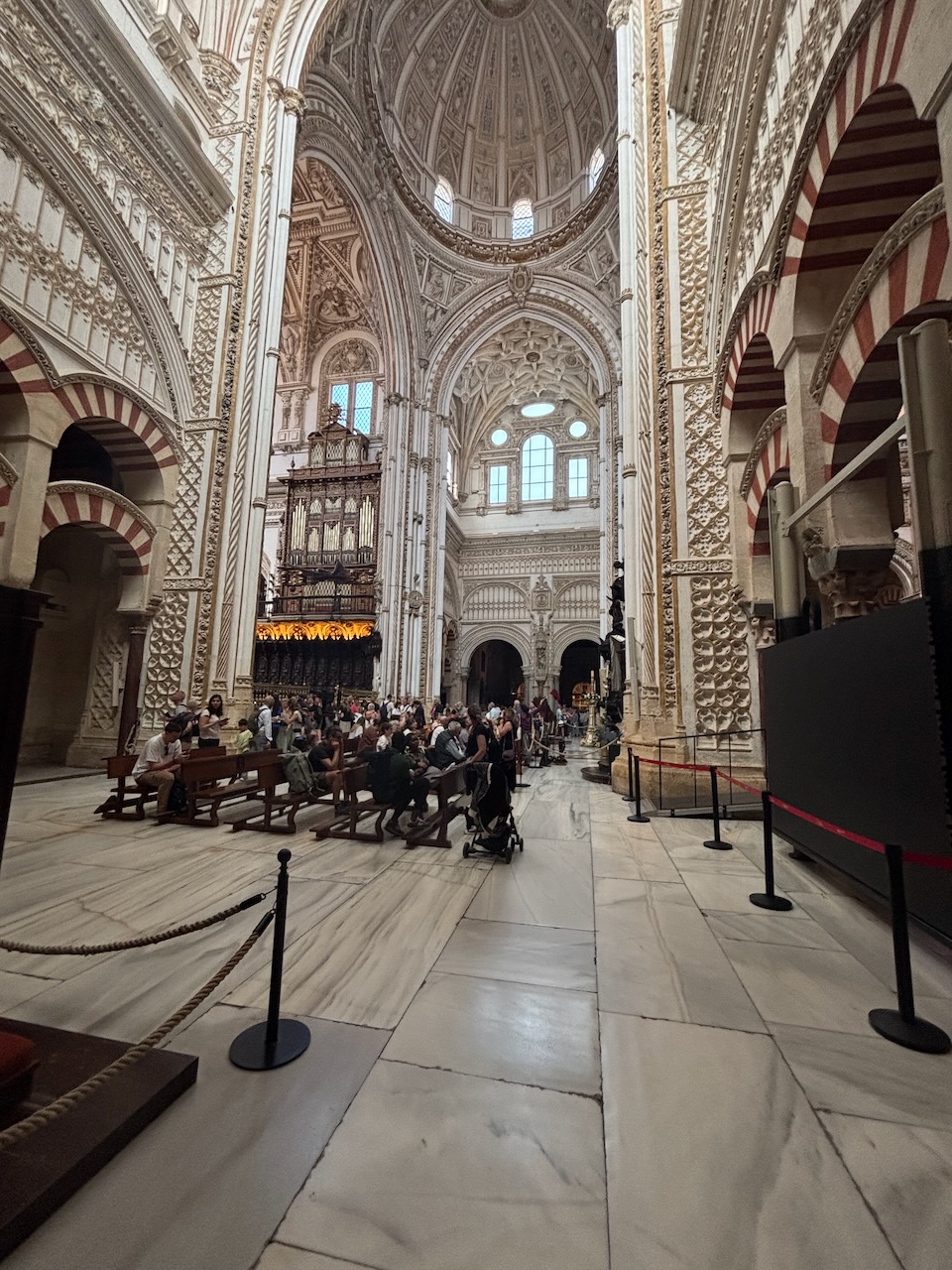
The mosque was converted to a cathedral in 1236 when Córdoba was captured by the Christian forces of Castile during the Reconquista. The structure itself underwent only minor modifications until a major building project in the 16th century inserted a new Renaissance cathedral nave and transept into the center of the building. The former minaret, which had been converted to a bell tower, was also significantly remodeled around this time. Starting in the 19th century, modern restorations have in turn led to the recovery and study of some of the building’s Islamic-era elements. Today, the building continues to serve as the city’s cathedral and Mass is celebrated daily.
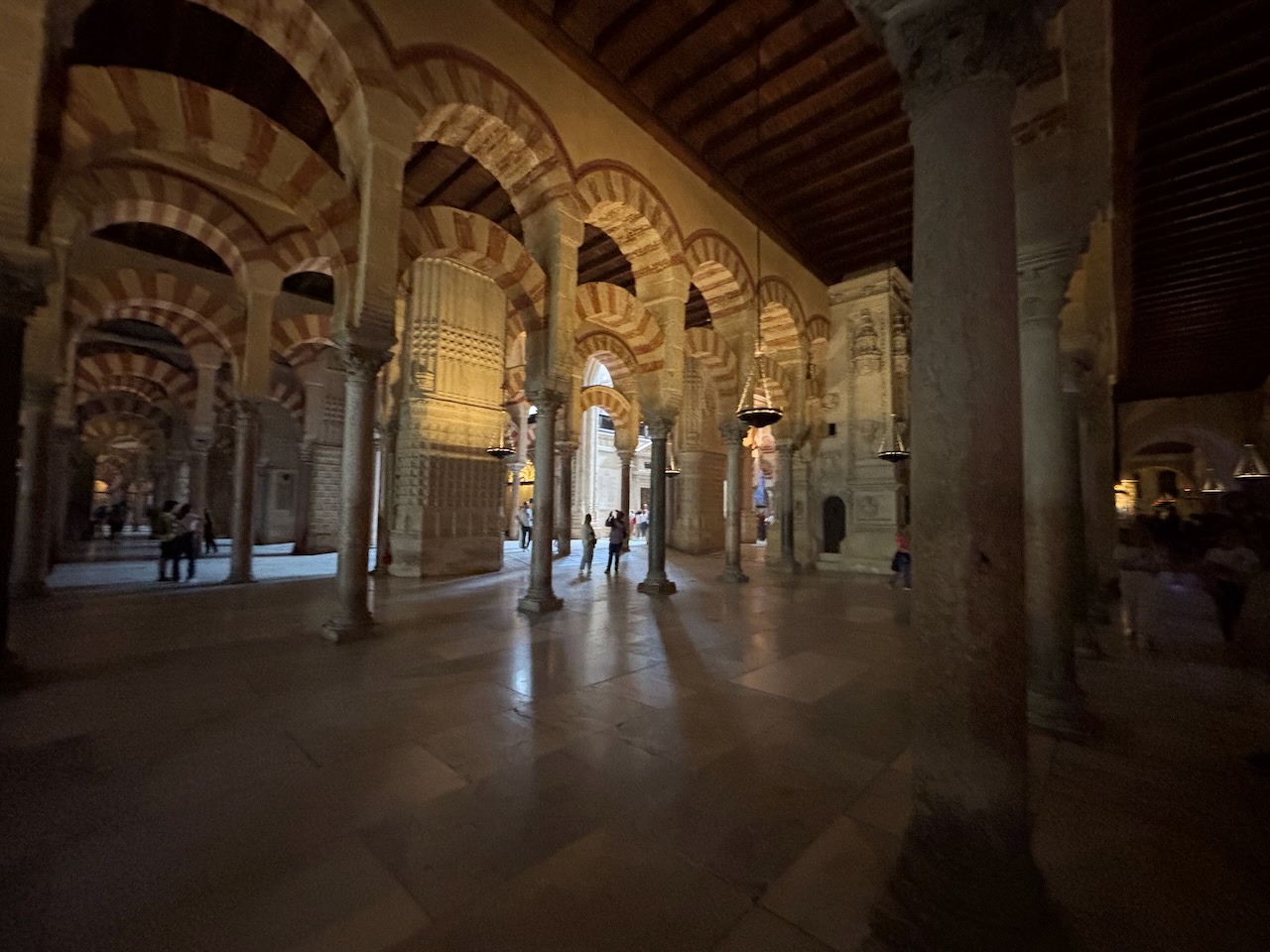
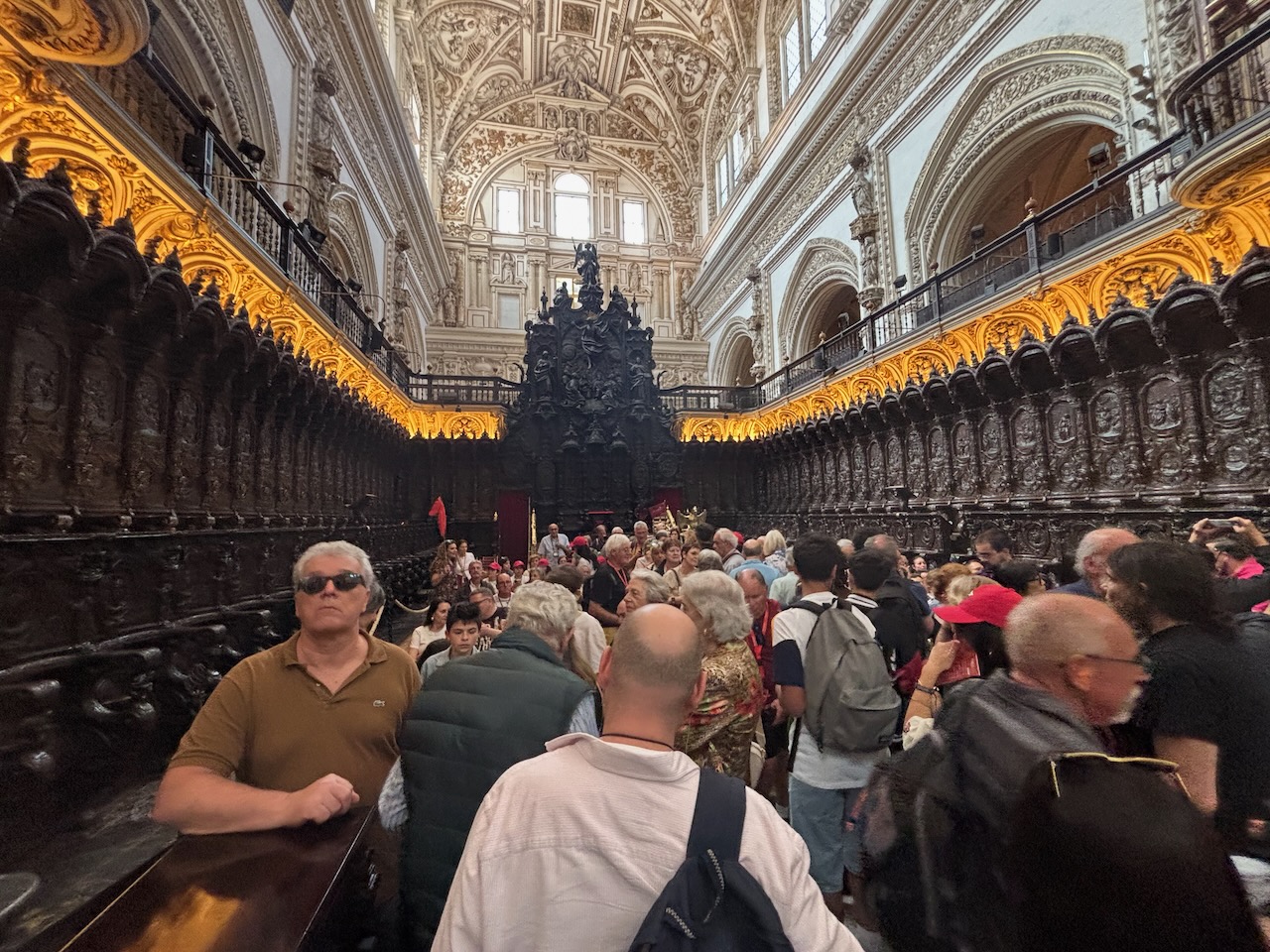

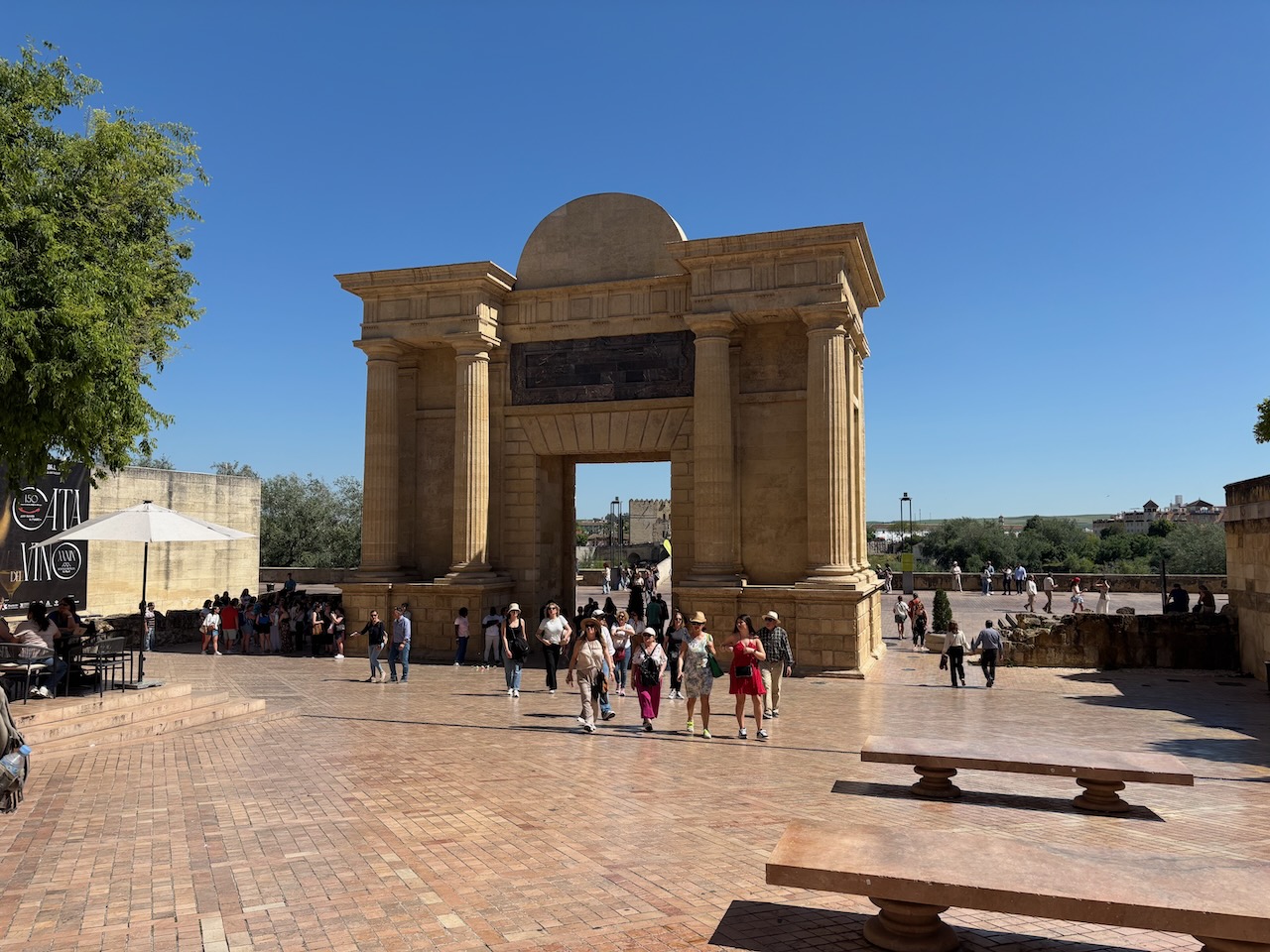
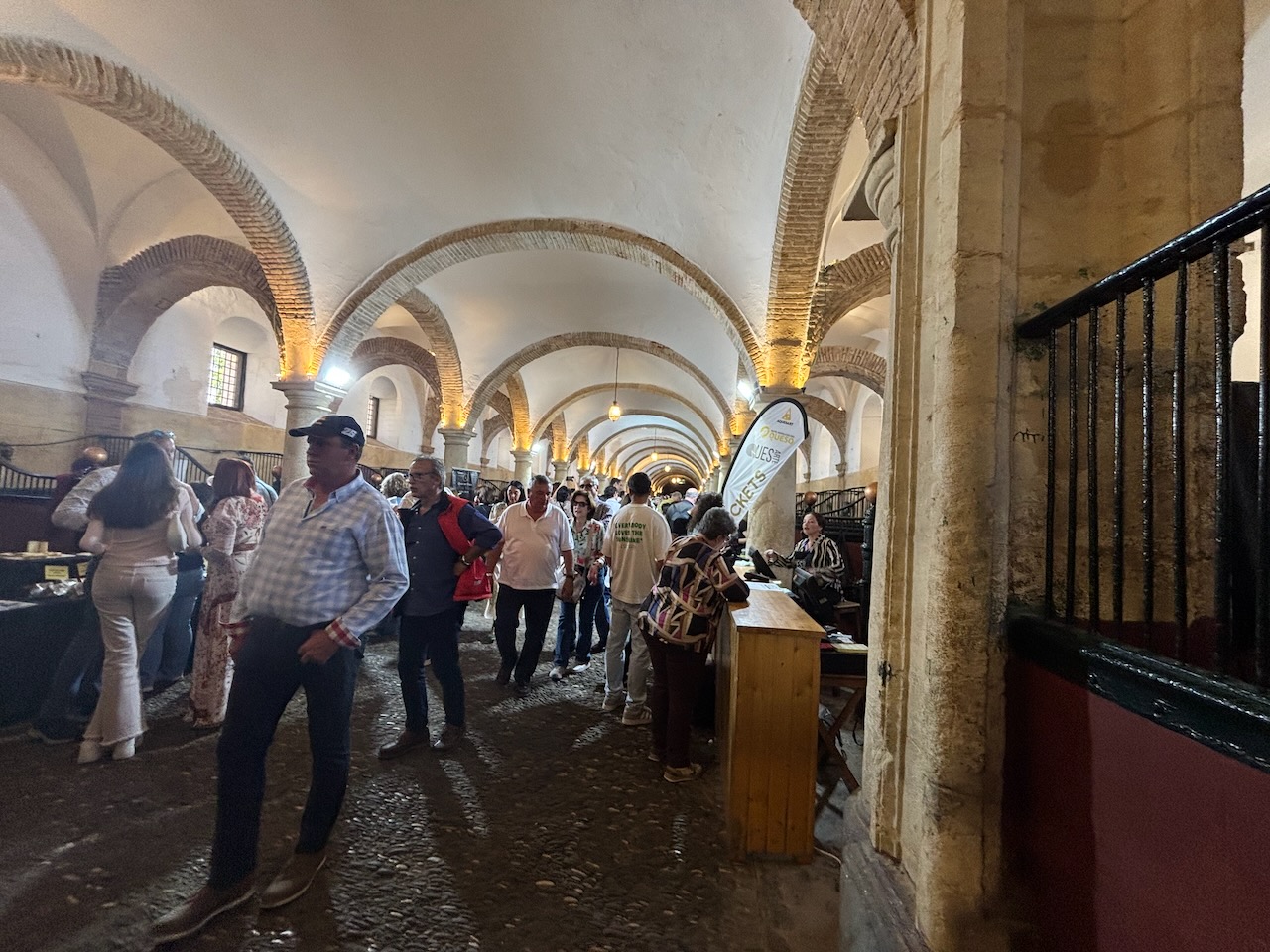
It’s an impressive structure, but not quite on par with Europe’s major cathedrals. The archway laden low ceilings of the former mosque diminish its size visually, as we walked through the area trying to determine which part was which addition. We exited and staying in the area sought out a place for a drink and perhaps a light snack. Passing the Puerta del Puente (a Renaissance gate built in the 16th century to commemorate a visit to the city by King Philip II) we checked out a crowded wine tasting taking place in the former Royal Stables, but it was too busy to want to get involved in.
As it was a Saturday, it was impossible to find an outdoor table at nearby restaurants and so we ducked into one that had room at the bar where we enjoyed a coffee for Joanna and a beer for me. While there, a gentleman who may have been the owner continued to greet folks entering the establishment, it being the kind of place locals frequent. We left the bar and walked down to the river, following its course past the Puente Romano in the direction of our apartment.

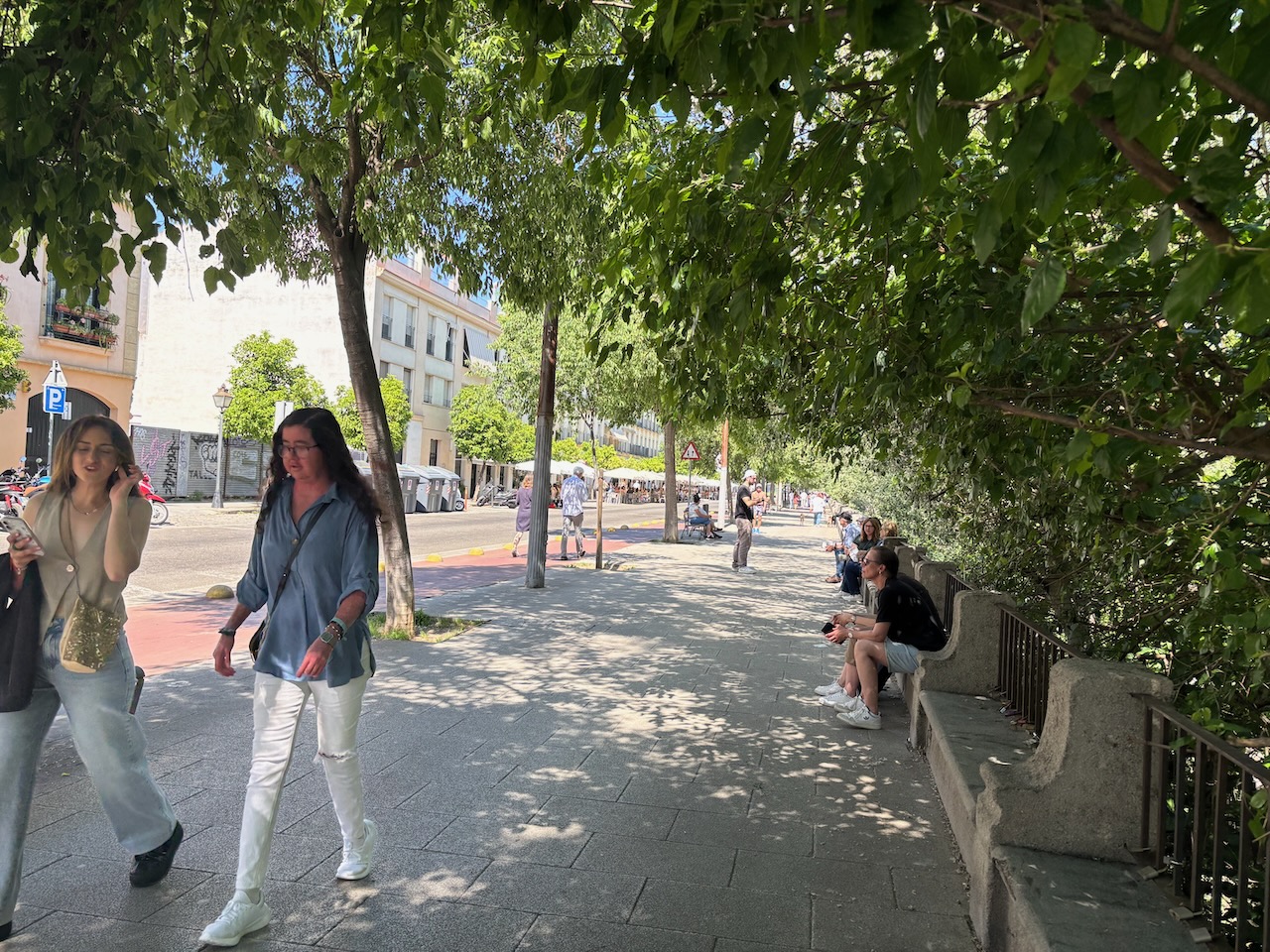
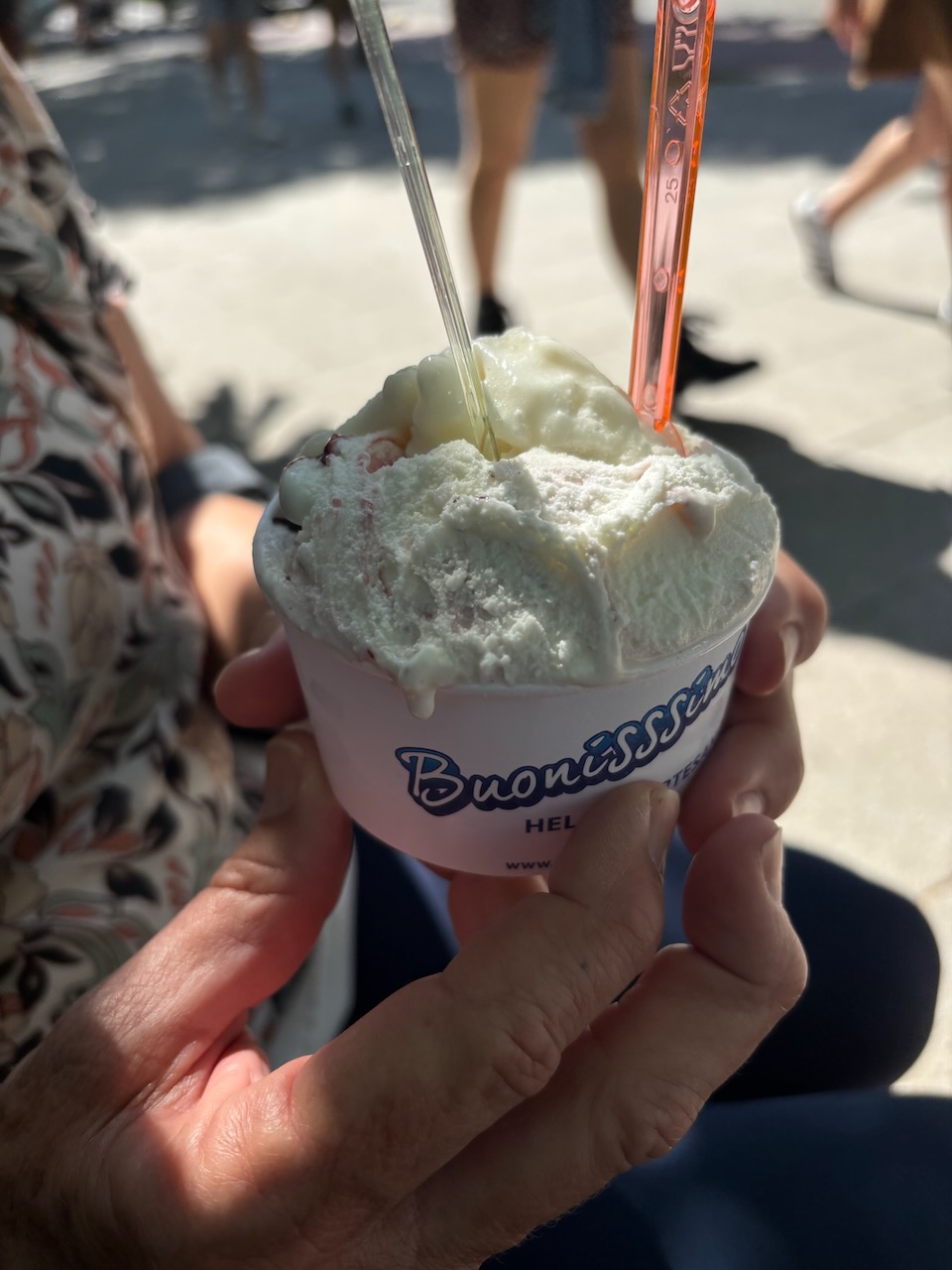
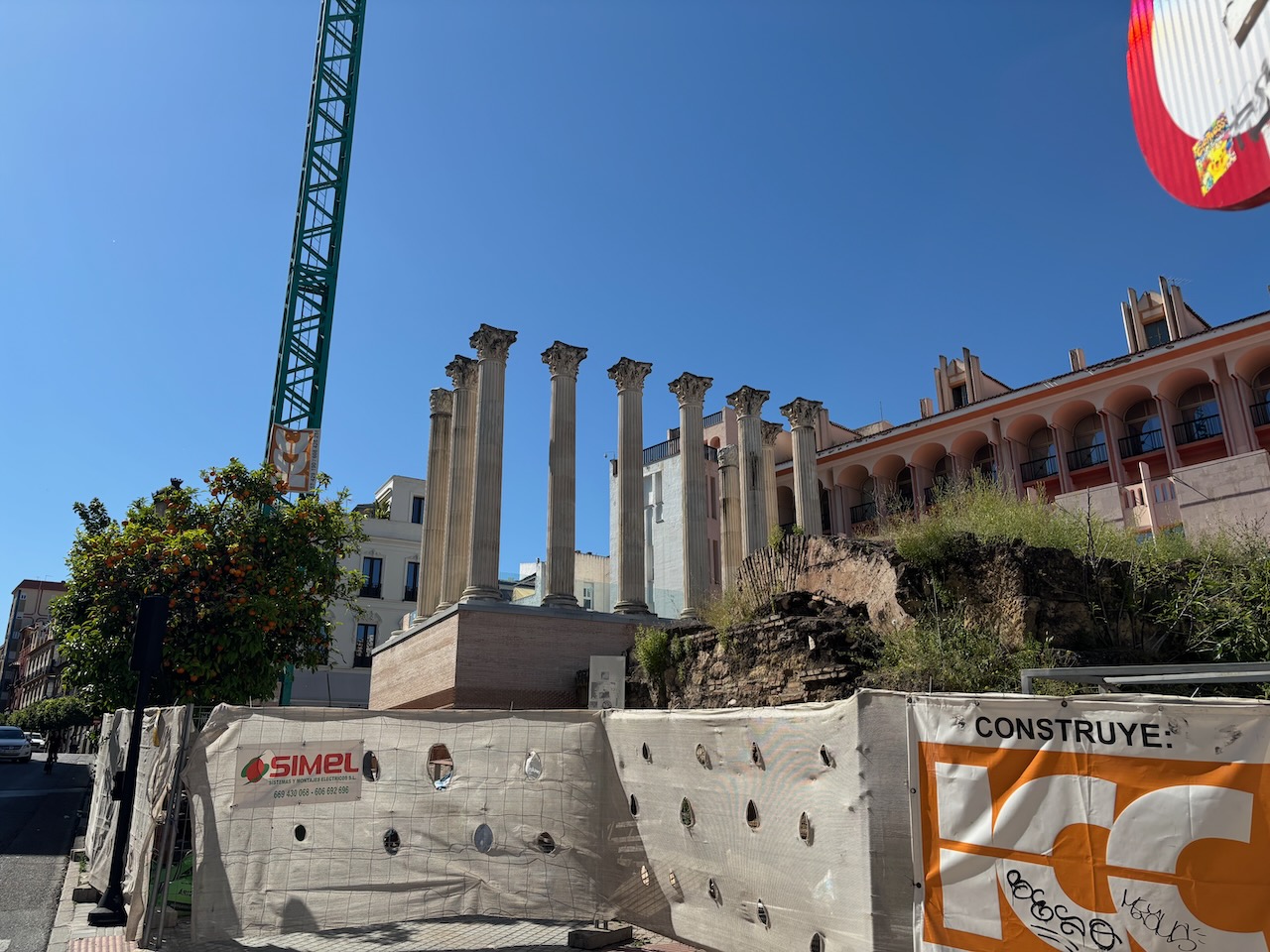
Along the way we stopped to split a scoop of very good ice cream, in the shadow of site where the Templo Romano Calle Claudio Marcelo was being restored. A former Roman temple, it was discovered in the 1950s during the expansion of City Hall. Located in the angle formed by the streets Claudio Marcelo and Capitulares. it was possibly the most important of all of the former temples that remain in the city, and the only one known by archaeological excavation.
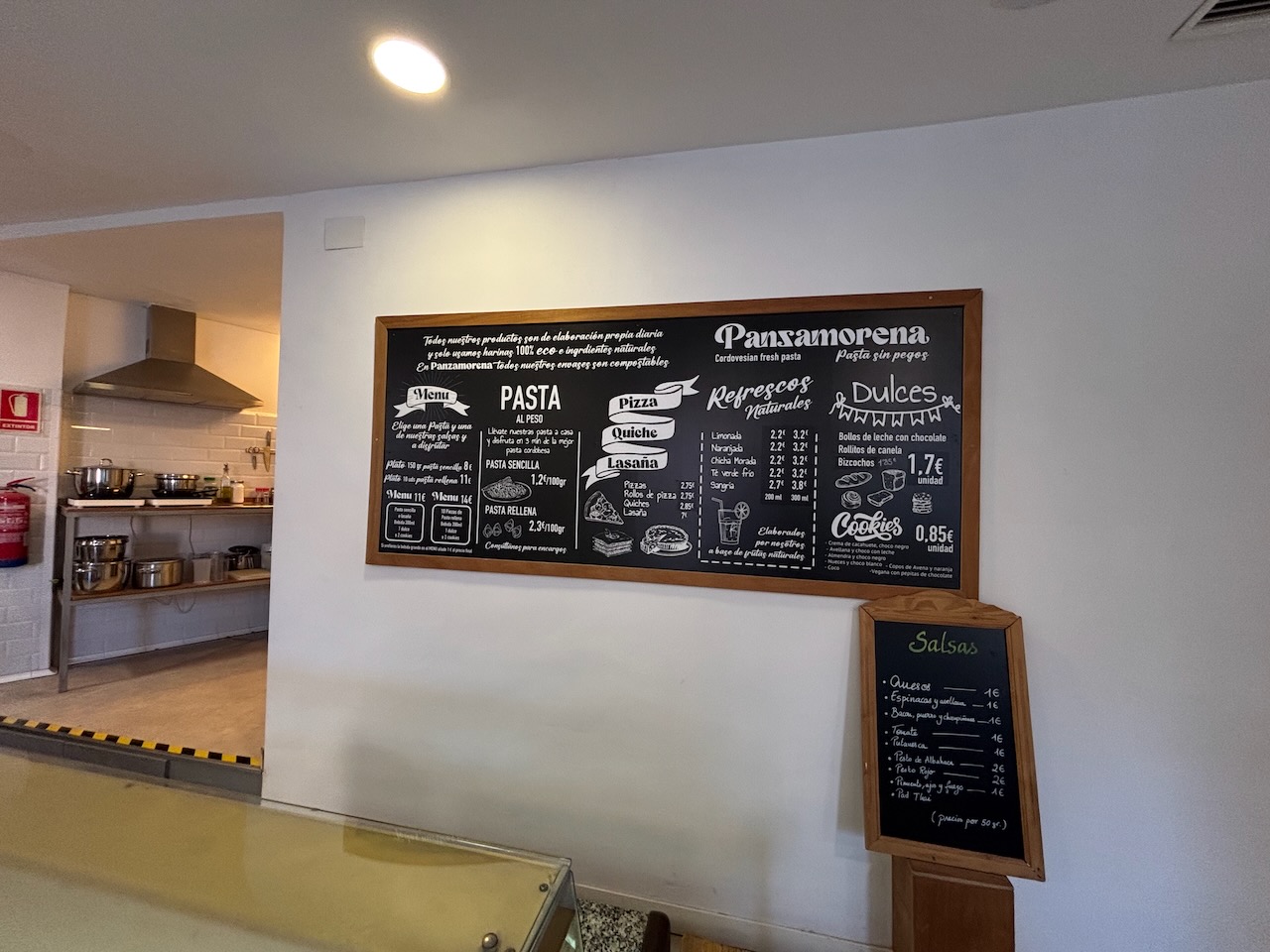
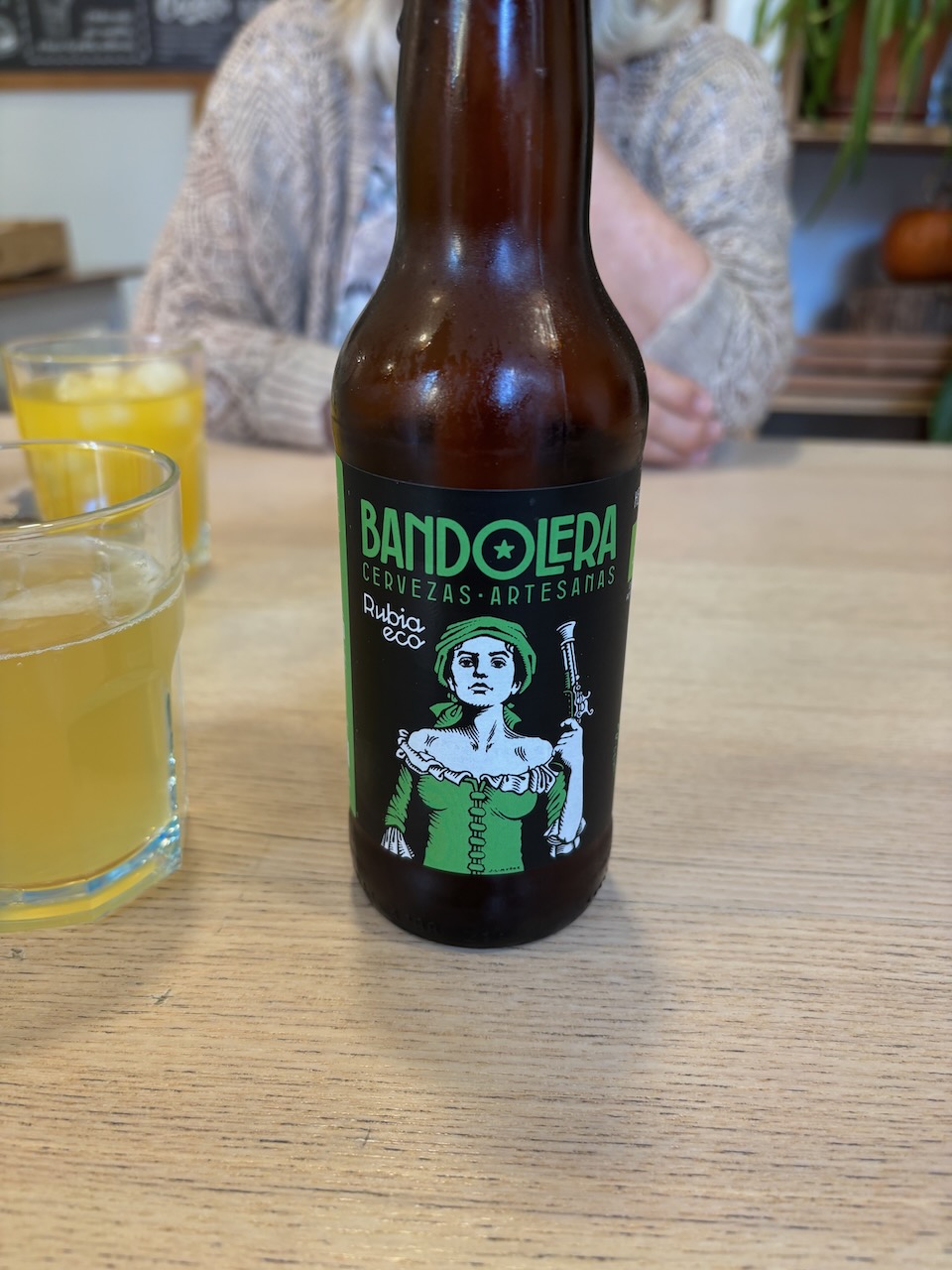
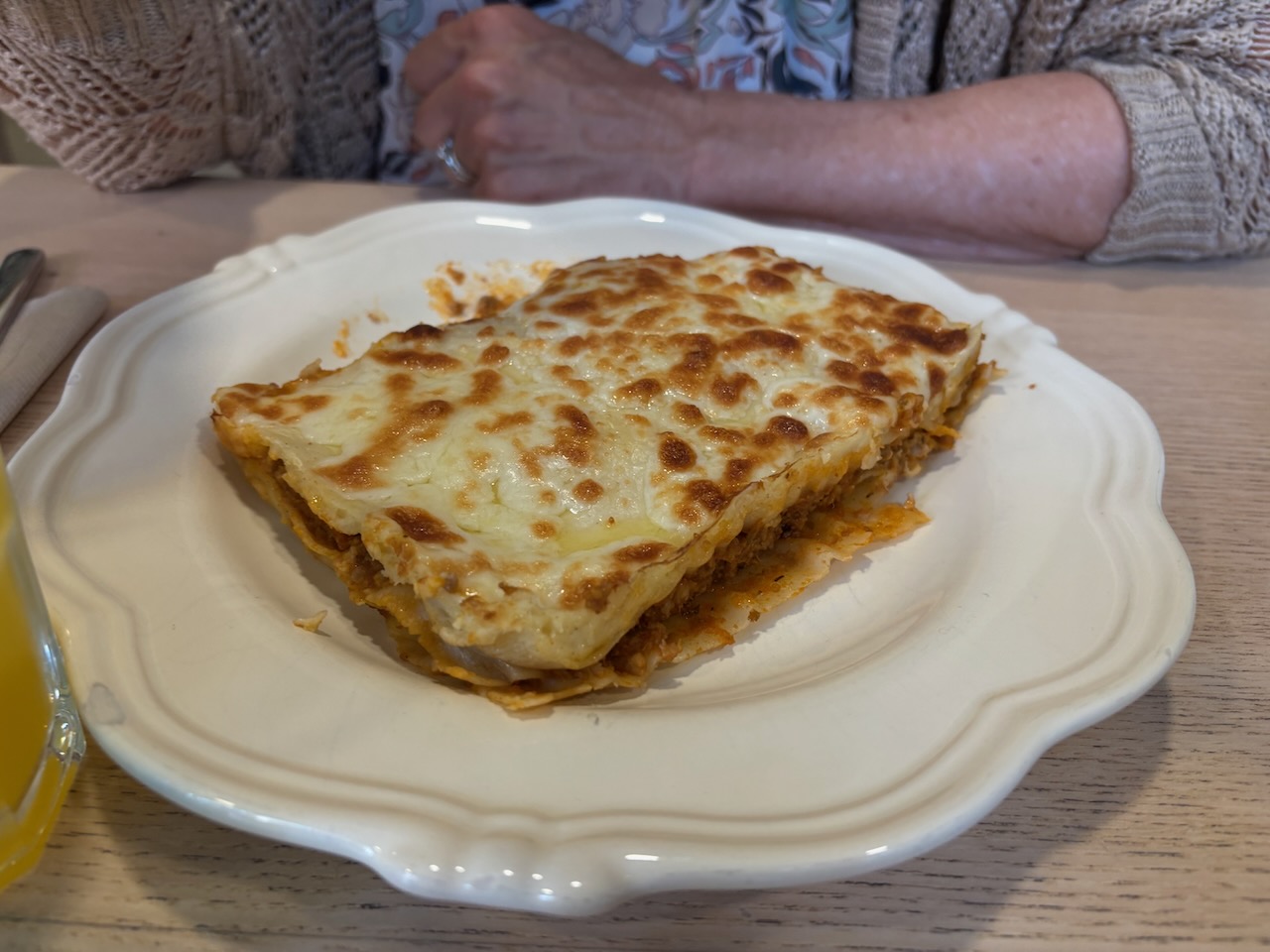
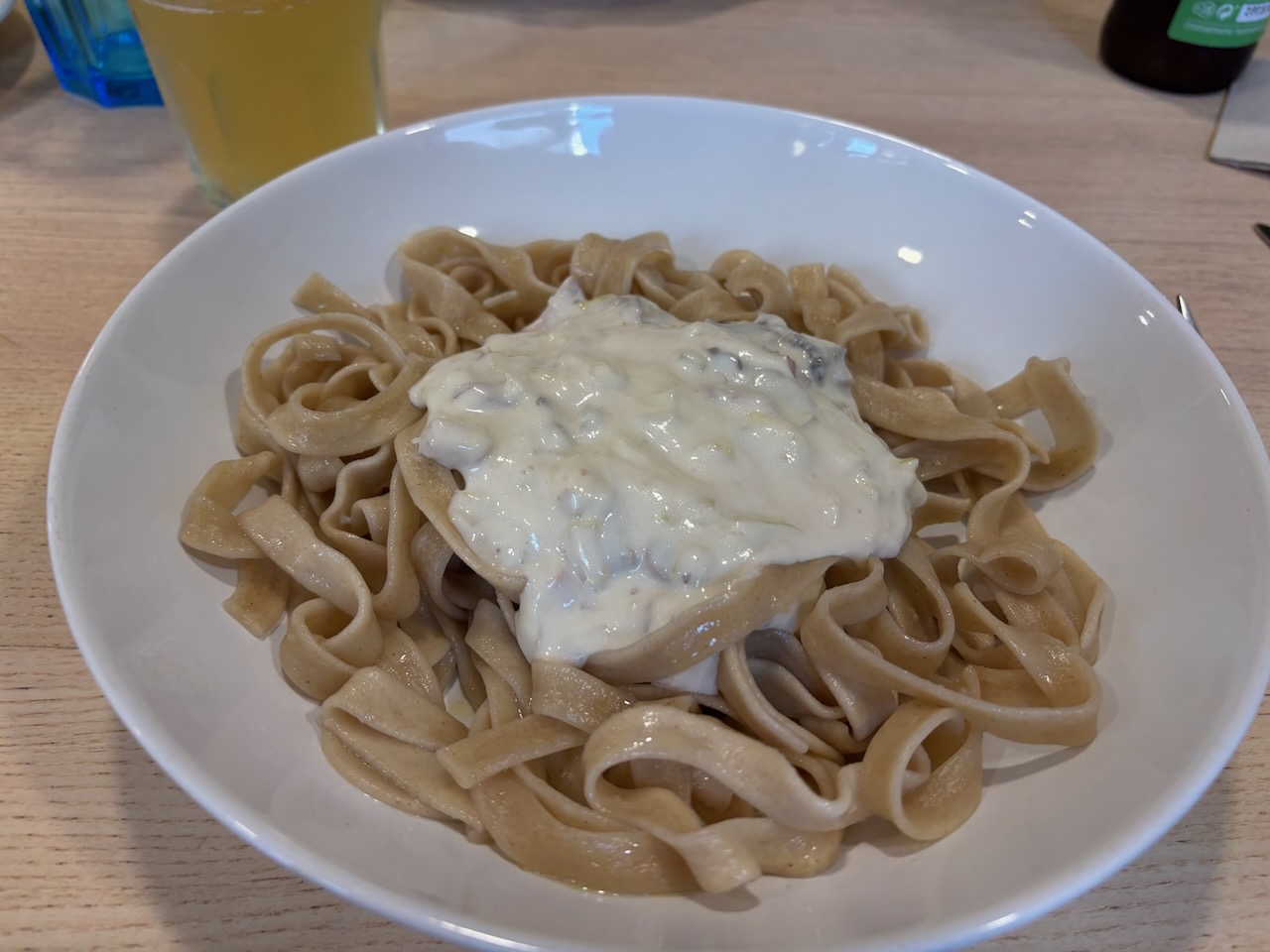
Back at the apartment we hung out a bit, relaxing after a busy day before we made our way back up to the area where the Carrefour was located for a nice meal at Panzamorena, a fresh pasta joint where you choose the pasta and sauce you want, and they prepare it for you on the spot. Joanna ordered a nicely done lasagna while I thoroughly enjoyed linguine and a bacon, mushroom carbonara of sorts. Along with a couple of drinks, a beer for me and an orange soda for Joanna, our tab came to 22.70 Euros ($25), not bad for two nice entrees and two drinks.
Back at the apartment, we spent another quiet evening, satisfied with our days activities and looking forward to the next day of travel to Valencia where we would meet up with my sister Bev. We will catch you up on that in the next series of posts.
Links
Taberna De Viana: https://www.facebook.com/TabernaViana/
Mosque-Cathedral of Cordoba: https://mezquita-catedraldecordoba.es/en/
Panzamorena: https://www.happycow.net/reviews/panzamorena-cordoba-319619
Discover more from 3jmann
Subscribe to get the latest posts sent to your email.


 3jmann