April 27 – 29
Our drive to Valencia today would take a little over five hours and as we wanted to get there around check in time at the Airbnb so we could get settled in early, which would enable us to shop for provisions before picking up Bev at the airport. The drive out of town set the tone for what would follow in Valencia, that is exiting the narrow streets from where we had parked the car. We chose the most direct route possible, again delivering us to a section so narrow that I ended up scraping the right front quarter panel of the car. The damage was minor, and it would only be after we returned the car at the end of the rental period in Barcelona that we would get hit with repair costs. But that is a story for another day.

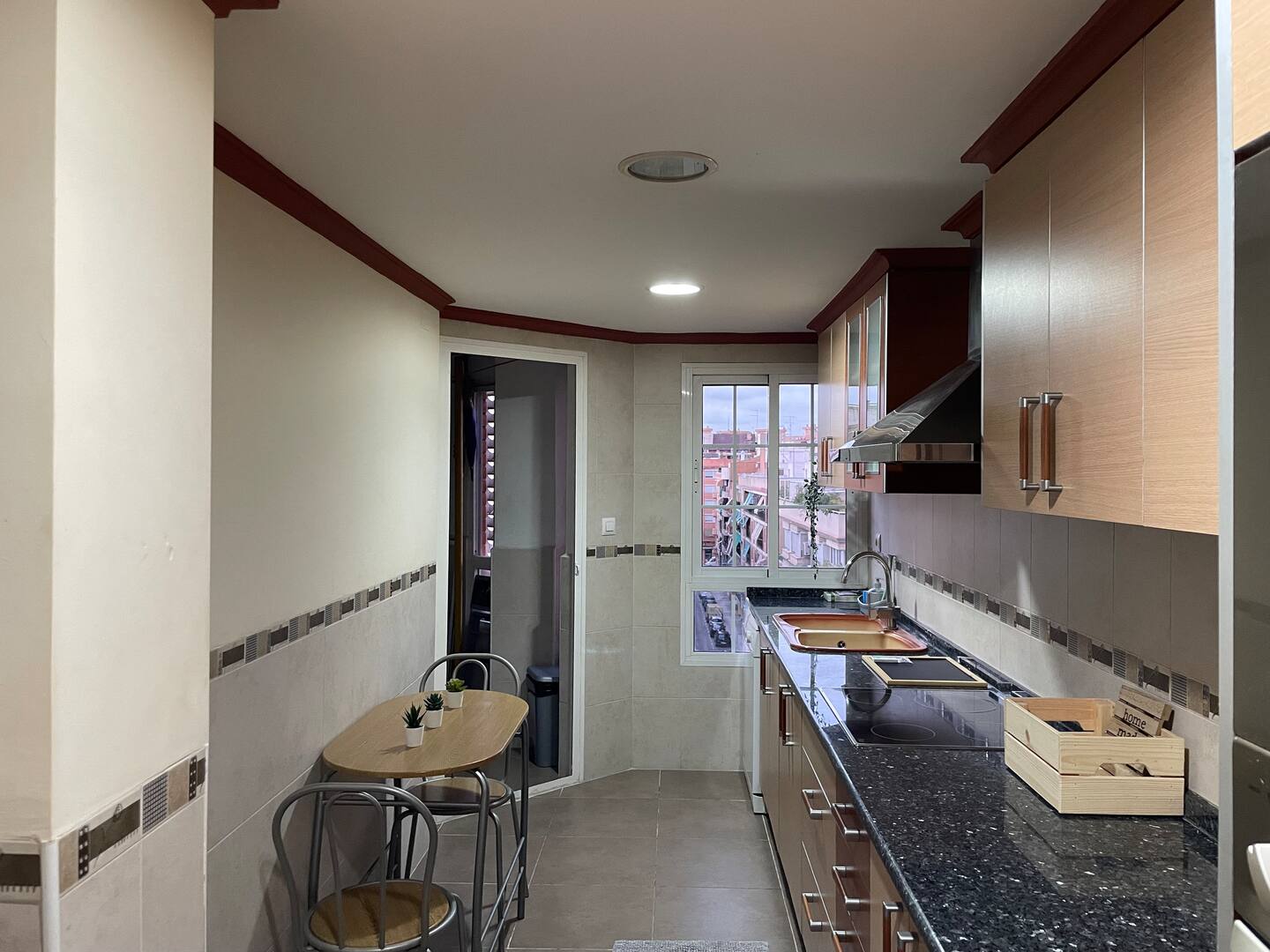
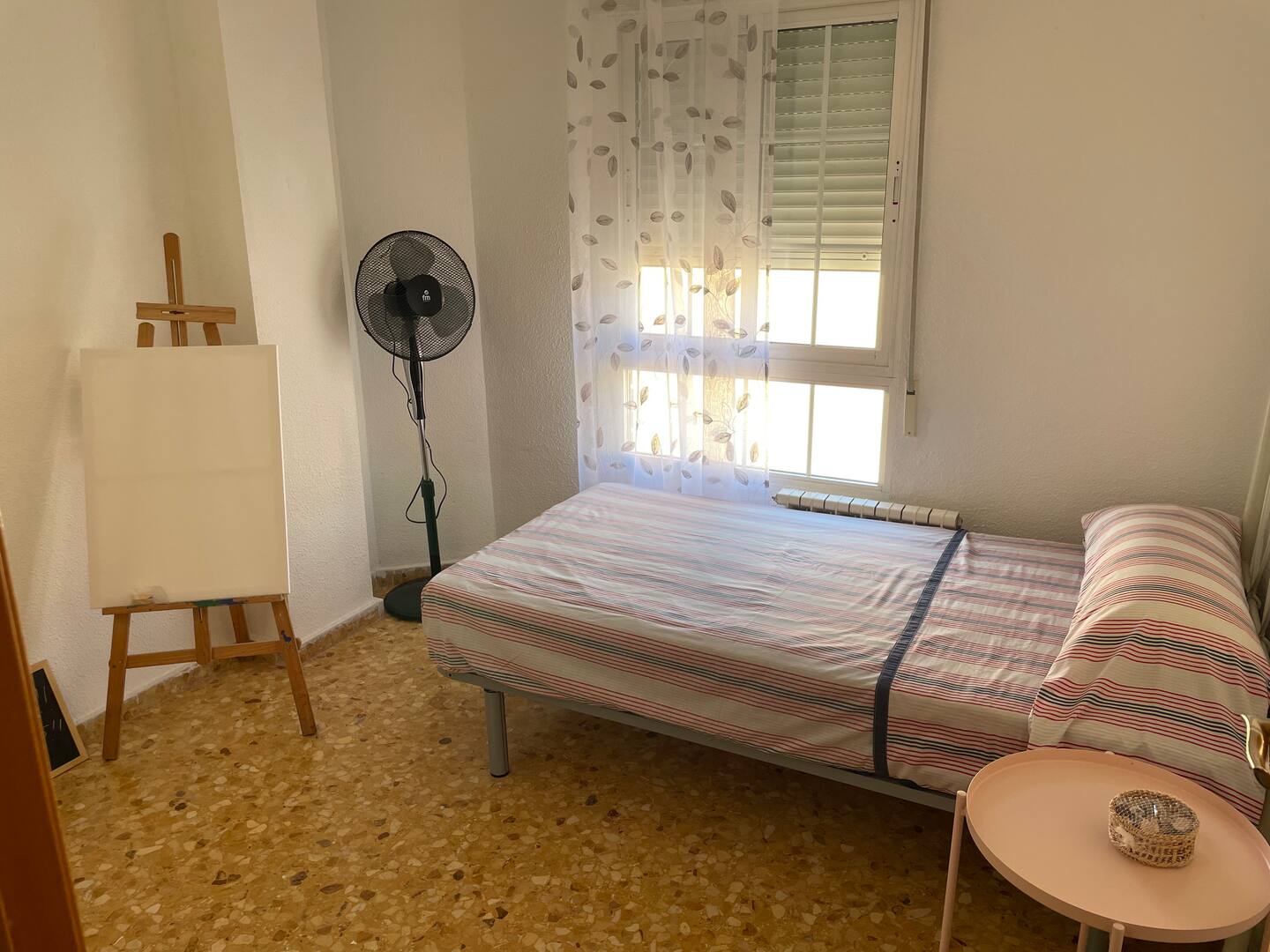
The drive itself was uneventful and we soon found ourselves stationed in front of the gate to the underground parking garage of our Airbnb, titled “Lovely apartment next to downtown with a garage” which would run us 486 dollars for three nights for the three of us. Per the instructions from our host, we were to fetch the keys for the unit and the remote for the gate from a bar/restaurant just down the street, which Joanna did and with the gate now open we proceeded inside to face a choice, up a ramp or down one.
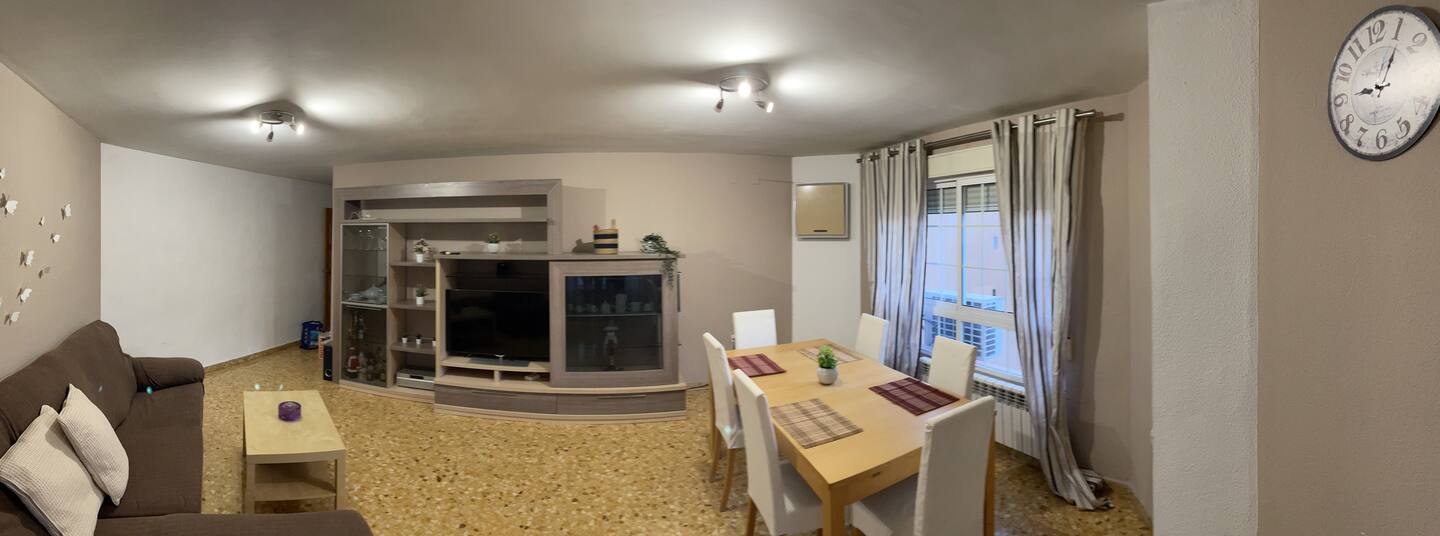
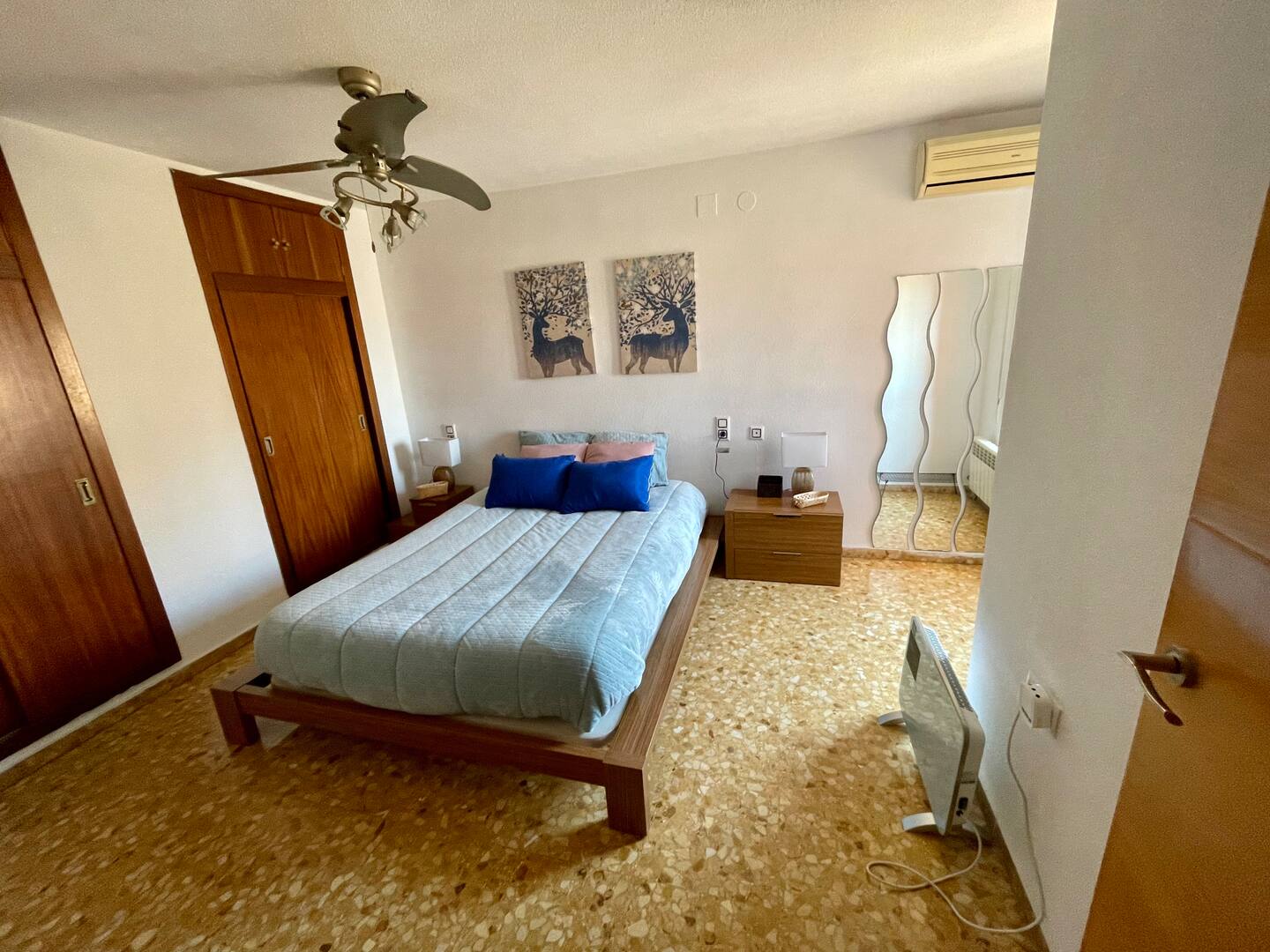
Of course, I chose the wrong option by going up a level and as our assigned spot wasn’t there and it was so crowded, it took me multiple back and forth turns to get the car turned around so that we could exit the garage, reverse direction and re-enter the garage. This floor had a bit more space and we soon found our way to the assigned spot, unloaded the car and made our way upstairs to our spacious and nicely appointed two-bedroom unit.
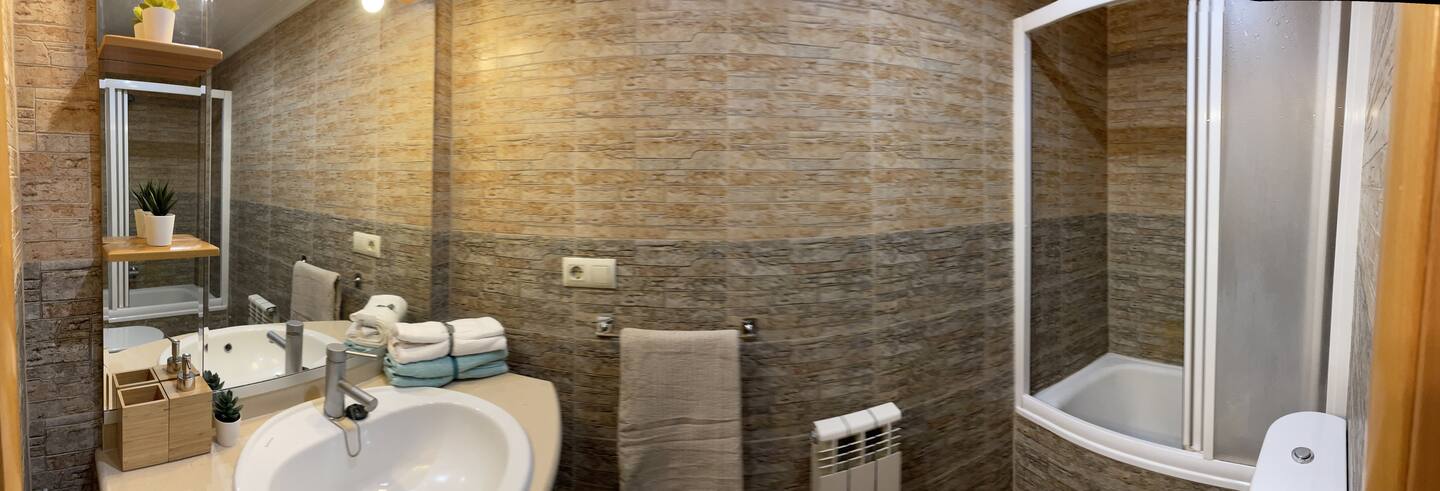
We unpacked our gear and after multiple attempts of exiting the garage, the turn to get up the ramp so contorted one needed a spotter to make sure they didn’t clip the side of the car with hand rail that ran down the side, we headed off to the airport, stopping at a large market on the way to secure more provisions. Bev’s plane was on time, and it didn’t long to get back to the apartment and welcome her to Spain with an introductory Tinto Verano.
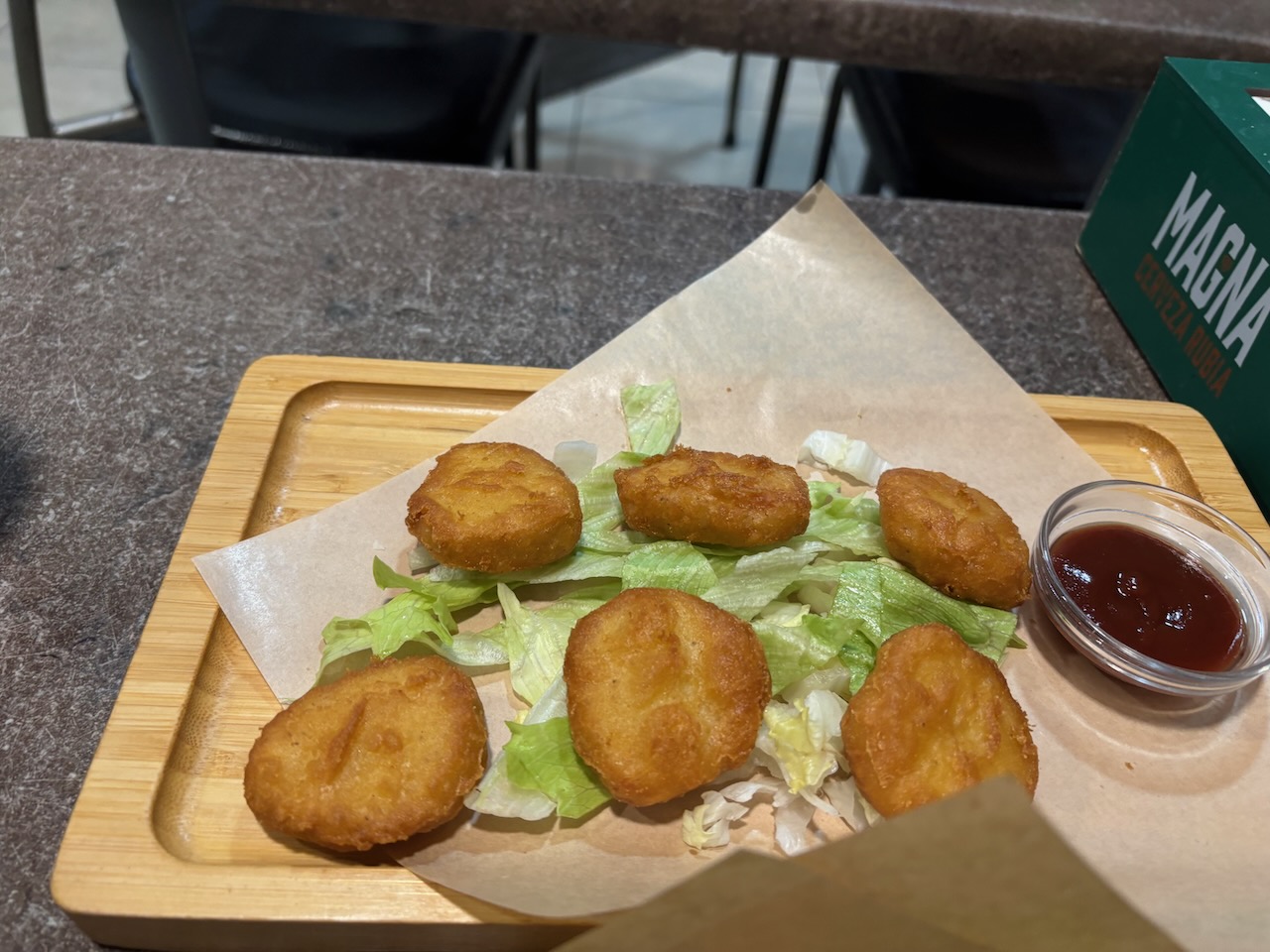
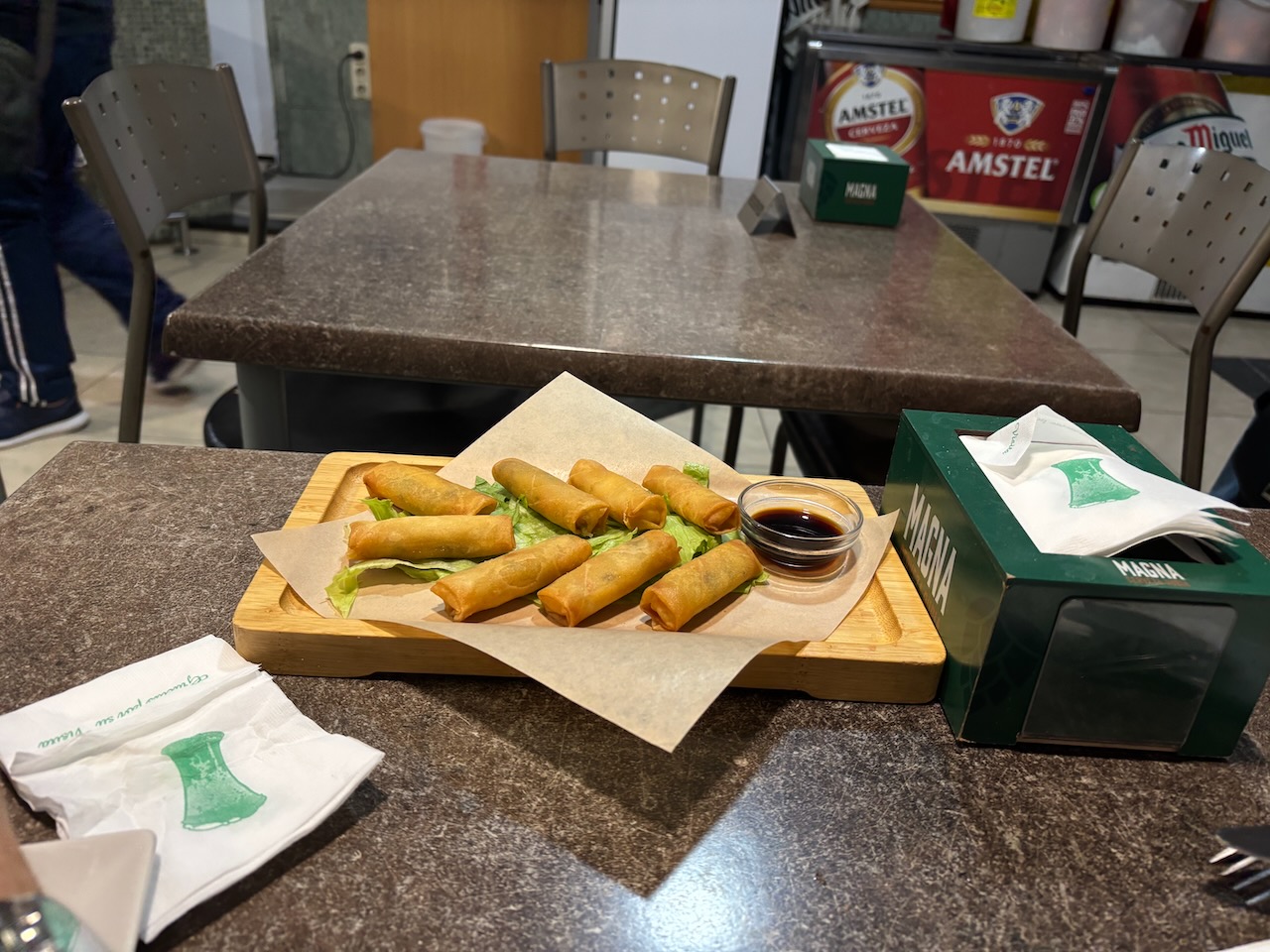
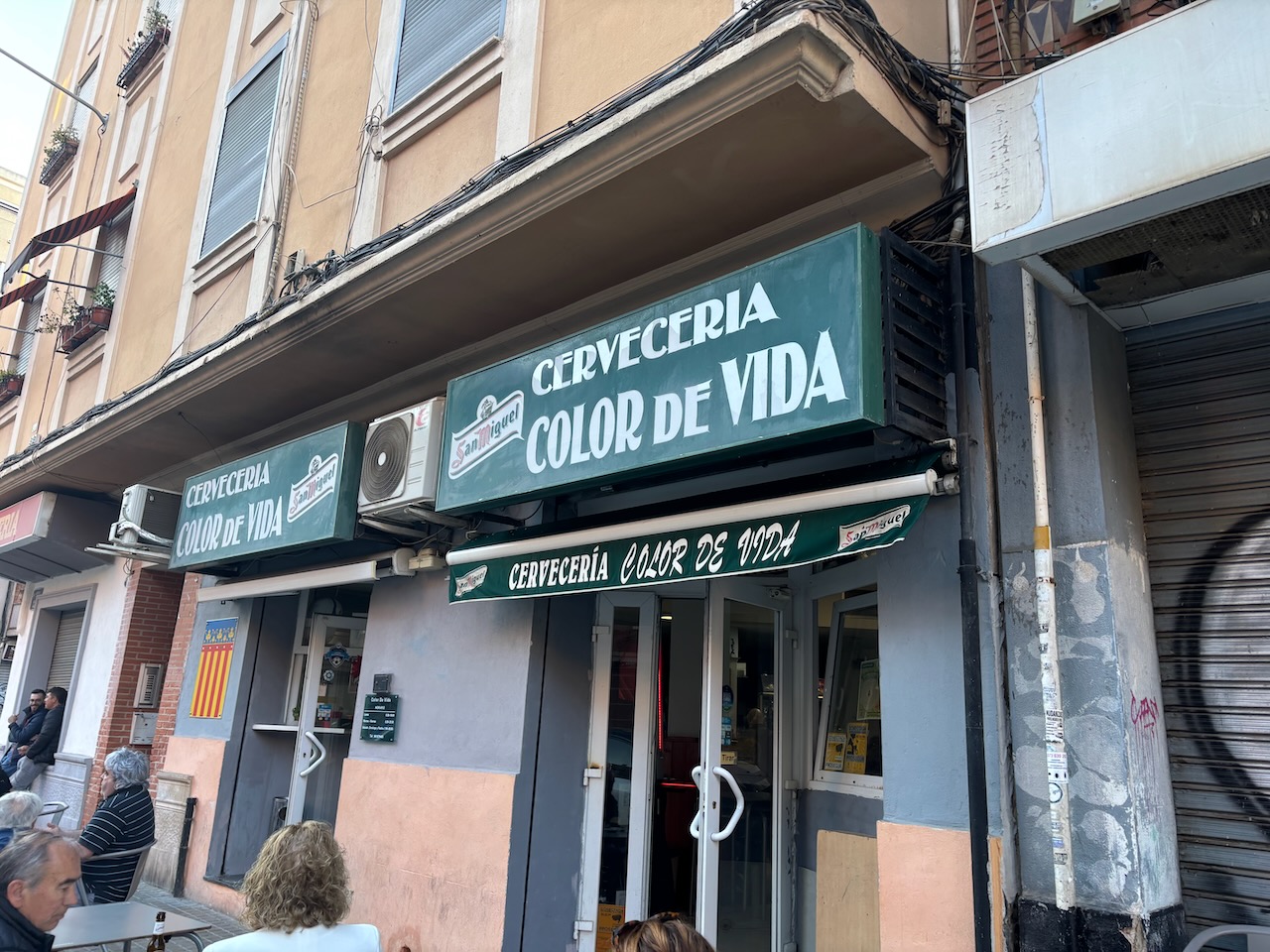
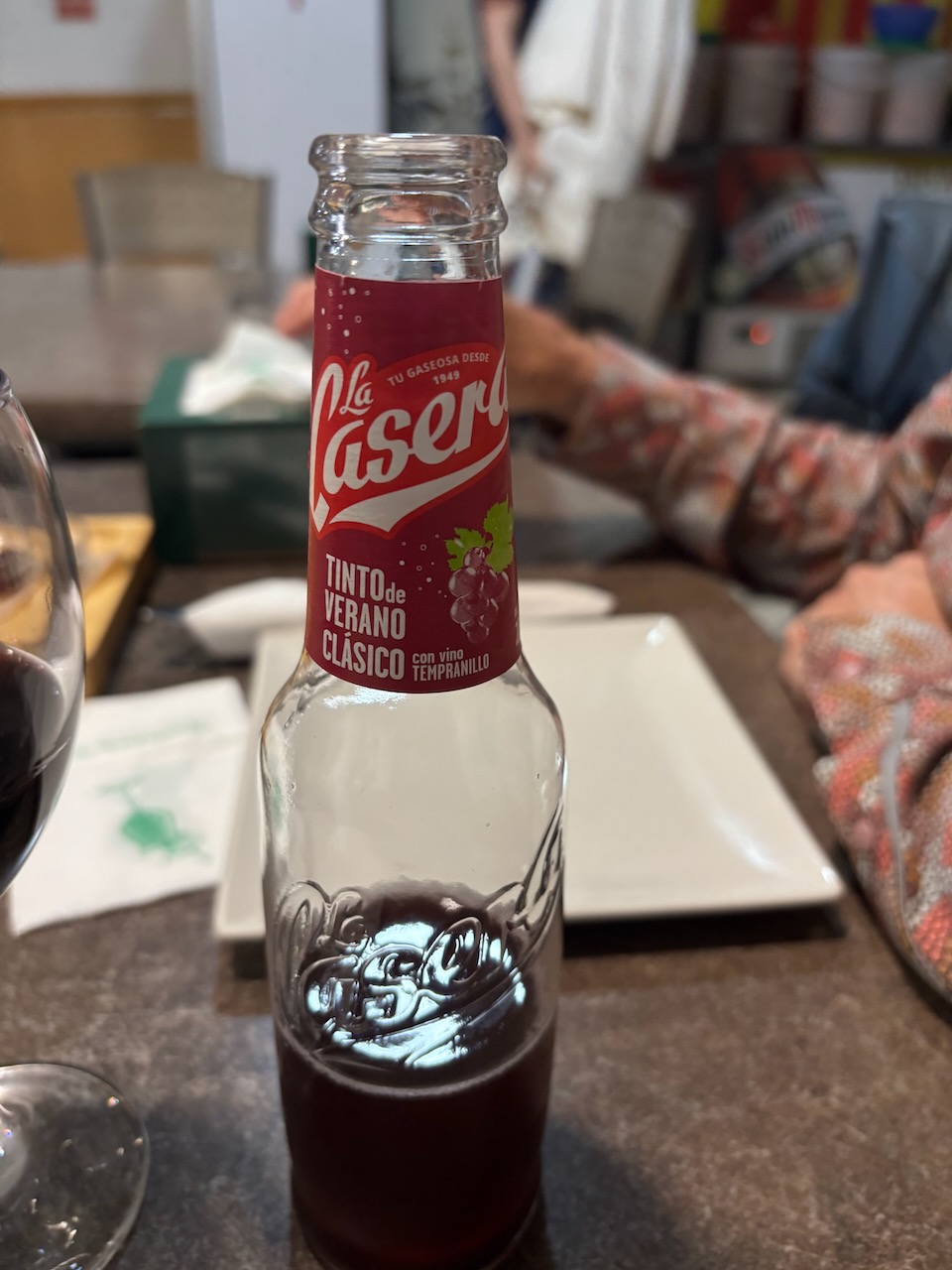
After our drinks we walked the block or so to Cerveceria Color de Vida, where we had picked up the keys to the apartment for a simple dinner of chicken nuggets, egg rolls, a beer for me and a bottled Tinto Verano Joanna and Bev shared. Nothing gourmet here, but it was hot and tasted nice and ran us just 13 Euros ($15), as good as it gets when you are eating out most of your meals.
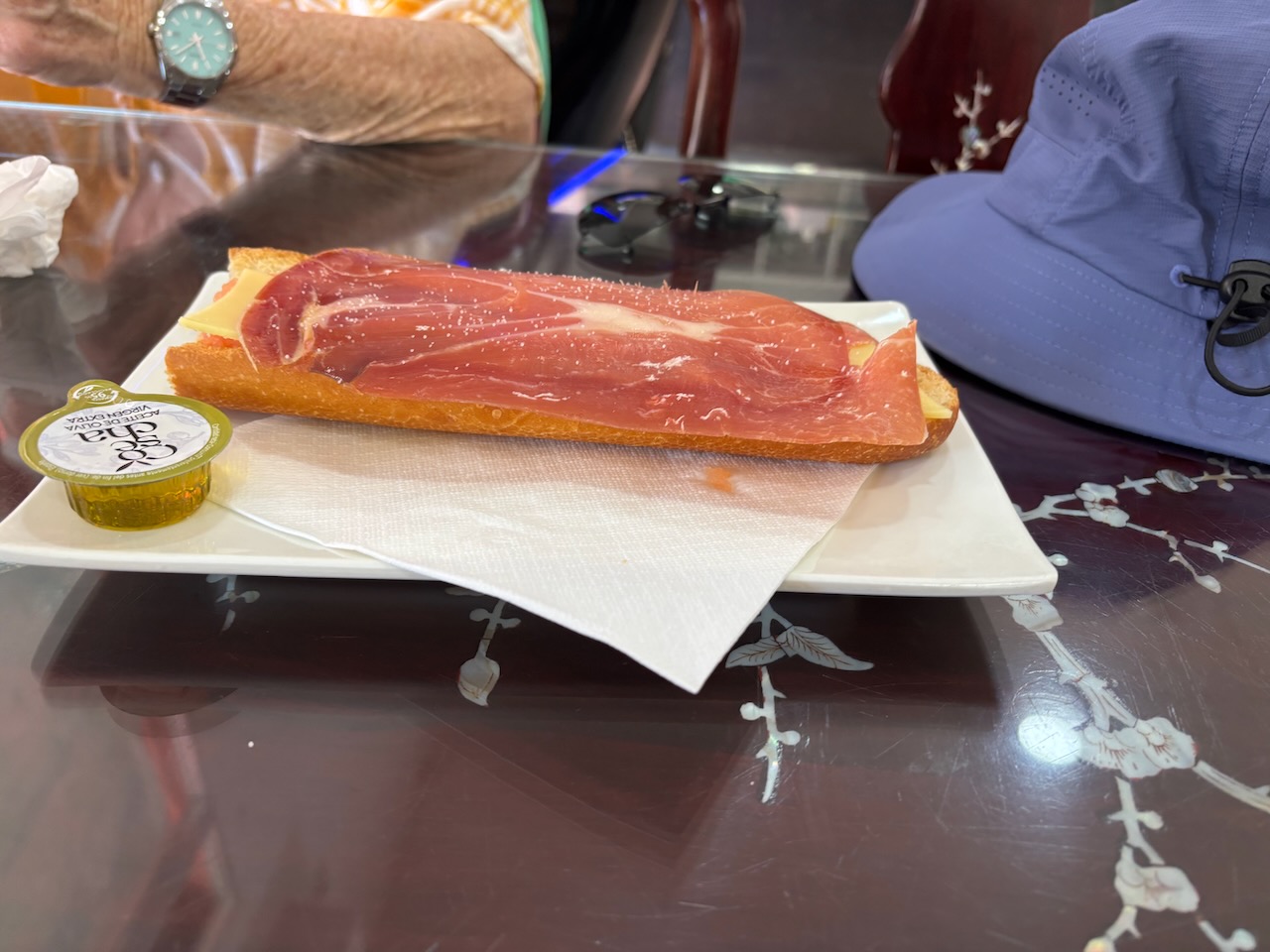
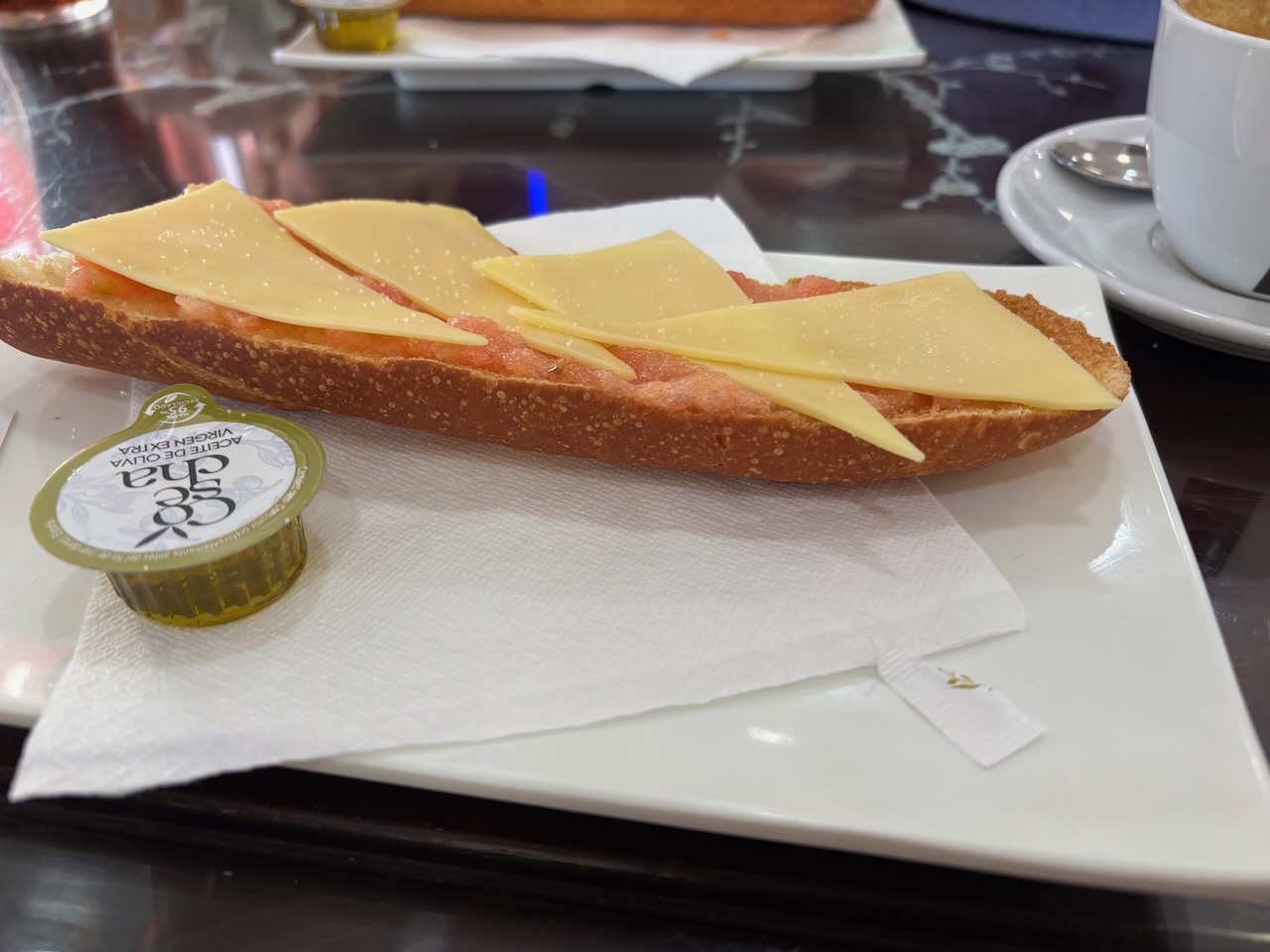
The next day we planned to be a full one with a cobbled together itinerary as St. Steves does not cover Valencia. Research was hampered by extremely slow internet speeds with no resolution in site. This would get worse later as we will recount. We took off walking towards the center of town from the apartment and stopping part way at Bar Restaurante Meizi for breakfast. Between the three of us we would split two tostadas, one with just cheese and tomato and the other with ham and cheese.
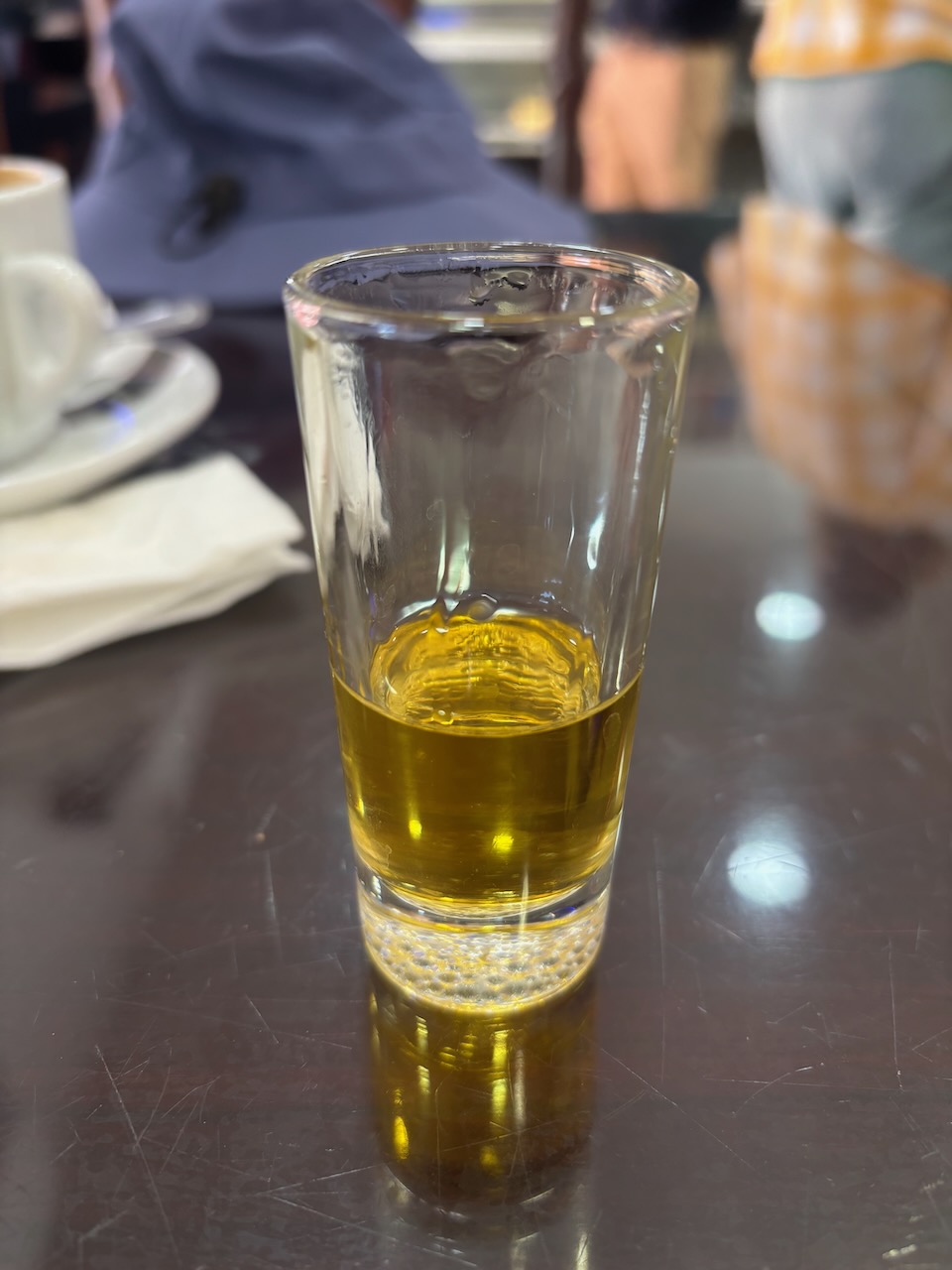
We’d also sample a shot of the Spanish liquor known as Licor 43 (Cuarenta y Tres), a caramelly concoction that is delicious in coffee. Produced in Cartagena, it was invented in 1946 by the siblings Diego, Angel, and Josefina Zamora, along with Emilio Restoy, Josefina’s husband. The Licor 43 website states they based their recipe on the Liqvor Mirabilis (marvelous liquid), a golden, aromatic elixir produced and infused from local fruits and herbs in Carthago Nova (historical name for Cartagena) during the 3rd century. Liqvor Mirabilis was encountered by the Romans when they conquered the region in 209 BC; despite the Romans banning its production and consumption, the Carthaginians continued producing in secret. This legend served as the inspiration for the Zamoras’ invention of Licor 43. The name of the modern-day liqueur originates from its use of 43 different ingredients; while its recipe is a closely guarded secret by the Zamora family, it is known to contain citrus and fruit juices, and to be flavored with vanilla, among other aromatic herbs and spices.

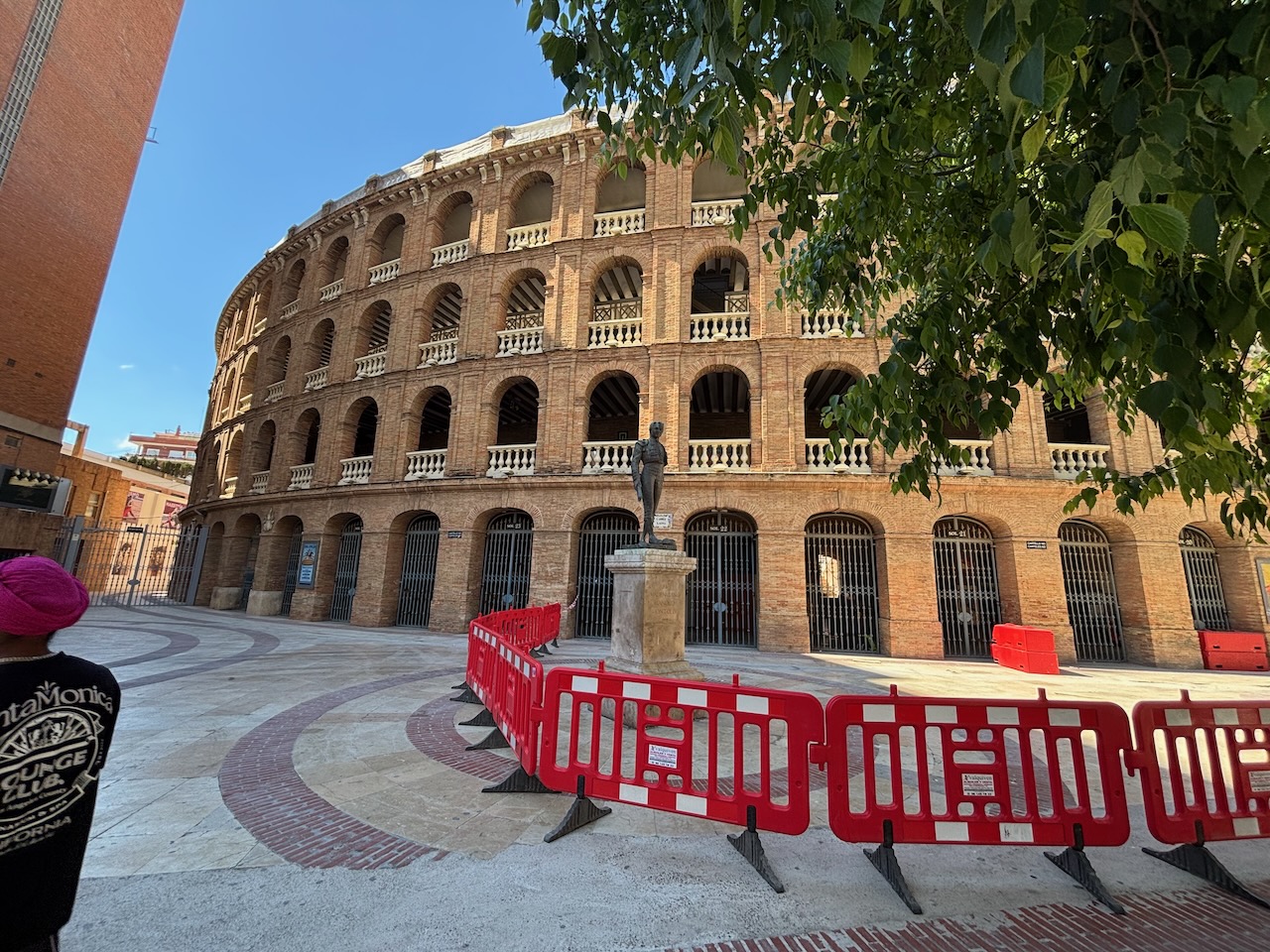
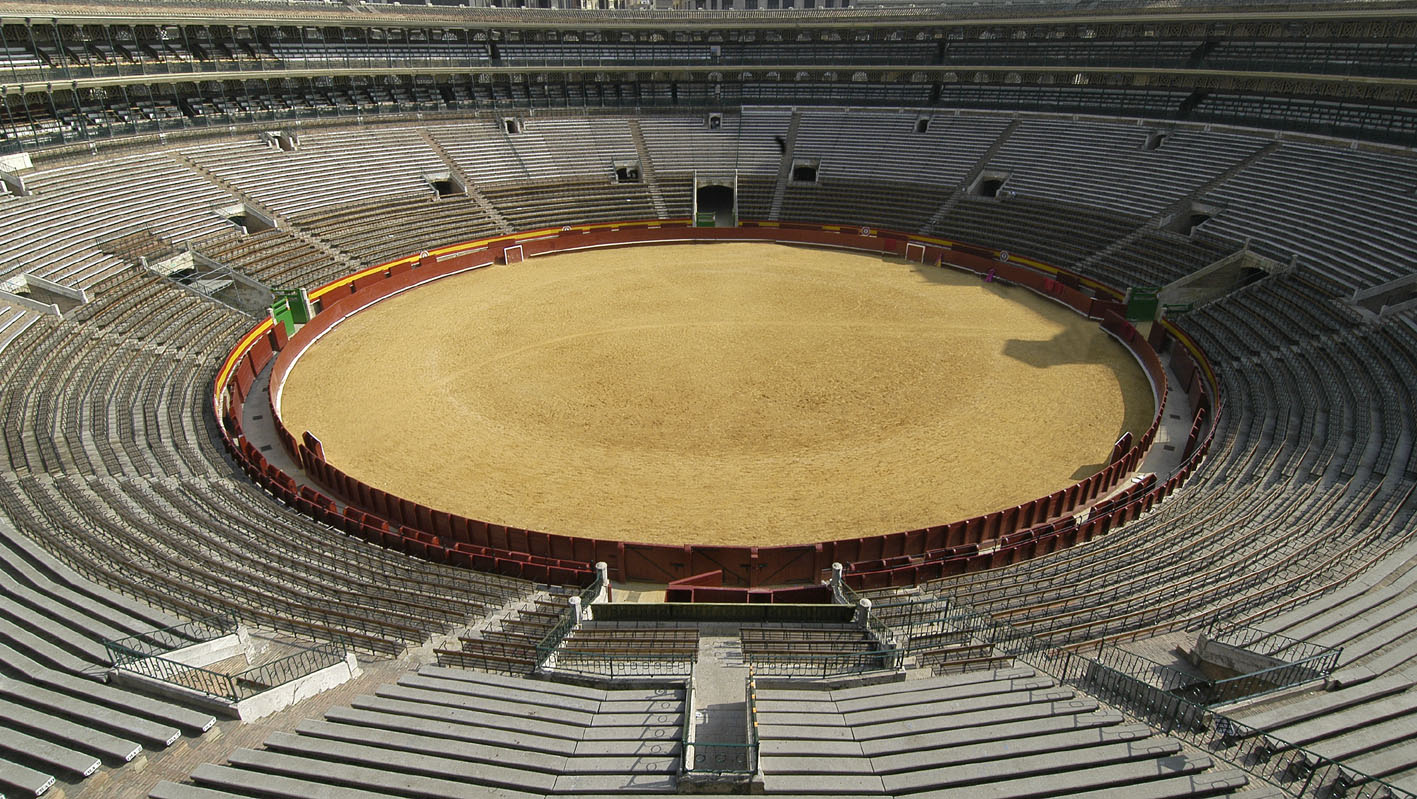
Properly nourished we pushed on, stopping outside one of the town’s train stations, Estacio del Nord and standing in the plaza there, did a 360-degree view of the area, Gaudi-esque apartment buildings across the street, the city’s Plaza de Toros de Valencia (bullring) adjacent to the plaza. The ring was built between 1850 and 1859 in the neoclassical style, inspired by civil Roman architecture such as the Colosseum in Rome or the Arena of Nîmes (France) and its structure is formed by a 48-sided polygon, with 384 external arches.

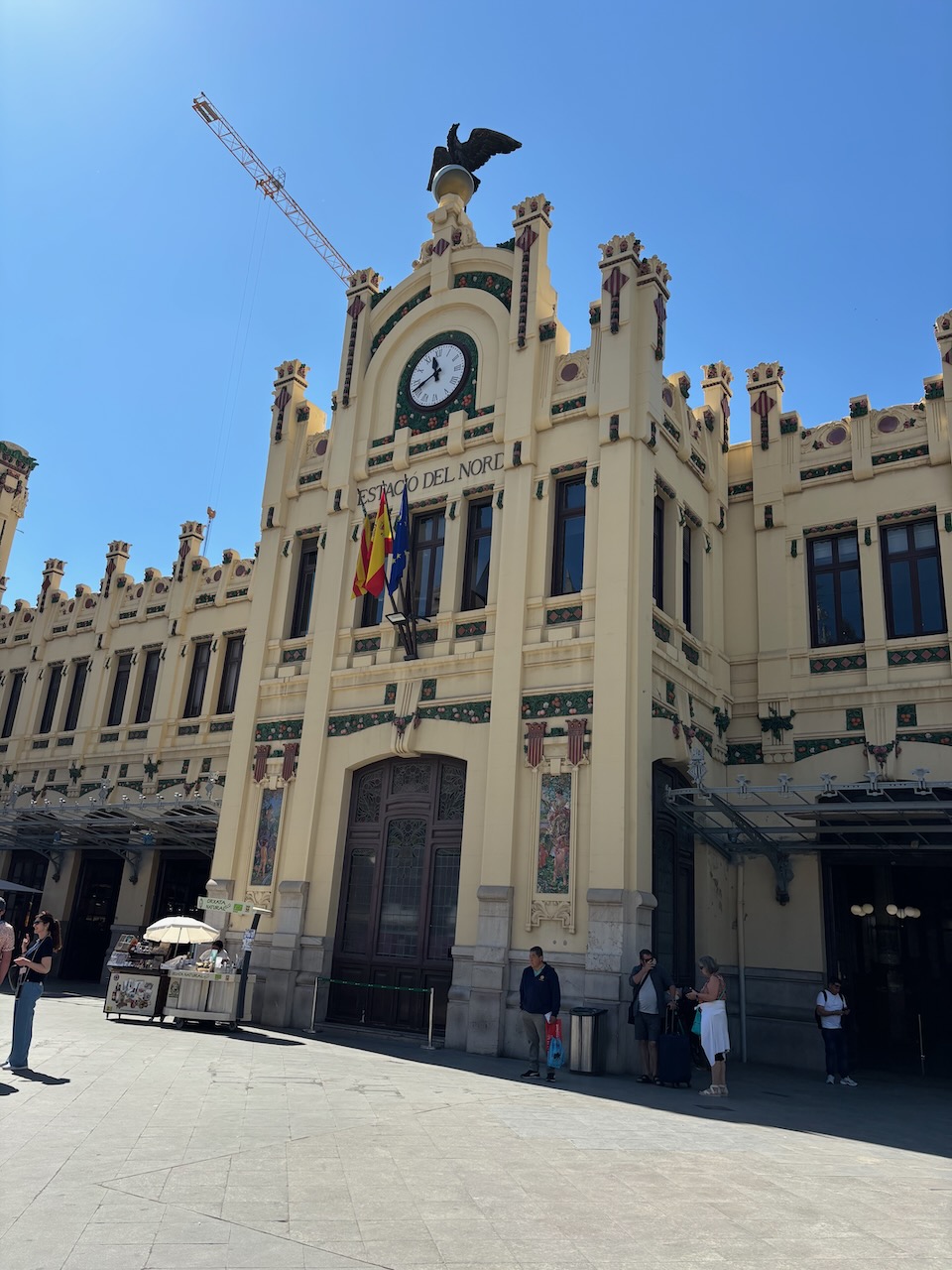
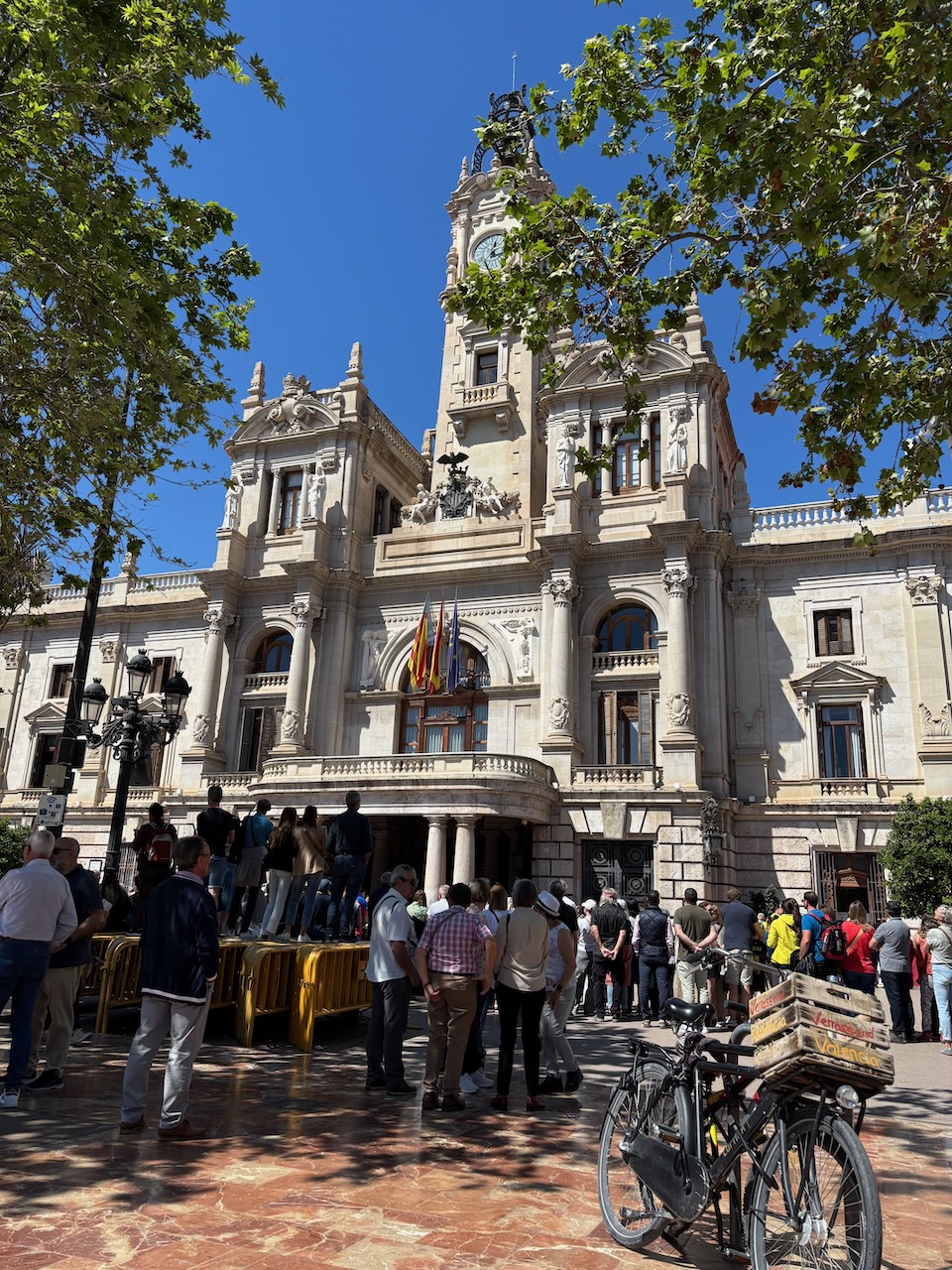
One of the fun things about traveling in Europe is that one often stumbles upon a festival, bringing an extra dimension of local culture to your journey. Most times this is a blessing, but other times it can get in the way of fully enjoying your visit. It was the latter for us as the city’s primary tourist sites were all closed to celebrate the feast day of San Vicente Ferrer (1350-1419), the patron saint of Valencia. Celebrations for the saint take place the week before the day we were in town and Monday the 28th, is the official holiday. He is the patron saint of builders, plumbers, fishermen, and prisoners, among others and the main activity that day was the civic procession to lay flowers at his statue, from the City Hall to the house where he was born. Participants include Vincentian altars (a Catholic society of apostolic life of pontifical right for men founded by Vincent de Paul), brotherhoods, and other religious associations.

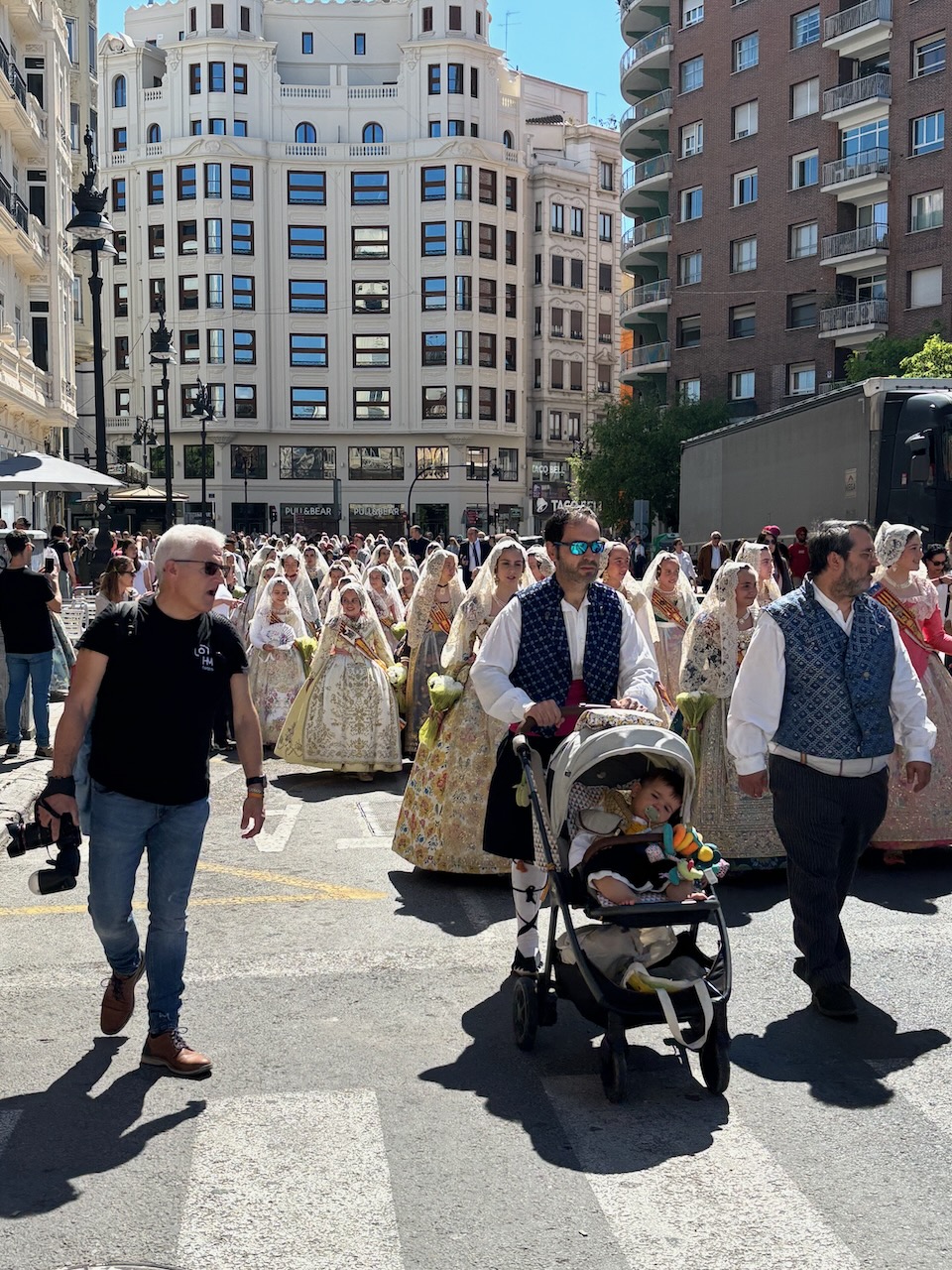
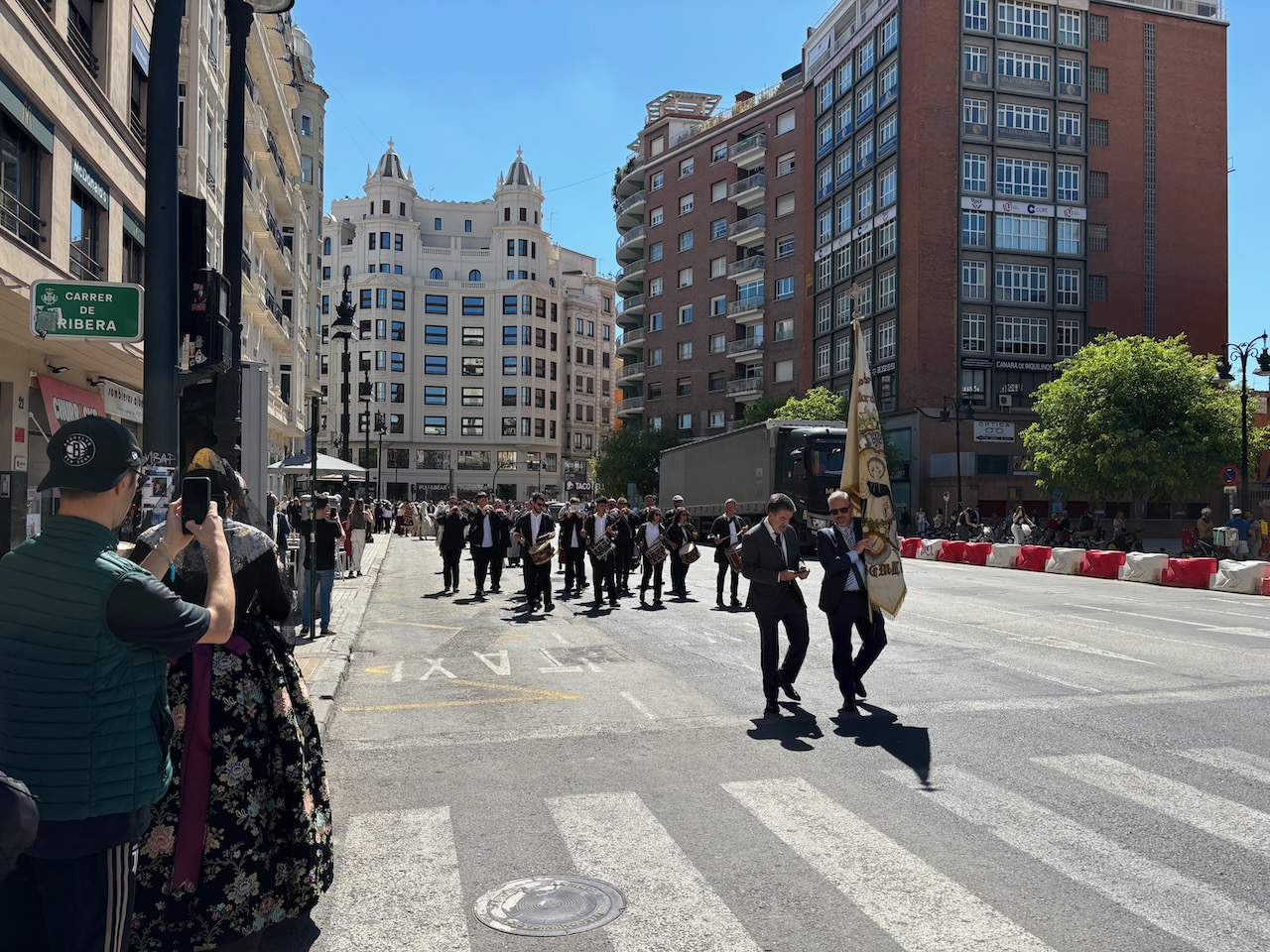
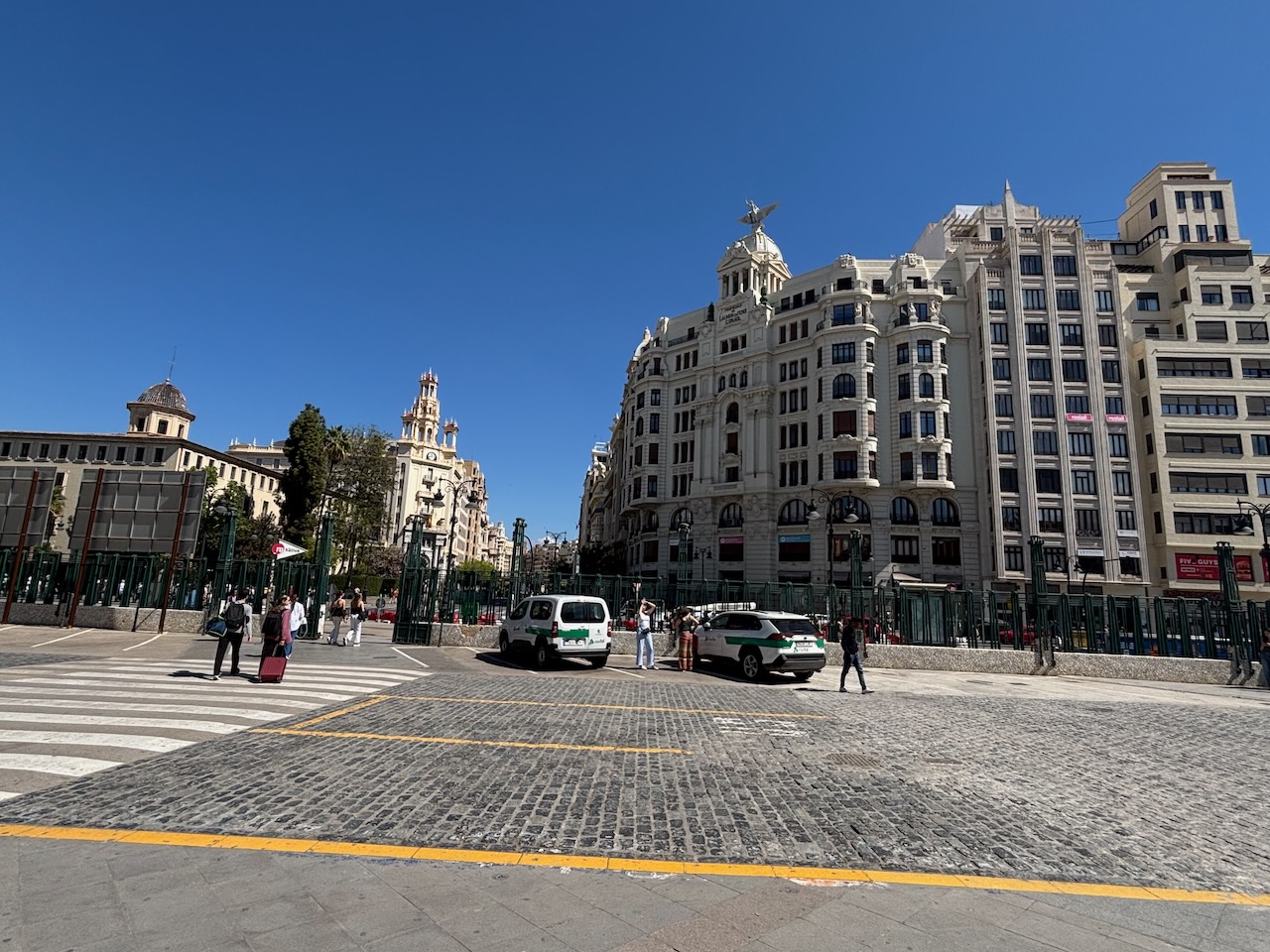
We continued walking towards Plaza del Ayuntamiento, home to the city’s town hall and Central Post Office, stopping often along the way to watch the passing parade of participants, many accompanied by musicians. We finally reached the plaza, also known as the Modernisme Plaza of the City Hall of Valencia which refers to the transformation of the square of the City Hall of Valencia by Javier Goerlich in 1931 (then called “Bajada de San Francisco”). Standing in the plaza in front of the city hall we continued to watch streams of celebrants in their traditional holiday dress passing by as we also looked at several vendor stalls lining one side. At this time, we still weren’t aware of the nature of the holiday and just how many resources, locations, and potential sites to visit would be impacted. It would turn out to be most of those we wanted to stop in at.

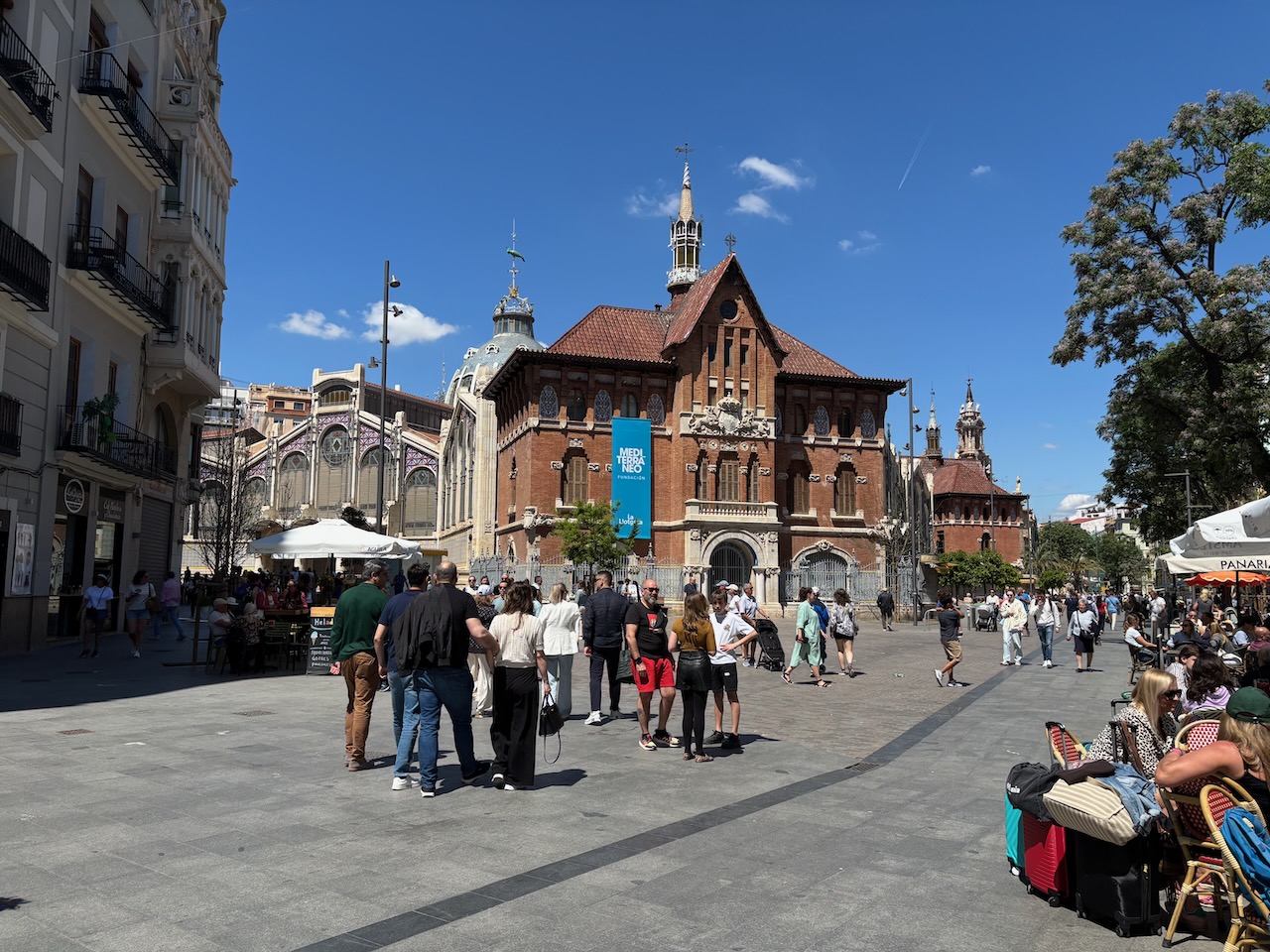
We left the plaza and walking a few blocks, stopping often so that Joanna could shop for shoes, we entered a small plaza adjacent to the Mercat Central (Central Market), which unfortunately was one of the holiday closures. It is a shame we missed it as it dates to 1839 when it served the same purpose. It covered the commercial and social needs of the time but as an open-air market. It was inaugurated in 1928 under the direction of architects Alejandro Soler March and Francisco Guardia Vial, both greatly influenced by Gaudí. We paused there before moving on and will do so in this post as well, picking up the rest of our stay in Valencia in the next post.

Links
Valencia Airbnb: https://www.airbnb.com/rooms/688410284121842818?source_impression_id=p3_1760370544_P3vmpzYasDT0cw66
Licor 43: https://licor43.com/
Plaza del Ayuntamiento: https://travel.usnews.com/Valencia_Spain/Things_To_Do/Plaza_Ayuntamiento_30247/
Discover more from 3jmann
Subscribe to get the latest posts sent to your email.


 3jmann