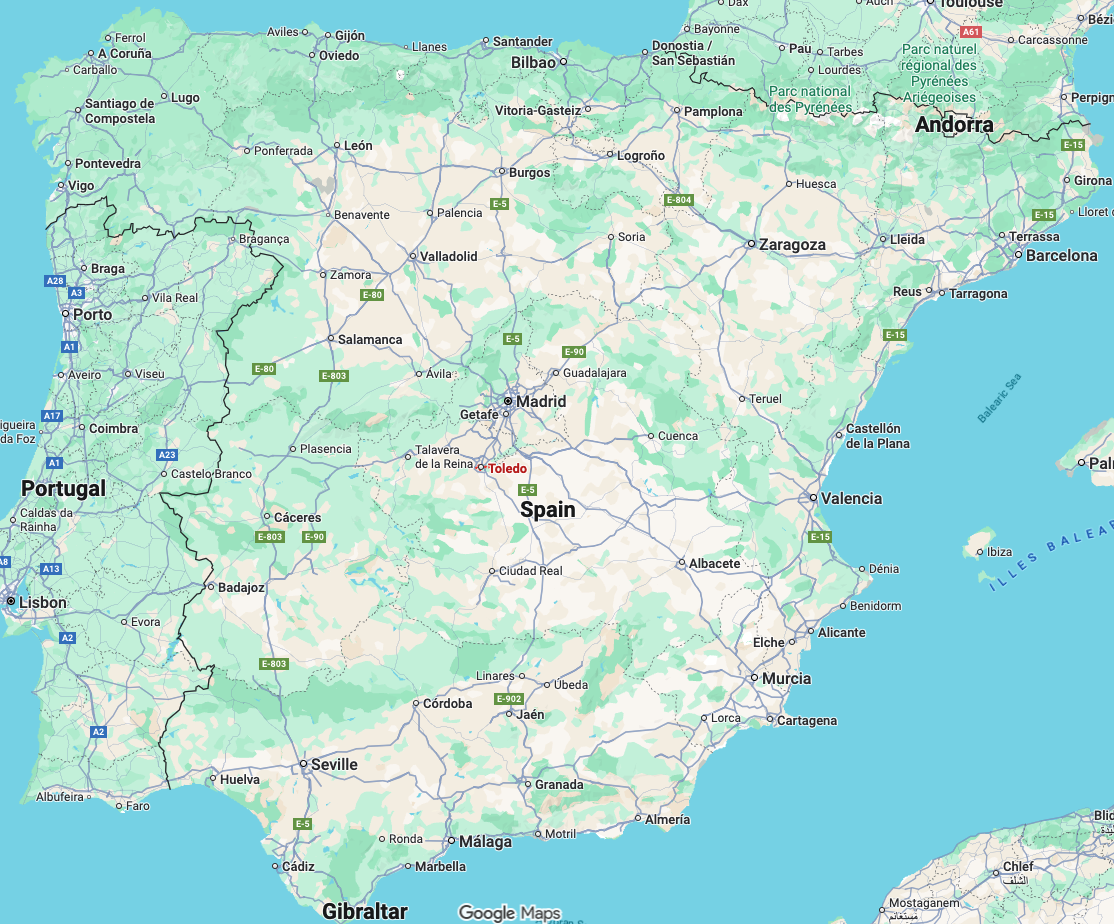
Perched strategically in the center of Iberia, Toledo was for centuries a Roman transportation hub. After Rome fell, Toledo became a Visigothic capital (AD 554). In 711 the Moors (Muslims) made it a regional center and because of its importance, Toledo was the first city in the crosshairs of Christian forces. It fell in 1085, marking the beginning of the end of Muslim Spain, which culminated in the fall of Granada in 1492. As with Cordoba, we will see much of that Muslim influence as we continued our journey.
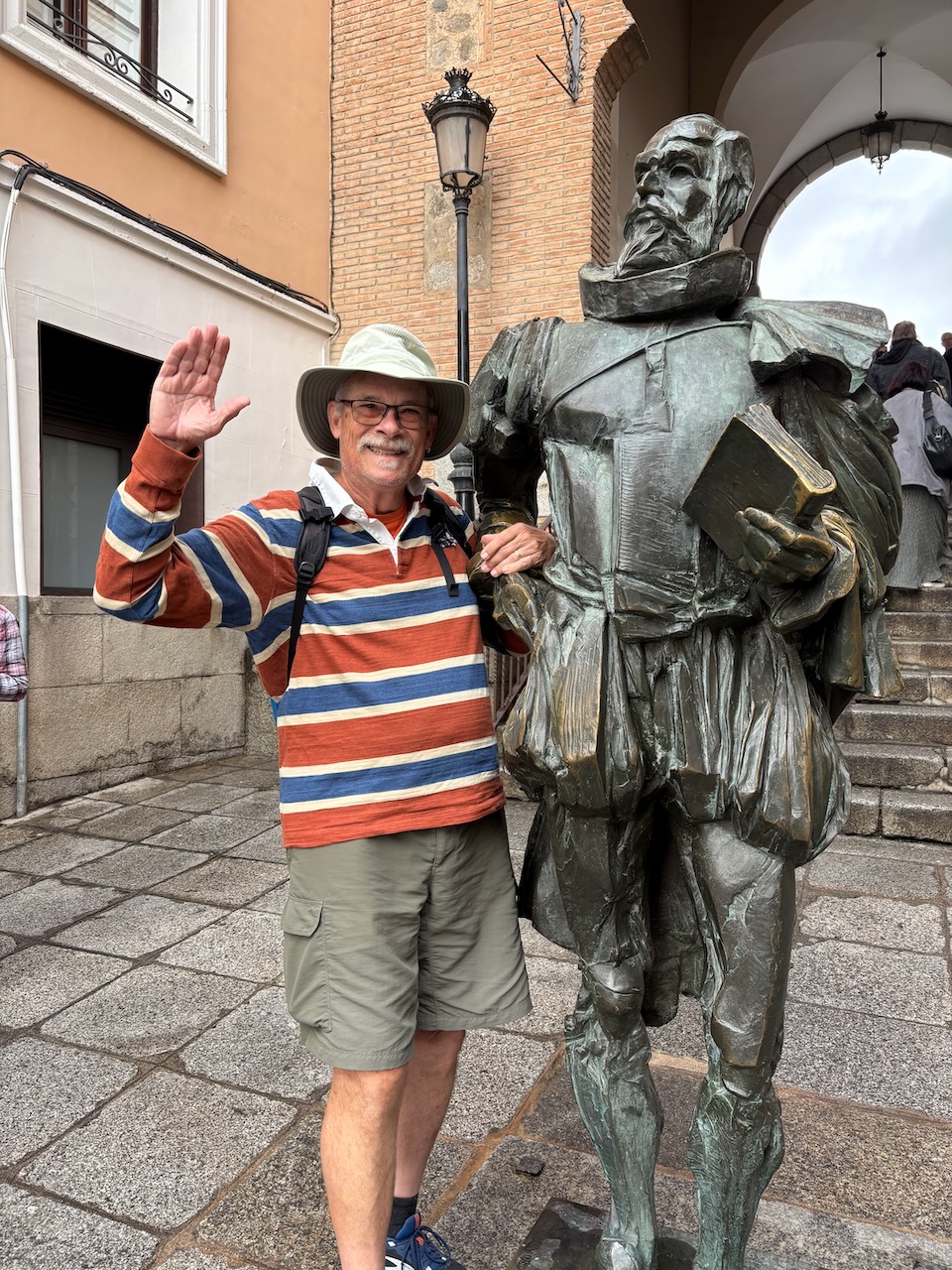
After loitering a bit at Plaza de Zocodover, generally checking out the shops ringing it and of course all the people sharing the space with us, we crossed the street to see an outpost of Santo Tomé, one of Toledo’s top shops for the delicious almond confection called Mazapan or as we know it Marzipan. From there continued down some stairs straight past the shop, heading through an arch where someone took a picture of me with the statue of Cervantes (who’s looking down the street named for him). He famously stayed in an inn down the hill, where he did a lot of his writing.
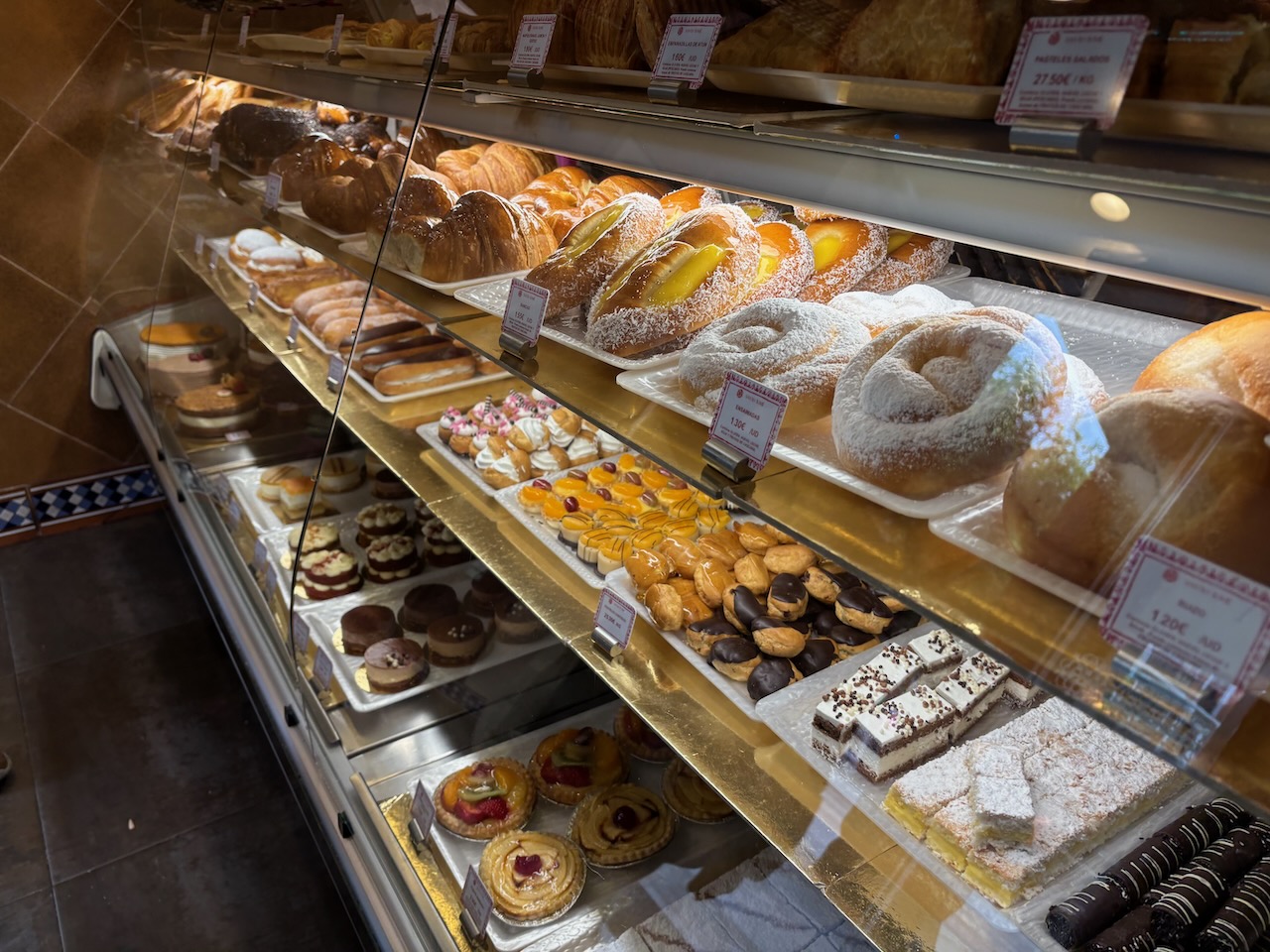
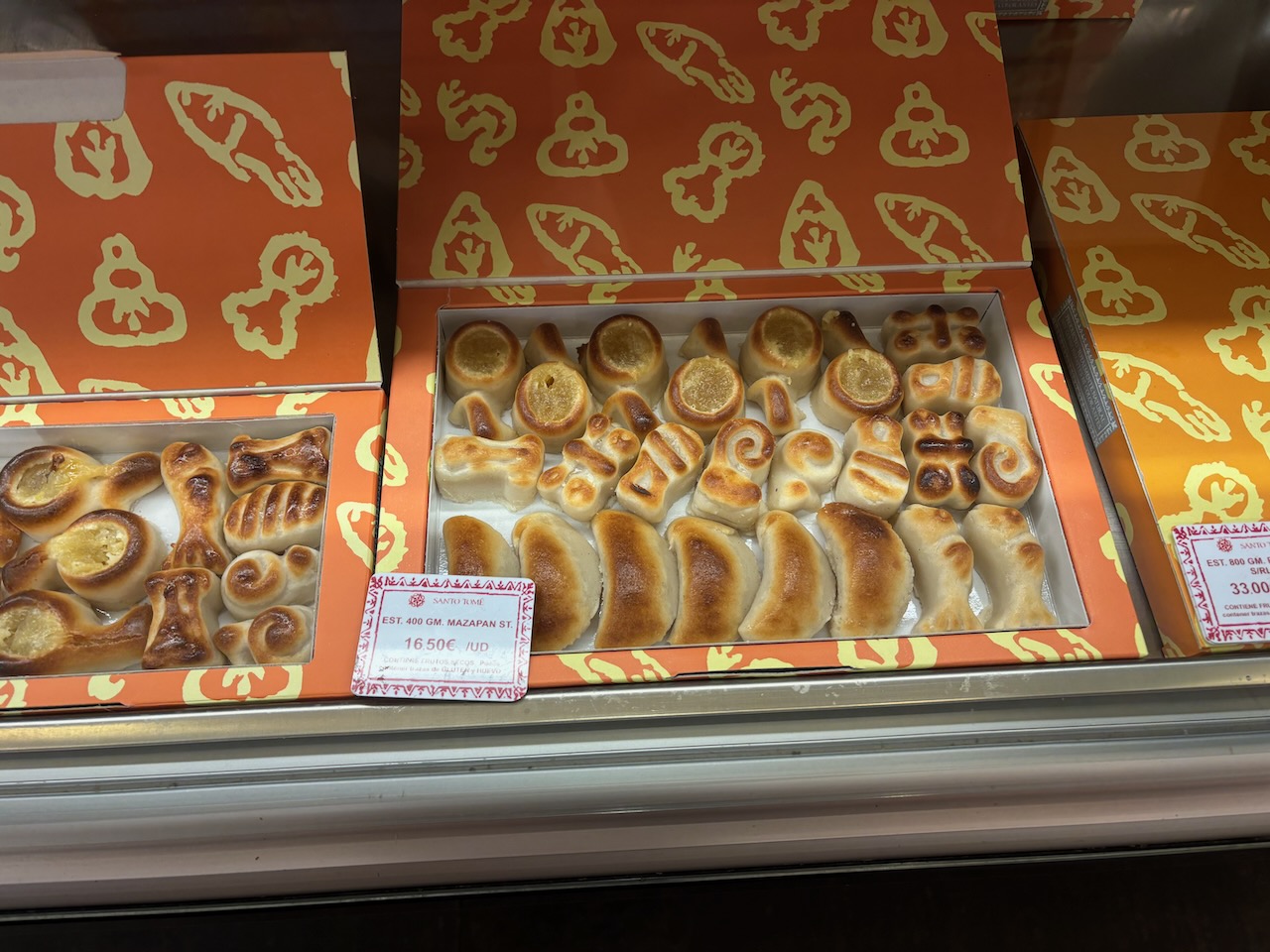
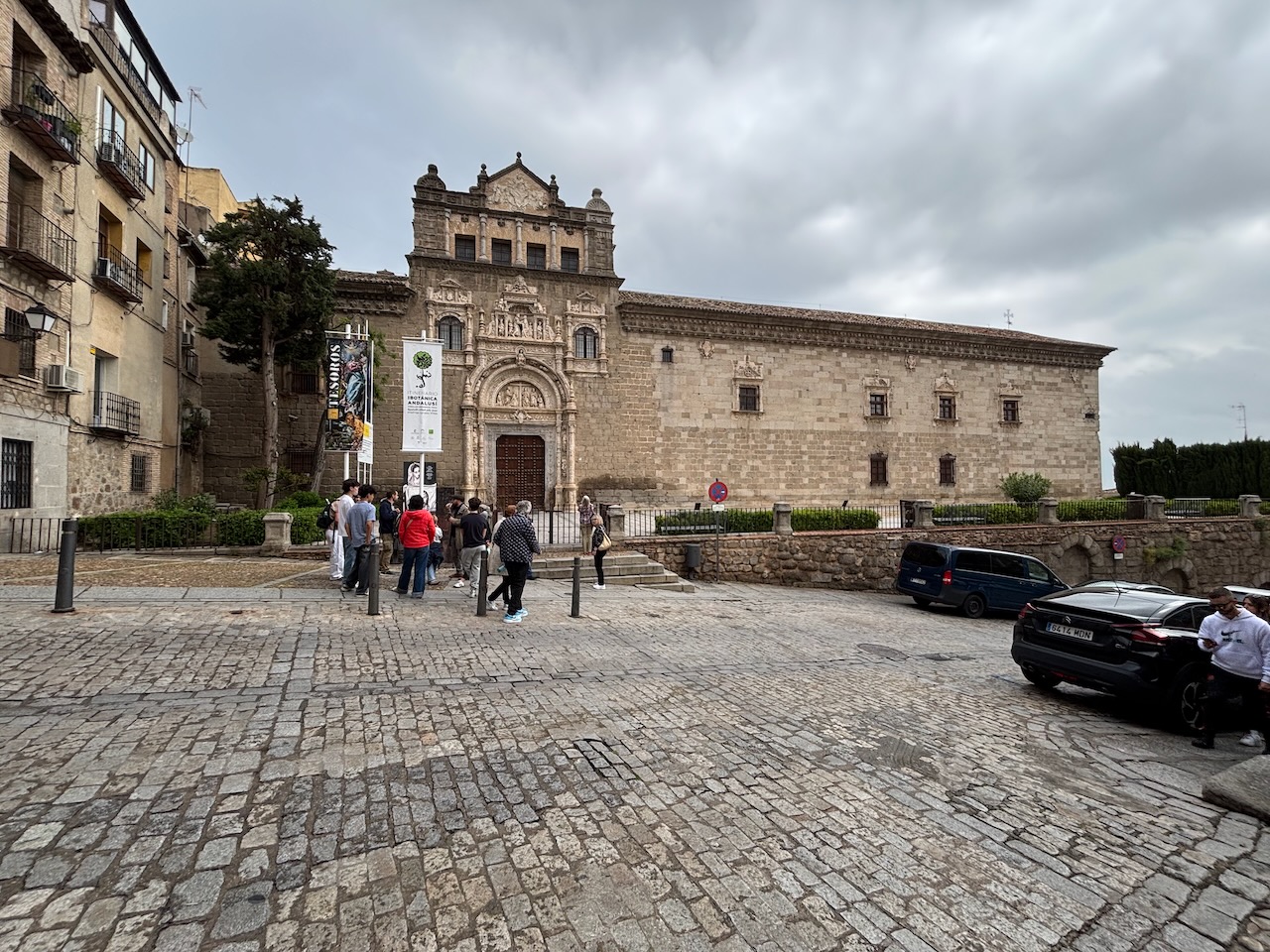
We retraced our steps back through the Plaza and continued to Calle del Comercio. This main drag, connecting the Plaza with the cathedral, is jammed with day-trippers. But locals still shop here, too, choosing from a mix of local businesses (clothing stores, banks, lotto shops) and tourist-oriented shops (offering knives, leather, mazapán, and damascene,fine inlaid work). As we walked downhill, we passed the Museum of Santa Cruz an art, archaeology and ethnographic museum housed in an architecturally significant 16th-century building, the Hospital de Santa Cruz, which has been protected by a heritage designation since 1902.
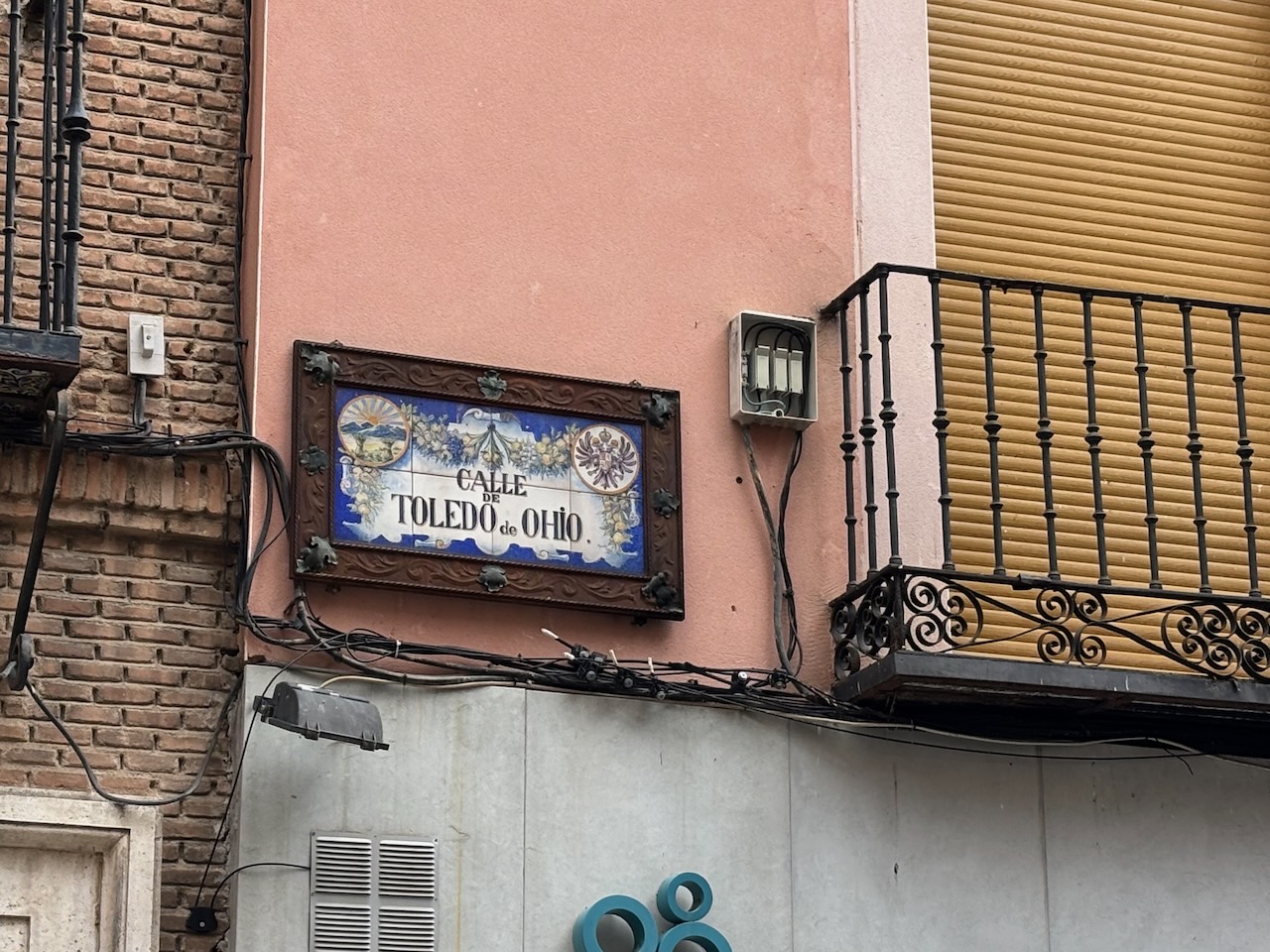
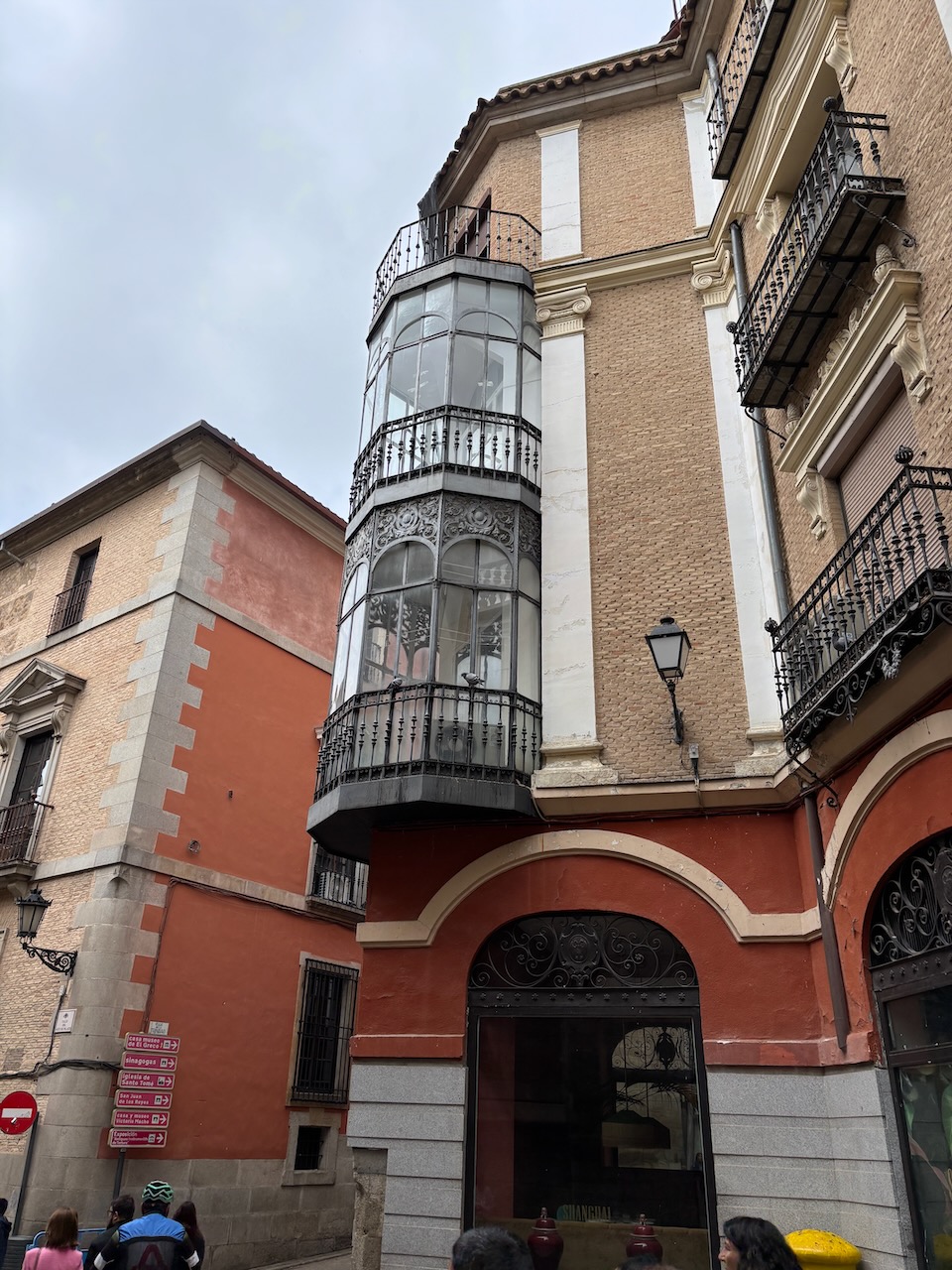
We paused at the intersection with Calle de Toledo de Ohio, Toledo’s sister city in America and eventually ended up in Plaza del Ayuntamiento, named not for Toledo Cathedral but for the City Hall, which flies not three flags but four: the EU, Spain, Castile-La Mancha (purple-and-white), and the city flag of Toledo (purple). Right in front of the building is a clever fountain by Cristina Iglesias that is made with 20 tons of bronze and resembles the Tajo riverbed (Toledo’s river), with water that rises and falls twice an hour to create an ever-changing reflecting pond, great for capturing an interesting shot of the church’s facade.
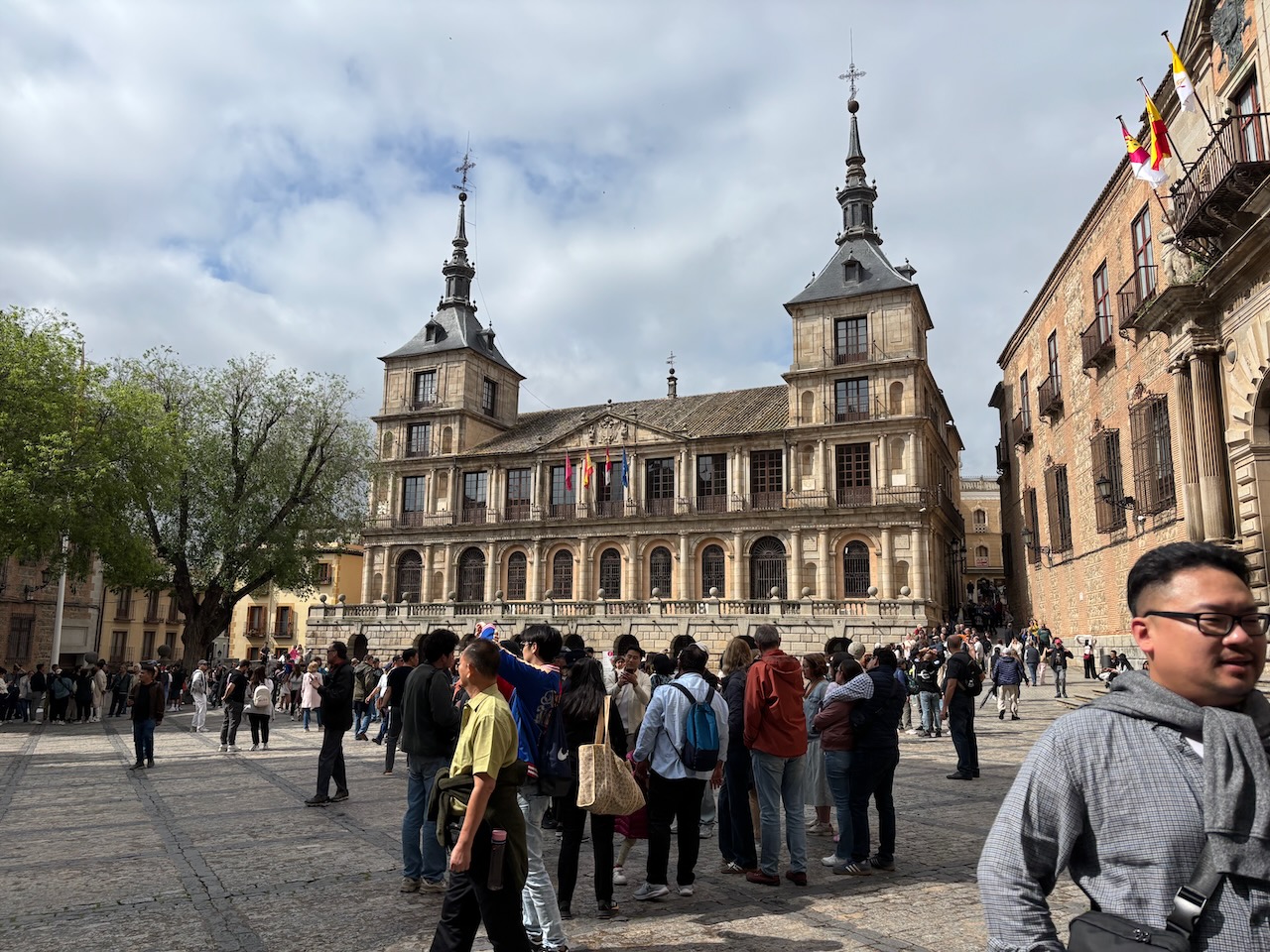
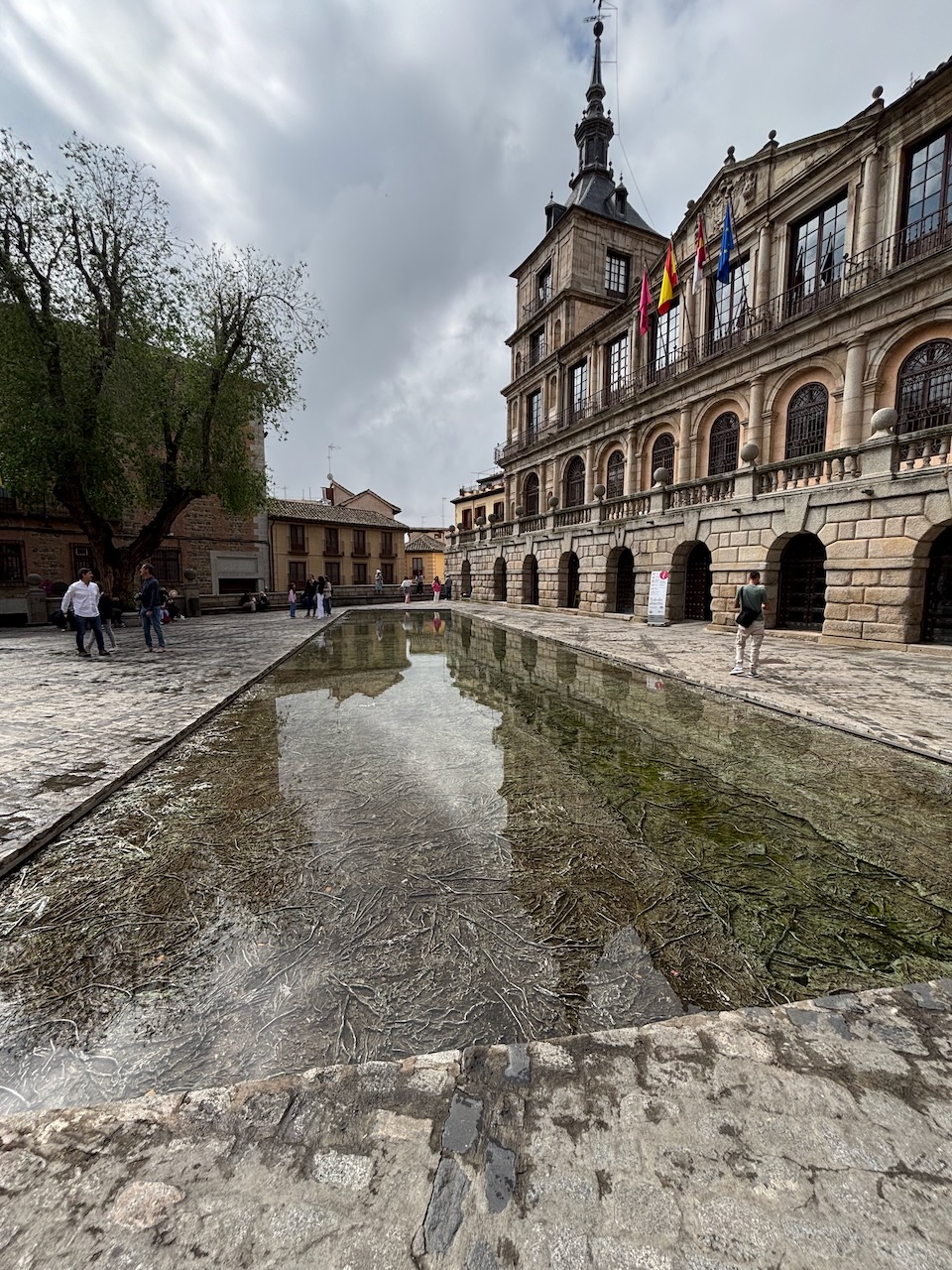


We opted not to visit the Cathedral this day as we wanted to get on with the walking tour and instead would check it out the next day. We left the plaza and continuing, passed the Mudejar-style Santa Ursula convent from the 13th century, once home to mazapán-making nuns. They’ve moved out, but there are still several active nunneries in Toledo. This led us to Calle Santo Tome where plaques in the pavement indicate that this is the start of the Jewish Quarter.


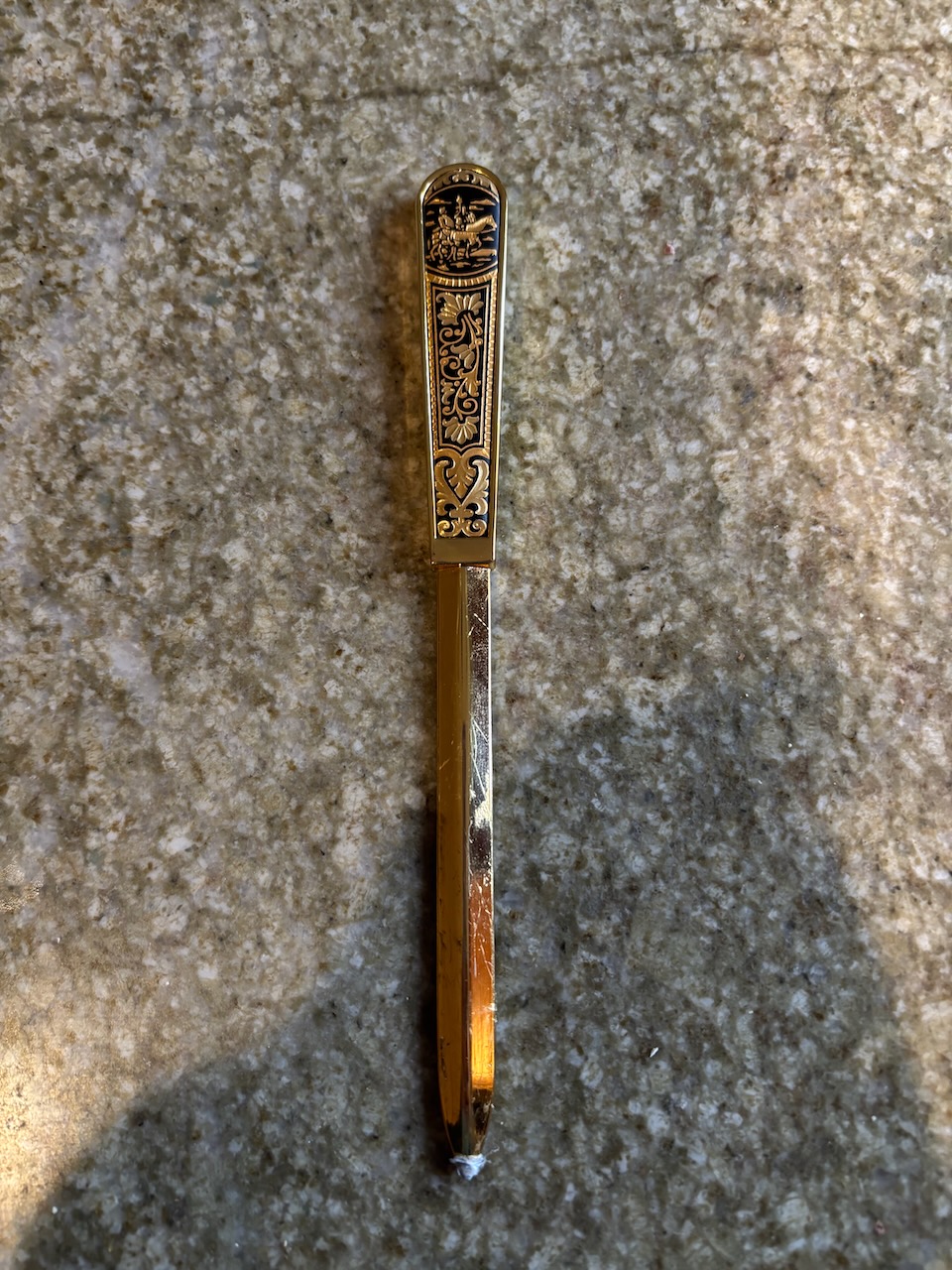
This somewhat narrow street is a strip of touristic shops that offer some good traditional Toledo shopping and I would end up purchasing a nice letter opener as in the Middle Ages, Toledo made the very best steel, using know-how imported from the Middle East via Muslim craftspeople. Knights of the age considered a Toledo-cast sword the ultimate status symbol. And Spain’s top bullfighters wouldn’t have their swords made anywhere else.
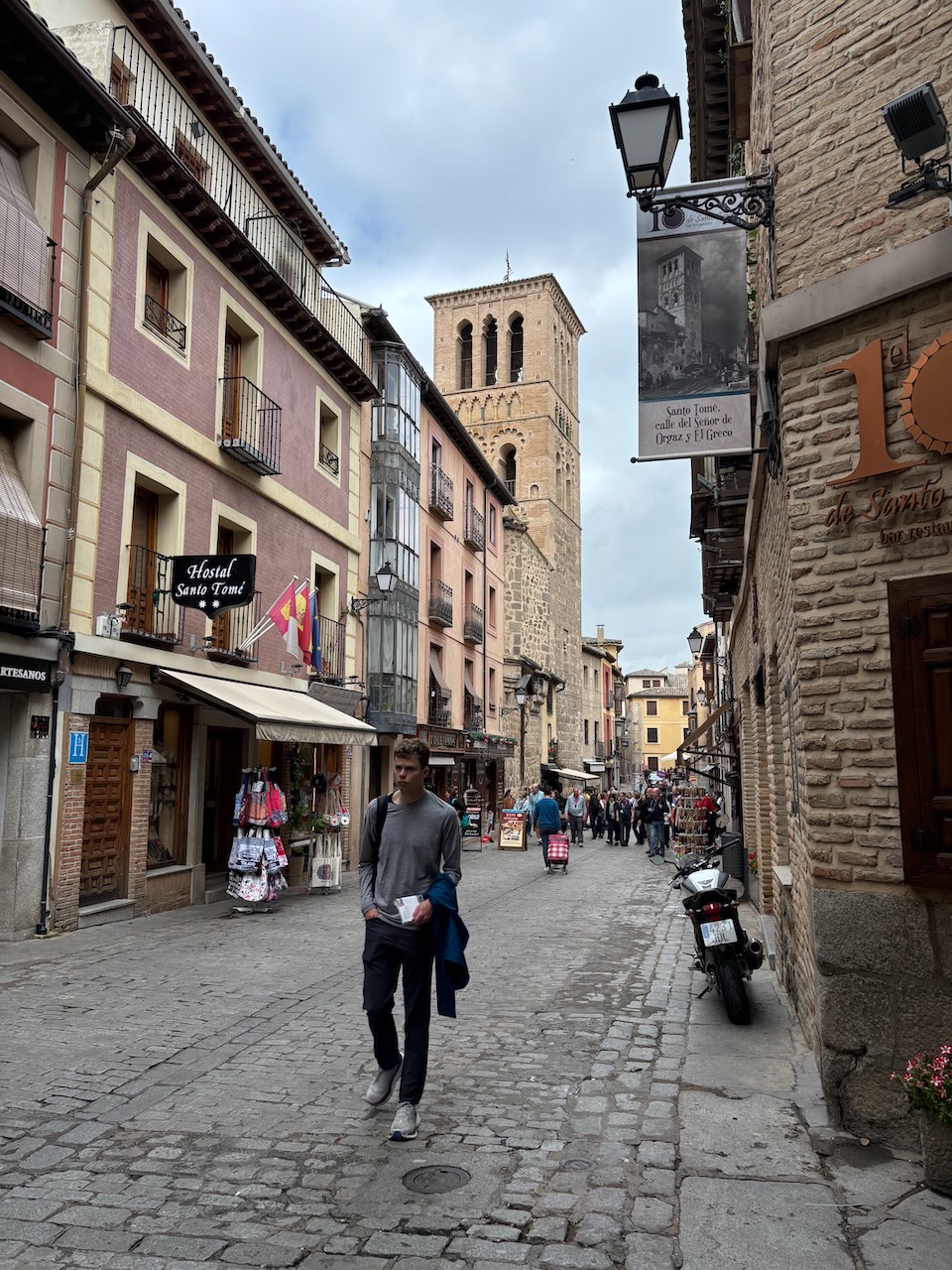
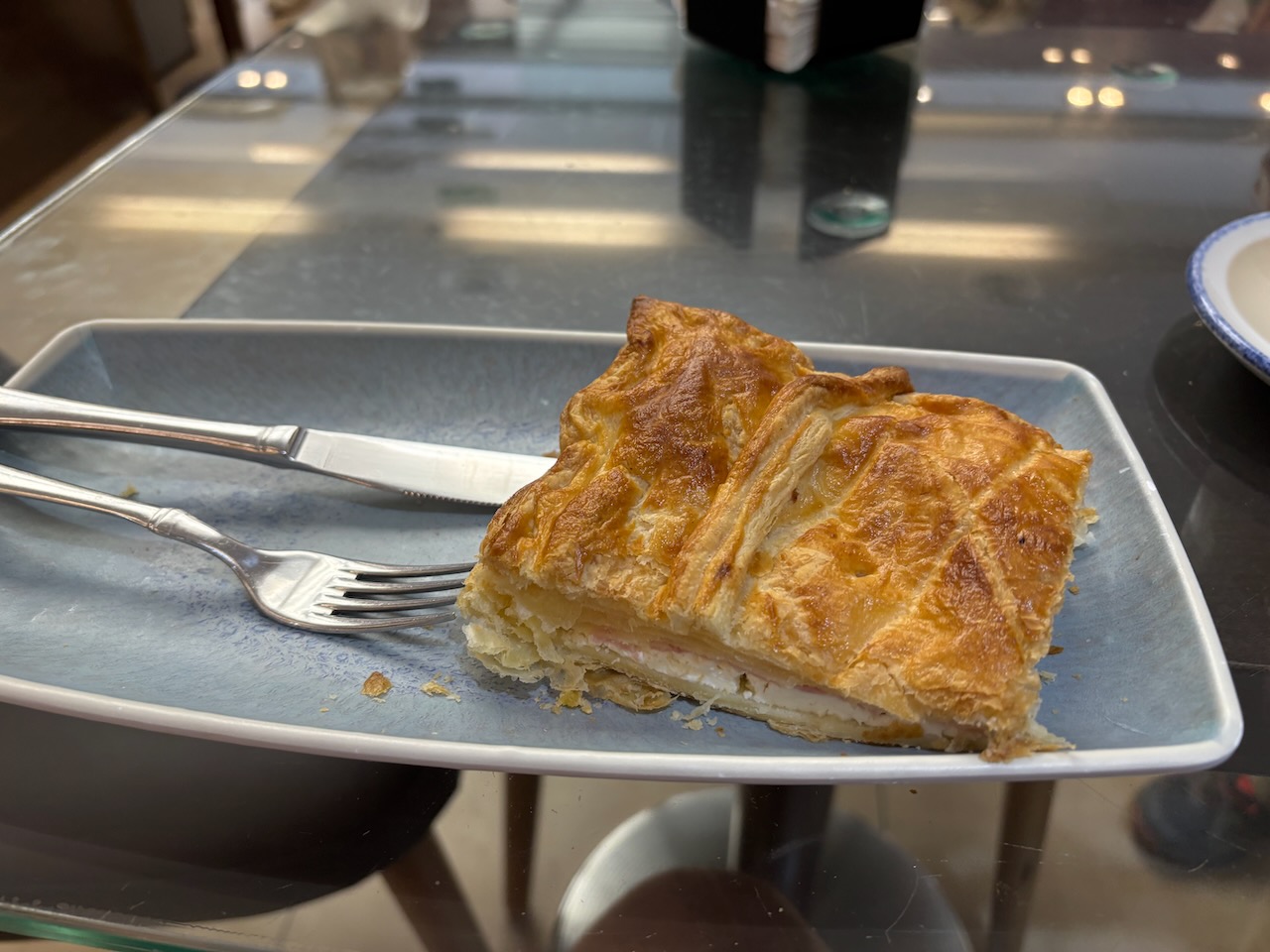
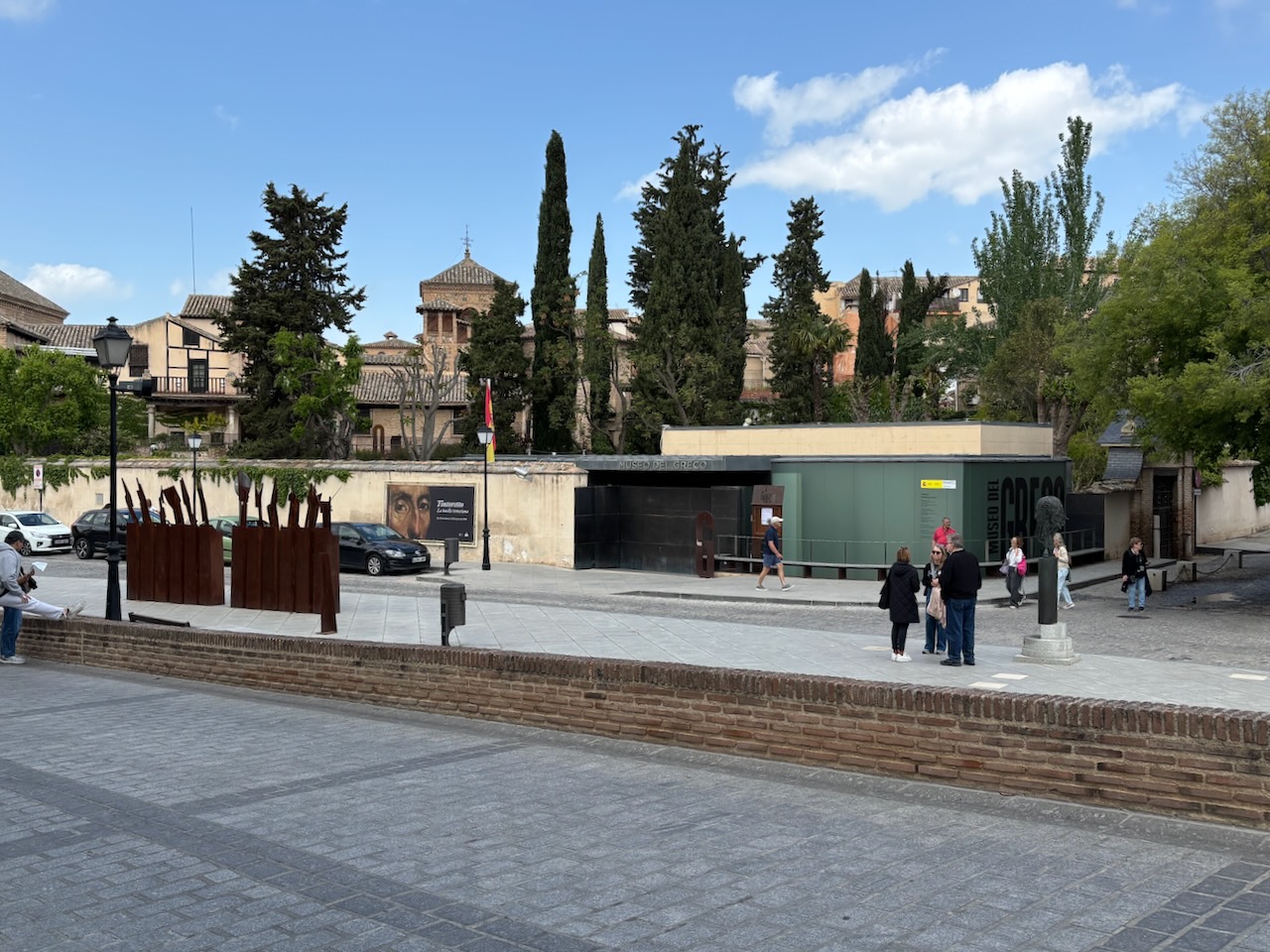
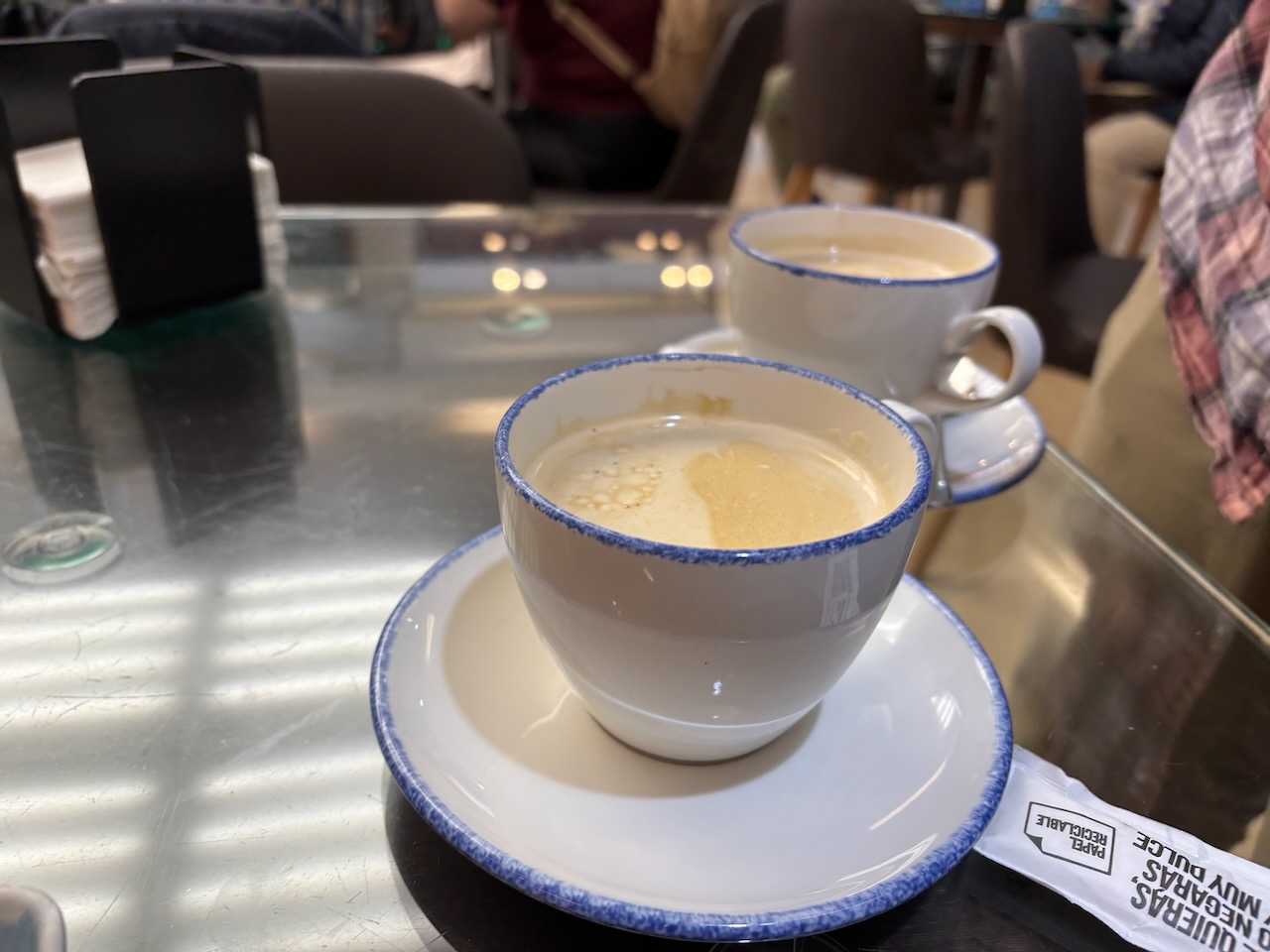
We stopped in at El Café de las Monjas which sells desserts created by nuns living in Toledo’s convents for a coffee and pastry, a nice break as we contemplated the next steps in our guided walk. Finished we made our way on Calle Santo Tome to a narrow lane called Travesía del Conde that led downhill to a long square that is home to the Church of Santo Tome. We paused here for a few moments and again decided to return the next day for a longer visit. From there we stopped at Paseo de Transito, which abuts the El Greco Museum, which unfortunately was closed, and then moved on to an overlook of the Tajo River.

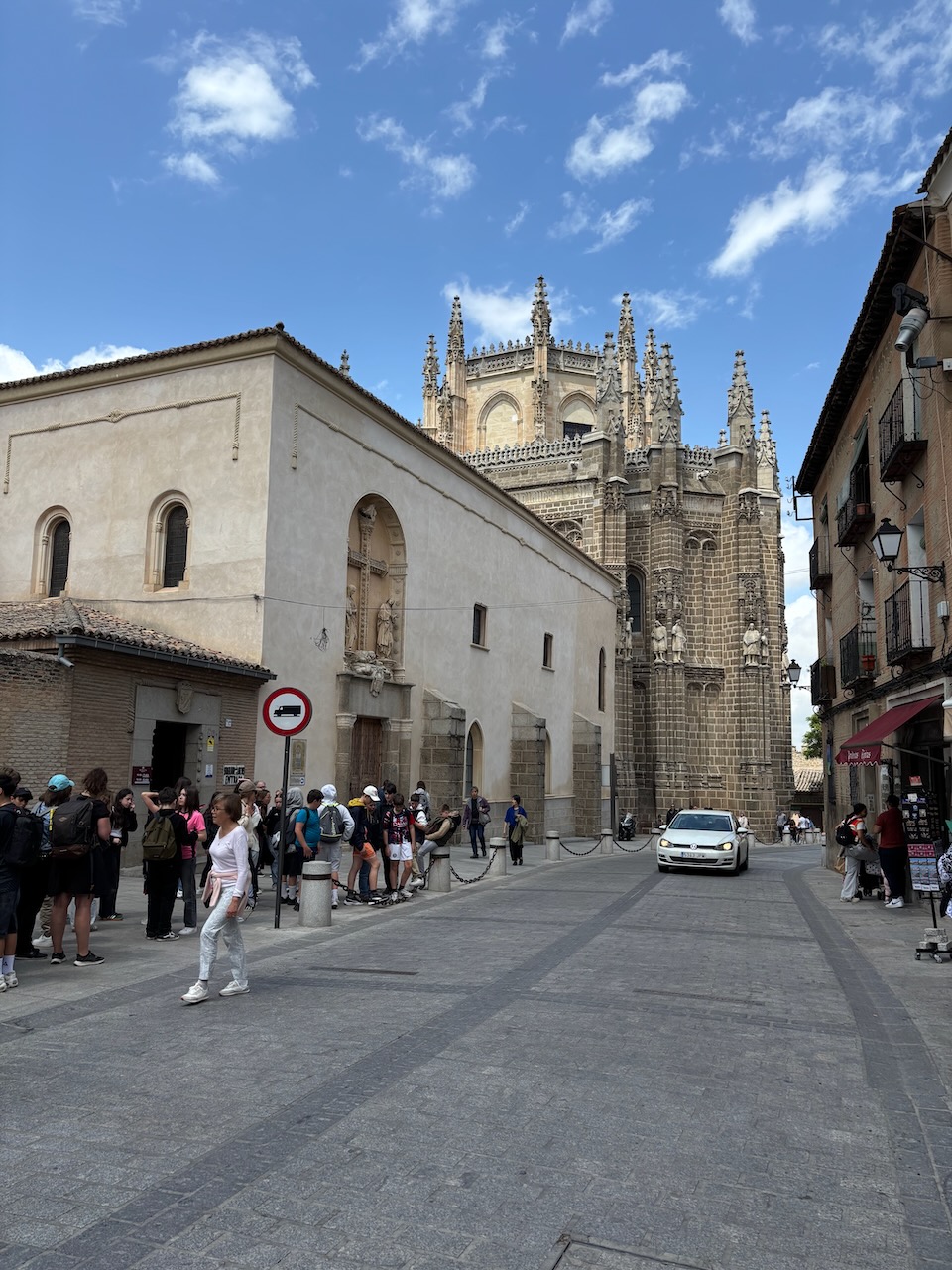
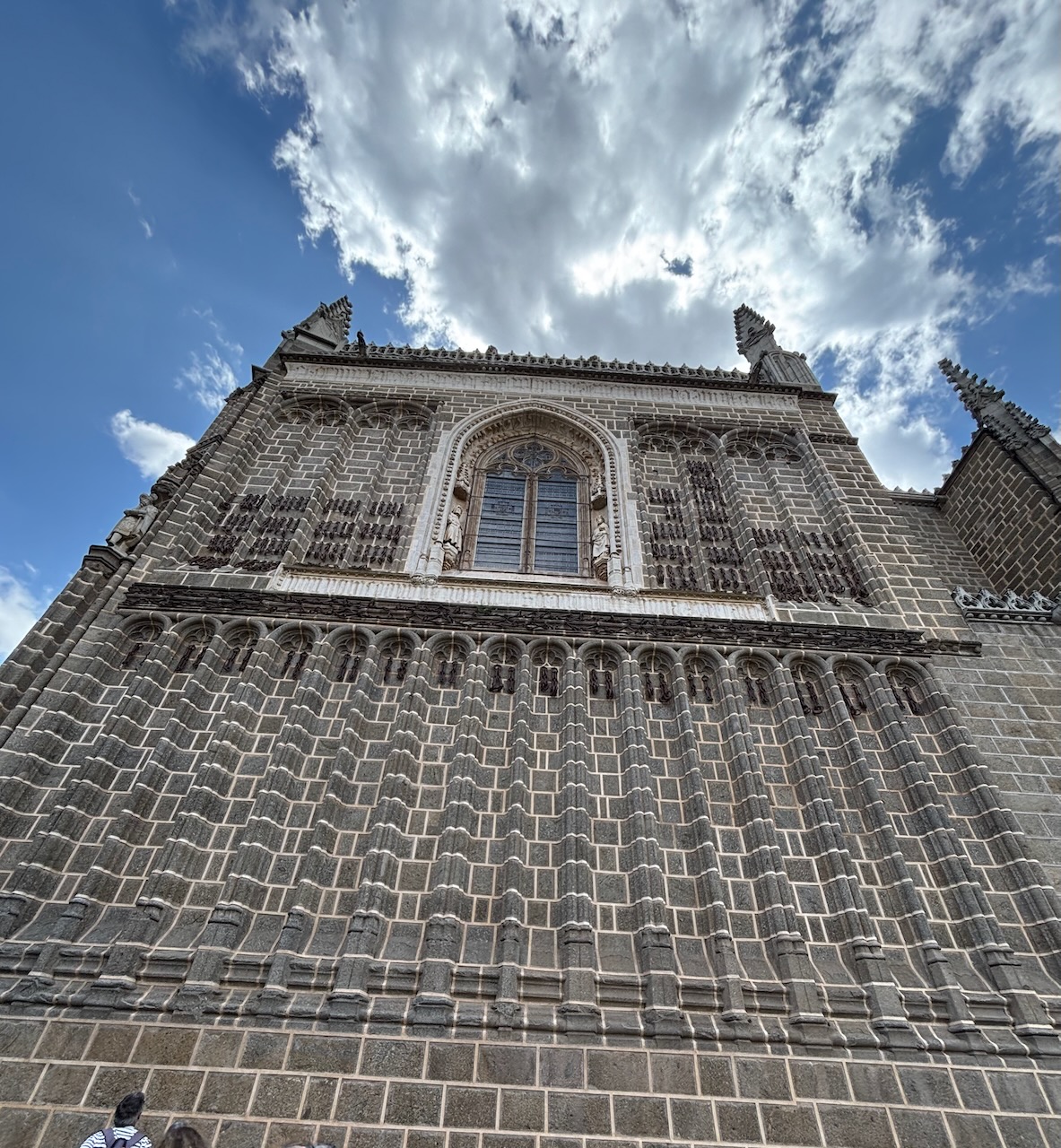
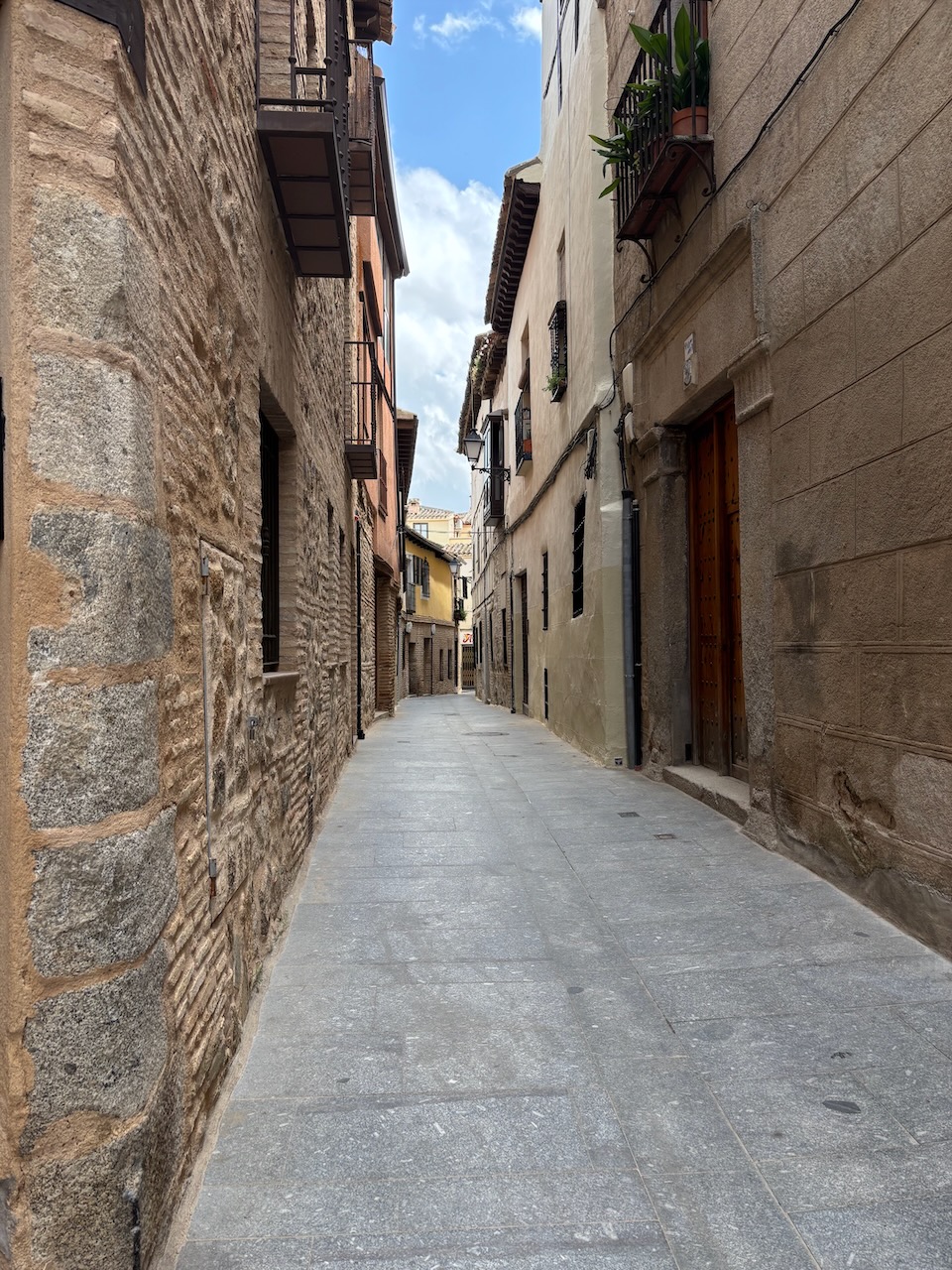
From here we would begin the trek back up the hill towards the hotel, first passing by the Monasterio de San Juan de los Reyes, an Isabelline style Franciscan monastery, built by the Catholic Monarchs (1477–1504). It took some time to finish up our walk to the hotel as we did not retrace our original path through Plaza de Zocodover, instead using our phones to guide us through the labyrinth of narrow streets, passing several restaurants that might work later for dinner.
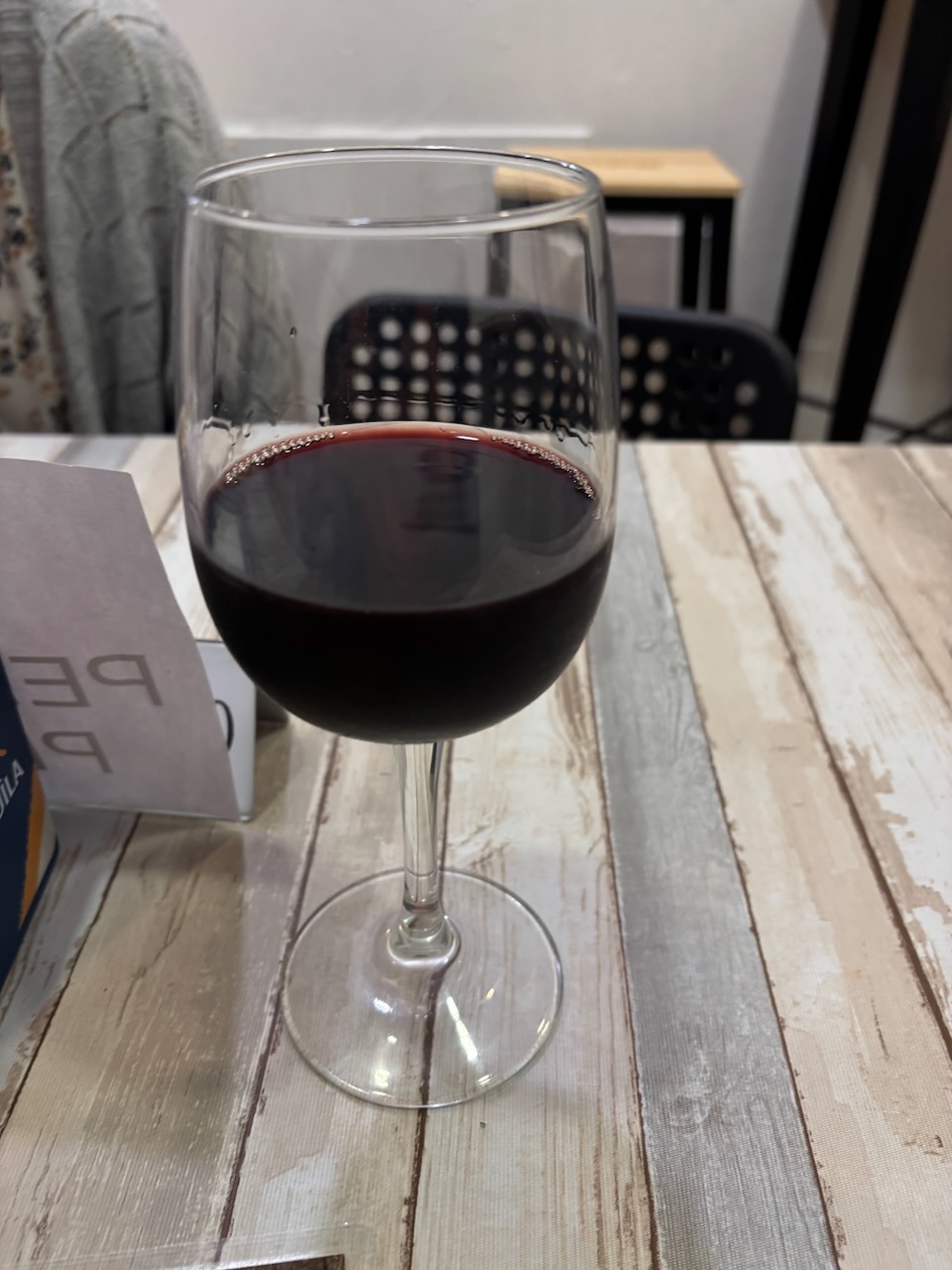
We spent the rest of the afternoon relaxing at the apartment, enjoying beverages of our choice (for me more of that great inexpensive Spanish wine) before heading out for dinner. Here we encountered one of the downsides of dining in Spain in that most of the nice restaurants don’t start serving until after 8:00 pm, well past our normal time for eating. So, we settled on a place we had noticed on our return walk, Perdido, a pizza and pasta place so unassuming and low key that it does not have a web presence.

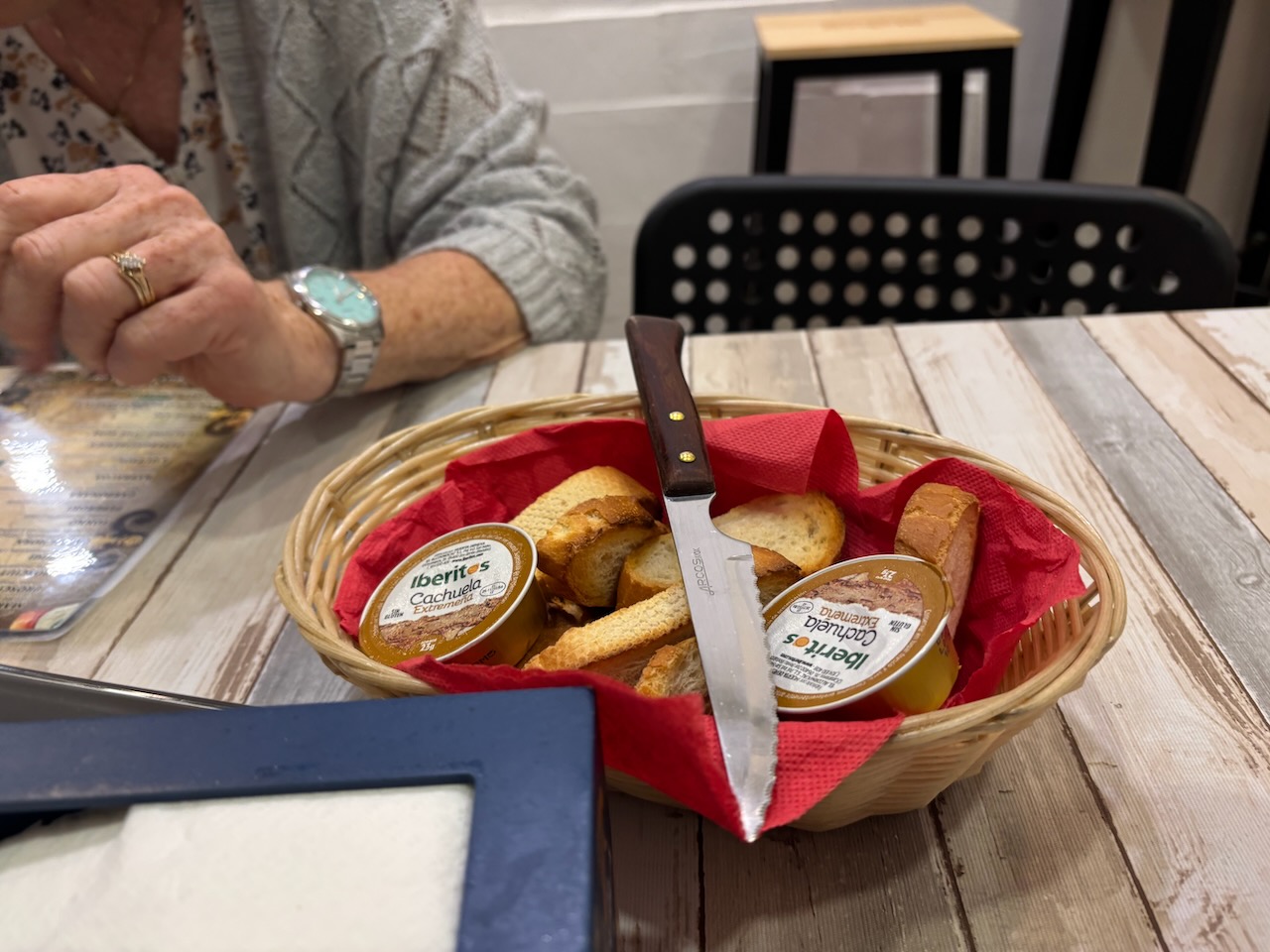
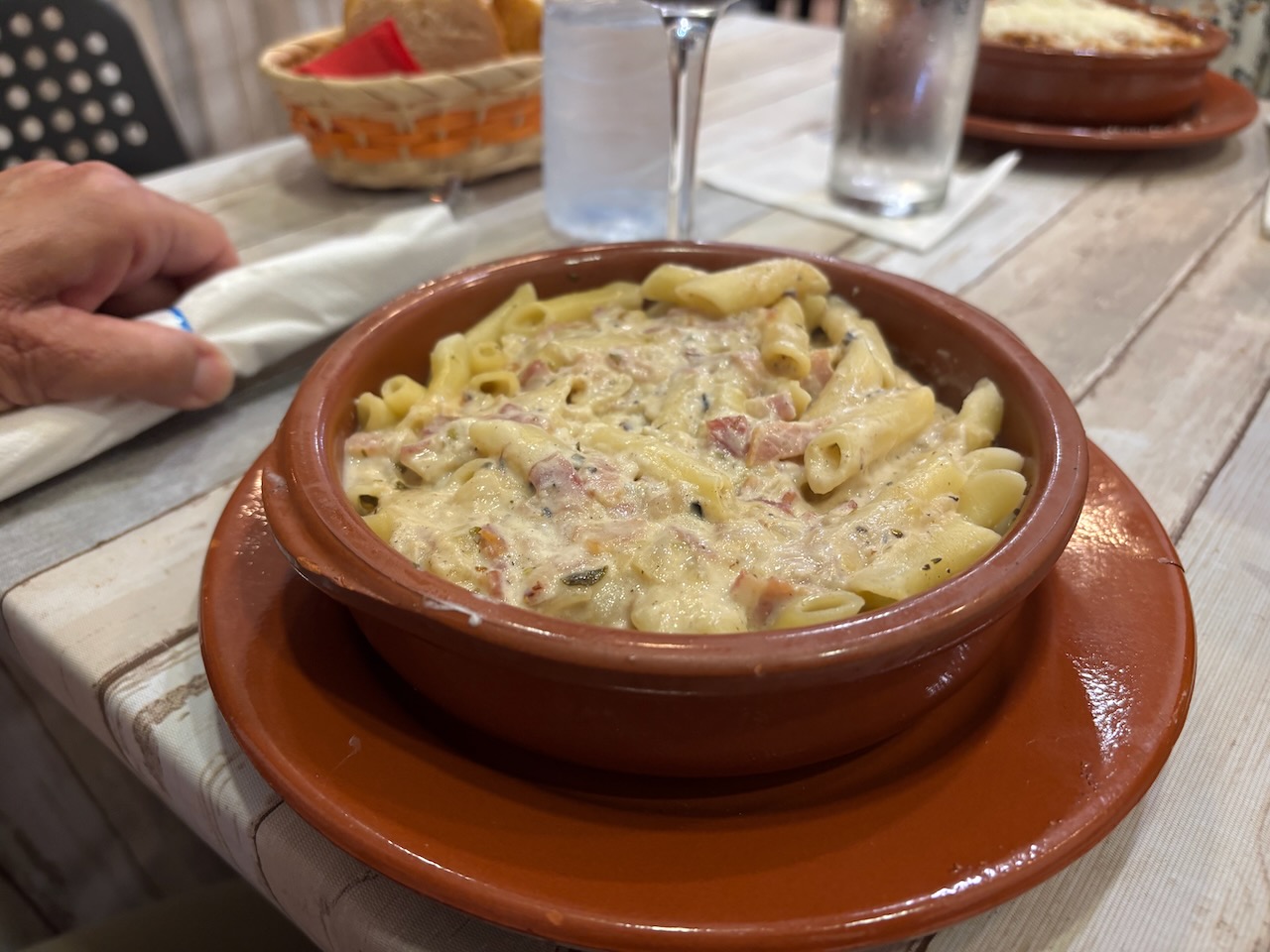
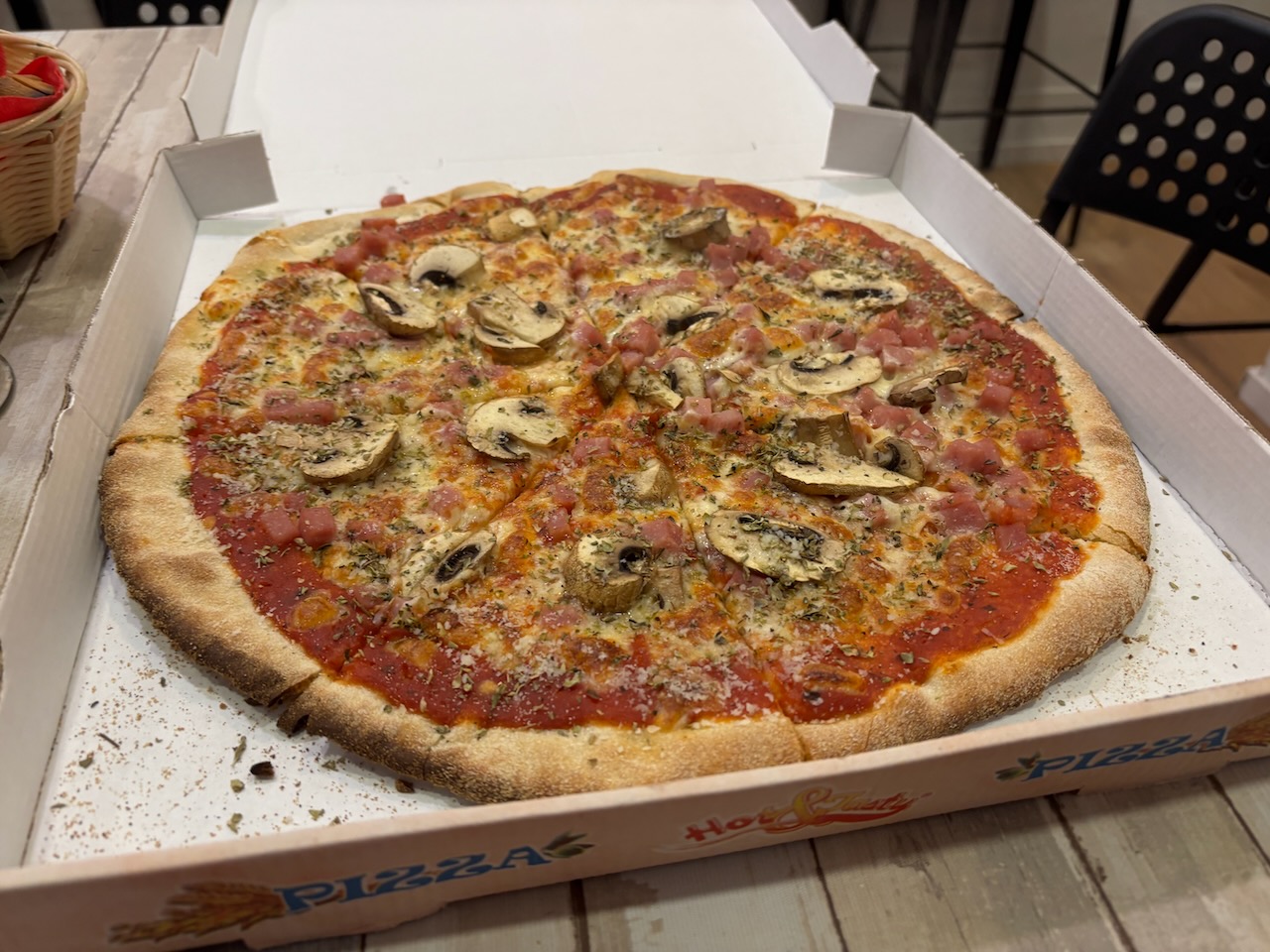
Apparently, a small family run operation, we found the food to be acceptable, like many one encounters when traveling, not great but not bad, just filling and relatively inexpensive. We had a couple of glasses of red wine, a pasta bolognese for Bev, Carbonara for Joanna and a ham and mushroom pizza for me. The tab came to 50 Euros ($58) including a small tip, not bad for pizza, two pastas and wine.
We walked back to the apartment for a quiet evening, resolving to hit the Cathedral and the Santo Tome the next day. All three of us were getting used to walking up and down the steep hills of town and this would pay off for us later in the trip, essentially working ourselves into shape, what every tourist needs to survive in pedestrian friendly Europe.

Links
Monasterio de San Juan de los Reyes: https://toledomonumental.com/en/monument-san-juan-de-los-reyes-monastery/
Discover more from 3jmann
Subscribe to get the latest posts sent to your email.


 3jmann