April 30 – May 2
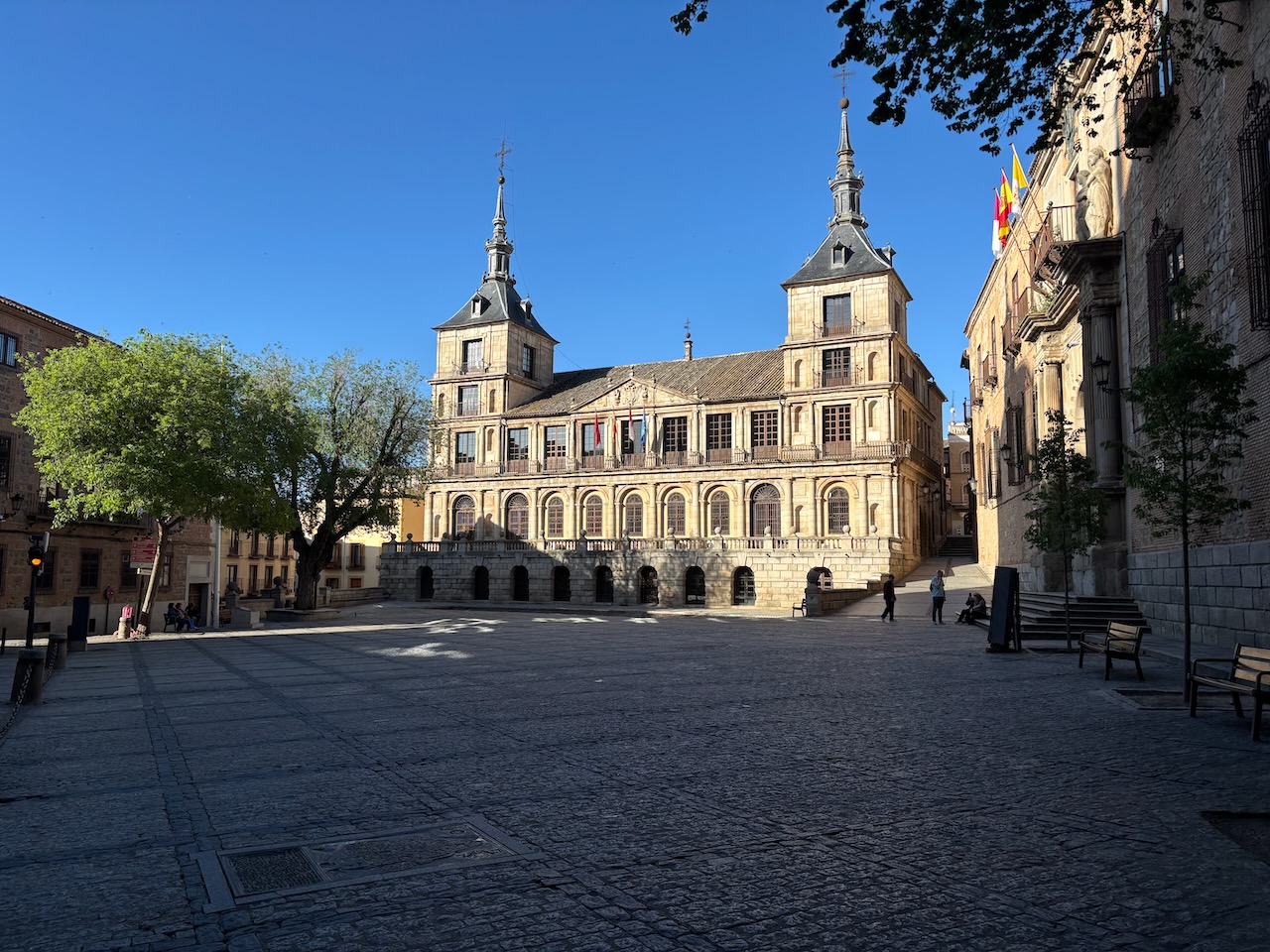
We had two things on the agenda for the day, that would be to visit the Cathedral as well as trying to find a nice meal. With just those two things to do we loitered a bit at the apartment, getting caught up on chores (a bit of laundry, post cards to friends, the blog, etc.) before we hit the ground running, so to speak, by walking up the steep hill to Plaza de Zocodover to retrace our steps from the day before, although other routes through the labyrinth of streets might have shaved a few minutes off our trek. We’d purchased our entry tickets on-line at 8 Euros apiece saving us the hassle of doing so at the Cathedral.
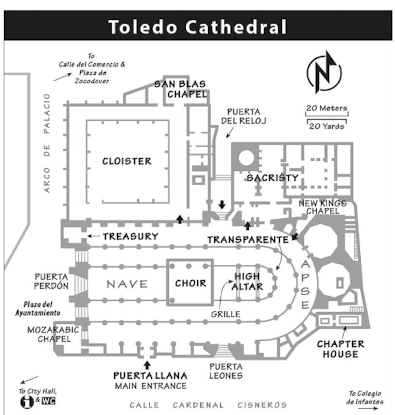
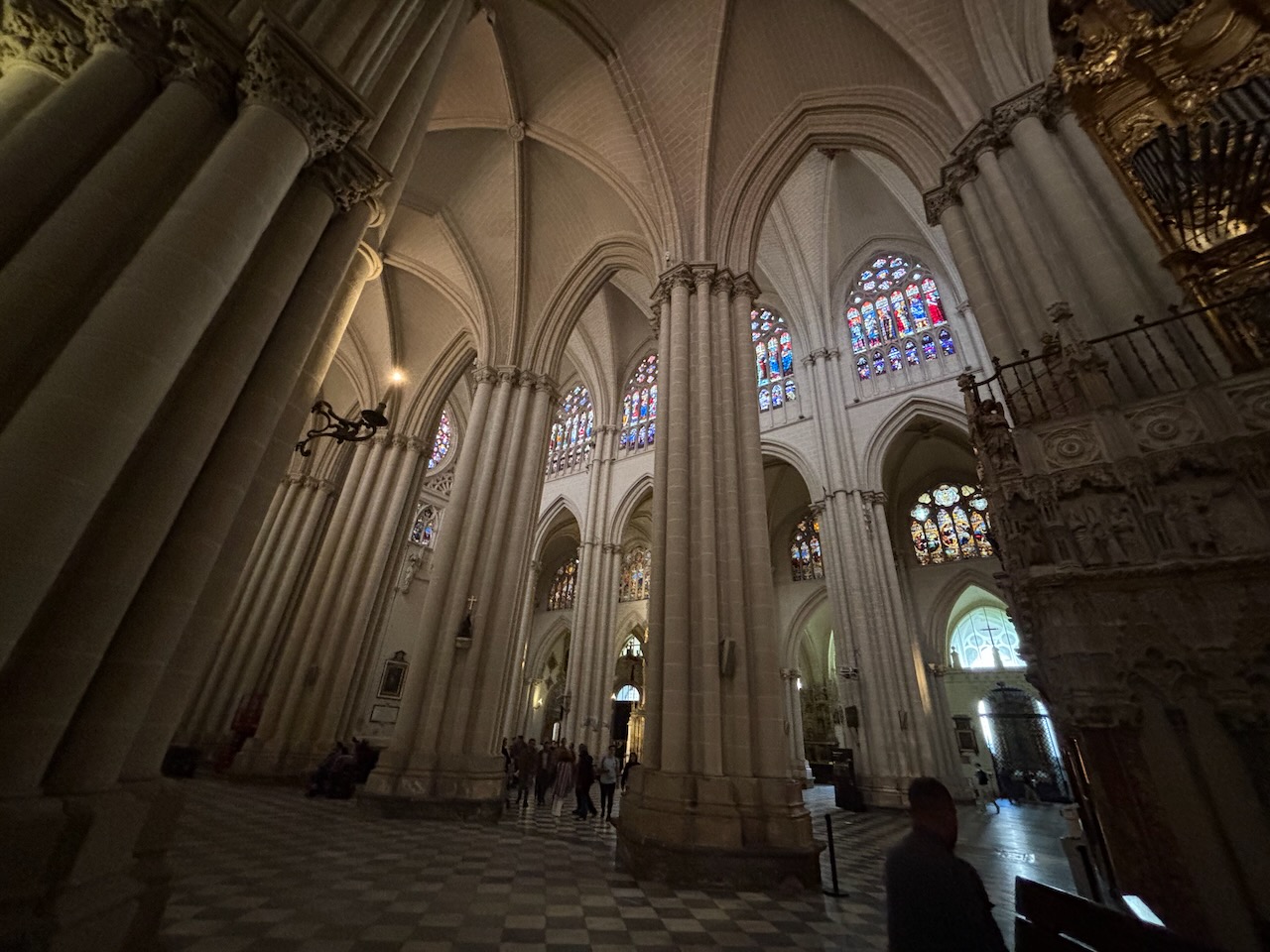
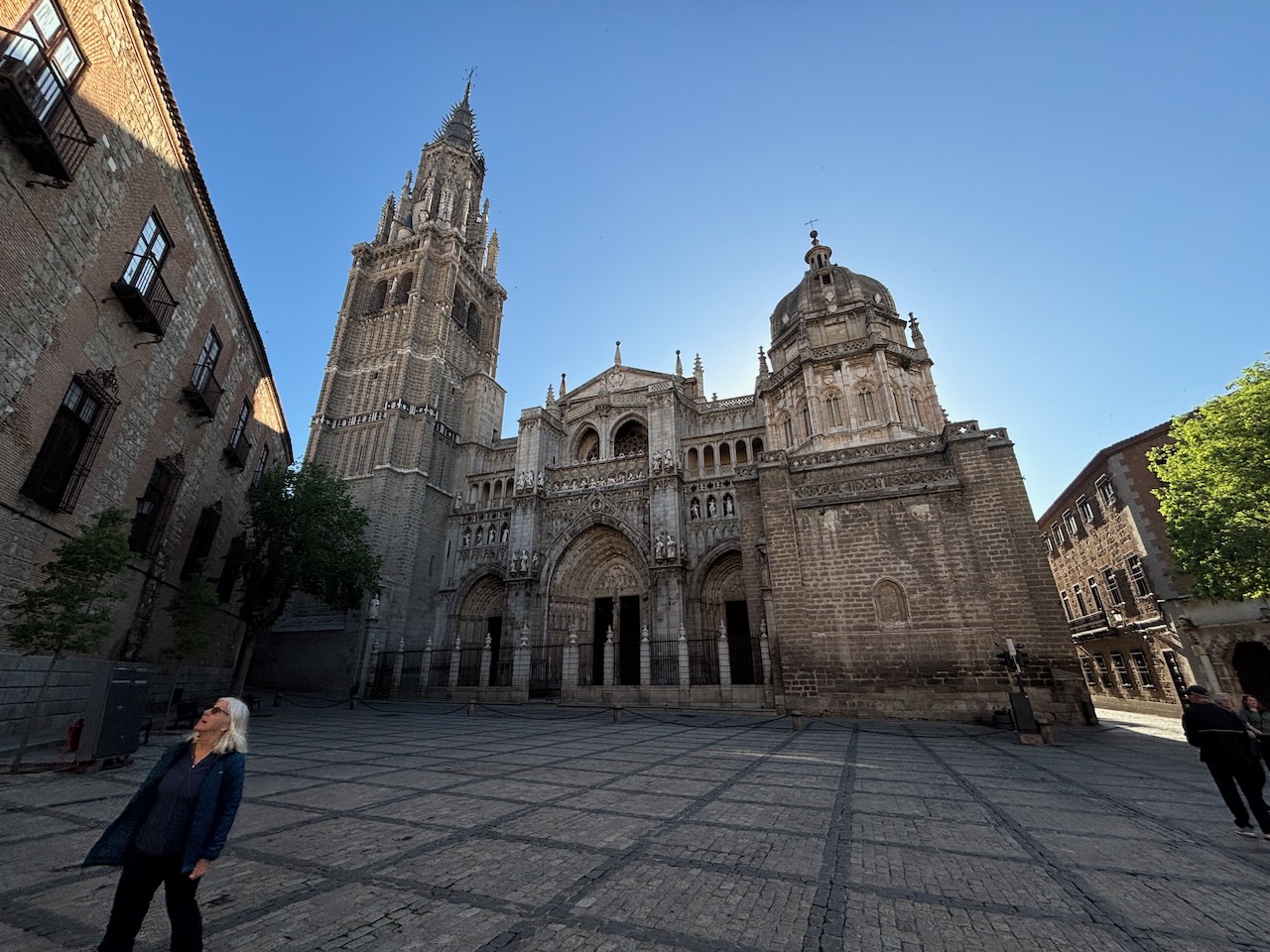
Toledo Cathedral, also known as Primatial Metropolitan Cathedral of Saint Mary of the Assumption, is the seat of the Metropolitan Archdiocese of Toledo. Since 1088, it holds the honorific title of Primatial, granted by Urban II, establishing a higher rank over the rest in the Iberian Peninsula. It is one of the three 13th-century High Gothic cathedrals in Spain and is often considered to be the best example of the Gothic style in Spain. It was begun in 1226 under the rule of Ferdinand III, and the last Gothic contributions were made in the 15th century when, in 1493, the vaults of the central nave were finished during the time of the Catholic Monarchs.
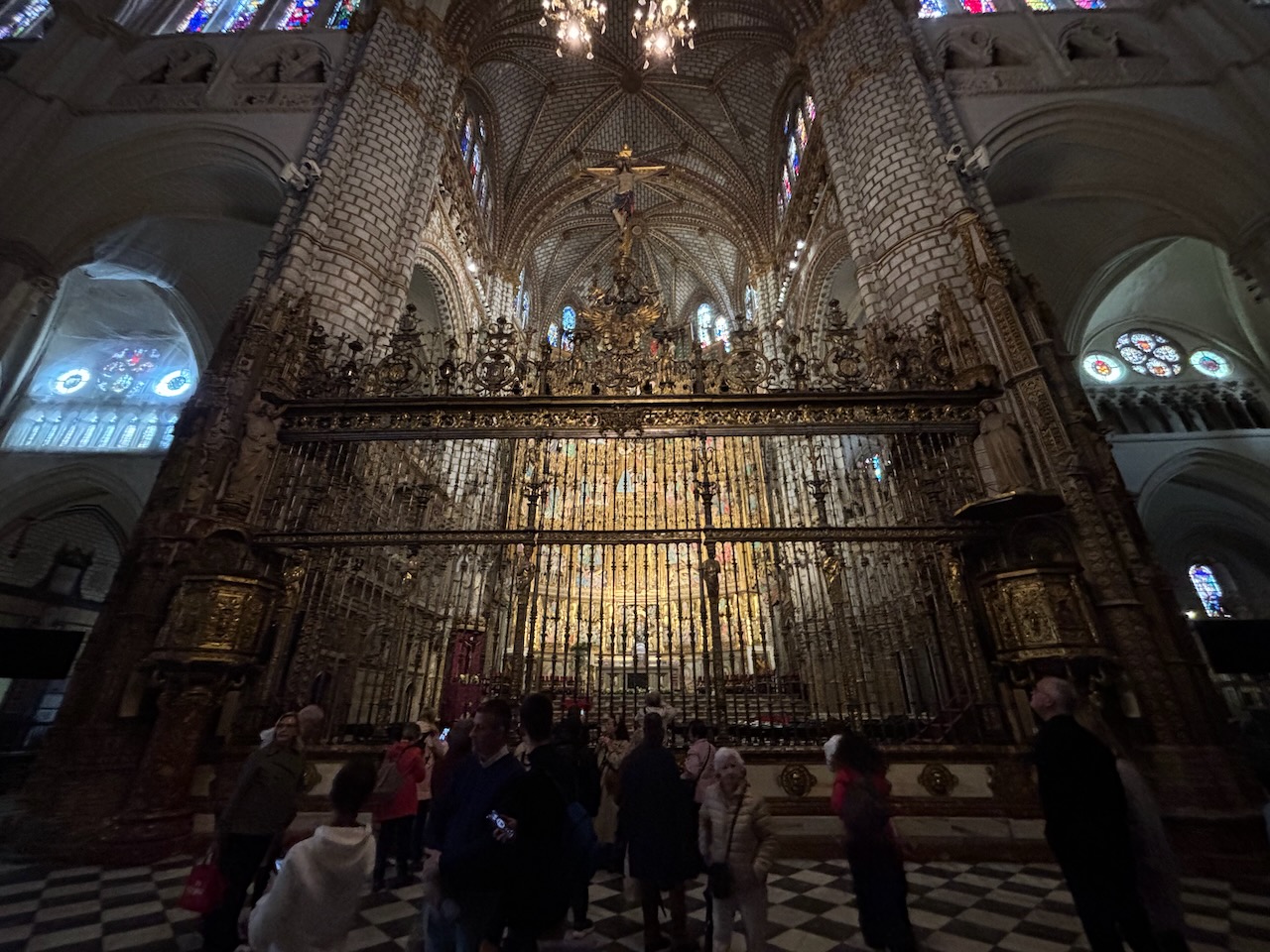
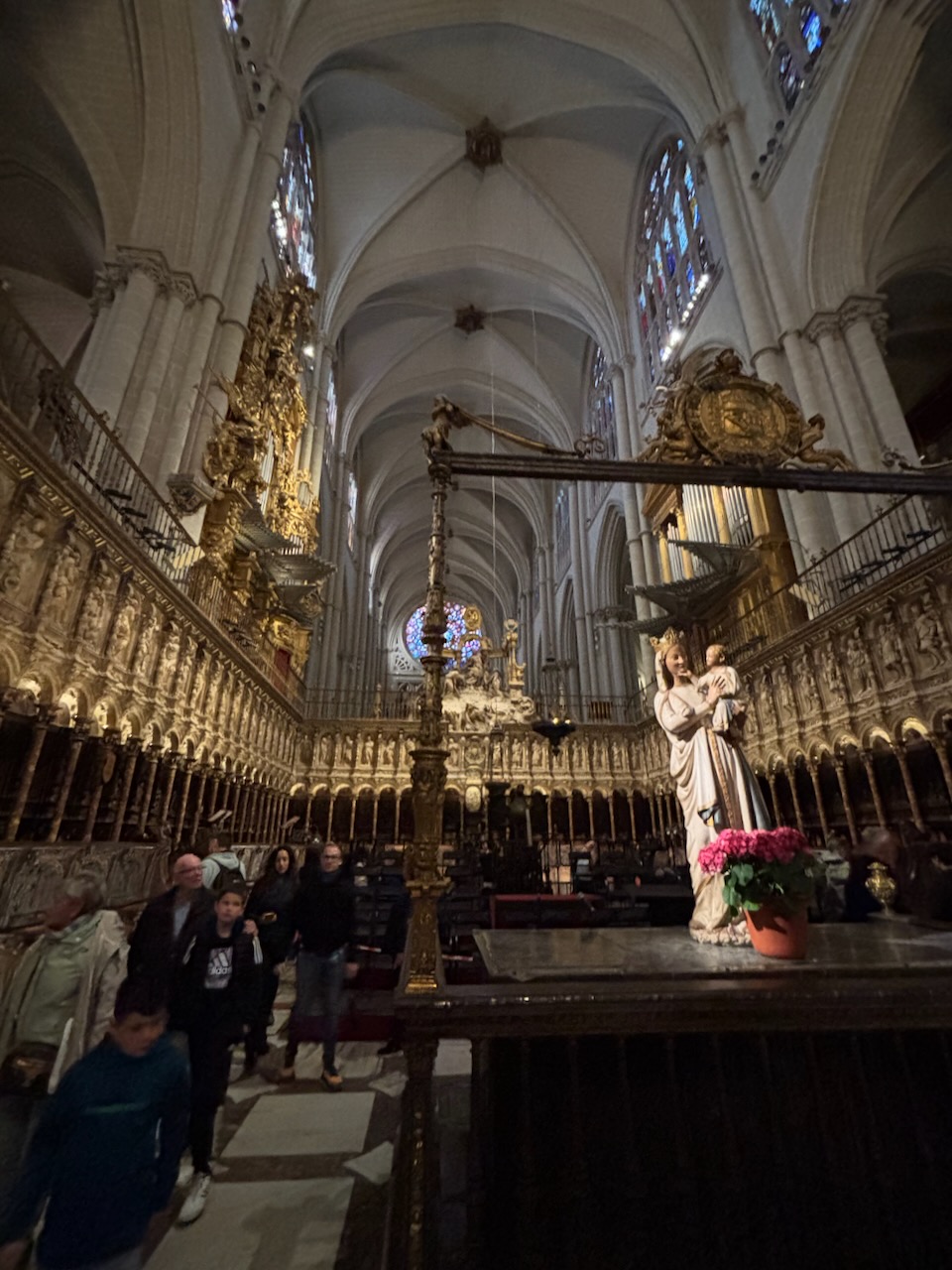
This large edifice includes many side chapels and rooms, including the Chapterhouse (Sala Capitular), which has a marble floor, a coffered wooden ceiling with interlaced laths) and is furnished with wardrobes or cabinets. It was commissioned by Cardinal Cisneros to be built abutting the apse on its south side, in 1504. And the entire room is traversed by a wood pew which functions as the seat of honor for the prelates and above the seats of honor, in two rows and lining the walls are the portraits of all the archbishops from Saint Eugene to the last.

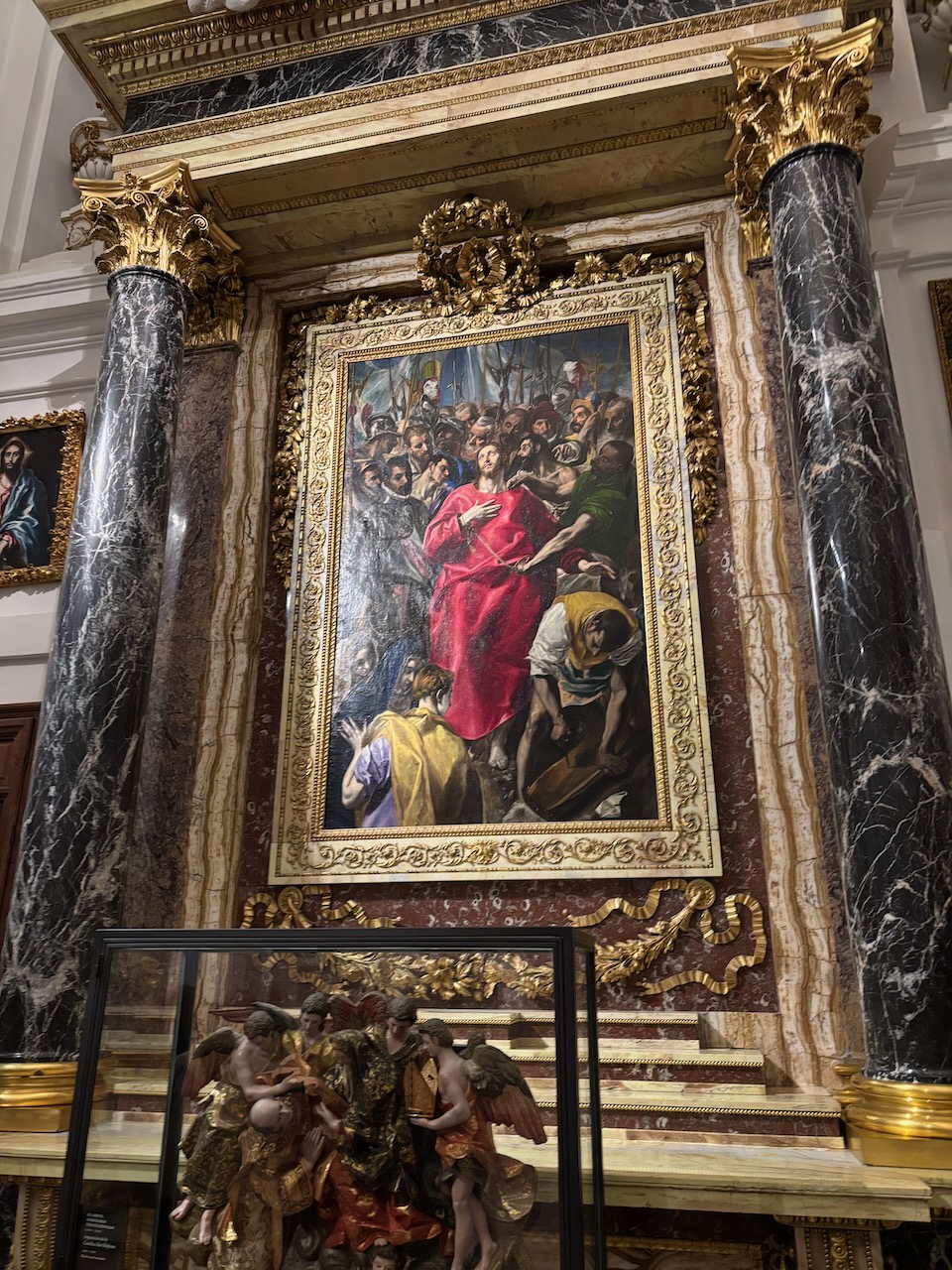
We hit the sacristy with its barrel vault, whose principal theme is the Clothing of Saint Ildephonsus with the Chasuble, a theme that is repeated throughout the cathedral in paintings and sculpture. The walls display a variety of elaborately framed paintings, forming a gallery of works by several great masters. The most renowned are the fifteen by El Greco, including his El Expolio (The Disrobing of Christ) on the high altar, framed by marblework and a pair of Corinthian columns.

We’ve toured countless cathedrals over the course of our many visits to Europe and have seen a few that took our breath away. This one, albeit majestic, didn’t quite match the spectacular nature of others (Notre Dame, Leon, Etc.) but it was well worth the time and money spent. By now we were getting a bit peckish and so we decided to do what many Spaniards do and that is have our big meal during what we would consider to be the lunch hour.
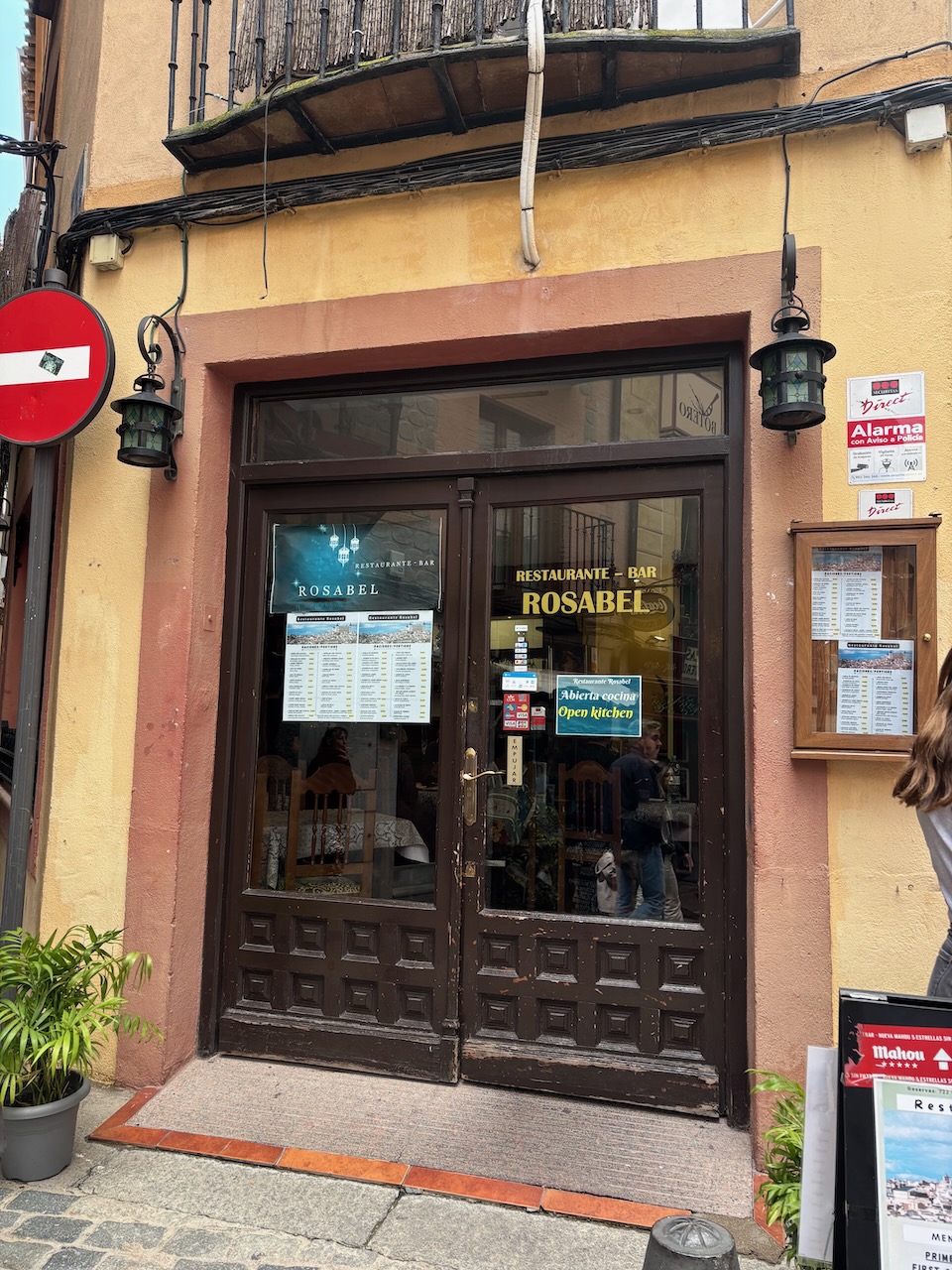
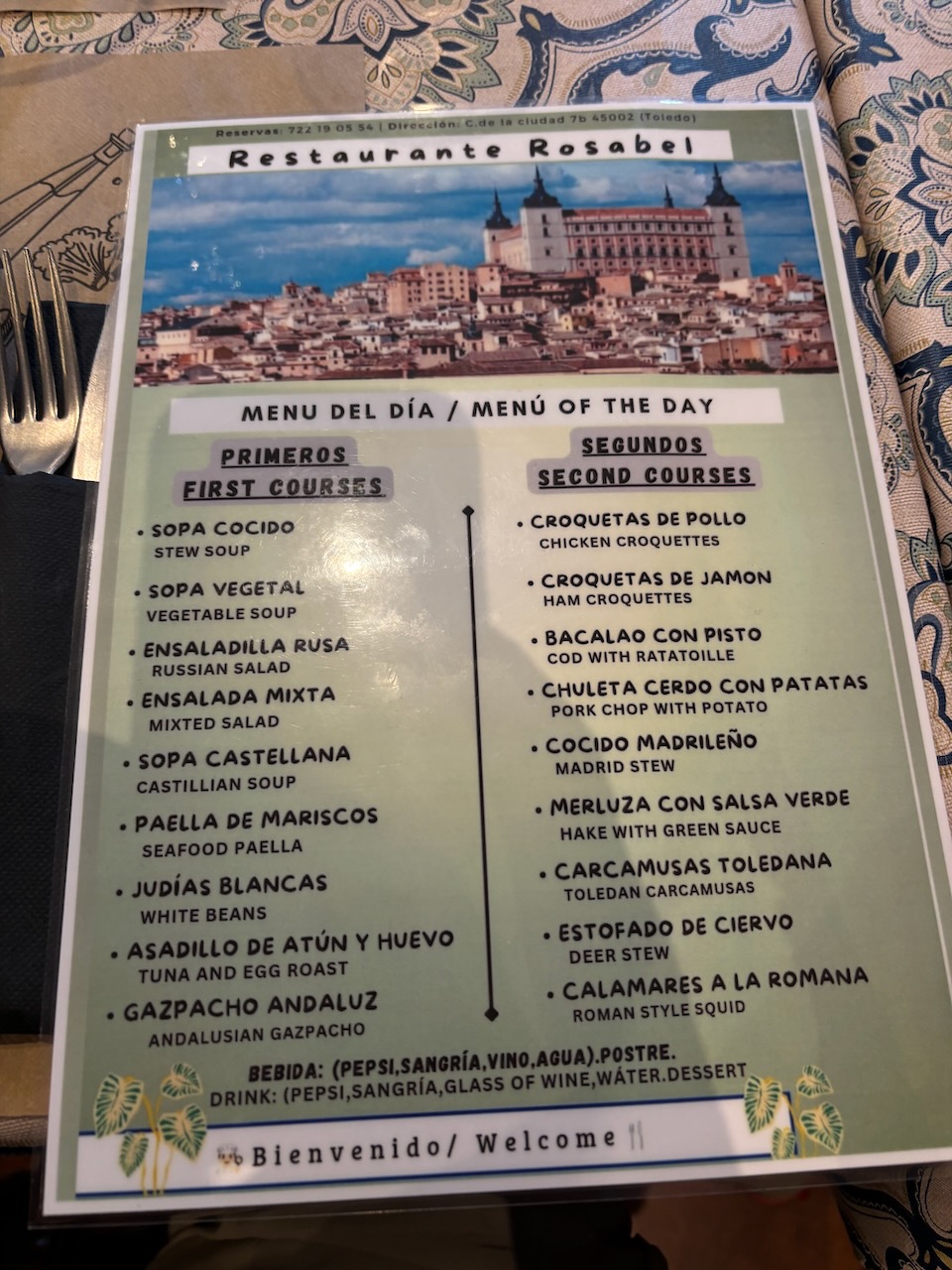
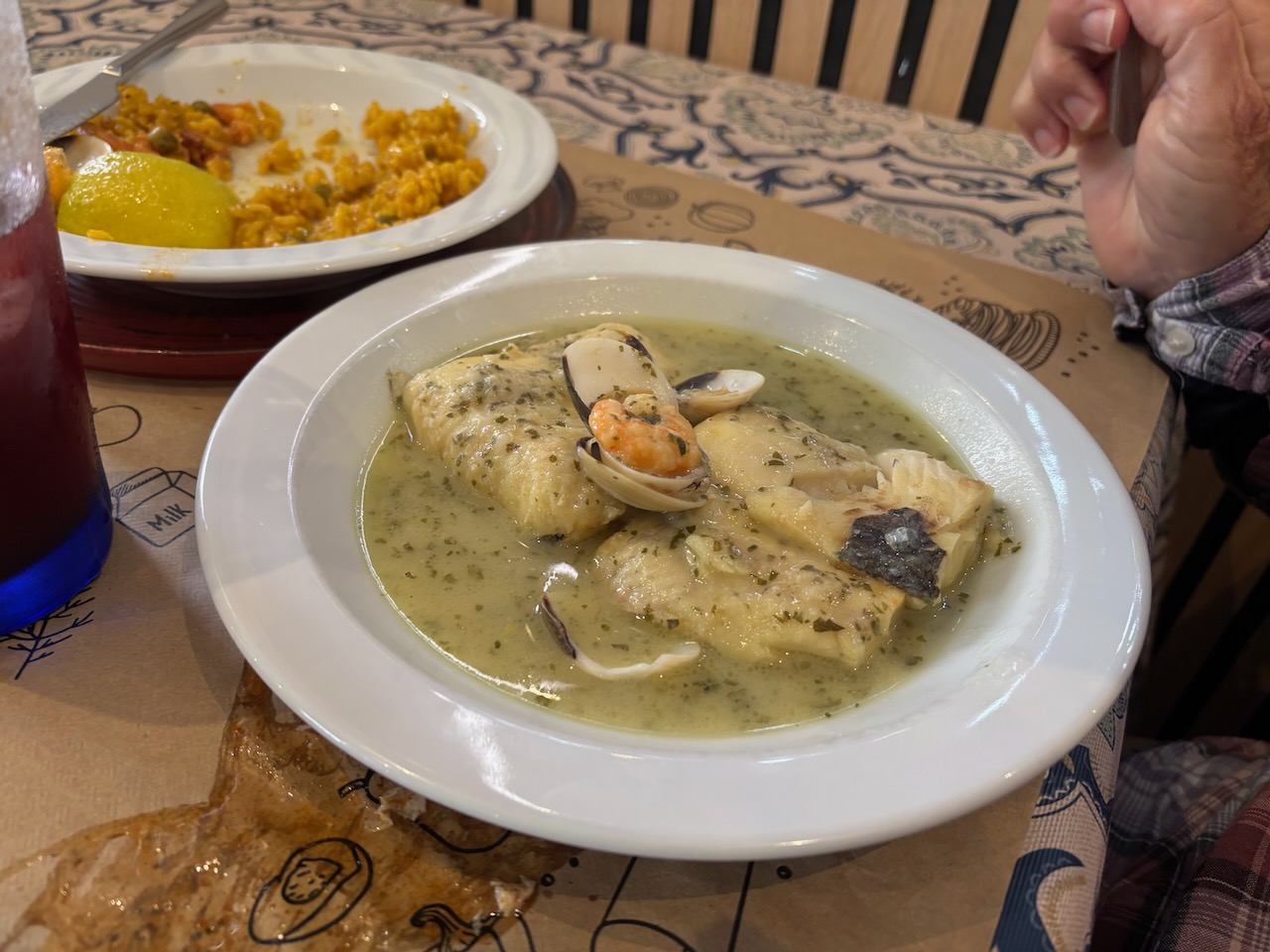
We walked a few blocks around the Cathedral checking out the posted menus at a few likely options and settled for Restaurante Rosabel, where many folks were already dining, always a good sign. Joanna and I would each enjoy the Menu del Dia (menu of the day), three courses with multiple choices for the first and second while Bev opted to just select a Chorizo Frito (fried sausage) from the Raciones (Portions) menu. I would enjoy a glass of red wine and for starters, Joanna chose the Paella de Maricos (seafood paella) while I got the traditional Sopa Castellana (like what we had in Cordoba).

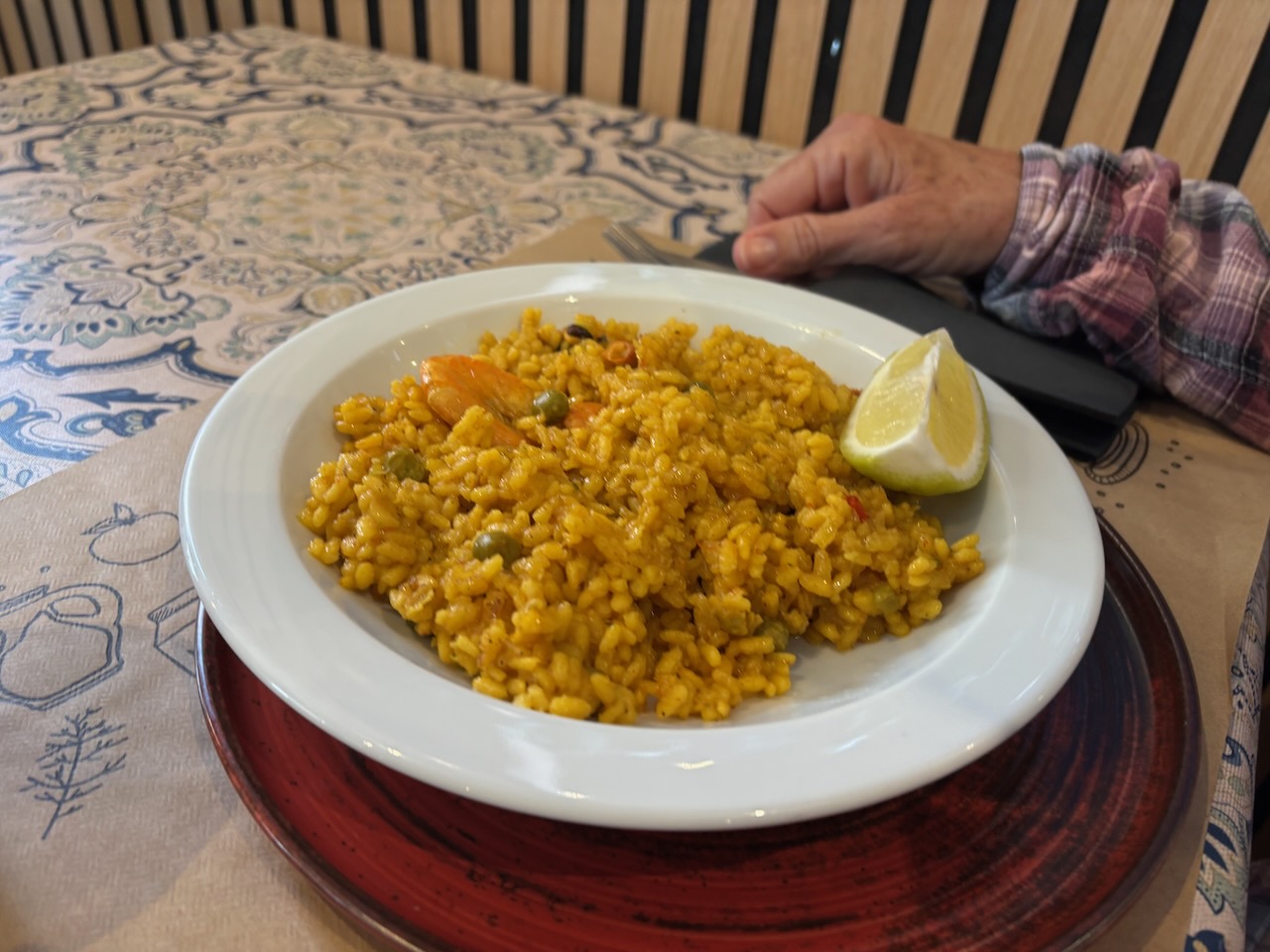
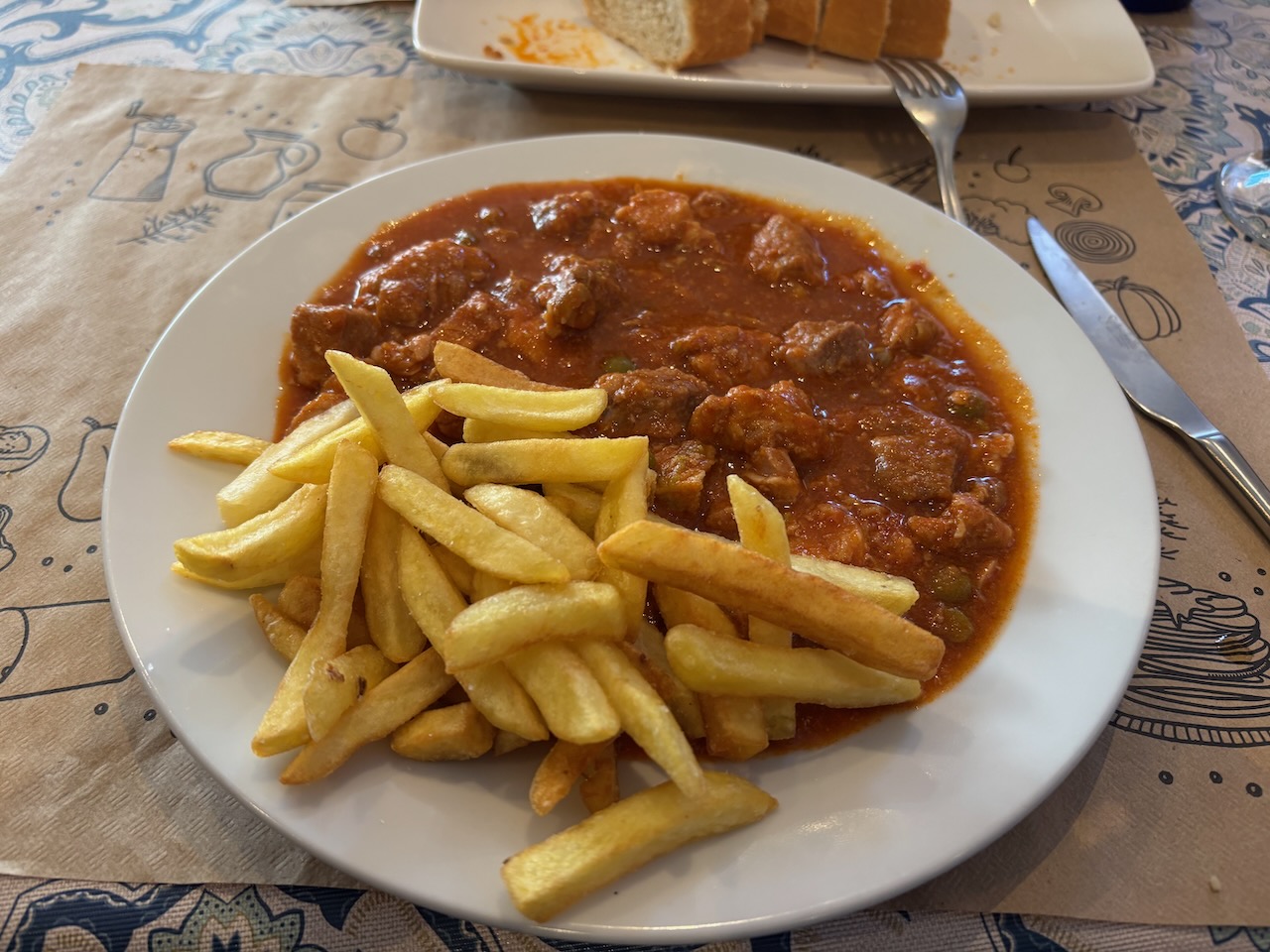
For our second course Joanna went for the Merluza con salsa Verde (Hake in Green Sauce) and I devoured the Carcamusas Toledana, a culinary specialty of Toledo, a stew consisting of lean pork with a moderately spicy tomato sauce accompanied by nicely done French fries. Completely filling, we finished off with a dessert of fried ice cream and a couple of cafés con leches. The total tab for our meal was 62.5 Euros ($71), a deal anywhere for three people including wine. Reviews are mixed for the place, but we enjoyed both the meal and the service.
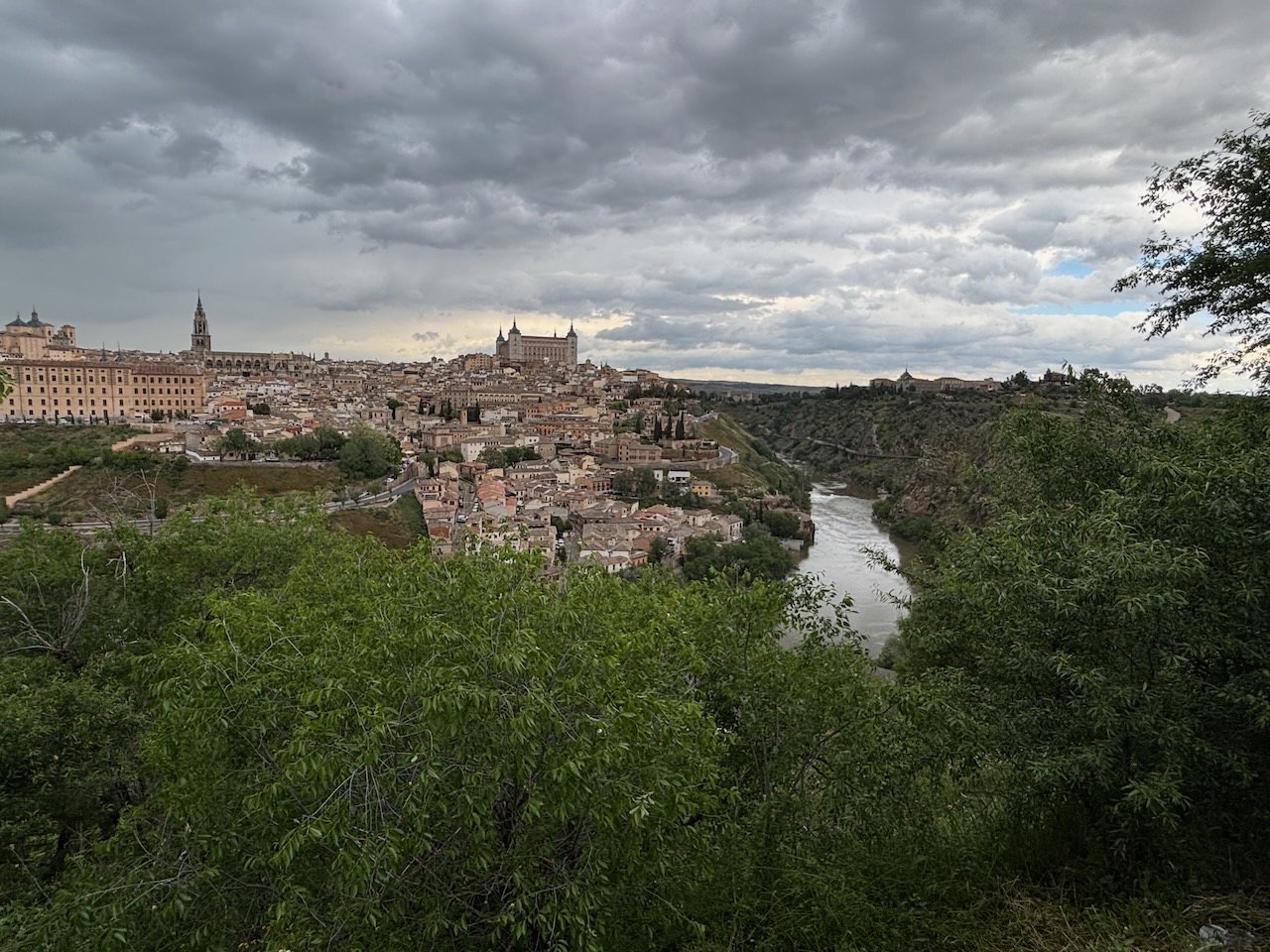
We decided to take it easy the rest of the afternoon and hop aboard the Tourist Train (Train Vision) for 9 Euros apiece, which was nice but it wasn’t exactly a tour of the town. It mostly consisted of a long loop outside and around the perimeter of city, with some very nice views but not much in the way of exploring areas of the city we’d not been to. Then again, given the narrow streets and the size of the train, it is understandable why the route was the one they chose.
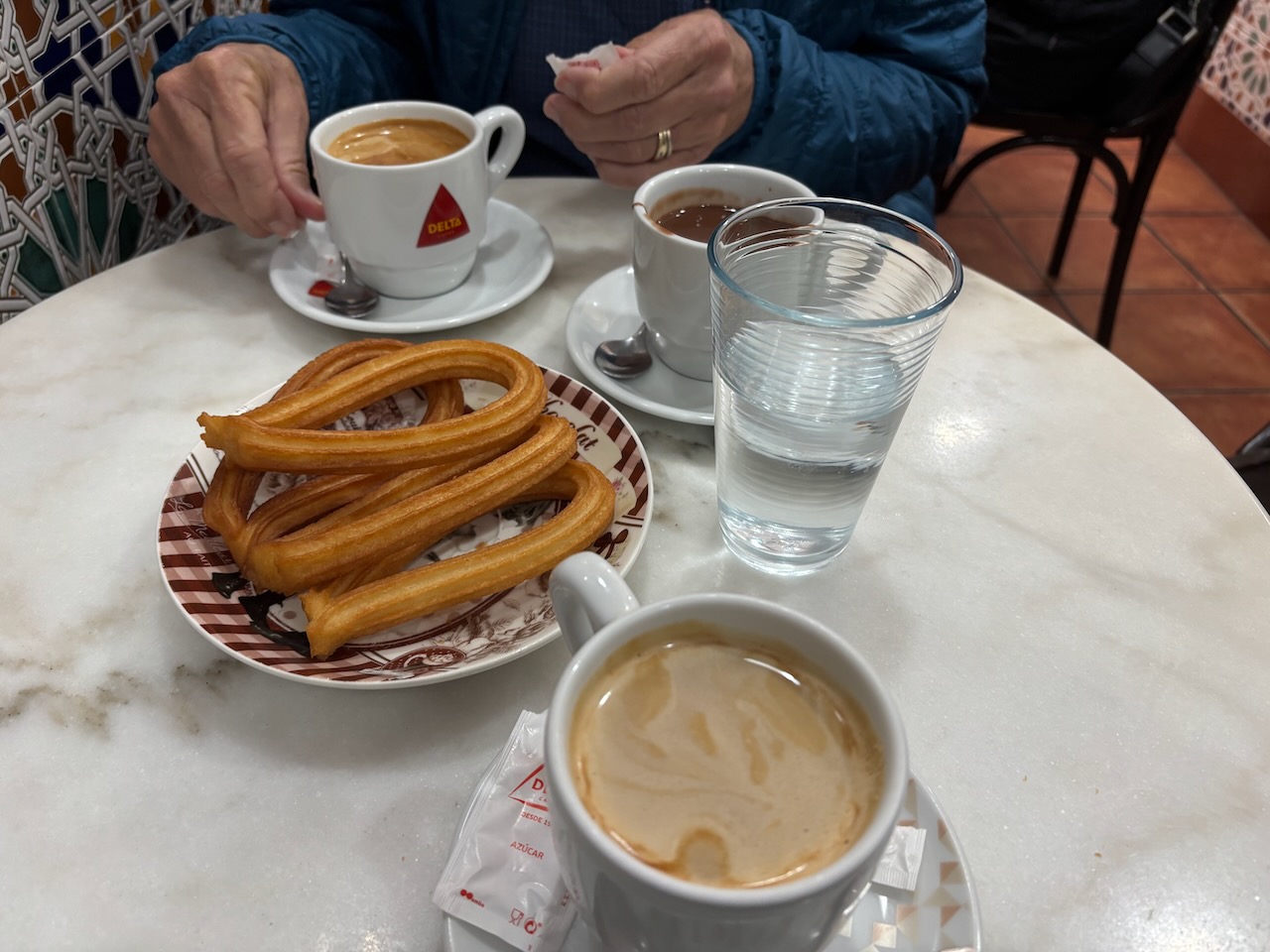
That would do it for the day for us, still full from our large lunch we walked back through town to the apartment for another quiet evening. The next morning, as we had only a 90-minute drive to Madrid ahead of us, we decided to get all packed and then head out to visit Iglesia de Santo Tomé (Church of Santo Tome), which we had skipped the day before. So, we set out at a brisk pace for a featured stop along the way, to Churrería Chocolatería, a traditional little hot-chocolate-and-churros shop.
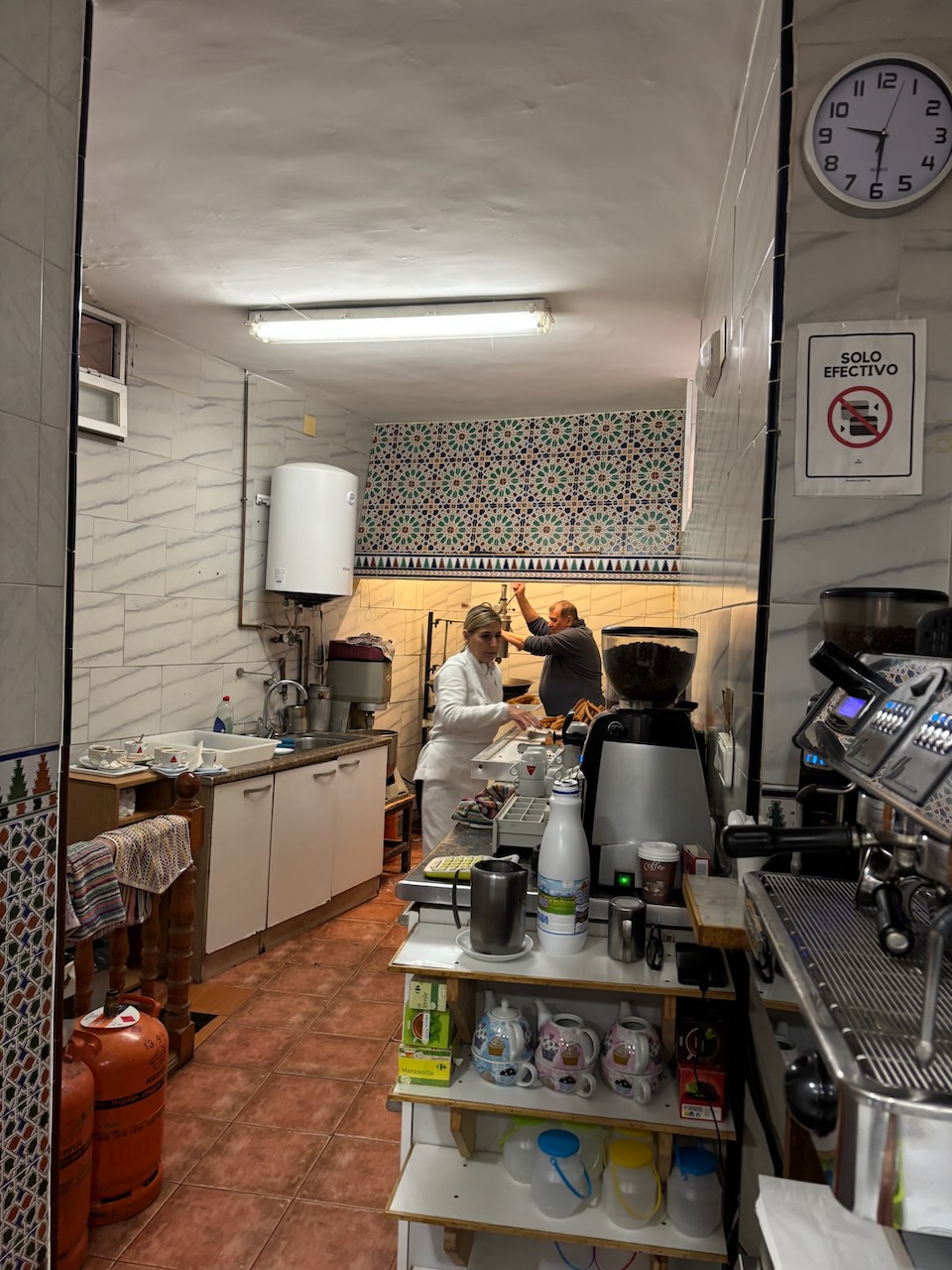
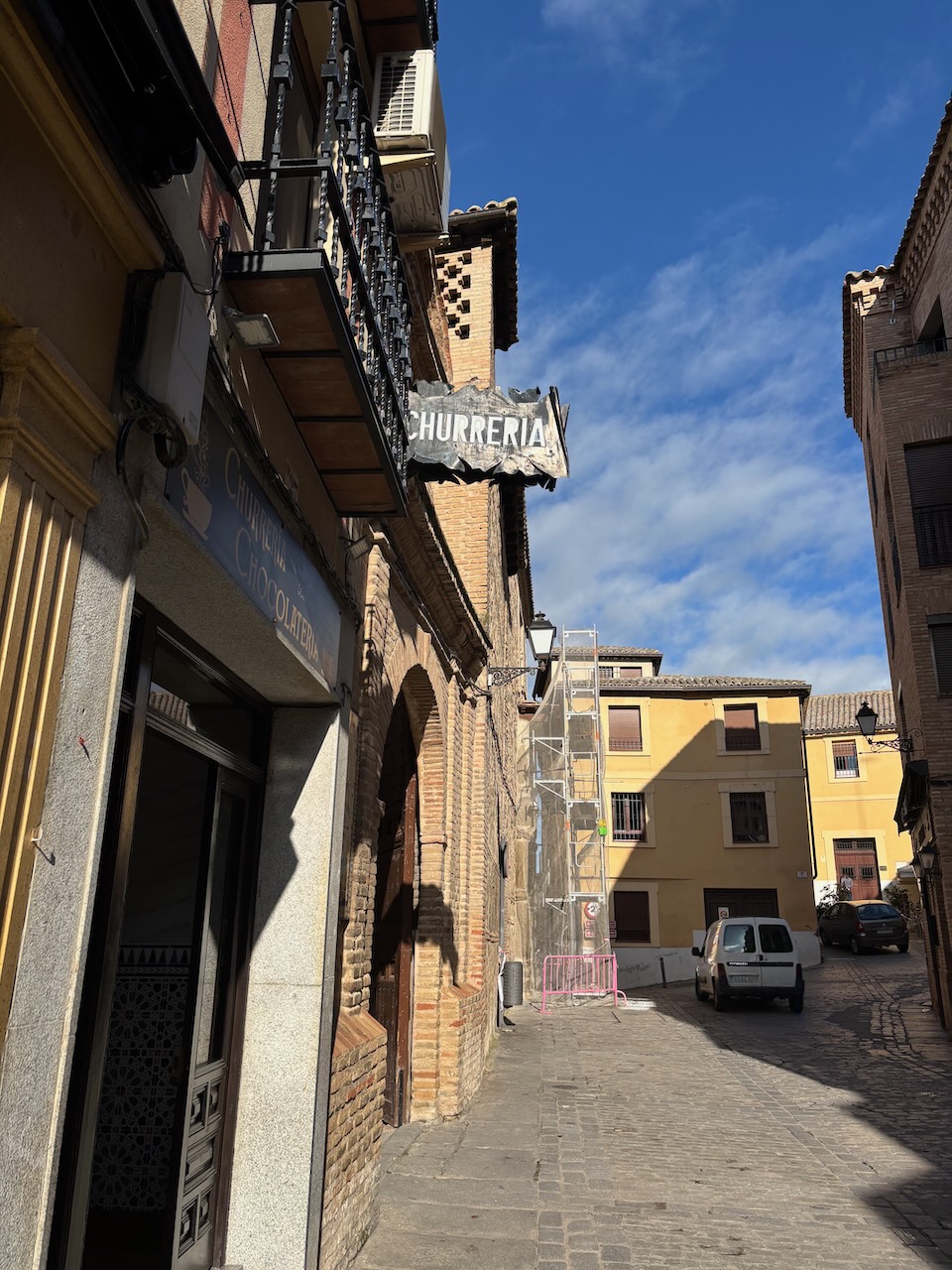
Faithful followers of the blog will recognize our love of this unique Spanish snack/dessert/donut and when dipped in chocolate, it is a treat that we just can’t resist. We ordered a first round and then with plenty of chocolate sauce left, ordered another plate of the crispy and light extruded pieces of doughy wonder.
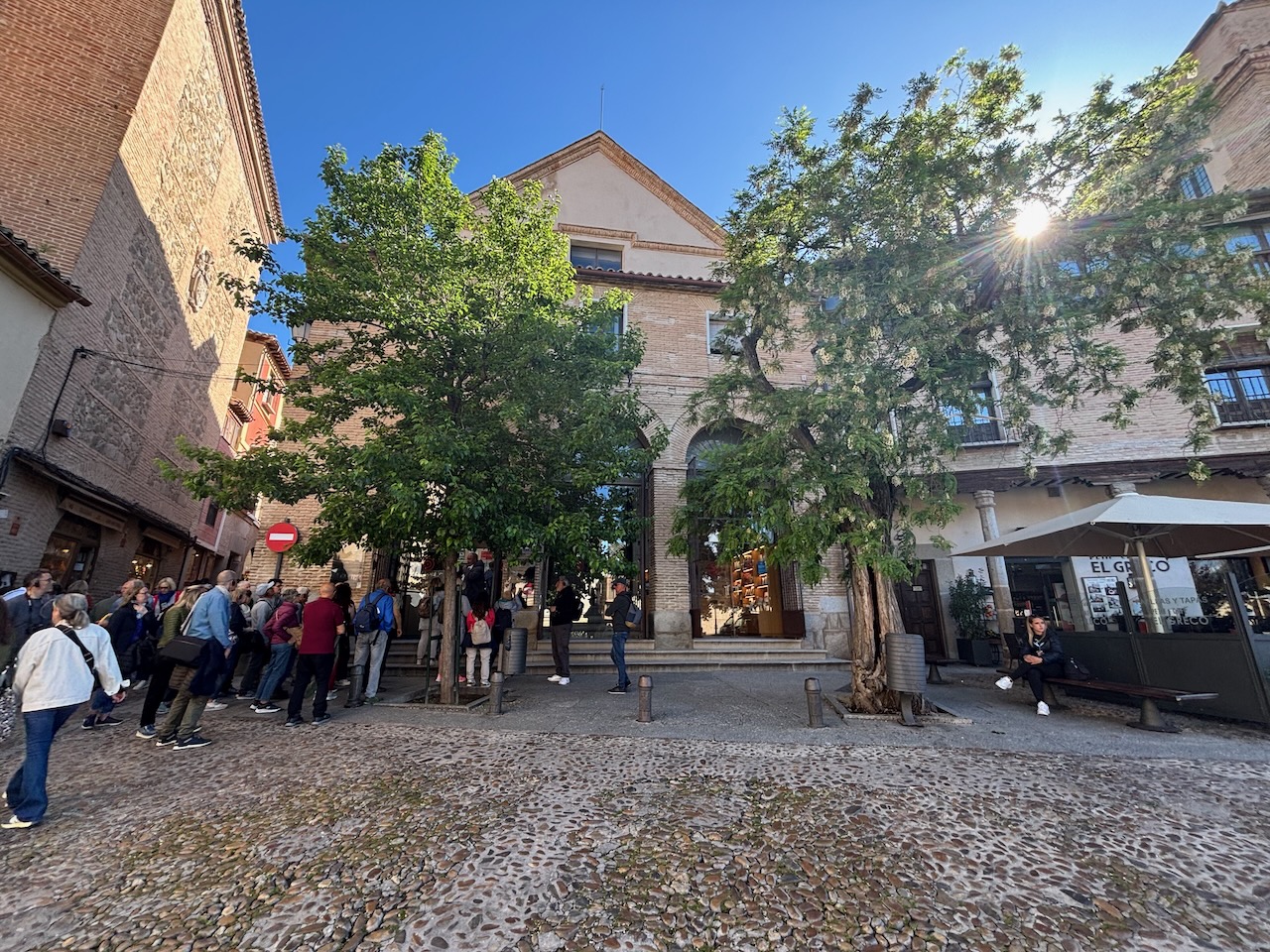
Satiated, we retraced our steps a short distance and landed at the plaza in front of the church and waited in line for it to open. Founded after the reconquest of this city by King Alfonso VI of León, it was likely constructed on the site of an old mosque of the 11th century. Aat the beginning of the 14th century, being in a ruinous state the church was totally rebuilt in charge of Gonzalo Ruiz de Toledo, Lord of Orgaz, and the old minaret of the mosque was transformed into a bell tower in Mudéjar style.
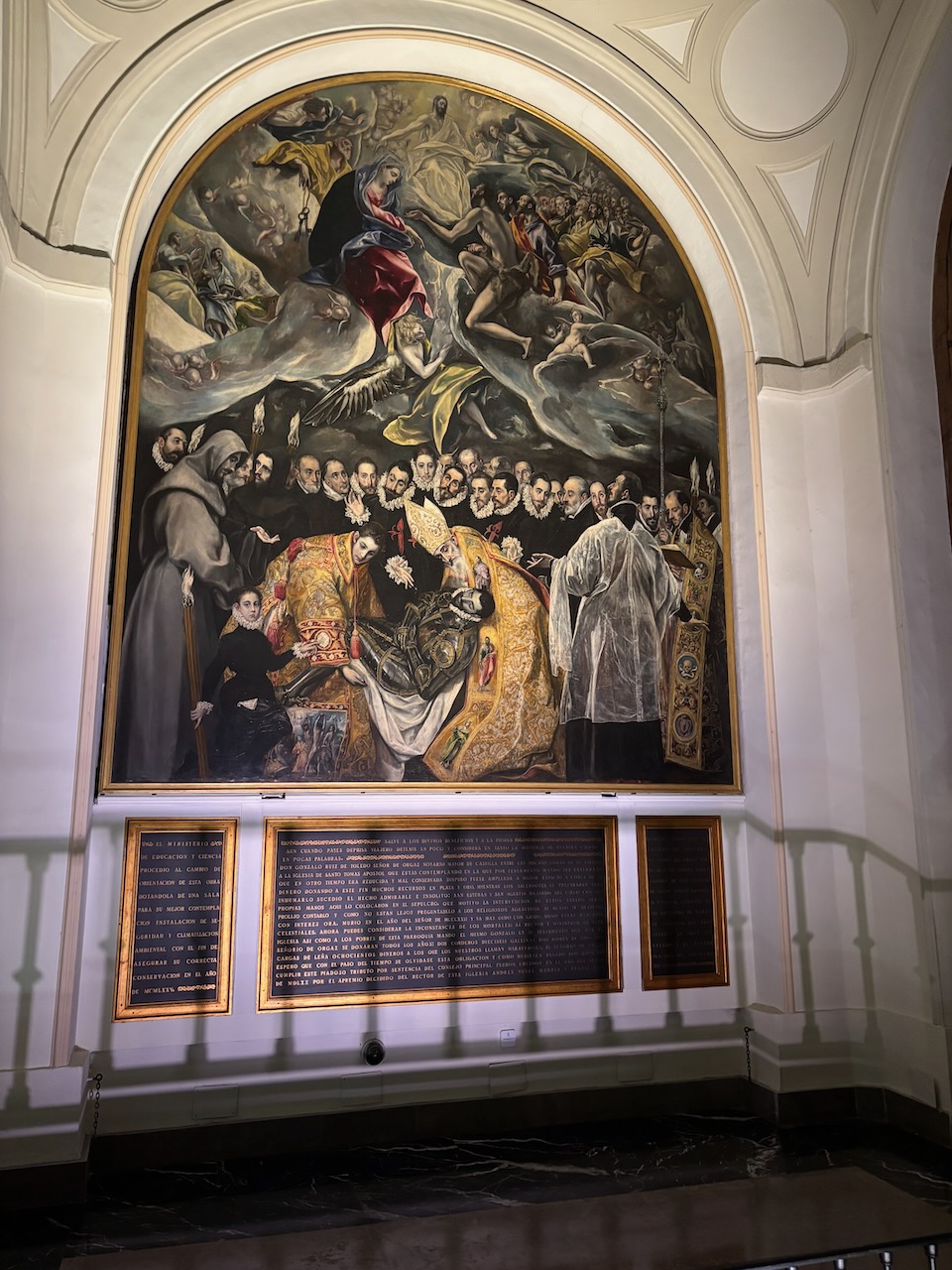
Its fame is mainly because it contains the painting The Burial of the Count of Orgaz by El Greco, widely considered among his finest works, it illustrates the count, a popular local legend of his time. An exceptionally large painting, it is divided into two sections, heavenly above and terrestrial below, but it gives little impression of duality, since the upper and lower sections are brought together compositionally. As we were crowded into a relatively small space, it took some time to get close enough to the painting to really take it in, but it was well worth the time and effort to see it.
And so, we backtracked once again to the hotel, checked out and left Toledo for Madrid, which we will cover in the next post or two. Until then, keep on traveling.
Links
Toledo Cathedral: https://www.catedralprimada.es/en/info/catedral/historia
Restaurante Rosabel: https://restaurantguru.com/Rosabel-Toledo-Castile-La-Mancha
Train Vision: https://trainvision.es/
Church of Santo Tome: https://toledomonumental.com/iglesia-de-santo-tome/
The Burial of the Count of Orgaz by El Greco: https://smarthistory.org/el-greco-burial-of-the-count-orgaz/
Discover more from 3jmann
Subscribe to get the latest posts sent to your email.


 3jmann