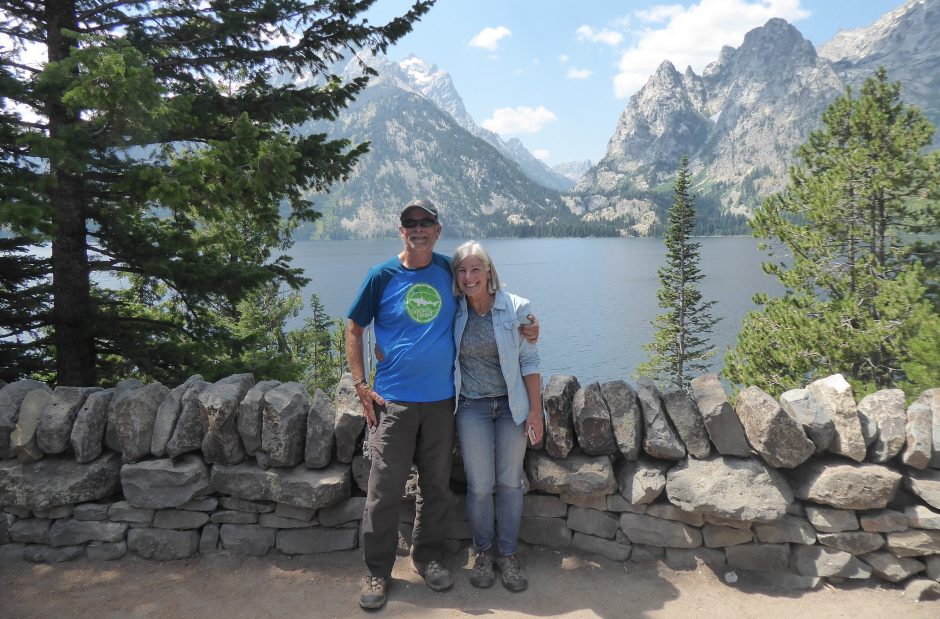
May 3 – 5
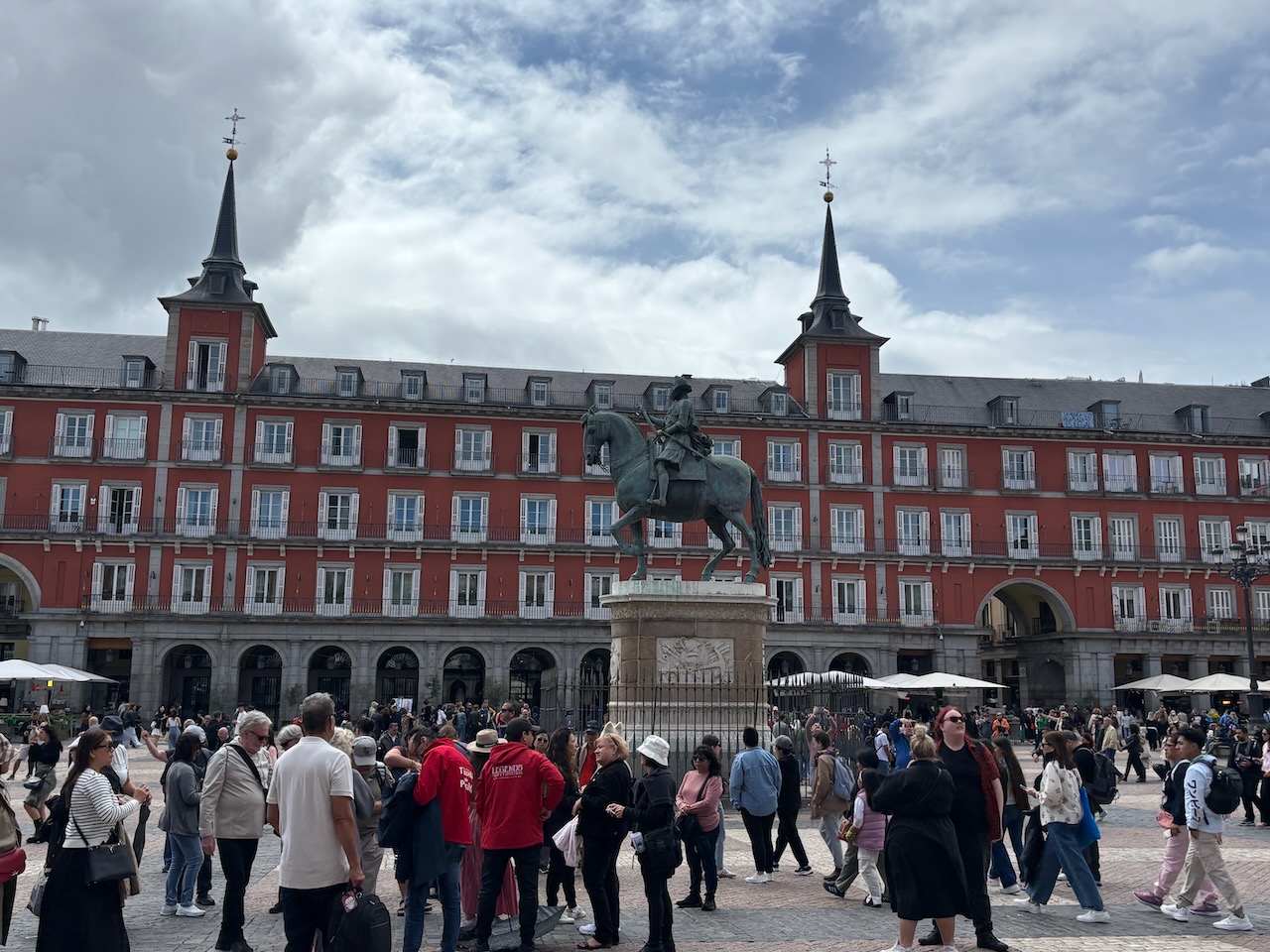
After leaving La Mallorquina, we walked a short distance to Plaza Mayor, which dates to Madrid’s glory days, the 1600s. Back then, this, not Puerta del Sol, was Madrid’s main square. The equestrian statue (wearing a ruffled collar) honors Philip III, who made this square the centerpiece of the budding capital in 1619. Philip’s dad (Philip II) made Madrid the country’s capital and the son transformed a former marketplace into this state-of-the-art Baroque plaza. The square is enclosed by four-story buildings with symmetrical windows, balconies, slate roofs, and steepled towers. Each side of the square is uniform, as if a grand palace were turned inside-out. This distinct look, pioneered by architect Juan de Herrera (who finished El Escorial), is found all over Madrid.
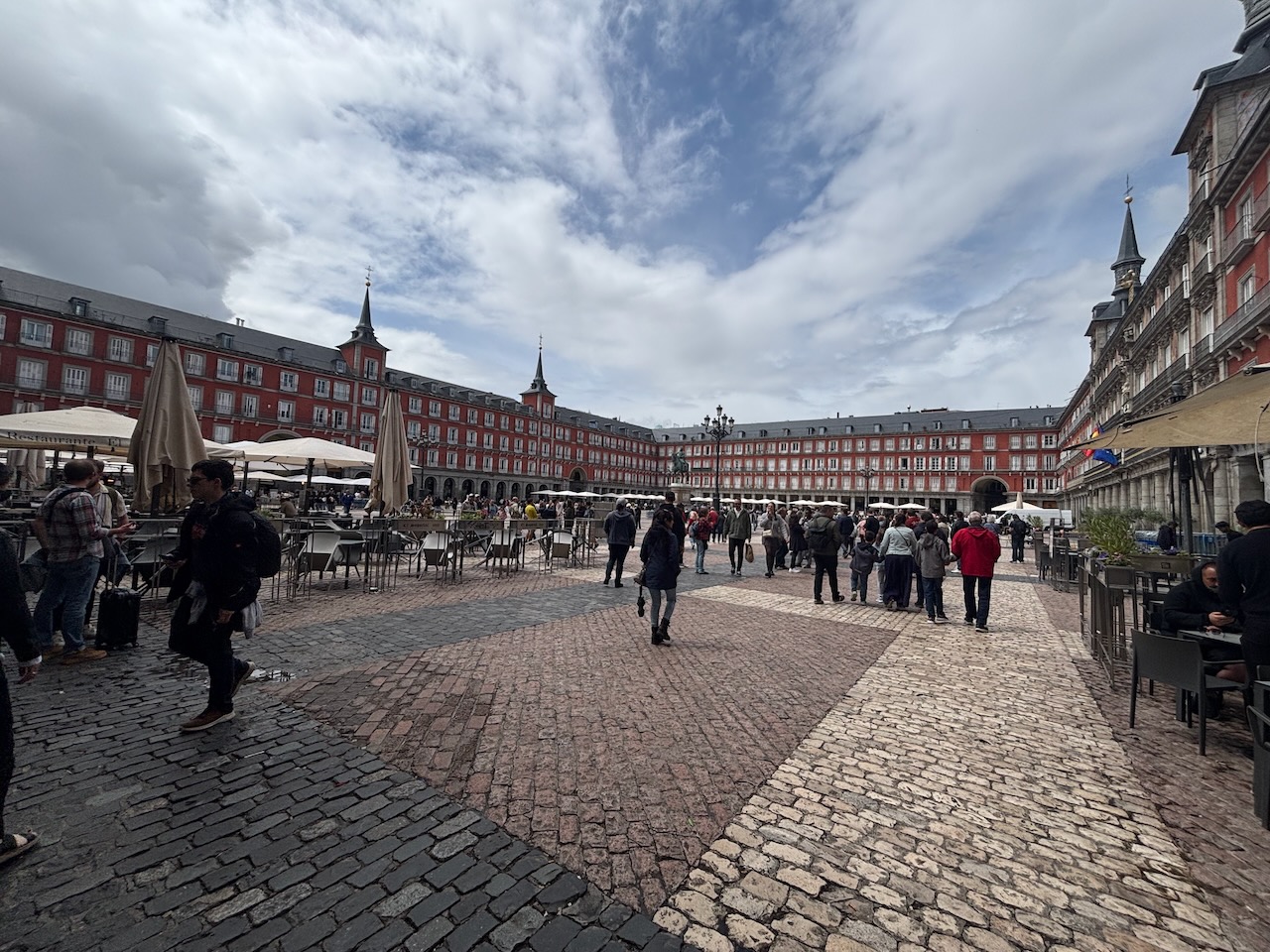
This site served as the city’s 17th-century open-air theater and during the Inquisition, many were tried here and the guilty were paraded around the square before their executions, wearing placards listing their many sins (bleachers were built for bigger audiences, while the wealthy rented balconies). The heretics were burned, and later, criminals were slowly strangled as they held a crucifix, hearing the reassuring words of a priest as the life was squeezed out of them with a garrote. Up to 50,000 people could crowd into this square for such spectacles and the last such execution in Spain by strangulation was in 1974.
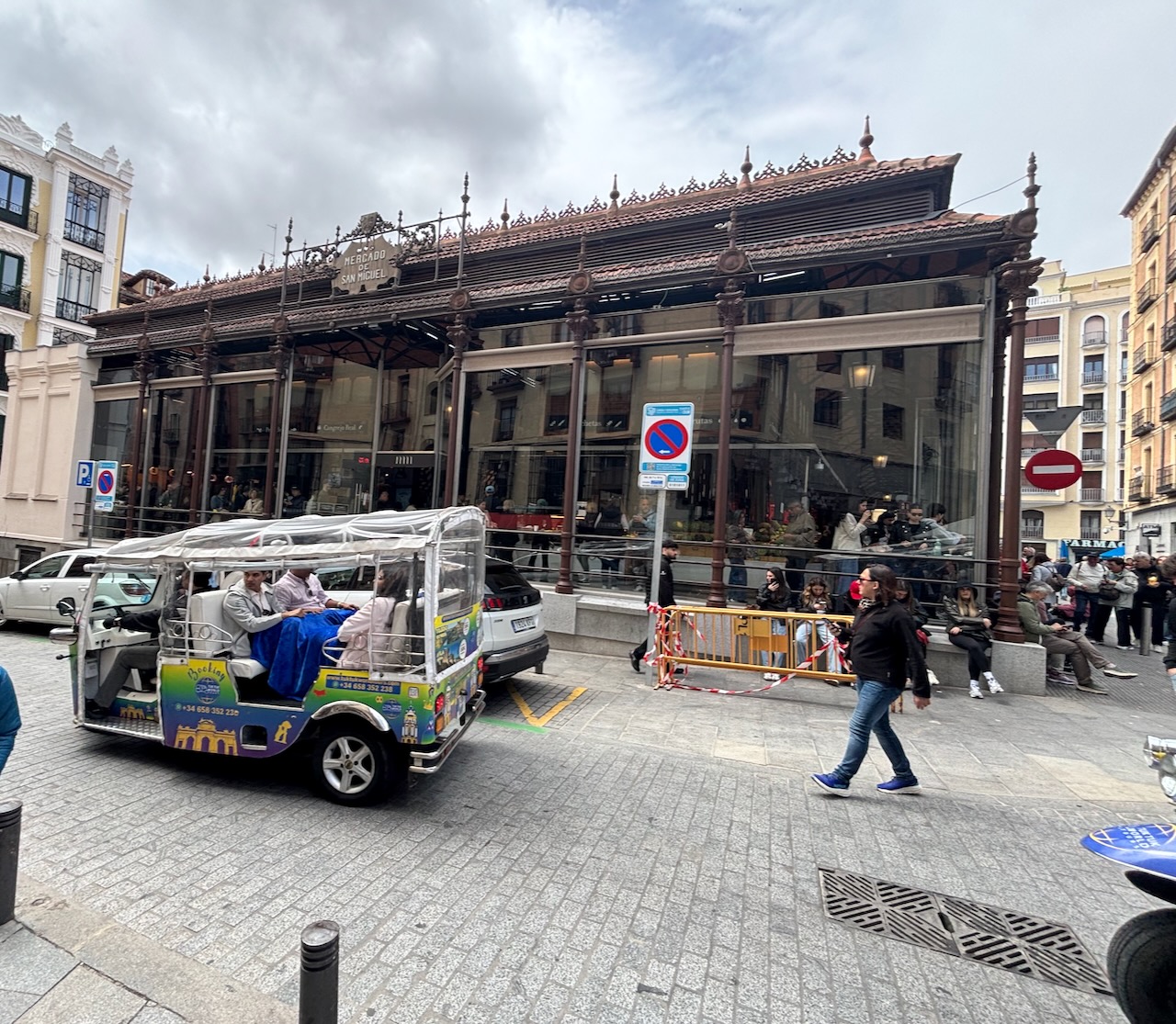
The city’s Tourist Information Office (TI) is located here and in 2014 Joanna and I met up with a guided tour here. One of our first stops was at Mercado de San Miguel, a modernized version of the markets we find in most cities, but this one is more of an upscale food court. When we visited there that year, we thought we’d enjoy a cost-effective meal sampling various items, but it ended up running us almost 40 Euros, a lot for us at the time. Looking back now, with today’s travel budget in mind, it wasn’t so bad after all.
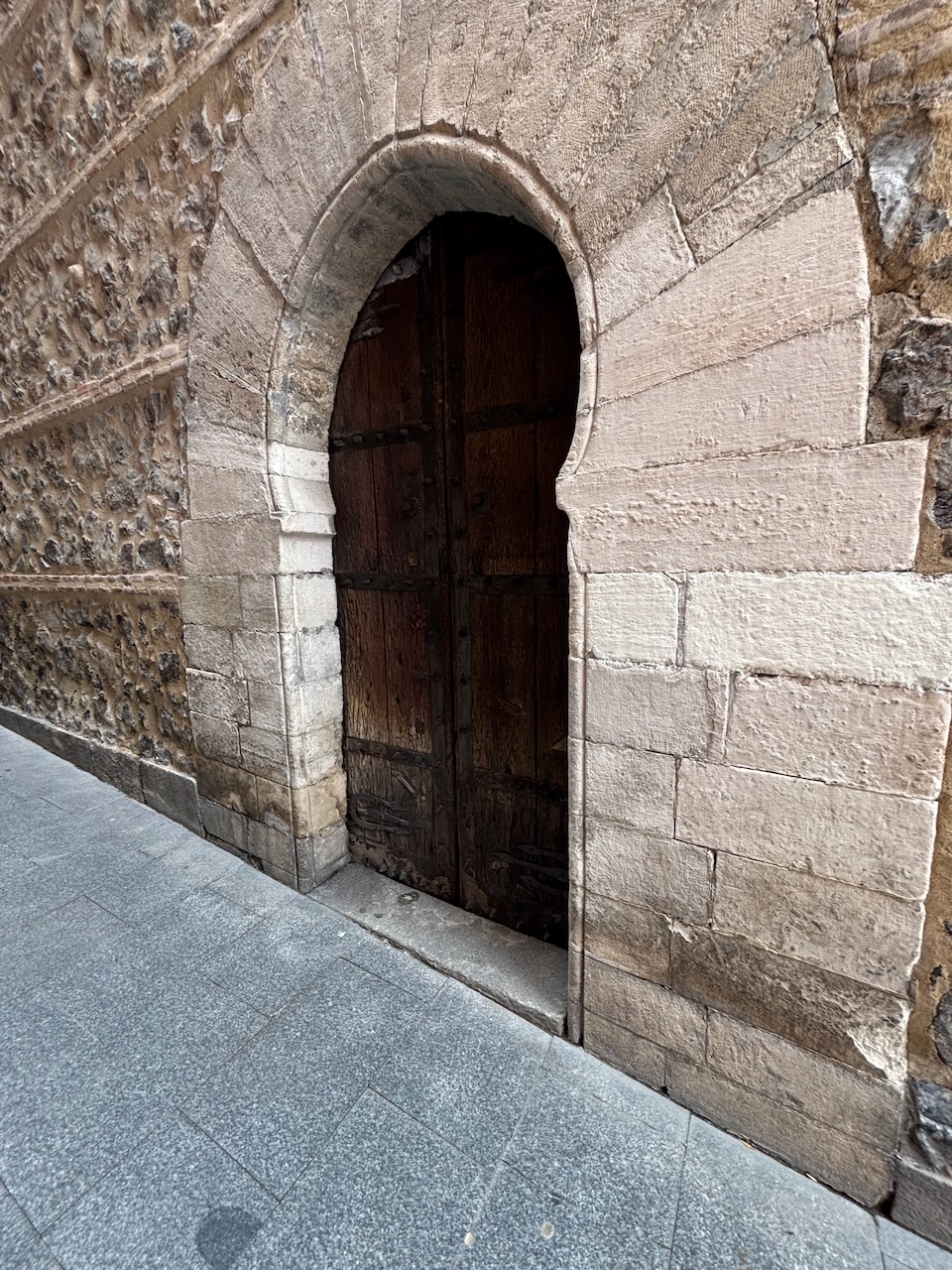
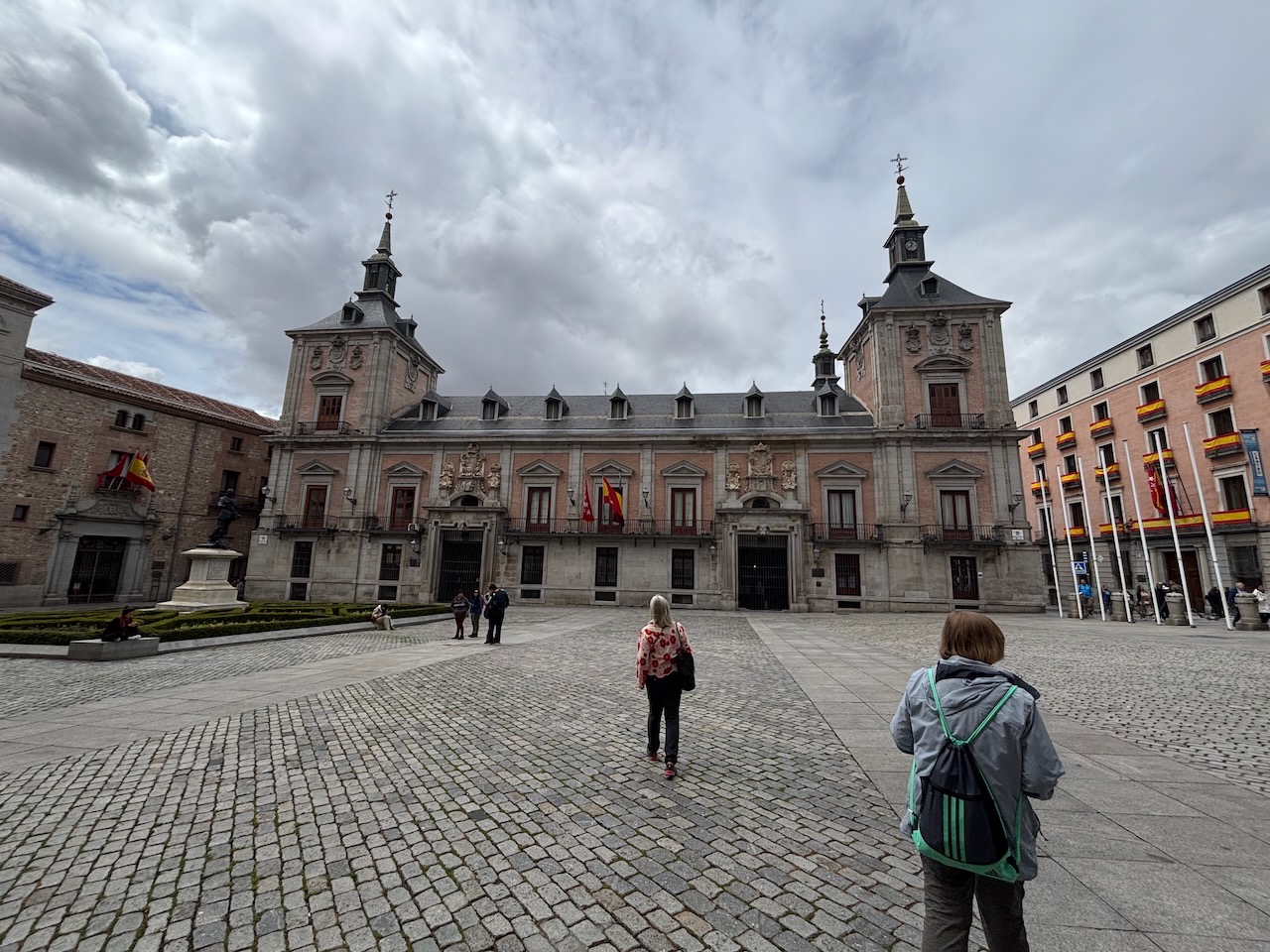
We continued and passed by what is considered the oldest door in town on Madrid’s oldest building, inhabited since 1480 and set in a Mudejar keyhole arch. A little farther along we walked into a small plaza fronting the city’s former town hall, which opened in 1692 and features Madrid’s distinctive architectural style, symmetrical square towers, topped with steeples and a slate roof. Philip II took this city by surprise in 1561, when he decided to move the capital of Europe’s largest empire (even bigger than ancient Rome) from Toledo to humble Madrid and it proved to be a perfect choice.
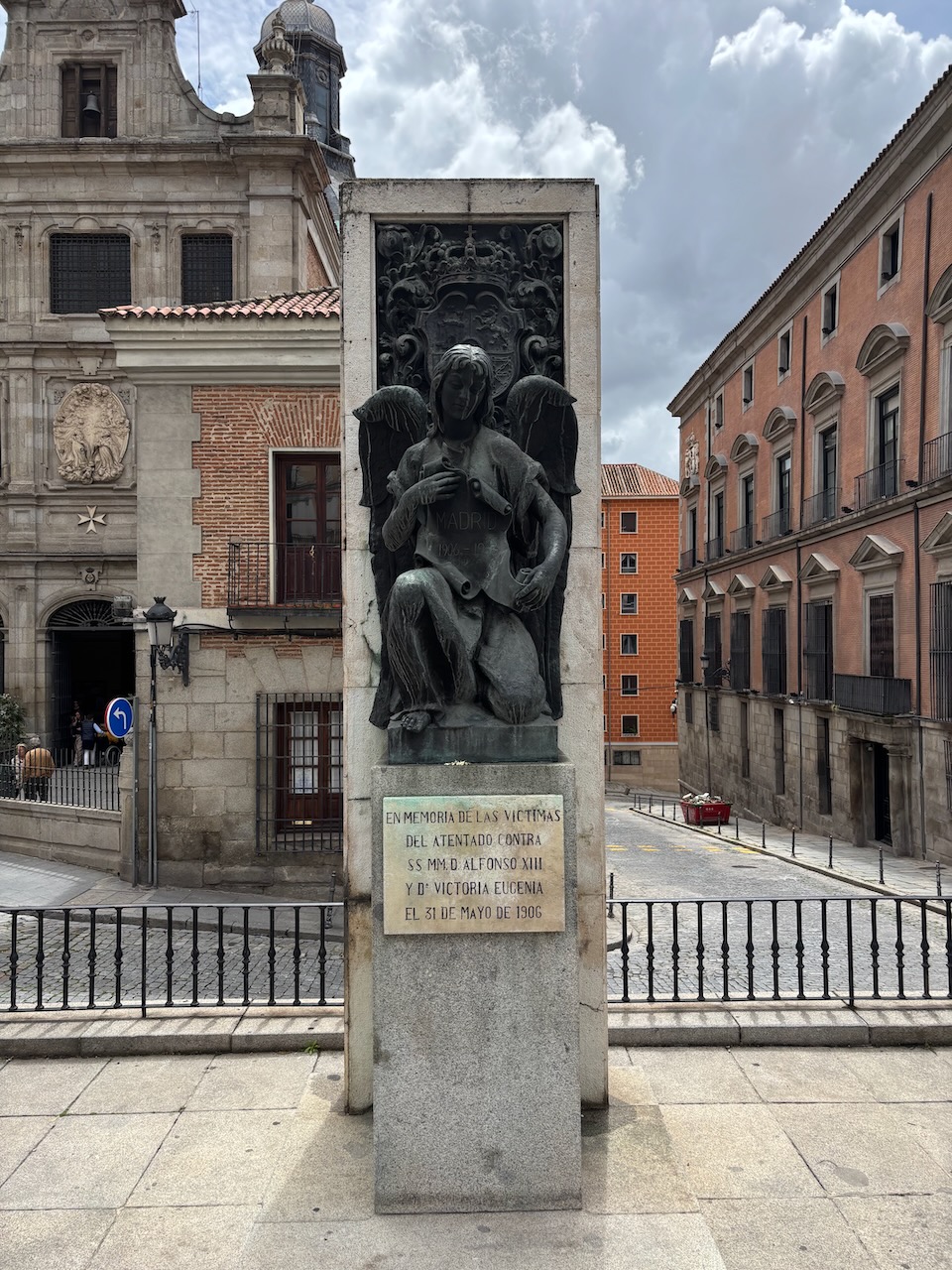
On the way to the Almudena Cathedral, we stopped briefly to take in the Assassination Attempt Memorial which memorializes the 1906 assassination attempt on Spain’s King Alfonso XIII and his bride, Victoria Eugenie, as they paraded by on their wedding day. While the crowd was throwing flowers, an anarchist threw a bouquet lashed to a bomb from a balcony at #84 (across the street). It missed the royal newlyweds but killed 28 people. The king and queen went on to live to a ripe old age, producing many great-grandchildren, including the current king, Felipe VI.
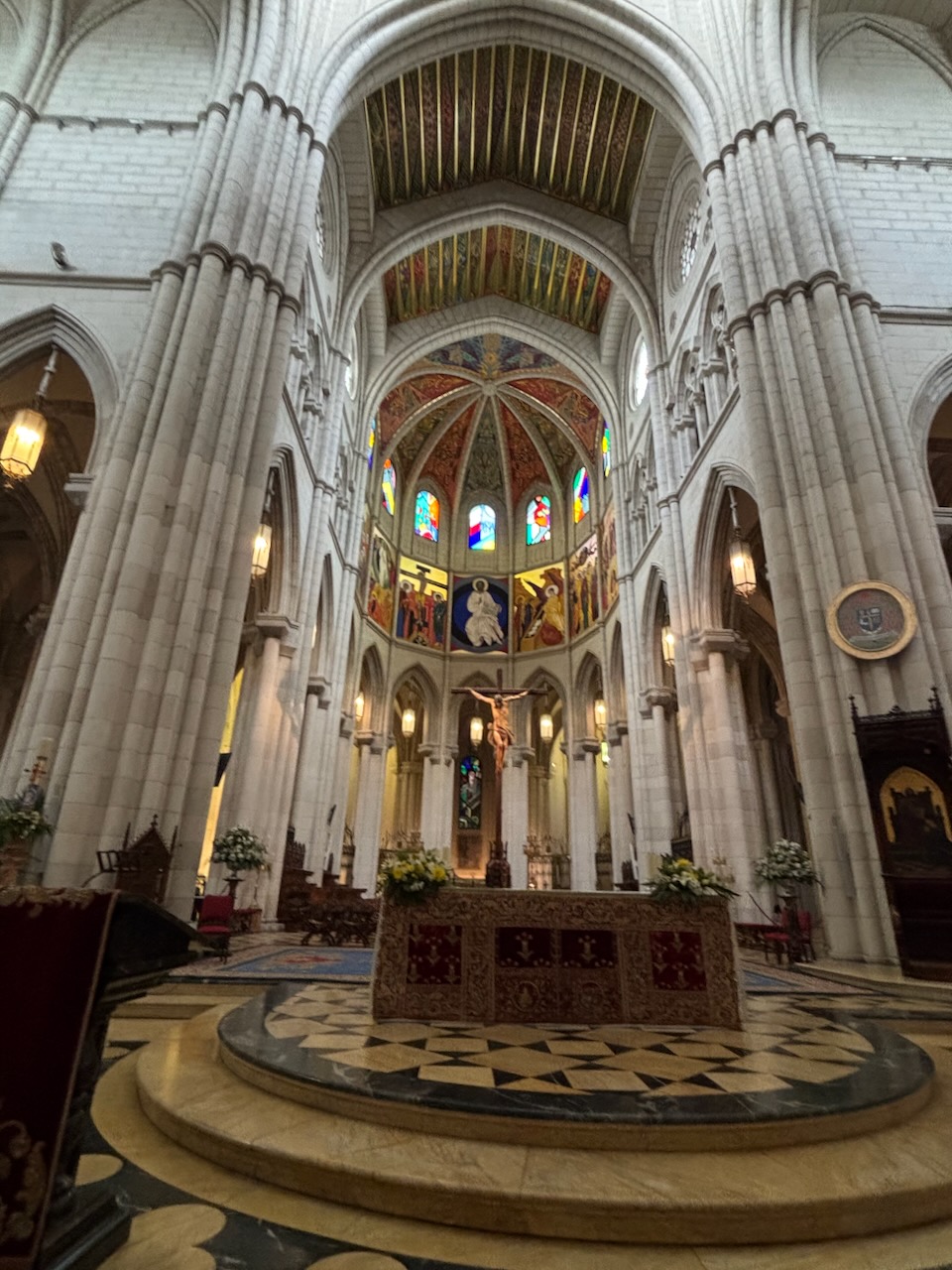
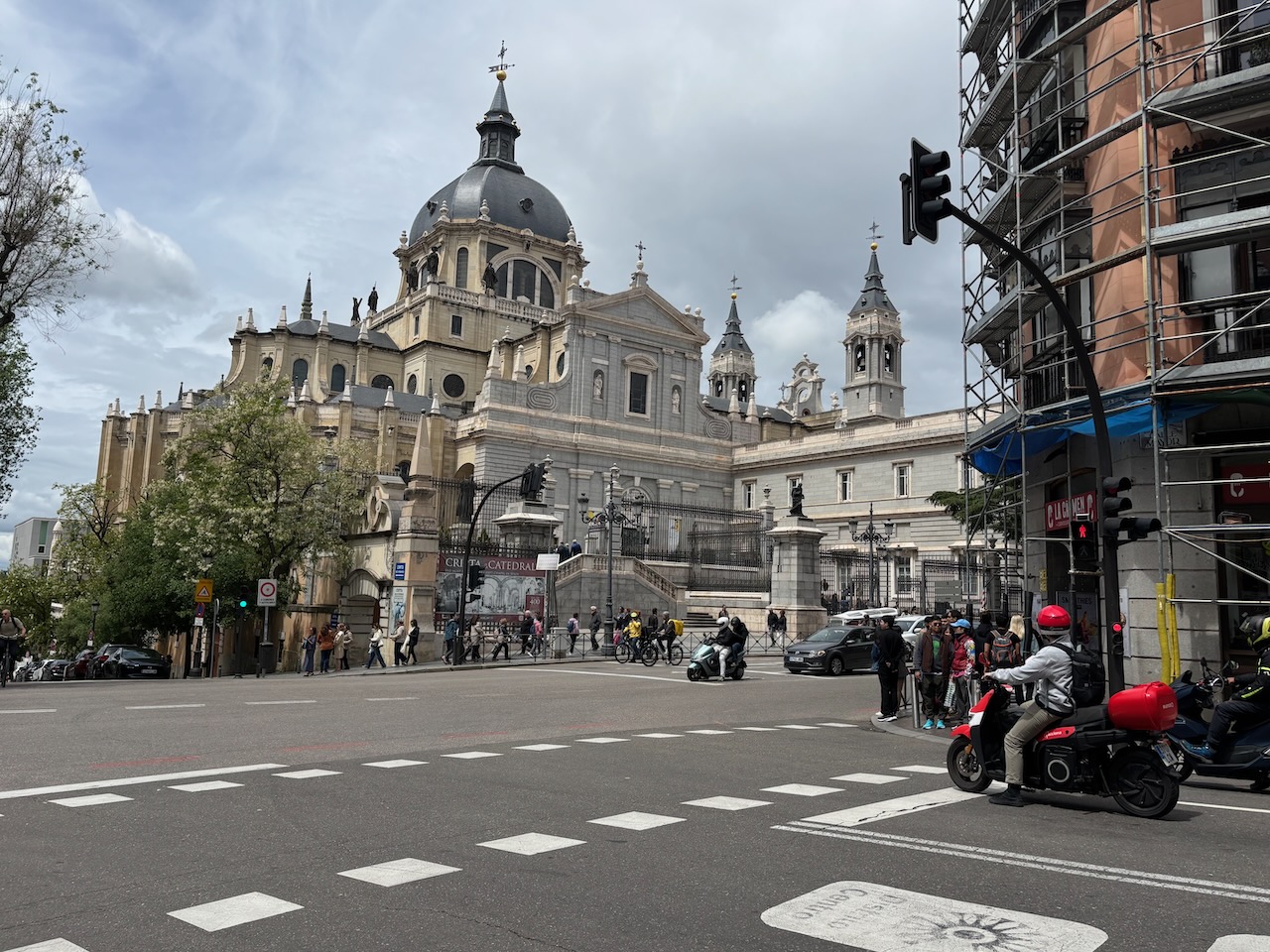
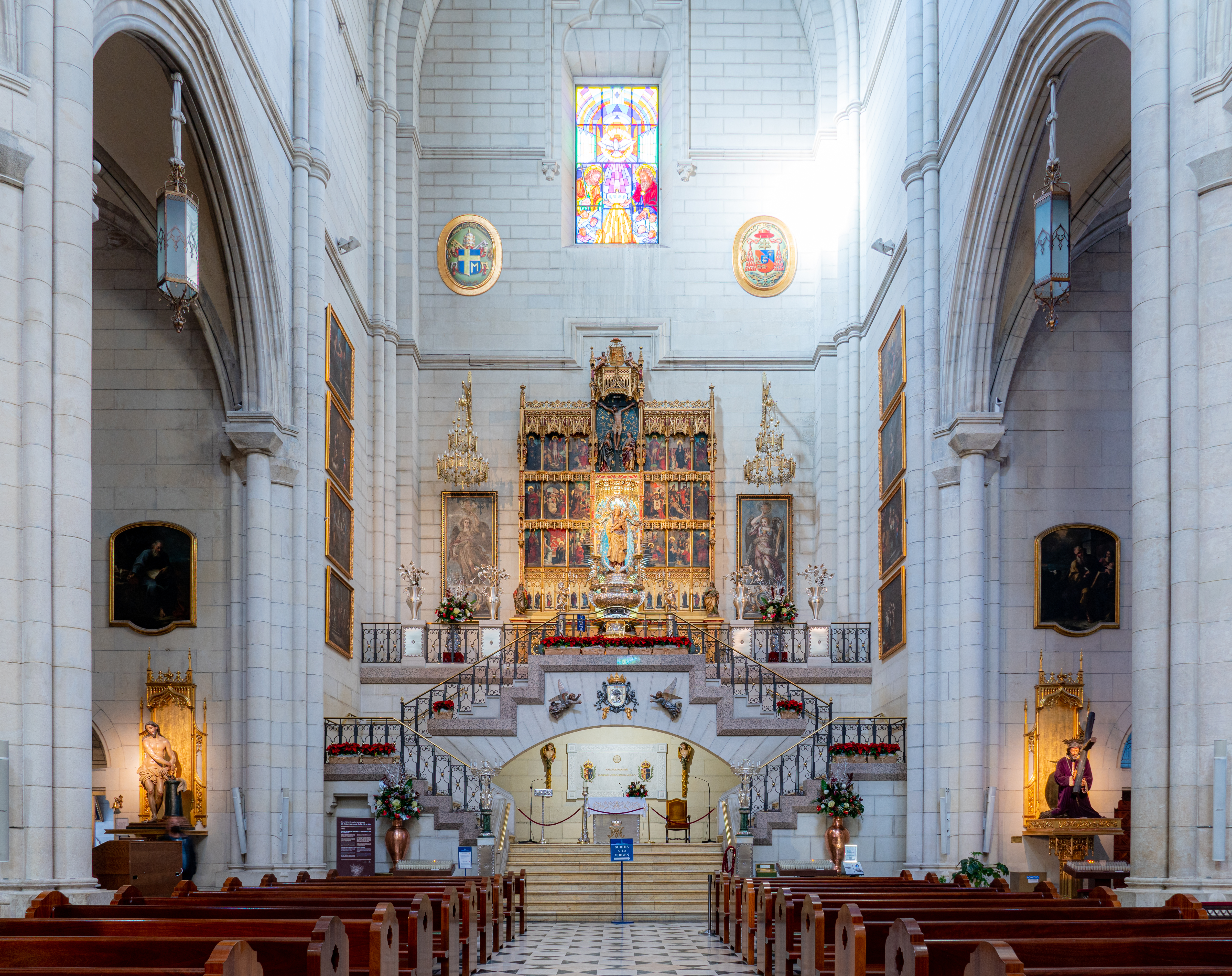
We arrived at and entered the cathedral (formally known as Cathedral of Saint Mary the Royal of the Almudena), the seat of the Archdiocese of Madrid. Its construction began in 1883 and finished over a century later, when it was consecrated by Pope John Paul II in 1993. It is located opposite the Royal Palace and much of its final appearance was defined considering this regal surrounding. Unlike in most Spanish cities, Madrid’s churches aren’t its most interesting sights. Madrid was built as a capital, so its main landmarks are governmental rather than religious.

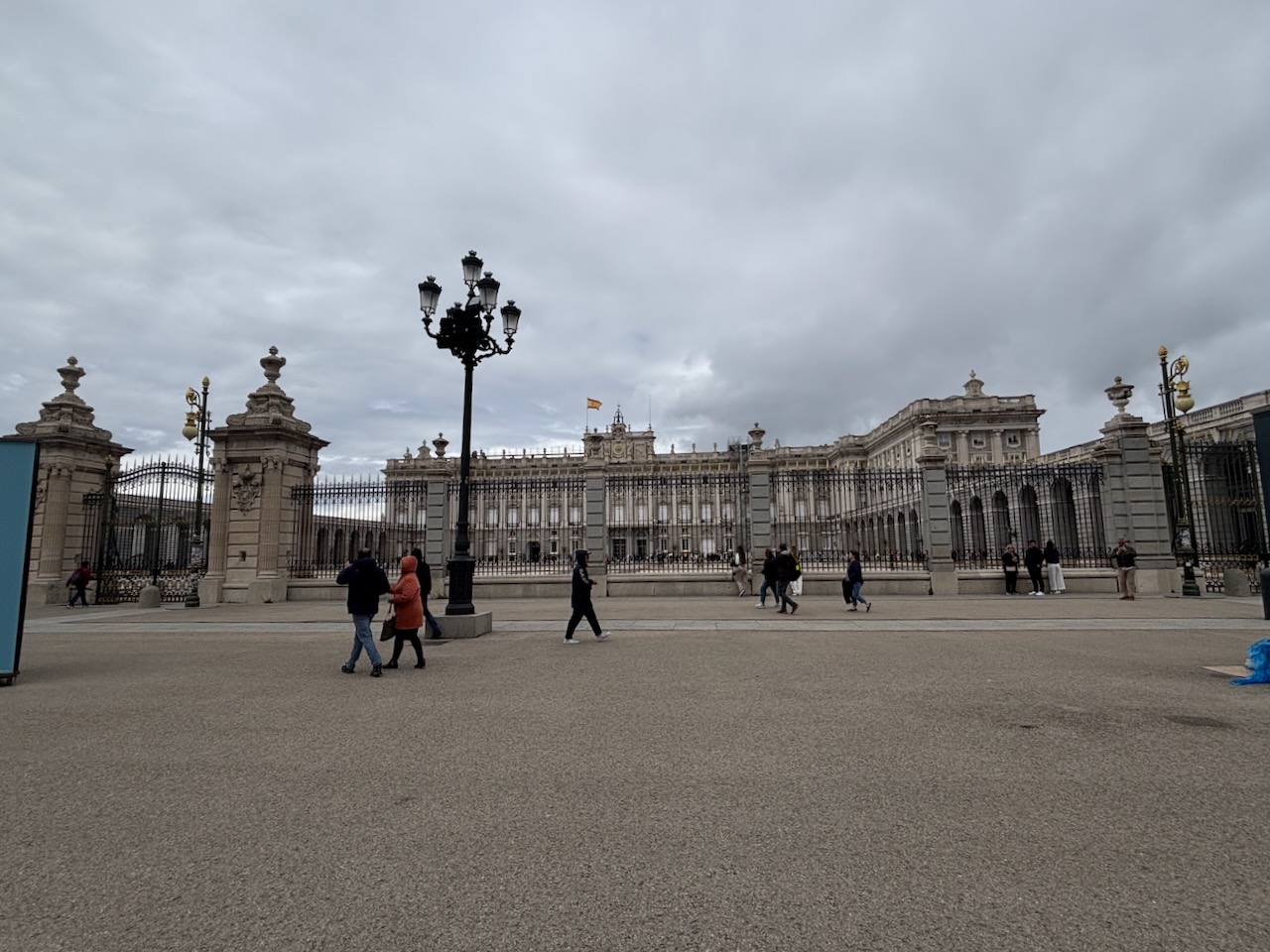
Exiting, we circled the building and found ourselves on the other side of the cathedral in Plaza de la Armería, facing the Royal Palace. We would return here the next day for a guided tour, but paused for a moment or two to take it in. Since the ninth century, this spot has been Madrid’s center of power: from Moorish castle to Christian fortress to Renaissance palace to the current structure, built in the 18th century. With its expansive courtyard surrounded by imposing Baroque architecture, it represents the wealth of Spain before its decline. Its nearly 1.5 million square feet make it Europe’s largest palace.

We walked to the edge of the plaza for a commanding vista stretching toward the mountains in the distance of the vast Casa del Campo (a former royal hunting ground, now a city park) and then moved along to Plaza de Oriente. As its name suggests, this square faces east and is typical of today’s Europe, where energetic governments are converting car-congested wastelands into inviting public spaces. Where’s the traffic? Under your feet. A former Madrid mayor who spearheaded the project earned the nickname “The Mole” for all the digging he did.

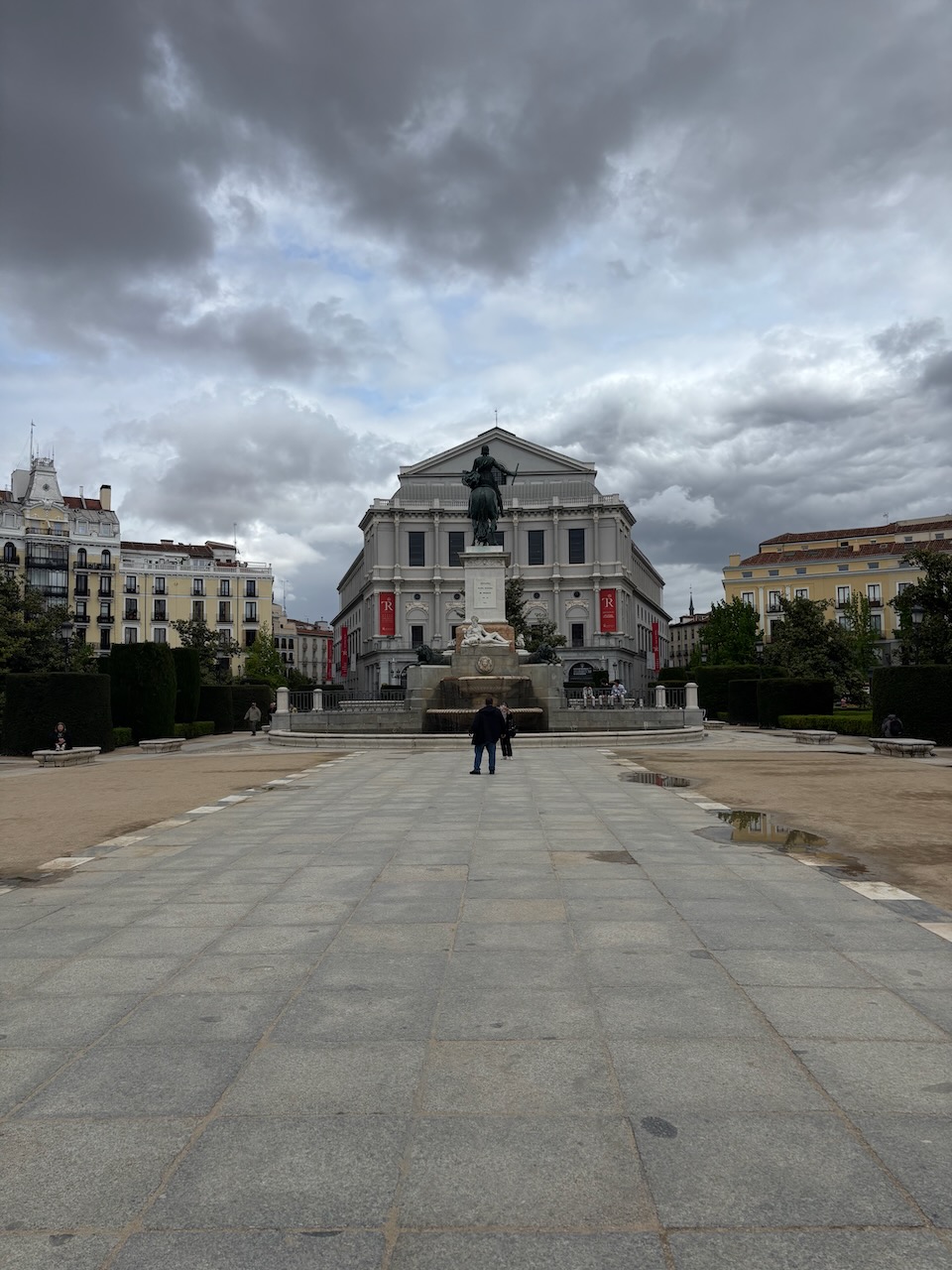
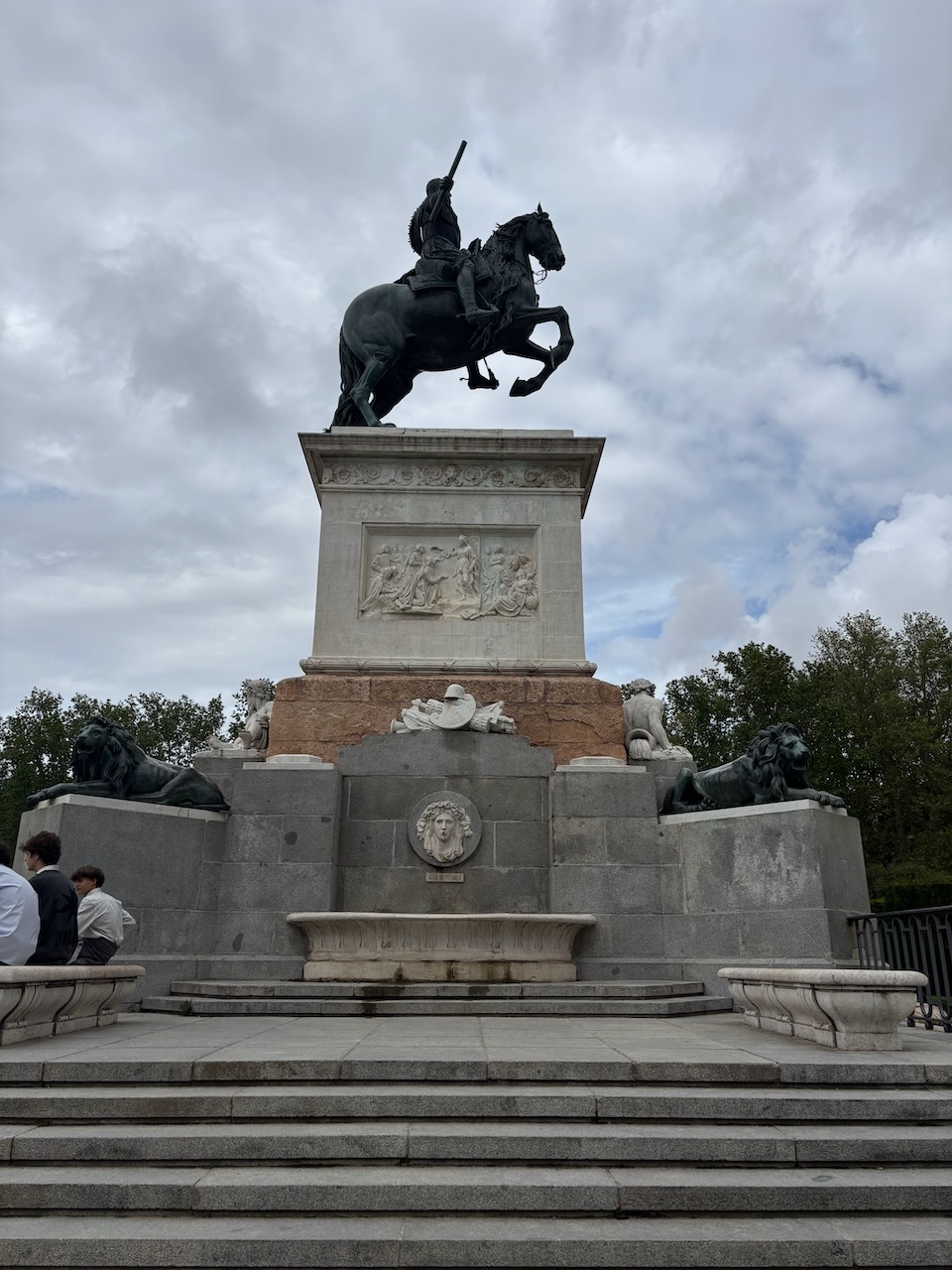
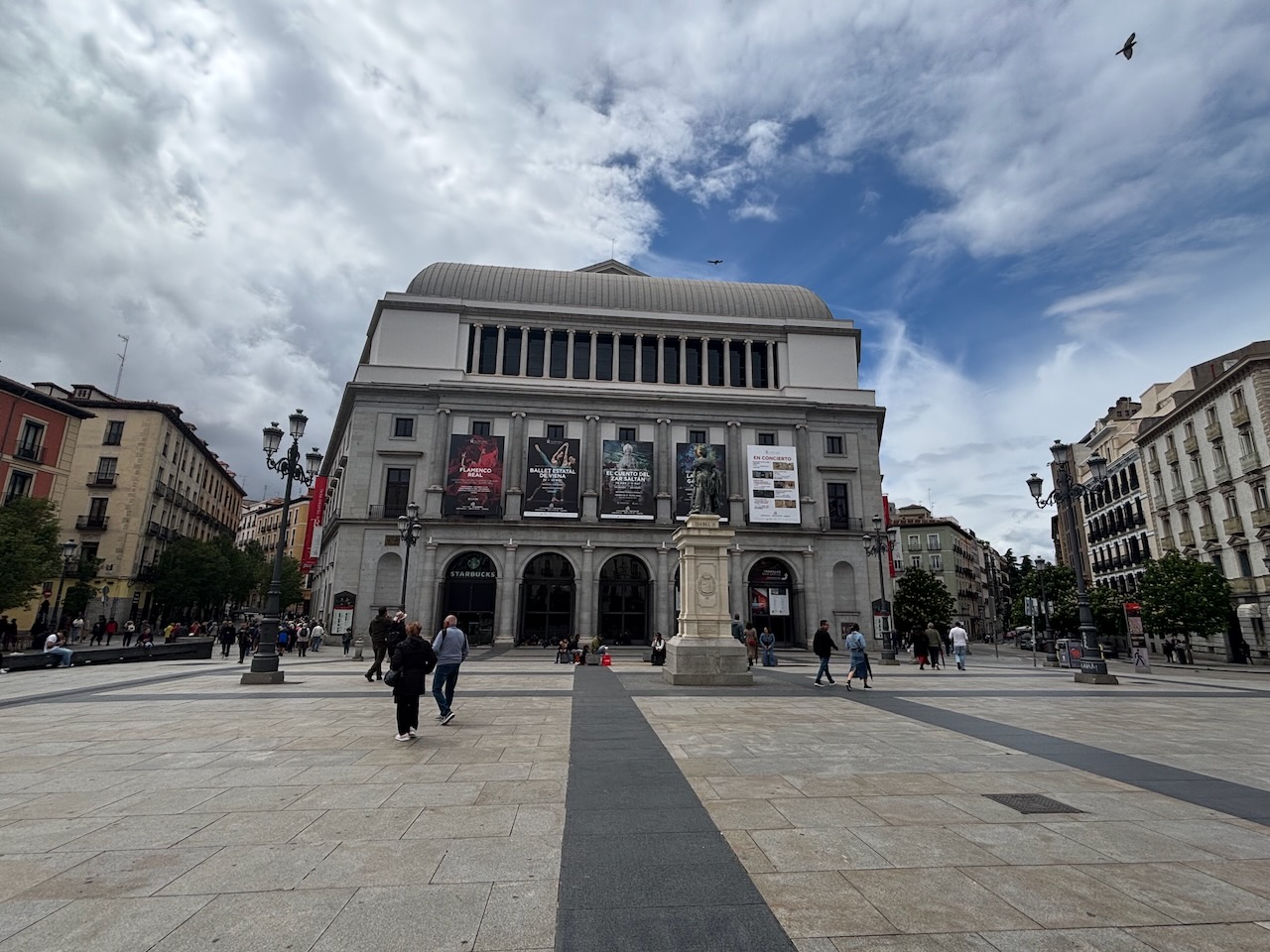
The centerpiece of the plaza is the bronze equestrian statue of Philip IV, dating from the 1630s. It was a striking technical feat in its day, as the horse rears back dramatically balanced atop its fragile ankles. It was only made possible with the help of Galileo’s calculations (and by using the tail for extra support). We moved on to Plaza de Isabel II, home to the Royal Theater (Opera House) and a statue dedicated to Queen Isabel II, who is responsible for building the theater, but was forced to abdicate in 1868 as she was a conservative out of step with Spain’s march toward democracy.
Leaving the plaza, we strolled up Calle del Arenal, a pedestrian friendly (cars were eliminated a couple of decades ago) shopping destination. As we walked, we noted many others simply out strolling as the paseo is a strong tradition in this culture, people of all generations enjoy being out, together, strolling. And local governments continue to provide more pedestrianized boulevards to make the paseo better than ever.
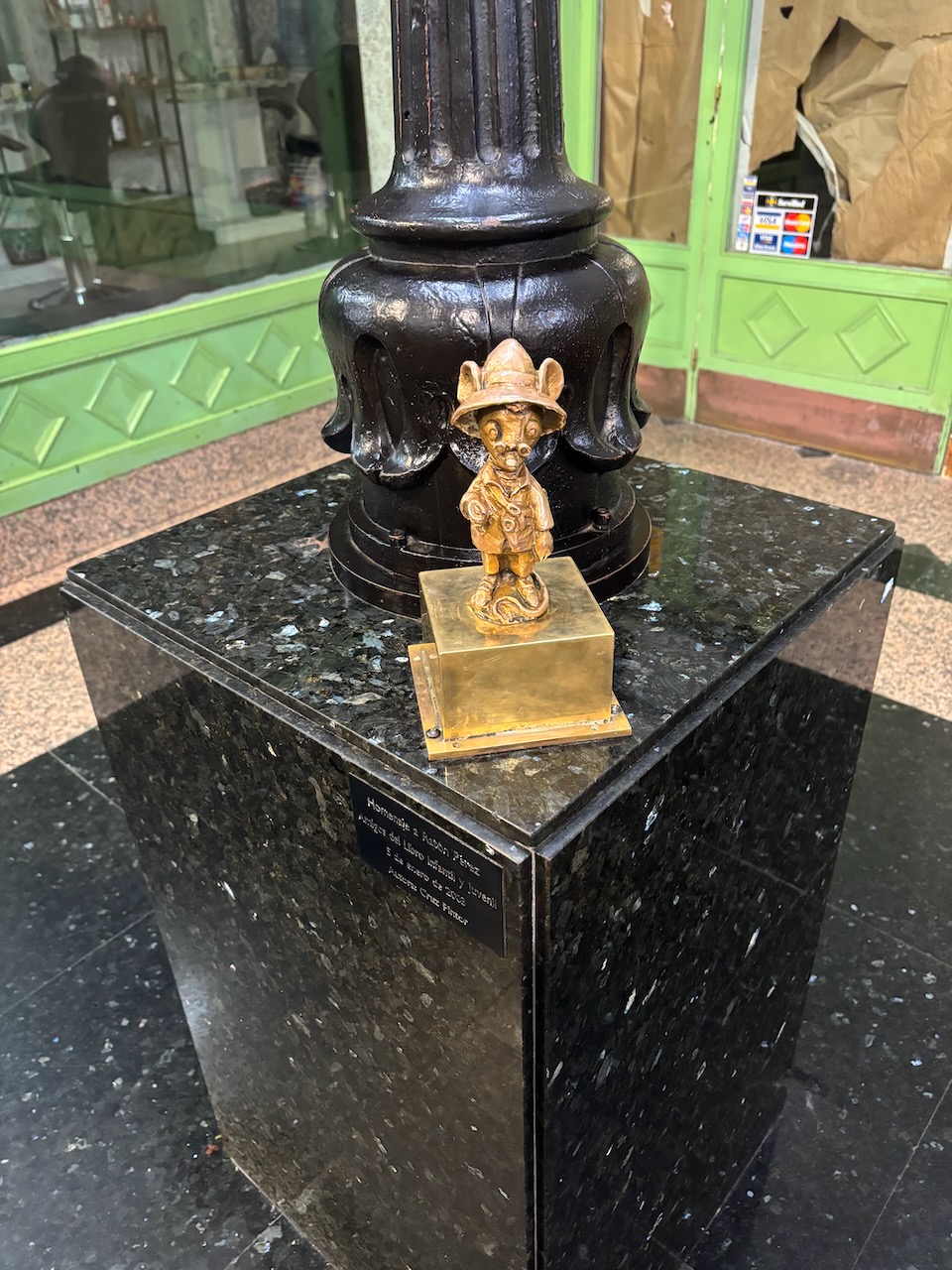
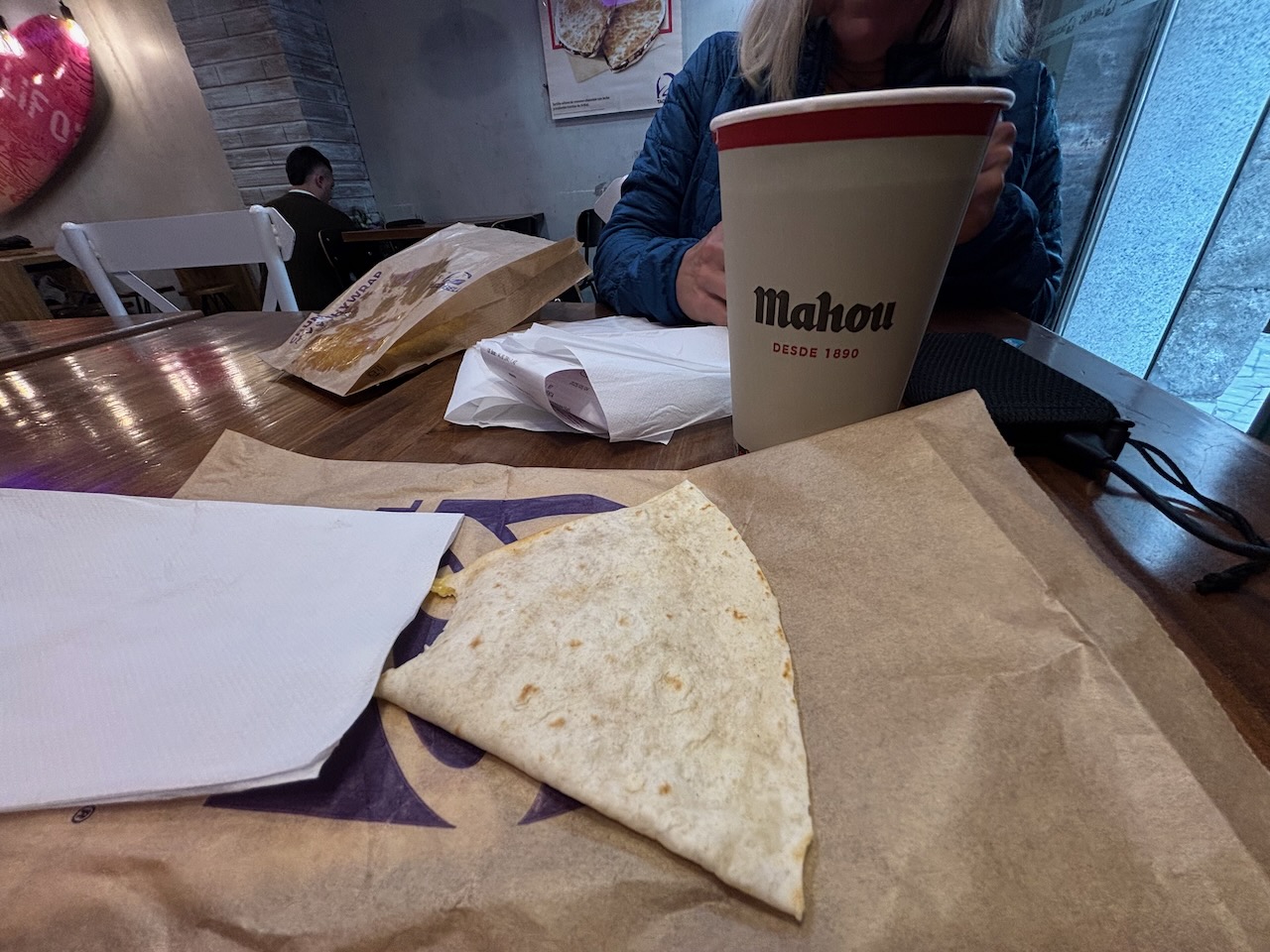
As we neared the end of the street, we encountered the six-inch-tall bronze statue of the beloved rodent, Ratón Pérez, Spain’s answer to Mickey Mouse. He first appeared in a children’s book in the late 1800s, and kids have adored him ever since. As it was mid-afternoon and we had a lot of time to kill before our activity for the evening, dinner and a presentation of flamenco, we stopped in at a Taco Bell for a snack to hold us over. We’ll cover the evening and the rest of our time in Madrid in the next post.
Links
Almudena Cathedral: https://catedraldelaalmudena.es/
Raton Perez: https://www.esmadrid.com/en/tourist-information/raton-perez-house-musuem
Virgin attribution: By Fernando – Own work, CC BY-SA 4.0,
Discover more from 3jmann
Subscribe to get the latest posts sent to your email.


 3jmann