Blog Post 12-21-2025
Europe 2025 – Madrid, Part Three
May 3 – 5
To kill time after our Taco Bell snack we drifted in and out of some of the shops on Calle del Arenal and then walked over to the area where the flamenco venue was located. This took a little longer than it should have as the shortest route would have taken us through the Casa del Campo parkland, but renovations there had closed it and so we walked around its perimeter. Having located the venue, we walked a couple of blocks to the large transit station known as Centro Comercial Príncipe Pío.
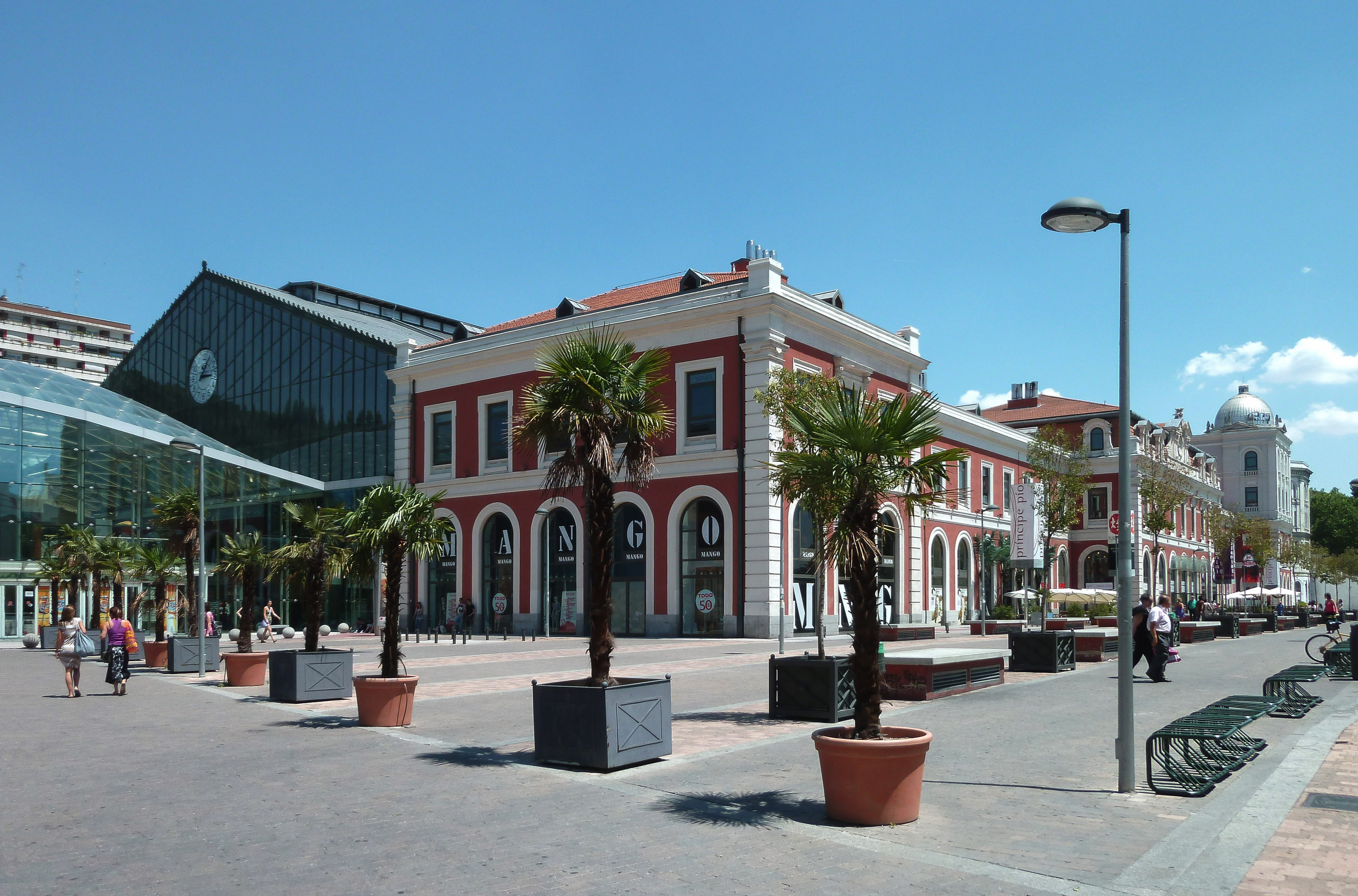
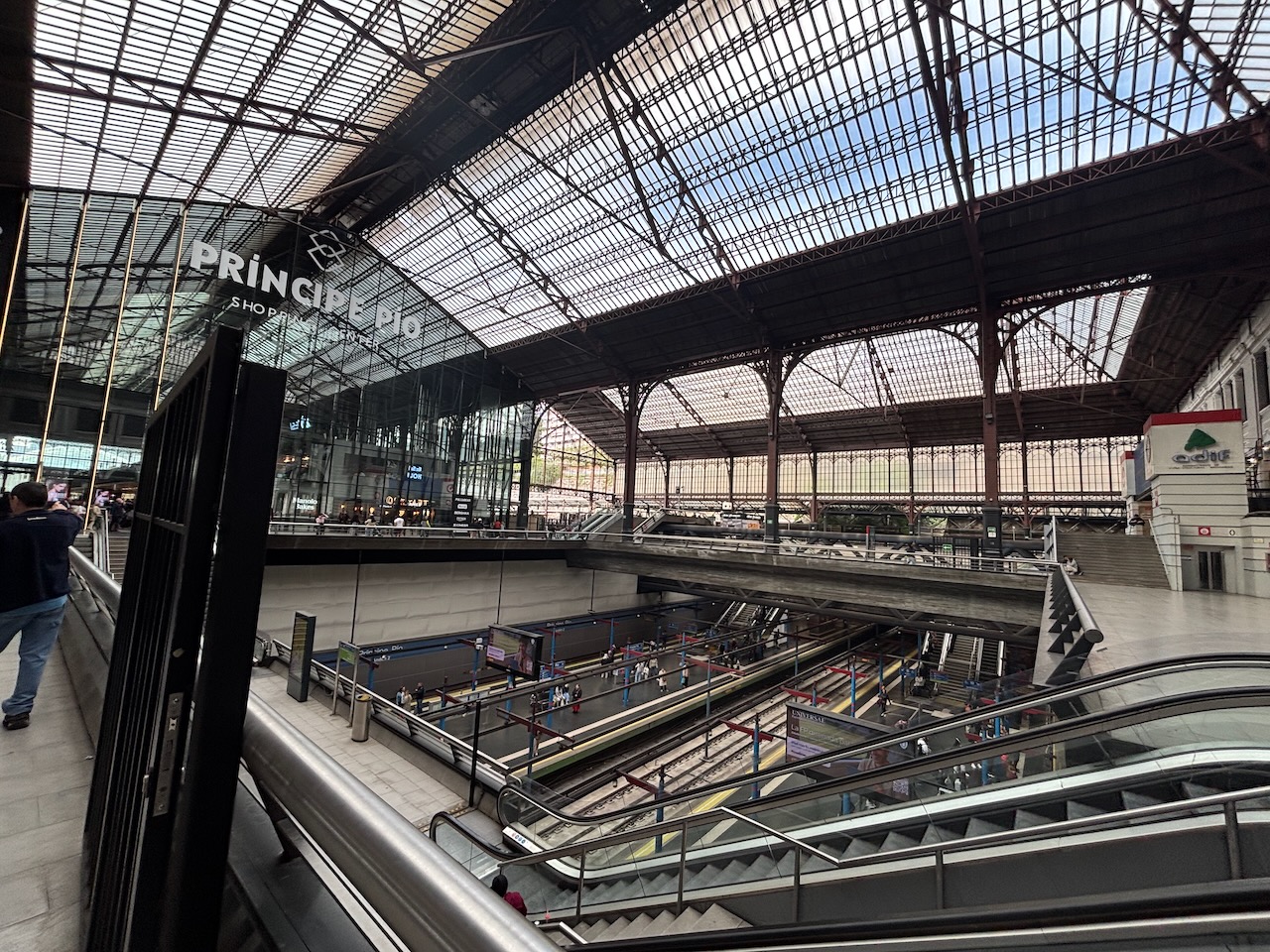
Joanna and I visited here many times in 2014 as it was the terminus for the urban bus we would take into the city from our campground on the outskirts of town. A multimodal train station, it services Madrid Metro’s Lines, commuter rail lines, city buses and intercity and long-distance coaches. Additionally, the station houses a shopping center and a theater. Príncipe Pío station was originally known as the Estación del Norte (North Station) and was opened in June 1861.
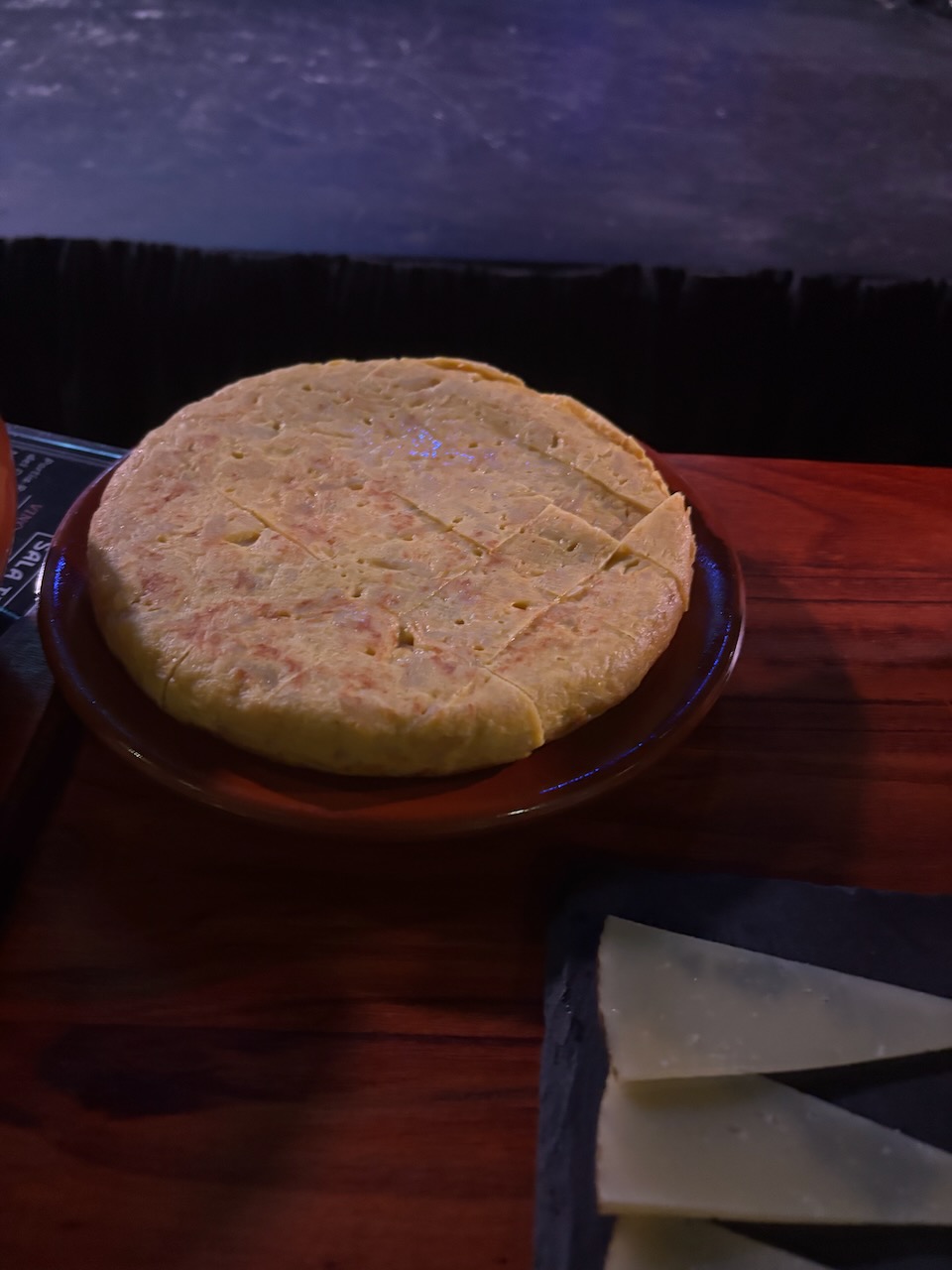
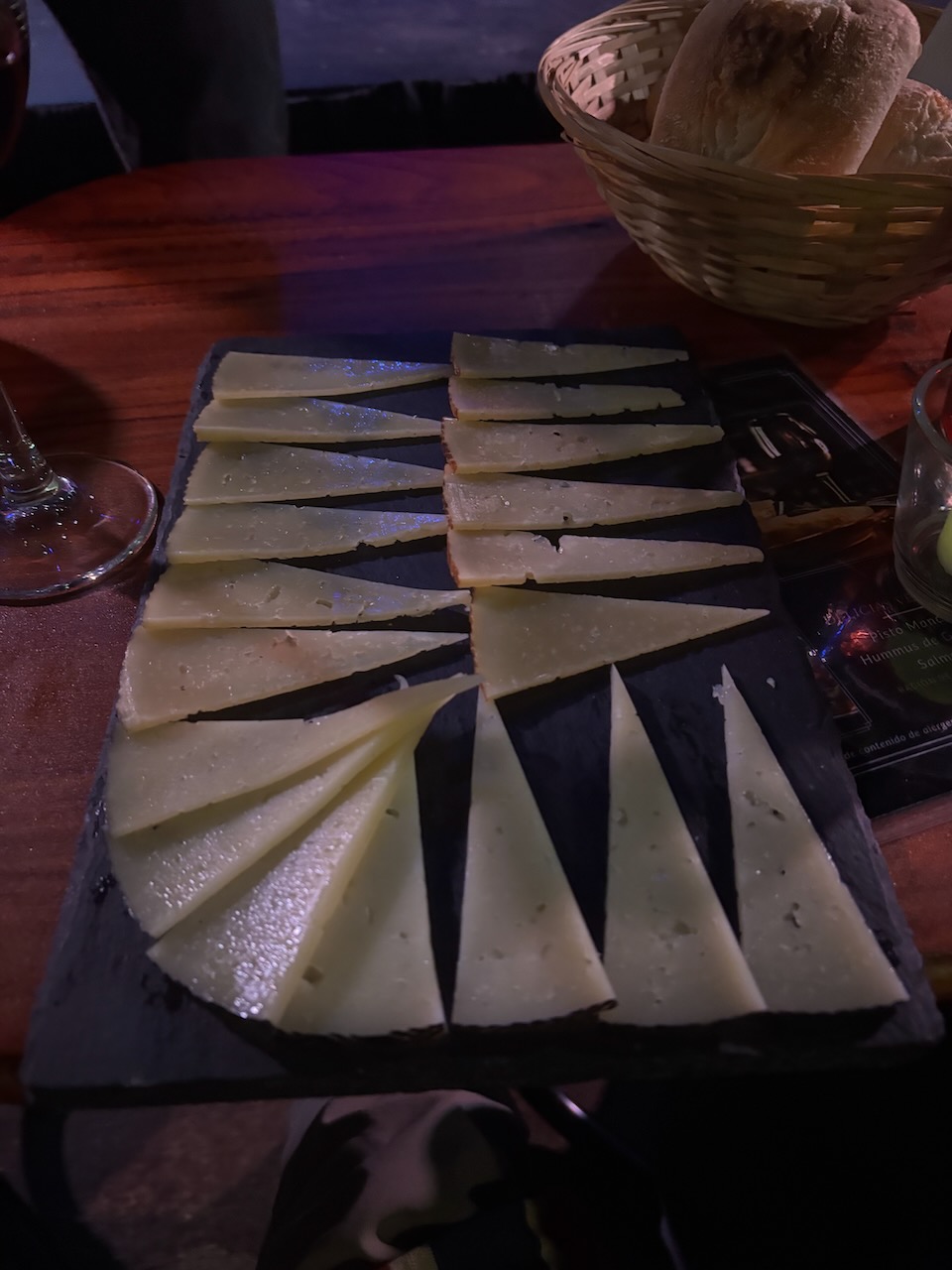
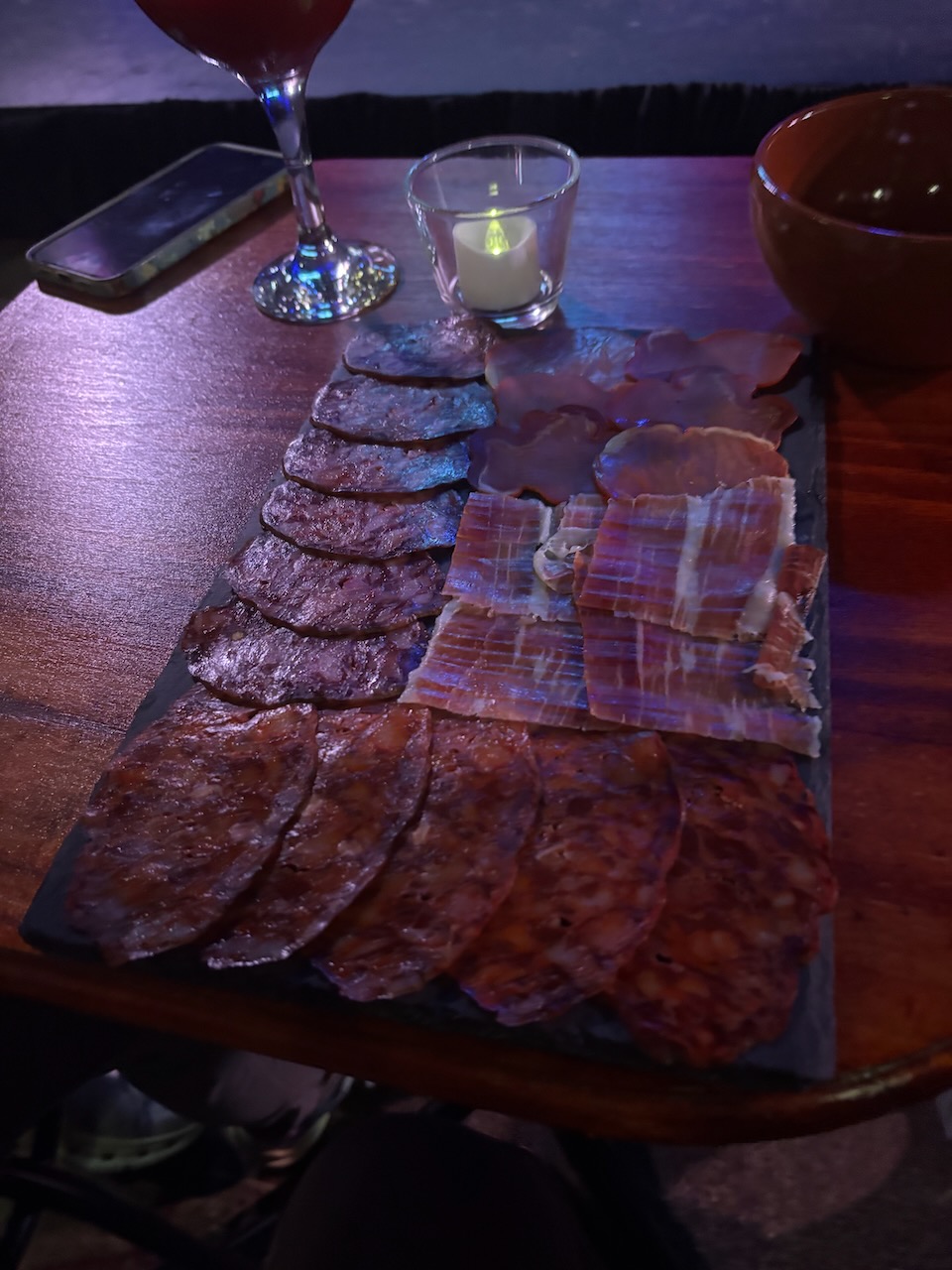
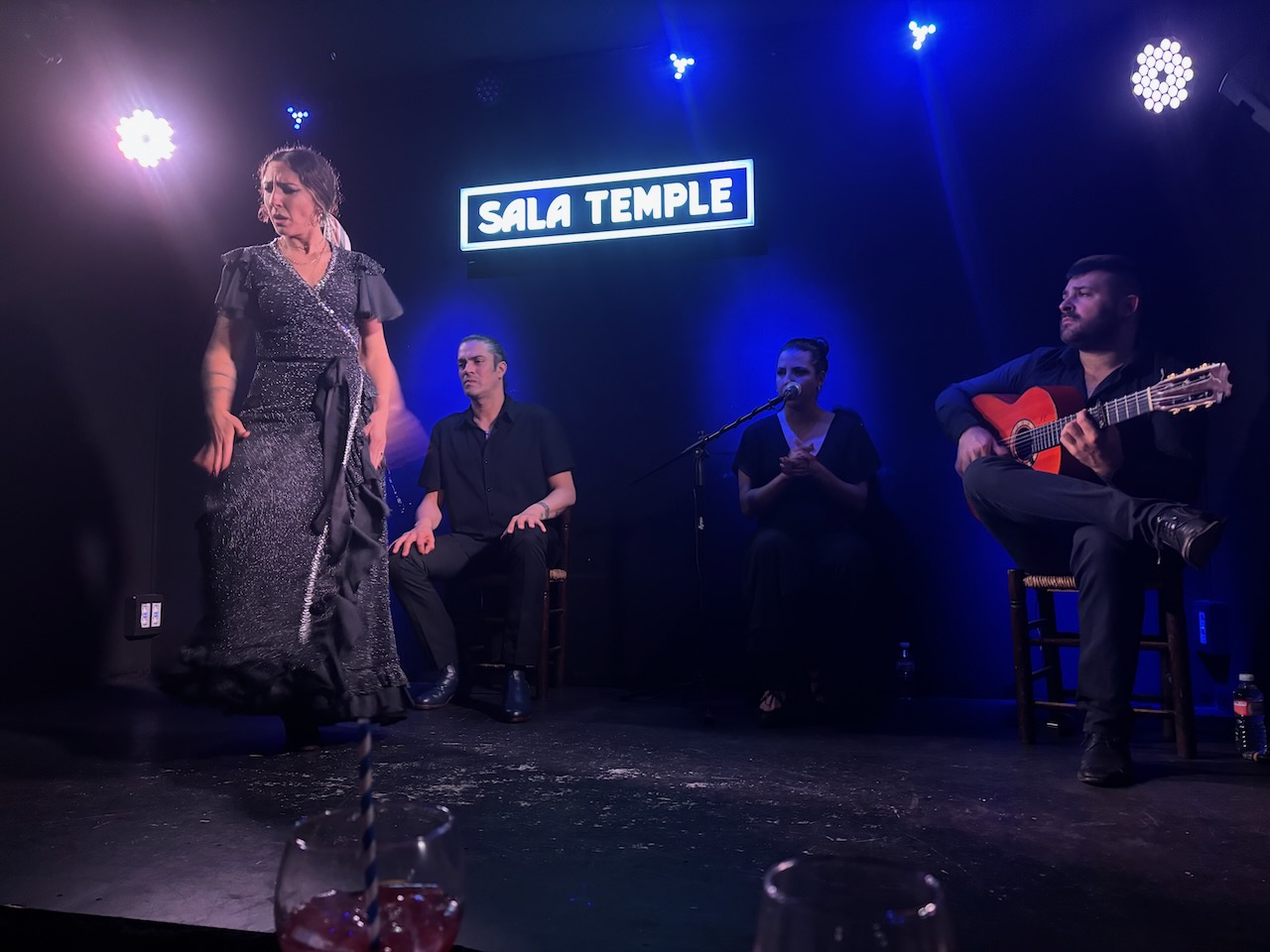
We filled up enough time at the station to get us back to Sala Temple for our encounter with Flamenco. This evening would be one of the highlights of our trip, a fantastic demonstration of the art accompanied by a boat load of food. We’d purchased tickets for Zone A with Dinner (first three rows with a drink and one of their dishes of our choice). We expected the choices to be limited and small in size and were shocked when the portions were so large we’d end up taking much of it back to the apartment. We would wind up with a Cheese Board (Three varieties of Manchego cheese made with sheep and cow’s milk, cured in the traditional way), a Table of Iberians (Chorizo, salchichón, lomo and jamón made from Iberian pork and spices, cured and preserved in the traditional way), and a large Tortilla (potatoes, eggs, onions, and olive oil) which we’ve covered in prior posts.
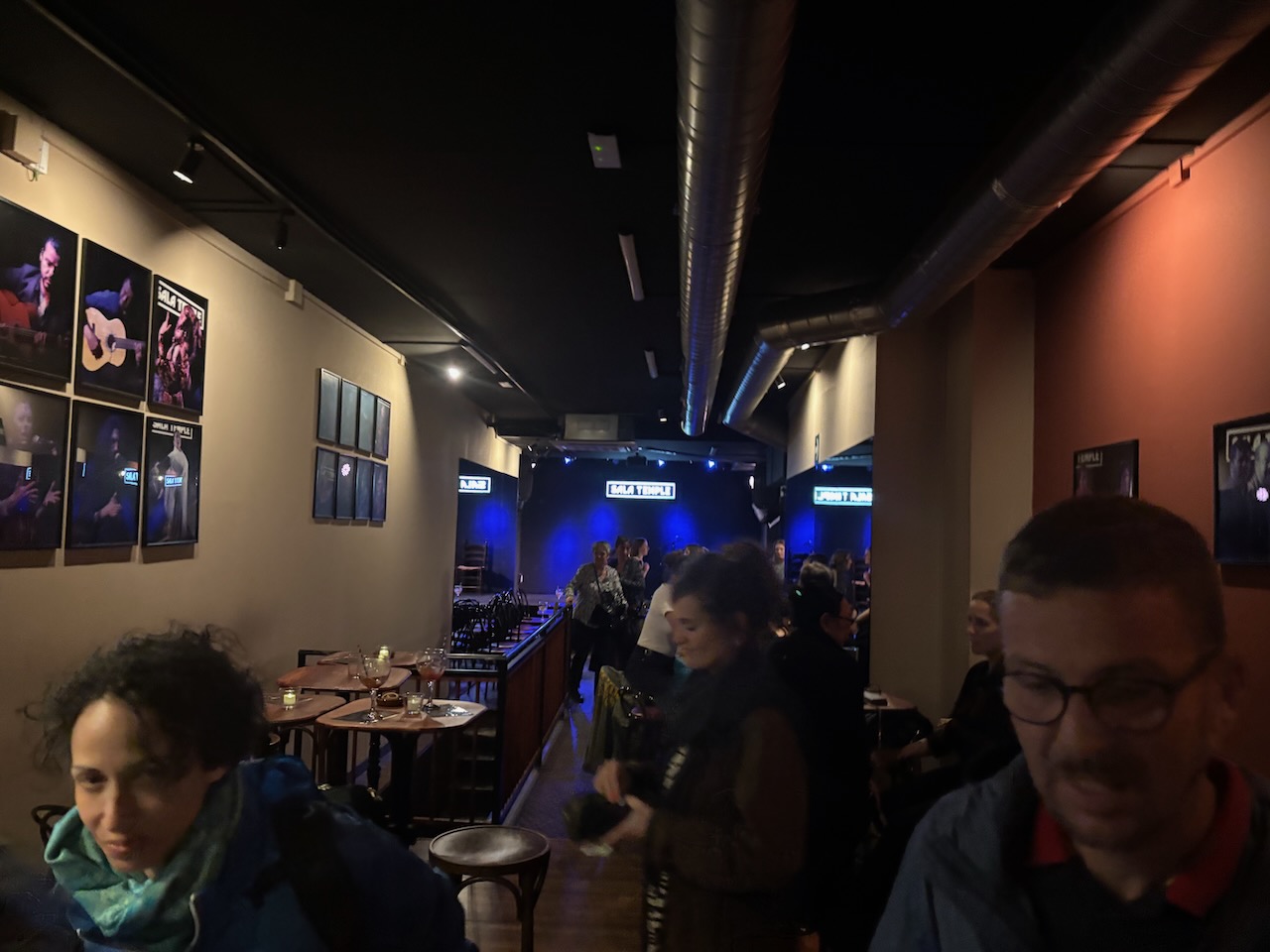
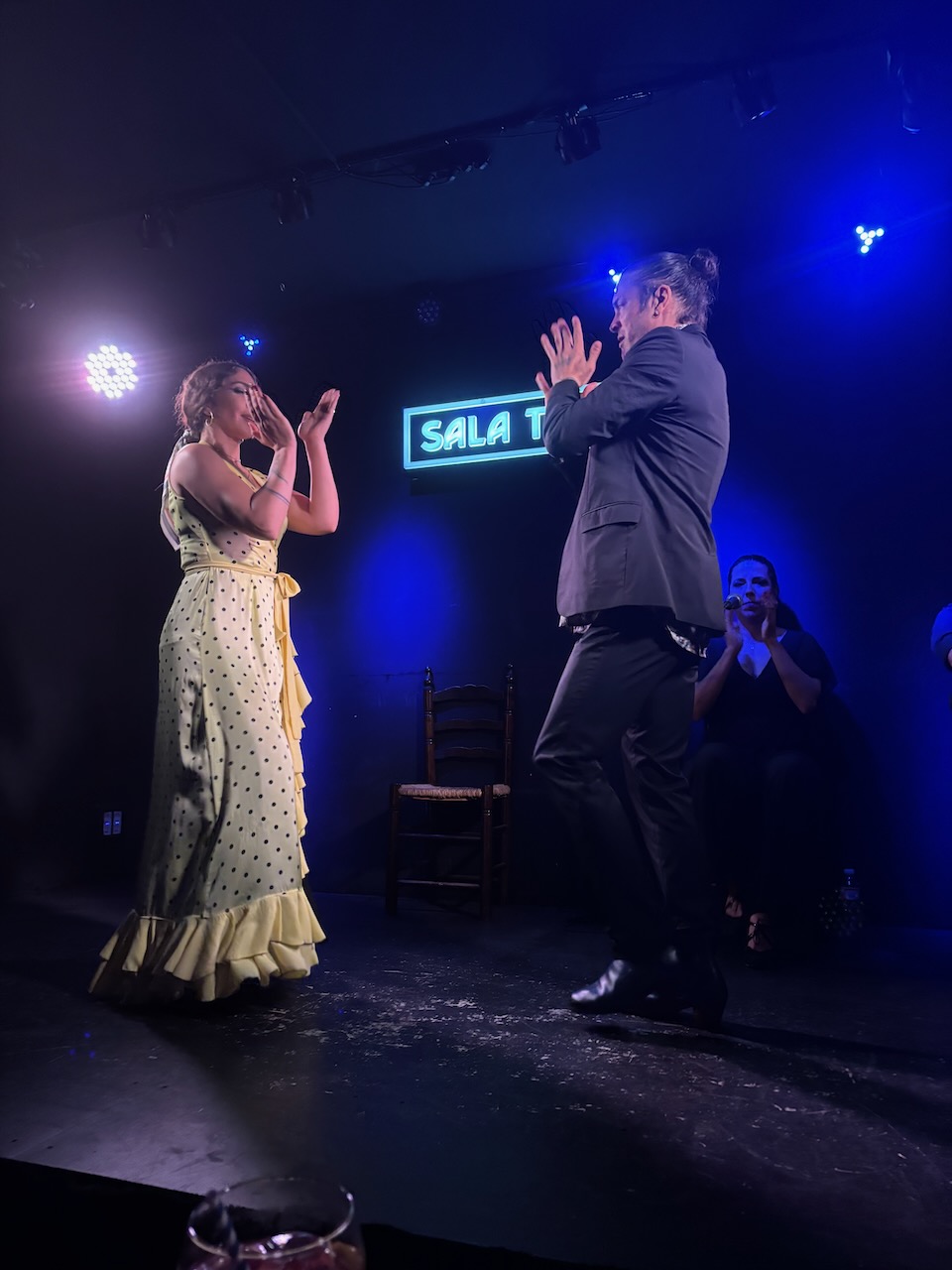
The performance was impressive, starting with the guitar player and female vocalist who would both remain on stage throughout the close to 90-minute performance. There were two dancers, a female and a male and they would dance together and each would do a solo. Its loud and fast moving and the amount of energy each dancer expends if harnessed could light a full city block. For our tab of 41 Euros ($46) it was a bargain beyond compare.


The next day we had two things on the agenda, tour the Prado Museum in the morning and the Royal Palace in the afternoon. For the Prado, we’d purchased discounted tickets through a website that promised us the ability to skip the line. We arrived that morning with the threat of rain in the air and after standing in line for a while, went up to the cashier’s window only to be informed that our tickets were only good for later that day. But the clerk kindly advised that we should just try to scan the QR code at the entrance and see if we could gain admittance that way. And what do you know? It worked.

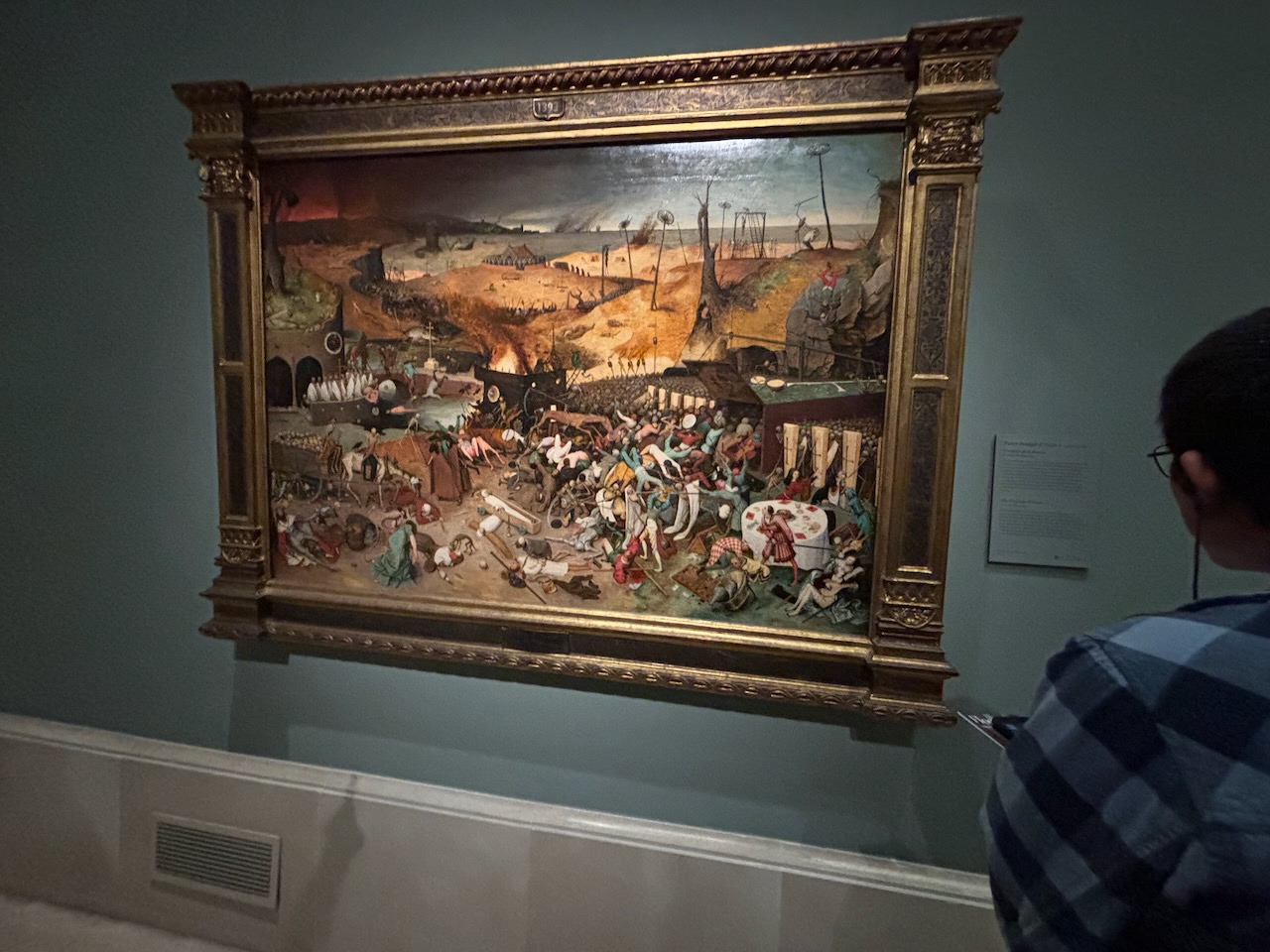
Joanna and I visited here in 2014 for a brief time, taking advantage of free entry the last hour of the day. Our visit this time would be longer, but as I ended up not taking many pictures, the only one I captured is The Triumph of Death is by Pieter Bruegel the Elder painted in 1562. We stopped for lunch in the in-house’s casual dining facility, Café Prado, and had a decent lunch for not much money, although for some reason (hunger perhaps?) a photographic record of the meal has gone missing.
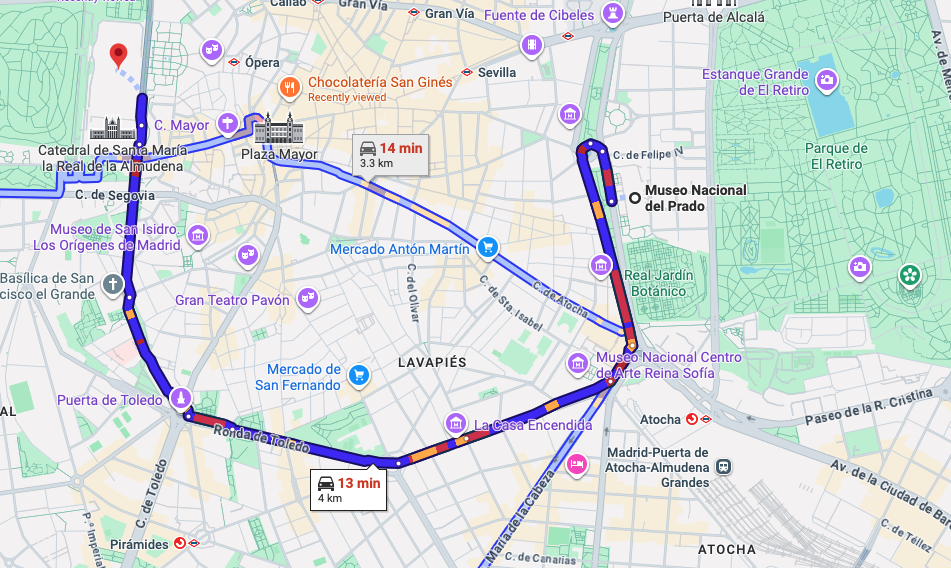
Leaving the museum with the intention of taking a lift to the Royal Palace, we were confronted with driving rain and for the second time, like what occurred in Valencia, Uber directed us to a car block’s away with a pickup time that we could not possibly make. With the clock ticking, we tried contacting the driver, but this didn’t work out and so we cancelled the ride (not the driver’s fault) and fortunately flagged a passing taxi which got us to the palace with time to spare.
We’d booked our tour through Viator for 35 Euros ($39) apiece but failed to read further into the details about the meeting point, which had advised us to meet at:
“Madrid Souvenirs, 1, C. de Carlos III, Madrid, Comunidad de Madrid, Spain. Your guide will be inside the souvenir shop, holding a “Golden Tour Guide” sign. Please do not go directly to the Royal Palace.”
What did we do? Went directly to the Royal Palace and stood in line there and when asked for our tickets were told to instead go to the group tour entrance on the side of the building. While there we got no closer to figuring out how to meet our group and as the time got closer to us missing out completely, we encountered what would be our guide who recognized that we were his missing participants.
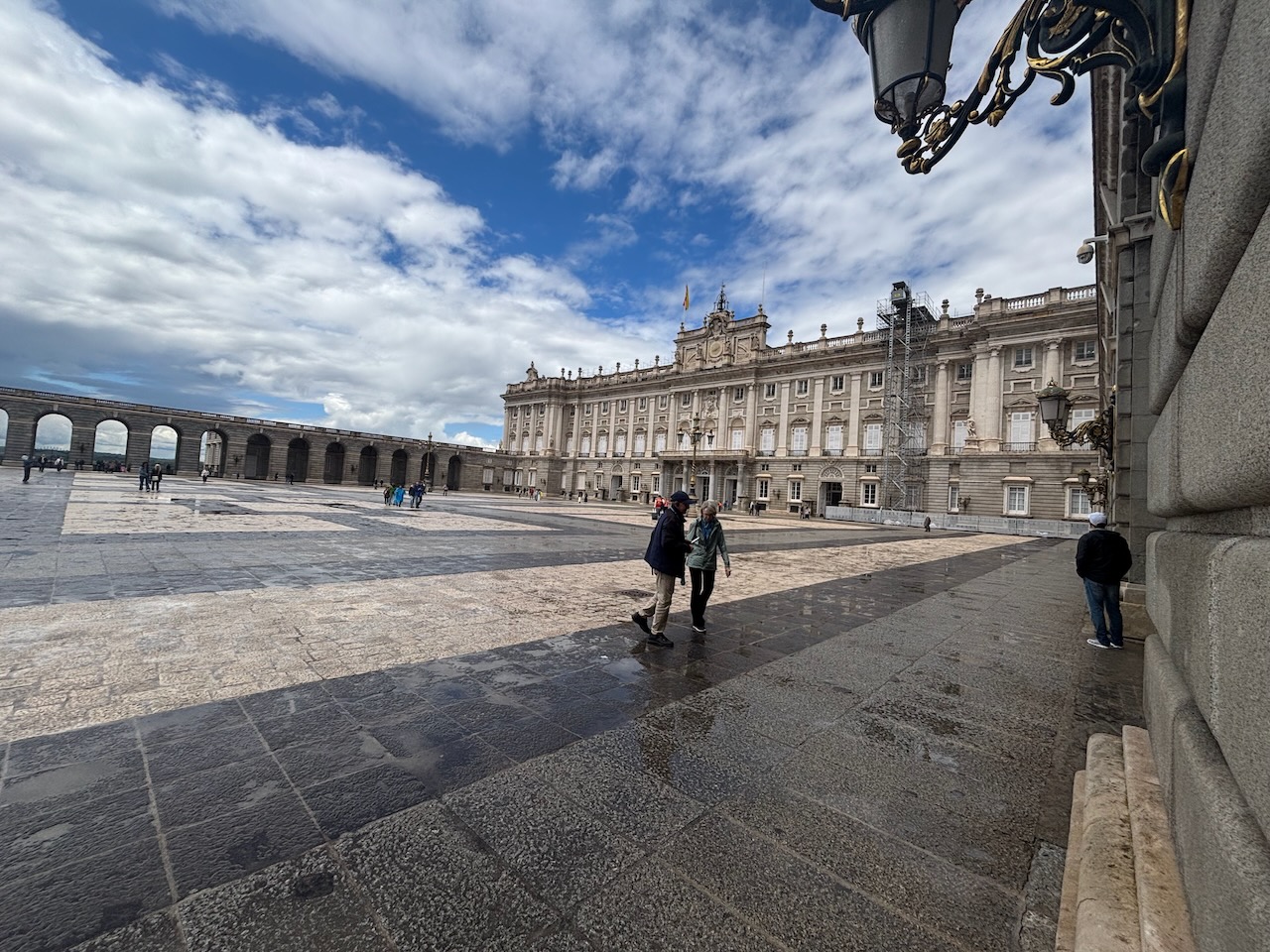
And so, despite completely screwing up, we got to take a good tour. The Royal Palace is the official residence of the Spanish royal family and is used primarily for state ceremonies. Owned by the Spanish state and administered by the Patrimonio Nacional, with over 1,450,000 sq ft and 3,418 rooms, it is the largest royal palace in Europe and one of the largest in the world.
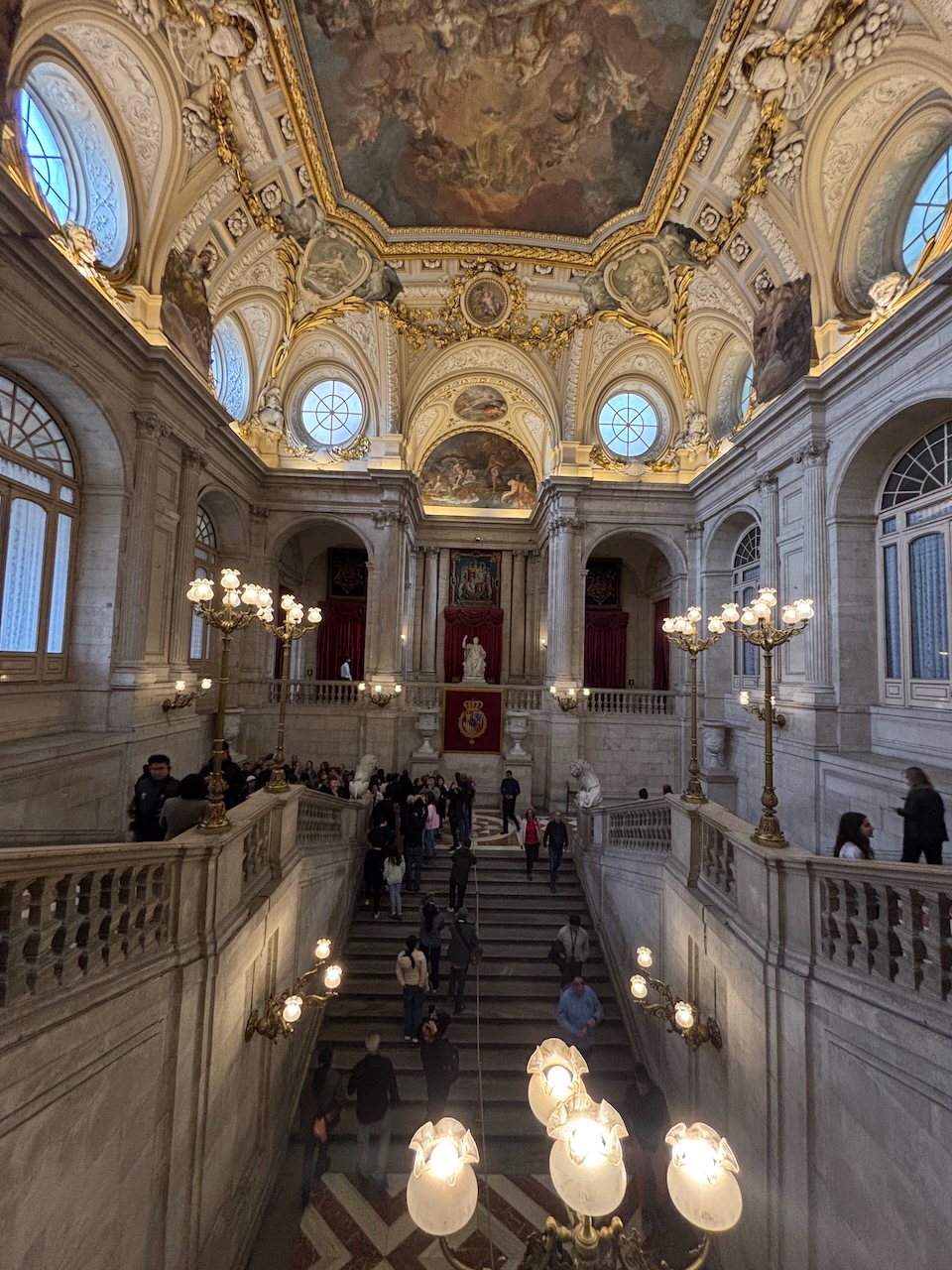
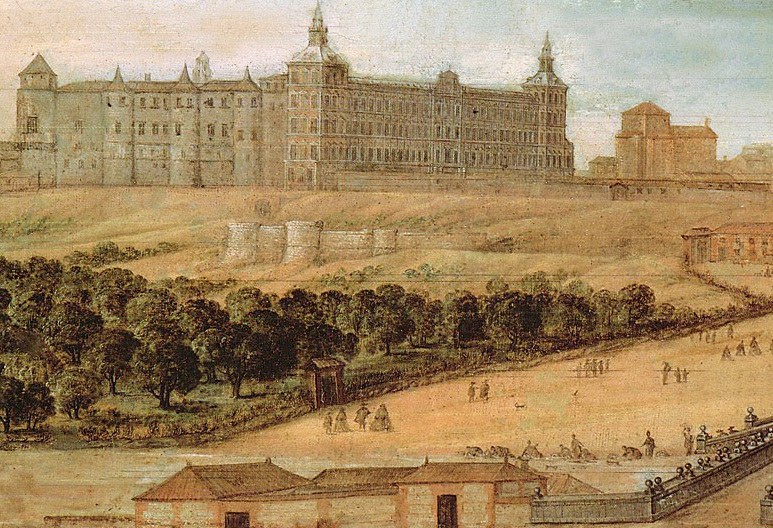
Residing where the Muslim Royal Alcázar stood until it burned down in 1734, a new palace was then built from scratch on the same site on behalf of the Bourbon dynasty with construction spanning the years 1738 to 1755. The interior of the palace is notable for its wealth of art and the use of many types of fine materials in the construction and the decoration of its rooms.
It includes paintings by artists such as Caravaggio, Juan de Flandes, Francisco de Goya, and Diego Velázquez, and frescoes by Giovanni Battista Tiepolo, Corrado Giaquinto, and Anton Raphael Mengs. Many of the paintings at some time hung in the palace as part of the Spanish royal collection are exhibited elsewhere, especially in the Prado Museum and the Royal Collections Gallery, both in Madrid.


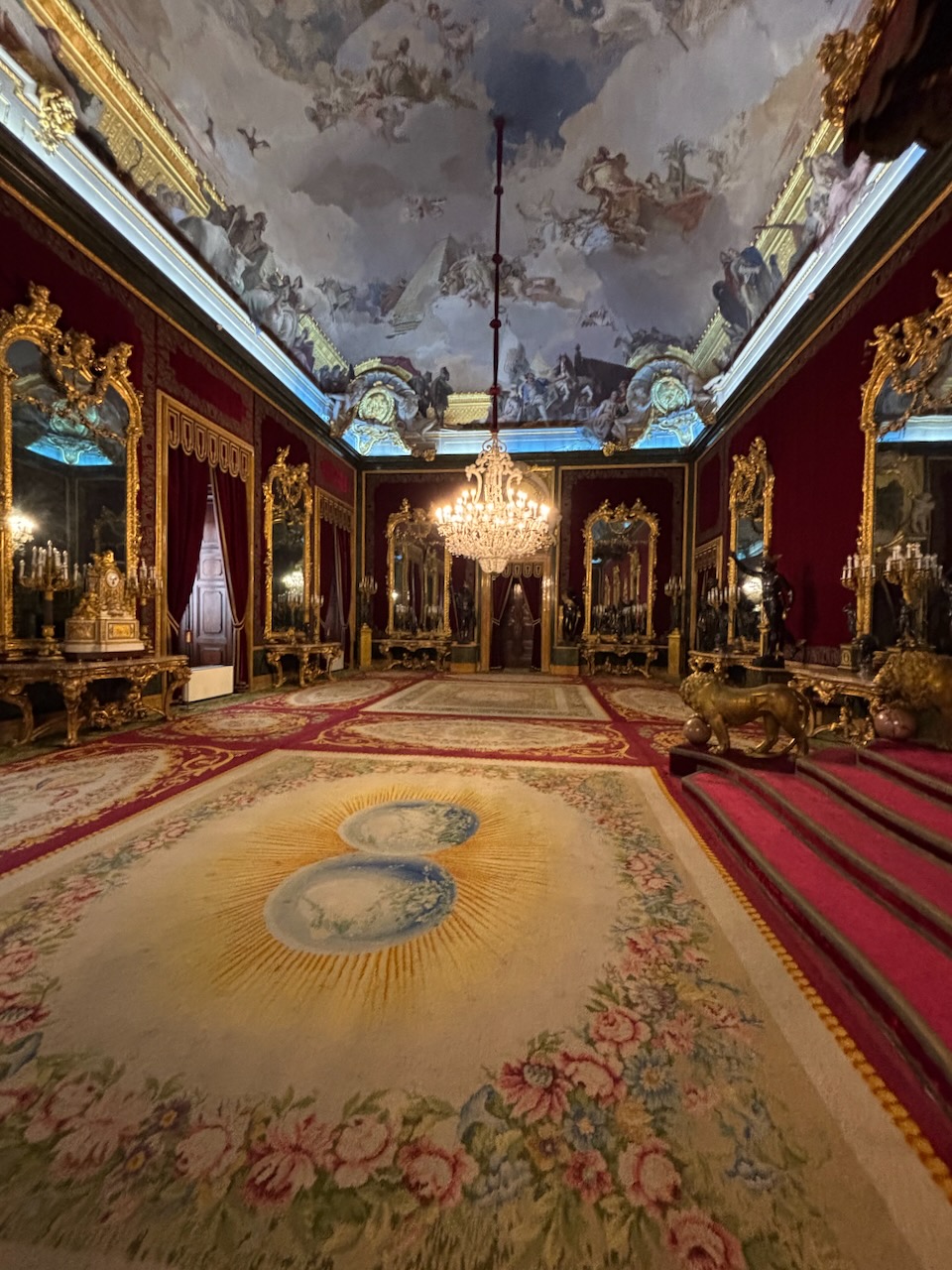
As with so many palaces we’ve visited, the abundance of richness displayed can be overwhelming, but two rooms in particularly stood out to me, the first being the Royal Chapel which was designed in 1748 and features ceiling frescoes by Giaquinto, and the Throne Room which dates from Charles III in 1772, and features Tiepolo’s ceiling fresco, The Apotheosis of the Spanish Monarchy. Bronze sculptures include the Four Cardinal Virtues, four of the Seven Planets, Satyr, Germanicus, and four Medici lions flanking the dual throne.

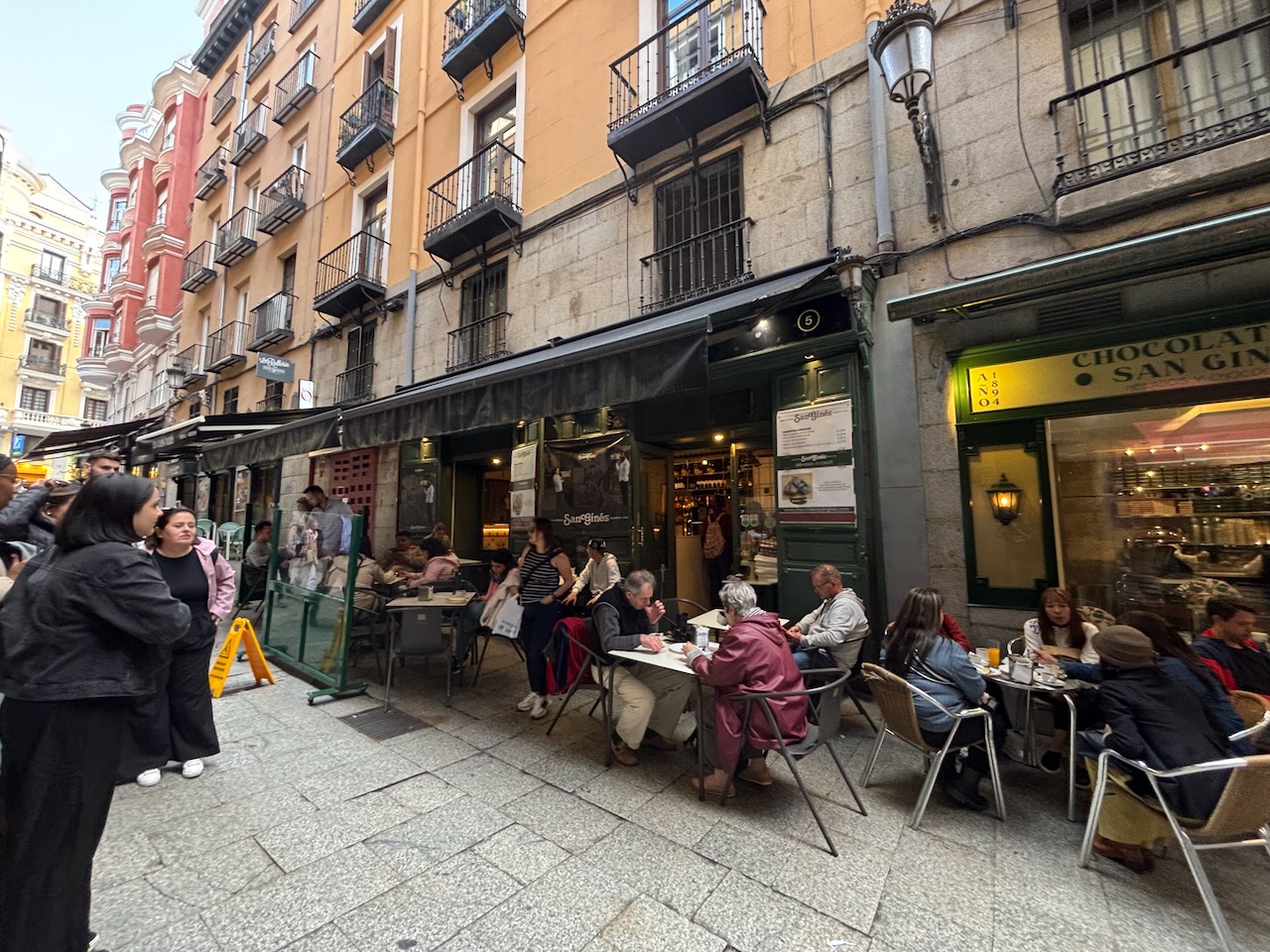
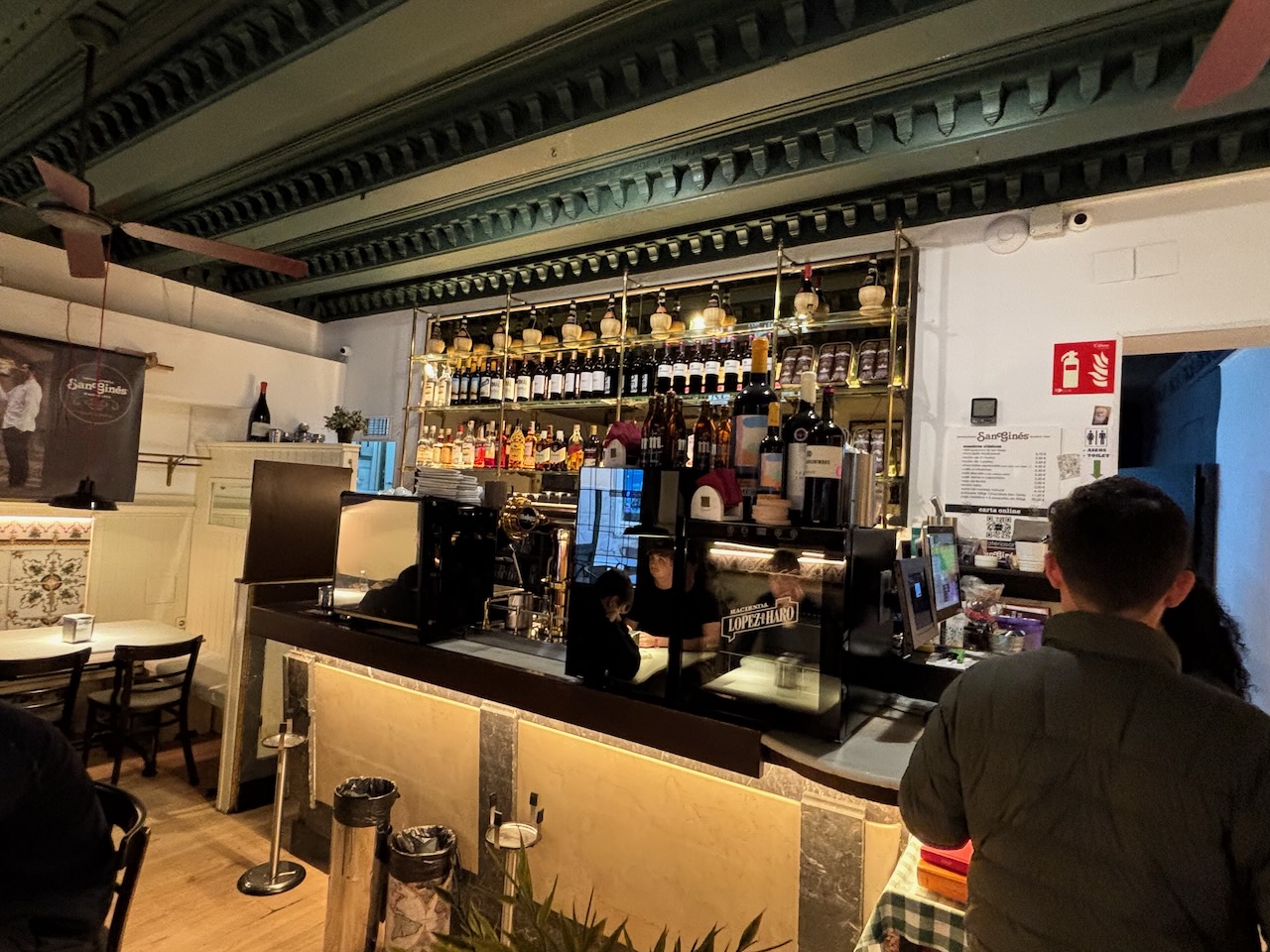
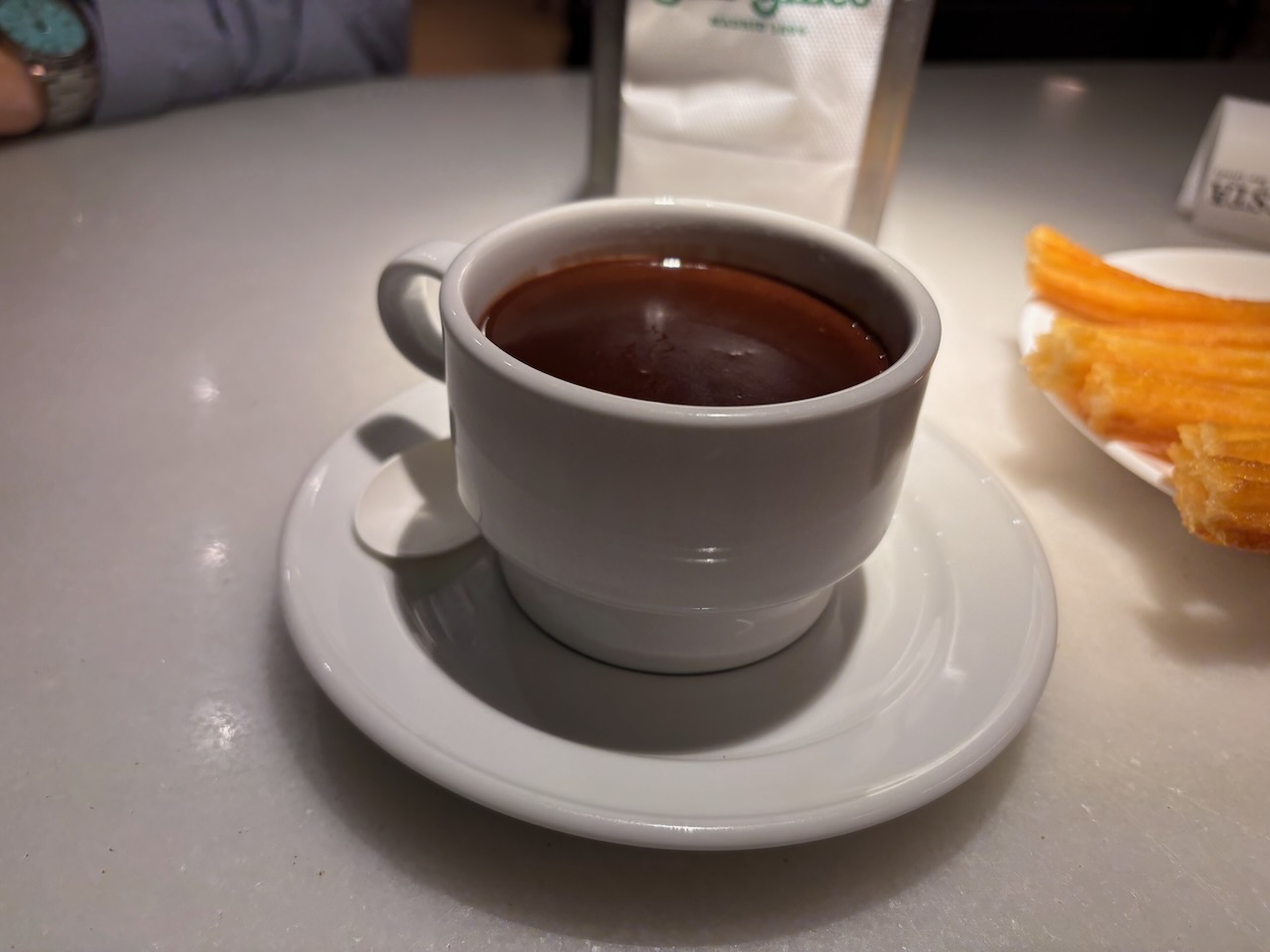
We finished the tour, and our time in Madrid around 4pm with one final stop on the itinerary, that would be at Chocolatería San Ginés, a café in a passageway close to San Ginés church, west of the Puerta del Sol which has served chocolate con churros since 1894. We thoroughly enjoyed our helpings along with a coffee and suitably buzzed, caught the metro back to our apartment where after a brief stop at that small market close by, we picked up some food to go along with our leftovers from Sala Temple and went to bed quite happy campers.

Links
Principe Pio: https://principe-pio.klepierre.es/
Royal Palace: https://www.patrimonionacional.es/visita/palacio-real-de-madrid
Chocolatería San Ginés: https://chocolateriasangines.com/
Discover more from 3jmann
Subscribe to get the latest posts sent to your email.


 3jmann