May 6 – 7
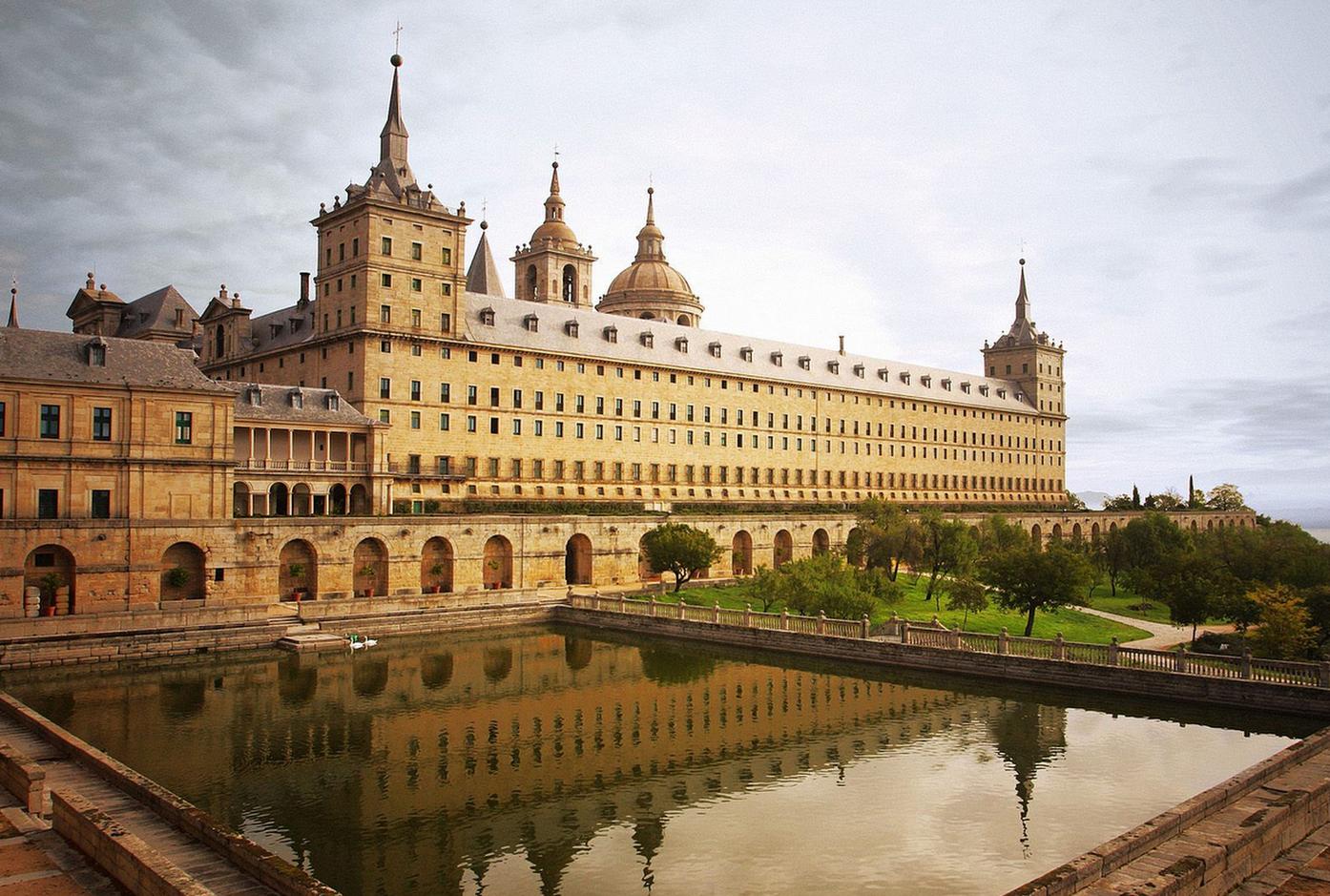
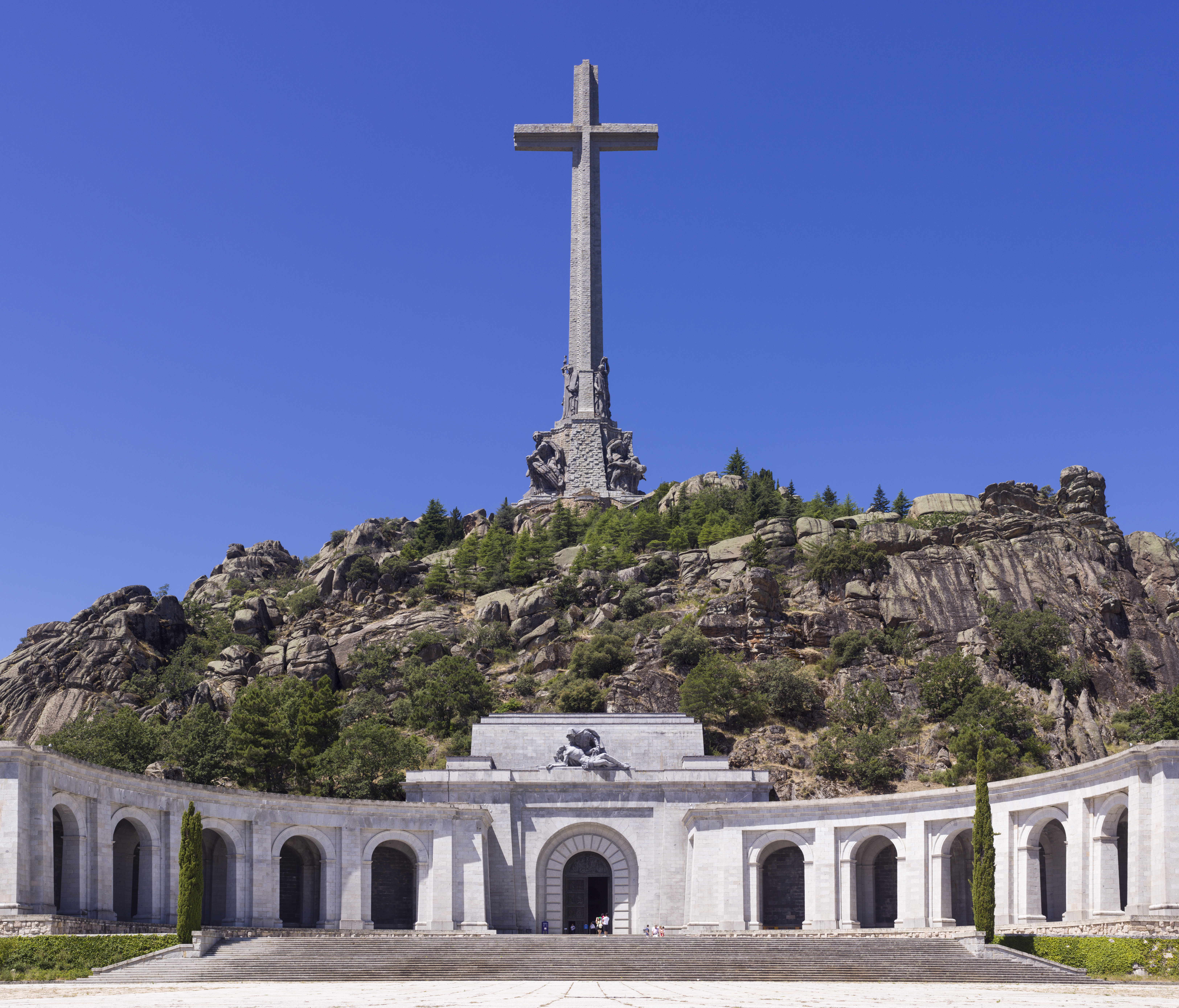
Our drive this day to Salamanca would take us roughly 2-3 hours and so, as with our drive to Madrid, we opted to seek out a diversion or two on the way, one being the Monasterio de San Lorenzo de El Escorial and the other, the Valley of the Fallen. When Spain defeated France in a crucial 1557 battle, a grateful King Philip II (1527-1598) vowed to build a grand structure to the glory of God: the Monasterio de San Lorenzo de El Escorial. Six miles from El Escorial, high in the Sierra de Guadarrama Mountains, is the memorial site commonly known as the Valley of the Fallen (Valle de los Caídos). Here a 500-foot-tall granite cross sits atop an immense underground basilica that serves as a monument to victims of Spain’s 20th-century nightmare—the Spanish Civil War (1936-1939).

The Valley of the Fallen is notable as the dictator Franco was initially buried there in 1975, but later exhumed and moved to a family gravesite in El Pardo, a ward of Madrid. Unfortunately, we didn’t get to either one of these sites as our attempt to navigate to each was met with continued frustration and so as the afternoon waned, we decided to cut our losses and head directly to Salamanca.

Before that though, on the outskirts of some town (perhaps El Escorial?) we decided to get lunch and with limited options, we landed at a pizza joint for what would turn out to be one of those uniquely funny dining experiences in which the food plays a minor part. We ordered a simple ham and mushroom pizza for the three of us and some drinks, a beer for me and sodas for Joanna and Bev and then waited. And waited and then waited some more. While doing so, a host of locals filtered in and out each carrying beer that they had purchased elsewhere as this seemed to be the place you hung out at in the afternoon. Honestly, it seemed like it took an hour for the pizza to finally arrive, as if our proprietor and created each ingredient by himself (grew the grain for the crust, made the cheese, etc.) and when it did arrive, it was a sorry soggy mess that if it had been your first encounter with this food concept, you might not ever try it again.

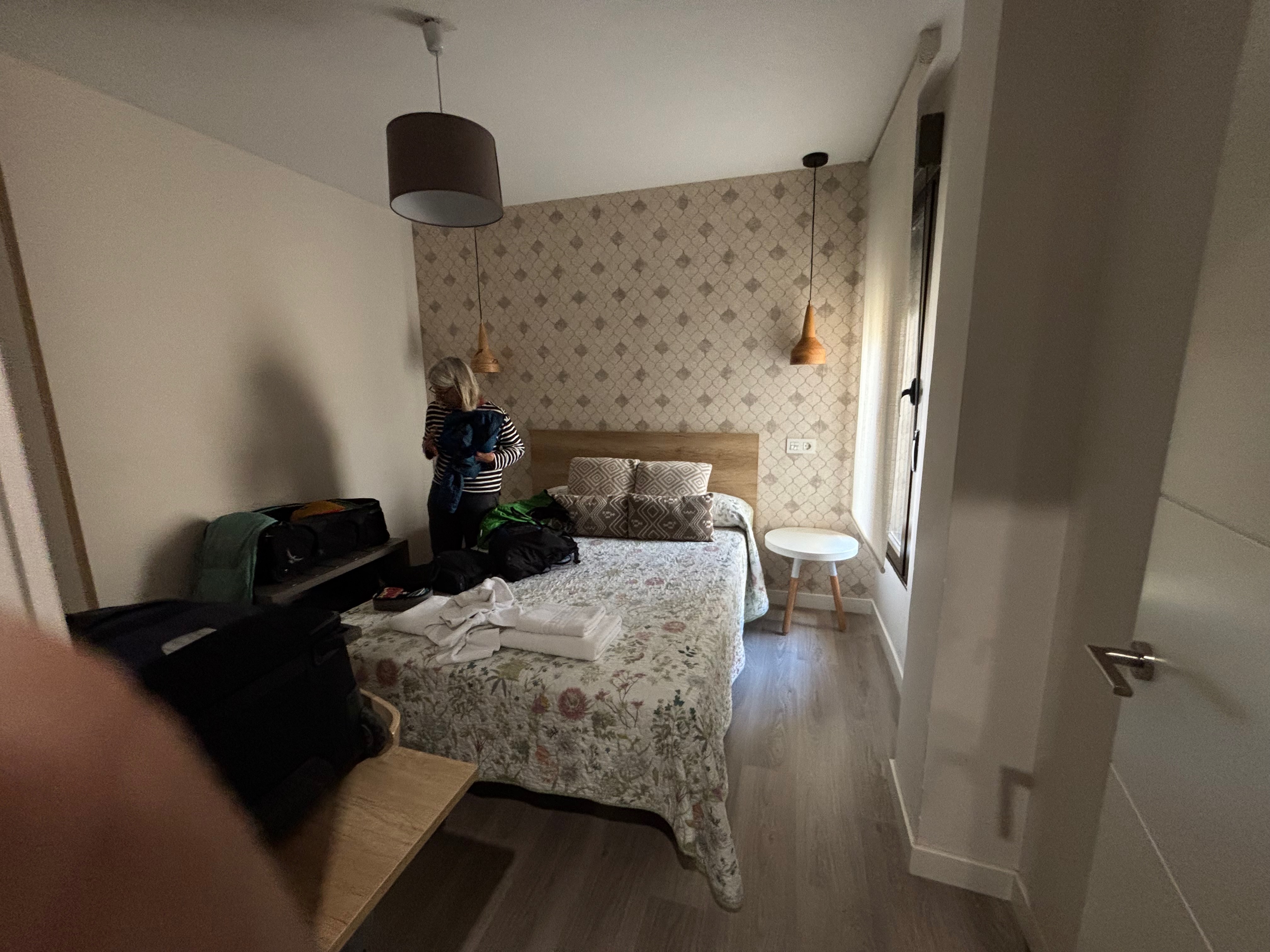
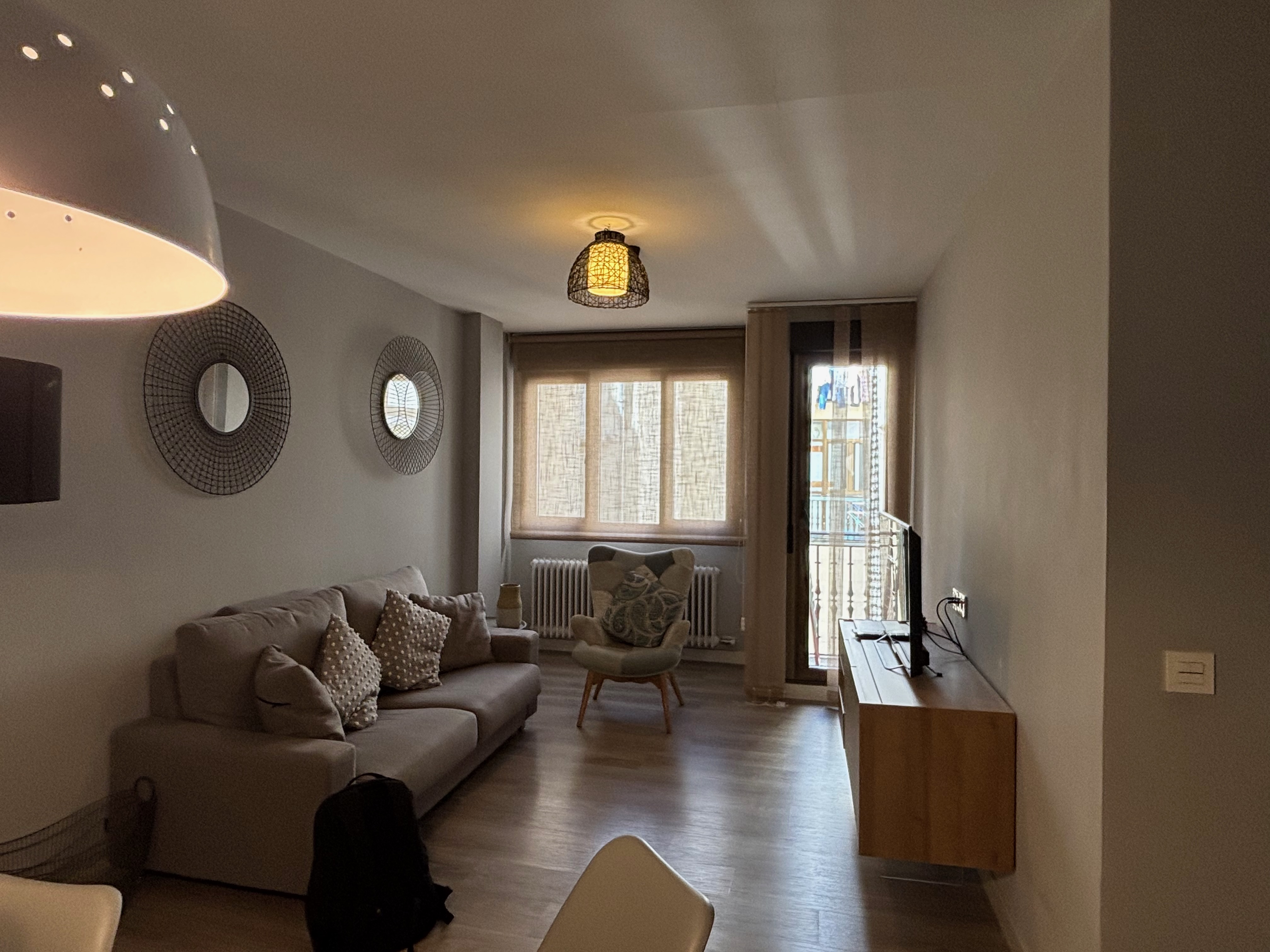
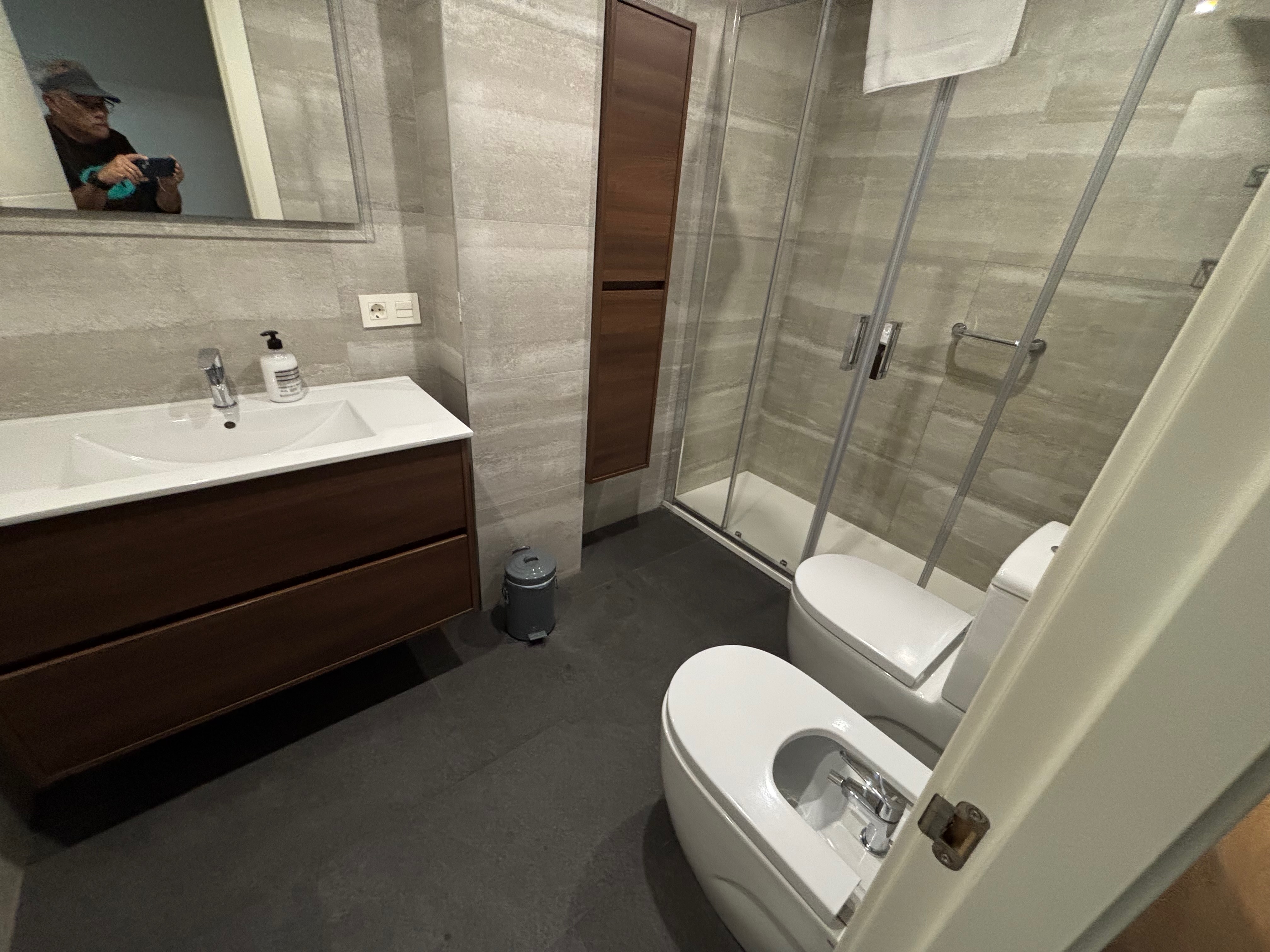
No one died eating it though and soon enough we entered Salamanca just after crossing the river and a moderate walk to the center of town to arrive at San Nicolás 2 Tourist Accommodation, our Airbnb for the next two nights. A typical smallish but accommodating unit it cost $253 for the three of us for two nights. After unpacking, we took off walking up the street in front of our apartment and made our way uphill to Plaza Mayor, which we will cover in more detail later in this post.

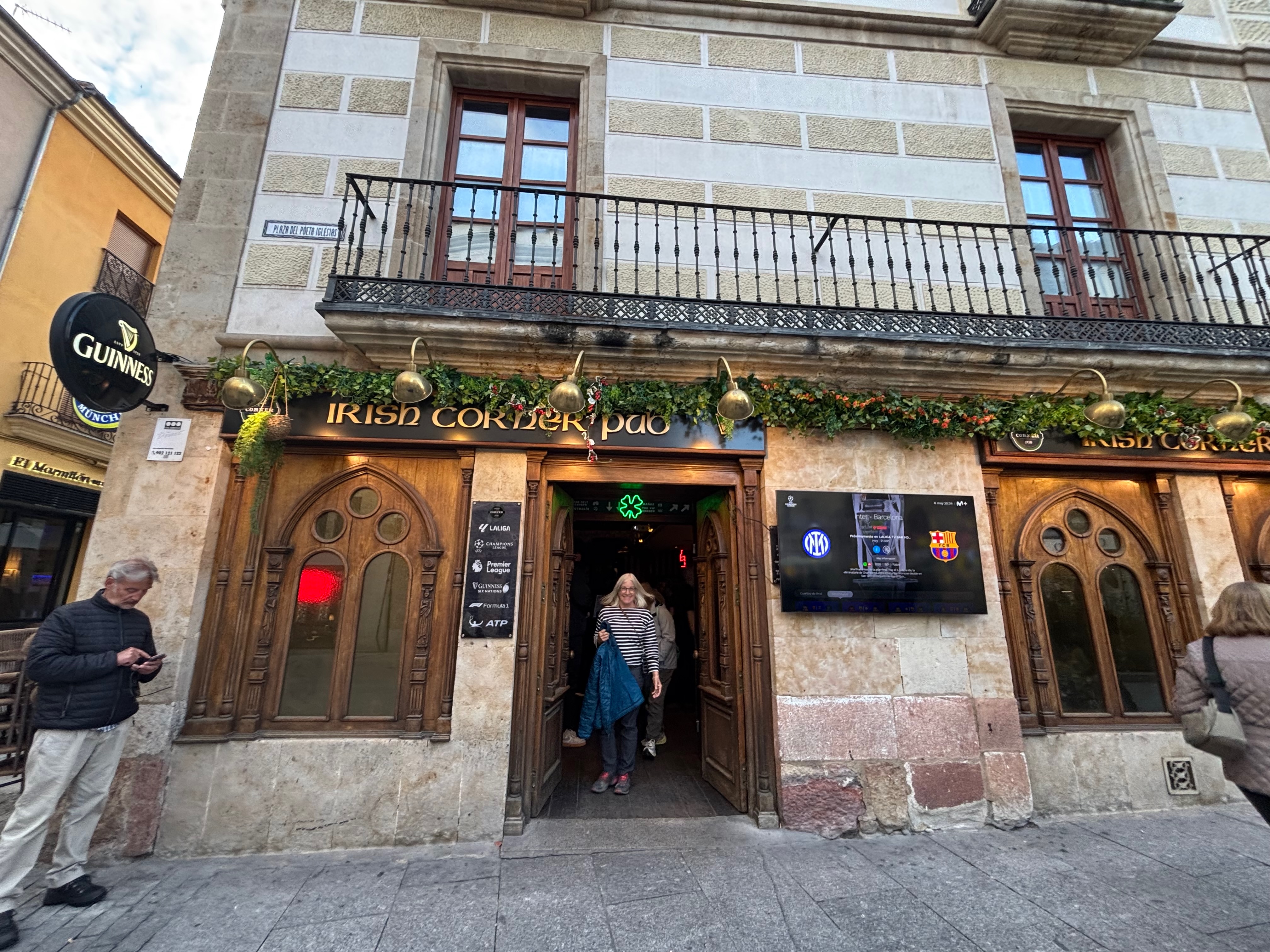
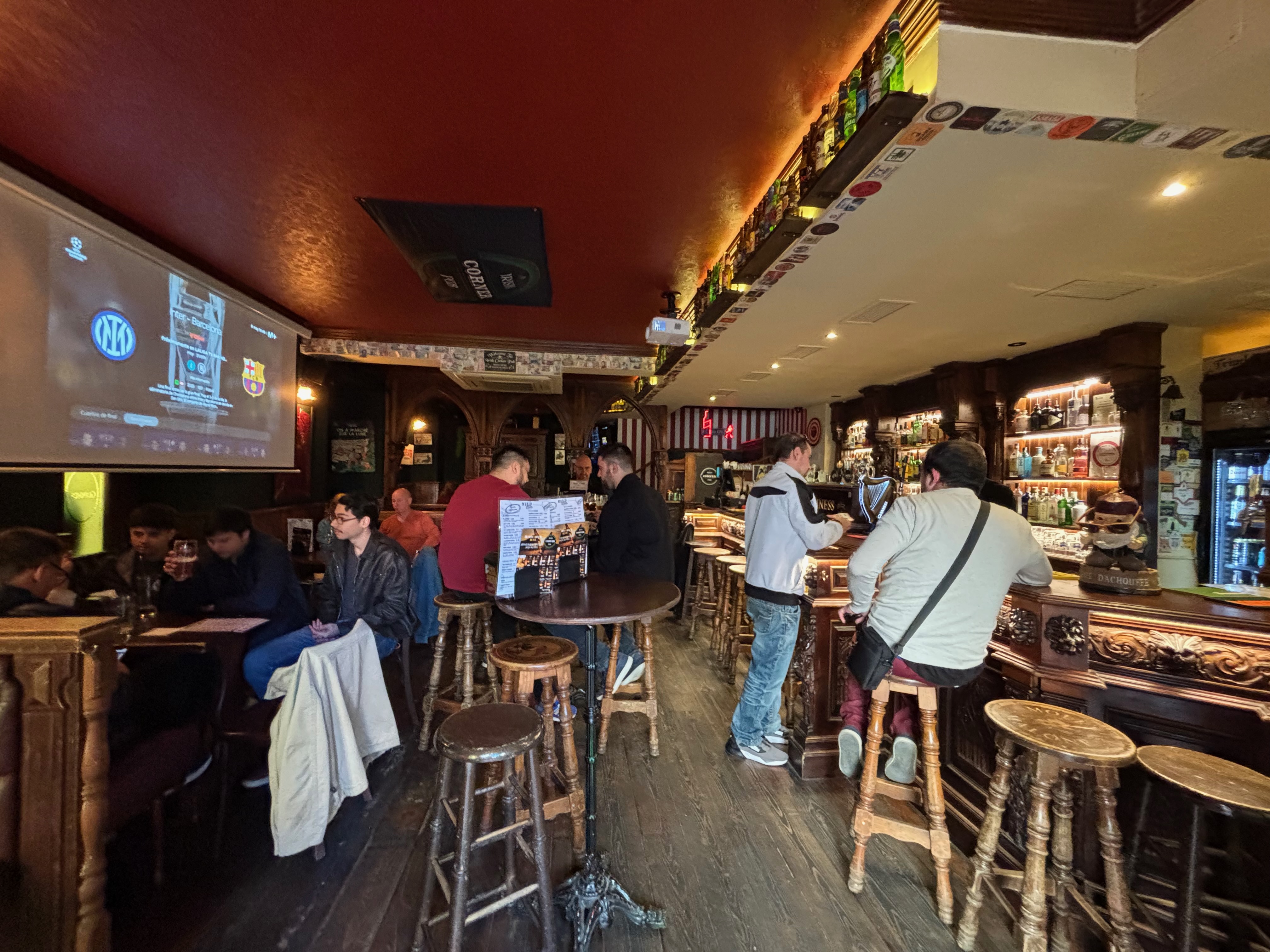
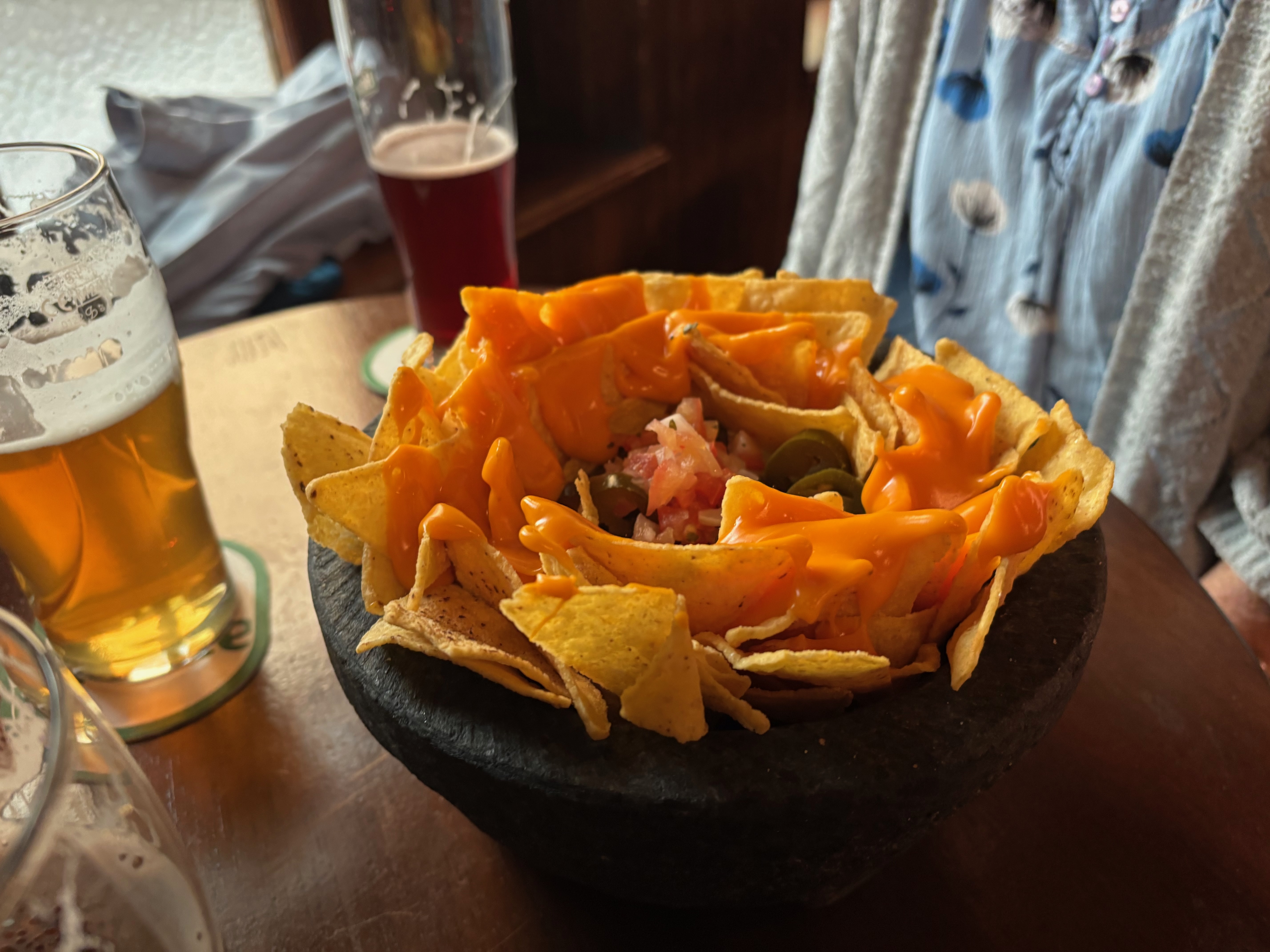
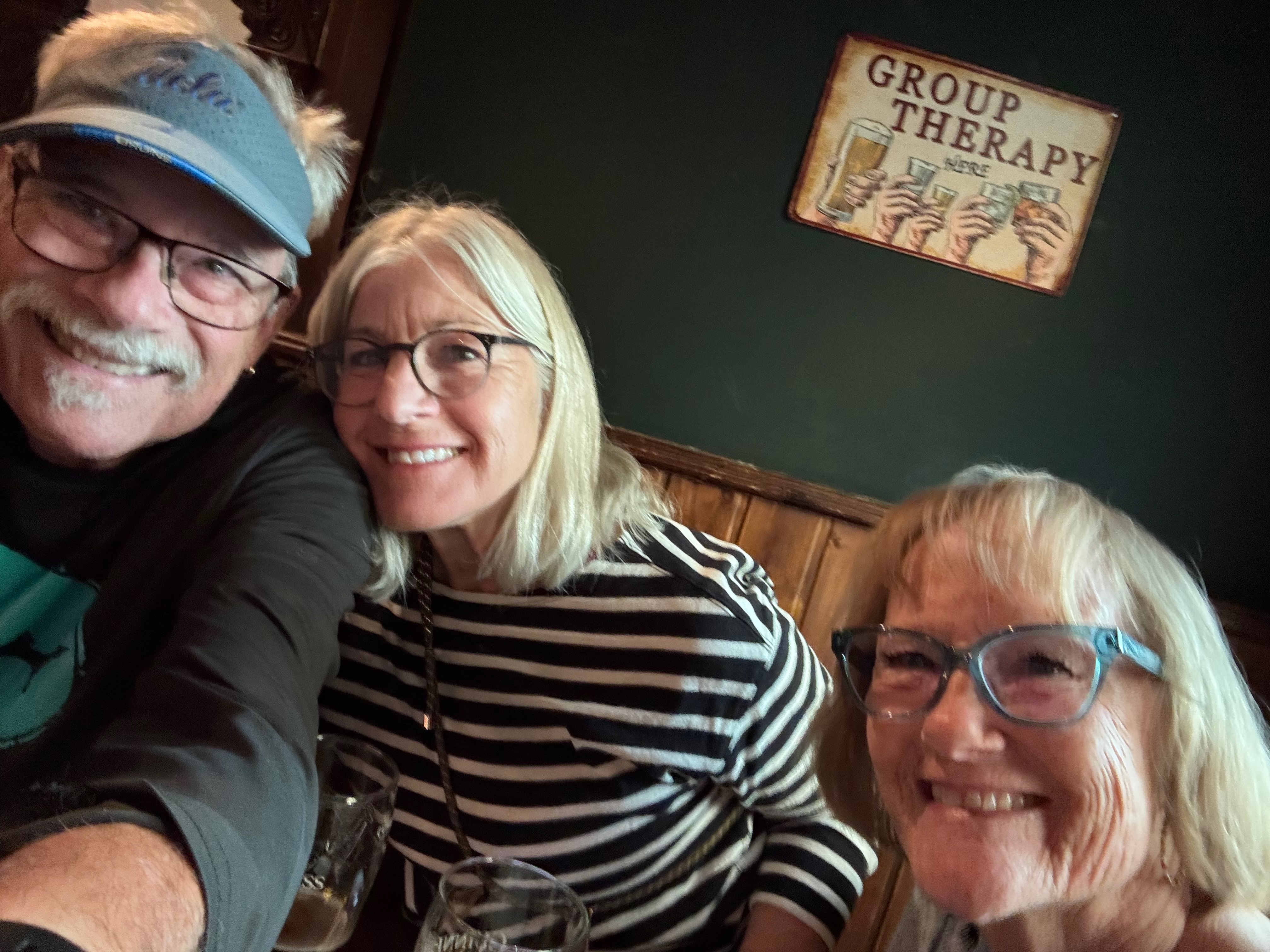
As it was getting later in the day, a cozy looking bar, the Irish Corner Pub beckoned us and we entered for a snack and some drinks. As it is now available pretty much worldwide, after being acquired by Heineken, I had a Lagunitas IPA, Joanna an Amstel and Bev downed a St. Louis Framboise, a Belgian fruit beer from Kasteel Brouwerij Vanhonsebrouck that is based on a lambic. Along with the drinks we split an order of the Corner Nachos (nachos, guacamole, pico de gallo, queso cheddar and jalapenos), as our lunch time pizza still weighed heavily on our digestive systems. Our tab would be 21.30 Euros ($24.31), another decent meal at a decent price.
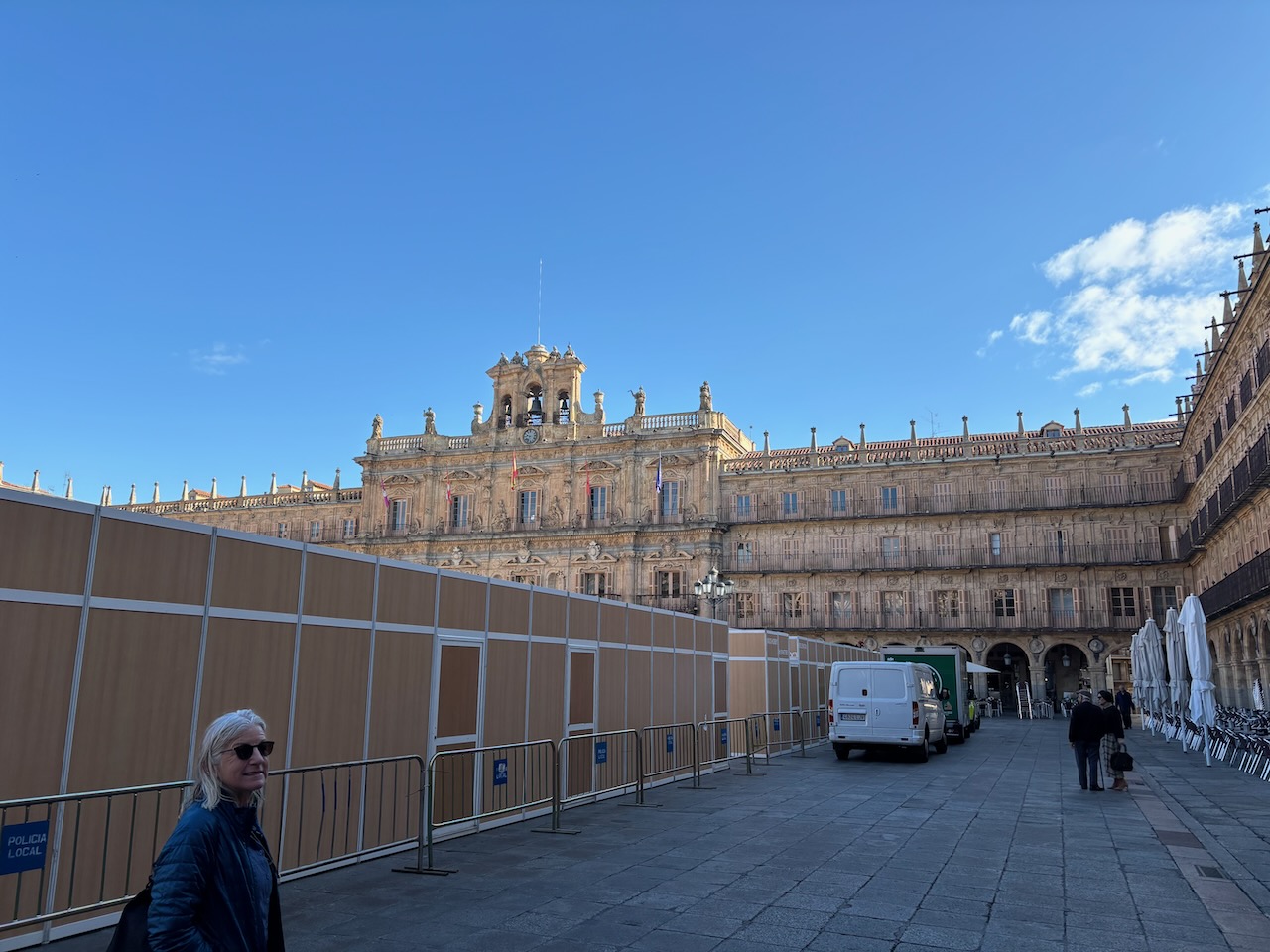
The next day we set out for a St. Steves walking tour, starting at Plaza Mayor. It was a cool morning temperature wise as the town sits at just under 3,000 feet in elevation. The plaza was built from 1729 to 1755 by brothers Alberto and Nicolas Churriguera, and it has long been Salamanca’s community living room. Bullfights used to be staged here and while most European squares honor a single king or a saint, Plaza Mayor is for all the people. The medallions above the colonnade surrounding the plaza depict writers (Miguel de Cervantes), heroes and conquistadors (Christopher Columbus and Hernán Cortés), as well as numerous kings.
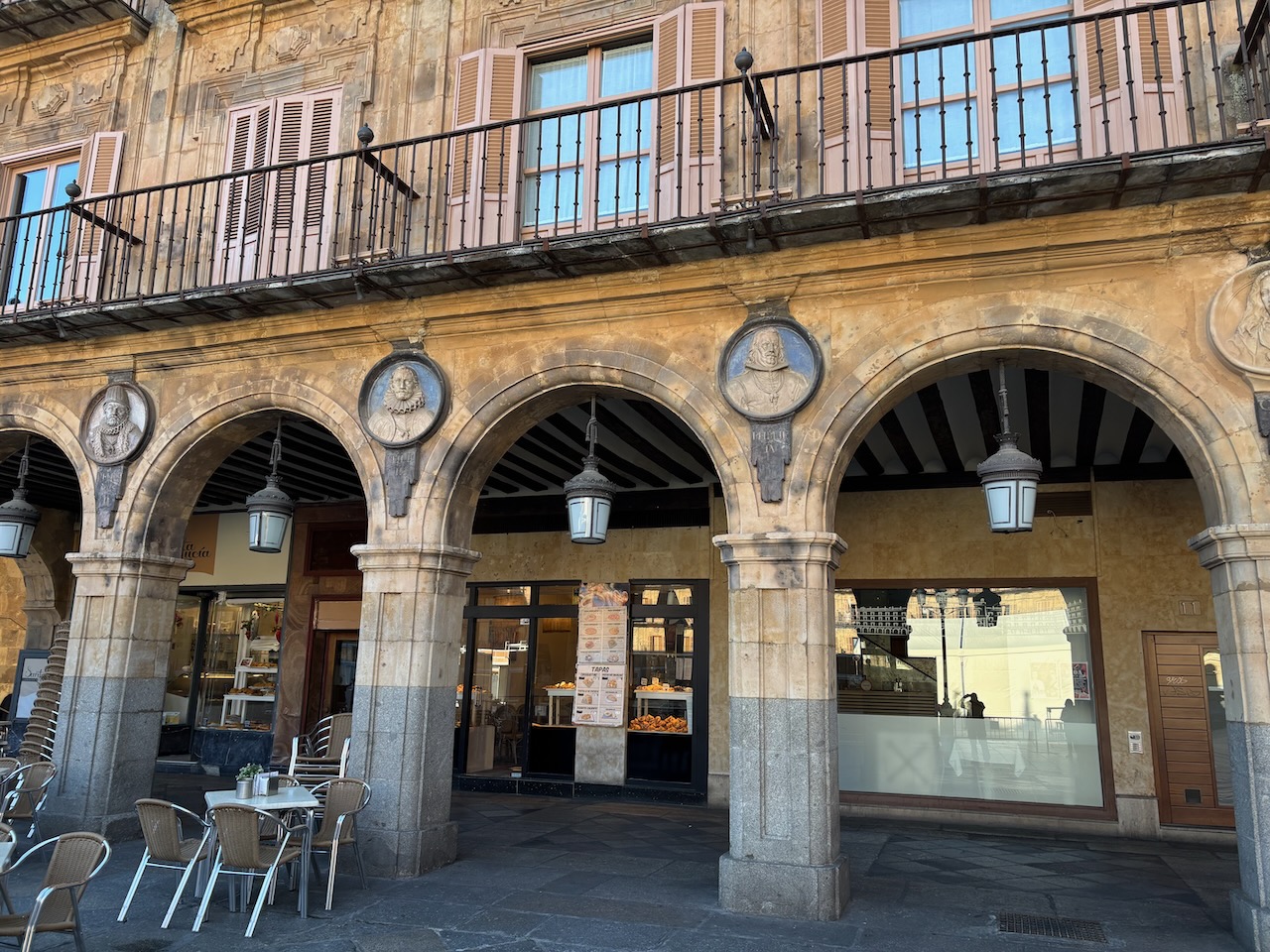
The harmonious architecture and the unique feel of this grand square, which is carved, like much of Salamanca, from a lemony, local sandstone called piedra de Villamayor makes it one of Spain’s ultimate plazas. The square’s perfectly symmetrical arches (hiding a pleasantly shaded arcade), its three levels of charming little balconies with matching shutters, and its artful lampposts, a look pioneered by the brothers, this style became known as “Churrigueresque,” popular around Spain and throughout its New World colonies.
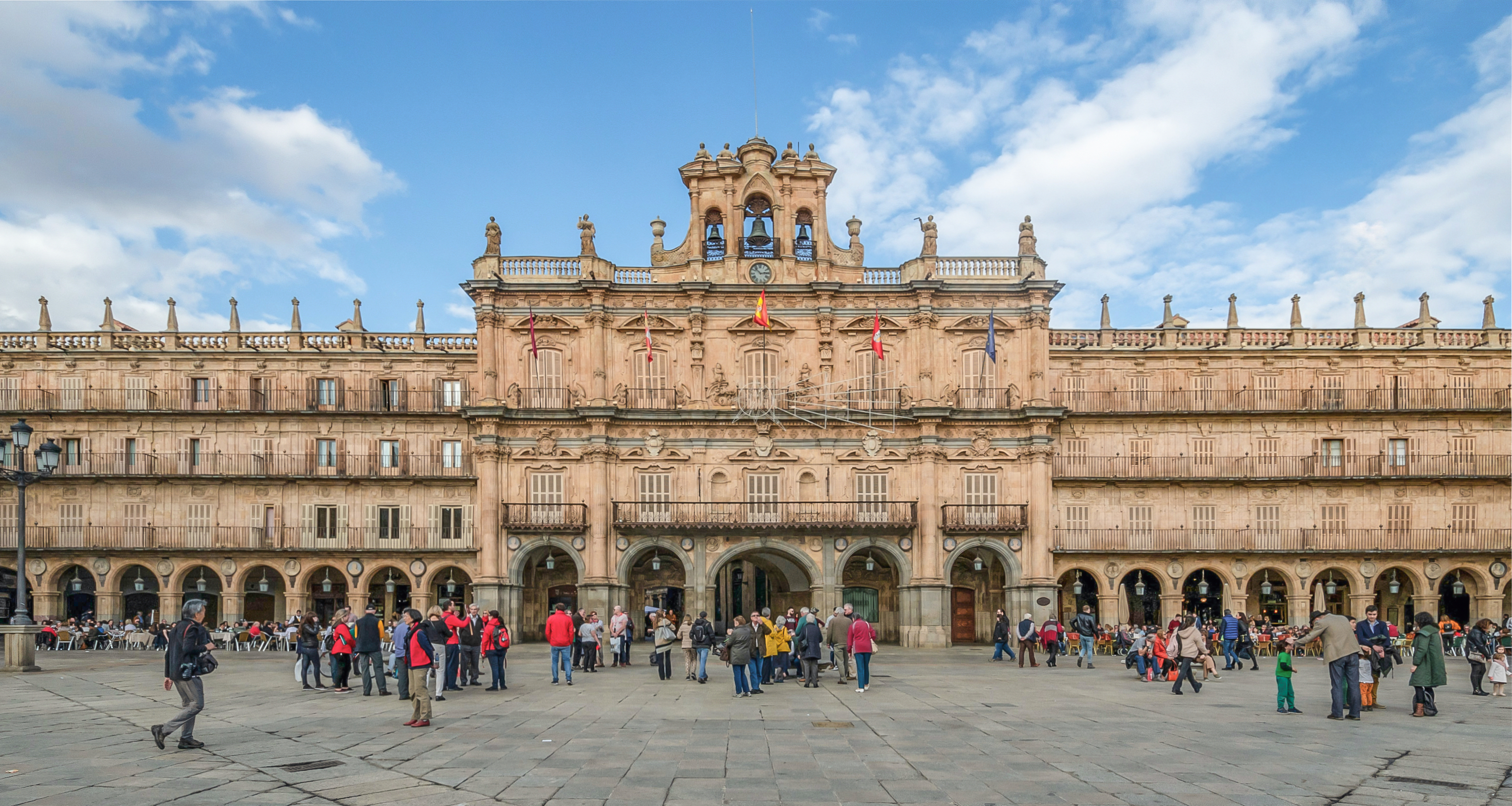
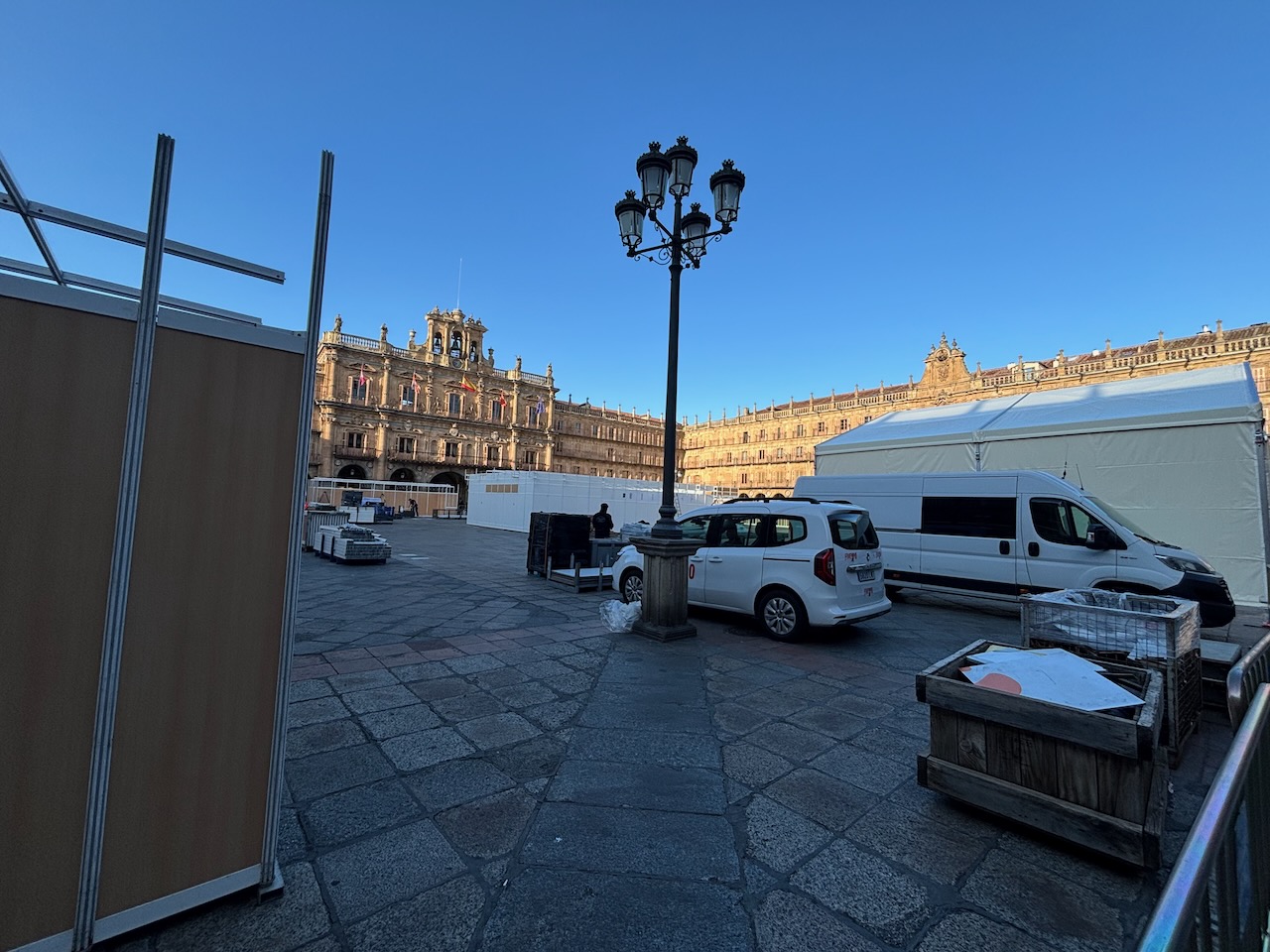
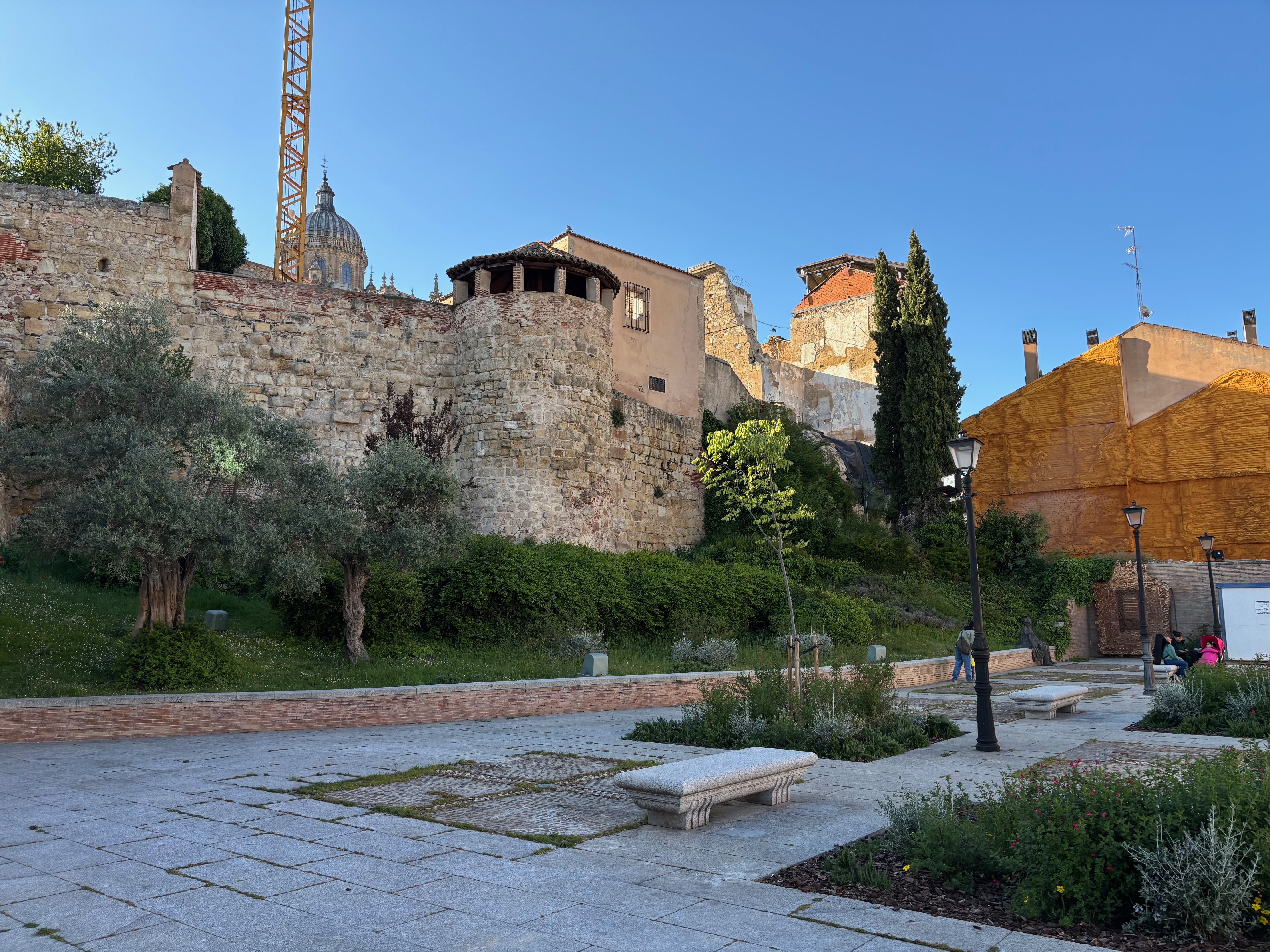
Salamanca, a youthful, less touristy, less hilly version of Toledo, is home to Spain’s oldest university, and this factor along with an interesting collection of monuments, cathedrals from different centuries, and some surprisingly good museums when combined with it being affordable, as the many students help keep prices down, made it a good choice for us to visit. We didn’t get a chance to enjoy the full splendor of Plaza Mayor as a large exhibition was being set up, obscuring our view.
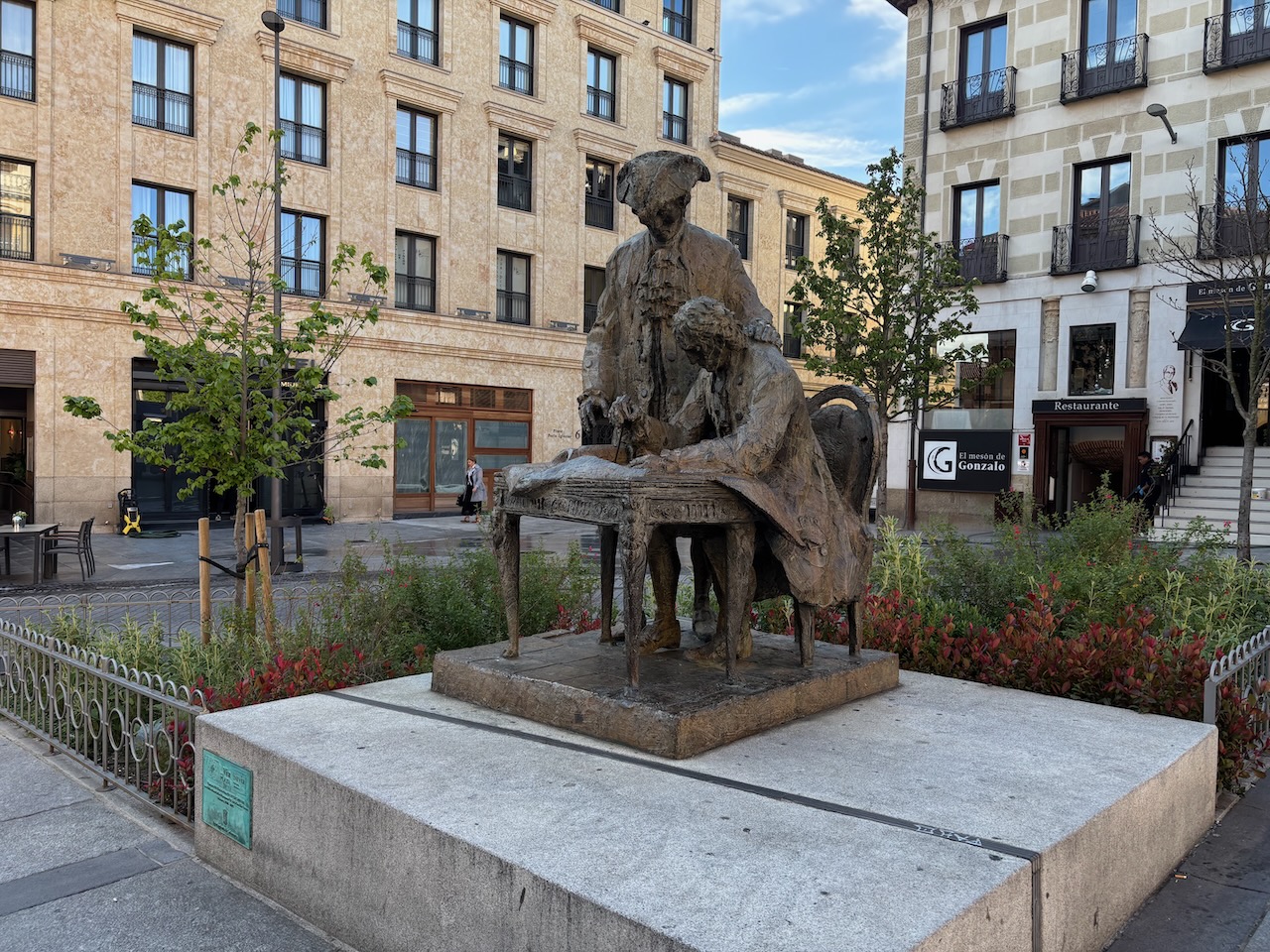
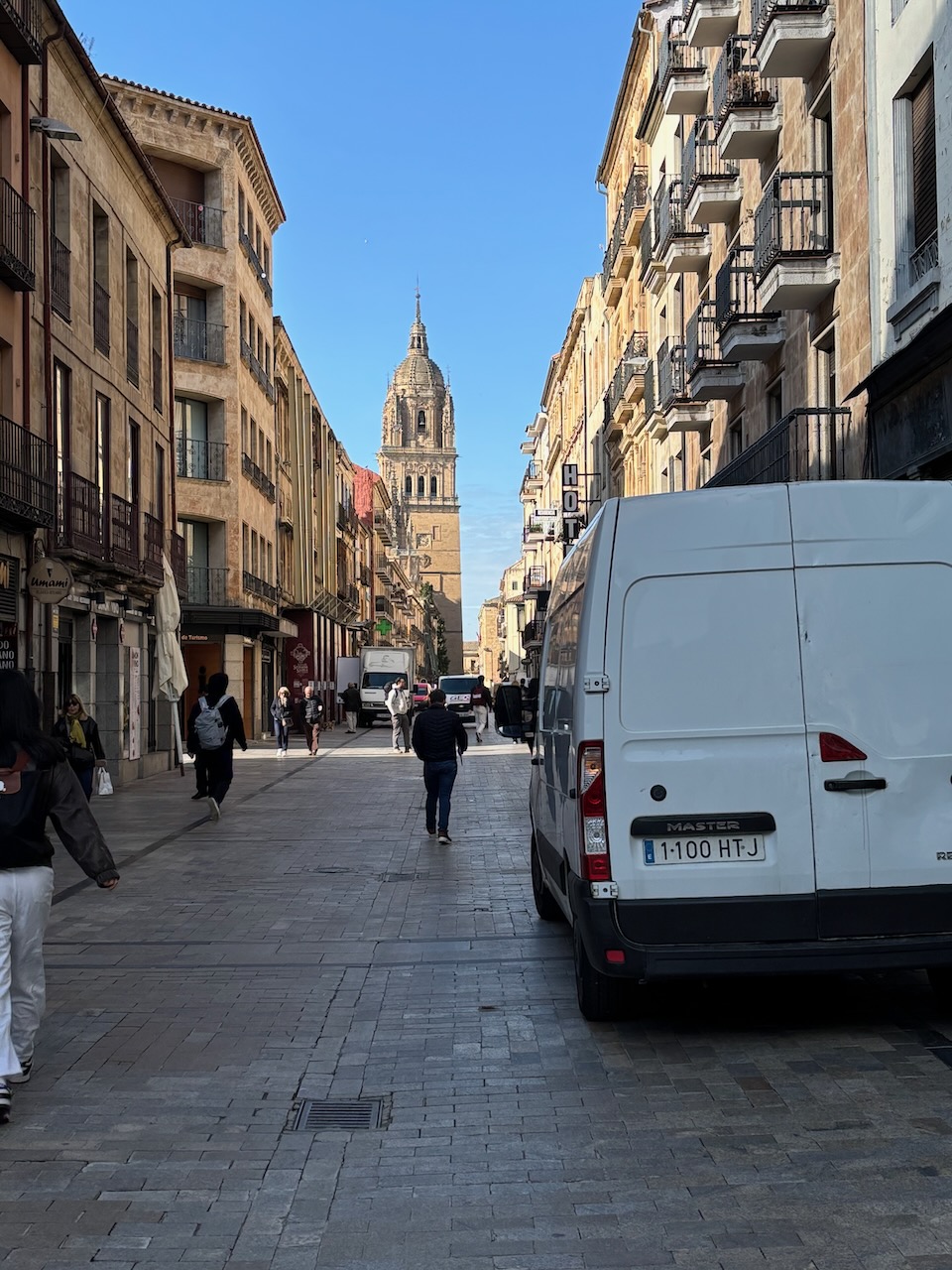
And so, we moved on to Calle Rúa Mayor, Salamanca’s Main Drag and stopped briefly at a covered market, small and not nearly as vibrant as many we have encountered in our travels. We continued up the street until we reached the outside of the University, and we will cover our stop there and the rest of our day in town in the next post.
Links
Monasterio de San Lorenzo de El Escorial: https://www.patrimonionacional.es/visita/real-monasterio-de-san-lorenzo-de-el-escorial
Valley of the Fallen: https://www.patrimonionacional.es/visita/valle-de-cuelgamuros-0
San Nicolás 2 Tourist Accommodation: https://www.airbnb.com/rooms/24004127?source_impression_id=p3_1765569514_P3l30mpoofqXkH_x
Irish Corner Pub: https://irishcornersalamanca.com/
Discover more from 3jmann
Subscribe to get the latest posts sent to your email.


 3jmann