May 6 – 7
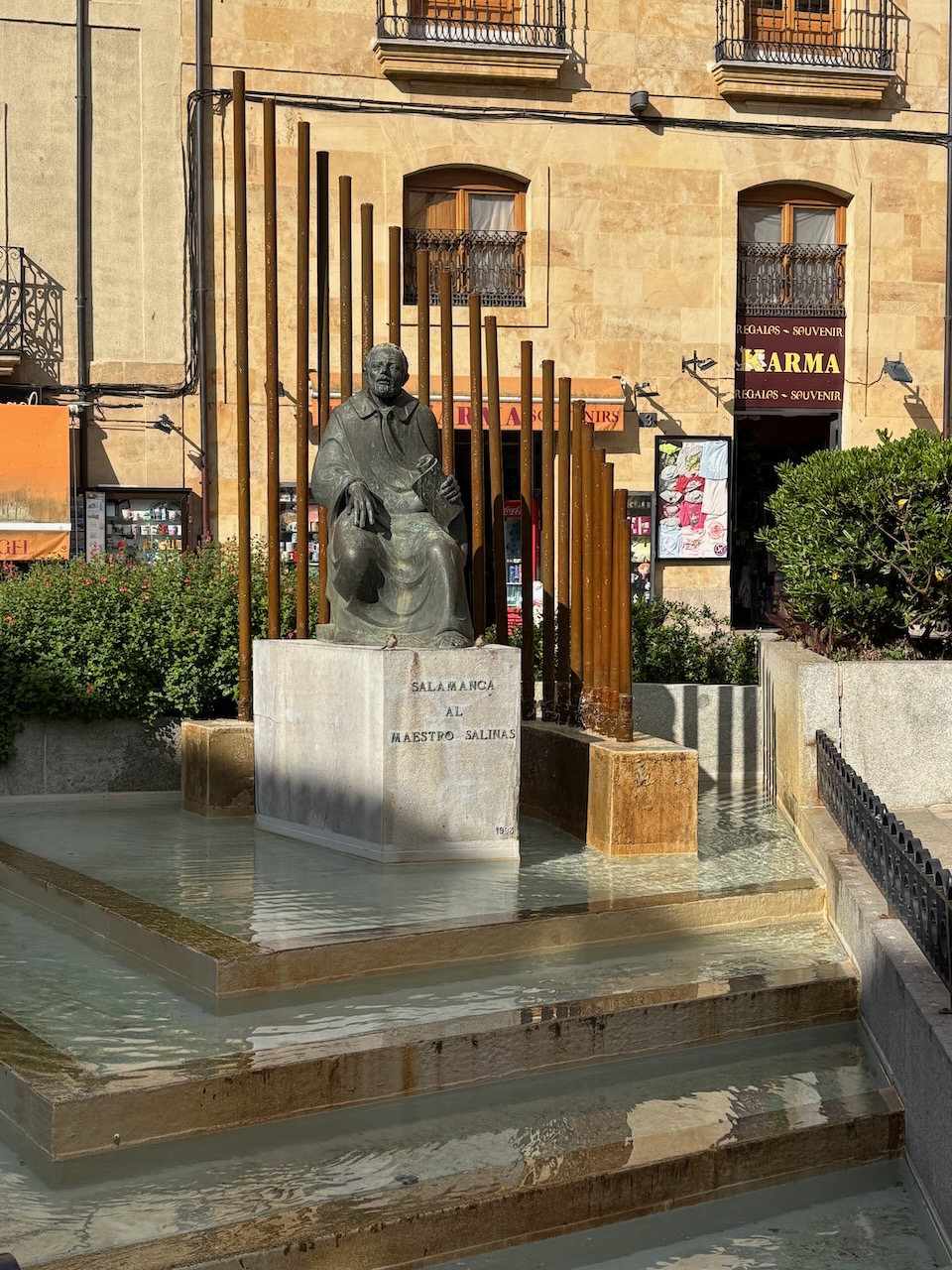
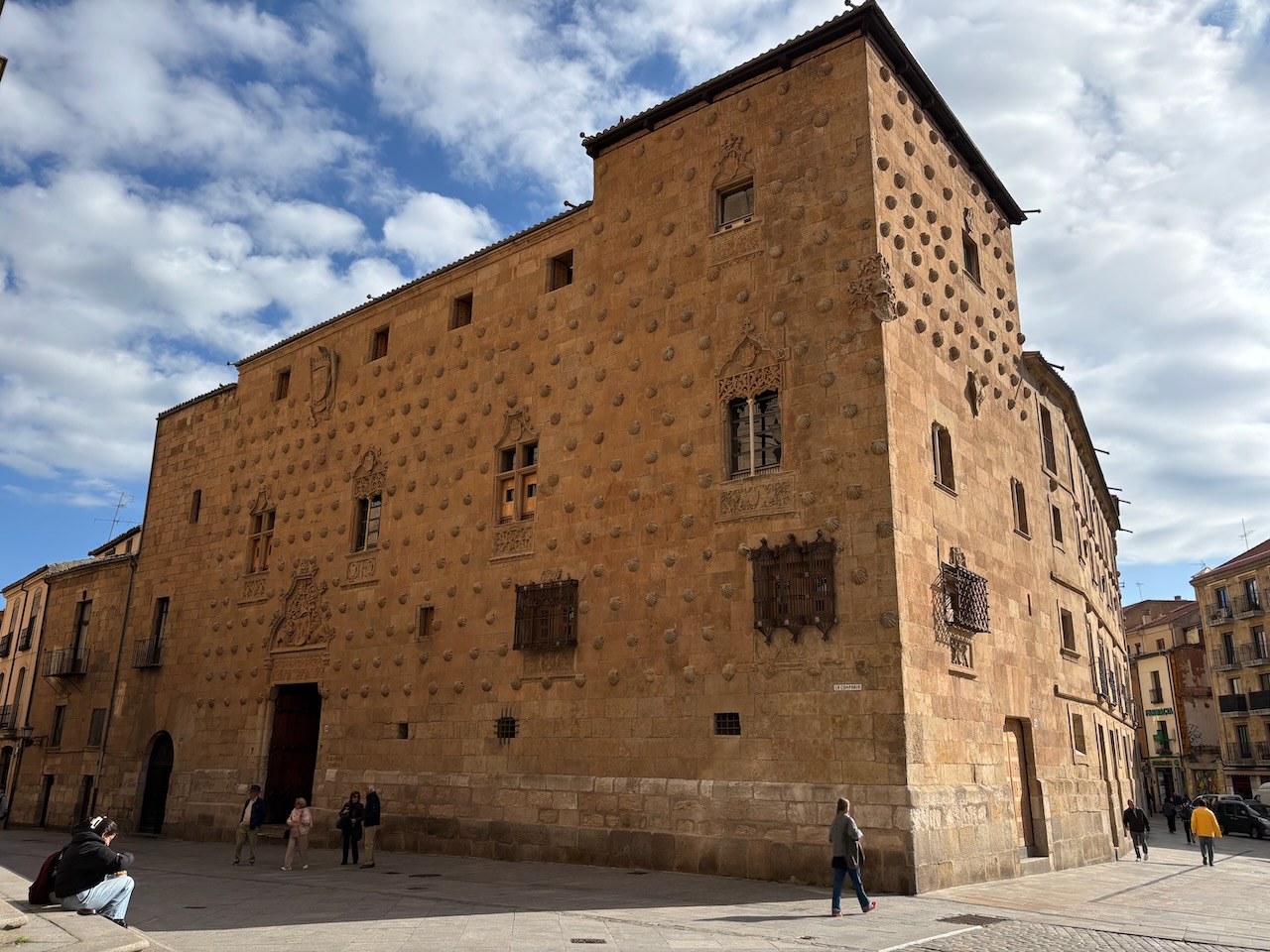
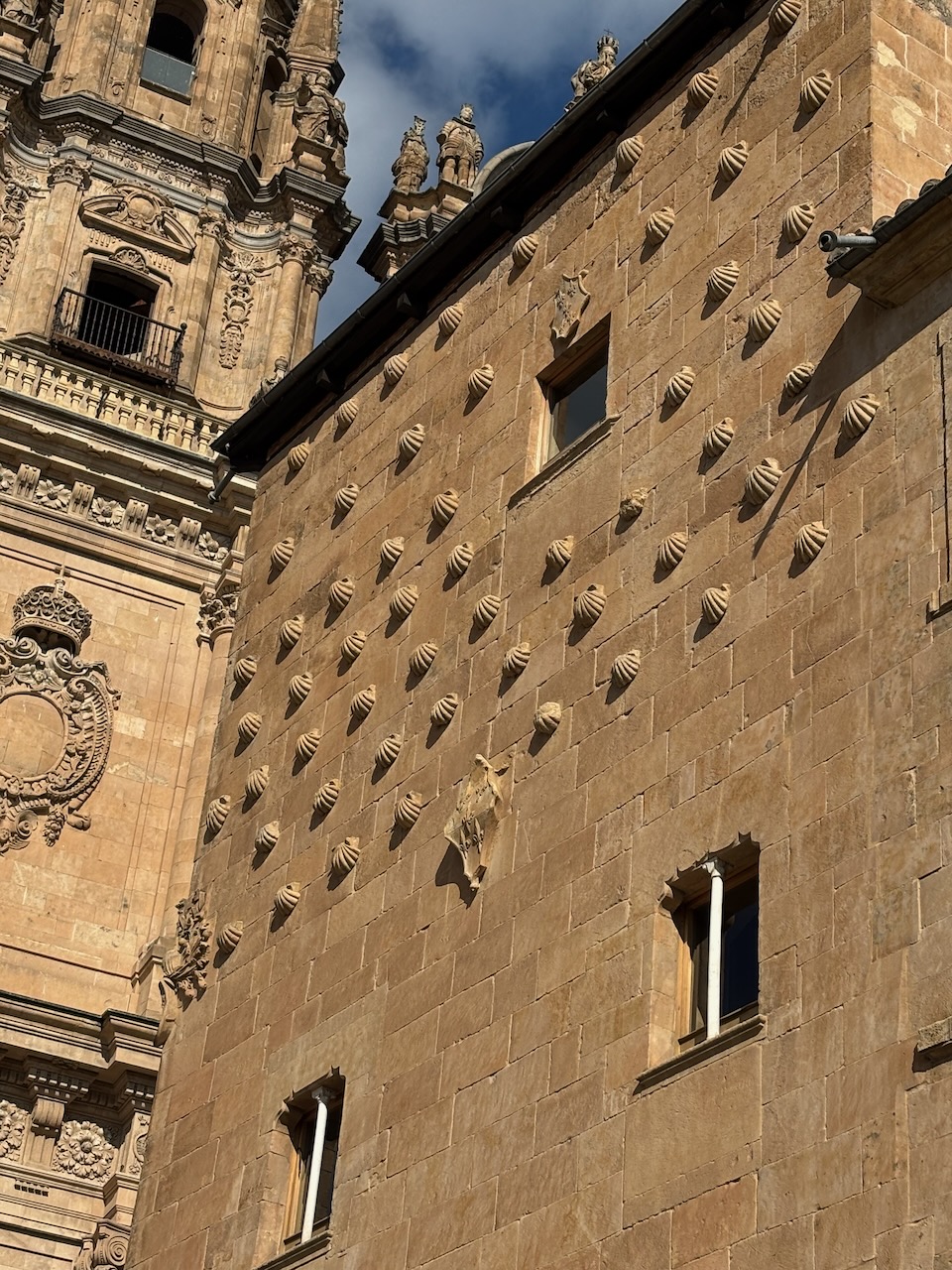
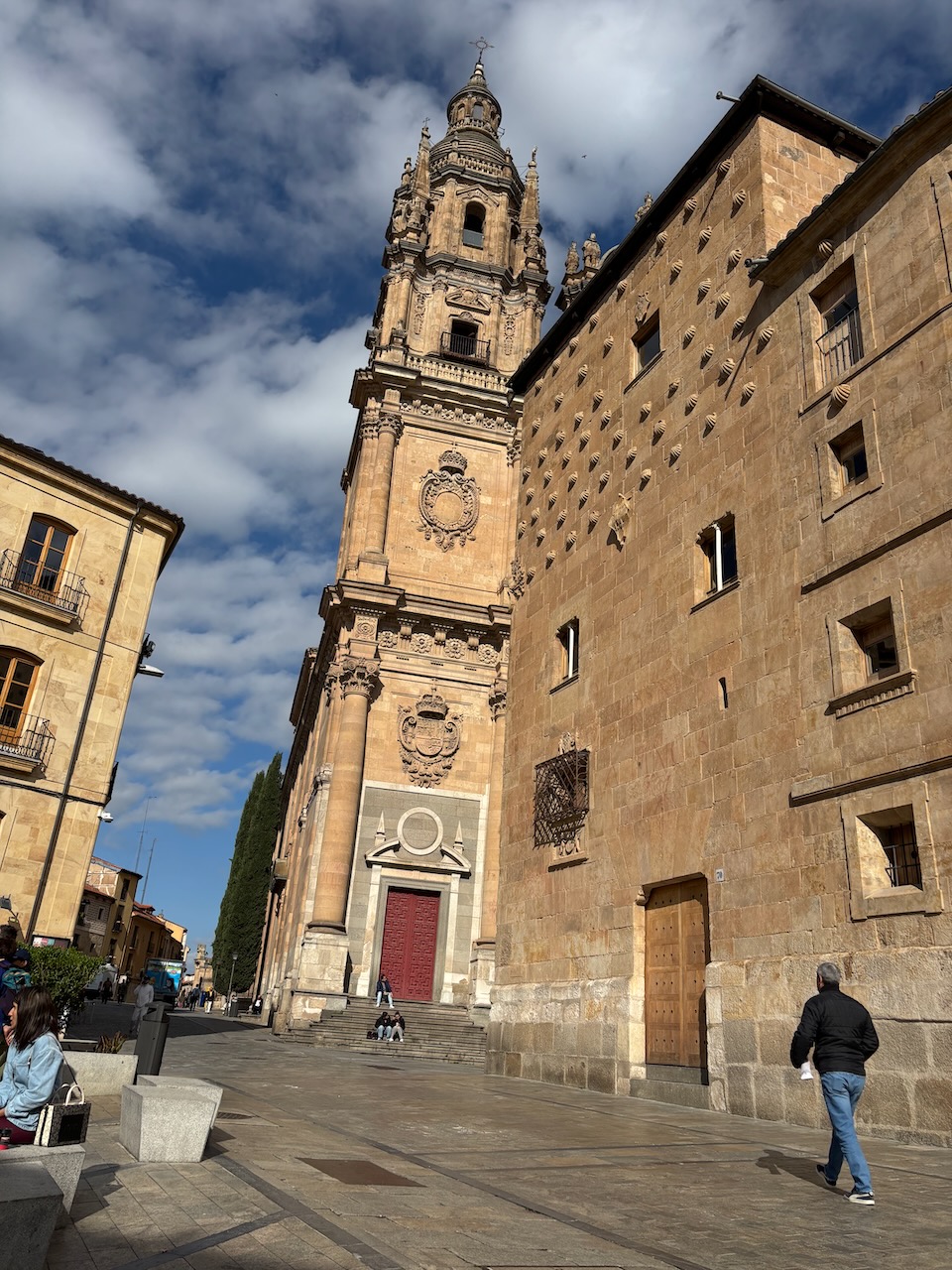
We continued walking down Calle Rua Mayor on the way to the university and entered a triangular little square with a monument honoring maestro Francisco de Salinas, a blind musicologist who taught at the University in the 16th century, one of many former professors celebrated around town. In the square we also encountered Casa de las Conchas one of Salamanca’s most famous landmarks, its facade encrusted with more than 300 scallop shells of St. James, honoring the Camino de Santiago pilgrimage route that passes along here. Nearby are the twin towers of La Clerecía Church, nicknamed the “Stairway to Heaven” where one can climb up 200 steps for grand views.
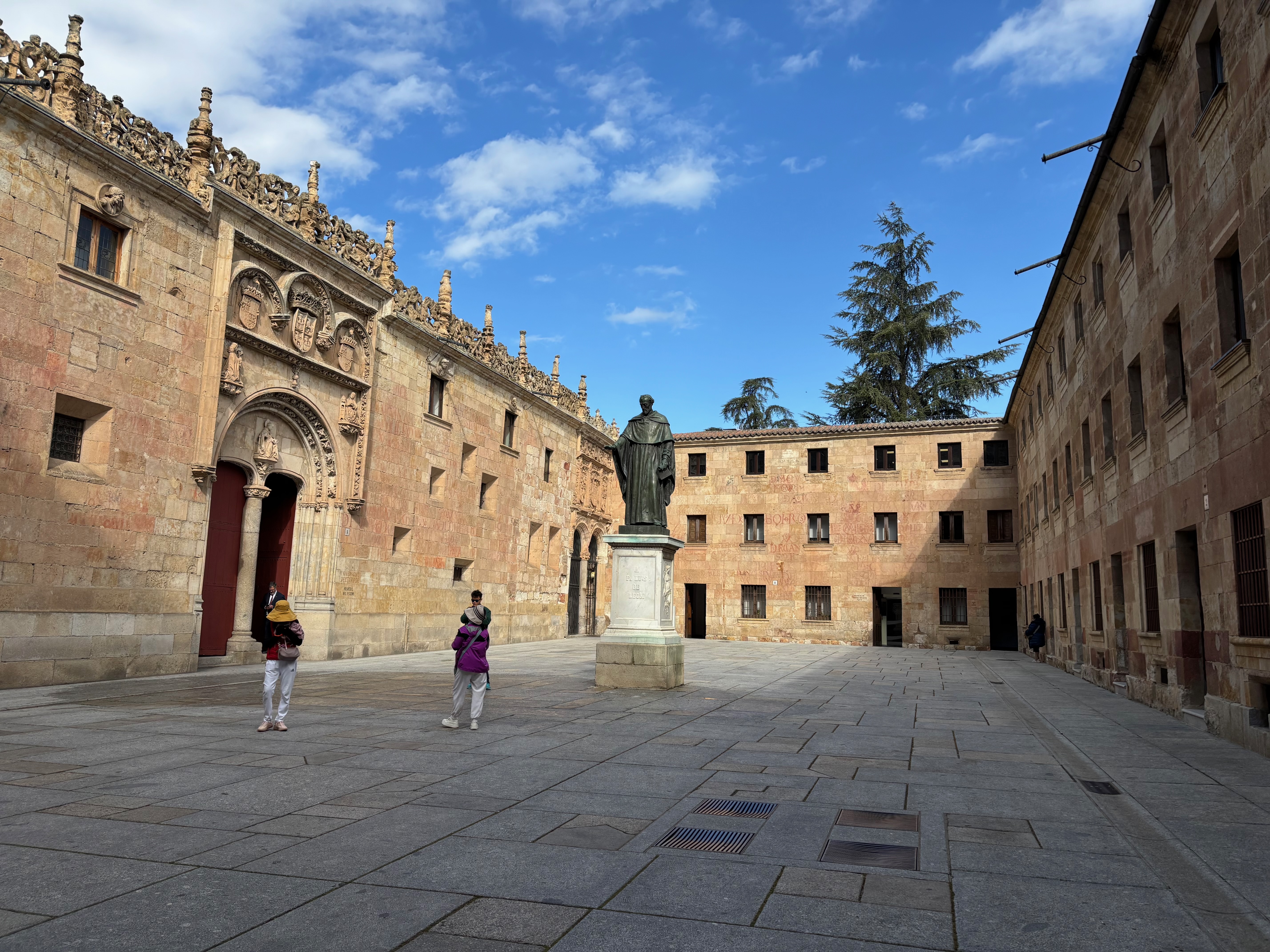
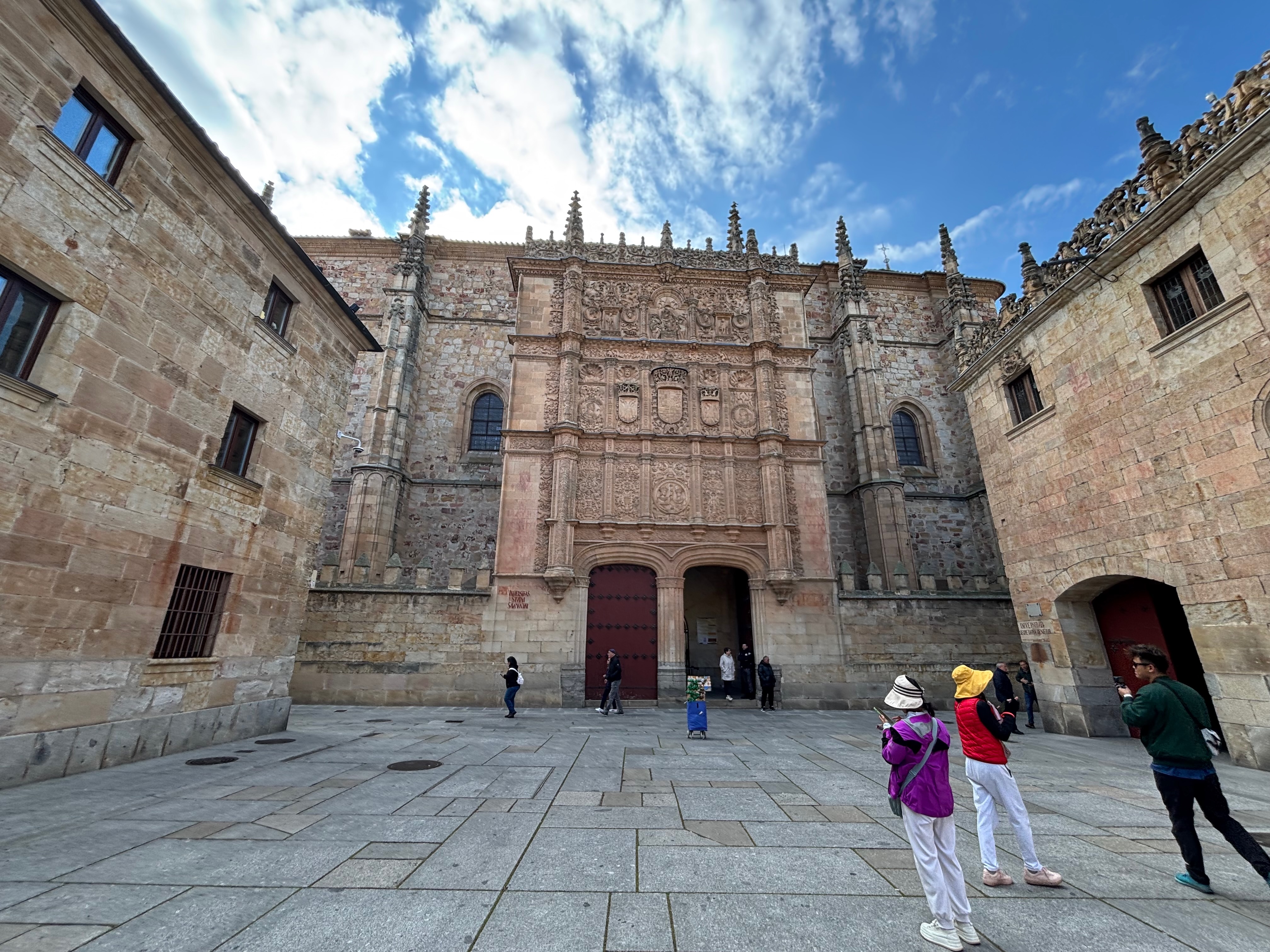
We soon arrived at the university and paused to decide if we wanted to spend the money to view its interior. St. Steves advises that while this might be worthwhile, equally interesting sights are available outside and so we opted not pay to enter. Standing in the Patio de Escuelas, we examined the ornately decorated grand entrance facade. Dating from the 16th century, this is the textbook example of Spain’s Plateresque style—named for its delicate, detail-packed, filigree-like carvings that resemble fine jewelry (plata means silver).
It was made in three sections by Charles V. The bottom band, with the giant medallion, celebrates the Catholic Monarchs. Ferdinand and Isabel saw that the university had no facilities befitting its prestige, and they granted the money for this building. The immodest middle section celebrates the grandson of Ferdinand and Isabel, Charles V. He appears with his queen, the Habsburg double-headed eagle, and the complex coat of arms of the mighty Habsburg Empire. And, as a statement of intellectual independence from medieval Church control, the top shows the pope flanked by Hercules and Venus.
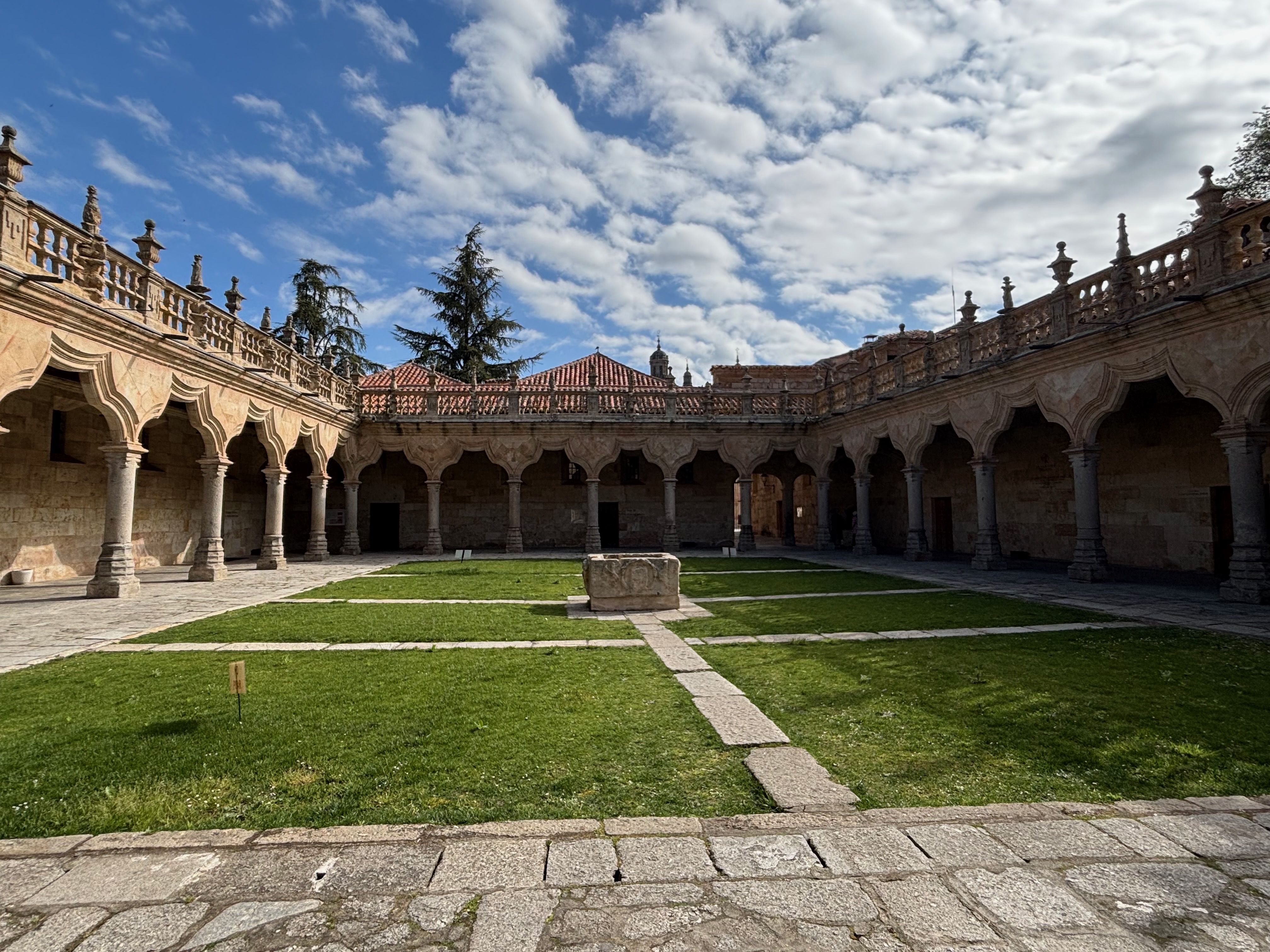
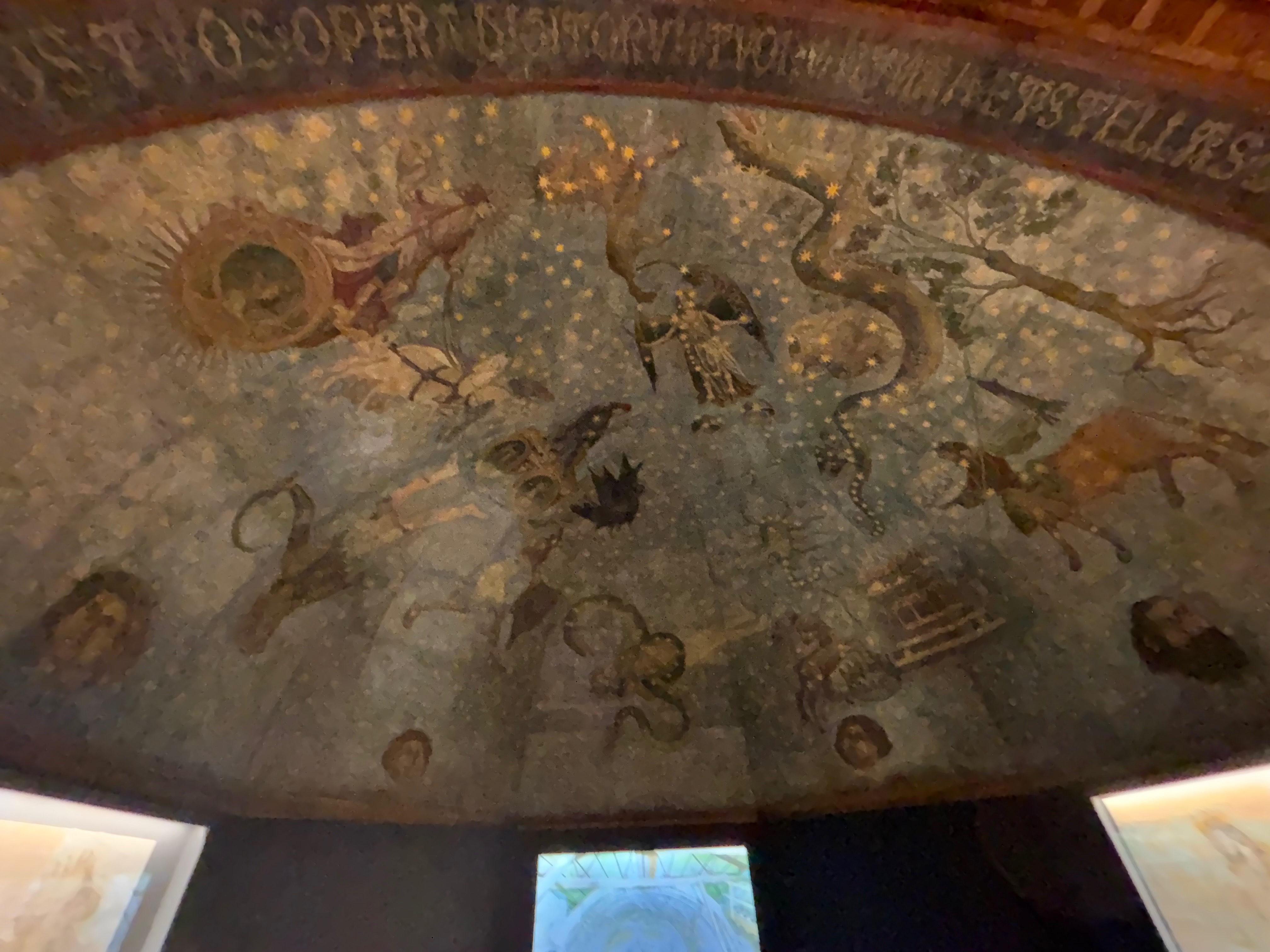
We walked to left corner of the square to take a look at a beautiful courtyard with pillars shaped like parting curtains and entered one of its rooms to look for Fernando Gallego’s fanciful 15th-century Sky of Salamanca ceiling mural, a depiction of the night sky of constellations, illustrated with mythological figures. Originally painted on a nearby vault in the 1480s where it occupied the upper part of the current chapel of San Jerónimo, in the 1950s the paintings were removed from the original vault, transferred to canvas and moved to this location. To get a good view one reclines on a padded settee and is able to examine it laying your back.
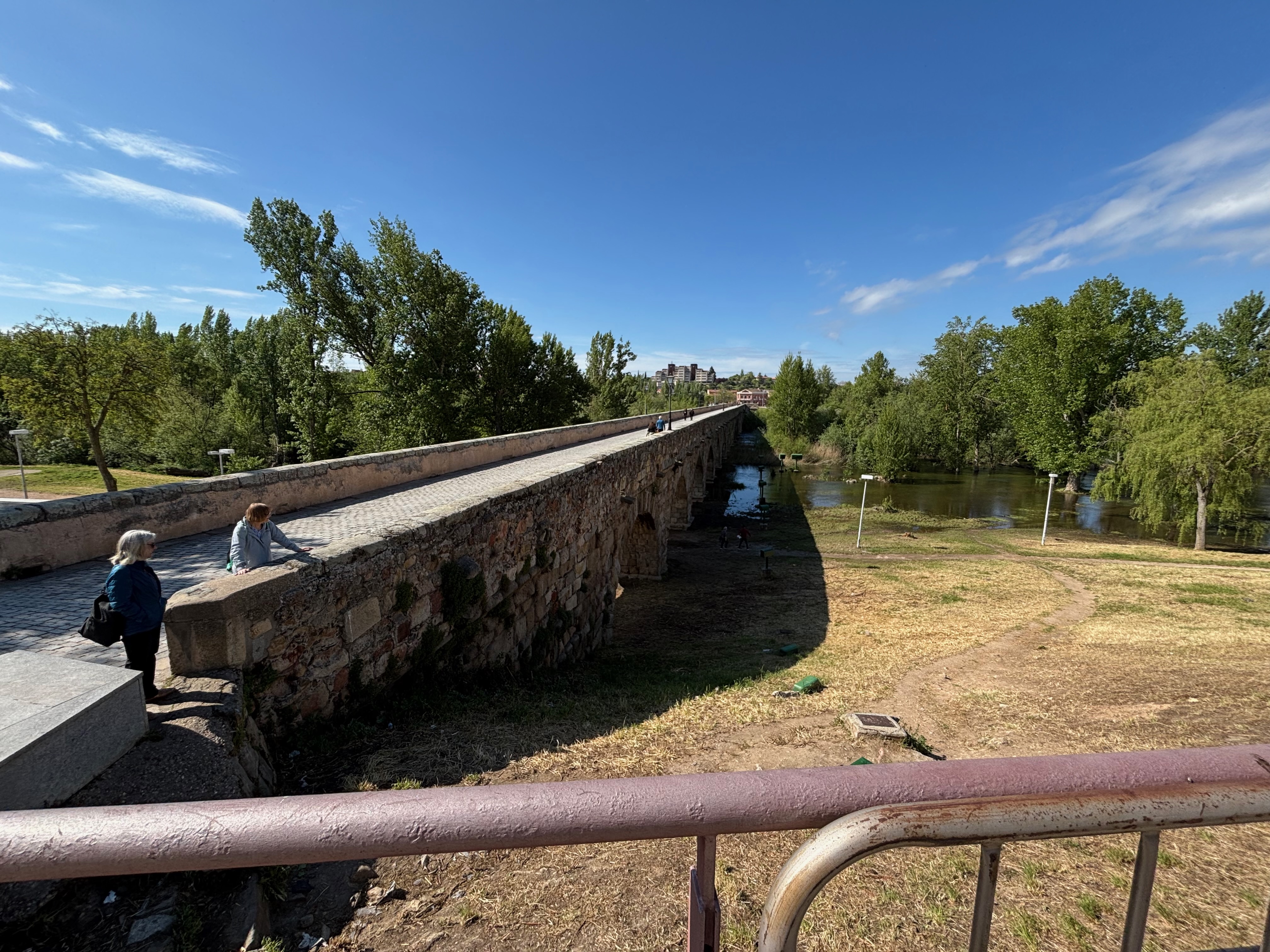
We left the university area and walked to our next destination, the Art Nouveau Museum (Museo Casa Lis), stopping briefly at the Tormes River and the Roman Bridge, which dates back to the late first century AD. Until the 20th century, it remained Salamanca’s primary river crossing; today it’s open only to promenading pedestrians (and has one of the city’s best paseo scenes on a warm evening).
We arrived at Casa Lis, which is located in the ancient city wall surrounding the town and entered for an enjoyable couple of hours. Also known as Museo Art Nouveau and Art Déco, it is a museum of decorative arts, with exhibits dating from the last decades of the 19th century to World War II. The building is an old mansion that was built for its first owner, Miguel de Lis, by Joaquin de Vargas y Aguirrea provincial architect from Jerez de la Frontera.
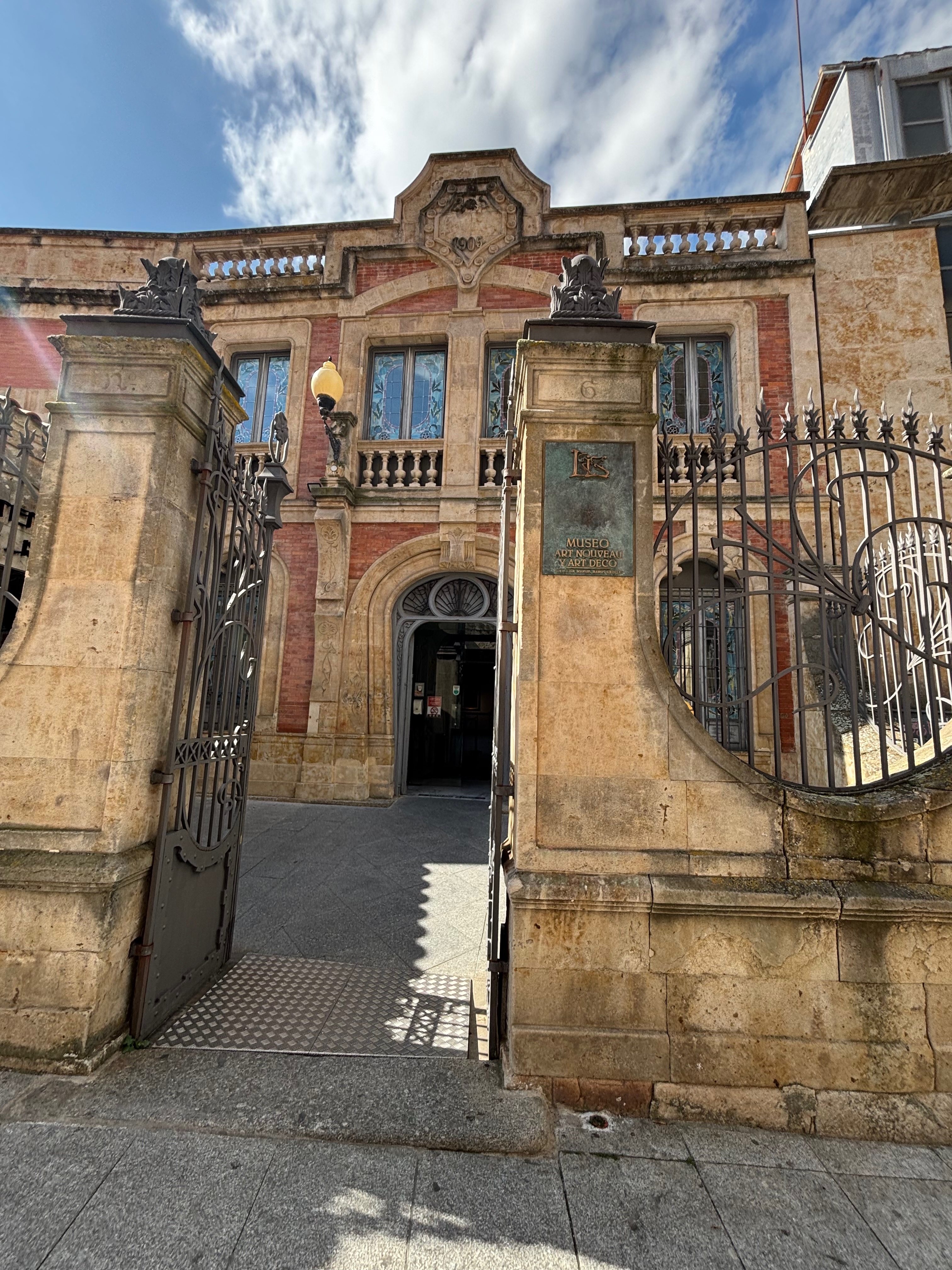
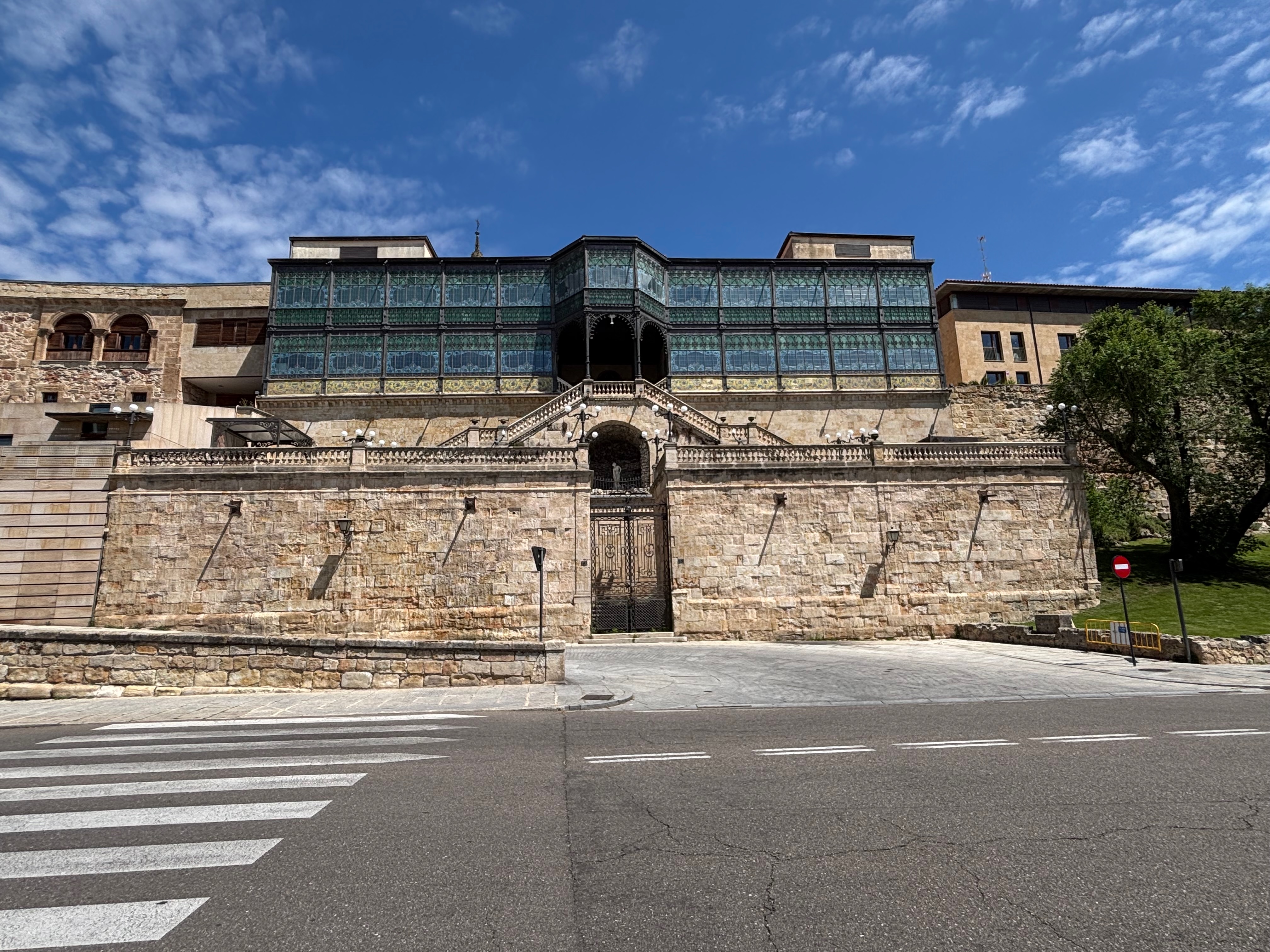
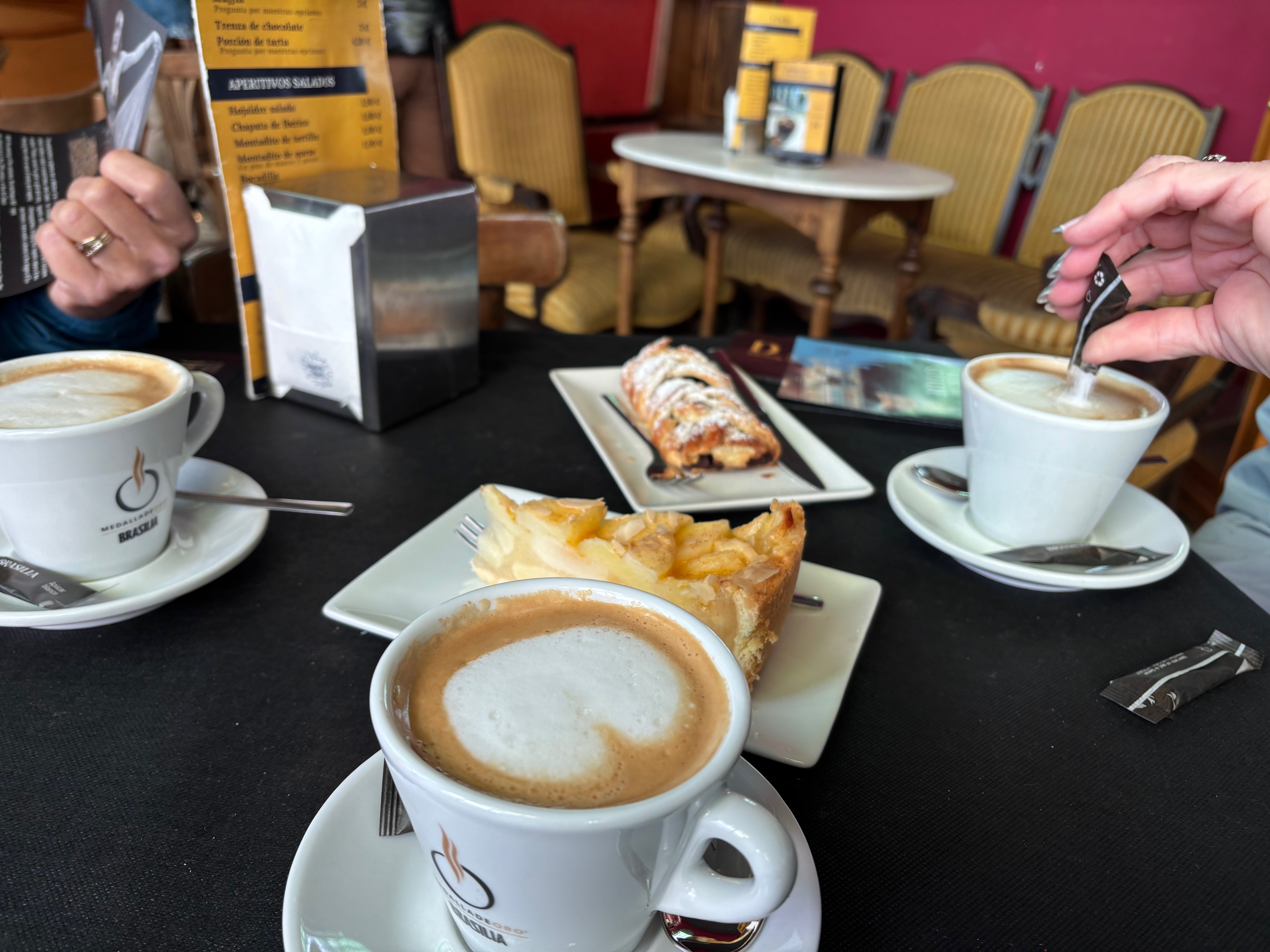
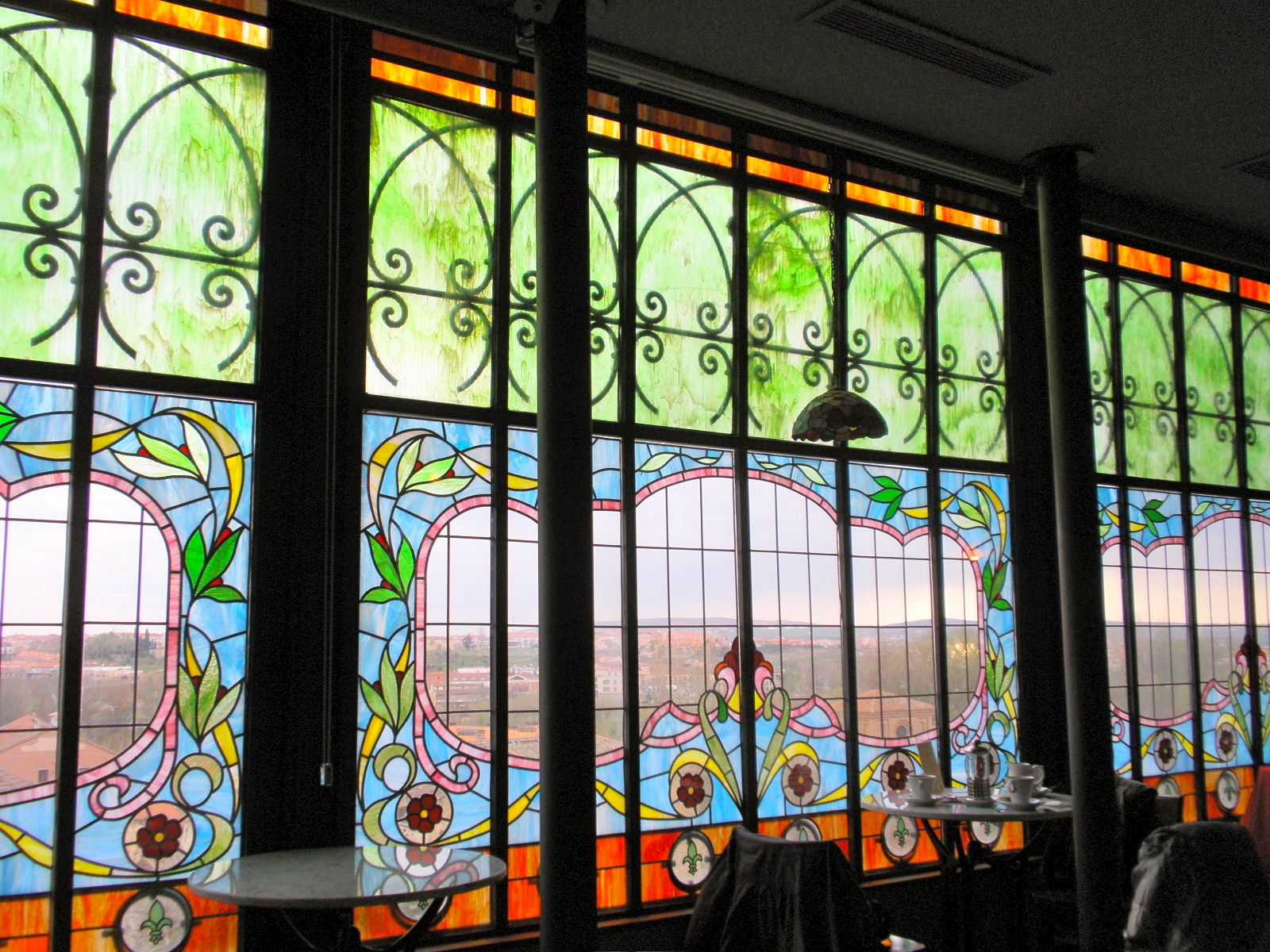
The mansion changed ownership in 1917, when D. Enrique Esperabé de Arteaga, rector of the University of Salamanca, moved there with his family. Subsequently, the Casa Lis was inhabited by various tenants until in the 1970s, closed and unused, it fell into decay. In 1981, the city of Salamanca was able to save it from ruin. Unfortunately, pictures were not allowed but the exhibits were fascinating. Before we started touring though we stopped at the museum café for coffees and pastries, surrounded by beautiful stained glass windows.
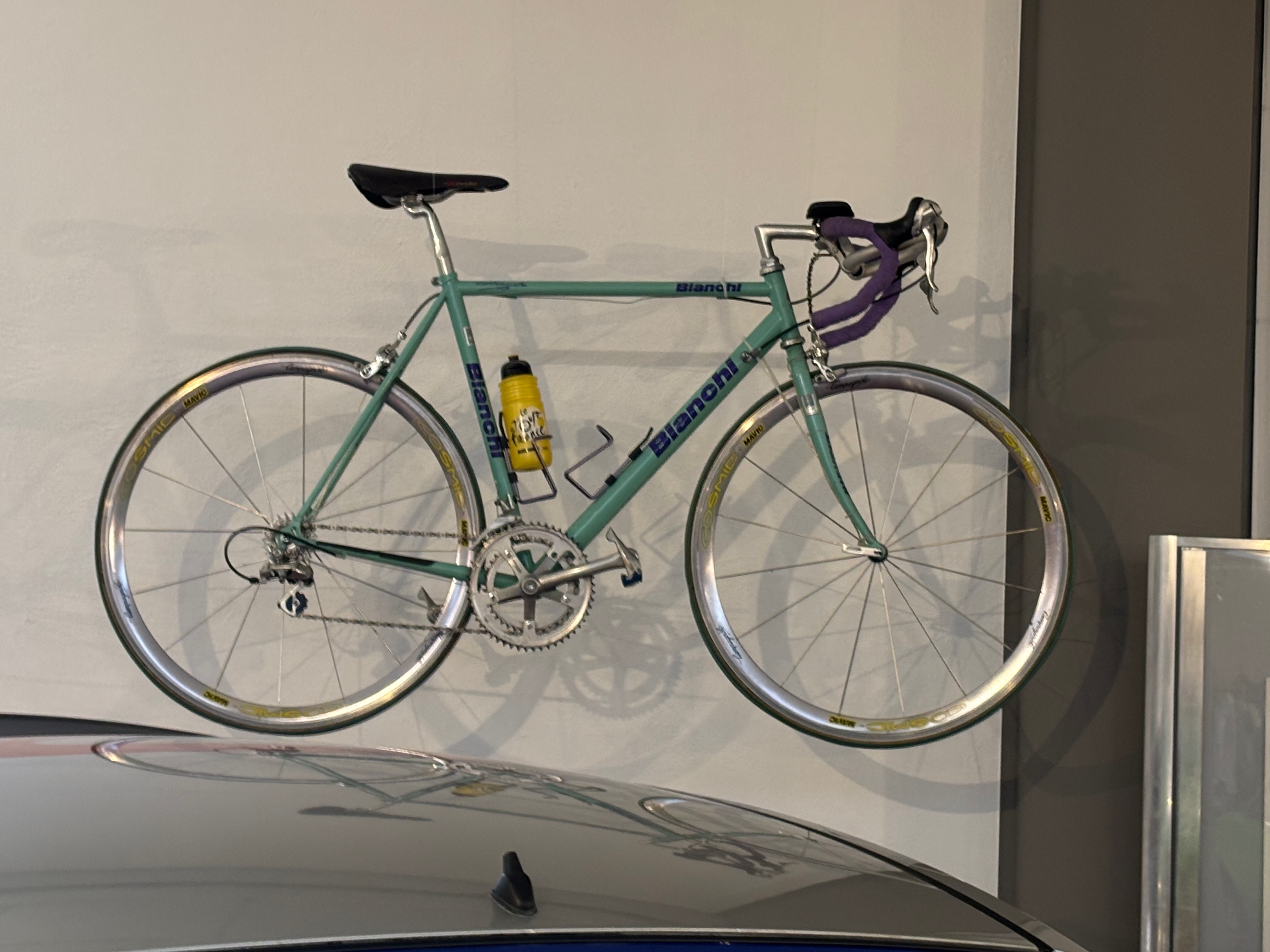
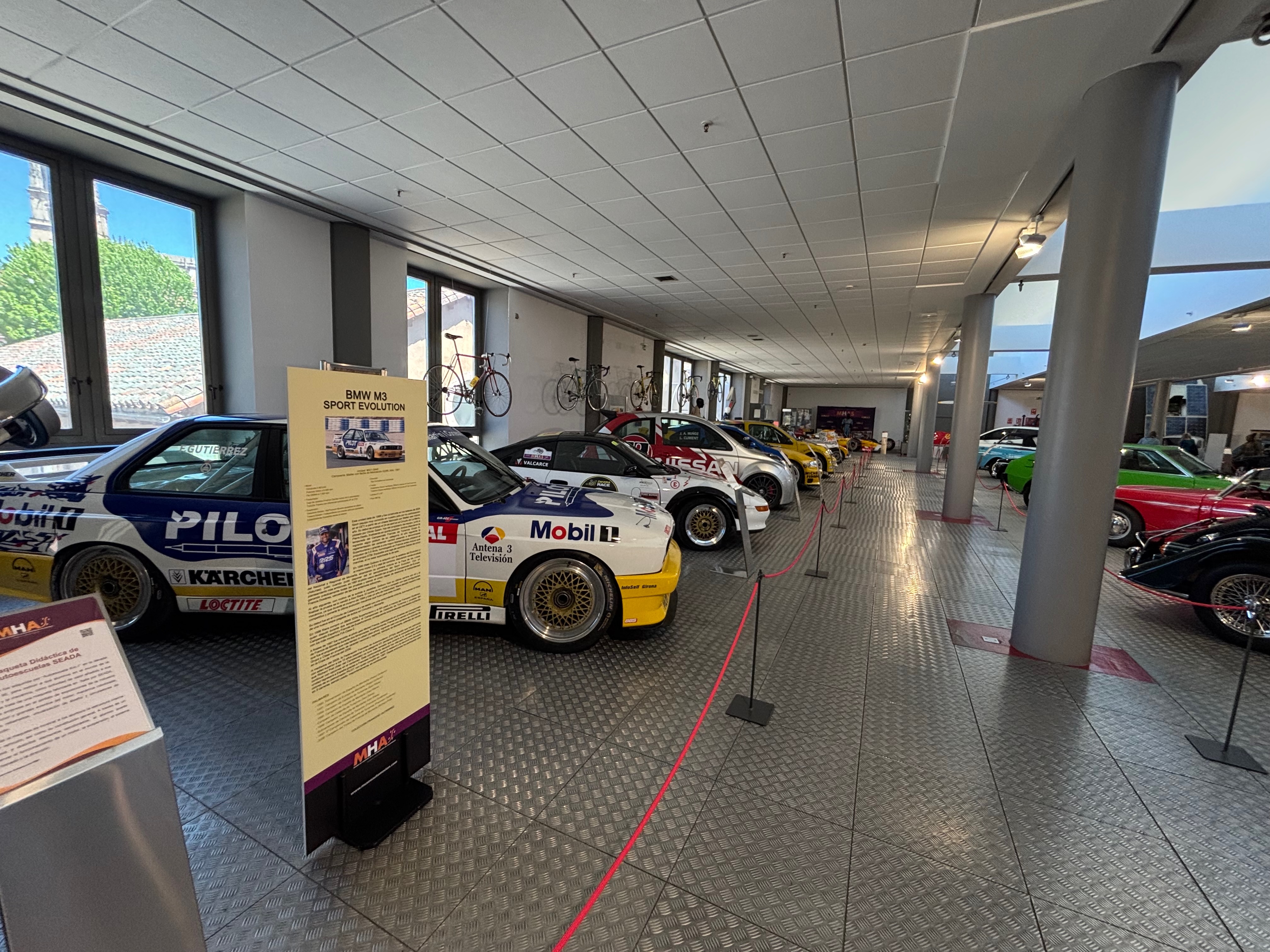
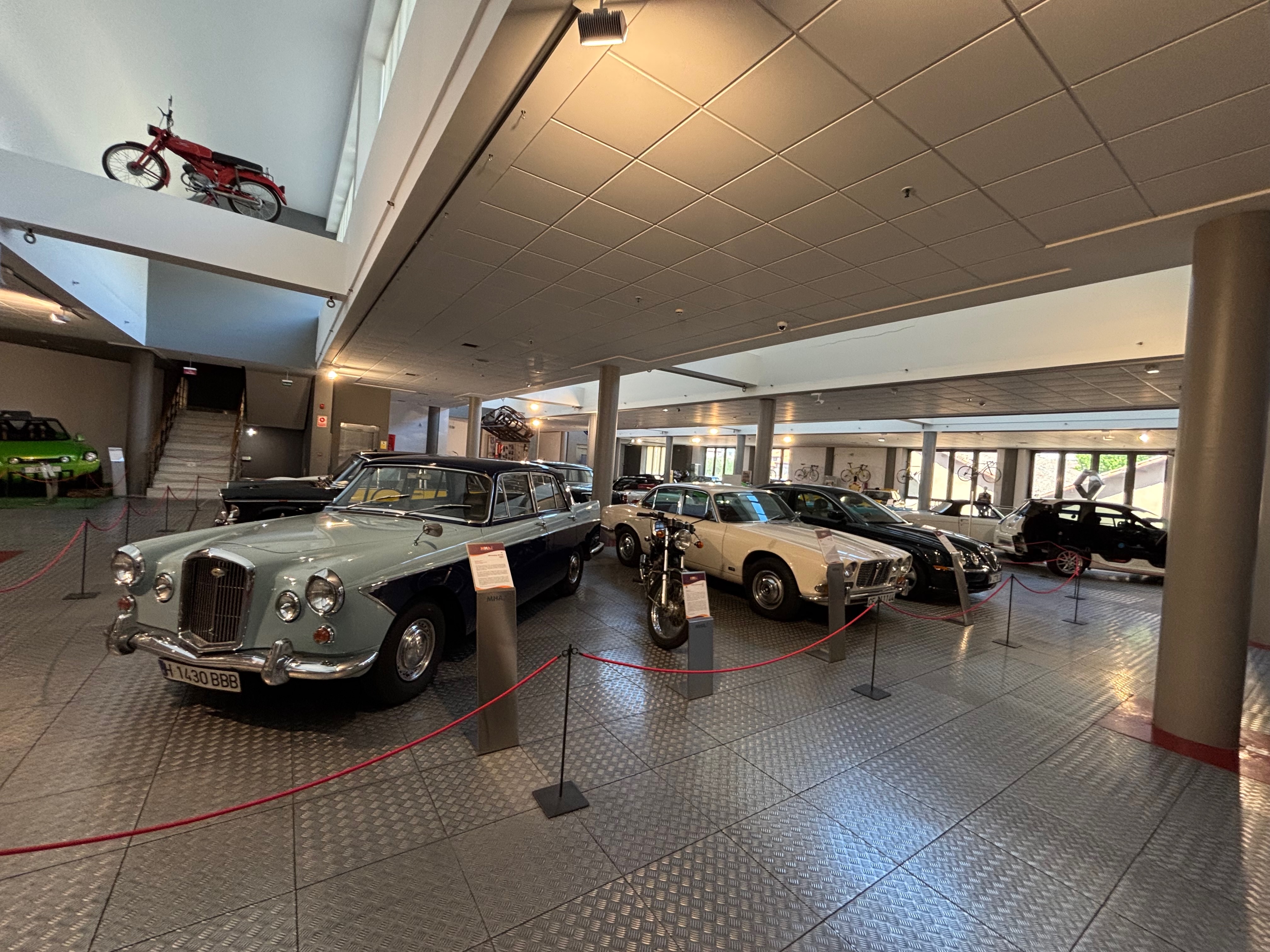
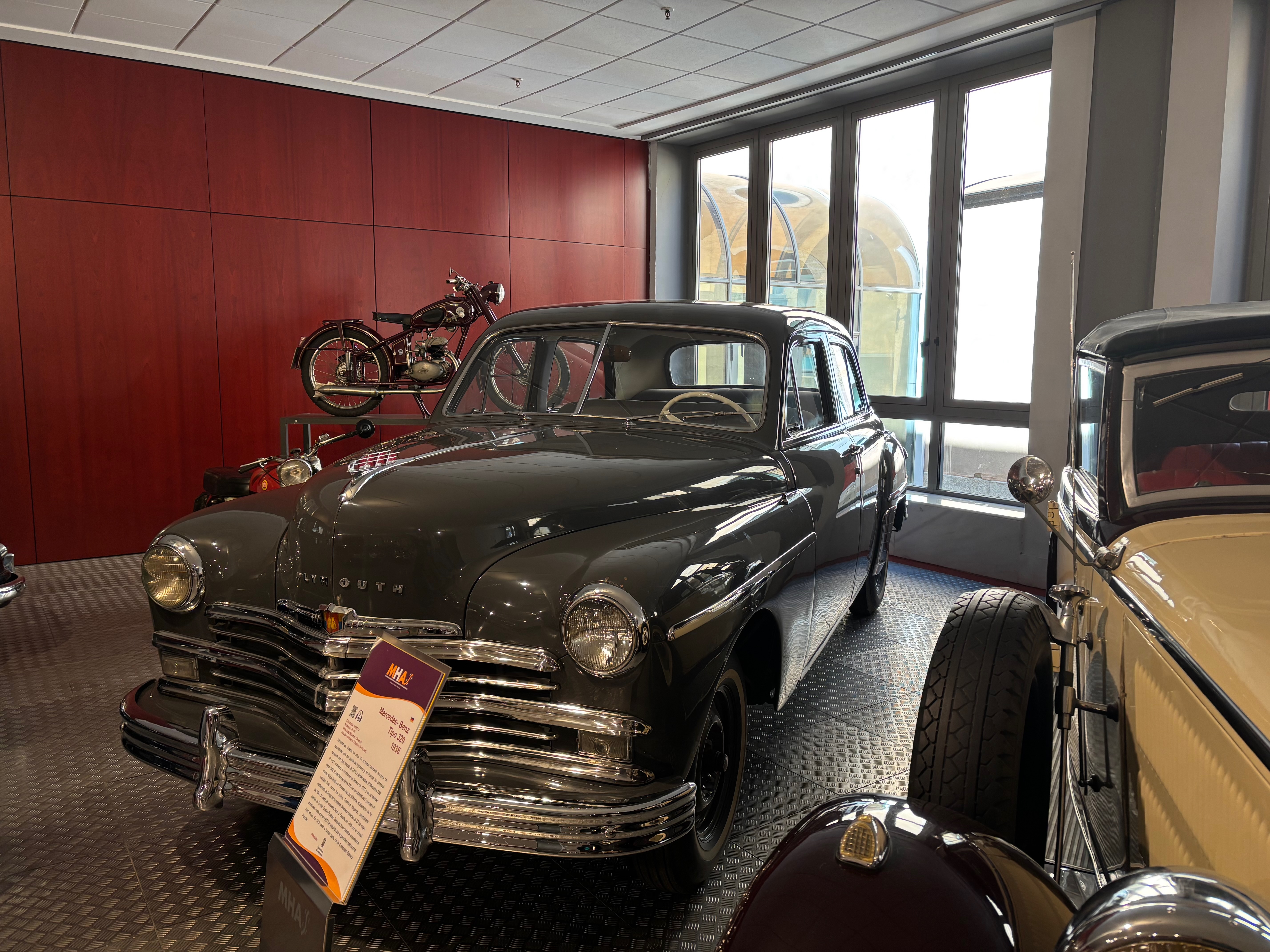
Finished, we walked down to near the river to spend time at the Automobile History Museum (Museo de Historia de la Automoción), whose three floors features about 100 of the over 200 vehicles in its collection in chronological order from 1886 to the present. Inaugurated in late September 2002 by King Juan Carlos I and Queen Sofía of Spain, it is located opposite Casa Lis, in a building that was Salamanca’s first electricity generating plant.
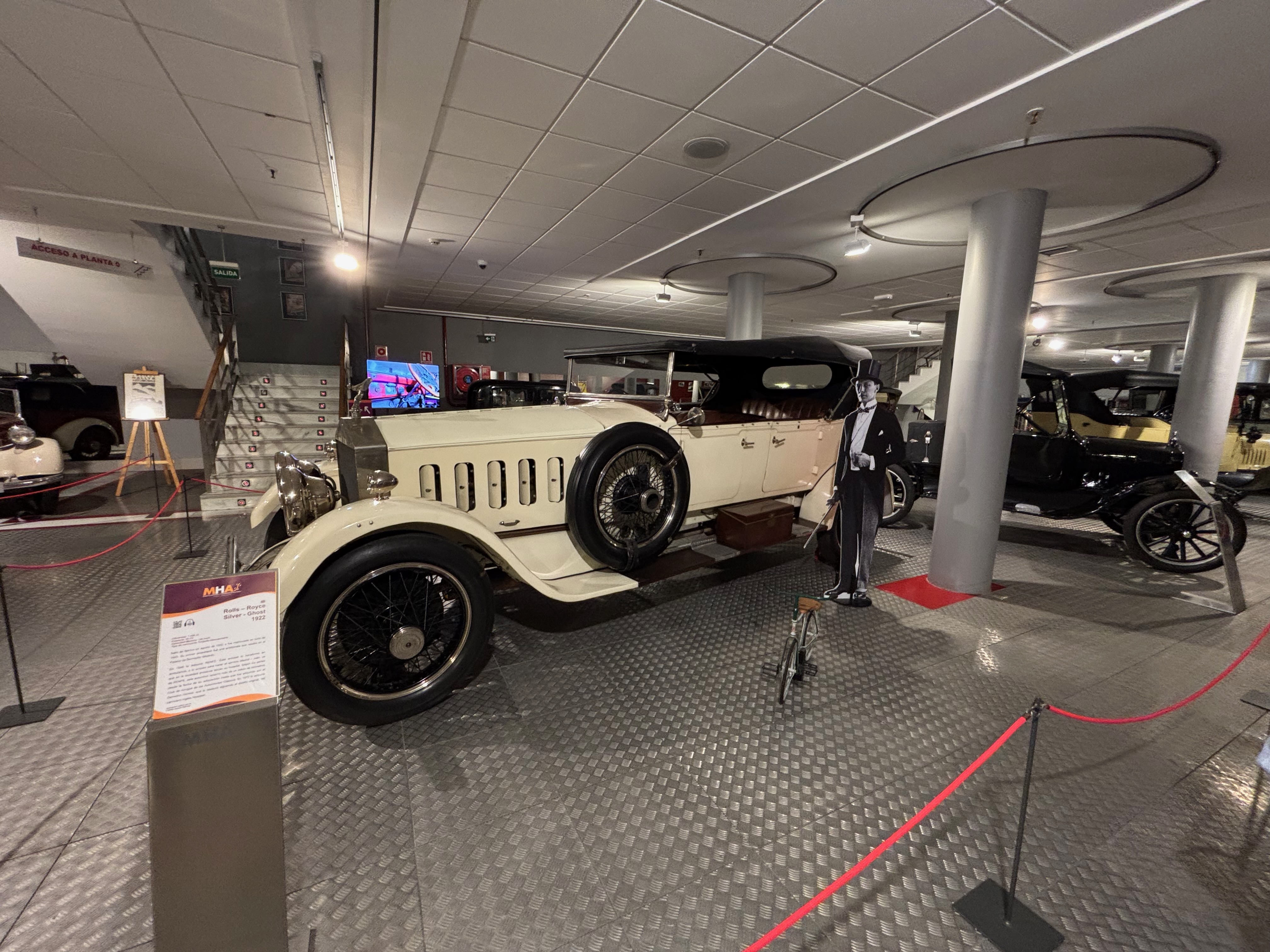
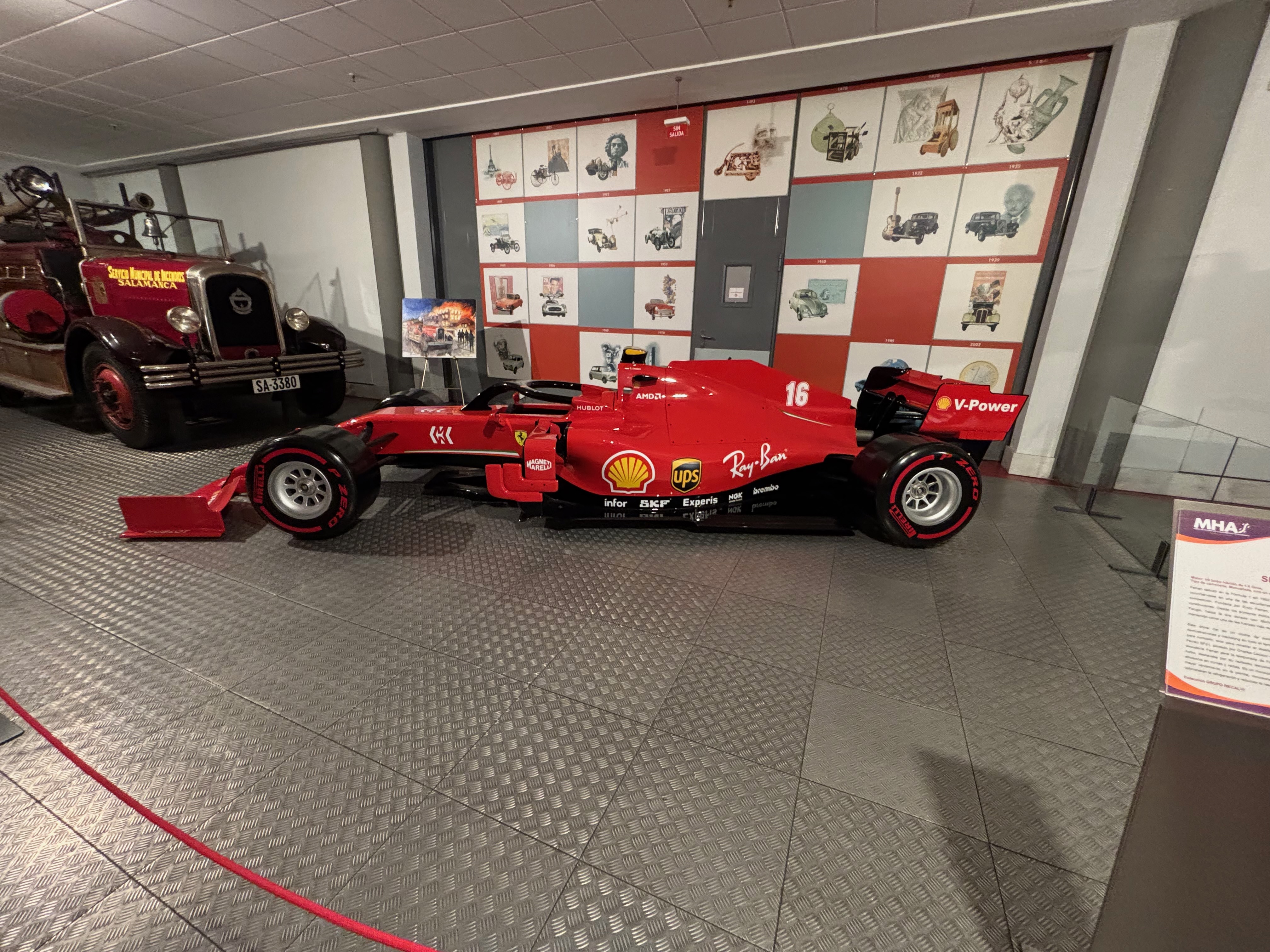
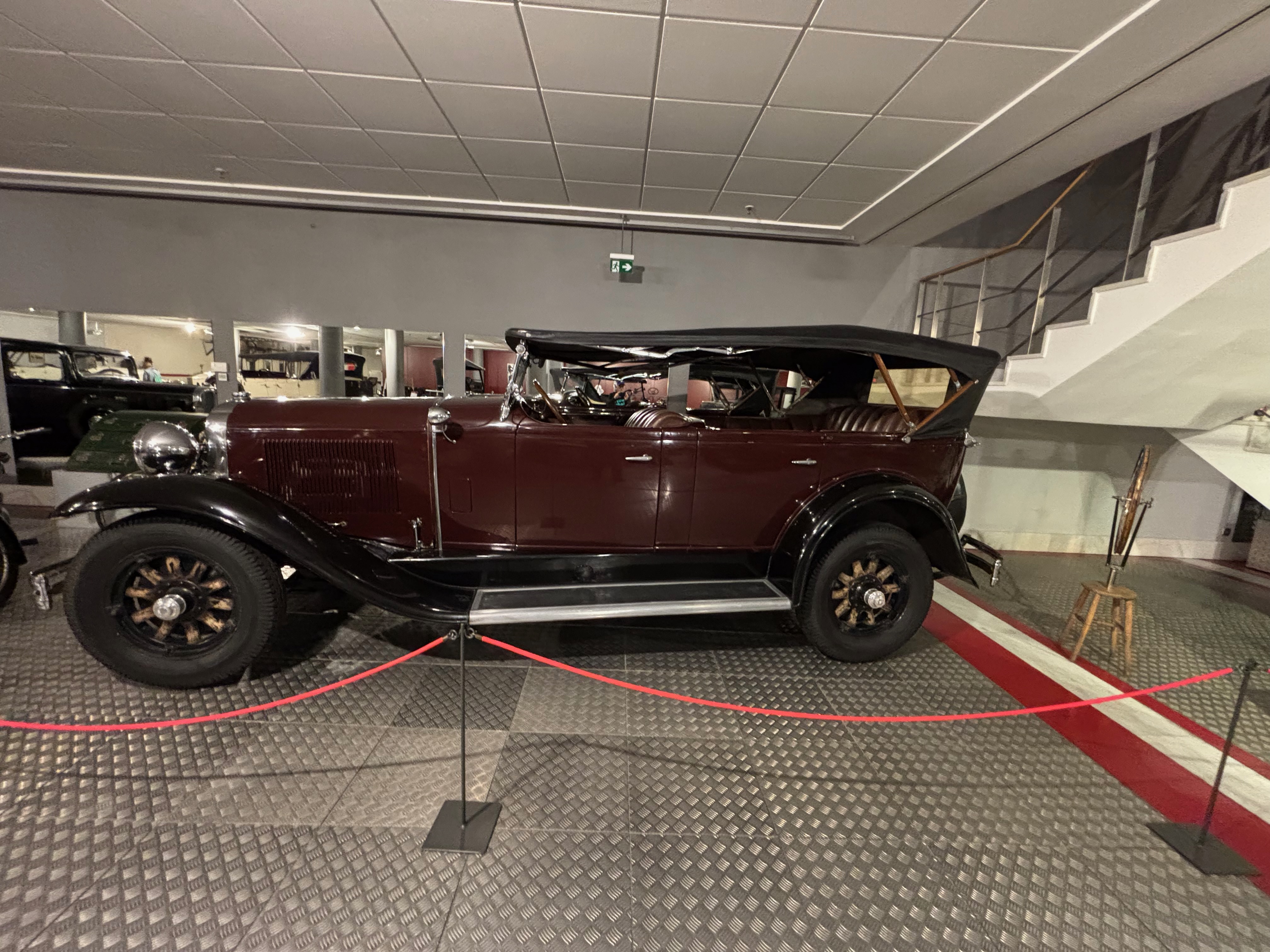
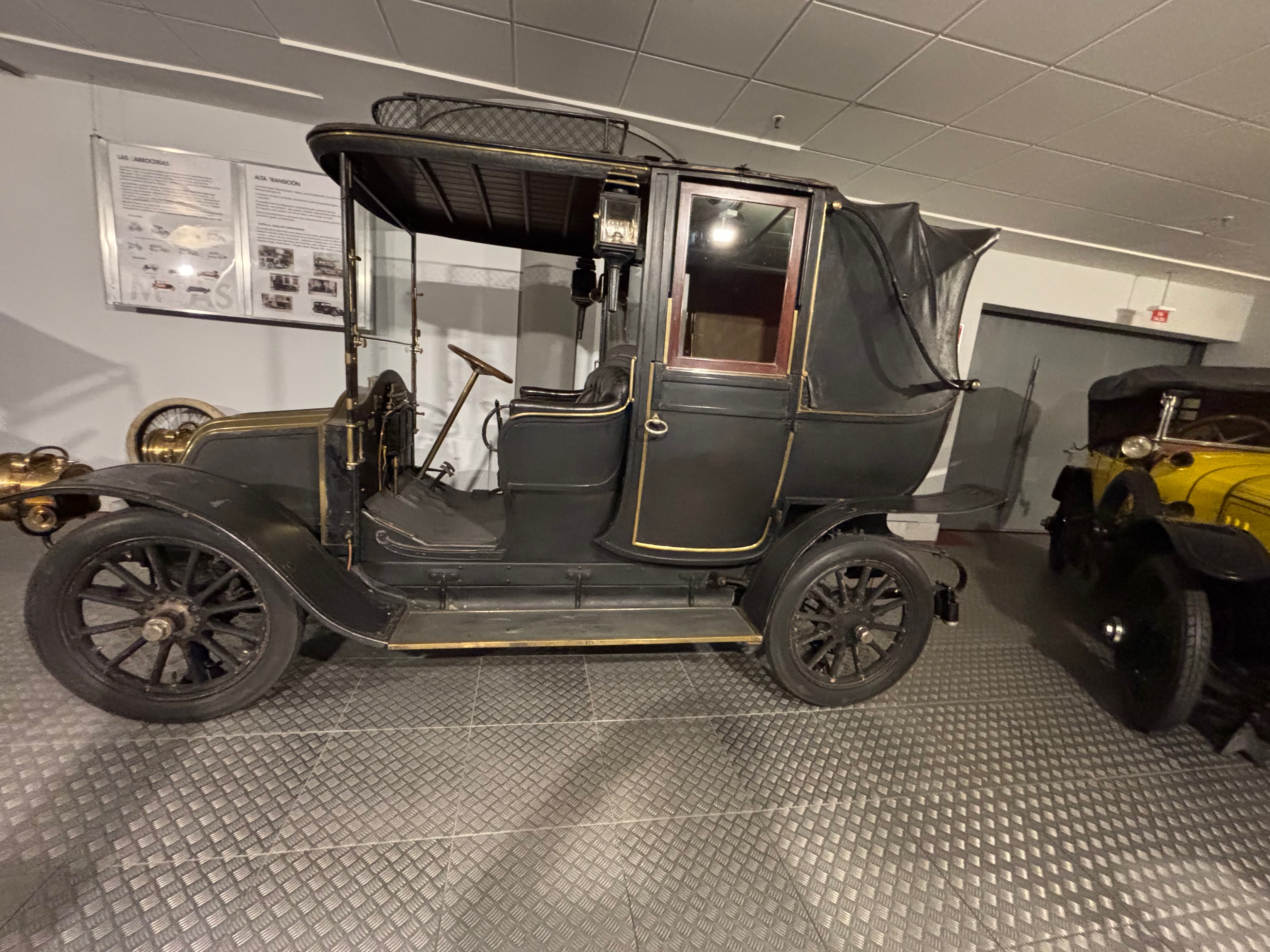
We’ve been to many auto museum’s during our travels and this one was equal to many of them. A few of the highlights were a 1922 Rolls-Royce Silver Ghost, a Cadillac Fleetwood 75 that belonged to the dictator Francisco Franco, and the jewel of the collection, a 1930 Hispano-Suiza in its original condition, having never required restoration. Of particular interest to me were two items, the first a 1949 black, which my father owned and I learned to drive a stick shift with it and an exhibit on the evolution of the BMW M3, a higher performance version of our 2007 335 coupe.
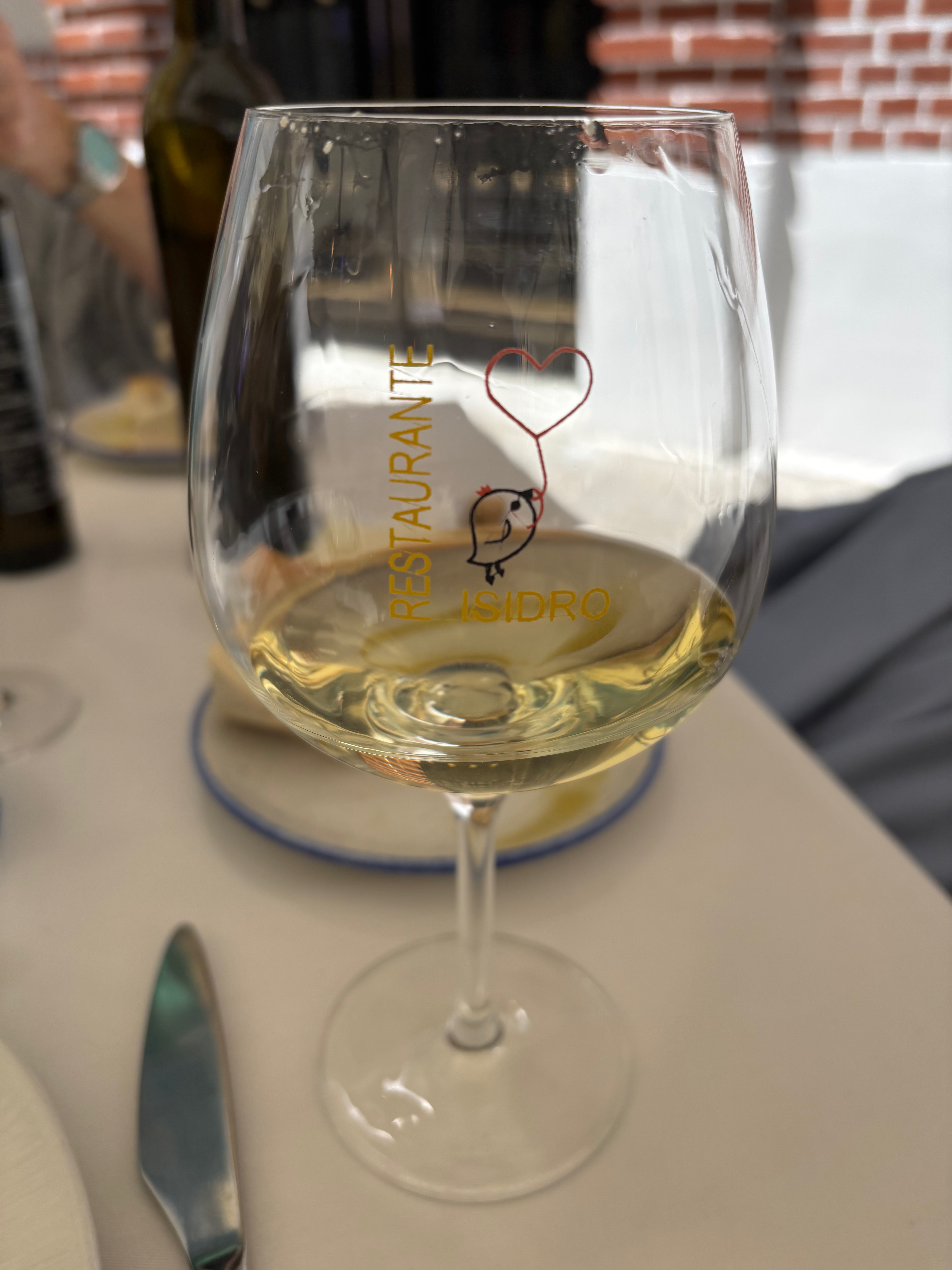
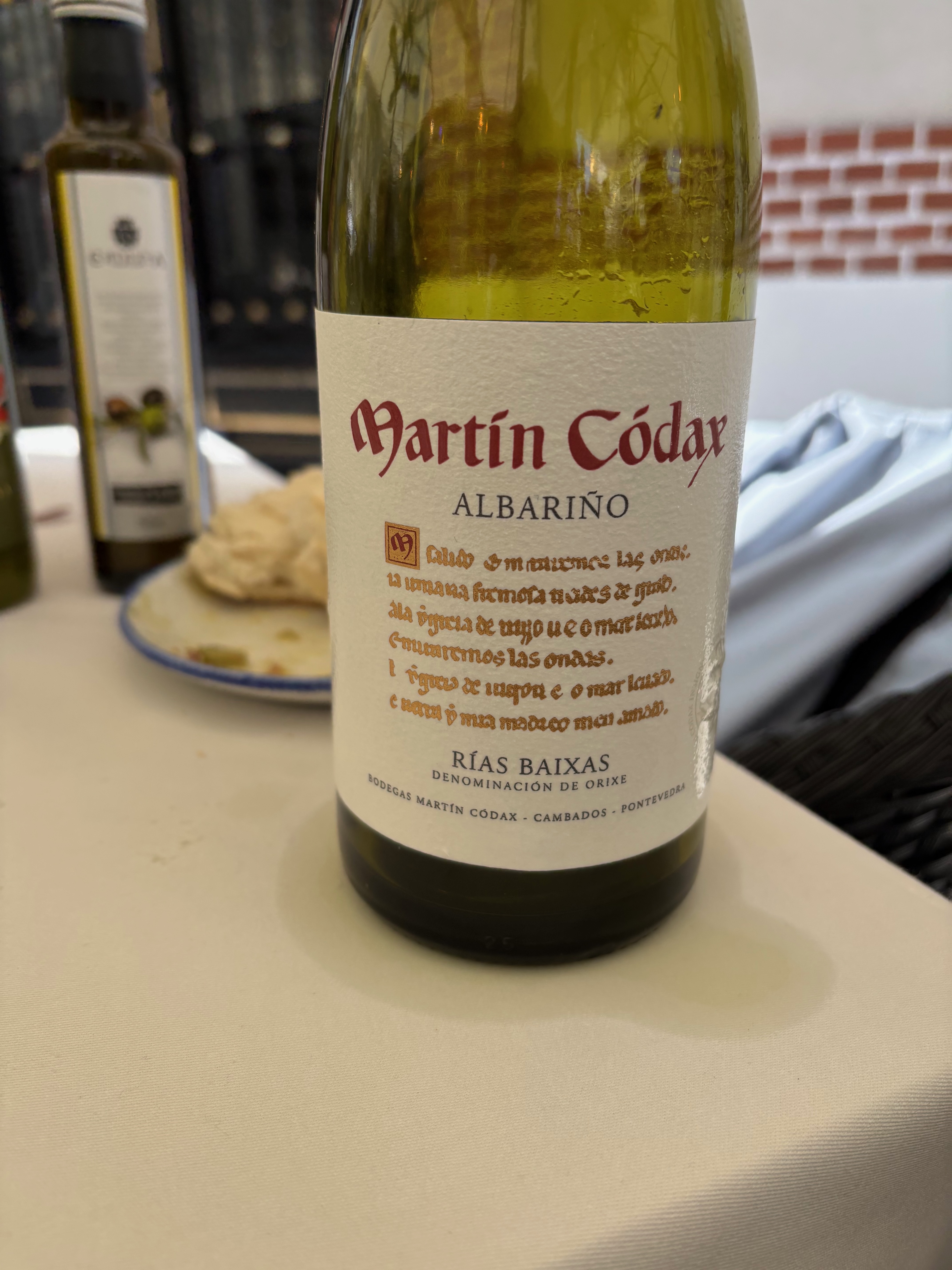
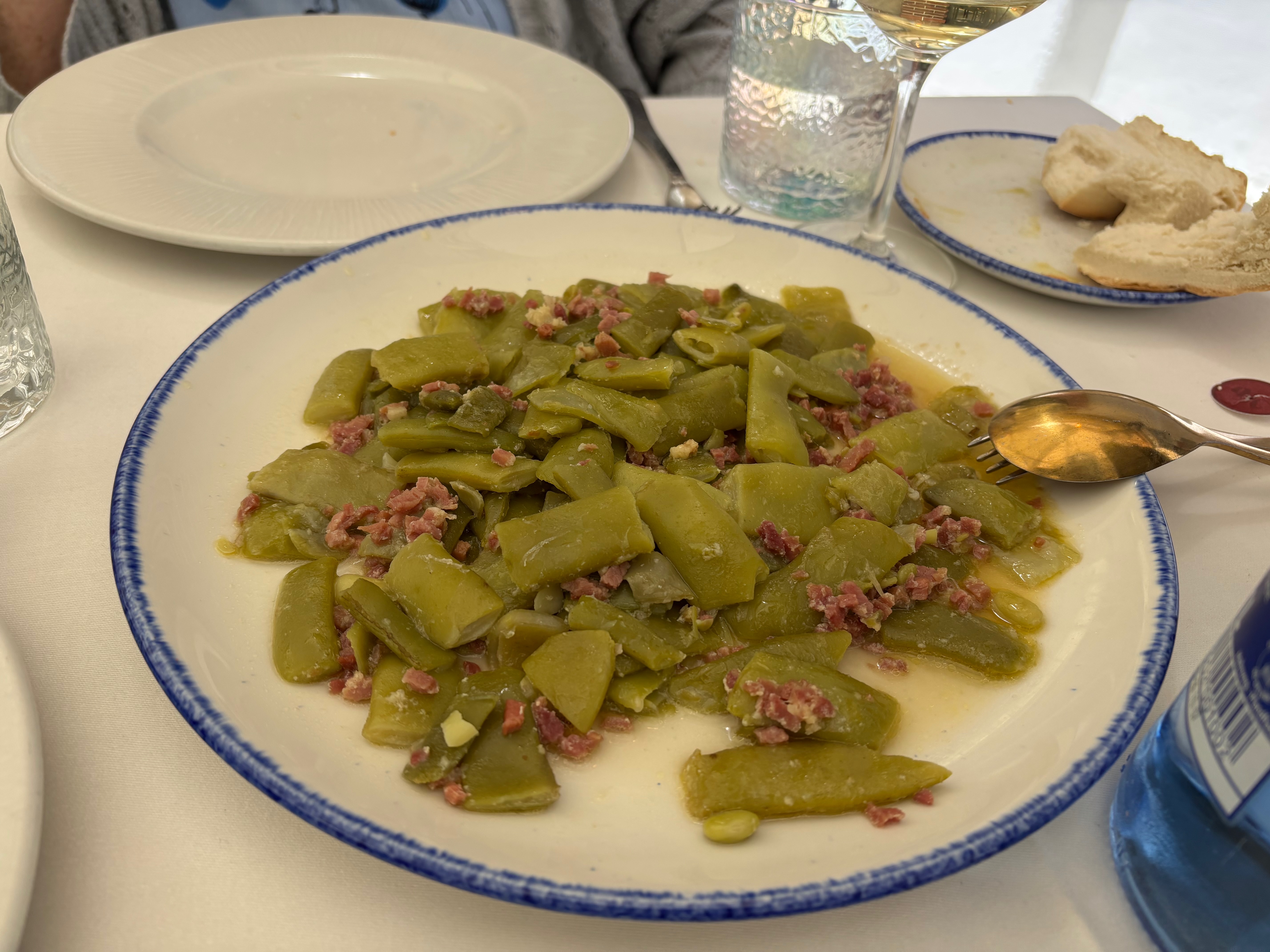
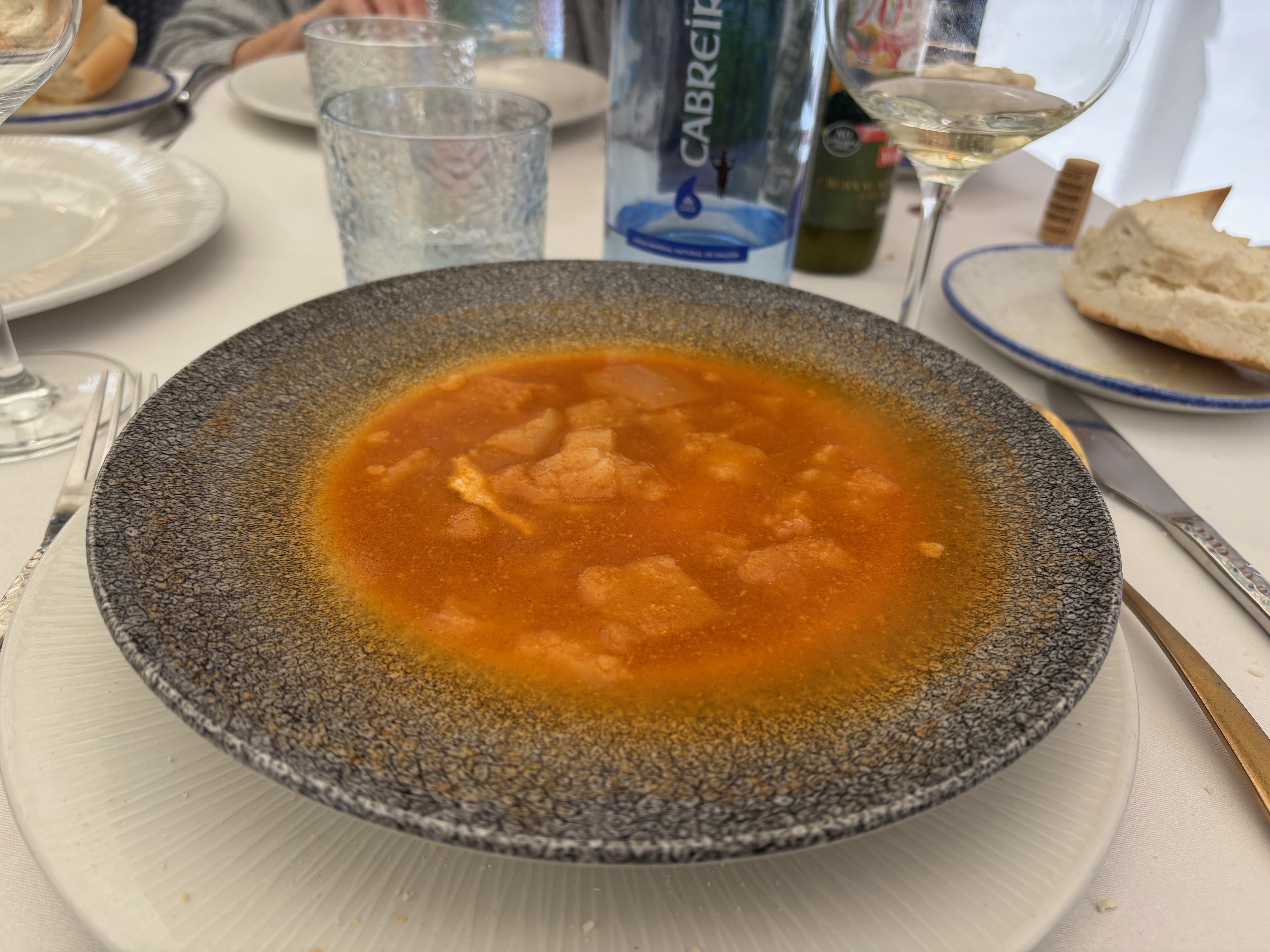
We left the museum and now hungry, decided to utilize one of St. Steves recommendations and do a big meal at Restaurant Isidro, which meant walking back up the hill into the center of town, about a block north of the covered market we’d visited earlier in the day. We split a bottle of that good Martin Codex Albarino we’d been enjoying since Almeria and I enjoyed a bowl of Garlic Soup, mildly flavored in a tomato broth while we then split an order of Judia con Jamon (green beans and ham) between us.
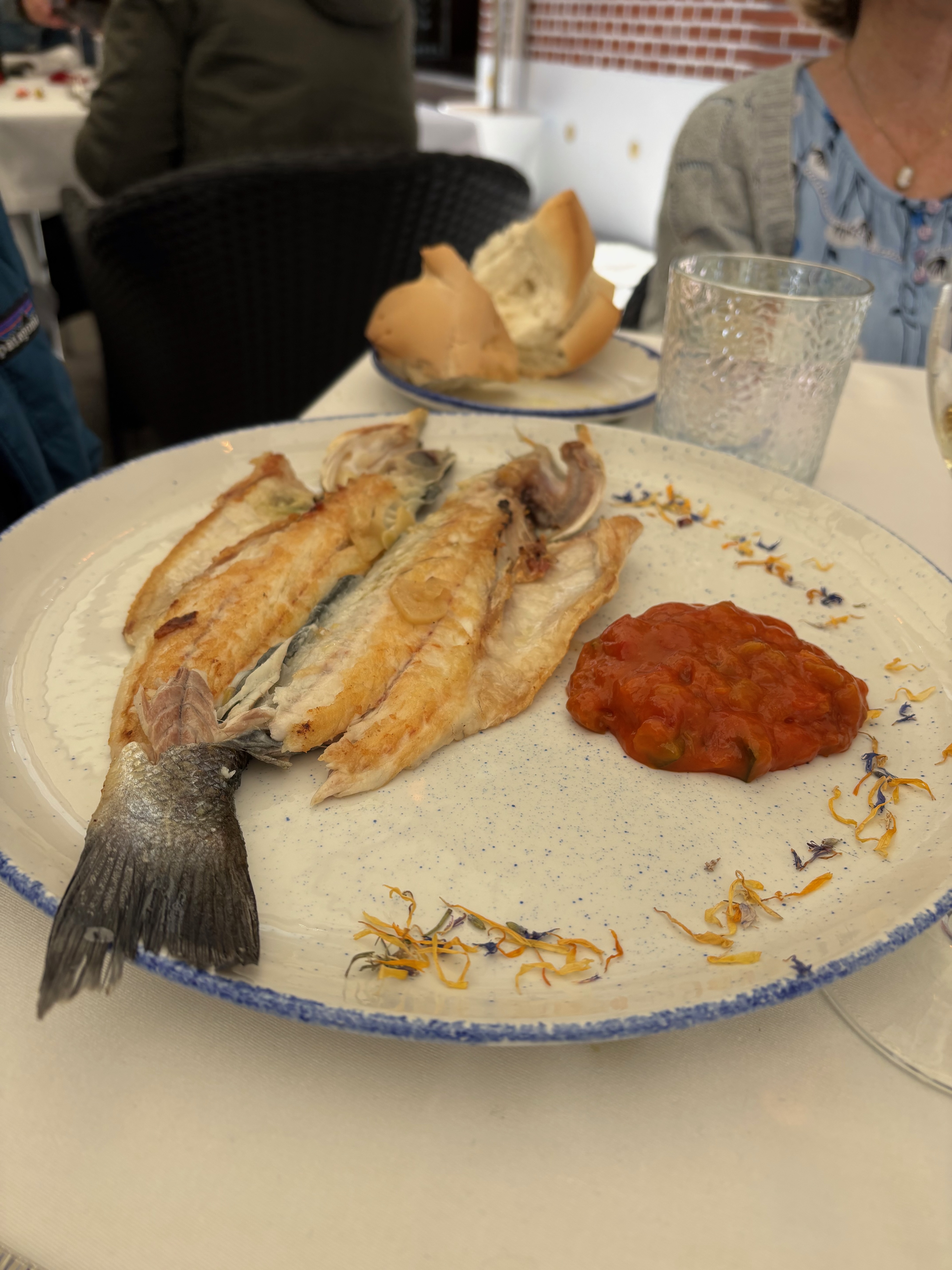
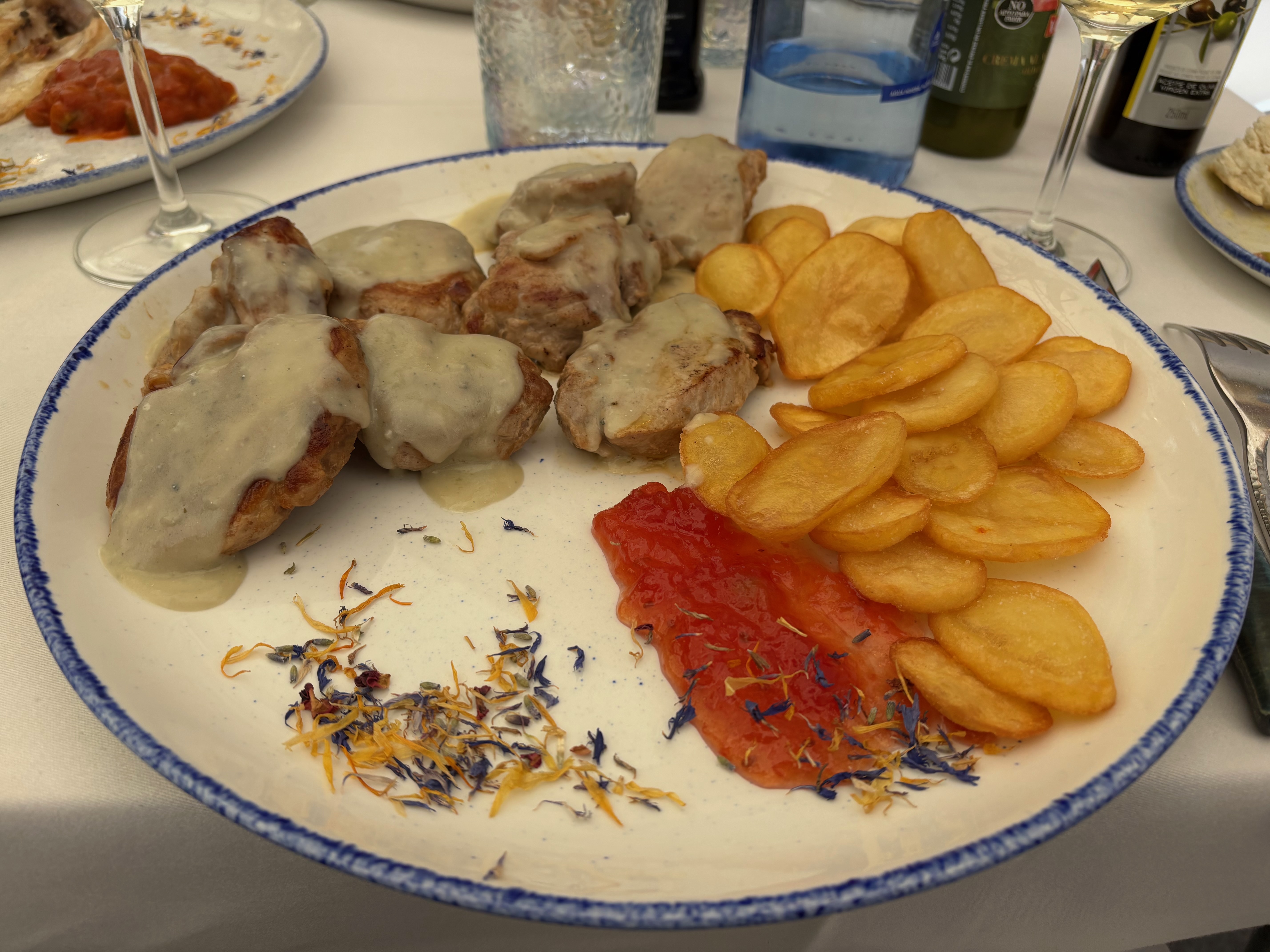
Joanna’s entrée was the Lubina a la Espalda (Sea Bass), Beverly’s the Beef Tenderloin (Solomillo Ternera) with Roquefort sauce while I had an equally good Pork Tenderloin (Solomillo Cerdo) with Roquefort sauce. It was all good and after some of our hit and run meals, a pleasure to consume. The total, including a charge for bread, a liter of water and two coffees, came to 133 Euros ($151), well worth the expense.
After the meal Joanna and Bev went off to do some shopping and I strolled back to the apartment, reflecting on the good time we had while visiting this underappreciated city. Our next stop Segovia would also be new to us, and we looked forward to exploring it like we had done here. See you there in the next post.
Links
Sky of Salamanca: https://artsandculture.google.com/story/el-cielo-de-salamanca-universidad-de-salamanca/UgWRhHBcepIpqw?hl=en-US
Art Nouveau Museum: https://www.museocasalis.org/
Museo de Historia de la Automoción: https://museoautomocion.com/
Restaurante Isidro: https://restauranteisidro.com/
Discover more from 3jmann
Subscribe to get the latest posts sent to your email.


 3jmann