May 8 – 9
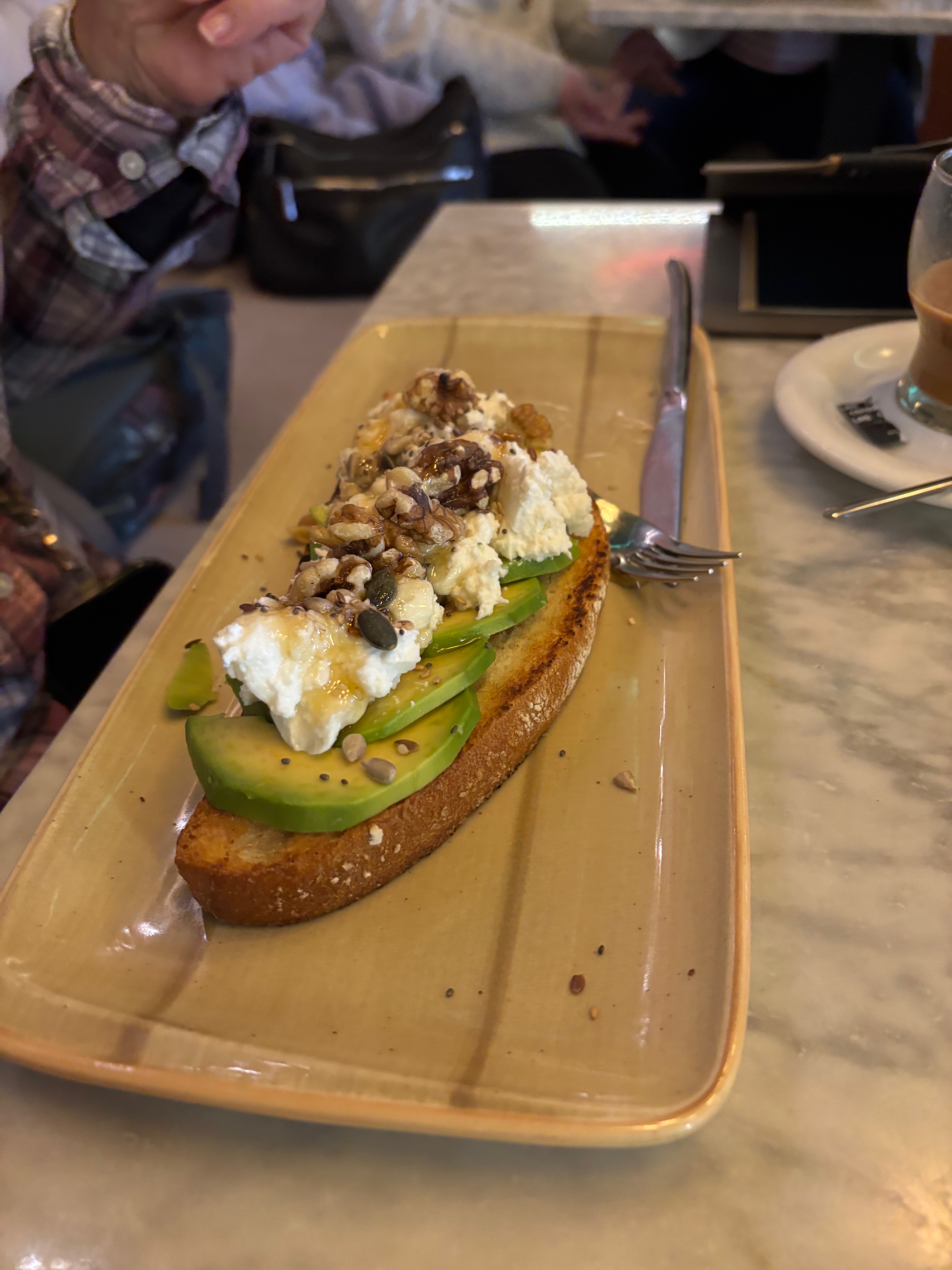
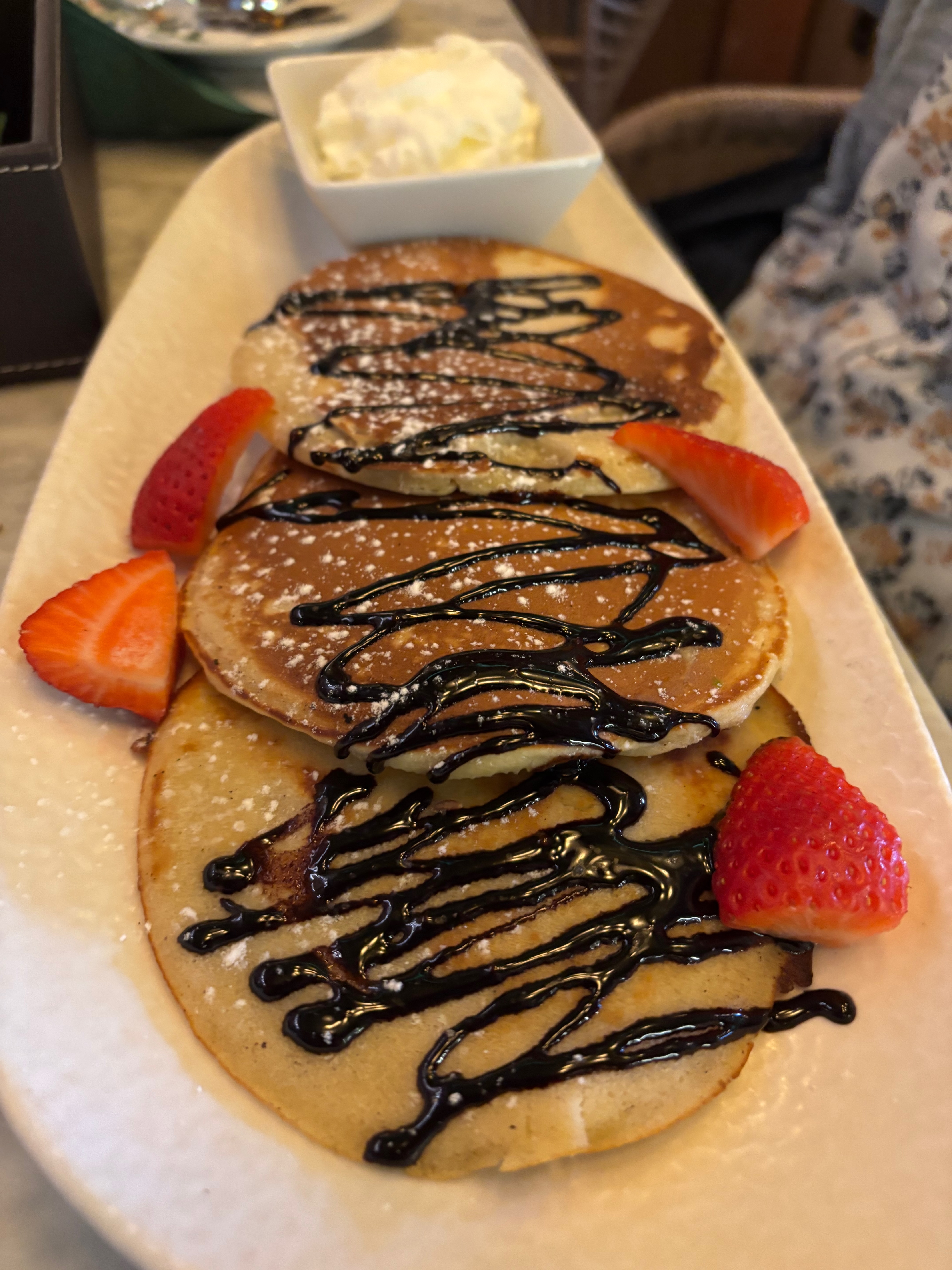
Leaving Plaza de San Martin, we continued on what had now become familiar Calle Juan Bravo until we reached Plaza Mayor and decided to check out Restaurante Pandora for breakfast. It’s a busy place and so we were glad to get seated inside, ordering two breakfast specials, the first an Avocado toast with fresh cheese and walnuts (7.50 Euros) and the second the Homemade pancakes with cream and chocolate (6.50 Euros), each including coffee (and toast if we had ordered some other options). We enjoyed the food and prices so much that we would return the next day for another breakfast before heading out of town.
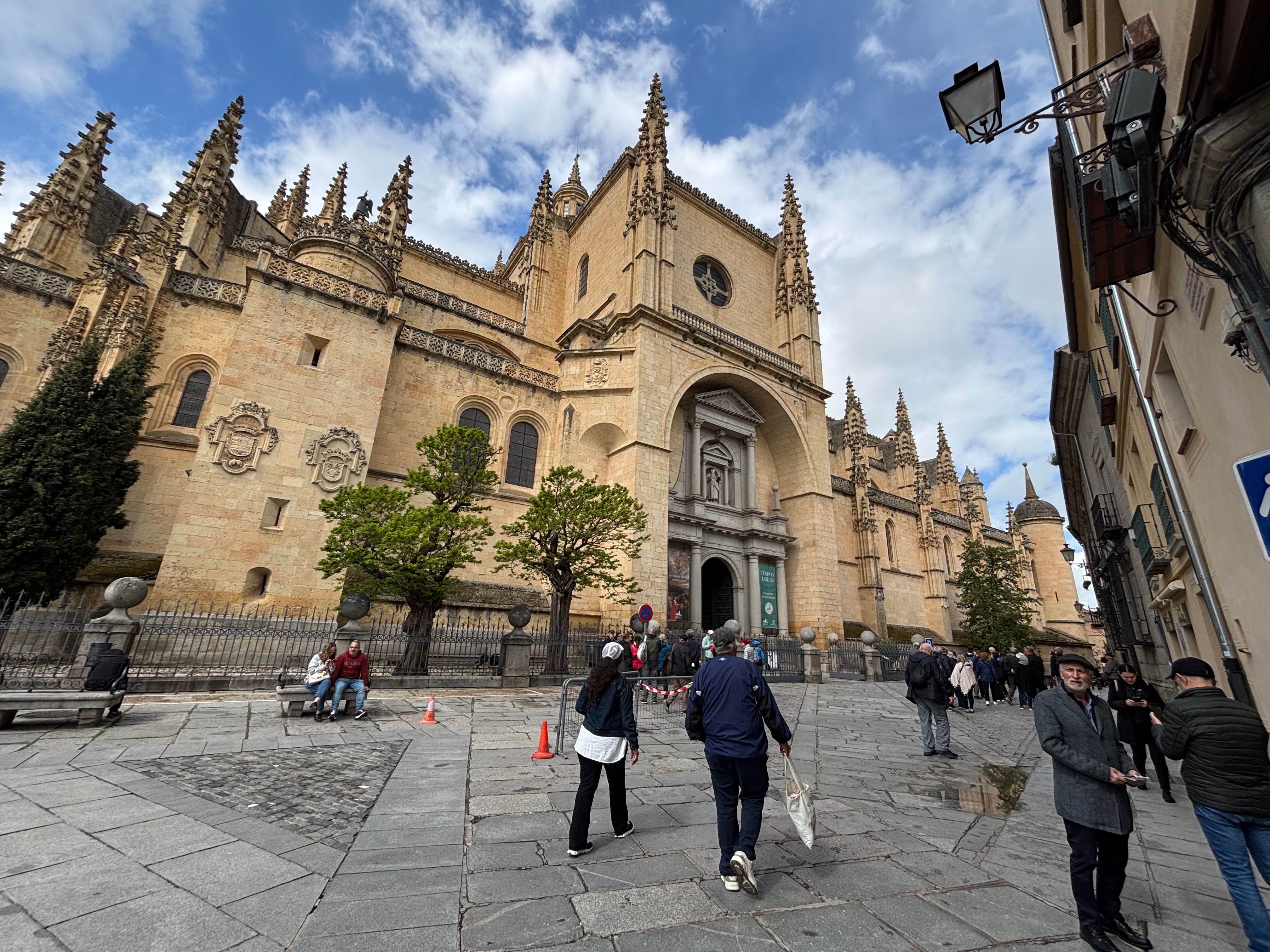
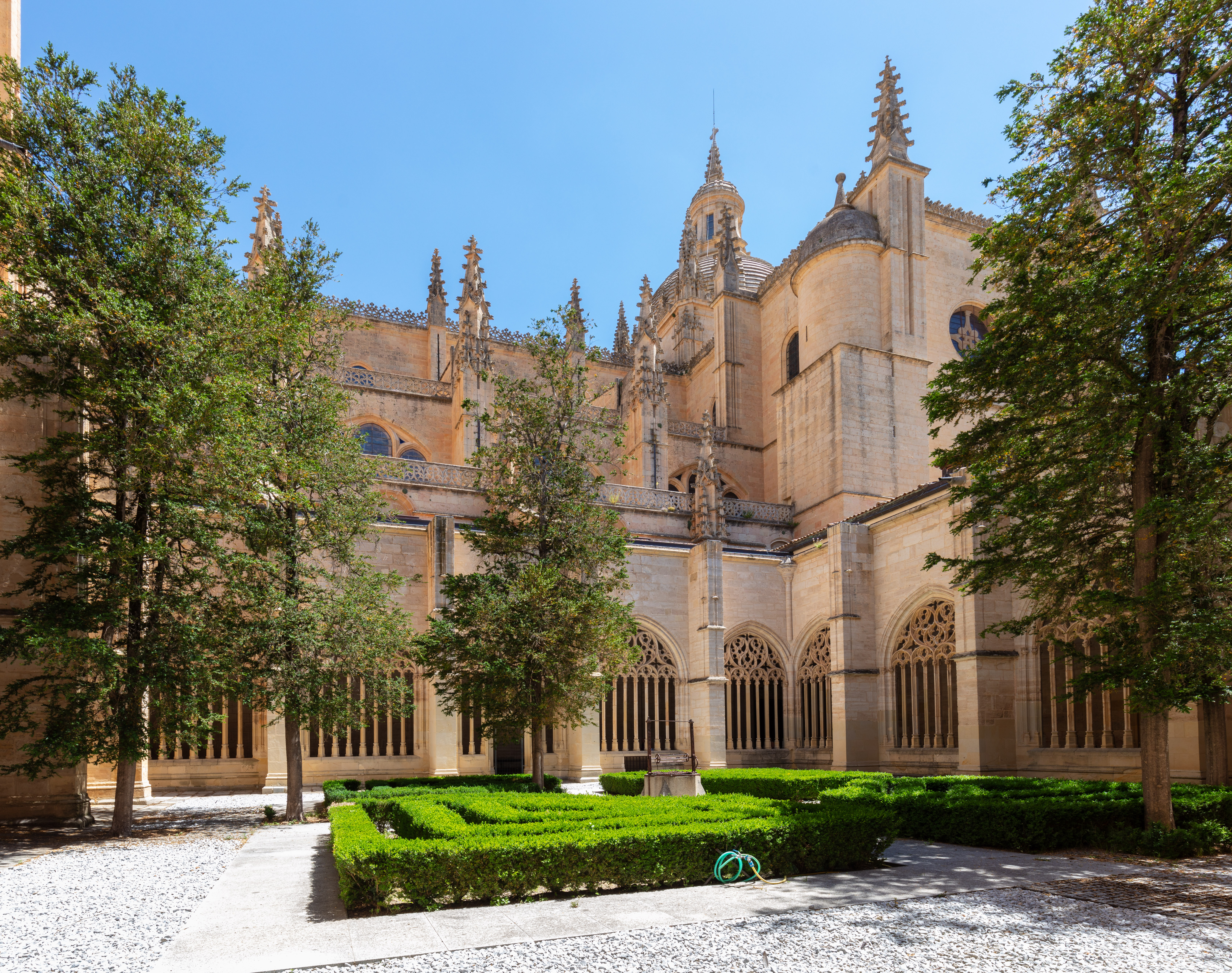
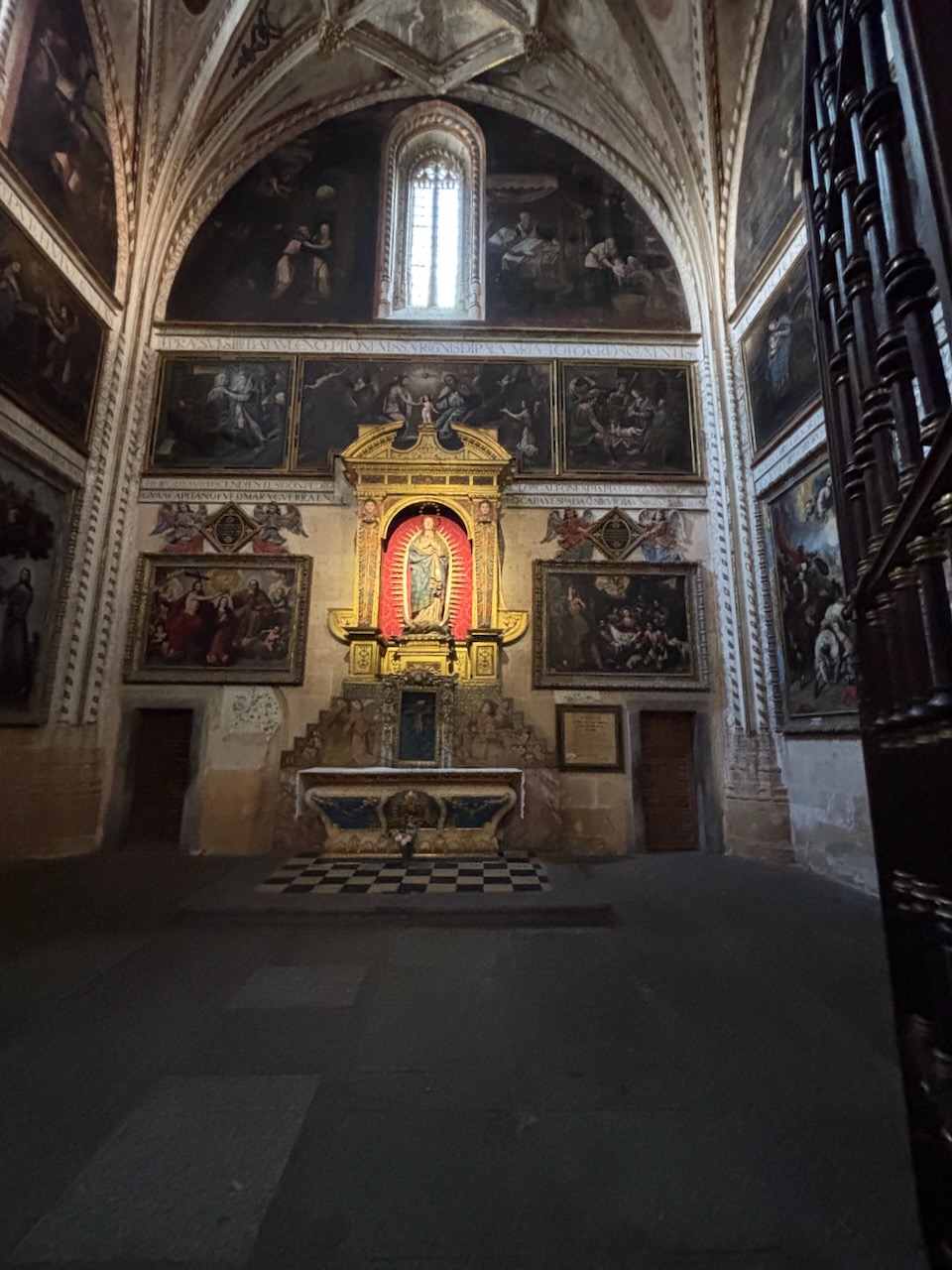
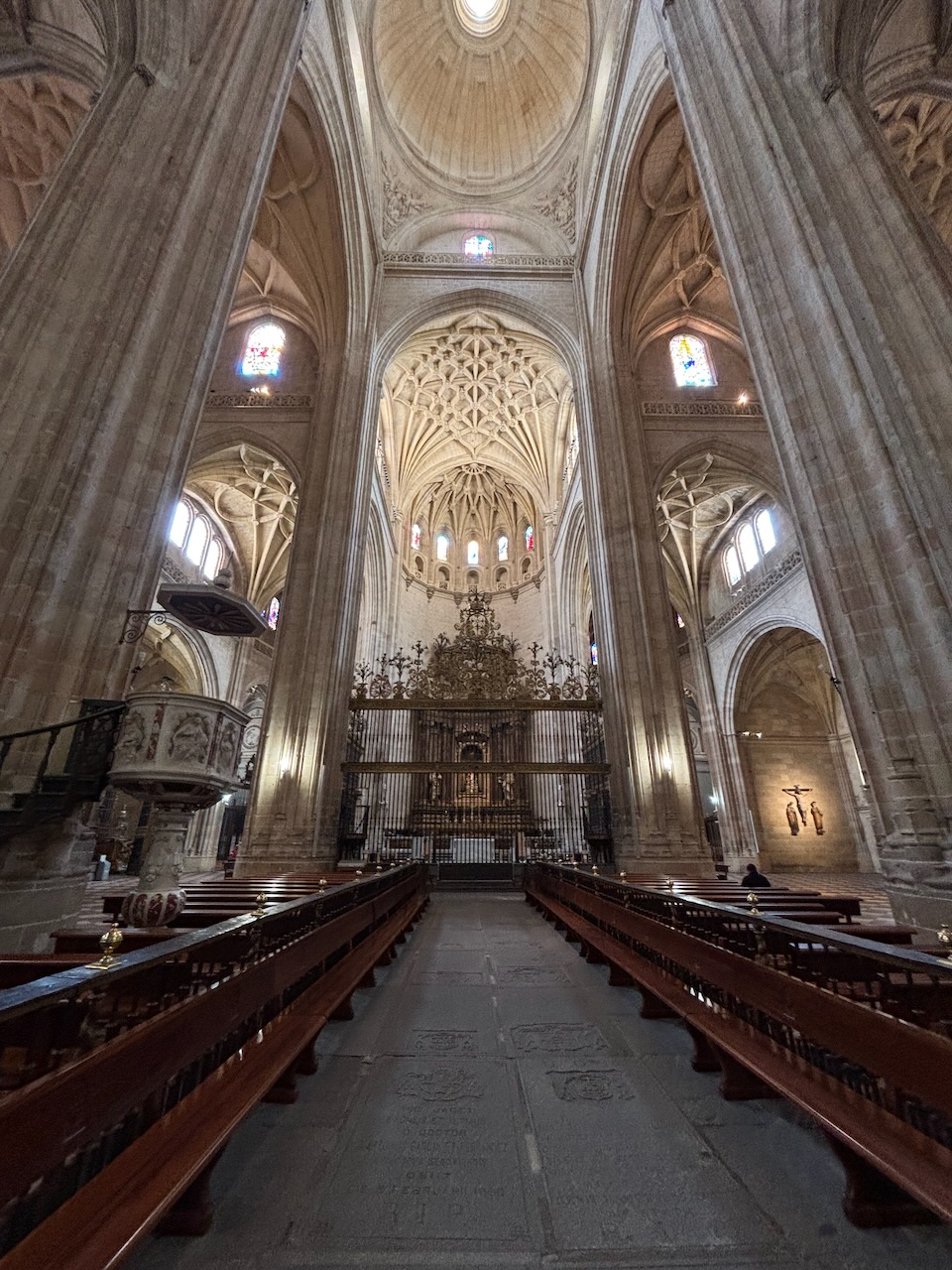
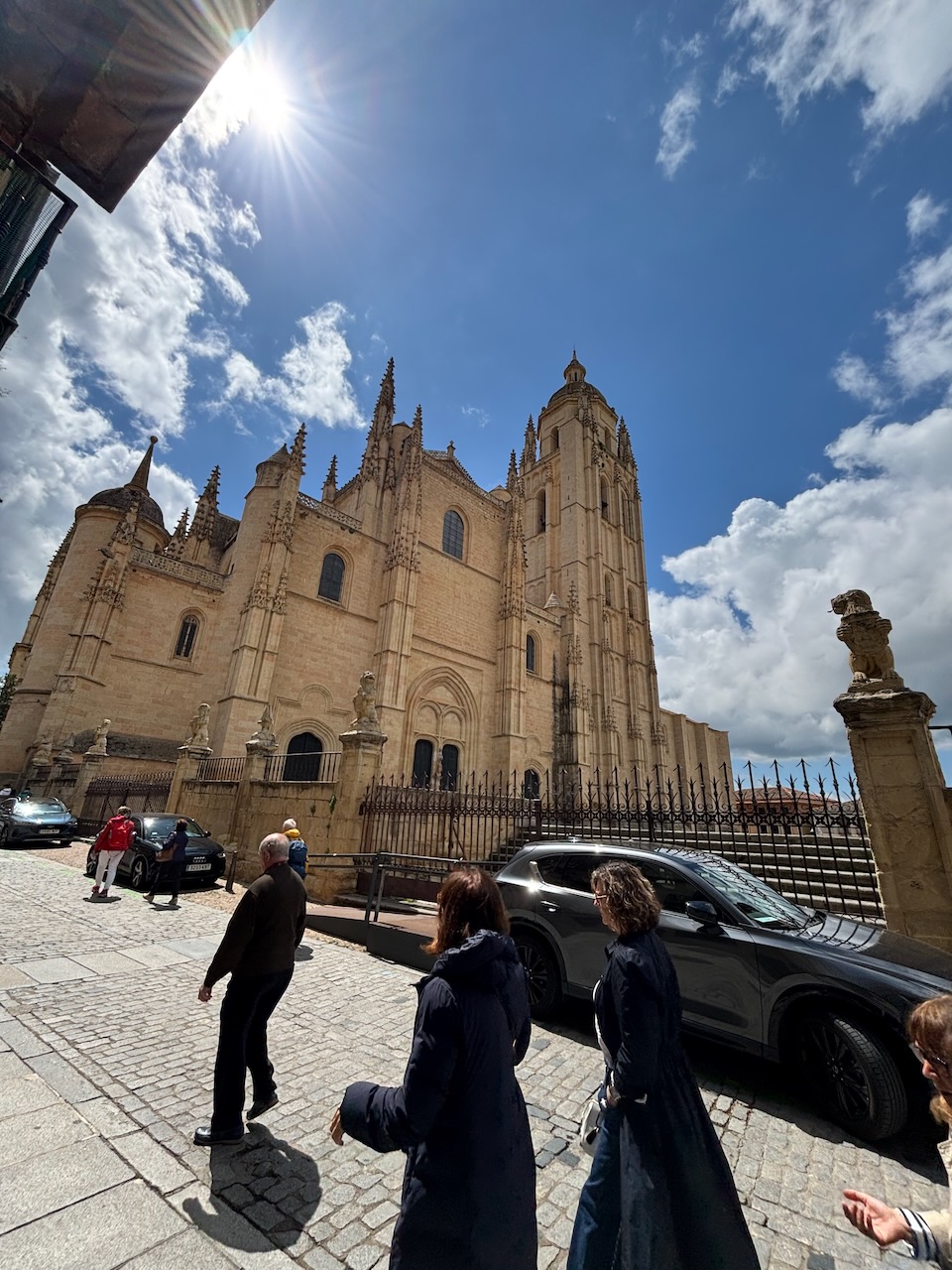
Leaving the restaurant our next stop was the nearby Segovia Cathedral, built in the Flamboyant style and dedicated in 1768, it is one of the latest Gothic cathedrals in Europe. The cathedral had three construction stages: the first between 1525 and 1557 the second between 1578 and 1607 and the last construction campaign was carried out between 1607 and 1685. Like most cathedrals, it is beautiful and intended to impress upon the faithful the all-encompassing power of God.
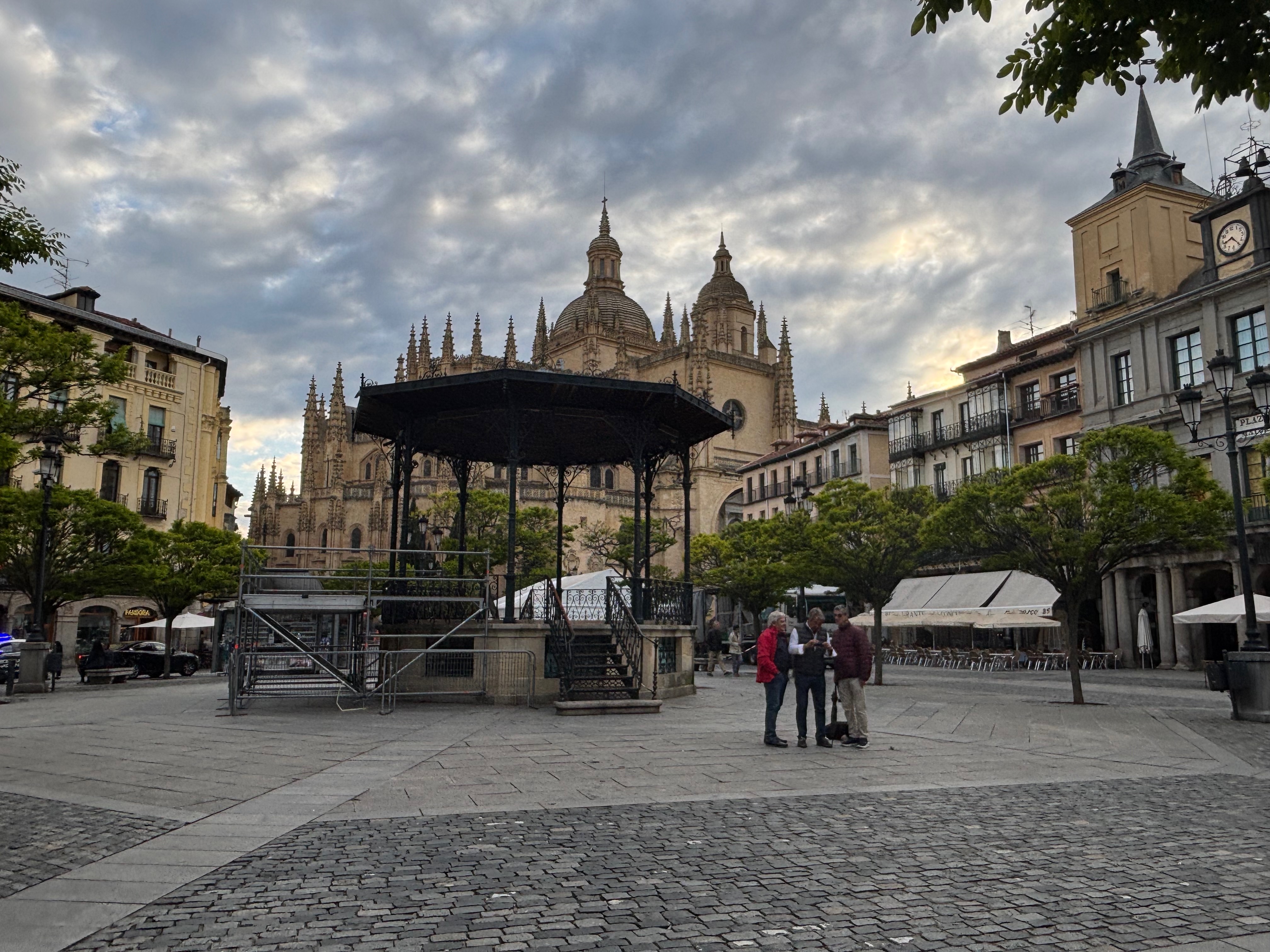
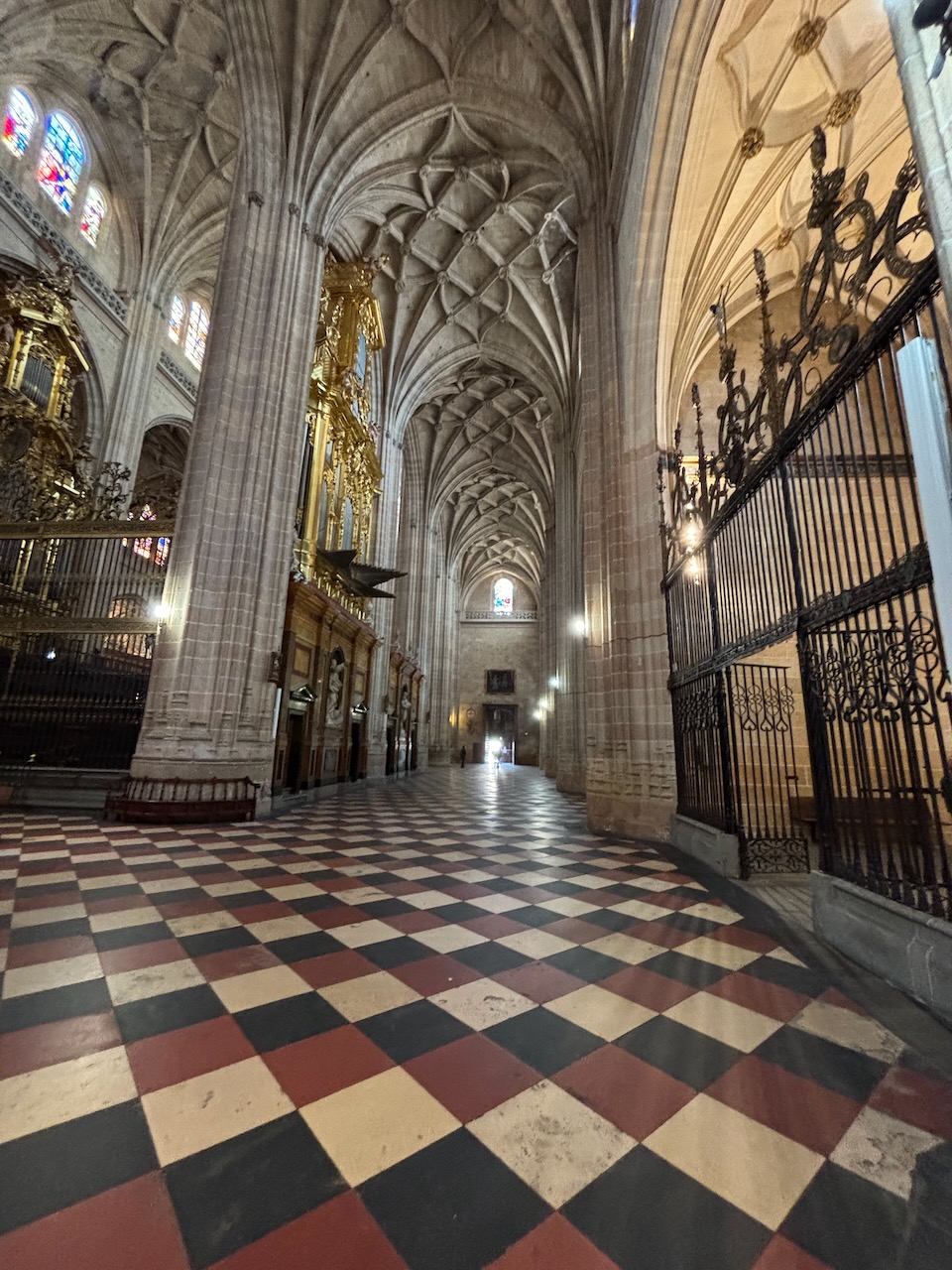
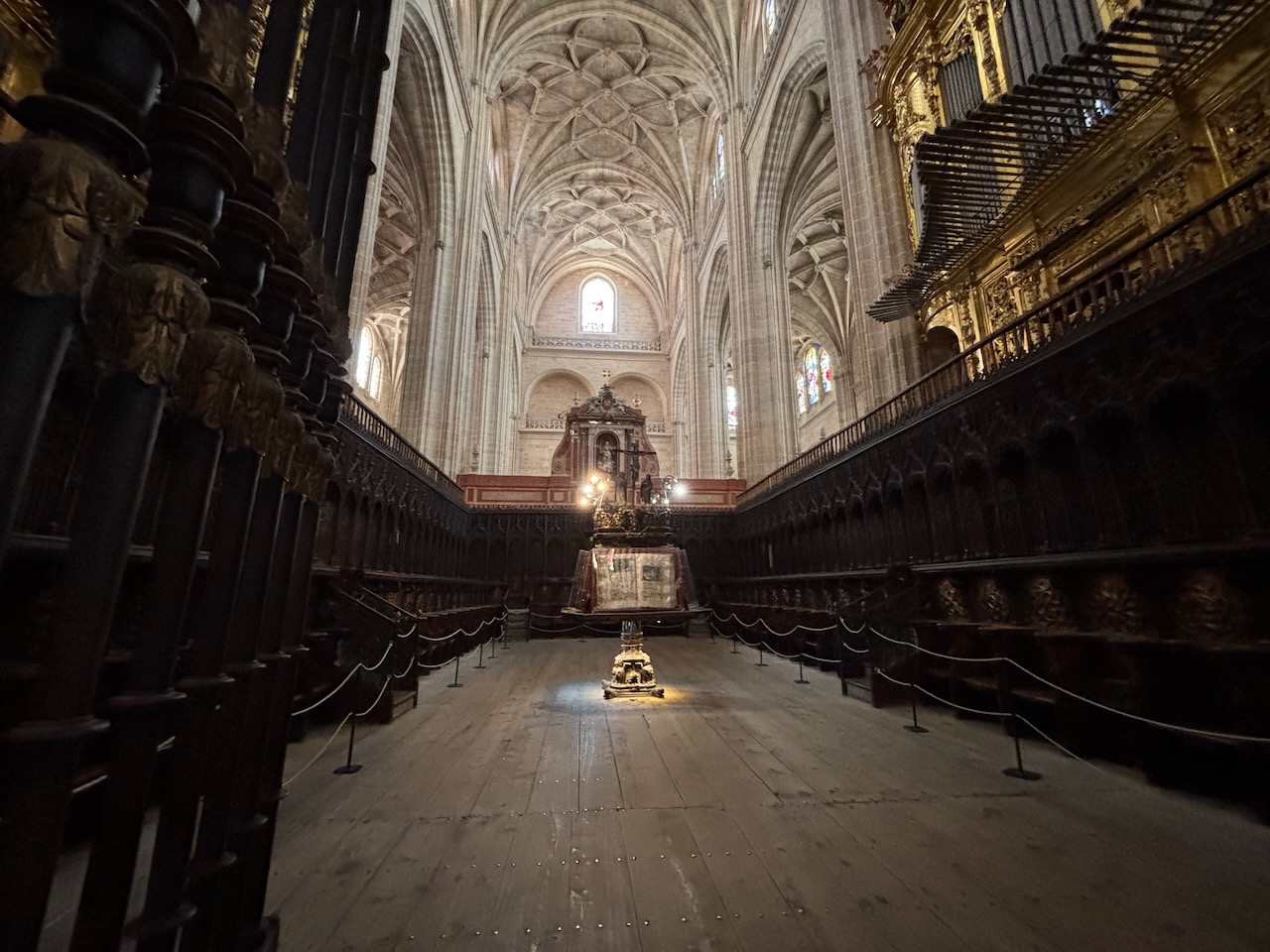
Highlights were the choir, which features finely carved wooden stalls from the previous church (1400s), the main altar, and the cloister, which was transferred stone by stone from the old cathedral of Santa Maria, and is the only part of the old temple that has survived to the present day.
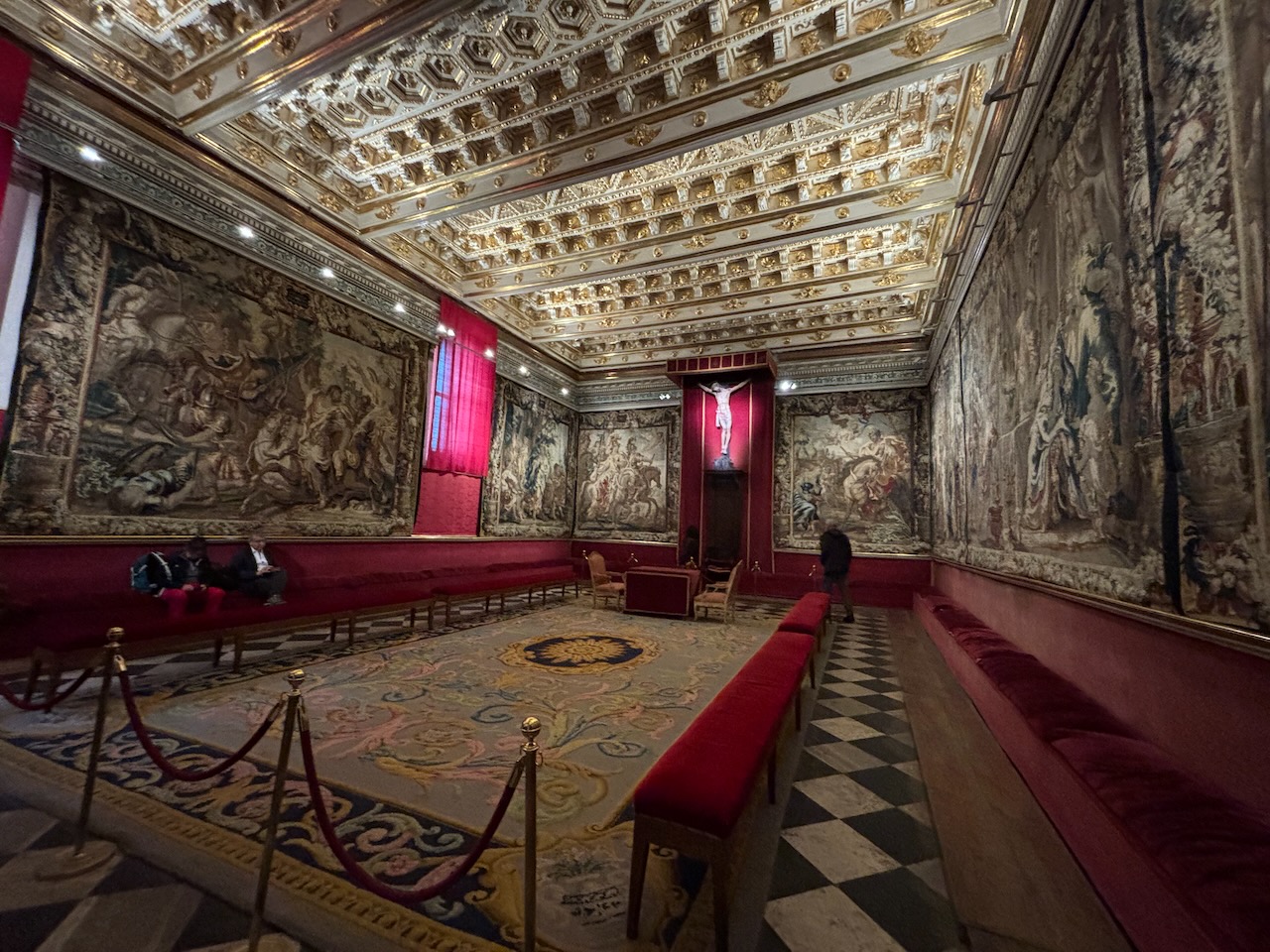
We left the Cathedral and walked the blocks to the Alcazar de Segovia, paying our admission (7 Euros) and began our tour of one of the most fanciful and striking castles in all of Spain, thanks to a Romantic Age faux-medieval remodel job. It’s the closest thing Spain has to its own Neuschwanstein, and a castle has stood on this spot since around 1100. Throughout the Middle Ages, this fortified palace was one of the favorite residences of the monarchs of Castile and a key fortress for controlling the region.
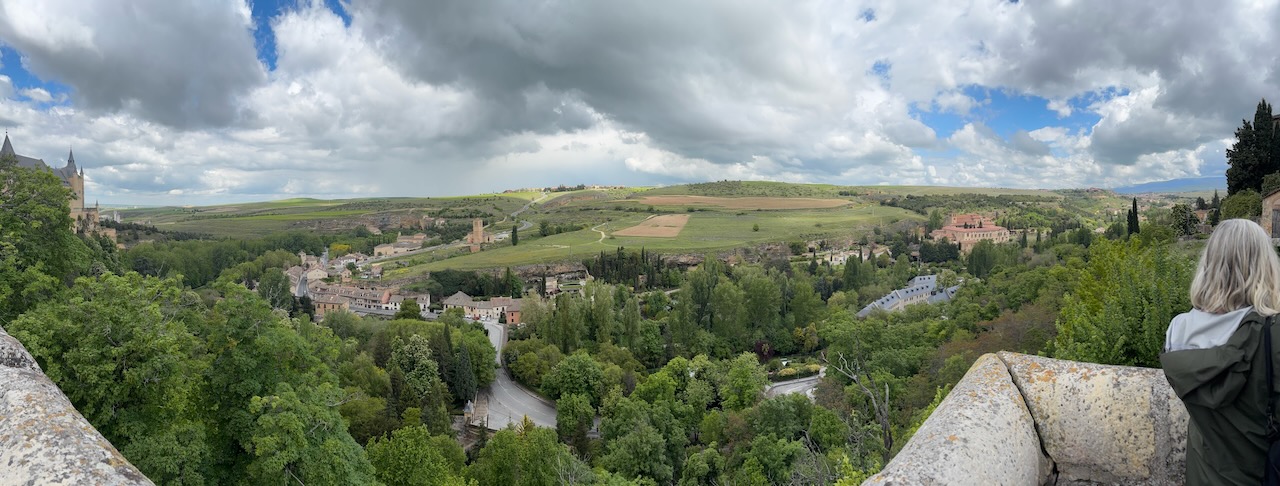
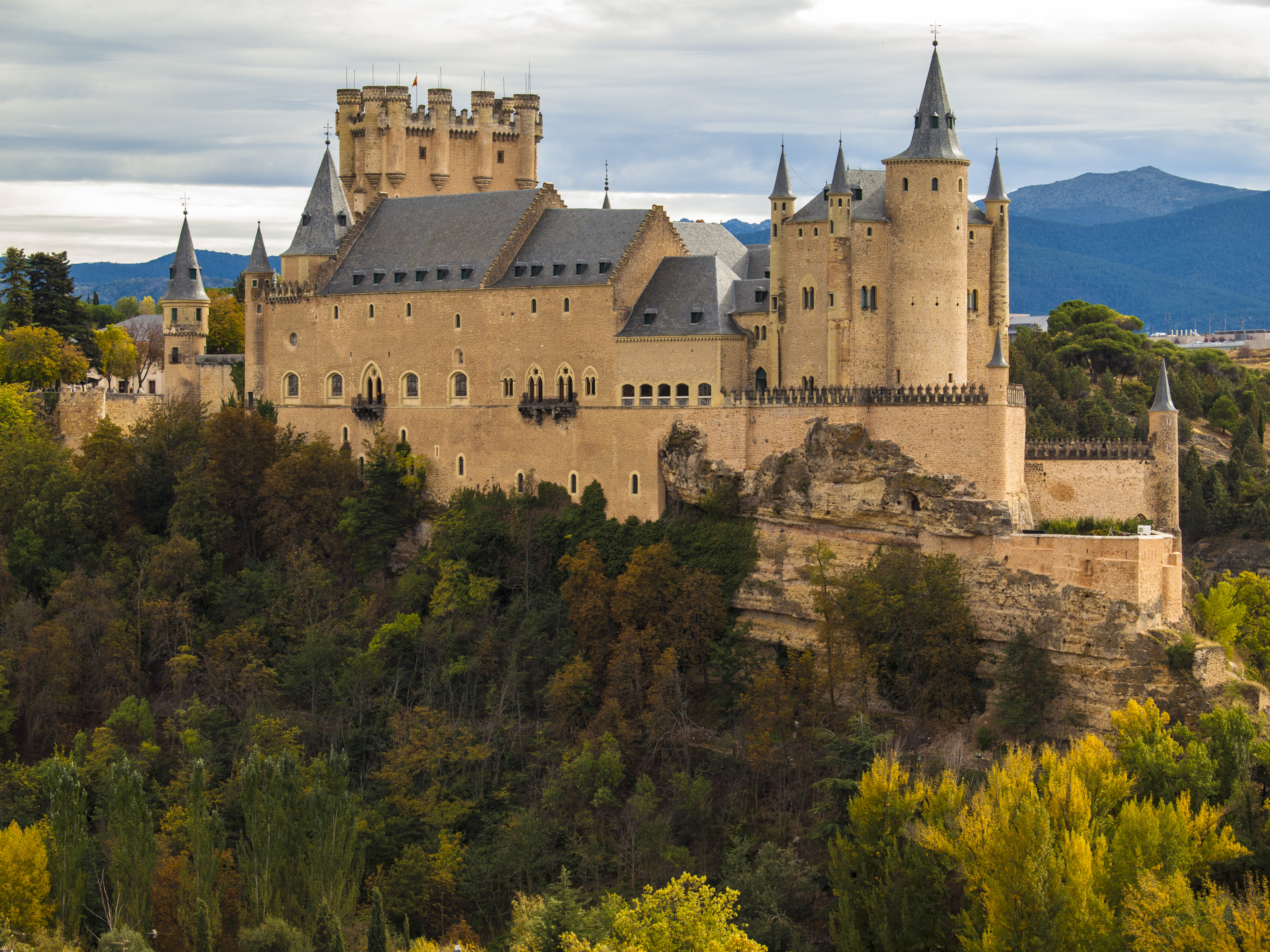
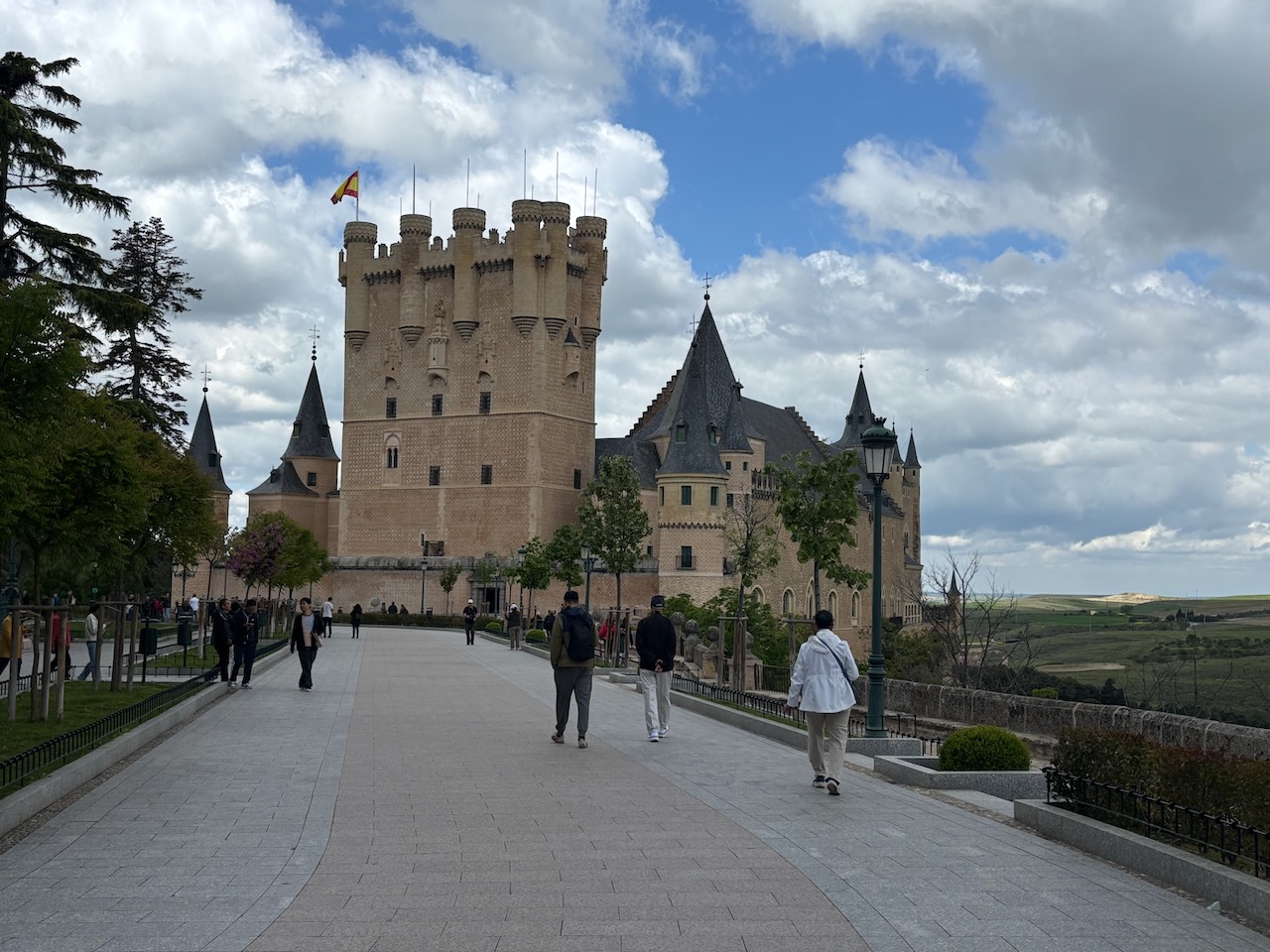
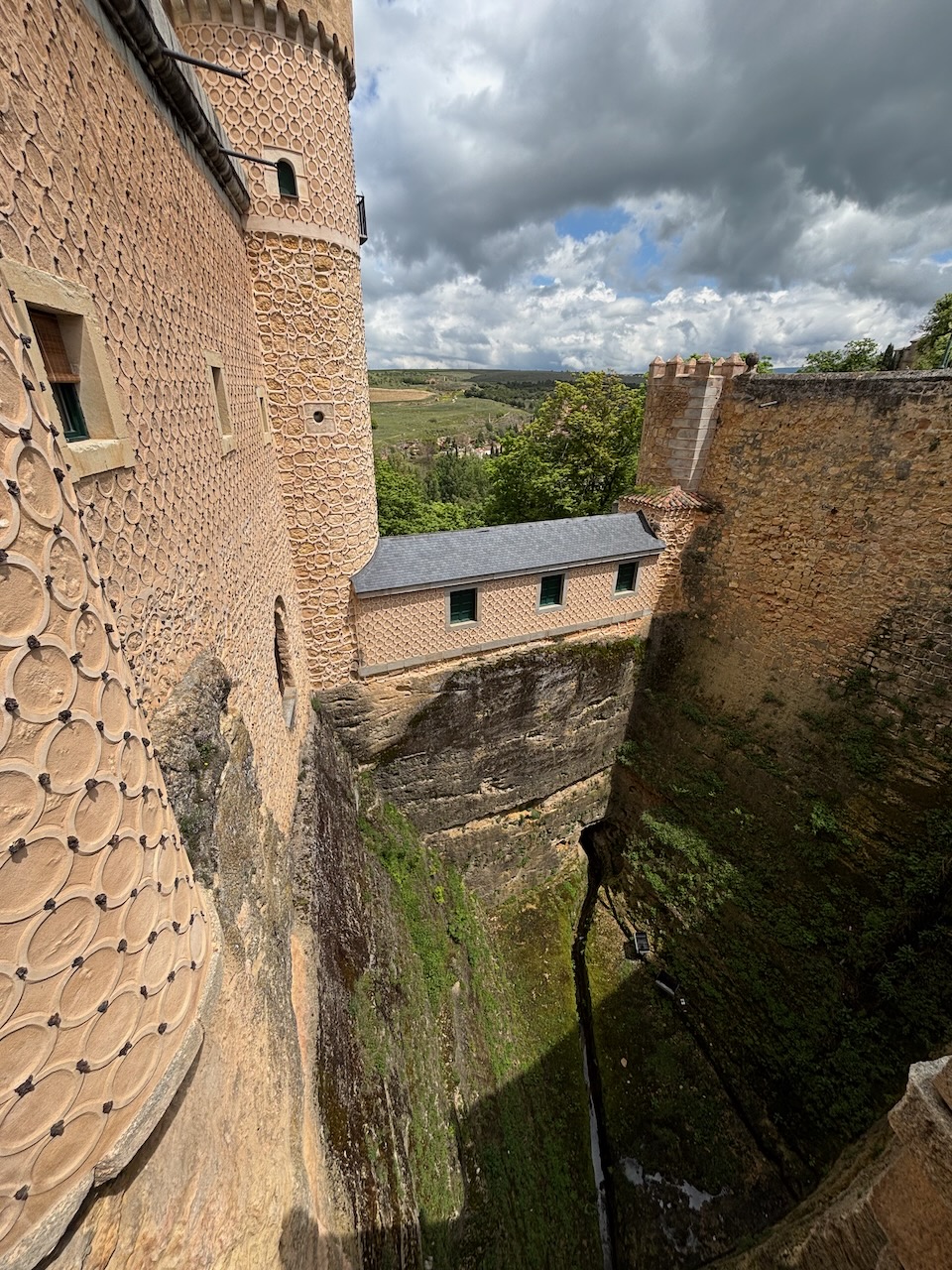
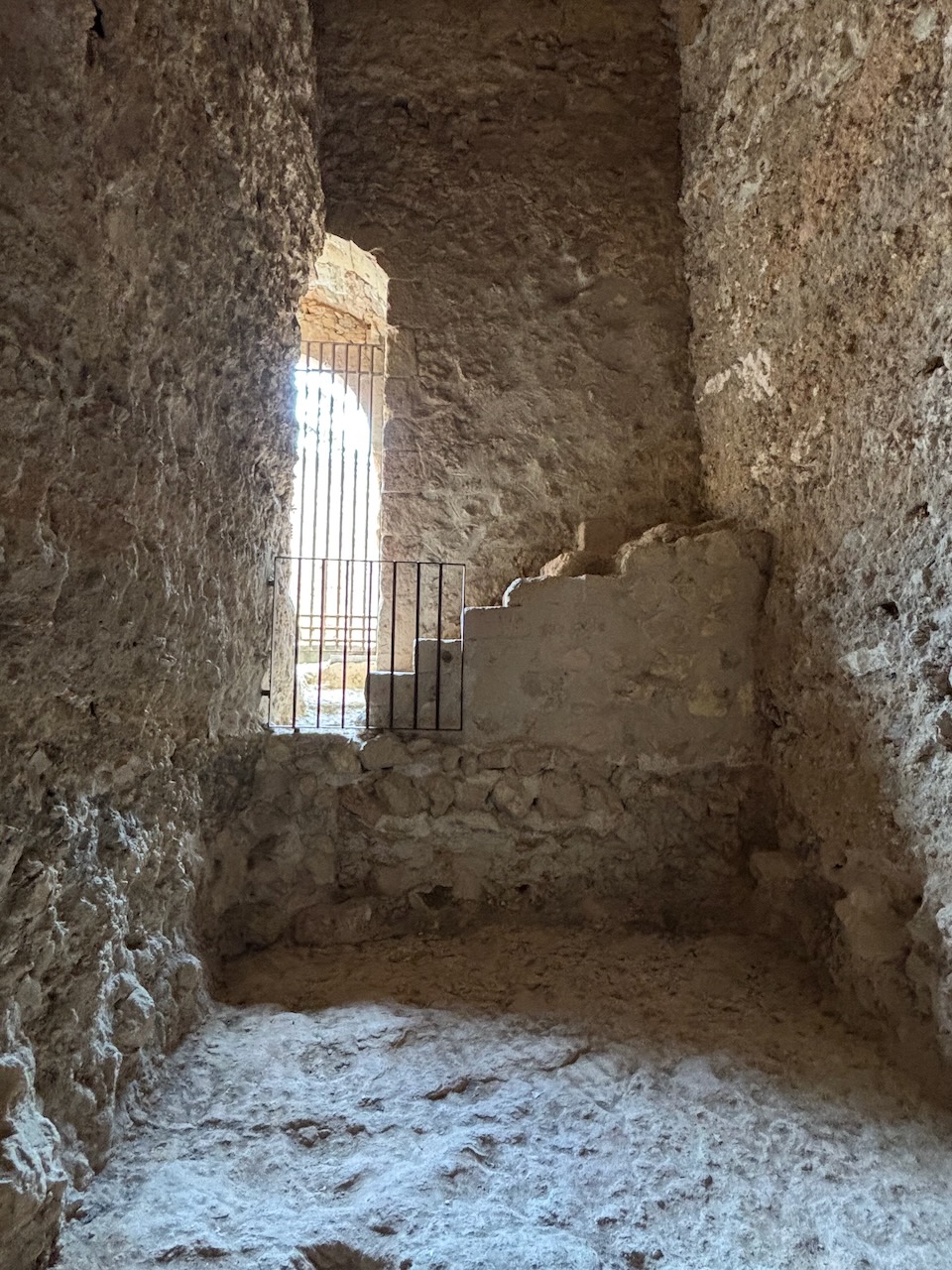
The Alcázar grew through the ages, and its function changed many times: After its stint as a palace, it was a prison for 200 years, and then a royal artillery school. It burned in 1862, after which it was remodeled in the eye-pleasing style one sees today. Our self-guided tour started when we crossed the drawbridge over the moat and entered the castle, hitting the basement and foundation level before heading upstairs. The first room we entered featured knights on horseback and other examples of armor.
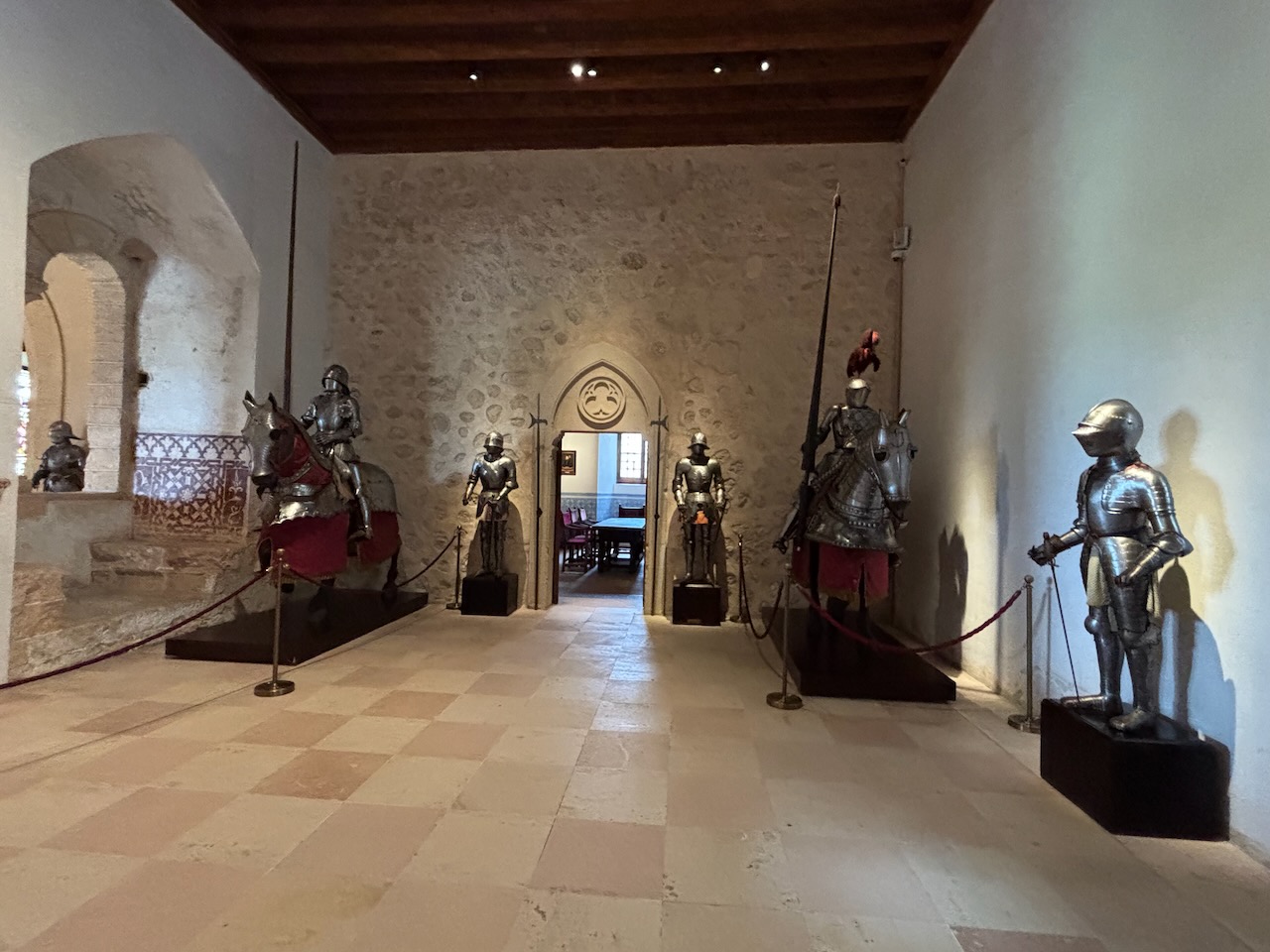
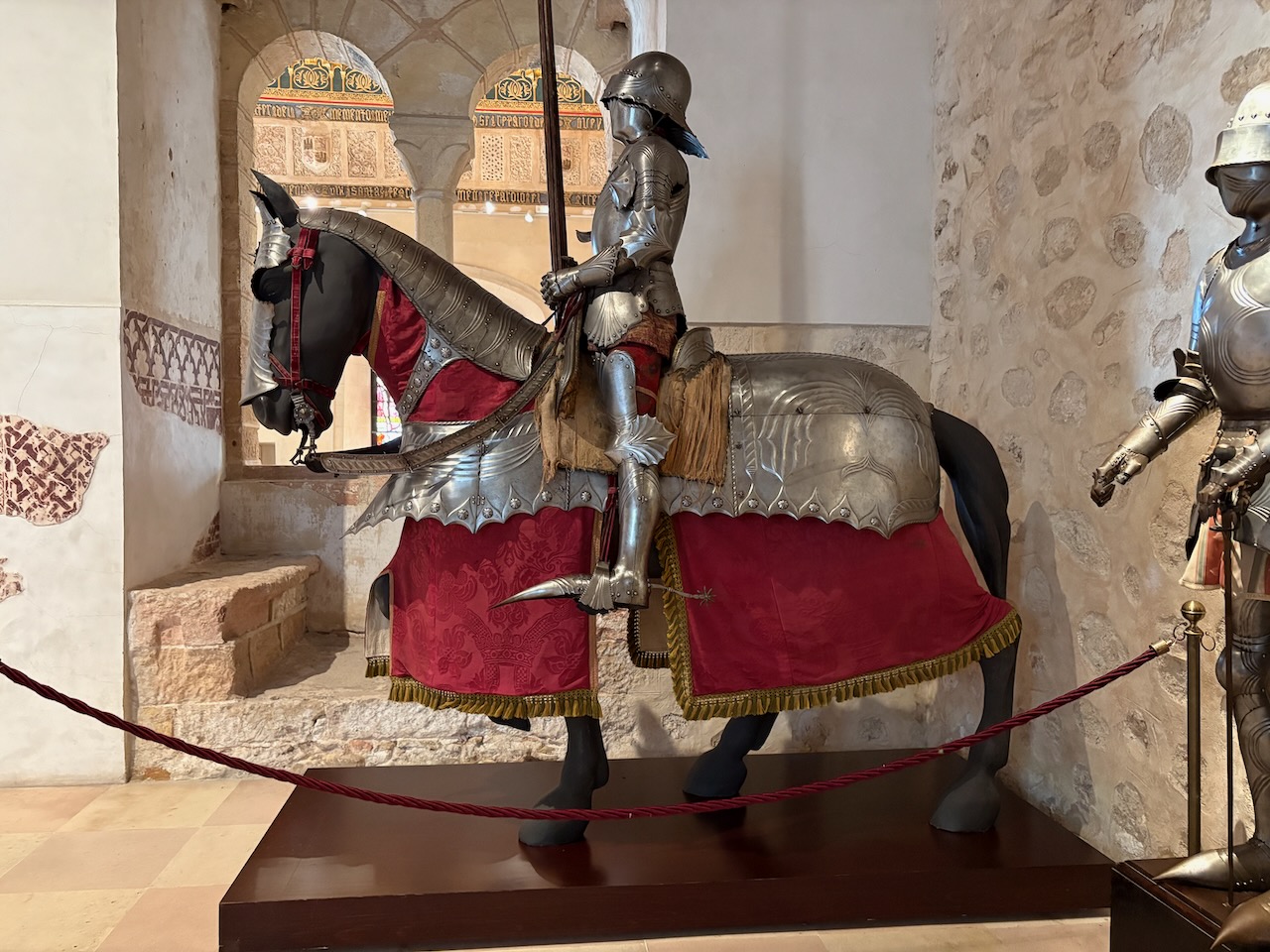
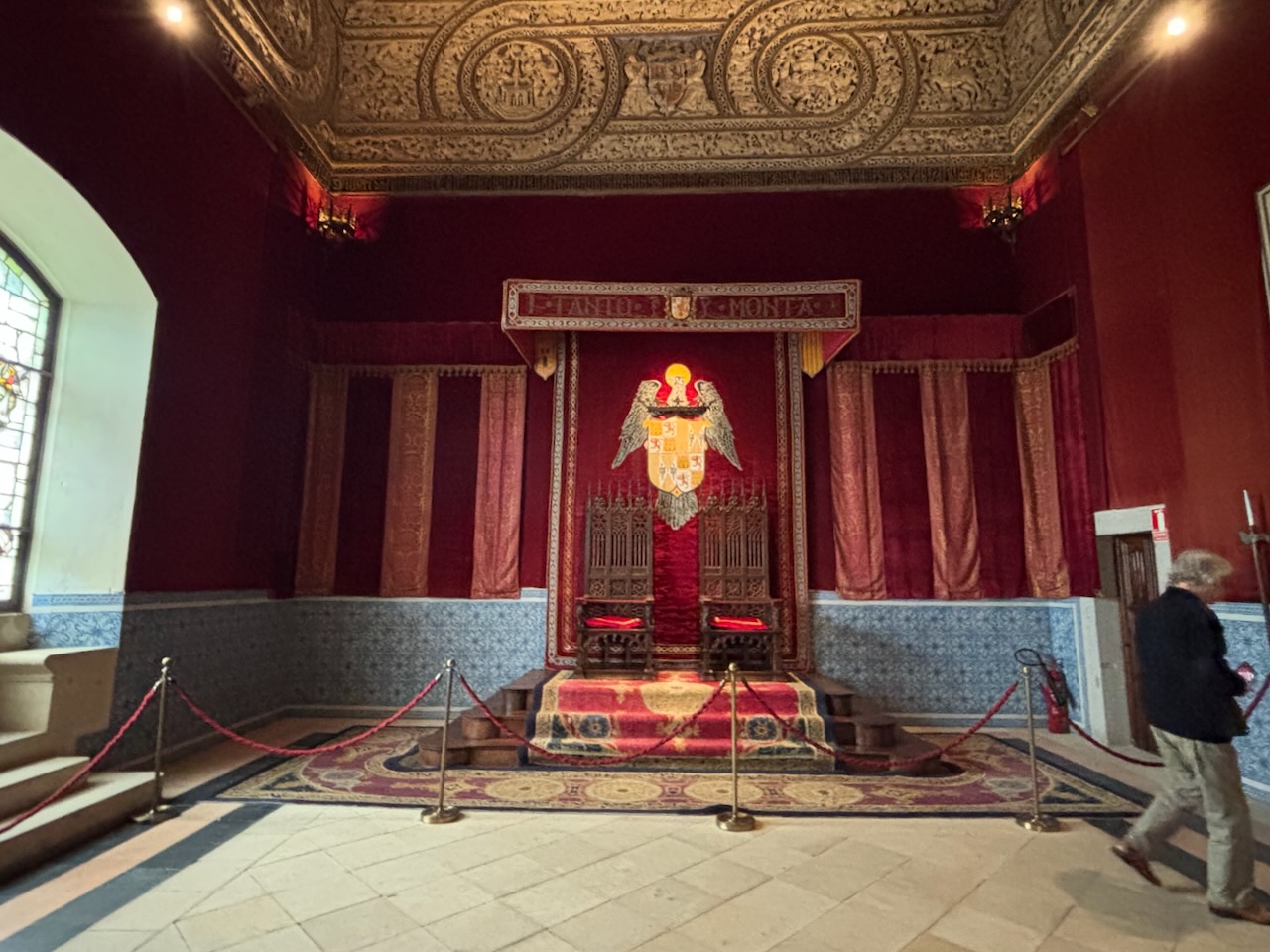
From there we found our way to the Throne Room, whose ceiling is the artistic highlight of the palace. Facing the throne are portraits of Ferdinand and Isabel, whose union made Spain a medieval powerhouse. Next, in the Gallery Room, with another fine ceiling, is a big mural of Queen Isabel the Catholic being proclaimed Queen of Castile and León in Segovia’s main square in 1474. Enjoying the views of the countryside from the huge windows, it’s clear the current building was designed in the “just for show” late 19th century, rather than the original “danger lurks around every corner” Middle Ages.
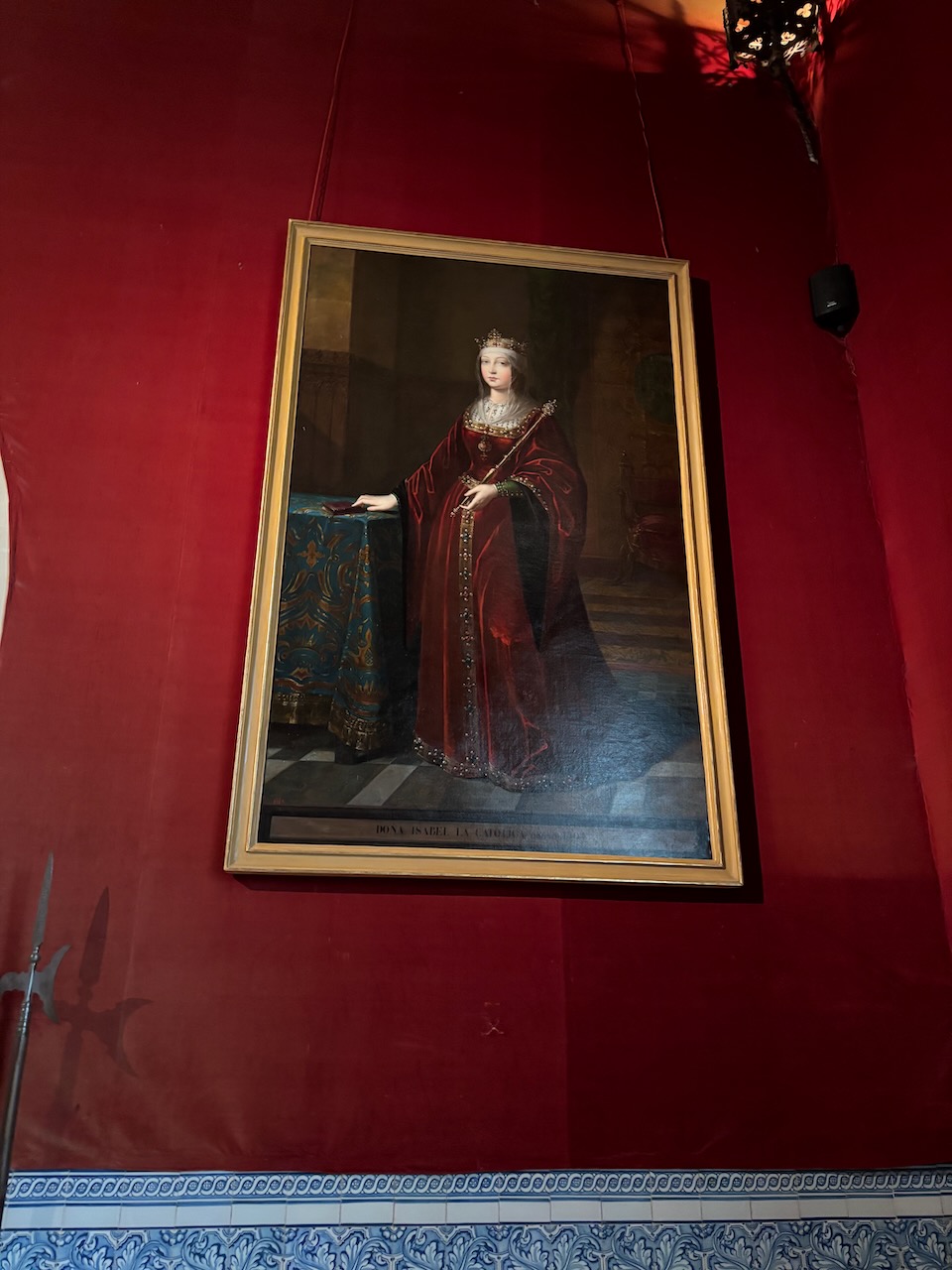
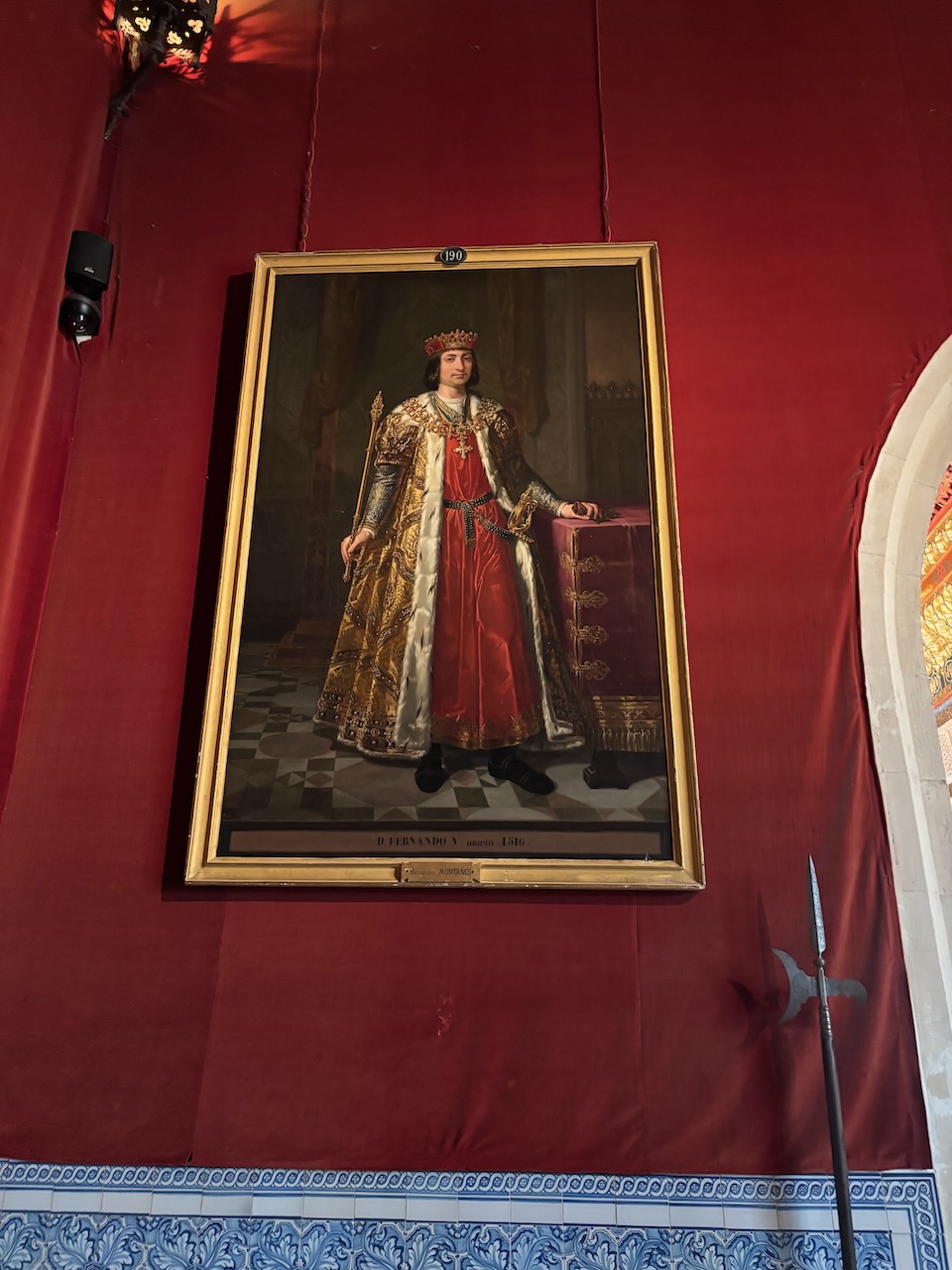
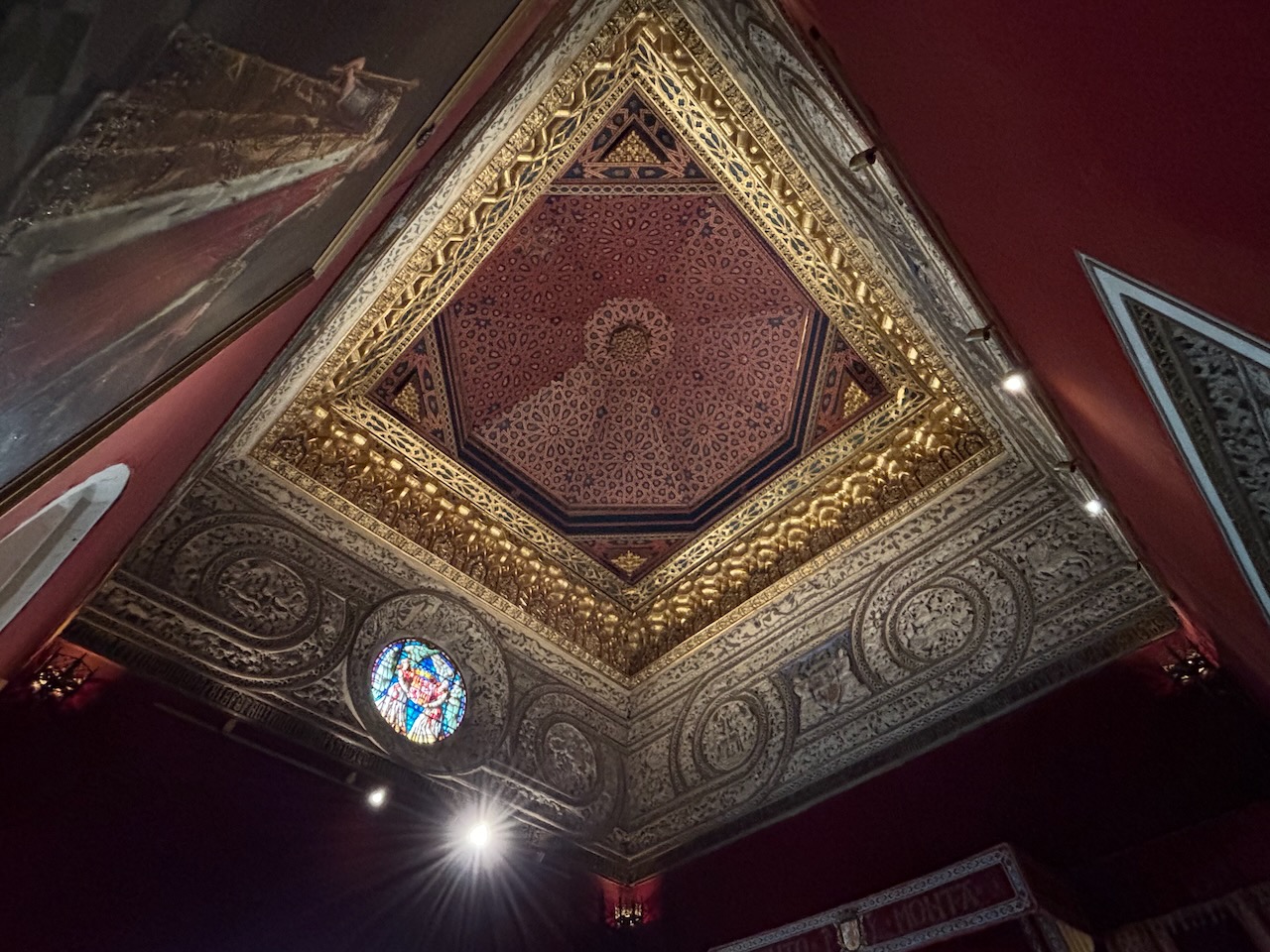
We passed through the Royal Bedroom (The bed has a brocade cover woven in gold) with hanging tapestries on the stony walls to get to the hall of Monarchs. The upper walls feature statues of the 52 rulers of Castile and León who presided during the long and ultimately successful Reconquista (711-1492) and the two decades afterward: from Pelayo (the first, over the room’s exit door and a bit to the left), clockwise to Juana VII (the last). Alfonso VI reconquered Castile from the Moors, turning Segovia Christian. Alfonso the Wise was one of several monarchs who made Segovia’s Alcázar their home. Another resident, Henry IV, “The Impotent,” died childless, paving the way for his half-sister Isabel to assume the throne and change history. There were only seven queens during the period (the numbered ones).
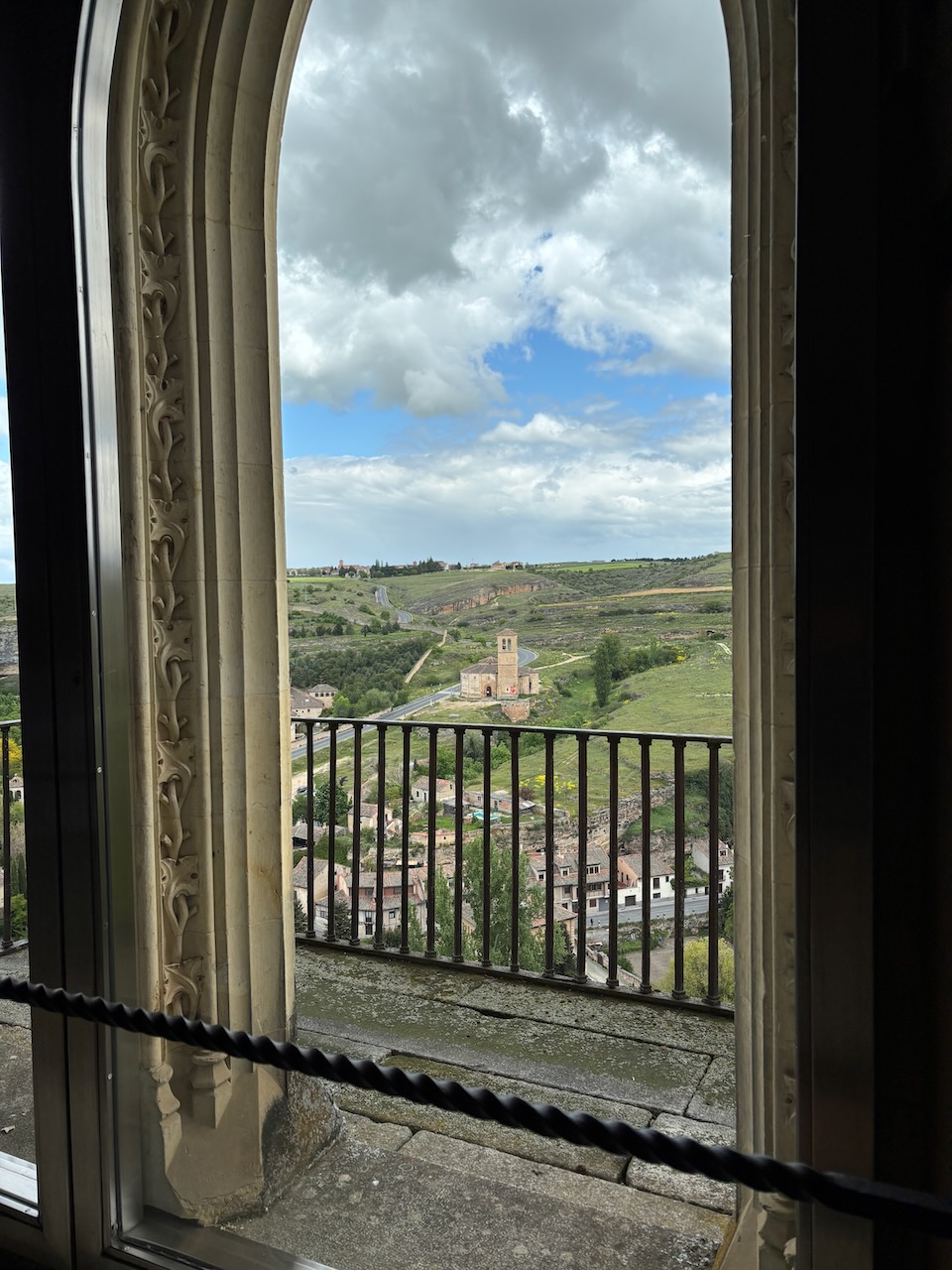
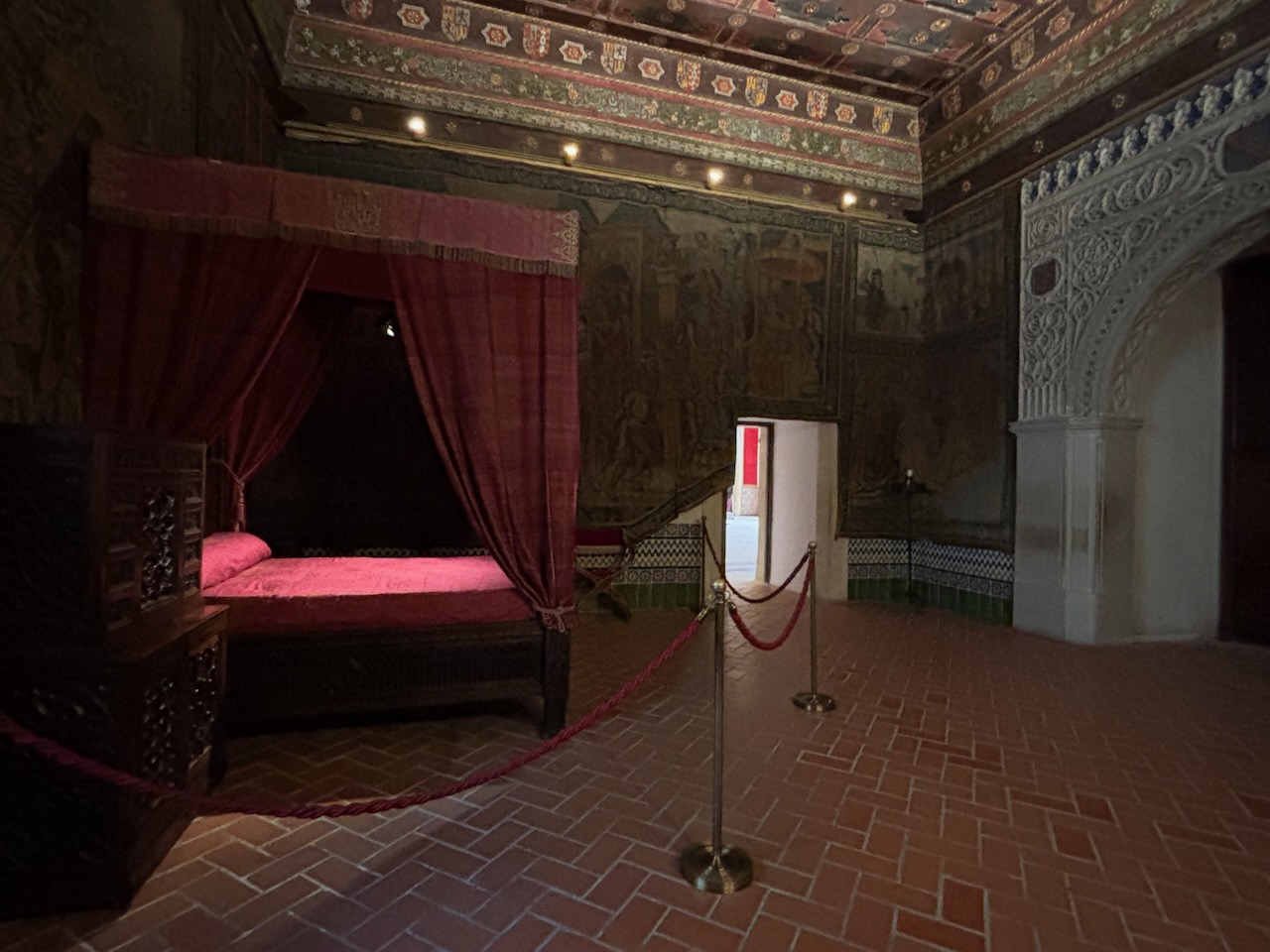
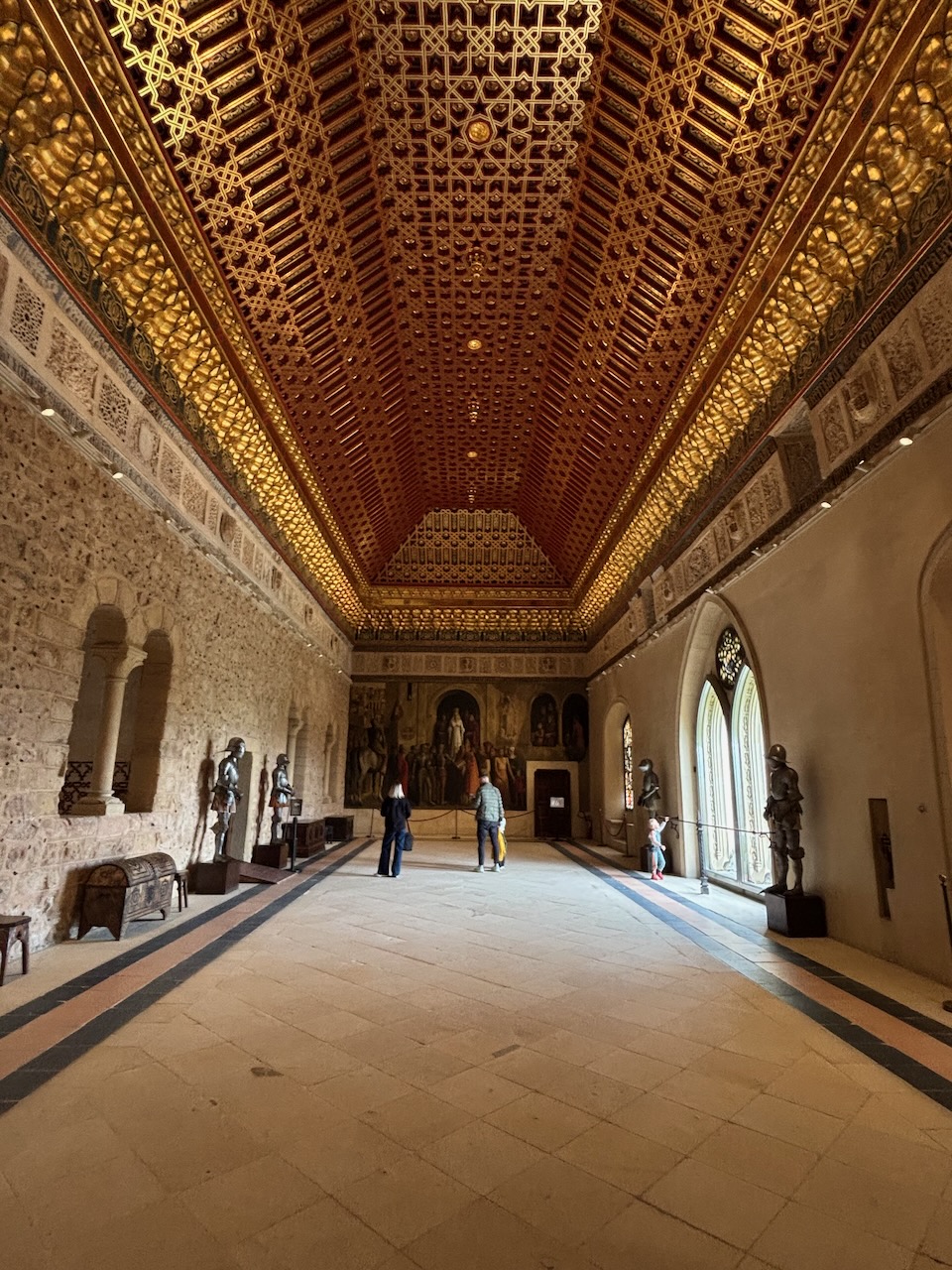
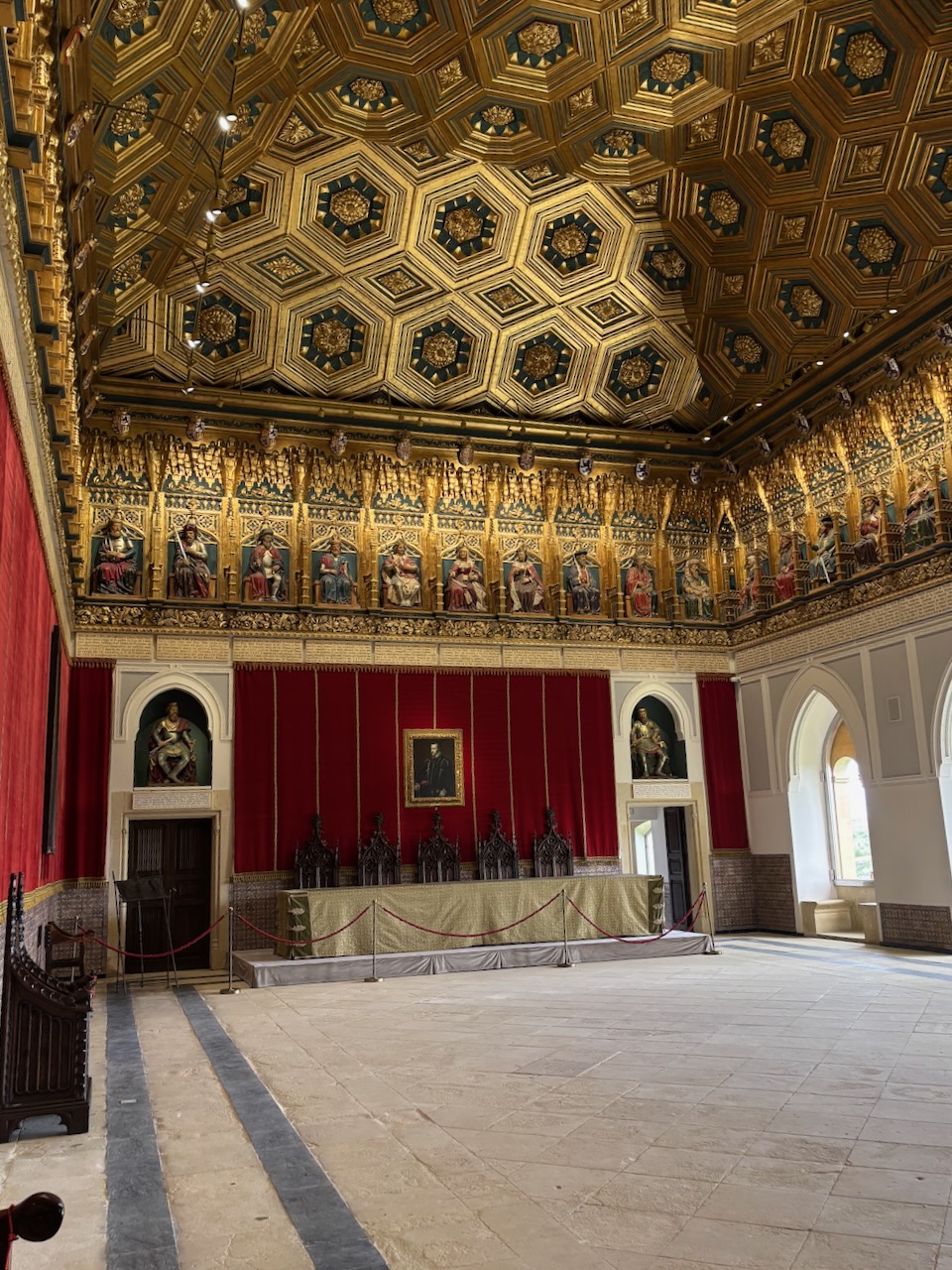
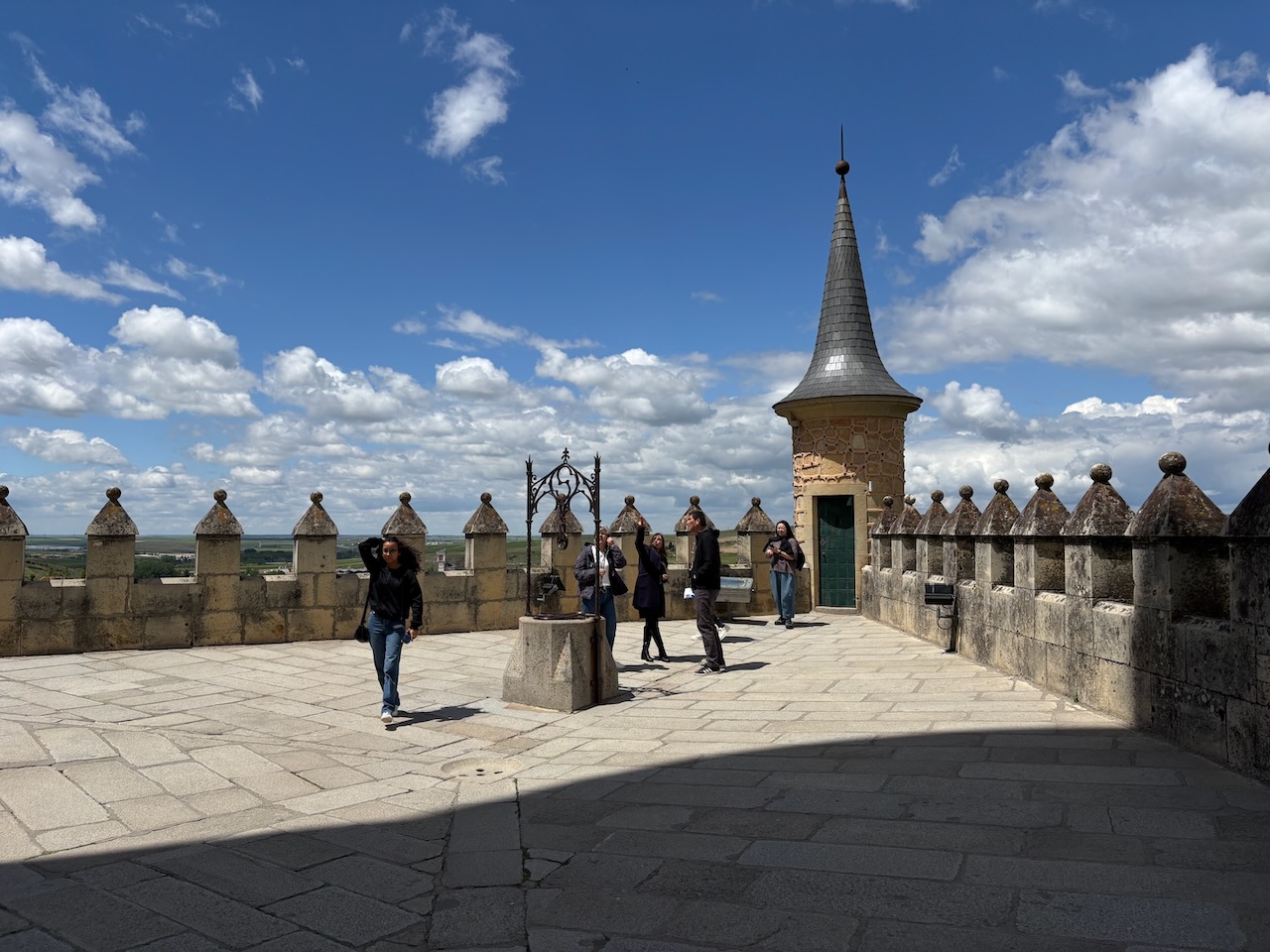
Exiting the royal rooms, we spent some time in the armory, whose finest item is the 16th-century, ornately carved ivory crossbow, with a hunting scene shown in the accompanying painting. We exited out onto the Terrace (the site of the original Roman military camp, circa AD 100 and took in its views. At this point, Joanna and Bev opted to spend some more time in the Museum of Artillery, which recalls the period (1764-1862) when this was the royal artillery school. In the meantime, I repaired to the museum’s café where I enjoyed a post tour glass of wine.
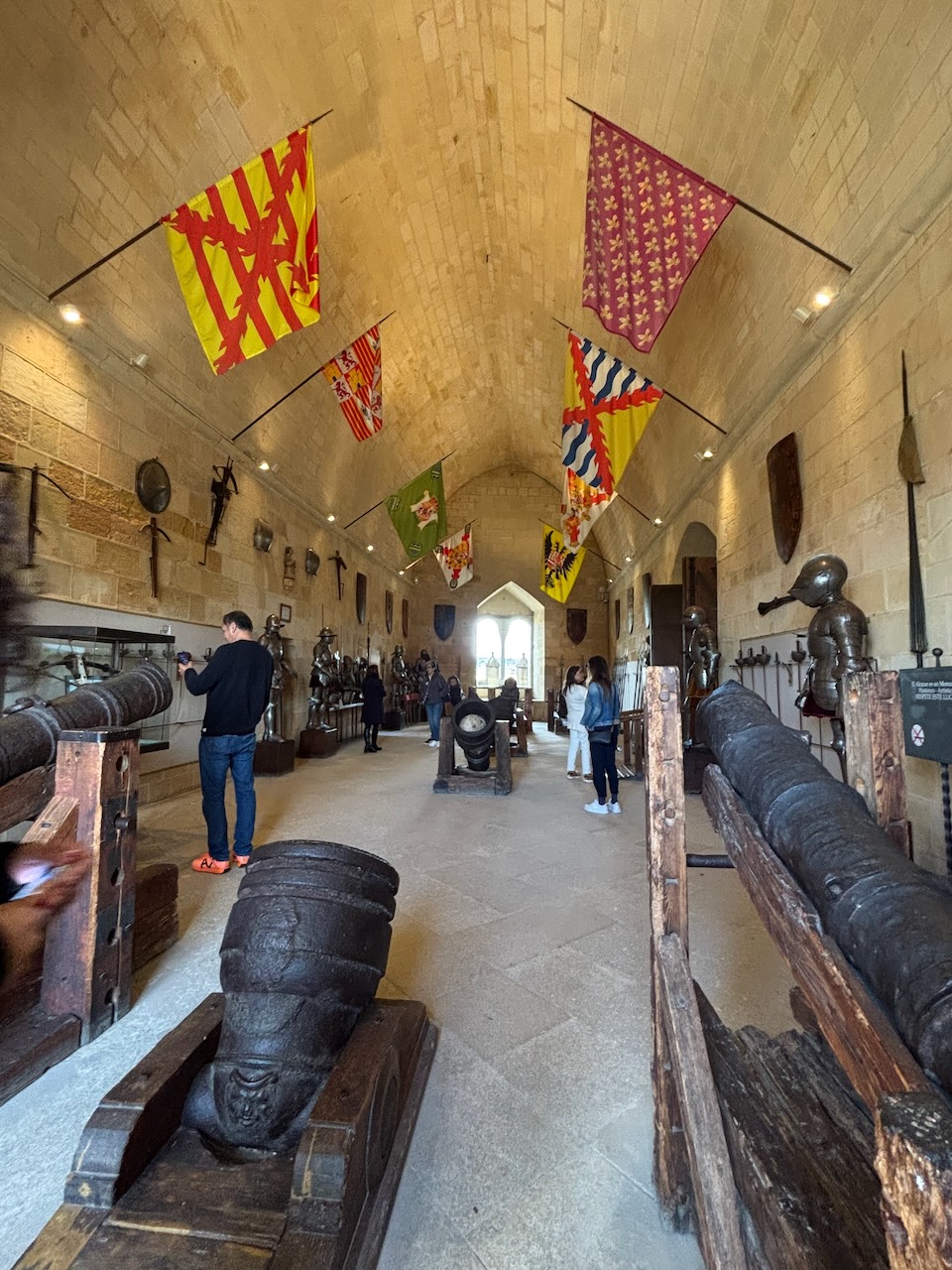
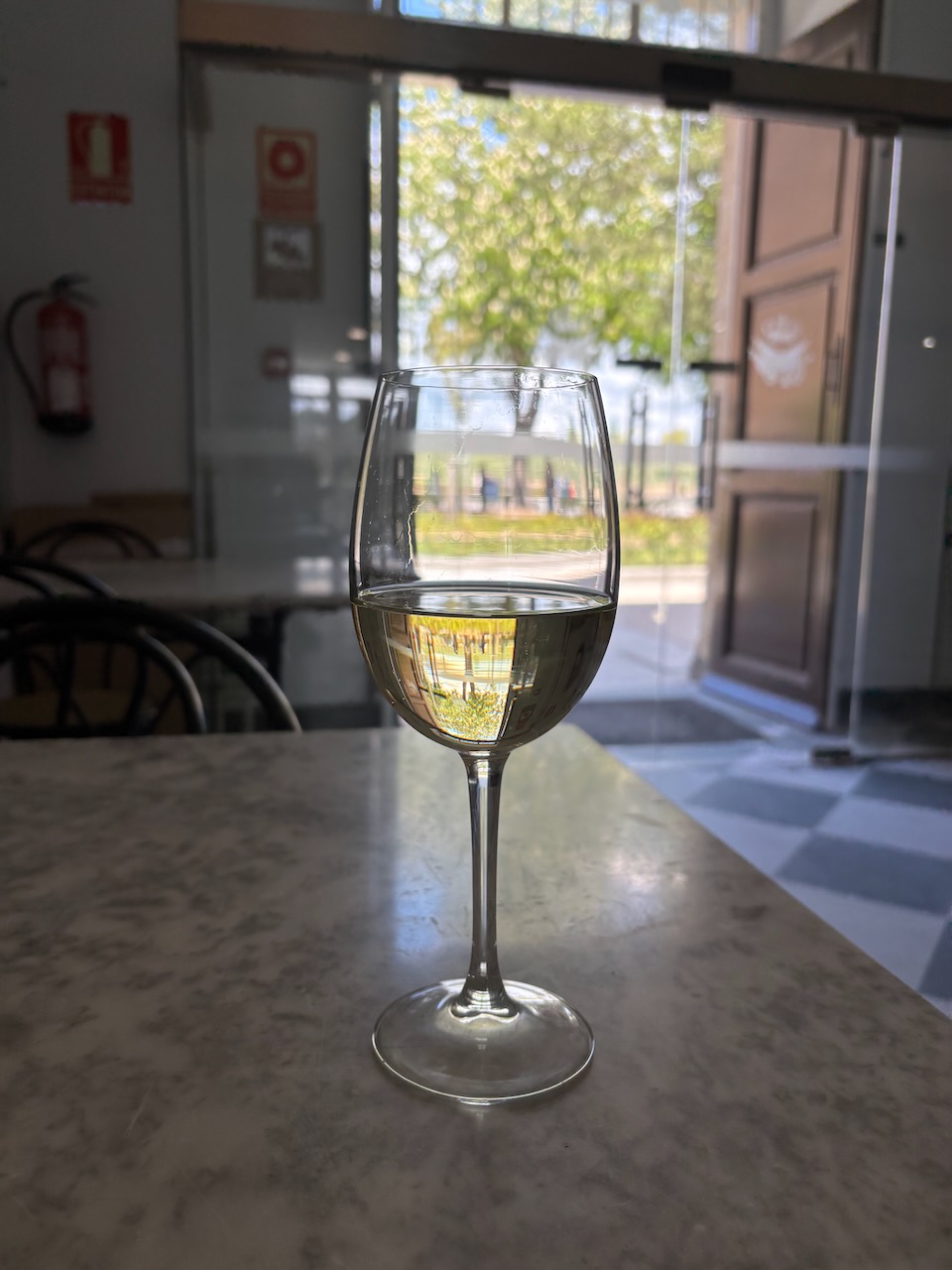
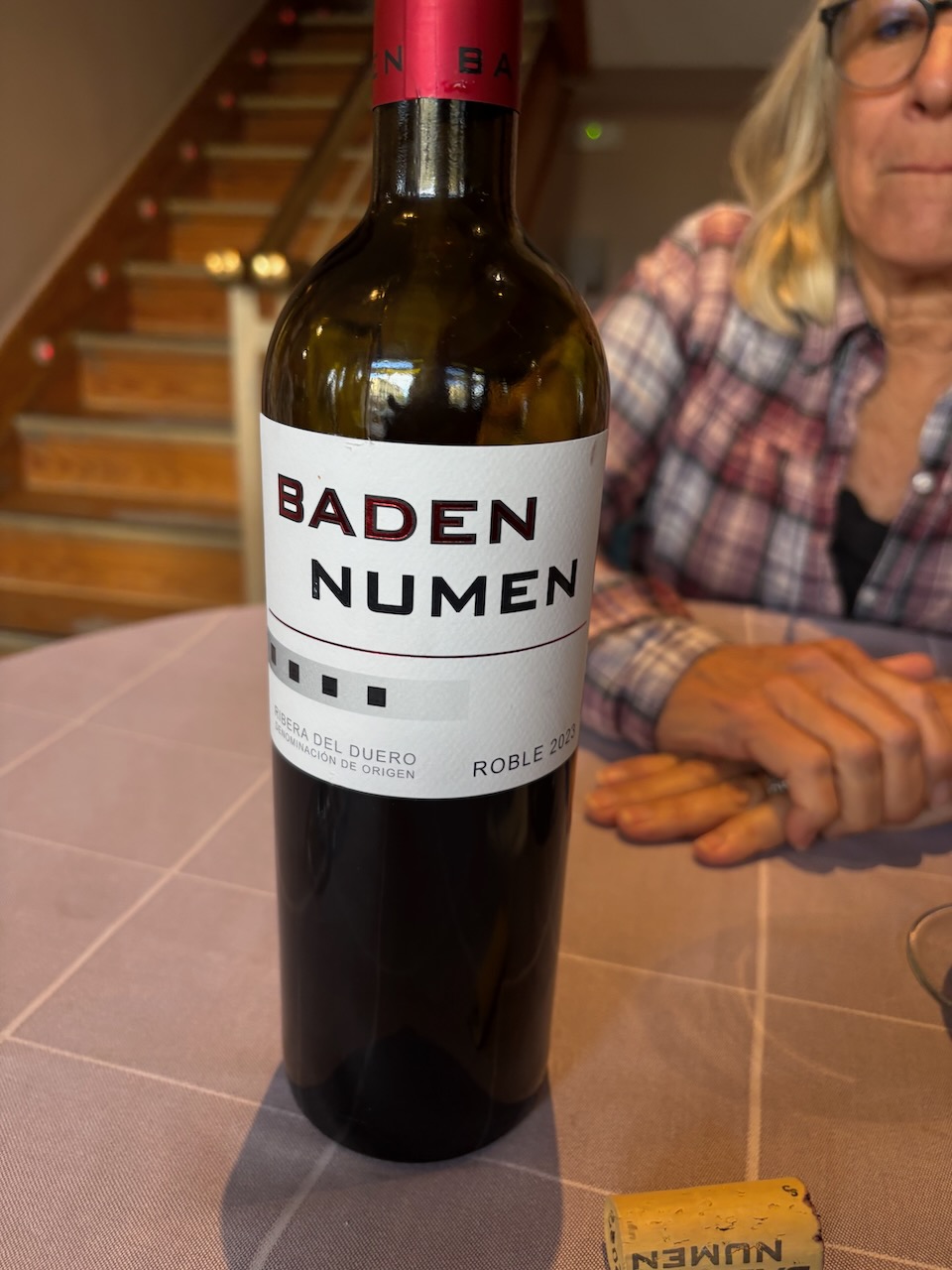
After rejoining me, the three of us returned to the hotel and while I worked on the blog, they went out to do some souvenir shopping before we departed for dinner a couple of hours later. Our choice for the evening would be a St. Steves recommendation, La Concepción Restaurante at Plaza Mayor, where I had made a reservation for that time and day. We opted not to order one of many prie fixe menu items, instead choosing one entrée apiece, along with a 25 Euro bottle of Dadem Numen Duero red wine.
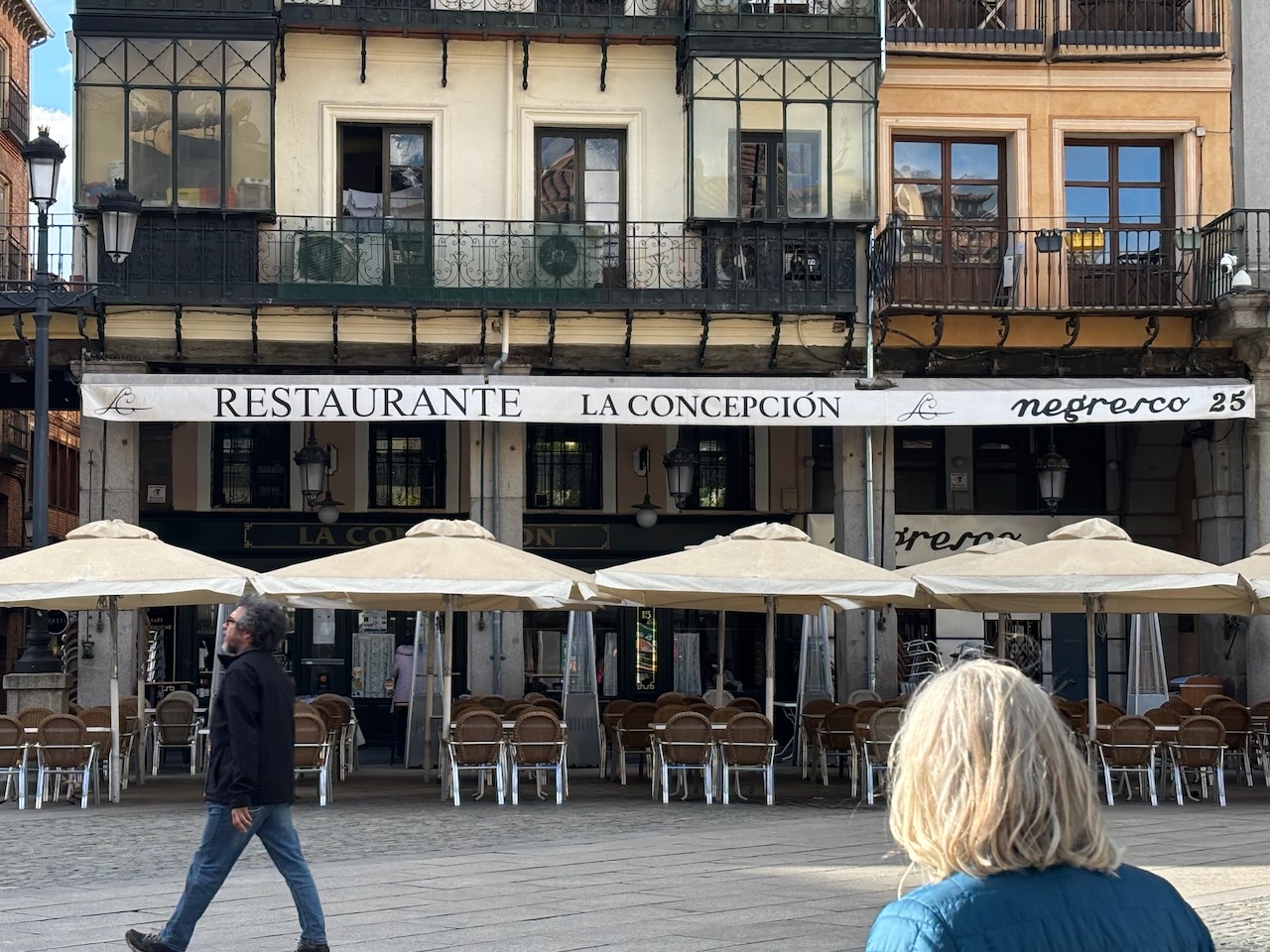
Bev had the roast veal, Joanna the Roasted Suckling Pig (this region’s specialty which she also enjoyed in Burgos in 2017) and I had the veal cheeks in a robust tomato sauce with hazelnuts. It was all thoroughly enjoyable and our tab, including bread service, came to 103 Euros ($117). Was it the best meal of the trip? No, but it was a very good one.
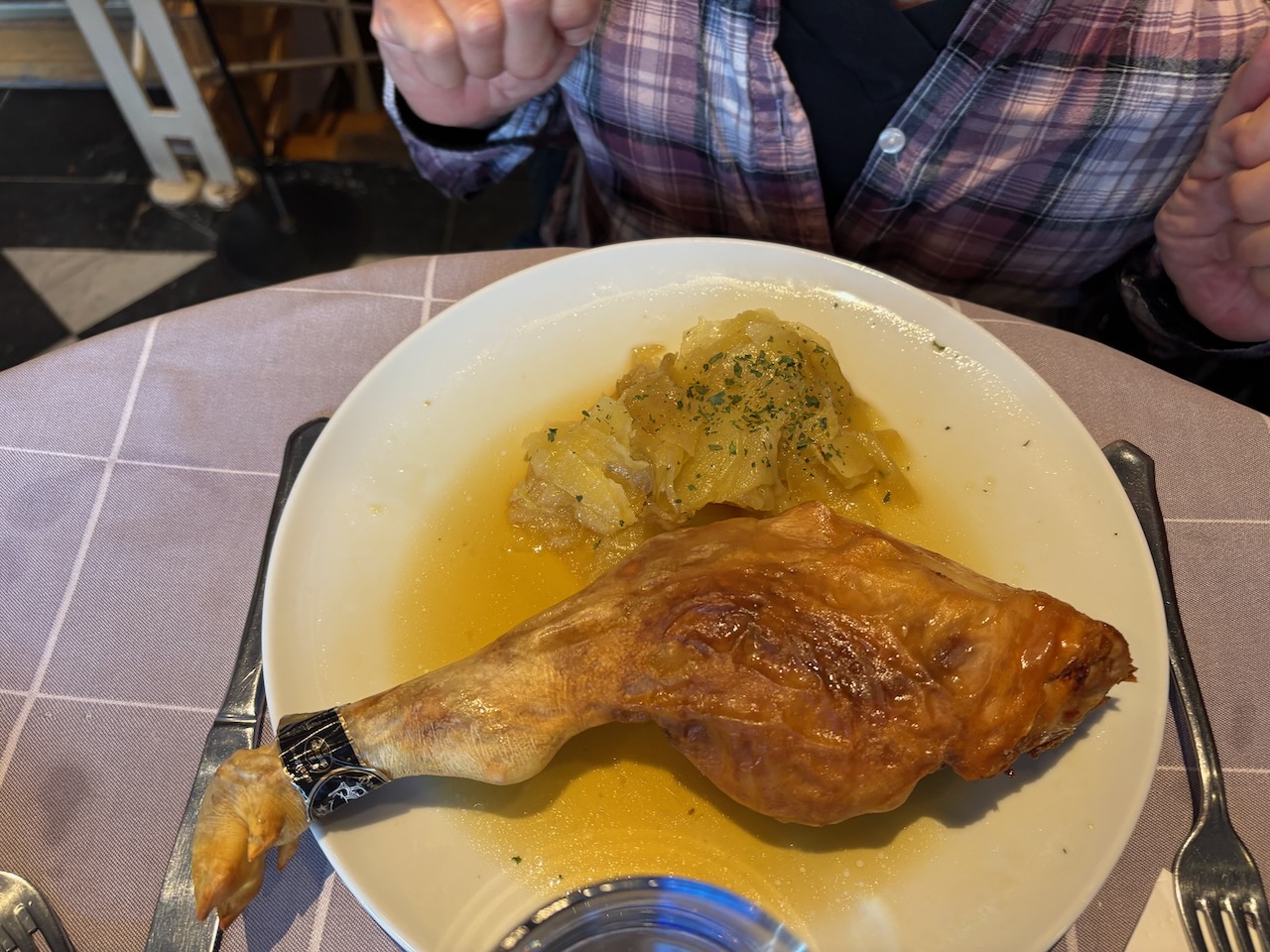
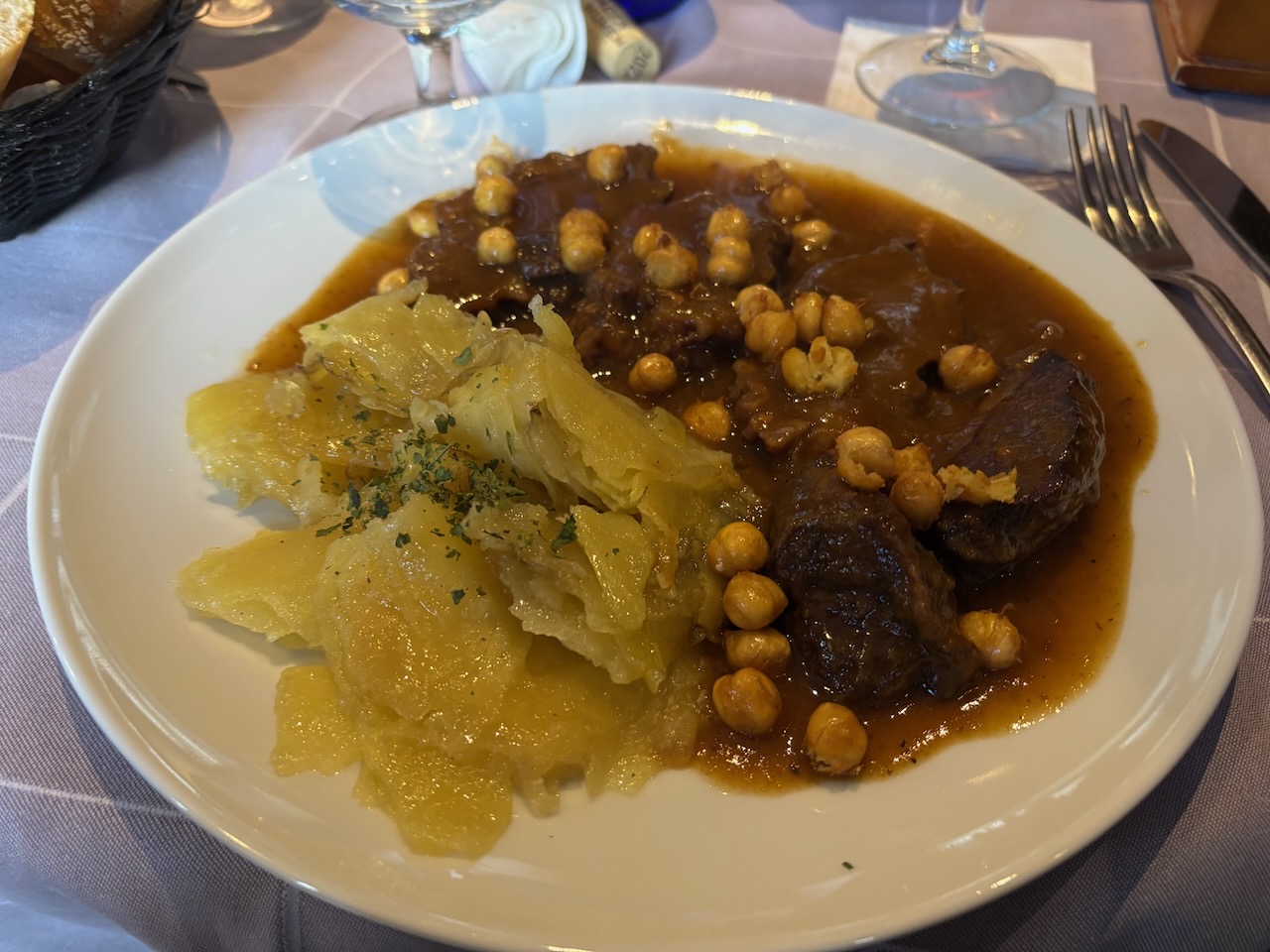
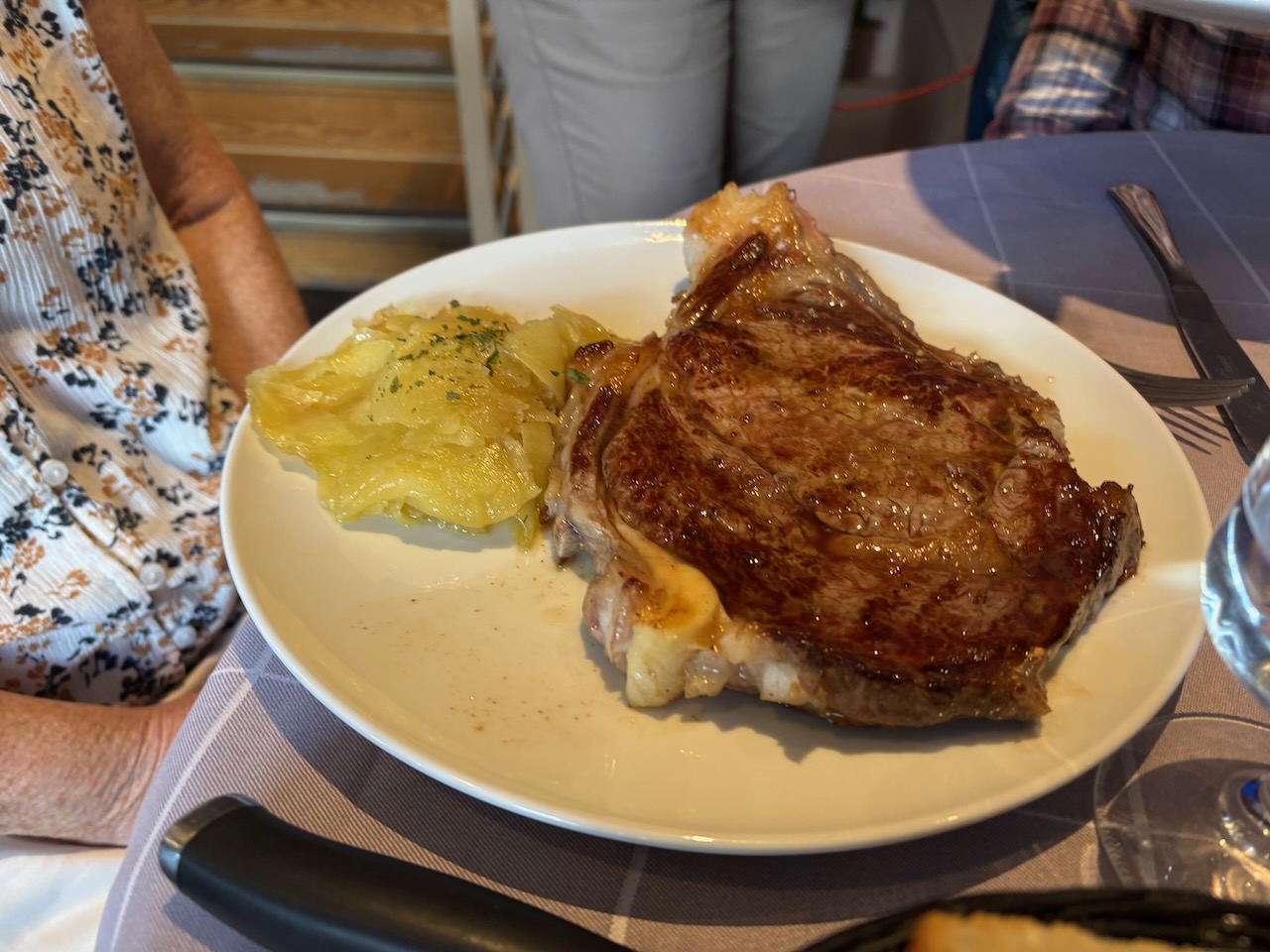
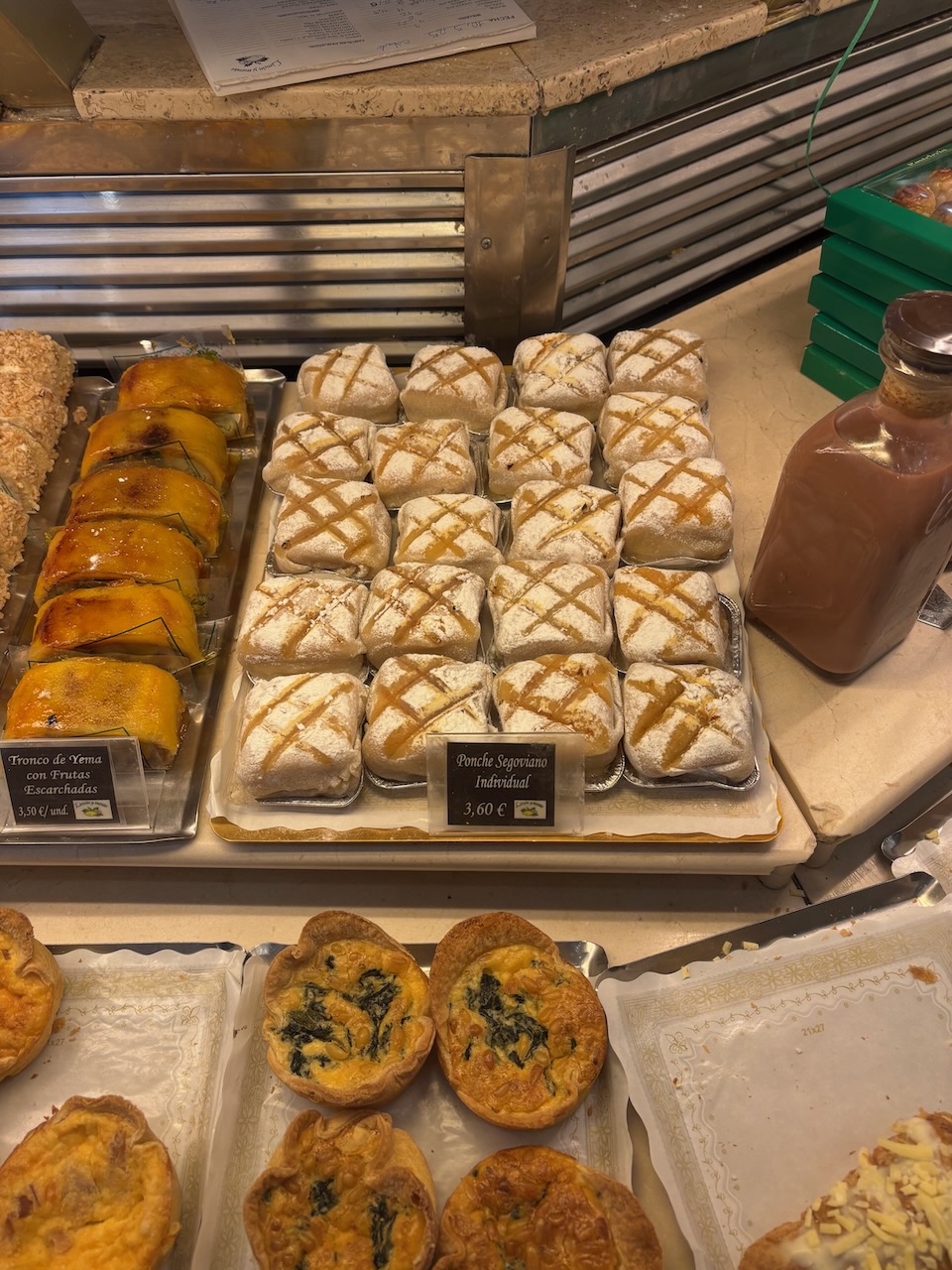
Our drive the next morning to Zaragoza would take about four hours and so before departing and with a late morning check out and nothing to see on the way, we decided to head back to Pandora for breakfast, something filling enough to get us all the way to the next town. On the way we stopped in at a nearby bakery to get some Ponche Segoviano (a dessert made with an almond-and-honey mazapán base) for the road.
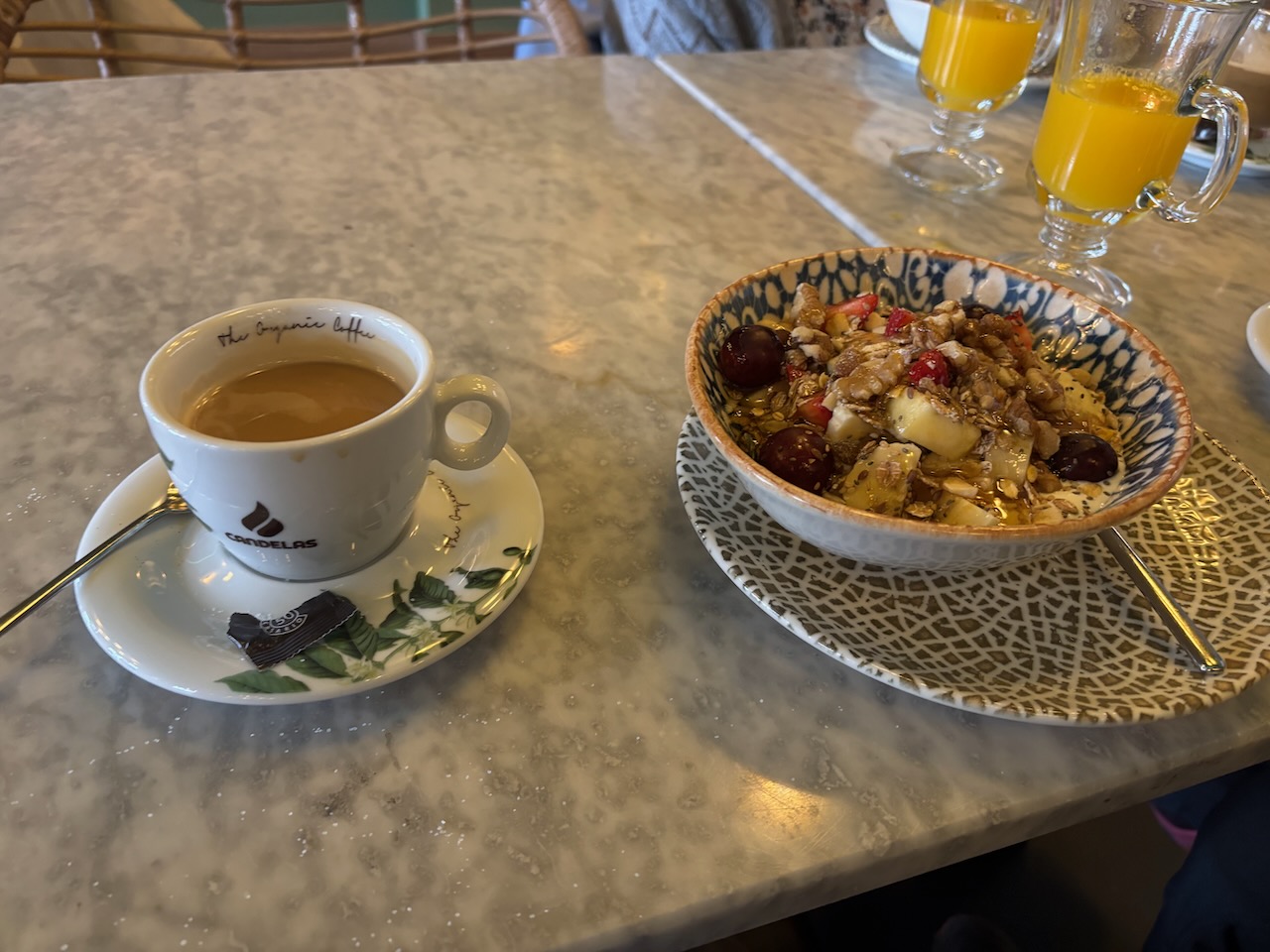
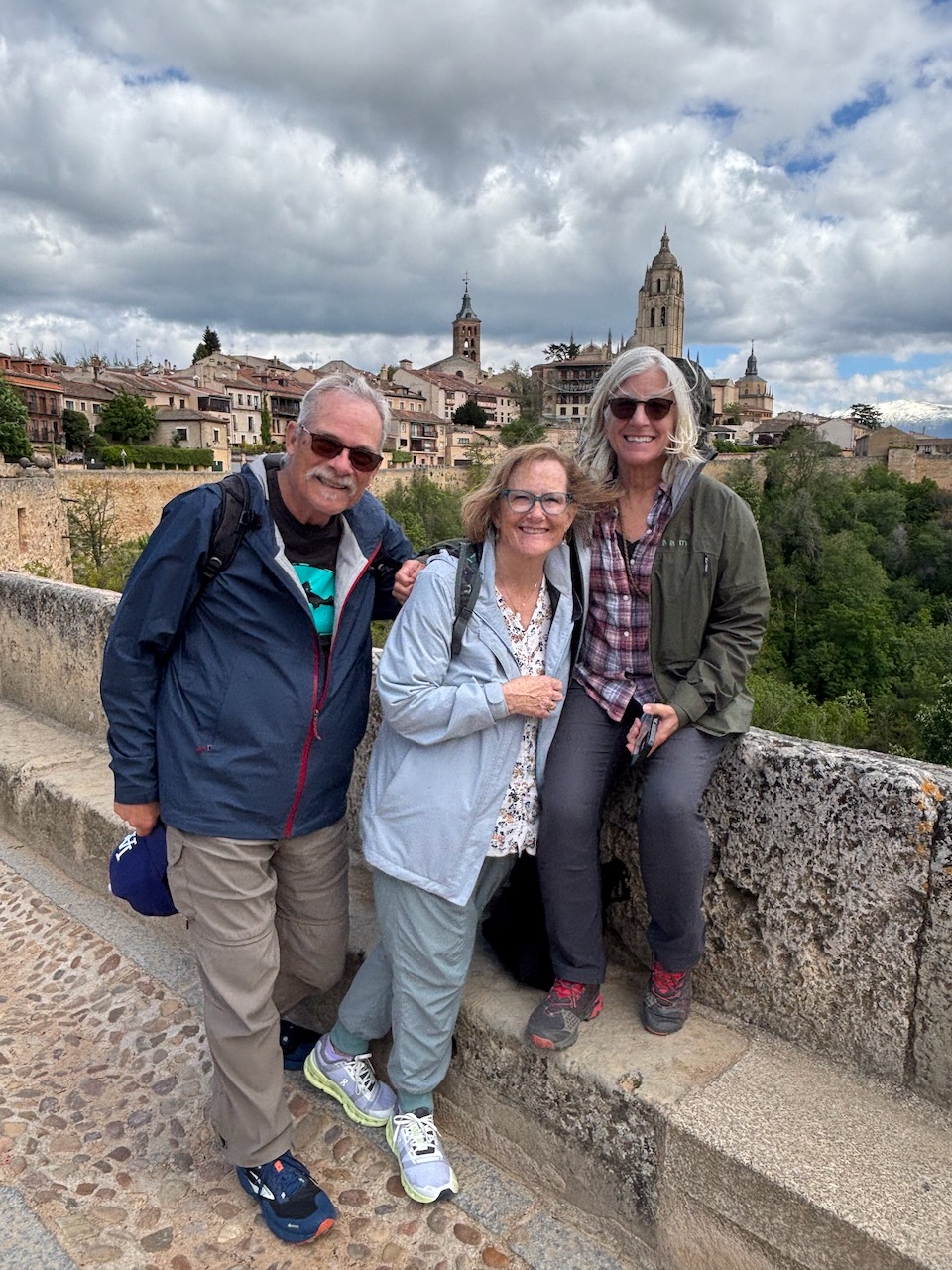
At Pandora, I didn’t record what Joanna and Bev ordered, but it was likely a repeat of the order from the day before. I went for the Yogurt, Granola and Fruit bowl with toast and coffee, very filling and likely the one of the healthier breakfasts I would enjoy on the trip. Finished with our meal, we returned to the hotel where we had stored our packed bags, called for the car, and this time, navigated our way out of town on the road that led us past the aqueduct, a fitting way to say goodbye to this charming city.
Links
Restaurante Pandora: https://restaurantepandora.es/
Segovia Cathedral: https://catedralsegovia.es/
Alcazar de Segovia: https://www.alcazardesegovia.com/
La Concepción Restaurante: https://www.restaurantelaconcepcion.com/
Discover more from 3jmann
Subscribe to get the latest posts sent to your email.


 3jmann