May 12 – 14
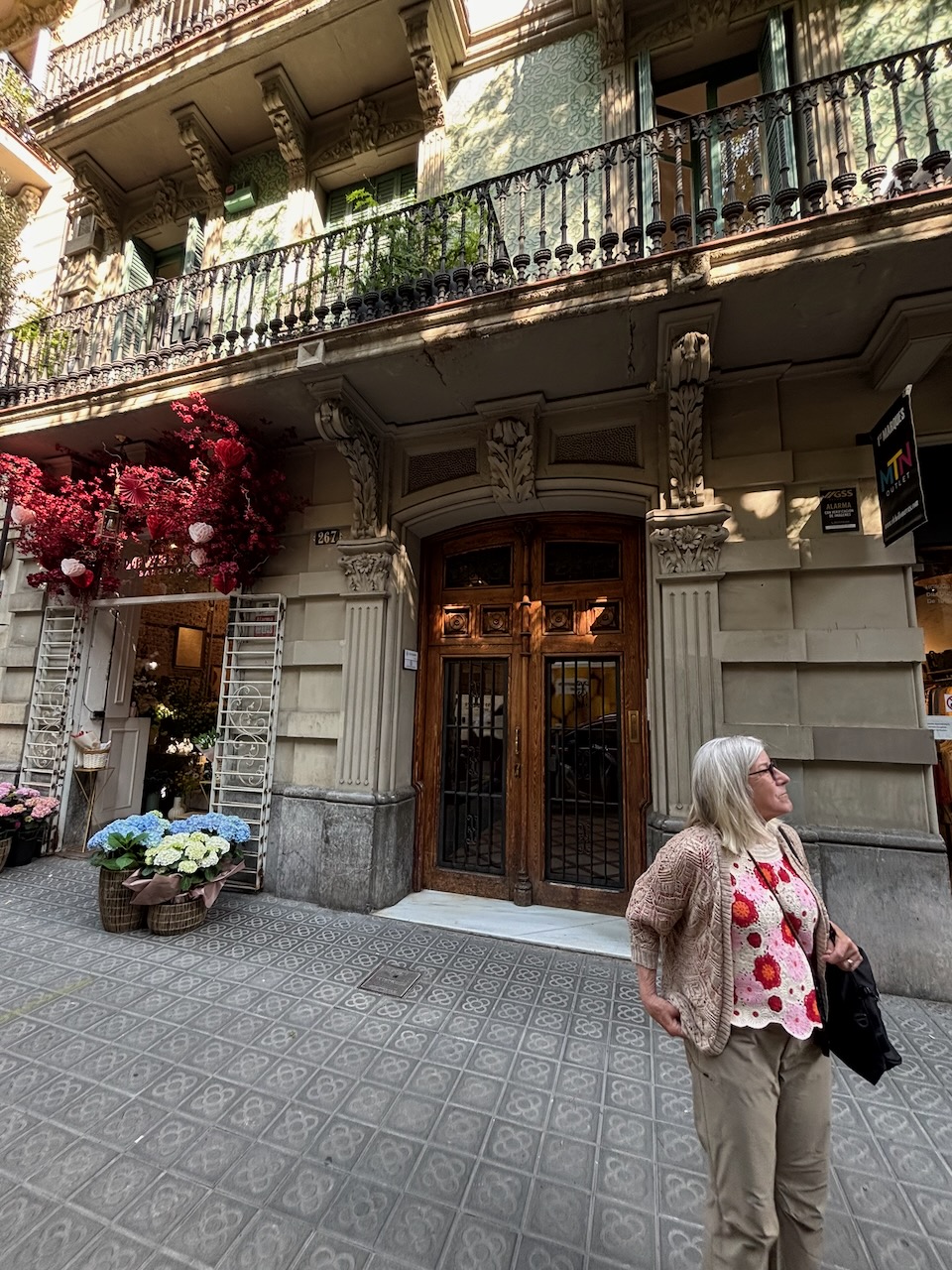
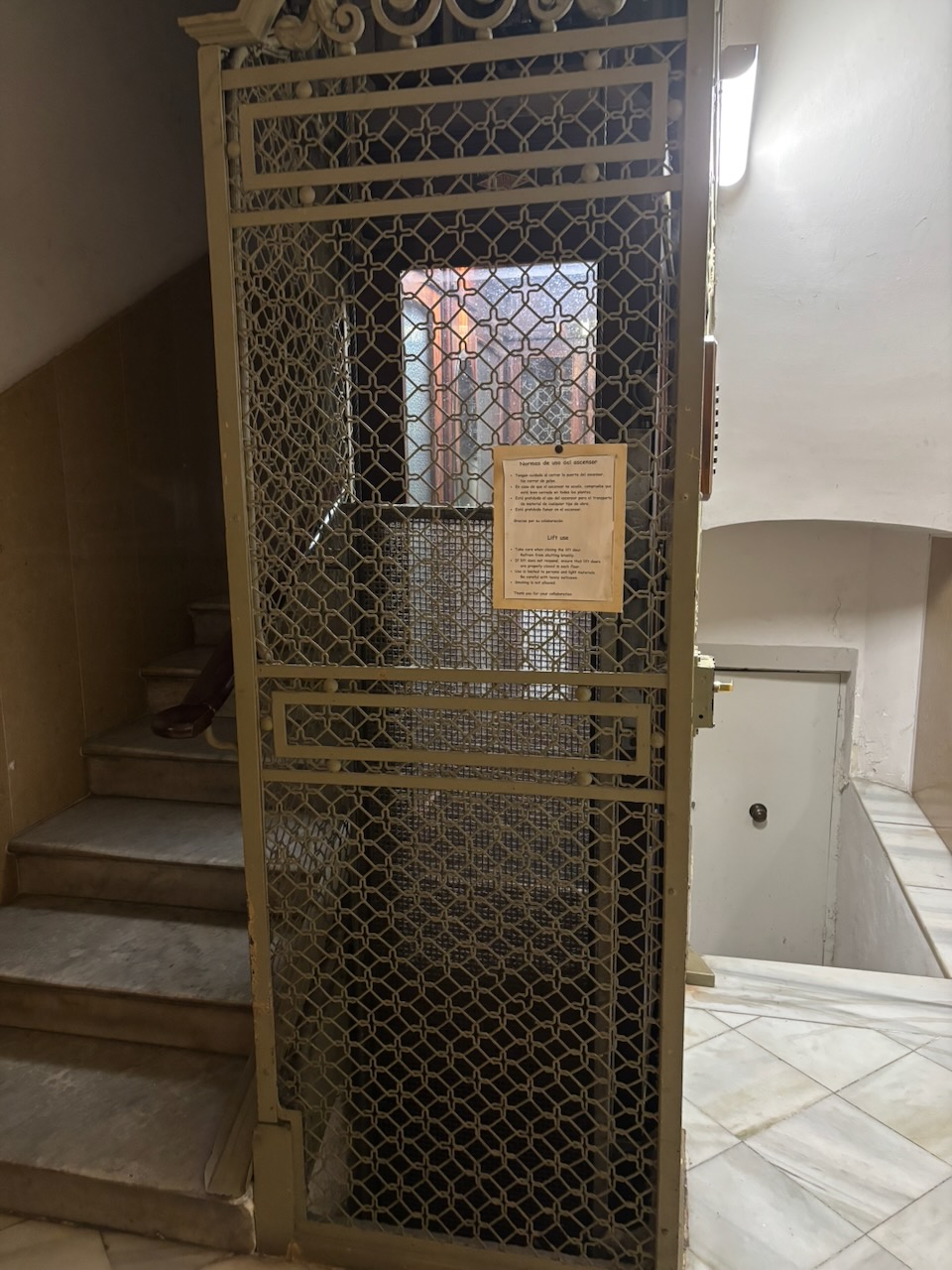
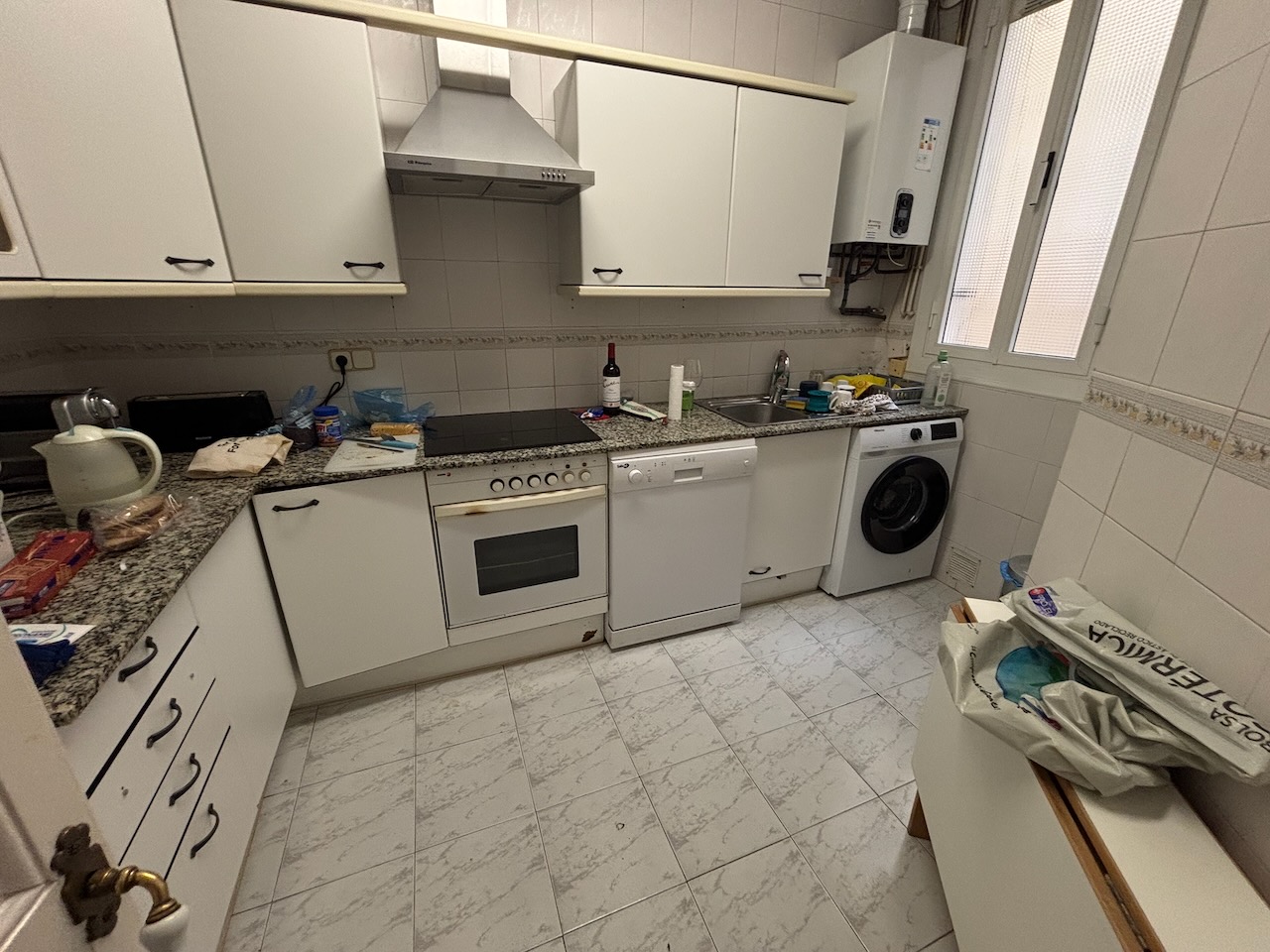
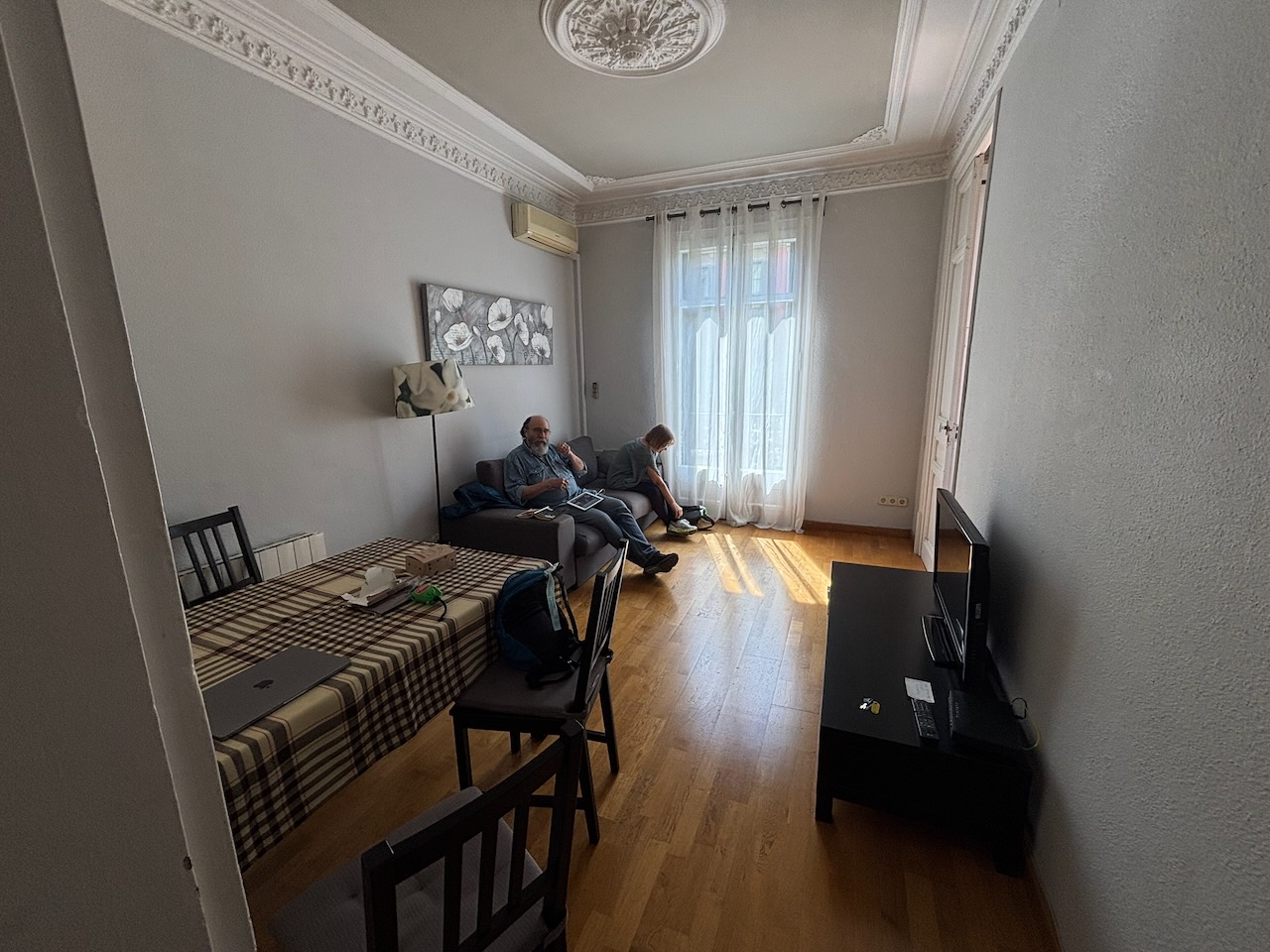
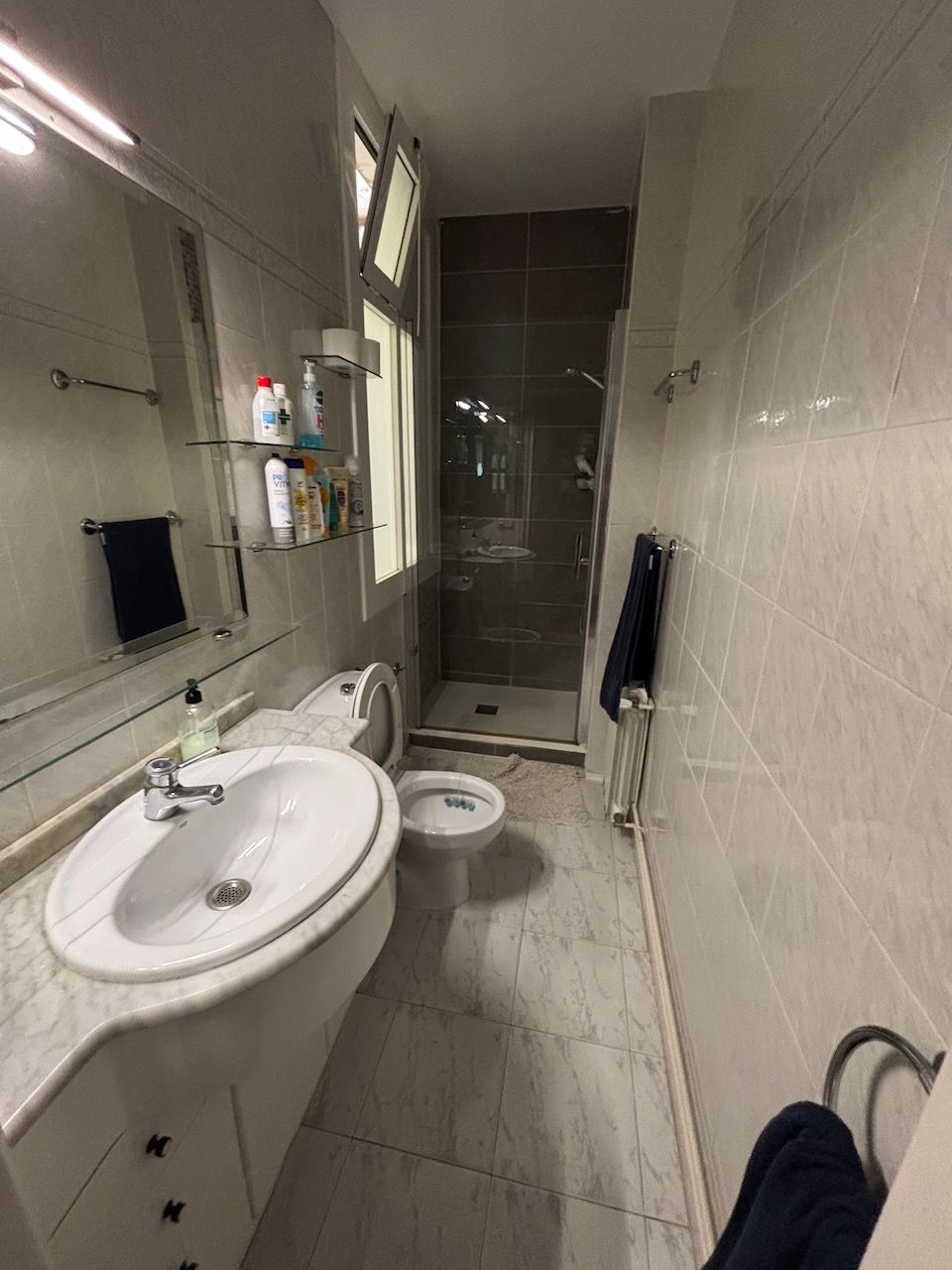
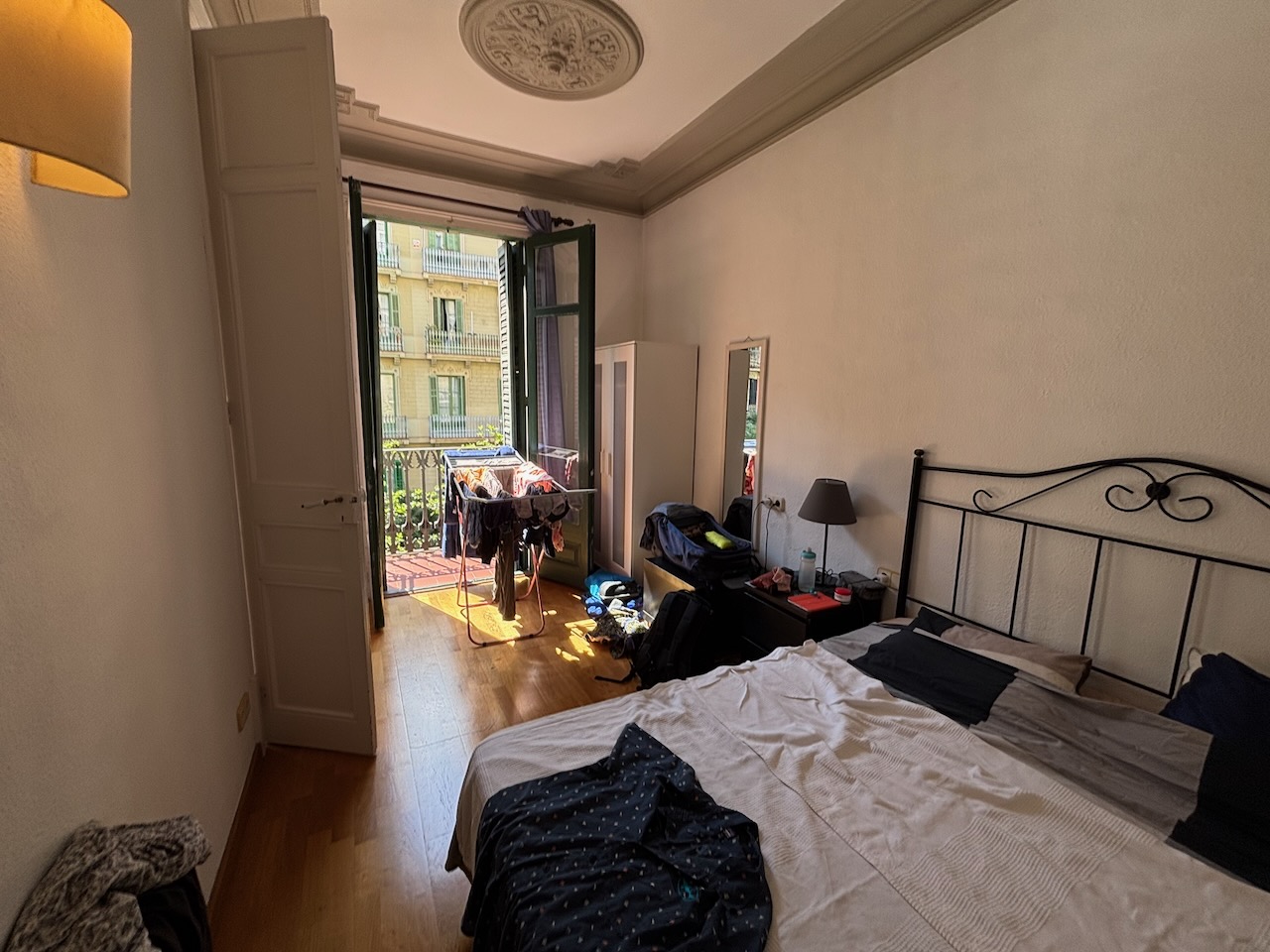
Our final drive of the trip with Bev would take four hours or more as we needed to drop the rental car off at the Barcelona International Airport and then take a taxi into town and to our Airbnb, the Excellent Modernist Apartment, located in a nice neighborhood full of amenities. Located In an older building, our unit was spacious, accommodating and would run us $701 for the three nights, roughly $58 a night for each of us. And for three of us, the highlight was the ancient elevator that took us up and down the building.

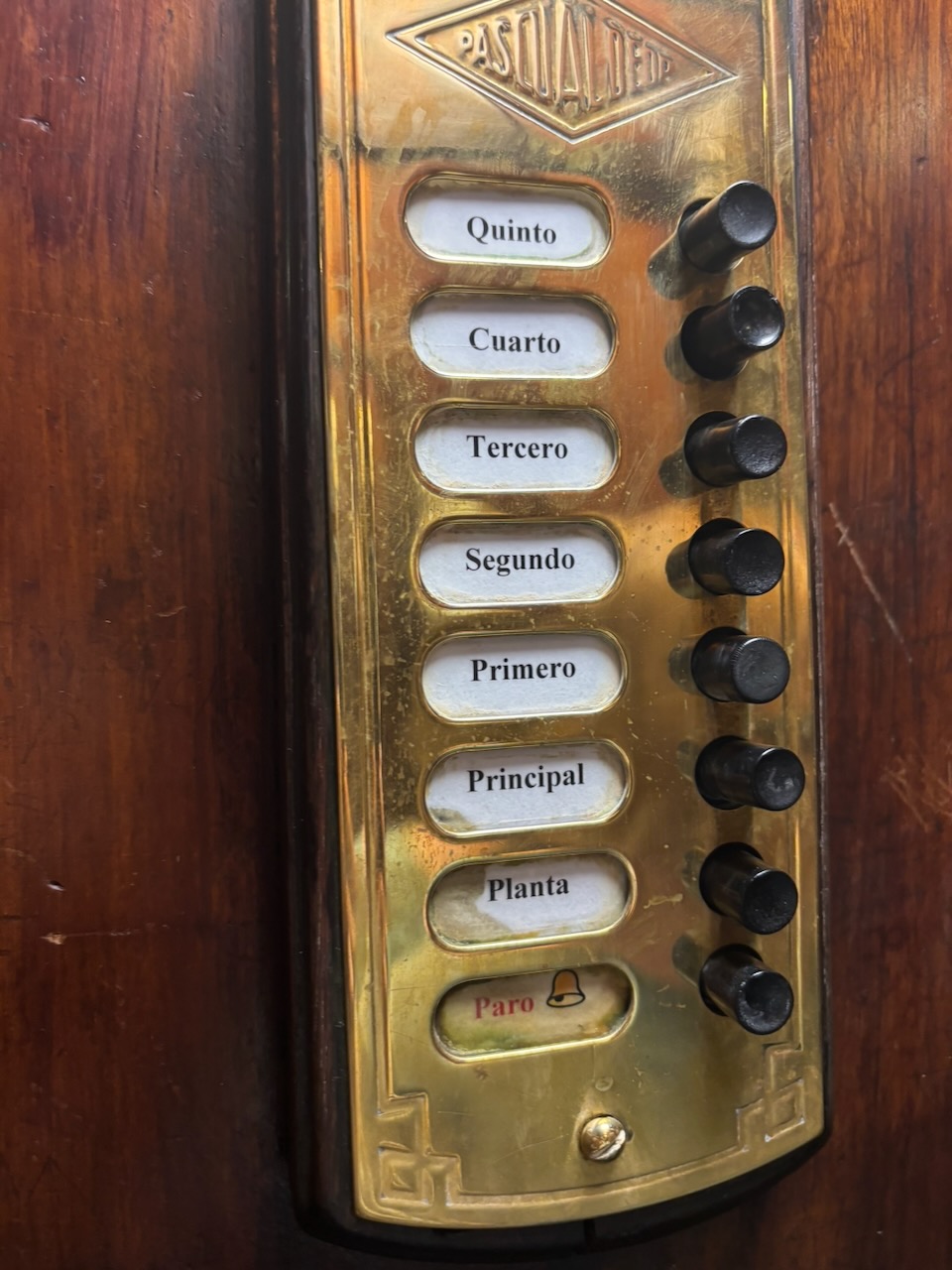
Upon arrival our host took us to our unit and then left while we got settled in and waited for Francois to arrive. A little later I looked out the window to the street below and saw him standing at the door and so called down that I would join him shortly. Doing so, this is when fun with the elevator started as it took us several attempts to remember what floor we were on and the steps needed to make sure both doors (front and back) were closed so the contraption would operate. In a tight pinch, it could take three of us, or one of us and luggage. We finally got it figured out and would run it smoothly for the rest of our stay, but that being said, Joanna refused, perhaps wisely, not to get into the thing.
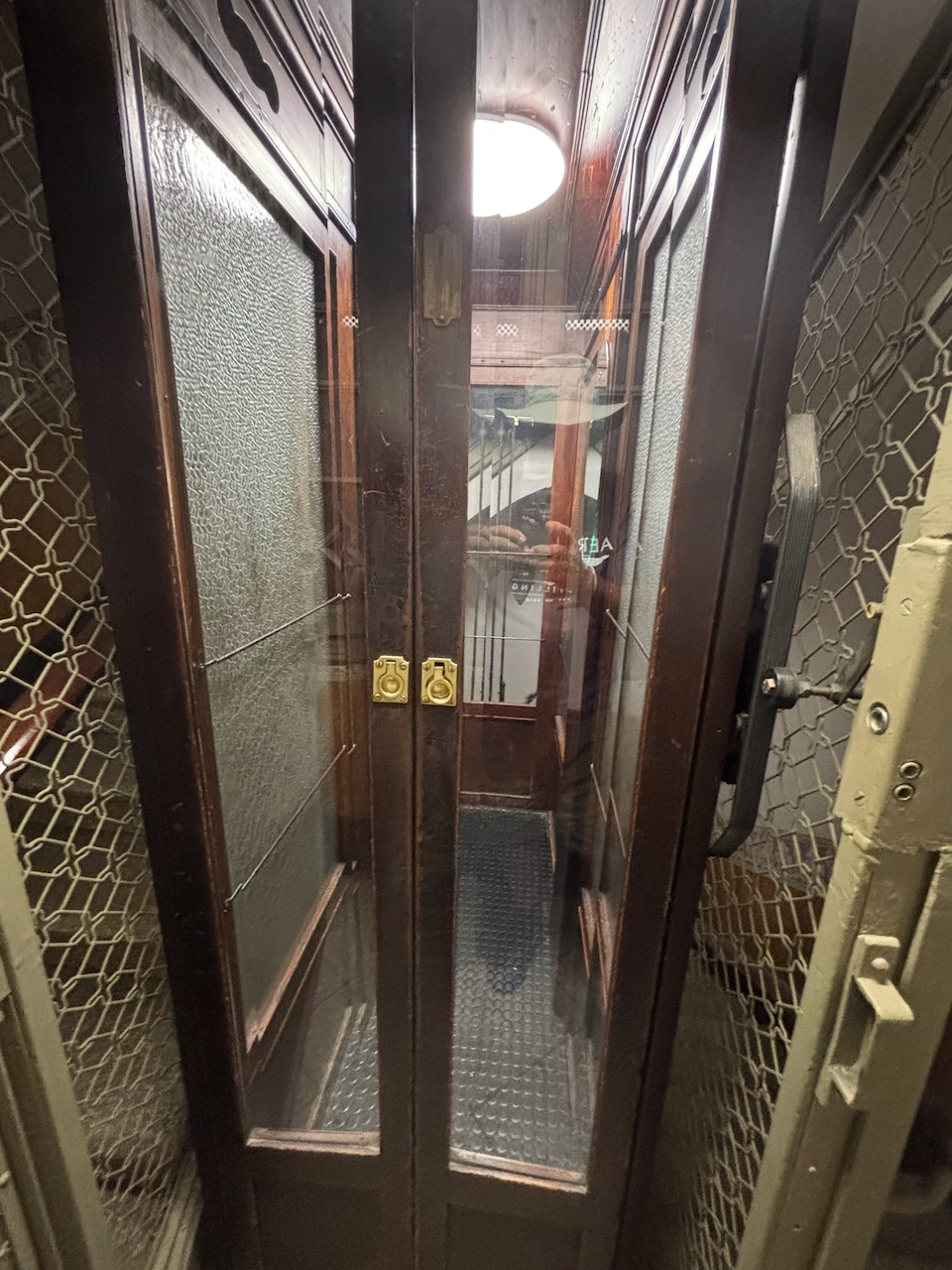
After settling in, Francois and I walked about ten minutes to Bonpreu, a local supermarket where we picked up provisions for the duration, including food for dinner that night, a charcuterie of sorts and also for Bev’s enjoyment, bread, ham, butter, cheese and some other ingredients for what we have referred to since our stay with him 2014, a proper Francois breakfast.
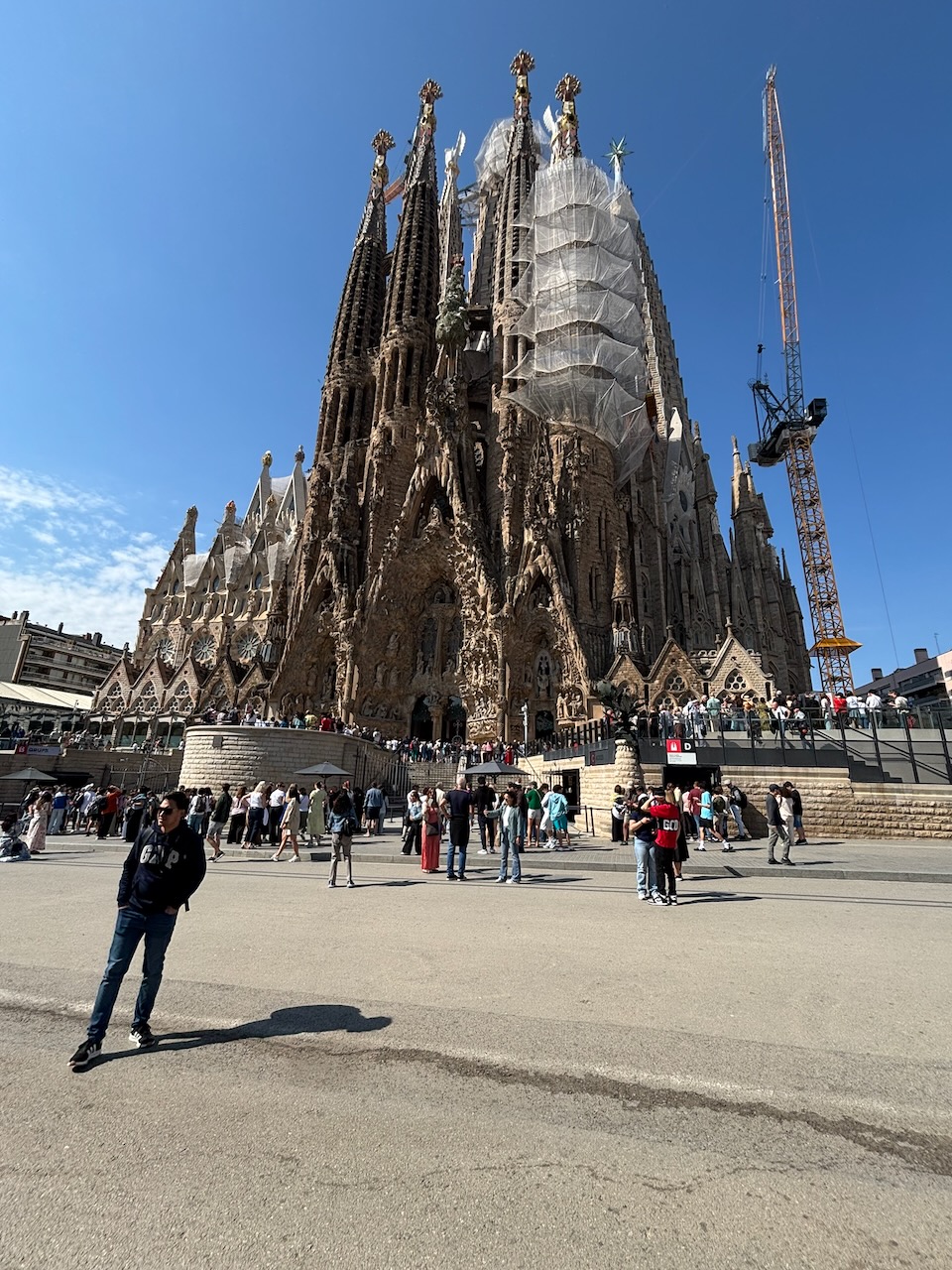
With just two full days in town, and having visited here in 2014 and 2017, we wanted to make sure that we hit the places that were most important to Bev. For our first day this meant starting with Sagrada Familia, the largest unfinished Catholic church in the world. Designed by the Catalan architect Antoni Gaudí, construction under architect Francisco de Paula del Villar began in early 1882. In 1883, with Villar’s resignation, Gaudí took over as chief architect, transforming the project with his architectural and engineering style, combining Gothic and curvilinear Art Nouveau forms. Gaudí devoted the remainder of his life to the project, and he is buried in the church’s crypt. At the time of his death in 1926, less than a quarter of the project was complete.
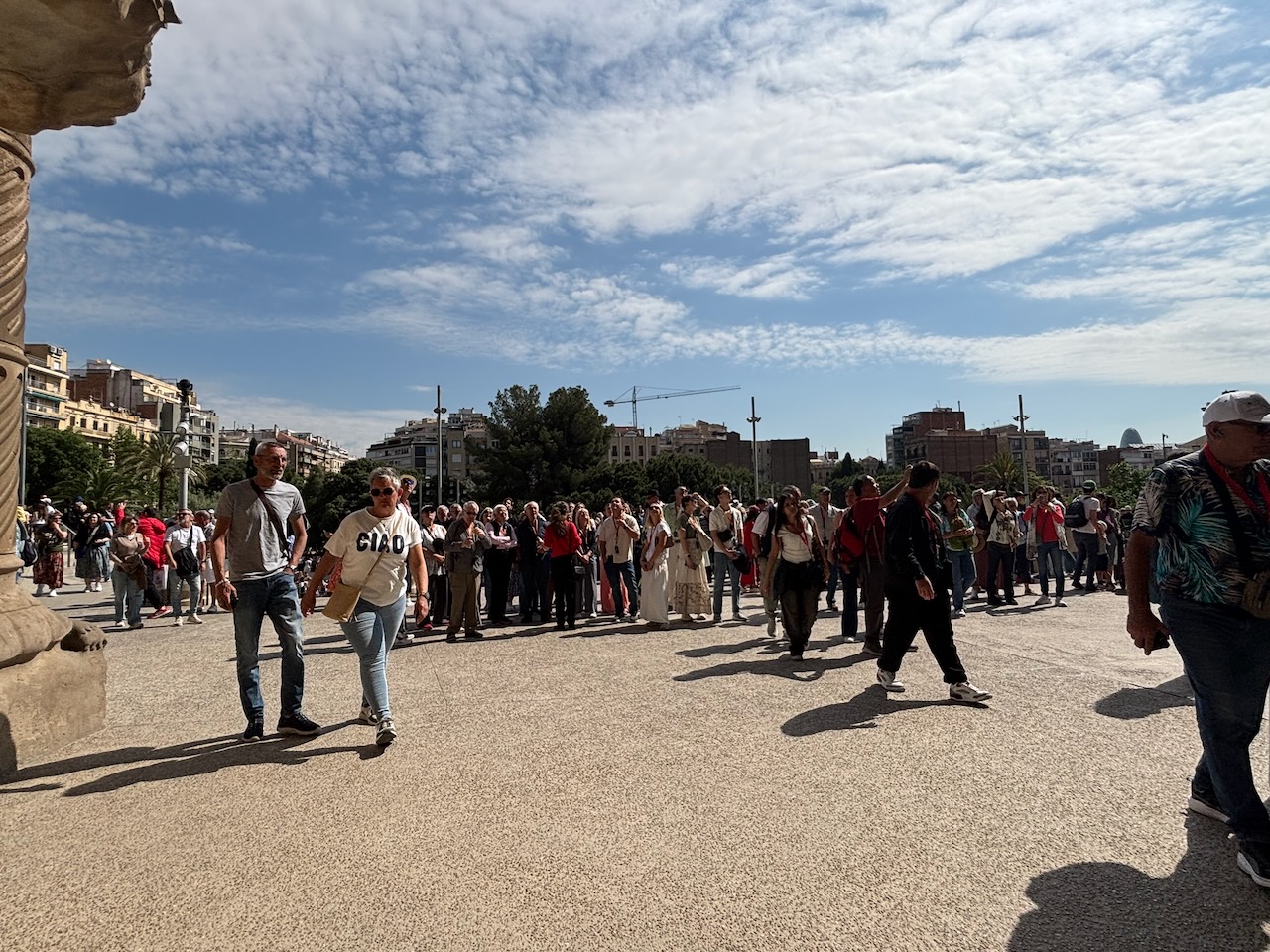
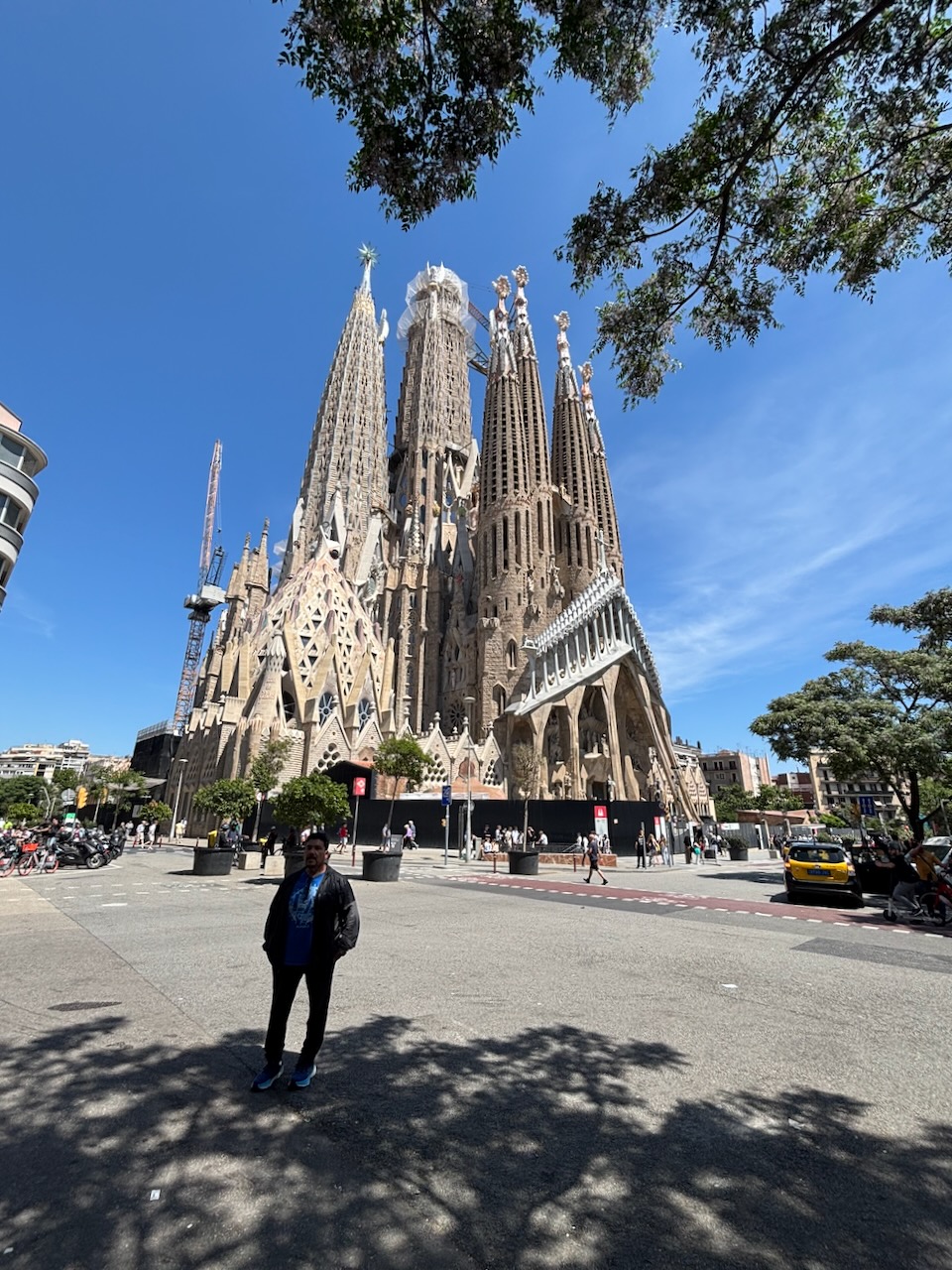
Since then, construction has continued but was interrupted by the Spanish Civil War and its aftermath (1936-1950’s) and the Covid pandemic. Strides have been made and it is predicted to be almost totally completed in 2026. We purchased a guided tour in advance to eliminate standing in line which worked well in that regard, but once inside on tour it proved frustrating as it was difficult to understand the guide due to her accent and the quality of the remote headsets we were issued, exacerbated by the crowded conditions inside the building.
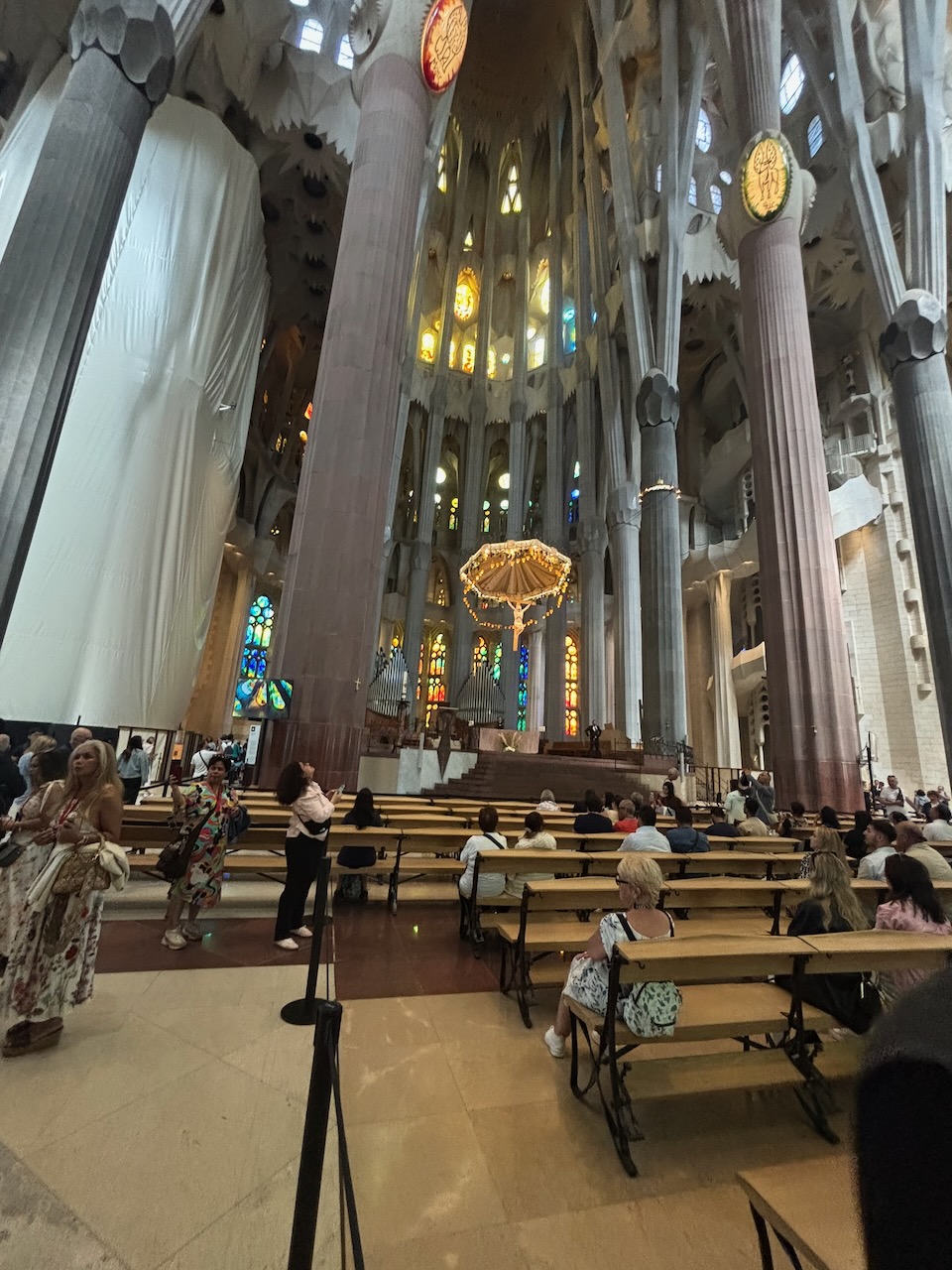
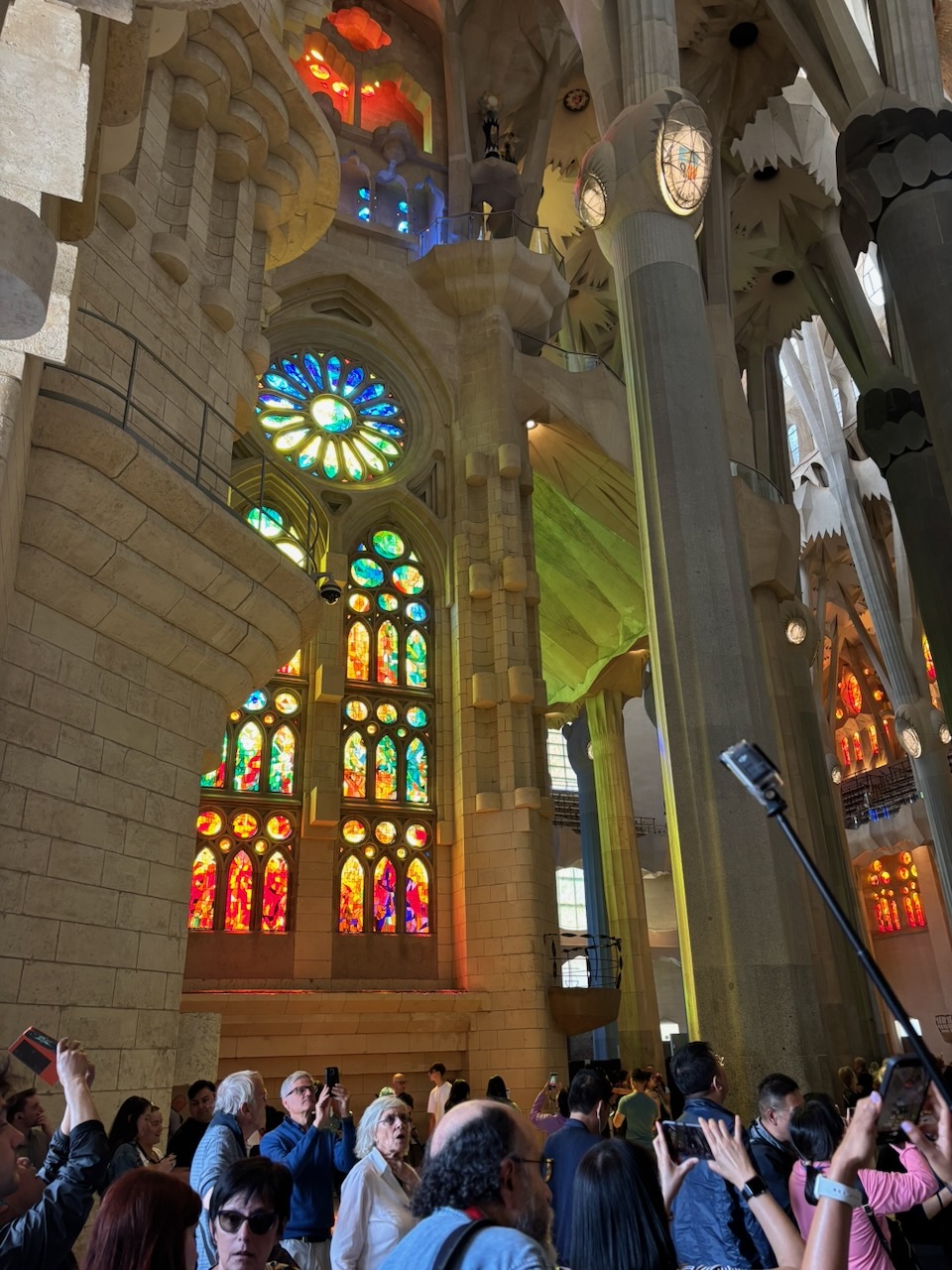
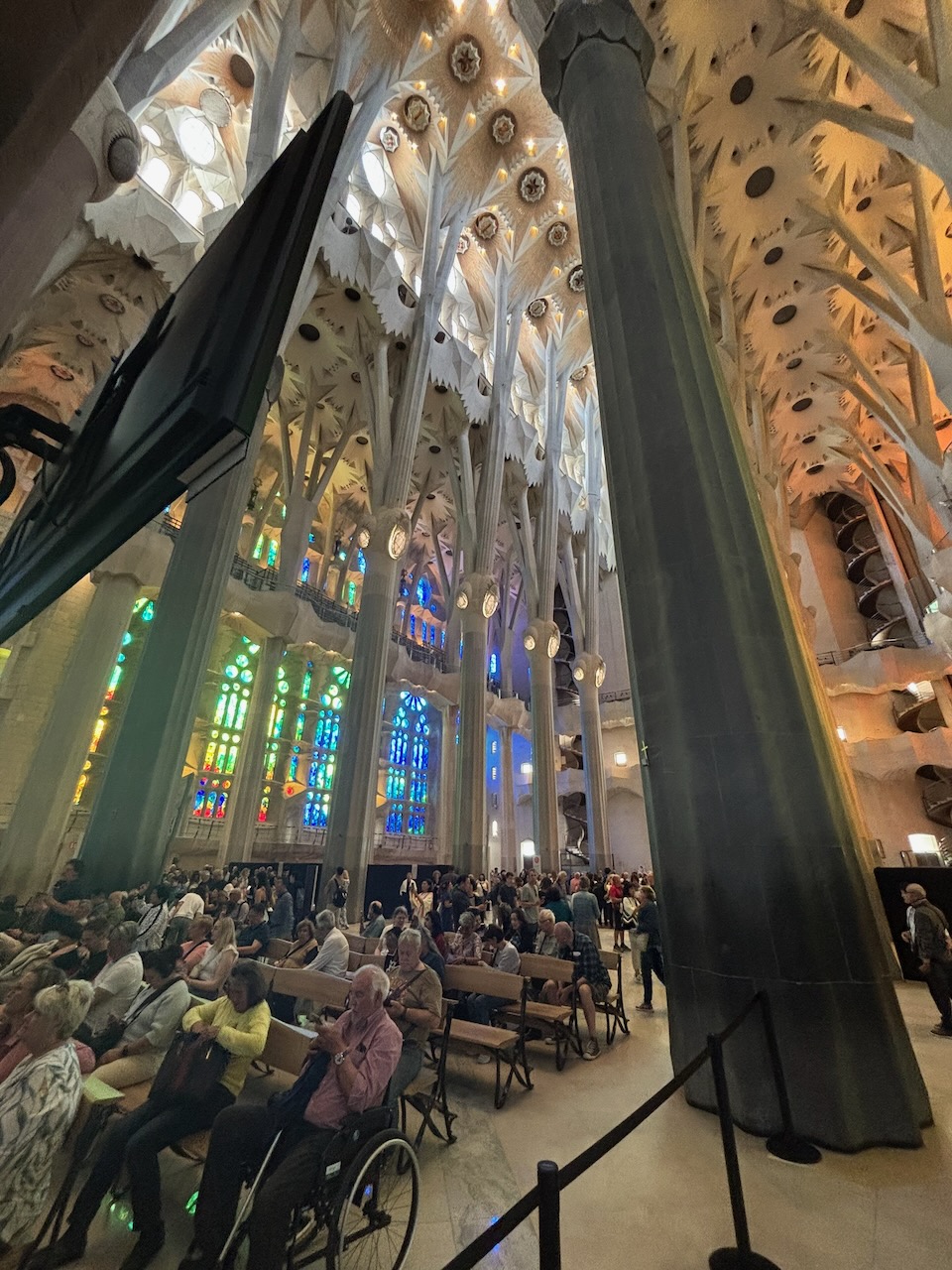
If you are a fan of Gaudi, this is often said to be his finest work, and it is hard to dispute that. There is so much to take in here I wouldn’t be able to do it justice., so I won’t even try One element of Gaudi’s work is his use of the fundamentals of nature in his designs and here is a description of a column’s construction: “Gaudí is usually considered the great master of Catalan Modernism, but his works find their main inspiration in geometry and from nature. This study of nature translated into his use of ruled geometrical forms such as the hyperbolic paraboloid, the hyperboloid, the helicoid and the cone, which reflect forms Gaudí found in nature. Ruled surfaces are forms generated by a straight line known as the generatrix, as it moves over one or several lines known as directrices. Gaudí found abundant examples of them in nature, for instance in rushes, reeds and bones; he said that no better structure exists than the trunk of a tree or a human skeleton.”
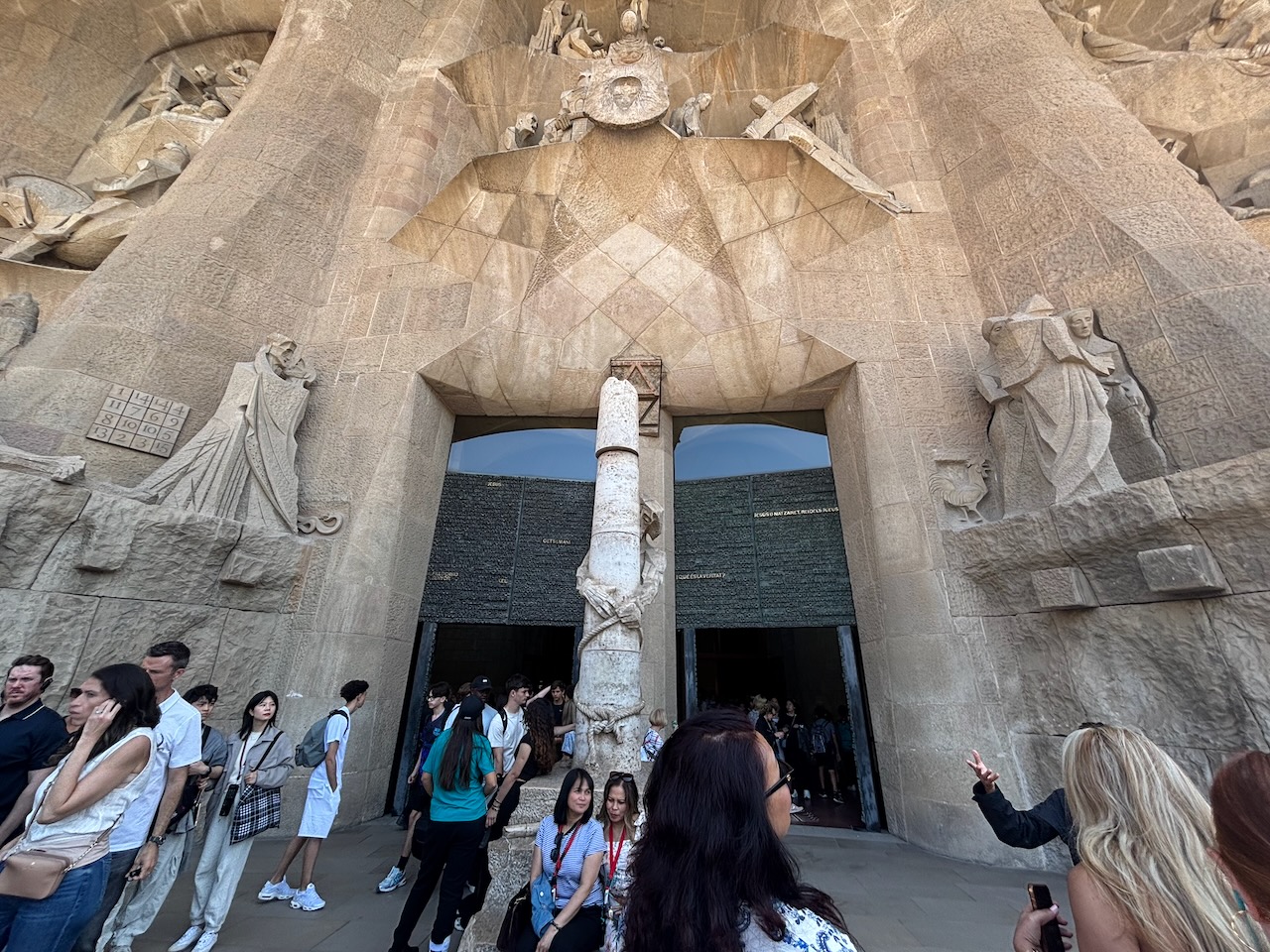
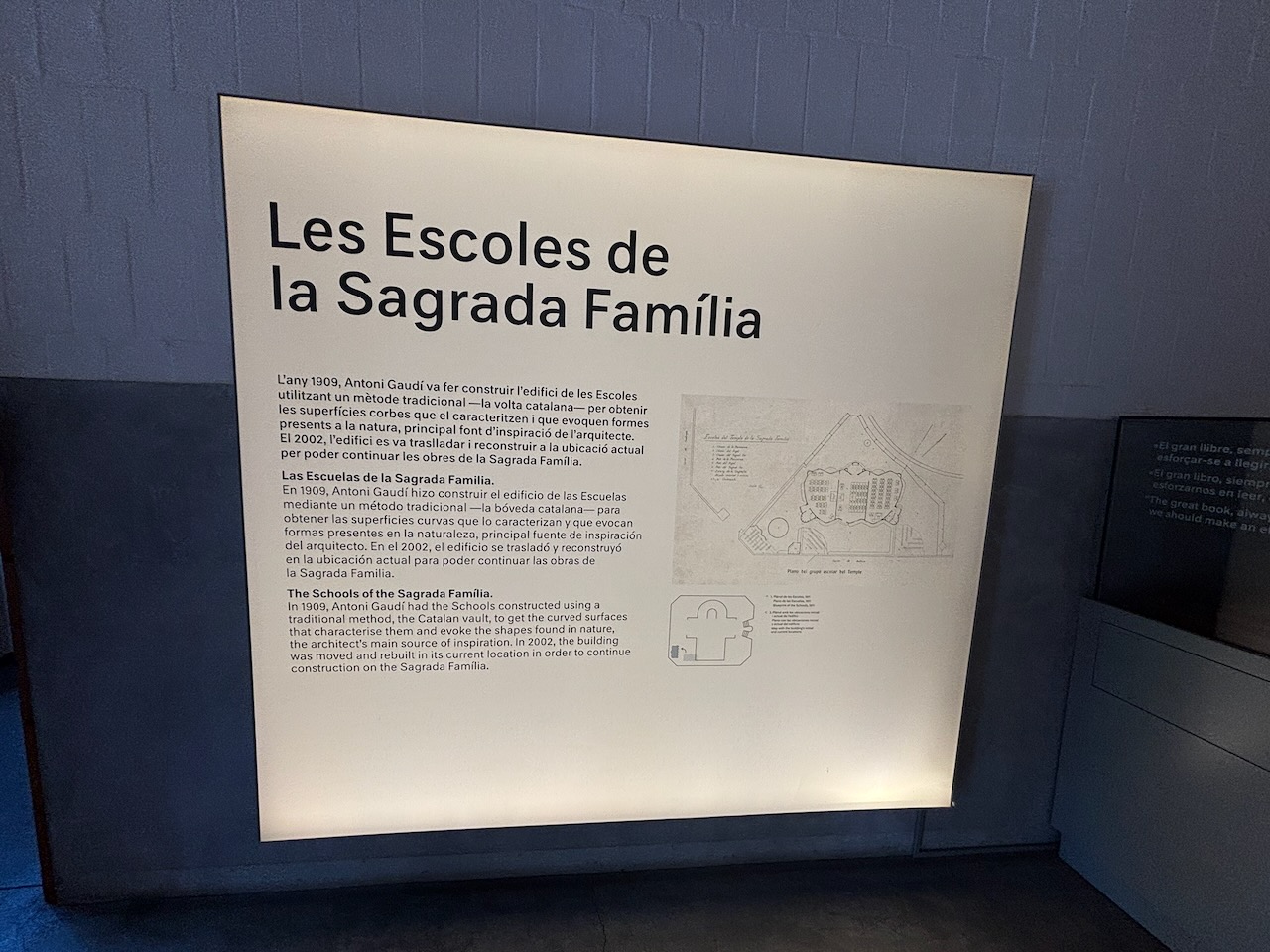
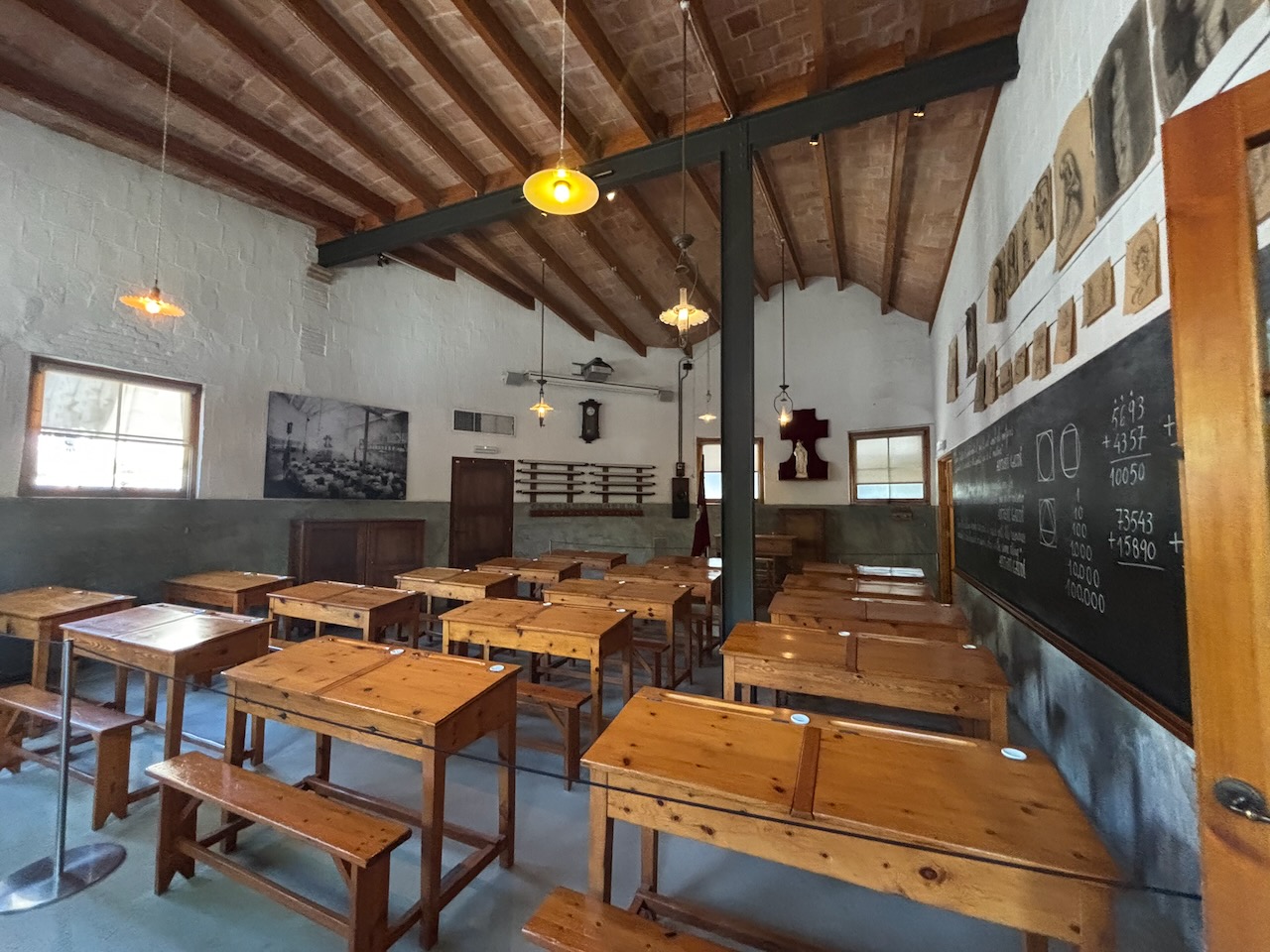
When our tour finished, I went outside, pausing to admire the bronze doors created by Josep M. Subirachs, a Barcelona born sculptor and painter of the late 20th century who is best known for his work on the Passion Facade where the doors are located. While waiting for the others to finish, I explored a schoolroom on the perimeter of the Basilica, designed by Gaudi as a temporary school for the sons and daughters of the workers of the church and the local children.

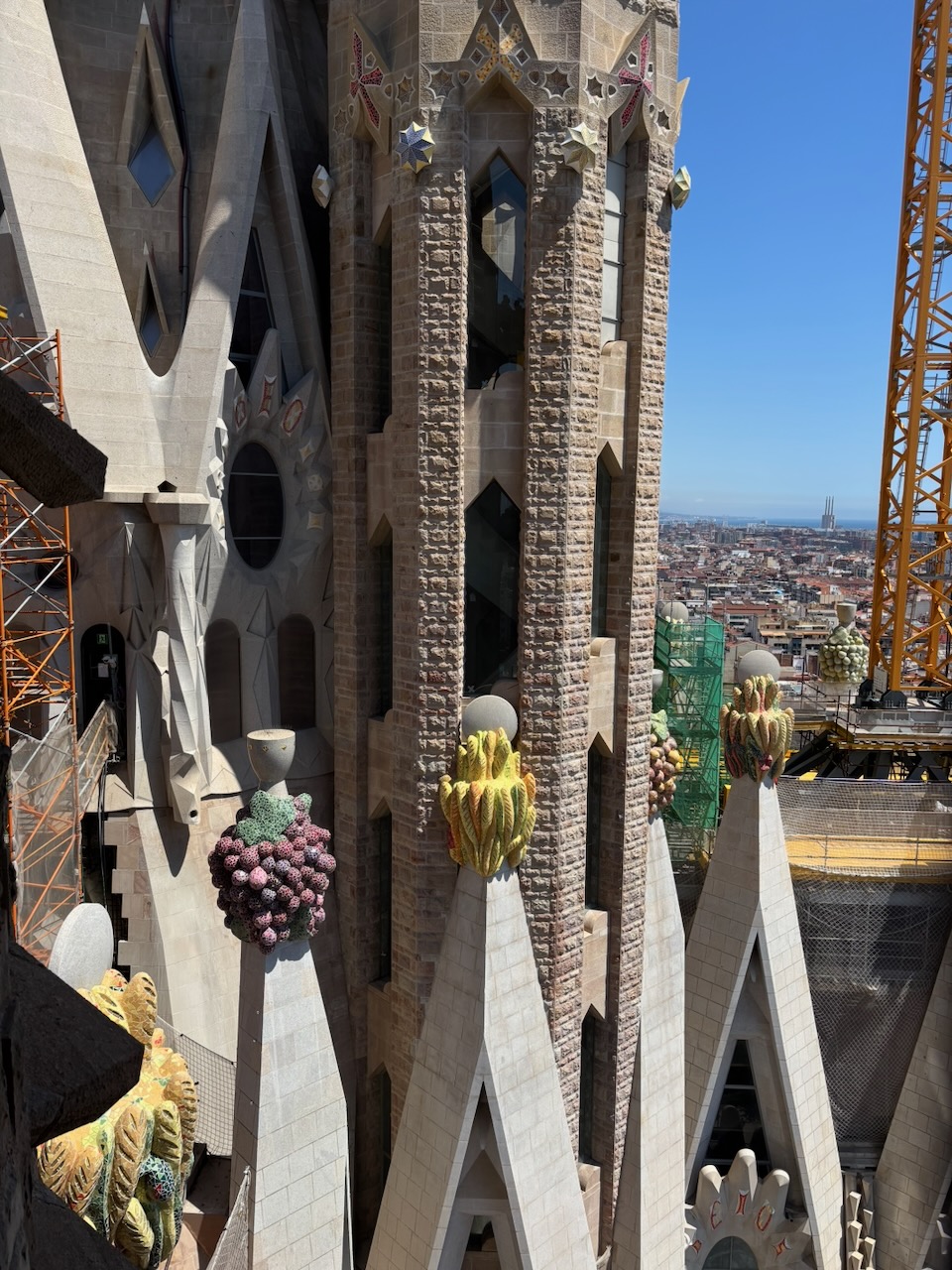
Once we all reconvened, we stood in line for our ascent up one of the Basilica’s towers choosing either the one on the Nativity façade, with views of the eastern side of Barcelona, or the one on the Passion façade, with views of the city center. I went up the Passion Façade which provided a sweeping view of Barcelona in the direction of the Montjuic district, a broad shallow hill that was declared an area of Cultural Asset of National Interest in 2007. It has been the site of various fortifications, including the Castle of Montjuïc dating back to the 17th century as well as the site for the 1929 International Exposition, and was also the location for several venues during the 1992 Summer Olympics, with the Olympic stadium as the centerpiece. Joanna and I spent a good part of a day exploring it in 2014.



Finished with the towers, we all reconvened near the entrance to the Basilica and then walked across the street for lunch at a bakery café, providing us with a solid foundation for the rest of the afternoon, which would see us heading to the Picasso Museum. We’ll cover that and the rest of our stay in Barcelona in the next post.
Links
Excellent Modernist Apartment: https://www.airbnb.com/rooms/10205793?source_impression_id=p3_1768845745_P3_giDae6Qx4xi59
Bonpreu: https://www.bonpreuesclat.cat/
Sagrada Familia: https://sagradafamilia.org/es/home
Discover more from 3jmann
Subscribe to get the latest posts sent to your email.


 3jmann