April 19-20
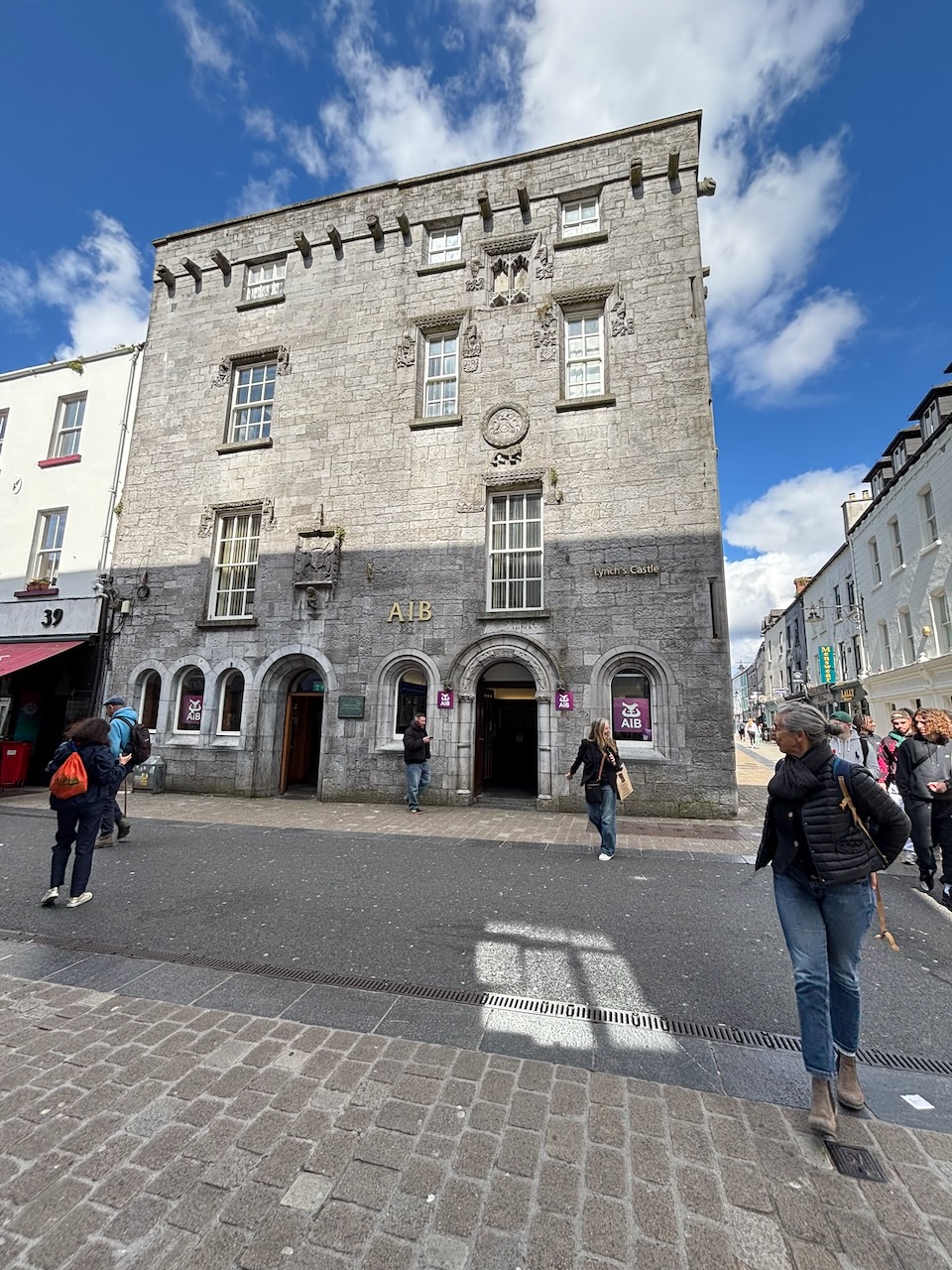
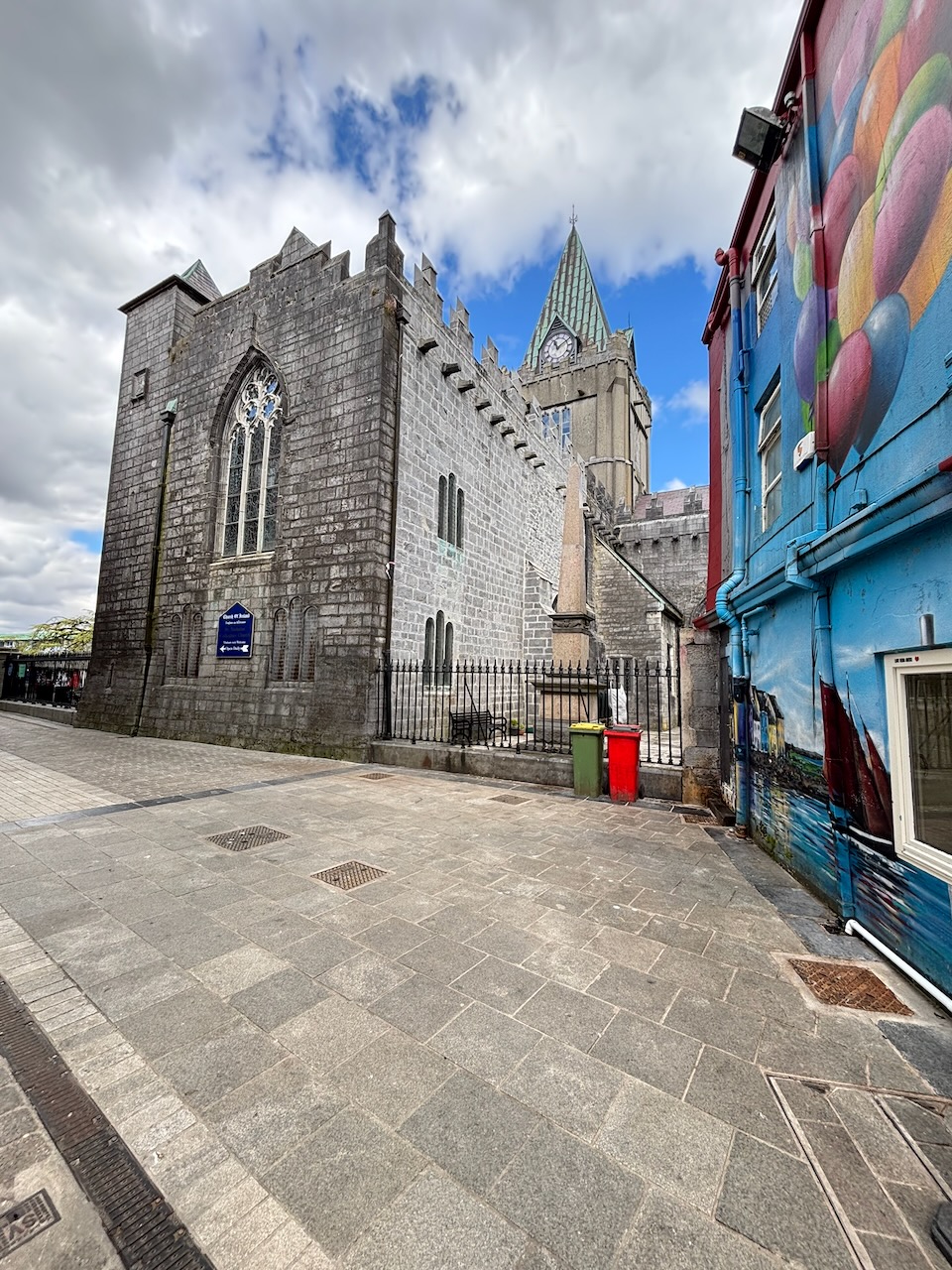
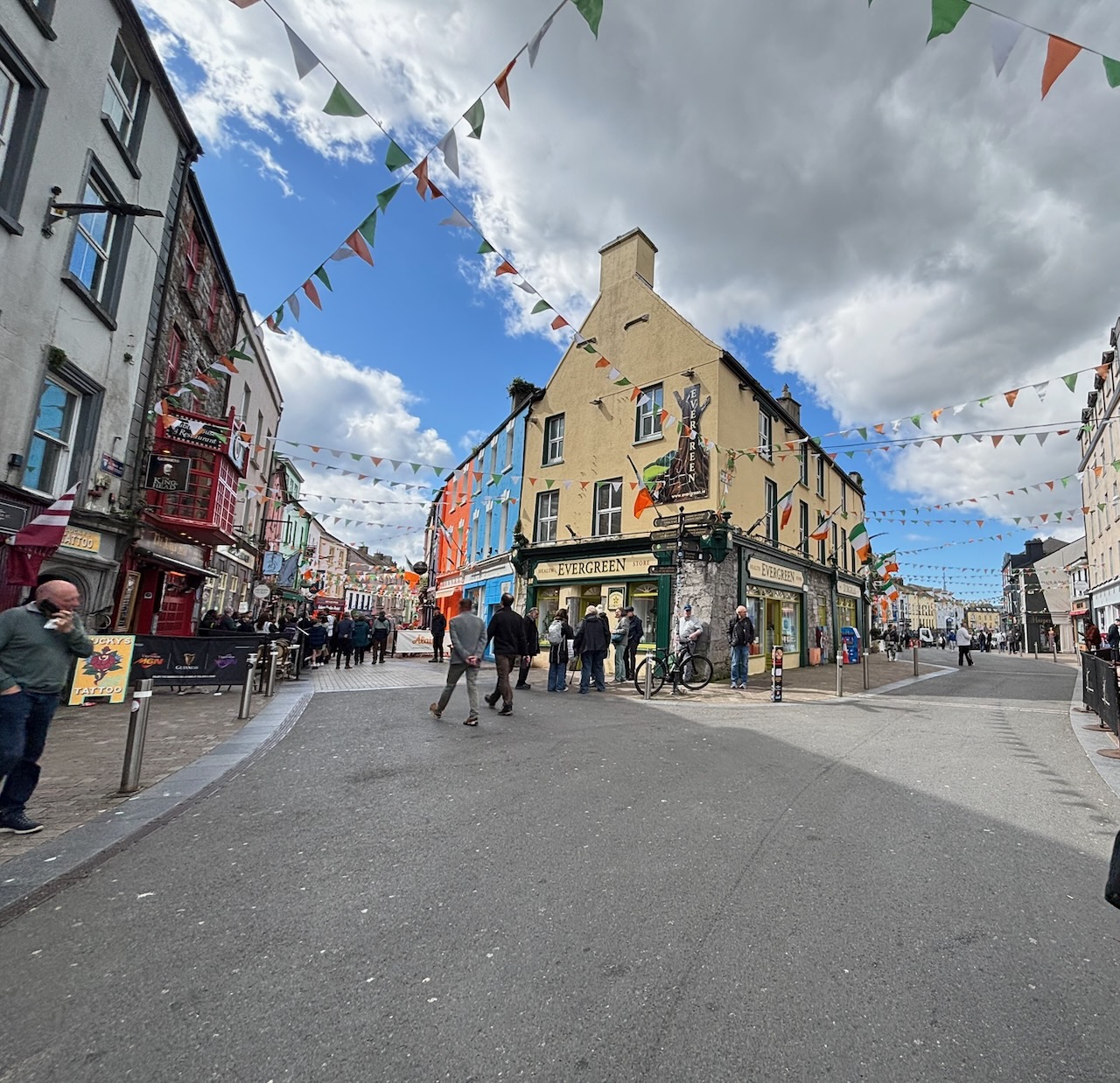
As we entered the pedestrian zone after leaving Eyre Square, our first sight was Lynch’s Castle, Galway’s best late-15th-century fortified townhouse, which was the home of the Lynch family—the most powerful of the town’s 14 “tribes”—and the only one of their mansions to survive. More than 80 of the mayors who ruled Galway in the 16th and 17th centuries were from the Lynch family. After another block we paused for a moment to take in The Collegiate Church of St. Nicholas, the finest medieval building in town (1320). It is dedicated to St. Nicholas of Myra, the patron saint of sailors and Columbus is said to have worshipped here in 1477.
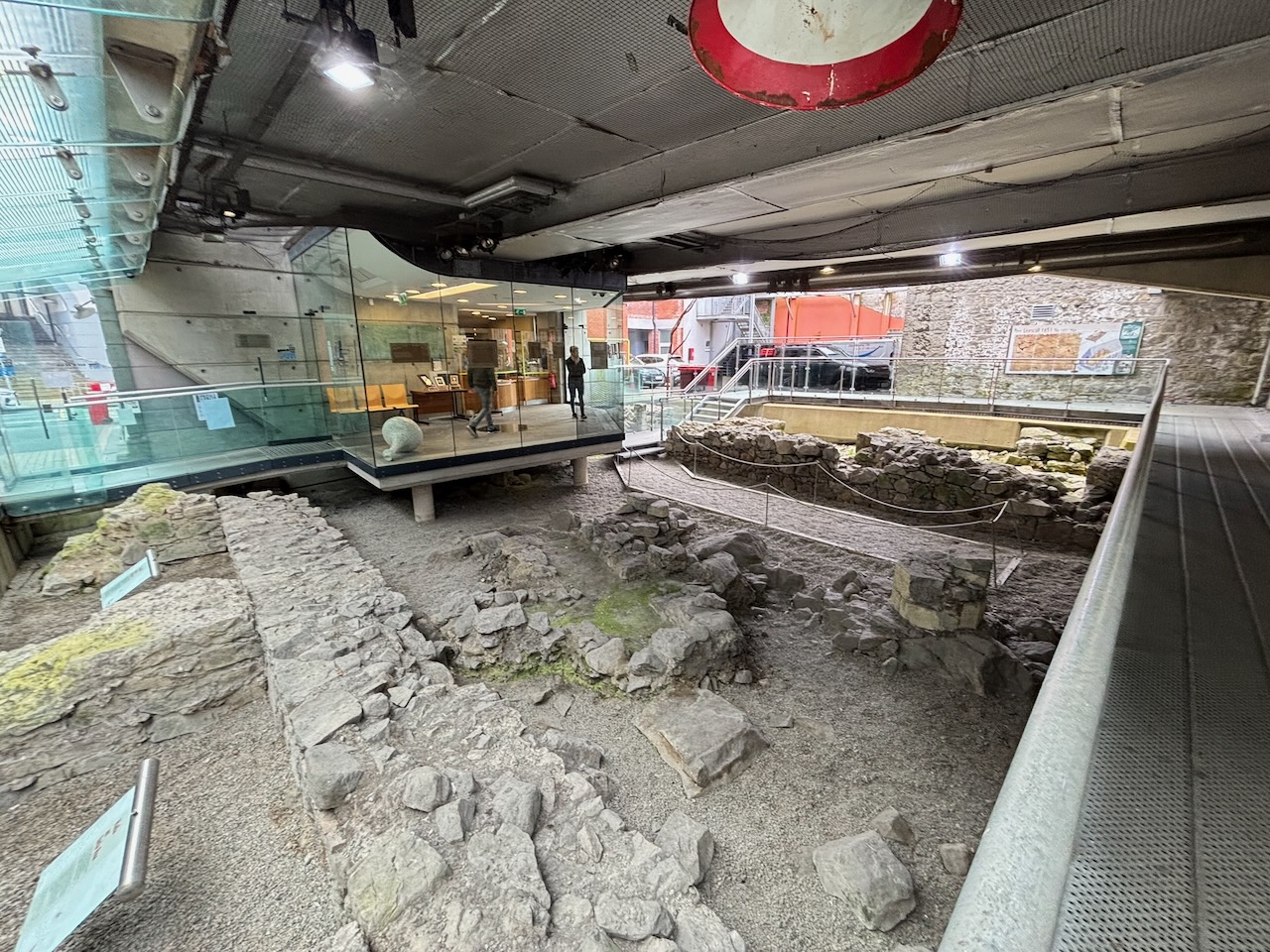
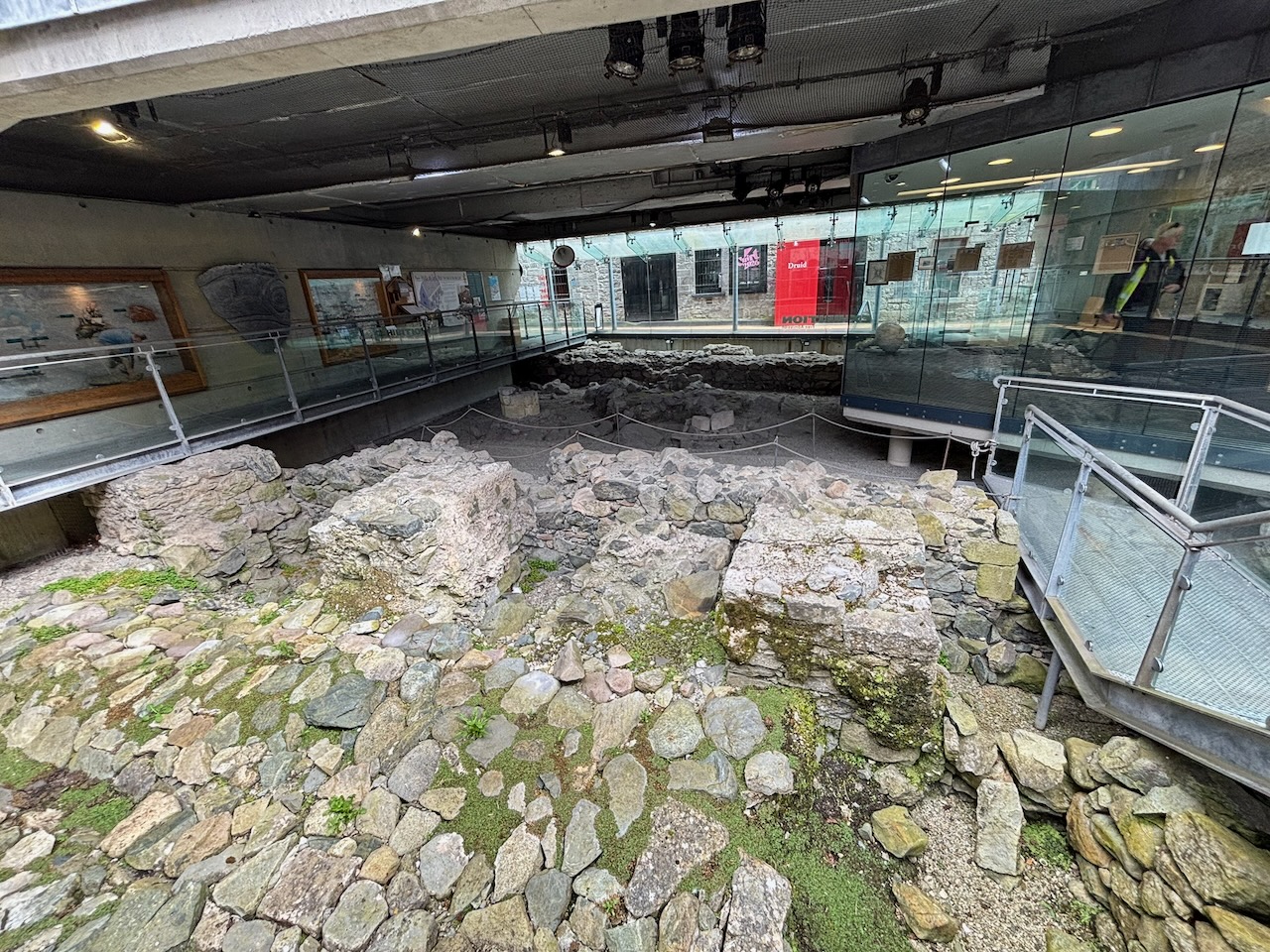
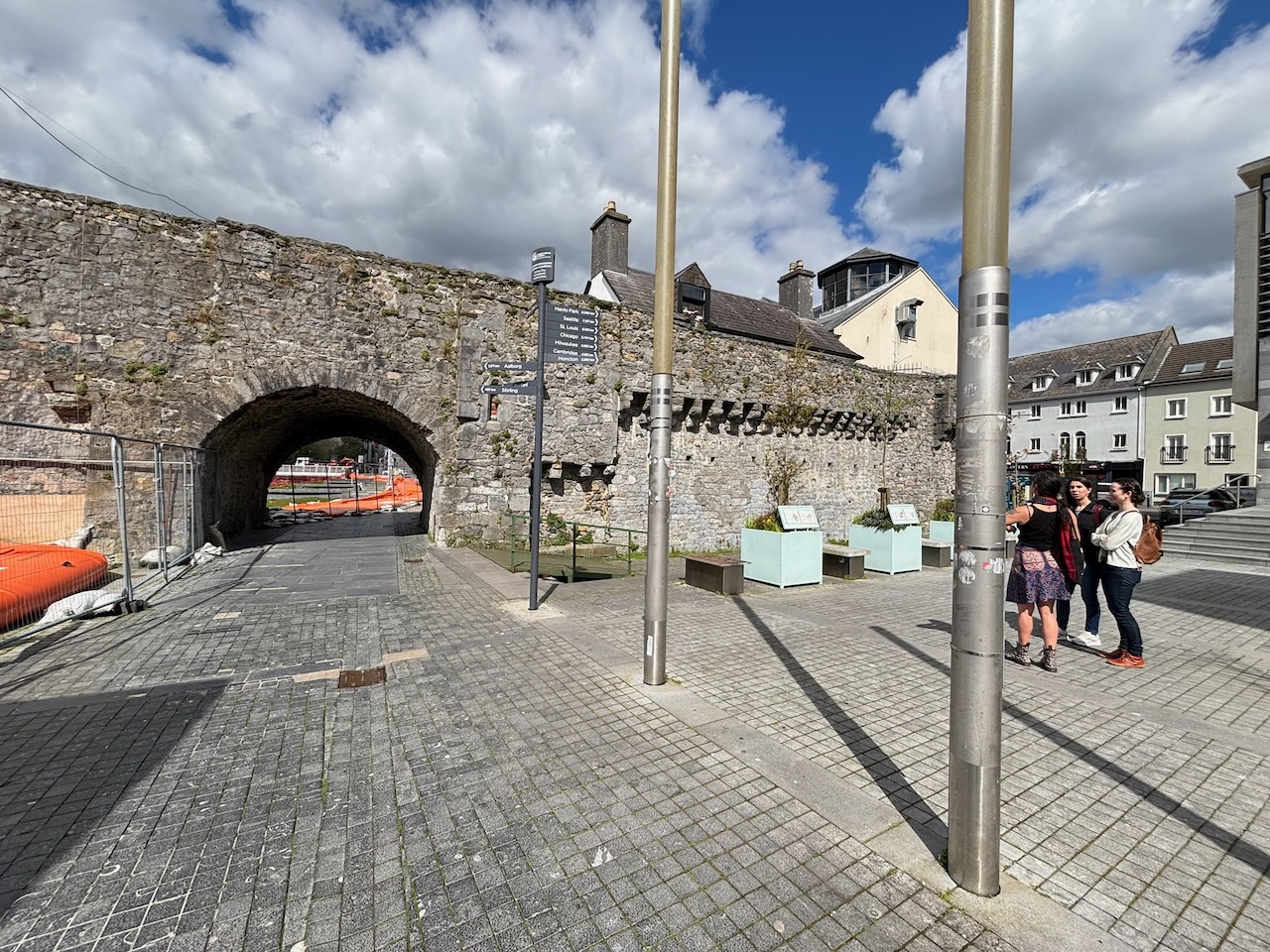
We continued on High Street where it branches to the left and passing many bars and restaurants, made a detour to check out the Hall of the Red Earl. Wall diagrams and storyboards explain that these are the dusty foundations of Galway’s oldest building, once the 13th-century hall of the Norman lord Richard de Burgo. We returned to the pedestrian street which soon ended at the River Corrib where we made a left turn at the Wolfe Tone Bridge in order to take a look at the Spanish Arch, the best remaining chunk of the old city wall. A reminder of Galway’s former importance in trade, the arch (c. 1584) is the place where Spanish ships would unload their cargo (primarily wine).
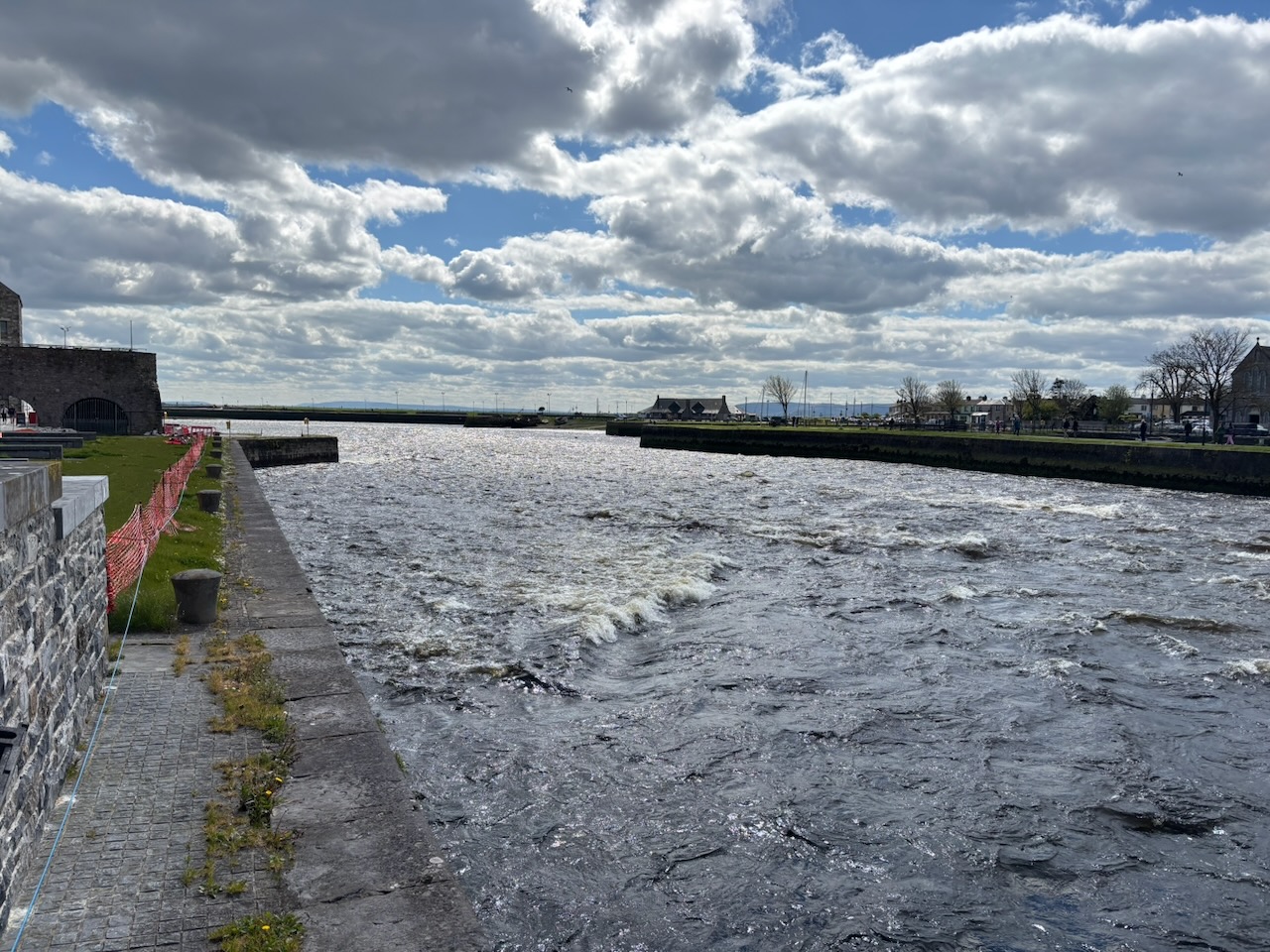
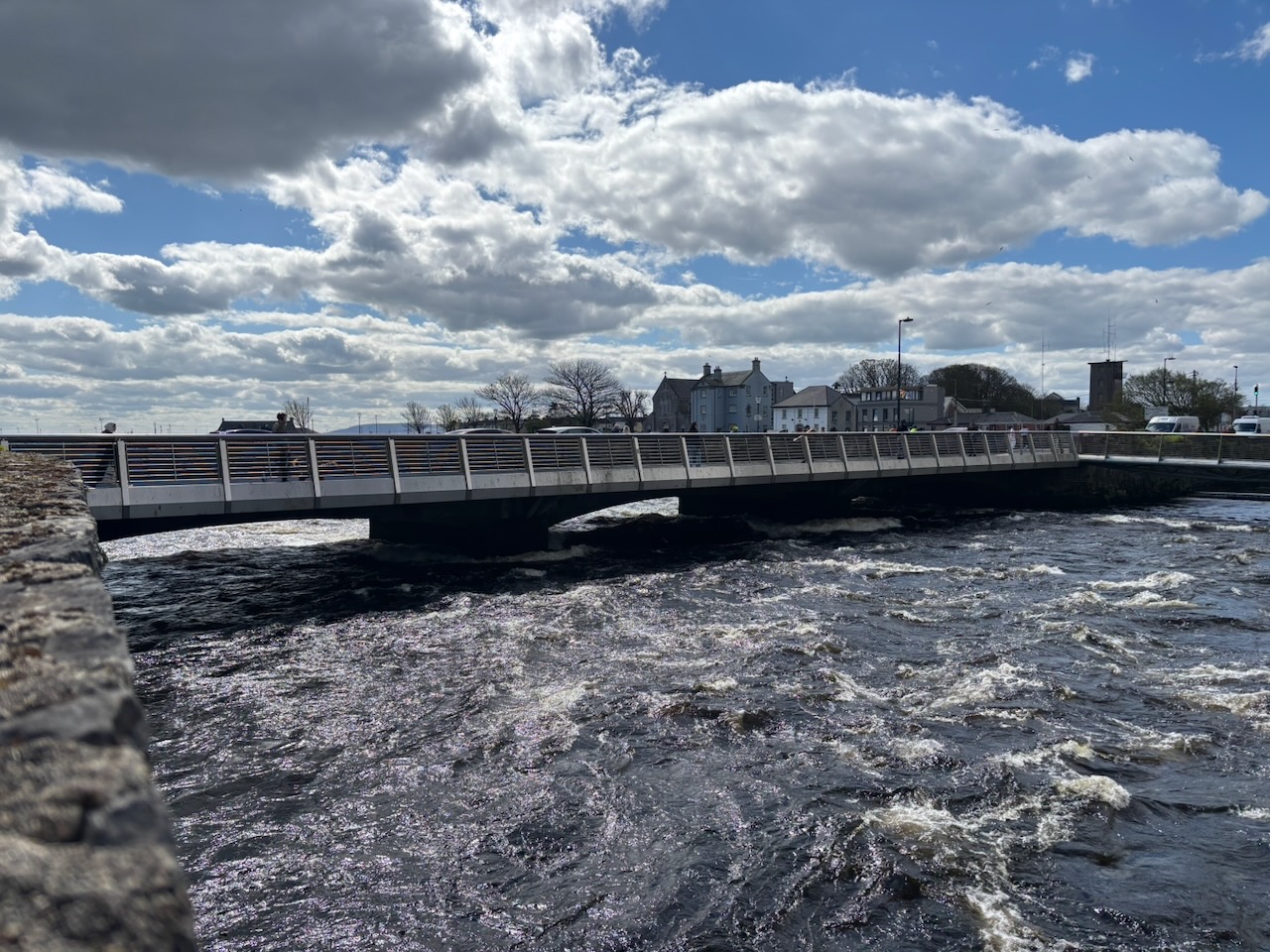
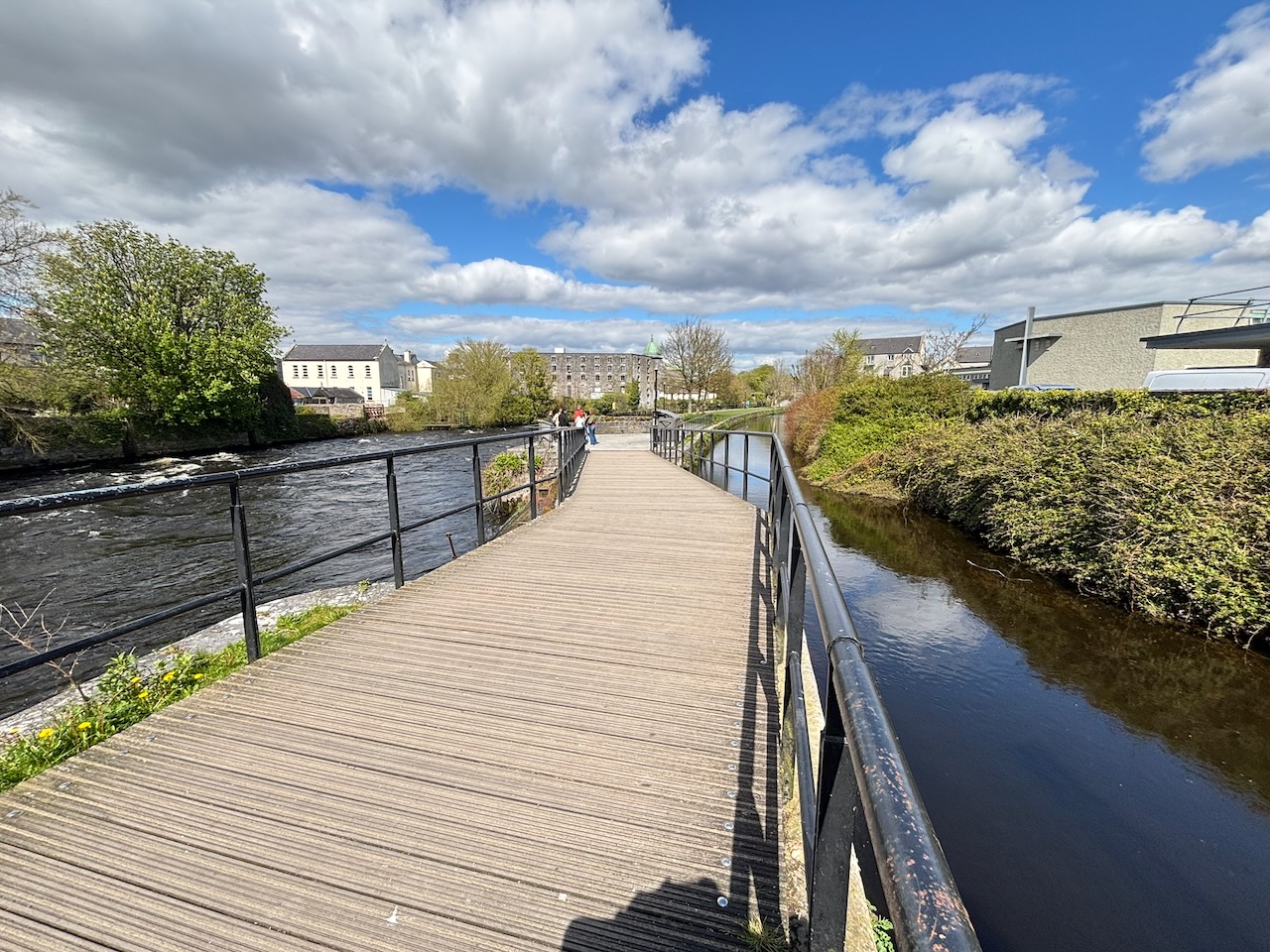
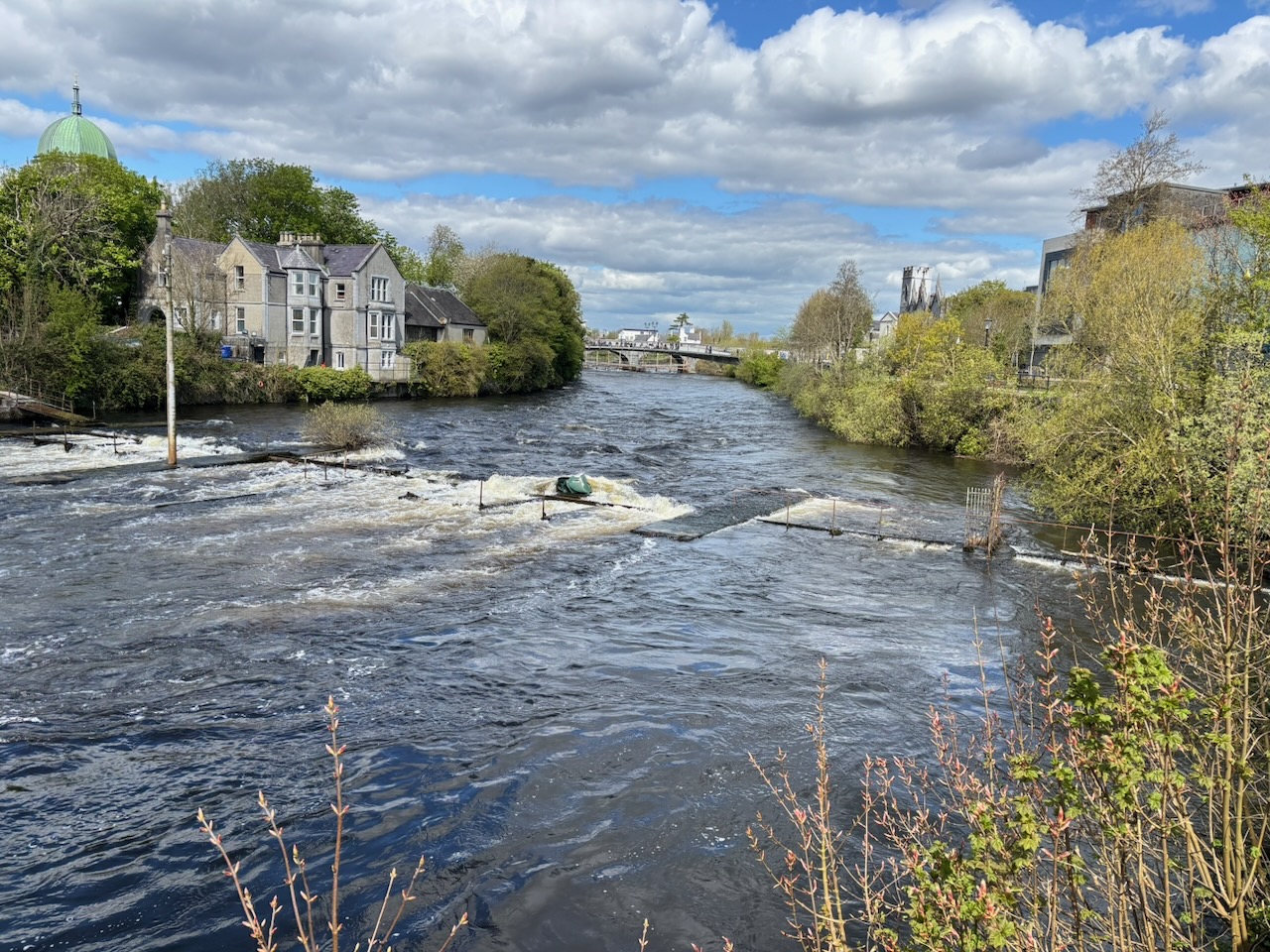
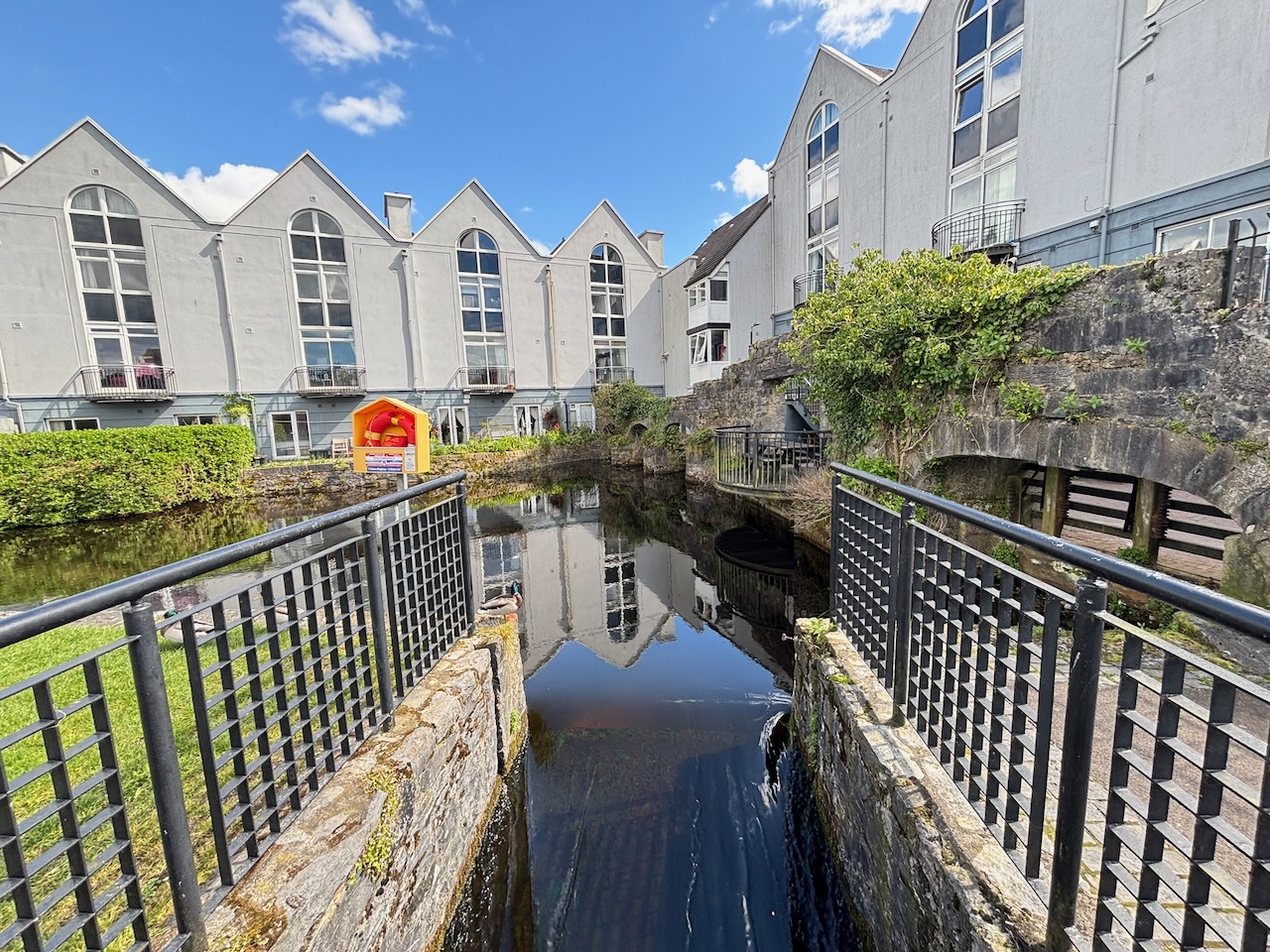
Now we turned upriver and began walking towards Galway Cathedral along the shore on a nicely paved path that included sections of wooden bridges. Along the way we stopped to view some fish traps, built in the 1880’s to trap salmon as they swam upstream to spawn. They were closed in the 1990’s for conservation reasons and now the fish can swim freely upriver. Further along we reached the Waterway Trail, a pedestrian only bridge adjacent to the University auto bridge where a number of anglers were trying their luck, but we didn’t witness any action.
We entered the church, formally known as Cathedral of Our Lady Assumed into Heaven and St Nicholas, Galway which began construction in 1958 on the site of the old Galway Gaol and was completed in 1965, lending it the designation of being “the last great stone cathedral to be built in Europe”. A parish chapel was built around 1750 on Middle Street at Lower Abbeygate Street and in 1821 the chapel was replaced with a limestone church built in the Gothic style and dedicated to St. Patrick.
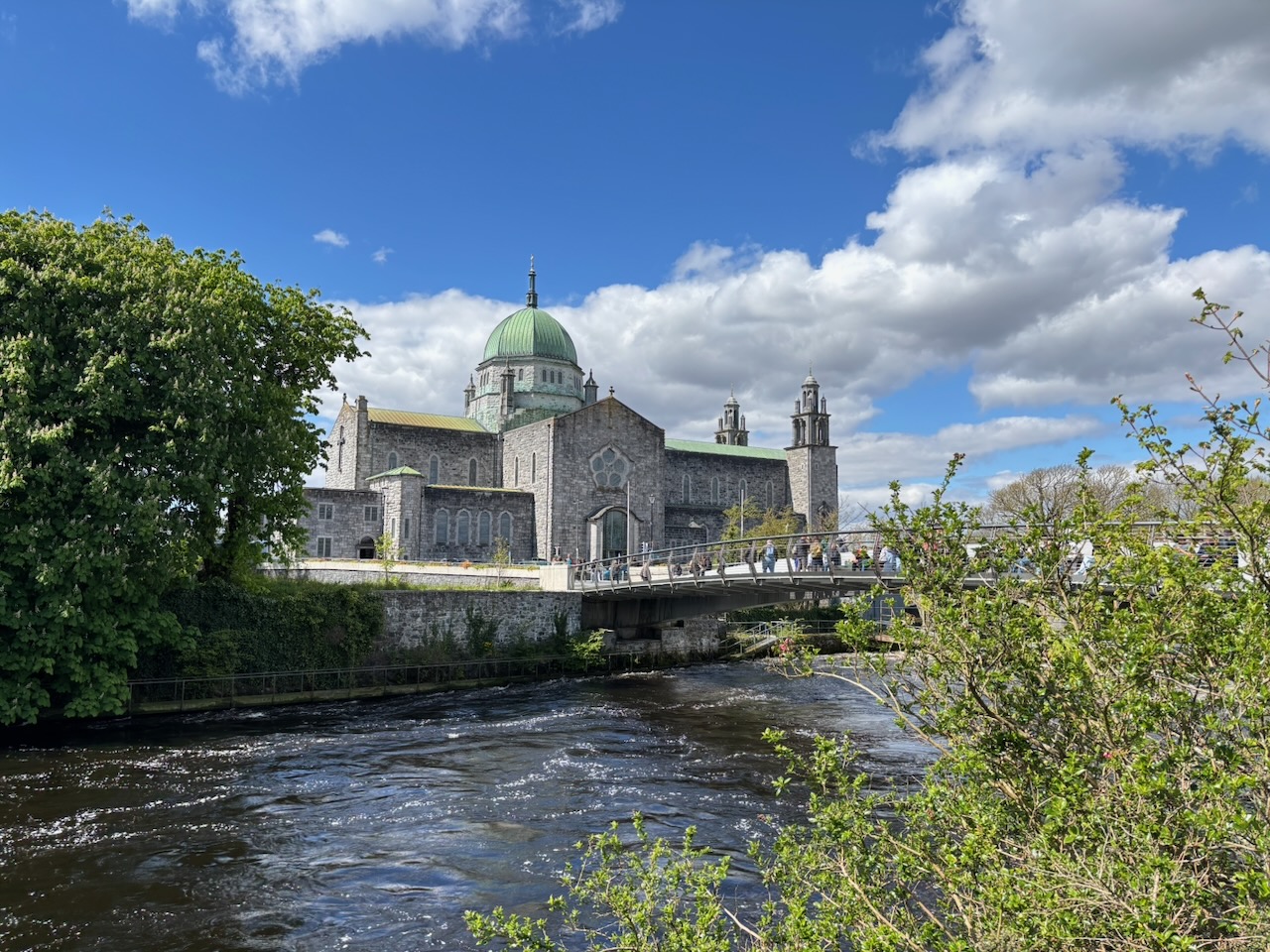
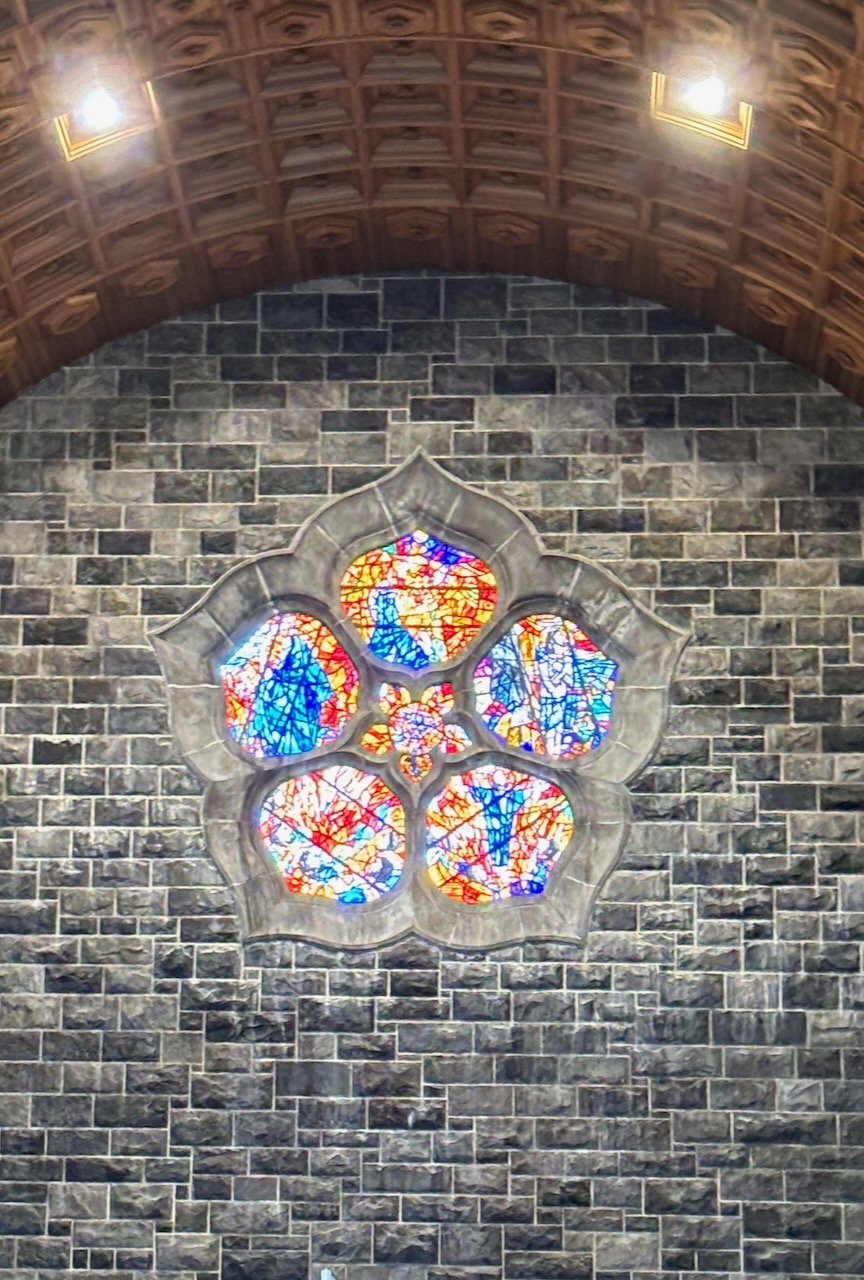
It is an impressive building, as all cathedrals should be. When facing the giant rose window and organ loft at the back of the church, you can imagine what it must feel like with two thousand worshippers sitting on three sides facing the central altar. That being said, it is not without its critics, constructed nearly entirely of local limestone many were of the opinion that a 1950s style cathedral should be built, but the client wanted a traditional style building.
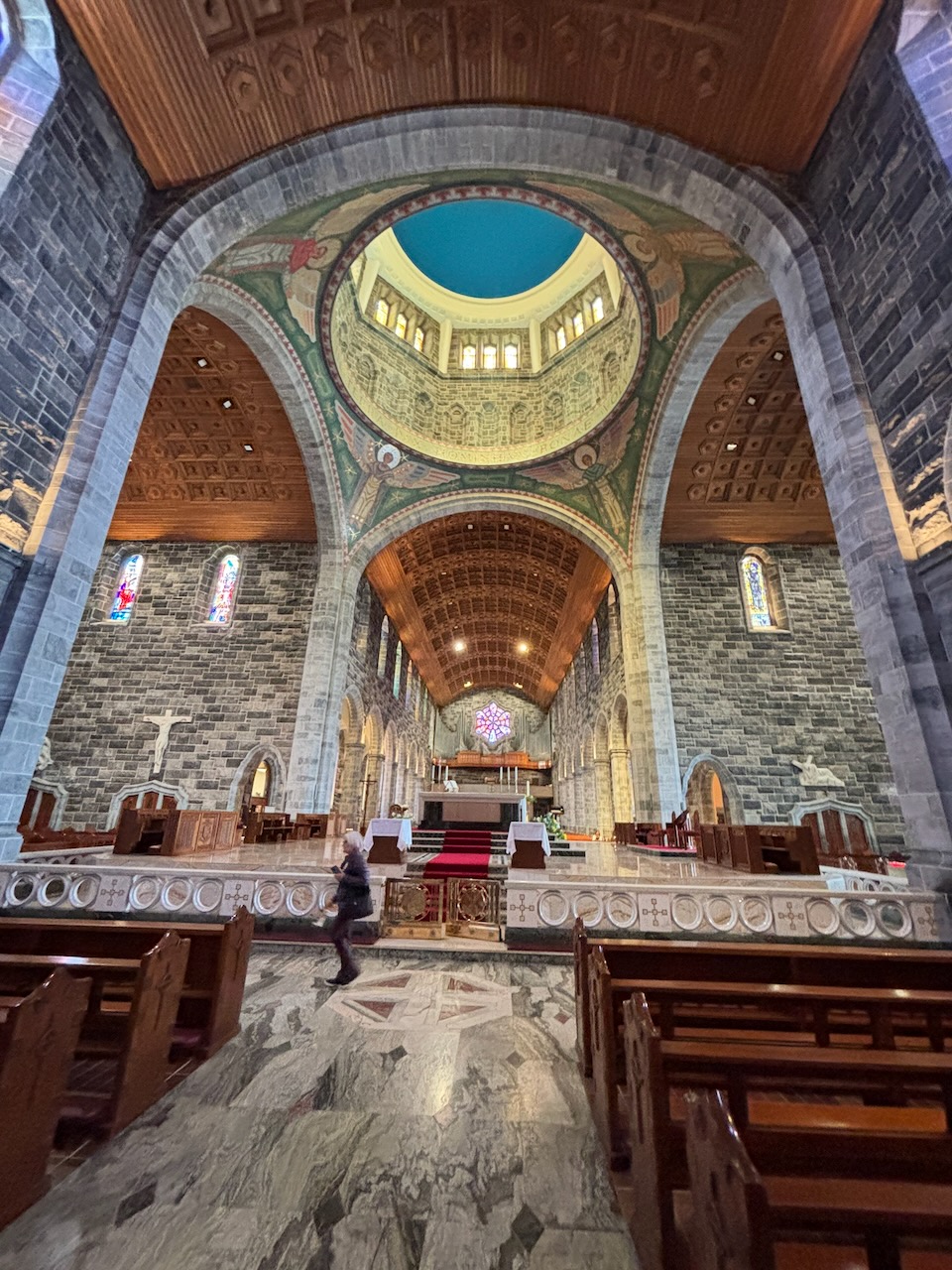
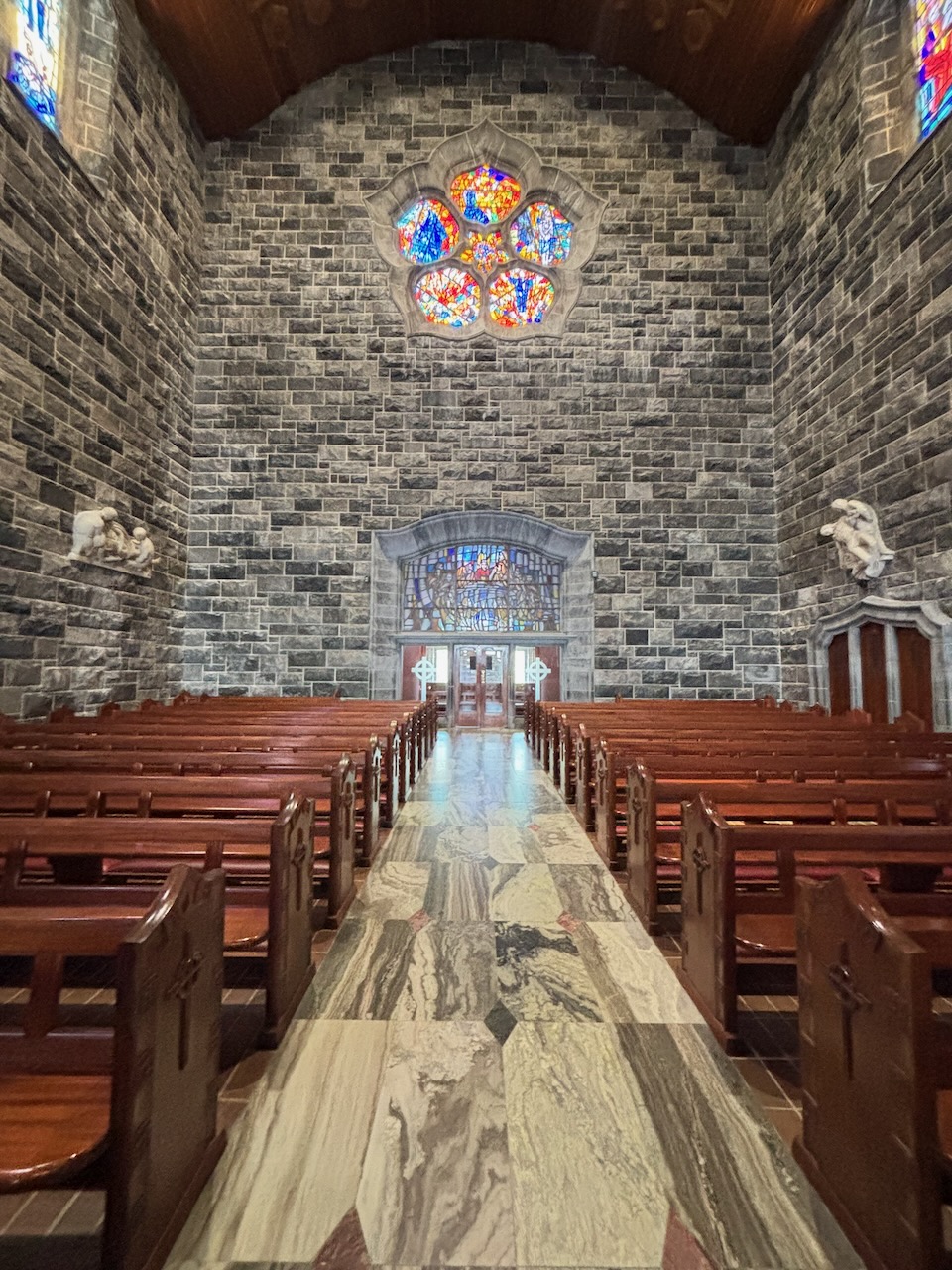
During a controversial interview on Telefís Éireann’s The Late Late Show in 1966, Trinity College Dublin student Brian Trevaskis referred to the building as a “ghastly monstrosity”. More recently, it was described in an Irish Times article concerning “ugly” Irish buildings as a “squatting Frankenstein’s monster” and “a monument to the hubris of its soft-handed sponsors”. Regardless, we were glad to have stopped in for a refreshing break, as almost all visits to large churches can be.
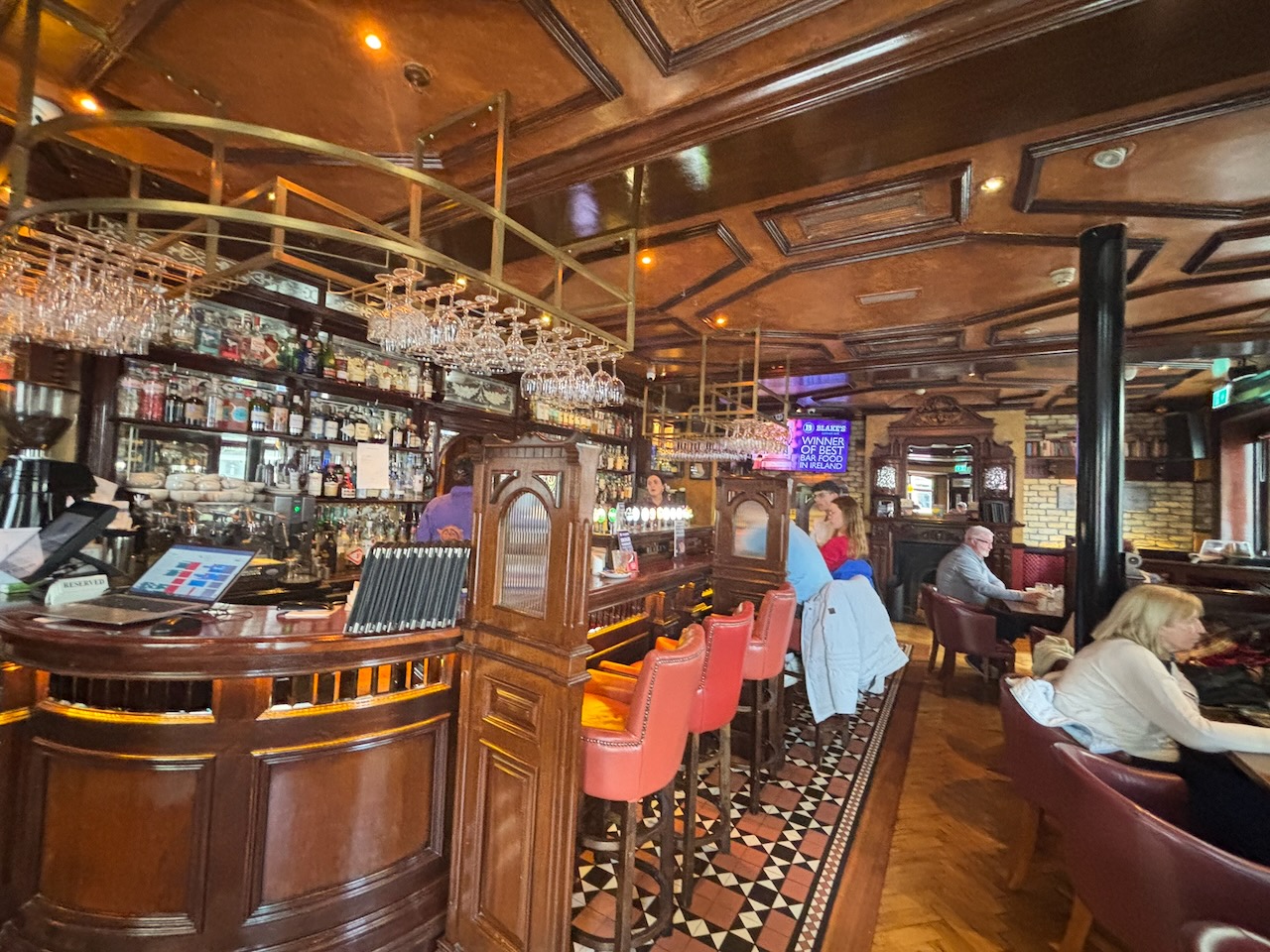
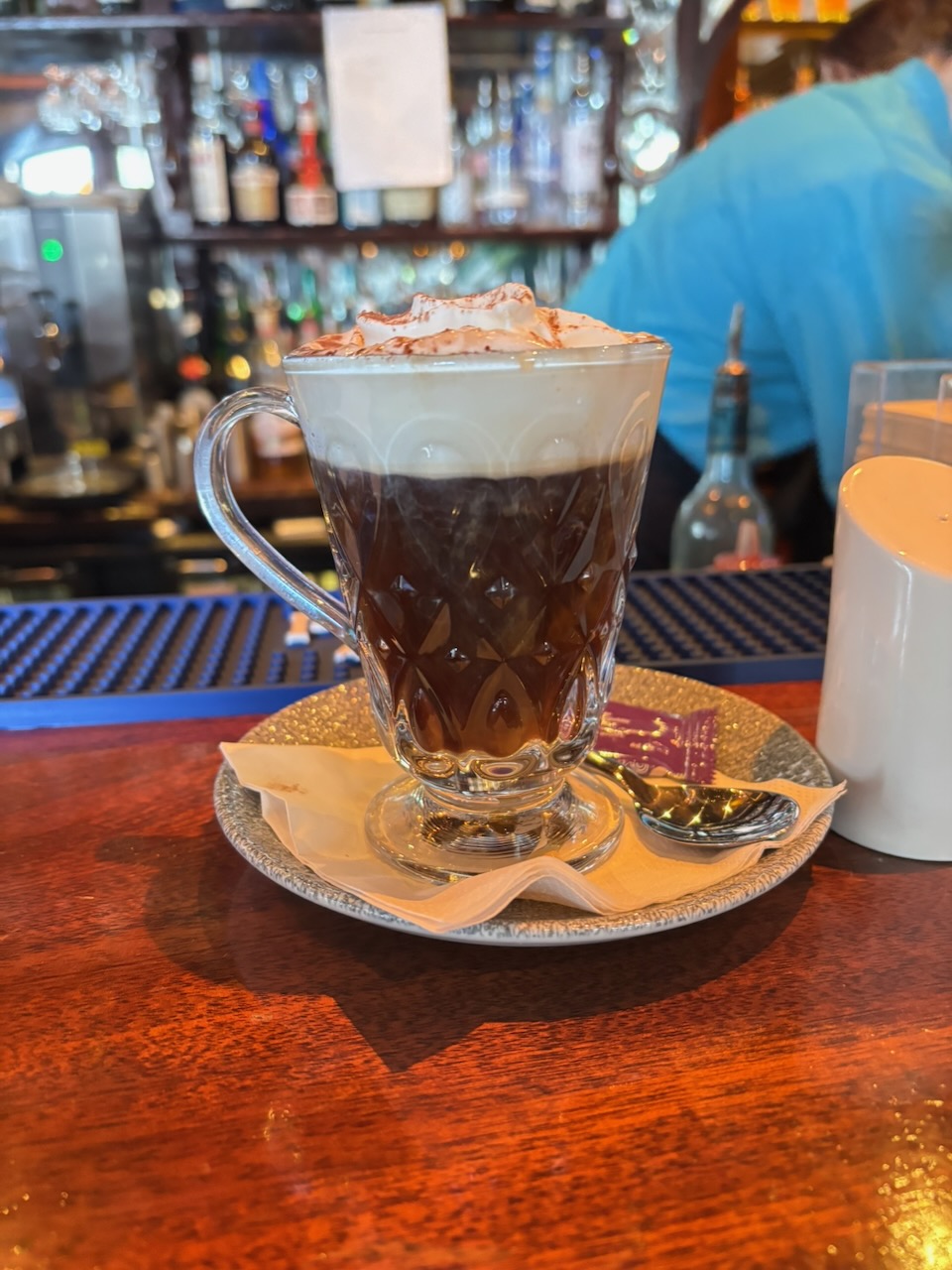
This was our last stop on the walking tour and so we began to head back to Eyre Square to catch the bus to the hotel. On the way, it being that time of day, of course we stopped for an Irish Coffee apiece at Blakes Bar. As we had so often observed on the trip so far, even at 2pm, which one might consider to be outside of lunch time the dining area was crowded, demonstrating the Irish love for dining together. The coffees were good and hit the spot at 17.80 Euros ($21.05), as good a drink as $10 apiece can get you.
Later as we contemplated dinner, we decided not to hit the restaurant downstairs as the food and menu, while good, weren’t quite what we were in the mood for. Not wanting to venture too far away we did a quick online search and instead opted to walk a short distance to Shake Dog, especially as we had not yet had a burger while in Ireland. When asked how Europe has changed in general, I often respond in three ways. The first is the almost universal use of English as the vehicle for verbal exchange. The second is that we now all wear the same clothes, like Levi’s, Nikes, North Face, etc. And finally, every restaurant or café in every town has a burger on the menu. Let alone a McDonald’s or a Burger King.
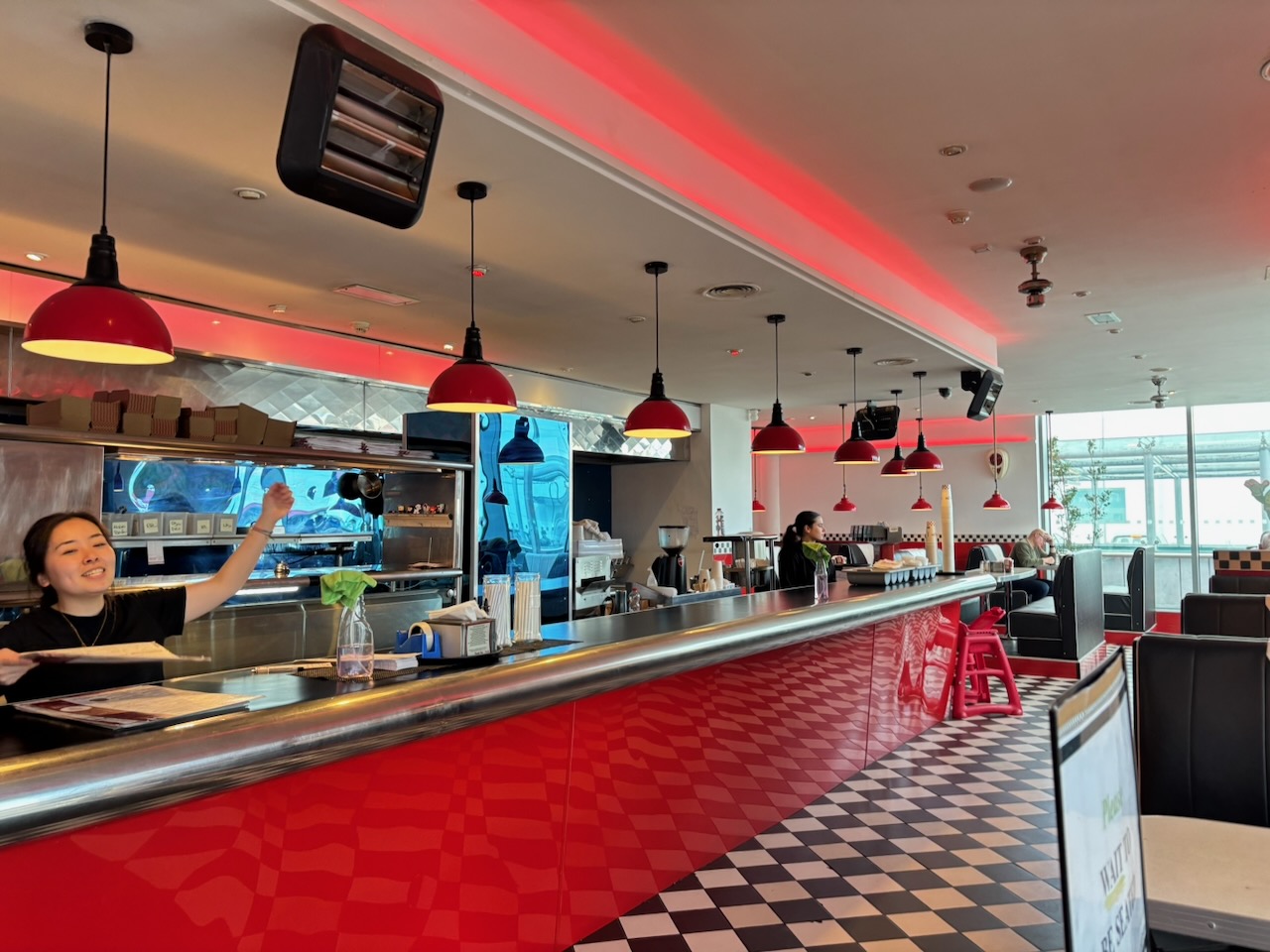
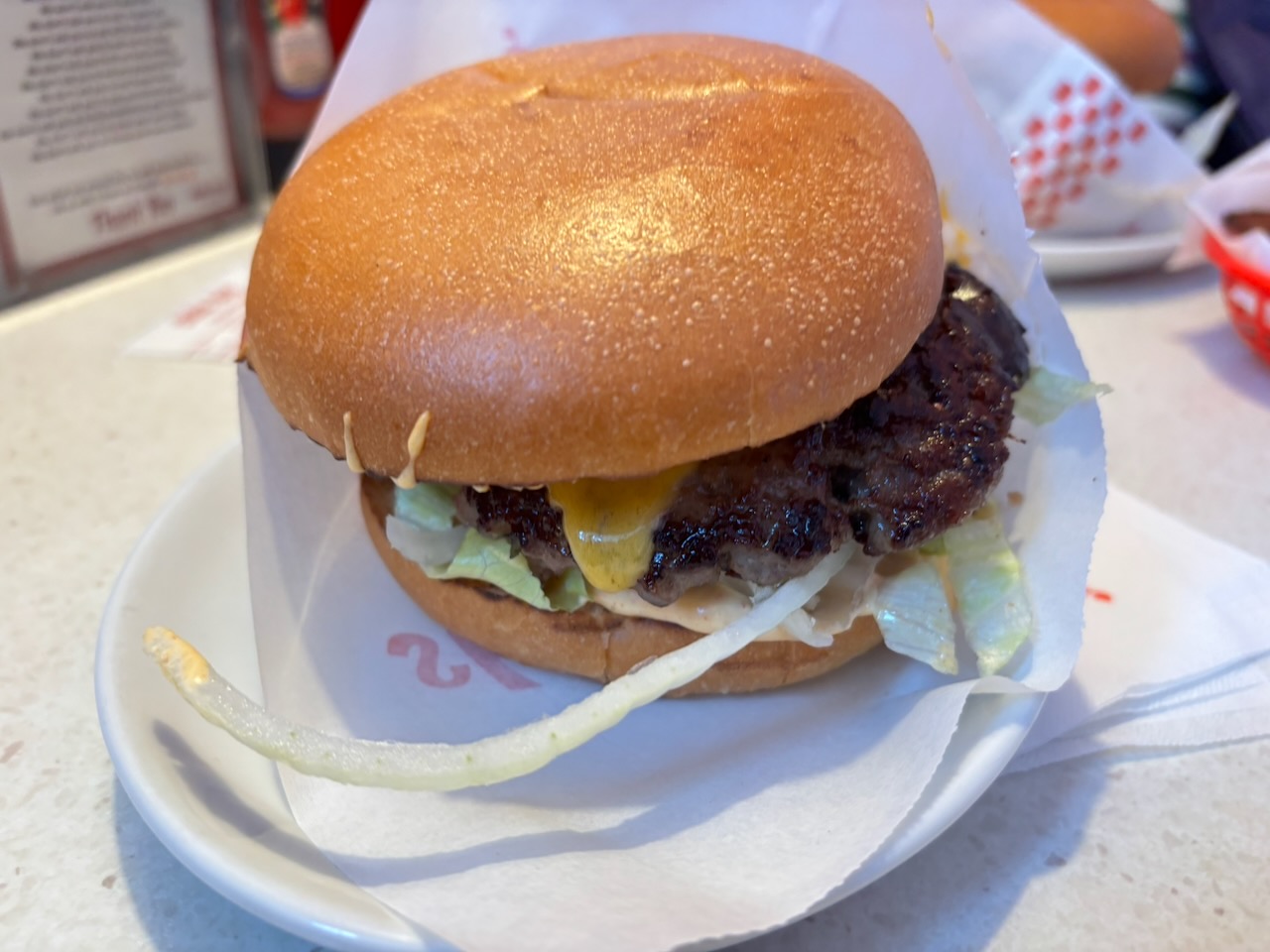
It’s a brightly lit place somewhat reminiscent of Johnny Rockets and after being seated we ordered a Shakedog Deal apiece, that is a burger of choice, fries of choice (sweet potato for Joanna) and a drink for a total tab of 33.98 Euros ($40.27). What we had was as good a burger and fries as one could want, and one can see why this chain of thirteen locations with its varied menu (not just burgers) is fairly successful.
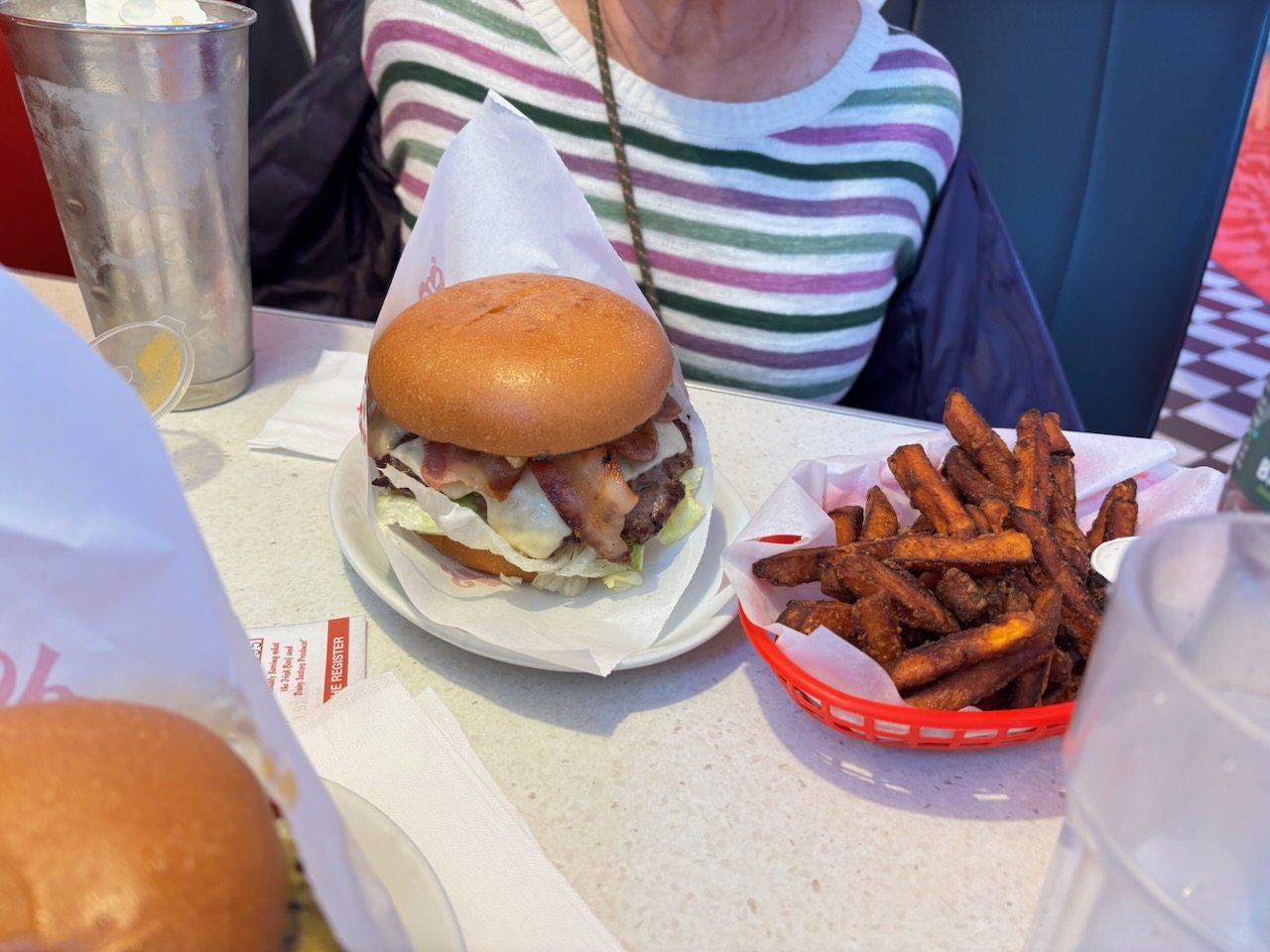
We finished and walked back to the hotel full to bursting and looking forward to the next day, a drive to Westport and a chance to handle a hawk on the way. Galway had been a good stop, and we could begin to see the end of the trip, still a week or more away. See you in Westport.
Links
Lynch’s Castle: https://www.galwaytourism.ie/lynchs-castle/
Hall of the Red Earl: https://www.visitgalway.ie/explore/heritage-and-history/historic-buildings-and-places/hall-of-the-red-earl/
Galway Cathedral: https://www.galwaycathedral.ie/
Blakes Bar: https://brasseriegalway.com/blakes-bar/
Shake Dog: https://www.shakedog.ie/
Discover more from 3jmann
Subscribe to get the latest posts sent to your email.


