April 21-22
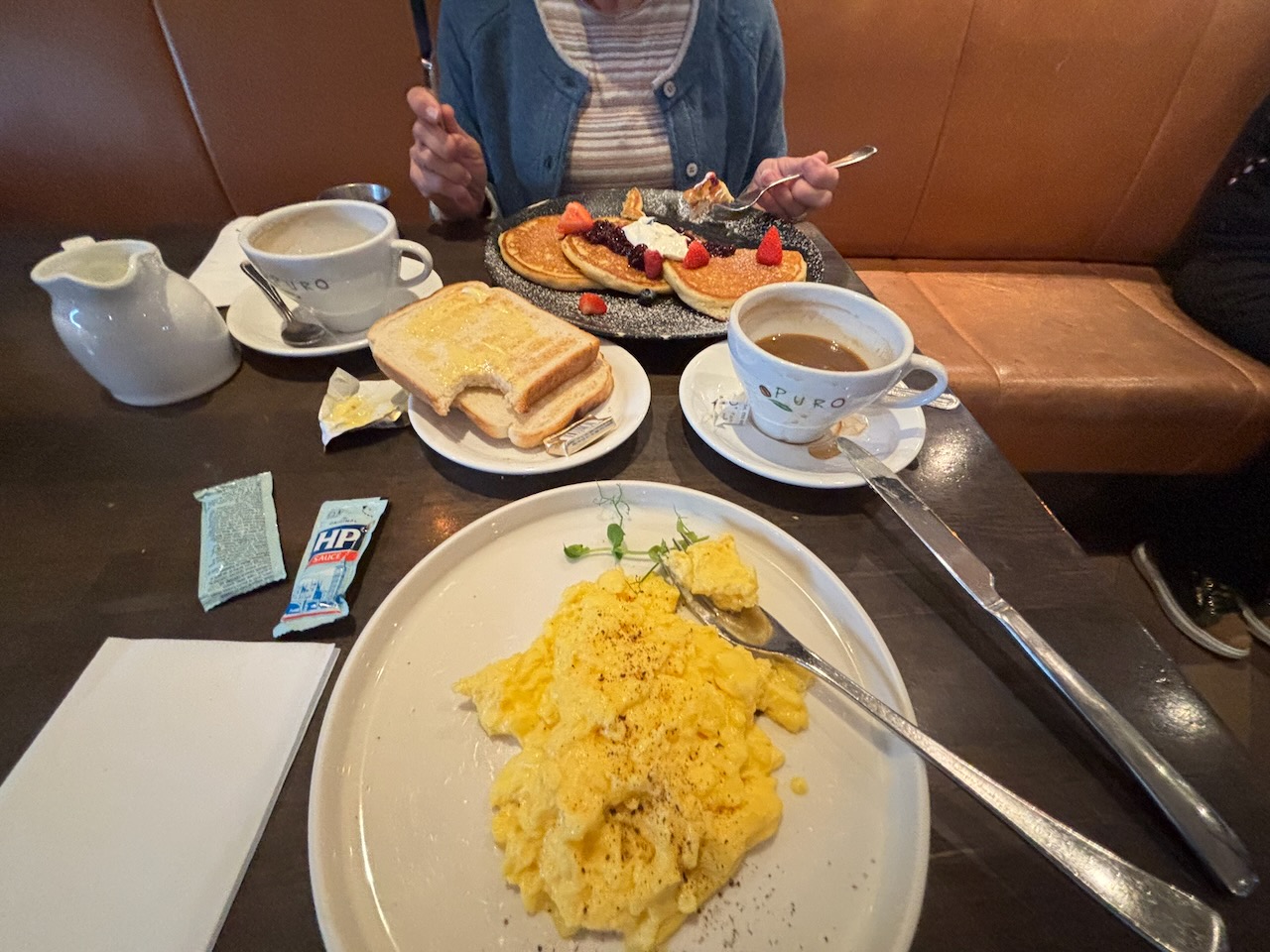
We enjoyed a hearty breakfast at the Huntsman Inn (scrambled eggs and toast for me and buttermilk pancakes with poached berries, lemon crème fraiche, and mint for Joanna, along with coffee) for 28.60 Euros ($34.19) before embarking on what would be one of the most memorable days of the trip. We’d be stopping on the way to Westport so that we could participate in a Hawk Walk at Ireland’s School of Falconry.
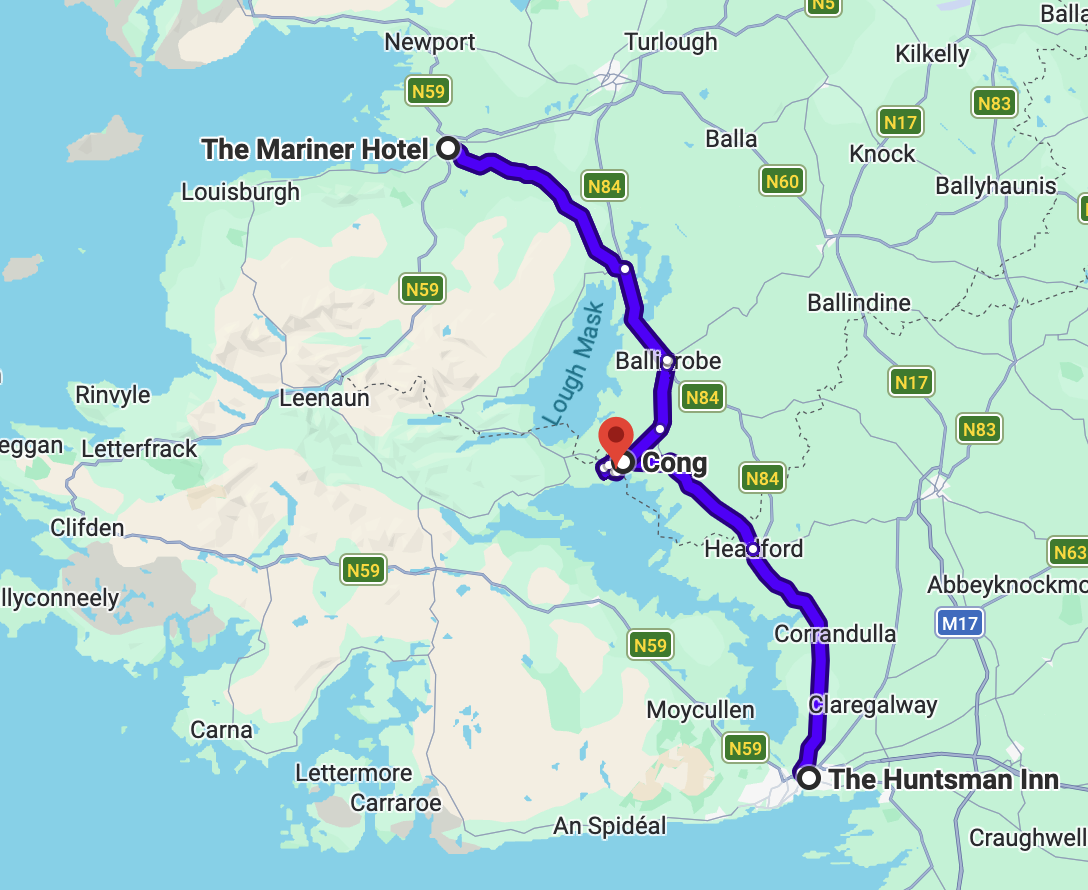
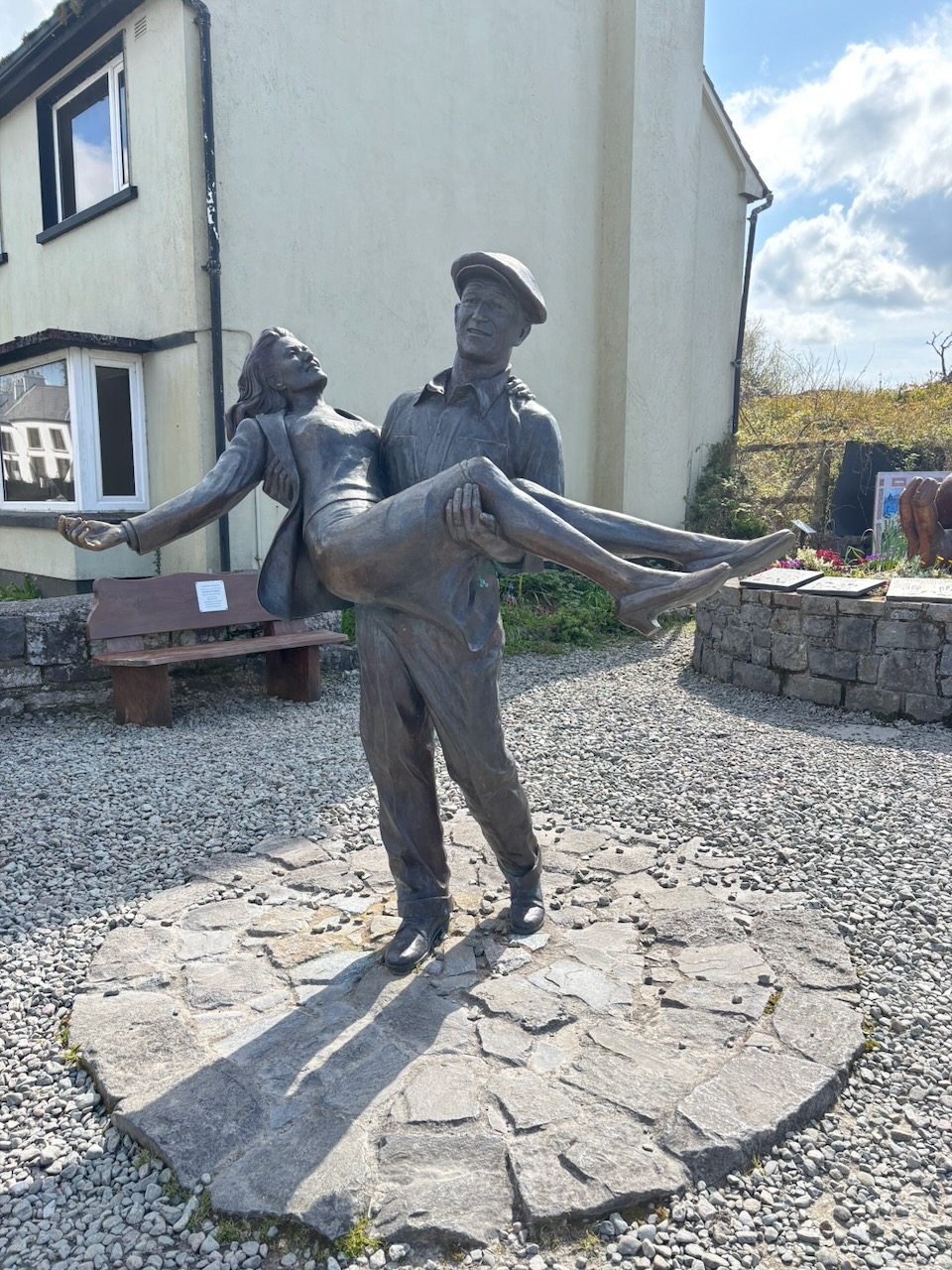
As it was a relatively short drive to our 2:00 pm appointment for the walk, we dawdled at the Huntsman Inn for a bit and then drove to Cong (conga, Irish for “isthmus”) which lies between two large lakes, the small town adjacent to Ashford Castle where the school is located. This small village is known for being the setting for the 1952 John Ford movie The Quiet Man, starring John Wayne, Maureen O’Hara, and Victor McLaglen.
We parked across the street from the Royal Abbey of Cong and spent a bit of time roaming its grounds. In the early 7th century, a church was built at this site, reportedly by Saint Feichin. A later building was destroyed by fire in 1114. Within the next twenty years or so, Turlough Mor O’Connor, the High King of Ireland, re-founded the abbey. Raiders from Munster destroyed the buildings in 1137 but they were rebuilt by King Turlough as an Augustinian settlement in 1138.
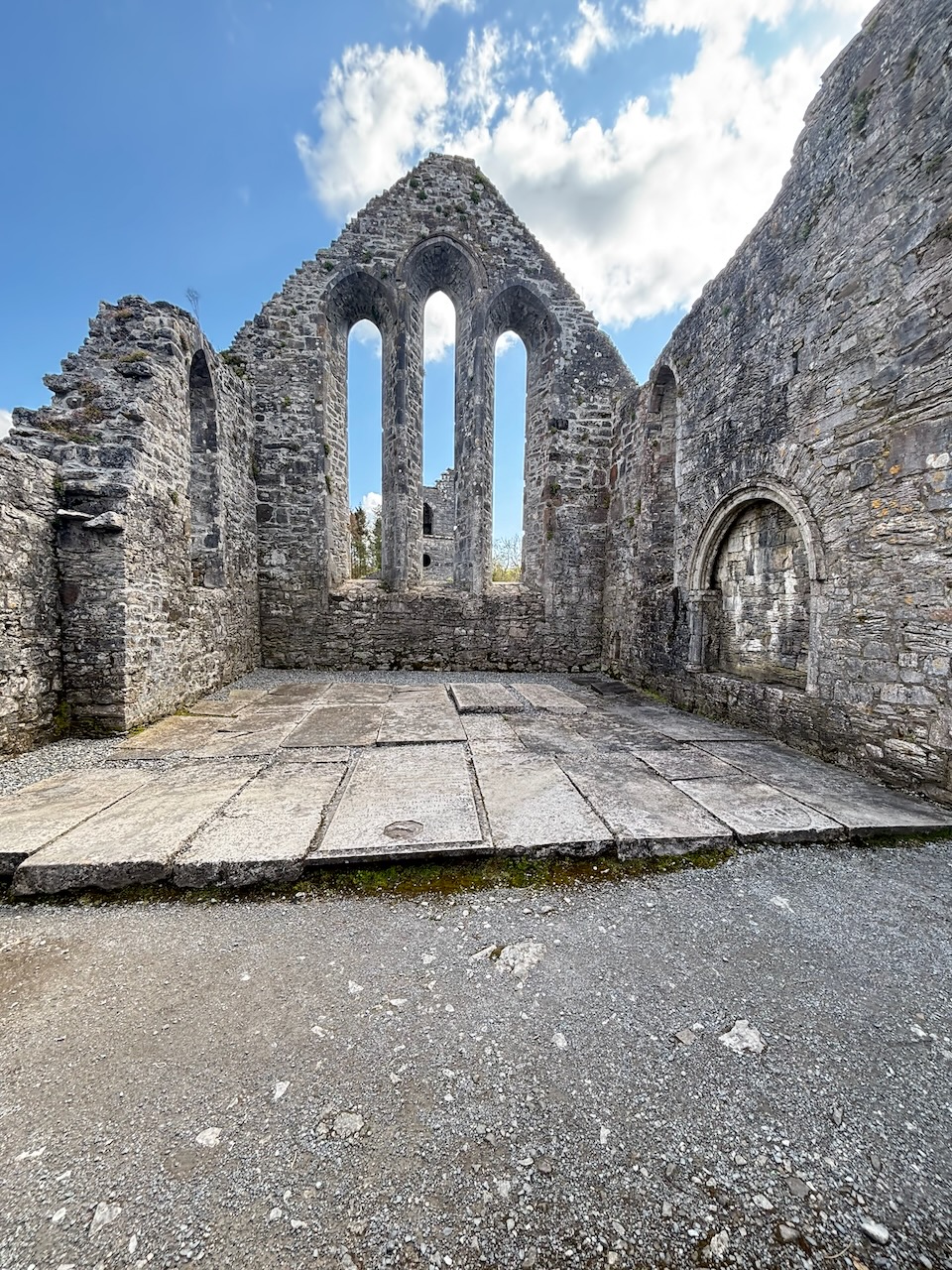
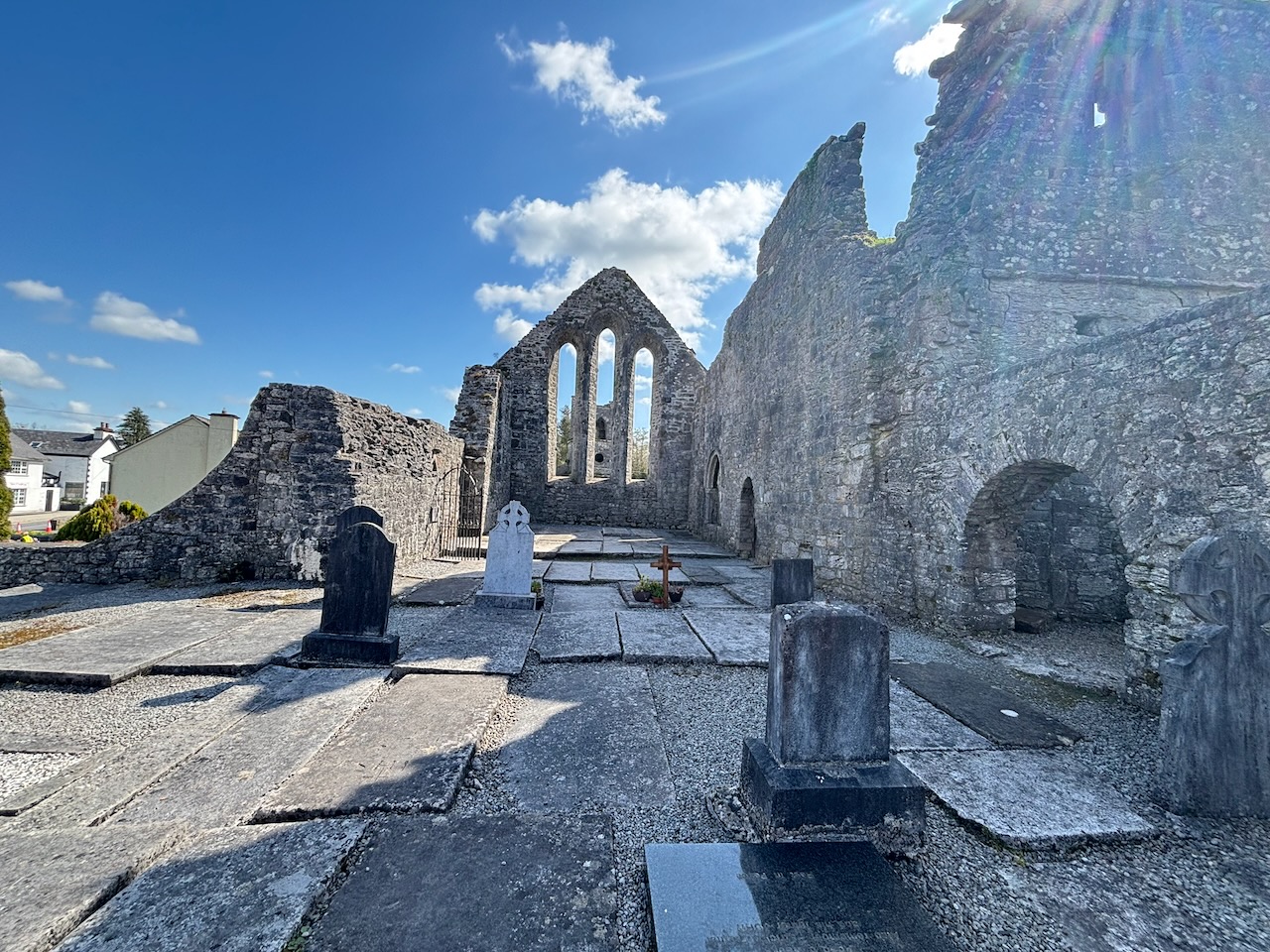
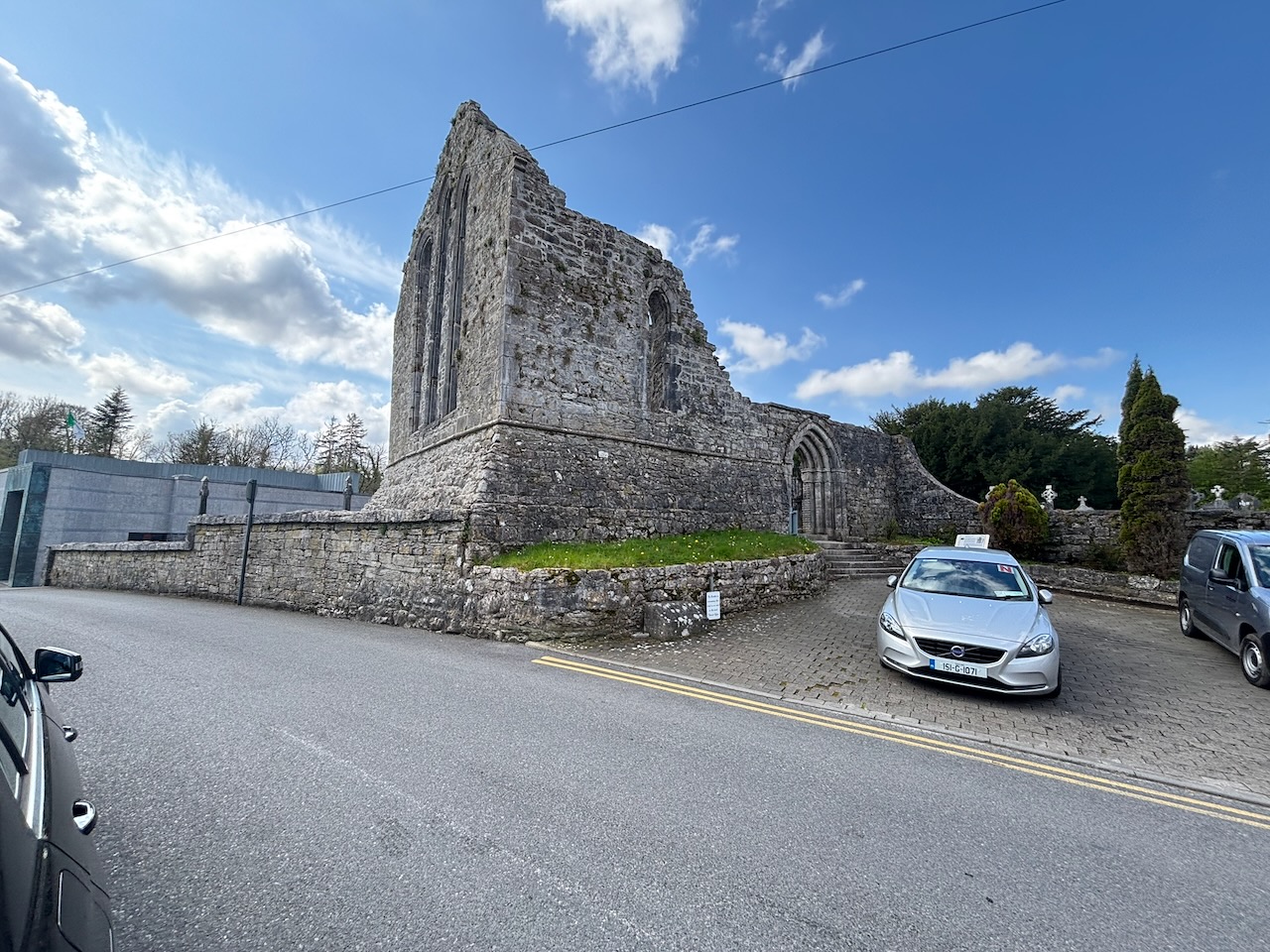
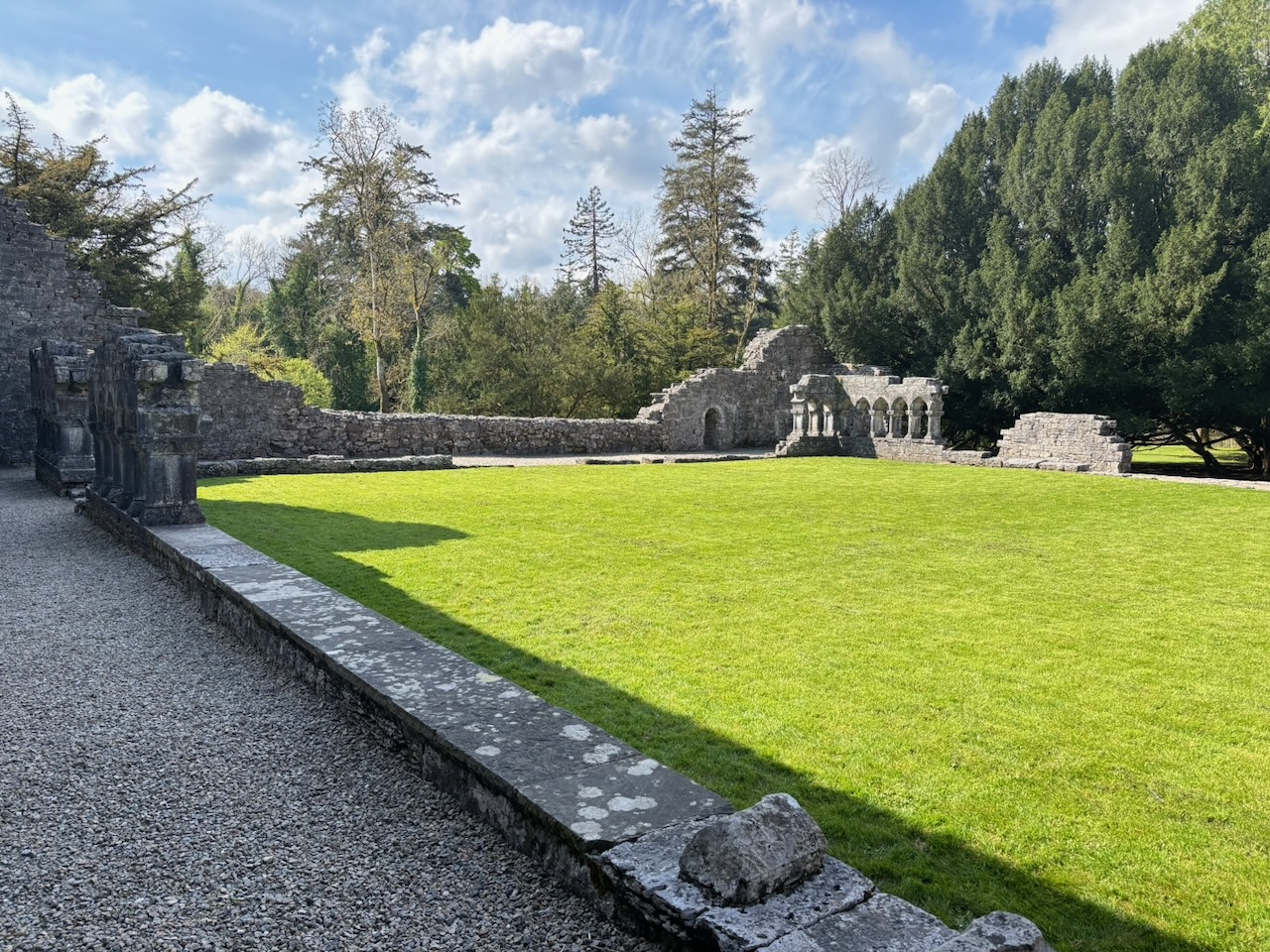
After roaming the abbey grounds, we crossed the street to spend some time in the abandoned church and then walked into the center of town looking for a place to get a coffee without success. To kill time, we could have opted to tour the Quiet Man Museum, but concluded it might be better just to watch the movie (I’d already seen but Joanna hadn’t) which we would do that night in our hotel room. Instead, we pushed on to Ashford Castle and our rendezvous with the hawks.
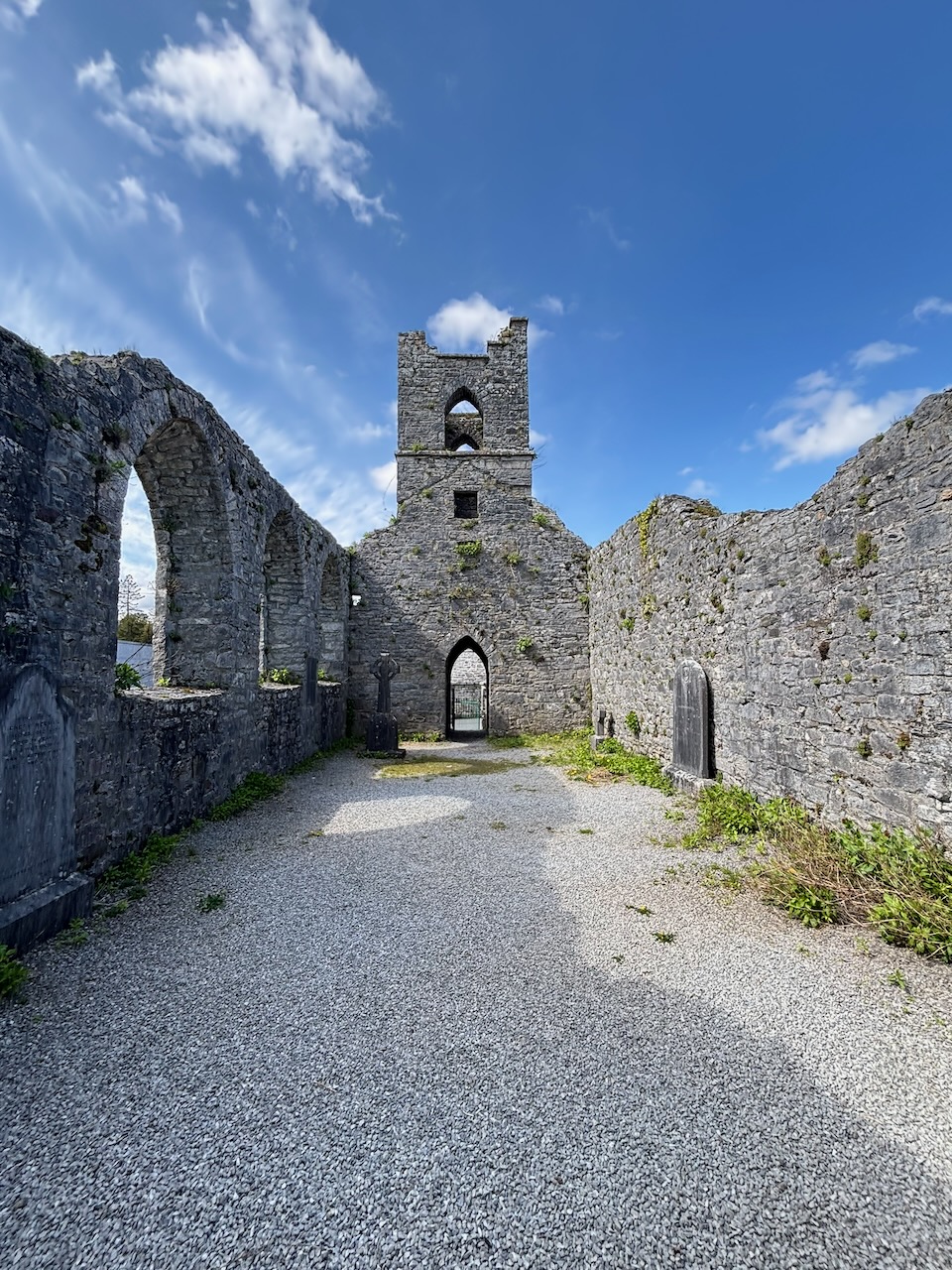
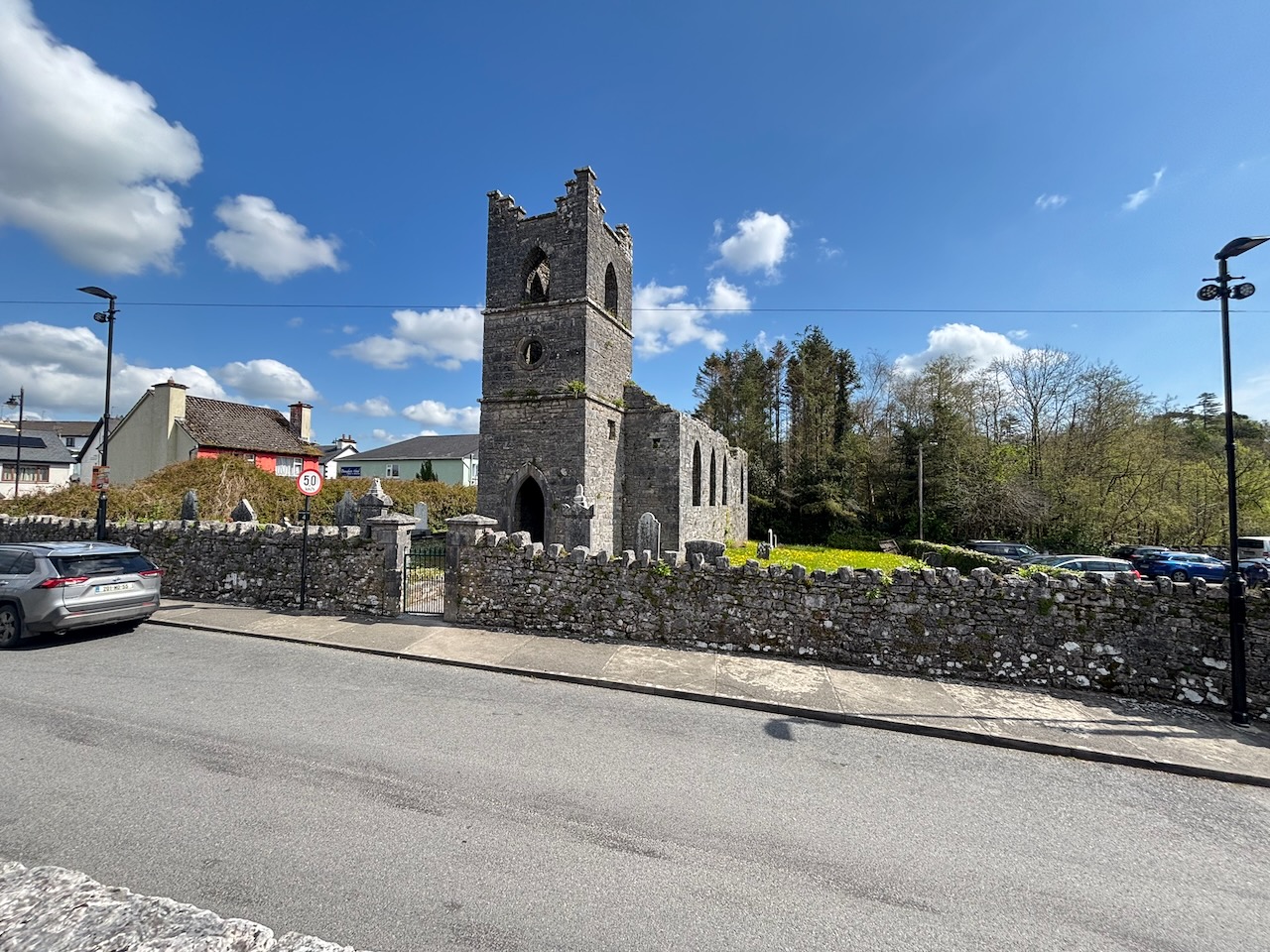
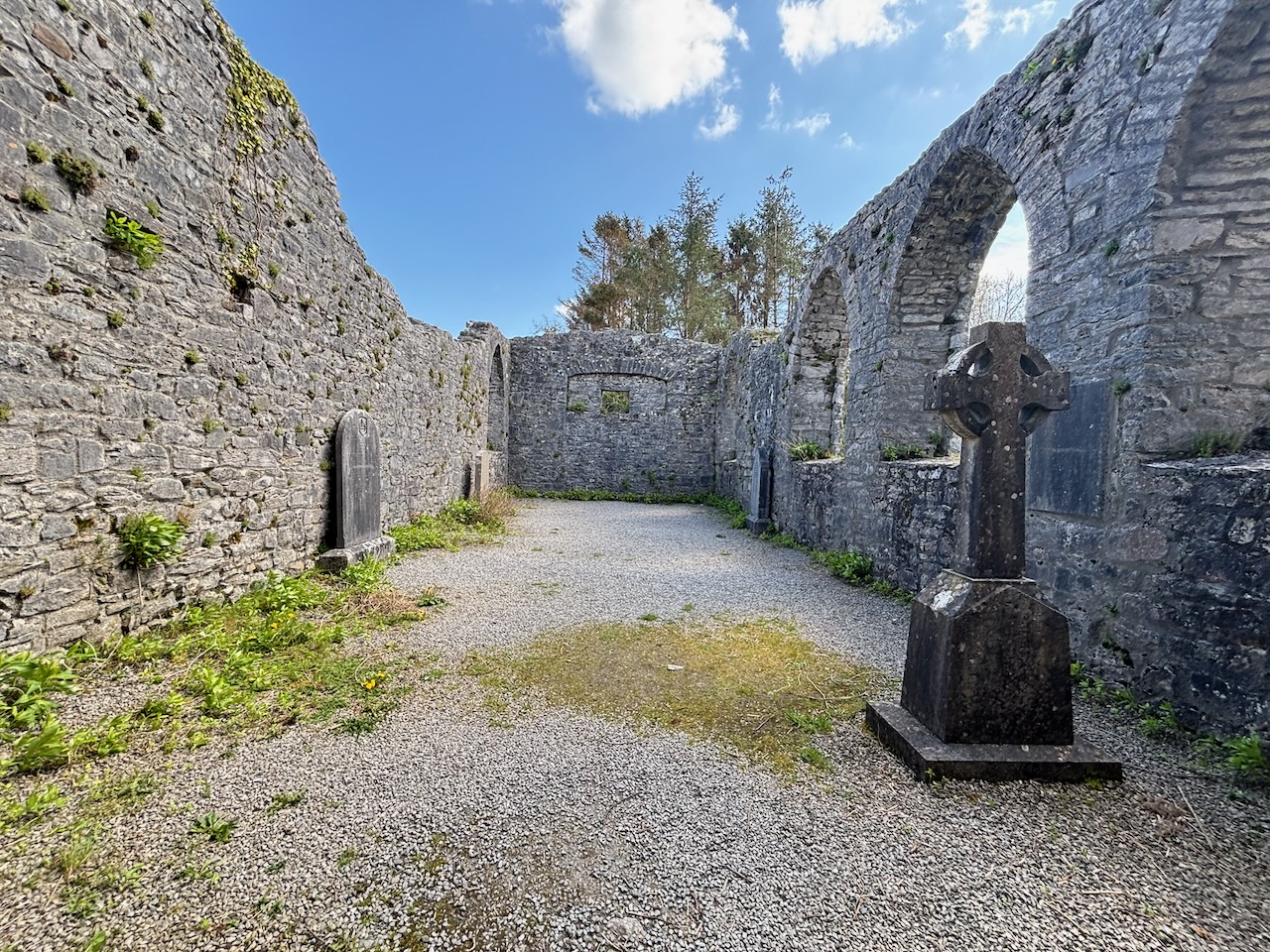
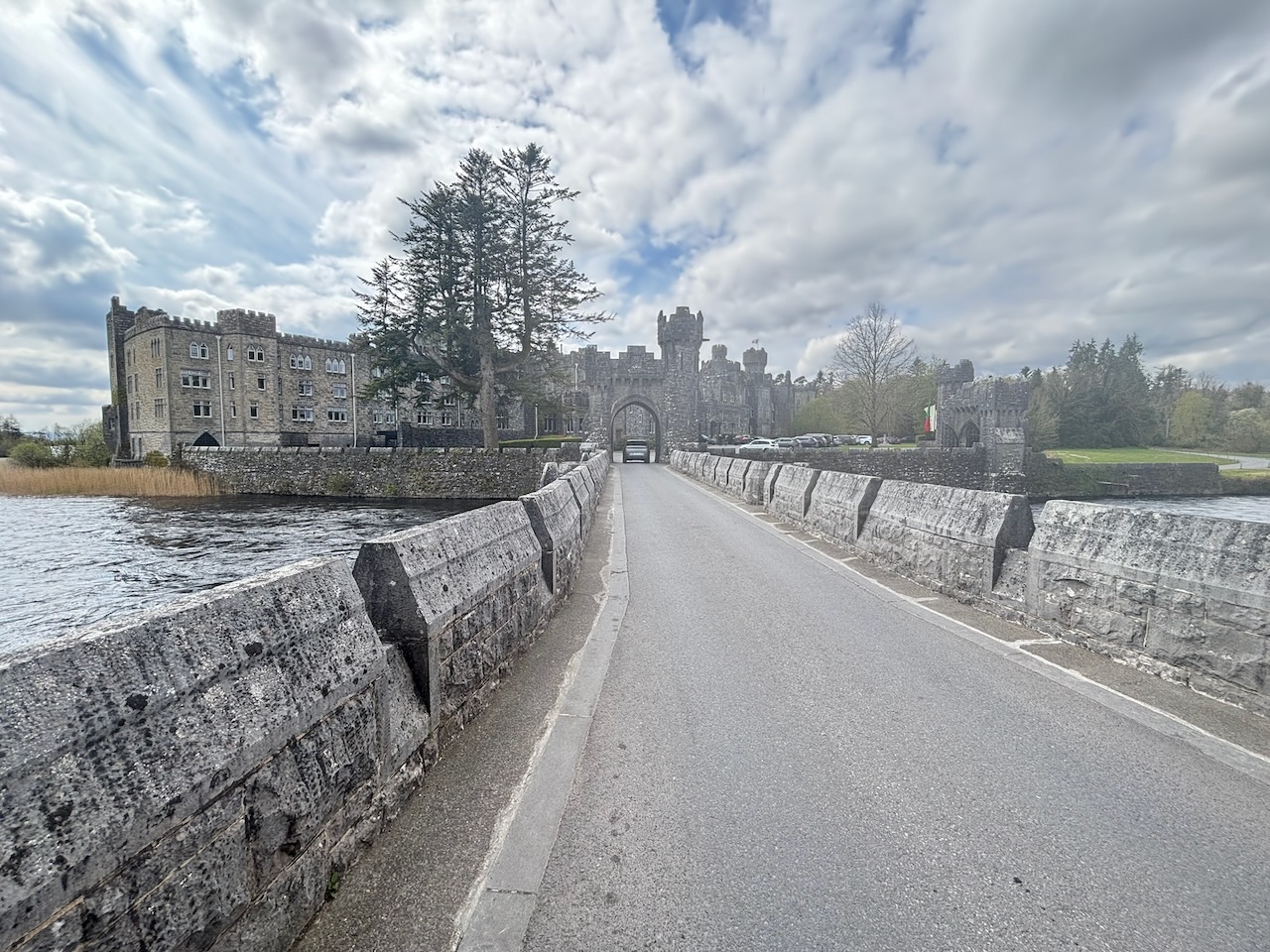
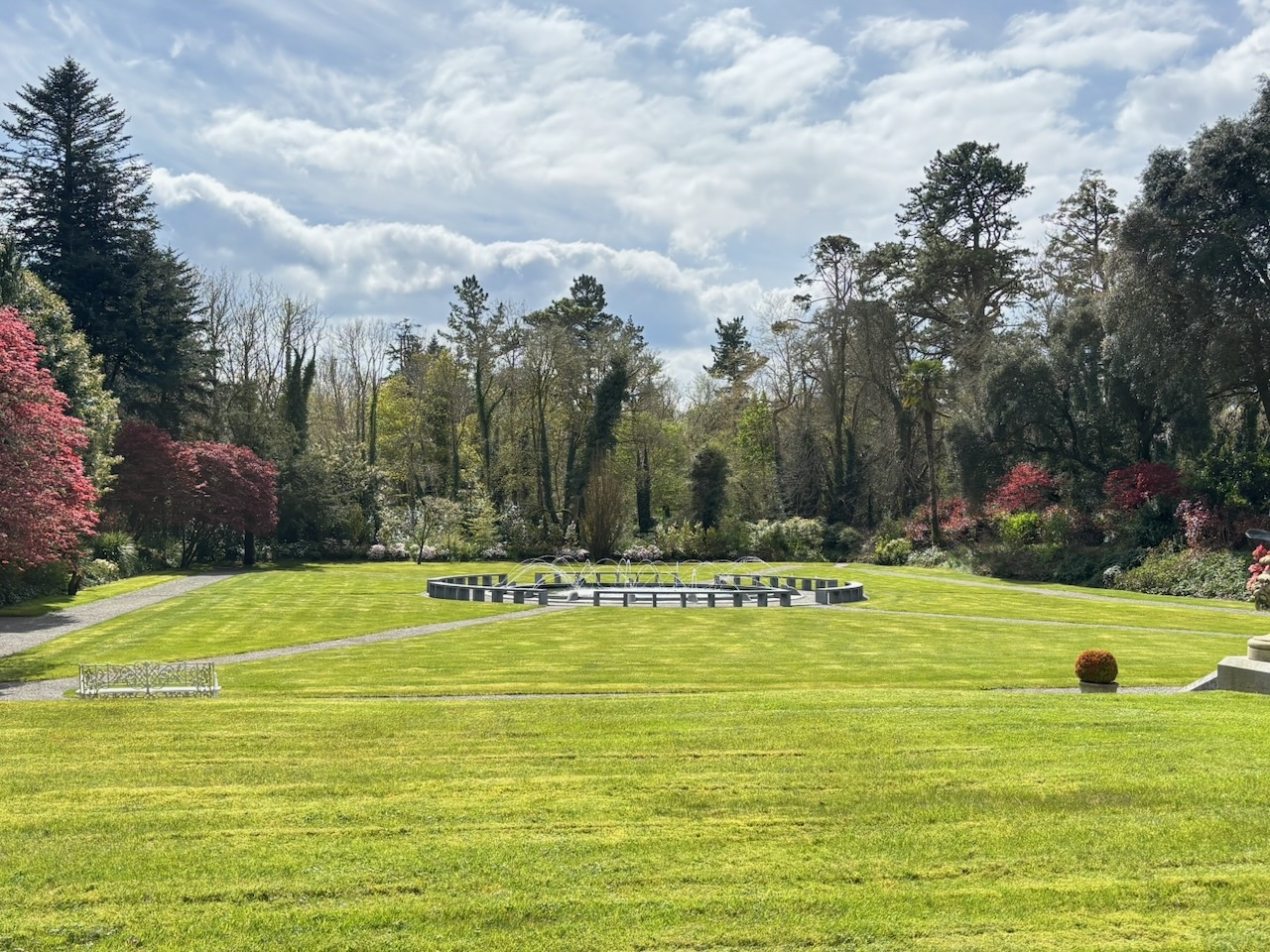
It was a good thing that we had extra time to burn as not understanding how to access the school, we’d set it as the address to get to in maps and then coming to the conclusion that we needed to backtrack and actually go to the castle, park there and then walk to the school. Which we did, passing by a nice café and then crossing on a bridge over the Cong River, skirting the front and sides of the castle and heading through the backside gardens to a path that would lead us to our destination.
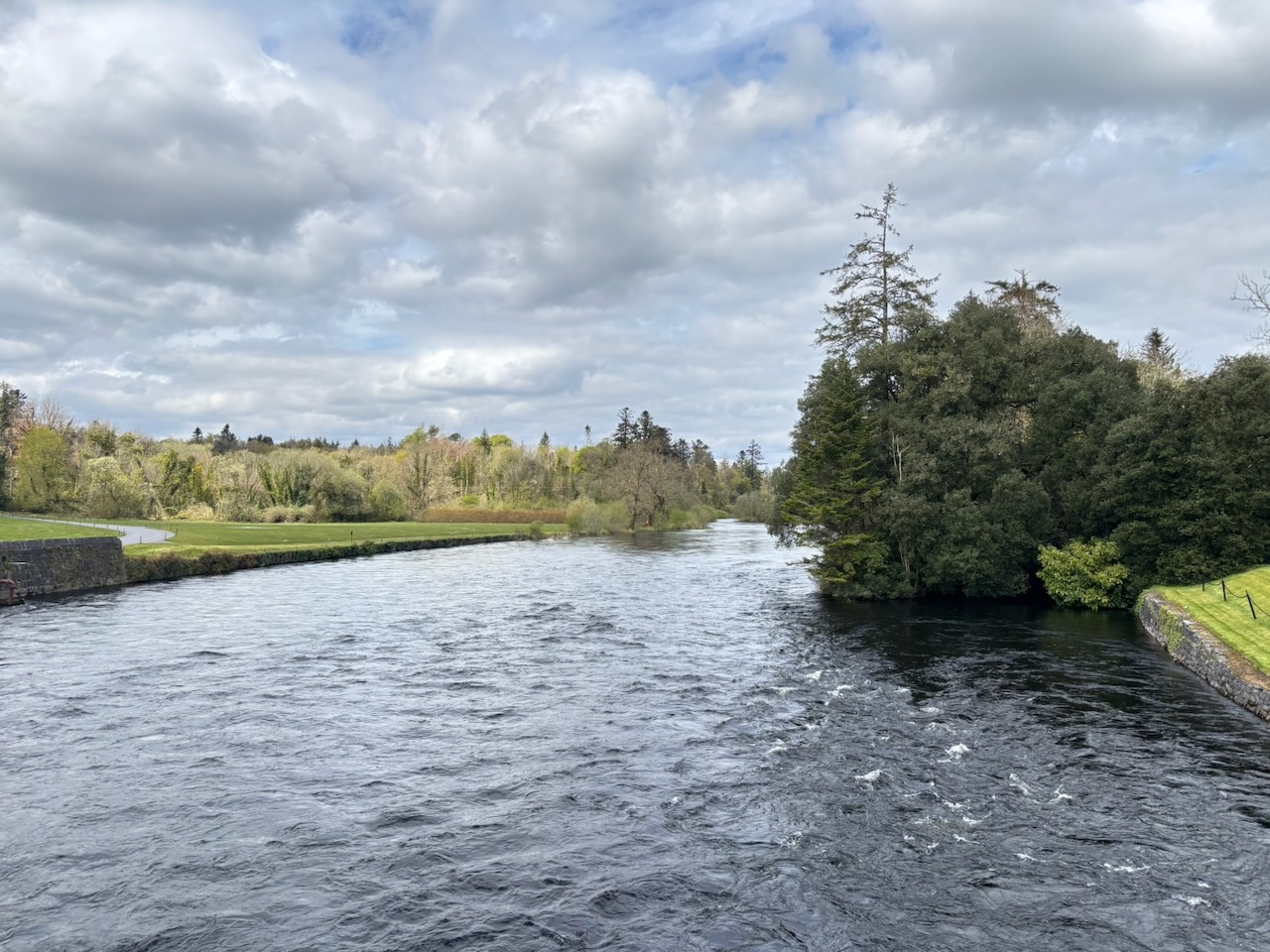
First though, Ashford Castle has been expanded over the centuries and turned into a five-star hotel. A castle was first built on the perimeter of a monastic site in 1228 by the Anglo-Norman House of Burke. After more than three-and-a-half centuries, Ashford passed into the hands of a new master, in 1589, the English official Sir Richard Bingham, Lord President of Connaught who added a fortified enclave within its precincts.
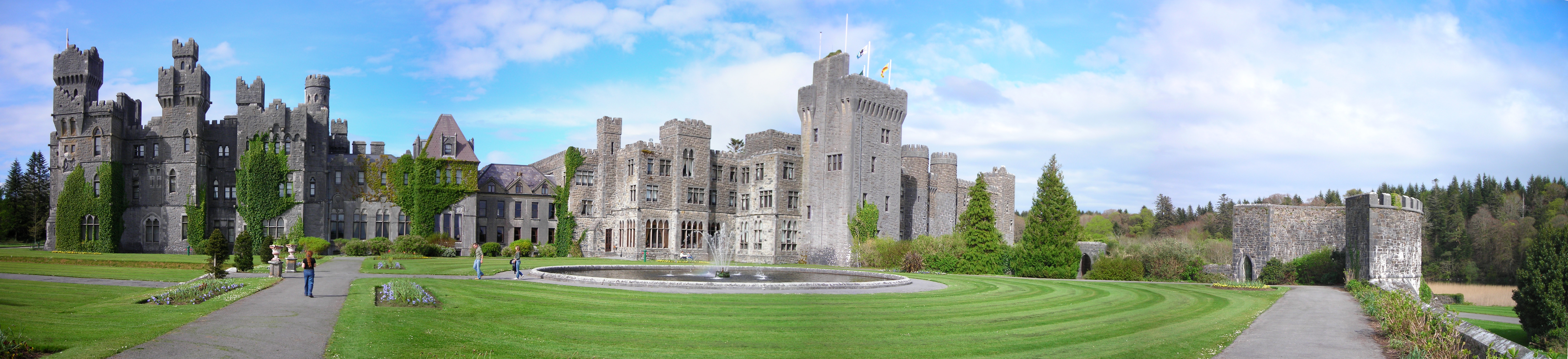
Dominick Browne, of the Browne family (Baron Oranmore and Browne), received the estate in a Royal Grant and in 1715, the estate of Ashford was established by the family and a hunting lodge in the style of a 17th-century French chateau was constructed. The estate was purchased in 1852 by Sir Benjamin Guinness via the Encumbered Estates’ Court and he added two large Victorian style extensions. He also extended the estate to 26,000 acres, built new roads and planted thousands of trees. On Sir Benjamin’s death in 1868, the estate passed to his son Arthur Guinness, 1st Baron Ardilaun, who expanded the building further in the Neogothic style. The castle passed to Ardilaun’s nephew Ernest Guinness and was later sold in 1939 to Noel Huggard who opened the estate as a hotel, which became known for the provision of its country pursuits, such as angling and shooting. And after a number of owners, it remains a five-star hotel to this day.
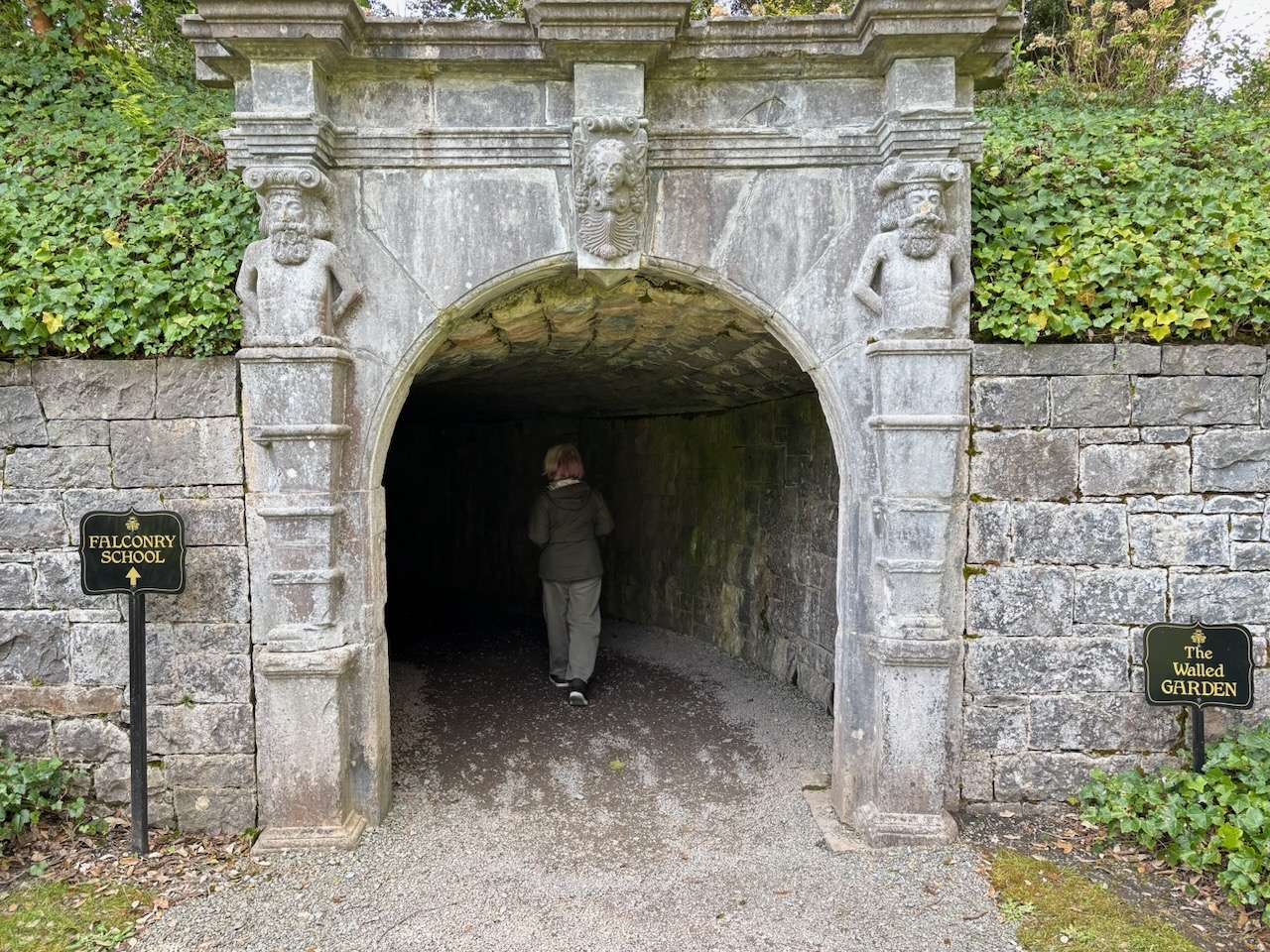
We passed through a tunnel at the edge of the castle grounds proper and soon found ourselves at the school, checking in at the desk and confirming our reservation for two people (one handling the hawk and one observer) for 165 Euros ($197). We were soon paired up with our instructor, whose name neither one of us can recall but she was friendly, charming and obviously devoted to her craft, that is training caring for the birds, especially the Harris Hawk we would become acquainted with. This species of hawk is notable for its behavior of hunting cooperatively in packs consisting of tolerant groups, while other raptors often hunt alone. Harris’s hawks’ social nature has been attributed to their intelligence, which makes them easy to train and has made them a popular bird for use in falconry.
After a brief visit with many of the birds in their respective cages, we found ourselves in a small barn with our guide, who gave us basic instructions about the bird and handling it. Then without much ado, she proceeded to give the bird over to Joanna on her left arm and allow her to become familiar with the feeling of having this 1.8-to-2.6-pound female (they typically are larger than the males of the species) temporarily attached to her body. At this point, I’m going to let Joanna speak about her experience with the bird:
“Doesn’t everyone dream of riding an Arabian horse across the desert with a falcon perched on their arm? Much more complicated to arrange, but I did get to live part of that dream. Flying a Harris’s hawk is an amazing experience. There is something extraordinary about having an almost-wild animal willingly land on and take off from your arm. Harris’s hawks are exceptionally social and intelligent, which makes them cooperative and responsive hunting partners when trained with patience and positive reinforcement. They can come to view humans as part of their hunting group.
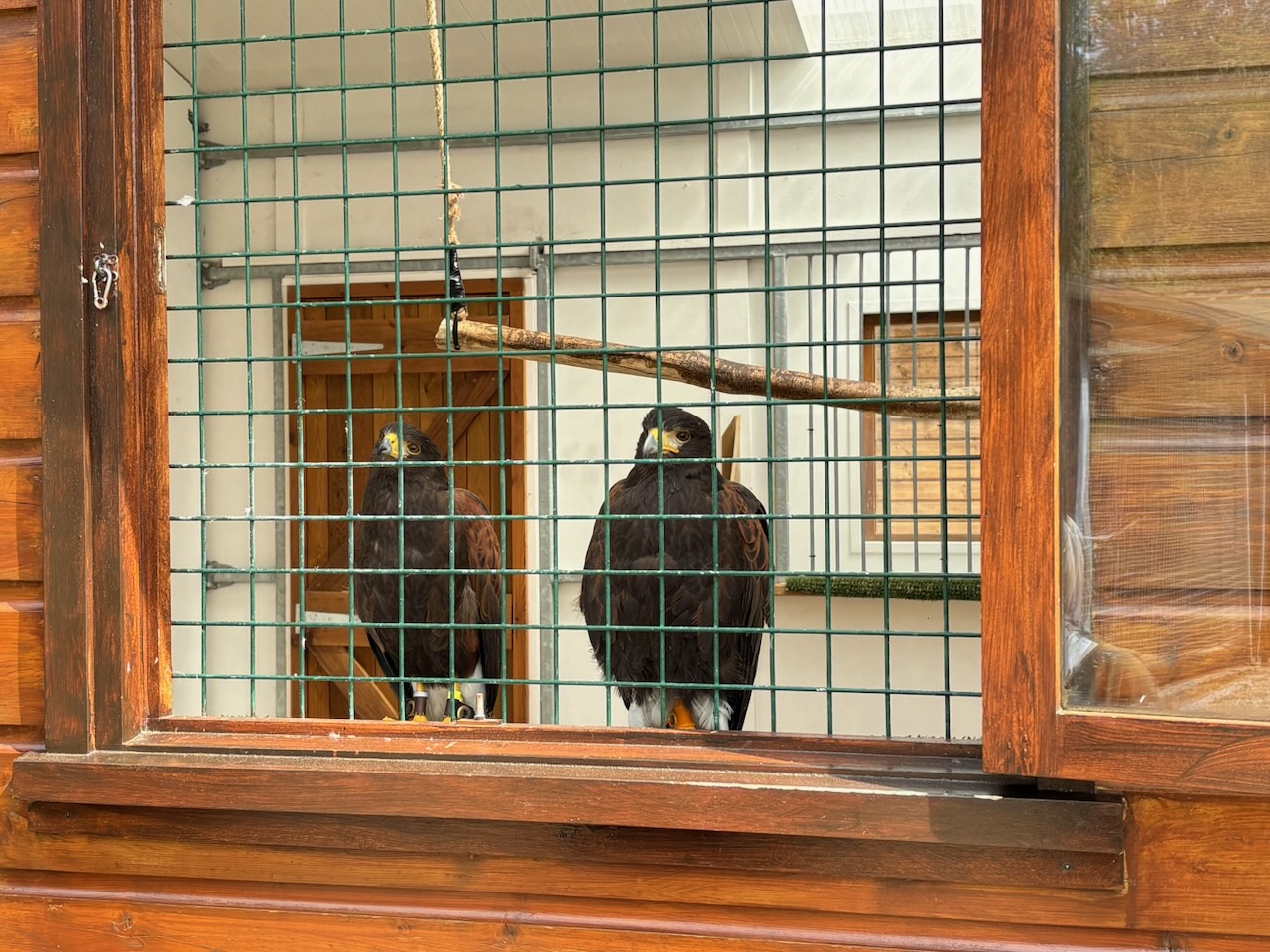
The hawks at falconry schools may come from licensed captive-breeding programs. Captive-bred birds generally cannot fend for themselves in the wild. In some countries, hawks are captured during their first year of life. The rationale is that young, or passage, birds have a high mortality rate; between 30 and 70 percent may die during their first year. Other birds arrive at falconry schools after being injured and undergoing rehabilitation. If they recover sufficiently, they are returned to the wild.
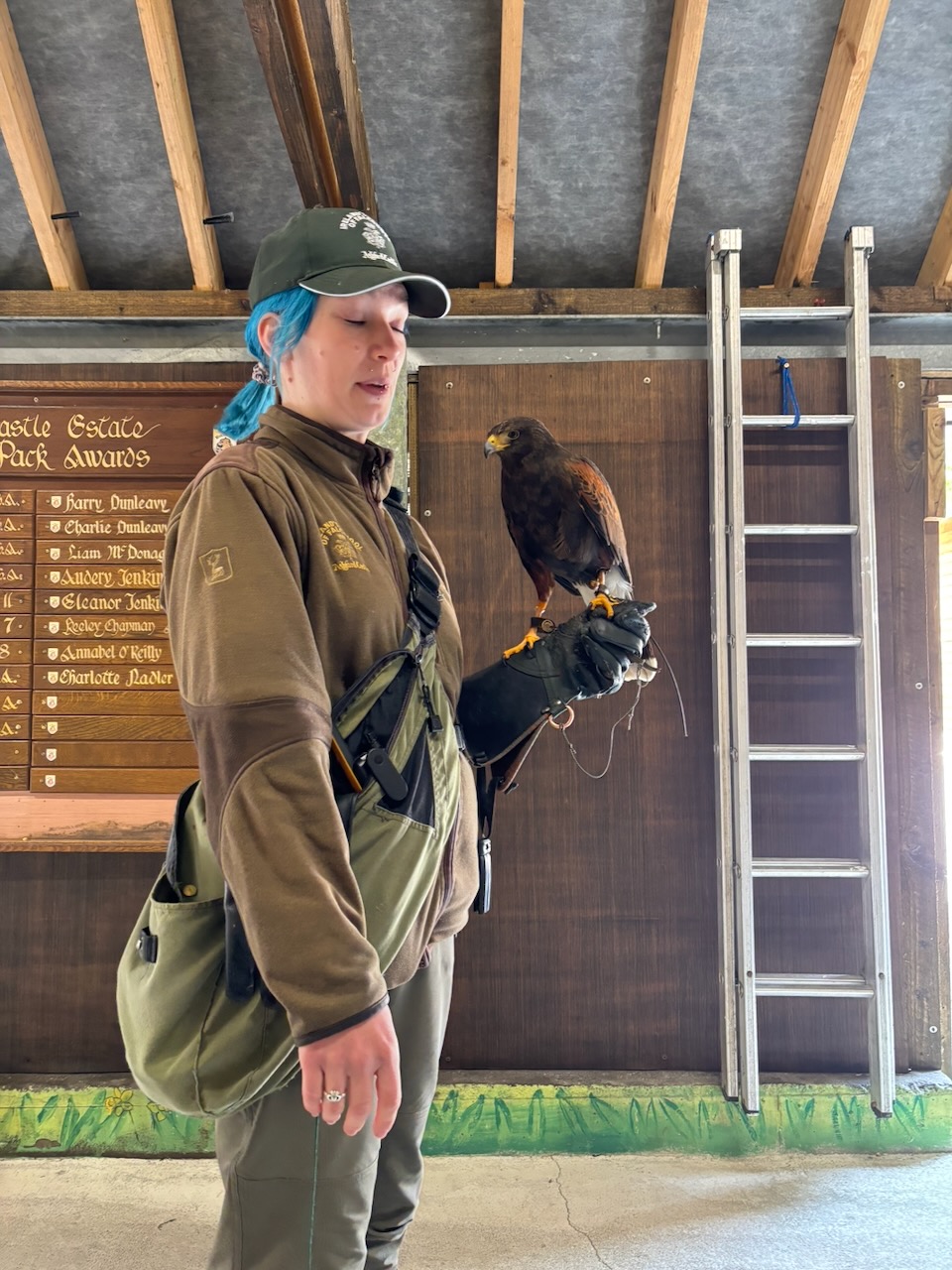
Each bird at the school flew daily with a particular handler. The birds are weighed every day, and their weight determines how much they are fed. If a bird loses too much weight, it becomes weak and more susceptible to disease. If it is too heavy, it may have little interest in the food offered as a reward and could simply fly away. The birds also carry trackers, attached in a few different ways. Some use a lightweight harness that does not interfere with flight; others are attached to the jesses on the feet. The jesses used for flying can be removed by the bird with a little effort, so there is less chance of becoming entangled.
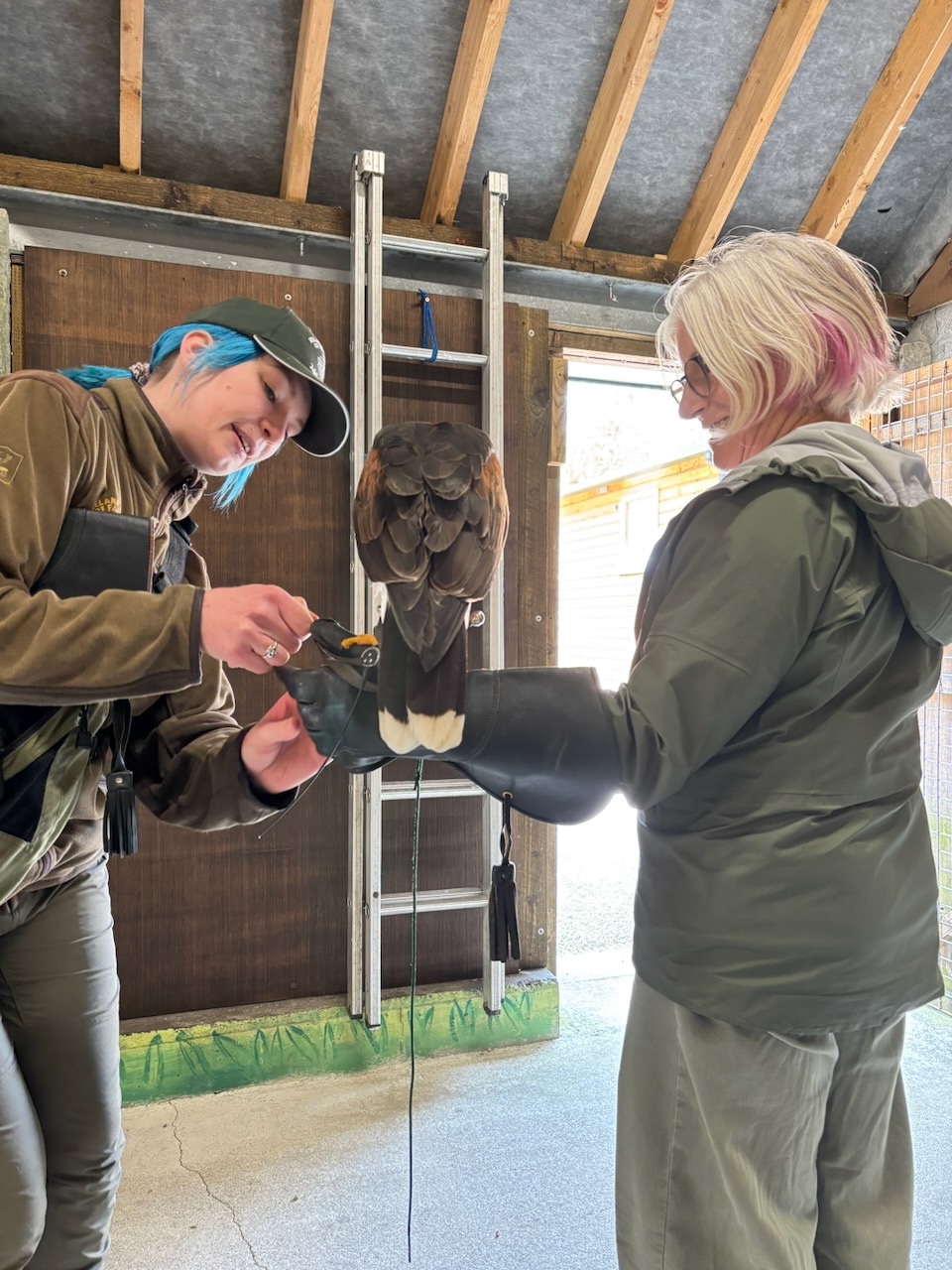
I would be flying a Harris’s hawk named Givry, who was 18 years old. A wild Harris’s hawk has a life expectancy of roughly 10 to 14 years, while a bird in captivity can live to around 30 years or more. Givry’s regular handler had cared for her day in and day out. When the handler broke her arm and was away for several months, Givry would not work with her when she returned until she had regained her trust. It reminded me a little of a dog or cat ignoring or scolding you after you have been away on vacation.
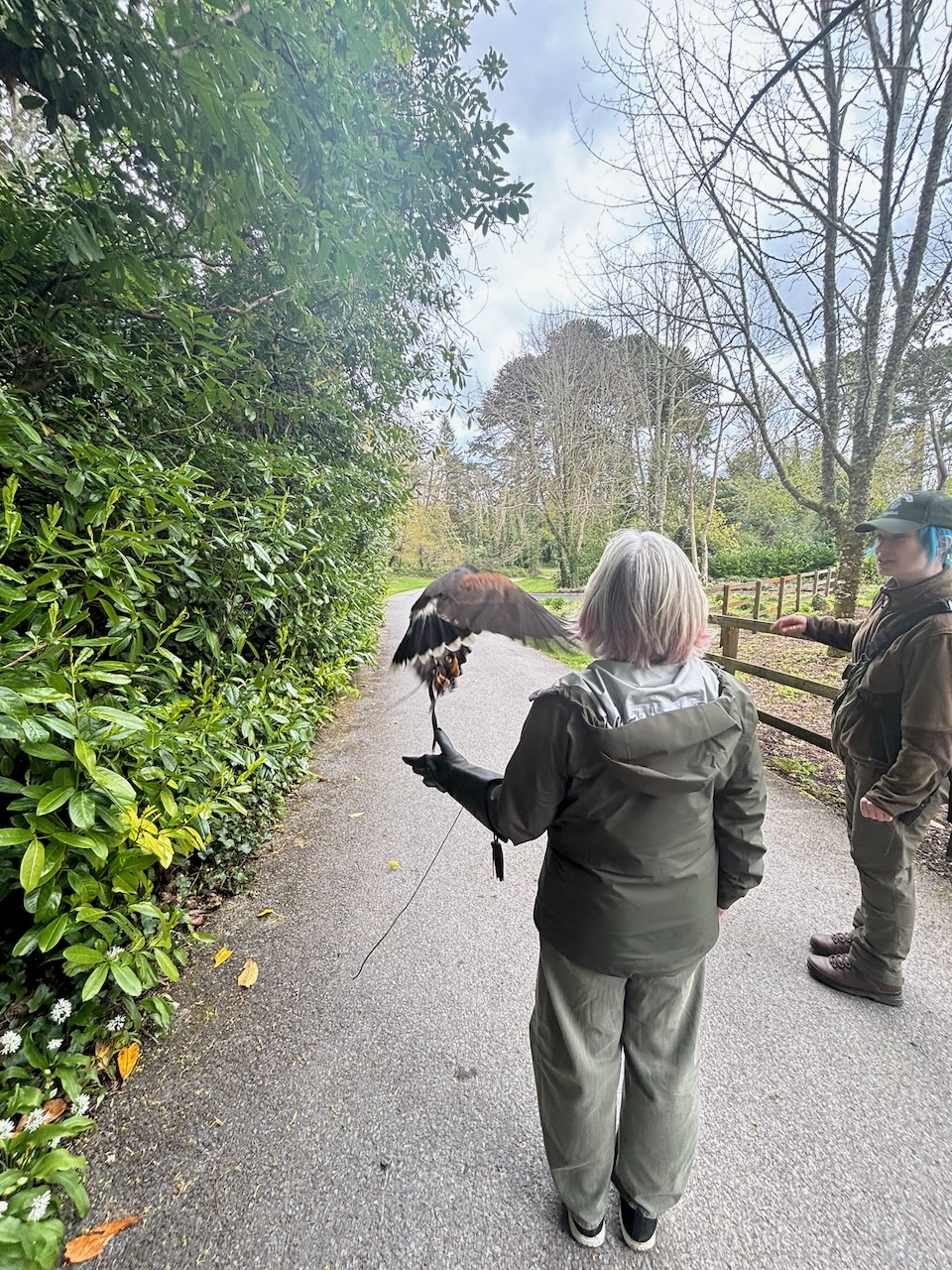
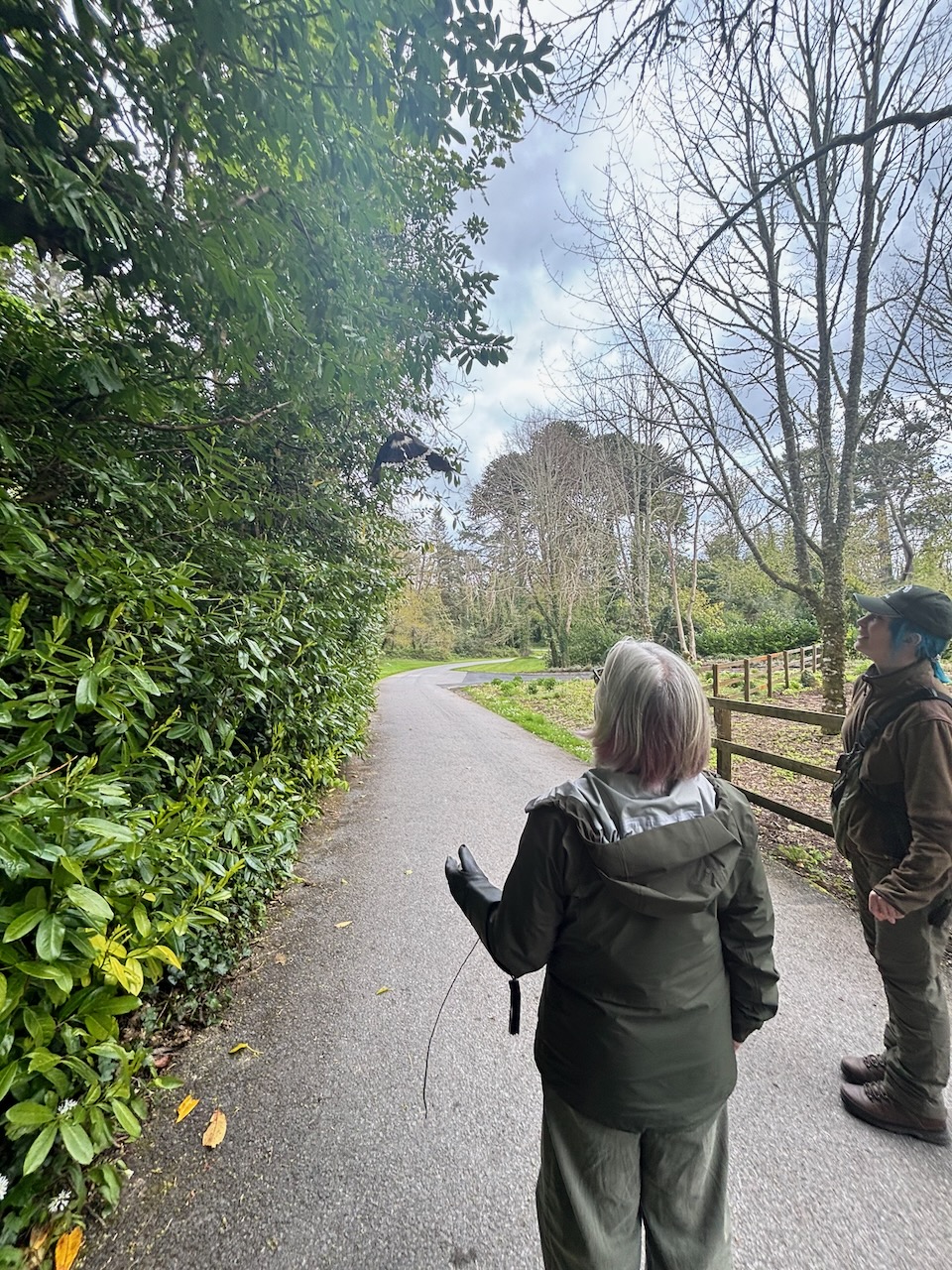
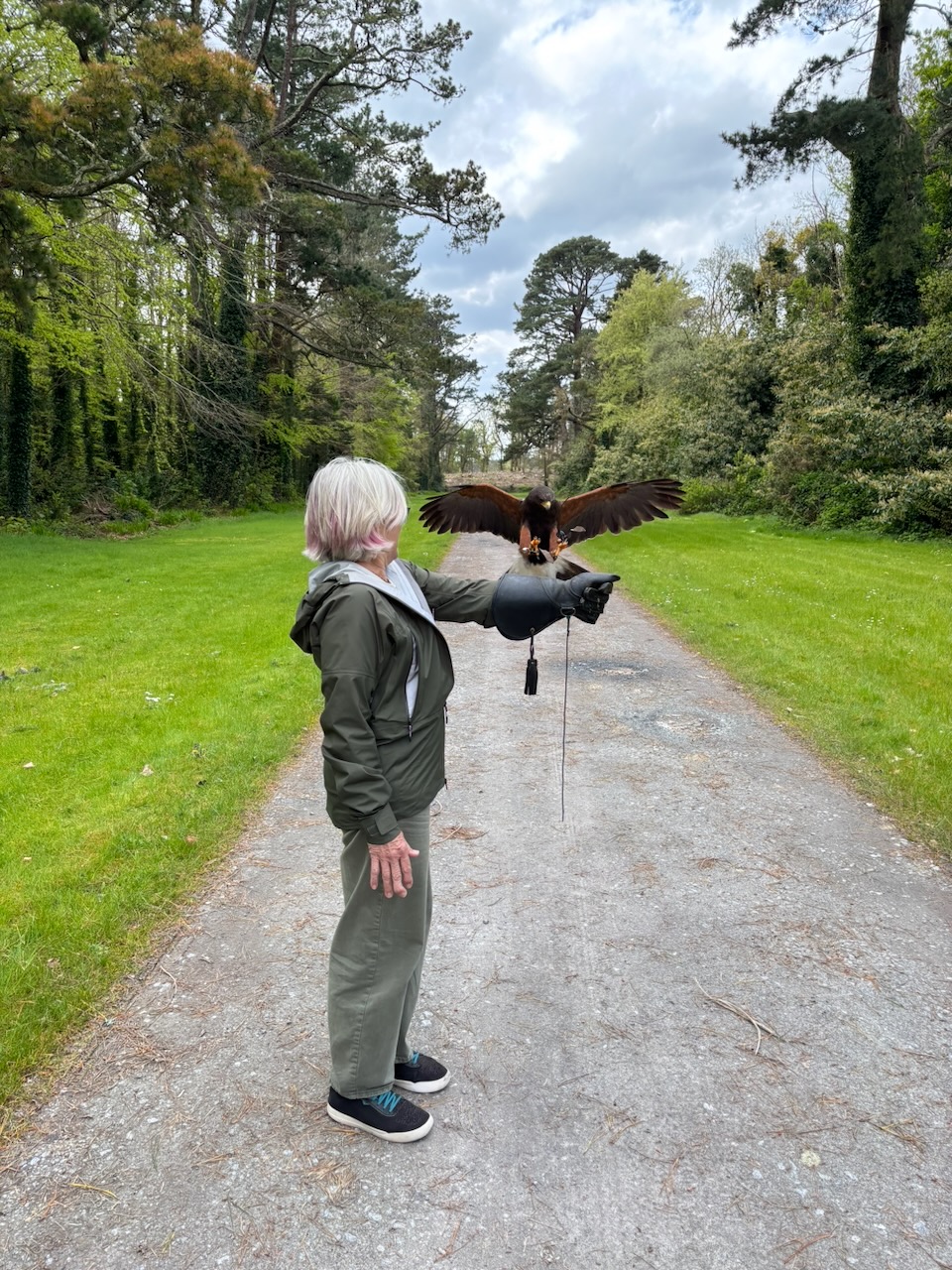
I put on a thick leather gauntlet and held Givry’s jesses as we stood in an open, wooded area. With my arm extended, I gave her the opportunity to hunt. When she took off, the sound of her wings was almost a whisper. Seeing a bird of prey in flight from such a close distance was astonishing. Then the four of us—Givry, her handler, Jerry, and me—walked through the wooded area. It wasn’t always easy to see where she was flying or where she had landed. When it was time to call her back, I would face away from her and extend my arm straight out. She was surprisingly light, so supporting her weight was not difficult.
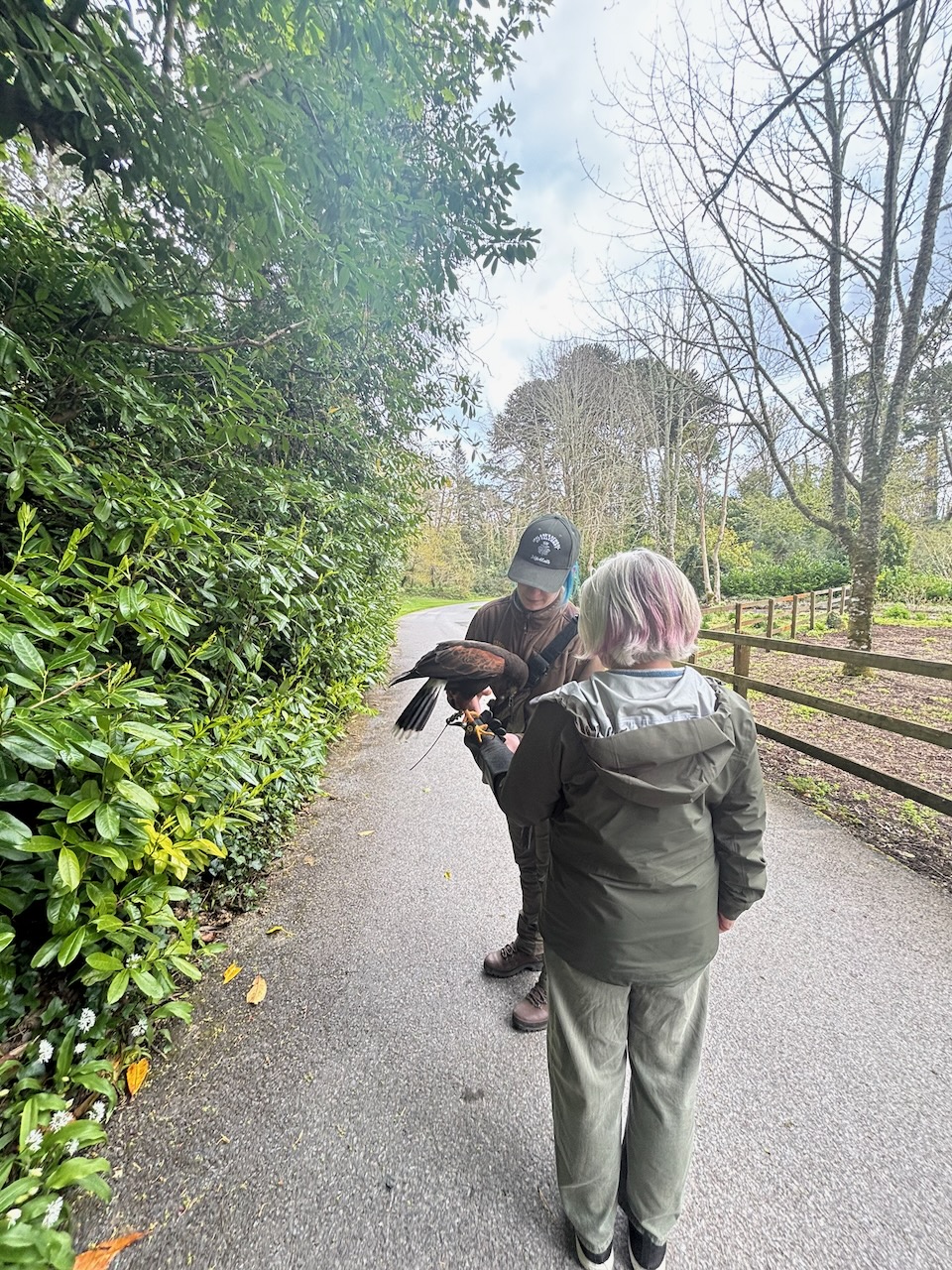
Givry returned because I had a treat waiting for her in my closed fist. I was able to fly her several times because she never found anything she could catch, although she certainly tried. Holding her so close, it was tempting to study her carefully, nut staring directly at her for too long would be interpreted as aggression. A quick glance was fine, but prolonged eye contact was not. I loved the experience, and yet, underneath the excitement, I couldn’t stop wondering whether it was moral to ask these magnificent birds to work with us for our enjoyment. That question stayed with me. Given the chance, though, I would do it again.“
And with that we finished the experience and returned the way we came, stopping for a quick snack before jumping in the car for the drive to Westport. We’ll finish up our stay there in the next post.
Links
Irelands School of Falconry: https://falconry.ie/
The Quiet Man: https://en.wikipedia.org/wiki/The_Quiet_Man
The Royal Abbey of Cong: https://heritageireland.ie/unguided-sites/cong-augustinian-abbey-and-monks-fishing-house/
The Quiet Man Museum: https://www.quietmanmuseum.com/
Ashford Castle: https://ashfordcastle.com/
Harris Hawk: https://en.wikipedia.org/wiki/Harris%27s_hawk
Discover more from 3jmann
Subscribe to get the latest posts sent to your email.


