April 23-25
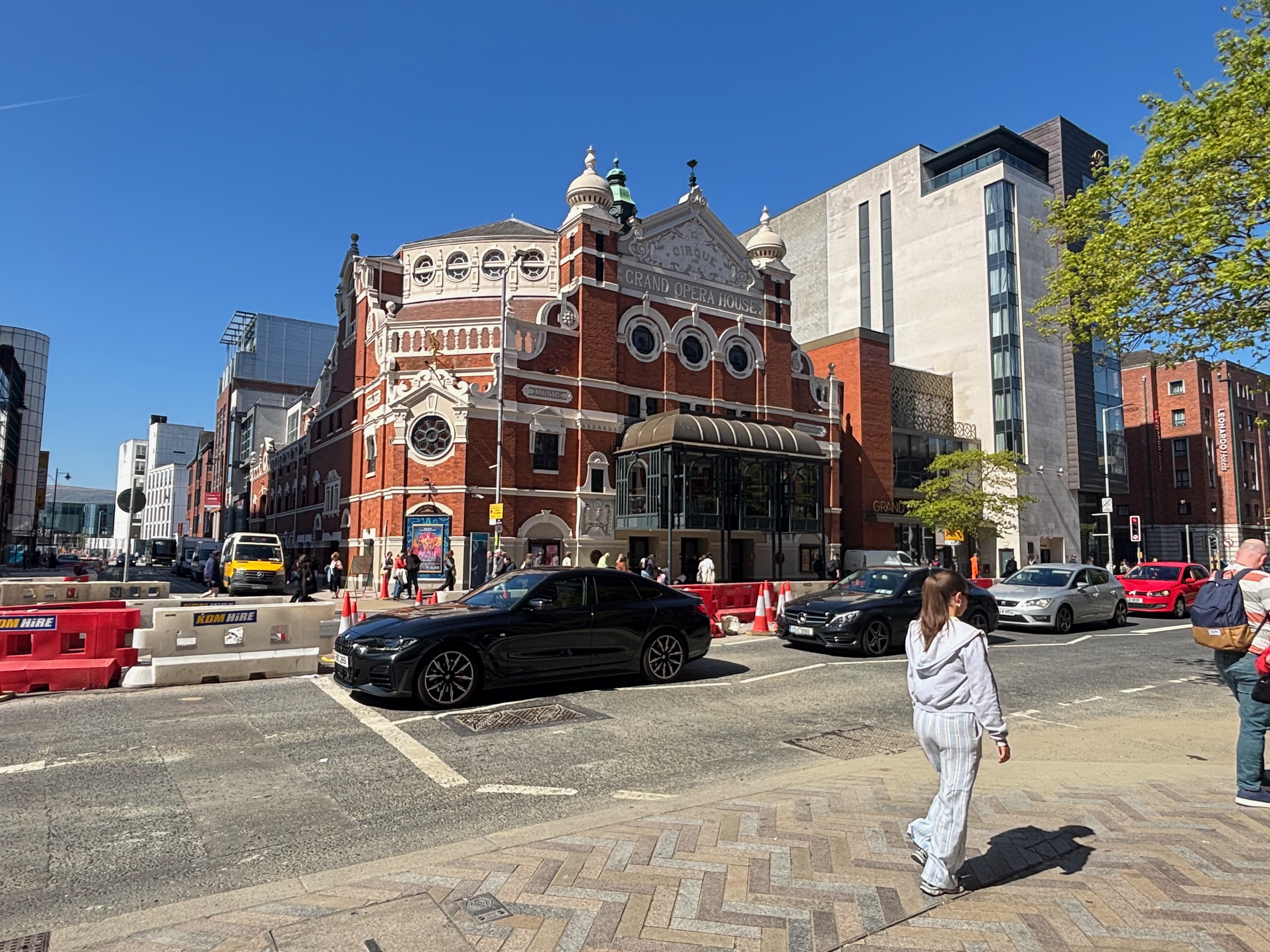
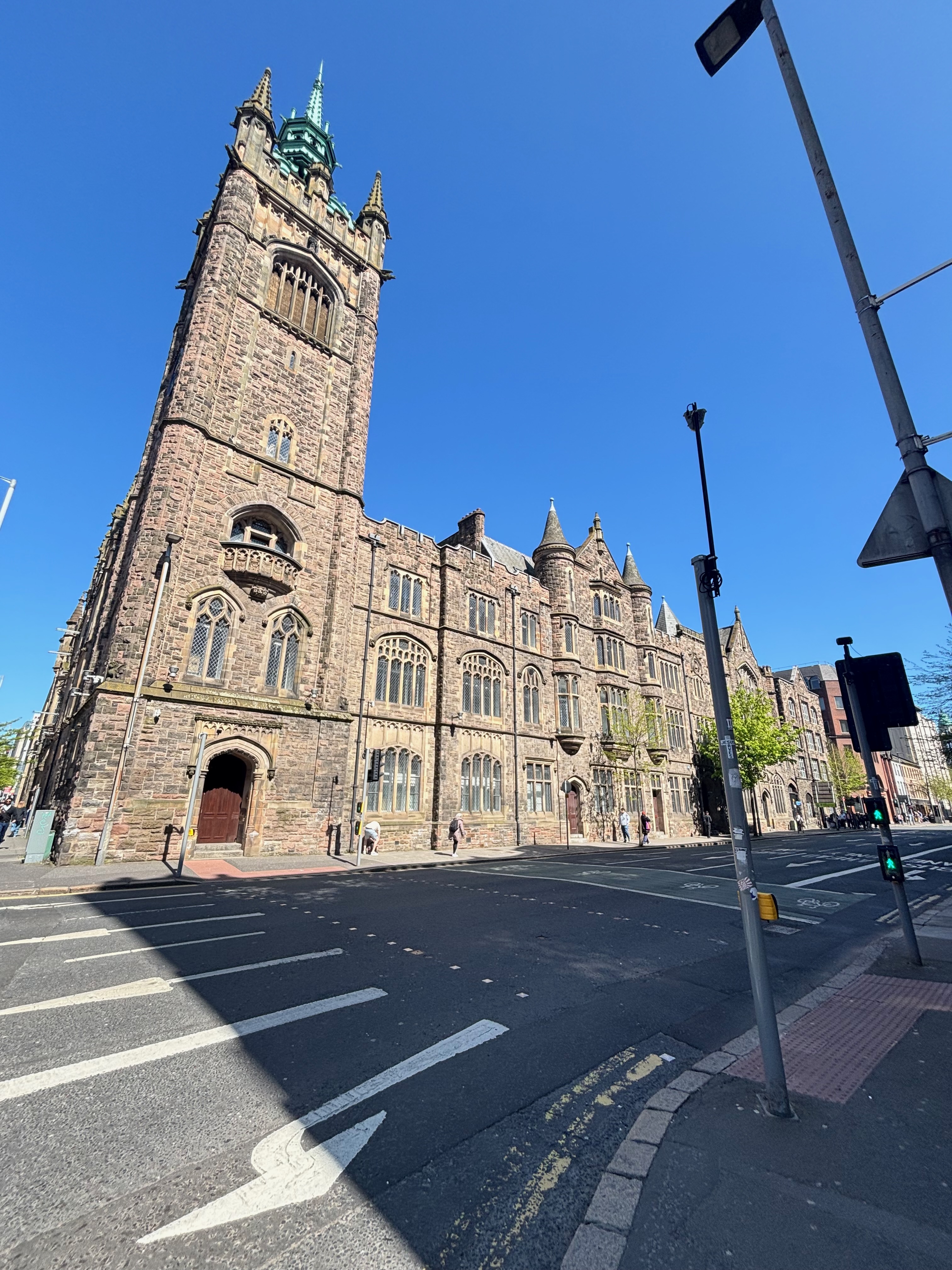
Finished with lunch, we stopped for a moment to view the Grand Opera House across from us on Great Victoria Street, which was originally built in 1895, bombed and rebuilt in 1991, and bombed and rebuilt again in 1993. We moved on up the street to the corner at Howard Street where we again stopped to admire the Presbyterian Assembly (Presbyterianism has its roots in the Church of Scotland, which broke away from the Church of England in 1560. Turning right we walked two blocks where we ran into the back corner of Belfast’s City Hall.
Built between 1898 and 1906, it was designed by Sir Alfred Brumwell Thomas in the Baroque Revival style, was constructed in Portland stone at a cost of £369,000 and features towers at each of the four corners, with a lantern-crowned 173-foot green copper dome in the center. As the timing was right and based on a Steves recommendation, we signed up for a guided tour of the facility which turned out to be a good idea, particularly as it was free.
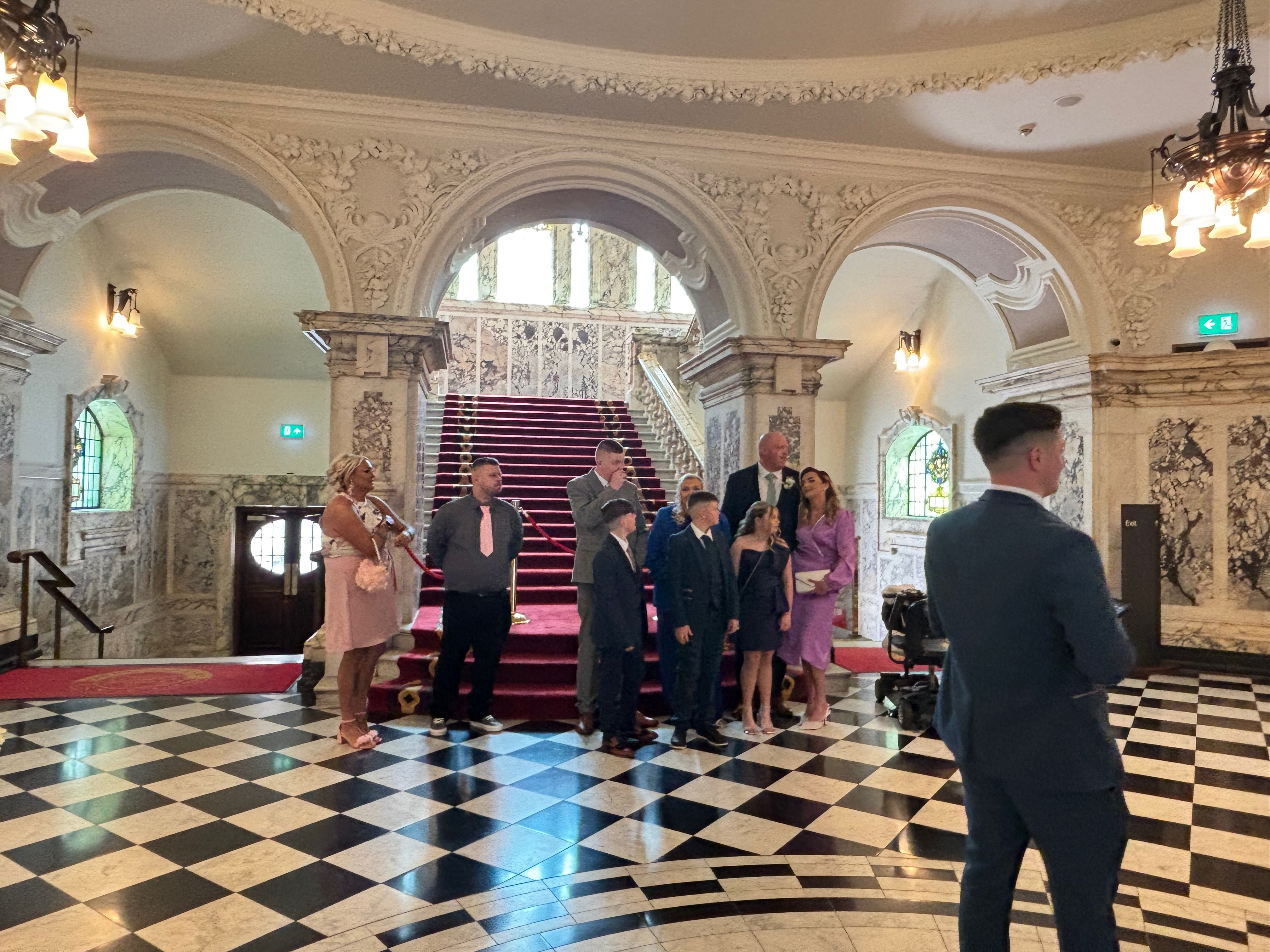
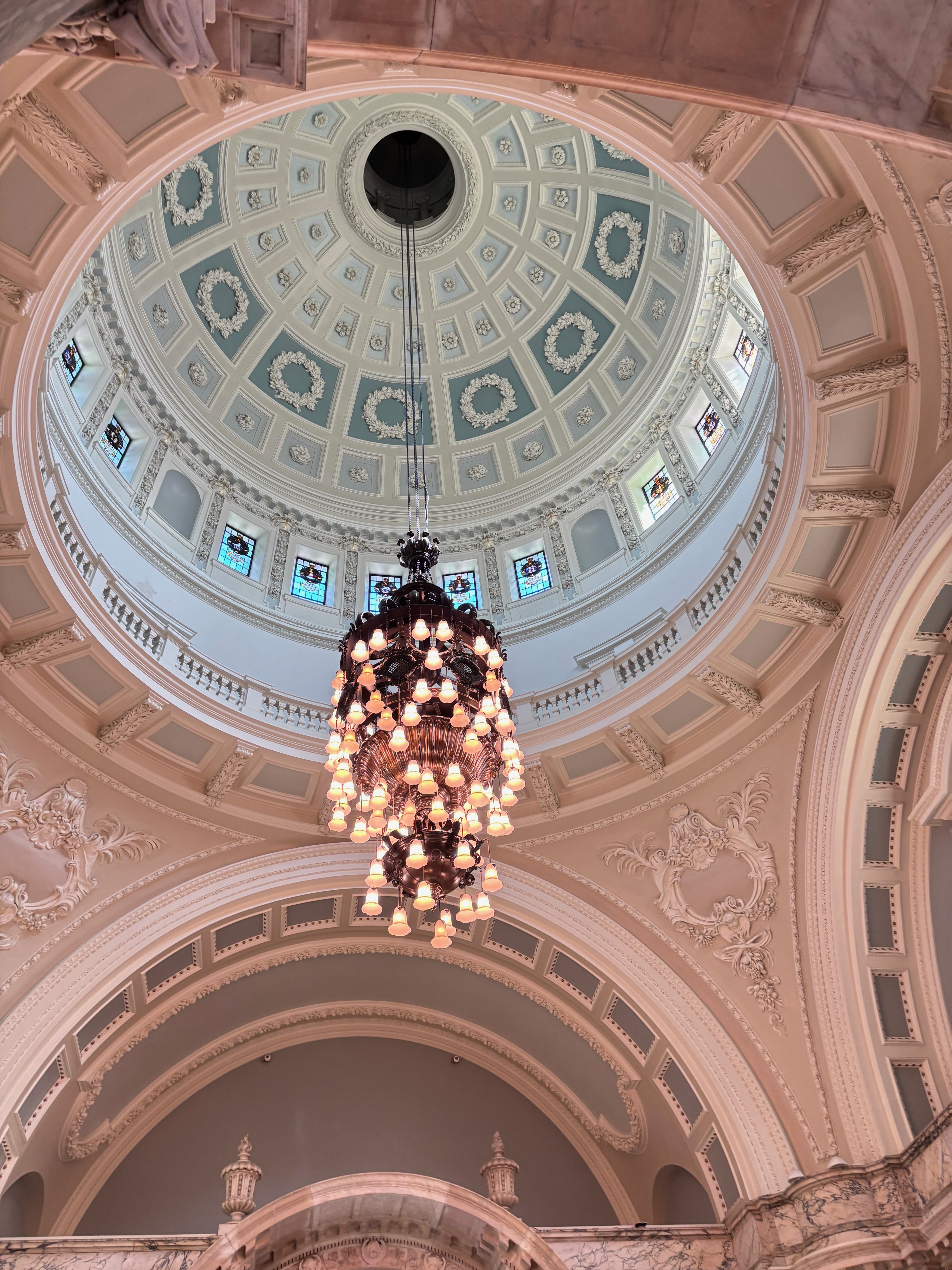
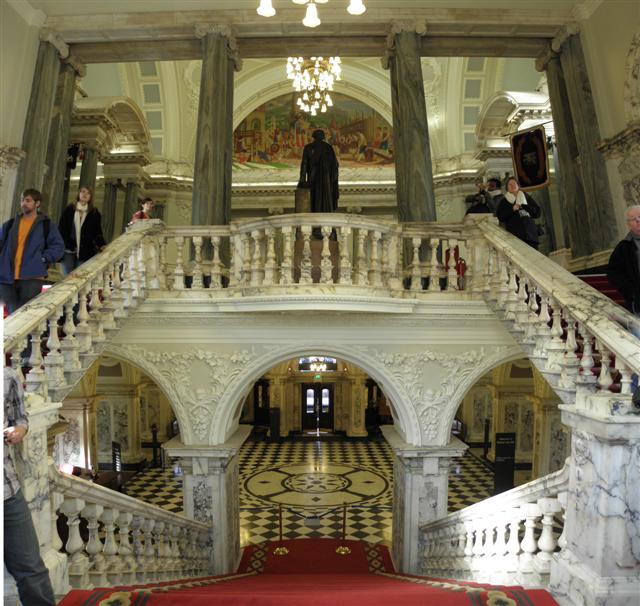
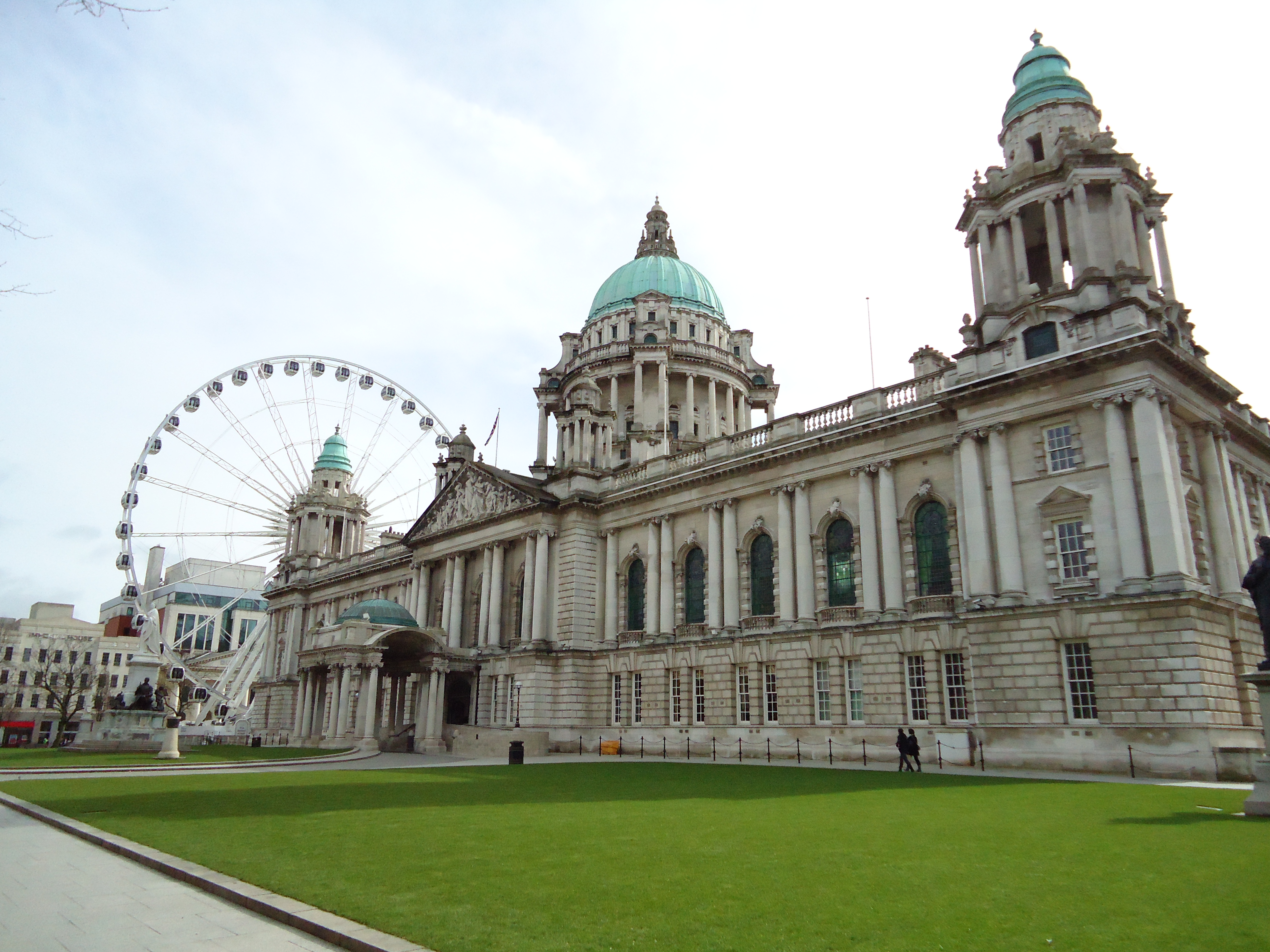
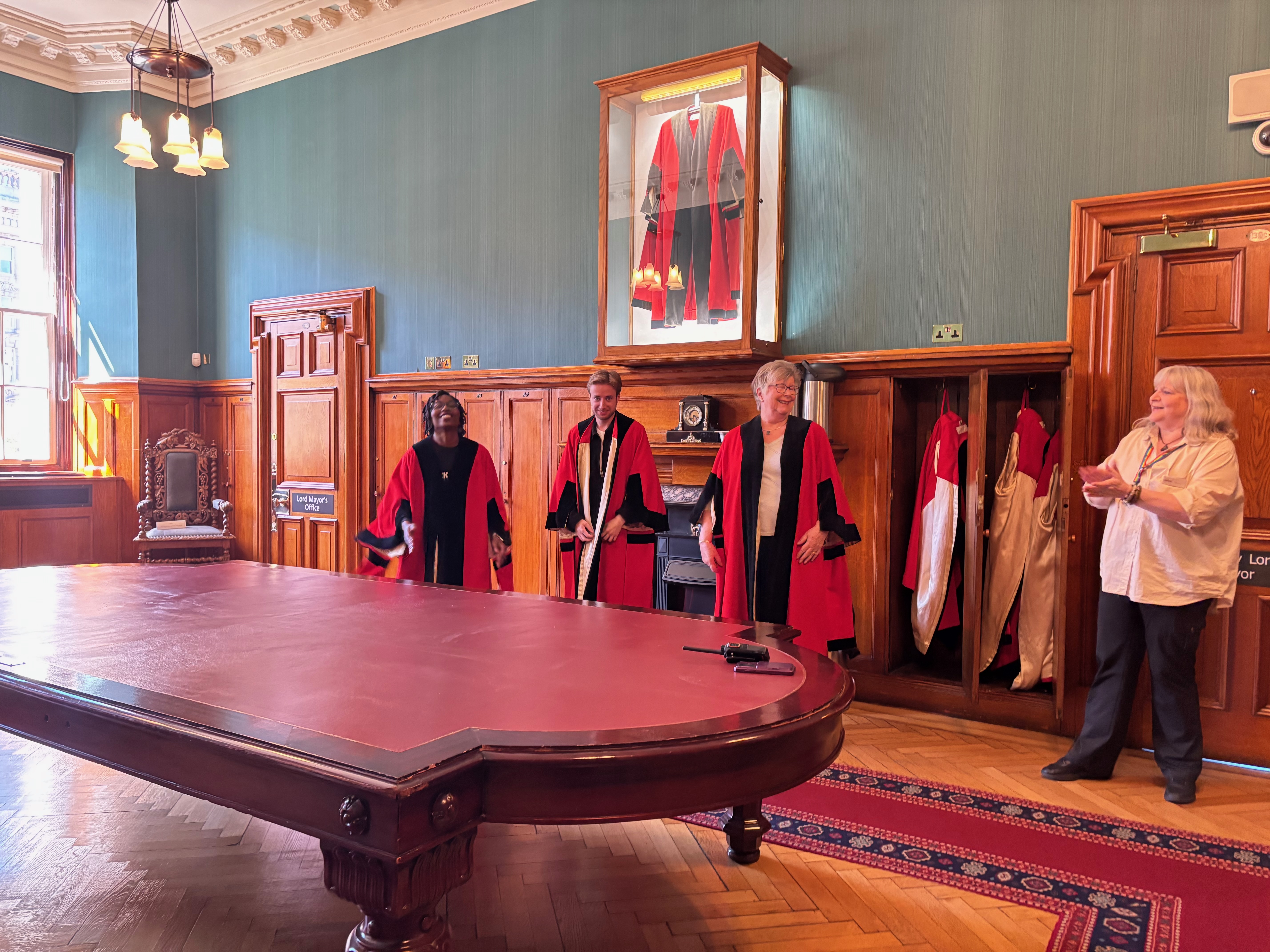
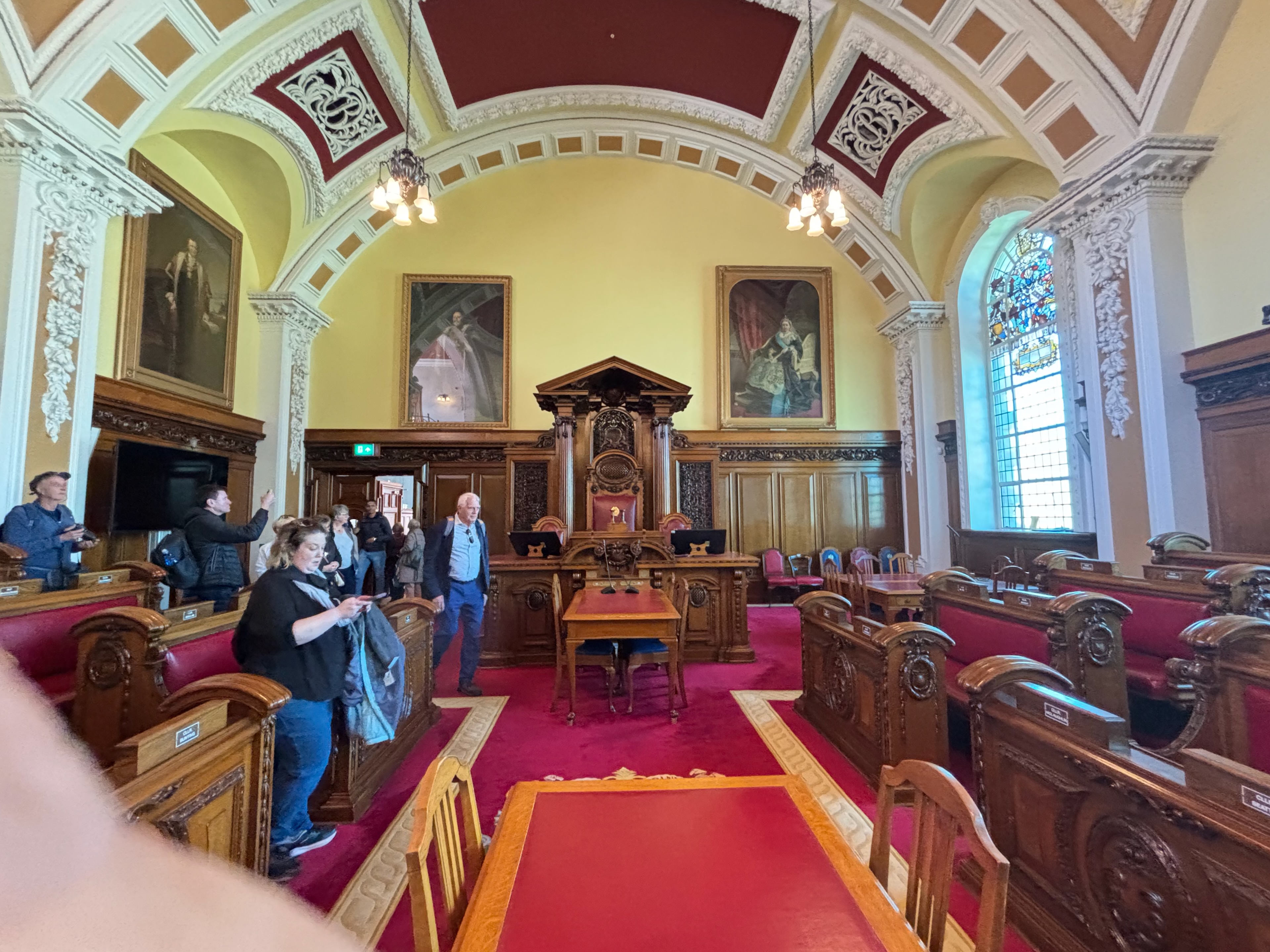
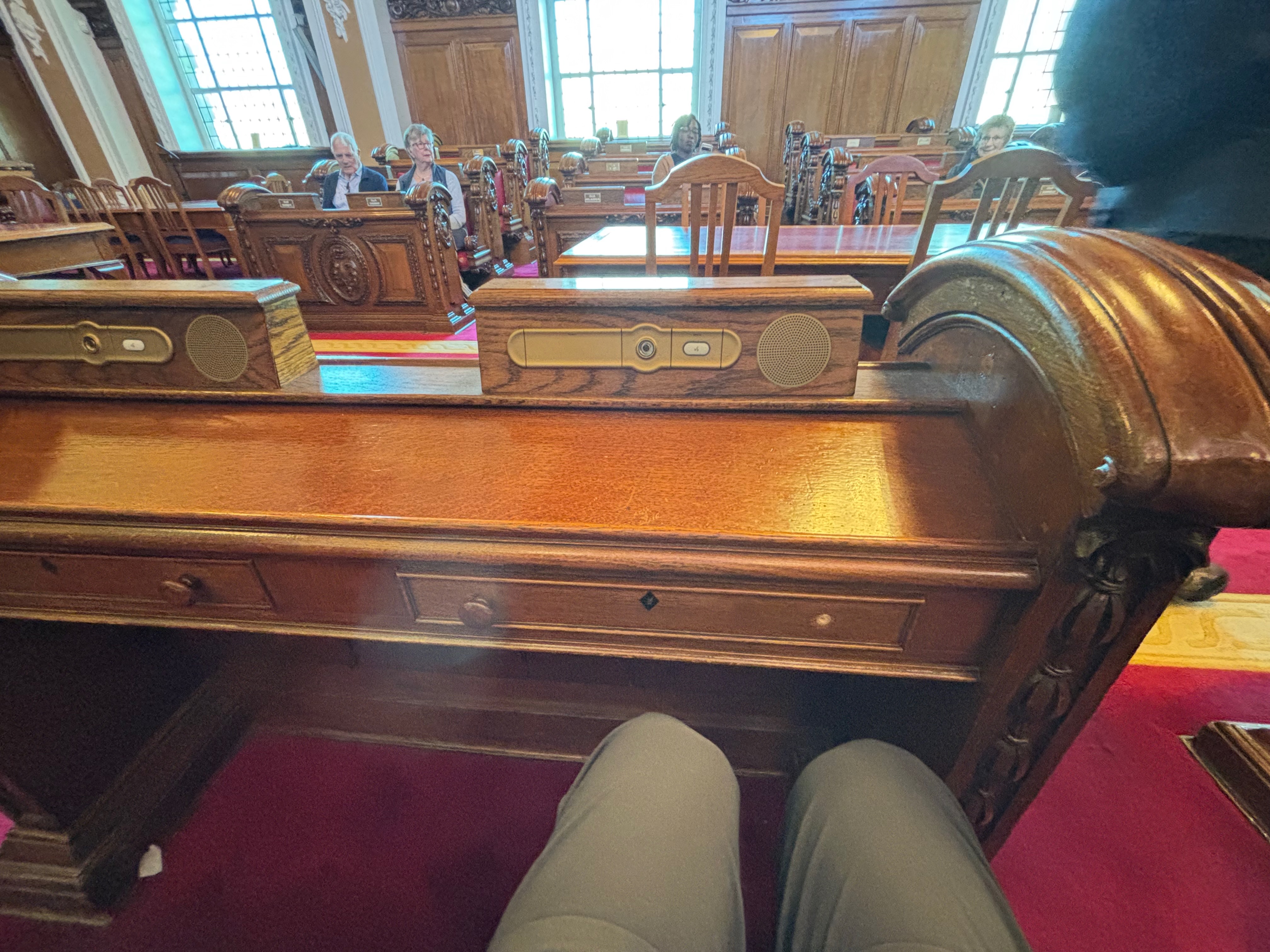
We started in the atrium, where earlier we had witnessed a wedding party gathered for pictures, and were told about the history of the building and the workings of Belfast city government. We then ascended the central staircase and landed in a large anteroom where the robes worn by councilmembers are stored and donned prior to the meetings. Some of our group volunteered to put one on and it was a nice moment. From there we entered the council chamber and heard about the council, comprised of 60 councilors, elected from ten district electoral areas.
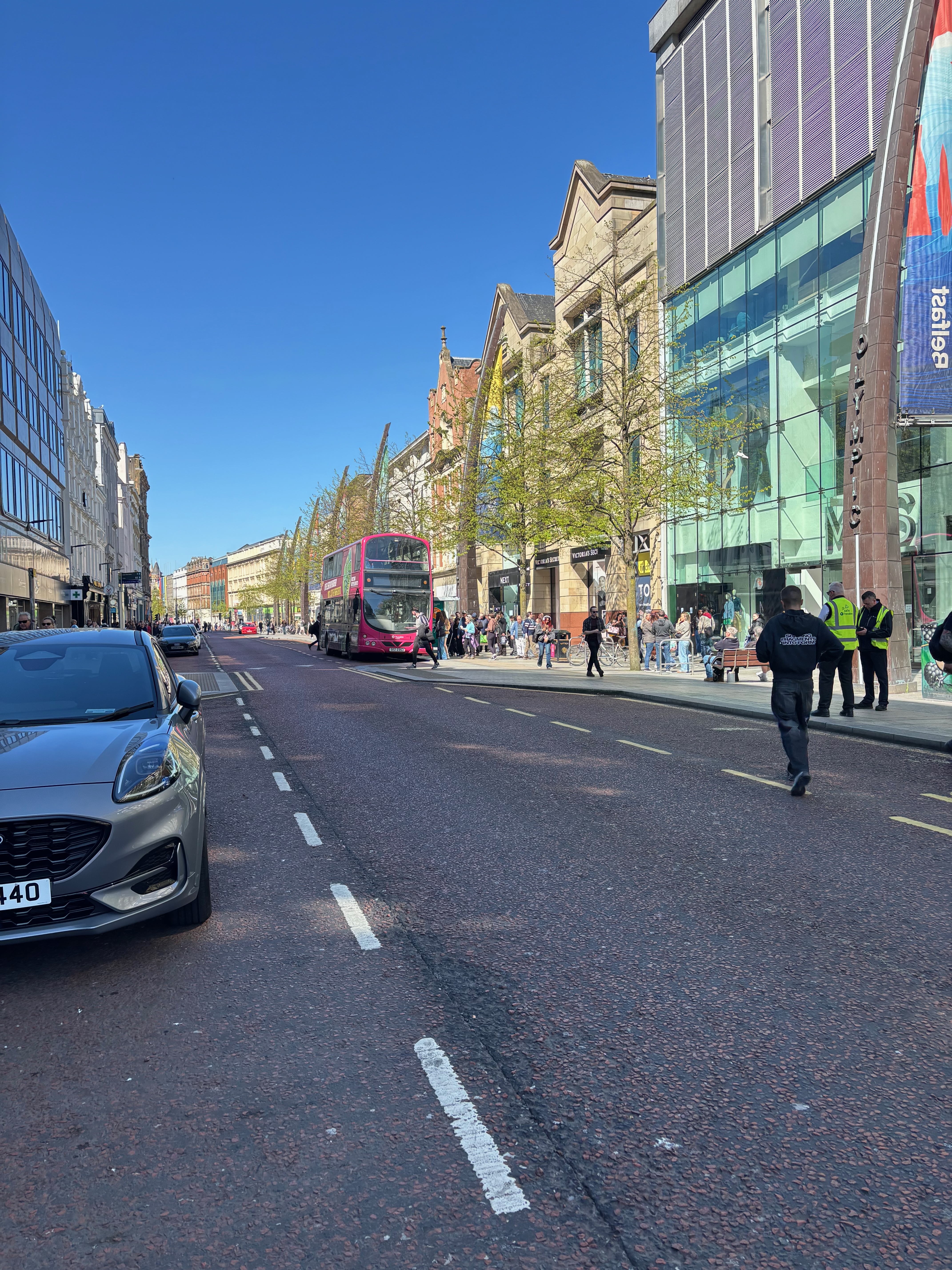
That finished the tour for us and after exiting the building, we turned up the shopping street called Donegall Place. The 19th-century brick buildings that line it were built in the Scottish Baronial style when the Scots dominated Belfast. As a key shipbuilding and industrial port, Belfast was bombed by the Germans in World War II (On the worst night of bombing, more than 900 died.) And, with the Troubles stalling the economy in the last decades of the 20th century, little was built. Since the arrival of peace in 1998 and government investment to subsidize that peace, the 21st century has been one big building boom. Here, one can see the eight stylized sails (tall, curved, brownish pillars on the right) which celebrate the great ships built in Belfast for the White Star Line (including the Titanic).
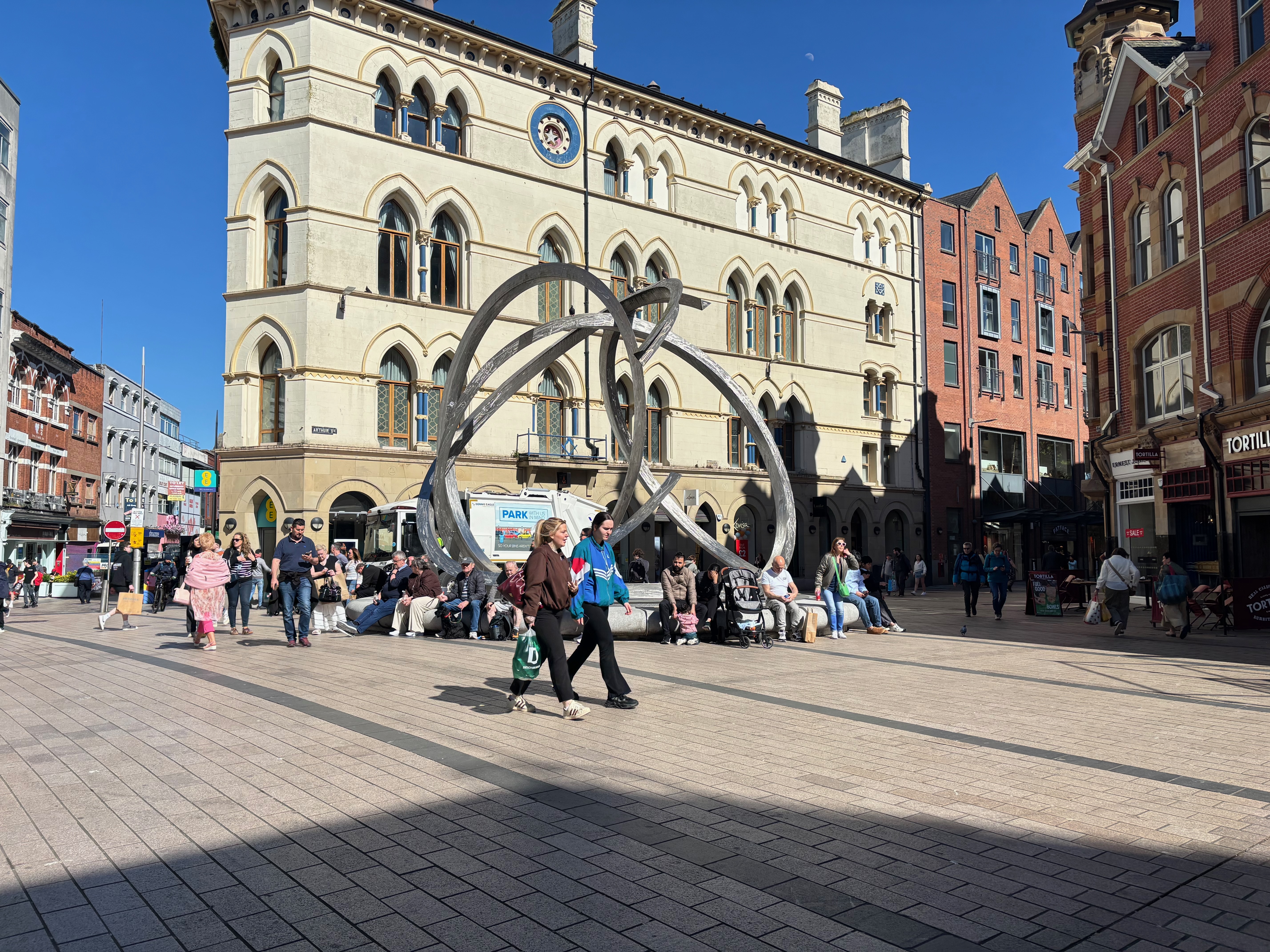
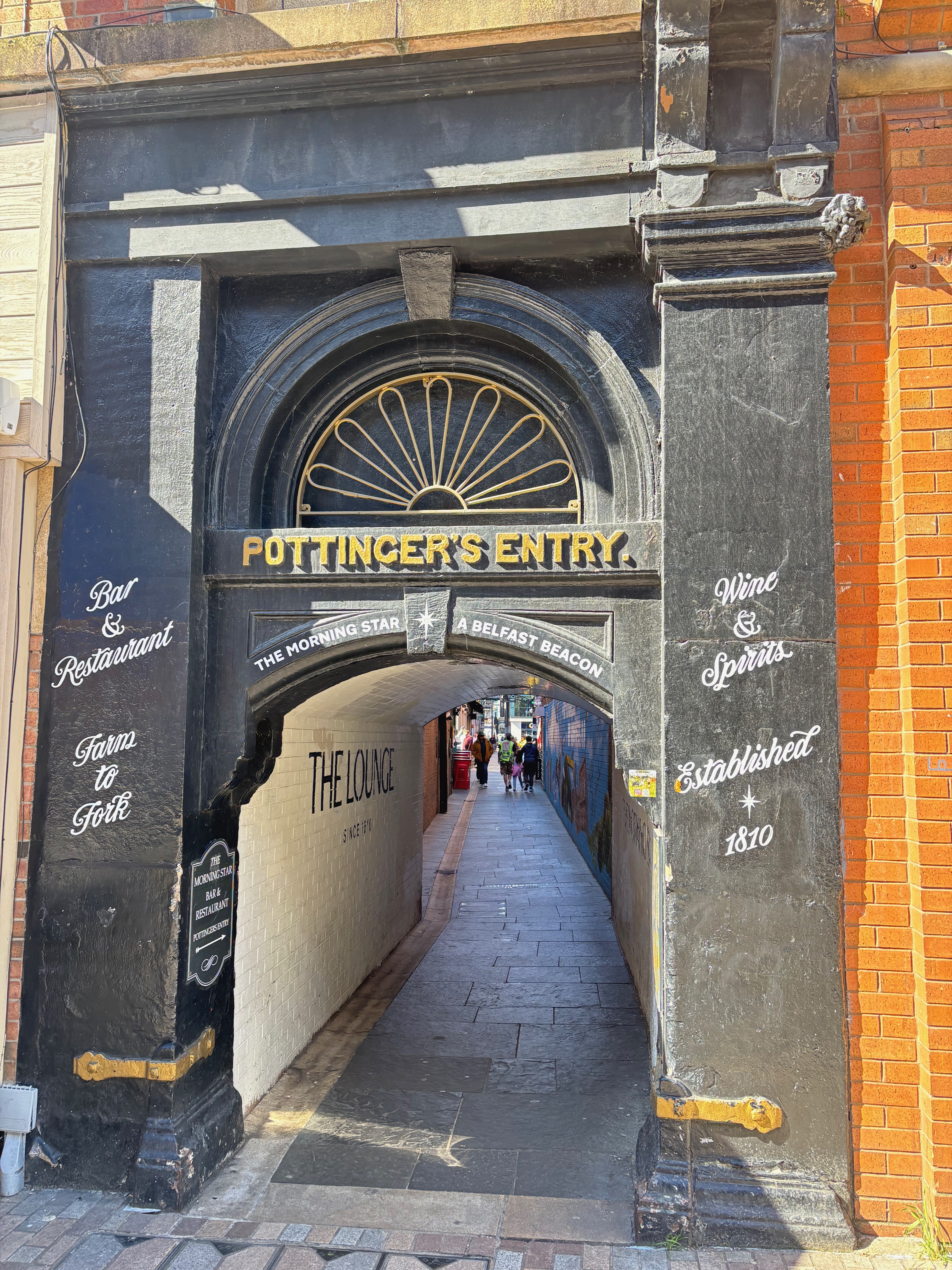
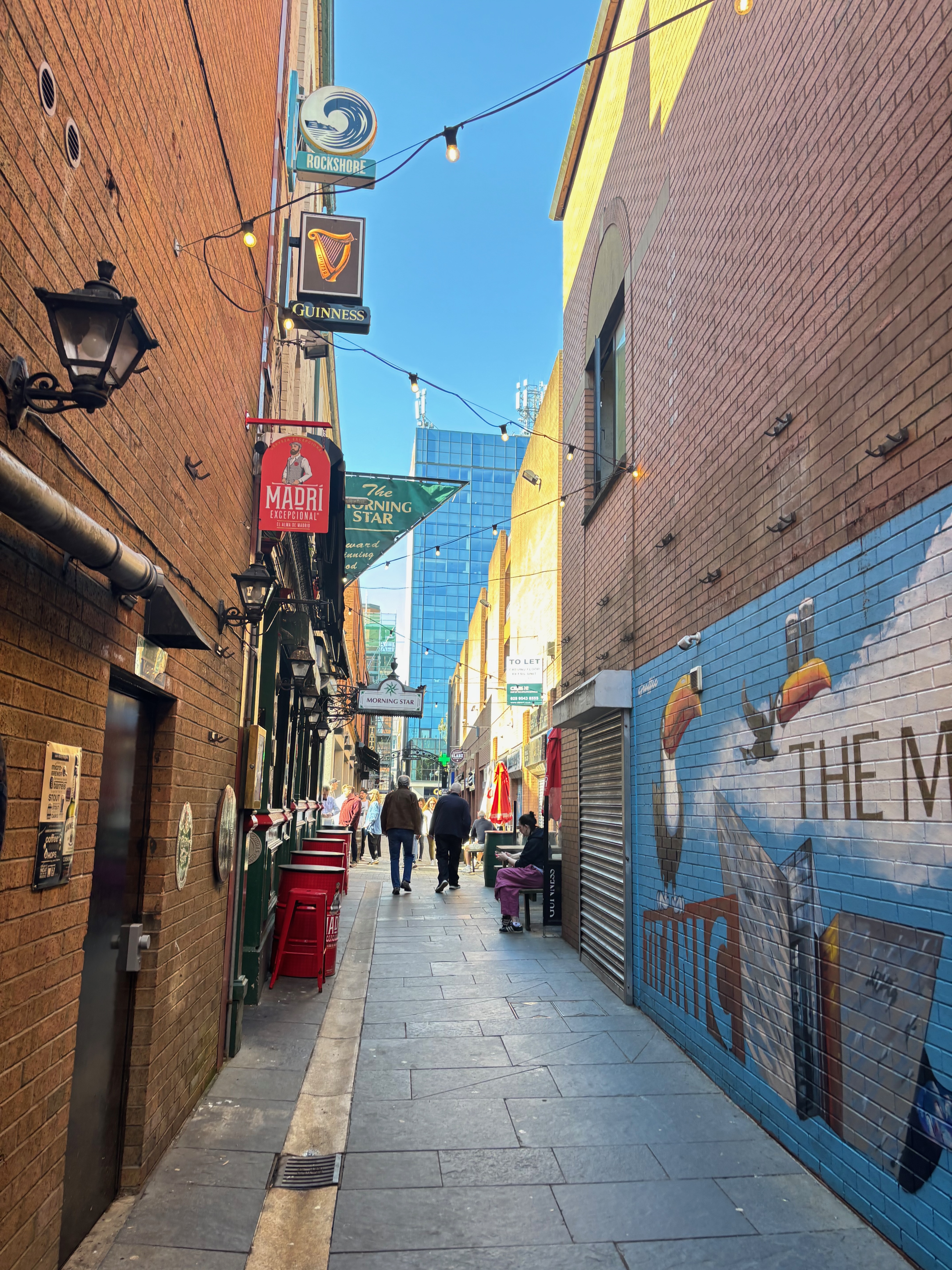
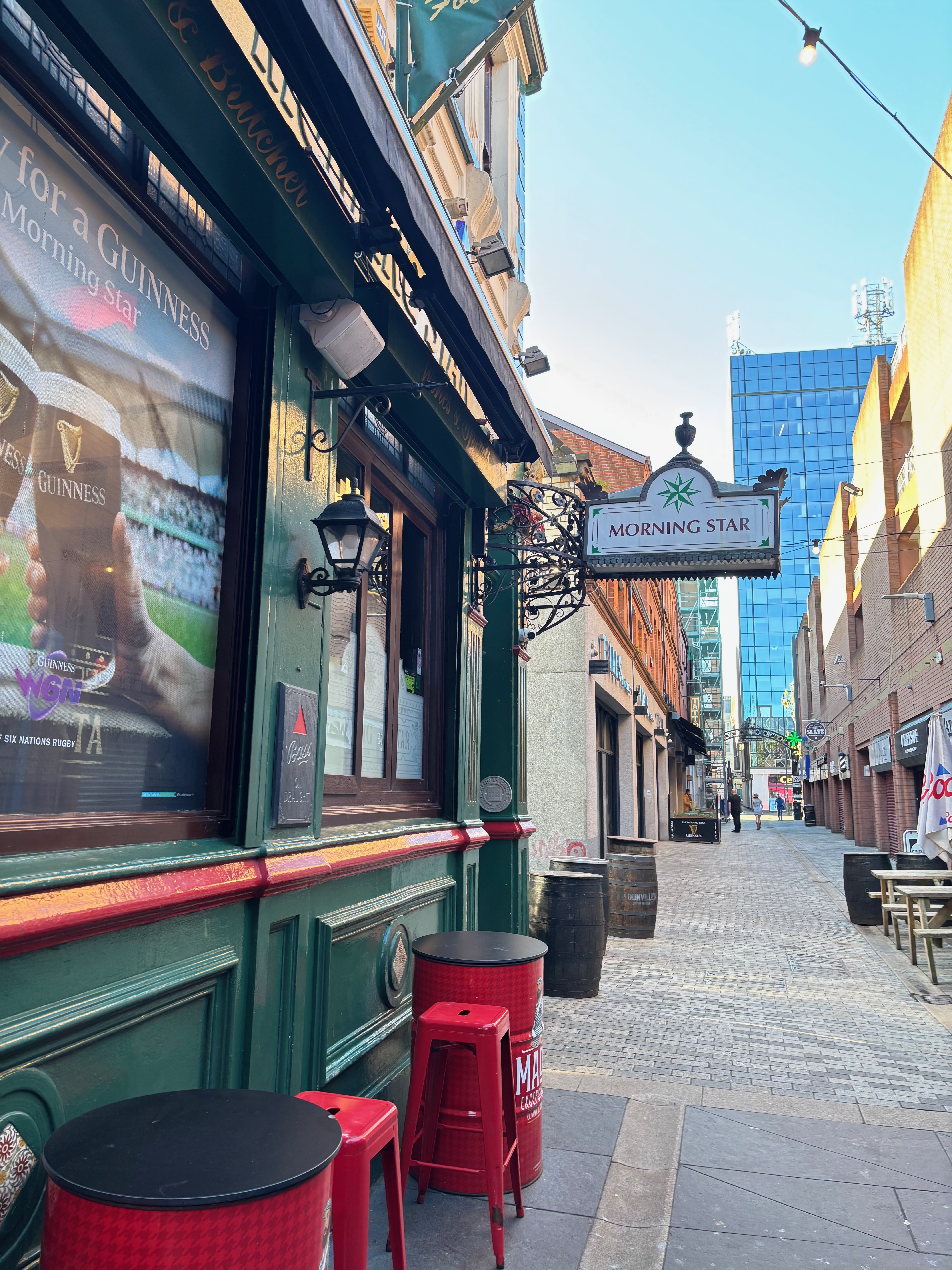
Walking along we encountered the striking, modern Spirit of Belfast statue (a.k.a. the “Onion Rings”). The “spirit” is that of industry—specifically linen and shipbuilding (light and strong, like the statue). The spirit could also be the resilience of this city with its complicated history. After passing by the indoor and outdoor Victoria Square shopping center, we turned toward the pedestrianized thoroughfare called Ann Street and then walked through Pottinger’s Entry. This atmospheric lane passes the venerable, Morning Star pub and dining room (we would have dinner there later) , and then a mix of shops ranging from humble to upscale—gym, bookmakers, piercing studio, barber, posh café.
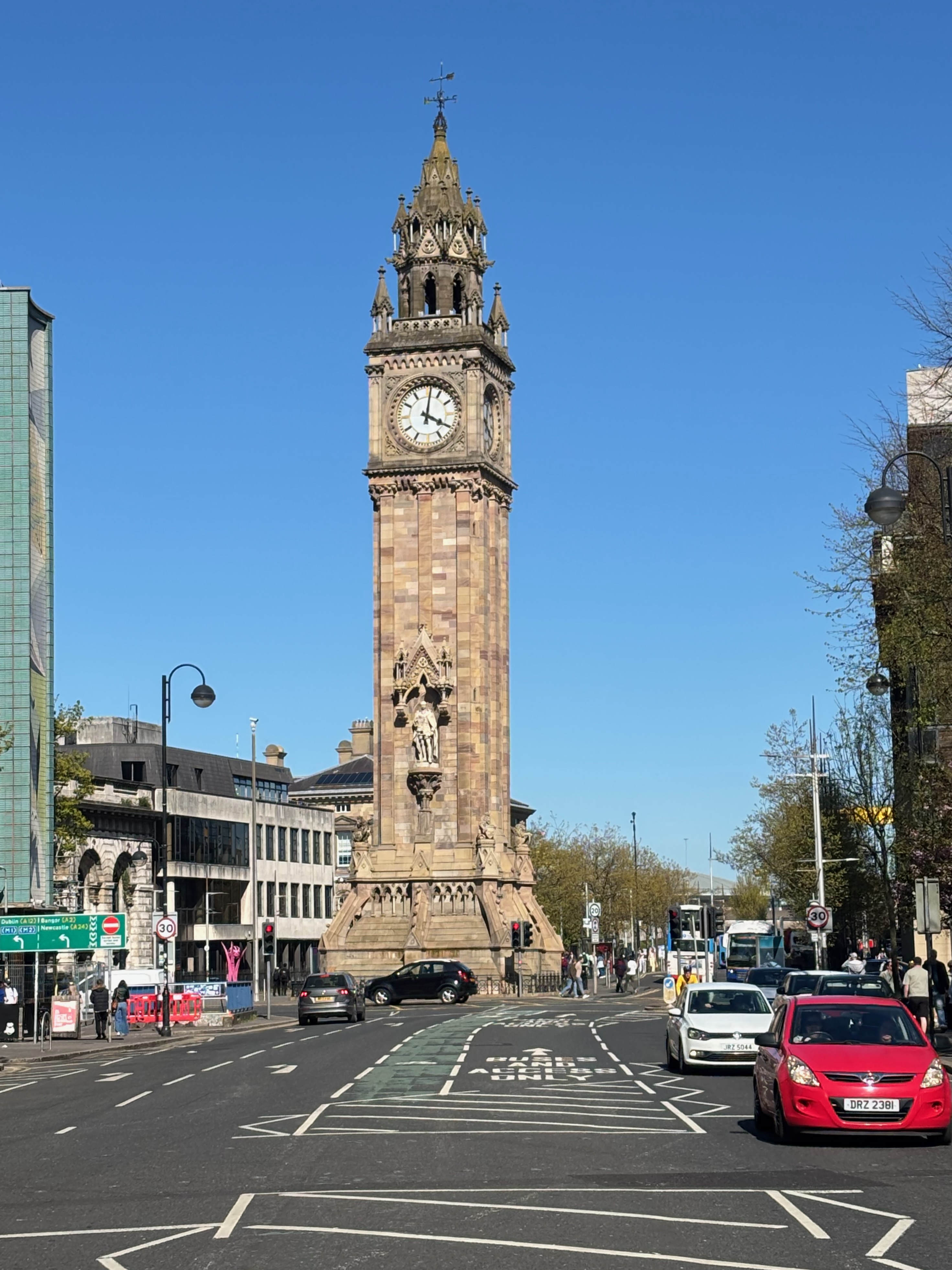
We emerged on High Street and turned right where after a couple of blocks we got a good luck at the Albert Memorial Clock Tower, Belfast’s “Little Big Ben”. It was finished in 1869 to honor Queen Victoria’s beloved Prince Albert, who died in 1861 and sits on the birthplace of the city, where Belfast was founded over a thousand years ago on a little river that later became High Street (The little river still runs under the street). The tower famously leans (as it was built on an unstable riverbank), and locals say Albert looks like he’s ready to leap to safety when the tower finally falls.
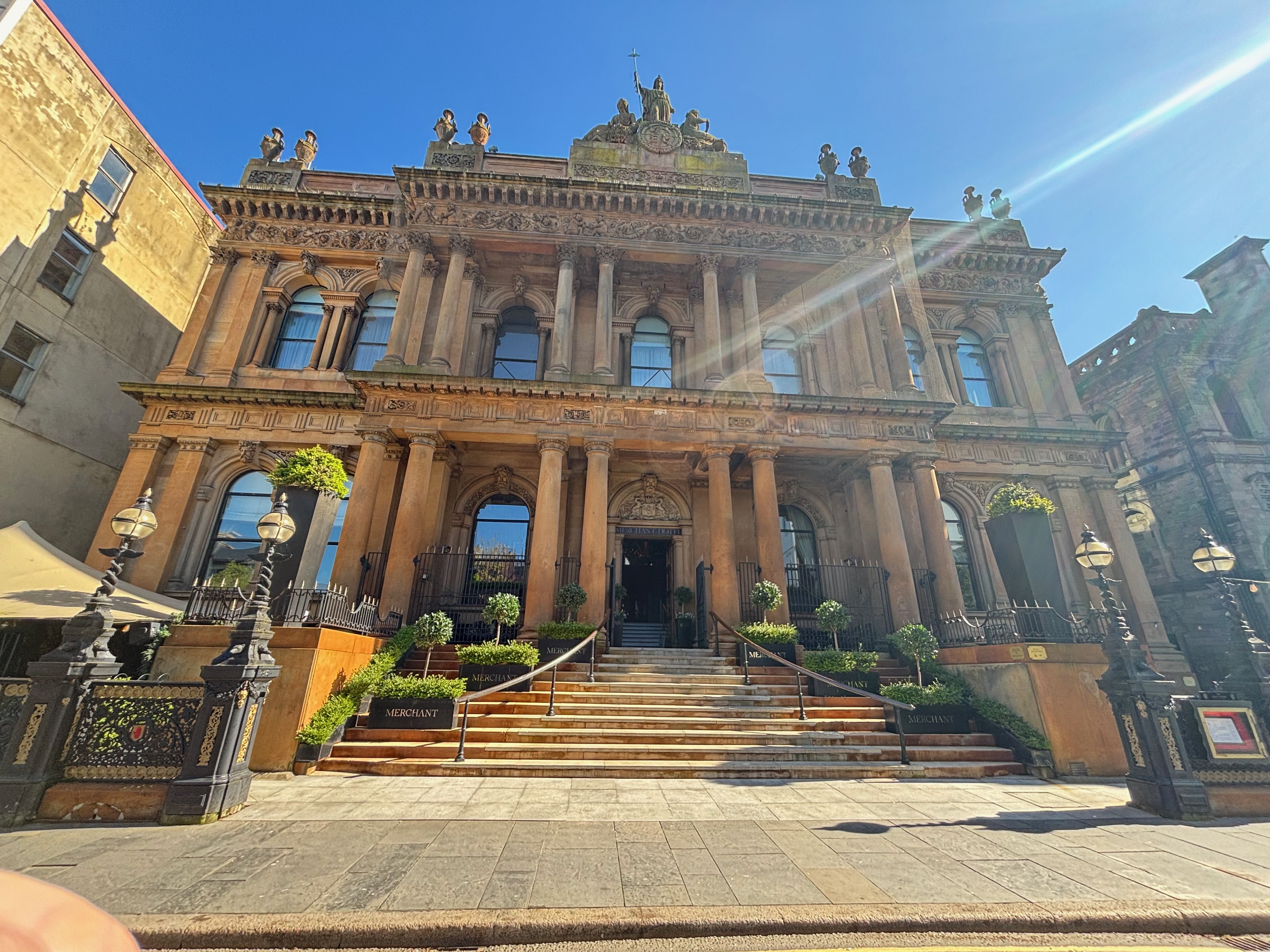
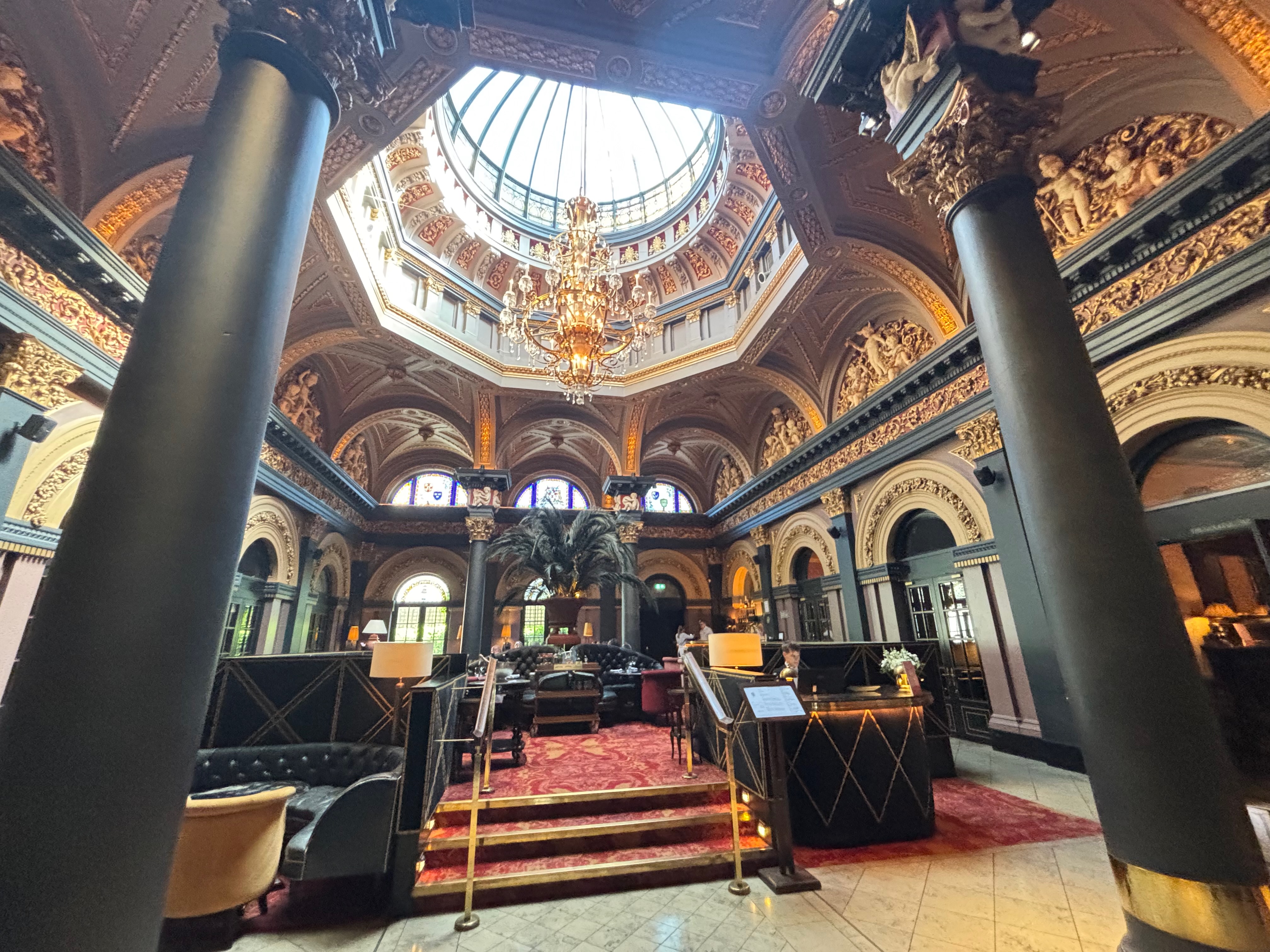
A short distance later we encountered the Merchant Hotel, which was built in the mid-1800s, and was once the headquarters of the Ulster Bank. Back in those days, banks were designed with over-the-top extravagance to give their aristocratic clientele confidence. In modern times, banking has changed, and all over Britain such dazzling mansions of finance have been vacated and often turned into fancy restaurants.
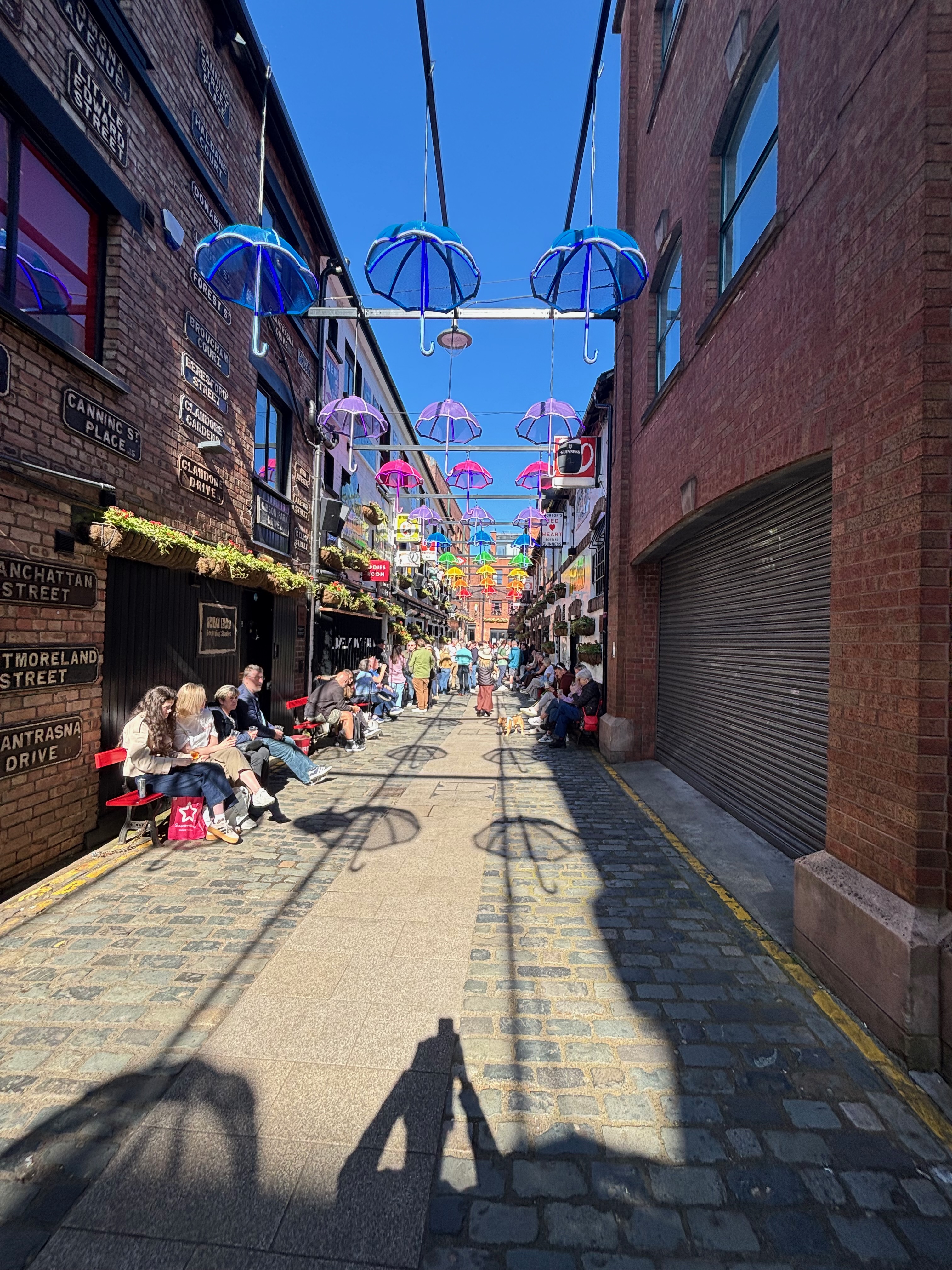
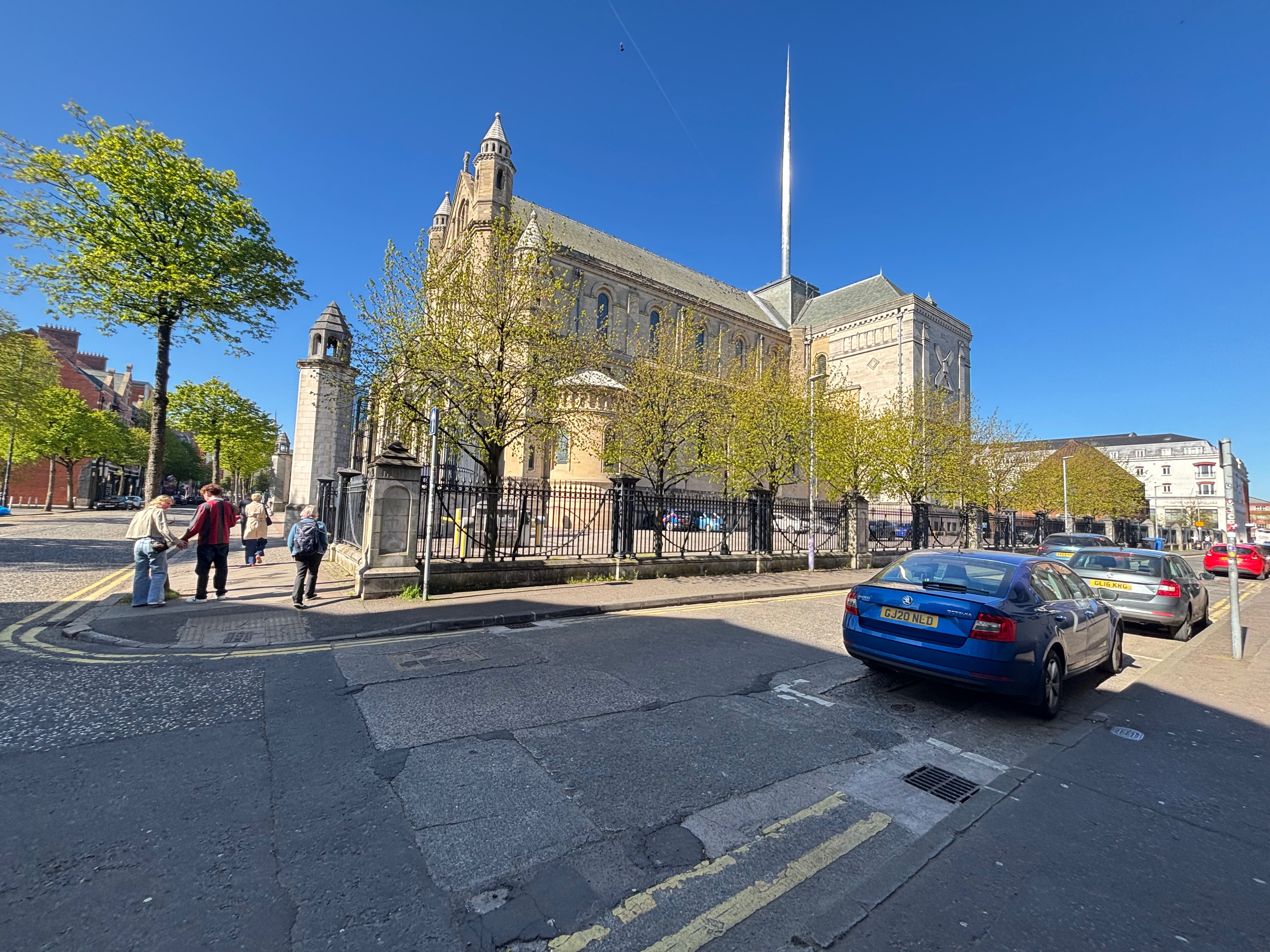
Exiting we moved on another block or two and entered a rejuvenated district that is busy with shoppers by day and clubbers by night and walked up Hill Street. Being the oldest part of Belfast, it’s full of history. Before World War I, this was the whiskey warehouse district—at a time when the Belfast region produced about half of all Irish whiskey. The street was buzzing and we soon found our way to St. Anne’s Cathedral, also known as Belfast Cathedral. This Anglican church was built in the early 1900s, at the peak of Belfast’s industrial power and the structure was nearly destroyed by a Luftwaffe bomb in 1941. We opted not to tour it as the day was wanning and so moved on.
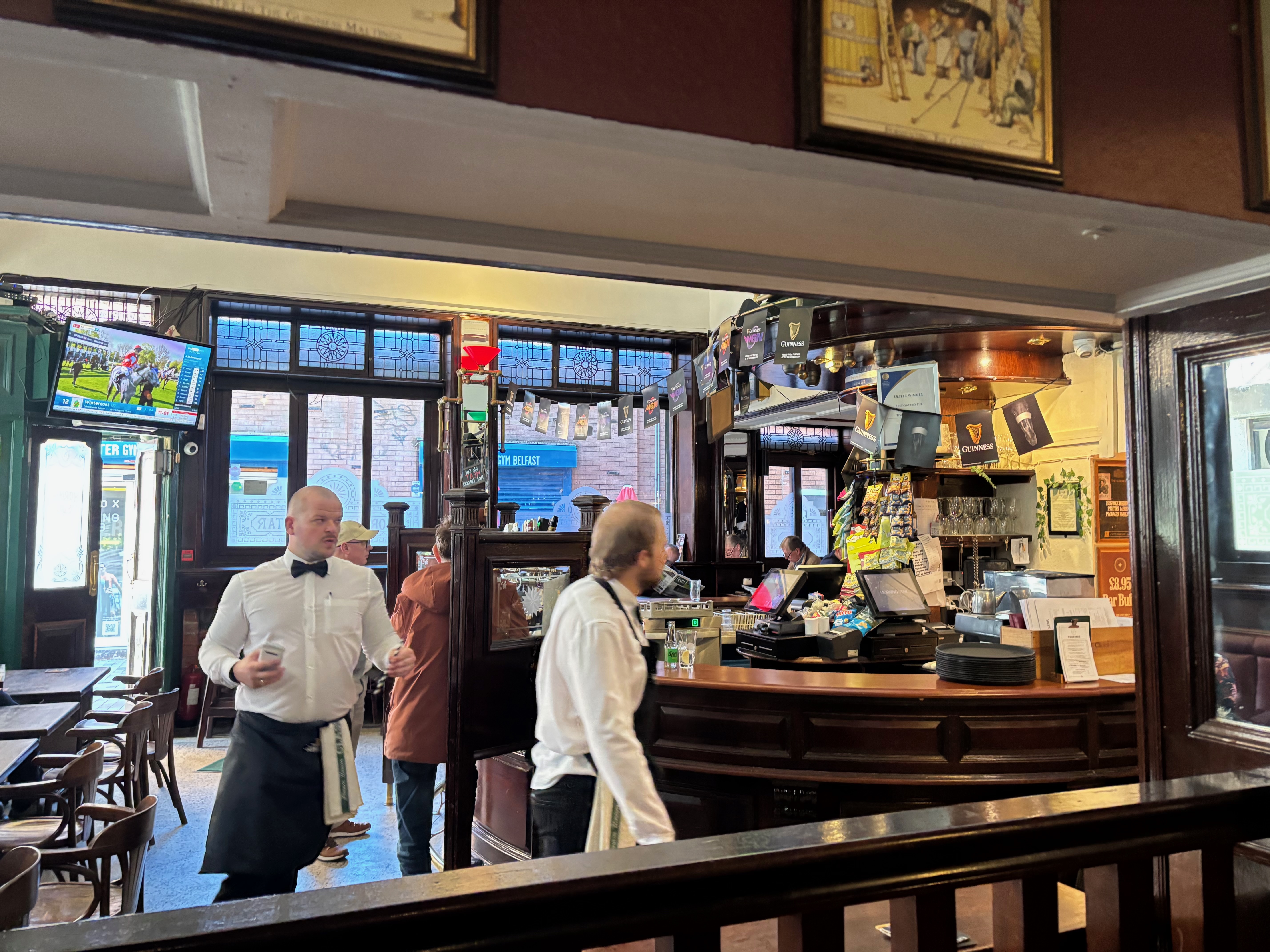
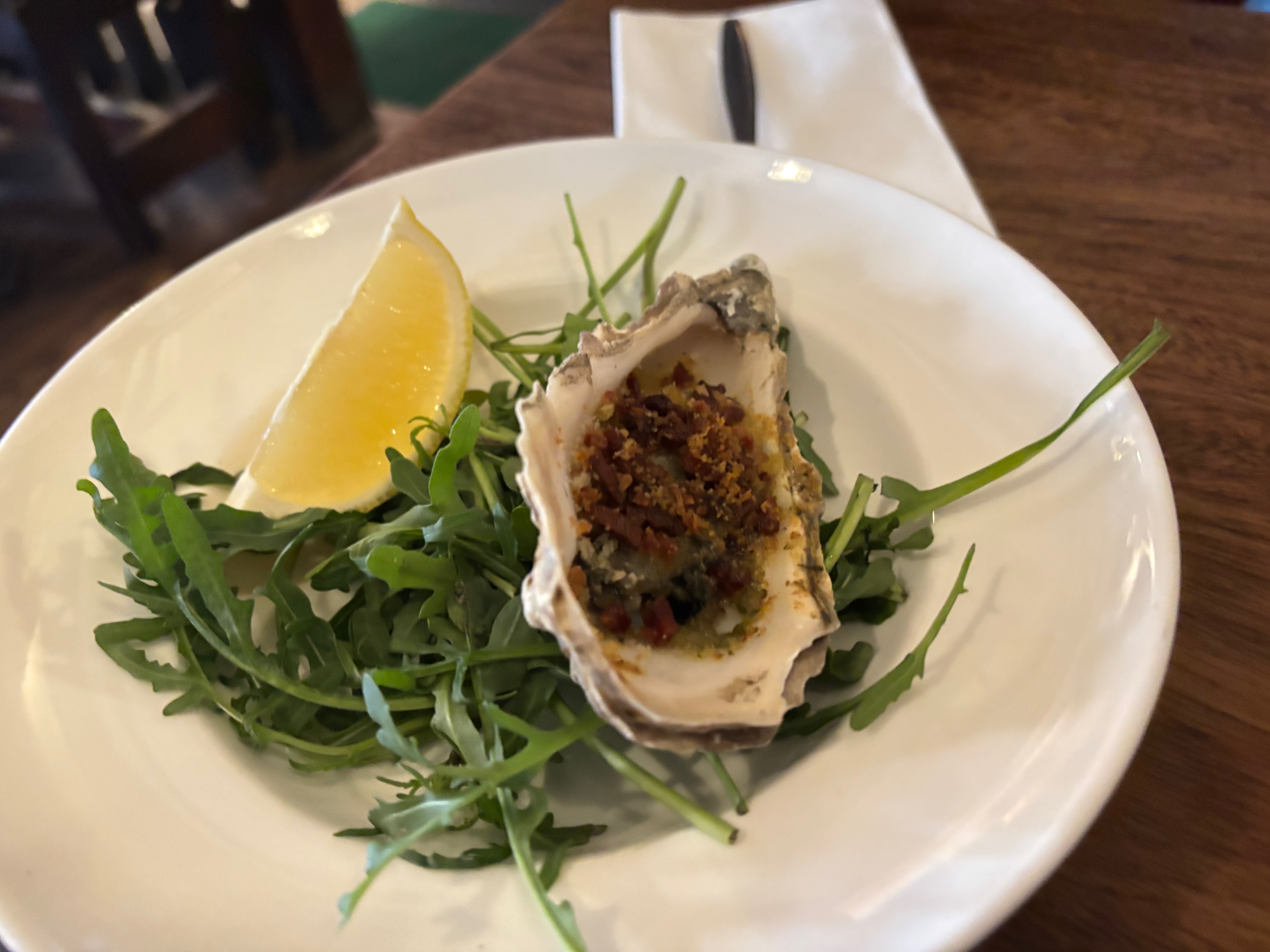
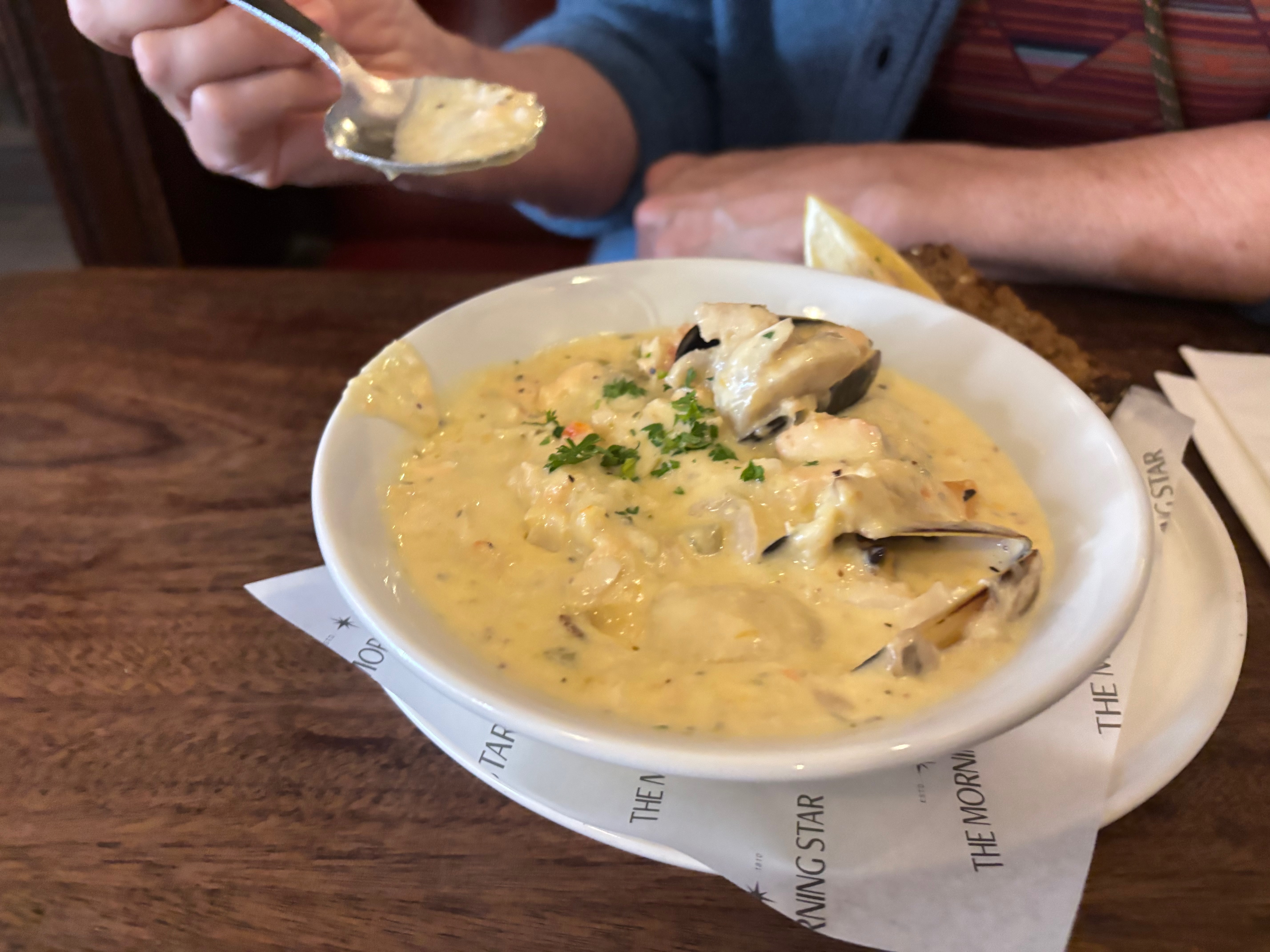
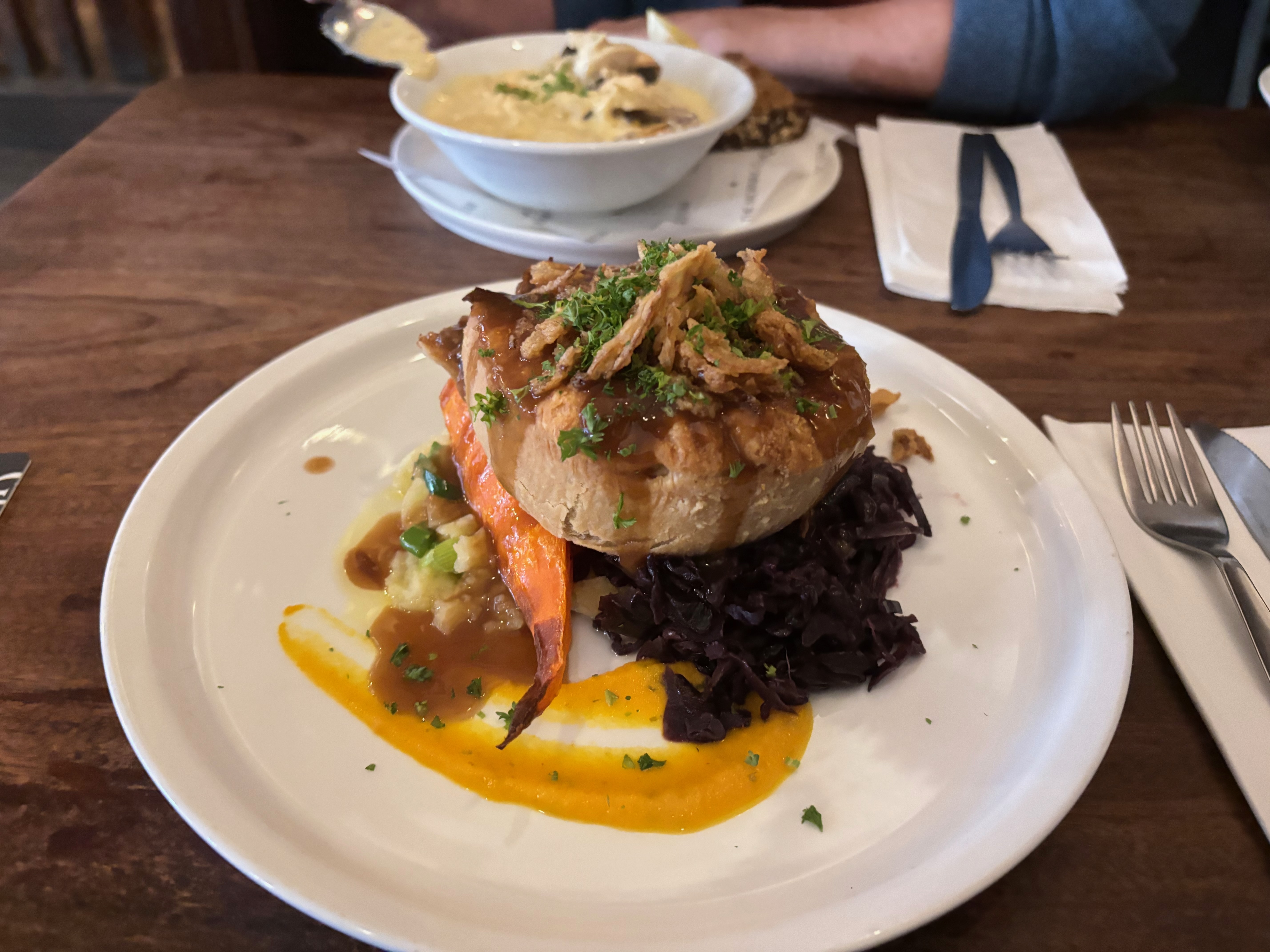
By now it was time to think about dinner and so we decided to head back to The Morning Star where it wasn’t that crowded and so we were seated quickly. Joanna got a pint of Guiness and one of Harp for me and we savored both as Joanna devoured a Star Oyster (grilled, bone marrow, and chicken crumb) and then her bowl of Irish Seafood Chowder (glenarm salmon, smoked haddock, coley, mussels, comber spuds, white wine cream, Guinness, and wheaten).
I made do with what is described on the receipt as a pie of the day and for the life of me, looking at the picture, I can’t remember or recall what it was. We finished with a slice of Guiness Cake (somewhat unmemorable) and left with a tab of 64.84 Pounds ($87.68). A good meal but not as memorable as it could have been, but that how it goes when you are traveling for an extended period of time. We would have a busy day tomorrow, so we’ll close out this post and continue in the next one.
Links
Belfast City Hall: https://www.belfastcity.gov.uk/things-to-do/city-hall
Albert Memorial Clock: https://discovernorthernireland.com/listing/albert-memorial-clock/67720101/
Discover more from 3jmann
Subscribe to get the latest posts sent to your email.


