April 23-25
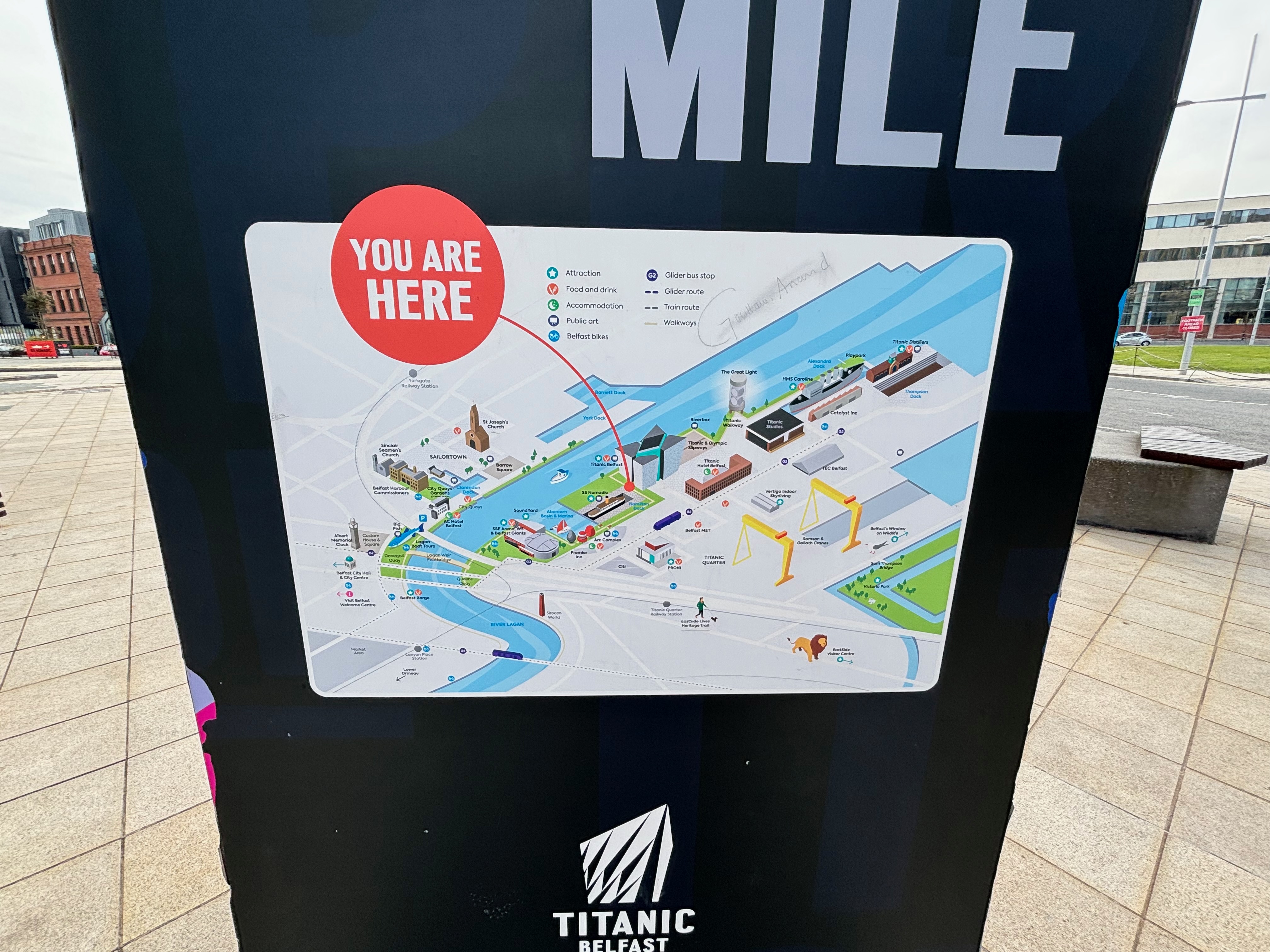
Our plan for the last day in Belfast was to hit the highly rated Titanic Belfast in the morning and then take a Black Cab Tour in the afternoon. We caught a taxi to the museum, which opened in 2012 and is a monument to Belfast’s maritime heritage on the site of the former Harland & Wolff shipyard in the city’s Titanic Quarter where the RMS Titanic was built. It tells the stories of the Titanic, and her sister ships RMS Olympic and HMHS Britannic. It contains more than 130,000 square feet of floor space, most of which is occupied by a series of galleries, private function rooms and community facilities.
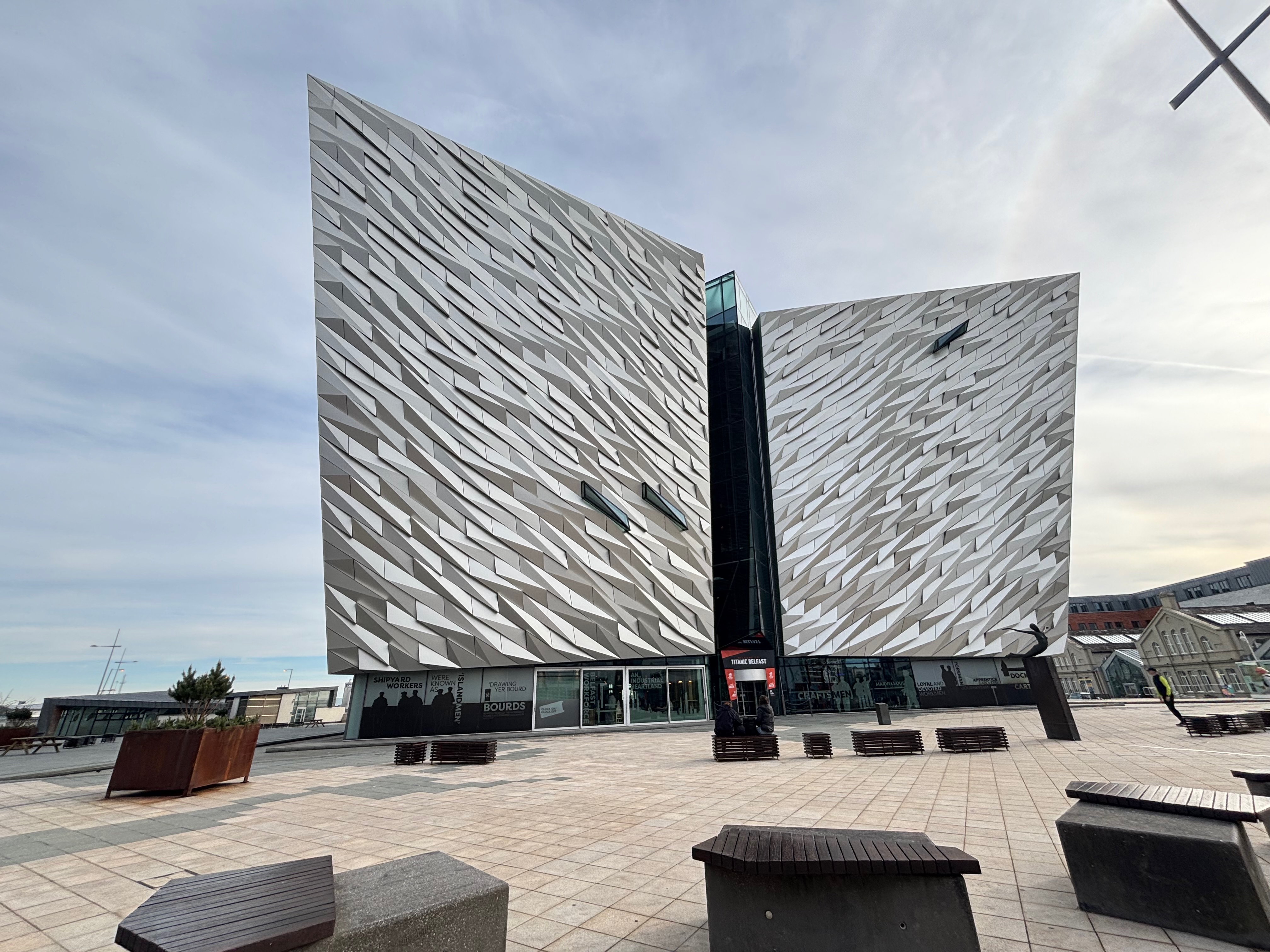
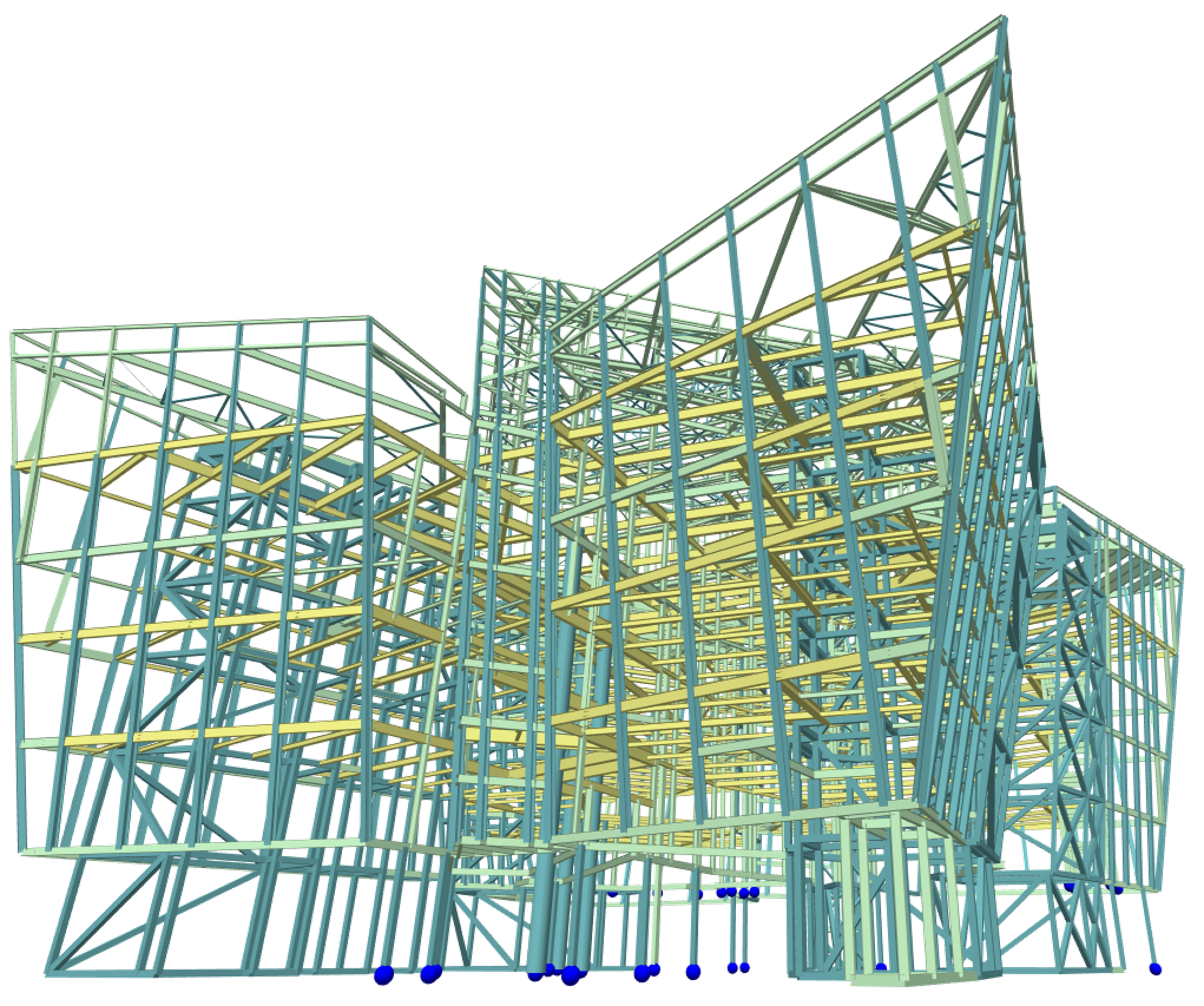
The structural design of the Titanic Belfast building was a complex engineering challenge due to its innovative architecture, including an “inverted” steel frame structure where floor sizes increase with height. The superstructure, composed of a steel frame with composite concrete beams and floors, required careful consideration of stability, especially with the large, unrestrained heights. The building is shaped like four angled ship bows rising from the water, matching the height and lines of the original hull. It is organized into a self-guided route across multiple levels:
• Ground / Level 0: Entrance, ticketing, and the pre-function/atrium spaces.
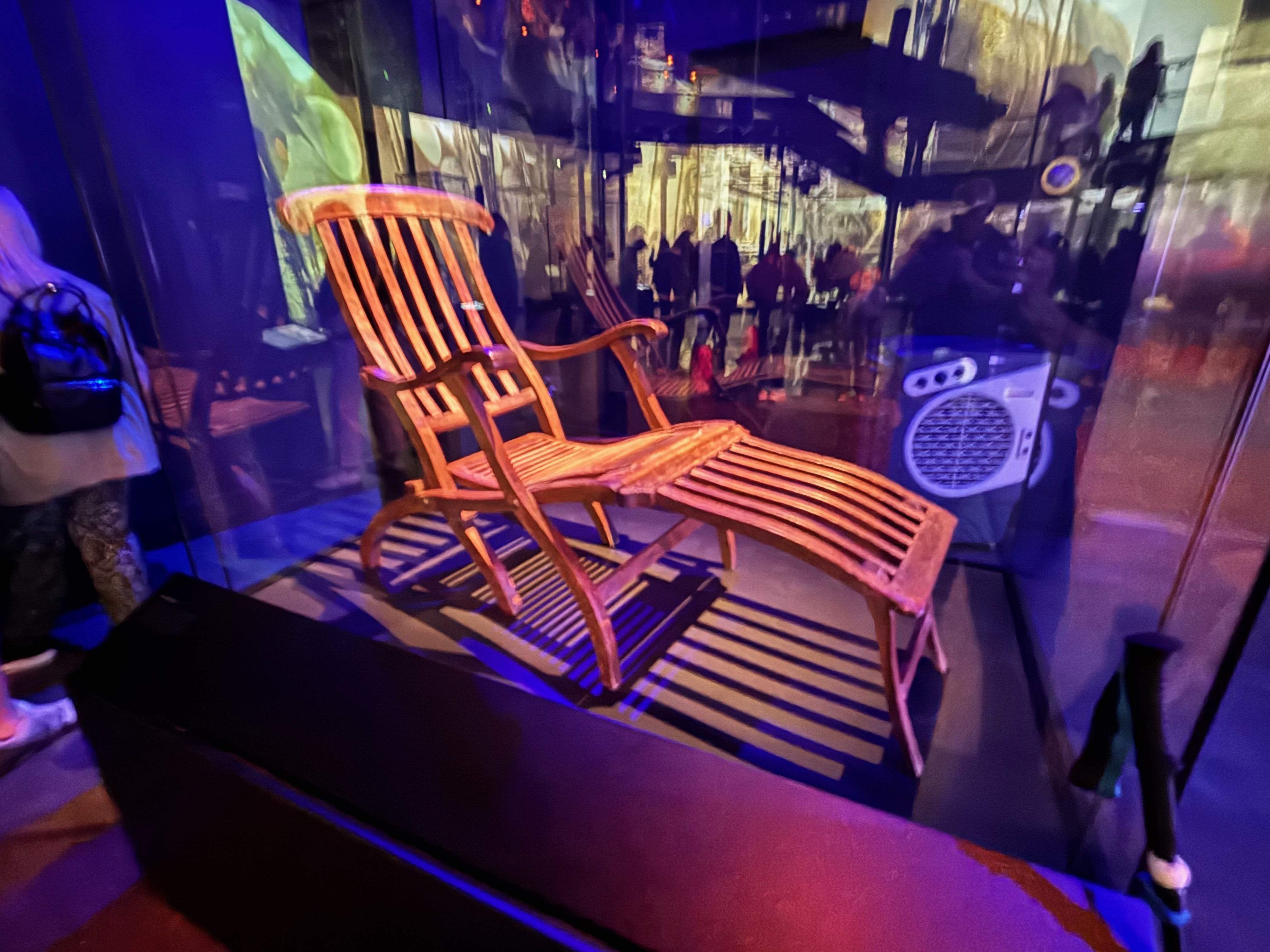
• Level 1: Features the Shipyard Ride (reproducing the construction process), original glass plate photographs, and artifacts including first-class accommodation plans, deckchairs, Wallace Hartley’s violin, and personal passenger items.
• Level 2: Focuses on the sinking, the aftermath, and the American/British inquiries, descending from upper multimedia galleries.
• Levels 3 & 4: Houses the visual arts center, temporary exhibition spaces, and banquet/function suites.
We’d purchased our two tickets for 49.90 Pounds ($67) the night before and so entered, dropped our daypacks off at the luggage room and started what would be a comprehensive, detailed and compelling study of the ship, its place in legend and the city of Belfast as its birthplace. This is a large and pretty overwhelming experience and if one were to stop at every exhibit, it might take a couple of days to take it all in.
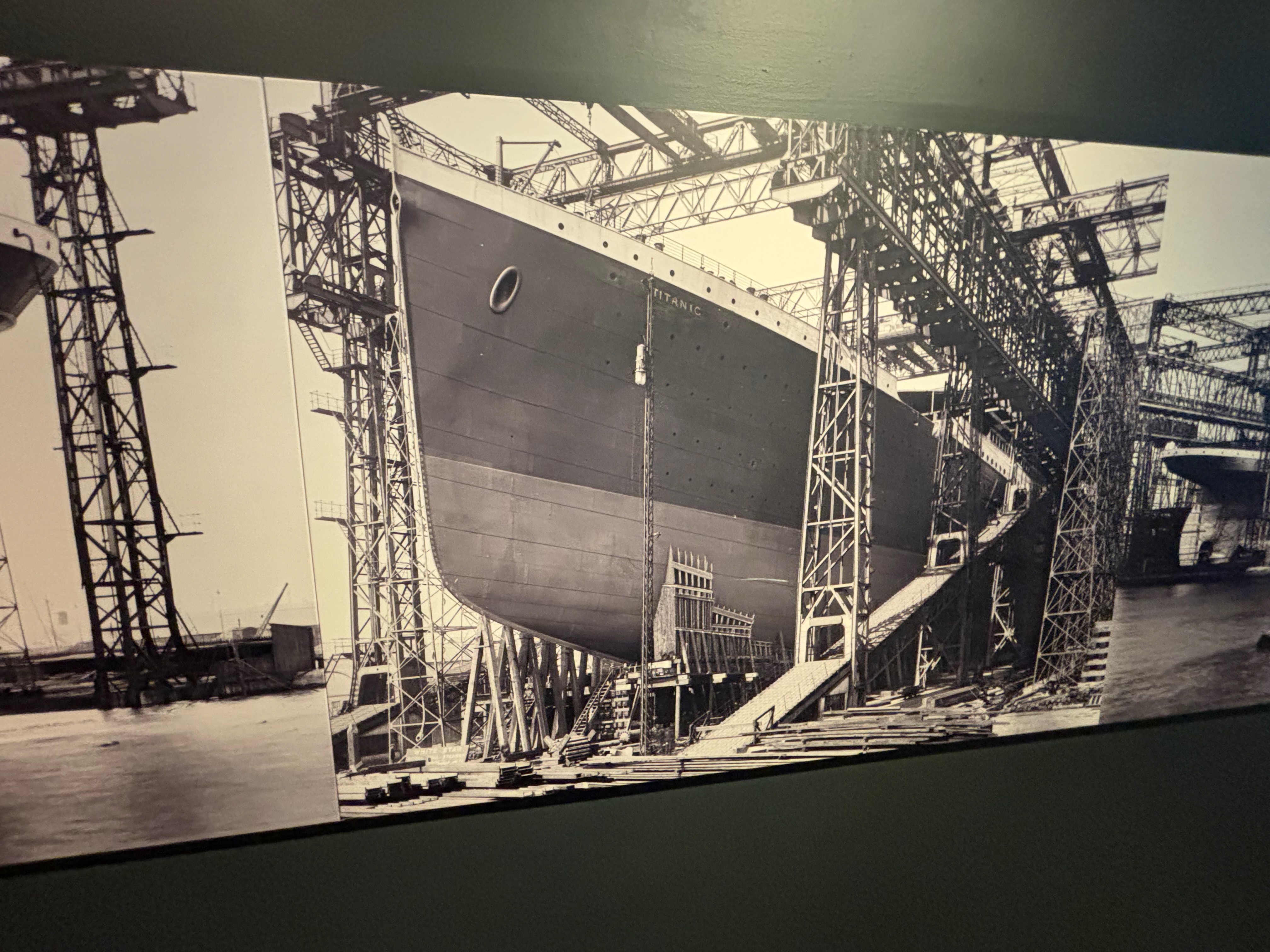
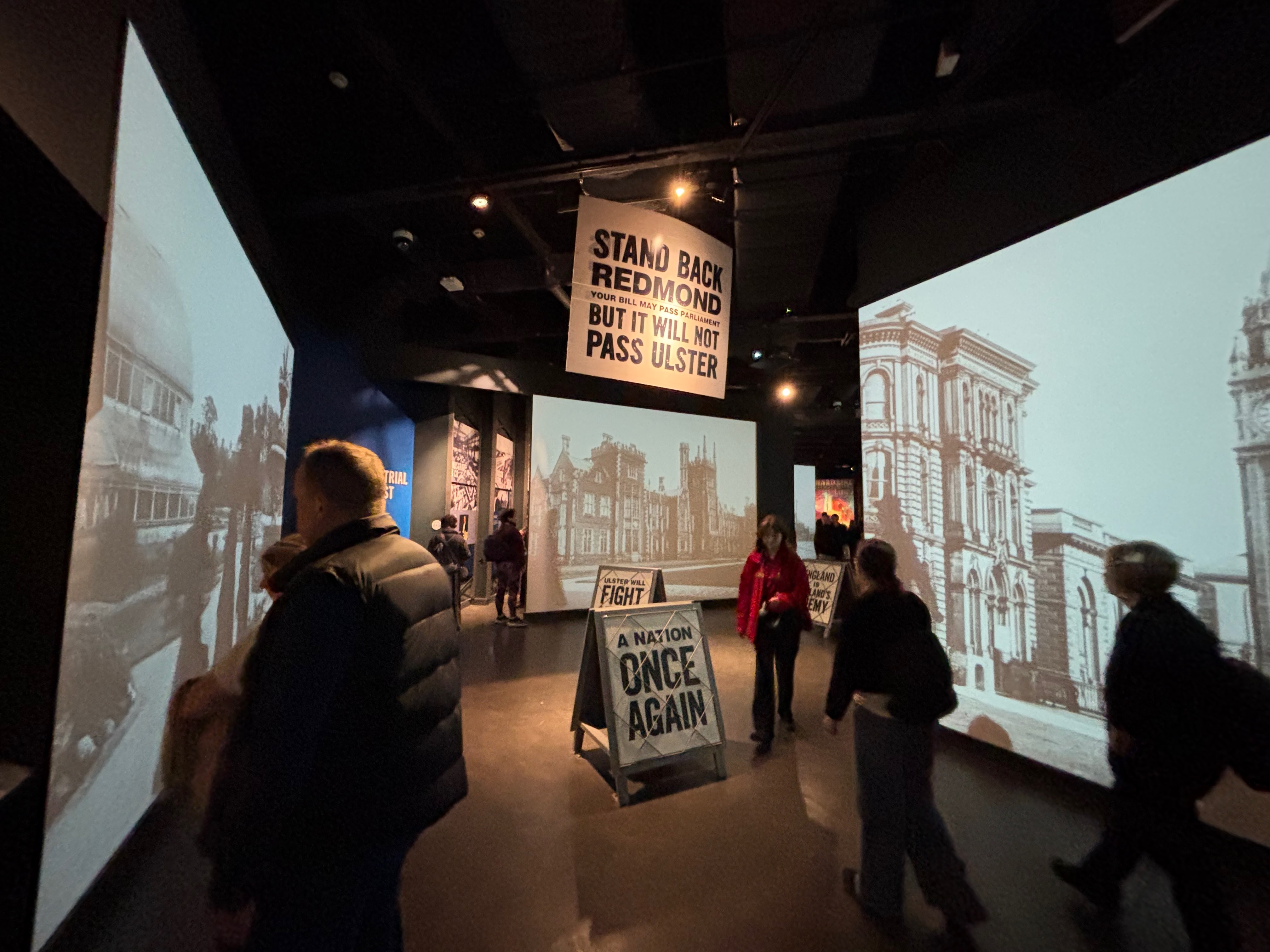
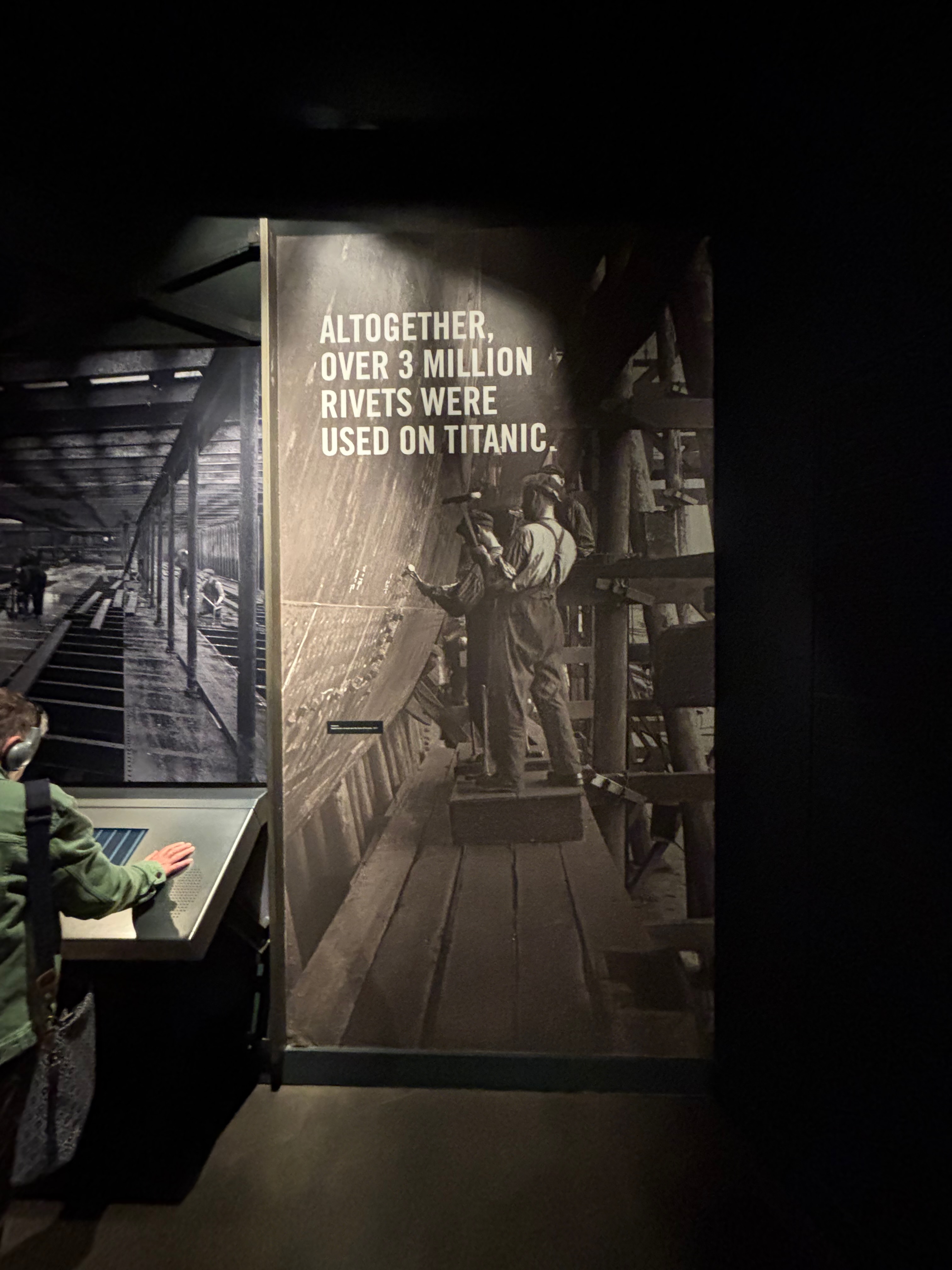
I tended to skip over a lot of the initial displays about Belfast, the Harland and Wolff (H&W) shipyard and the lives and living standards of the people employed there. By 1900 the shipyard covered 80 acres and employed over 10,000 people. As one works their way through the exhibits on the lower floors, they begin to ascend into the upper levels and eventually reach the level where you would have been if sitting on one of the cranes overlooking the construction itself.
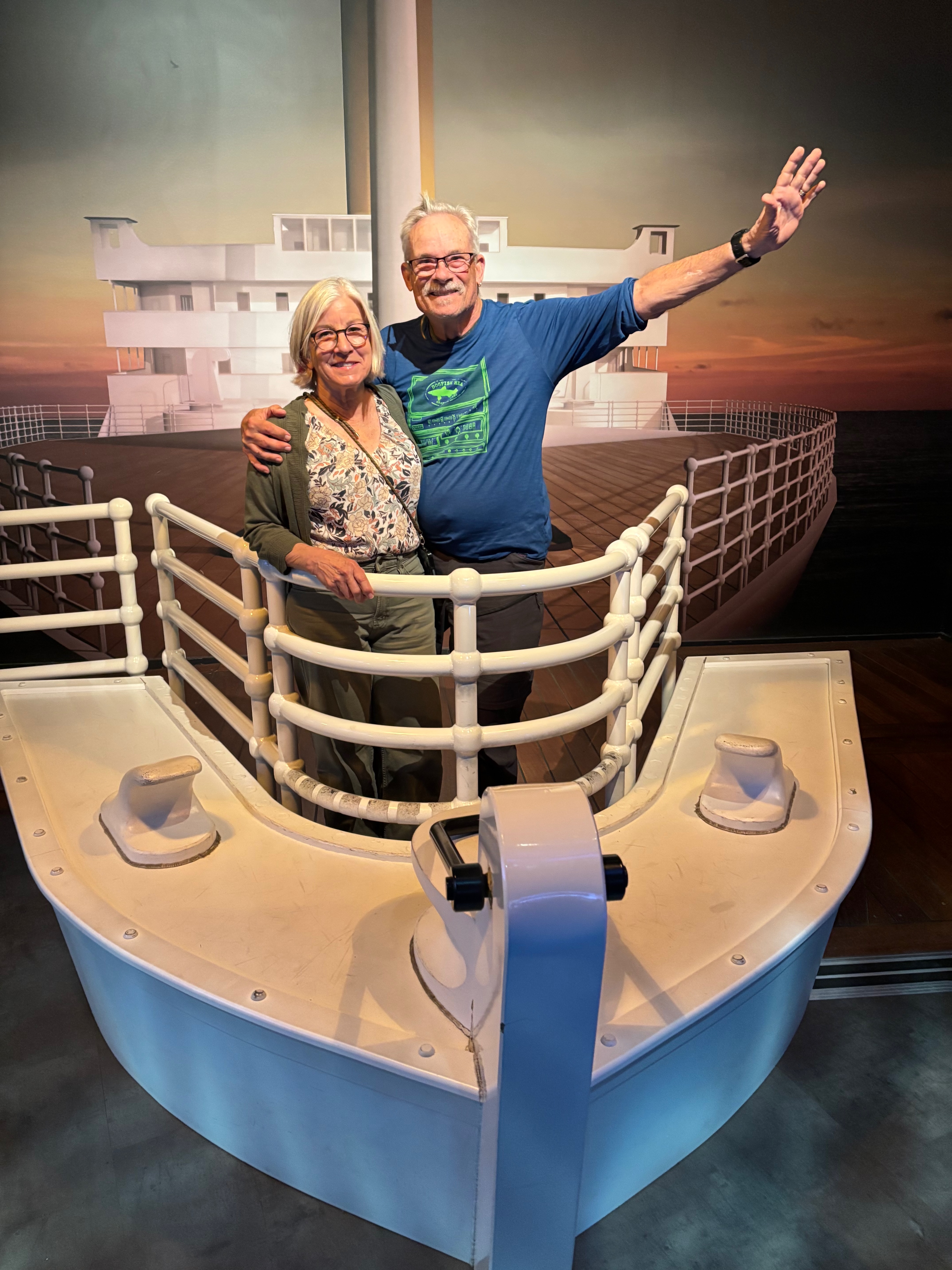
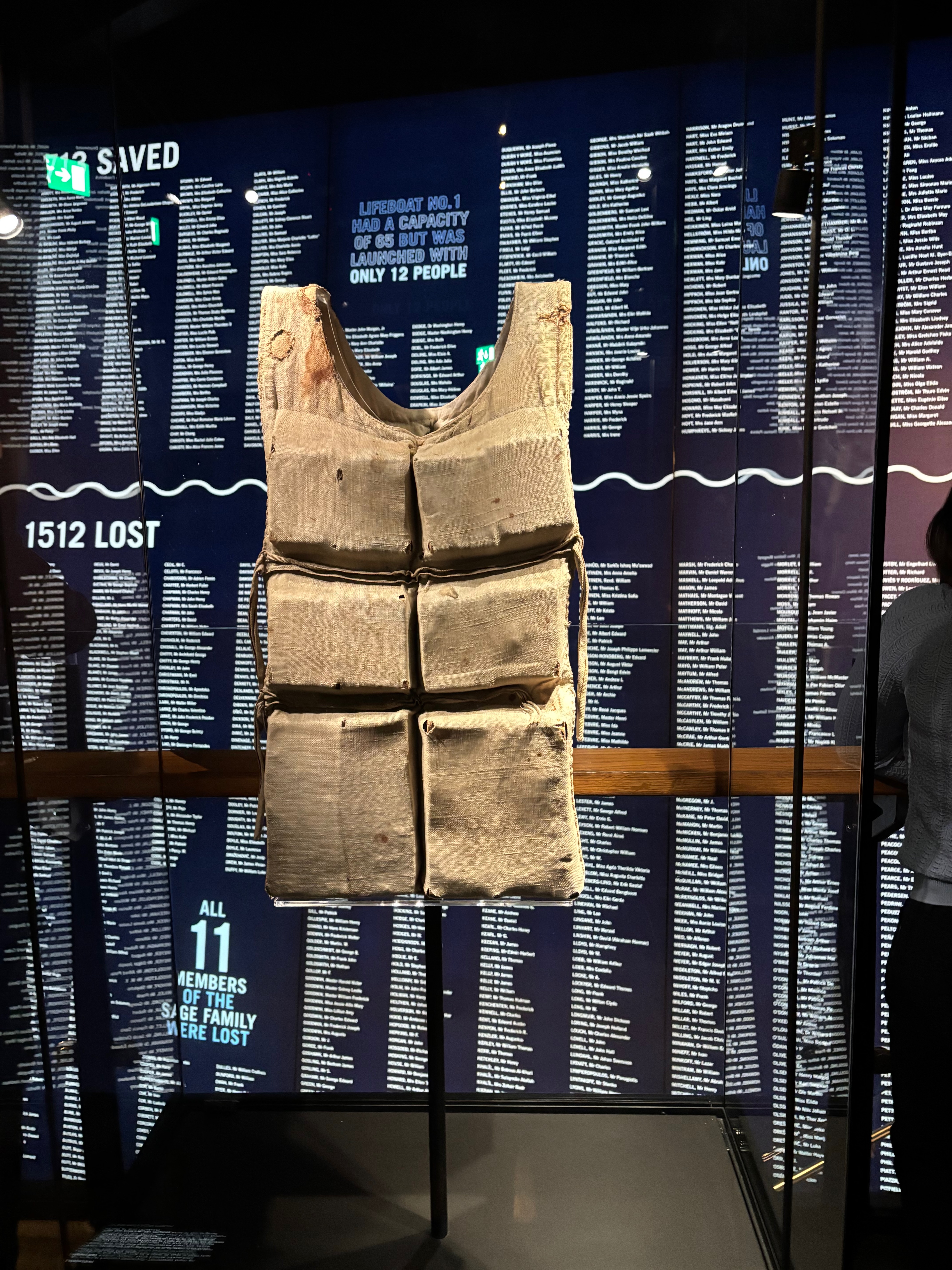
With so much to see, I skipped the Shipyard Ride, a suspended dark ride that takes one “on a journey through the shipbuilding process, letting you experience what it was like for the workers who built the RMS Titanic” as the line was long and eventually worked my way down to the first floor (the second floor as we are used to called floor levels in the US) where I viewed replicas of the staterooms and cabins (luxury, first class, second class, etc.) and lots of memorabilia recovered after the sinking.
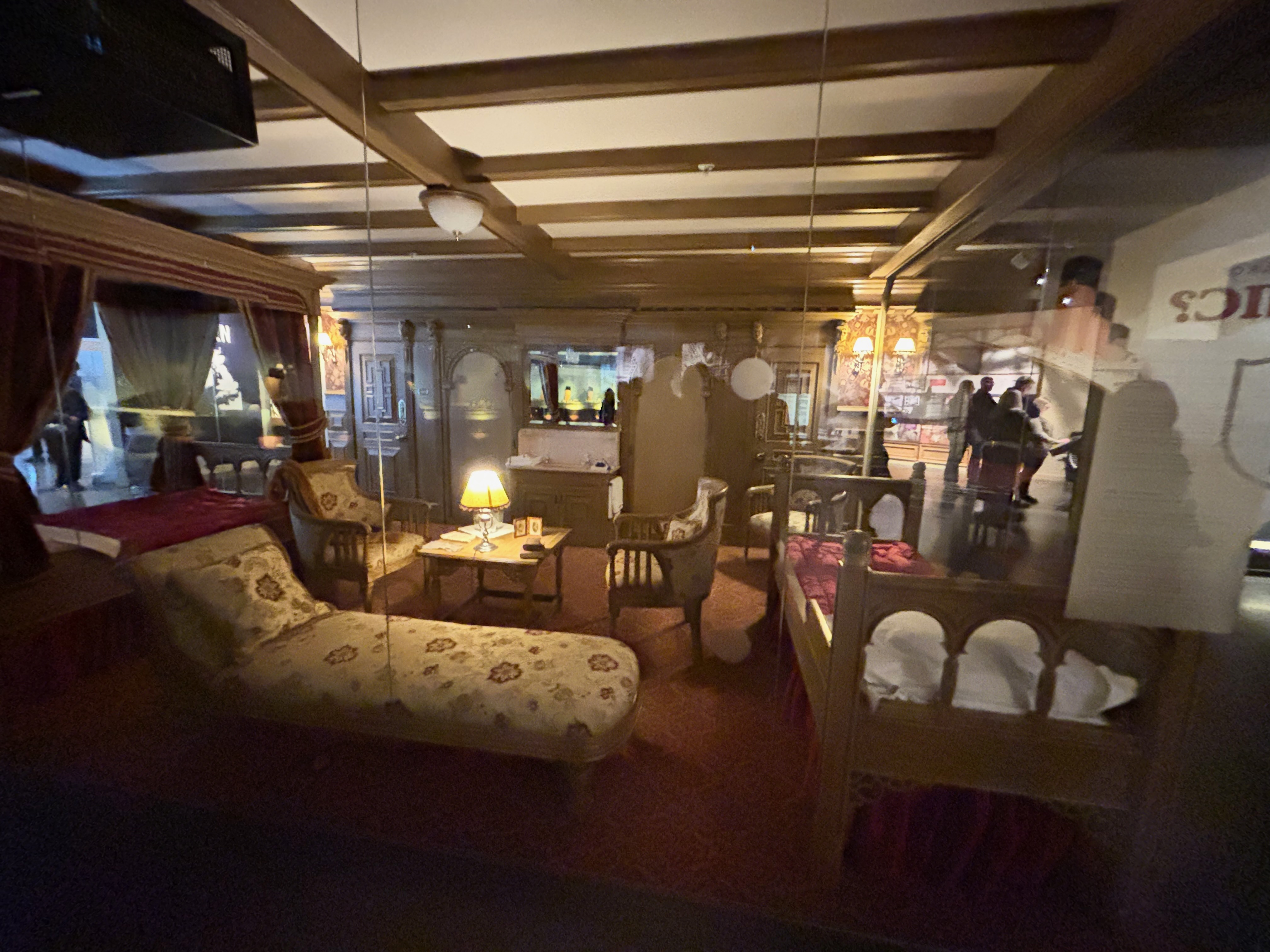
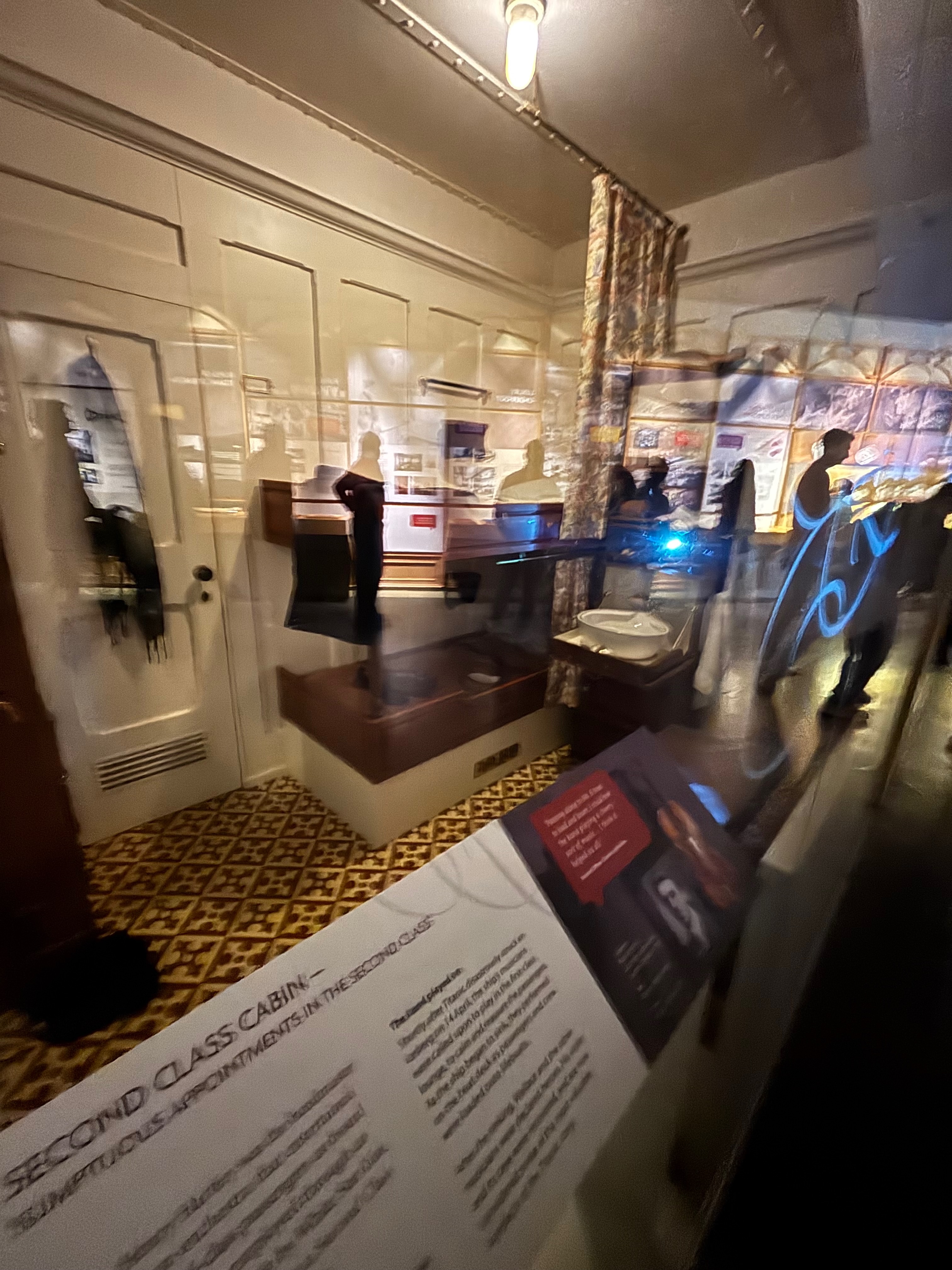
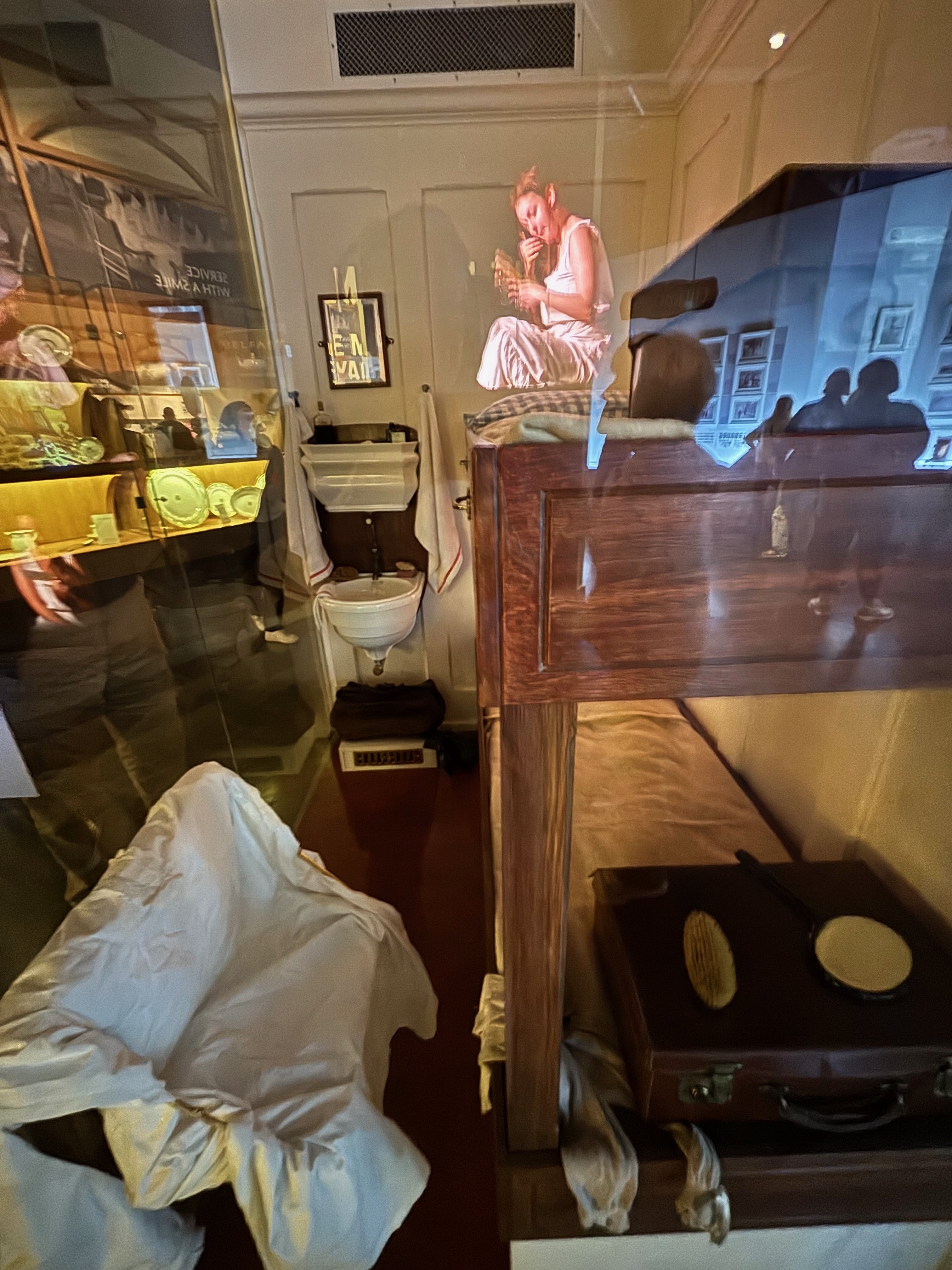
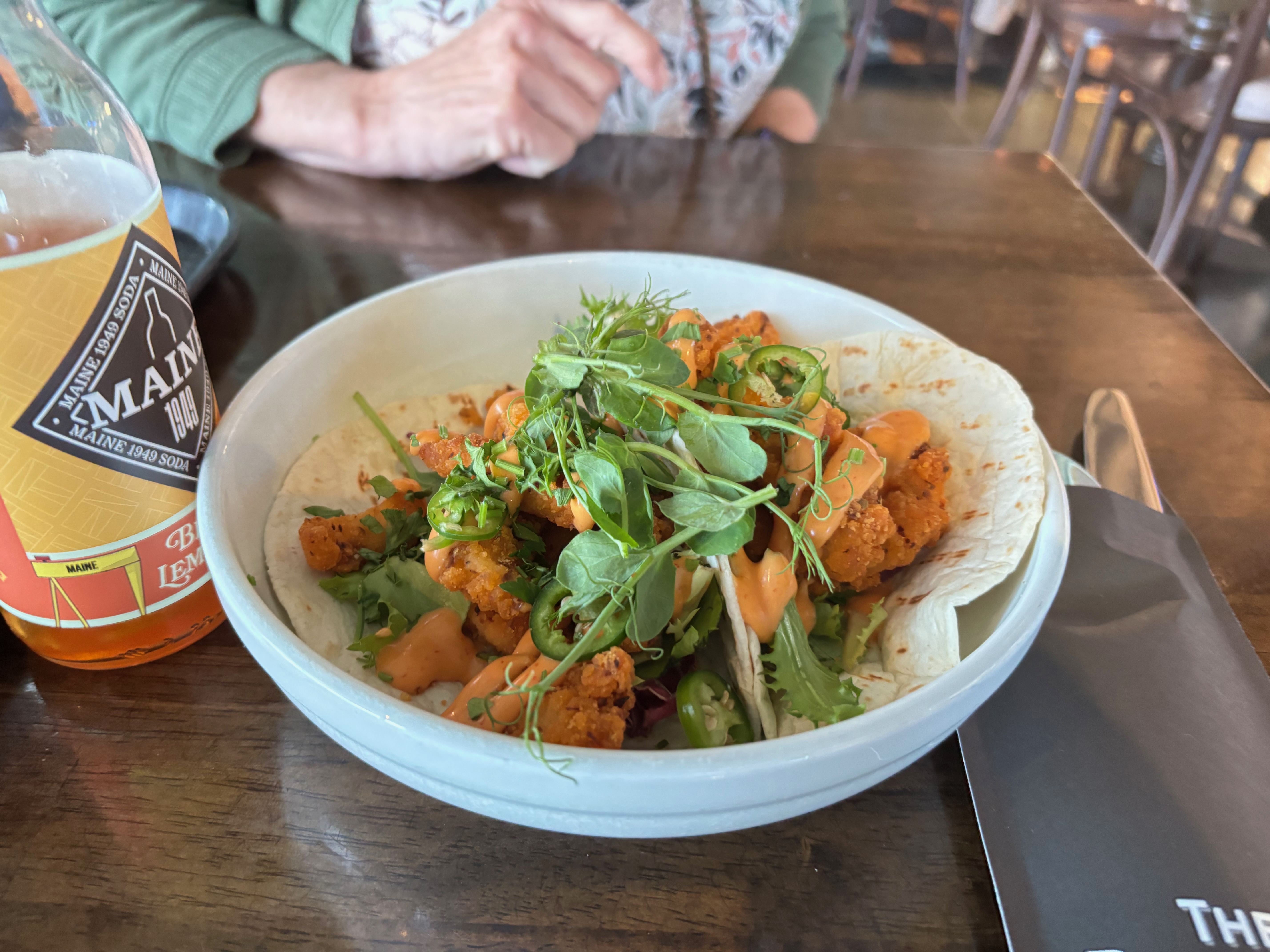
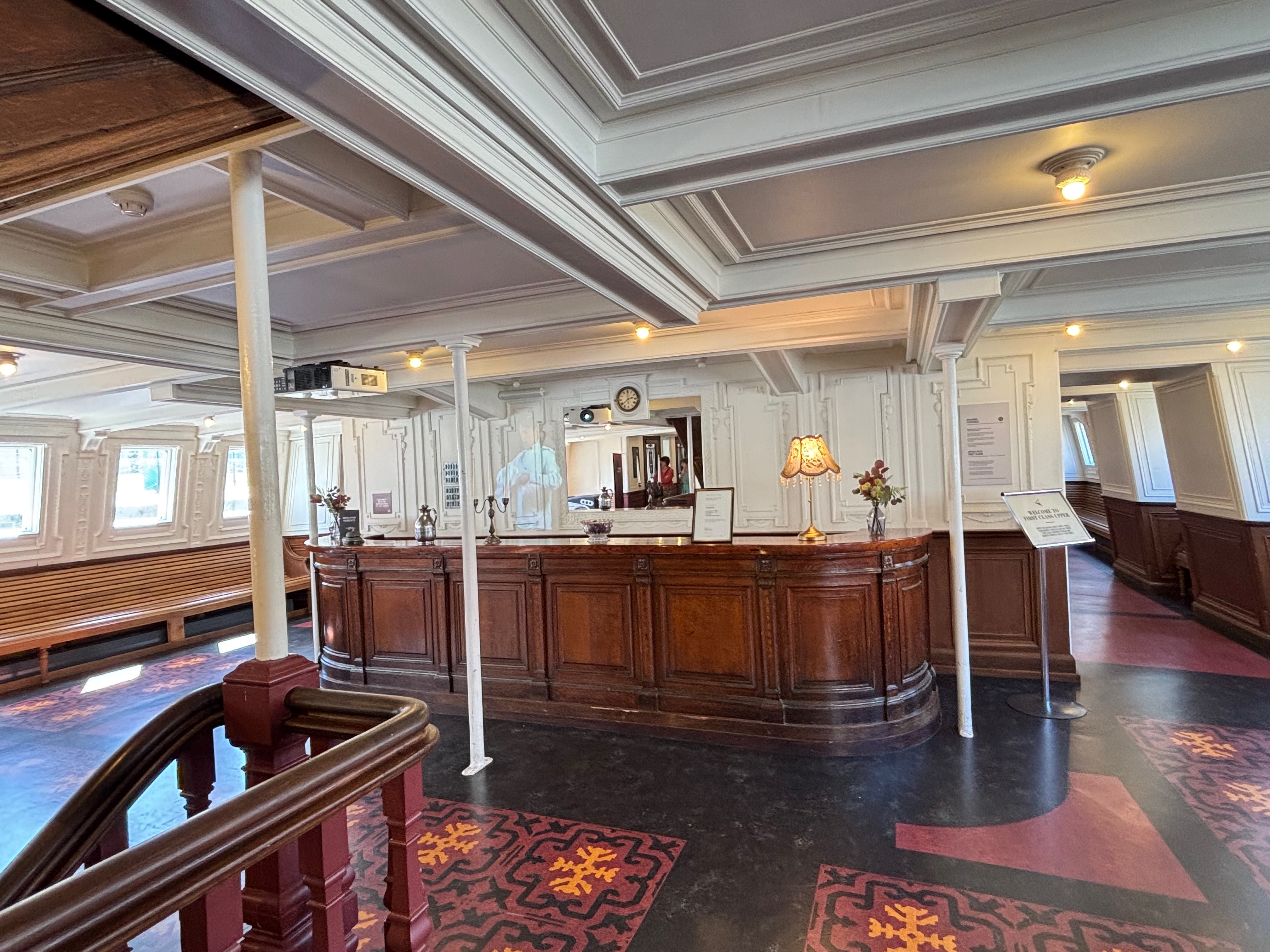
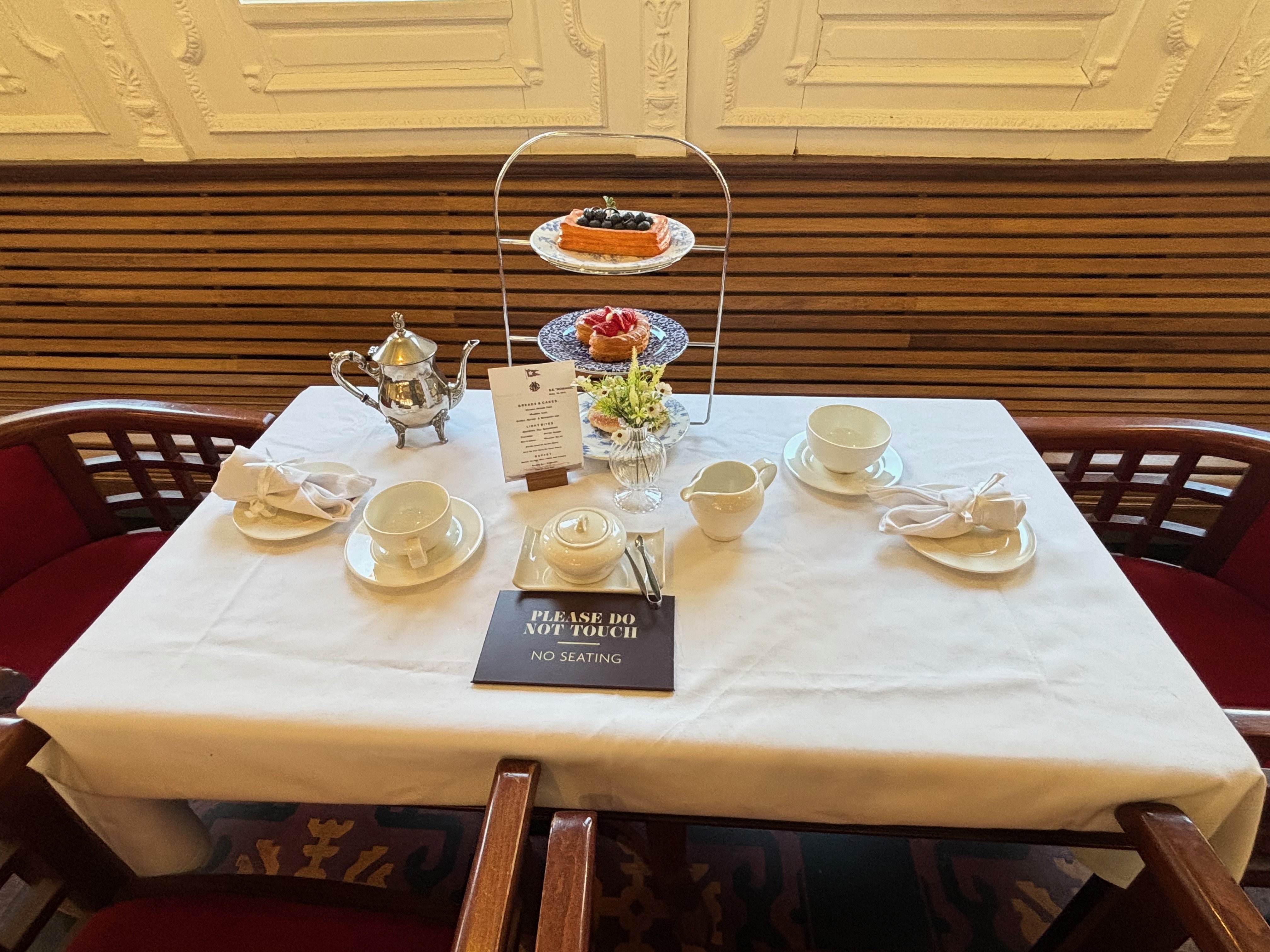
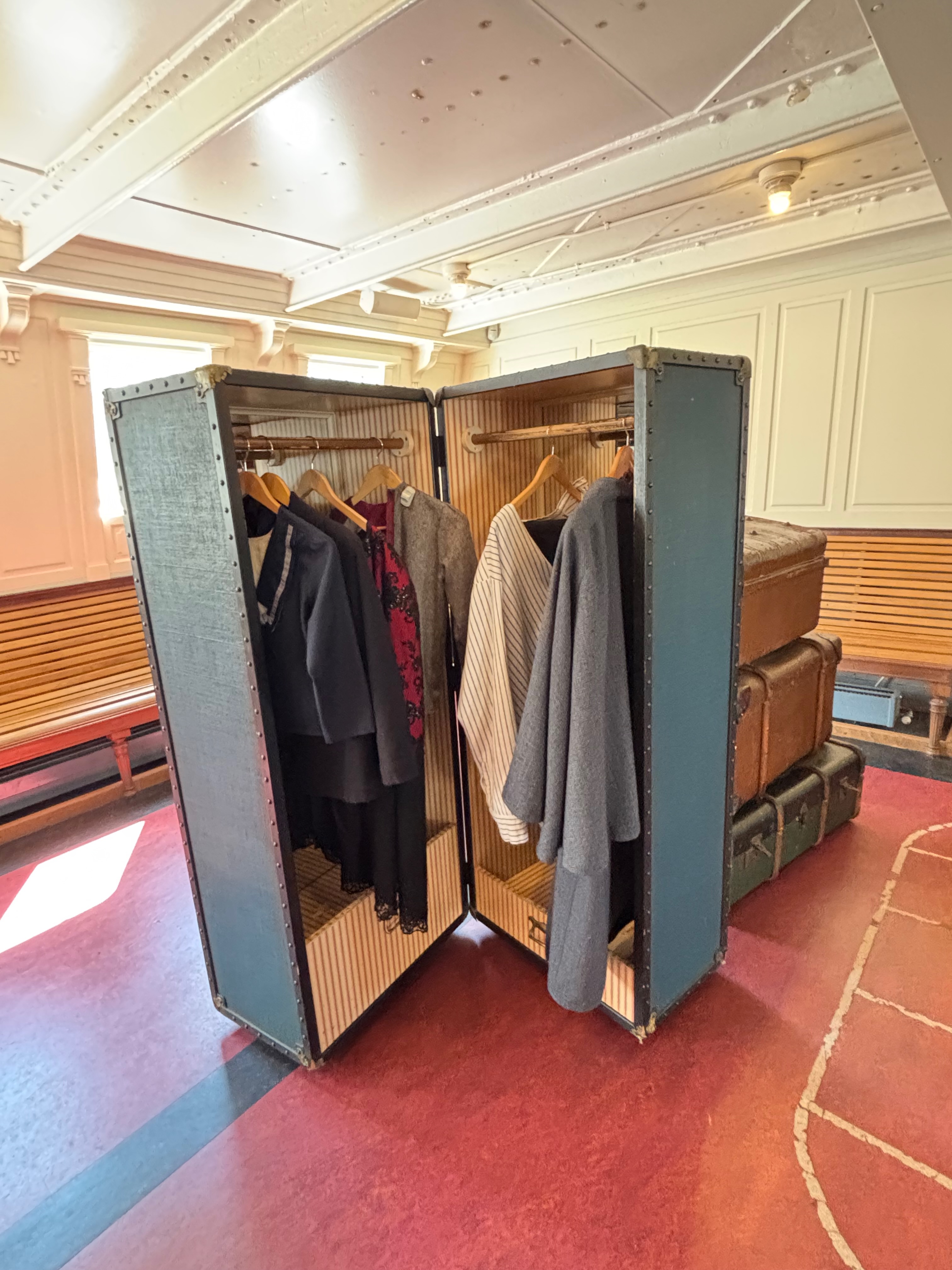
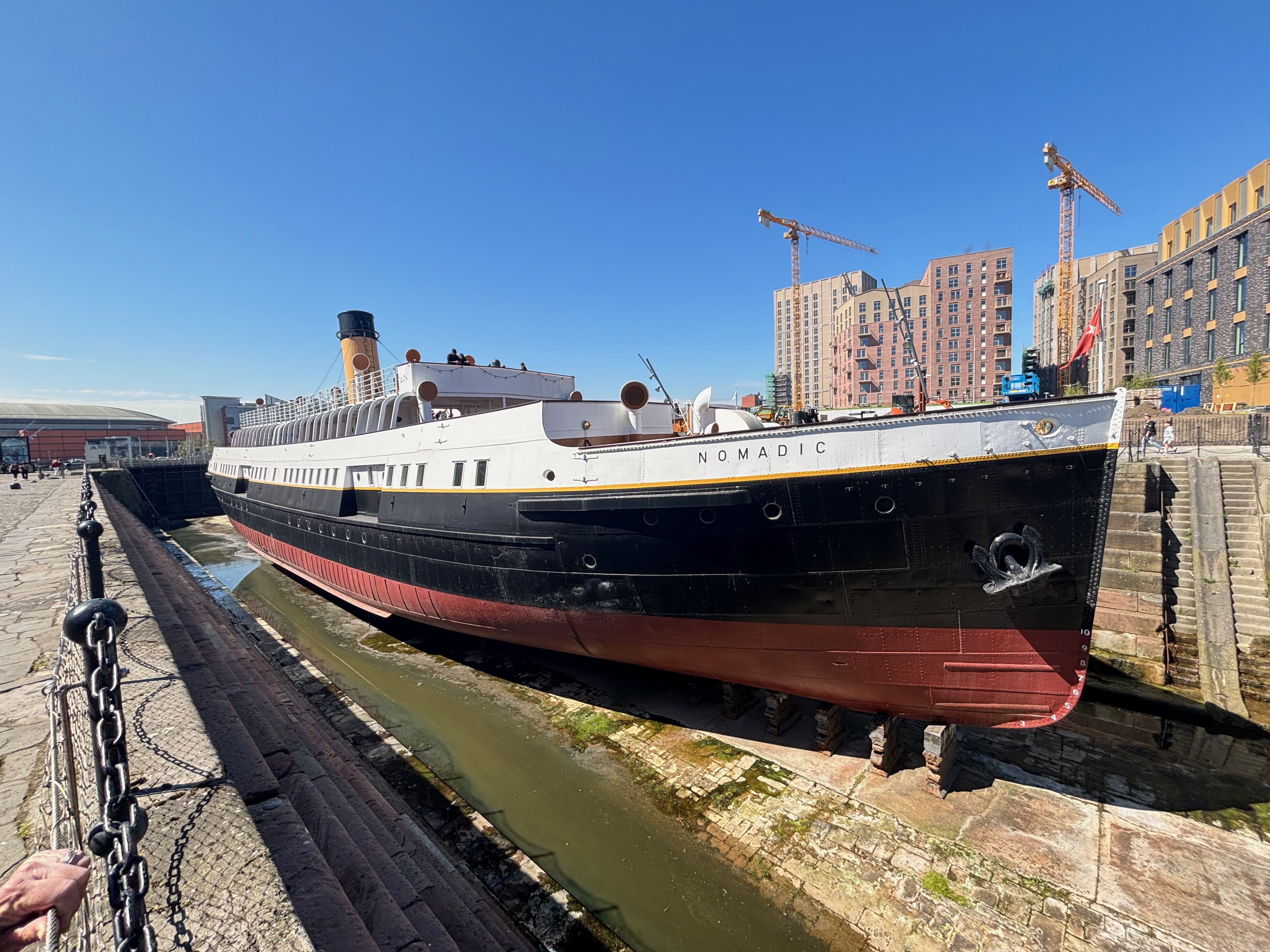
I finished up my visit and hit the café to wait for Joanna, who almost always spends more time in museums than me, and when she arrived, we split an order of Salt and Chilli Chicken Tacos and a drink for 12.79 Pounds ($17.26). Finished, we left the building and embarked on the St. Steves Titanic Quarter Walking Tour, which we joined partway through at the S.S. Nomadic, a ship that once ferried passengers between the dock and the Titanic. Sitting in the dry dock where it was built, it’s restored to appear as it was in 1912 when it shuttled Benjamin Guggenheim, John Jacob Astor, Molly Brown, and Kate Winslet to that fateful voyage. As entry was included with our Titanic Belfast Museum ticket, and it was worth a quick walk-through to appreciate the trappings of the age.
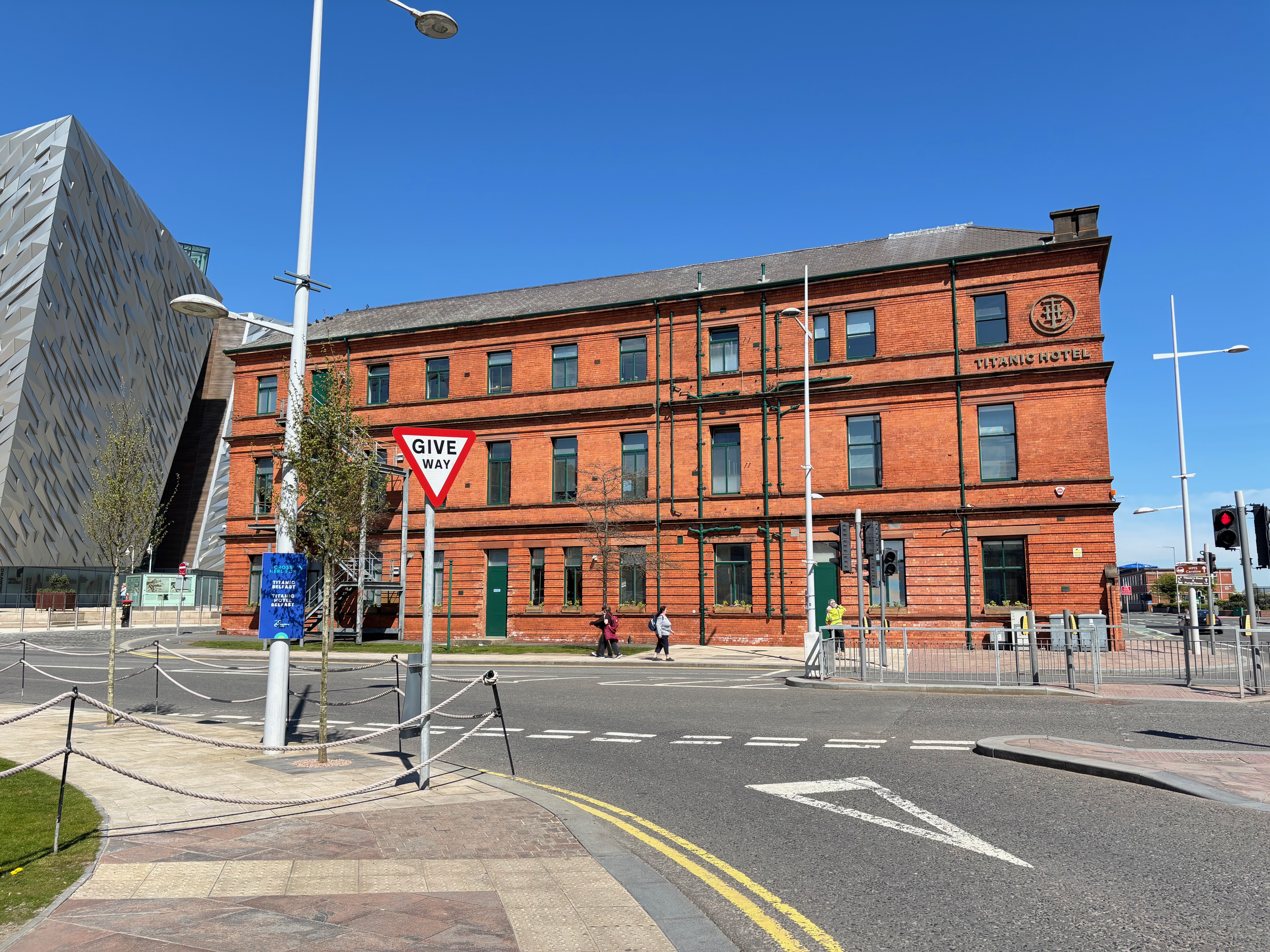
We left the Nomadic and walked back towards Titanic Belfast to stop in at the Titanic Hotel, which is housed in the former Harland & Wolff shipyard headquarters. This new hotel was permitted on condition that the public be allowed to wander through its historic spaces; for 150 years, many of the largest and finest ships in the world were designed in this building’s Drawing Offices—wide-open, brightly lit rooms under huge skylights for maximum legibility.
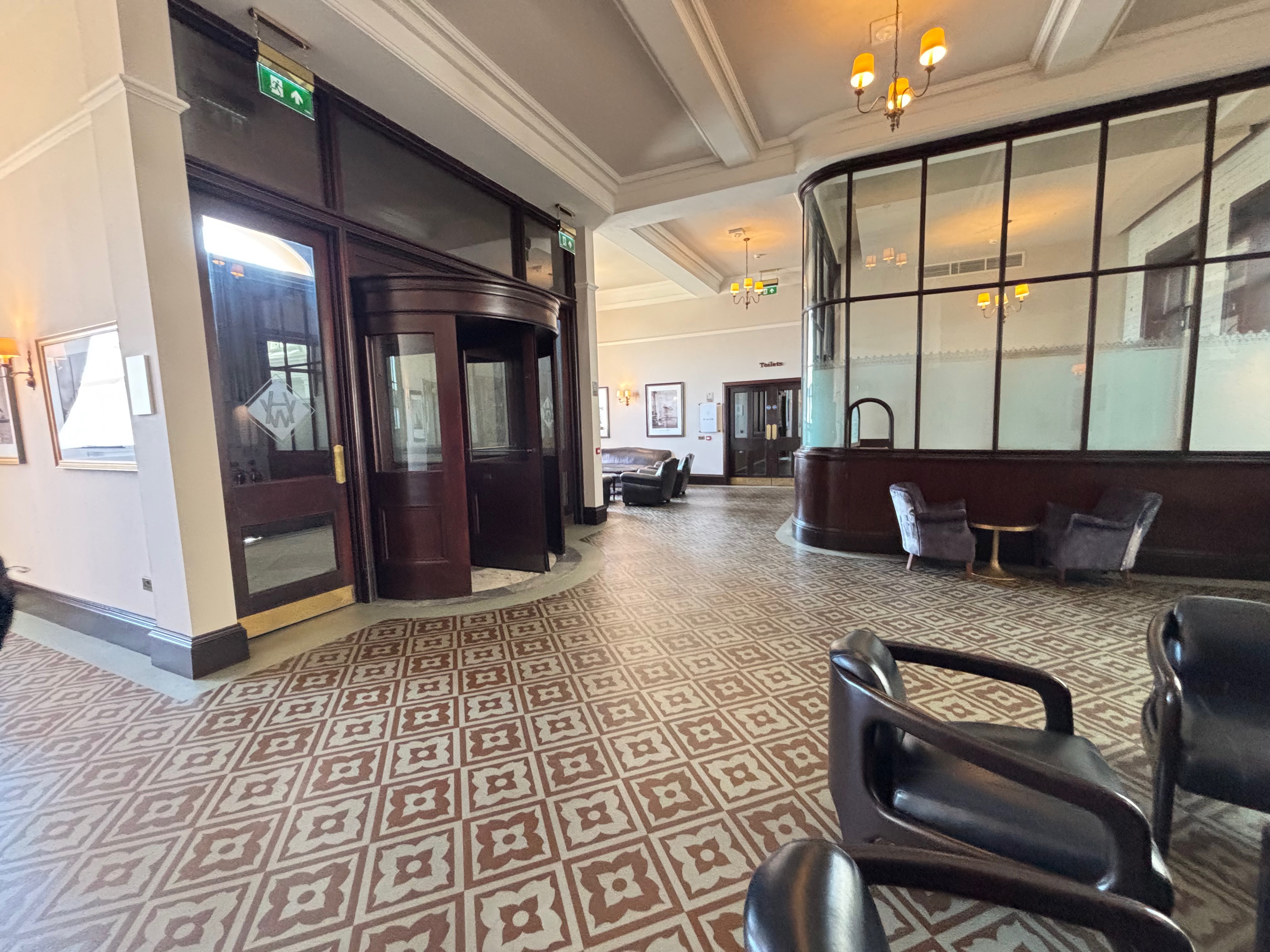
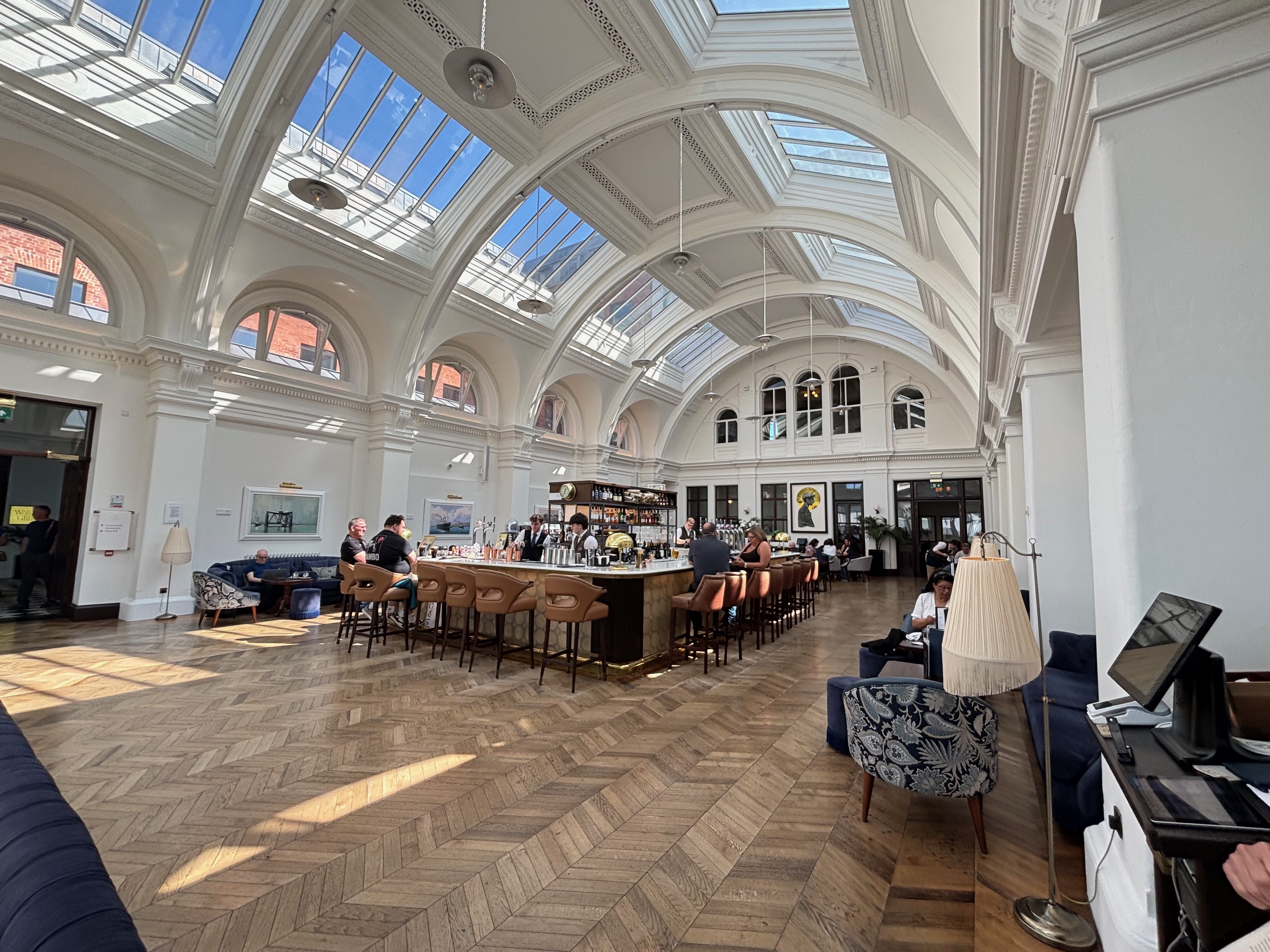
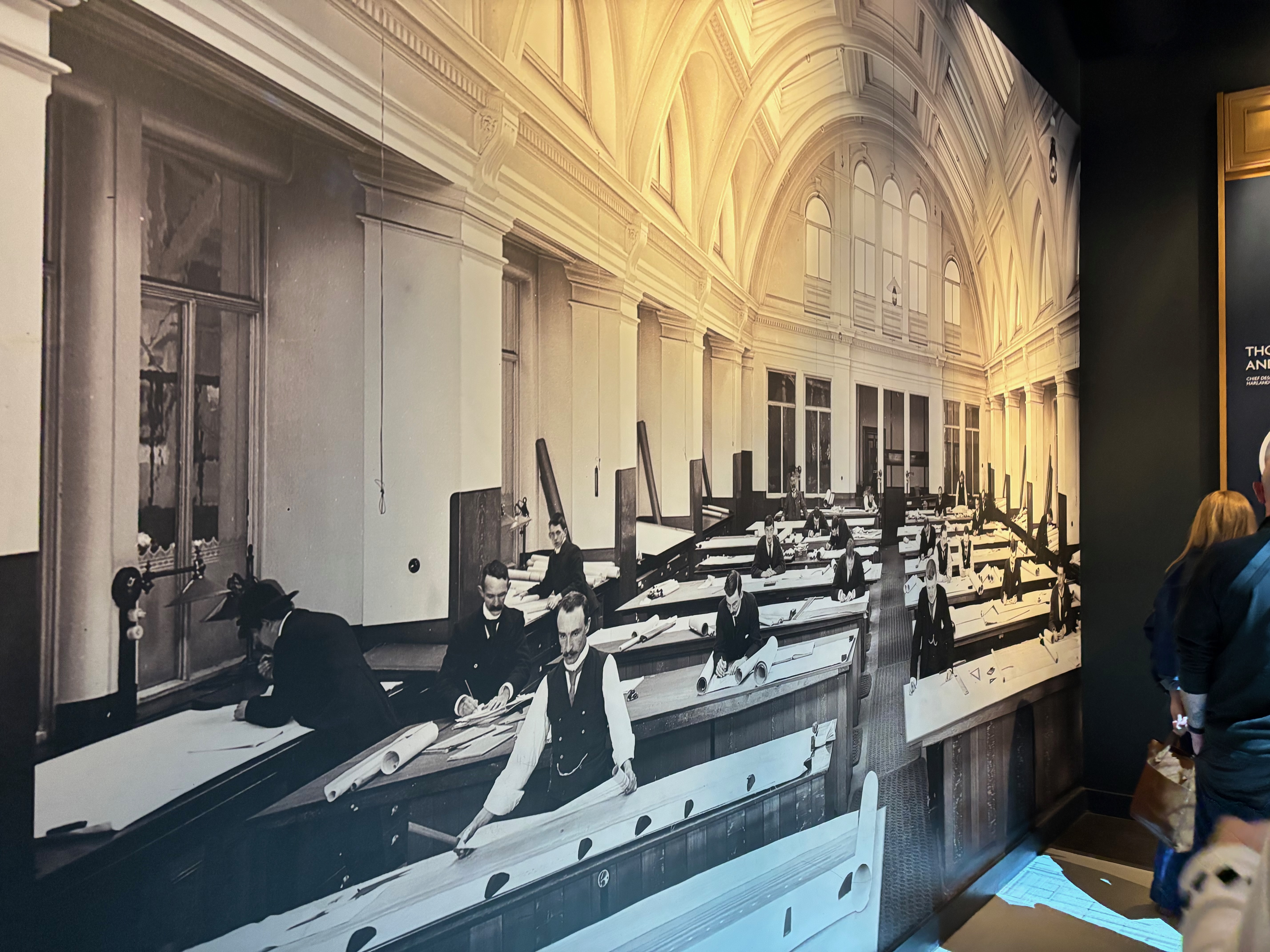
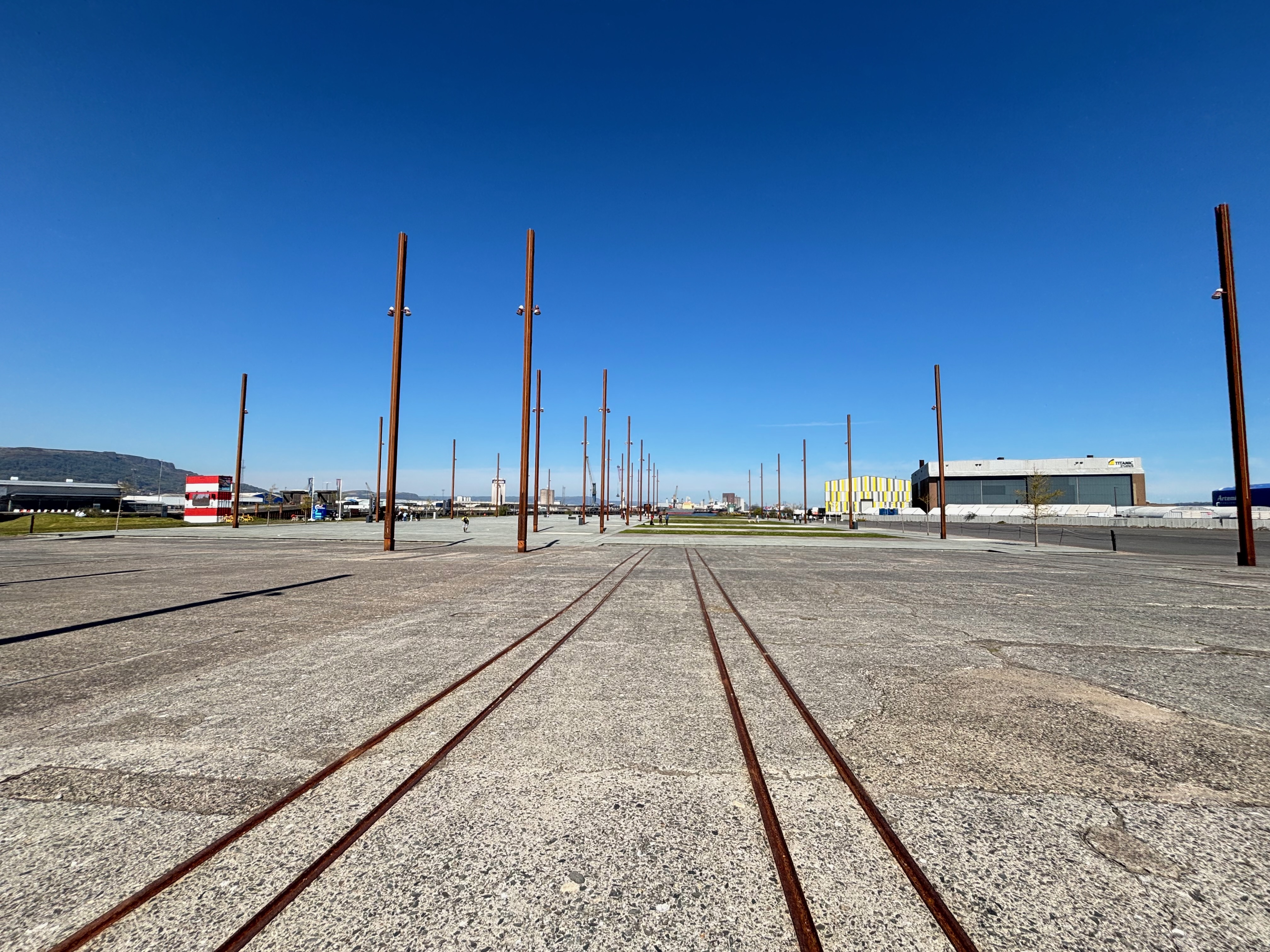
We picked up an Art and Heritage Trail map, which provides a mini tour of the hotel at the reception desk and walked through the building, checking out the private offices of some of the executives—also open to the public, unless they’re being used for private events. Walking out of the hotel, we checked out the nearby Titanic Slipways, a vast concrete lot stretching along the river where the Titanic was built and launched. Here you will find (in the pavement) the symbolic steel tip of the ship; this was where the bow was; the lampposts (stretching 300 yards before you) mark the size of the ship built here.
This marked the end of our time with the Titanic and so, hailing a cab we journeyed to the meeting place for our Black Cabs tour through Cab Tours Belfast for 70 Pounds ($86). A group of driver/guides from both communities has teamed up and is committed to giving unbiased tours. Perhaps the best all-around choice for understanding the full complexity of these sights, their “Belfast Murals Tour”, which we signed up for, covers both neighborhoods.
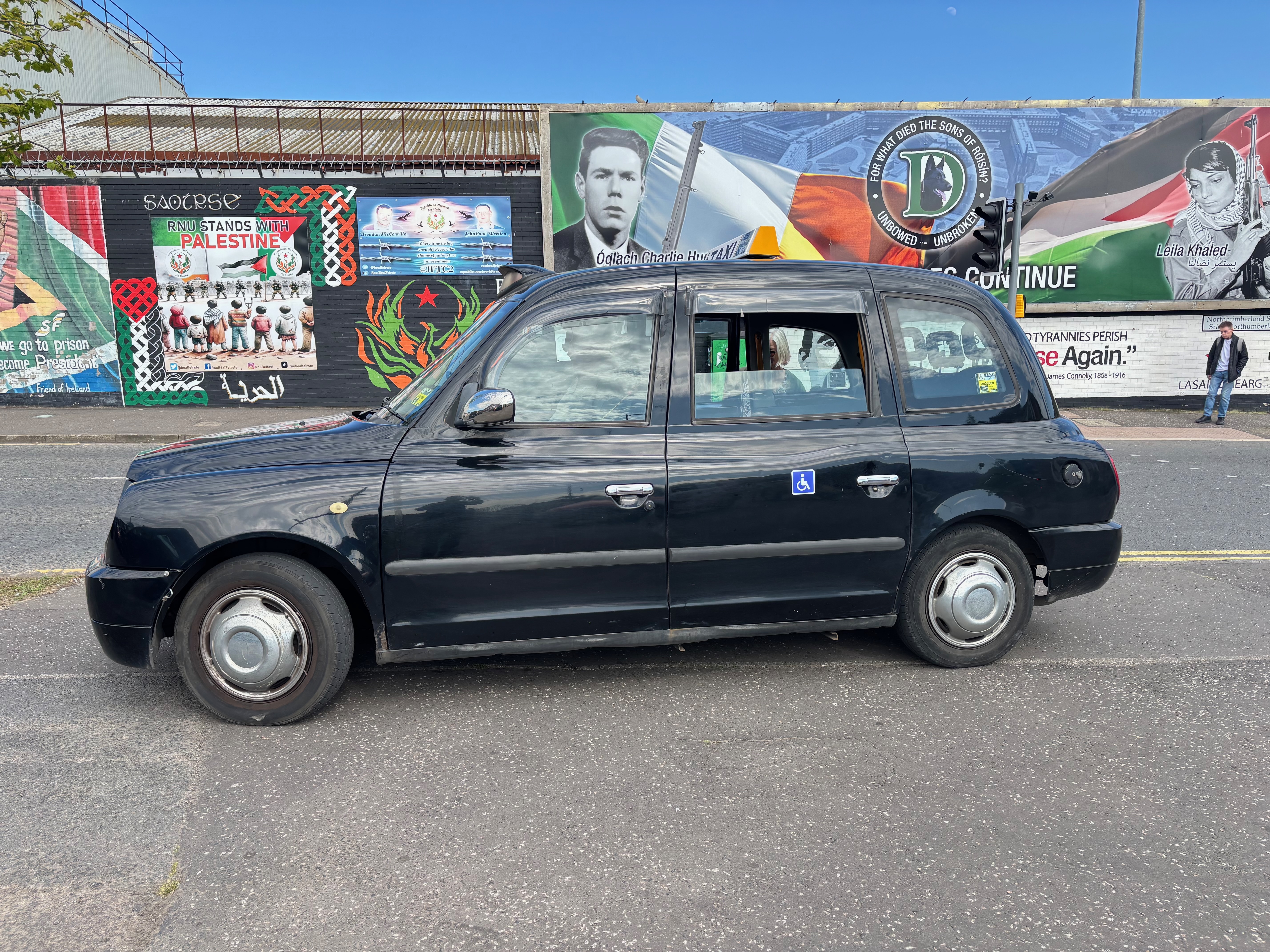
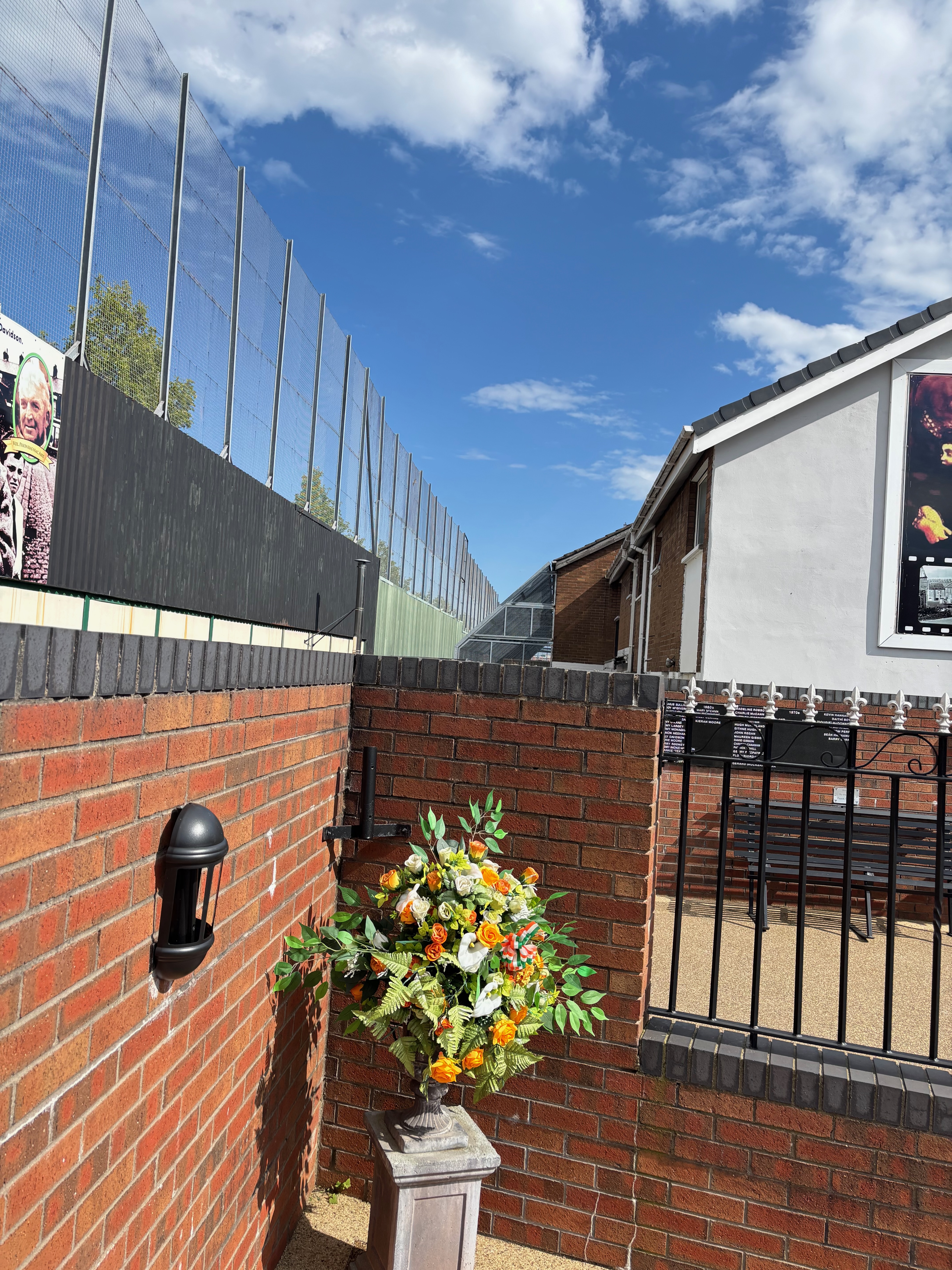
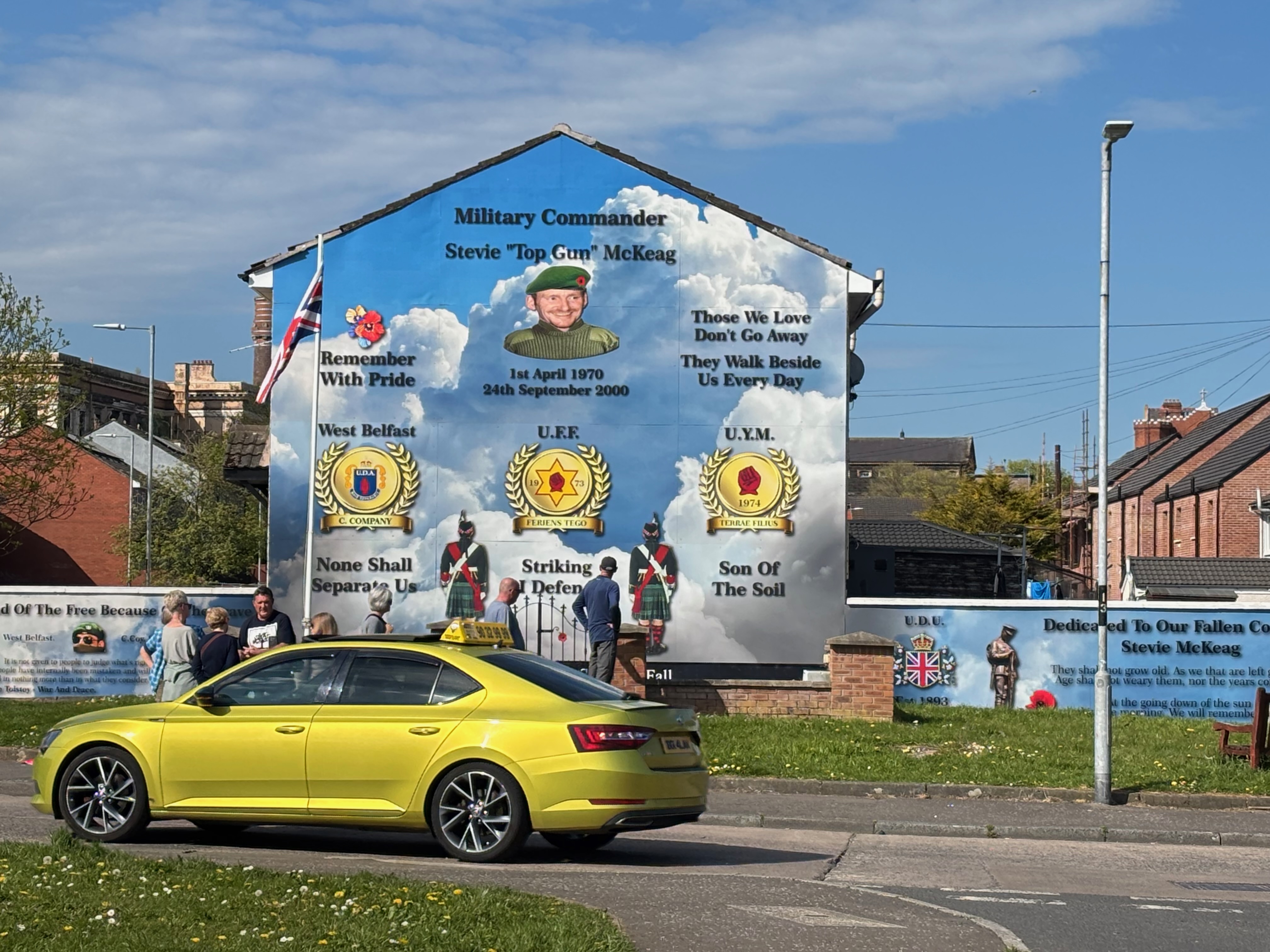
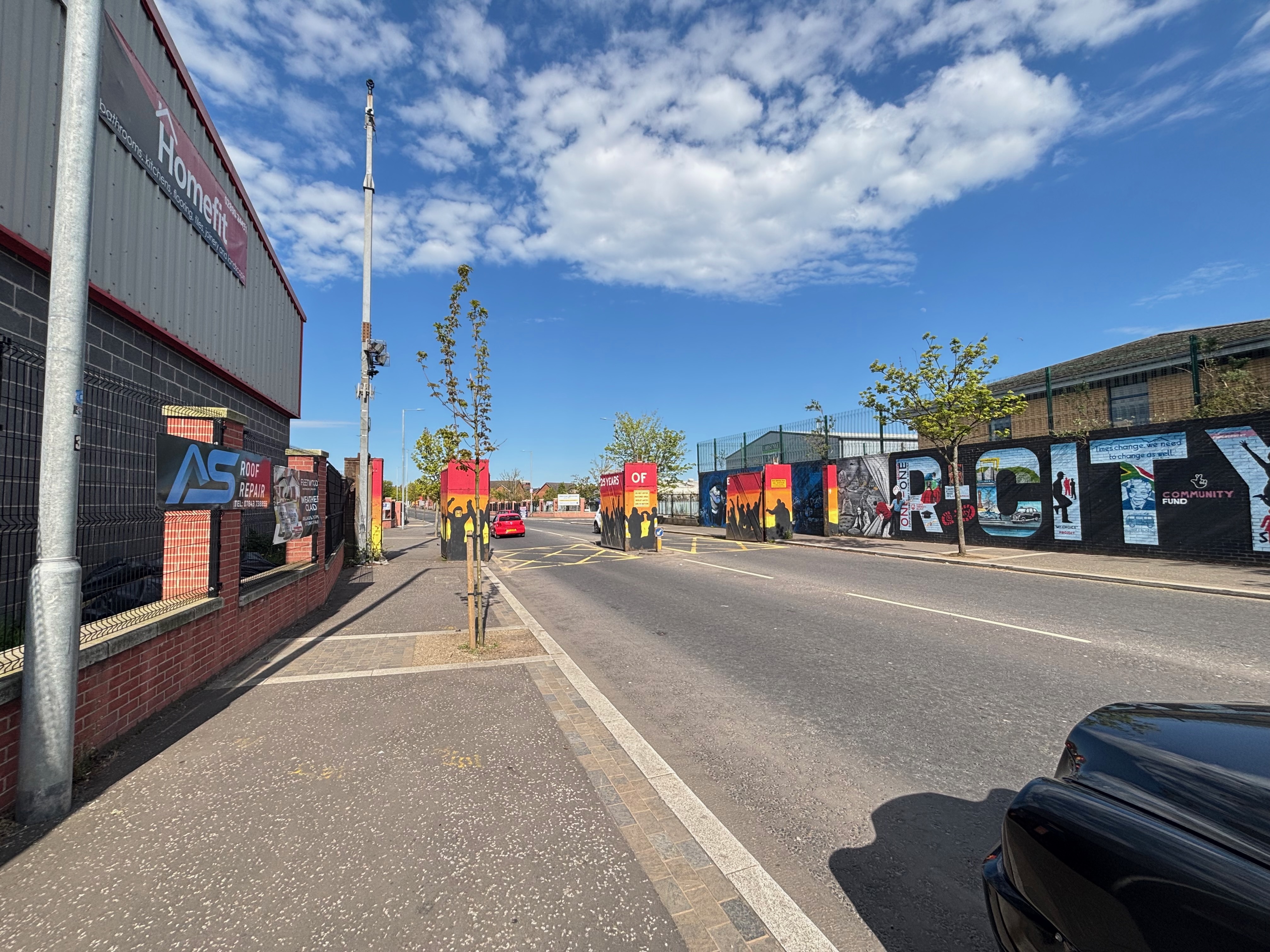
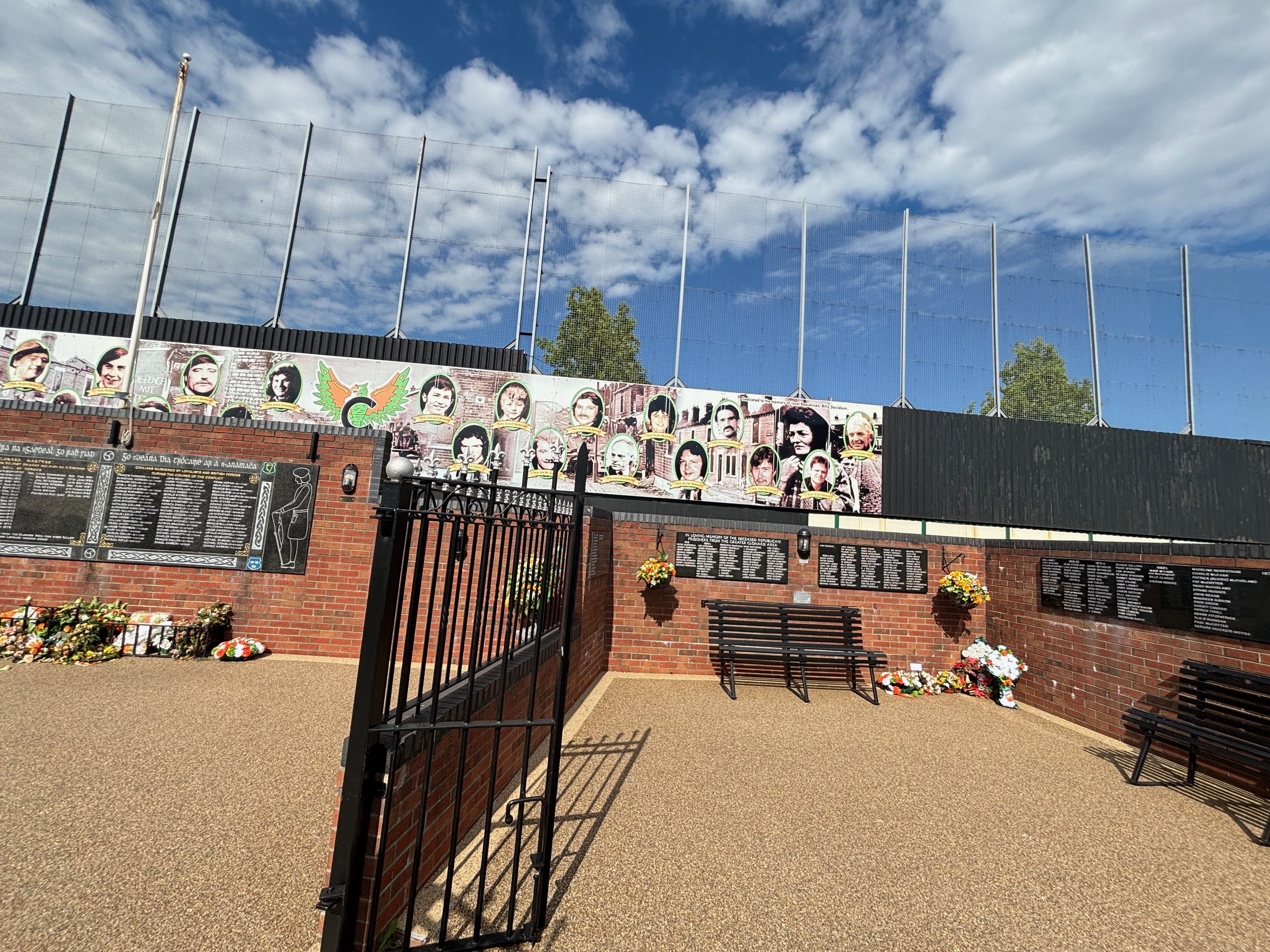
A slowly rejuvenating section of gritty West Belfast is home to two sectarian communities, living parallel lives along parallel roads on either side of a “peace wall”: the Unionists/Loyalists (Protestants) along Shankill Road and the Nationalists/Republicans (Catholics) along Falls Road. Officially, the Troubles ended with the Good Friday Agreement in 1998; spending some time in these neighborhoods allows one to see just how things have changed—and how, for some residents, they have not.
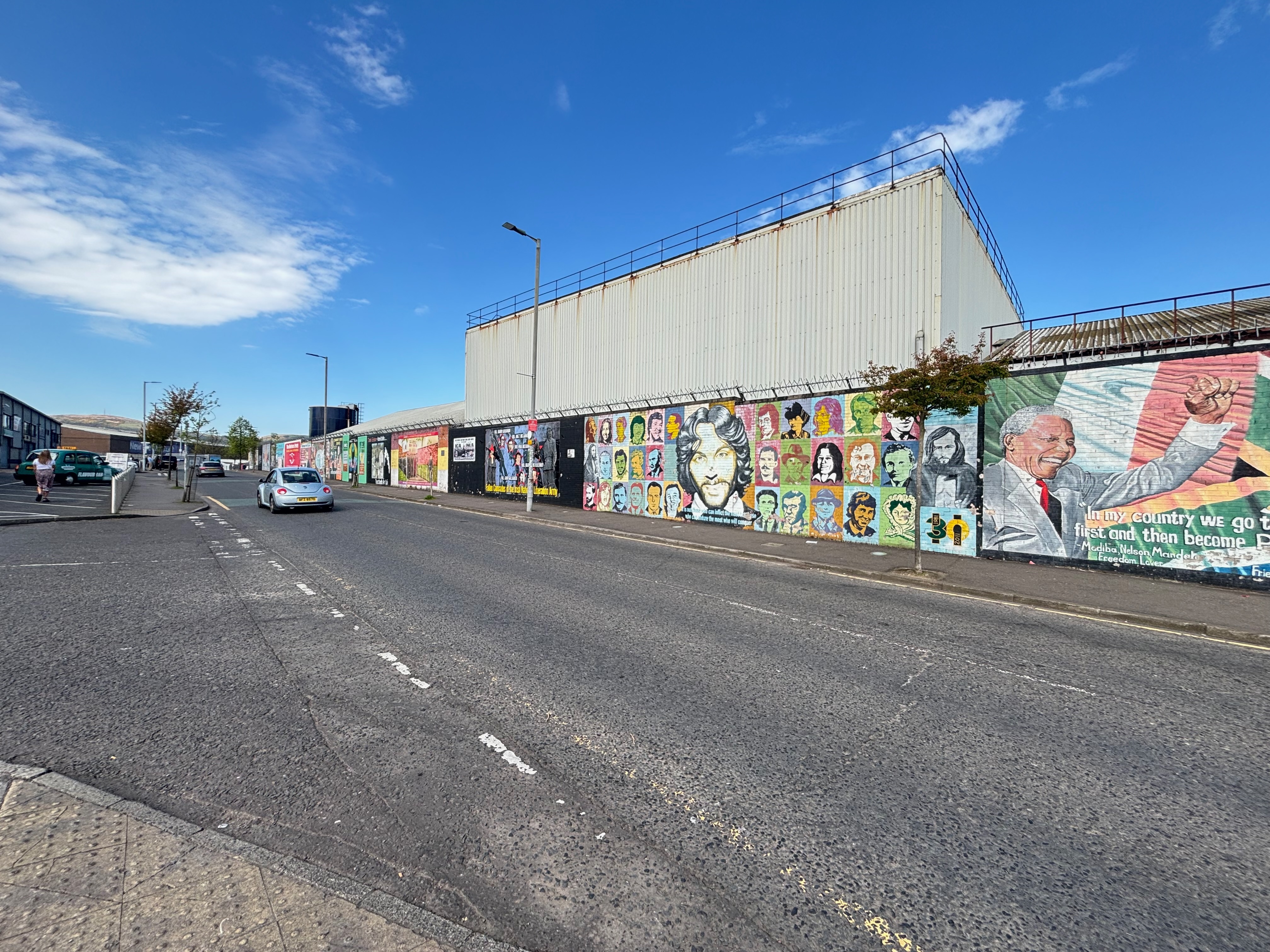
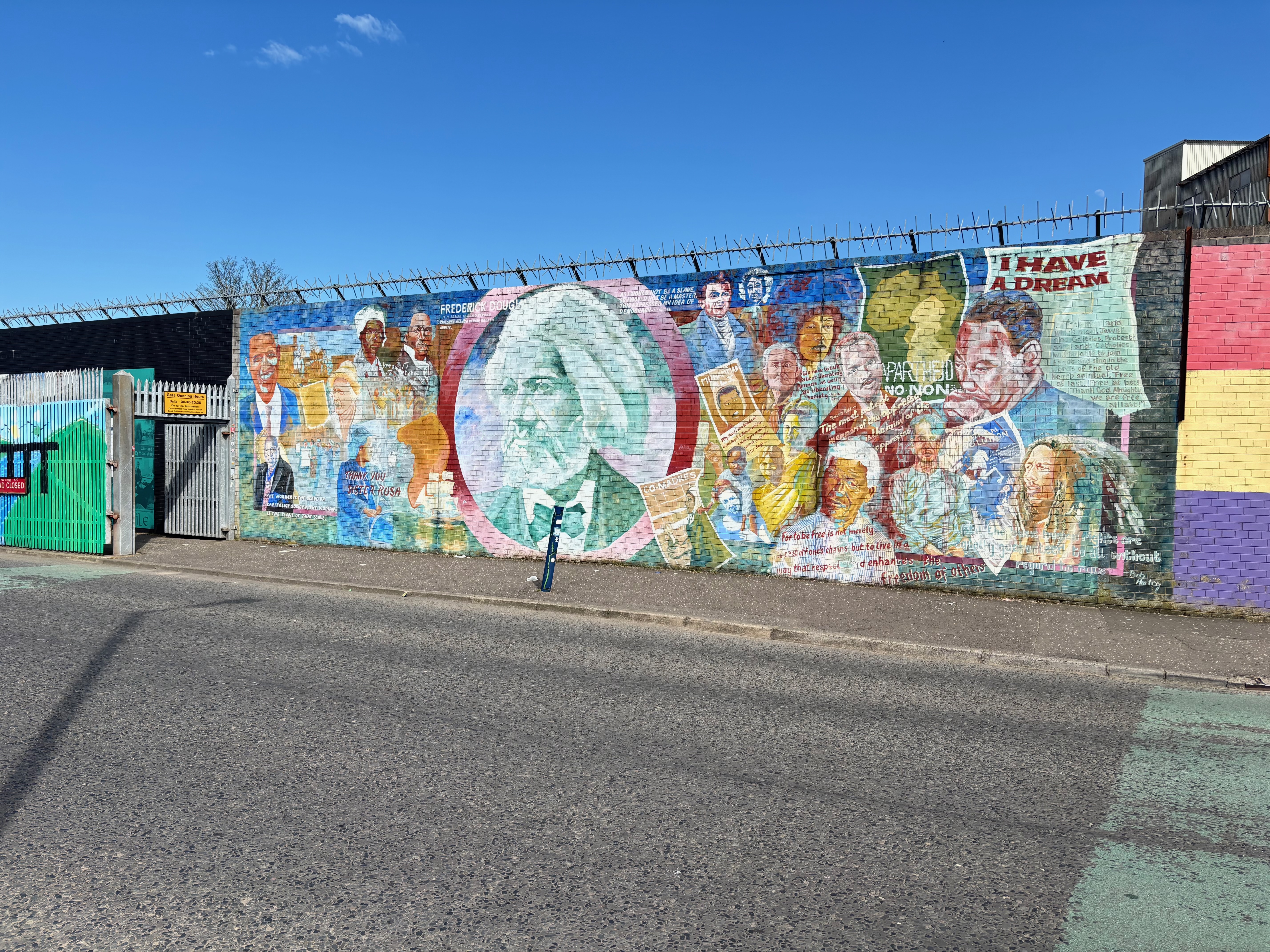
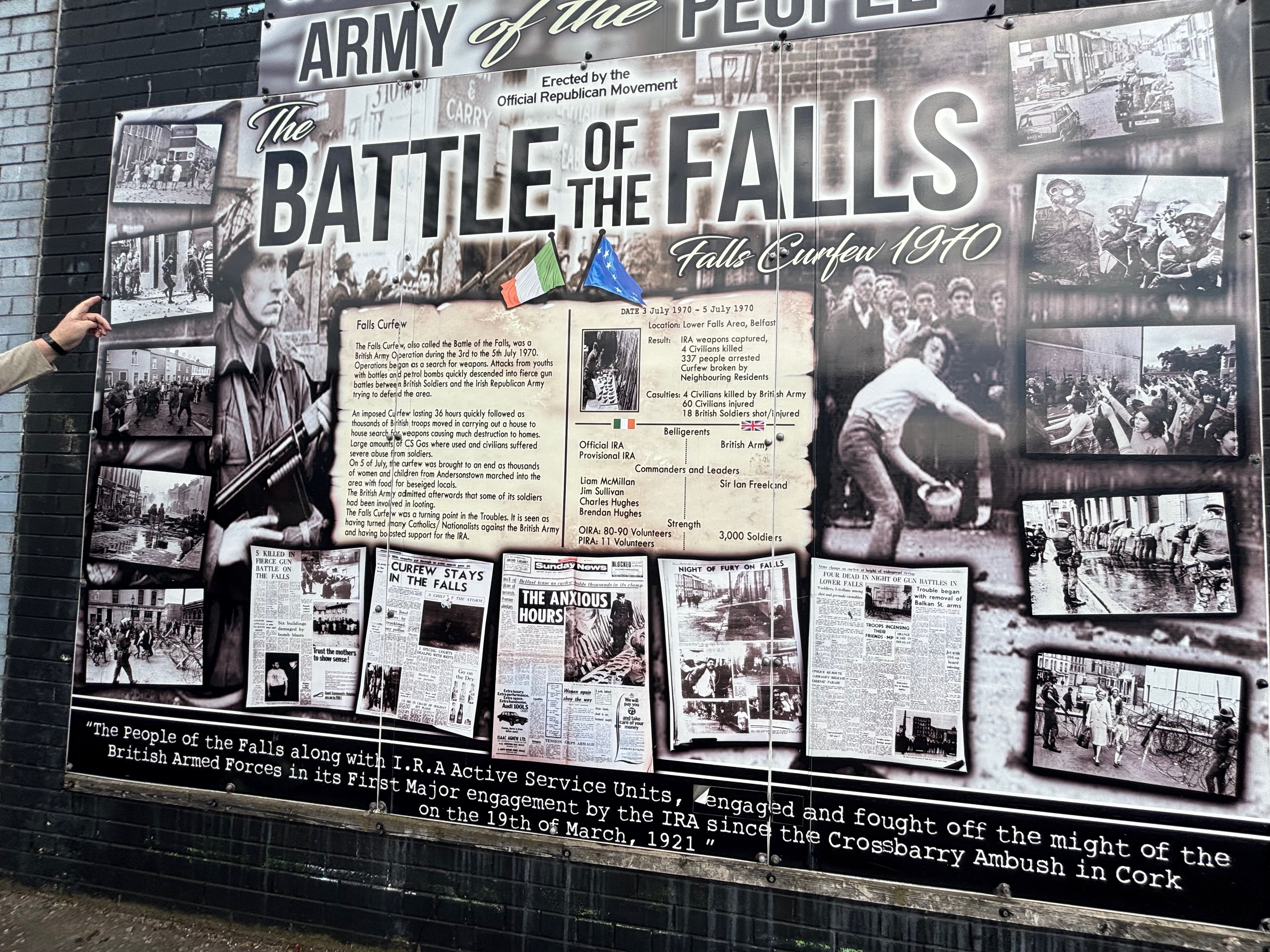
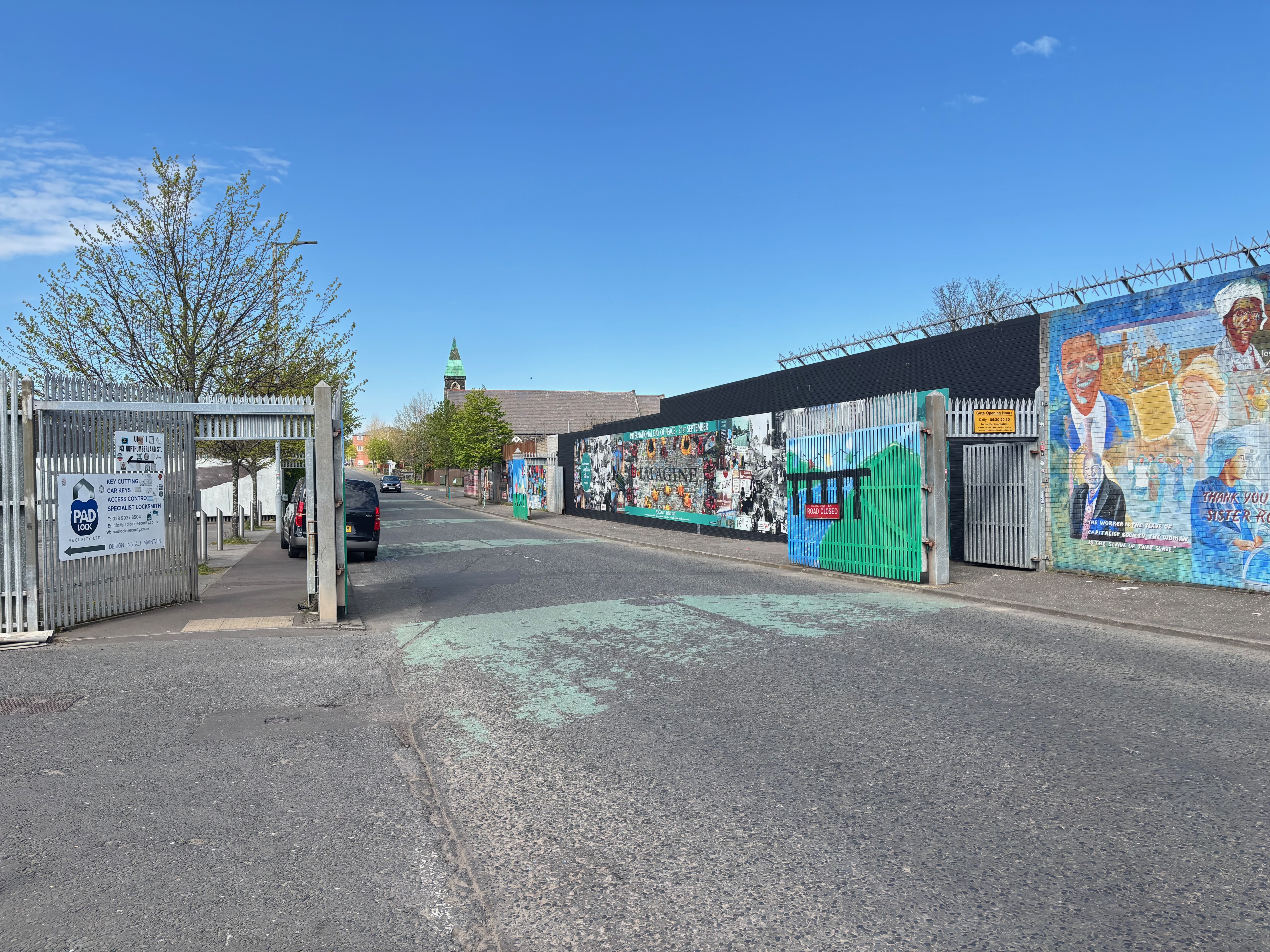
This was a sobering experience as our guide didn’t mince words, being skeptical (as we had become during our month in Ireland) that both sides would ever really find a true peace. Given how the British treated the native Catholic population, particularly during the Cromwell days, it’s not hard to understand how and why such animosity lingers to this day and will do so into the future.
Dropped off at the end of the tour City Hall, we walked back to the Crown Liquor Saloon for dinner. Downstairs was packed and so we were seated upstairs and ordered a pint of Cask (Real) Ale (The type of ale pumped by hand from a barrel in Ireland (and Britain), which is dispensed using a manual hand pump called a beer engine), a Sharps Doom Bar for Joanna and a Nicholsons Pale Ale for me. Key Characteristics of Cask Ale:
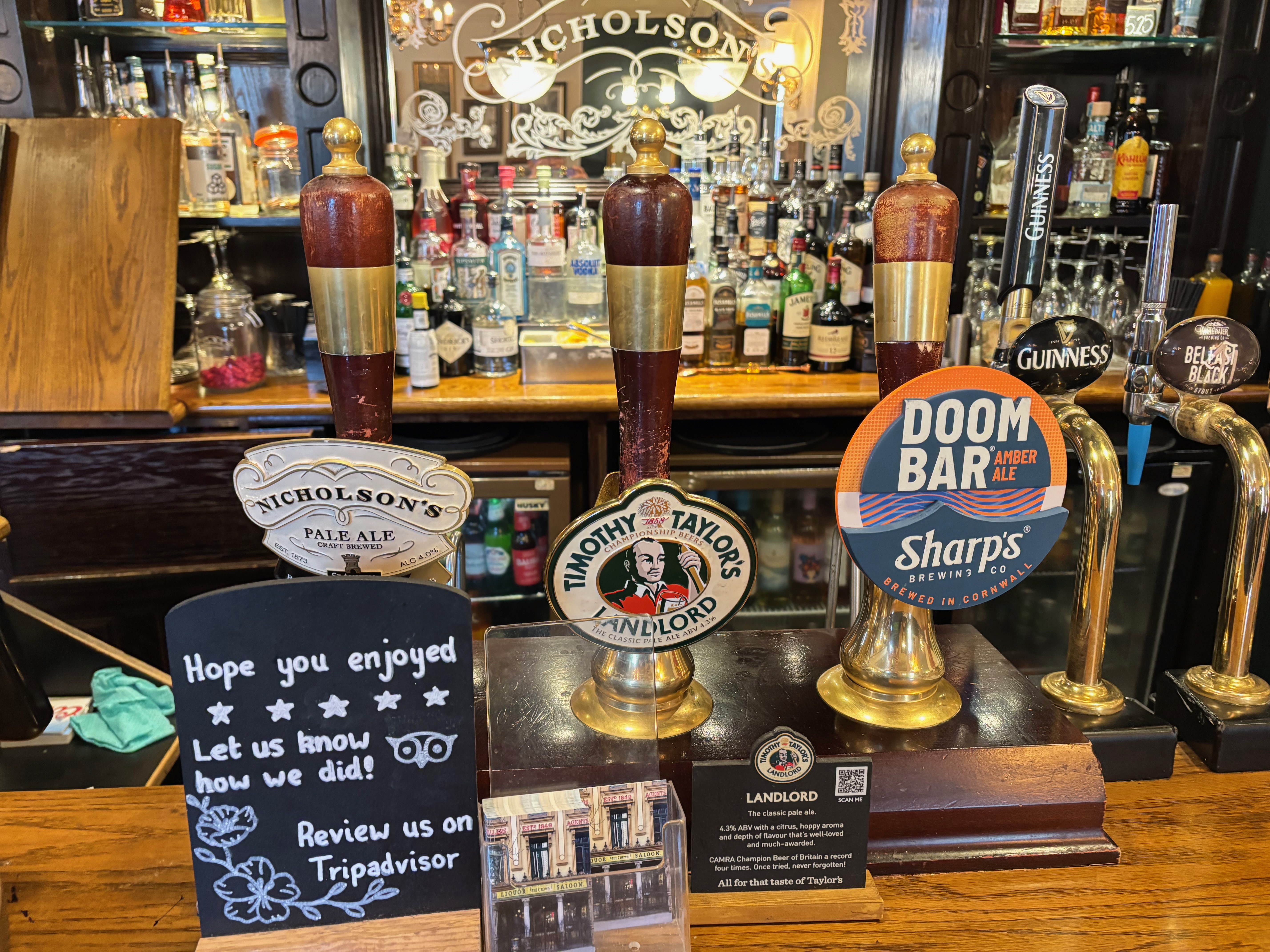
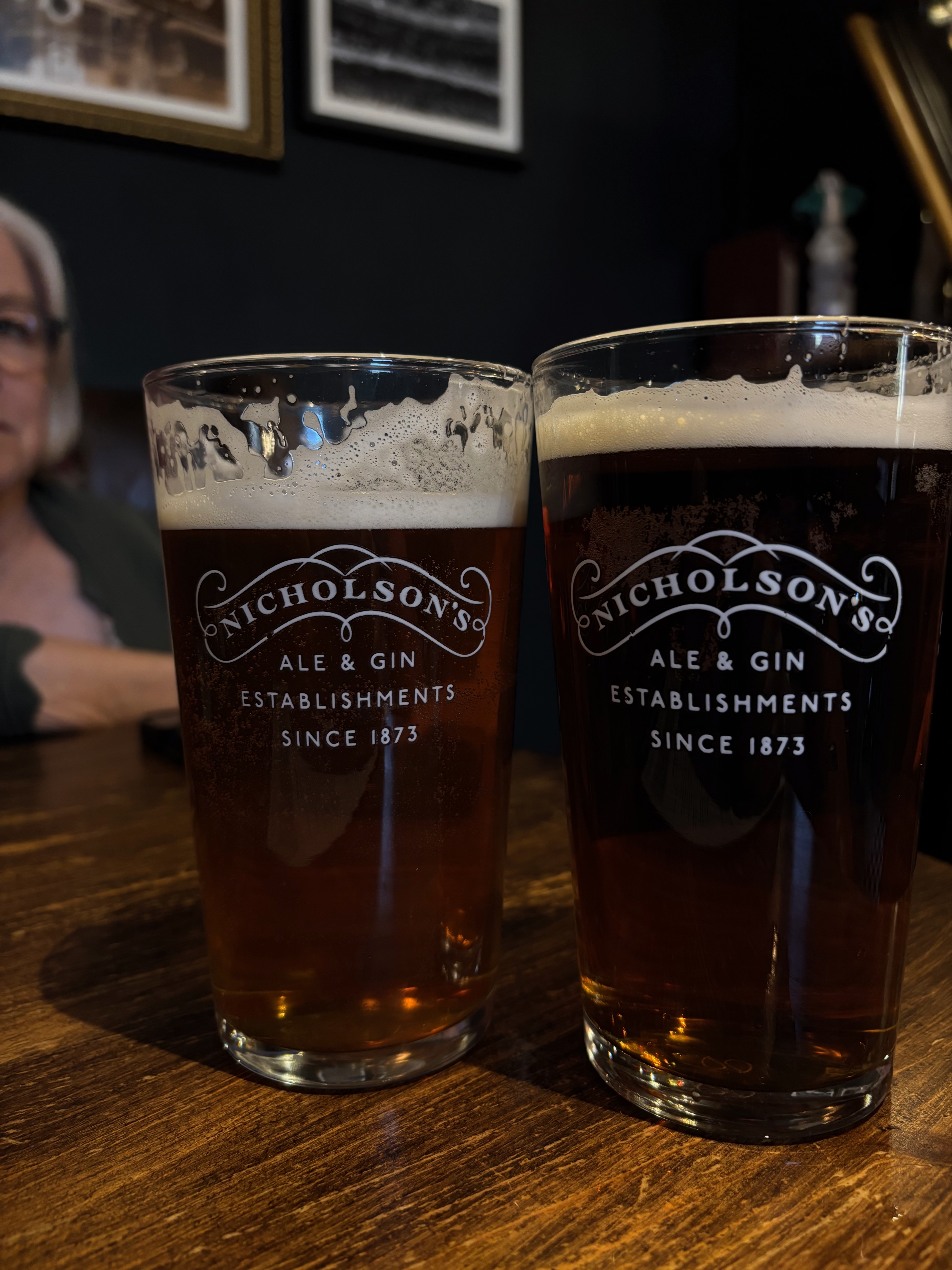
• Unfiltered and Unpasteurized: It is brewed with traditional ingredients and contains live, active yeast.
• Secondary Fermentation: It undergoes its final stage of conditioning directly inside the cask (barrel) without added carbon dioxide or nitrogen pressure.
• Manual Dispense: Instead of using external gas pressure, it is pulled to the bar by a human-powered handpull pump, often passing through a small nozzle called a sparkler to create a soft, creamy head.
• Temperature: It is typically served at cooler cellar temperatures rather than near-freezing.
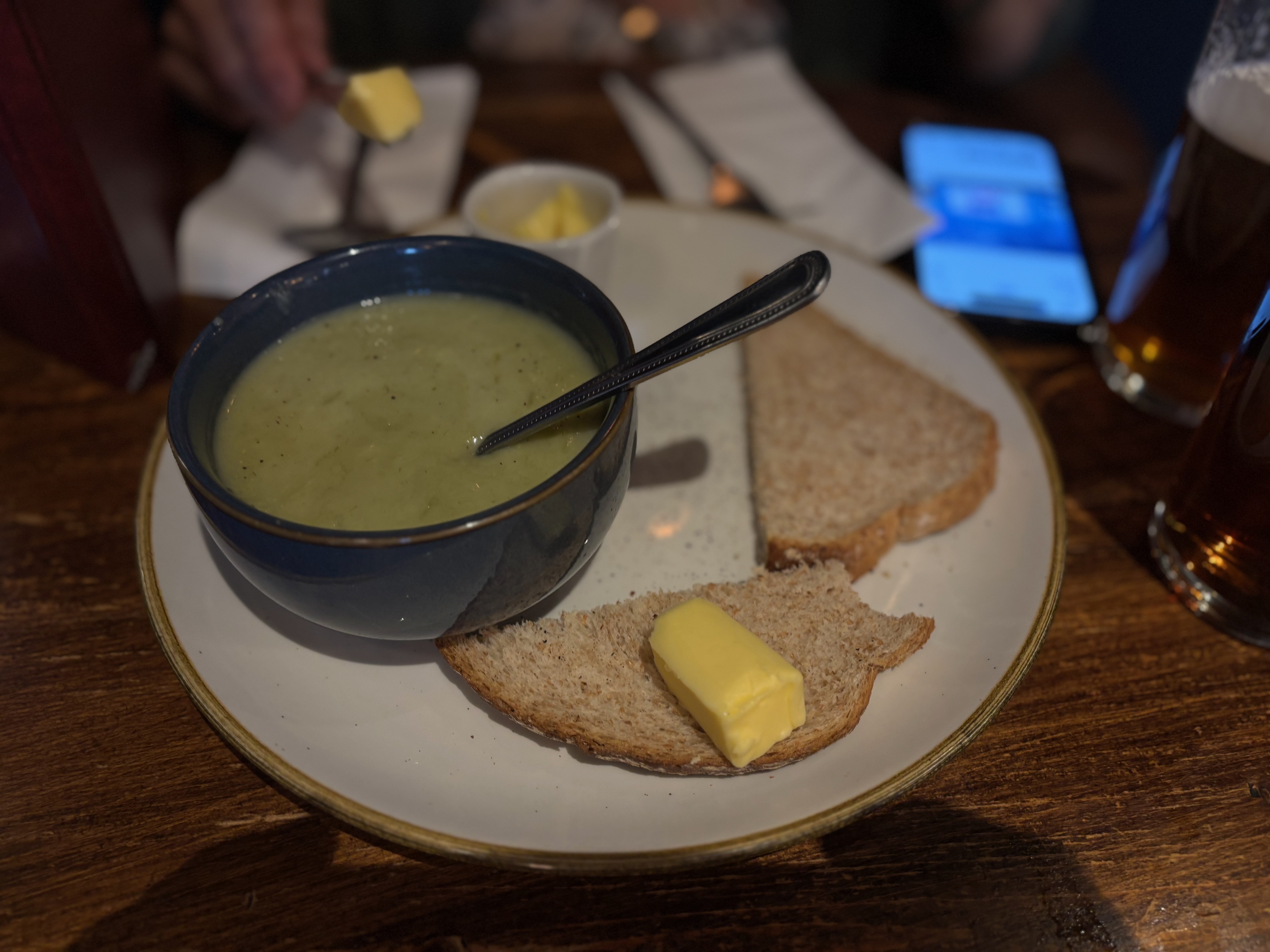
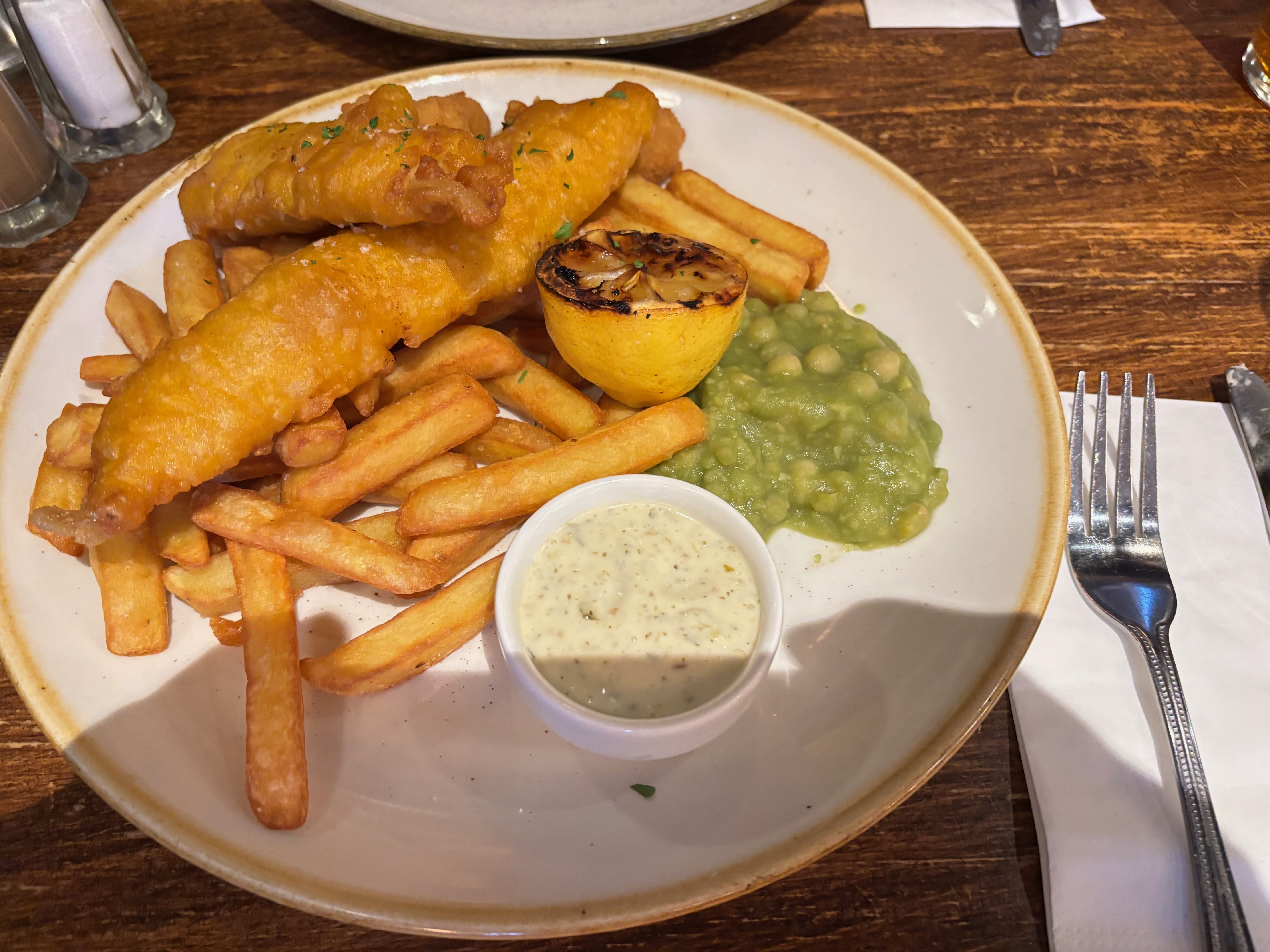
Joanna ordered the soup of the day, some variation of vegetable and I had the Crown Fish and Chips, both as good as any, we’ve had so far. We settled our tab for 42.29 pounds ($57.28) including tip and via a taxi, returned to the Airbnb to prepare for our bus journey the next day down to Dublin. We’ll cover that and the closing days of our time in Ireland in the next series of posts.
Links
Titanic Belfast: https://www.titanicbelfast.com/
Black Cabs Tour: https://cabtoursbelfast.com/
Discover more from 3jmann
Subscribe to get the latest posts sent to your email.


