April 13 – 14
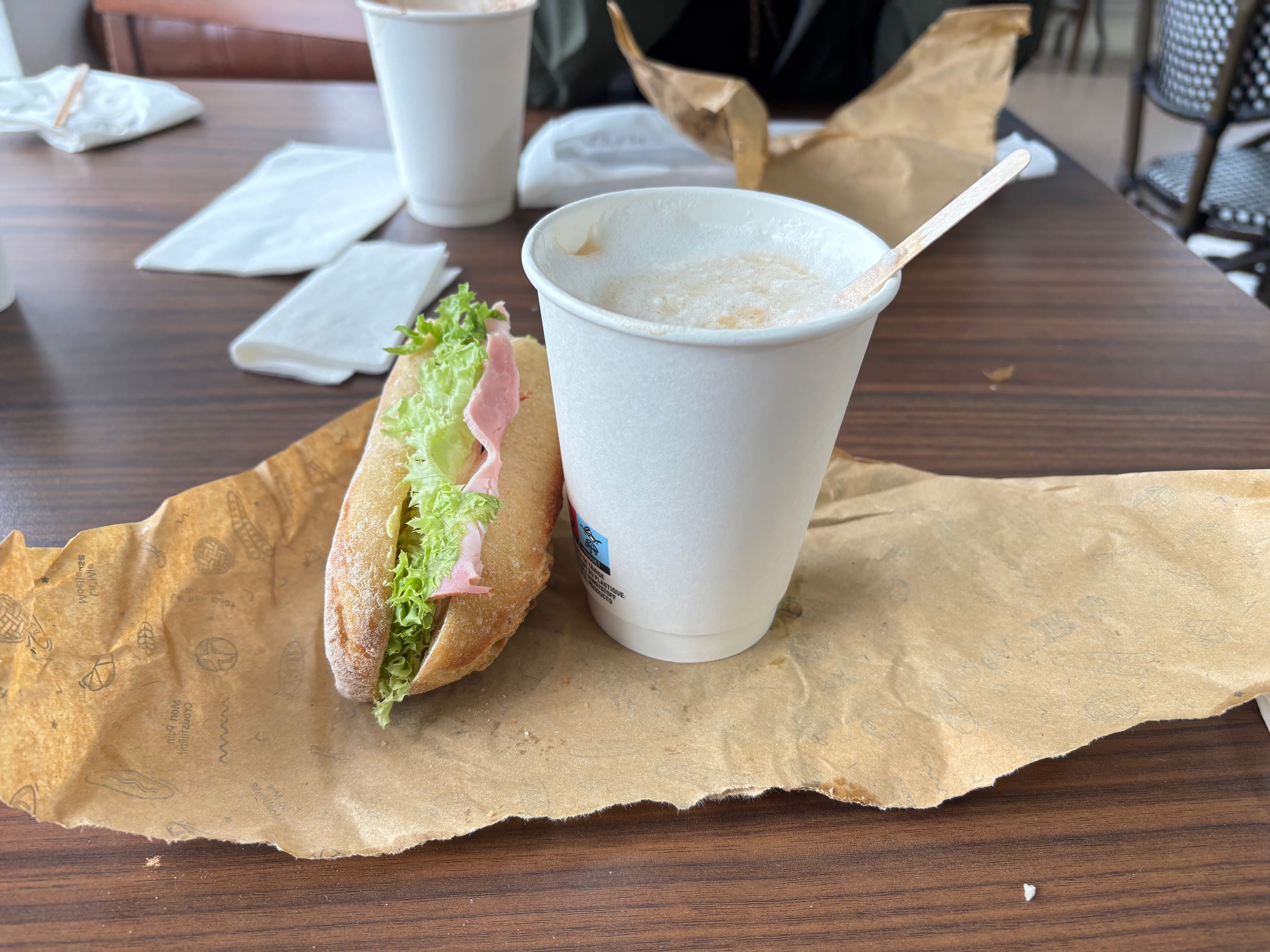
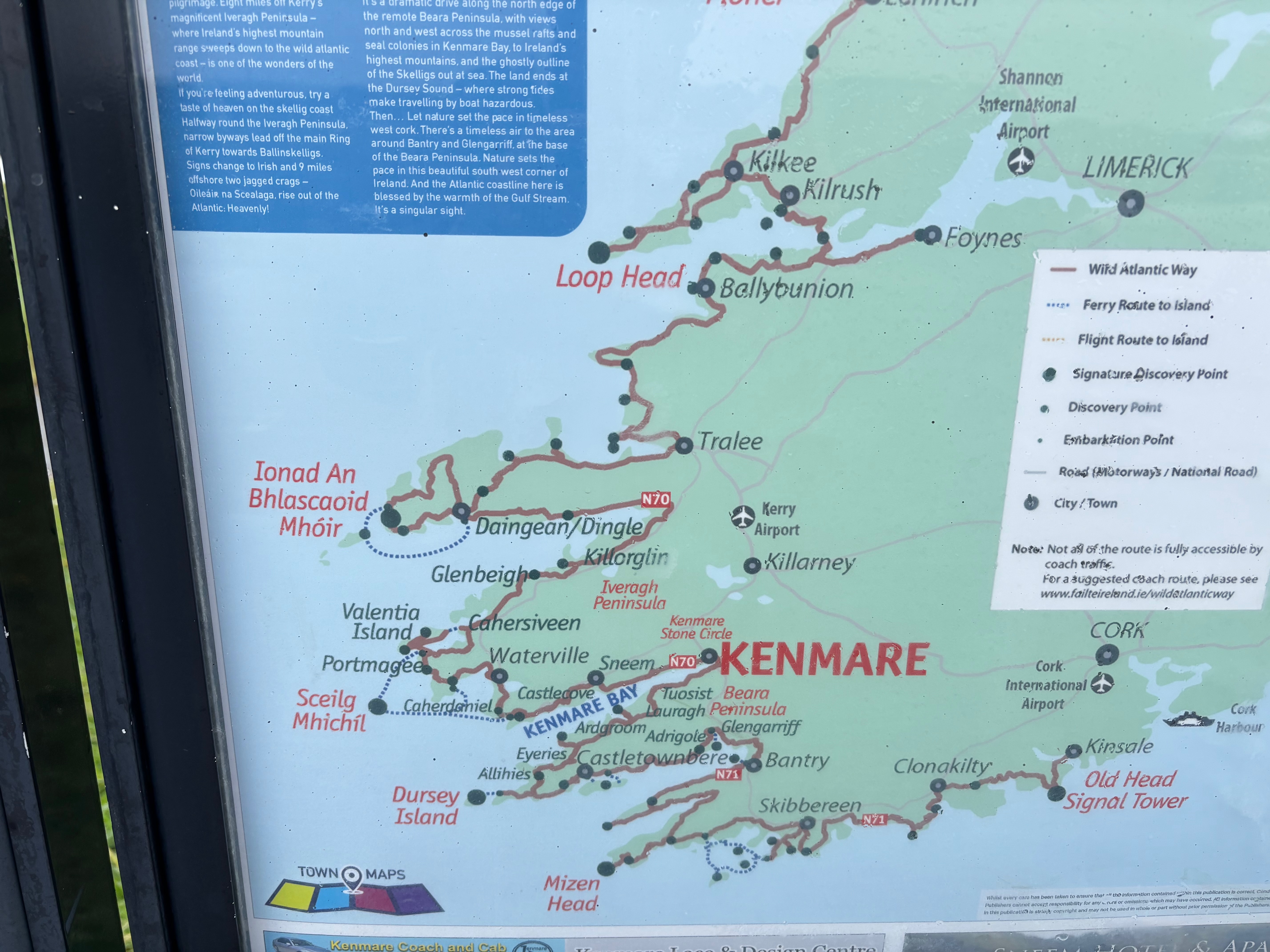
After breakfast I popped into Maison Gourmet, the nearby shop, to pick us up a couple of sandwiches for lunch later in the day. We then set out for our drive along the Ring of Kerry, a hugely popular route for tourists to enjoy, akin to the northern coasts of California and Oregon. Taking advice from St. Steves:
“While a fleet of tourist-laden buses circles it each day, they generally depart Killarney around the same time, head the same direction, and stop at the same handful of attractions. If you avoid those places at rush hour, the Ring feels unspoiled and isolated, allowing its dramatic scenery to really shine. I recommend driving clockwise around the Ring to avoid getting stuck behind a chain of tour buses (which are required to drive it counterclockwise).”
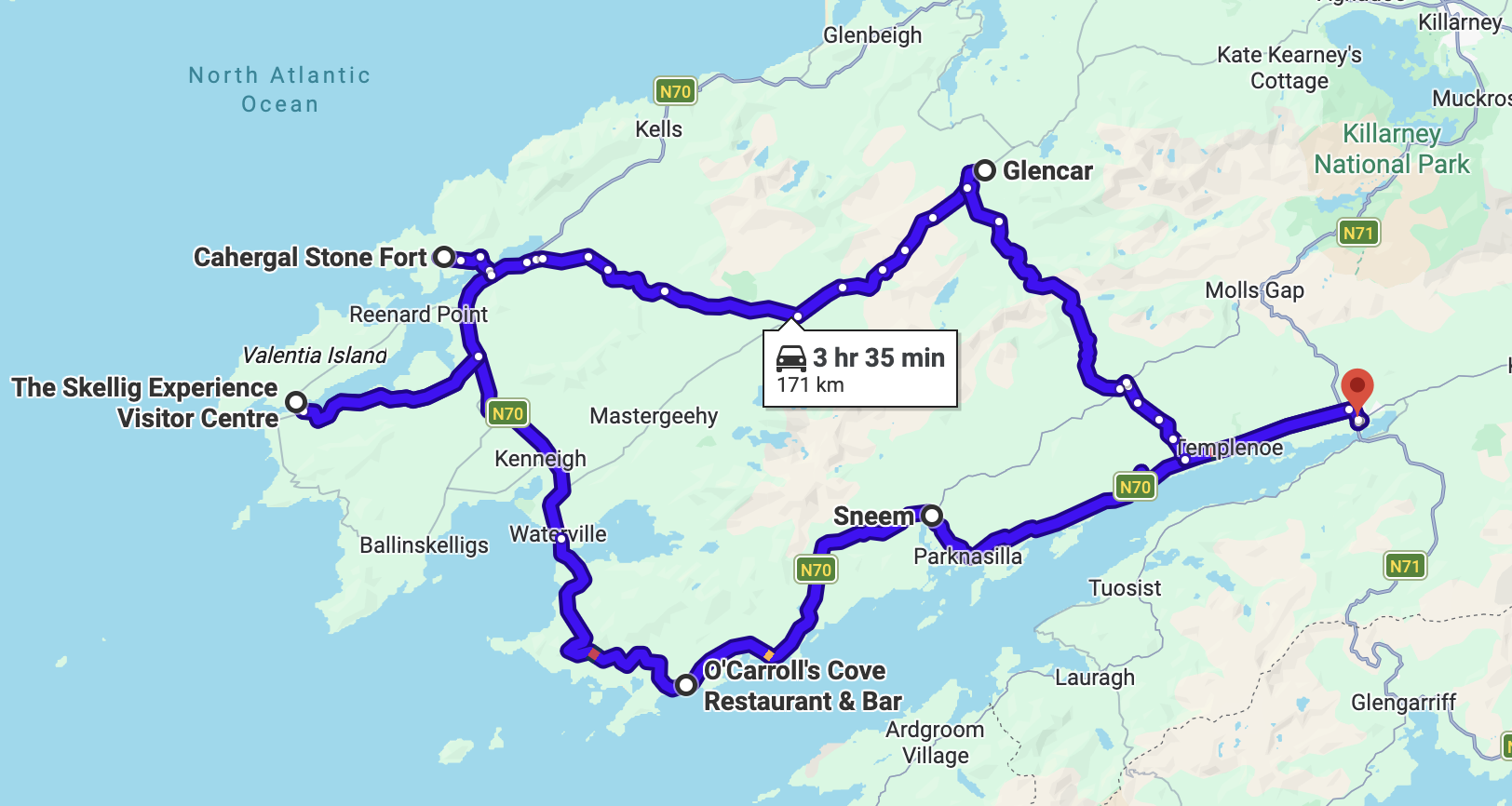
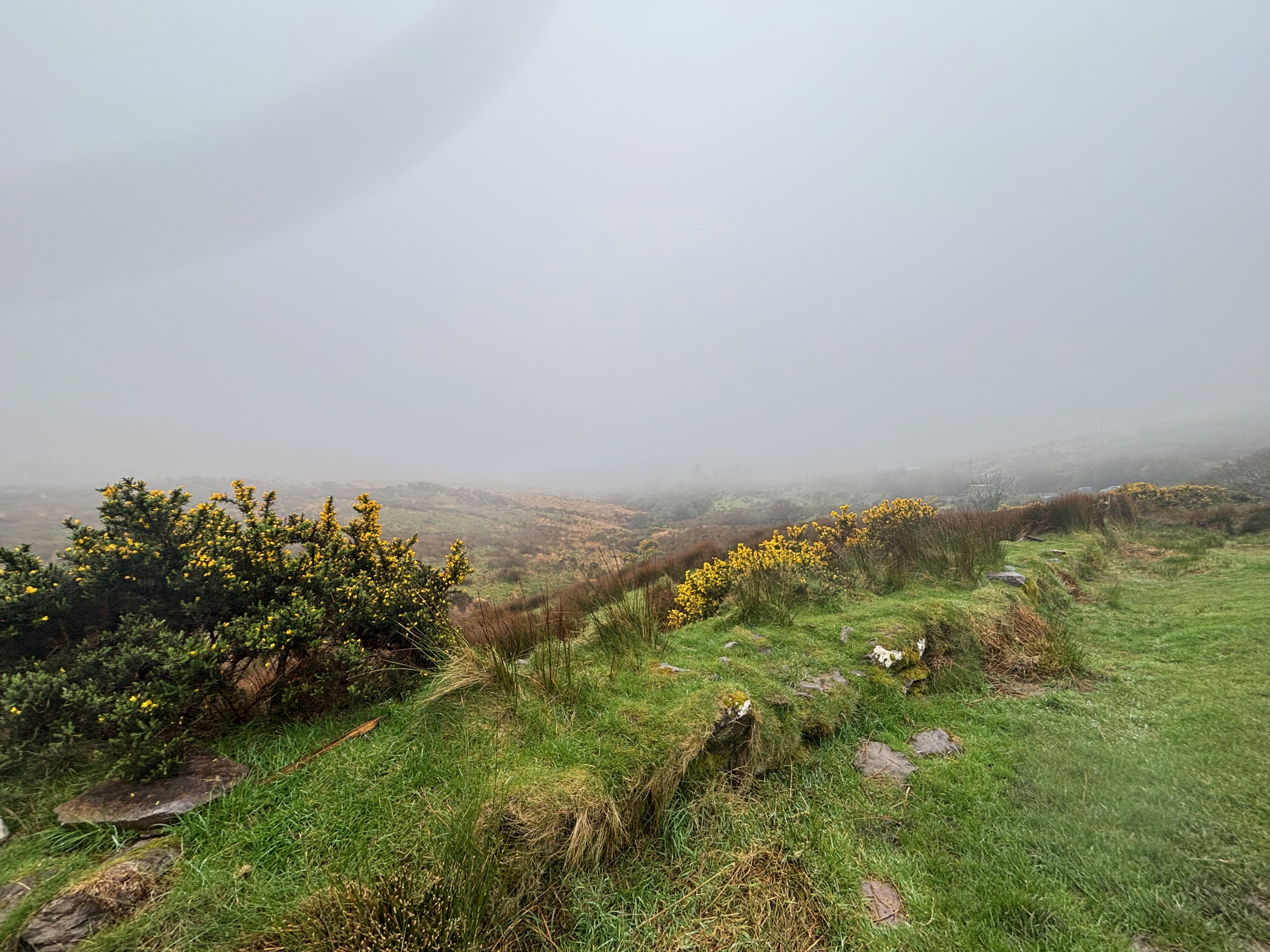
We set off for the clockwise option and did avoid encounters with fleets of tour buses. The day would be mildly disappointing as it was rainy, overcast, and often so foggy it was hard to see beyond the road. But it was still enchanting in its own way. Our first stop was in the small town of Sneem, which has two grassy, roughly triangular squares, separated by a bridge. Locals joke, “Since we’re in County Kerry, the square on the east side is called South Square and the one on the west is called North Square.”
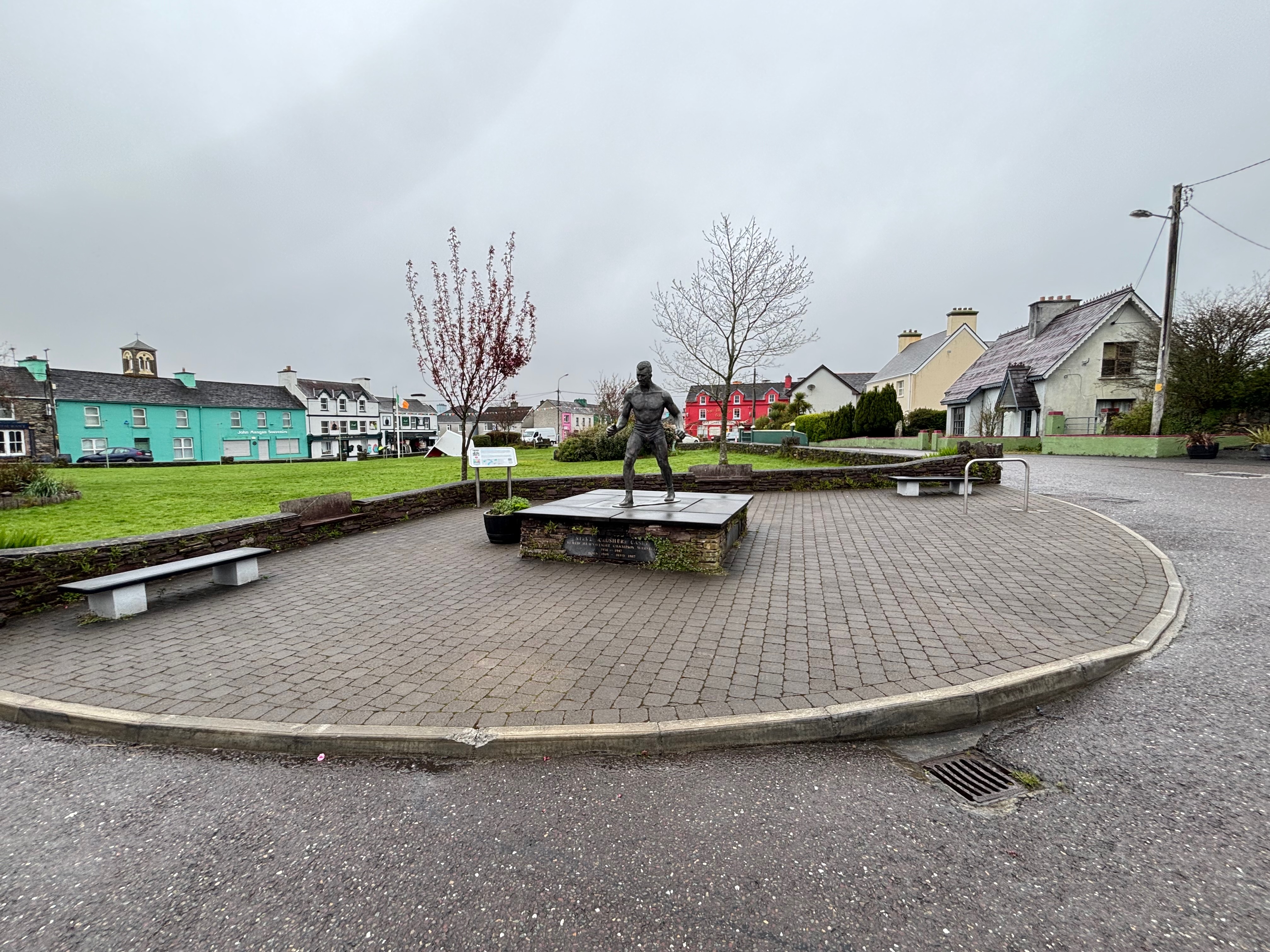
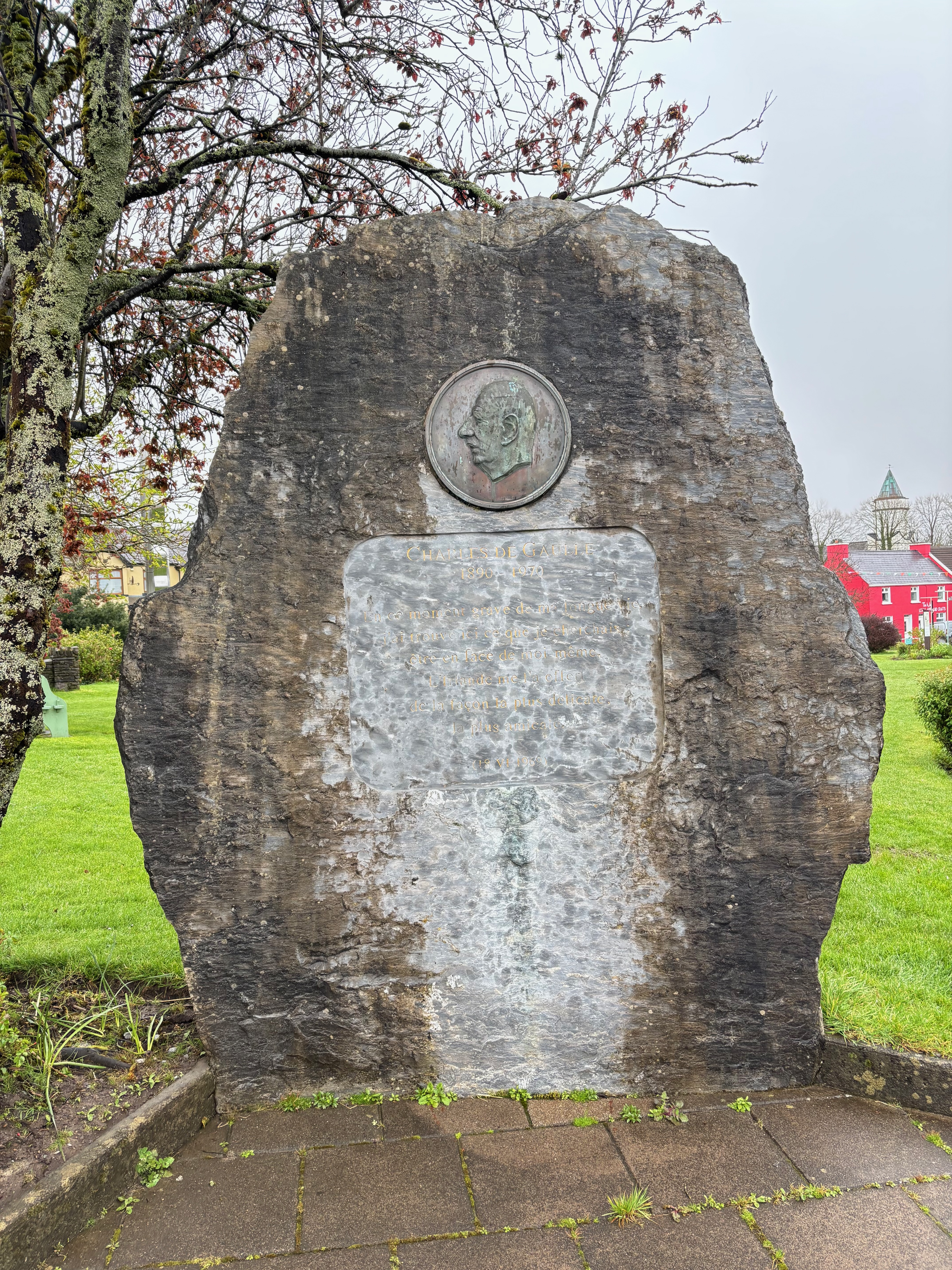
In the South Square there is a statue here of Steve “Crusher” Casey, a local boy who reigned as world-champion heavyweight wrestler (1938-1947). Continuing on, over the one-lane bridge connecting the two Sneem squares one finds a memorial in North Square to former French president Charles de Gaulle’s visit (Irish on his mother’s side, de Gaulle came here for two weeks of R&R after his final retirement from office in 1969). Locals call it “da gallstone.”
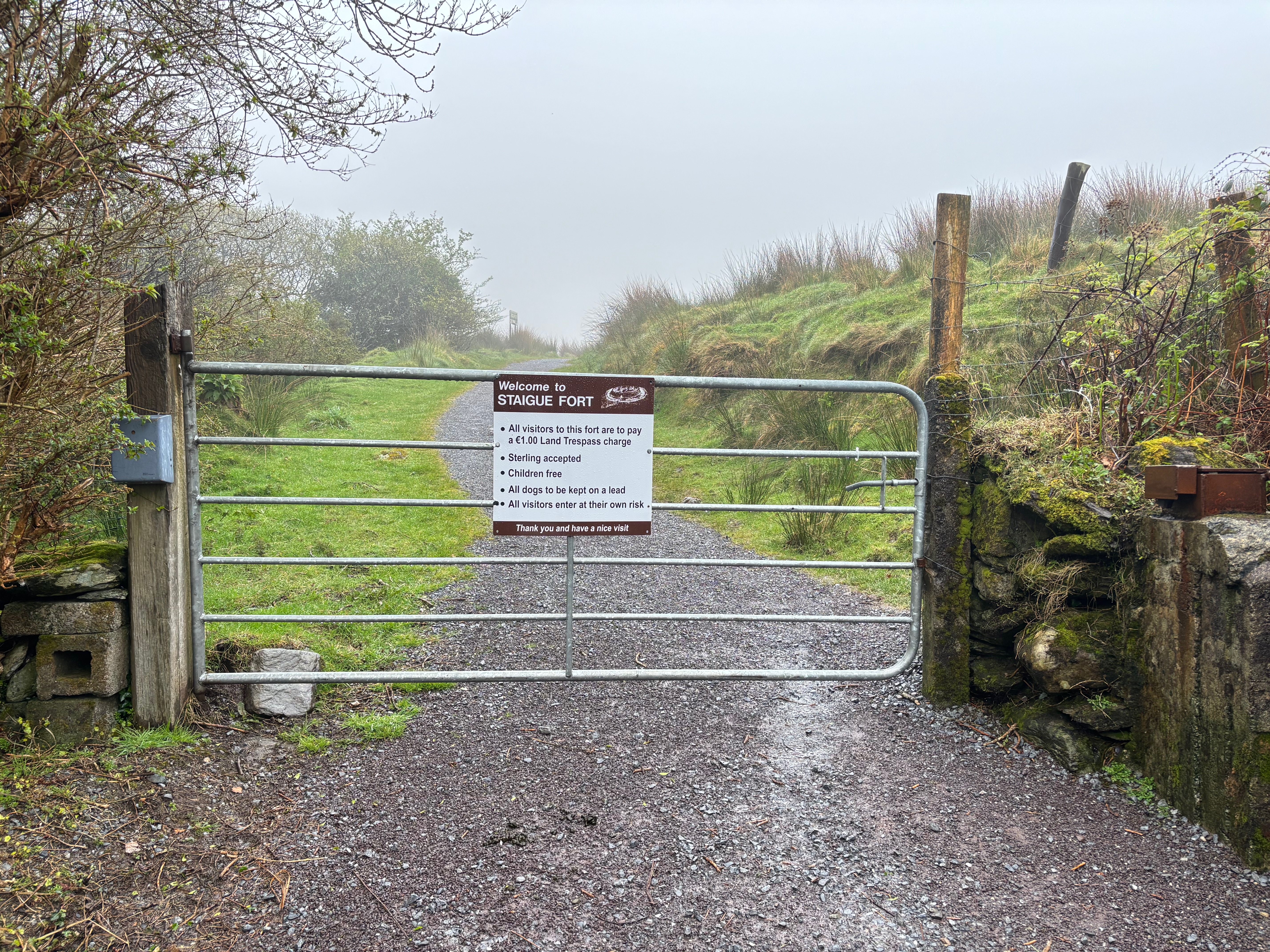
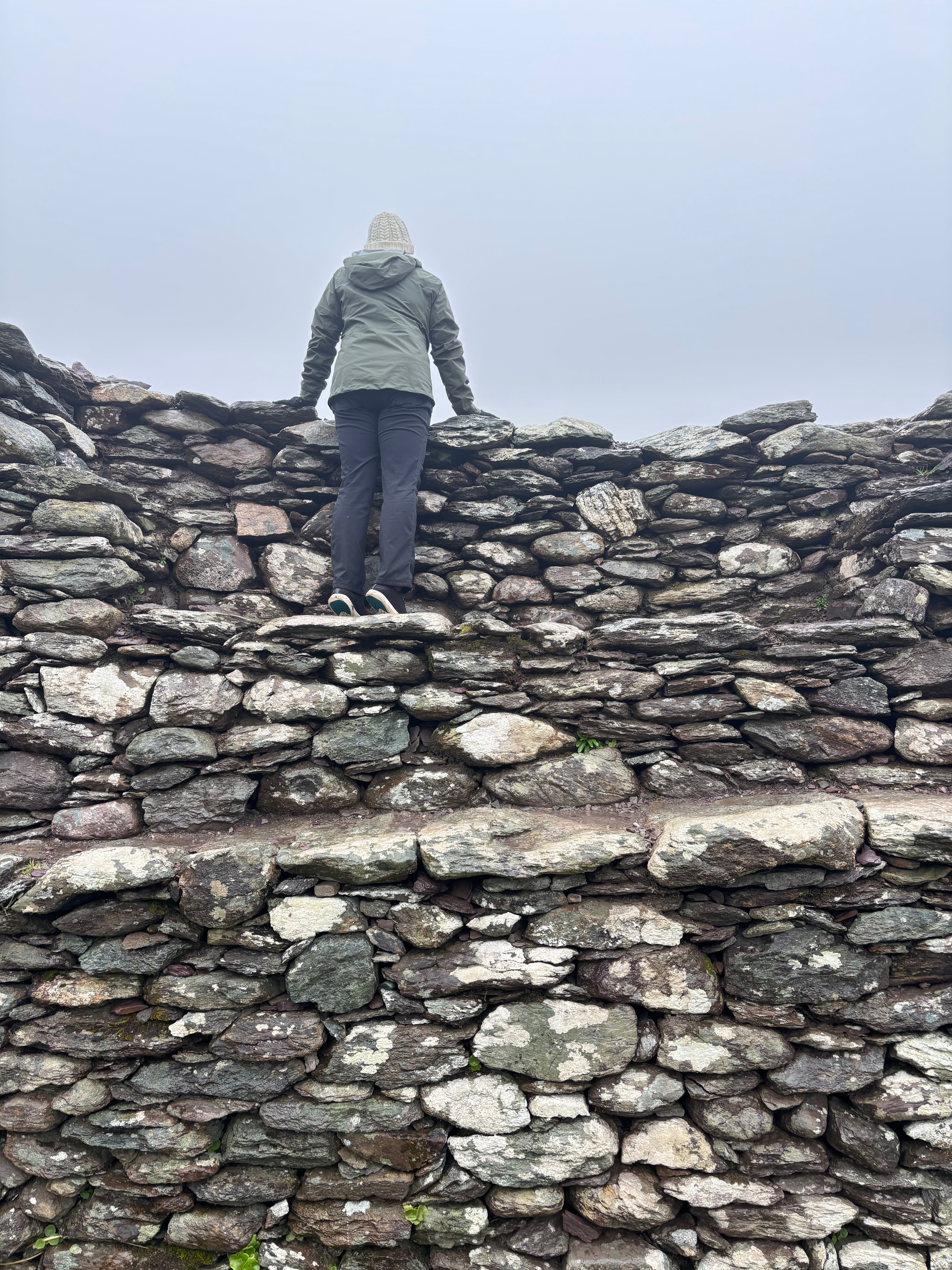
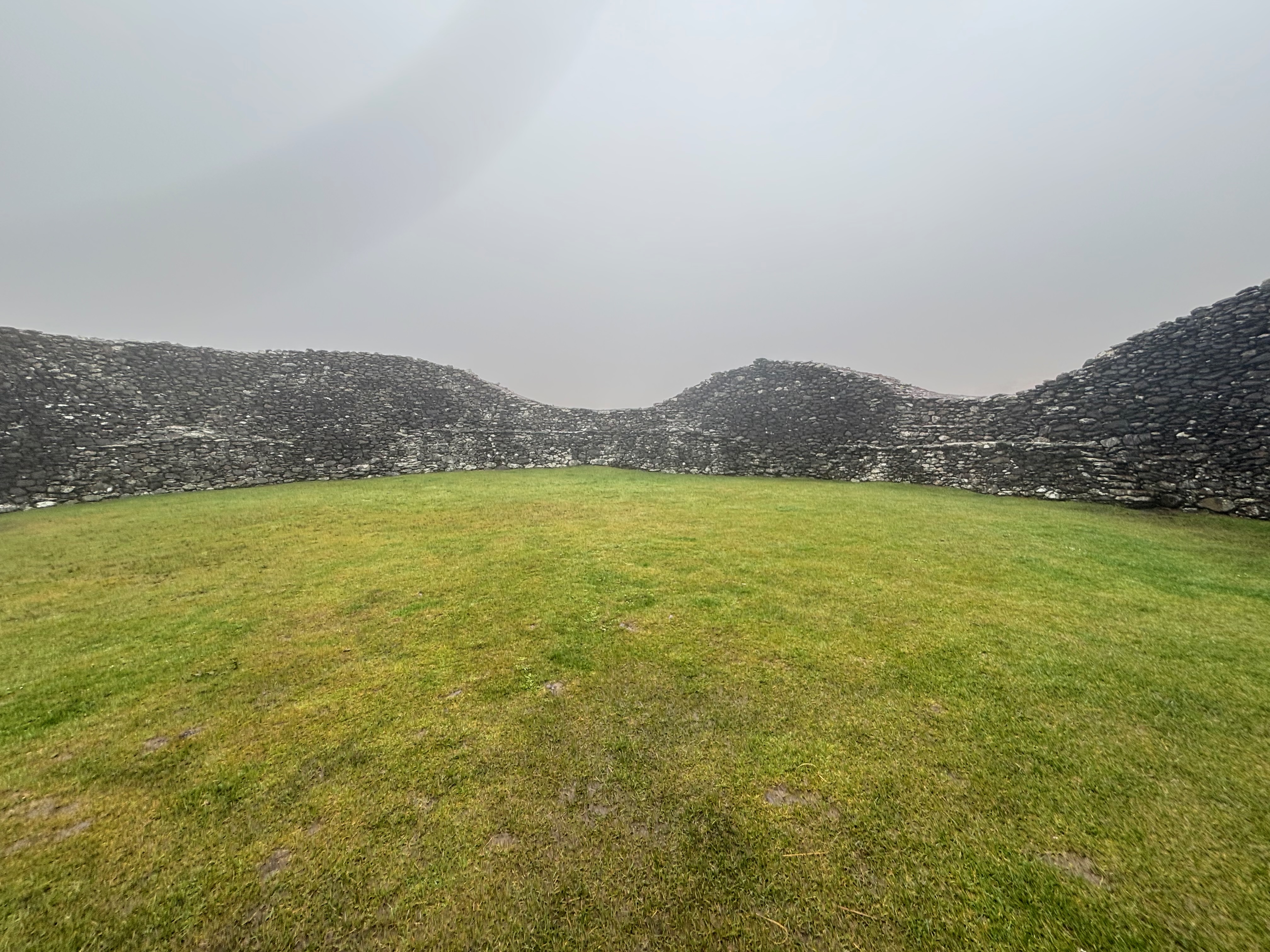
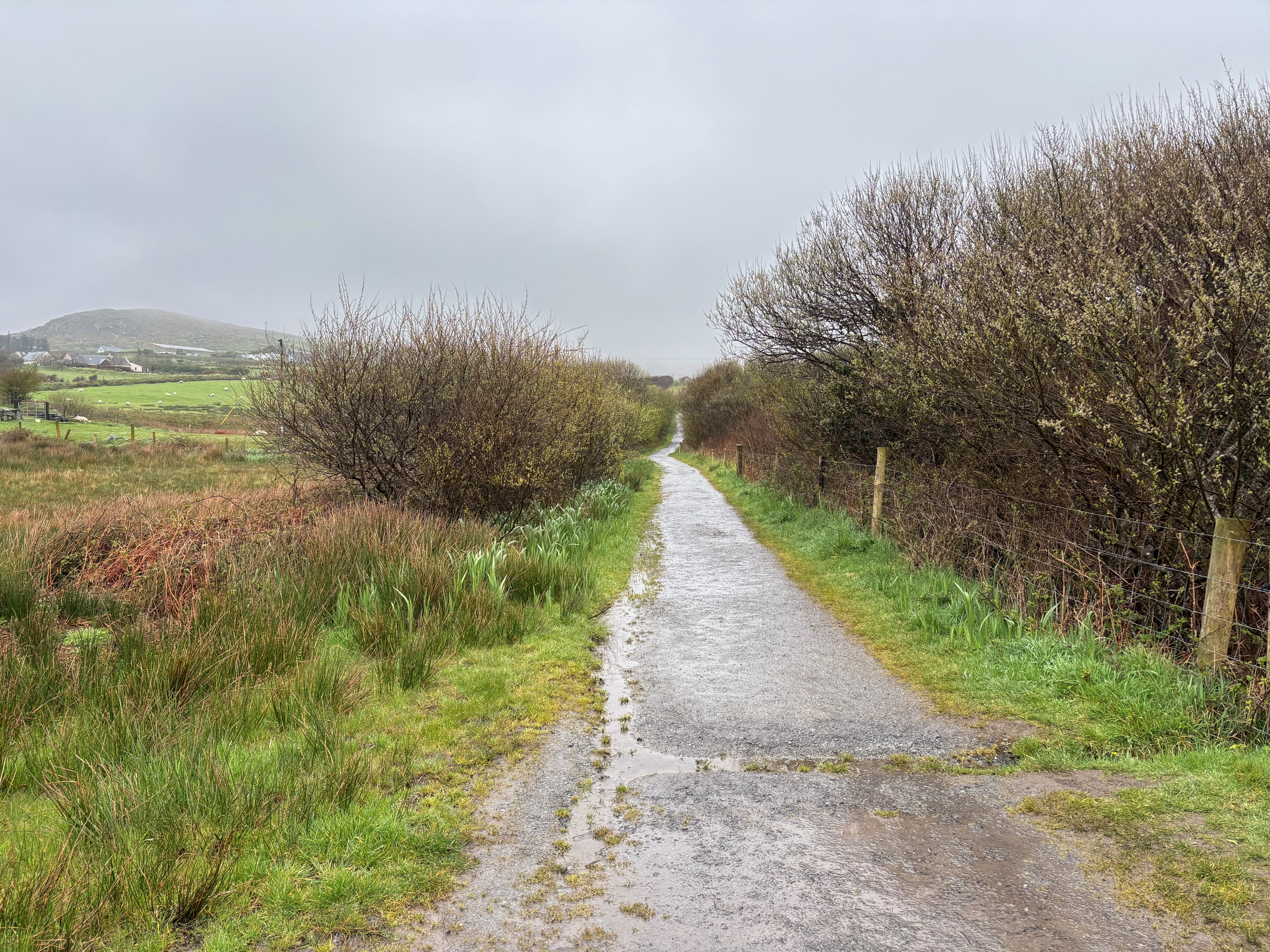
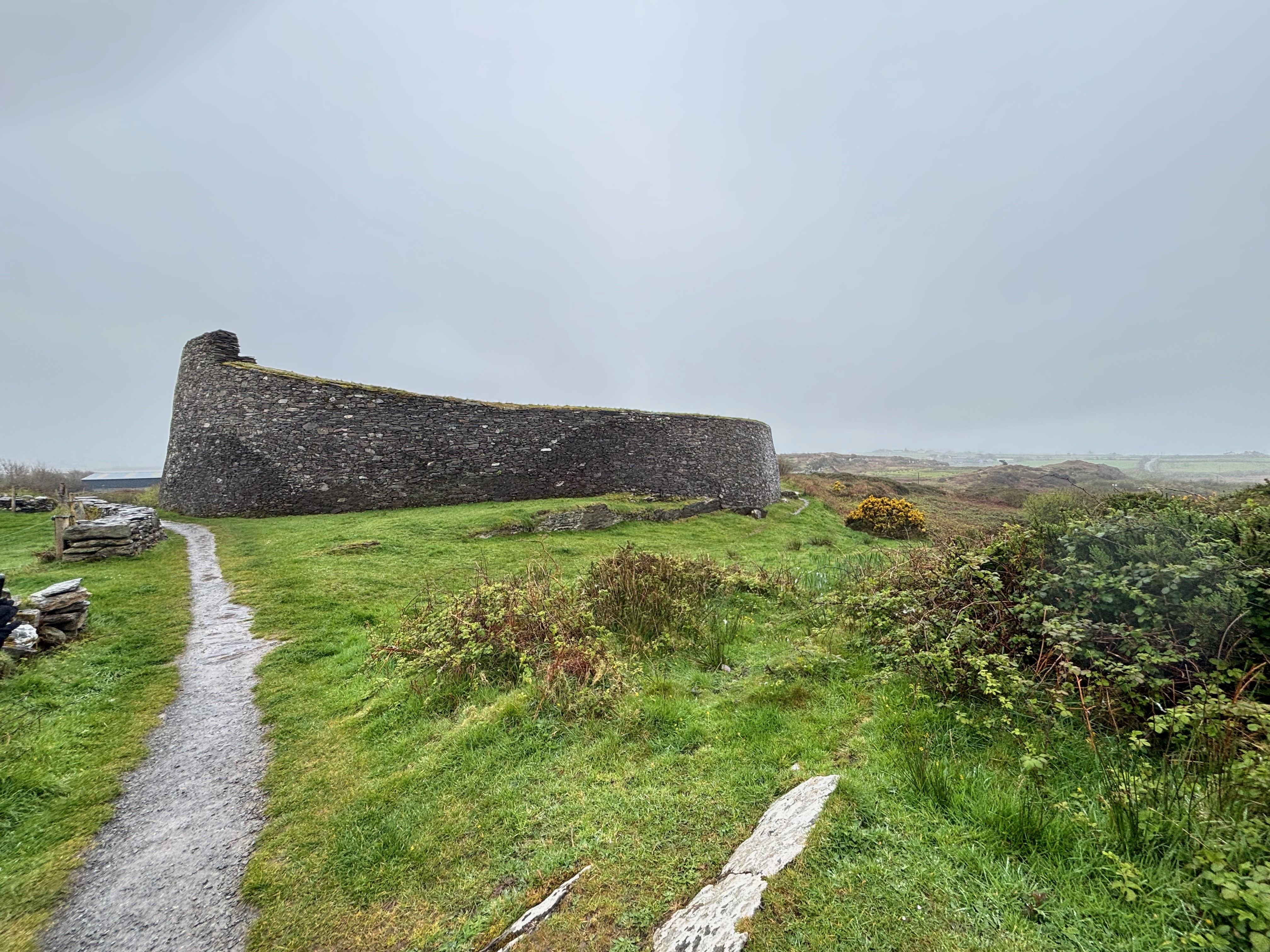
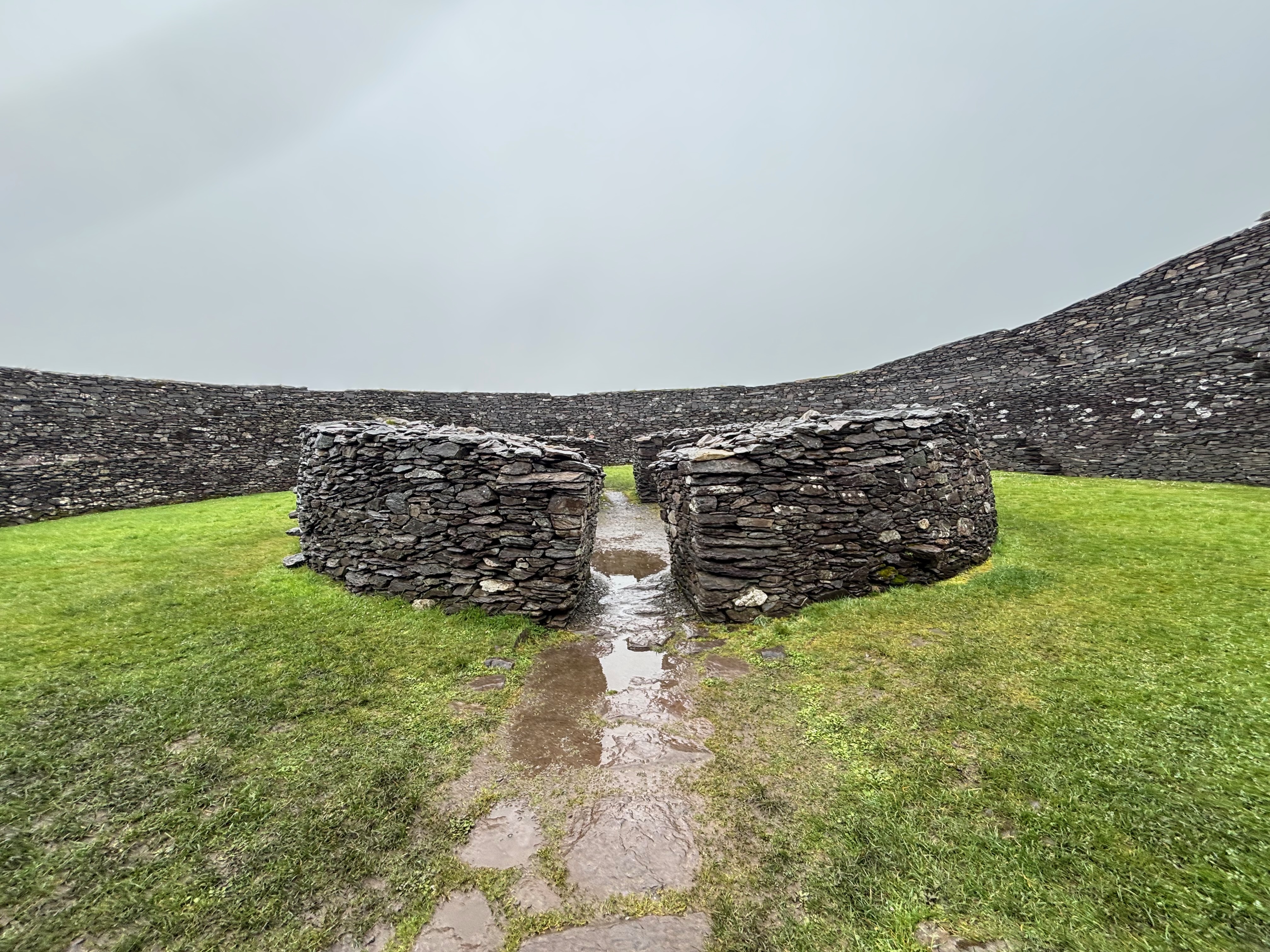
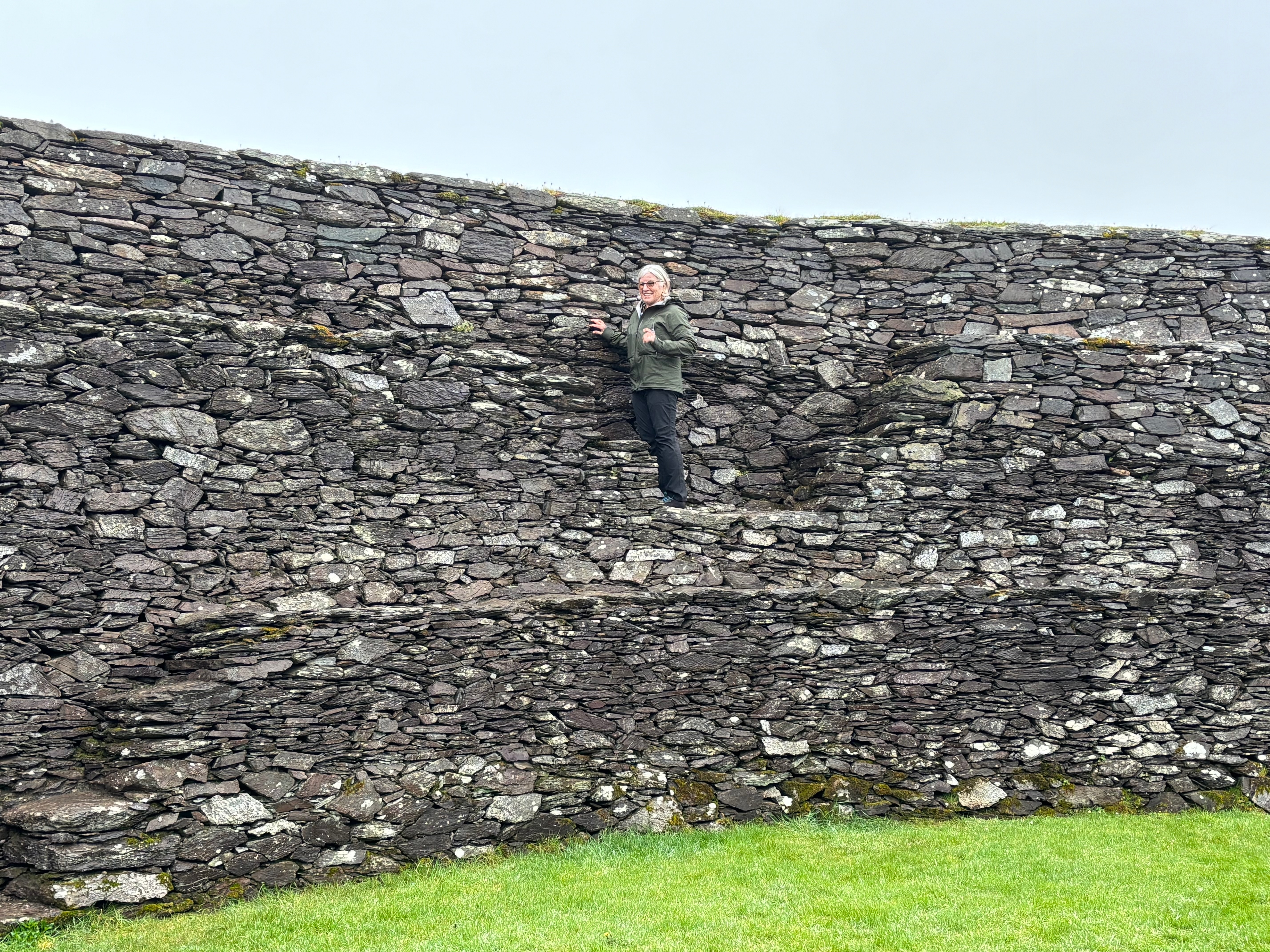
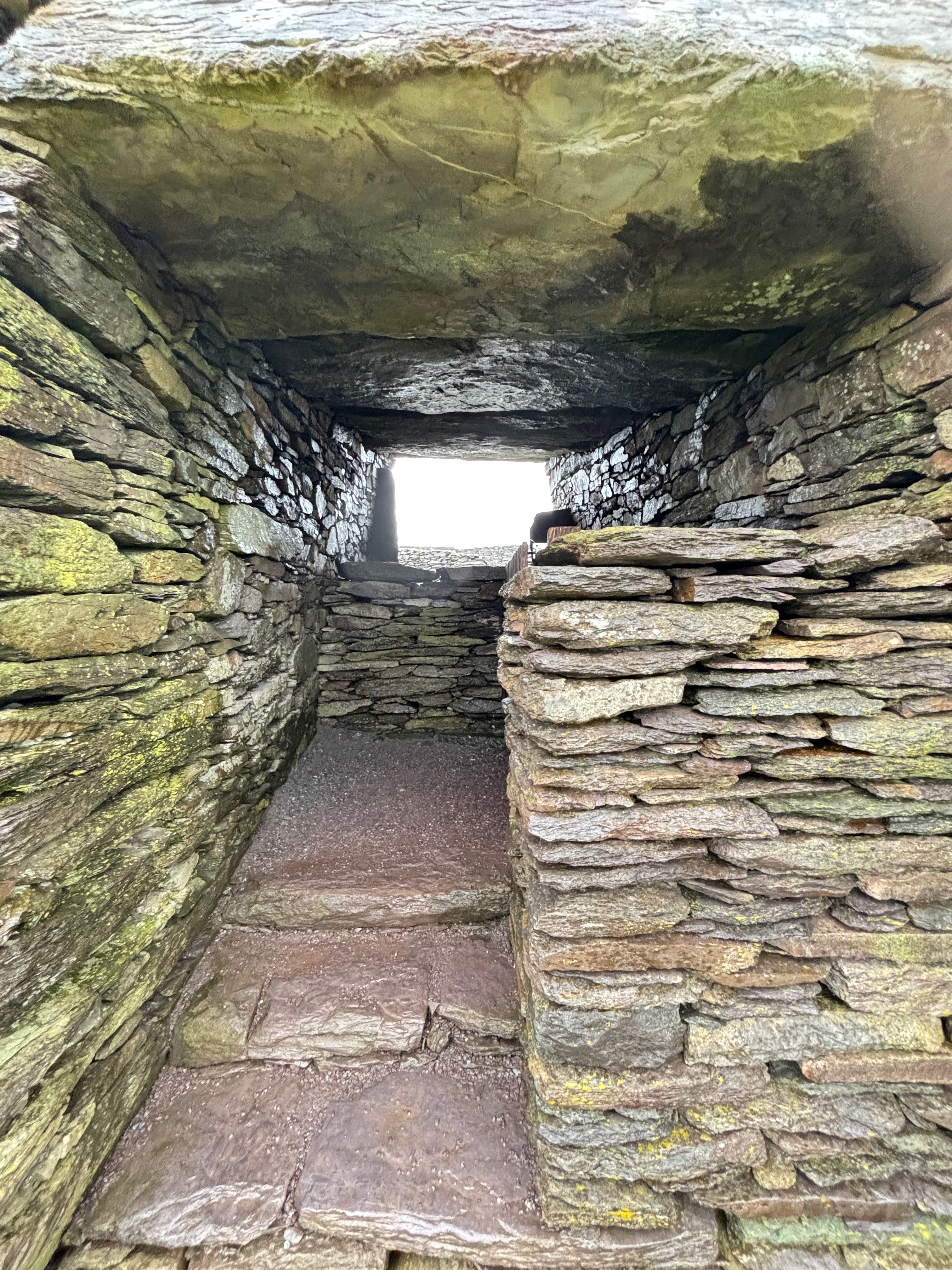
Our next stop, the Staigue Fort, was a short distance up the road and then 2.5 miles up on a very narrow (sometimes car-width) rural access lane, with foliage brushing our side-view mirrors. We parked in a small gravel lot and after dropping drop a Euro coin in the donation box beside a gate, climbed up a hill to the fort. The fort is thought to have been built during the late Iron Age, probably 100 BC, as a defensive stronghold for a local lord or king.
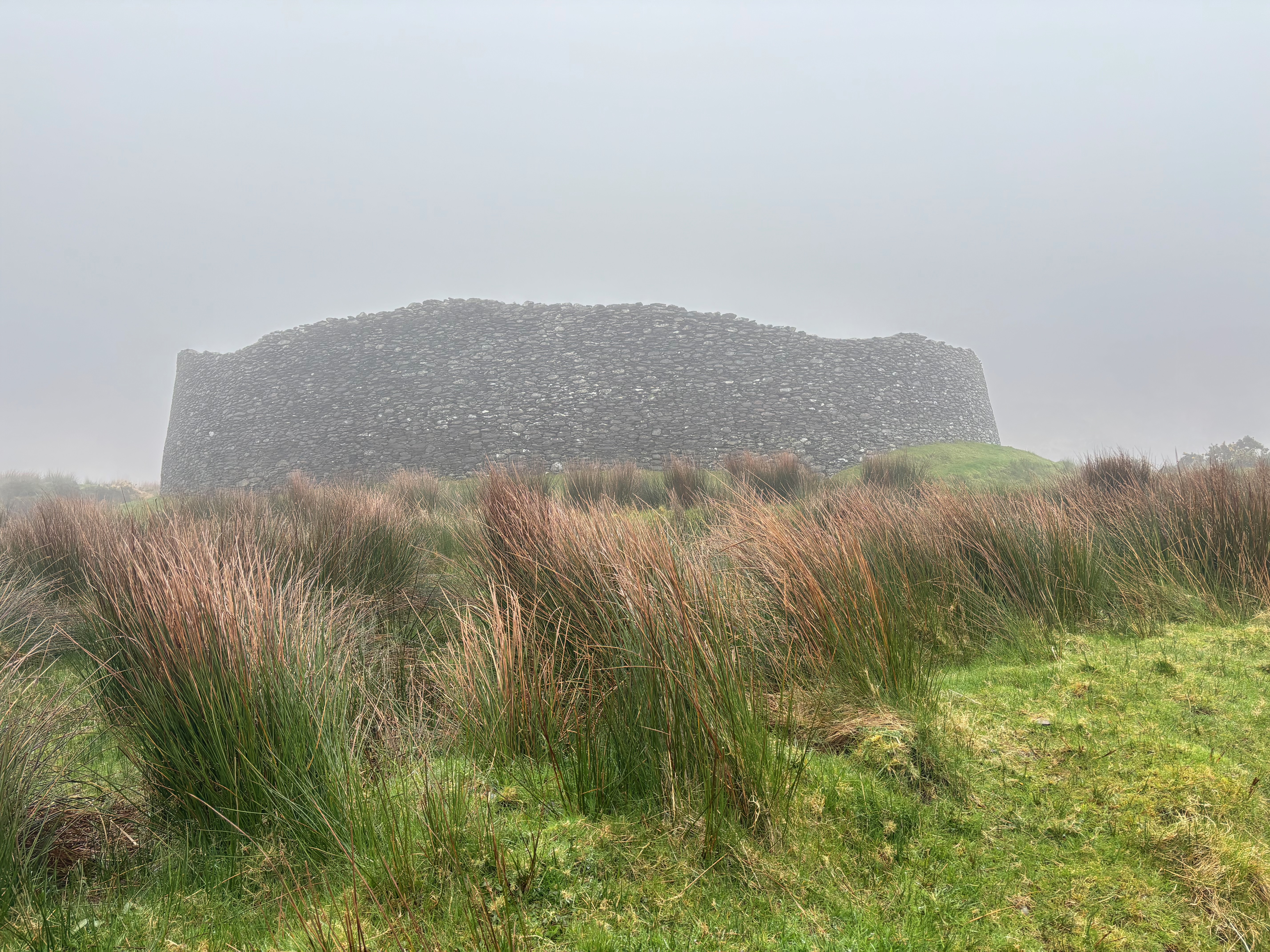
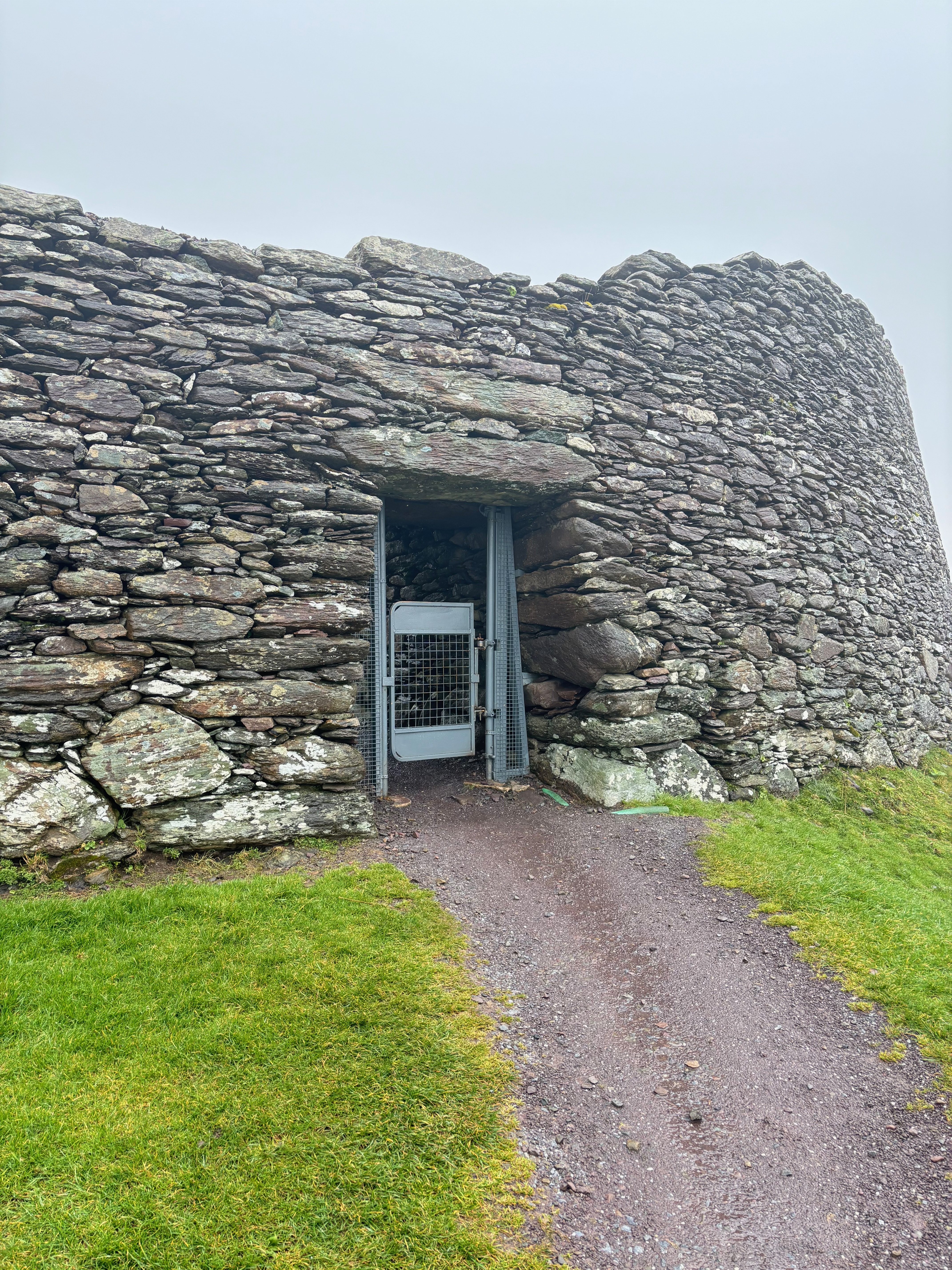
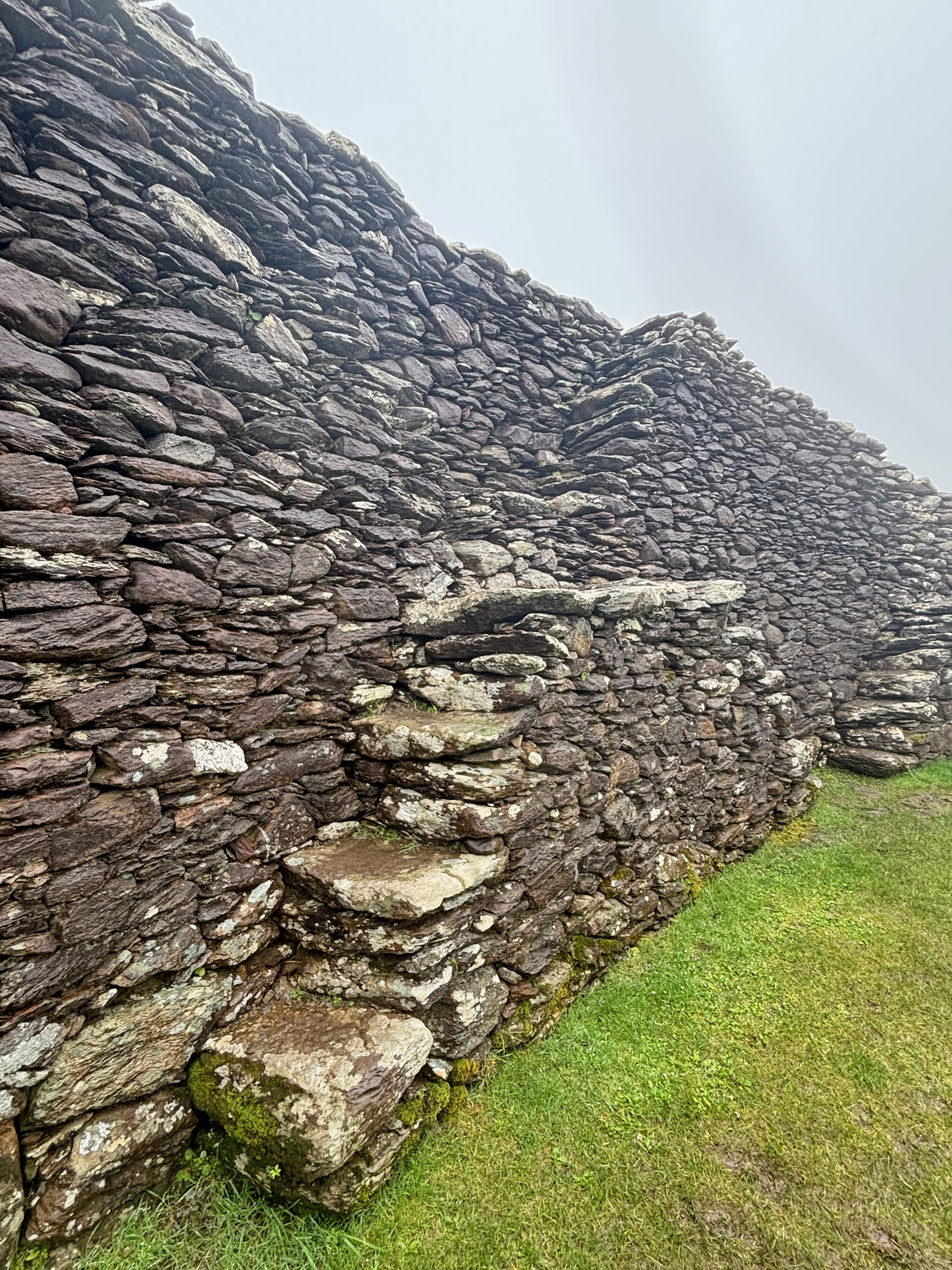
Surrounded by a ditch over 26 feet wide and at present 6 feet deep, the fort’s walls are up to 18 feet high in places, 13 feet thick at the bottom and 90 feet in diameter. The inside is reached through a 6-foot passage roofed with massive double lintels. Staigue represents a considerable feat in engineering and building as it was built without mortar, using undressed stones of local sandstone. There is evidence that copper was excavated in the surrounding area and it appears to be a place of worship, an observatory and a place of defense. I would imagine the views from the fort were impressive but for us, non-existent as we were surrounded by cold, dense fog.
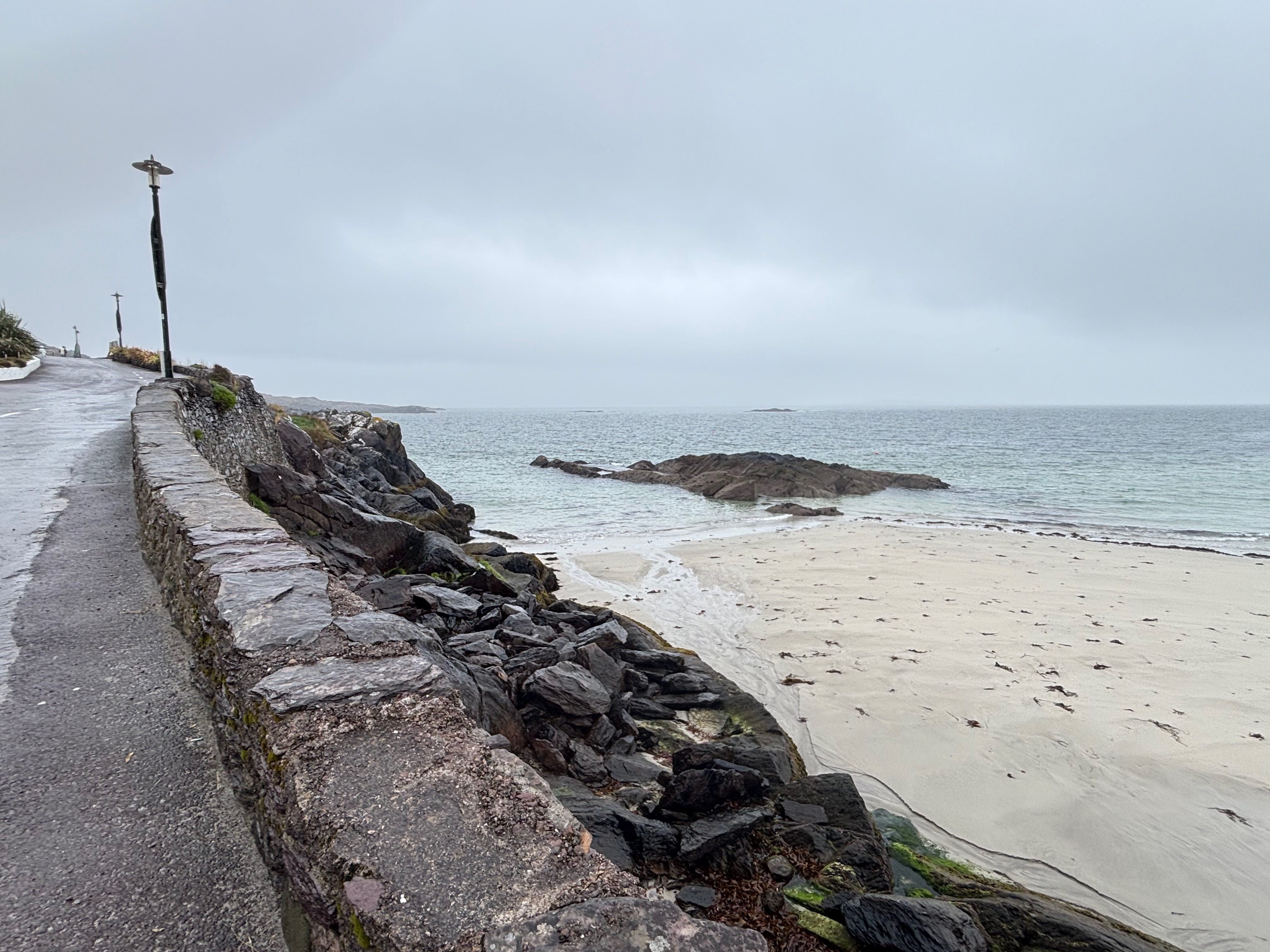
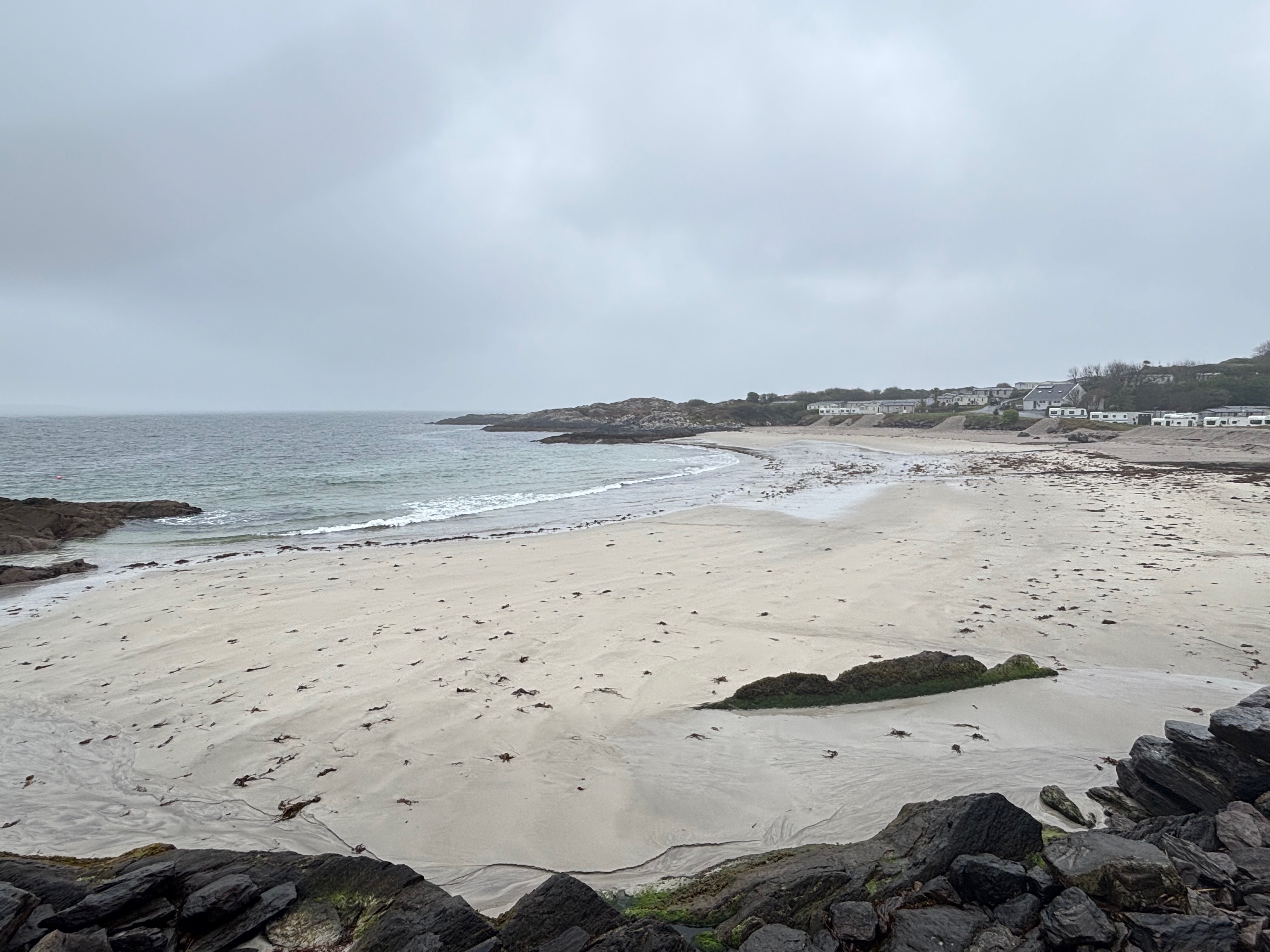
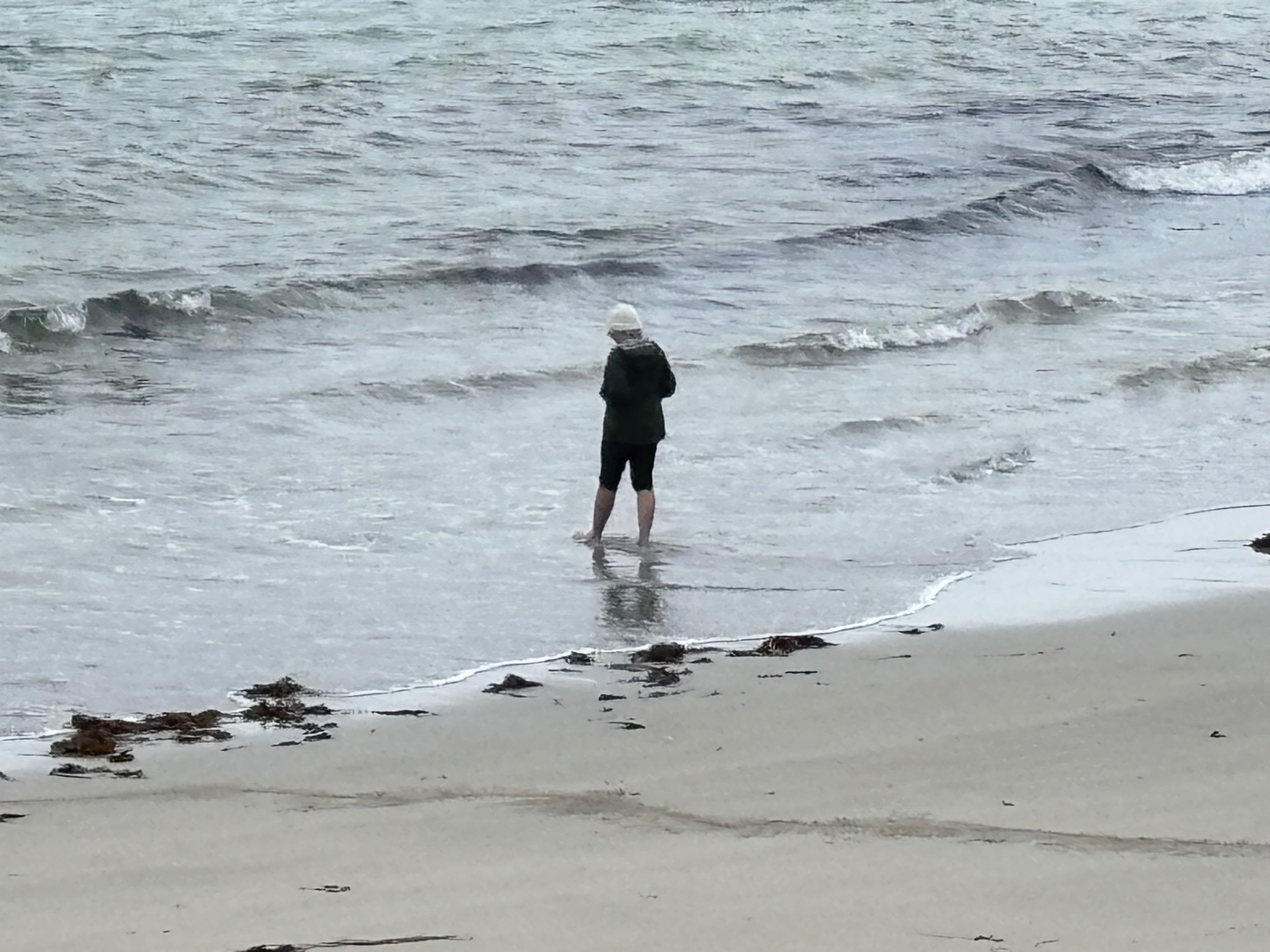
Back down the narrow road we re-joined the main one and continued on to Carrol’s Cove which is known for Bath Strand, swimmer friendly and said to have warmest water in Ireland. Featuring a trailer park, campground, and a restaurant (which wasn’t open), we parked and Joanna walked down to the shore, dipping her toes into the surf before returning to the car so that we could continue on to our next stop, Skelligs Chocolate.
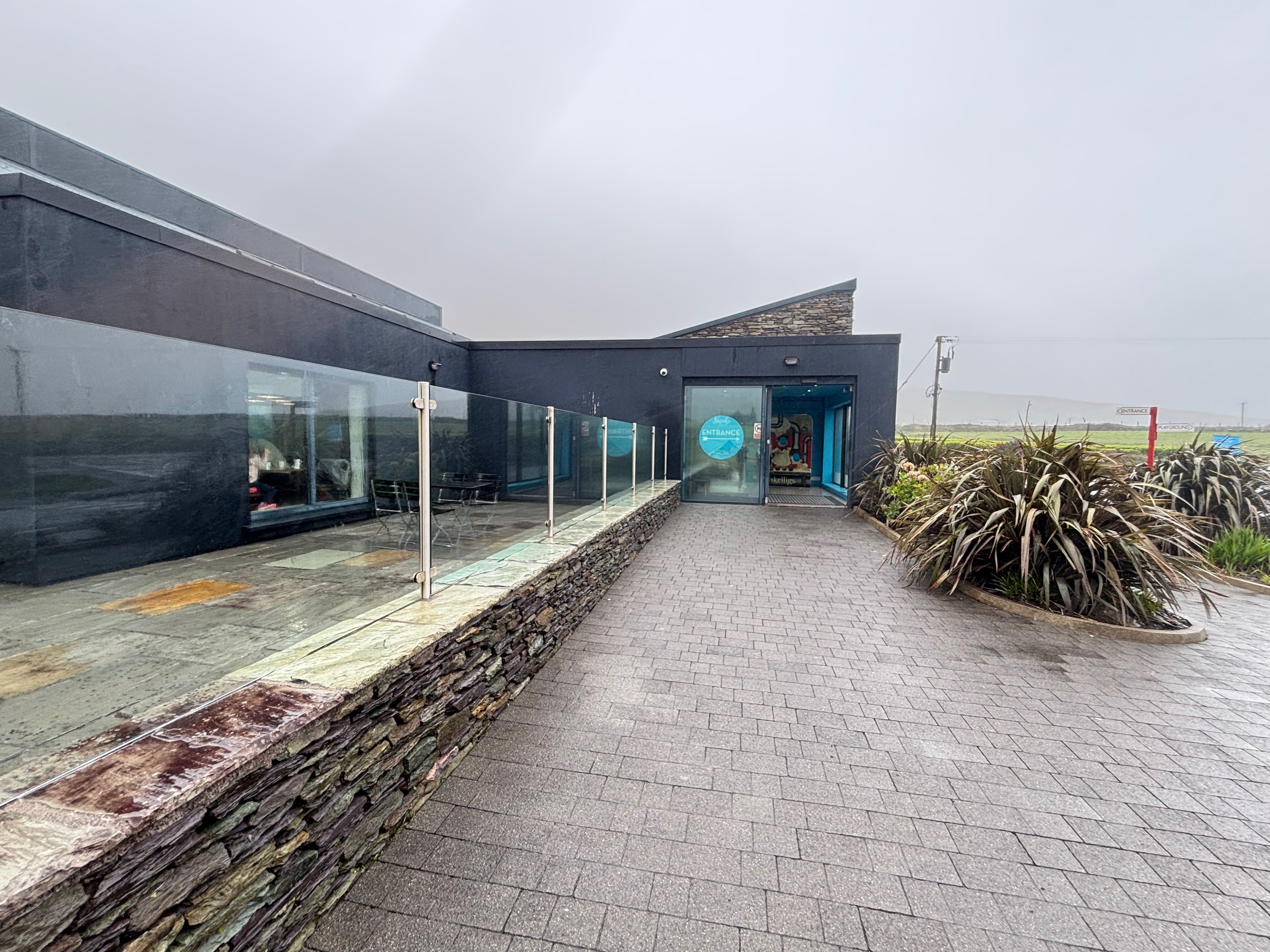
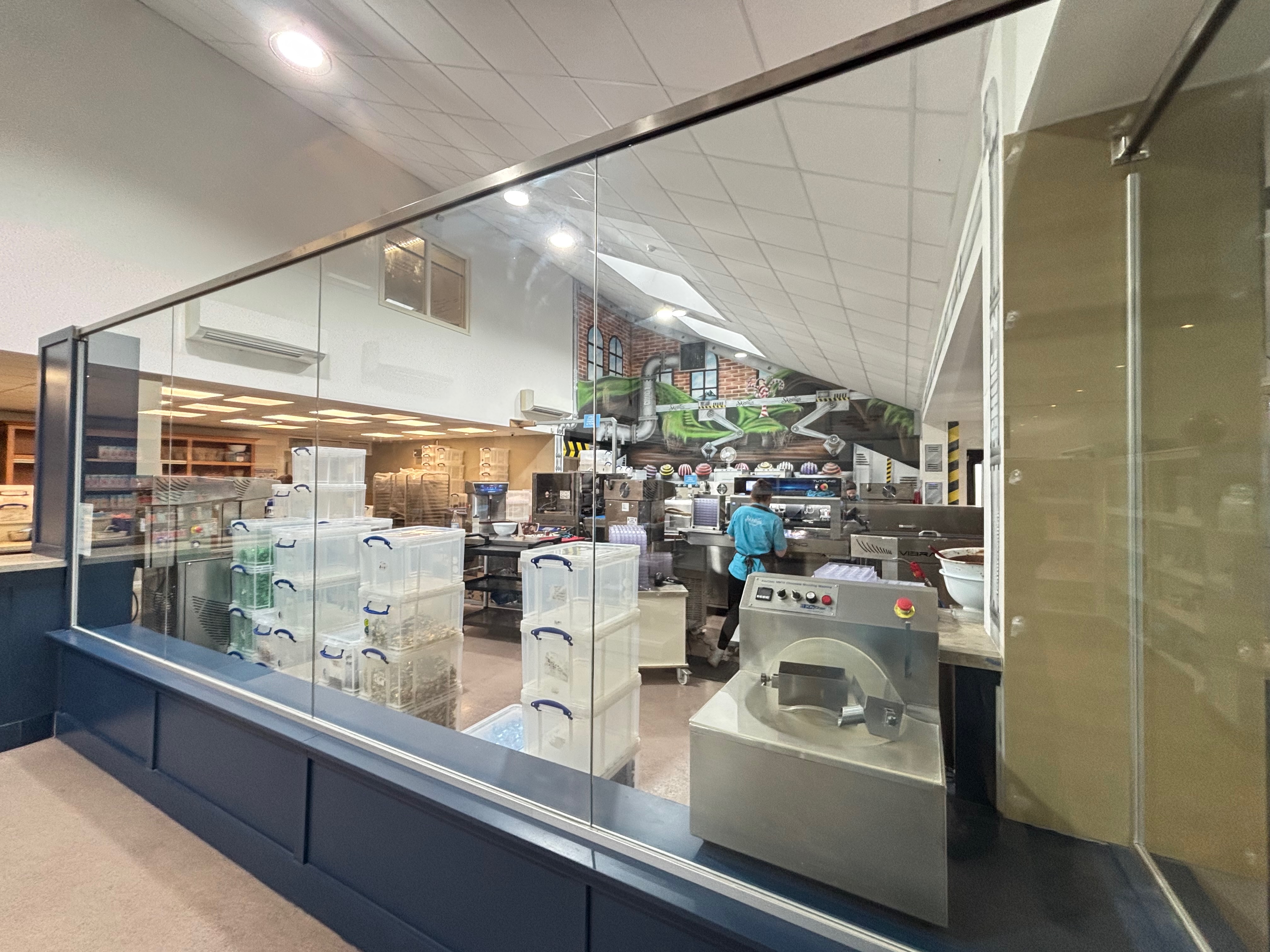
One finds oneself wondering just how an operation this large could thrive this far out in the boondocks, but flourish they do and so we availed ourselves of an ample helping of free samples and bought a bunch to take with us. As it was warm and indoors with beverages for sale, we also opted to eat the very good sandwiches we’d picked up earlier and congratulated ourselves for once thinking ahead so we’d actually have food to consume when we needed it.
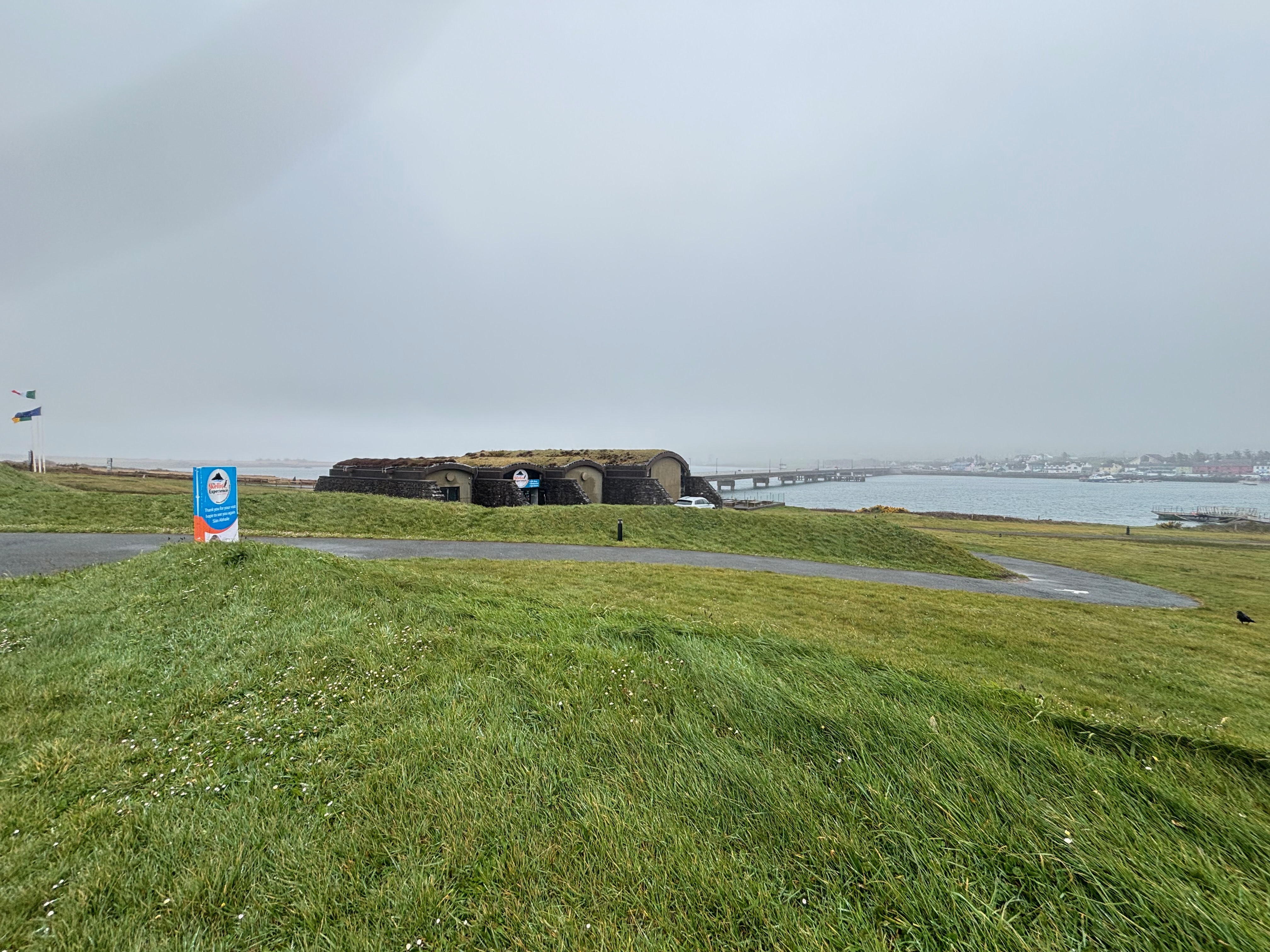
Sated we continued on and crossed a bridge onto Valentia Island and immediately turned into the parking lot for the Skellig Experience Centre, which highlights Skellig Michael, a twin-pinnacled crag 7.2 miles west of the nearby Iveagh Peninsula. The island is named after the archangel Michael; while “Skellig” is derived from the Irish language word sceilig, meaning a splinter of stone. It is best known for its Gaelic monastery, founded between the 6th and 8th centuries, and its variety of inhabiting species, which include gannets, puffins, a colony of razorbills and a population of approximately fifty grey seals.
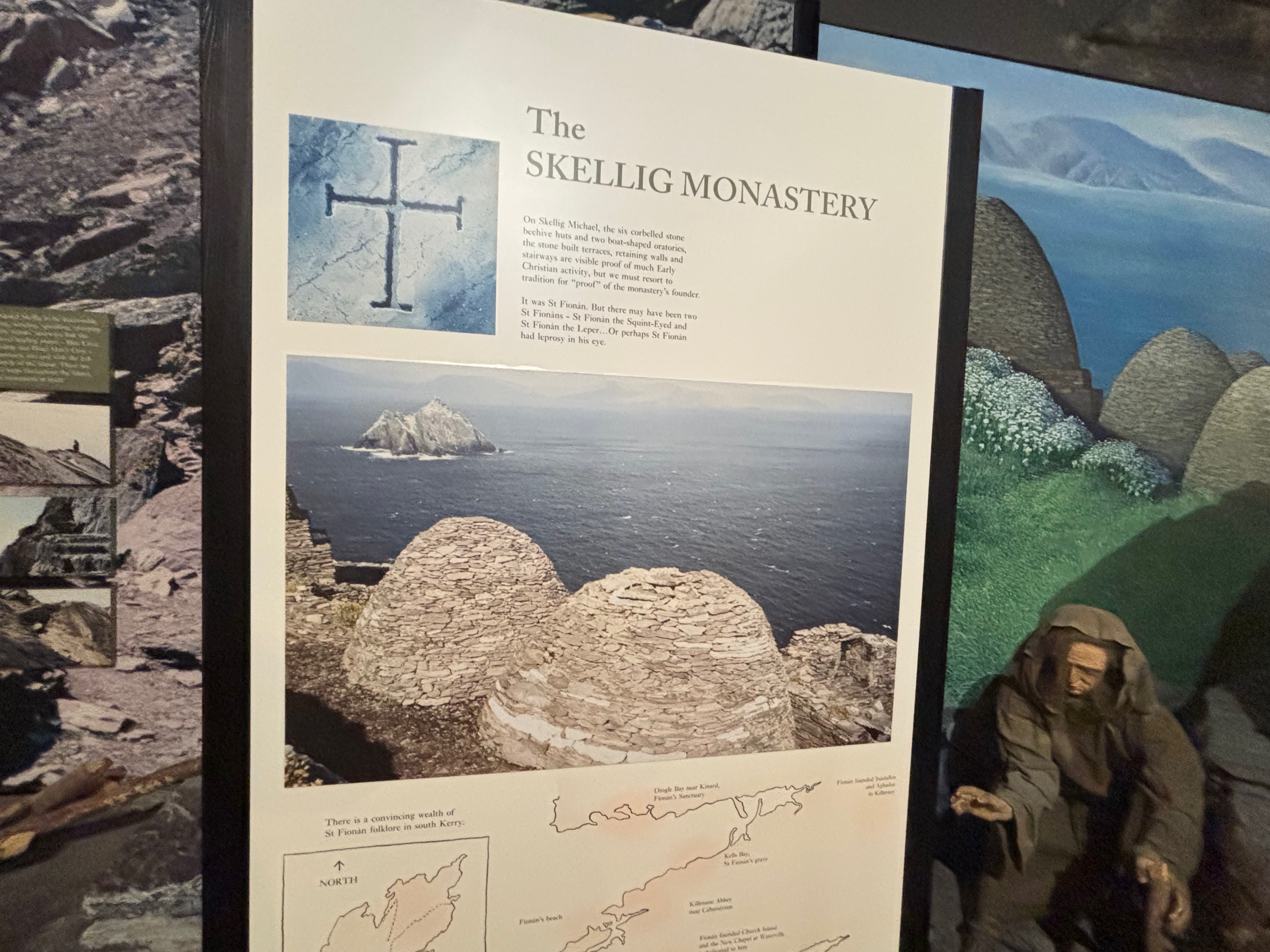
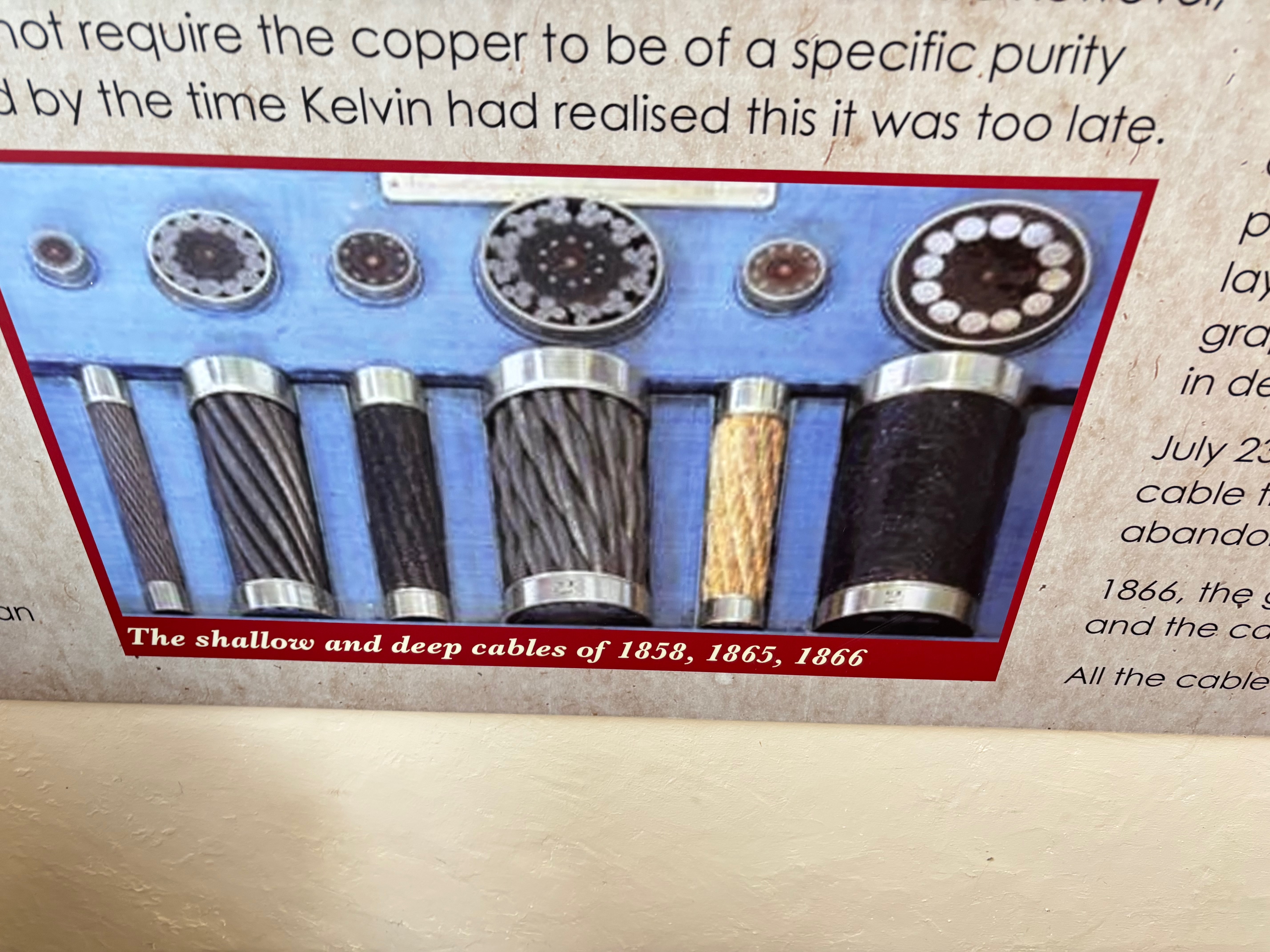
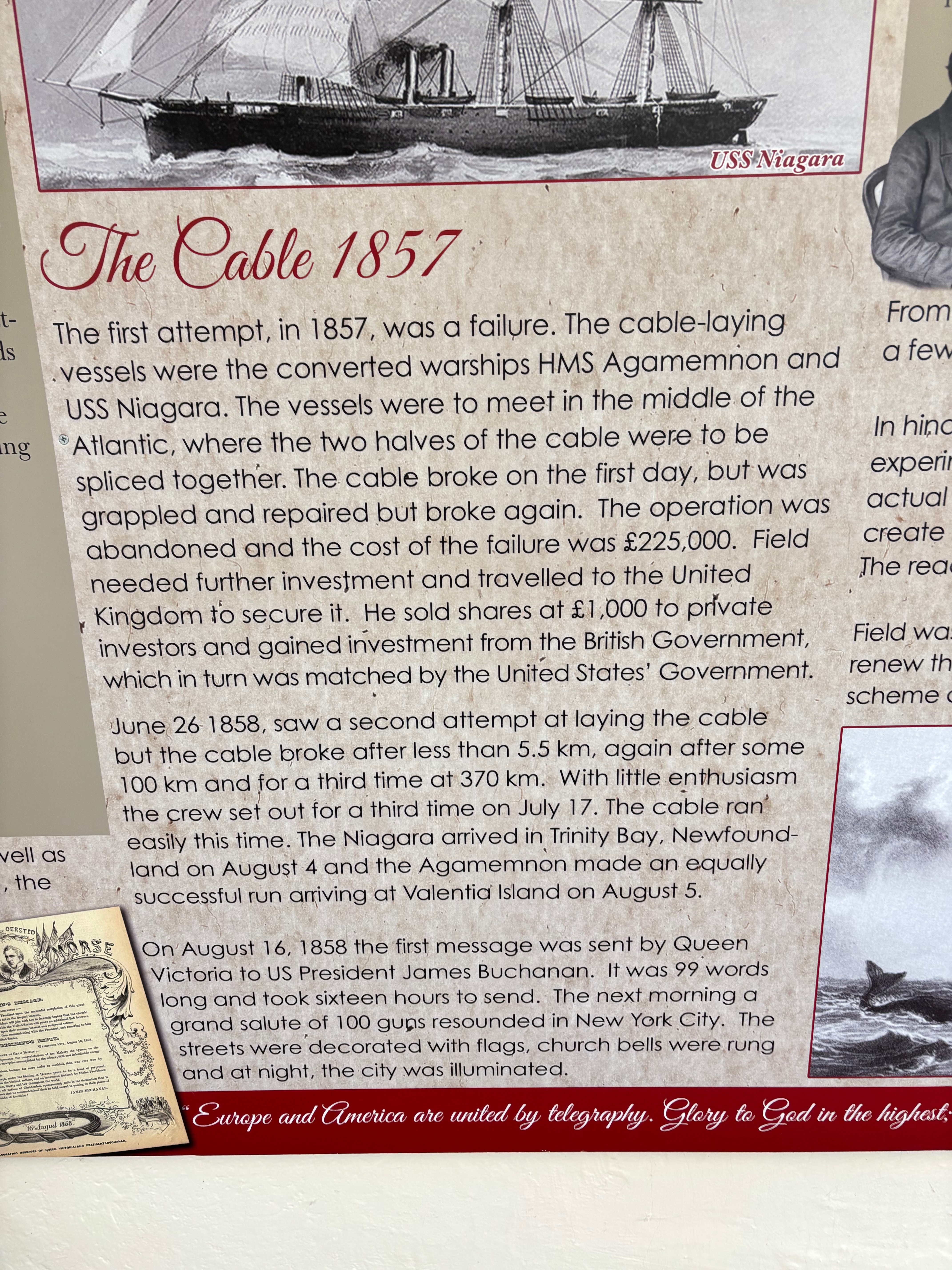
It’s a small but comprehensive museum of sorts and we spent a good hour or more there before moving on to the Valentia Island Heritage Center, housed in an 1861 schoolhouse in Knightstown, where we viewed a 19th-century schoolroom, learned about tetrapods (those first fish to climb onto land—which locals claim happened here). You’ll also follow the long story of the expensive, frustrating, and heroic battle to lay a telegraph cable across the Atlantic, which—after some false starts—finally succeeded in 1866, when the largest ship in the world connected the tiny island of Valentia with Newfoundland. This project was the initiative of the Atlantic Telegraph Company, which later became Western Union. It was fascinating.
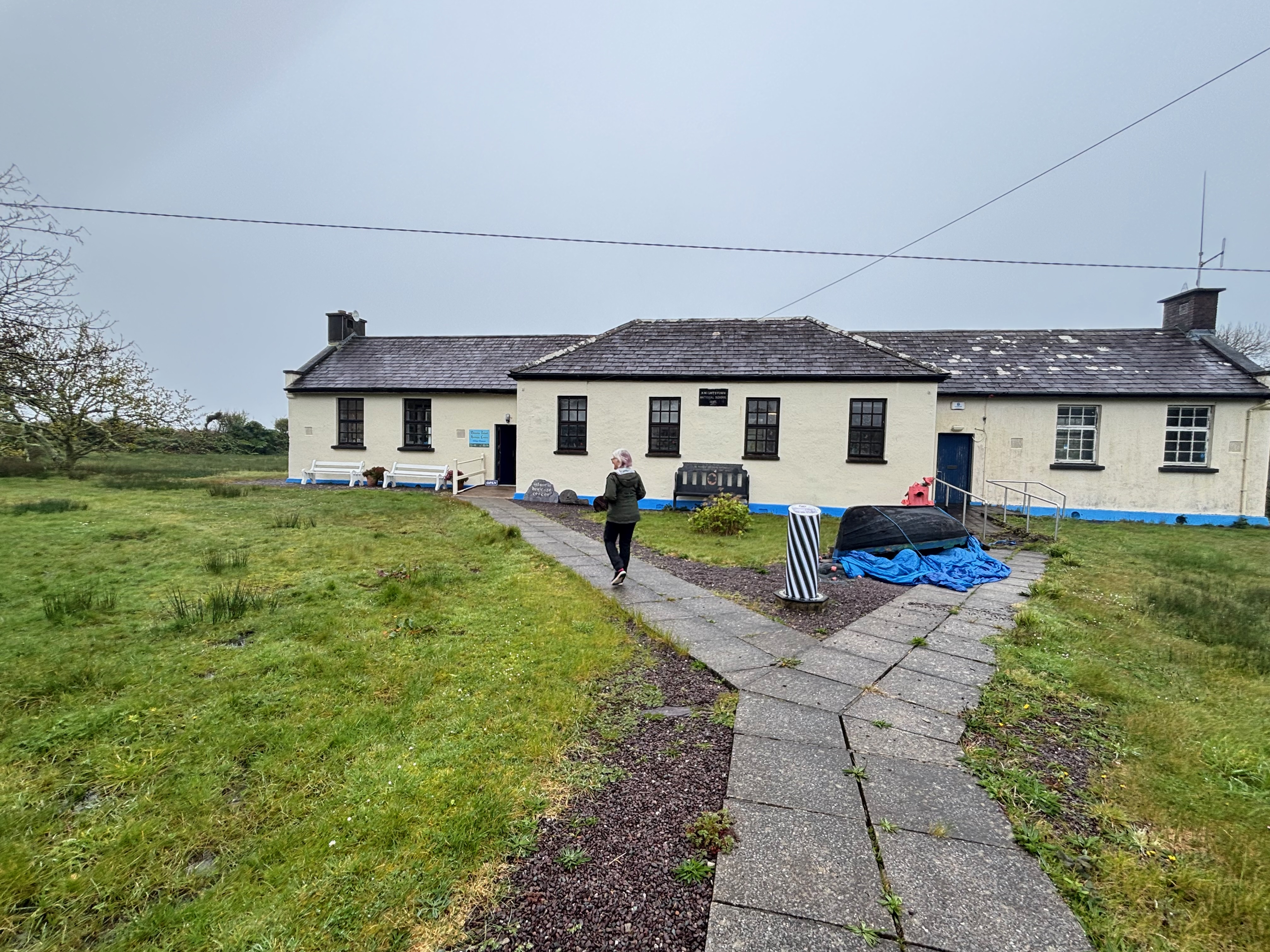
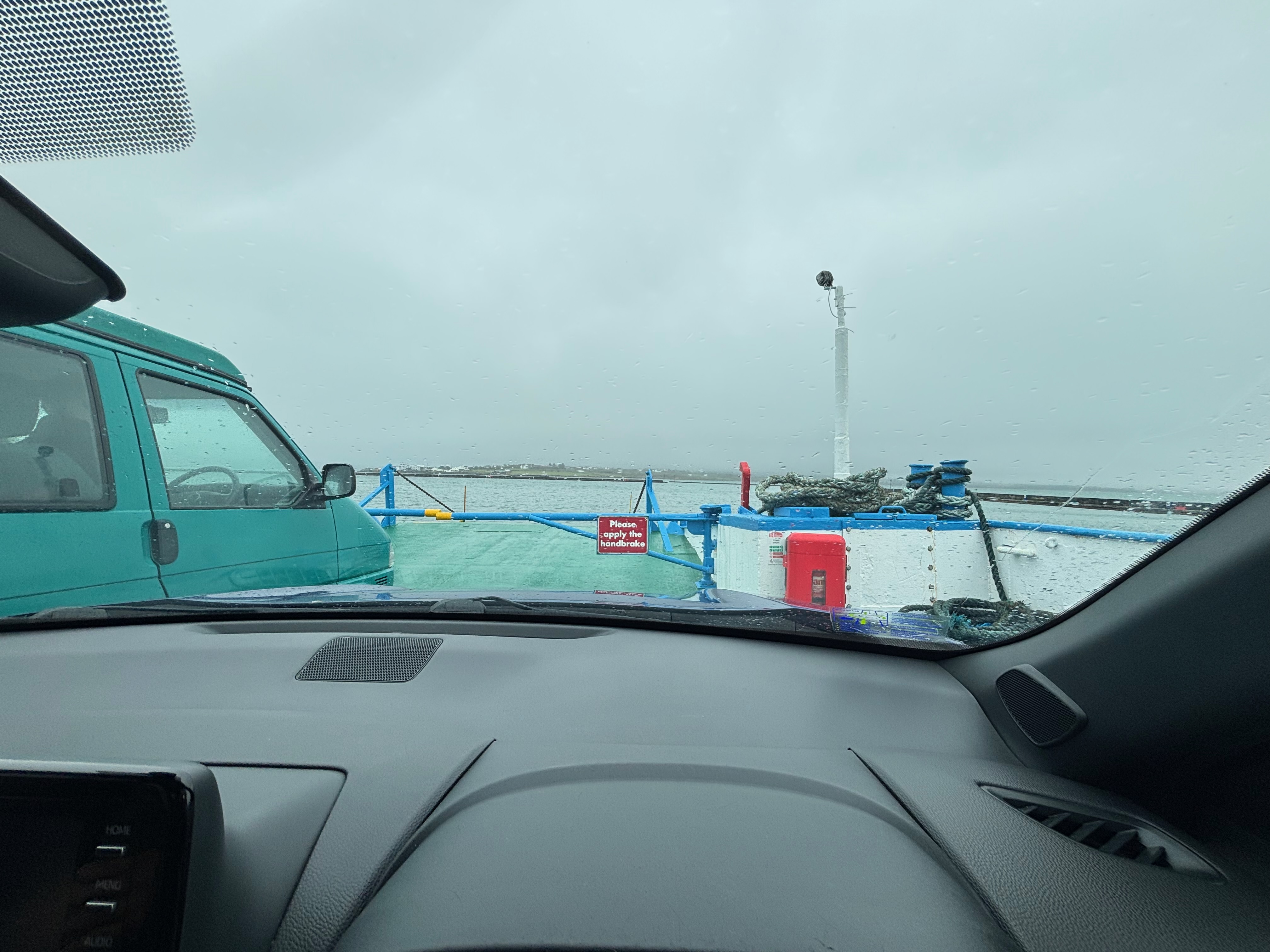
We left the center and after taking the ferry back to the mainland made one more stop at the Cahergall Stone Fort, which was built around the 7th century AD as a defended farmstead. This one has an internal diameter 82 feet with outer walls 13 feet high and 16 feet thick. It’s curious that we would begin and end our drive with the stone forts, but both were unique in their location and with enough small differences to make the effort worthwhile.
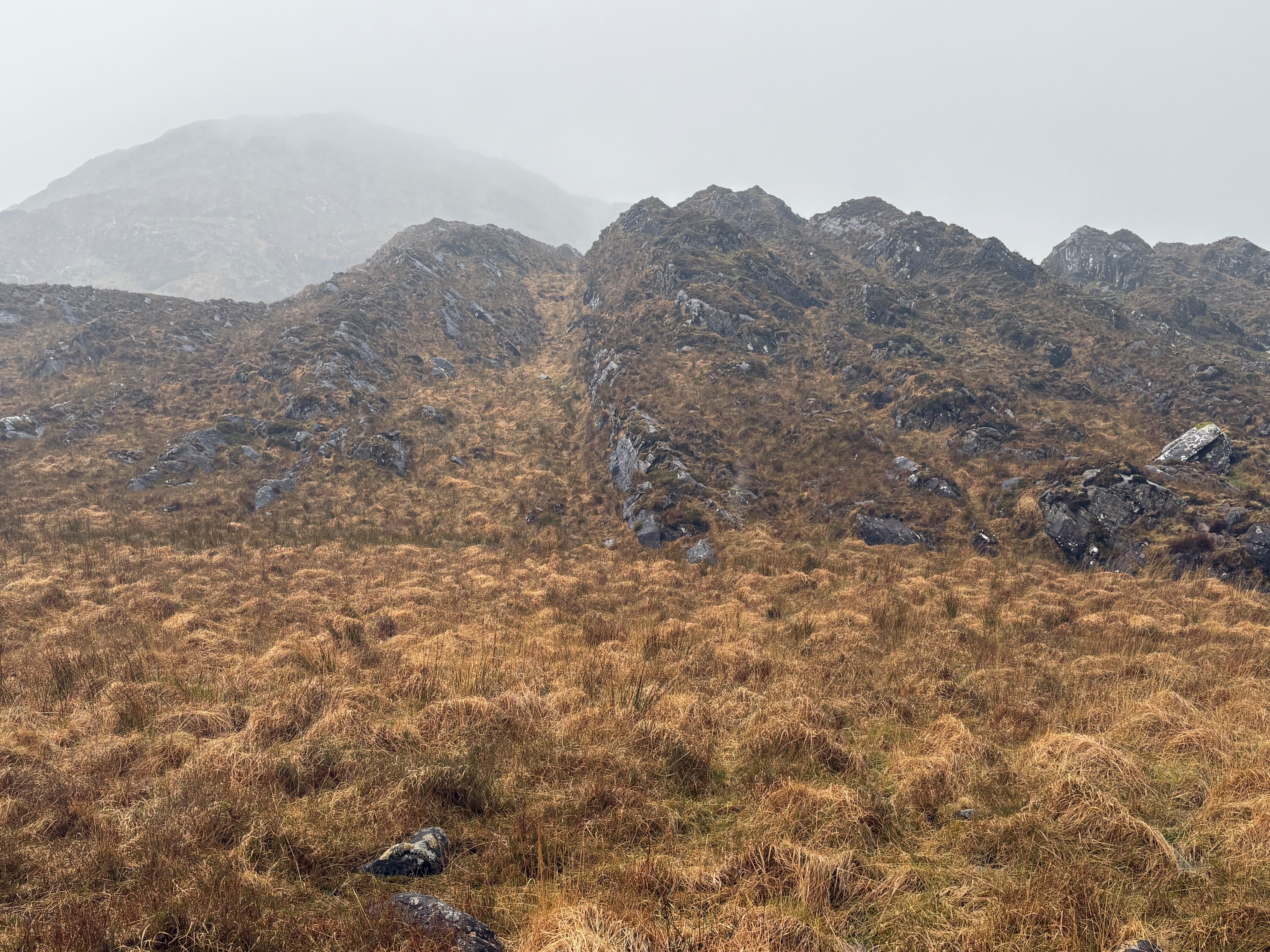
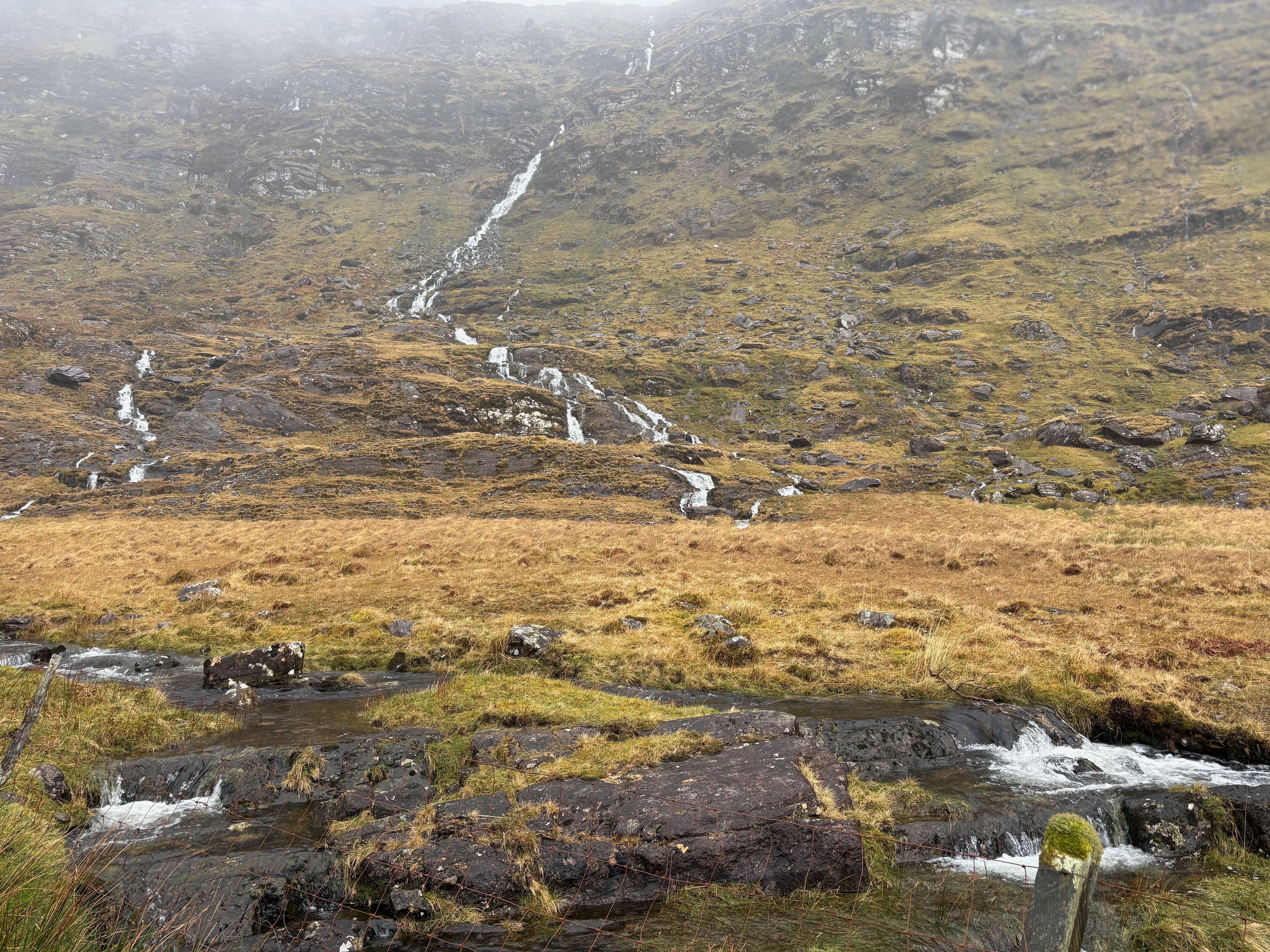
And so, we thought we’d have a easy return to Kenmare and instead got one of those once in a lifetime travel experiences one never bargains for, but in a good way. We plugged in the coordinates for our hotel and the route ended up taking us on a narrow one lane road through what is known as the Kerry Highlands. It’s a foreboding and almost other worldly landscape, bracketed by the MacGillycuddy’s Reeks, Ireland’s highest mountain range and home to Ireland’s highest peak, Carrauntoohil (3,045 feet). As we drove, dozens of waterfalls coursed down the sides of the Reeks, the sound of the water reverberating in the air.
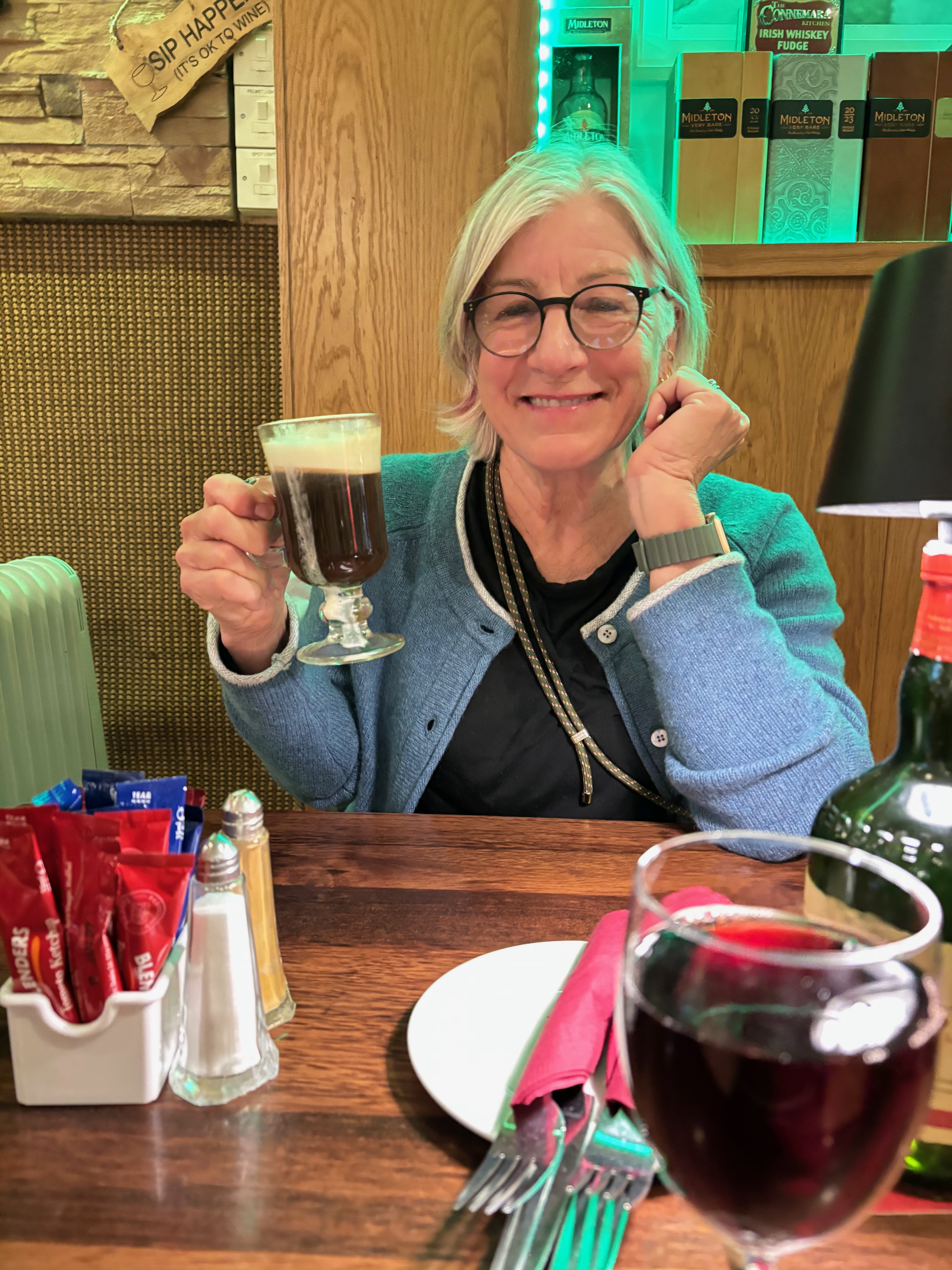
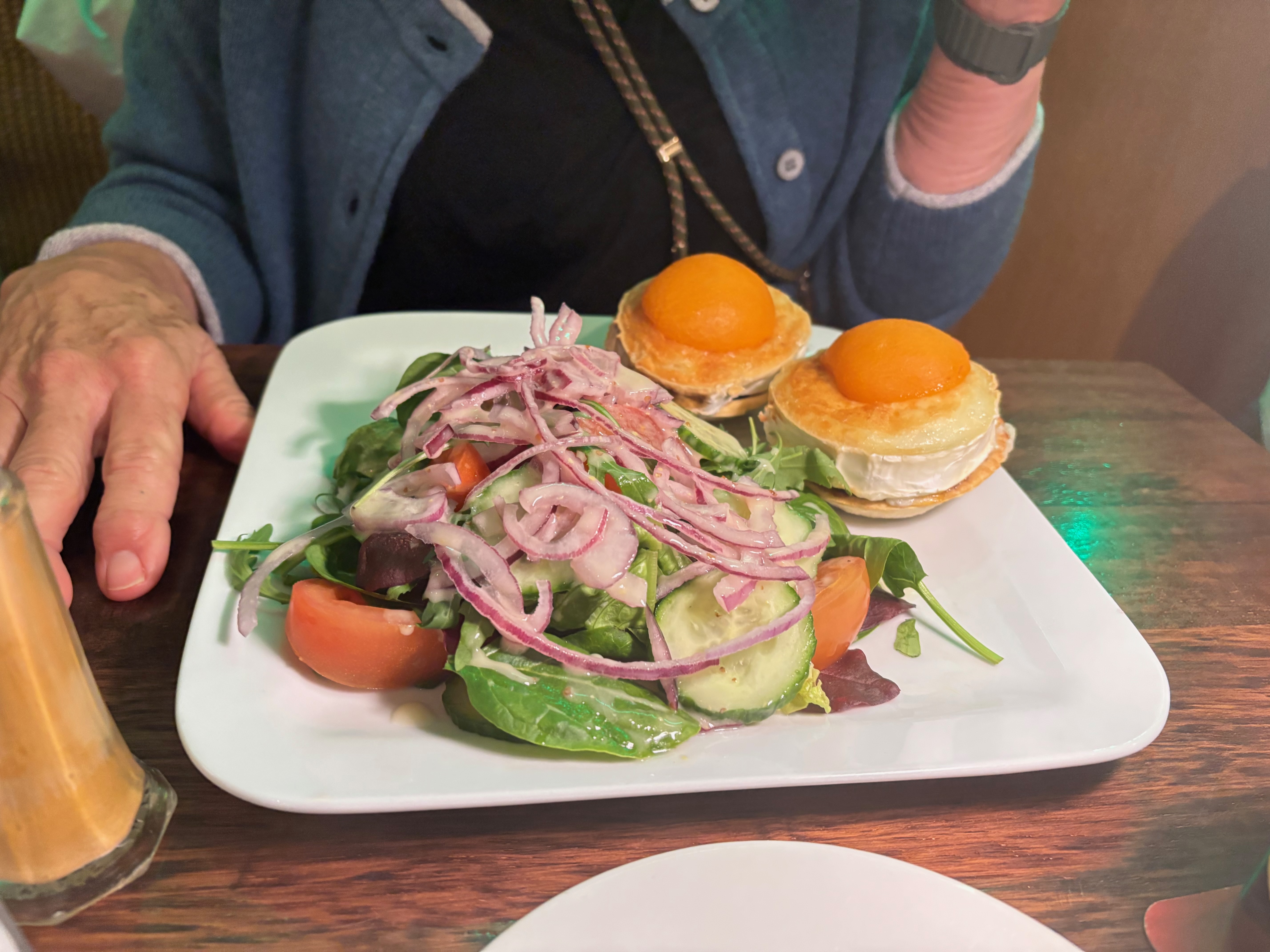
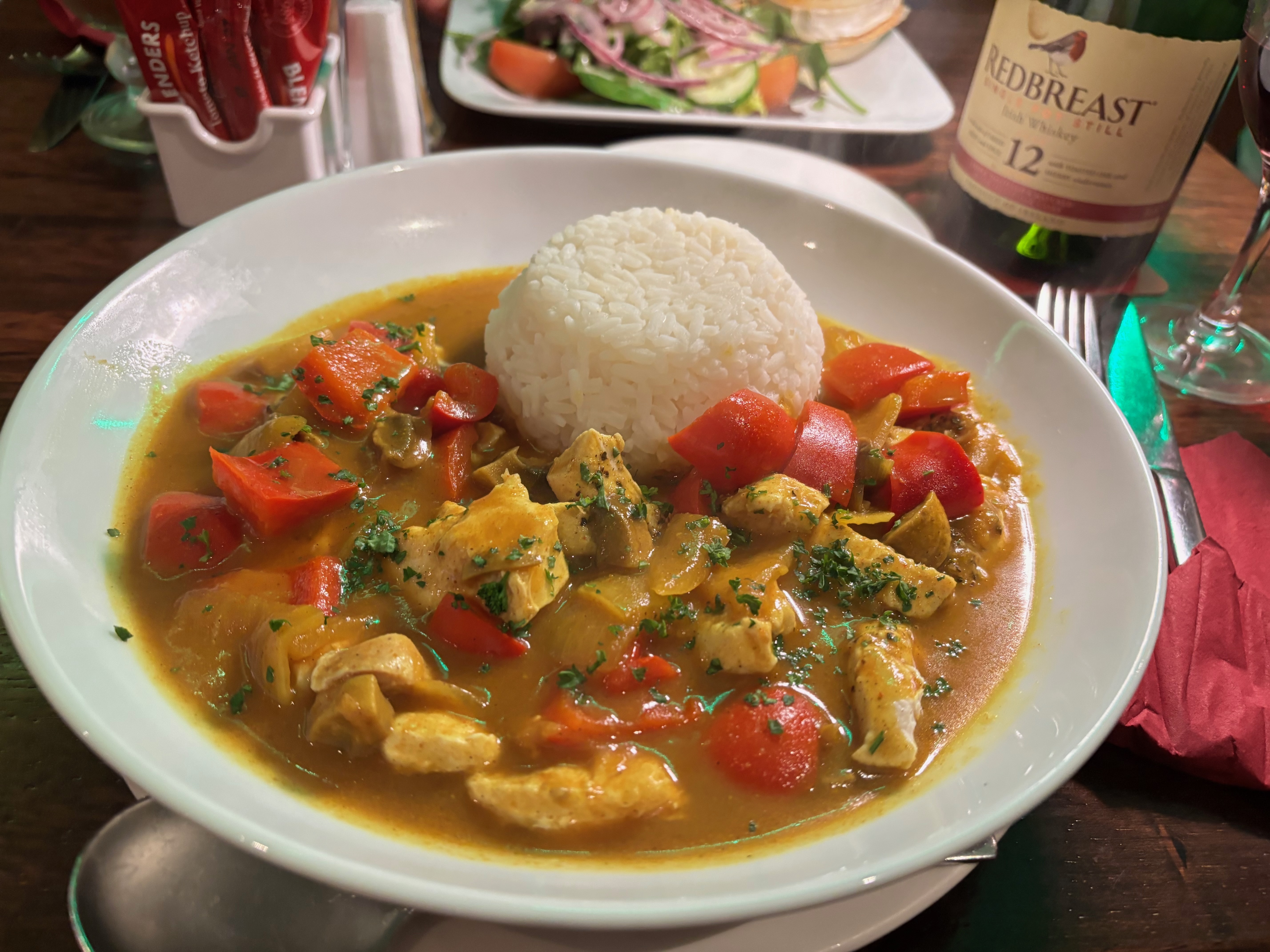
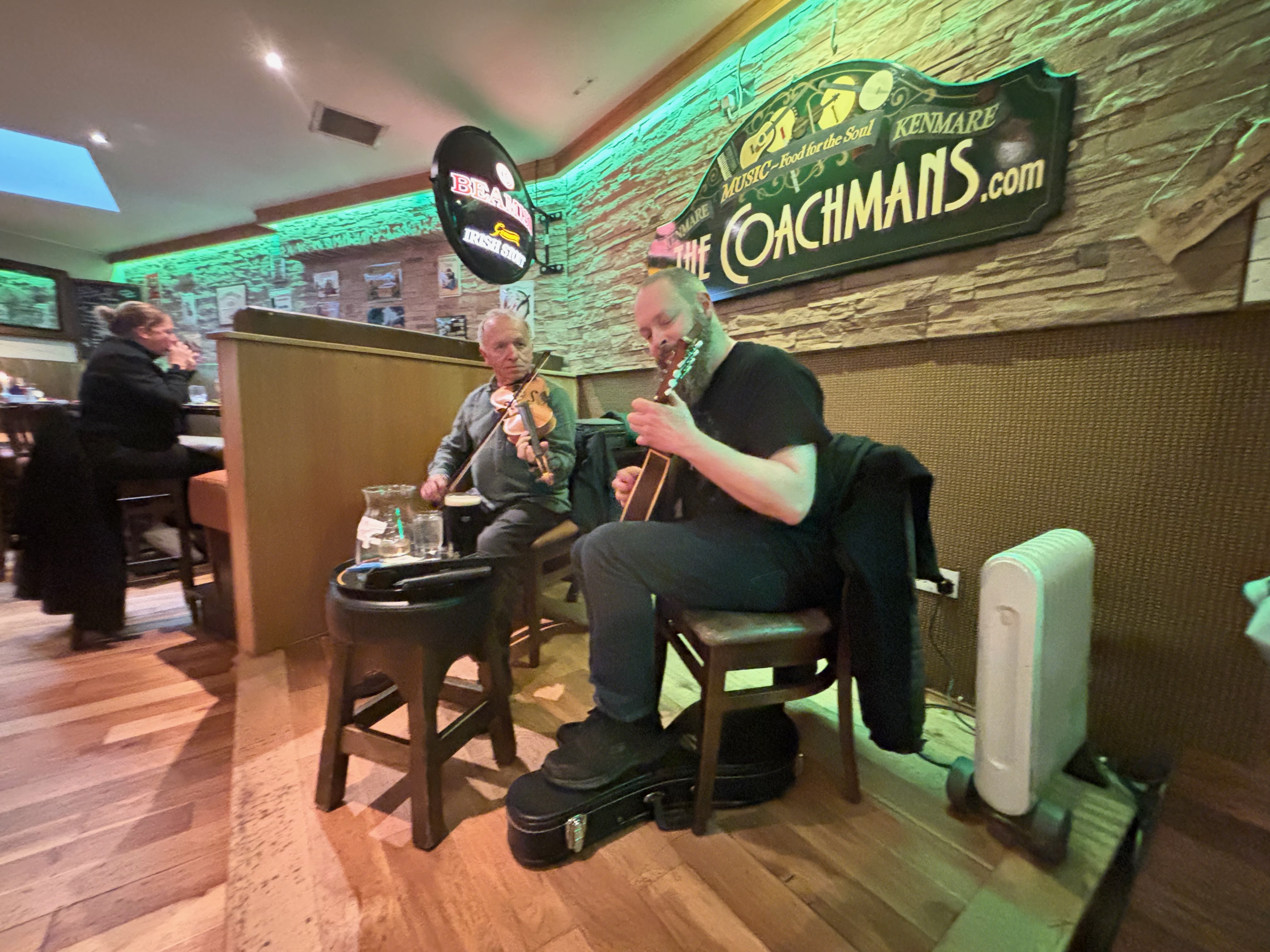
We finally made it back to the hotel and soon after went downstairs for dinner. Joanna started with an Irish Coffee while I had a glass of Shiraz to go along with her Goat’s Cheese & Fig Tartlets with red onion and served with a mixed dressed salad while I enjoyed the Chicken Curry (cooked with peppers and mushrooms), served with savory rice and mango chutney. We were again treated to music that night, a duo playing a violin and a mandolin, a nice way to experience a good meal. Along with a half pint of beer our tab came to 78.60 Euros ($87.78) with tip, and it would wrap up our stay in Kenmare as we would head to Dingle the next day.
Links
Maison Gourmet: https://www.maisongourmetkenmare.com/
Staigue Fort: https://voicesfromthedawn.com/staigue-fort/
Skelligs Chocolate: https://skelligschocolate.com/
Skellig Experience: https://skelligexperience.com/
Valentia Island Heritage Center: https://www.valentiaislandheritagecentre.org/
Cahergall Stone Fort: https://voicesfromthedawn.com/cahergall/
Discover more from 3jmann
Subscribe to get the latest posts sent to your email.


