April 15 – 17
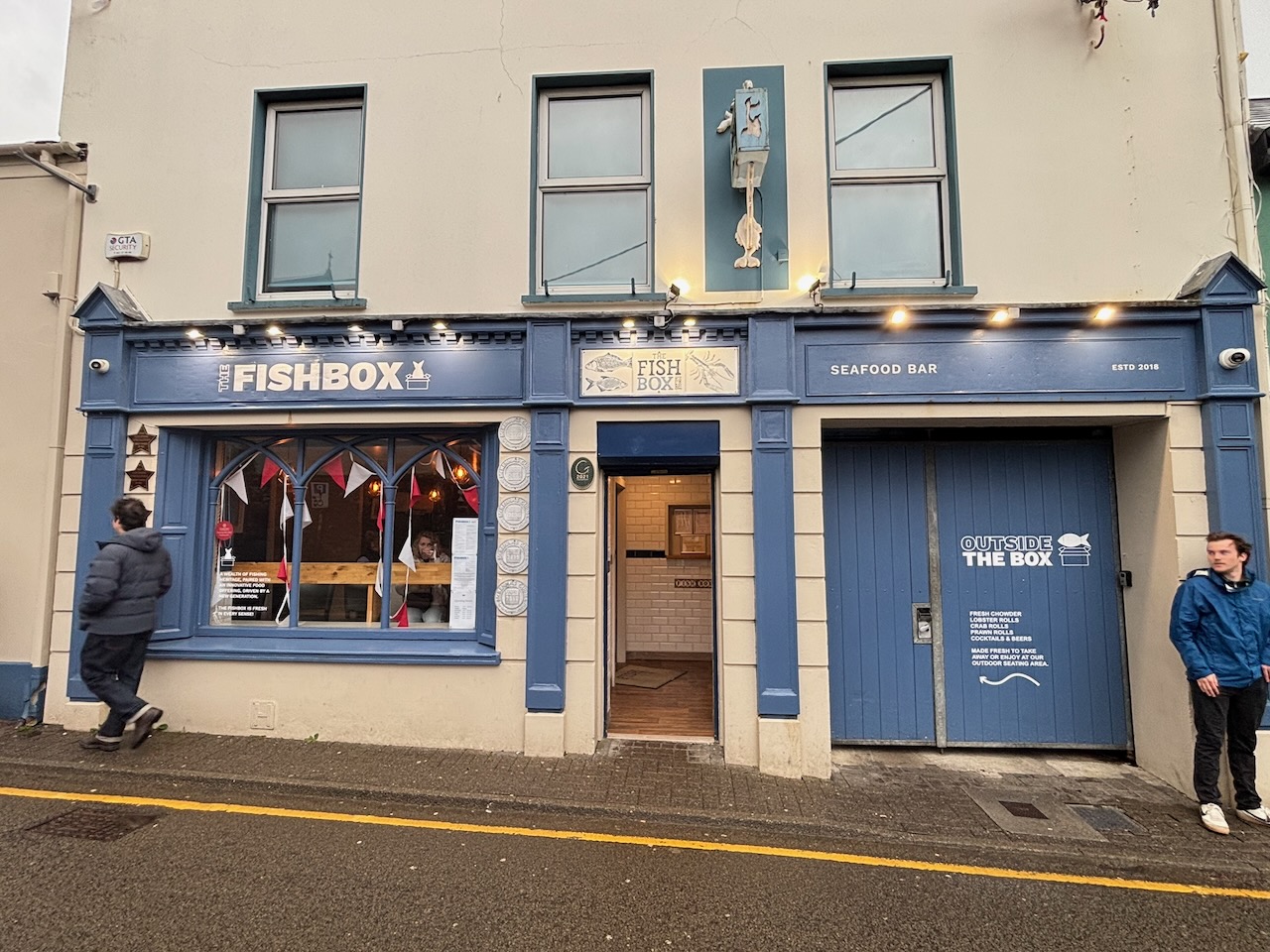
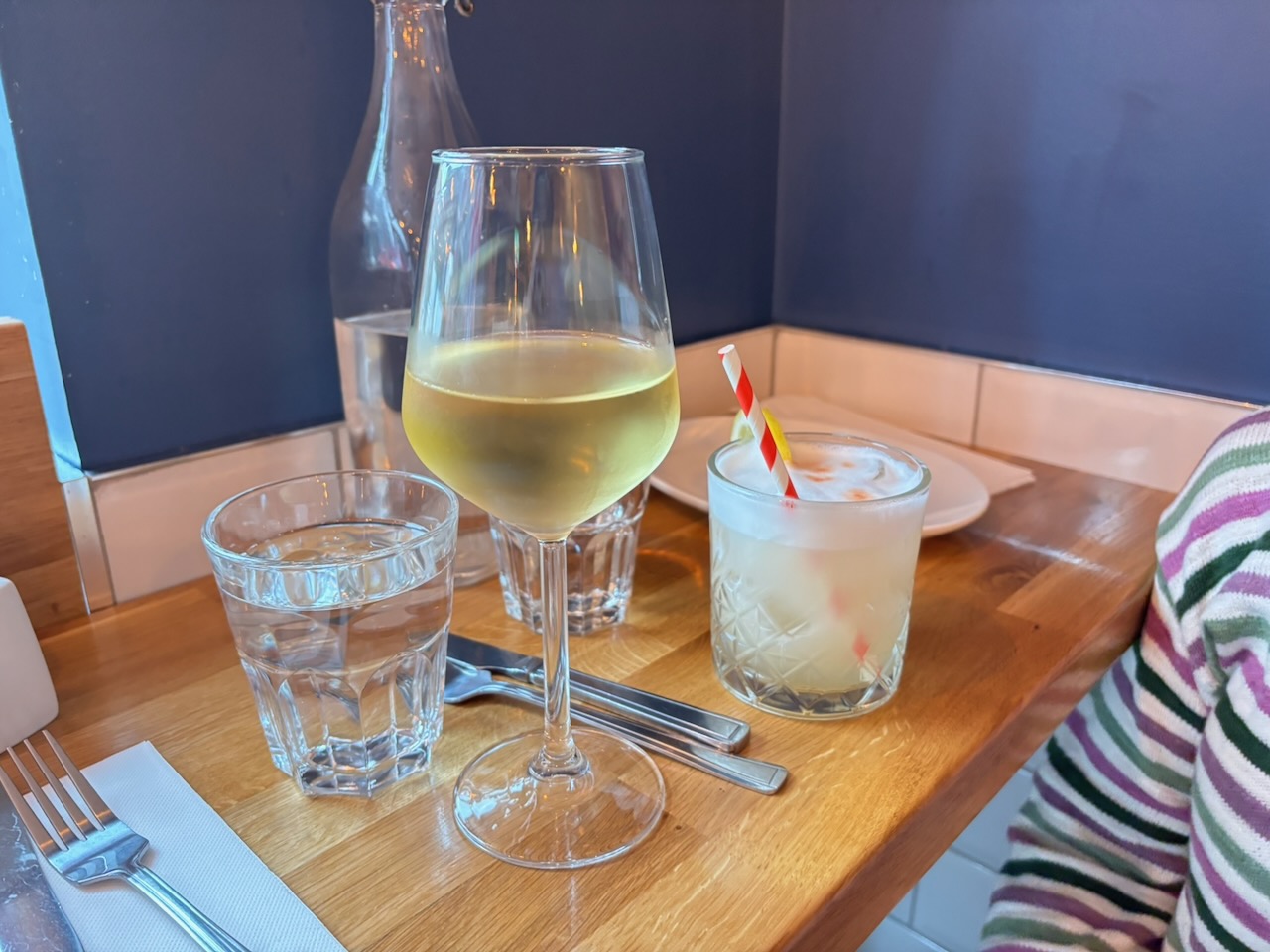
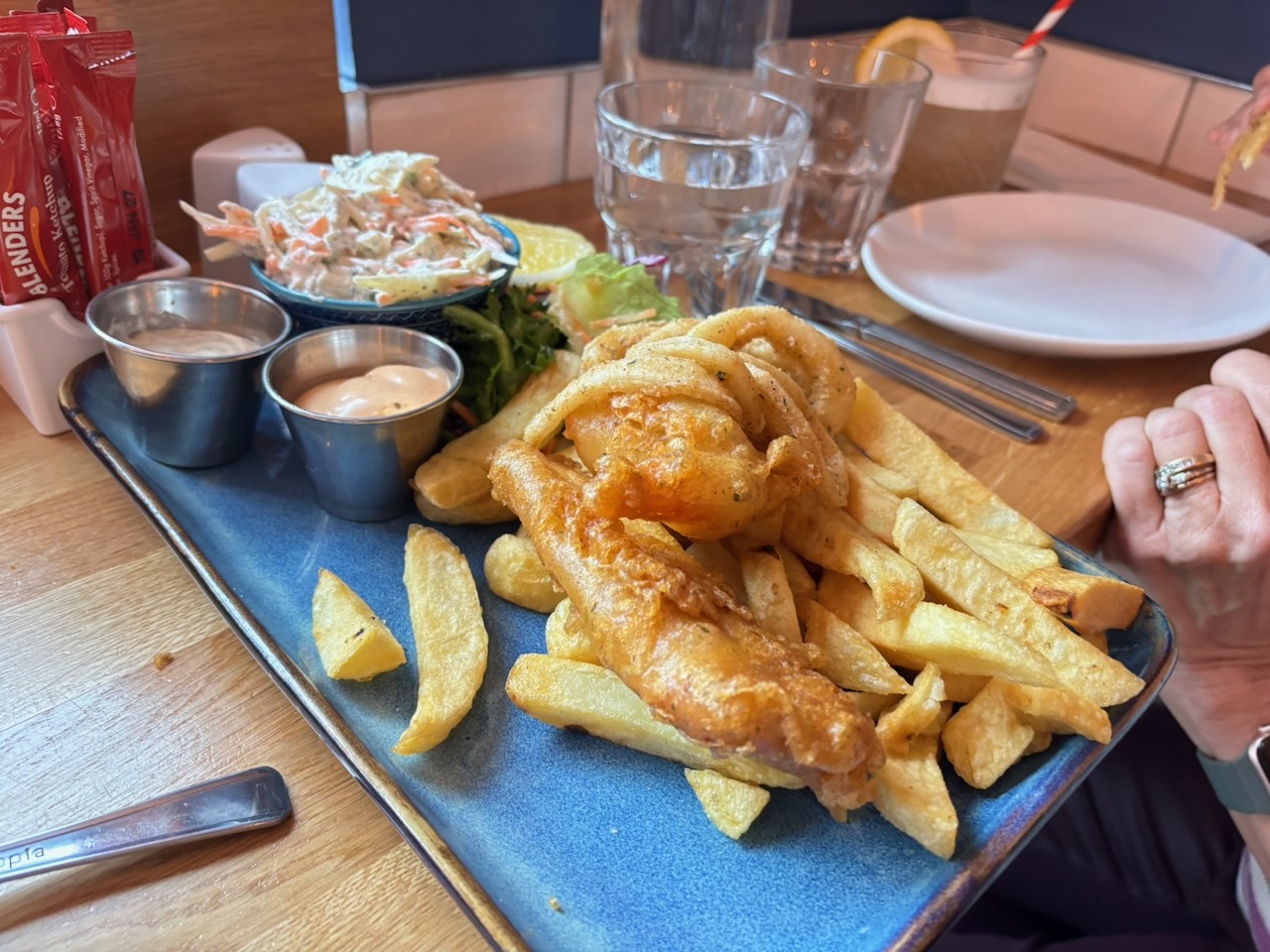
After relaxing for a bit, we set out for dinner back down the street at another St. Steves recommendation, The Fish Box. As we hadn’t had a chance to book a reservation, we were lucky to be able to get seated at a table ledge set against the front window, which was perfectly fine for us. Joanna ordered a cocktail while I had a glass of Chardoney as we split an excellent order of fish and chips. Sitting at that location we got to watch people flowing by on the sidewalk, a nice way to spend a bit of time. Our tab came to 54.50 Euros ($64.40) staying in line for what we had come to expect for the meals we were consuming.
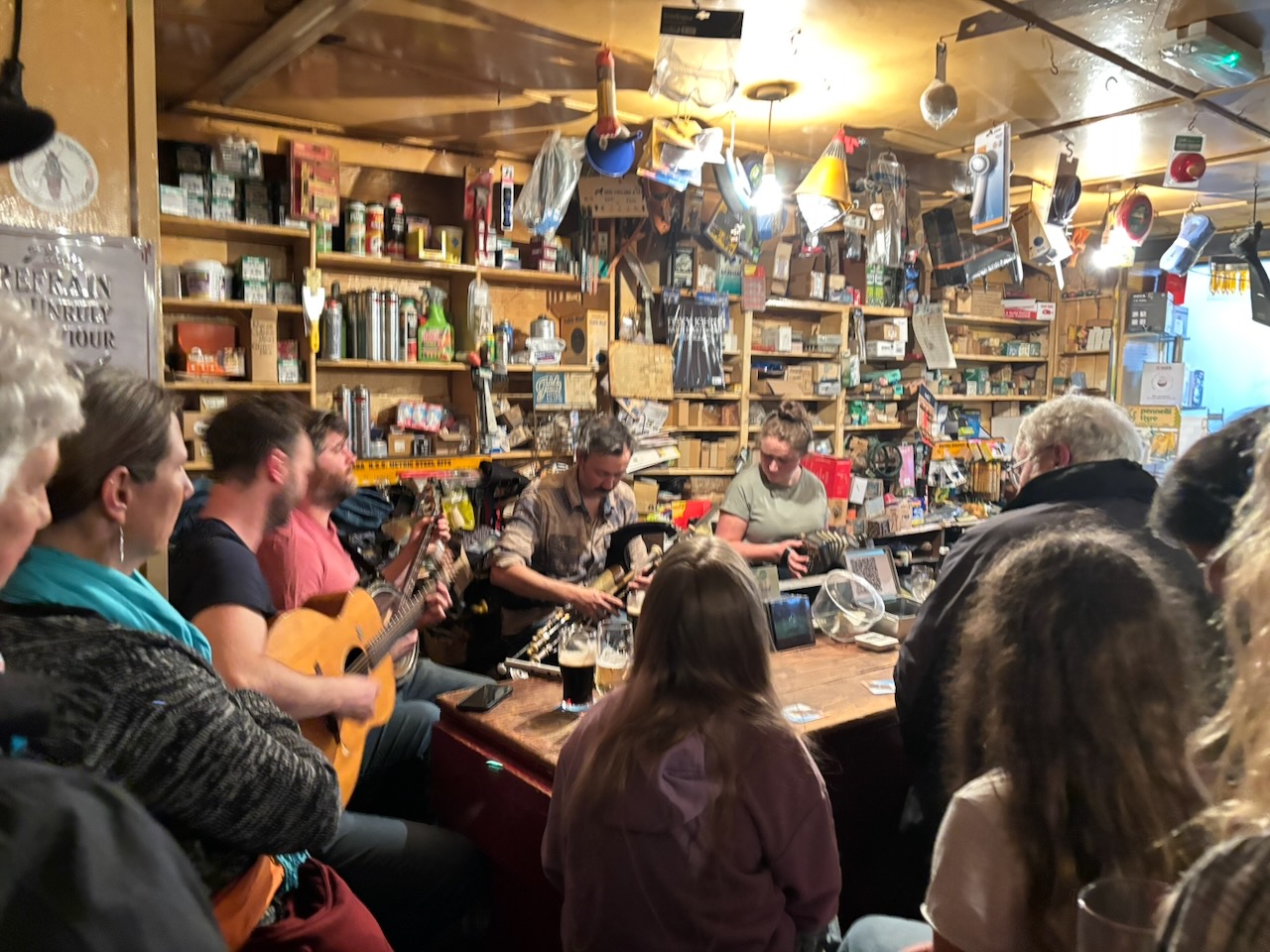
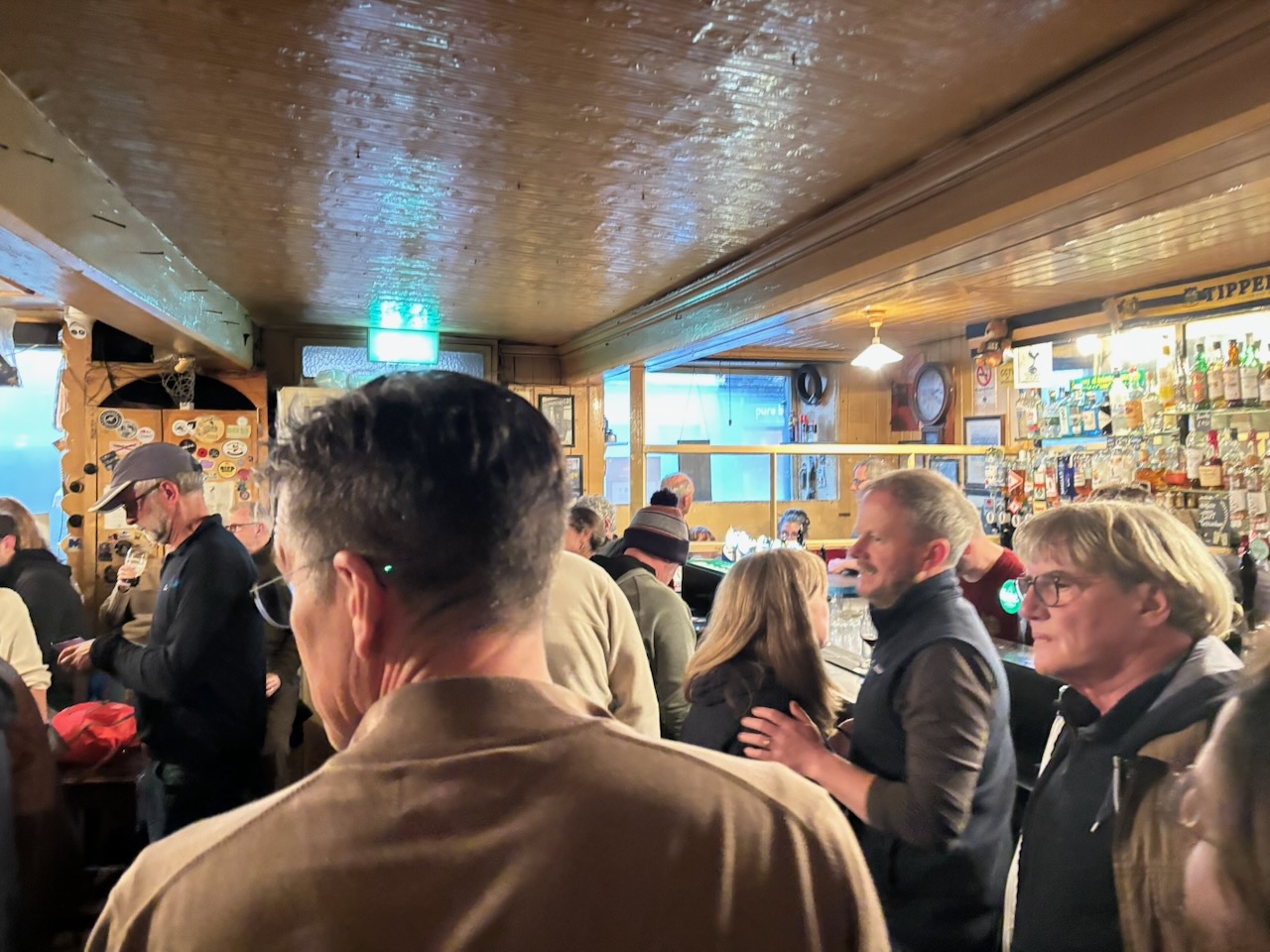
With the evening ahead of us, it made sense (if you know us) to return to Foxy John’s for another session of beer, whiskey and music. The band that night was a four-piece combo which changed up the usual timbre of the music we had heard to date. As we were finishing our first round of drinks, we noticed a husband and wife who had been on the tour with us that morning and after asking if they wanted some company, we joined them at a high-top table in the adjacent room (the music is now muted, but you get to sit down unlike out in the bar). They owned a farm somewhere in the Midwest and our lively conversation with them took us through another round or two, a nice break from spending time with just the two of us.
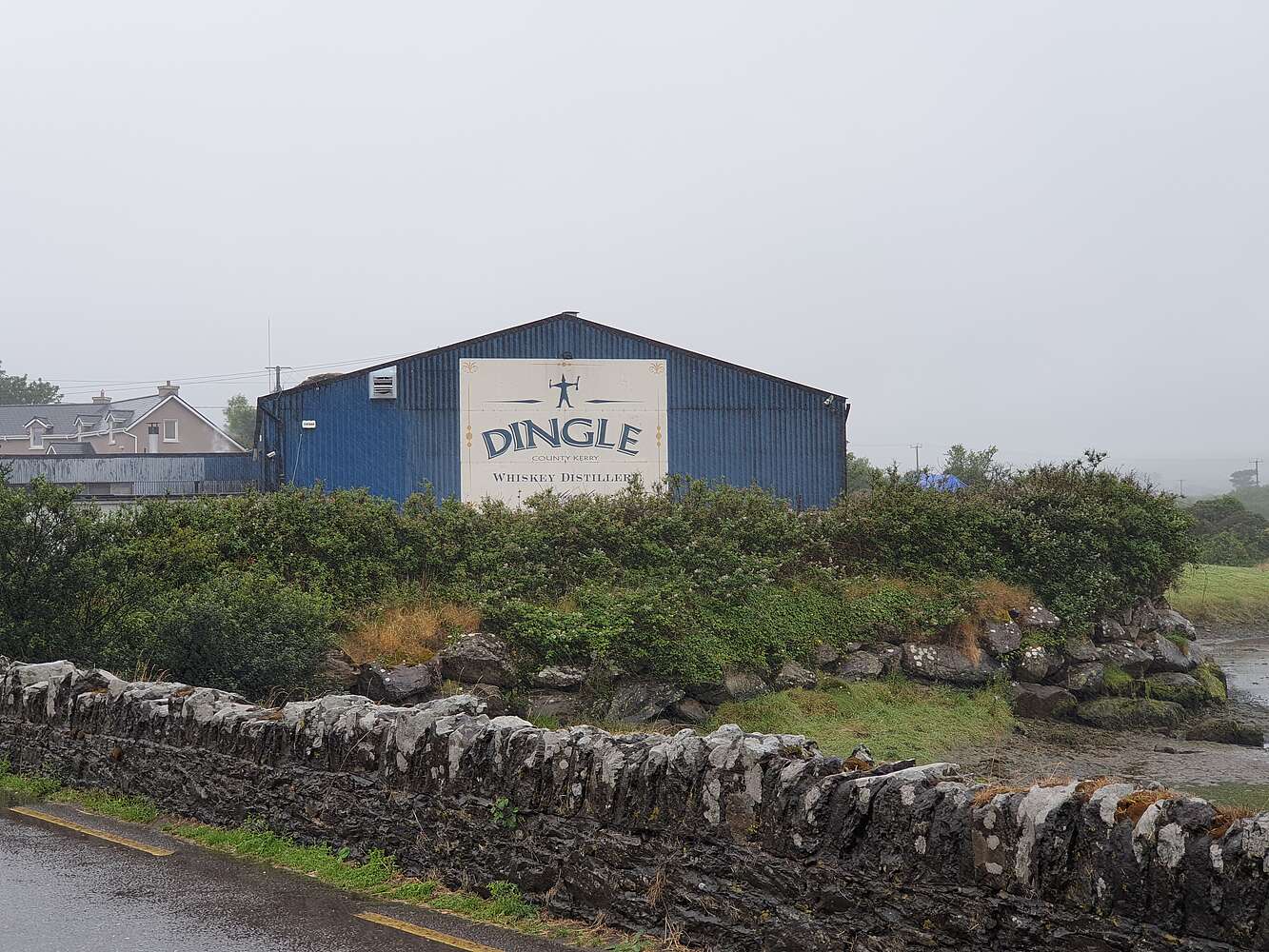
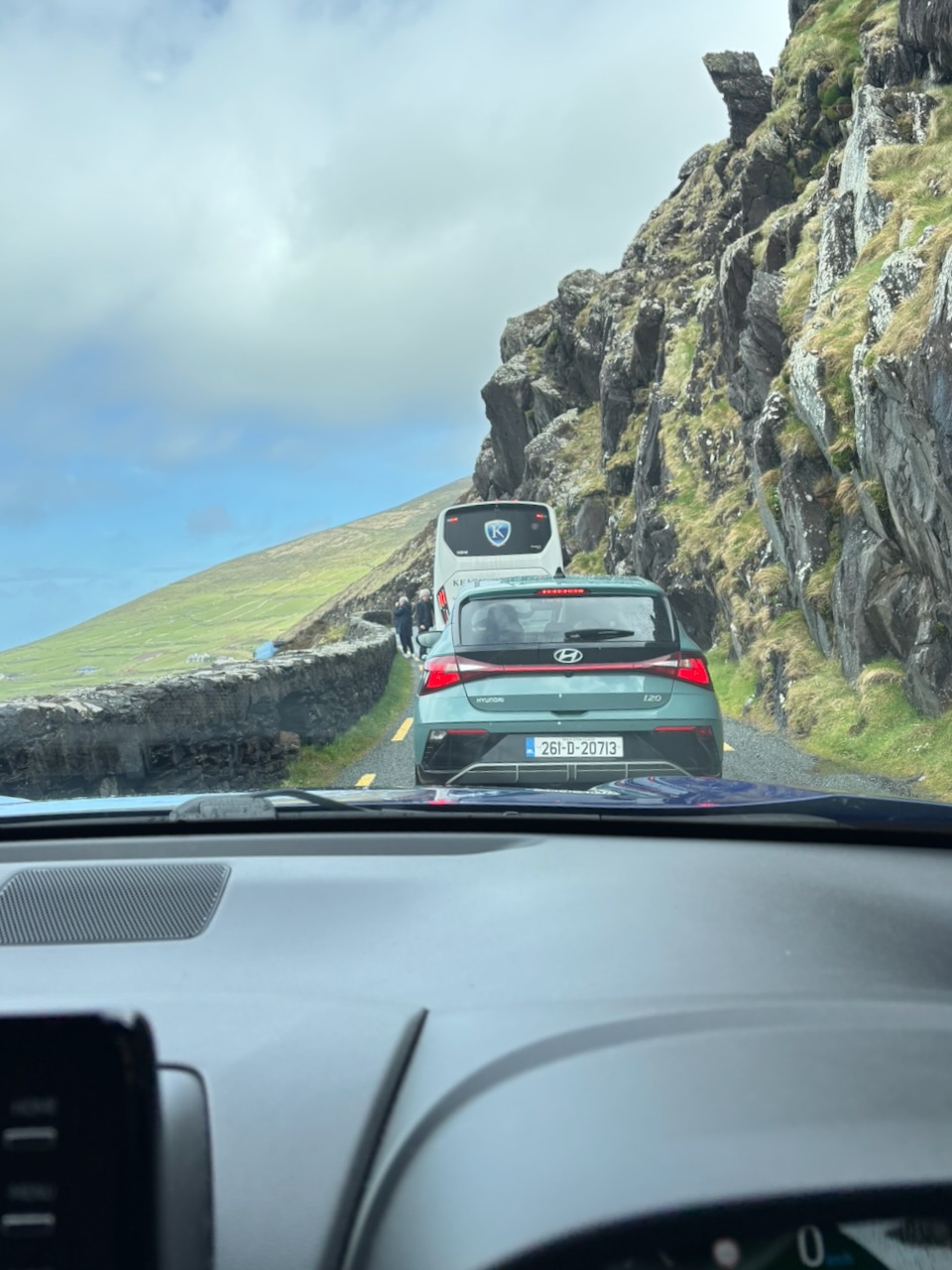
The next day, after another hearty breakfast, we took off in the car to drive the Slea Head Loop, heading in the same recommended direction as the day before. Driving out of town, we passed by Dingle Distillery, once the site of a corn-grinding mill in the 18th century and today it’s a modern warehouse that produces highly respected whiskeys and a prizewinning gin, some of which we would sample at the bars in town.
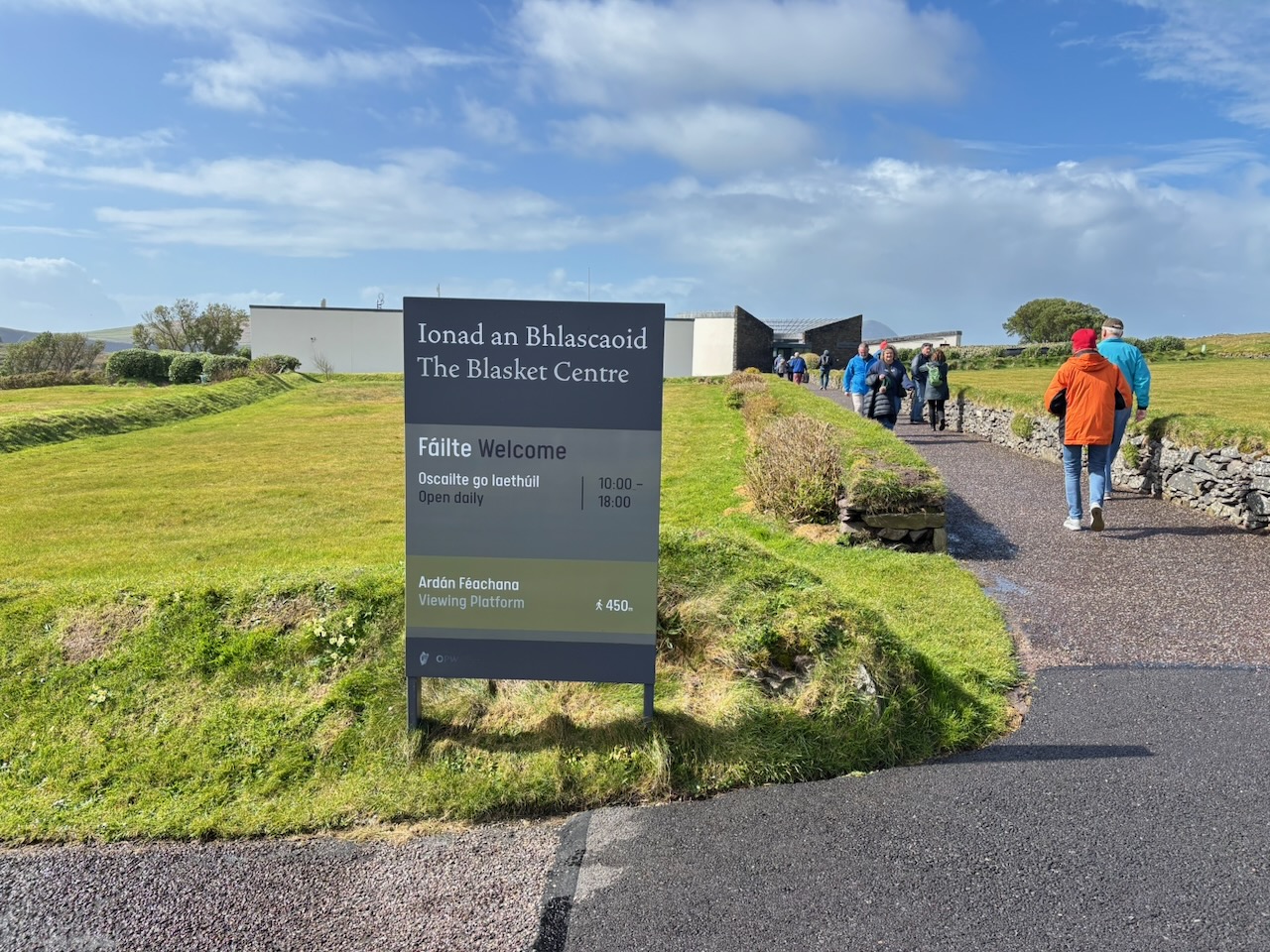
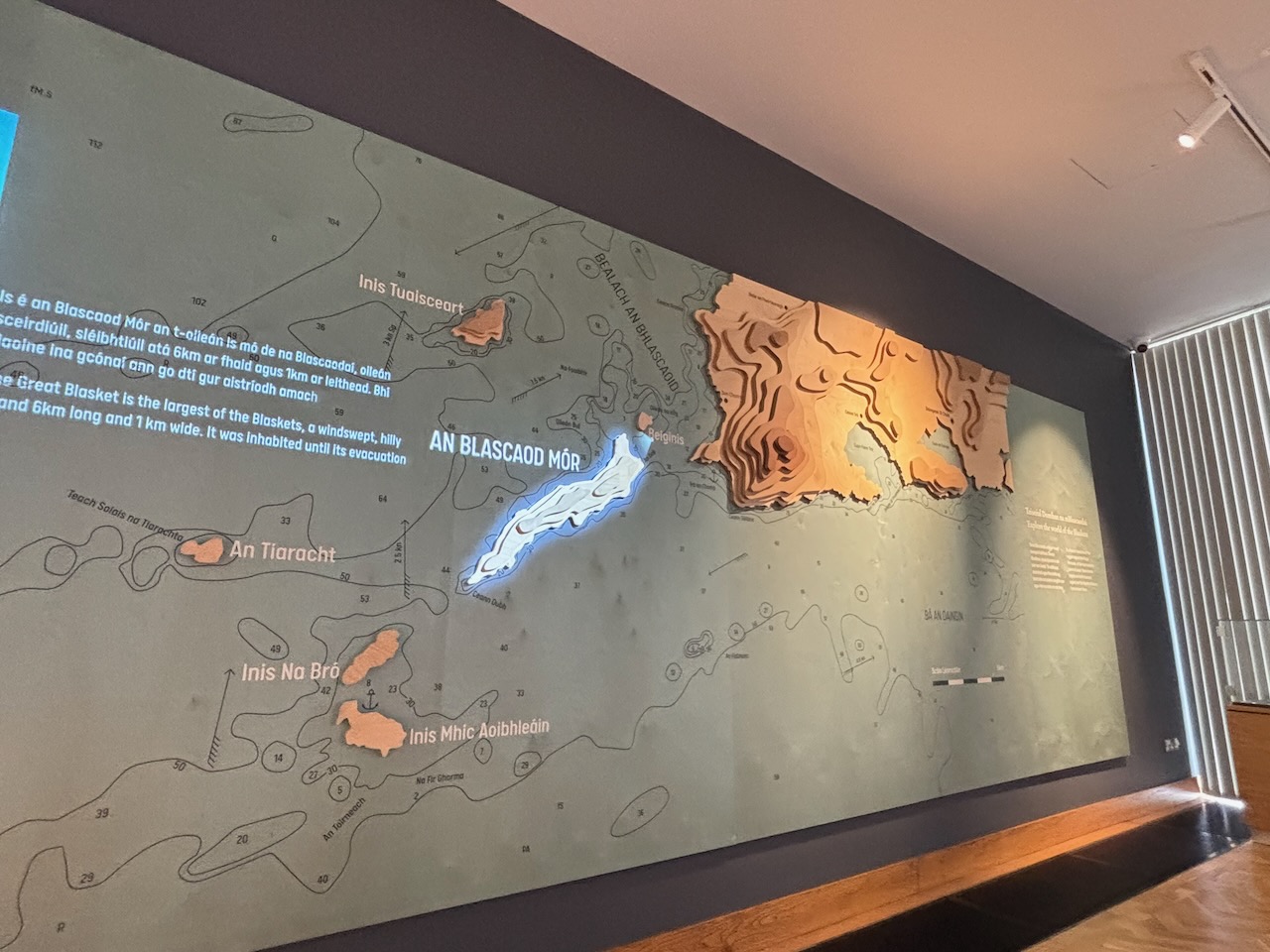
Soon enough we left town and after some driving on the busy narrow road and rounding Slea Head landed at our first stop, the Blasket Centre. This state-of-the-art Blascaod and Gaelic heritage center gives visitors the best look possible at the language, literature, and way of life of Blasket Islanders. The building’s award-winning design integrates the surrounding landscape into an artistic interpretation.
You enter and after paying the fee of 4 Euros ($4.70) you bear right down a long hallway where at your first stop you watch a an exceptional 15-minute video, which is a virtual visit to the island back when it was inhabited. The islands were peopled until 1954 by a completely Irish-speaking population and at its peak, had 175 residents. The population declined to 22 by 1953 and the government evacuated most of the remaining residents to the mainland in November 1953 because of increasingly extreme winter weather that left the island’s ageing population cut off from emergency services.
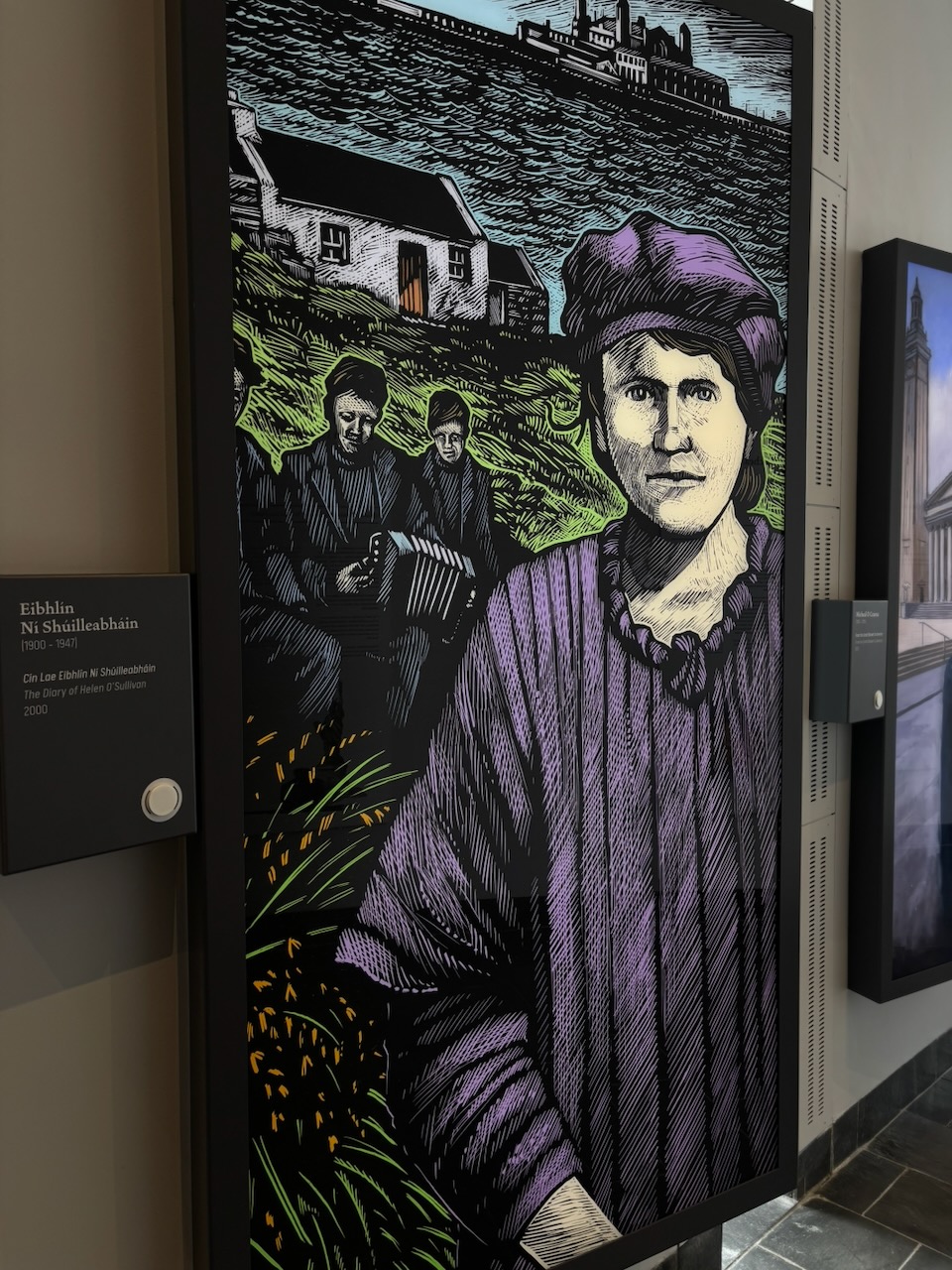
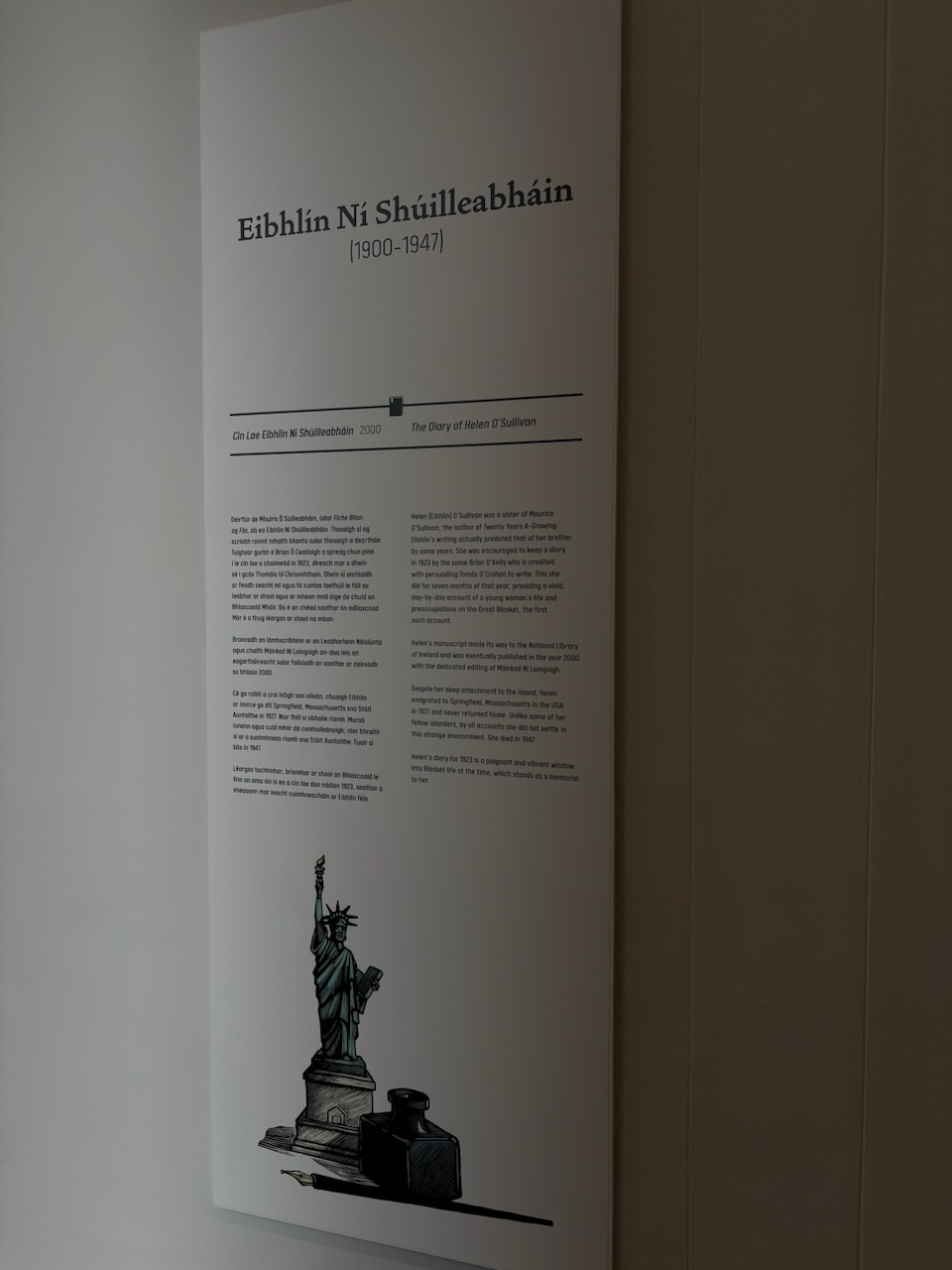
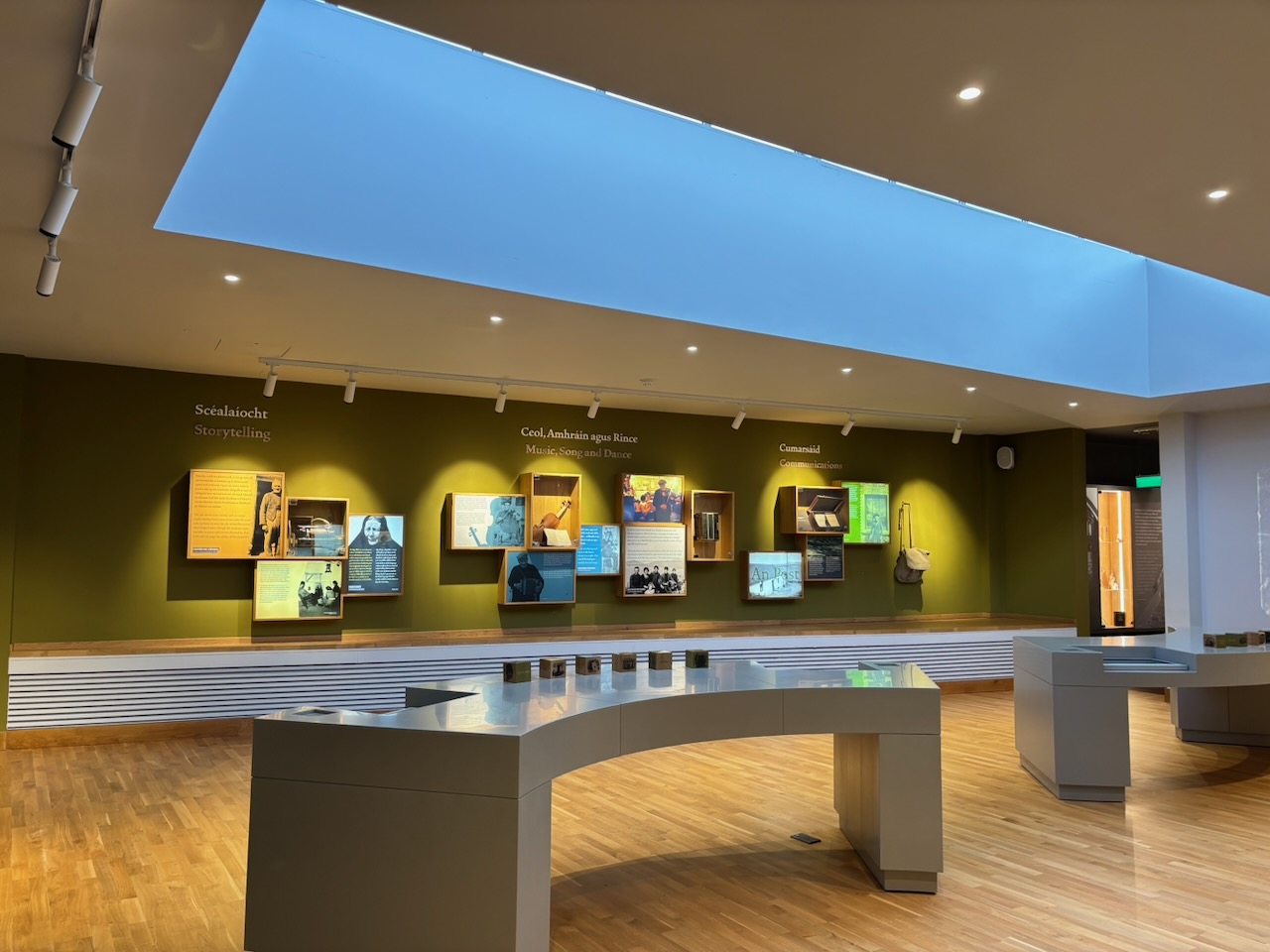
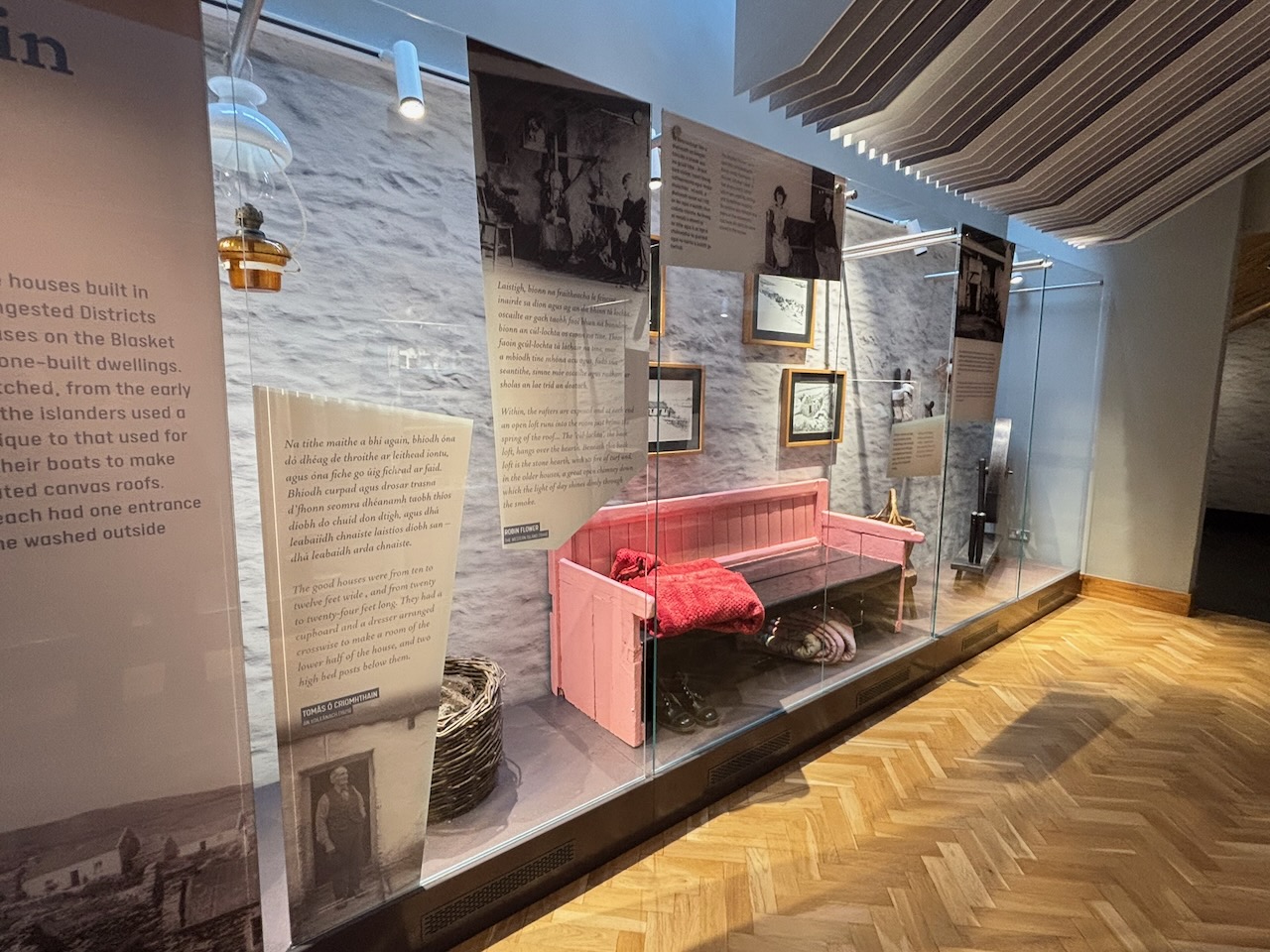
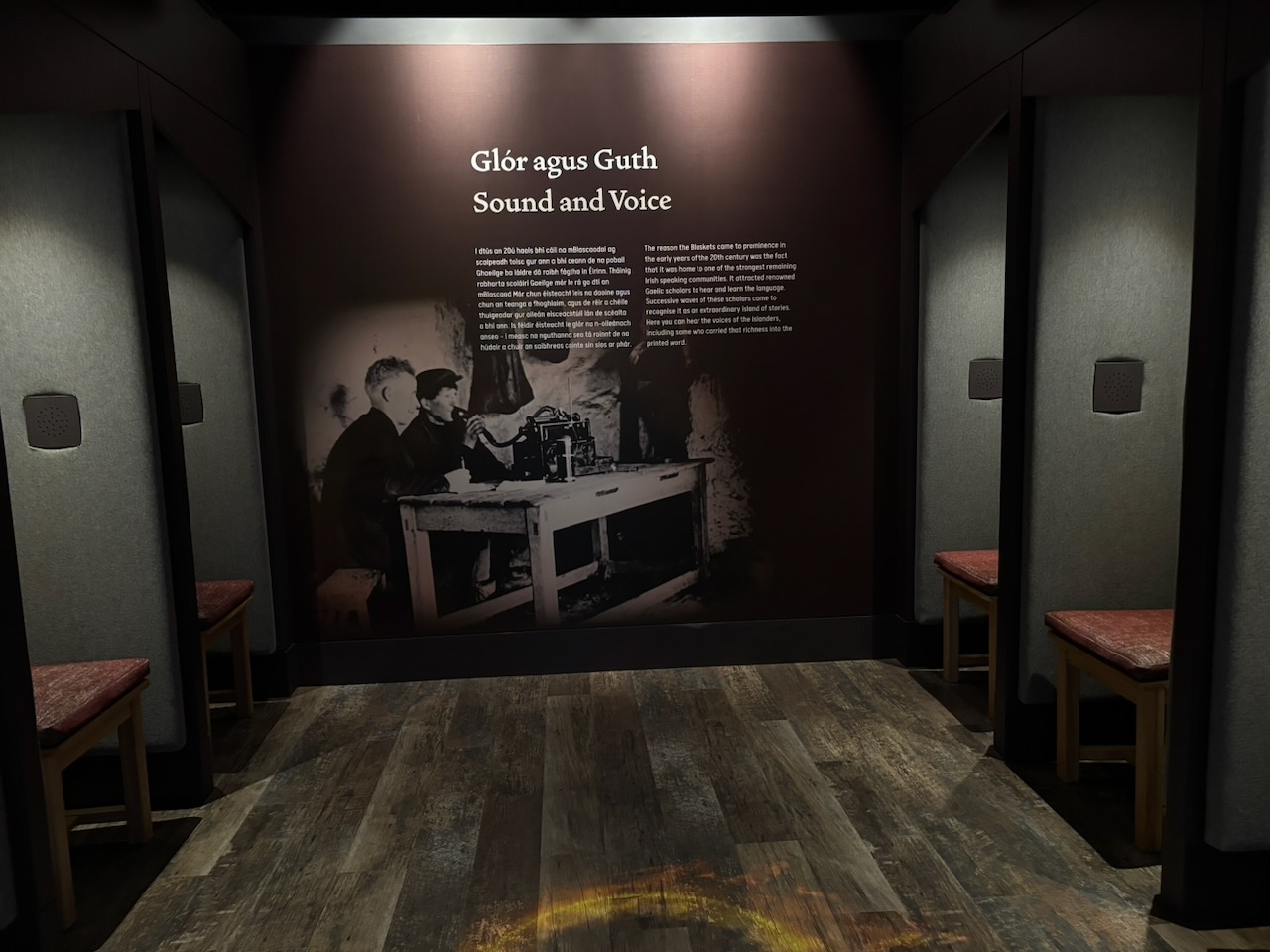
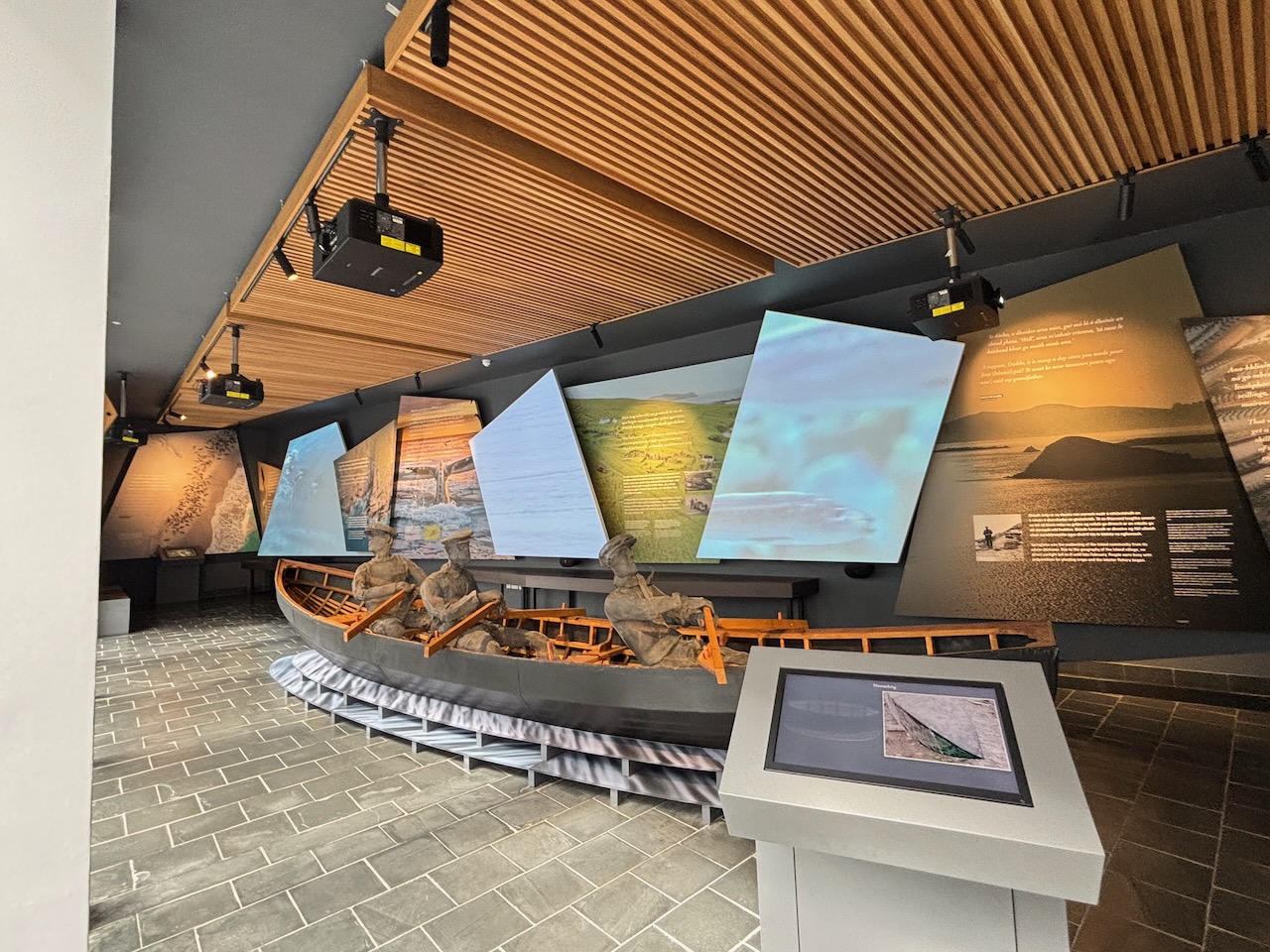
As you continue down the hallway, there are additional exhibits. “Blasket Lives” covers various aspects of this unique lifestyle—from birth to marriage to death—with first-person accounts and artifacts. “Sound and Voice” immerses you in the rich sound of the Gaelic language. “Over the Threshold” displays everyday items from island homes. “On Sea and Land” explores the fishing tradition that saved the islanders during the famine. It was all interesting and moving and we spent quite a bit of time working our way through the exhibits.
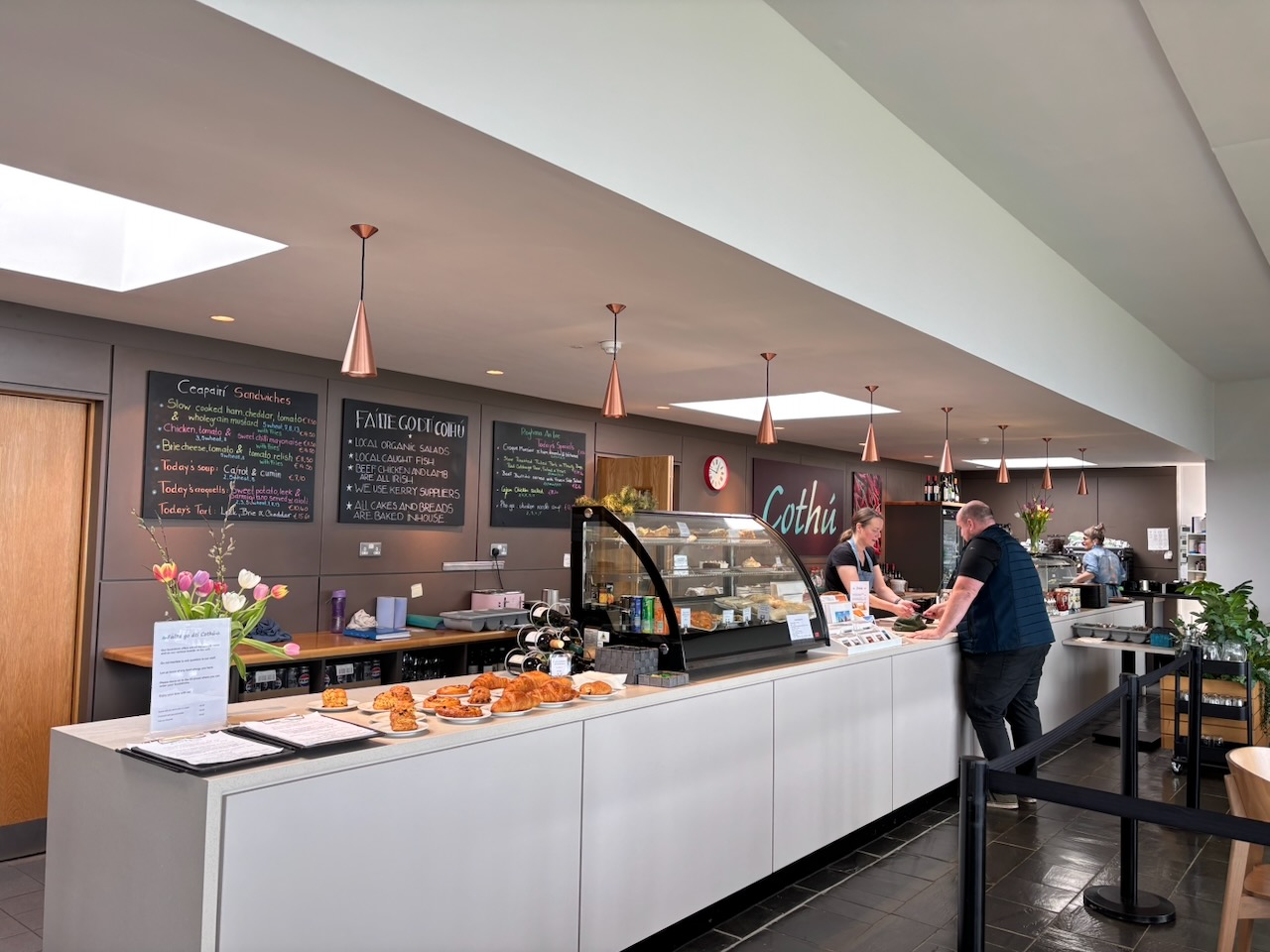
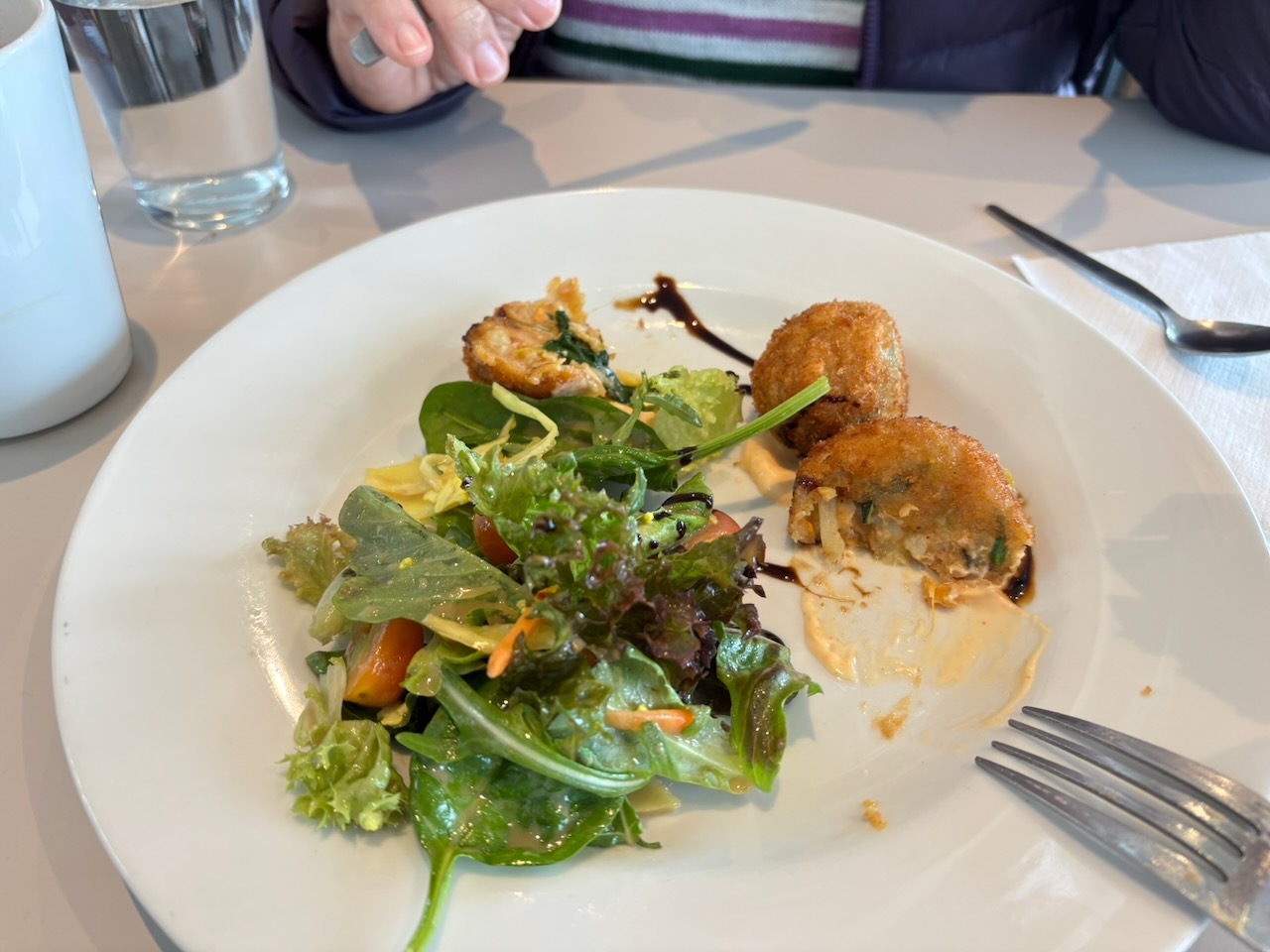
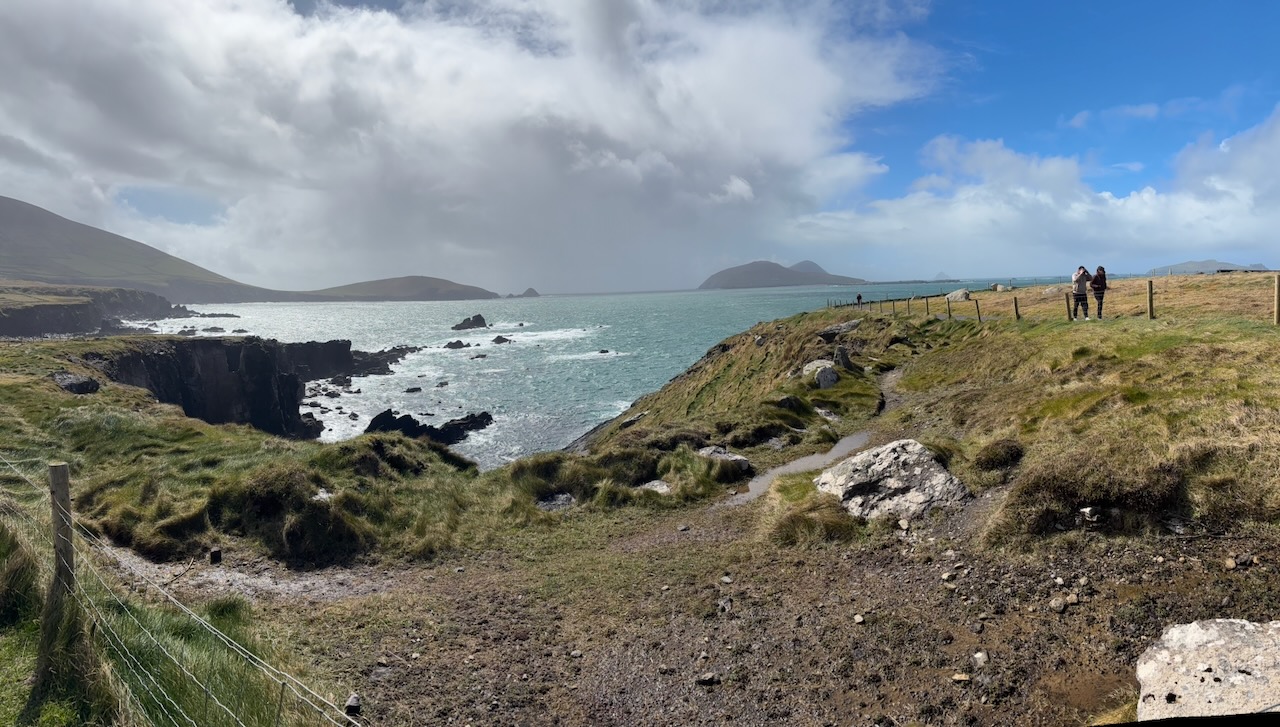
Finished with the hallway, we retreated to the café for a snack where we split an excellent small plate of Sweet Potato, Leek & Goat’s Cheese Croquettes with Citrus Aioli & Salad and two coffees for 18.20 Euros ($21.52). Once finished, we perused the gift shop, making note of a book, Twenty Years A Growing by Maurice O’Sullivan, which we would buy and both of us would read upon our return home. We then walked out to a point with a good view of the Islands.
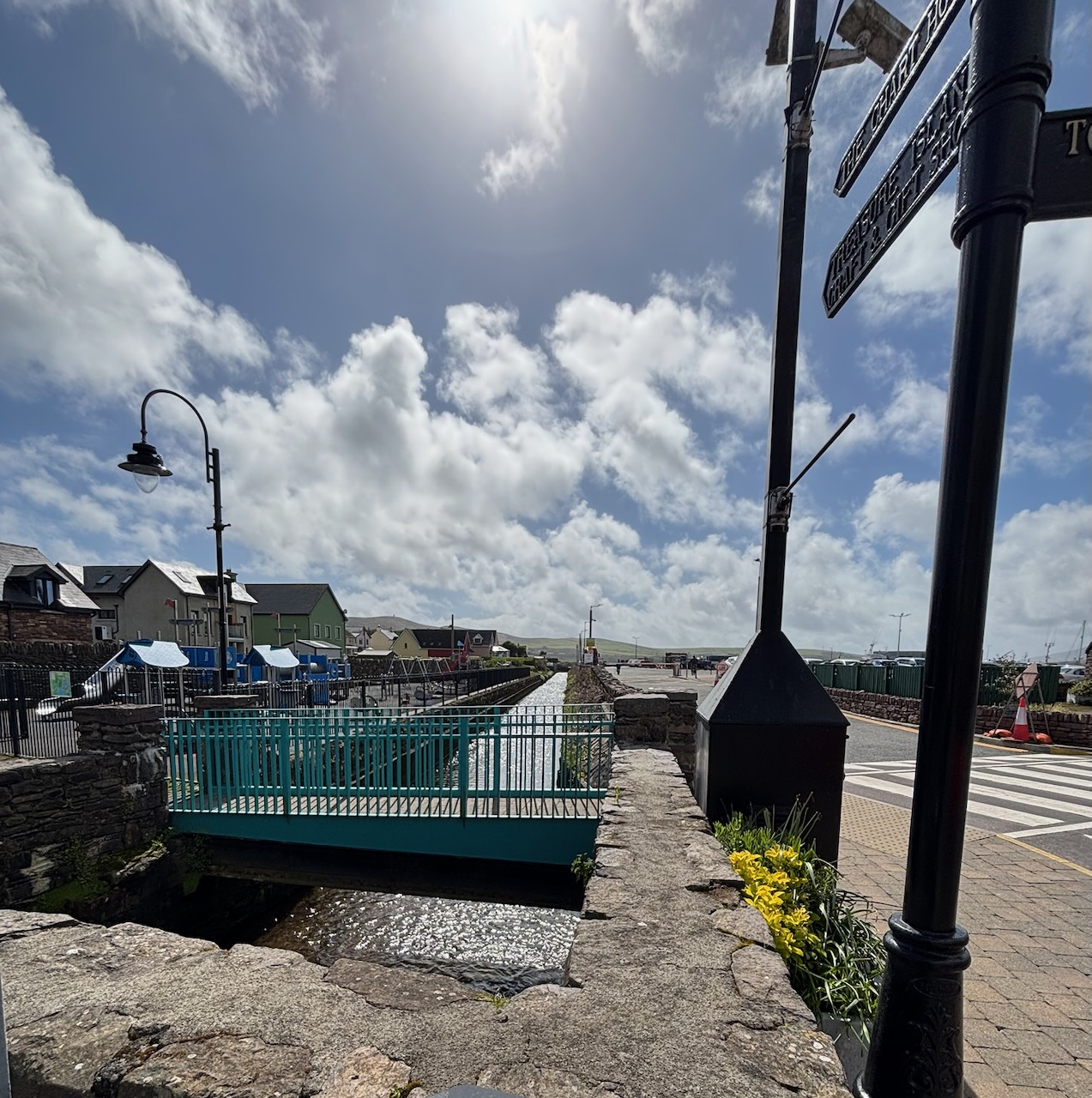
We finished driving the loop, not needing to stop at any of the other sights as we had caught most of them the day before. We parked the car back at the B&B and walked back to the harbor to begin the St. Steves walking tour of town. We started with the tiny bridge, built upon part of the original train line coming into Dingle (the westernmost train station in all of Europe from 1891 to 1953). The train once picked up fish in Dingle; its operators boasted that the cargo would be in London markets within 24 hours. And, as with other Irish towns we’ve visited so far, all the land beyond the old buildings you see today has been reclaimed from the sea.
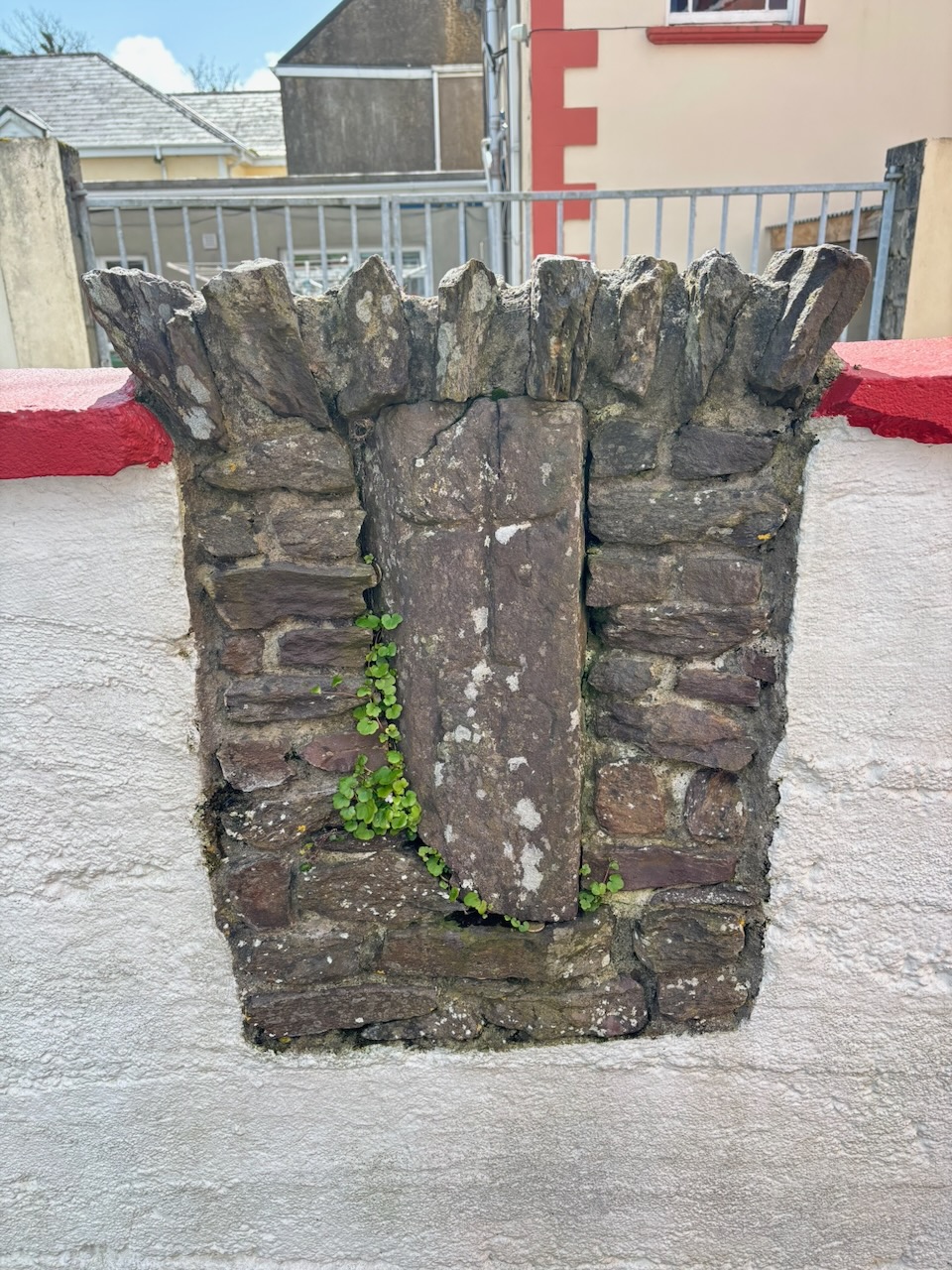
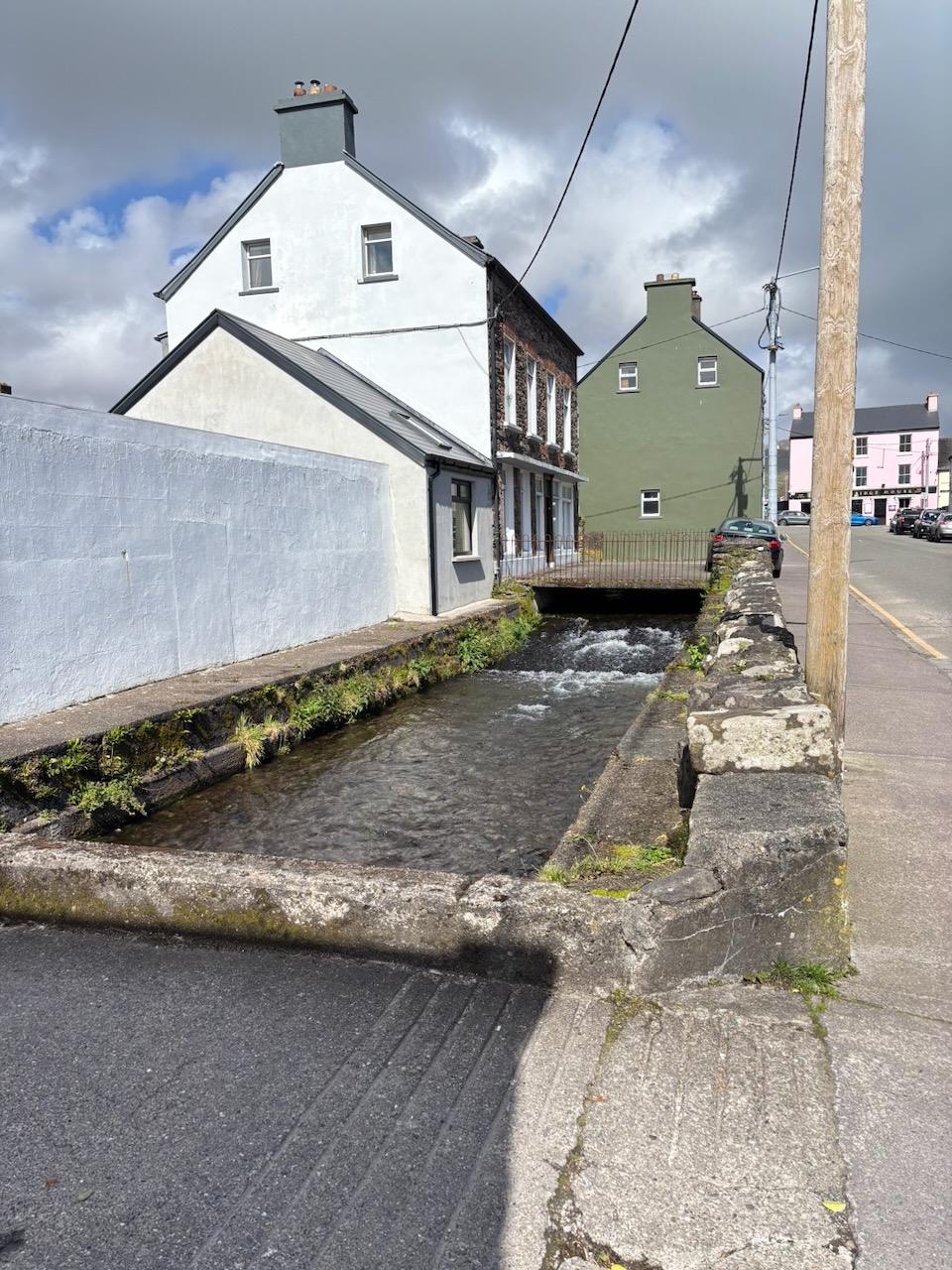
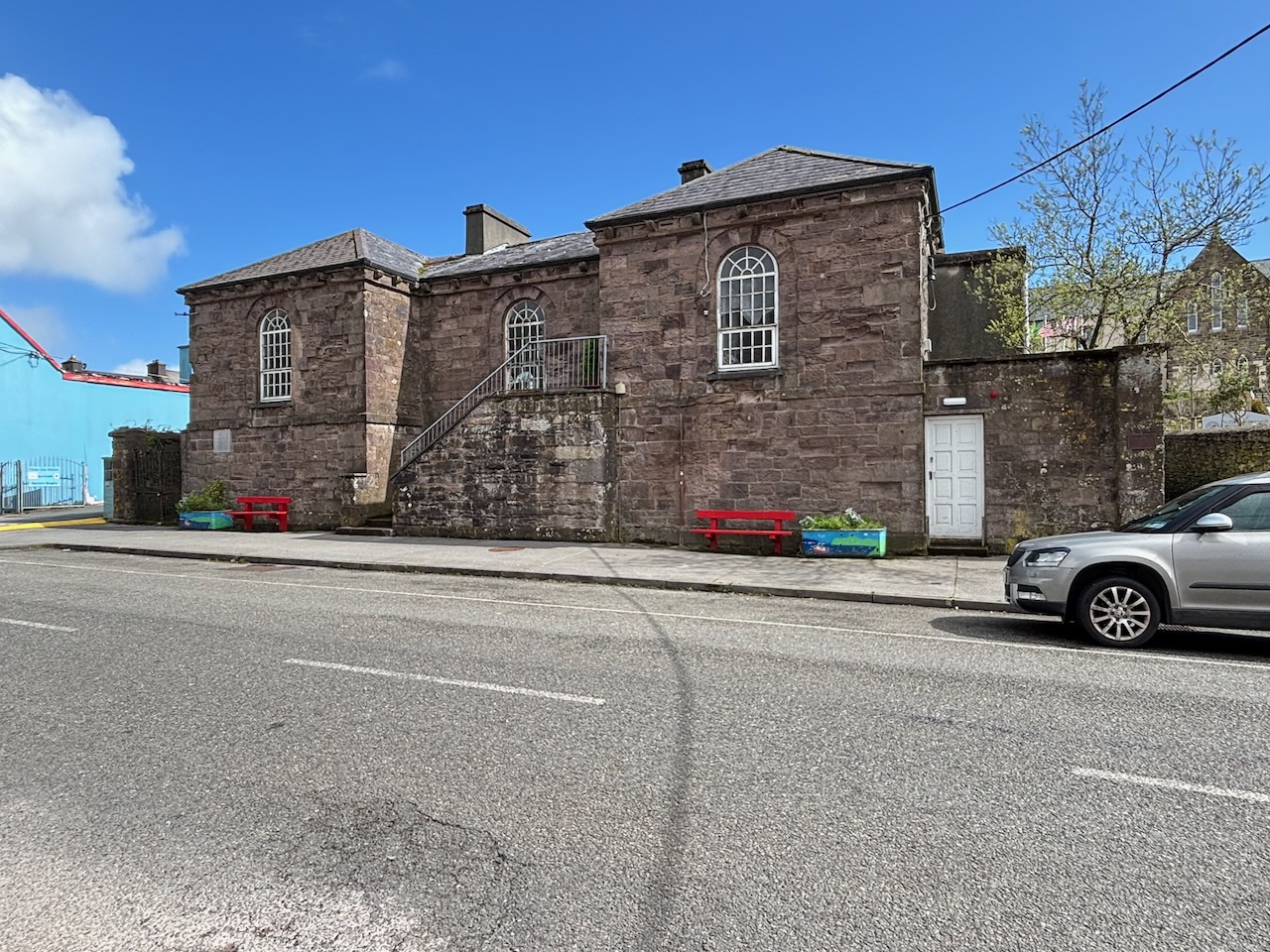
We left the waterfront and retraced our steps up the street called the Mall where we stopped to examine an old stone etched with a cross embedded in the top of the wall, marking the site of a former Celtic holy well, a sacred spot for people here 2,000 years ago. Continuing on next to a fast-running stream, we paused to view the 19th century courthouse before hitting Main Street (our B&B is on this street, to the right and up a hill) and turning left.
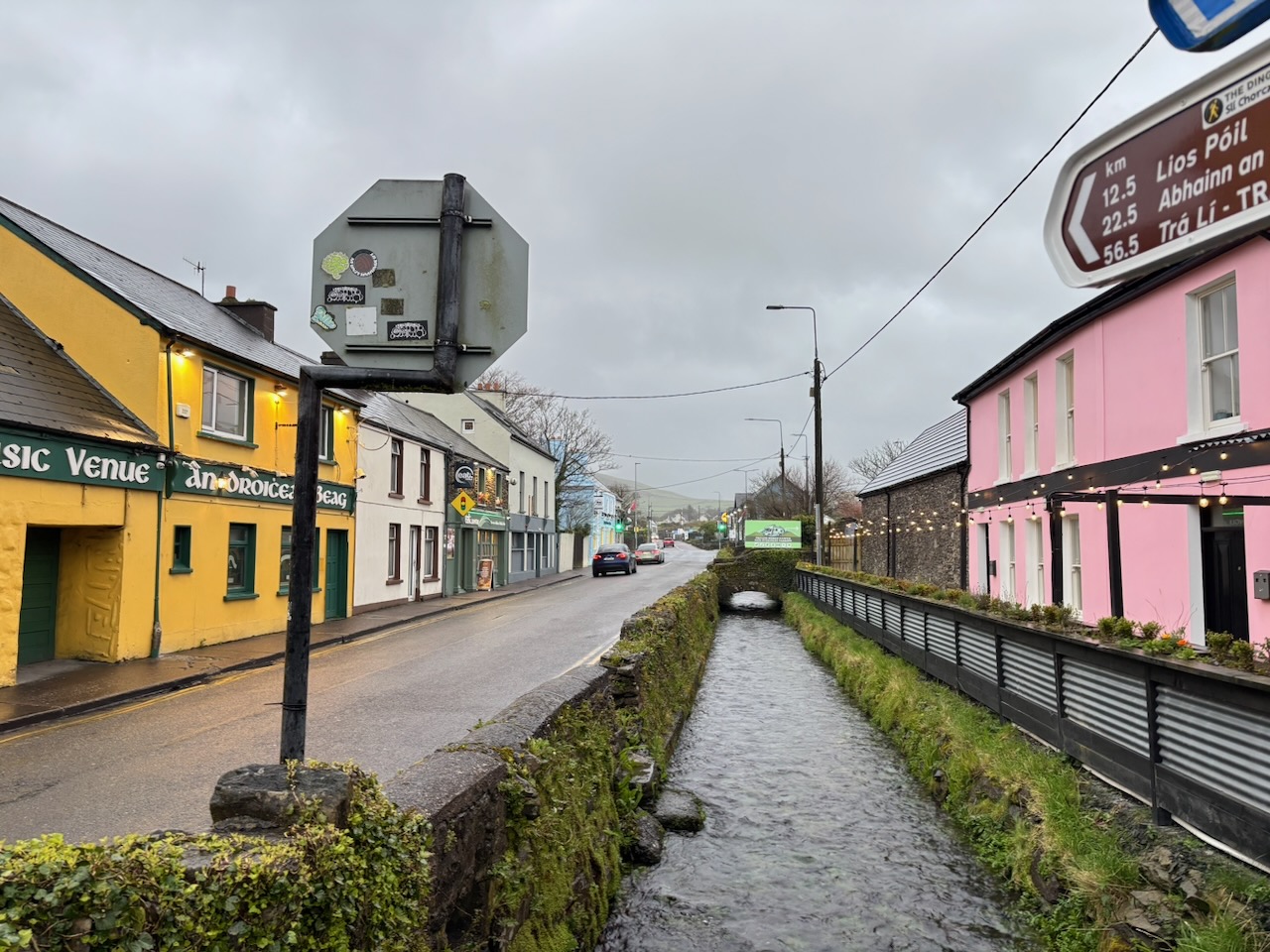
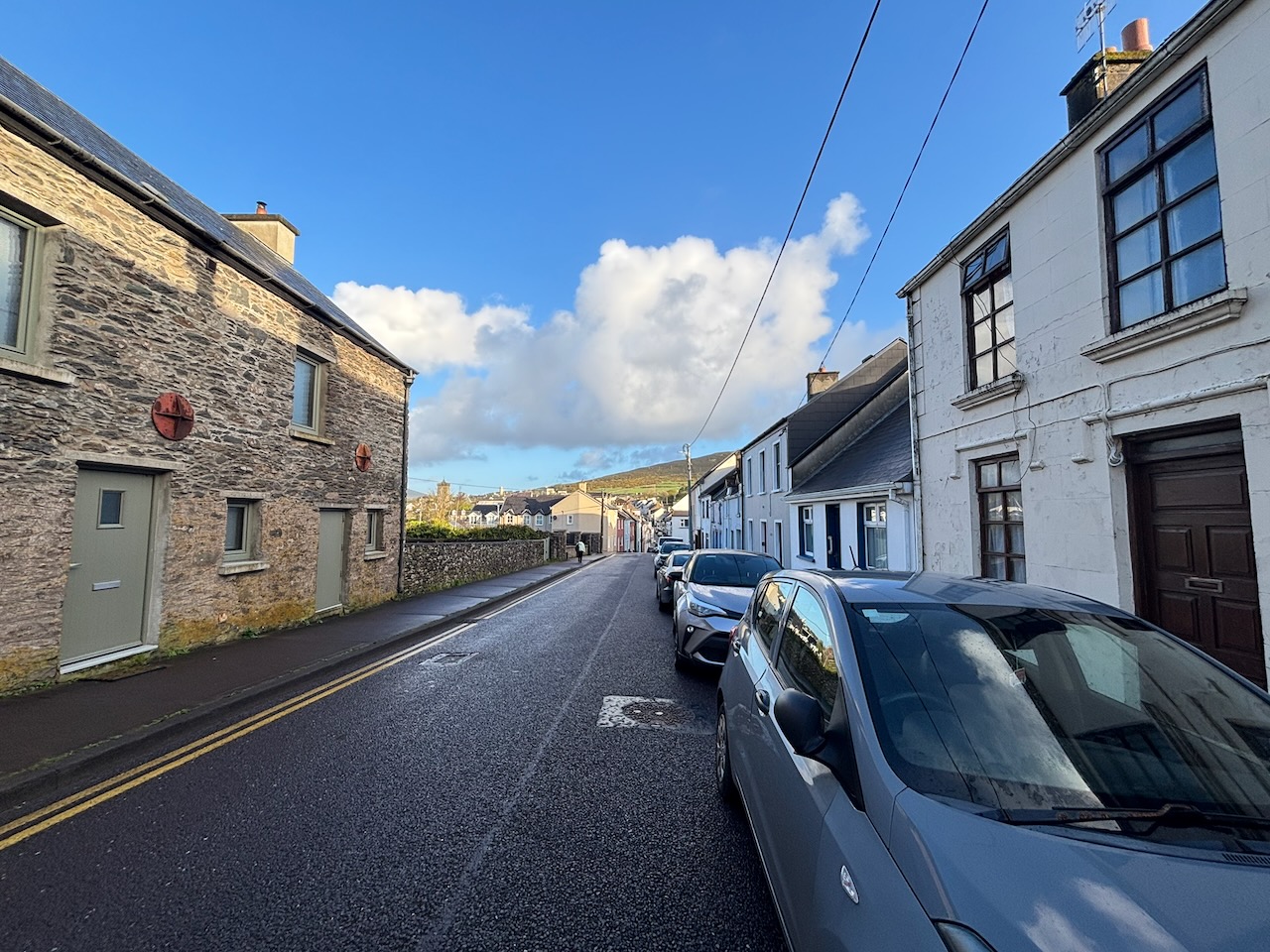
A century ago, all these buildings here were just shades of black and white. Their exteriors were originally exposed stonework and then, in the 1920s, came the plaster), and in the 1970s, cheery pastels (along with modern tourism), much as we have seen with the Tidy Towns competition prevalent throughout Ireland. Along the same lines, we’d be told that in the past, Irish food was comparable to British, that is dull and boring. Pubs and restaurants endeavored to up their game and we were glad that they had done so.
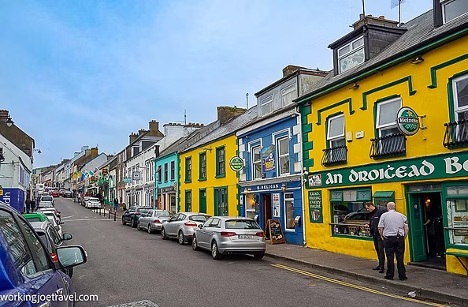
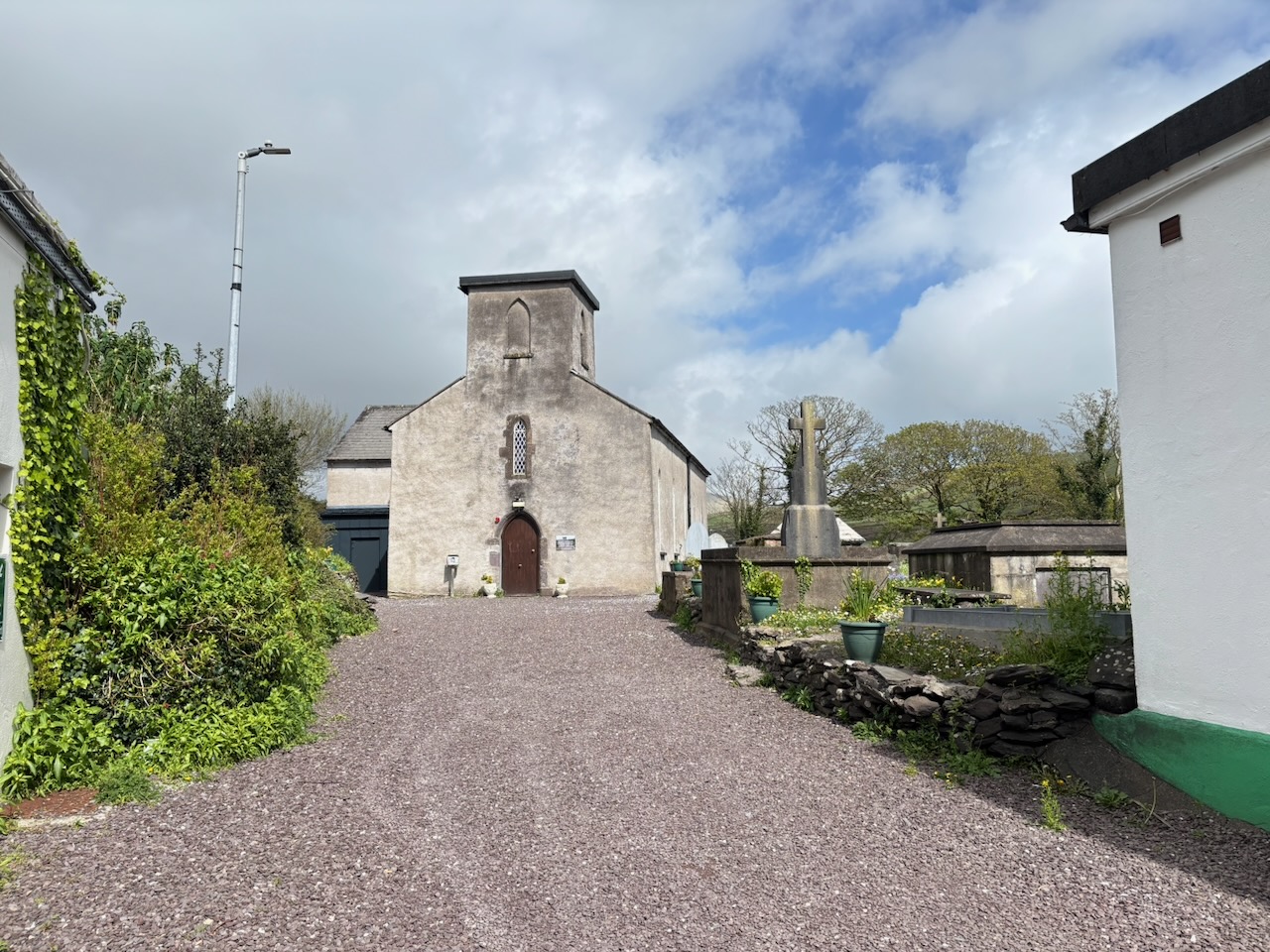
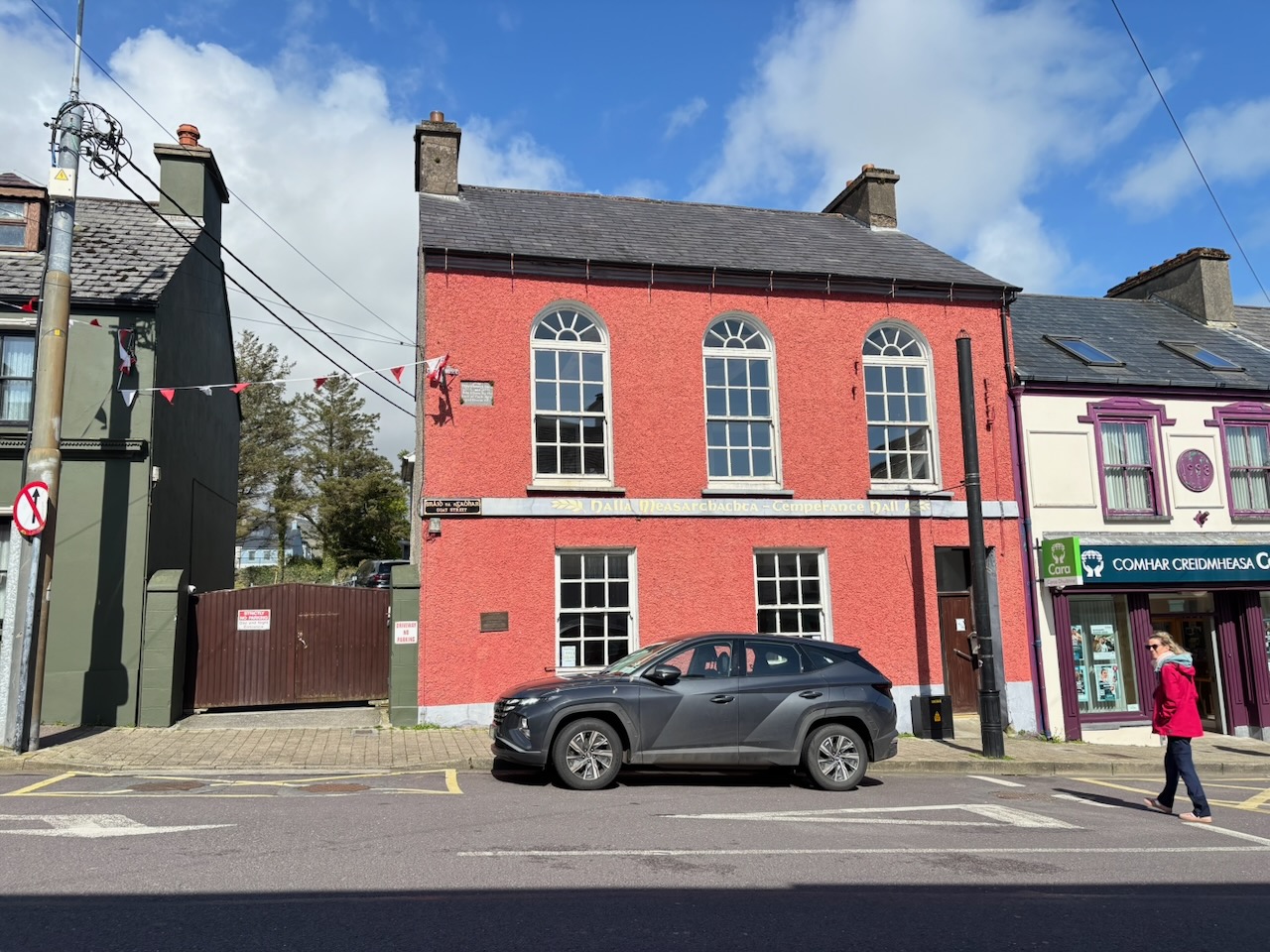
A few doors farther up on the left is Benner’s Hotel with its surviving Georgian facade and door. This was Dingle’s first hotel, where the old Tralee stagecoach route ended. Across the street, up a short gravel alley, is the humble, St. James’ Church, where, since the 13th century, a church has stood just inside the medieval wall. We continued down the street, past the Dingle Inn and Foxy John’s Pub (any time of day, you can order a bag of nails with your pint) and passed the Temperance Hall which dates back to a 19th-century church-promoted movement that attempted to cut down the consumption of alcohol. To this day Ireland has a serious alcohol problem behind the happy veneer of all this pub fun.
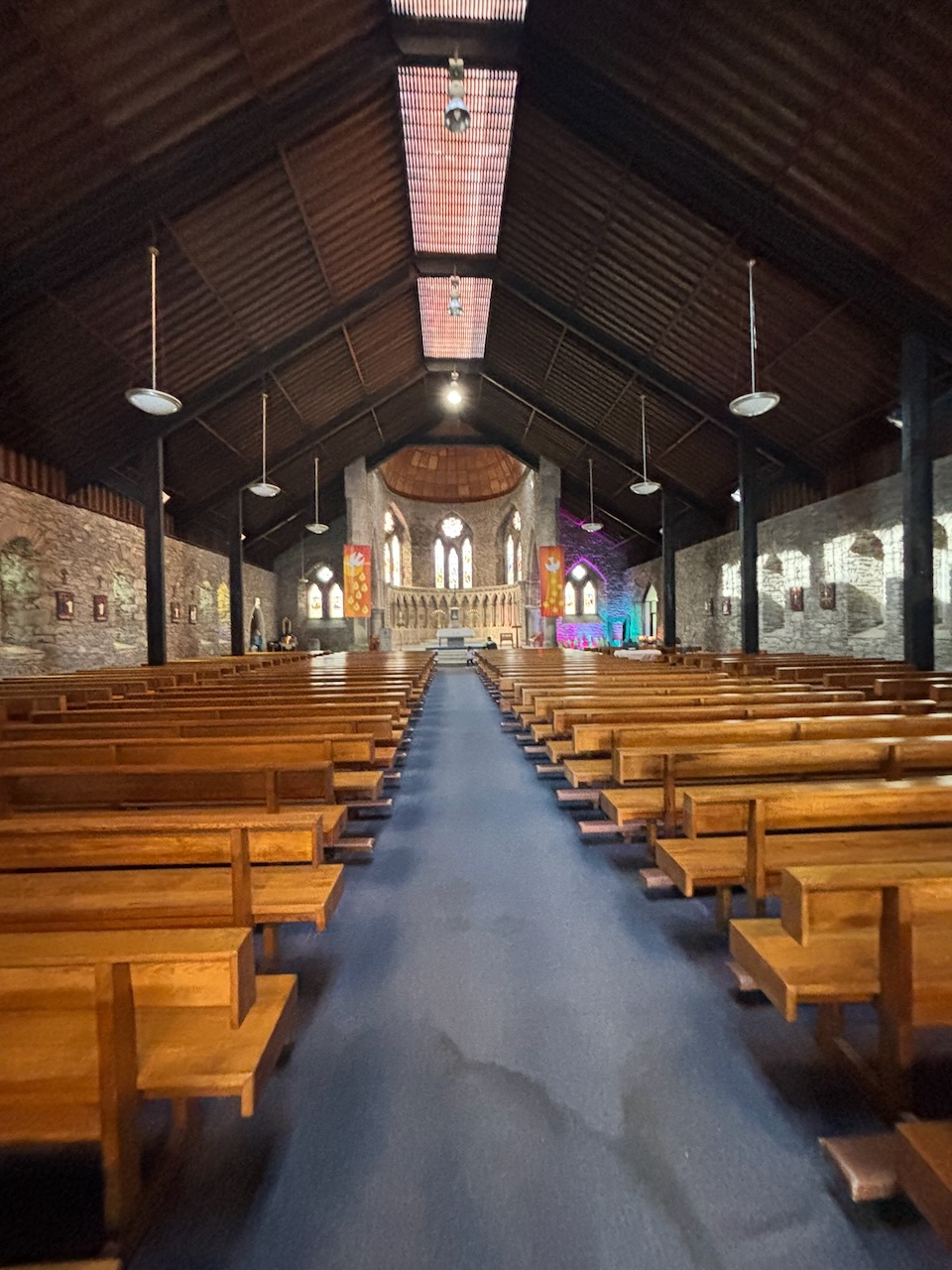
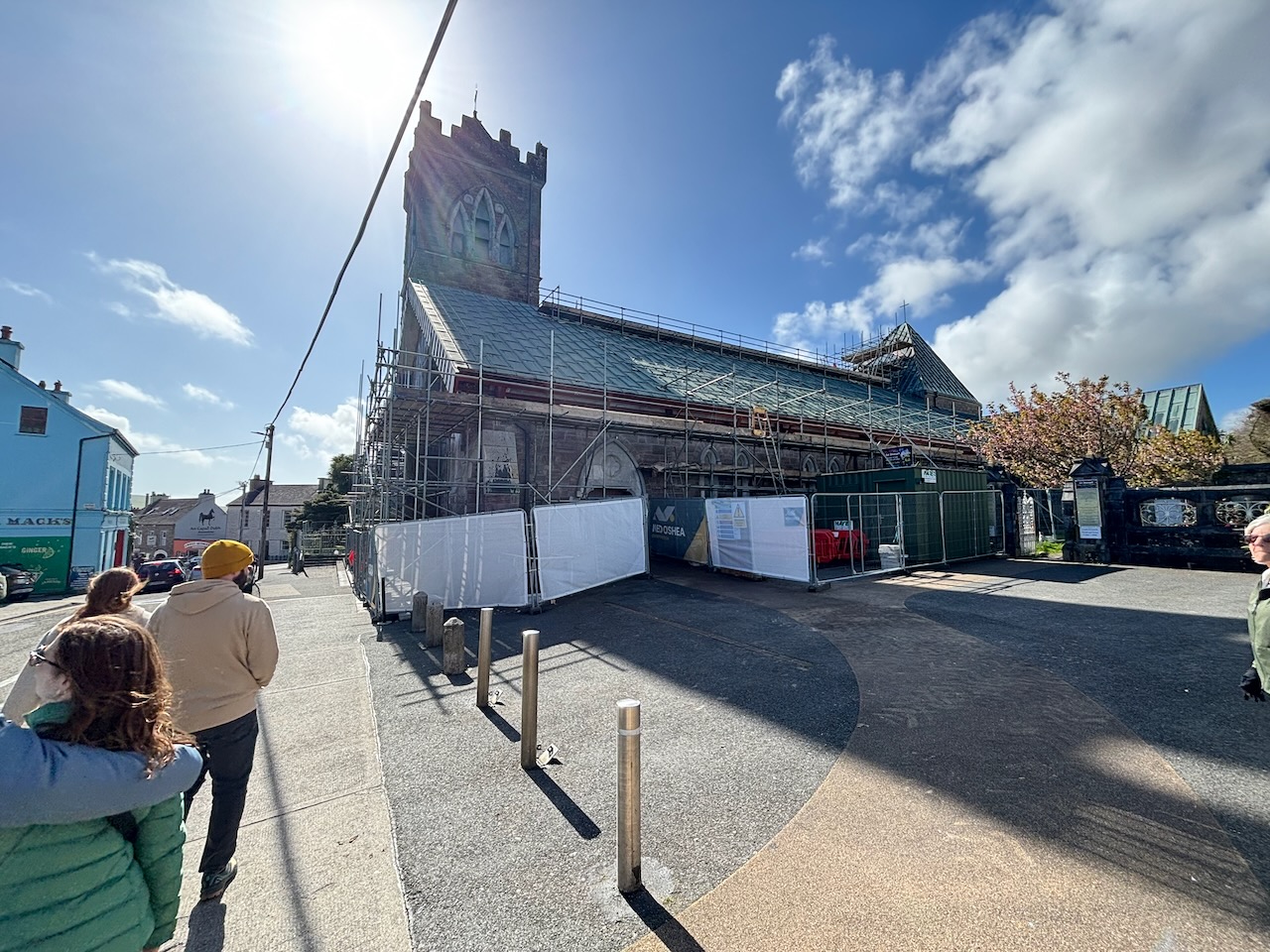
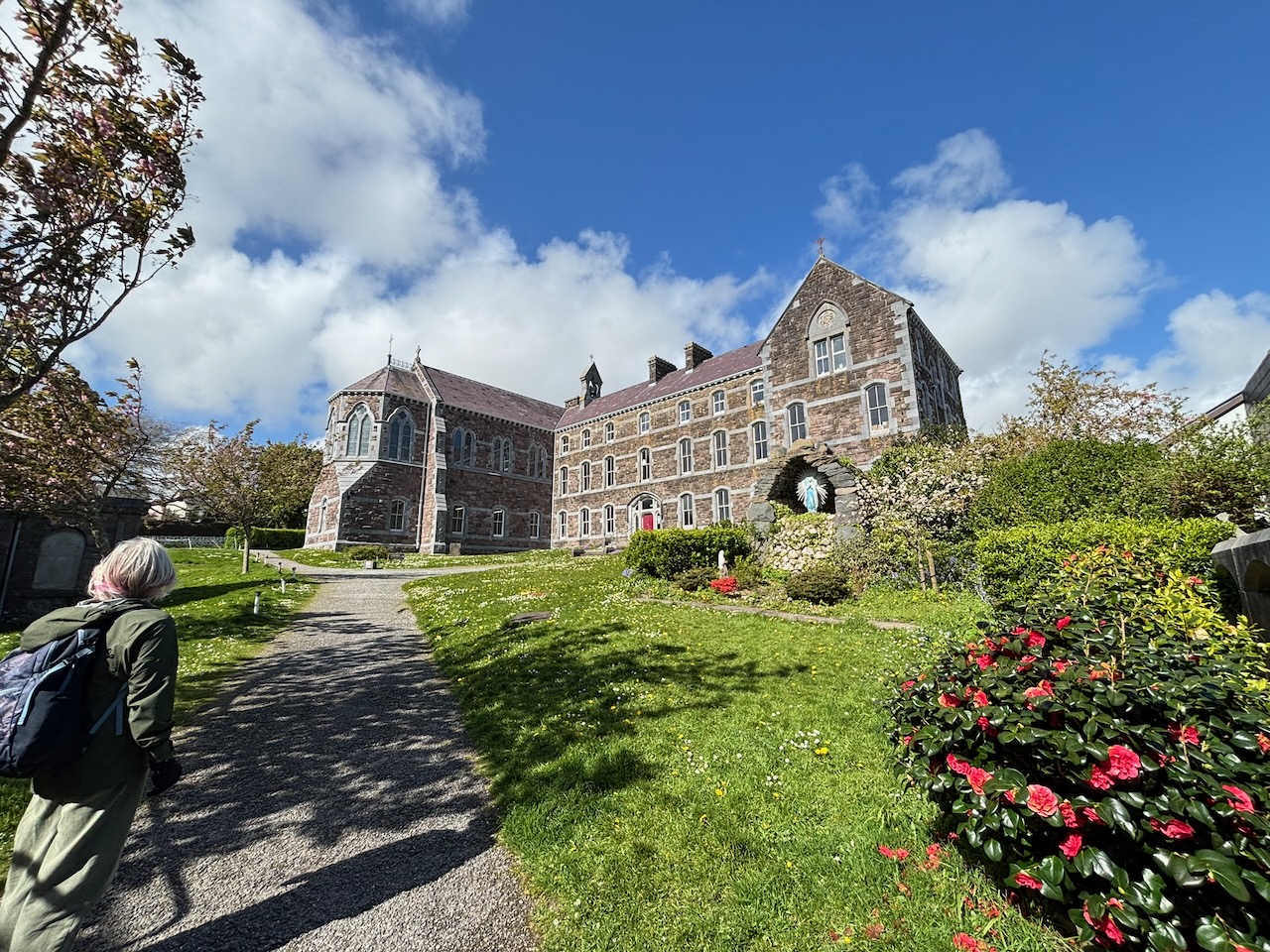
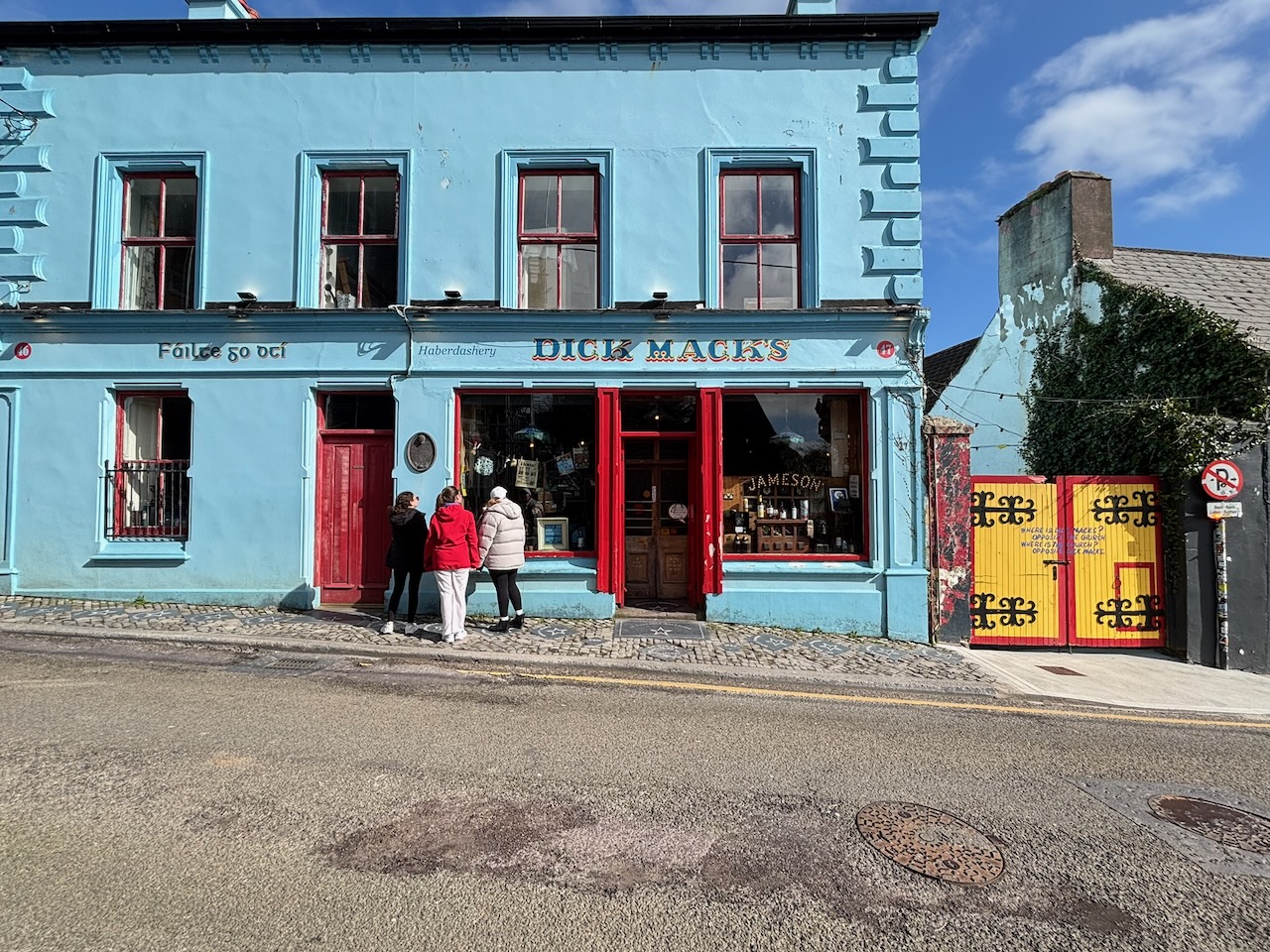
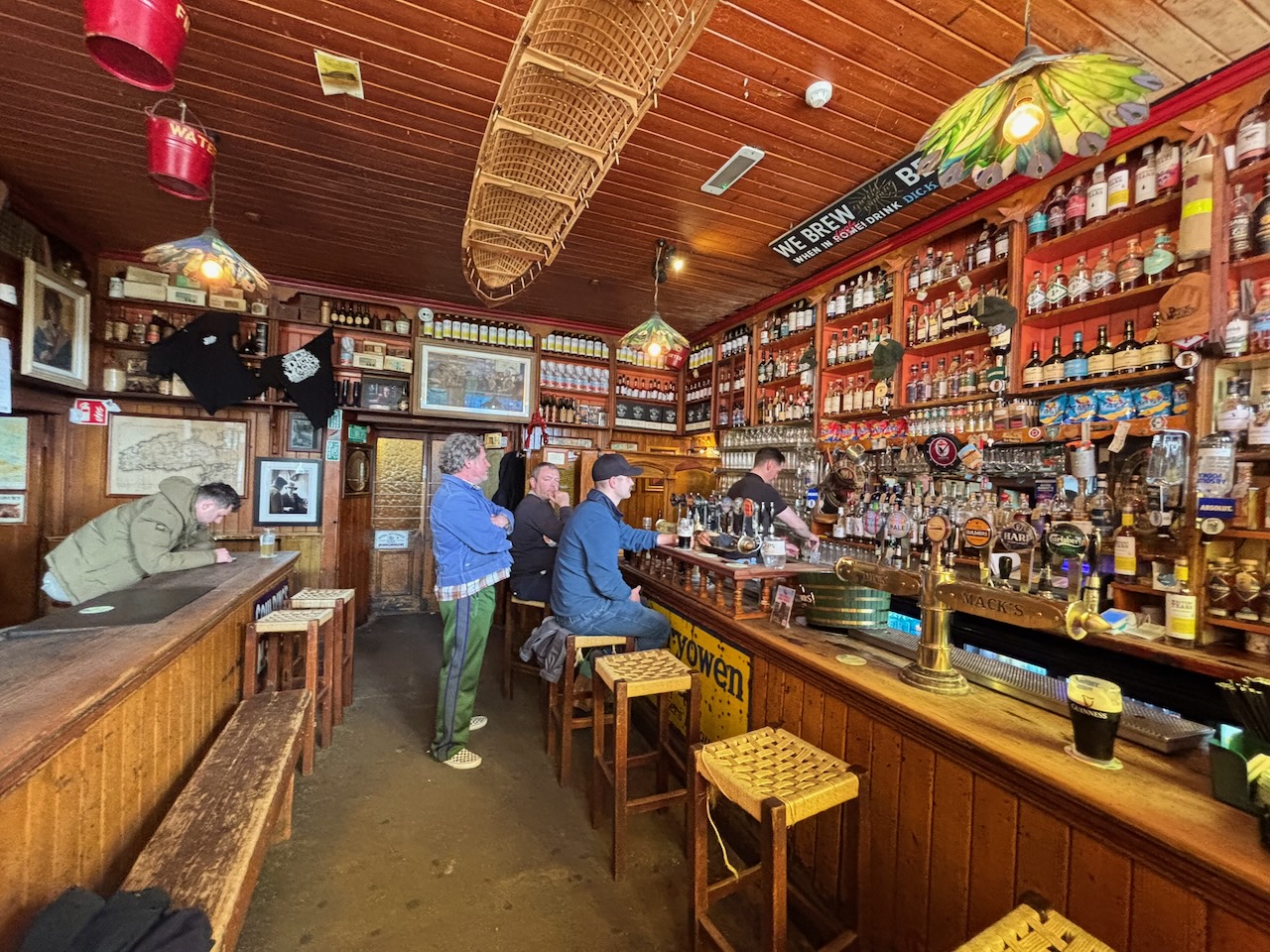
We made a left turn on Green Street and walked past the Fish Box to stop for some time at St. Mary’s Church; to check out the Harry Clarke stained-glass windows. While I sat for a few moments inside Joanna went behind the church to see the nun’s cemetery and then we regrouped and walked across the street to Dick Mack’s Pub, another traditional pub. This was once a tiny leather shop that expanded into a pub at night that was established in 1899 by great-grandpa Mack (master of the westernmost train station in Europe), whose mission was to provide “liquid replenishment” to travelers. Today, Dick Mack retains its old leather-shop ambience. In fact, it’s popular for handcrafted belts. (Their motto: “Step up and get waisted.”)
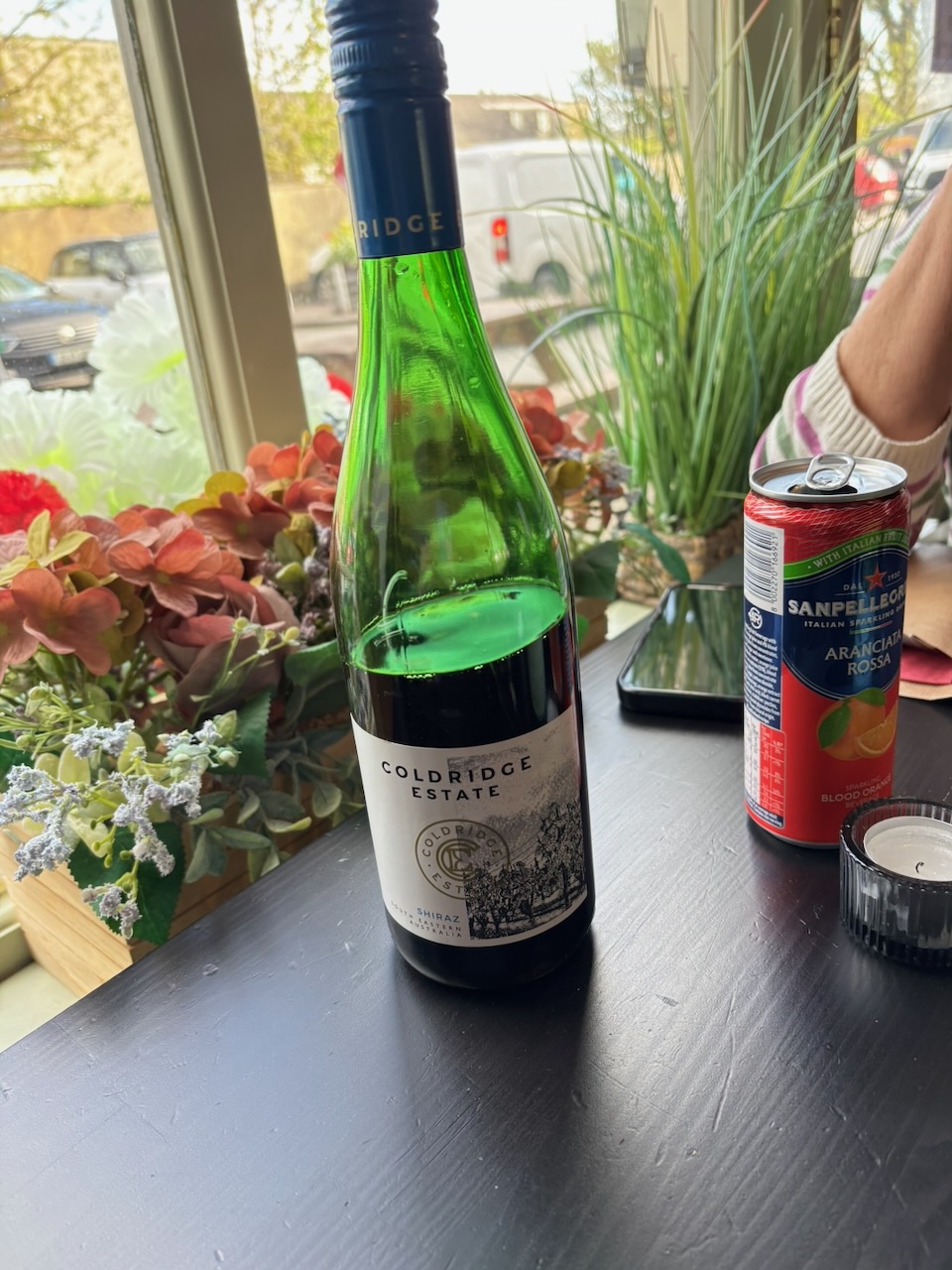
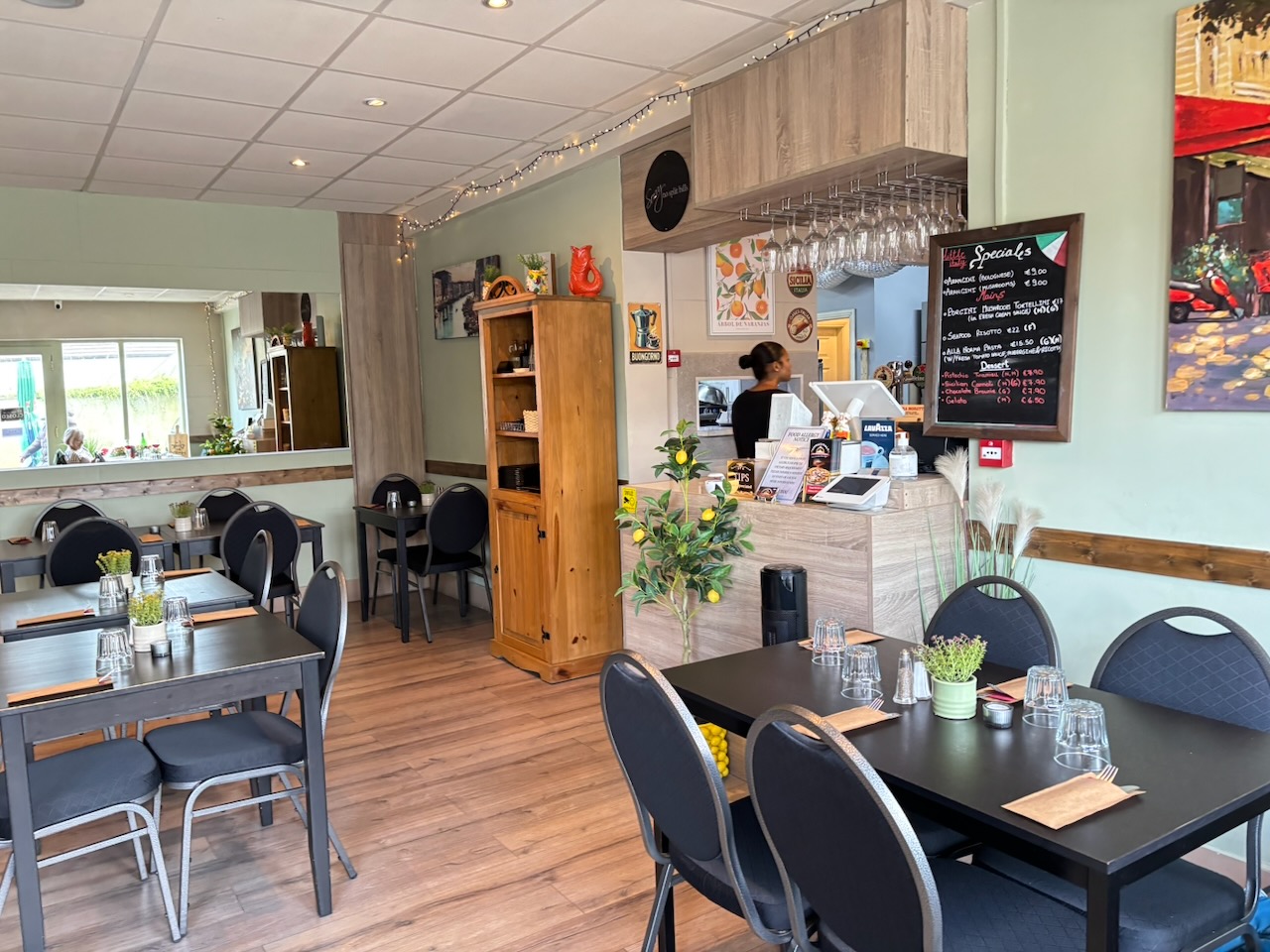
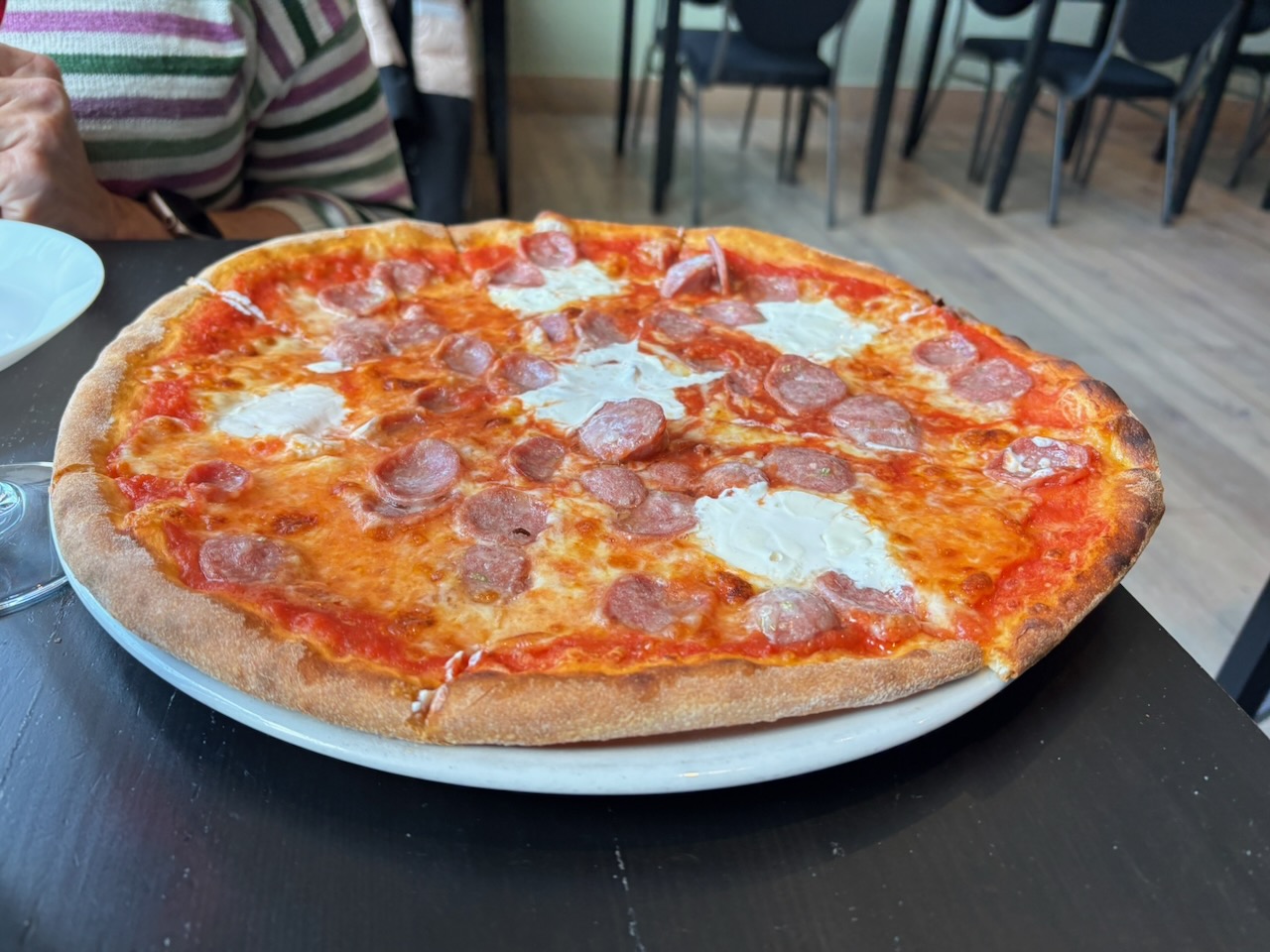
As it was getting later in the day, we began to walk back towards the B&B with dinner on our mind. Heading up Main Street we noticed a sign board for an Italian place and as that sounded good, turned down a parking lot and entered Little Italy Pizzeria Cafe Gelateria. As we were seated, our charming server advised us they could serve no alcohol, but that we were welcome to bring our own. I quickly exited and hit the nearby Centra for a 9 Euro bottle of red wine, returning to our table to complete what would be a very nice dinner, featuring a sausage pizza. And that would finish up our stay in Dingle, a rewarding couple of days with more on the horizon. We’ll pick up our journey to Doolin the next day in our next post.
Links
The Fish Box: https://www.thefishboxdingle.com/
Foxy John’s: https://www.facebook.com/profile.php?id=100049913960761#
The Blasket Centre: https://www.blasket.ie/
Dick Mack’s: https://www.dickmackspub.com/
Little Italy Pizzeria Cafe Gelateria: https://www.littleitalypizzeria.ie/
Discover more from 3jmann
Subscribe to get the latest posts sent to your email.


