April 8 – 10
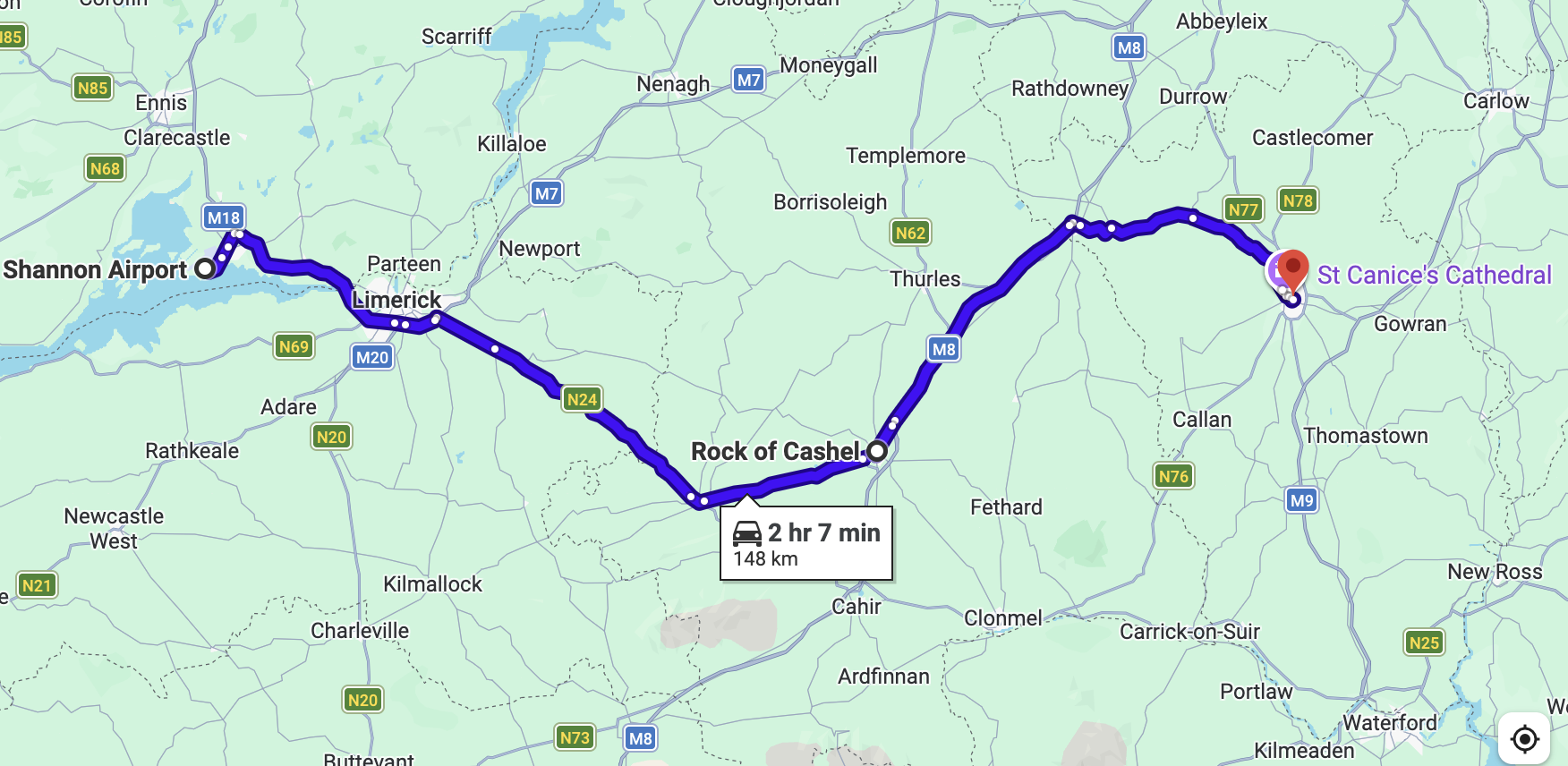
What we thought would be a straight forward day quickly turned out otherwise when I received a call from John at the Hertz Sales office just down the street that due to the gas price protests around Ireland (bands of individuals using their cars and trucks to block on and off ramps of the motorways) they couldn’t deliver our rental to their location. We would need to get ourselves out to the airport at Shannon, about thirty minutes away, to pick up our car.
This meant a $40 taxi ride for us and when I asked if Hertz would cover this cost, John said that wasn’t possible. So, we packed up our gear, called for a taxi and headed out to the airport. On the way there, we noted that both sides of that section of motorway were free flowing and didn’t appear to be impacted by the protests. I subsequently wrote to Hertz about the issue and they did refund. We had to go to the counter there to complete the paperwork and here is when we received the next bit of bad news. I always use American Express Rental Coverage (If you charge the rental on an AMEX card, they charge you around $20 for full coverage for the length of your rental) and it has saved us a lot of money and headache.
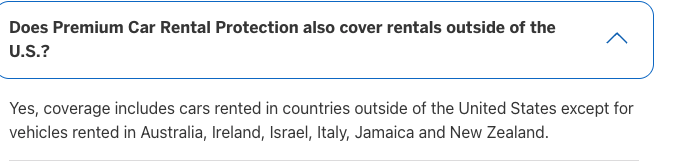
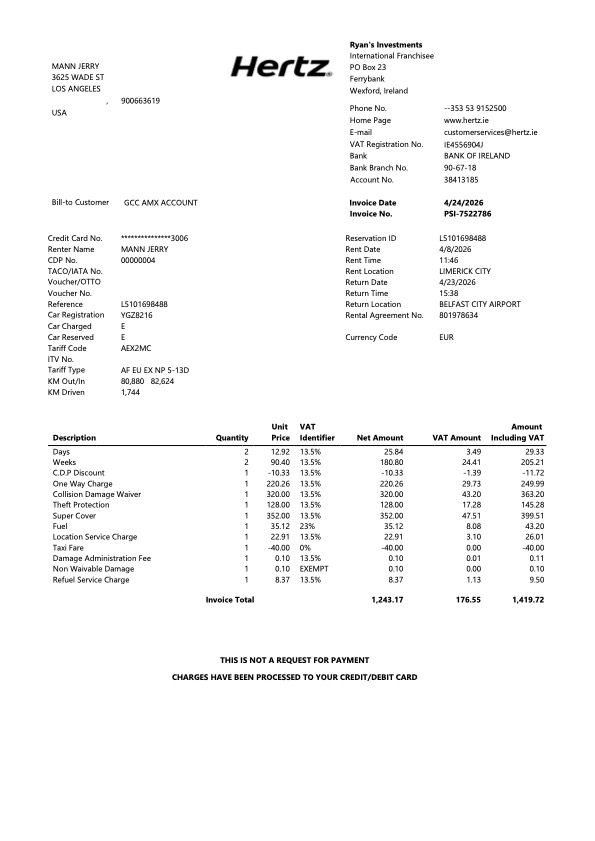
Marty had warned me earlier that Irish car rental agencies require proof of coverage, and I should have checked with AMEX before the airport as I discovered they don’t cover rentals in Ireland. It turned out we may have another card that does, but by then, standing at the counter, I agreed to pay for the Hertz coverage, which ran us an additional 900 Euros ($1,053). This was a load but at this time, we weren’t prepared to use public transportation so were stuck. Some of the countries that are not covered by AMEX, Visa and Mastercard are: Australia, Italy, New Zealand, OFAC sanctioned countries, Israel, and Jamaica. So, if you are renting a car be sure to check to see if your credit card provides coverage.
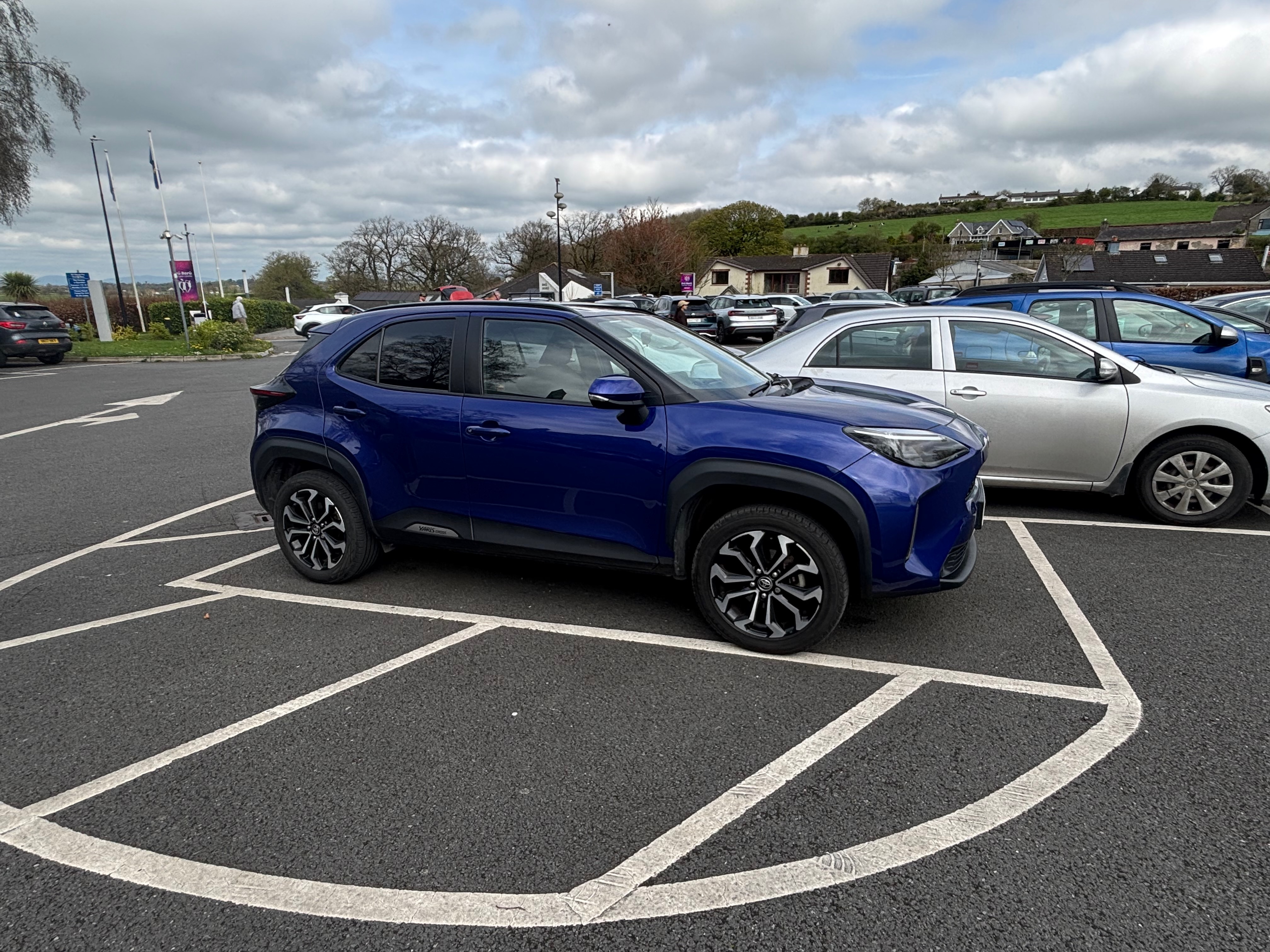
Our Toyota Yaris Cross would be a good choice, small enough to more easily navigate Ireland’s narrow roads and also to get great gas mileage. We set out with me driving and honestly, it didn’t take too long to get used to being on the other side of the car and driving on what we consider the opposite side of the road. What was and would continue to be a nightmare was the narrow two-lane roads with little or no shoulder we would spend the bulk of our driving time on. We were reassured though having the Hertz coverage met no worries about insurance.
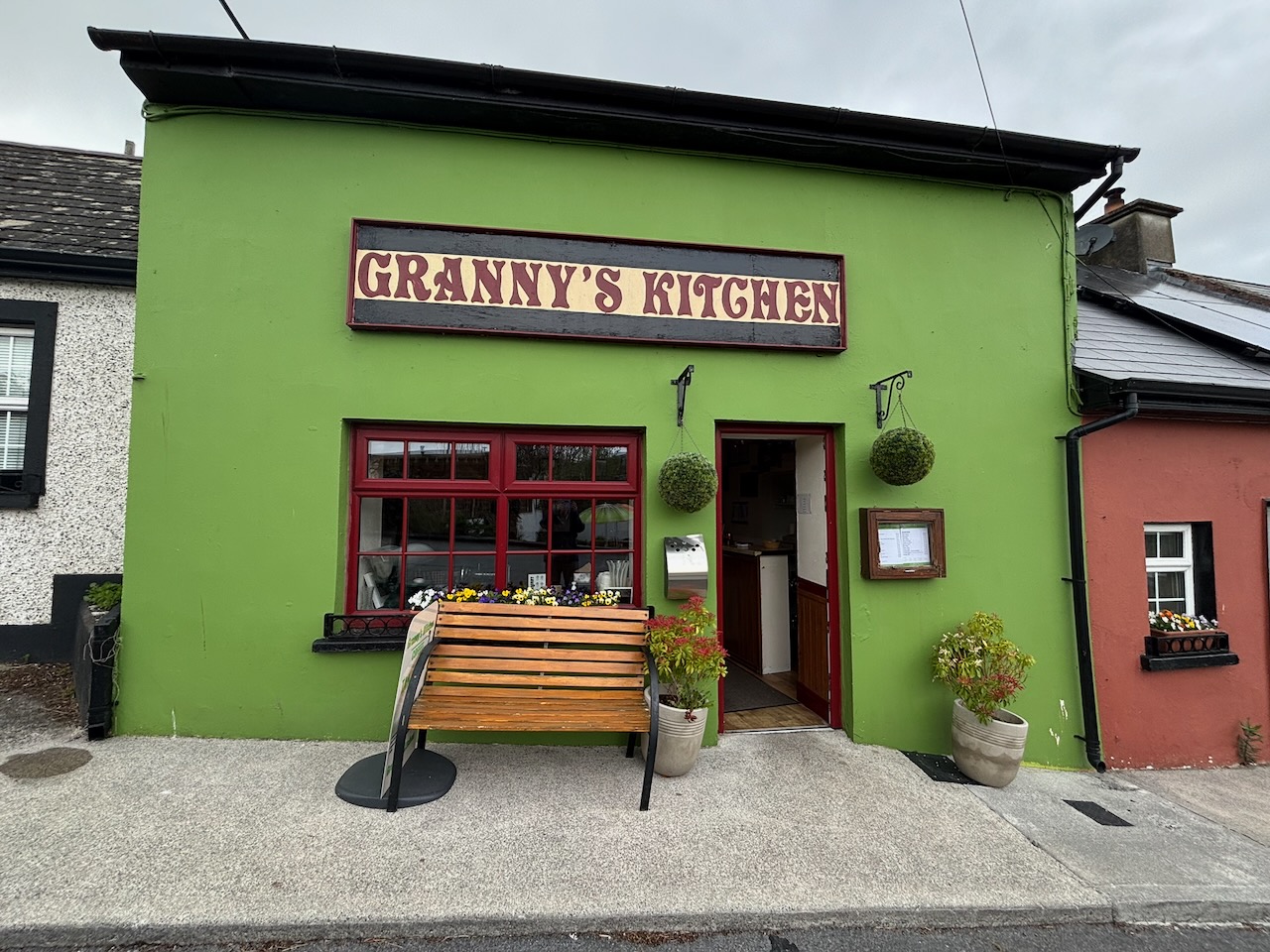
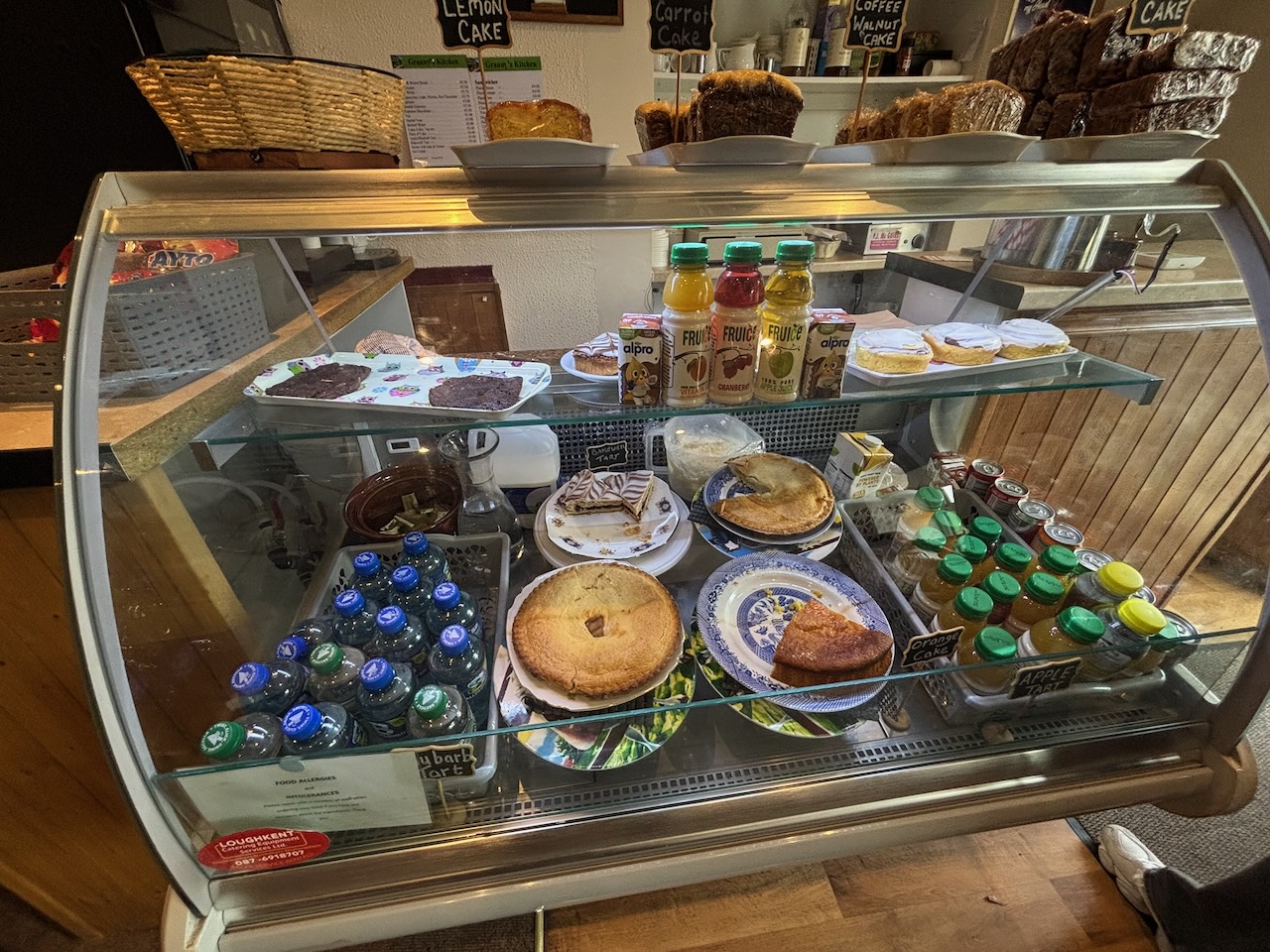
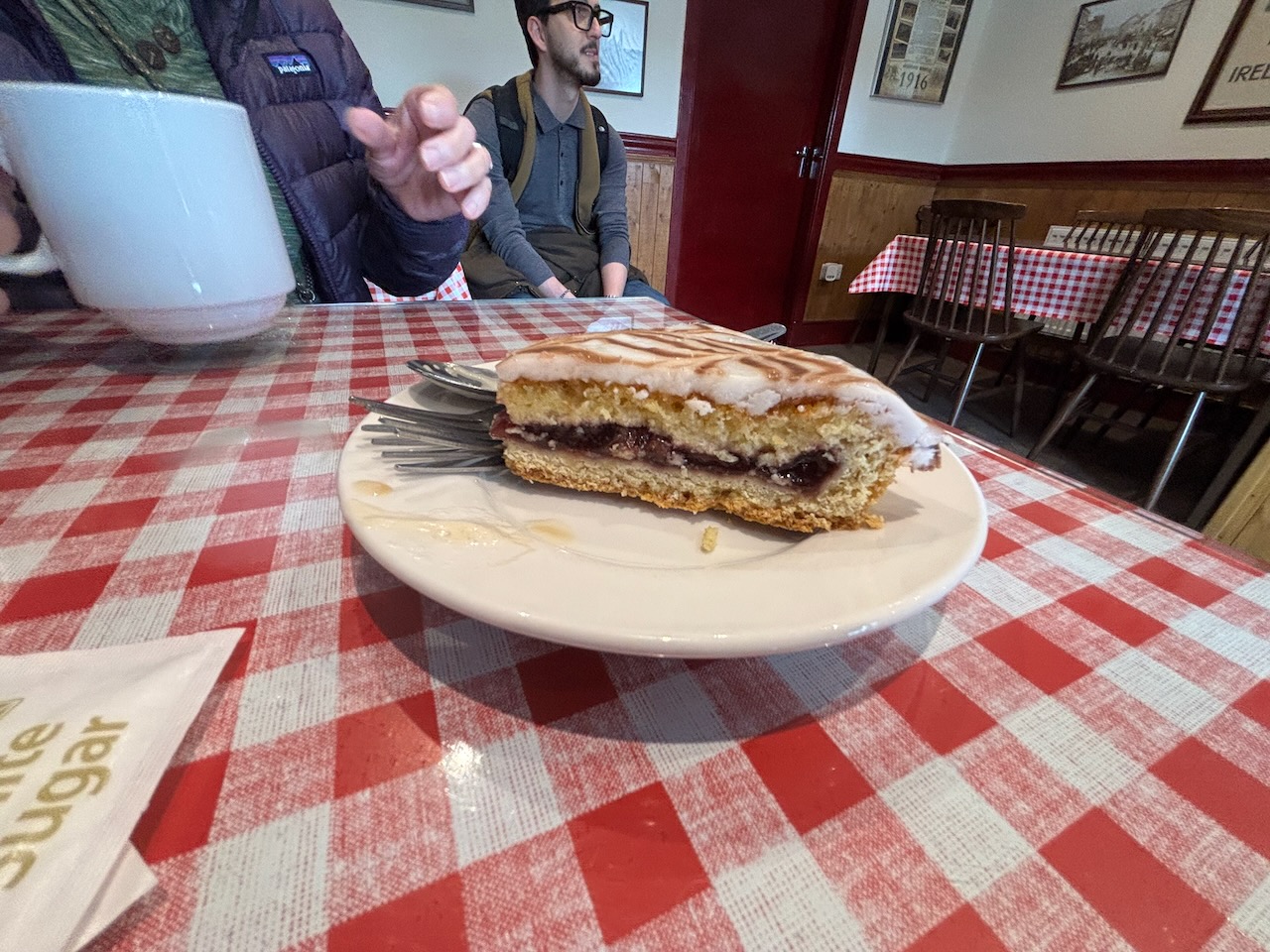
We left the airport and transitioned from the motorway to suburban neighborhoods with passenger side stone walls hovering perilously close to that side of the car. Fortunately, we arrived unscathed at our tourist stop for the day, the Rock of Cashel. But first, after parking in the nearby pay lot, we stopped in at Granny’s Kitchen, a small family run café, for a snack. We’d enjoy a coffee apiece and a very good example of a Bakewell Tart.
According to local legends, the Rock of Cashel originated in the Devil’s Bit, a mountain 20 miles north of Cashel when St. Patrick banished Satan from a cave, resulting in the Rock’s landing in Cashel. It was the traditional seat of the kings of Munster as early as the 4th century and prior to the Norman invasion. In the 5th century the Eóganachta clan built a fortress at Cashel retaining supremacy there for hundreds of years. In 1101, the King of Munster, Muirchertach Ua Briain, donated his fortress on the Rock to the Church. Few remnants of the early structures survive with the majority of buildings on the current site dating from the 12th and 13th centuries.
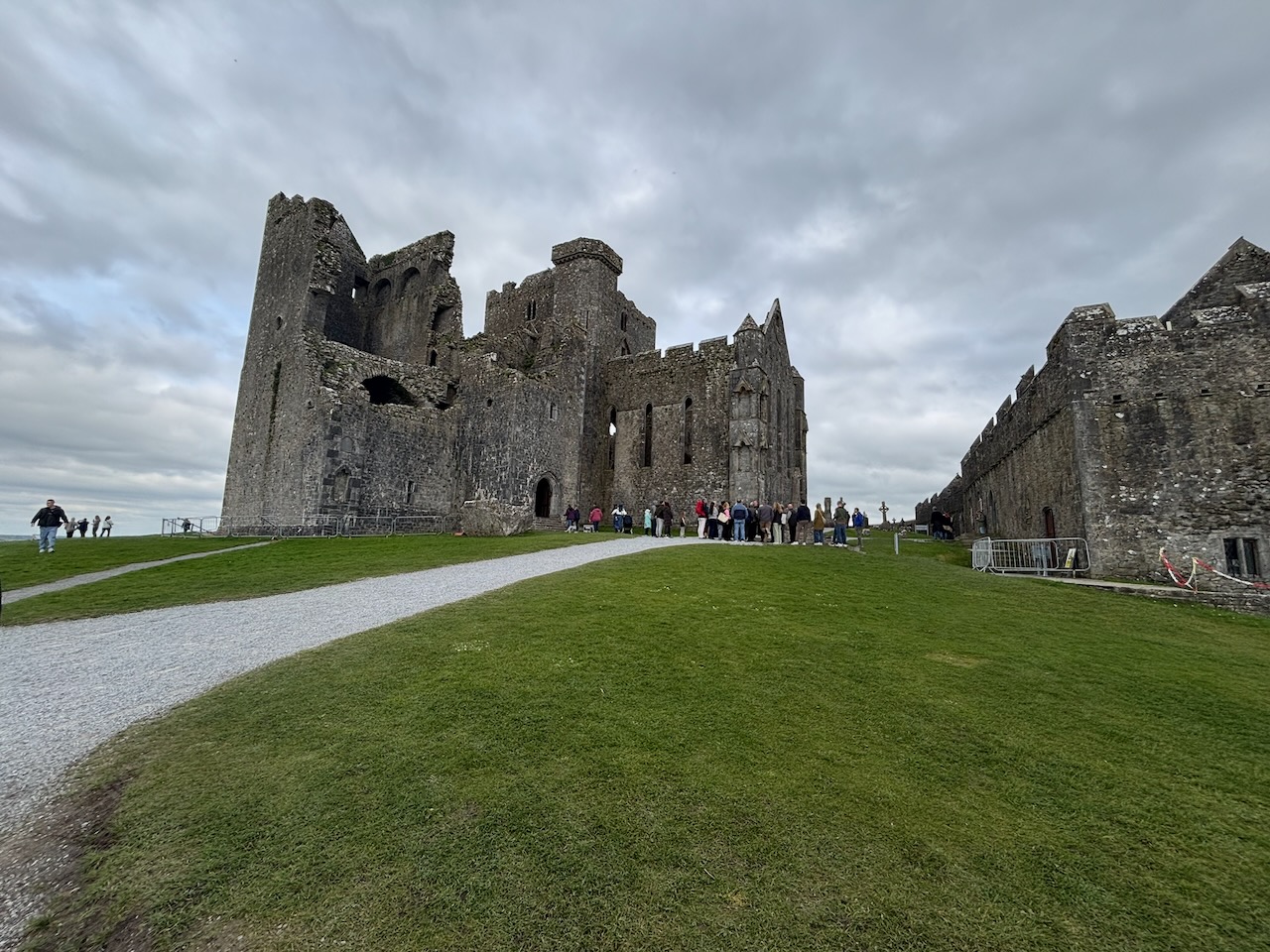
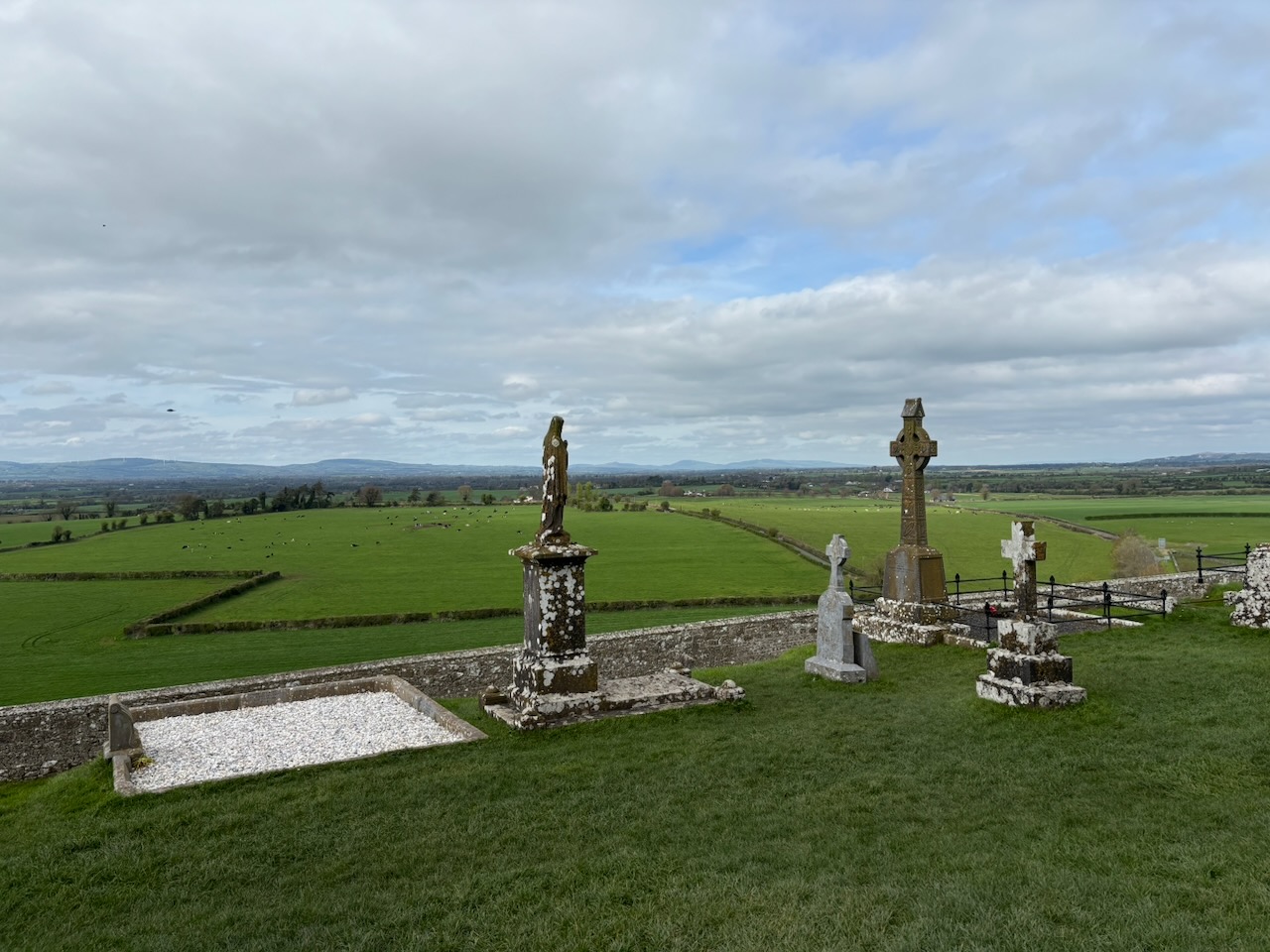
In 1647, during the Irish Confederate Wars, Cashel was sacked by English Parliamentarian (Protestant) troops under Murrough O’Brien, 1st Earl of Inchiquin. The Irish Confederate (Catholic) troops there were massacred, as were the Catholic clergy, including Theobald Stapleton. Sometime during or after the mid-1730s, the main cathedral roof was destroyed by Arthur Price, the Anglican Archbishop of Cashel. Our timing was good as a tour was starting just as we arrived and as we would encounter for the rest of the trip, the guide was from the Office of Public Works (OPW), a government agency that manages the State’s property portfolio, leads national flood risk management, and preserves over 700 iconic national monuments and heritage sites. And cost of the tour was reasonable at just 18 Euros for the two of us ($21).
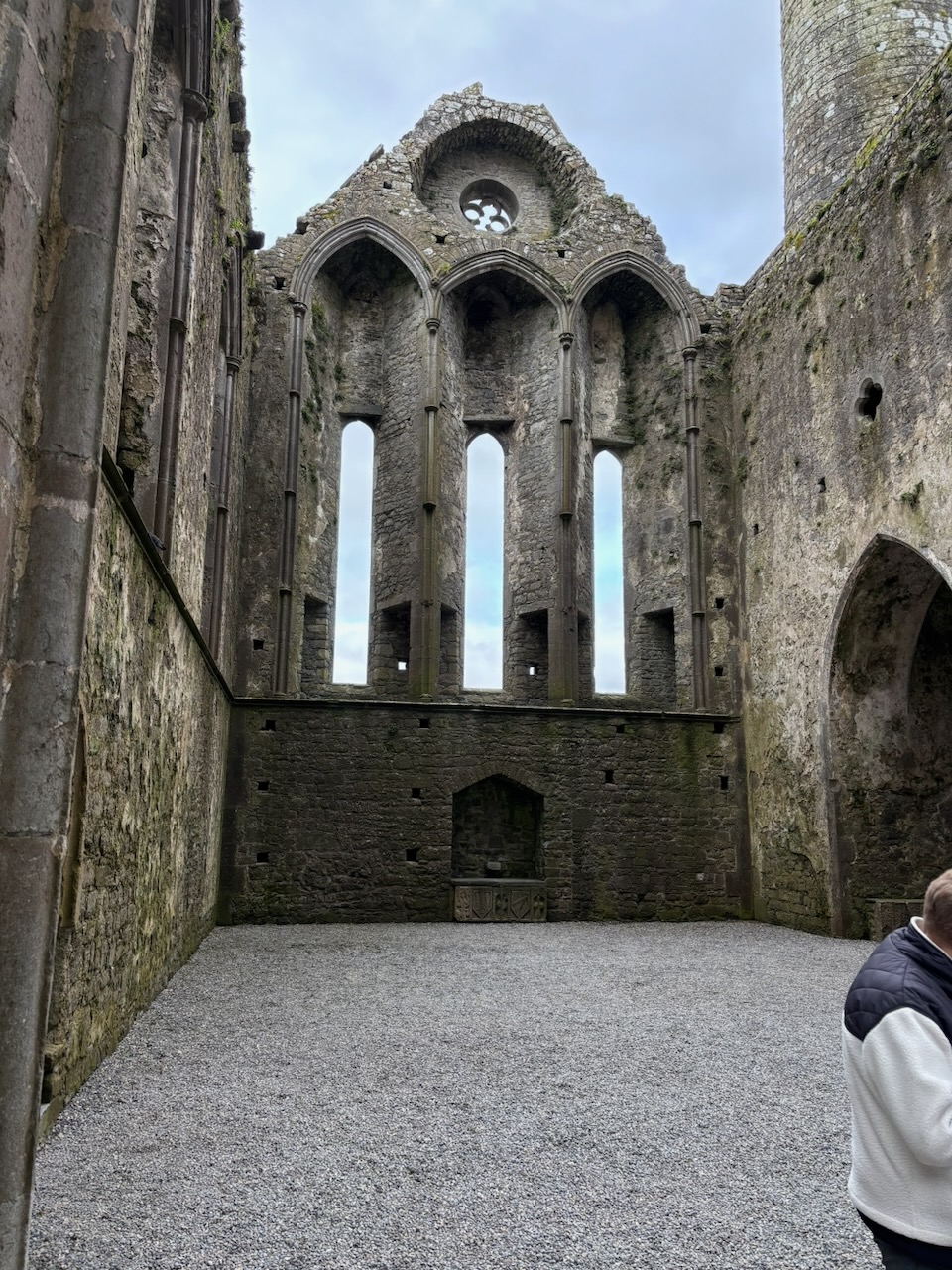
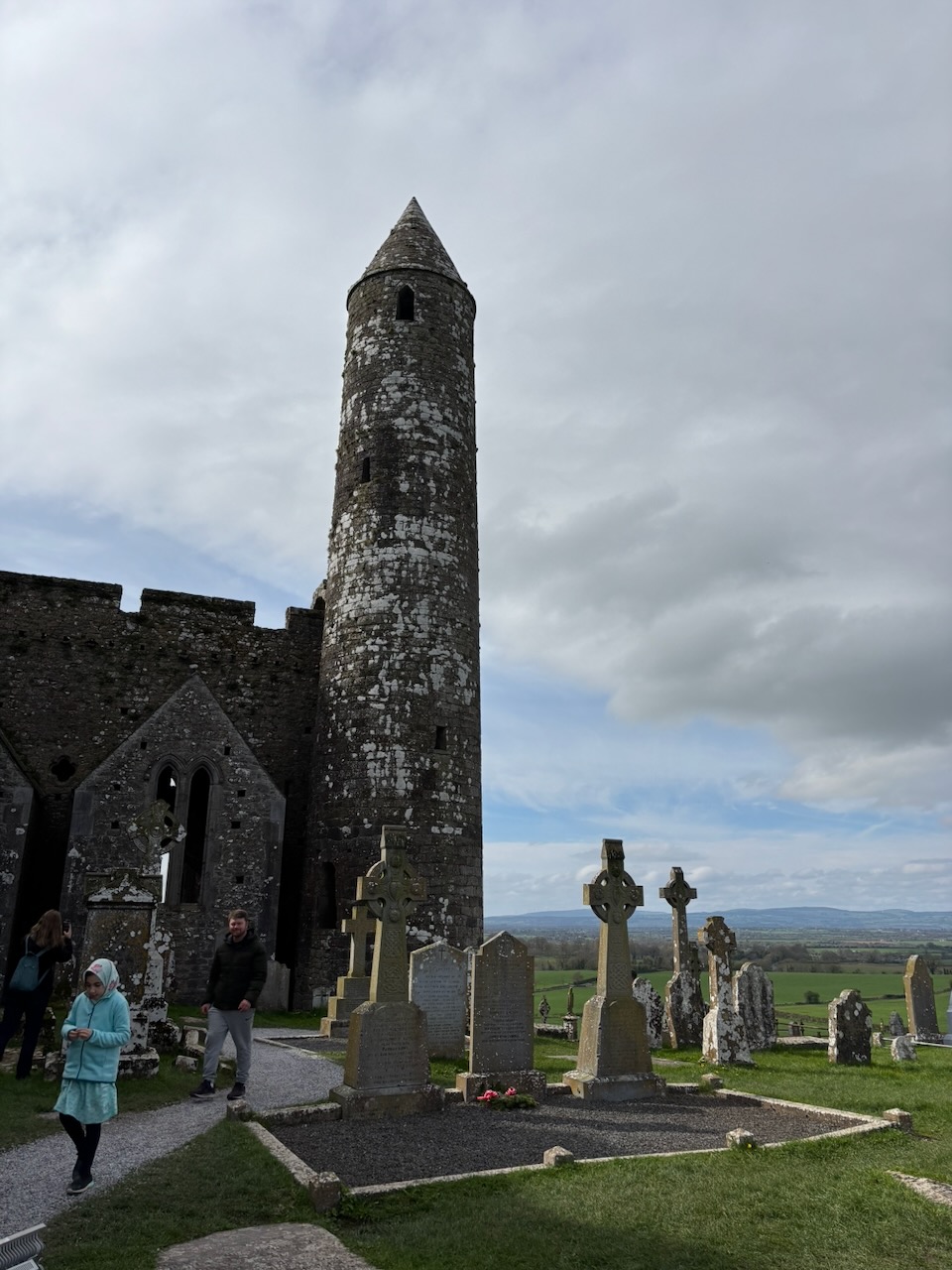
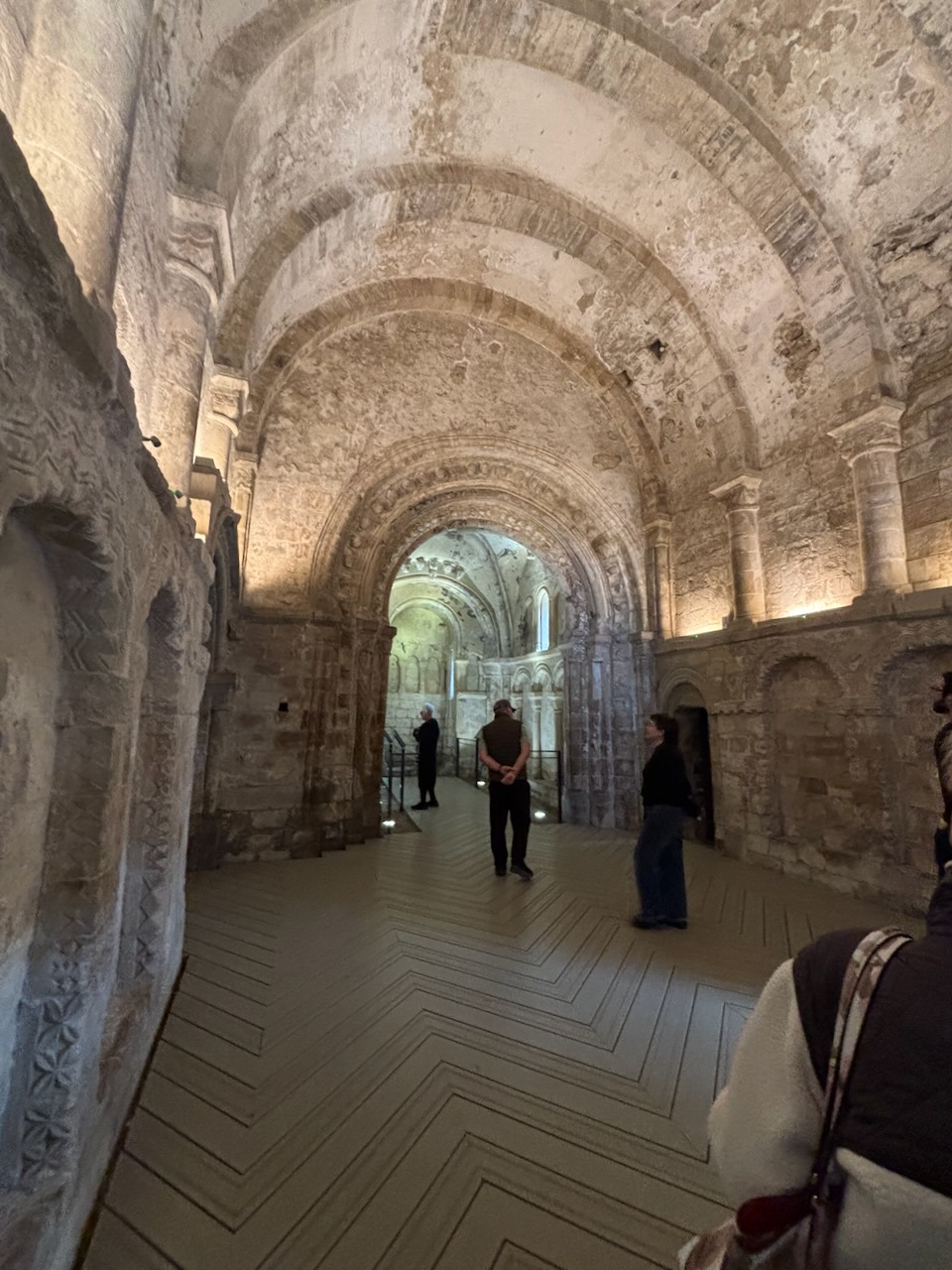
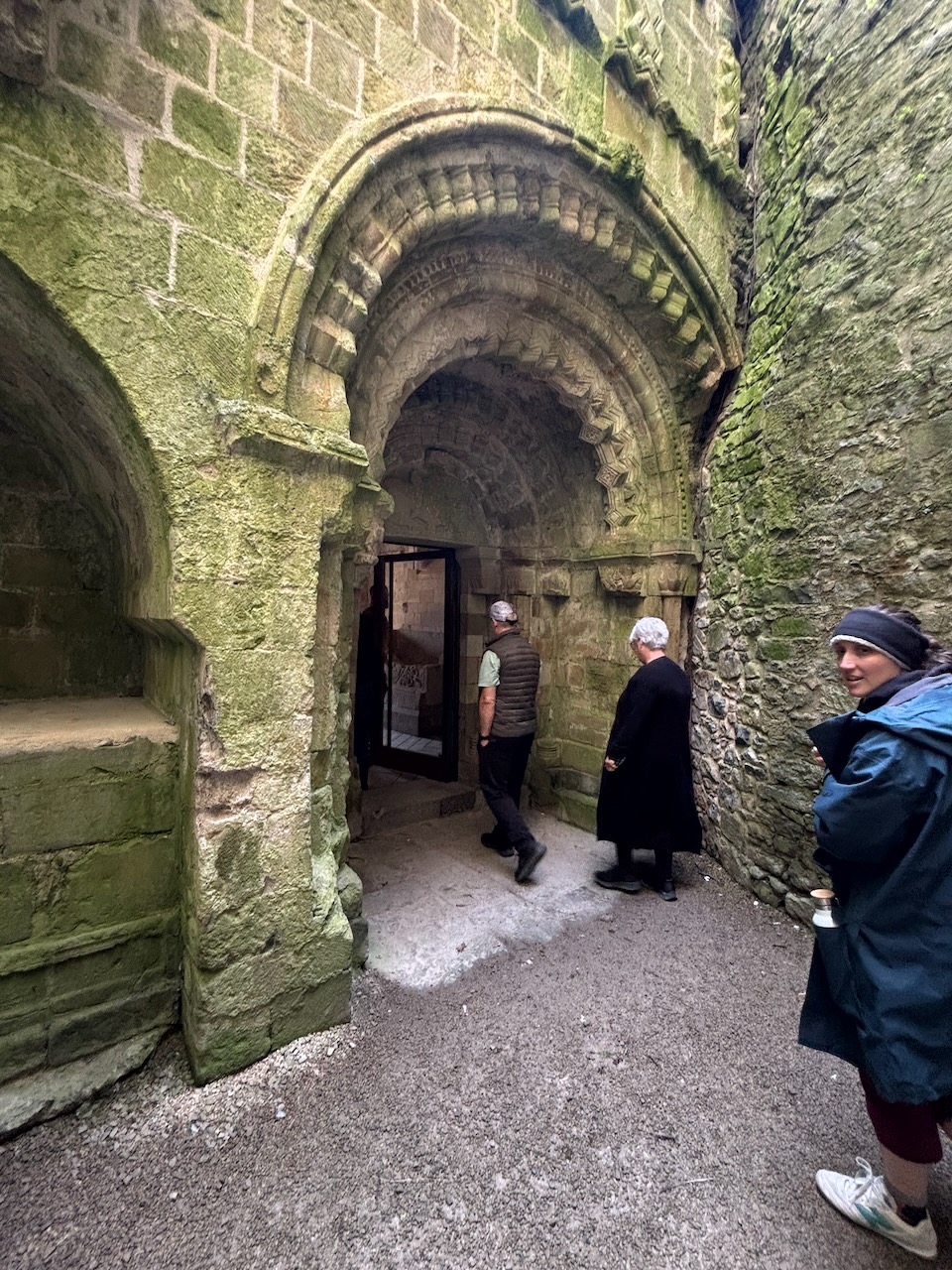
We started in the Cathedral (without its roof) and then worked our way around the perimeter of the complex, pausing to gaze out over the open plain below us, and then again at the Round Tower before completing the tour by entering Cormac’s Chapel, begun in 1127 and consecrated in 1134. A gabled arch (the first of its kind in Ireland) sits over one of the doorways and the remains of frescoes. As the chapel was constructed primarily of sandstone which has become waterlogged over the centuries, significantly damaging the frescoes. Restoration and preservation required the chapel be completely enclosed in a rain-proof structure with interior dehumidifiers to dry out the stone.
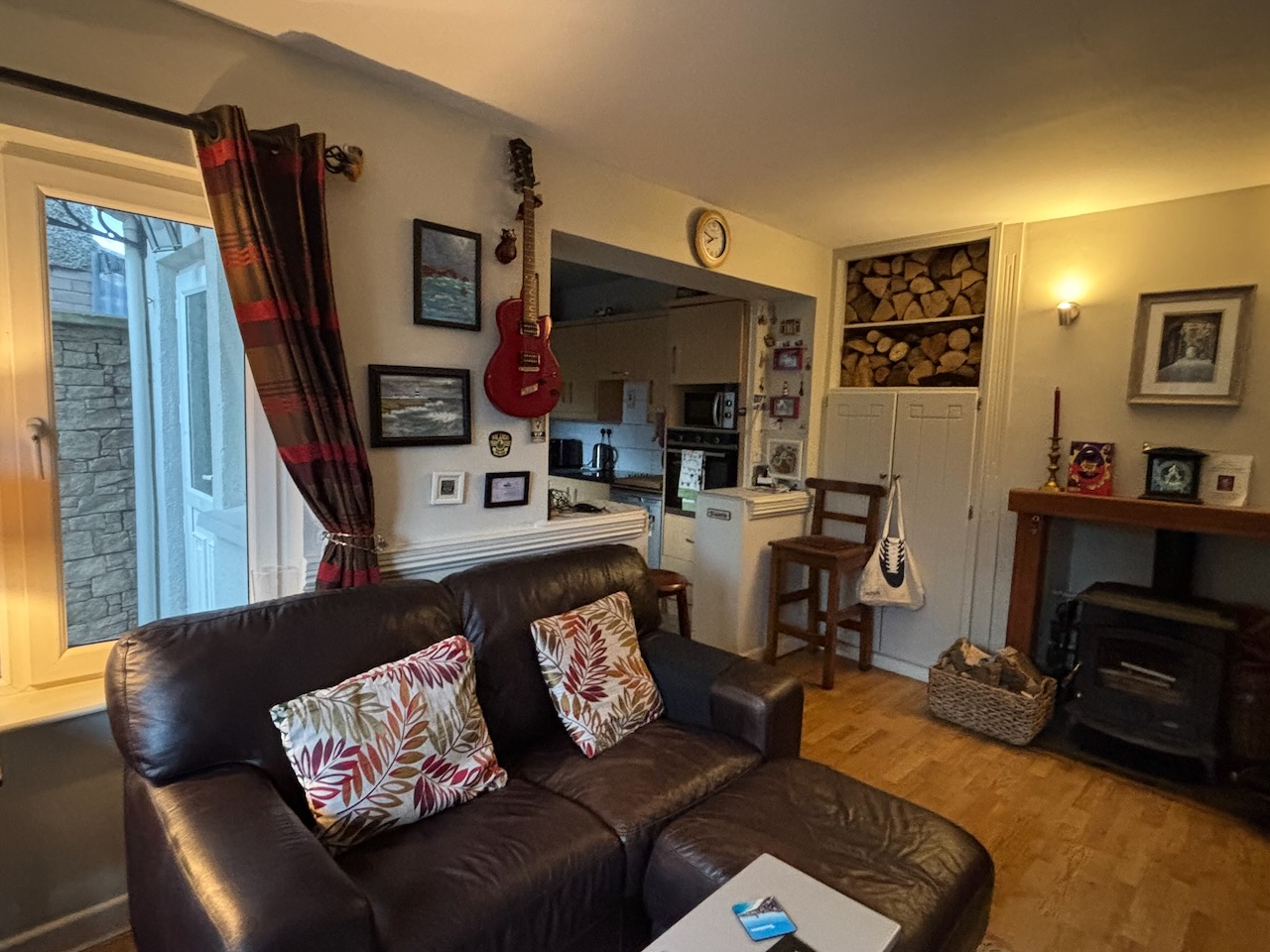
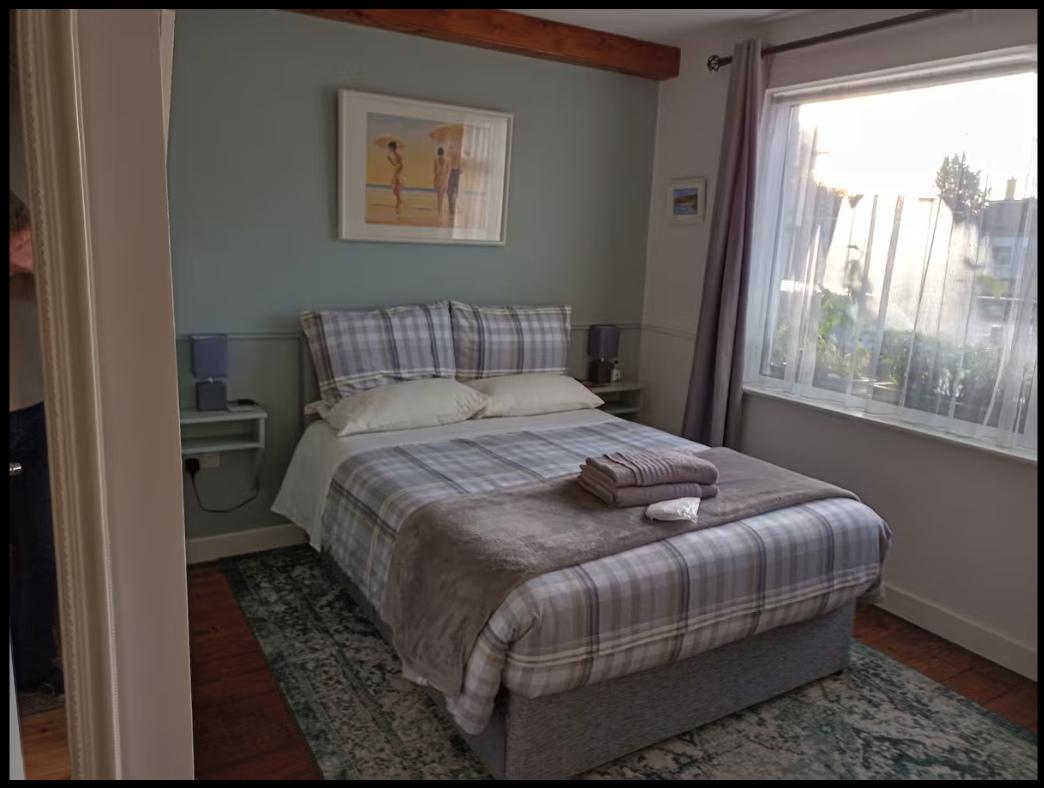
Finished with the tour, we made our way back to the car and then drove an hour to Kilkenny for three nights at the Townhouse in Kilkenny Airbnb we’d booked for $342 total. This would be only one of four Airbnb’s we stay in on this trip, as in many of the town’s hotels or B&Bs were the better bargain. This one booking would also be a change for us as we’d would be staying with Corey and Nadia in a bedroom at their place. We’ll cover our experience there in later posts. But for now, it was good to get there and get settled.
Links
Granny’s Kitchen: https://www.yelp.com/biz/grannys-kitchen-cashel
Rock of Cashel: https://heritageireland.ie/places-to-visit/the-rock-of-cashel/
Townhouse in Kilkenny: https://www.airbnb.com/rooms/43280?source_impression_id=p3_1781222374_P3Agog4QmISbDgSy
Discover more from 3jmann
Subscribe to get the latest posts sent to your email.


